Showing posts with label james. Show all posts

Tuesday, June 22, 2021

Pride in Hating God

"You adulterous people! Do you not know that friendship with the world is enmity with God? Therefore whoever wishes to be a friend of the world makes himself an enemy of God."

- James 4:4

As I write this, it is June, "Gay Pride Month." Every politician and every big corporation is flying Pride flags or posting them on their advertising. This has all happened in my lifetime. I was born before the so-called Stonewall Rebellion. Now people who were considered criminals have public streets closed to traffic so that they can show their pride and wedding rings. My member of Congress and state Senator post about supporting "equality," without specifying what rights straight people have that gay people don't. 

That is why I started this post with the Bible verse above. The politicians and corporations are advertising their association with the God-haters. The same people will advertise in the Fall for Christmas, the holiday which was once considered a celebration of the birth of Jesus. Not anymore. There is even a children's show on public TV which has a special episode for "winter solstice." Neither Jesus nor Christmas are mentioned, lest they offend. Whom? I don't know. But why are they worried about offending that person while being OK with offending me? 

In addition to James, there is another Bible verse which describes today's America: "Woe to those who call evil good and good evil, who put darkness for light and light for darkness, who put bitter for sweet and sweet for bitter! Woe to those who are wise in their own eyes, and shrewd in their own sight!" (Isaiah 5:20-21). We have exchanged God's standards for good and evil and substituted those of a particular perspective among men. And what is God's warning about that exchange? "Woe!"


Wednesday, May 26, 2021

The Incompatibility of Works-Righteousness and Faith-Righteousness

"The truth is that the faith by which alone the elect sinner is justified is a knowing and trusting that renounce works and working for righteousness... The faith that renounces working and works for justification is true faith. Whatever supposed 'faith' insists on working for righteousness is thereby exposed as a false faith. No one is justified by a false faith."

- Rev. David Engelsma, "Gospel Truth of Justification," p. 190, emphasis added 

In this paragraph, Engelsma is making the same point that Paul made in his Epistle to the Romans. For example, he wrote in Romans 9:30-32, "What shall we say, then? That Gentiles who did not pursue righteousness have attained it, that is, a righteousness that is by faith; but that Israel who pursued a law that would lead to righteousness did not succeed in reaching that law. Why? Because they did not pursue it by faith, but as if it were based on works." 

The theme in both is a mutual exclusivity between justification by faith and justification by works. Dependence on one precludes dependence on the other. The seeking of a righteousness, i. e., justification, by works is the reason Paul gives for the excommunication of the Jews (see Romans 11:13ff). 

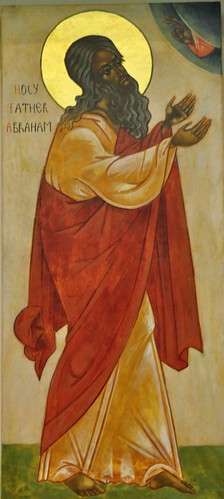
This shouldn't have been news to the Jews. After all, they looked to Abraham as their national progenitor. And of Abraham, the Jewish Scriptures record, "He believed the LORD, and He counted it to him as righteousness" (Genesis 15:6). That is why that verse is one of the most-frequently quoted in the New testament, e. g., Romans 4:3, Galatians 3:6, and James 2:23. 


Wednesday, June 3, 2020

Justification by Faith Can Never Be Justification for Sin

As an orthodox Protestant, I advocate and defend the doctrine of justification by faith alone as the standard against all false expressions of Christianity. And the consistent response from advocates of works righteousness is almost always that it means that a person can believe, and then live however wickedly he wants, and still be saved. They usually cite James 2:24 (an objection which I address here). I get this supposed trump-card most consistently from Mormons and Catholics.

Their claim is a caricature. Worse, it is a slogan, repeated from some apologetics book or class, not something thought through by the person making the accusation.

It is easy to refute. I have provided one such refutation in the link above. Another is found in the little epistle of Jude, especially verse 4: "Certain people have crept in unnoticed who long ago were designated for this condemnation, ungodly people, who pervert the grace of our God into sensuality and deny our only Master and Lord, Jesus Christ." Jude here describes people who profess to be Christians, but are then involved in some unspecified sin. But notice what else he tells us about them, that they are "condemned" as "ungodly." So, they do not have faith; they have a label. And that is a denial of Jesus, not faith.

This should be an indication to anyone who has been taught this as an argument against justification by faith that it is an accusation based on something that the Scriptures say is impossible. That means that the argument is false.

Then a far more important question should come to mind: If my religious teachers have taught me this falsehood, what are they trying to keep me from seeing as truth? They want to keep you from understanding justification by faith alone because that makes you dependent on Jesus alone, instead of them.

Wednesday, March 25, 2020

The Effectual Atonement of the Cross

"It is, and must be, an indispensable element in anything which deserves the name of atonement that it satisfies the justice of God, or lays the foundation of a claim of right to exemption from punishment" James Henley Thornwell, "The Necessity and Nature of Christianity"). 

This statement from one of the forefront theologians of the Southern Presbyterian Church in its heyday represents why the Calvinist view of atonement is logically necessary (together with its biblical evidences) and the Arminian doctrine cannot satisfy the simple meaning of the word.  

An atonement is a sacrifice given to assuage the just wrath of God upon an action or person. We see this first in the Old Testament, in which there is even a Day of Atonement (still celebrated, though deprived of content, by modern Jews): "It shall be a statute to you forever that in the seventh month, on the tenth day of the month, you shall afflict yourselves and shall do no work, either the native or the stranger who sojourns among you. For on this day shall atonement be made for you to cleanse you. You shall be clean before the Lord from all your sins. It is a Sabbath of solemn rest to you, and you shall afflict yourselves; it is a statute forever. And the priest who is anointed and consecrated as priest in his father’s place shall make atonement, wearing the holy linen garments. He shall make atonement for the holy sanctuary, and he shall make atonement for the tent of meeting and for the altar, and he shall make atonement for the priests and for all the people of the assembly. And this shall be a statute forever for you, that atonement may be made for the people of Israel once in the year because of all their sins" (Leviticus 16:29-34). This follows the description of the sin offering. These requirements indicate several things. First, that all of the people are guilty of sin. It is presupposed in the requirement of an atonement for all of the people, not excluding the children or the clergy or any other class among them. Second, it implies that the sin condition brings the judgment of God. And third, it demonstrates the heinousness of, not just particularly bad sins, but of all sins. God hates sin, and requires that a price be paid for it. 

In the New Testament, those implications are stated briefly and explicitly. That all have sinned, we find in Romans 3:22-23: "There is no distinction, for all have sinned and fall short of the glory of God." And that sin brings the judgment of God we find in Romans 6:23: "The wages of sin is death." And that all sin, whether men consider it great or small, is under the wrath of God, we find in James 2:10: "Whoever keeps the whole law but fails in one point has become guilty of all of it."  

However, there is also a strong contrast between the atonement displayed in the Old Testament and that achieved in the New Testament. In both testaments, we have one lesson: "Without the shedding of blood there is no forgiveness of sins" (Hebrews 9:22). Old Testament believers saw that truth displayed in the daily slaying of animals. However, "since the law has but a shadow of the good things to come instead of the true form of these realities, it can never, by the same sacrifices that are continually offered every year, make perfect those who draw near. Otherwise, would they not have ceased to be offered, since the worshipers, having once been cleansed, would no longer have any consciousness of sins? But in these sacrifices there is a reminder of sins every year. For it is impossible for the blood of bulls and goats to take away sins" (Hebrews 10:1-4). Israel saw this annual atonement, yet they continued to be aware of sin and its consequences. Therefore, it was not the sacrifices themselves which provided atonement. Rather, when observed with faith, they pointed to an atonement which was to come

It is in the New Testament that the atonement was no longer merely displayed but was truly, once for all achieved. "Christ has entered, not into holy places made with hands, which are copies of the true things, but into heaven itself, now to appear in the presence of God on our behalf. Nor was it to offer Himself repeatedly, as the high priest enters the holy places every year with blood not his own, for then He would have had to suffer repeatedly since the foundation of the world. But as it is, He has appeared once for all at the end of the ages to put away sin by the sacrifice of Himself. And just as it is appointed for man to die once, and after that comes judgment, so Christ, having been offered once to bear the sins of many, will appear a second time, not to deal with sin but to save those who are eagerly waiting for Him" (Hebrews 9:24-28).

Here we see the fulfillment of what is described by Thornwell, satisfying the justice of God and relieving the consciences of believing men. It fully saves everyone for whom it was given (6:39). As He promises, it cannot fail to achieve its purpose.

Saturday, January 18, 2020

No Cover for Sin


Americans have come to loathe the concept of sin. The popular  preachers, such as Joel Osteen, refuse to use the word. Even the supposedly-great Billy Graham, while he used the word, did not define it, or point out the sins of unbelievers, and even allowed unrepentant apostates to share his podium. So, when I say Americans, I don't have to limit my intent to professed unbelievers, but include even professing Evangelicals, a word that comes from the Greek word for "gospel."

Sin has come to mean, not wickedness, but error or even social injustice. We no longer think of it as it is presented in Genesis 3, rebellion against God and a despising of His word. We no longer talk about it as something which brings God's proper judgment: "Behold, all souls are Mine; the soul of the father as well as the soul of the son is Mine: the soul who sins shall die" (Ezekiel 18:4). Rather, we expect God to put our sins in a balance, with the acts that are good, in our own eyes, on the other side. And every person believes that his good deeds will outweigh his bad deeds. While that is the view of Islam, it is not the biblical view: "Whoever keeps the whole law but fails in one point has become guilty of all of it" (James 2:10), and, "No one does good, not even one" (Romans 3:12, quoting Psalm 53:3).

That is the problem with the objection of atheists, that God is supposedly unjust to send people to Hell just for not believing in Him; since Christians have taught a false view of sin, atheists have taken refuge in a false sense of their goodness. To the atheist, or any non-Christian, I give this warning: at the Judgment, you will not be excused by what men have told you, but rather you will be judged by what God has told you, even if you have refused to hear. To the supposed Christian who fails to warn of sin, I have these words from God: "If I say to the wicked, ‘You shall surely die,’ and you give him no warning, nor speak to warn the wicked from his wicked way, in order to save his life, that wicked person shall die for his iniquity, but his blood I will require at your hand" (Ezekiel 3:18).

To both groups of people, I give my own warning: There is no salvation in excuses. There is only salvation in the blood of Jesus, received by grace through faith alone.

"The penalty of the law was no vulgar ill, to be appeased by a few groans and tears, by agony, sweat, and blood. It was the wrath of God, which, when it falls upon a creature, crushes him under the burden of eternal death. It is a blackness of darkness through which no ray of light or hope can ever penetrate the soul of a finite being; to all such it must be the blackness of darkness forever. But Jesus endured it, Jesus satisfied it, Jesus bowed beneath that death which the law demanded, and which sinks angels and men to everlasting ruin, and came victorious from the conflict" (James Henley Thornwell, "The Necessity and Nature of Christianity," emphasis in the original).

Wednesday, August 7, 2019

Justifying Faith Is a Working Faith

In my day to day ministry, I confront many sectarians who hold to some version of works righteousness, Catholics, Mormons, Jehovah's Witnesses, Oneness Pentecostals. They hate the doctrine of justification by free grace. Why? Part of it is the remainder of Adam in each of us, that seeks to be justified by the broken covenant of works. However, there is also a part which is bondage: the man who is free in Christ has no loyalty to organizational hierarchies. They simply have no hold over him.

These organizations point to the commands in Scripture to live holy lives. And those commands are truly there, and should be in the mind of every Christian. That isn't the problem. The problem is that they claim that those works commanded by Scripture are commanded in order to gain the favor of God, though they may phrase it in different ways. That is, they claim that justification is, in part, the result of these works. And that destroys the true doctrine of justification by grace alone through faith alone, apart from works (e. g., Romans 3:28). That is, they put the result for the cause, and, thus, destroy assurance of salvation.

In every discussion on this issue, we can expect these works-mongerers to refer to James 2:24: "You see that a person is justified by works and not by faith alone." They consistently block out the context of the paragraph that includes that verse, which is about the demonstration of justification before men, not justification before God.

Then they will bring up the accusation against the biblical Christian that "faith alone" means that works are irrelevant, allowing the Christian to live wickedly, and yet go to heaven. That is a caricature, which has been answered repeatedly down through history. Yet the works-mongerers consider themselves very clever to repeat it, regardless of the answer. What is that answer? "Faith, thus receiving and resting on Christ and his righteousness, is the alone instrument of justification; yet is it not alone in the person justified, but is ever accompanied with all other saving graces, and is no dead faith, but worketh by love" (Westminster Confession of Faith XI:2). True faith will necessarily result in good works.

Wednesday, April 17, 2019

Free Grace Justification versus the Cults

The Pelagian cults - by which I mean primarily the Church of Rome, the Mormons, Jehovah's Witnesses, and Oneness Pentecostals - hate the doctrine of salvation by free grace, apart from works. They hate it because it liberates the believer from dependency on their organizational hierarchy. However, their stated reason for opposing it is that it supposedly results in antinomianism, a freedom to sin without the expectation of spiritual consequences.

They will always cite in this regard James 2:24: "You see that a person is justified by works and not by faith alone." I have addressed their perversion of that verse here. Mormonism even makes it more explicit in their own scriptures (Doctrine and Covenants 76:52): "That by keeping the commandments they might be washed and cleansed from all their sins, and receive the Holy Spirit by the laying on of the hands of him who is ordained and sealed unto this power."

However, the truth is the opposite of their assertion. True good works can only be the result of free grace. That is because the natural man is incapable of doing meritorious works: "No one does good, not even one" (Romans 3:12). The Pelagian puts the effect for the cause, and thus puts the supposed righteousness of the sinner in the place of the real righteousness of Christ (Mark 10:18), which is imputed to the repentant sinner by grace through faith alone, to make him righteous (II Corinthians 5:21). In other words, by teaching a doctrine of salvation that is impossible, the Pelagian blocks men from knowing true salvation! Surely there can be no greater sin (Matthew 23:13).

Nineteenth-Century Presbyterian theologian James Henley Thornwell explains the difference: "A penitent sinner is one who has been a transgressor, but is now just; the laws of God are now put within his mind and written on his heart, and his moral condition is evidently one which renders the supposition of punishment incongruous and contradictory. Such a man is as unfit for the atmosphere of Hell as an impenitent transgressor is unfit for the atmosphere of Heaven. There is obviously, therefore, no principle of reason or nature, as there is, unquestionably, none of revelation, which teaches that a man may be penitent and [yet] perish - that he may be driven into final punishment with the love of God in his heart and the praise of God upon his tongue" ("The Necessity and Nature of Christianity").

He is expressing the same idea that God does in Ezekiel 33:12: "The righteousness of the righteous shall not deliver him when he transgresses, and as for the wickedness of the wicked, he shall not fall by it when he turns from his wickedness, and the righteous shall not be able to live by his righteousness when he sins."

Tuesday, February 26, 2019

Liberty under Law in the Life of the Christian

"I will keep Your law continually, forever and ever,
And I shall walk in a wide place, for I have sought Your precepts. 
I will also speak of Your testimonies before kings and shall not be put to shame, 
For I find my delight in Your commandments, which I love."
- Psalm 119:44-47

These four verses express an attitude which is strikingly different from that of most modern Christians toward the Law of God. Under the influence of dispensationalism, most professing evangelicals believe that the law is a taskmaster, an enemy to spiritual freedom, joy, and assurance. Yet, the anonymous author of this Psalm would clearly disagree. To him, the Law is liberating and a spiritual blessing.

How can there be such a contrast between the one believer, writing under the inspiration of the Holy Spirit, and so many others?

One thing that must be granted here is that the Psalmist is using the word "law" in a broad sense, to refer to all of the biblical teachings. However, it must be equally obvious that he is using the word in that sense because he includes the Law in the strict sense under that rubric.

A big part of the problem is the dispensationalist hermeneutic. In particular, it quotes Romans 6:14 ad nauseum, "You are not under law but under grace." However, the dispensationalist ignores one simple consideration: in the sense of justification, no one has ever been under the Law! Notice what Paul does not say in the verse: "You are no longer under law." Yet that is exactly how the dispensationalist reads it!

If any person is looking to the Law for justification, then he is truly under bondage, because it can provide none. Justification comes by grace through faith alone (Ephesians 2:8-9). However, if a justified person then uses the Law for its proper purpose, then it will serve as a bulwark against the sin that so easily besets us (I Timothy 1:8-11, Hebrews 12:1). Thus applied and empowered by the Holy Spirit, the Law is the Law of Liberty, indeed (James 1:25).

Wednesday, October 3, 2018

The Example of William Carey: The Two Sides of the Missionary Endeavor

There is an unfortunate tendency among Christians to define everything in two opposing theses. That is unfortunate because life doesn't work like that. It has a lot more than just two options in almost any circumstance. Think of a questionnaire that asks your favorite flavor of ice cream, and then gives only the options of vanilla or chocolate. Can no one prefer strawberry?

One particular example is the definition of mission. Liberal churches still send out men and women that they call missionaries. However, their work is devoted to social activism or welfare institutions. Under no circumstances do they call anyone to repent, believe in Jesus, and form Gospel-proclaiming national churches. On the other hand, fundamentalist missionaries define their task strictly in terms of how many people have been called to believe. Social institutions are poo-pooed as diversions from their task.

That is a false dichotomy. Have we forgotten William Carey, a pioneer in the modern missionary task? While he translated the Bible and preached the Gospel, in order to gather converts, he also built a missionary infrastructure, such as colleges and orphanages.

Does the Bible address this dichotomy? Yes, it does. "Open your mouth for the mute, for the rights of all who are destitute. Open your mouth, judge righteously, defend the rights of the poor and needy" (Proverbs 31:8-9).

God's concern is certainly the spreading of the Gospel to unbelievers. The Great Commission is a command to that end, and is so important to Him that He repeated it in different words in Matthew 28:19-20, Mark 16:15, and Acts 1:8. But He also tells us, "If a brother or sister is poorly clothed and lacking in daily food, and one of you says to them, 'Go in peace, be warmed and filled, without giving them the things needed for the body, what good is that? So also faith by itself, if it does not have works, is dead" (James 2:15-17). The Christian who preaches the Gospel, but has no concern about the physical well-being of the people to whom he ministers is practicing a truncated and unbiblical Christianity. 

I didn't quote that great Commission on purpose. I will do so now: "Go therefore and make disciples of all nations, baptizing them in the name of the Father and of the Son and of the Holy Spirit, teaching them to observe all that I have commanded you" (Matthew 28:19-20). Notice that it doesn't tell us to explain only how to be saved, as vital as that it, but also to observe, or obey, everything that God commands. And that necessarily includes a concern for the less-fortunate.  


Wednesday, December 6, 2017

Without the Law, There is No Righteousness

I've noticed a certain reaction, whenever I cite from the Old Testament something which conflicts with another person's theology: "That's Old Testament, and we're under grace, not under law." Of course, that ignores the fact that most of the Old Testament  is not Law. It is also an abuse of Paul (Romans 6:14), who also said, "Do we then overthrow the law by this faith? By no means! On the contrary, we uphold the law" (Romans 3:31). So, the Apostle had no fantasy that the Law had no place in the life of a Christian (compare Matthew 5:19). From where, therefore, does this antinomian heresy arise?

It seems that everyone forgets the offer that Satan made to Adam: "God knows that when you eat of it your eyes will be opened, and you will be like God, knowing good and evil" (Genesis 3:5). We print thousands of pictures each year of the tree, the serpent lounging among its branches, while Even holds out an apple to Adam. It wasn't about the fruit! It is the words that are significant, and, in them, Satan offered - deceptively, of course - moral autonomy. The temptation to which the first man fell wasn't an apple, but rather the false promise of autonomy, to decide right and wrong for himself, rather than to receive the judgment of his Creator. Antinomianism is the same lie, but now distributed by men who claim to represent, not Satan, but God! Notice the element that those two words, antinomian and autonomy, share: "nomos," the Greek work for law. "Antinomian" means "against the Law," that is, God's law. "Autonomy" means "self law," again an opposition to God's Law.

What basis does God give for the righteousness that our lives should display (James 2:14-17)? God says, "You shall be holy, for I the Lord your God am holy" (Leviticus 19:2). Jesus paraphrased these same words in Matthew 5:48: "You therefore must be perfect, as your heavenly Father is perfect." In contrast to Satan, God says that our righteousness is centered on Him, not ourselves. the Apostle Peter quotes and applies those same words from Moses: "As obedient children, do not be conformed to the passions of your former ignorance, but as He who called you is holy, you also be holy in all your conduct, since it is written, 'You shall be holy, for I am holy'" (I Peter 1:14-16). If Peter quotes the Mosaic Law to support his point, then he, at least, didn't believe that it has no role in the life of the Christian! He was no antinomian!

I give here the words of Paul, Peter, and Jesus against antinomianism. "Let God be true though every one were a liar" (Romans 3:4).

Monday, August 7, 2017

Why Do Men Sin? Did the Devil Make Me Do it?

It is unpopular to talk about sin, even among professing Christians. On one hand, we have the Osteen-style preachers who won't use the word lest they damage someone's self-esteem. On the other, we have liberals who deny sin, and claim that men are naturally good, but merely make mistakes, or have been led off the right track by their environment.

In contrast, the Bible, the expression of God's opinion on the subject, talks a lot about sin. For example, James, the half-brother (or step-brother) of Jesus, makes this declaration: "Each person is tempted when he is lured and enticed by his own desire. Then desire when it has conceived gives birth to sin, and sin when it is fully grown brings forth death" (James 1:14-15). He was paraphrasing the words of his better-known sibling: "Do you not see that whatever goes into the mouth passes into the stomach and is expelled? But what comes out of the mouth proceeds from the heart, and this defiles a person, for out of the heart come evil thoughts, murder, adultery, sexual immorality, theft, false witness, slander. These are what defile a person" (Matthew 15:17-20). Both men describe sin's origin, not in external influences, but rather from within, from a man's heart itself. As the Prophet Jeremiah also said, "The heart is deceitful above all things, and desperately sick" (Jeremiah 17:9).

When Scripture describes the hatred of God toward sin, it cannot be understood to mean that He is angry at poverty, or bad schools, or low self-esteem, or any of the other popular justifications for sin. Rather, as Jeremiah also says, "Your evil will chastise you, and your apostasy will reprove you" (Jeremiah 2:19). God's wrath is against what comes from us, not what goes into us! Therefore, the same Prophet asks, "Why should a living man complain, a man, about the punishment of his sins?" (Lamentations 3:39).

The self-esteem preachers are propagating a lie! God is no Santa Claus, no therapist, no personal life coach, no cheerleader. Rather, He is God, and an absolutely righteous one at that! He cannot, and will not, tolerate wickedness: "You [God] are of purer eyes than to see evil and cannot look at wrong" (Habakkuk 1:13). When the self-esteem preachers hide that information, then they are condemning men to Hell. And it is not good enough that anyone feel good about himself in Hell. God will judge those preachers, and hold them accountable for their wicked refusal to tell the truth (Ezekiel 3:18).

Wednesday, July 26, 2017

Adam Made It Rough: The Sin Nature

The hardest inheritance that all men have received from our first ancestor, Adam, is the promise of eternal life on the basis of perfect obedience to the covenant of works. As we know from subsequent events, Adam broke the covenant, forfeiting salvation by it, and bringing death, both spiritual and physical, on all his posterity (Romans 5:12-19). Yet our hearts have retained that consciousness of the original covenant, and find every opportunity to convince us that a little hard work will restore us to eternal life. This results in the Pelagianism that is inherent in all pagan religions, all forms of secularism, and much of popular Christianity. Apart from orthodox, biblical Christianity, all religions, including secular religions, hold that men are good, or, at least, good enough to claw our way to whatever vision of salvation we hold.

It is biblical Christianity alone that teaches consistently that the covenant of works is broken and hopeless. By its very nature, failure is permanent, leaving no opportunity for second chances: "The soul who sins shall die" (Ezekiel 18:20). And this isn't sin on a curve, i. e., the one who sins more than someone else. Rather, broken means broken, all or nothing: "Whoever keeps the whole law but fails in one point has become guilty of all of it. For he who said, 'Do not commit adultery,' also said, 'Do not murder.' If you do not commit adultery but do murder, you have become a transgressor of the law" (James 2:10-11).

Yet, we just naturally keep trying to get back on that train, though it long ago left the station. We all want to get the credit for saving ourselves. It is the same deceptive independence that Satan offered Adam and Eve in the garden: "God knows that when you eat of it [the Tree of the Knowledge of Good and Evil] your eyes will be opened, and you will be like God, knowing good and evil" (Genesis 3:5). "Don't let God rule you," Satan said. "Rule yourselves." And he continues to whisper that same deception in the ear of every human being since then, even Jesus (Matthew 4:8-9). Jesus alone never gave in to that temptation.

That same Jesus tells us the truth about what is left of the covenant of works: "When you have done all that you were commanded, say, ‘We are unworthy servants; we have only done what was our duty'" (Luke 17:10). He is not impressed with what impresses us. While we trumpet each prideful act, He says that ever our best is merely the minimum standard, not anything that gets merit in His eyes.

That's why every philosophy based on human autonomy is a pathway to judgment. It starts with a false premise. God's beginning premise is Himself, with the holiness that is essential to His nature (Habakkuk 1:13). Men always start with themselves, which means with the antiholiness that Adam has passed to all of us. When we agree with Him, then salvation is available in Jesus Christ. All other options are really just one option, judgment. Hear Jesus's words: "Enter by the narrow gate. For the gate is wide and the way is easy that leads to destruction, and those who enter by it are many. For the gate is narrow and the way is hard that leads to life, and those who find it are few" (Matthew 7:13-14).

Saturday, February 27, 2016

Is God Responsible for Sin?

Related to the so-called question of evil is the question, Is God the author of sin? Did He create sin? Is sin under His control?

Let me first address the Arminian answer to this question: sin is the result of man's free will, with the permission of God. This, the Arminian believes, relieves God of any responsibility for sin, as is supposedly required by James 1:13. However, I would suggest that the Arminian solution falls short of the weight that Arminians put on it. If I had a teenage son who told me that he intended to kill his schoolmates (as in the Columbine massacre), and I did not stop him, would I be considered free of guilt, because I merely permitted my son's wicked actions? Of course not! Both morally and legally, I would be culpable for not acting to prevent his actions. This is comparable to the Arminian attitude toward God's permission of sin. If God knew that Adam (or any of his descendants) would commit an evil act, and could have prevented it - with both of which statements the Arminian would agree - then was it not reprehensible for Him not to have prevented it? Of course, it was, so that the Arminian excuse of mere permission in no way meets his own criterion for avoiding responsibility.

In contrast, the Calvinist - including myself - insists that God is always God, and all things occur, not by His mere permission, but by His active decree. That includes things that we consider evil, whether properly so or not.

Do I then make God guilty of the acts of evil which I plainly say happen according to His decree? And the answer is no, I don't. How so?

Let me first demonstrate my assertion that all things, including what men would consider evil (whether properly so or otherwise), occur only according to the purposes of God. In Zechariah 1:14-15, that Prophet quotes God, saying, "I am exceedingly jealous for Jerusalem and for Zion, and I am exceedingly angry with the nations that are at ease. For, while I was angry but a little, they furthered the disaster." The situation is the time of the end of the exile in Babylon. As is commonly known, the Babylonians were God's tool for the punishment of Judah for idolatry. However, though Babylon was the tool of God, in her own intentions she had acted in evil, and thus incurred the wrath of God.


In Gen. 50:20, Joseph, the son of Jacob, told his brothers, "As for you, you meant evil against me, but God meant it for good, to bring it about that many people should be kept alive, as they are today." Do you recall the story? Joseph was favored by his father over his brothers, because his mother was Jacob's favorite wife. Out of jealousy, his brothers sold him into slavery, but told his father that he had been slain by beasts. After a series of adventures, Joseph became the prime minister of Egypt at a time when there was famine in Canaan. As a result, he was in a position to save his family from starvation. An act of sin on the part of the brothers was according to God's plan to save the covenant people.

In Acts 4:27-28, the Apostle Peter is preaching to the leaders of the Jews, and then prays: "Truly in this city there were gathered together against your holy servant Jesus, whom you anointed, both Herod and Pontius Pilate, along with the Gentiles and the peoples of Israel, to do whatever your hand and your plan had predestined to take place." He explicitly states that God had predestined - decreed before history began - that Jesus would suffer and be murdered for the salvation of His people. The greatest evil that has ever occurred in the bloody and violent history of mankind happened by the predetermined purpose of God.

So, now we come to the question at issue: is God thereby the author of sin, of evil, of the wickedness of men? No, He is not. What is sin? As Question 14 of the Westminster Shorter Catechism says, "Sin is any want of conformity unto, or transgression of, the law of God." Sin is the repudiation of God's authority. That definition self-evidently excludes the acts of God Himself. In addition, all that God does is for His own glory (see, for example, Isaiah 43:7) and for the good of the elect (Romans 8:28-29). That means that everything He does is necessarily good. In contrast, wicked men always act to spite the glory of God and to destroy the elect. That means that everything they do, in terms of their intent, is evil, sinful, wicked. As can be seen in the verses above, the same act, as committed by men, may be sin, but, as it is decreed by God, is only good.

Sunday, October 4, 2015

Do We Understand How Sinful Sin Really Is? The Puritans Did!

The Puritan Thomas Watson, in his Body of Divinity, lists ten ways in which sin is truly sinful:

     1) Incredulity: Our first parents did not believe that what God had spoken was truth (Gen. 2:16-17, 3:4). They believed not that they should die, because they could not be persuaded that such fair fruit had death at the door. Thus, by unbelief they made God a liar. In fact, what was worse was that they believed the devil rather than God.

     2) Unthankfulness: God had enriched Adam with a variety of mercies, stamped His own image on him, made him lord of the world, and given him the fruit of all the trees for food, with just one excepted. Thus, to take from that one tree was high ingratitude.

     3) Discontent: Adam differed little from the angels (Ps. 8:5), had native innocence, and enjoyed the glory of Paradise as his realm. Yet, he had to have more, because his heart could not be satisfied with all that he had.

     4) Pride: he loved the offer of Satan to become like God (Gen. 3:5)!

     5) Disobedience: God had given him his existence and all his subsistence, so it was right to expect his obedience.

     6) Curiosity: Adam sought to meddle with what was not his, though it was to cost him everything.

     7) Wantonness: With the choice of all other trees, Adam had all of his needs filled, but demanded the satisfaction of his lusts as well. Watson is expressing the same truth as in James 1:14-15: "Each person is tempted when he is lured and enticed by his own desire. Then desire when it has conceived gives birth to sin, and sin when it is fully grown brings forth death."

     8) Sacrilege: God had reserved this one tree of the garden for Himself, yet Adam deigned to rob Him of what was His alone.

     9) Murder: as the federal head of all his posterity in the covenant of works, Adam represented us in his actions, and chose to bring the curse of death on all of humanity (Rom. 5:12).

     10) Presumption: Adam presumed, contrary to God's warning, that he would not die, regardless of his actions. "Surely," he decided, "God must relent if I choose to do as I wish."

And later in the same book, Watson makes this observation: "The sight of Christ's bleeding body should incense us against sin. Let us not parley with it; let that not be our joy, which made Christ a man of sorrow." This is, again, a precept from James 2:10: "Whoever keeps the whole law but fails in one point has become accountable for all of it." Whatever sin any person holds onto, thinking it just isn't really so bad, he must think differently if he understands that any sin makes the sinner guilty of breaking the whole law (James 2:11). This especially overthrows the Catholic distinction between "mortal" and "venial" sins. According to James (a book that they otherwise enjoy quoting), and, as repeated by Watson, every sin is mortal (Ezekiel 18:4, Rom. 6:23).

Sunday, September 13, 2015

Another Clergyman Comes Out for Molech: Abortion

I wrote recently about some Episcopal Church clergy who were campaigning for the right to kill babies and rip their bodies apart. Now word has come out about United Church of Christ Minister Tom Davis, who has written a book, Sacred Work: Planned Parenthood and Its Clergy Alliances, in which he
claims that pro-abortion clergy teach "a form of humane theology." Yes, readers, Davis claims that a humane view of God requires a clergyman to advocate for the mass murder of unborn children.

Together with Davis, Presbyterian Church (USA) Minister Andrew Kukla explained on his blog that he loves everything about the organization. He said, "I love Planned Parenthood. I love the people that are Planned Parenthood. I love their ministry [sic]. I love that they live resurrection in a way I only talk about it." Hmmm... the "ministry" and "love" of Planned Parenthood, by which "they live resurrection." Are these men supporting abortion to speed these children on their ways to resurrection? Such doublespeak explains why the memberships of both denominations are imploding before our eyes.

In contrast, as I have also noted recently, true Presbyterians are publicizing the death industry behind the doors of Planned Parenthood.

Davis and Kukla, regardless of their claims or of their media images, are no clergy of Christ. In fact, I cannot accept them even as mere Christians. What they advocate is completely unlike biblical religion, but is actually a revival of the human sacrifices of Molech worship. Condemnations of these practices can be seen in Leviticus 20:3 and 20:5. Yet, the Israelites adopted that same practice, which was part of the apostasy for which God punished them in the Exile (see, for example, Jeremiah 32:34-35).

David, Kukla, and the Episcopal priests, and all who march with them for human sacrifice, in spite of their spiritual-sounding claims, are marching to bring God's judgment on America. As I have also written, God holds us accountable for shedding innocent blood. How many could the Israelites have sacrificed? Hundreds, maybe thousands, yet God destroyed their nation. What will he do for the tens of millions of innocent babies that we have killed, just since 1973?

Are these so-called clergymen accountable for their activities? Of course! In fact they bring upon themselves an even heavier judgment. God tells them, "Not many of you should become teachers, my brothers, for you know that we who teach will be judged with greater strictness" (James 3:1). Not that I believe that these men and women will be frightened merely by the words of God.

However, they will not be alone in their judgment. Does anyone really believe that the congregations that pay the salaries of these clergypersons can wash their hands of the actions of their clergy? God says to you (Jeremiah 23:16-17), "Do not listen to the words of the prophets who prophesy to you, filling you with vain hopes. They speak visions of their own minds, not from the mouth of the Lord. They say continually to those who despise the word of the Lord, 'It shall be well with you'; and to everyone who stubbornly follows his own heart, they say, 'No disaster shall come upon you.'"

I think of something else that God is saying to you: "Come out of her, my people, lest you take part in her sins, lest you share in her plagues" (Revelation 18:4). Your money and membership are being used to support these pagan men and their vile activities. No matter how much you might cluck your tongue at them - and I am being generous to assume even that much - your passive support enables them to continue. And, as Jesus said in the Revelation, you will share in their plagues.

Tuesday, December 16, 2014

How Can a Man Be Righteous Before God?

In the Bible, we find comments like this (Habakkuk 1:13): "You are of purer eyes than to see evil, and cannot look at wrong." Or Job 13:16: "The godless shall not come before Him." And Isaiah 59:2: "Your iniquities have made a separation between you and your God, and your sins have hidden His face from you, so that He does not hear." Or the hardest of all (Hebrews 12:14): "Strive for the holiness without which no one will see the Lord" [emphasis mine].

Any person who hasn't completely hardened his conscience should tremble at those verses, "for all have sinned, and fall short of the glory of God" (Romans 3:23). How can any of us stand before God, knowing in our hearts that "all our righteous deeds are like a polluted garment" (Isaiah 64:6)? If the best I can do is a filthy rag by the standards of God's righteousness, how can I have any hope for more than His just judgment?

Thank God that He has given us an undeserved solution for our sin natures. Just before the verse above from Romans, the Apostle Paul tells us (Rom. 3:21-22), "The righteousness of God has been manifested apart from the Law, although the Law and Prophets bear witness to it - the righteousness of God through faith in Jesus Christ for all who believe." Ah, here is hope! Here is the holiness that we do not have in ourselves!

In theology, this is called "imputed righteousness," i. e., a righteousness, a holiness, that is outside
ourselves, but is considered ours in God's eyes, by the means of faith. "With the heart one believes and is justified, and with the mouth one confesses and is saved, for, the Scripture says, 'Everyone who believes in Him will not be put to shame'" (Romans 10:10-11). Even the Patriarch Abraham needed this holiness: "If Abraham was justified by works, he has something to boast about, but not before God. For what does the Scripture say? 'Abraham believed God, and it was counted to him as righteousness'" (Romans 4:2-3).

The Catholic Church tries to steal our assurance in this righteousness by quoting James 2:24, "You see that a person is justified by works and not by faith alone." She claims that this verse means that we receive eternal life only by a mixture of faith and good works. I ask, how can a person be saved, even in part, by offering God a "polluted garment" (Isaiah 64:6)? But they make their case only by ignoring the rest of what James says. In the same paragraph (James 2:18), that brother of Jesus tells us, "Show me your faith apart from works and I will show you my faith by my works." So, where Paul is talking about our justification before God, James is talking about our justification before men. And he is correct: a faith that justifies us before God will necessarily result in a changed life that demonstrates our justification before the people around us. 

In contrast, the Westminster Confession of Faith (XVIII:1) says, "such as truly believe in the Lord Jesus, and love him in sincerity, endeavoring to walk in all good conscience before him, may in this life be certainly assured that they are in a state of grace, and may rejoice in the hope of the glory of God: which hope shall never make them ashamed." I take great comfort in that. And I find this, alone, to be sufficient grounds to be a Presbyterian.

And knowing that Satan will throw other doubts in our path, the Confession continues correctly (paragraph 4): "True believers may have the assurance of their salvation divers ways shaken, diminished, and intermitted; as, by negligence in preserving of it; by falling into some special sin, which woundeth the conscience, and grieveth the Spirit; by some sudden or vehement temptation; by God's withdrawing the light of his countenance and suffering even such as fear him to walk in darkness and to have no light: yet are they never utterly destitute of that seed of God, and life of faith, that love of Christ and the brethren, that sincerity of heart and conscience of duty, out of which, by the operation of the Spirit, this assurance may in due time be revived, and by the which, in the meantime, they are supported from utter despair."

Sunday, November 16, 2014

Sola Fide and the Catholic Use of James 2:24

As any Christian should know, the Apostle Paul tells us (Romans 3:28), "We hold that one is justified by faith apart from the works of the law." Faith is the means - not the basis, which is the sacrifice of Christ on the cross - of justification before God, that is, a judicial declaration of guiltlessness.

While claiming not to teach salvation based on works from one side of the mouth, with the other Catholics immediately throw up James 2:24: "You see that a person is justified by works and not by faith alone."

Hmmm, the Bible-believer might think, were the Reformers wrong in decrying the Catholic doctrine of salvation? Are we saved partly by works? This thinking could severely undermine the assurance of salvation. For the Catholic, an obvious question would be, How do I know when I have added enough good works to qualify for justification?

However, their whole argument fails with just a little consideration of context. For this verse, the context is the entire paragraph, James 2:18-26. Verse 18, the second half (emphasis added), is the key: "Show me your faith apart from your works, and I will show you my faith by my works" [emphasis mine]. He says "show me" and "show you," but never "show God." James isn't arguing with Paul over how the believer is justified in the eyes of God! He is talking about how we demonstrate our faith before the eyes of people around us. He is stating, in different words, the same principle stated by Jesus in Matthew 7:16: "You will recognize them by their fruits."

I write this for two purposes. The first is to reinforce the confidence of the Protestant in the face of Catholic abuse of Scripture. The second is in hope that God will open the eyes of a Catholic reader, leading him to recognize that he has been deceived. I appeal to you to turn to Christ in faith alone, eschewing any confidence in your good works to get you into eternal life. In God's eyes, the best that you can do is as "a polluted garment" (Isaiah 64:6). Your best works are repugnant to Him.

Wednesday, November 5, 2014

95 Theses Against the Claims of Mormonism


From Christ Presbyterian Church, Magna, UT. Used by permission.

On October 31, 1517, Martin Luther posted 95 theses or propositions against the Roman Catholic Church’s sale of indulgences – – the claim that for the right amount of money you could buy forgiveness of sins. Indulgences were hostile to the very heart of the Christian faith. Martin Luther challenged this practice from the Scriptures and called men back to the Bible and back to Jesus. In the spirit of that challenge, we present 95 theses against the claims of the Church of Jesus Christ of Latter-day Saints. We implore you to search the Scriptures to know what is true (Acts 17:11) and seek the real Jesus while He may be found.
The Elders of Christ Presbyterian Church
A Congregation of the Orthodox Presbyterian Church
Magna, UT
(801)969-7948

.
1. Your god is not the God of the Bible, nor even truly a god. He is not the creator and sustainer of all things (Colossians 1:16-17), but an exalted man or “super-man” who transformed eternal matter. Your god is more akin to the Norse god Thor than the God of the Bible.

2. On dedicating the temple in Jerusalem, King Solomon stated that the “heavens of heavens cannot contain Thee, how much less this house that I have builded.” (1 Kings 8:27) Yet, your god could have easily fit inside that temple.

3. The Lord, through the Apostle Paul in Romans 1:22, condemns the pagans, “Professing themselves to be wise, they became fools, and changed the glory of the incorruptible God into an image made like to corruptible man. . .” Yet, you take pride that your god is man with a body of flesh and bone (D&C 130:18).

4. Even if your god existed, he would be pitifully small.

5. Jesus was God before He took a body (John 1:1). There is no similarity between God condescending to become a man, and a man exalting himself to become a god.

6. Your god is one among many gods, but the God of the Bible states, “ye are even My witnesses. Is there a God beside Me? yea, there is no God; I know not any.” (Isaiah 44:8)

7. Your god had a father, who had a father. The Bible states, “Thus saith the LORD the King of Israel, and his redeemer the LORD of hosts; I am the first, and I am the last; and beside Me there is no God.” (Isaiah 44:6)

8. Your god had a wife. The Bible states, “I am the LORD, and there is none else, there is no God beside Me.” (Isaiah 45:5)

9. You twist Psalm 82 to claim a multitude of gods, yet it does not say, “ye may become gods,” but “ye are gods.” Even your apostle, James Talmage, wrote that these are human judges (Jesus the Christ, p.501) who die like men.

10. Your god has not always been a god. Achieving A Celestial Marriage states, “God was once a man who, by obedience, advanced to his present state of perfection. . .” Psalm 90:2 states, “. . . from everlasting to everlasting, Thou art God.

11. This concept of your god having to obey a law external to himself sets something superior to your god. There is nothing higher than the God of the Bible (Hebrews 6:13).

12. Your God is subject to human free agency, but the God of the Bible works all things together for good (Romans 8:28) and according to the counsel of His will (Ephesians 1:11). Those who crucified Christ were guilty, yet Jesus was “delivered by the determinate counsel and foreknowledge of God.” (Acts 2:23)

13. Joseph Smith in his “inspired translation” changed the Bible to remove the statement that God hardened Pharaoh’s heart in Exodus. The Apostle Paul in Romans 9 confirms the reading in Exodus, contrary to Joseph Smith.

14. You claim that the Bible contradicts itself because it says that no man has seen God at any time. You ignore the context and figures of speech. The Lord “spake unto Moses face to face, as a man speaketh unto his friend” (Exodus 33:11), but it is only nine verses later that God explicitly states, “Thou canst not see My face: for there shall no man see Me, and live.” (Exodus 33:20)

15. You confuse seeing Jesus with seeing the Father. To see Jesus is to see the Father (John 14:9), but there is a difference. Jesus, the Word, is God (John 1:1); “and the Word was made flesh, and dwelt among us, and we beheld His glory, the glory as of the only begotten of the Father. . . (John 1:14). Yet, “No man hath seen God at any time, the only begotten Son, which is in the bosom of the Father, He hath declared Him.” (John 1:18)

16. You confuse sentimentality with reverence, since you seek to rob God of His unique glory.

17. Your religion seems to be more focused on God as a means to your own glory, rather than our being the means of revealing His glory.

18. You claim we undergo a mortal probation to become a god, and yet Jesus already was God before his incarnation (John 1:1-14).

19. Because John 1:1 contradicted Joseph Smith, in his “inspired” translation of John 1:1 Smith tried to make the gospel rather than Jesus the focus. Nowhere in any of the thousands of Greek manuscripts of this passage do we find anything resembling Smith’s translation.

20. Jesus was worshiped by angels before His incarnation and was so holy that they had to cover their faces in His presence. (Isaiah 6, John 12:41) Yet you have reduced him to our elder spirit brother, along with Satan.

21. Since you believe that we all began as eternal intelligences, all that really separates us from Elohim and Jesus are time and exaltation.

22. Your god is limited in time, power, justice, holiness, love, and glory.

23. You assert that we existed before this world because God tells Jeremiah, “Before I formed thee in the belly I knew thee. . .” It is only because your god is too small that you cannot fathom a God who “calleth those things which be not as though they were.” (Romans 4:17) God breathed into Adam the breath of life, and Adam “became a living soul.” (Genesis 2:17)

24. You twist the words of Jesus and the apostles to claim that we can become gods. Christians will become like Jesus, yet God explicitly states, “Before Me there was no god formed, neither shall there be after Me.” (Isaiah 43:10)

25. Isaiah 43:10 and 44:8 also debunk your idea that Jesus became a god at some later date. In the beginning, Jesus already was God (John 1:1), yet the Bible is also clear that there is one God.

26. You ignore what Christians really say about the Trinity and seek to portray it as modalism: one God playacting in three different roles. Christians believe what the Bible teaches: that there is one God, who exists eternally as three distinct persons. We do not believe Jesus was “talking to Himself” in His prayers, but speaking to the Father.

27. You claim there is only one god for this planet, but don’t you claim that Elohim and Jesus are different gods?

28. You are unclear whether Jesus is to be worshiped, and yet He and the Father are worshiped in the Bible by the people of this world.

29. Your god is not holy; he is the author of sin. He gave Adam two contradictory commands, so that Adam had to rebel against God to obey the command to be fruitful and multiply (2 Nephi 2:25). The God of the Bible does not tempt, much less command men to sin (James 1:13).

30. Your apostle, Bruce McConkie stated, “Properly understood, it becomes apparent that the fall of Adam is one of the greatest blessings ever given of God to mankind.” The Bible presents the Fall of Adam, not as a “fall upward,” but treason against God.

31. Our Creator declared all things good, except for man to be alone. When that was resolved, God declared everything “very good.” Adam, in his rebellion, believed things were not good and substituted his judgment for the revelation of God. Mormons agree with sinful Adam.

32. You trivialize sin. The Fall of Adam was not a blessing, but ushered in this world of rape, lies, murder, cancer, and death. Jesus wept over death, but you would have us believe the Fall that brought it a blessing.

33. Your God is the author of lies. He commanded Abraham to lie to Pharaoh (Abraham 2:24). The God of the Bible does not lie (Titus 1:2). Numbers 23:19 states, “God is not a man, that He should lie...” You believe he is both a man and a liar.

34. You trivialize the effect of sin on us. Rather than working out our free agency, the Bible presents man as dead in his trespasses and sins (Ephesians 2:1), an enemy of God (Romans 5:10), and insensible to the things of God (1 Corinthians 2:14).

35. You see men as seeking after God, but God tells us, “There is none righteous, no, not one: there is none that understandeth, there is none that seeketh after God.

36. You characterize all those who disagree with you as presenting a cheap grace that does not involve repentance. This is as unfair as your critics refusing to differentiate between Thomas Monson and Warren Jeffs.

37. You equate regeneration and the new birth with water baptism and ignore the need for a new heart and new life.

38. You make salvation a matter of grace, only after all we can do (2 Nephi 25:23) and ignore that even our best works are only “filthy rags.” (Isaiah 64:6)

39. Since your god is not holy, sin is not that bad, and man is not lost, you do not understand grace as the unmerited love of God. Moroni 10:31 states, “. . .if ye shall deny yourselves of all ungodliness, and love God with all your might, mind and strength, then is His grace sufficient for you . . .”

40. You ignore that we are not merely sick, but dead in our sins. The things of God are foolishness to us and cannot be understood. The gospel is not about God helping good people save themselves, but raising the spiritually dead to life and justifying the ungodly.

41. Joseph Smith in his “inspired translation” guts the gospel of grace by changing Romans 4:5 to say that God “justifieth not the ungodly.” None of the thousands of Greek manuscripts of this passage support his reading. It also contradicts everything around it and the rest of the New Testament.

42. You are currently unclear as to what you believe about the cross. Your emphasis in the atonement used to be on Jesus sweating blood in the Garden of Gethsemane. You present a moving target in terms of anything substantive in your teaching. McConkie’s Mormon Doctrine has been allowed to go out of print, and no substitute has been offered.

43. You make salvation to mean only resurrection and ignore the reconciliation between God and man.
44. You claim that we are all spirit children of God by birth, but the Bible says that Christians are creatures who are adopted as children of God. (Ephesians 1:5)

45. Your claim that we all pre-existed as spirit children does not fit with what Jesus told the unbelieving Jews, “If God were your Father, ye would love Me. . . Ye are of your father the devil, and the lusts of your father ye will do.

46. You equate godliness with the Word of Wisdom, not with true love for God as He is.

47. Your Word of Wisdom creates man-made traditions forbidding wine that God gave as a blessing (Psalm 104, Ecclesiastes 9) and part of the Lord’s Supper.

48. You ignore the biblical warnings of legalism, such as Colossians 2:20, “Wherefore if ye be dead with Christ from the rudiments of the world, why, as though living in the world, are ye subject to ordinances, (Touch not; taste not; handle not; which all are to perish with the using;) after the commandments and doctrines of men?

49. You pride yourself against other groups because of the law of consecration, but do you practice it? Do your apostles and other leaders live the law of consecration?

50. You claim the three heavens are degrees of glory. You ignore the Jewish understanding to which Paul referred: the first heaven as the sky, the second heaven where the stars and planets are, and the third heaven (heaven of heavens) being the abode of God.

51. You think that you have a higher view of heaven, because you get to become gods, but you have to redefine the term god. The reality is that God promises far better to Christians. It is only because you don’t know Him that you think an eternity of His presence would be boring.

52. You promote James 1:5 as grounds to pray to know if the Book of Mormon is true. You ignore that the rest of the Bible contradicts this idea.

53. James 1:5 does not lead us to ignore “the Scriptures . . .[which] are able to make thee wise unto salvation through faith which is in Christ Jesus.” (2 Timothy 3:15)

54. Trusting in the feelings of our hearts is contrary to God’s Word. Jeremiah 17:9 states, “The heart is deceitful above all things, and desperately wicked: who can know it?” Proverbs 28:26 states, “He that trusteth in his own heart is a fool. . .

55. You claim to believe the Bible “as far as it is translated correctly,” yet you dismiss arguments from the original languages.

56. You claim the Bible has been corrupted, yet ignore that it is the best authenticated ancient text and was sufficiently preserved for Jesus and the apostles to cite it as authoritative.

57. You claim that God has not preserved His Word in His church, but you believe He preserved it in a hillside and in a traveling Egyptian sideshow.

58. You believe your god preserved records for hundreds of years only to be thwarted when Lucy Harris stole the first 116 pages of translation. Rather than retranslating the same plates, Smith claimed he had to translate others that were similar.

59. You dismiss the Bible as authoritative since people disagree over it, yet there are over 200 groups who claim to follow the Book of Mormon, and they disagree about many, many things.

60. You assert contradictions in the Bible, but will not hear any response to your claims.

61. You are not a religion of any book, but of a man; and your prophets have contradicted themselves and one another.

62. You claim that the church lost its priesthood authority through a great apostasy. Once again, your God is too small. Jesus stated that all authority was given to Him in heaven and in earth (Matthew 28:18) and the gates of Hell would not prevail against His church. (Matthew 16:18)

63. You claim that the church lost its priesthood authority, yet your concepts of priesthood and temples are hostile to the Bible. Solomon’s temple had nothing to do with celestial marriage or baptism for the dead, but offering sacrifices and worship to God.

64. Your temples are more rooted in pagan Freemasonry than in the Bible.

65. Your interpretation of “baptism for the dead” in 1 Corinthians 15:29 is hostile to the rest of the Bible.

66. Celestial marriage is not mentioned in the Bible, nor in the Book of Mormon.

67. You build temples made with hands and do not understand that the temple in Jerusalem was replaced with a temple not made with hands – – the church of which Christians are living stones. (1 Peter 2:5)

68. If your temple ceremonies came from God, why were they changed by men? Why do you no longer refer to Protestant ministers as “hirelings of Satan” and take oath to have your throats slit “from ear to ear”?

69. You argue that a true church has apostles, but ignore that the church did not have apostles in the Old Testament, nor did the apostles appoint new apostles, except one in preparation for Pentecost.

70. Your apostles do not meet the biblical qualifications. They are not witnesses of Christ’s resurrection.

71. Your apostles do not have the gifts of the apostles. They do not have miraculous powers of healing the sick or raising the dead.

72. You falsely claim to be the fastest growing church in the world and think this proves the truth of your church. The false prophet Mohammed has 1.6 billion followers. Seventh-day Adventists trace their origins to the Great Disappointment in 1844 and the false prophet Ellen G. White; they have over 18 million members. The Assemblies of God traces its roots to the Azusa Street Revival in 1906 and has over 66 million members.

73. According to Deuteronomy 13, Joseph Smith was a false prophet because he declared a god different from the God of the Bible.

74. According to Deuteronomy 18, Joseph Smith was a false prophet, since he predicted things that did not come to pass.

75. Joseph Smith gave false prophecies, declaring the Second Coming of Christ in the generation of those alive in the 1830’s. Apostle Parley Pratt said in 1838, “Now, Mr. Sunderland, you have something definite and tangible, the time, the manner, the means, the names, the dates; and I will state as a prophecy, that there will not be an unbelieving Gentile upon this continent 50 years hence; and if they are not greatly scourged, and in a great measure overthrown, within five or ten years from this date, then the Book of Mormon will have proved itself false.”

76. The accusations of Joseph Smith’s false prophecies are based not merely on our reading of him, but your own general authorities. For decades, your prophets and apostles declared in General Conference that the generation alive in 1832 would see both the building of a temple in Independence, Missouri, and the Second Coming of Jesus.

77. The best claim you have to Smith’s prophetic gifts is Doctrine & Covenants 87. You claim that Joseph Smith predicted the American Civil War in 1832, but you ignore that this prediction was made in the midst of the Nullification Crisis, when the newspapers were speculating about civil war and President Andrew Jackson was threatening to invade South Carolina. The fact that these tensions eventually did lead to war does not undermine the other issues of false prophecies and declaring a false god.

78. Brigham Young taught over and over that Adam was God, but you dismiss this as not being canonized. He stated, “I have never yet preached a sermon and sent it out to the children of men, that they may not call Scripture.”

79. Does it concern you that the prophet to whom you trust your souls and the souls of your children could be so wrong on who God is?

80. Your recent statements on the Book of Abraham seek to confuse the issues.

81. Decades before the rediscovery of the papyri, Egyptologists pointed out the errors in Facsimile 1, and these are the places where the papyrus was missing and images clearly drawn in.

82. You hold open the possibility Smith’s “translation” came from lost papyri. Did Smith not claim that Facsimile 1 came at the beginning of the record? Is not all the text connected with that image from the Egyptian Book of the Dead and has nothing to do with Abraham?

83. Doesn’t Joseph Smith’s Egyptian Grammar translate characters from the existing papyri into the Book of Abraham?

84. Your church lied about polygamy before 1852. Joseph Smith publicly denied that he practiced polygamy. (History of the Church, vol 6, p. 411)

85. The original Doctrine and Covenants lied about the practice of polygamy in Section 101. Apostle and future prophet John Taylor publicly cited this to dismiss accusations of polygamy while secretly practicing it.

86. Though the original section 101 can be “spun” to allow polygamy (it does not say “but” one wife), it specifically prohibited a woman from having more than one husband. Neither Joseph Smith, nor Brigham Young obeyed this.

87. Your church lied about polygamy after the Manifesto in 1890. Polygamy was still secretly practiced by general authorities until the Second Manifesto.

88. Brigham Young stated at General Conference, “Shall I tell you the law of God in regard to the African race? If the white man who belongs to the chosen seed mixes his blood with the seed of Cain, the penalty, under the law of God, is death on the spot. This will always be so. (Journal of Discourses, vol. 10, p. 110). Yet this and numerous revelations about Blacks have been relegated to the dustbin of LDS history.

89. Christians in the early church chose torture and death rather than compromise their faith, but the LDS church only had to be threatened with jail to give up polygamy. Jimmy Carter only had to threaten the LDS church tax status to spur a new revelation on blacks in the priesthood.

90. You display a double standard when others criticize you. You declare that you are “sharing” when you claim that God said Joseph Smith should join none of the existing churches because all their professors are corrupt and all their creeds are an abomination. When others respond to your claims, you accuse them of being “anti-Mormons,” or “Mormon-bashers.”

91. Your Scriptures state “Presbyterianism is not true,” (Joseph Smith – History 1:20), but you become upset when others state that Mormonism is not true.

92. You portray yourselves as victims, because Governor Boggs issued an extermination order if Mormons did not leave Missouri. Yet Governor Boggs’ took this language from a sermon by Sidney Rigdon, threatening non-LDS in Missouri with extermination.

93. You portray yourselves as victims, but Mormons killed far more non-Mormons in the name of religion in one day at the Mountain Meadows Massacre than non-Mormons have ever killed Mormons in the name of religion.

94. You insist that Brigham Young did not order the massacre, but he was clearly an accessory after the fact, blaming the Indians. After the massacre, the California Militia found the bones of the victims and gathered them together and placed stones over them. They placed a cross with a sign on top that said “Vengeance is mine, saith the Lord; I will repay.” According to eyewitnesses, when Brigham Young found the monument, he supervised its destruction. According to your future prophet, Wilford Woodruff, in his journal, Brigham Young stated about the sign, “it should be vengeance is mine and I have taken a little.”

95. You have the wrong god, the wrong Jesus, and the wrong gospel. You have been deceived by false prophets who lie and tell you that you have peace with God by following them.

We say these things out of love for Christ, love for the truth, and love for you. Jesus describes the sincerely deceived in Matthew 7:21: "Not every one that saith unto Me, Lord, Lord, shall enter into the kingdom of heaven; but he that doeth the will of My Father which is in heaven. Many will say to Me in that day, Lord, Lord, have we not prophesied in Thy name? and in Thy name have cast out devils? and in Thy name done many wonderful works? And then will I profess unto them, I never knew you: depart from Me, ye that work iniquity."

We plead with you to search the Scriptures. You will find that God is far greater and more holy than the LDS believe. You will find that sin is far worse than you ever thought, but you will also find that Jesus is far more loving and glorious than you can imagine.
.
The Elders of Christ Presbyterian Church
A Congregation of the Orthodox Presbyterian Church
Magna, UT
(801)969-7948

Friday, February 14, 2014

People are Basically Good, Aren't They?

This is the mantra of American public religion. Yet, it actually reflects a humanist/secularist worldview. It is similar to surveys of drivers in which 90% consider themselves to be in the top 10% in driving skill.

Whether the speaker is a nominal Christian or a professing agnostic or atheist, he is applying an external moral system to himself. He's not a murderer, is he? Or a child molester? But by what standard does he determine that a murderer or child molester are worse than someone else? By the standard of biblical mores that have been absorbed into our culture since the days of the Pilgrims. This is called "precept stealing." In other words, in the process of denying biblical Christianity, he is acknowledging the truth of it. This is a real-world expression of what Paul talks about in Romans 1:18-21, especially verse 18, "men who by their unrighteousness suppress the truth." All men know the truth of the Lordship of God and their rebellion against Him. They merely pretend not to know, like the misbehaving child who sticks his fingers in his ears and declares, "La-la-la, I can't hear you."

Unfortunately for this hypothetical person, Scripture continues to be true, whether he listens, or not.

Sin is a violation of God's Law, whether it is doing something which He forbids, such as murder or theft, or it is failing to do something that He requires, such as loving Him with the whole heart, soul, and strength, or our neighbors as ourselves. And, while it true that some sins, such as murder, are worse than others, that doesn't give our speaker any wiggle room for self-comfort, because any violation, major or minor, makes us guilty of the whole Law. This is stated explicitly in James 2:10, "For whoever keeps the whole Law but fails in one point has become accountable for all of it." And every sin, whether major or minor, is an offense against the holiness of God, Habakkuk 1:13 (NASB), "Your eyes are too pure to approve evil, and You cannot look on wickedness with favor." And the consequence of that is that we, every single one of us, is separated from God. Isaiah 59:2, "Your iniquities have made a separation between you and your God, and your sins have hidden His face from you, so that He does not hear."

But the wonder of all this is that God did not leave the situation where we do. On His own initiative, He made a way for us to be reconciled with Him. Again, from Isaiah 53:6, "All we like sheep have gone astray, we have turned - every one - to his own way, and the Lord has laid on Him the iniquity of us all." God gave His own Son to assume the judgment that all of His people have earned, and we need but to receive it. Romans 10:9-10, "If you confess with your mouth that Jesus is Lord  and believe in your heart that God raised Him from the dead, you will be saved. For with the heart one believes and is justified, and with the mouth one confesses and is saved."

Whether a person professes to be a Christian or is a professed nonbeliever, the steps are the same: he must understand the bad news of his sin and its consequences before he can claim the good news of salvation through Jesus Christ!

Saturday, November 9, 2013

I Kings 22:20, God Deceives the Wicked

Arminians snarl whenever the Calvinist doctrine of reprobation comes up. Reprobation is God's intentional hardening of the hearts of those that He has passed over in election, leaving them to the judgment that their wickedness earns them. Arminians claim that this makes God the author of sin, in violation of James 1:13.

And it must be confessed that James does indeed say there that "God tempts no one."

Yet, in I Kings 22:20, the inspired text has Jehovah seeking a spirit to "entice" (some versions, "deceive") Ahab, the wicked king of Israel. See also Jeremiah 20:7 and Ezekiel 14:9, where the same Hebrew word is used for God's deceiving of false prophets.

I think that the distinction between these two contrasting concepts is that James is addressing Christians, while the Old Testament references are to unbelievers. That is, God does not place stumblingblocks in the paths of believers, His elect and beloved people, but does trip up hypocritical professors, using their own wickedness to bring consequences into their present lives as a foretaste of their judgment to come.

This is reprobation! This is God provoking the sin nature in those whom He has rejected! And it not to bring about their repentance, but rather to confirm them in their spiritual rebellion.

This should be a thunderous warning to unbelievers. If you are reading this, but have never submitted to the lordship of Christ, you have great reason for fear. Judgment isn't waiting for you to die and pass into eternity. Rather, it is happening now, in this life, and is a costly burden to bear. The last chapter of I Kings goes on to describe the death of Ahab, lost without any remaining hope of redemption. I beg you not to follow his path!