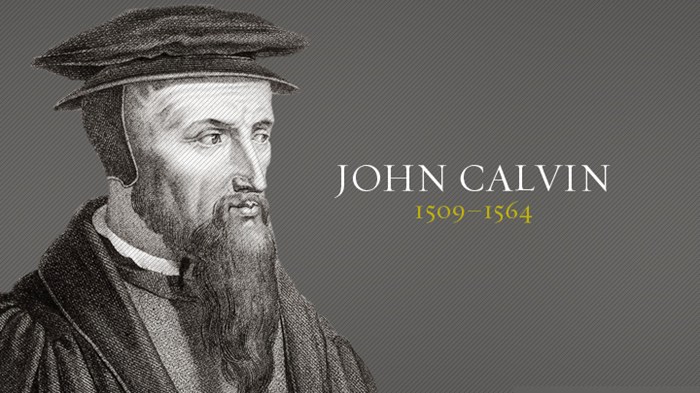
Sunday, April 6, 2025
The Oneness Sect and Baptismal Regeneration
Saturday, August 14, 2021
Salvation Is Too Easy for Most Men
"The truth of justification by faith alone is contrary to depraved human nature, which always supposes and insists that the way to be righteous is by exerting oneself to attain this status, since righteousness makes one worthy of salvation and of every blessing. The truth of justification is truly amazing since faith is not a work that makes one worthy of righteousness, but merely a means, an instrument, by which God gives - by imputation - and the sinner passively receives righteousness as a gift. Indeed, the faith itself by which the sinner is justified is God's gift to the sinner." -Rev. David Engelsma, "Gospel truth of Justification," p. 191.
In most things, we expect a person to choose the easiest way to attain his goals. To choose the hardest way is considered irrational. Yet we all exempt salvation from that plain rule.
Recall the reactions of Adam and Eve immediately after their Fall into sin: "Then the eyes of both were opened, and they knew that they were naked. And they sewed fig leaves together and made themselves loincloths. And they heard the sound of the Lord God walking in the garden in the cool of the day, and the man and his wife hid themselves from the presence of the Lord God among the trees of the garden. But the Lord God called to the man and said to him, 'Where are you?' And he [i. e., Adam] said, 'I heard the sound of You in the garden, and I was afraid, because I was naked, and I hid myself.' He [i. e., the Lord] said, 'Who told you that you were naked? Have you eaten of the tree of which I commanded you not to eat?' The man said, 'The woman whom You gave to be with me, she gave me fruit of the tree, and I ate.' Then the Lord God said to the woman, 'What is this that you have done?' The woman said, 'The serpent deceived me, and I ate'" (Genesis 3:7-13).
First, let us notice who is speaking. This is the Lord, the tetragrammaton, Yahweh. This is the covenantal name of the preincarnate Son. Where the Father could have come in proper wrath and justice, instead, the Son comes in the first instance of His mediatorial role. He is present with the now-sinful Adam and Eve, giving them an immediate opportunity to plead His mediatorial mercy and forgiveness. That would have been the easy solution.
Instead, what did they do? Immediately they covered their nakedness with fig leaves. The consciousness of their nakedness is an indication of their loss of their pre-Fall innocence. So, they attempted to work out their own solution to their guilt: cover it up. Next, they hide themselves among the trees. They have hidden their sin from their own eyes with the leaves, and then they add hiding themselves from the eyes of God. After all, he cannot judge them if He doesn't know where they are, right? Or so they reasoned. Yet, when He finds them, as was inevitable, they resort to pointing fingers. It was the woman, Adam claims, and You gave her to me. So it is God's fault. Even in her place passed the blame to the serpent, that ancient Tempter, whom we know as Satan. For Adam and Eve, their defense boiled down to, No one here but us innocent little chickens!
And to this day, the posterity of our first parents respond the same way. We always strive to avoid responsibility for our wickedness. It is someone else's fault, not mine. Or I will fix myself, and God can just go on about His business with those other wicked people.
And while we scramble to make all of these efforts to hide or fix our sin, the only mediator between the just God and sinful men is Jesus Christ. How simple it is to turn to Him alone by faith alone. Then we need not make garments for ourselves, because He gives us His own white robe of righteousness: "I counsel you to buy from me gold refined by fire, so that you may be rich, and white garments so that you may clothe yourself and the shame of your nakedness may not be seen, and salve to anoint your eyes, so that you may see" (Revelation 3:18; compare Zechariah 3:3-4). We need not hide or fix our sin. Indeed, we cannot. But He can, and does. How easy salvation in Christ is!
Saturday, July 3, 2021
Peace of Spirit Through Justification by Faith Alone
The primary issue of controversy between the Reformers of the Sixteenth Century and the Roman Catholic Church was the question of justification: What is its basis? Faith alone? Or faith and works? The Reformers held, and correctly so, that justification before God occurs by grace alone through faith alone, and is, therefore, instantaneous. In contrast, Rome mixed (and continues to mix) faith with works, such that justification is a process, one which may not even be completed in this life, but continue into Purgatory.
Here is the Protestant definition: "Justification is the divine declaration, the judicial verdict, that instantaneously and perfectly acquits the sinner of guilt before the tribunal of God and constitutes him perfectly righteous. Upon the instantaneous verdict of justification, there is nothing imperfect about the justified sinner regarding righteousness with God, nothing to improve and nothing to increase. It is with the justified sinner as though he were as guiltless as the perfect Jesus Christ, as though he had fully atoned for all his sins and perfectly obeyed all the commandments of God, and as though he had completely satisfied the justice of God" (Rev. David Engelsma, "Gospel Truth of Justification," p. 225, emphasis added). Notice his use of words such as "perfect" and "instantaneous." Biblical justification is a legal verdict, and, just like a judge's declaration of "not guilty" in a human court, justification occurs at a point of time, fully, and can never be increased or decreased, or wait for some additional action. If the justified sinner were to die immediately after professing his faith, such as the thief on the cross (Luke 23:42-43), he would be transported to the presence of Jesus just as surely as the man of God who has been faithful for decades before his death.
In contrast, Rome denies those qualities of justification, because she blends justification with sanctification. She holds that a person is justified by faith plus the works that come from it. Her foundation for that claim is a misreading of James 2:24: "You see that a person is justified by works and not by faith alone." However, the context of that verse is not justification before God, but rather how that justification is demonstrated before men. Since no man can see the heart of another, he has no way to know whether his friend's profession of faith is real or false. How can he tell? By his friend's works or lack of them.
One result of that difference is the assurance of salvation. The Protestant view of instantaneous justification apart from works enables the believer to know of his eternal welfare immediately and for the rest of his life, as the Apostle John told us: "This is the testimony, that God gave us eternal life, and this life is in His Son" (I John 5:11). Notice the present tense. He doesn't say "may have" or "could have" or someday could have." In contrast, Rome claims that it is arrogant to believe that one has eternal life now. In Rome's system, the believer can never know for sure his eternal status. He must continue to work, hoping that he has done enough, but unable to know. That is a system of bondage and fear, while the true Gospel brings peace: "Since we have been justified by faith, we have peace with God through our Lord Jesus Christ" (Romans 5:1).
Wednesday, June 16, 2021
The False Righteousness of Men
"His own perfect work in Jesus Christ satisfies God. The one who believes only, declining to work for righteousness, comes to God lacking all justifying works, only guilty, wholly ungodly in the matter of righteousness, supplicating and magnifying the grace of God."
- Rev. David Engelsma, "Gospel Truth of Justification," pp. 193-4
In the comment above, Engelsma is paraphrasing several references in the Bible, such as Romans 5:6: "While we were still weak, at the right time Christ died for the ungodly." Jesus didn't come to purchase salvation for those who are moral, or who clean up their lives. Rather, he came to save the one who realizes how unclean he is, with nothing of himself to offer. As the Apostle Paul continues (verses 8-11): "God shows His love for us in that while we were still sinners, Christ died for us. Since, therefore, we have now been justified by His blood, much more shall we be saved by Him from the wrath of God. For if while we were enemies we were reconciled to God by the death of His Son, much more, now that we are reconciled, shall we be saved by His life. More than that, we also rejoice in God through our Lord Jesus Christ, through whom we have now received reconciliation."
We also have the words of Jesus Himself, describing His salvific purpose: "I have not come to call the righteous but sinners to repentance" (Luke 5:32). He is referring to those who are self-righteous, since "none is righteous, no, not one" (Romans 3:10). Since the Fall of Adam, no mere human being has any righteousness in himself by which to please God. All are sinners (Romans 3:23), under the well-deserved wrath of the thrice-holy God, as described above. Every act claimed by a man as his own righteousness is condemned by God, for "whatever does not proceed from faith is sin" (Romans 14:23).
Instead, we depend on the righteousness of Jesus, which is imputed to the believer the moment he believes: "For our sake He [i. e., the Father] made Him [i. e., Jesus, the Son] to be sin who knew no sin, so that in Him we might become the righteousness of God" (II Corinthians 5:21; see also Isaiah 26:12 and Hebrews 13:20-21).
There is an absolute contrast here: a person can depend on the good works that he imagines he does, and be damned; or he can condemn his own works as the wickedness that they are, under the wrath of God, and seek instead to receive forgiveness and righteousness by faith alone from Jesus alone, and be saved for eternal life.
Saturday, April 24, 2021
The Importance of "Alone" in the Doctrine of Justification
"The Papists will well-enough confess that we be justified by faith, howbeit they add that it is but partly. But that gloss marreth all. For here it is proved that we cannot be found righteous before God, but by the means of our Lord Jesus Christ, and by resting upon the salvation which He hath purchased for us. The Papists see this well enough: and, therefore, for fashion's sake, they say we be justified by faith, but not by faith alone: they will [have] none of that. That is the thing that they fight against, and it is the chief point that is in controversy between them and us."
- John Calvin, sermon on Galatians 2:16, emphasis added
Evangelicals will often describe the difference between themselves and Roman Catholics as that evangelicals believe in salvation by faith, while Catholics believe in salvation by works. And some Catholics will grant that assessment. However, those evangelicals will have a problem if they run into an educated Catholic and say that. The fact is that Rome is happy to talk about salvation by faith, and has always done so, even in the documents of the Council of Trent in response to the Reformers see, for example, Canons XX and XXIV of Session 6).
The problem isn't "salvation by faith," but rather the inclusion or exclusion of another word, "alone." The biblical Protestant affirms salvation by faith alone, without works. Romanism denies the application of "alone," claiming instead that salvation is a process in which faith leads to works which then make the person worthy of salvation. The effect of that distinction is that the Protestant also affirms salvation is an instantaneous event, while the Romanist considers it to be a process. When does that process reach the point of a saved status? No one knows in this life, they claim. You can only know when you get there. Or don't.
One result of this error on the part of evangelicals is that Rome has had increasing success in ecumenism. For example, the organization Evangelicals and Catholics Together proclaimed that a unifying understanding had been reached in this statement: "We affirm together that we are justified by grace through faith because of Christ" (ECT statement, XVIII). Do you see the problem with that statement? It is exactly what Rome has always advocated, while the evangelicals in the group betrayed the Reformation by leaving out the key term "alone." The breakthrough was that professing evangelicals converted en masse to Rome's doctrine of justification.
This is the verse to which Calvin refers: "We know that a person is not justified by works of the law but through faith in Jesus Christ, so we also have believed in Christ Jesus, in order to be justified by faith in Christ and not by works of the law, because by works of the law no one will be justified" (Galatians 2:16).
Wednesday, March 24, 2021
Jesus Alone the Basis, and Faith Alone the Means, of the Justification of His People
"Faith is said to justify because it is the instrument by which we receive Christ, in whom righteousness is communicated to us. When we are made partakers of Christ, we are not only ourselves righteous, but our works also are counted righteous in the sight of God, because any imperfections in them are obliterated by the blood of Christ."
- John Calvin, commentary on Romans 3:22
When people profess that salvation is by faith alone, they express the biblical doctrine of justification. However, too often modern believers, even among evangelicals, don't understand the meaning of the words as they are in Scripture. We have been infiltrated by the doctrine of the Catholic Church, the same doctrine opposed by the Reformers, that justification by faith means by having faith, or faithfulness. This is how Rome (and her Arminian allies) has retained a role for works in justification.
Sad as it is, that doctrine of justification cannot save, because it is not God's plan for justification.
Notice what the Bible says, in the first passage in which justification as such is mentioned: ":He [i. e., Abraham] believed the Lord, and He counted it to him as righteousness" (Genesis 15:6). The Lord, the preincarnate Christ, accepted Abraham's faith, and declared him righteous. Jehovah does not make Abraham righteous, as Rome claims, but declares him righteous. That is the distinction between justification, a change in legal status, and sanctification, a change in nature.
Does God merely erase Abraham's sin? No, nor that of nay other believer. To gloss over sin in such a way would be to substitute tolerance for justice. Rather, here is where we see the double imputation that is involved in justification. The sin of the elect, at the moment, of faith, is transferred to our Surety, Jesus Christ: "Surely He has borne our griefs and carried our sorrows; yet we esteemed Him stricken, smitten by God, and afflicted. But He was pierced for our transgressions; he was crushed for our iniquities; upon Him was the chastisement that brought us peace, and with His wounds, we are healed. All we like sheep have gone astray; and we have turned- every one- to his own way; and the Lord has laid on Him the iniquity of us all" (Isaiah 53:4-6).
But that was only half of our justification. In addition to taking the punishment for our sins, Jesus gave us His perfect record of works: "O Lord, You will ordain peace for us, for You have indeed done for all our works" (Isaiah 26:12).
Thus, faith is not the basis of our justification. Jesus alone provides that. Rather, faith is the means of our justification. Or, to use, Calvin's term in the quote above, the instrument of our justification.
Wednesday, March 10, 2021
Justifying Faith Is Faith in Christ Alone
"Faith - true faith - always has an object, and this object is the crucified and risen Christ, as revealed in the Gospel. Thus, as the embracing of Christ - in whom is forgiveness, righteousness, and adoption as children of God - is faith the source of justification."
- David Engelsma, "Gospel Truth of Justification," p. 141
It has become a reflex in American culture to respond to any sorrow or apprehension with an exhortation, "You just gotta have faith." And that is supposed to cover all of the bases, ranging from seeking a job to cancer to a severely-injured child. When it is said on TV, no definition of "faith" is ever given, nor a statement regarding faith in what or in whom. It is simply faith in faith itself.
The faith that results in eternal life is not a faith in faith. As Reverend Engelsma says in the quote above, indeed, in the whole book, it isn't faith as a thing that justifies, but rather as faith with Jesus as its object that justifies. As he also says (on the same page), "Faith looks to Christ, trusts in Christ, and embraces Christ. From this Christ, faith receives Christ Himself as the believer's righteousness by imputation. Or to say it differently, from this Christ, to whom faith looks and on whom faith rests and whom faith embraces, the believer receives the righteousness of Christ as his own (by imputation)."
This is why it is so important to share the Gospel with members of cults or false churches. They have a faith, but it is in a false object, and, therefore, cannot save them. Whether that faith is in the cultic organization, as with Jehovah's Witnesses, or is in the false Jesus created by the organization, as with Mormons, or in the false basis of justification created by the organization, as with Roman Catholics, it is a faith without a saving object, and, therefore, a faith that cannot justify. "We know that a person is not justified by works of the law but through
faith in Jesus Christ, so we also have believed in Christ Jesus, in
order to be justified by faith in Christ and not by works of the law,
because by works of the law no one will be justified" (Galatians 2:16).
Wednesday, August 26, 2020
Reprobation and the Well-Meant Gospel Offer
There is a doctrine which has been commonly-held, but not universally-held, among Reformed Christians for hundreds of years. It is usually called the Well-Meant Gospel Offer. According to the doctrine, God offers the Gospel to all men, with the well-meant intention that all receive it, not just the elect. For example, the Dutch Reformed theologian Wilhelmus a Brakel (1635-1711) wrote, "Faith consists in the translation of a soul from self into Christ. Faith consists in receiving Him who offers Himself and who calls and invites every sinner to Himself, the promise being added that those who will come will not be cast out. It finally consists in a reliance of the soul upon Him as the almighty, true, and faithful Savior."
The doctrine is rejected by the minority, such as the Protestant Reformed Churches. I happen to agree with the minority in this case.
The problem is the doctrine of reprobation. According to this biblical doctrine (see, for example, Romans 9:21), predestination has two sides, the election of some to salvation and the active rejection of others to damnation. This doctrine is professed by all Reformed believers, including those who hold to the well-meant gospel offer. However, those two doctrines are incompatible. How can we rationally claim that the same God has marked certain sinners for rejection unto everlasting damnation, while at the same time He is supposedly offering those same sinners the opportunity to be saved, with the desire that they be so? Would we suppose that God suffers from multiple-personality disorder? I hope not!
Now, I certainly grant that the Gospel portrays a crucified and resurrected Redeemer who is available to all who will come to Him in sincere faith. However, only the elect will respond to that portrayal, because they alone are redeemed by the Son and called by the Holy Spirit. Thus, there is no conflict between God's decree and His supposed desire.
Now, a distinction is necessary between the offer as something God supposedly does, and the evangelistic efforts of Christians. When we share the Gospel with unbelievers, we sincerely desire every one of them to be converted. Is there a conflict there? Not at all, because it is not given to men to know or meddle in the secrets of God's decrees. He gives no man the ability to know who is or is not elect. Nor does it lie within the authority of mere men to decide to exclude any sinner, howsoever wicked he may be, from access to the redeeming blood of Jesus. That lies in the purview of God alone.
Saturday, May 2, 2020
Jesus and His Friends, a View of Particular Atonement
But the part I want to discuss is what Jesus says, that He would soon die on the cross, not for men in general, but for those who would thereby be turned into His friends. That is, those who remain His enemies do so because He did not die for them.
To my mind, this is one of the biggest differences between Calvinism and Arminianism. Calvinism teaches - because Jesus taught - that the blood of Jesus is effectual. As He Himself also says, every man whom the Father gave Him to be redeemed would unfailingly be converted (John 6:39). In contrast, Arminianism claims that Jesus died equally for all men in general, so that salvation would be possible for everyone, but certain for no one. If that were so, then it would have been hypothetically possible for not a single person ever to have been saved. And even worse, it also means that the Arminian believes that Jesus died just as much for every person in Hell as He did for every person in Heaven.
To my mind, that is a grotesque view of the atonement.
And I think these words of Jesus indicate that He never imagined such a thing either, but looked forward to all of the friends that He was gaining for each moment that He suffered on the cross, just as the Father promised Him in prehistory: "Out of the anguish of His soul He shall see and be satisfied; by His knowledge shall the righteous one, My servant, make many to be accounted righteous, and He shall bear their iniquities" (Isaiah 53:11).
Saturday, April 18, 2020
Calvinism and the Gift of Faith
So, to the one, faith is a condition on man's part, while, for the other, faith is a means purchased in the atonement, and given by God.
There are several places in Scripture in which faith is descried as given by God, such as Romans 12:3: "By the grace given to me I say to everyone among you not to think of himself more highly than he ought to think, but to think with sober judgment, each according to the measure of faith that God has assigned." And in Ephesians 2:8: "By grace you have been saved through faith. And this is not your own doing; it is the gift of God." And negatively in II Thessalonians 3:2: "Not all have faith." It is given to some, and not to others.
But the one that I especially want to consider here is Philippians 1:29: "It has been granted to you that for the sake of Christ you should not only believe in Him but also suffer for His sake." Faith is granted, not something created by men. That is why Jesus could say, "No one can come to Me unless it is granted him by the Father" (John 6:65). Contrary to the claims of the Arminian, no man grants his faith to Jesus. Rather, faith is granted to everyone for whom Jesus died.
Wednesday, March 18, 2020
Jesus Alone the Hope for the Human Conscience
The conscience is something that must be trained. That is especially obvious with children. However, it is a lifelong process, familiarizing ourselves with the Scriptures, so that our sense of right and wrong is brought more and more into conformity with God's standards. That training would have been unnecessary if not for the Fall of our first parents. While they had been created with God's standards as an inherent part of their psyche (Romans 2:15). However, in response to the false offer of Satan (Genesis 3:5), they chose to set their own standards of right and wrong above God's, and, thus, rendered themselves and all of their posterity (except Jesus) incapable of aught but sin. We still have enough of our created nature to know that our sin deserves punishment, no matter how much we strive to suppress that knowledge (Romans 1:18-22). Thus, we experience guilt.
How do we free ourselves from guilt?
Saturday, March 14, 2020
The Great Commission, Sanctification, and the Christian Life
There are a number of answers to this question. I have discussed them in the past: heresy, pietism, dispensationalism. However, I am going to turn my attention here to something more fundamental.
What is salvation?
Most evangelicals will answer to the effect of being saved from Hell by the atonement of Jesus on the cross. And that is certainly a fundamental aspect of salvation. However, too often the evangelical stops there, as if the Christian faith and life is nothing more than fire insurance. Not only does that deny the great Commission, but it is a sleighting of the cross work of Jesus.
I refer to the Great Commission intentionally. What does Jesus command us to do there? "Go, therefore, and make disciples of all nations, baptizing them in the name of the Father and of the Son and of the Holy Spirit" (Matthew 28:19). Most evangelicals can quote that from memory, which is completely commendable. The problem is that the Commission doesn't stop with baptism. He continued: "teaching them to observe all that I have commanded you. And behold, I am with you always, to the end of the age" (verse 20). There is one side of the Commission which involves saving sinners from judgment. However, the commission continues with a command to replace sin with something.
Notice what was said of the coming of Jesus: "You shall call His name Jesus, for He will save his people from their sins" (Matthew 1:21). Not from the punishment of our sins, as important as that is, but from our sins themselves. As much as our justification was purchased on the cross, so was our sanctification. And having lost sight of the truth, Christians are indistinguishable from non-Christians, and the church is too flabby to speak to a culture that is reveling in its wickedness.
"The scriptural meaning of salvation is deliverance from the curse, power, and love of sin. The word, in general, implies deliverance from evil, but it is always, in the Bible, positive as well as negative, and imports the bestowment of a corresponding good" (James Henley Thornwell, "Election and Reprobation," emphasis in the original).
Wednesday, March 11, 2020
The Golden Chain to Eternal Life
One thing evident in that process is that each step is done by God. No man predestines himself, calls himself, justifies himself, or glorifies himself.
One thing that Paul doesn't include in his list is regeneration. Why? I have no idea. But it would fall between the steps of calling and justifying. At that point, in response to the external call of the Gospel (Romans 10:14), the elect sinner is given a new heart: "I will give you a new heart, and a new spirit I will put within you. And I will remove the heart of stone from your flesh and give you a heart of flesh. And I will put My Spirit within you, and cause you to walk in my statutes and be careful to obey My rules" (Ezekiel 36:26-27). Notice that, while we experience regeneration as our response, it is actually the work of the Holy Spirit. Every step to belief and sanctification is done by God (Romans 9:16, Philippians 2:13, etc.). That is why the chain can never fail to achieve its purpose (Romans 8:38-39, John 6:39, 10:27-29, 17:2, etc.)
"That life which is implanted in the soul in regeneration, which is developed in sanctification, and completed in glory, is what the Scriptures call 'eternal life,' and it is called 'eternal' because, by the grace of God, it is absolutely imperishable" (James Henley Thornwell, "Election and Reprobation").
Wednesday, February 5, 2020
Jesus Rejects "Other Paths to God"
| A Narrow Path |
Wait a minute! Is that what Jesus said? Actually, those verses read this way: "The gate is wide and the way is easy that leads to destruction, and those who enter by it are many. For the gate is narrow and the way is hard that leads to life, and those who find it are few." That is just the opposite of popular American religion, even if the Pope says otherwise.
There is something else that Jesus said on this matter: "Truly, truly, I say to you, he who does not enter the sheepfold by the door but climbs in by another way, that man is a thief and a robber. But he who enters by the door is the shepherd of the sheep" (John 10:1-2). So, He insists that there is only one way to enter the sheepfold, His image for salvation. One way, not many. What is that one way? "Truly, truly, I say to you, I am the door of the sheep. All who came before Me are thieves and robbers, but the sheep did not listen to them. I am the door. If anyone enters by Me, he will be saved and will go in and out and find pasture" (verses 7-9). Jesus Himself is the way! Not good works, or sincerity, or church attendance. None of those things that are acceptable to our fallen culture. Only Jesus Himself, received by faith alone.
Saturday, February 1, 2020
Know the Bad News, then Recognize the Good News
The comment above was part of a long article in the Southern Presbyterian Review in 1849, but would be even more properly written in our current days. If anything, American evangelicalism has degenerated far past that described by Thornwell in his own time. What would he say about "churches" with female ministers, gay marriages, and that serve as laughingstocks to the world.
His diagnosis is correct. As the church has come to despise God's law, she has lost sight of the sinfulness of sin and its insult to the God she claims to serve. If the word is used at all, "sin" is left undefined, and only in occasions of unfortunate poverty and ignorance. Never is any person called a "sinner," because that is harsh and unloving.
A false Gospel that says only that "God loves you" to everyone leaves everyone satisfied with sin. God loves everyone unconditionally, so there is no need to repent. Church discipline is unheard of in our day.
The result is to use Thornwell's words, a feeble church, and people with a superficial piety.
That wasn't the way Jesus lived: "I tell you, there will be more joy in heaven over one sinner who repents than over ninety-nine righteous persons who need no repentance" (Luke 15:7). And His cousin and favorite Apostle tells us: "Whoever makes a practice of sinning is of the devil, for the devil has been sinning from the beginning. The reason the Son of God appeared was to destroy the works of the devil" (I John 3:8). When was the last time a minister called out sin as being the influence of the devil, rather than ignorance or poor economic conditions? And what does the Bible say about that silence? "If I say to the wicked, ‘You shall surely die,’ and you give him no warning, nor speak to warn the wicked from his wicked way, in order to save his life, that wicked person shall die for his iniquity, but his blood I will require at your hand" (Ezekiel 3:18).
Rather, this is how the Bible defines sin: "Sin is lawlessness" (I John 3:4). And this brings us back to the problem identified by Thornwell. If minsters do not preach on the Law, then their congregants never learn God's standard of right and wrong. And if Christians have no standard, then we have no standard to present to our world: "Now we know that the law is good, if one uses it lawfully, understanding this, that the law is not laid down for the just but for the lawless and disobedient, for the ungodly and sinners, for the unholy and profane, for those who strike their fathers and mothers, for murderers, the sexually immoral, men who practice homosexuality, enslavers, liars, perjurers, and whatever else is contrary to sound doctrine" (I Timothy 1:8-10).
| Paul the Apostle |
Saturday, January 25, 2020
The Good News of Double Imputation
In his comment above, Thornwell quotes the Christmas passage from Luke 2:10, when the angel proclaims to the shepherds in the fields, "Fear not, for I bring you glad tidings of great joy!" The glad tidings were that our Savior had come, the One for whom His people had been waiting since He was first foretold in Genesis 3:15. I cannot read those words without thinking of Linus, as he spoke them, in the Charlie Brown Christmas Special.
I think even that idea is ruled out now in our politically-correct society. However, even Linus did not explain why the coming of Jesus was supposed to bring us great joy. Thornwell knew, and tells us. It isn't the part that Linus told us, but the part John the Baptist told us: "Behold, the Lamb of God, who takes away the sin of the world!" (John 1:29; see also Matthew 1:21). Jesus came to take away the sins of everyone for whom He died, not just of Israel, as the Jews expected, but in all nations (cf., Matthew 28:19-20)!
That is justification! We are set free from the burden of sin and the judgment that it brings.
However, as Thornwell notes, Jesus didn't just cancel the debt of sin, and then leave us in some neutral state. No, He also gave us His righteousness, so that we are now His holy people: "For our sake He [God the Father] made Him [God the Son] to be sin who knew no sin, so that in Him we might become the righteousness of God" (II Corinthians 5:21).
Saturday, January 18, 2020
No Cover for Sin
Sin has come to mean, not wickedness, but error or even social injustice. We no longer think of it as it is presented in Genesis 3, rebellion against God and a despising of His word. We no longer talk about it as something which brings God's proper judgment: "Behold, all souls are Mine; the soul of the father as well as the soul of the son is Mine: the soul who sins shall die" (Ezekiel 18:4). Rather, we expect God to put our sins in a balance, with the acts that are good, in our own eyes, on the other side. And every person believes that his good deeds will outweigh his bad deeds. While that is the view of Islam, it is not the biblical view: "Whoever keeps the whole law but fails in one point has become guilty of all of it" (James 2:10), and, "No one does good, not even one" (Romans 3:12, quoting Psalm 53:3).
That is the problem with the objection of atheists, that God is supposedly unjust to send people to Hell just for not believing in Him; since Christians have taught a false view of sin, atheists have taken refuge in a false sense of their goodness. To the atheist, or any non-Christian, I give this warning: at the Judgment, you will not be excused by what men have told you, but rather you will be judged by what God has told you, even if you have refused to hear. To the supposed Christian who fails to warn of sin, I have these words from God: "If I say to the wicked, ‘You shall surely die,’ and you give him no warning, nor speak to warn the wicked from his wicked way, in order to save his life, that wicked person shall die for his iniquity, but his blood I will require at your hand" (Ezekiel 3:18).
To both groups of people, I give my own warning: There is no salvation in excuses. There is only salvation in the blood of Jesus, received by grace through faith alone.
"The penalty of the law was no vulgar ill, to be appeased by a few groans and tears, by agony, sweat, and blood. It was the wrath of God, which, when it falls upon a creature, crushes him under the burden of eternal death. It is a blackness of darkness through which no ray of light or hope can ever penetrate the soul of a finite being; to all such it must be the blackness of darkness forever. But Jesus endured it, Jesus satisfied it, Jesus bowed beneath that death which the law demanded, and which sinks angels and men to everlasting ruin, and came victorious from the conflict" (James Henley Thornwell, "The Necessity and Nature of Christianity," emphasis in the original).
Wednesday, January 15, 2020
The Singular Nature of Christianity, Forgiveness of Sins and an Imputed Righteousness
Thornwell above takes two statements from Scripture, and turns them into the beautiful doxology above.
"All who rely on works of the law are under a curse; for it is written, 'Cursed be everyone who does not abide by all things written in the Book of the Law, and do them.' Now it is evident that no one is justified before God by the law, for 'The righteous shall live by faith.' But the law is not of faith, rather, 'The one who does them shall live by them.' Christ redeemed us from the curse of the law by becoming a curse for us—for it is written, 'Cursed is everyone who is hanged on a tree'— so that in Christ Jesus the blessing of Abraham might come to the Gentiles, so that we might receive the promised Spirit through faith" (Galatians 3:10-14). Paul draws a parallel between what men are, cursed because of our failure to keep the Law in all of its exhaustive detail, and what Jesus became, cursed by imputation of the sins of God's people to their surety, Jesus Christ.
"If anyone is in Christ, he is a new creation. The old has passed away; behold, the new has come. All this is from God, who through Christ reconciled us to Himself and gave us the ministry of reconciliation; that is, in Christ God was reconciling the world to Himself, not counting their trespasses against them, and entrusting to us the message of reconciliation. Therefore, we are ambassadors for Christ, God making His appeal through us. We implore you on behalf of Christ, be reconciled to God. For our sake He made Him to be sin who knew no sin, so that in Him we might become the righteousness of God" (II Corinthians 5:17-21). And this is the imputation the other way, His righteousness becoming ours by means of faith alone.
The truth of double imputation is one of the things that make Christianity unique from any other religion, or any other form of salvation. It is in Christ alone that we find both our needs met in one place, the need to have our sins forgiven and our need to have them replaced with true righteousness.
Saturday, December 28, 2019
Jesus, The Prince of Peace Bears a Bloody Sword
In the same book, the writer quotes this comment from Jesus: "Do you think that I have come to give peace on earth? No, I tell you, but rather division" (Luke 12:51; "sword" in Matthew 10:34). If you compared those words to the KJV version of the verse above, you would have a conflict. Did He come to bring peace to the world or not? The KJV of this second verse is the same as the ESV. In either case, we see that it is to one class of men that Jesus brought peace, but to another He brought conflict.
Look at these words from the Apostle Paul: "Therefore, since we have been justified by faith, we have peace with God through our Lord Jesus Christ" (Romans 5:1). Ah, here was have the distinction explained. Where the unbeliever is in conflict with God (Ephesians 2:3), the believer has been brought into a relationship of peace with God (Romans 5:10). Jesus becomes his Prince of Peace (Isaiah 9:6) by grace alone through faith alone.
In apocalyptic language, the Apostle John also tells us about this conflict: "From His mouth comes a sharp sword with which to strike down the nations" (Revelation 19:15; cp. Isaiah 49:2 and Hebrews 4:12). This is the distinguishing between the sheep and goats, of which Jesus tells us (Matthew 25:32ff), achieved by the preaching of the Gospel (Romans 10:8-15), which further distinguishes between men who will believe and men who will not (II Corinthians 2:16). With the former, it is a message of peace; but to the latter it is a message of war.
"The kingdom which He came to establish consists in joy and peace, and the great blessing which He communicates to all who are sprinkled with His blood is that peace which passeth all understanding, and which abides unshaken amid the agitations and tumults, the glooms and convulsions of the world. ThroughHim, God becomes the God of peace, the Gospel the message of peace, preachers of righteousness the heralds of peace, and the two great results of His work, according to the rapturous song of the angels, are glory to God in the highest and peace on earth" (James Henley Thornwell, "The Necessity and Nature of Christianity).
Wednesday, September 18, 2019
The Necessity of Imputed, Exterior Righteousness
In contrast, biblical Christianity says of men, "All have sinned and fall short of the glory of God" (Romans 3:23). And, "the wages of sin is death" (Romans 6:23), because "your iniquities have made a separation between you and your God, and your sins have hidden His face from you so that He does not hear" (Isaiah 59:2). Why? "Your [i. e., God's] eyes are too pure to look upon evil, and You cannot tolerate wrongdoing" (Habakkuk 1:13).
So, what about the answer given by humanism and other unbiblical religions? What about just straightening oneself up? What about producing human improvement through passing the right political law or public education? "We have all become like one who is unclean, and all our righteous deeds are like a polluted garment. We all fade like a leaf, and our iniquities, like the wind, take us away" (Isaiah 64:6). The problem with any system of salvation by good works is that men only have good works when compared to each other. However, compared to God's perfection, the best works of men are putrid garbage.
Why is that important? Because, without holiness, no one will see the Lord (Hebrews 12:14). Sin is such an insult to the holy God, that He will not accept it into His presence.
So, if all men are sinners, and thereby separated from God, then how can we have that relationship restored? Not by anything is us, but only by an alien, or exterior, holiness. "Then he showed me Joshua the high priest standing before the angel of the Lord, and Satan standing at his right hand to accuse him. And the Lord said to Satan, 'The Lord rebuke you, O Satan! The Lord who has chosen Jerusalem rebuke you! Is not this a brand plucked from the fire?' Now Joshua was standing before the angel, clothed with filthy garments. And the angel said to those who were standing before him, 'Remove the filthy garments from him.' And to him He said, 'Behold, I have taken your iniquity away from you, and I will clothe you with pure vestments.' And I said, 'Let them put a clean turban on his head.' So they put a clean turban on his head and clothed him with garments. And the angel of the Lord was standing by." (Zechariah 3:1-5). This vision symbolizes salvation, with our sin and its punishment taken away and replaced with the righteousness of Christ. This is called imputation.
This is salvation! The holiness that we need in order to be restored to fellowship with God comes not from ourselves, but from Jesus! "I will greatly rejoice in the LORD; my soul shall exult in my God, for He has clothed me with the garments of salvation; He has covered me with the robe of righteousness, as a bridegroom decks himself like a priest with a beautiful headdress, and as a bride adorns herself with her jewels" (Isaiah 61:10).
"O LORD, You will ordain peace for us, for You have indeed done for us all our works" (Isaiah 26:12).