Showing posts with label faith. Show all posts

Wednesday, October 4, 2023

The Commandments of God in Stone and the Hearts of Men


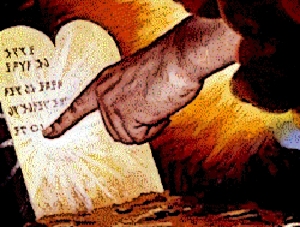
Most people are not aware that God gave Moses the Ten Commandment not once but twice. The first time is described in Exodus 24:12: "The Lord said to Moses, 'Come up to Me on the mountain and wait there, that I may give you the tablets of stone, with the law and the commandment, which I have written for their instruction.'" And again in 31:18: "And He gave to Moses, when He had finished speaking with him on Mount Sinai, the two tablets of the testimony, tablets of stone, written with the finger of God." These tablets were the ones shattered by Moses in anger at the idolatry of the Israelites in their worship of the golden calf (chapter 32).

After shattering the original tablets, Moses was then tasked with replacing them with a new pair of tablets, which he himself fashioned. "The Lord said to Moses, 'Cut for yourself two tablets of stone like the first, and I will write on the tablets the words that were on the first tablets, which you broke'" (Exodus 34:1). As when Adam fell into sin, when Moses broke the commandments, literally, he was cursed with an increase in labor, having to carve and carry the stone tablets himself. 

This historical event came to my mind during a recent Sunday school lesson at my church. Part of that lesson dealt with the law of God written on human hearts. We see this in two places in the New Testament. First, Paul mentions it in Romans 2:15: "[Gentiles] show that the work of the law is written on their hearts, while their conscience also bears witness, and their conflicting thoughts accuse or even excuse them." Then the writer of Hebrews mentions it again as part of the new covenant, which he, in turn, borrowed from the Prophet Jeremiah: "This is the covenant that I will make with them after those days, declares the Lord: I will put My laws on their hearts, and write them on their minds" (Hebrews 10:16, from Jeremiah 31:33). 

Notice the parallels between these two pairs of events. In each, God gave His holy commandments, but they were broken by men. And then God gave them again. 

By this pairing of breaking and restoration, we see two magnificent things. First is that God does not lower His standards merely because men cannot meet them. To do so would be to betray His own holiness. And second is His mercy. While the breaking of the law naturally incurs the death penalty (Romans 6:23), God's work is restorative, not punitive, for His elect. He restores His law (Isaiah 42:21). And He restores His elect through the imputation by faith of the perfect obedience of His only-begotten Son, Jesus Christ (John 1:17, II Corinthians 5:21, Romans 3:21-22). 

Wednesday, March 23, 2022

What Works Are Excluded from Justification?

I have had discussions with both Mormons and Catholics about Romans 3:28: "For we hold that one is justified by faith apart from the works of the law." The topic was the doctrine of both groups that a person is justified by a mixture of faith and works, instead of by faith alone. They denied that a person is justified by faith alone, claiming that Paul rejects the works of the Mosaic code, such as circumcision, as contributing to justification. That is, they restrict the meaning of "law" just to the rules and ceremonies given to Israel through Moses. 

What neither will mention is Paul's other uses of "law," especially in Galatians. In Galatians 4:21-26, 28-31, he makes a case: "Tell me, you who desire to be under the law, do you not listen to the law? For it is written that Abraham had two sons, one by a slave woman and one by a free woman. But the son of the slave was born according to the flesh, while the son of the free woman was born through promise. Now this may be interpreted allegorically: these women are two covenants. One is from Mount Sinai, bearing children for slavery; she is Hagar. Now Hagar is Mount Sinai in Arabia, she corresponds to the present Jerusalem for she is in slavery with her children. But the Jerusalem above is free, and she is our mother... Now you, brothers, like Isaac, are children of promise. But, just as at that time he who was born according to the flesh persecuted him who was born according to the Spirit, so also it is now. But what does the Scripture say? 'Cast out the slave woman and her son, for the son of the slave woman shall not inherit with the son of the free woman.' So, brothers, we are not children of the slave but of the free woman." 

Paul makes a very clear distinction here. Is it between works of the Mosaic law and other works? Clearly not. Anyone with a modicum of biblical knowledge knows that Abraham lived four-hundred years before  Moses. Rather, he uses "law" to describe the works of the flesh, such as those of Moses, using the label of the part to represent the whole (a synecdoche), in distinction from the promise, which he uses to label grace alone through faith alone. 


Friday, December 31, 2021

Aught of Ours Is to Insult the Sufficiency of Jesus

"Do but consider how it is: Jesus Christ calls you, because you are blind, to come to Him for eye-salve, and you will not go until you can see better. You are naked, and He calls you to come and receive change of raiment, and you will not go until better arrayed. He offers you gold, for He knows your poverty, and you will not take it until you have something of your own to give for it. Look over it again, and see if this be handsome dealing either with yourselves or Him. It is free grace in redemption that is to be glorified, but something of your own would lessen your need of Christ and lower your esteem of His grace. nay, it would be a means to keep you from Him, as farms and oxen did the invited guests from the wedding supper. Consider further: no man was ever accepted of Christ for what he brought to Him. They are best welcome that bring nothing, and yet expect all things." -Elisha Coles, "A Practical Discourse of God's Sovereignty" 

Revelation 3:17-18: "You say, 'I am rich, I have prospered, and I need nothing,' not realizing that you are wretched, pitiable, poor, blind, and naked. I counsel you to buy from Me gold refined by fire, so that you may be rich, and white garments so that you may clothe yourself and the shame of your nakedness may not be seen, and salve to anoint your eyes, so that you may see." 


Wednesday, November 24, 2021

The Works of a Christian As a Defining Line Between True and False Christianity

One of the consistent errors that mark cults is their perversion of salvation to some form of works righteousness. This is true of the largest cult, the Roman Catholic Church, as well as other well-known cults such as the Mormons, the Jehovah's Witnesses, Church of Christ, or any one that we could name. 

That one error is a defining distinction between cults and orthodox Christianity, i. e., biblical Protestantism. 

The error of each of these cults is that they mix justification with sanctification. That is, they make the good works of the professing Christian to be part of his justification before God, whether it is faith plus sacraments, or faith plus love. Always the error involves faith plus something, instead of biblical justification, which is by faith alone. 

This is not to profess the strawman argument used by such groups against Protestants, by which they claim that the denial of a role in justification means that Protestants believe that works do not matter. That accusation is false. With the Bible, Protestants hold that works are the necessary result of saving faith. That is the opposite of what the cults teach. The Protestant talks about works as the necessary result, while the cults make works a necessary component of justification. 

This is what we find in the New Testament. 

Acts 15:9: "He [God] made no distinction between us [Jews] and them [Gentiles], having cleansed their hearts by faith." 

Romans 6:1-6: "What shall we say then? Are we to continue in sin that grace may abound? By no means! How can we who died to sin still live in it? Do you not know that all of us who have been baptized into Christ Jesus were baptized into His death? We were buried, therefore, with Him by baptism into death, in order that, just as Christ was raised from the dead by the glory of the Father, we, too, might walk in newness of life." 

Galatians 2:20: "I have been crucified with Christ. It is no longer I who live, but Christ who lives in me. And the life I now live in the flesh, I live by faith in the Son of God, who loved me and gave Himself for me." 

This is far from an exhaustive list.

Saturday, October 2, 2021

Faith a Gift, Not a Work

"It has been granted to you that, for the sake of Christ, you should not only believe in Him, but also suffer for His sake" (Philippians 1:29). 

Arminians assume that Jesus did half of the work of salvation for every single person who has existed or ever will exist. Then some are saved when they match what He did with the work of faith on our part. And I do not choose that phrasing haphazardously; that is how I have had it stated to me. Thus, men are saved, not through faith, but by faith, as the completion of all that God could do on our behalf. 

In contrast, the Calvinist teaches, on the basis of what Scripture says, that faith is the means, not the basis, by which the atonement is effectually applied to everyone for whom it was purchased (see John 6:37-39). That purchase included the gift of faith, so that it is not a work, not a contribution, by the believer to complete the work of Christ on the cross (I Corinthians 2:2). In fact, the Calvinist considers the Arminian view on this subject to be a scandalous aspersion on the blood of Jesus, as if it is unable to save to the uttermost (Hebrews 7:25). 

Notice the verse at the top, Philippians 1:29. Paul tells the Philippian Christians that it has been granted to them to believe, not that salvation has been offered, contingent on their completion of it by working faith in themselves. We see the same thing in Ephesians 2:8, where the same Apostle told believers that God gave them their saving faith. 

The essence of this principle is that the atonement was sufficient for every person for whom it was intended, because it purchased everything necessary and sufficient for the salvation of that person. He need not, indeed cannot, add anything to what Jesus did on the cross and for him in Heaven: "He is able to save to the uttermost those who draw near to God through Him, since He ever lives to make intercession for them" (Hebrews 7:25).


Saturday, September 4, 2021

Faith in Faith Will Never Face Down Life's Storms


"The truth is that the faith by which alone the elect sinner is justified is a knowing and trusting that renounce works and working for righteousness... The faith that renounces works and working for justification is true faith. Whatever supposed 'faith' insists on working for righteousness is, thereby, exposed as a false faith. No one is justified by a false faith." 

-David Engelsma, "Gospel Truth of Justification," p. 190

We have all seen TV shows and movies in which the solution to some tragedy is stated, "Just have faith." That is all the encouragement we are given, without any statement of faith in whom or in what. That is because our humanistic age believes in faith in faith as a form of salvation without God. It is also stated as "just believe in yourself." It is a type of secular religion. 

That is not at all the way the word is used in the Bible. 

After her brother Lazarus died, Jesus said to his sister Martha, "I am the resurrection and the life. Whoever believes in Me, though he die, yet shall he live, and everyone who lives and believes in Me shall never die" (John 11:25-26). "Believe" here is used as a synonym for "have faith." There is nothing here like "just have faith." Rather, Jesus comforts Martha by telling her to have faith in Him. In other words, her comfort is to come, not from her faith, but from Jesus, the object of her faith. 

And that is exactly where modern secular religion fails. By separating faith from its object, secularism posits the power in the commitment of a person's mind, not in the power of one outside that person who has actual authority over events. 

Remember the story of Jesus and the storm (Mark 4:35-41): "On that day, when evening had come, He said to them, 'Let us go across to the other side.' And leaving the crowd, they took Him with them in the boat, just as He was. And other boats were with Him. And a great windstorm arose, and the waves were breaking into the boat, so that the boat was already filling. But He was in the stern, asleep on a cushion. And they woke Him and said to him, 'Teacher, do You not care that we are perishing?' And He awoke and rebuked the wind and said to the sea, 'Peace! Be still!' And the wind ceased and there was a great calm. He said to them, 'Why are you so afraid? Have you still no faith?' And they were filled with great fear and said to one another, 'Who then is this, that even the wind and the sea obey Him?'" 

The disciples were in a small fishing boat on the Sea of Galilee, and a severe storm blew up, threatening to capsize the boat. Jesus, unperturbed, lay sleeping in the back of the boat. The disciples woke Him, pleading for His help. And what was His answer? Just believe in yourselves? Just have faith? No, His response was to command the storm to cease. Why? Because their salvation from impending death was not within themselves. It was only because they believed in Him that they survived that day.

Saturday, August 21, 2021

Jesus as Surety for His People

"To Jesus Christ, to His account, as the one now responsible for the sins of those in whose stead He died, God imputed our sins. Although personally the man Jesus was sinless, the guilt of the others became His own on the cross, indeed, throughout all His life of suffering, by God's imputation of this guilt to Him. God held Jesus responsible for the sins and sinfulness of all the elect, for whom Jesus was the divinely-appointed substitute. God dealt with Him accordingly, cursing and damning Him." 

- David Engelsma, "Gospel Truth of Justification," p. 294 

In the paragraph above, Engelsma is summarizing and paraphrasing what Paul taught in three passages. The first was Galatians 3:13-14: "Christ redeemed us from the curse of the law by becoming a curse for us - for it is written, 'Cursed is everyone who is hanged on a tree' - so that, in Christ Jesus, the blessing of Abraham might come to the Gentiles, so that we might receive the promised Spirit through faith." The second is II Corinthians 5:21: "For our sake He [the Father] made Him [the Son] to be sin who knew no sin, so that, in Him [the Son], we might become the righteousness of God." And, finally, Galatians 2:20: "I have been crucified with Christ. It is no longer I who live, but Christ who lives in me. And the life I now live in the flesh, I live by faith in the Son of God, who loved me and gave Himself for me."

In theology, we say that Jesus gave Himself to be the surety for all those whom the Father had given Him. Or, to use our modern parlance, He became the "co-signor" for us. But that must be understood a little differently. When a person, call him John, co-signs a loan for another person, call him Bob, then John takes upon himself a risk. Bob is promising to repay his loan, but, if he fails, the loan then becomes John's responsibility. However, in the case of the suretyship of Jesus, He agreed to co-sign for the sin debt of His people, even knowing in advance that His people would indeed fail. He didn't just assume a risk; He assumed the certainty that His people would have a sin debt for which He was taking responsibility. Would any merely-human co-signor agree to such a responsibility? 

But notice further that Jesus, as surety, didn't undertake merely the debt of our sins. There was a further imputation, as well. As Paul said to the Corinthians, the redeemed become "the righteousness of God." The redeemed are not brought to some morally-neutral state, but rather we are brought to a positive account of righteousness, His righteousness, so that, as the same Apostle told the Galatians, we live the godly life as Jesus's righteousness is placed in us, by means of faith alone. That is an instantaneous exchange, not the progressive one pretended by Rome and other Pelagian sects. It is done! 


Saturday, August 14, 2021

Salvation Is Too Easy for Most Men

"The truth of justification by faith alone is contrary to depraved human nature, which always supposes and insists that the way to be righteous is by exerting oneself to attain this status, since righteousness makes one worthy of salvation and of every blessing. The truth of justification is truly amazing since faith is not a work that makes one worthy of righteousness, but merely a means, an instrument, by which God gives - by imputation - and the sinner passively receives righteousness as a gift. Indeed, the faith itself by which the sinner is justified is God's gift to the sinner." -Rev. David Engelsma, "Gospel truth of Justification," p. 191. 

In most things, we expect a person to choose the easiest way to attain his goals. To choose the hardest way is considered irrational. Yet we all exempt salvation from that plain rule. 

Recall the reactions of Adam and Eve immediately after their Fall into sin: "Then the eyes of both were opened, and they knew that they were naked. And they sewed fig leaves together and made themselves loincloths. And they heard the sound of the Lord God walking in the garden in the cool of the day, and the man and his wife hid themselves from the presence of the Lord God among the trees of the garden. But the Lord God called to the man and said to him, 'Where are you?' And he [i. e., Adam] said, 'I heard the sound of You in the garden, and I was afraid, because I was naked, and I hid myself.' He [i. e., the Lord] said, 'Who told you that you were naked? Have you eaten of the tree of which I commanded you not to eat?' The man said, 'The woman whom You gave to be with me, she gave me fruit of the tree, and I ate.' Then the Lord God said to the woman, 'What is this that you have done?' The woman said, 'The serpent deceived me, and I ate'" (Genesis 3:7-13). 

First, let us notice who is speaking. This is the Lord, the tetragrammaton, Yahweh. This is the covenantal name of the preincarnate Son. Where the Father could have come in proper wrath and justice, instead, the Son comes in the first instance of His mediatorial role. He is present with the now-sinful Adam and Eve, giving them an immediate opportunity to plead His mediatorial mercy and forgiveness. That would have been the easy solution. 

Instead, what did they do? Immediately they covered their nakedness with fig leaves. The consciousness of their nakedness is an indication of their loss of their pre-Fall innocence. So, they attempted to work out their own solution to their guilt: cover it up. Next, they hide themselves among the trees. They have hidden their sin from their own eyes with the leaves, and then they add hiding themselves from the eyes of God. After all, he cannot judge them if He doesn't know where they are, right? Or so they reasoned. Yet, when He finds them, as was inevitable, they resort to pointing fingers. It was the woman, Adam claims, and You gave her to me. So it is God's fault. Even in her place passed the blame to the serpent, that ancient Tempter, whom we know as Satan. For Adam and Eve, their defense boiled down to, No one here but us innocent little chickens! 

And to this day, the posterity of our first parents respond the same way. We always strive to avoid responsibility for our wickedness. It is someone else's fault, not mine. Or I will fix myself, and God can just go on about His business with those other wicked people. 

And while we scramble to make all of these efforts to hide or fix our sin, the only mediator between the just God and sinful men is Jesus Christ. How simple it is to turn to Him alone by faith alone. Then we need not make garments for ourselves, because He gives us His own white robe of righteousness: "I counsel you to buy from me gold refined by fire, so that you may be rich, and white garments so that you may clothe yourself and the shame of your nakedness may not be seen, and salve to anoint your eyes, so that you may see" (Revelation 3:18; compare Zechariah 3:3-4). We need not hide or fix our sin. Indeed, we cannot. But He can, and does. How easy salvation in Christ is!


Wednesday, August 4, 2021

Justification by Double Imputation, Through Faith Alone

Orthodox Protestants properly state that justification is by faith alone, without regard to works. That statement is true, and the only way of justification found in the Bible. But we are often week in defining what it is that is conveyed to the believer by means of - not on the basis of - his faith. What is conveyed to the believer is the negative obedience of Christ, i. e., His willing submission to the judgment of the Father for sin, and His positive obedience, i. e., His willing obedience to the law of God as the Second Adam.

The first cancels the sin debt that the elect carried for our sins, while the latter gives us a true righteousness in the eyes of God. 

"If faith in Christ is the only way to be righteous, to the exclusion of all the works of the sinner himself, then the sinner's righteousness with God consists exclusively of the works of Christ in his stead and on his behalf. In the saving work of God of justification the sinner's righteousness is solely the obedience of Christ - His lifelong, perfect obedience to all the commandments of the law in our stead and His obedience in our place to the demand of the law that we be cursed for our transgressions. 'By the obedience of one shall many be [constituted] righteous' (Romans 5:19)" Engelsma, Gospel Truth of Justification, p. 192.

For His negative obedience, we have many passages in the Bible, such as Isaiah 53:4-6: "Surely He has borne our griefs and carried our sorrows; yet we esteemed Him stricken, smitten by God, and afflicted. But He was pierced for our transgressions; He was crushed for our iniquities; upon Him was the chastisement that brought us peace, and with His wounds we are healed. All we like sheep have gone astray; we have turned—every one—to his own way; and the LORD has laid on Him the iniquity of us all." 

That passage is well-known, but how many can point to the imputation of his perfect obedience? " You will ordain peace for us, for You have indeed done for us all our works" (Isaiah 26:12). See also II Corinthians 5:21 and Hebrews 13:20-21. When we stand before Jesus, not to be judged, but to have His righteousness and mercy displayed before the universe, we will not be without works. Rather we shall bear His works! 

Wednesday, June 16, 2021

The False Righteousness of Men


"His own perfect work in Jesus Christ satisfies God. The one who believes only, declining to work for righteousness, comes to God lacking all justifying works, only guilty, wholly ungodly in the matter of righteousness, supplicating and magnifying the grace of God."

- Rev. David Engelsma, "Gospel Truth of Justification," pp. 193-4 

In the comment above, Engelsma is paraphrasing several references in the Bible, such as Romans 5:6: "While we were still weak, at the right time Christ died for the ungodly." Jesus didn't come to purchase salvation for those who are moral, or who clean up their lives. Rather, he came to save the one who realizes how unclean he is, with nothing of himself to offer. As the Apostle Paul continues (verses 8-11): "God shows His love for us in that while we were still sinners, Christ died for us. Since, therefore, we have now been justified by His blood, much more shall we be saved by Him from the wrath of God. For if while we were enemies we were reconciled to God by the death of His Son, much more, now that we are reconciled, shall we be saved by His life. More than that, we also rejoice in God through our Lord Jesus Christ, through whom we have now received reconciliation."

We also have the words of Jesus Himself, describing His salvific purpose: "I have not come to call the righteous but sinners to repentance" (Luke 5:32). He is referring to those who are self-righteous, since "none is righteous, no, not one" (Romans 3:10). Since the Fall of Adam, no mere human being has any righteousness in himself by which to please God. All are sinners (Romans 3:23), under the well-deserved wrath of the thrice-holy God, as described above. Every act claimed by a man as his own righteousness is condemned by God, for "whatever does not proceed from faith is sin" (Romans 14:23).

Instead, we depend on the righteousness of Jesus, which is imputed to the believer the moment he believes: "For our sake He [i. e., the Father] made Him [i. e., Jesus, the Son] to be sin who knew no sin, so that in Him we might become the righteousness of God" (II Corinthians 5:21; see also Isaiah 26:12 and Hebrews 13:20-21).

There is an absolute contrast here: a person can depend on the good works that he imagines he does, and be damned; or he can condemn his own works as the wickedness that they are, under the wrath of God, and seek instead to receive forgiveness and righteousness by faith alone from Jesus alone, and be saved for eternal life.

Saturday, June 5, 2021

Justification and That Essential Four-Letter Word: Alone


"In teaching justification by faith alone, Calvin and the Reformed creeds, like Luther before them, are biblical. Not only does the Bible teach that justification is by faith, but it teaches also that justification is by faith alone. The Bible teaches justification by faith alone not by using the word alone, but by contrasting faith as the means of justification with the only alternative, namely, the works of the sinner. When, in its great passages on justification, the Bible affirms that justification is by faith and immediately adds that justification is not by works, the Bible teaches not only that justification is by faith, but also that justification is by faith alone. So clearly, purposefully, and decisively does the Bible thus teach justification by faith alone that alone is, in fact, in the text. It is in the text implicitly." 

- Rev. David Engelsma, "Gospel Truth of Justification," p. 185, emphasis in original 

When Martin Luther first translated the Bible into his native German he added the word "alone" to Romans 3:28: ""So halten wir nun dafür, dass der Mensch gerecht werde ohne des Gesetzes Werke, allein durch den Glauben" (Literally: "We therefore conclude that a man is justified without the works of the law, alone through faith"). Rome has accused him ever since of adulterating the verse. More recently, Mormons have repeated the accusation, and applied it to all orthodox Protestants who hold to Sola Fide, justification by faith alone. 

As seen in the quote above, Luther might have added the word, but he did not add the concept. He merely made explicit what was already implicit. Not only is there nothing dishonest in doing so, but it is a common practice in translating. In fact, the King James Version used by the Mormons does it frequently (the words printed in italics). And Romanist translators have done it in preparing approved versions of the Scriptures. In other words, this is a painfully obvious case of the pot calling the kettle black! 

Part of the reason that Engelsma felt compelled to make his comment so firmly is because of a creeping loss of the Reformation doctrine, even among those who profess to walk in the footsteps of the Reformers. 

For example, in the Thirty-Nine Articles of Anglicanism (Church of England, Episcopal Church in the USA, etc.), number XI says, "Of the Justification of Man. We are accounted righteous before God only for the merit of our Lord and Savior Jesus Christ by faith, and not for our own works or deservings. Wherefore, that we are justified by faith only is a most wholesome doctrine, and very full of comfort..." "Only" appears twice in this one sentence, yet Anglican Theologian N. T. Wright says that the doctrine is an error, and adds works to his doctrine of justification. 

Likewise, the Westminster Confession of Faith, the main doctrinal document of the world's Presbyterians, says (Chapter XI:1 and 2): "Those whom God effectually calleth, He also freely justifieth: not by infusing righteousness into them, but by pardoning their sins, and by accounting and accepting their persons as righteous; not for any thing wrought in them, or done by them, but for Christ’s sake alone; not by imputing faith itself, the act of believing, or any other evangelical obedience to them, as their righteousness; but by imputing the obedience and satisfaction of Christ unto them, they receiving and resting on Him and His righteousness by faith; which faith they have not of themselves, it is the gift of God. Faith, thus receiving and resting on Christ and his righteousness, is the alone instrument of justification..." Yet a movement among professing Presbyterians known as the Federal Vision denies the propriety of "alone," and, like Wright, claims a form of justification by faith mixed with works. 

Such men are dishonest in their profession, pledging their commitment to their respective creeds, while denying such a fundamental doctrine. That is taking the Lord's Name in vain, and "the Lord will not hold him guiltless who takes His name in vain" (Exodus 20:7).

Wednesday, May 26, 2021

The Incompatibility of Works-Righteousness and Faith-Righteousness

"The truth is that the faith by which alone the elect sinner is justified is a knowing and trusting that renounce works and working for righteousness... The faith that renounces working and works for justification is true faith. Whatever supposed 'faith' insists on working for righteousness is thereby exposed as a false faith. No one is justified by a false faith."

- Rev. David Engelsma, "Gospel Truth of Justification," p. 190, emphasis added 

In this paragraph, Engelsma is making the same point that Paul made in his Epistle to the Romans. For example, he wrote in Romans 9:30-32, "What shall we say, then? That Gentiles who did not pursue righteousness have attained it, that is, a righteousness that is by faith; but that Israel who pursued a law that would lead to righteousness did not succeed in reaching that law. Why? Because they did not pursue it by faith, but as if it were based on works." 

The theme in both is a mutual exclusivity between justification by faith and justification by works. Dependence on one precludes dependence on the other. The seeking of a righteousness, i. e., justification, by works is the reason Paul gives for the excommunication of the Jews (see Romans 11:13ff). 

This shouldn't have been news to the Jews. After all, they looked to Abraham as their national progenitor. And of Abraham, the Jewish Scriptures record, "He believed the LORD, and He counted it to him as righteousness" (Genesis 15:6). That is why that verse is one of the most-frequently quoted in the New testament, e. g., Romans 4:3, Galatians 3:6, and James 2:23. 

Saturday, April 24, 2021

The Importance of "Alone" in the Doctrine of Justification

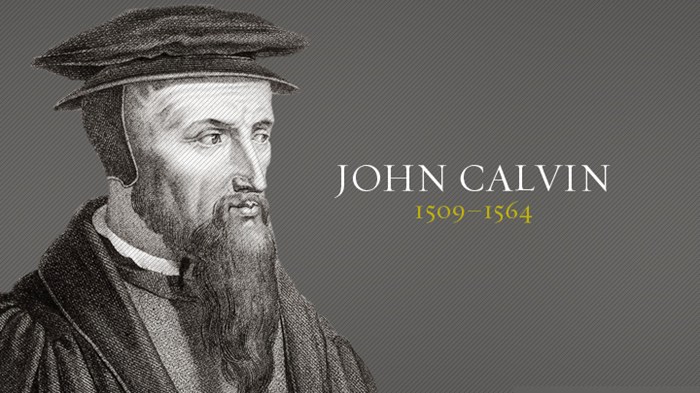
"The Papists will well-enough confess that we be justified by faith, howbeit they add that it is but partly. But that gloss marreth all. For here it is proved that we cannot be found righteous before God, but by the means of our Lord Jesus Christ, and by resting upon the salvation which He hath purchased for us. The Papists see this well enough: and, therefore, for fashion's sake, they say we be justified by faith, but not by faith alone: they will [have] none of that. That is the thing that they fight against, and it is the chief point that is in controversy between them and us." 

- John Calvin, sermon on Galatians 2:16, emphasis added

Evangelicals will often describe the difference between themselves and Roman Catholics as that evangelicals believe in salvation by faith, while Catholics believe in salvation by works. And some Catholics will grant that assessment. However, those evangelicals will have a problem if they run into an educated Catholic and say that. The fact is that Rome is happy to talk about salvation by faith, and has always done so, even in the documents of the Council of Trent in response to the Reformers see, for example, Canons XX and XXIV of Session 6). 

The problem isn't "salvation by faith," but rather the inclusion or exclusion of another word, "alone." The biblical Protestant affirms salvation by faith alone, without works. Romanism denies the application of "alone," claiming instead that salvation is a process in which faith leads to works which then make the person worthy of salvation. The effect of that distinction is that the Protestant also affirms salvation is an instantaneous event, while the Romanist considers it to be a process. When does that process reach the point of a saved status? No one knows in this life, they claim. You can only know when you get there. Or don't.

One result of this error on the part of evangelicals is that Rome has had increasing success in ecumenism. For example, the organization Evangelicals and Catholics Together proclaimed that a unifying understanding had been reached in this statement: "We affirm together that we are justified by grace through faith because of Christ" (ECT statement, XVIII). Do you see the problem with that statement? It is exactly what Rome has always advocated, while the evangelicals in the group betrayed the Reformation by leaving out the key term "alone." The breakthrough was that professing evangelicals converted en masse to Rome's doctrine of justification.

This is the verse to which Calvin refers: "We know that a person is not justified by works of the law but through faith in Jesus Christ, so we also have believed in Christ Jesus, in order to be justified by faith in Christ and not by works of the law, because by works of the law no one will be justified" (Galatians 2:16). 


Wednesday, March 24, 2021

Jesus Alone the Basis, and Faith Alone the Means, of the Justification of His People


"Faith is said to justify because it is the instrument by which we receive Christ, in whom righteousness is communicated to us. When we are made partakers of Christ, we are not only ourselves righteous, but our works also are counted righteous in the sight of God, because any imperfections in them are obliterated by the blood of Christ."

- John Calvin, commentary on Romans 3:22

When people profess that salvation is by faith alone, they express the biblical doctrine of justification. However, too often modern believers, even among evangelicals, don't understand the meaning of the words as they are in Scripture. We have been infiltrated by the doctrine of the Catholic Church, the same doctrine opposed by the Reformers, that justification by faith means by having faith, or faithfulness. This is how Rome (and her Arminian allies) has retained a role for works in justification. 

Sad as it is, that doctrine of justification cannot save, because it is not God's plan for justification. 

Notice what the Bible says, in the first passage in which justification as such is mentioned: ":He [i. e., Abraham] believed the Lord, and He counted it to him as righteousness" (Genesis 15:6). The Lord, the preincarnate Christ, accepted Abraham's faith, and declared him righteous. Jehovah does not make Abraham righteous, as Rome claims, but declares him righteous. That is the distinction between justification, a change in legal status, and sanctification, a change in nature. 

Does God merely erase Abraham's sin? No, nor that of nay other believer. To gloss over sin in such a way would be to substitute tolerance for justice. Rather, here is where we see the double imputation that is involved in justification. The sin of the elect, at the moment, of faith, is transferred to our Surety, Jesus Christ: "Surely He has borne our griefs and carried our sorrows; yet we esteemed Him stricken, smitten by God, and afflicted. But He was pierced for our transgressions; he was crushed for our iniquities; upon Him was the chastisement that brought us peace, and with His wounds, we are healed. All we like sheep have gone astray; and we have turned- every one- to his own way; and the Lord has laid on Him the iniquity of us all" (Isaiah 53:4-6).

But that was only half of our justification. In addition to taking the punishment for our sins, Jesus gave us His perfect record of works: "O Lord, You will ordain peace for us, for You have indeed done for all our works" (Isaiah 26:12). 

Thus, faith is not the basis of our justification. Jesus alone provides that. Rather, faith is the means of our justification. Or, to use, Calvin's term in the quote above, the instrument of our justification.

Wednesday, March 10, 2021

Justifying Faith Is Faith in Christ Alone

 "Faith - true faith - always has an object, and this object is the crucified and risen Christ, as revealed in the Gospel. Thus, as the embracing of Christ - in whom is forgiveness, righteousness, and adoption as children of God - is faith the source of justification." 

- David Engelsma, "Gospel Truth of Justification," p. 141 

It has become a reflex in American culture to respond to any sorrow or apprehension with an exhortation, "You just gotta have faith." And that is supposed to cover all of the bases, ranging from seeking a job to cancer to a severely-injured child. When it is said on TV, no definition of "faith" is ever given, nor a statement regarding faith in what or in whom. It is simply faith in faith itself. 

The faith that results in eternal life is not a faith in faith. As Reverend Engelsma says in the quote above, indeed, in the whole book, it isn't faith as a thing that justifies, but rather as faith with Jesus as its object that justifies. As he also says (on the same page), "Faith looks to Christ, trusts in Christ, and embraces Christ. From this Christ, faith receives Christ Himself as the believer's righteousness by imputation. Or to say it differently, from this Christ, to whom faith looks and on whom faith rests and whom faith embraces, the believer receives the righteousness of Christ as his own (by imputation)." 

This is why it is so important to share the Gospel with members of cults or false churches. They have a faith, but it is in a false object, and, therefore, cannot save them. Whether that faith is in the cultic organization, as with Jehovah's Witnesses, or is in the false Jesus created by the organization, as with Mormons, or in the false basis of justification created by the organization, as with Roman Catholics, it is a faith without a saving object, and, therefore, a faith that cannot justify. "We know that a person is not justified by works of the law but through faith in Jesus Christ, so we also have believed in Christ Jesus, in order to be justified by faith in Christ and not by works of the law, because by works of the law no one will be justified" (Galatians 2:16).

Wednesday, February 24, 2021

The Continuing Stand for Justification by Faith Alone

"Justification is a legal act of God. It is strictly a legal act of God. By the act of justification, God changes the sinner's standing, or legal position, before Himself as judge. Whereas the sinner is guilty, the act of justification renders him not guilty. Whereas the sinner stands before the divine bar of justice as one who has transgressed all the commandments of God, justification constitutes him innocent. Whereas the sinner appears in the divine courtroom as one who has not kept the law of God and is, therefore, worthy of damnation, justification gives him the state or status, that is, the legal standing, of one who has perfectly satisfied all the demands of the law, including its demand of the punishment of everlasting damnation, and is, therefore, deserving of eternal life." 

- Rev. David Engelsma, "Gospel Truth of Justification," p. 93 

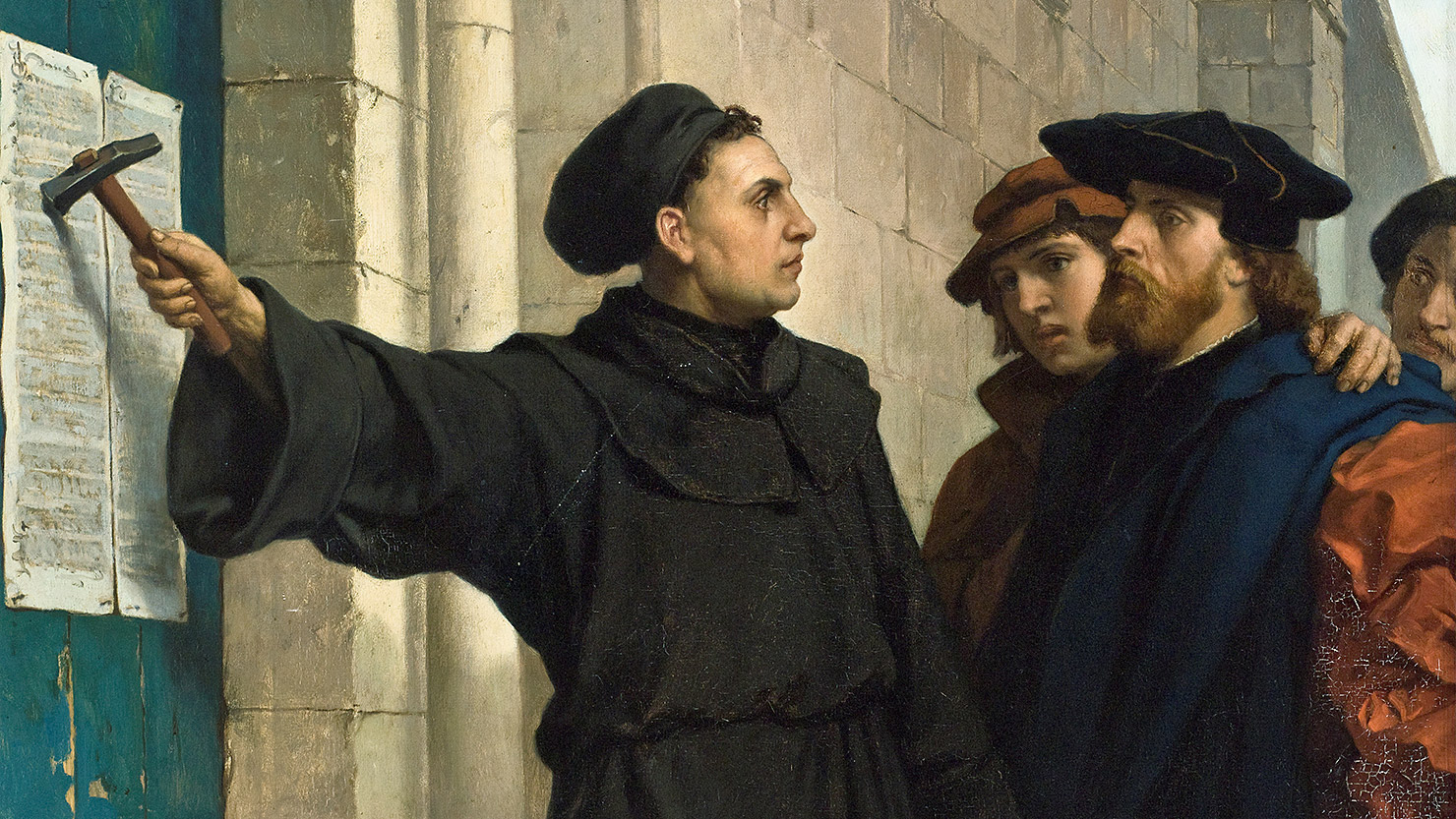
The importance of the statement above can be seen in its historical significance. it was the grounds for Martin Luther's revolt against the corruptions of the Roman Catholic Church. He had discovered the truth of justification by faith alone in his personal study of the Bible: "The righteous shall live by his faith" (Habakkuk 2:4, and quoted by Paul in Romans 1:17 and Galatians 3:11). However, he saw that this simple but profound expression of the only way of salvation had been buried under the manmade doctrines and ceremonies of the Catholic Church. 

Rome responded by declaring a curse against biblical justification: "Canon 9.  If anyone says that the sinner is justified by faith alone, meaning that nothing else is required to cooperate in order to obtain the grace of justification, and that it is not in any way necessary that he be prepared and disposed by the action of his own will, let him be anathema" (The Canons of the Council of Trent, still the official doctrine of the Roman Church). This assertion has never been repudiated by Rome, which is why any reunification between her and orthodox Protestants is still impossible. 

Rome has also caricatured the Reformers' doctrine is nothing more than a legal fiction. That accusation is false. It might have been true if God had merely cancelled our sin debt unpaid. Yet that is not what He has done. Rather, He has transferred that debt to a voluntary Surety, the Lord Jesus Christ. For those whom He undertook to redeem (John 6:37-39), Jesus the Sinless One stepped forward to pay a debt that He did not owe, that we may be freed from a debt that we could not pay. And a debt paid is a debt owed no more, in truth, not as a fiction.

Saturday, August 22, 2020

How Were Men Saved Before Jesus Came?

 I often see a question repeated in my Facebook Christian groups: What about people who lived before Jesus came? How were they saved? 

To my mind, the question is strange enough. However, I have seen some truly bizarre answers given. When I say bizarre, heretical would be an understatement. Some of them would qualify as occultic! 

One of the merely-heretical answers is that Old Testament believers were saved by the Mosaic sacrifices. That is a dispensationalist concept, and ignores Hebrews, as dispensationalists are wont to do: "It is impossible for the blood of bulls and goats to take away sins" (Hebrews 10:4). Old testament believers were enabled by the Holy Spirit to see through the type of the animal sacrifices to the anti-type, the sacrifice of Jesus, whose blood is truly effectual to the salvation of His people. That means that Old Testament believers were saved the

same way as New Testament believers, by grace alone through faith alone in Christ alone. The difference is that the work of Jesus was obscured by the types and shadows of the Mosaic ceremonies. The Gospel is brighter for the New Testament believer because that obscurity has been removed. We have directly what the Old Testament believer had only indirectly. 

As  Martyn Lloyd-Jones said, "Do you mean by that, asks someone, that the saints in the Old Testament were not forgiven? Of course I do not. They were obviously forgiven and they thanked God for the forgiveness. You cannot say for a moment that people like David and Abraham and Isaac and Jacob were not forgiven. Of course they were forgiven. But they were not forgiven because of those sacrifices that were then offered. They were forgiven because they looked to Christ. They did not see this clearly, but they believed the teaching, and they made these offerings by faith. They believed God’s Word that He was one day going to provide a sacrifice, and in faith they held to that. It was their faith in Christ that saved them, exactly as it is faith in Christ that saves now. That is the argument."

Wednesday, August 19, 2020

Following Paul to Righteousness by Faith


"Look out for the dogs, look out for the evildoers, look out for those who mutilate the flesh. For we are the circumcision, who worship by the Spirit of God and glory in Christ Jesus and put no confidence in the flesh— though I myself have reason for confidence in the flesh also. If anyone else thinks he has reason for confidence in the flesh, I have more: circumcised on the eighth day, of the people of Israel, of the tribe of Benjamin, a Hebrew of Hebrews; as to the law, a Pharisee; as to zeal, a persecutor of the church; as to righteousness under the law, blameless. But whatever gain I had, I counted as loss for the sake of Christ. Indeed, I count everything as loss because of the surpassing worth of knowing Christ Jesus my Lord. For His sake I have suffered the loss of all things and count them as rubbish, in order that I may gain Christ and be found in Him, not having a righteousness of my own that comes from the law, but that which comes through faith in Christ, the righteousness from God that depends on faith." 

- Philippians 3:2-9

The Apostle Paul gives us a list of things here which might have been considered grounds for a righteousness before God based on his own qualities. As righteousness was understood by his judaizing opponents, Paul had all of the qualifications of birth, of training, and of works. If anyone could be justified by his own qualifications, then that person could be none other than Paul. 

Yet, what does that same Paul say about his qualifications: "I count them as rubbish" (verse 8). What men would count as shining qualities, Paul calls garbage. And I don't think that Paul is referring here to God's point of view (Isaiah 64:6). Rather, he is telling us what was his own attitude to those things that he, too, in a previous life, counted as glorious. They were garbage, not because they were rejected by God, though that is true, but rather because they had blinded him to true righteousness, that which comes by faith alone in Christ alone. It is as if some prospector had been so in love with his lump of coal that he had ignored a streambed next to him littered with gold nuggets. 

This is why Christians should feel such sorrow for those trapped in pseudo-Christian sects. I have spoken to Mormons, Jehovah's Witnesses, and Oneness Pentecostals who were so proud of their chunks of coal - such as baptism or organizational position - while they are blind to the gold of true righteousness, such as Paul had found, by faith in Christ alone.

Saturday, July 11, 2020

The Promises of God Defined by His Mercy


Isaiah 55:11 is a verse which is well-known among orthodox Protestants: "So shall My word be that goes out from My mouth; it shall not return to Me empty, but it shall accomplish that which I purpose, and shall succeed in the thing for which I sent it." And there is good reason for it to be well-known, because it powerfully teaches that the Bible is infallible and trustworthy. Where we are weak, the Scriptures are invincible!

However, there is another aspect to that verse that many such Protestants pass over: the Scriptures don't achieve what we plan, but what God plans. This is where orthodoxy stands against the so-called Prosperity Gospel - which is really no gospel at all - which claims that spouting some claim from anyone on the basis of his personal desire and interpretation guarantees that God is obligated to give it.

Where this is especially important is in evangelism. Paul tells us that "faith comes from hearing, and hearing through the word of Christ" (Romans 10:17). That is, the preaching of the Word is God's usual means of converting unbelievers (see the Westminster Confession of Faith Chapter X). Some people claim that means that we are just to proclaim the Word, and then every person has an equal ability to respond, based on his choice to believe or not. Yet, we know that not all believe, even when presented with the Gospel through the Scriptures. Doesn't this "choice" doctrine then imply that the promise of Isaiah 55:11 is false? or, at least, unreliable? God forbid such a blasphemous assertion!

Rather, such people ignore the third and fourth lines of the verse: "It shall accomplish that which I purpose, and shall succeed in the thing for which I sent it." The promise of God never fails! The mere idea is impossible! Rather, it is effectual when He intends it, not us. As Paul also says: "So then it depends not on human will or exertion, but on God, who has mercy" (Romans 9:16; see also John 1:12-13).

More importantly, we have the assertion of Jesus: "All that the Father gives Me will come to Me, and whoever comes to Me I will never cast out. For I have come down from heaven, not to do My own will but the will of Him who sent Me. And this is the will of Him who sent Me, that I should lose nothing of all that He has given Me, but raise it up on the last day" (John 6:37-39). His promise here parallels the one in Isaiah, but is more explicit. To whom does the promise apply? To those who choose? No, it says no such thing. Rather, Jesus specifies that it applies to those whom the Father has given Him. Does He know who those people are? Of course. Can we know? Of course not. That is a part of the creator/creature distinction. Therefore, we are to proclaim the Word to whomever will hear us, knowing that those redeemed by Jesus will respond in faith, and the others will reject it (II Corinthians 2:16). What we must remember is that the promise of Isaiah is effectual, and that promise should stimulate us in our evangelism (Acts 18:10), knowing that God will apply that word to the conversion of all whom He intends (Acts 13:48).

Saturday, May 23, 2020

Faith, the Gift of God to the Elect Alone

Every Bible-believing Christian is distinguished by one doctrine: our justification before God is through fail alone. That was the message of Jesus (see the Parable of the Pharisee and the Tax-Collector, Luke 18:9-14), Paul (such as Romans 3:28), the Old Testament prophets (such as Habakkuk 2:4), and the Reformers.

But rare is the person who asks an important question: Who has such saving faith? As I demonstrate here, faith is given to us by God; it is not something that we add to the cross work of Jesus.

The Arminian claims that God gives faith equally to all men, so that all men are equally enable to respond to the Gospel. However, the Bible says otherwise: "Not all have faith" (II Thessalonians 3:2). So, contrary to the claim of the Arminian, not all have faith.

So, then, who does? "Paul, a servant of God and an apostle of Jesus Christ, for the sake of the faith of God’s elect and their knowledge of the truth, which accords with godliness" (Titus 1:1). So the answer that Paul provides has three parts: faith, knowledge, and godliness. Thus, we aren't talking about a mere ability to believe, as is the basis of Arminianism. Paul restricts these gifts to God's elect. The elect are given faith by which to be justified, knowledge of the Gospel, and godly lives. Paul here gives an explanation of the content of the promise of Jesus in John 6:39: "This is the will of Him who sent Me, that I should lose nothing of all that He has given Me, but raise it up on the last day."