Showing posts with label mormonism. Show all posts

Friday, July 10, 2026

The Mormon Corporeal God Refuted by the Book of Mormon

As most people are aware, the organization that calls itself the Church of Jesus Christ of Latter-Day Saints, commonly known as the Mormons, teaches that God the Father has a human body, just as the Son does. They claim that this is implied by His creation of Adam in His own image, since Adam had a body. As one of their own websites says, "Hey, guys, so when it comes to the nature of God, Latter-day Saint Scripture teaches that, 'The Father has a body as tangible as man's...'" The site doesn't give which Scripture that is. 

However, I can give another exact citation from Mormon Scripture which is a problem for official Mormon doctrine. In the Book of Mormon, Mosiah 7:27 says, "He [I. e., the prophet] said unto them that Christ was the God, the Father of all things, and said that he should take upon him the image of man...; and that God should come down among the children of men, and take upon him flesh and blood, and go forth upon the face of the earth." 

I think any rational reader would find that verse to be logically garbled, since it says Christ, but calls Him the Father, yet Mormons deny that the Book of Mormon teaches Modalism. However, it says that Christ came and took upon Himself flesh and blood, as Christians also say, but this was not after the image of God, but after the image of man! Having a physical body is explicitly described as a human characteristic undertaken by Christ, not a divine characteristic as claimed by Mormons. 

Their own Scripture teaches the opposite of the doctrine claimed by Mormons! 


Wednesday, July 9, 2025

Anthropomorphisms for God Against Mormon Theology

One of the the doctrines that distinguish Mormons from biblical Christians is their belief that God the Father has a physical body like that of a human being. That is, they take references in the Bible literally, such as to His eyes, or arms, ears, feet. 

In contrast, biblical Christians take such references to be anthropomorphisms. That is, figures of speech in which is God is described as if He has human features, not because He does, but in order to make Him more relatable to mortal men. That is because He tells us explicitly that He is not a man: "God is not a man" (Numbers 23:29, I Samuel 15:29). Furthermore, we are told that His divine nature is invisible (Colossians 1:15, I Timothy 1:17). 

When I have denied their literal use of such anthropomorphisms in reference to God, I have had Mormons tell me that I demonstrate that I do not believe what the Bible says. 

However, anthropomorphisms in the Bible are not limited to references to God. 

"For you shall go out in joy and be led forth in peace; the mountains and the hills before you shall break forth into singing and all the trees of the field shall clap their hands" (Isaiah 55:12). Here there are anthropomorphisms of land features and trees expressing emotions like human beings. I posted the verse in a discussion group with Mormons and asked if they believe that mountains can sing or that trees have hands. Of course, they denied that they do. So then I asked, don't you believe the Bible? Then some fell silent while others turned to ridicule. None even attempted a rational distinction between this verse and the ones that they claim refer to literal body parts of God. 

Mormon exegesis falls apart under a little examination. 


Saturday, September 17, 2022

The Scriptural Origin of Paul's Faith


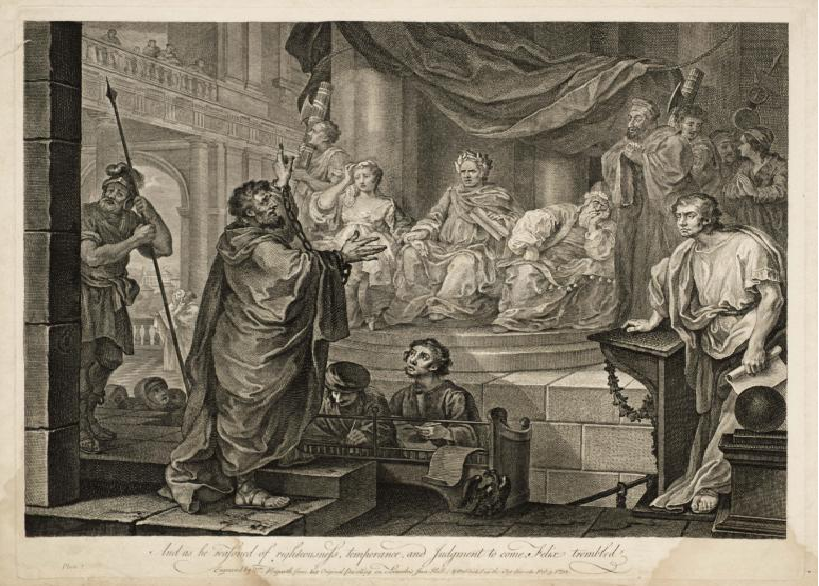
When he was called before Felix, the Roman procurator for the province of Judea, Paul gave an apologetic, that is, a defense, for the Christian faith for which the Jewish leaders had charged him of insurrection. Part of that defense, as recorded in Acts 24:14, is this statement: "This I [i. e., Paul] confess to you [Felix], that, according to the Way, which they [the Jewish leaders] call a sect, I worship the God of our fathers, believing everything laid down by the Law and written in the prophets." 

Paul's defense is not in any mystical revelation, whether by dreams or sensationalist evangelists, but strictly by the testimony that he found in the Bible, the Scriptures which we now know as the Old Testament (compare his later message to Timothy in II Timothy 3:14-15). 

If anyone could, Paul could have spoken of a mystical experience. In Acts 9:1-9, Luke the Physician gives us a record of Paul's, then still called Saul, persecution of the Christians, until he is literally thrown to the ground by Jesus, who challenges him, "Saul, Saul, why are you persecuting Me?" (verse 4). Yet, we are then told, verses 10-19, that this same Jesus then sent a disciple named Ananias to explain the faith to Saul/Paul. "The Lord said to him [i. e., Ananias], 'Go, for he is a chosen instrument of Mine, to carry My name before the Gentiles and kings and the children of Israel'" (verse 15). It is only after this meeting with Ananias that Paul is able to rise and be baptized, not after his vision. 

I think this record is one of the landmarks that distinguish between true Christian churches and the cults. Cults usually start with a leader who claims to have had a mystical experience, apart from Scripture, in which God supposedly taught him or her some new revelation. Nowhere does the New Testament describe conversions as occurring in this way. On the contrary, it is Paul himself who tells us that people are converted by the preaching of that same word of which he testified to Felix (Romans 10:14-17). 

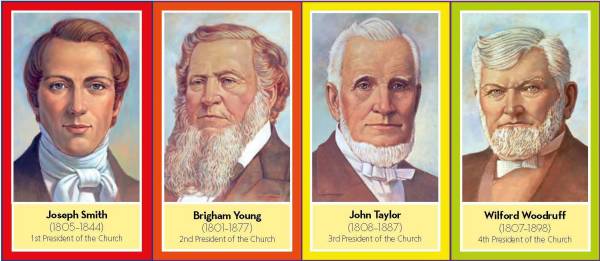
We see this contrast most vividly in the Mormon religion, the founder of which, Joseph Smith, Jr., claimed revelatory visions, including new scriptures, to support his claims of a new religion, new though he claimed Christian terminology for it. The apologetic of Paul contrasts starkly with the claims of Smith, being one of the proofs that Mormonism has no legitimate claim to the name of Christ for its organization. 

Saturday, July 30, 2022

"Gods" in the Bible and Mormon Tritheism

"In the Church of Jesus Christ of Latter-day Saints, prophets since Joseph Smith have taught clearly that there are three separate members of the Godhead, each of which is God. As Joseph Smith stated, 'These personages... are called God the first; the Creator, God the second, the Redeemer; and God the third, the Witness or Testator' (Teachings of the Prophet Joseph Smith, p. 190). He further taught: 'I have always declared God to be a distinct personage, Jesus Christ a distinct personage from God the Father, and that the Holy Ghost was a distinct personage and a Spirit: and these three constitute three distinct personages and three Gods (Teachings, p. 370; see also History of the Church 6:474)." I quote this from this Mormon website. That is, it is their words, not my representation. 

Up until the last words, "and three Gods," a biblical Christian could be nodding his head, because the Bible does, indeed, indicate that the Father, Son, and Holy Spirit are three distinct persons, but, we insist, they are one God. We know this because each person, as Mormons will concede, is called in turn, God. Yet, the Bible also tells us, "Thus says the Lord, the King of Israel and his Redeemer, the Lord of hosts: I am the first and I am the last; besides Me there is no god. Who is like Me? Let him proclaim it. Let him declare and set it before Me, since I appointed an ancient people. Let them declare what is to come, and what will happen. fear not, nor be afraid; have I not told you from of old and declared it? And you are My witnesses! Is there a God besides Me? There is no Rock; I know not any" (Isaiah44:6-8, emphasis added). And elsewhere, "To you it was shown, that you might know that the Lord is God; there is no other besides Him" Deuteronomy 4:35). Three persons called God, and only one God; that is the simple description of the triune God of the Bible, the creeds, and biblical Christianity. It makes no allowance for multiple deities, whether the three of Mormonism or the millions of Hinduism, or any number held forth in pagan religions. 

In response to the plain words of the Bible, Mormons claim that their belief is consistent with the Bible's references to "gods." Yet even that claim is refuted by the Bible itself. It must be granted, of course, that the Bible does refer to "gods." But the usage clearly forbids any conclusion that the reference is to real gods, as is the living God of the Bible. 

Consider another reference from the Old Testament: "There [i. e., in Babylon] you will serve gods of woods and stone, the work of human hands, that neither see, nor hear, nor eat, nor smell" (Deuteronomy 4:28). That is, when the Bible refers to "gods," it means idols, as the deceived pagans see them, not in their real nature. 

In the New Testament, we see these words from the Apostle Paul: "What pagans sacrifice they offer to demons and not to God" (I Corinthians 10:20). He goes beyond Moses and says that pagan deities are not merely idols, but are actually demonic spirits. And that brings us back to the three gods of Mormonism. Not only are they not, any of the three, the God of the Bible, but they are, in reality, demonic spirits leading Mormons on a merry path to Hell. 


Wednesday, May 18, 2022

An Ancient Prophetic Warning to Today's Mormons

"The prophets are prophesying lies in My name. I did not send them, nor did I command them or speak to them. They are prophesying to you a lying vision, worthless divination, and the deceit of their own minds. Therefore, thus says the Lord concerning the prophets who prophesy in My name, although I did not send them, and who say, 'Sword and famine shall not come upon this land':  By sword and famine those prophets shall be consumed. And the people to whom they prophesy shall be cast out in the streets in Jerusalem, victims of famine and sword, with none to bury them - them, their wives, their sons, and their daughters - for I will pour out their evil upon them" (Jeremiah 14:14-16). 

This warning was expressed to Israel by a God-sent prophet, because they had been receiving the false prophecies and promises of fake prophets. Those prophets gained status and wealth by making promises to the people, promises which those people gobbled up greedily. Why? Because these prophecies exalted them, in contrast to Jeremiah, who preached warnings and judgments which were true, but not what they wanted to hear. 

In the same way, the modern members of the so-called Church of Jesus Christ of Latter-Day Saints, or more-commonly the Mormons, have their own prophets, who preach to them pleasing words, promising godhood and rewards to them, while those same Mormons turn their backs on true Christians who try to point out the failed prophecies and false doctrines proclaimed by the Mormon prophets. 


Wednesday, March 23, 2022

What Works Are Excluded from Justification?

I have had discussions with both Mormons and Catholics about Romans 3:28: "For we hold that one is justified by faith apart from the works of the law." The topic was the doctrine of both groups that a person is justified by a mixture of faith and works, instead of by faith alone. They denied that a person is justified by faith alone, claiming that Paul rejects the works of the Mosaic code, such as circumcision, as contributing to justification. That is, they restrict the meaning of "law" just to the rules and ceremonies given to Israel through Moses. 

What neither will mention is Paul's other uses of "law," especially in Galatians. In Galatians 4:21-26, 28-31, he makes a case: "Tell me, you who desire to be under the law, do you not listen to the law? For it is written that Abraham had two sons, one by a slave woman and one by a free woman. But the son of the slave was born according to the flesh, while the son of the free woman was born through promise. Now this may be interpreted allegorically: these women are two covenants. One is from Mount Sinai, bearing children for slavery; she is Hagar. Now Hagar is Mount Sinai in Arabia, she corresponds to the present Jerusalem for she is in slavery with her children. But the Jerusalem above is free, and she is our mother... Now you, brothers, like Isaac, are children of promise. But, just as at that time he who was born according to the flesh persecuted him who was born according to the Spirit, so also it is now. But what does the Scripture say? 'Cast out the slave woman and her son, for the son of the slave woman shall not inherit with the son of the free woman.' So, brothers, we are not children of the slave but of the free woman." 

Paul makes a very clear distinction here. Is it between works of the Mosaic law and other works? Clearly not. Anyone with a modicum of biblical knowledge knows that Abraham lived four-hundred years before  Moses. Rather, he uses "law" to describe the works of the flesh, such as those of Moses, using the label of the part to represent the whole (a synecdoche), in distinction from the promise, which he uses to label grace alone through faith alone. 


Wednesday, February 23, 2022

The Nature of God: Biblical Versus the Corporeal Deity of Mormonism

"The right hand of the Lord does valiantly!" (Psalm 118:15).

The reference above mentions the right hand of God. We also see references to His arm and His back. Orthodox Christians call these references "anthropomorphisms," that is, metaphorical references to God as if He is a man, as an aid to human understanding. In other words, we say that they are never to be taken literally (apart from the true body of Jesus, but only as the result of His incarnation). 

In contrast, Mormons claim that they references are literally true, such that the Father has a literal, physical body, with hands, feet, hair, etc., and that the Son also had a body, even prior to His incarnation. On the other hand, their Holy Spirit does not have a body. As their scriptures say, "The Father has a body of flesh and bones, as tangible as man's; the Son also" (Doctrine and Covenants 130:22). 

However, something else we see in the Bible is this: "The Lord spoke to you out of the midst of the fire. You heard the sound of the words, but saw no form - only a voice was heard... Give good care to yourselves, for you saw no form on the day that the Lord spoke to you in Horeb from the midst of the fire, lest you corrupt yourselves in the form of any figure, the likeness of male or female..." (Deuteronomy 4: 12, 15-16). These verses are significant because they explicitly state that God did not reveal Himself with any form. In fact, Moses says, to represent Him with a form would be corruption! What I find even more significant is that He calls Himself Yahweh (represented here by the English word "Lord"), which I consider to be, not the Father, but rather the preincarnate Son in His mediatorial role. Whether or not one agrees, these verses plainly negate the claims of Mormons. 

On the issue of anthropomorphisms, that chapter contains another relevant reference: "I call heaven and earth to witness against you today..." (Deuteronomy 4:26). Moses calls on the physical creation to witness the commitment undertaken by the people of Israel. Taken literally, that would require that heaven and earth be sentient. Yet Mormons make no claim that anthropomorphisms are literal in this case. 

Does that not prove that they recognize the validity of the orthodox view? They must deny it, however, because to accept it would bring down the house of cards which is their manmade religion in a single stroke. 


Wednesday, November 24, 2021

The Works of a Christian As a Defining Line Between True and False Christianity

One of the consistent errors that mark cults is their perversion of salvation to some form of works righteousness. This is true of the largest cult, the Roman Catholic Church, as well as other well-known cults such as the Mormons, the Jehovah's Witnesses, Church of Christ, or any one that we could name. 

That one error is a defining distinction between cults and orthodox Christianity, i. e., biblical Protestantism. 

The error of each of these cults is that they mix justification with sanctification. That is, they make the good works of the professing Christian to be part of his justification before God, whether it is faith plus sacraments, or faith plus love. Always the error involves faith plus something, instead of biblical justification, which is by faith alone. 

This is not to profess the strawman argument used by such groups against Protestants, by which they claim that the denial of a role in justification means that Protestants believe that works do not matter. That accusation is false. With the Bible, Protestants hold that works are the necessary result of saving faith. That is the opposite of what the cults teach. The Protestant talks about works as the necessary result, while the cults make works a necessary component of justification. 

This is what we find in the New Testament. 

Acts 15:9: "He [God] made no distinction between us [Jews] and them [Gentiles], having cleansed their hearts by faith." 

Romans 6:1-6: "What shall we say then? Are we to continue in sin that grace may abound? By no means! How can we who died to sin still live in it? Do you not know that all of us who have been baptized into Christ Jesus were baptized into His death? We were buried, therefore, with Him by baptism into death, in order that, just as Christ was raised from the dead by the glory of the Father, we, too, might walk in newness of life." 

Galatians 2:20: "I have been crucified with Christ. It is no longer I who live, but Christ who lives in me. And the life I now live in the flesh, I live by faith in the Son of God, who loved me and gave Himself for me." 

This is far from an exhaustive list.

Wednesday, November 17, 2021

The Fullness of the Revelation of the Faith

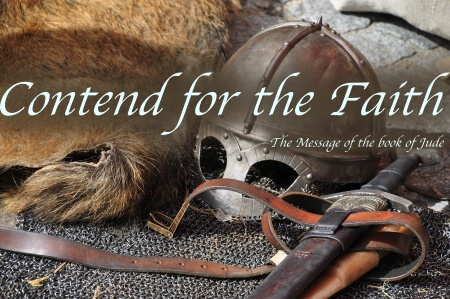
In his epistle, Jude, the brother of Jesus, made an interesting comment: "Beloved, although I was very eager to write to you about our common salvation, I found it necessary to write appealing to you to contend for the faith that was once for all delivered to the saints" (Jude 1:3). "Delivered once for all" can mean nothing except that the content of the Christian faith, that is, all of her doctrine, had been fully revealed by the time Jude was forced to warn against false teachers who were striving to corrupt that faith. Paul made the same point to his young protégé in II Timothy 3:15-17). 

The importance of Jude's words here is to shut the door in the faces of pseudo-Christian sects who seek to claim that they have revelations of additional doctrines beyond those given by Jesus and His Apostles. The Mormons have their Book of Mormon and other "scriptures," while Rome makes lofty claims for her "sacred tradition." Both claims are their efforts to cover the manmade doctrines that they confess cannot be found in the Bible. 

Yet, according to Jude, that exclusion is sufficient proof that the doctrinal claims of Rome and the Mormons are precluded from true Christianity exactly because they were not revealed in the New testament once for all. 


Wednesday, September 15, 2021

The Deity of Jesus Proven from Hebrews

"Of old You laid the foundation of the earth, 

And the heavens are the work of Your hands. 

They will perish, but You will remain; 

They will all wear out like a garment. 

You will change them like a robe, and they will pass away, 

But You are the same, and Your years have no end." 

- Psalm 102:25-27 

The verses above were penned by the Holy Spirit through an unnamed poet. We are told of him in the subtitle only that he was "one afflicted," but not by what. It continues, "when he was faint and pours out his complaint before the Lord." Indeed, the psalm is full of pathos, and we should be encouraged by that example. Jesus is ready to hear all of our human emotions, not just happy ones, as is sometimes suggested by popular TV preachers. 

These verses are then quoted in Hebrews 1:10-12, and explicitly applied to the Son, that is, to Jesus in His divinity (verse 8), in His role as co-Creator with the Father.

In the original passage, we are given no specific information to which divine Person the passage is addressed. In isolation, it could be taken as addressed to the Father. However, we have a hint, made explicit by the author of Hebrews, that it is addressed to the preincarnate Son because the psalmist explicitly addresses his complaints to Jehovah (verse 1), the name by which He was known to His Old Covenant people. However, the sects can pretend not to see that, whether to support the Arianism of the Jehovah's Witnesses or the tritheism of the  Mormons or the Sabellianism of the Oneness Pentecostals, or any other denial of the full deity of Christ. 

Yet, when we look at the quote in Hebrews, all of those quibbling voices are quelled, as that author makes explicit what is implied in the original: the Lord of whom the Psalmist speaks is none other than the Son, our Lord Jesus Christ. 


Wednesday, July 21, 2021

Forgiving Sins and Priesthood Authority

I have been having discussions with Mormons recently on the place of "priests" in the Christian Church. They claim to have an exclusive "priesthood authority." According to the organization's website, that means "in mortality, priesthood is the authority that God gives to man to act in all things necessary for the salvation of God's children." What is that authority? From the organization's handbook: "The keys of the priesthood are the right to preside and direct the affairs of the Church within a jurisdiction. Jesus Christ holds all the keys of the priesthood pertaining to His Church. He has conferred upon each of His Apostles all the keys that pertain to the kingdom of God on earth. The senior living Apostle, the President of the Church, is the only person on earth authorized to exercise all priesthood keys." 

When I talk to Mormons, they claim that Jesus Himself created this authority in the church, when Peter first professed His Messianic office in  Matthew 16. Jesus said, "Blessed are you, Simon Bar-Jonah! For flesh and blood has not revealed this to you, but My Father who is in Heaven. And I tell you, you are Peter, and on this rock I will build My church, and the gates of Hell shall not prevail against it. I will give you the keys of the kingdom of Heaven, and whatever you bind on earth shall be bound in heaven, and whatever you loose on earth will be loosed in Heaven" (Matthew 16:17-19). Mormons (and Catholics) claim that Peter and his successors received here from Jesus his imprimatur allowing them to forgive sins, and, thus, mediating salvation to everyone else. 

To my mind, that claim is blasphemous, a denial of the sufficiency of Christ for the salvation of His people. As the Scriptures say, "There is one God, and there is one mediator between God and men, the man Christ Jesus, who gave Himself as a ransom for all" (I Timothy 2:5-6). That is what is said about Him. 

But is there anything which Jesus Himself said that directly refutes this claim of priesthood? 

Yes, there is. In the story of the paralytic, Jesus says to the frowning scribes, "Which is easier, to say, 'Your sins are forgiven,' or to say, 'Rise and walk'? But that you may know that the Son of Man has authority on earth to forgive sins - (He then turned to the paralytic) - Rise, pick up your bed and go home" (Matthew 19:5-6). In the parallel passage in Mark, we get an additional piece of information. That is that the scribes accused Him of blasphemy, because, "Who can forgive sins but God alone?" (Mark 2:7). And notice that Jesus does nothing to disabuse them of this opinion! They were correct that God alone can forgive sins. And in claiming that authority, Jesus blasphemed, in their view, because His claim was a claim to deity, equal to that of the Father! 

More to my point is that Jesus agreed that the authority belongs to God alone, and, therefore, cannot be held by any mere man, including Peter or anyone who claims to be his successor. Rather, as the representative of the only Head of the Church, Peter, the other apostles, and every true minister since their time has declared, not that they forgave sins, but rather that they brought the Gospel, the news that Jesus has purchased forgiveness of sins for everyone who believes (Acts 10:43). Jesus forgives, and the messenger announces. 

"With God are wisdom and might; He has counsel and understanding. If He tears down, none can rebuild; if He shuts a man in, none can open. If He withholds the waters, they dry up; if He sends them out, they overwhelm the land. With Him are strength and sound wisdom; the deceived and the deceiver are His. He leads counselors away stripped and overthrows the mighty. He deprives of speech those who are trusted and takes away the discernment of the elders" (Job 12:13-20). 


Saturday, July 17, 2021

Judgment According to the Imputed Righteousness of Jesus

When I am dealing with members of Pelagian sects, such as Mormons and Catholics, on the issue of justification by faith alone, some of them think they are clever by citing, for example, Revelation 20:13: "The sea gave up the dead that were in it, Death and Hades gave up the dead that were in them, and they were judged, each one of them, according to what they had done." Aha! the Pelagian proclaims. If we are judged according to our works, then we must be saved in part by our works, and not by faith alone! And taken in isolation, that verse may be taken that way. 

But the responsible Bible reader doesn't take individual verses in isolation. A doctrine must be built by comparing verse to verse to learn the overall teaching. 

For example, we have Romans 5:19: "As by one man's [i. e., Adam's] disobedience the many were made sinners, so by the one Man's [i. e., Jesus's] obedience the many will be made righteous." Paul shows us the contrast between the two imputations, of sin to Adam's posterity (except Jesus), and of righteousness to the posterity of Jesus (i. e., believers). The Apostle makes the same point in II Corinthians 5:21: "For our sake, God made Him to be sin who knew no sin, so that in Him we might become the righteousness of God." 

The problem is that the Pelagian doesn't understand justification by faith as well as he thinks he does. Pelagianism misrepresents justification as merely the cancellation of the sin debt, returning the sinner to a neutral state. That is why the Pelagian also believes that a believer can lose salvation; after the cancellation of his previous debt, he sins more and incurs new debt. That view is false. Rather, as Paul says, there is the complementary imputation of Christ's righteousness. The new believer is not brought merely to a neutral state by faith. Rather, he also receives to his heavenly account, by means of that same faith, all of the righteousness of Jesus. 

In the eyes of God, the believer is never a person of neutral moral status. Rather, the believer stands before God as a sinless and righteous man or woman. Thus, there is no judgment which we must fear.


Wednesday, July 14, 2021

Everyone Whom God Calls Will Hear the Call


There is a common claim among some semi-Pelagian groups, namely Mormons, universalists, and professed unbelievers, that there is something unfair in God's judgment of all unbelievers to Hell, because such a large portion of the world's population has never had an opportunity to hear the Gospel. How can He justly condemn those who are ignorant of His existence and requirements? 

That the challenge comes from various varieties of Pelagians is a clue to the answer: They don't believe that men deserve to be judged for sin. Therefore, they object to the judgment of some, because they reject the biblical truth that all men deserve that judgment. "All have sinned and fall short of the glory of God" (Romans 3:23). With all of the talk of equality in our modern culture, this is an equality that they want to deny. 

However, we have the hope given to us in the Gospel: "God shows His love for us in that, while we were still sinners, Christ died for us" (Romans 5:8). For us, these people say, but what about those who don't know about that? 

Not understanding the sovereignty of God, the Pelagian cannot rationally connect two ideas: If God's love and wisdom could create a way to save His people, then that same love and wisdom can find a way to bring His people to a time and place in which they can hear of it. To the Calvinist, that logic is obvious; to the Pelagian, that logic is impossible. 

We see God's inspired description of that plan in the words of Paul at the Areopagus in Acts 17:26-27: "He made from one man every nation of mankind to live on all the face of the earth, having determined allotted periods and the boundaries of their dwelling place, that they should seek God, and, perhaps, feel their way toward Him and find Him." If we understand that God has planned all of history (Isaiah 46:10), then it is easy to conceive that He has organized that history, in part, to the end that all those for whom Jesus died would unfailingly come into contact with the gospel and to be converted (John 6:37-39; Acts 13:48). 

So the answer to the challenge of Mormons, universalists, and unbelievers, when they ask, "What about those who haven't had a chance to hear?", is that there are no such people. 

Saturday, June 5, 2021

Justification and That Essential Four-Letter Word: Alone


"In teaching justification by faith alone, Calvin and the Reformed creeds, like Luther before them, are biblical. Not only does the Bible teach that justification is by faith, but it teaches also that justification is by faith alone. The Bible teaches justification by faith alone not by using the word alone, but by contrasting faith as the means of justification with the only alternative, namely, the works of the sinner. When, in its great passages on justification, the Bible affirms that justification is by faith and immediately adds that justification is not by works, the Bible teaches not only that justification is by faith, but also that justification is by faith alone. So clearly, purposefully, and decisively does the Bible thus teach justification by faith alone that alone is, in fact, in the text. It is in the text implicitly." 

- Rev. David Engelsma, "Gospel Truth of Justification," p. 185, emphasis in original 

When Martin Luther first translated the Bible into his native German he added the word "alone" to Romans 3:28: ""So halten wir nun dafür, dass der Mensch gerecht werde ohne des Gesetzes Werke, allein durch den Glauben" (Literally: "We therefore conclude that a man is justified without the works of the law, alone through faith"). Rome has accused him ever since of adulterating the verse. More recently, Mormons have repeated the accusation, and applied it to all orthodox Protestants who hold to Sola Fide, justification by faith alone. 

As seen in the quote above, Luther might have added the word, but he did not add the concept. He merely made explicit what was already implicit. Not only is there nothing dishonest in doing so, but it is a common practice in translating. In fact, the King James Version used by the Mormons does it frequently (the words printed in italics). And Romanist translators have done it in preparing approved versions of the Scriptures. In other words, this is a painfully obvious case of the pot calling the kettle black! 

Part of the reason that Engelsma felt compelled to make his comment so firmly is because of a creeping loss of the Reformation doctrine, even among those who profess to walk in the footsteps of the Reformers. 

For example, in the Thirty-Nine Articles of Anglicanism (Church of England, Episcopal Church in the USA, etc.), number XI says, "Of the Justification of Man. We are accounted righteous before God only for the merit of our Lord and Savior Jesus Christ by faith, and not for our own works or deservings. Wherefore, that we are justified by faith only is a most wholesome doctrine, and very full of comfort..." "Only" appears twice in this one sentence, yet Anglican Theologian N. T. Wright says that the doctrine is an error, and adds works to his doctrine of justification. 

Likewise, the Westminster Confession of Faith, the main doctrinal document of the world's Presbyterians, says (Chapter XI:1 and 2): "Those whom God effectually calleth, He also freely justifieth: not by infusing righteousness into them, but by pardoning their sins, and by accounting and accepting their persons as righteous; not for any thing wrought in them, or done by them, but for Christ’s sake alone; not by imputing faith itself, the act of believing, or any other evangelical obedience to them, as their righteousness; but by imputing the obedience and satisfaction of Christ unto them, they receiving and resting on Him and His righteousness by faith; which faith they have not of themselves, it is the gift of God. Faith, thus receiving and resting on Christ and his righteousness, is the alone instrument of justification..." Yet a movement among professing Presbyterians known as the Federal Vision denies the propriety of "alone," and, like Wright, claims a form of justification by faith mixed with works. 

Such men are dishonest in their profession, pledging their commitment to their respective creeds, while denying such a fundamental doctrine. That is taking the Lord's Name in vain, and "the Lord will not hold him guiltless who takes His name in vain" (Exodus 20:7).

Wednesday, May 19, 2021

The End of the Apostolate in the First Century Contra Mormonism

"You are fellow citizens with the saints and members of the household of God, built on the foundation of the apostles and prophets, Christ Jesus Himself being the cornerstone, in whom the whole structure, being joined together, grows into a holy temple in the Lord. In Him you also are being built together into a dwelling place for God by the Spirit." 

-Ephesians 2:19-22

 In the passage above, the Apostle Paul is describing the development of the visible church, which began, of course, with the Person and work of Jesus, who then appointed the Apostles and prophets, who then provided the foundation for the rest of us in that church. Some aberrant groups, especially the Mormons, claim that Paul is teaching a continuous succession of apostles and prophets to govern the church. Yet, those same Mormons don't teach that the verse- in fact, the same sentence- teaches that they should have a succession of Jesuses  

There are other problems with the Mormon use of the passage. In addition to the contradiction in their interpretation, there is the simple fact that a building does not have a continuing succession of foundations. Rather, one foundation is laid, and then the other parts of the building are built upon that foundation. 

Another problem for the Mormon claim is found in other parts of Paul's writings. 

In Titus 1:5, the Apostle tells his student, "This is why I left you in Crete, so that you might put what remained into order, and appoint elders in every town as I directed you..." Appoint elders, not prophets, and not apostles. In I Timothy, chapter 3, and again in Titus 1, he gave instructions on the qualifications of those elders. Nowhere does Paul, or any other New Testament writer, give information about how to choose apostles or prophets! Yet, Mormons want us to believe that they have exactly those things of which the Bible never speaks! The implication is obvious, that those offices were temporary, foundational, and never intended for continuation. Rather, they have been replaced with elders and deacons who rule and teach, not by new revelation, but rather according to the completed word of God in the Old and New Testaments. 


Saturday, April 17, 2021

Jesus the Cornerstone versus the Claims of Mormonism


Mormons refer to their organization as restored Christianity, because, they claim, the original Christianity of Christ and the Apostles was lost. Then they refer to the creeds of all other professing Christians as "abominations." 

There are many biblical reasons for saying that a general apostasy is impossible. The main Scriptural evidence of that is Matthew 16:18, where Jesus says, "On this rock I will build My church, and the gates of Hades shall not prevail against it." The rock is Himself, the chief cornerstone and foundation of the church (Ephesians 2:20). If the true church disappeared, then it can only be said that the cornerstone had failed. 

But I want to turn to a different verse: "'And as for Me, this is My covenant with them,' says the LORD: 'My Spirit that is upon you, and My words that I have put in your mouth, shall not depart out of your mouth, or out of the mouth of your offspring, or out of the mouth of your children’s offspring,' says the LORD, 'from this time forth and forevermore'" (Isaiah 59:21).

Here, Jehovah, the preincarnate Christ, includes among His covenant promises that His words will never completely disappear from among His people. Is that not exactly what an apostasy would be? 

The message of that verse is exactly the same as that in Matthew: Jesus makes it His personal guarantee that His Gospel, by which His church is gathered, will never depart completely from among men. That is exactly the opposite of the claims of the Mormon organization. "Let God be true though every one were a liar, as it is written, 'That you may be justified in your words, and prevail when you are judged'" (Romans 3:4).

Wednesday, April 14, 2021

How Long Was There Darkness After the Crucifixion? The Bible Versus the Book of Mormon

In the "Book of Mormon Student Manual," chapter 40, "The three days of darkness symbolized the death of Jesus Christ, who is 'the light and life of the world' 3 Nephi 11:11. Mormon emphasized that the three days of darkness was 'a sign' given of the Savior’s death. After describing the damage caused by the 'great storm' that lasted for three hours, Mormon documented the complete darkness as one of the signs that was now fulfilled. The darkness was so intense that 'there could not be any light at all.' During this time of darkness, the body of Jesus Christ, the Light of the World, lay in the tomb. On the day of His Resurrection, after Christ had overcome death, light came again to the people in America, signifying Christ’s victory over death and darkness." 

This refers to the LDS claim that there was three days of darkness after the crucifixion of Jesus, as, they claim, was prophesied by their prophets. "And the God of our fathers, who were led out of Egypt, out of bondage, and also were preserved in the wilderness by him, yea, the God of Abraham, and of Isaac, and the God of Jacob, yieldeth himself, according to the words of the angel, as a man, into the hands of wicked men, to be lifted up, according to the words of Zenock, and to be crucified, according to the words of Neum, and to be buried in a sepulchre, according to the words of Zenos, which he spake concerning the three days of darkness, which should be a sign given of his death  unto those who should inhabit the isles of the sea, more especially given unto those who are of the house of Israel" (I Nephi 19:10). And, "But behold, as I said unto you concerning another sign, a sign of his death, behold, in that day that he shall suffer death the sun shall be darkened and refuse to give his light unto you; and also the moon and the stars; and there shall be no light upon the face of this land, even from the time that he shall suffer death, for the space of three days, to the time that he shall rise again from the dead. And he said unto me that while the thunder and the lightning lasted, and the tempest, that these things should be, and that darkness should cover the face of the whole earth for the space of three days" (Helaman14:20, 27). 

This is in contrast to the biblical account: "It was now about the sixth hour, and there was darkness over the whole land until the ninth hour, while the sun’s light failed" (Luke 23:44-45; see also Matthew 27:43). So, not three days, but three hours!

 Why the difference? Since I consider the Bible alone to be the Word of God, I necessarily believe that the error is in the Book of Mormon, not the Bible. My suspicion is that Joseph Smith, author of the Book of Mormon, confused the account of the crucifixion with the expectation of the resurrection on the third day. If one were hurried, it would be easy to gloss "days" for "hours." Acting under the inspiration of the Holy Spirit, the writers of the Gospels had no such risk. The supposed "prophecies" were then invented to cover Smith's error.


Saturday, April 3, 2021

When Men Turn the Name of God into Vanity

Do you know the third Commandment? It is the one that says, "You shall not take the name of the Lord your God in vain, for the Lord will not hold him guiltless who takes His name in vain" (Exodus 20:7). In our modern understanding, this commandment means not to use "God" flippantly, such as, "Oh God, I love pizza!" And it certainly includes that. But isn't it in itself flippant to believe that one of the Big Ten would be about that? 

Our ancestors certainly gave it more weight: "What are the sins forbidden in the third commandment? Answer : The sins forbidden in the third commandment are, the not using of God’s name as is required; and the abuse of it in an ignorant, vain, irreverent, profane, superstitious, or wicked mentioning, or otherwise using his titles, attributes, ordinances, or works, by blasphemy, perjury; all sinful cursings, oaths, vows, and lots; violating of our oaths and vows, if lawful; and fulfilling them, if of things unlawful; murmuring and quarreling at, curious prying into, and misapplying of God’s decrees and providences; misinterpreting, misapplying, or any way perverting the Word, or any part of it, to profane jests, curious or unprofitable questions, vain janglings, or the maintaining of false doctrines; abusing it, the creatures, or anything contained under the name of God, to charms, or sinful lusts and practices; the maligning, scorning, reviling, or anywise opposing of God’s truth, grace, and ways; making profession of religion in hypocrisy, or for sinister ends; being ashamed of it, or a shame to it, by unconformable, unwise, unfruitful, and offensive walking, or backsliding from it" (Question 113, Westminster Larger Catechism). There is little in our mental or social lives that the divines did not put under the Third Commandment. 

I want to especially consider one aspect of the abuse of God's name, and that is the claiming of it by members of pseudo-Christian cults. The worst ones are the ones that simply create a false Jesus, by depriving Him of His full and eternal deity. This would include Mormons, Jehovah's Witnesses, and Oneness Pentecostals. They abuse God's name by applying it to idolatrous inventions of their cult founders. In this sense, the commandment is equivalent to the warning given by Jesus Himself: "See that no one leads you astray. For many will come in my name, saying, ‘I am the Christ,’ and they will lead many astray. For false christs and false prophets will arise and perform great signs and wonders, so as to lead astray, if possible, even the elect" (Matthew 24:4-5, 24)

The followers of these manmade pseudo-Christs claim the name of Christ, and will even expect others to acknowledge them as Christians. However, they have claimed the name, not of the Jesus of the Bible, but of an idol, and are, therefore, using His name in vain. And, as Moses wrote, God will not hold them guiltless. They remain in their sins (John 8:24). 


Wednesday, March 31, 2021

The Righteousness of the Believer Not a Righteousness by Works

 "Christ, and Christ alone, is the source of righteousness, that is, the righteousness that we need and becomes ours by God's act of justification. God has worked out a righteousness in Christ for penitent, believing sinners, and this righteousness is now in that exalted Christ at the right hand of God in Heaven. To grant us and bestow on us this righteousness of God (by imputation), God is pleased to use faith. Faith is the bond of union with Christ through which the sinner receives righteousness." 

- Rev. David Engelsma, "Gospel Truth of Justification," pp. 141-2 

In this paragraph, Engelsma paraphrases what Paul tells us about the failure of the Jews: "Israel, who pursued a law that would lead to righteousness, did not succeed in reaching that law. Why? Because they did not pursue it by faith, but as if it were based on works" (Romans 9:31-32). Where was true righteousness to be found? "Now the righteousness of God has been manifested apart from the law, although the Law and the Prophets bear witness to it- the righteousness of God through faith in Jesus Christ for all who believe" (Romans 3:21-22). 

Jesus addressed this problem with the Pharisees: "Woe to you, scribes and Pharisees, hypocrites! For you are like whitewashed tombs, which outwardly appear beautiful but within are full of dead people's bones and all uncleanness. So you, also,m outwardly appear righteous to others, but, within, you are full of hypocrisy and lawlessness" (Matthew 23:27-28). 

For the unbelieving Jews, righteousness was a matter of checking off a list of do's and don't's. This is the way of pseudo-Christian cults even to this day: Catholics, Mormons, Jehovah's Witnesses, Seventh-Day Adventists. But it is not the way of Biblical Christianity, which is a righteousness by faith alone, the perfect righteousness of Christ, applied only by the gift of faith. "For our sake, He [the Father] made Him [Jesus, the Son] to be sin who knew no sin, so that, in Him, we might become the righteousness of God" (II Corinthians 5:21).


Wednesday, March 17, 2021

Jesus Had a Preexistence, Not Us

The Mormon organization claims that all men and women existed in prehistory in spiritual form: "We lived as spirit children of God in a premortal existence." Their Scripture says, "Even before they were born, they, with many others, received their first lessons in the world of spirits and were prepared to come forth in the due time of the Lord to labor in his vineyard for the salvation of the souls of men" (Doctrine and Covenants 138:56). 

While this is contrary to the doctrine of orthodox Christianity, it is actually similar to the theories of Plato, a parallel of which Mormons are proud: ""Several philosophers from Plato through Leibniz and Kant to twentieth-century Cambridge intellectuals, dozens of poets from antiquity to Robert Frost, and numerous religious thinkers throughout the Jewish and Christian traditions, propounded a pre-earthly realm peopled by the souls of men and women yet unborn. Pre-existence has been invoked to explain 'the better angels of our nature,' including the human yearning for transcendence and the sublime; it suggests a reason for the frequent sensation of alienation and the indelible sadness of human existence."

The Bible tells us otherwise. In it, Jesus tells us this: "He who comes from above is above all. He who is of the earth belongs to the earth and speaks in an earthly way. He who comes from heaven is above all" (‭‭John‬ ‭3:31). Of whom was He speaking? "He said to them, 'You are from below; I am from above. You are of this world; I am not of this world'" (‭‭John‬ ‭8:23‬). So, Jesus existed in Heaven before His birth, but His audience had not. 

The Mormon claim of the preexistence of all men in a spiritual state contradicts the words of Jesus. He alone, as God the Son, existed before He became a man (without ceasing to be God).