Showing posts with label jehovah's witnesses. Show all posts

Friday, January 23, 2026

Eternity in Hell and the Criteria for Destruction, Contra Annihilationism

Historical Christianity has defined the destiny of the unrepentant wicked as eternity in Hell. Eternal conscious torment, or ECT for short. In contrast, some of the aberrant sects, mainly the Jehovah's Witnesses and Seventh-Day Adventists, have claimed that the wicked are sent to Hell, but are then burned up there. A doctrine known as annihilationism, because the spirits of the wicked are annihilated. This doctrine has recently found new traction in broader evangelical circles.

In support of their doctrine, these sects point to references to destruction, such as the words of Jesus in Matthew 10:28: "Do not fear those who kill the body but cannot kill the soul. Rather fear Him who can destroy both soul and body in Hell." Eternal existence, they say, is not destruction. 

However, what is key is how a word is used in the Bible, which is not necessarily the same as its use is common conversation.  

In II Peter 3:6,that apostle says that "the world that then existed was deluged with water and perished." The word translated "deluge" here is a different tense of the same verb translated destroy in Matthew 10:28, but referring to the Flood of Noah. I must ask the Jehovah's Witnesses and Seventh-Day Adventists,was the world destroyed, that is, eliminate from existence, by the Flood? And they must concede that it was not. After all, we still walk up on the same earth. Neither, then do they have grounds for climbing that the spirits of the wicked are eliminated from existence after a certain time in Hell.

Destruction, then, is tormented punishment in place of a prior freedom to act in wicked rebellion. ECT fulfills that definition.

Wednesday, September 28, 2022

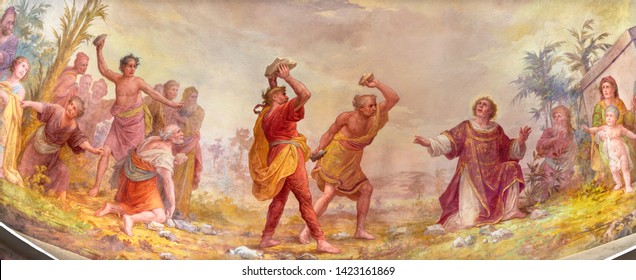
The Martyrdom of Stephen as a Refutation of "Soul Sleep"

Where was the spirit of Stephen after he was stoned to death? The Seventh-Day Adventists claim that it was asleep with his body in the grave. The Jehovah's Witnesses claim that it disintegrated, to be recreated at the final judgment. Those two doctrines are variants of what is commonly called "soul sleep." It is in sharp contrast to the traditional Christian belief that the spirits of the godly passed immediately upon death into the heavenly presence of Jesus (see II Corinthians 5:8). 

The story of Stephen is found in Acts, chapter 7. We are introduced to him in the previous chapter, where we are told that the church elected him to the diaconate, because he was "full of faith and of the Holy Spirit" (Acts 6:5). In chapter 7, he gives a long sermon about Jesus to a Jewish crowd, culminating in verses 51-53: "You stiff-necked people, uncircumcised in heart and ears, you always resist the Holy Spirit. As your fathers did, so do you. Which of the prophets did your fathers not persecute? And they killed those who announced beforehand the coming of the Righteous One, whom you have now betrayed and murdered, you who received the law as delivered by angels and did not keep it." As might be expected, his audience was not happy with his words: "Now when they heard these things they were enraged, and they ground their teeth at him... They cried out with a loud voice and stopped their ears and rushed together at him. Then they cast him out of the city and stoned him" (Acts 7:54, 57-58). 

How did Stephen respond to this persecution? "He, full of the Holy Spirit, gazed into Heaven and saw the glory of God, and Jesus standing at the right hand of God. And he said, 'Behold, I see the heavens opened, and the Son of Man standing at the right hand of God'... And, as they were stoning Stephen, he called out, 'Lord Jesus, receive my spirit.' And, falling to his knees, he cried out with a loud voice, 'Lord, do not hold this sin against them.' And when he had said this, he fell asleep [i. e., died]" (Acts 7:55, 59-60). 

This spiritual man knew that death was upon him, but his expectation was to enter thereupon into the presence of Jesus, as orthodox Christians have always said. He knows nothing of a two-thousand year (and counting) gap between his death and rising to see Jesus only then. Stephen the Deacon was surely no Adventist or Jehovah's Witness. 


Wednesday, March 2, 2022

The Bible and The Watchtower Doctrine of "Soul Sleep"


According to the doctrine of the Watchtower, the human spirit disintegrates at death, and is then recreated at the final judgment. This doctrine is called informally "soul sleep," or more formally "conditional immortality."

In support of their doctrine, Jehovah's Witnesses cite Ecclesiastes 9:5, 10: "The living know that they will die, but the dead know nothing, and they have no more reward, for the memory of them is forgotten... for there is no work or thought or knowledge or wisdom in Sheol, to which you are going." They claim that these verses describe the dead as unknowing and without memory. Is that what they say? Hardly. "Sheol" is the grave, something which Witnesses repeat tediously in other circumstances. What is in the grave? A corpse. Solomon here is dealing with the bodies of the dead, which, of course, have no activity, whether mental, physical, or spiritual. Then the Watchtower commits a logical fallacy called "false equivalency." Even though Solomon is dealing with dead bodies, the Watchtower claims that his statements apply to the spirits of the dead. They offer no exegesis for that transfer; rather, the Society merely expects its membership to swallow the assertion without thought. 

In contrast to the Watchtower's doctrine, we have the words of Jesus in response to the Sadducees, those we might call the Watchtower of His time. He said to them, "Have you not read what was said to you by God: 'I am the God of Abraham and the God of Isaac and the God of Jacob'? He is not the God of the dead, but of the living" (Matthew 22:32, quoting from Exodus 3:6). Did Jesus mean that the bodies of the patriarchs were walking around among His audience. Of course not! Their bodies lay mouldering in their graves. Yet He says that they are alive, present tense, and that God is the God of such. Jesus had no concept of soul sleep or disintegration. 

Wednesday, November 24, 2021

The Works of a Christian As a Defining Line Between True and False Christianity

One of the consistent errors that mark cults is their perversion of salvation to some form of works righteousness. This is true of the largest cult, the Roman Catholic Church, as well as other well-known cults such as the Mormons, the Jehovah's Witnesses, Church of Christ, or any one that we could name. 

That one error is a defining distinction between cults and orthodox Christianity, i. e., biblical Protestantism. 

The error of each of these cults is that they mix justification with sanctification. That is, they make the good works of the professing Christian to be part of his justification before God, whether it is faith plus sacraments, or faith plus love. Always the error involves faith plus something, instead of biblical justification, which is by faith alone

This is not to profess the strawman argument used by such groups against Protestants, by which they claim that the denial of a role in justification means that Protestants believe that works do not matter. That accusation is false. With the Bible, Protestants hold that works are the necessary result of saving faith. That is the opposite of what the cults teach. The Protestant talks about works as the necessary result, while the cults make works a necessary component of justification. 

This is what we find in the New Testament. 

Acts 15:9: "He [God] made no distinction between us [Jews] and them [Gentiles], having cleansed their hearts by faith." 

Romans 6:1-6: "What shall we say then? Are we to continue in sin that grace may abound? By no means! How can we who died to sin still live in it? Do you not know that all of us who have been baptized into Christ Jesus were baptized into His death? We were buried, therefore, with Him by baptism into death, in order that, just as Christ was raised from the dead by the glory of the Father, we, too, might walk in newness of life." 

Galatians 2:20: "I have been crucified with Christ. It is no longer I who live, but Christ who lives in me. And the life I now live in the flesh, I live by faith in the Son of God, who loved me and gave Himself for me." 

This is far from an exhaustive list.

Wednesday, October 6, 2021

Jehovah's Witnesses and the Archangel Michael

One of the doctrines that distinguishes Jehovah's Witnesses from Christians is the Witness claim that Jesus is not God, but is, rather, an incarnation of the Archangel Michael. They base their argument, in part, on Jude 1:9: "When the Archangel Michael, contending with the devil, was disputing about the body of Moses..." They claim that "archangel" means "chief angel," which is true, and that the use of the article means that he is the only one, which is not true. 

The funny thing about their use of that passage is what it goes on to say: "When the Archangel Michael, contending with the devil, was disputing about the body of Moses, he did not presume to pronounce a blasphemous judgment, but said [instead], 'The Lord rebuke you'" (Jude 1:9, in full). Michael did not pronounce a judgment on Satan, but rather left it to the Lord to do so. 

Is this what we see from Jesus? 

At the end of His temptation, Jesus said, "Be gone, Satan!" (Matthew 4:10). And again in Matthew 16:23, he says, "Get away from Me, Satan!" So Jesus had no hesitation in rebuking Satan, and He did so by His own authority, not by referring the rebuke to another party. Jesus acted not at all like Jude's description of Michael. 

Look further at Daniel 10:13, which is also mentioned (but not quoted) by the Witnesses: "The prince of the kingdom of Persia withstood me [i. e., the angel in Daniel's vision] twenty-one days, but Michael, one of the chief princes, came to help me, for I was left there with the kings of Persia..." So this angel has come from a three-week conflict with a prince of Persia. Whether this is a term for a literal prince or for a demonic spirit behind the power of Persia, cannot be determined. Either way, the angel required assistance, which is given by Michael, who is called "one of the chief princes." "Chief" there is of the same significance as "arch-" in "archangel." But notice the article and the plural. We are here explicitly told that the office of Michael is not his alone, but one that he shares with unnamed others. The article does not imply singularity. Every claim made by the Witnesses regarding Michael is here overturned. 

The office of Jesus is, indeed, singular, because He alone is the only-begotten God, described explicitly so throughout the New Testament, not in one obscure verse that must be elided in order to make it appear what the Witnesses claim from it. 


Wednesday, September 15, 2021

The Deity of Jesus Proven from Hebrews

"Of old You laid the foundation of the earth, 

And the heavens are the work of Your hands. 

They will perish, but You will remain; 

They will all wear out like a garment. 

You will change them like a robe, and they will pass away, 

But You are the same, and Your years have no end.

- Psalm 102:25-27 

The verses above were penned by the Holy Spirit through an unnamed poet. We are told of him in the subtitle only that he was "one afflicted," but not by what. It continues, "when he was faint and pours out his complaint before the Lord." Indeed, the psalm is full of pathos, and we should be encouraged by that example. Jesus is ready to hear all of our human emotions, not just happy ones, as is sometimes suggested by popular TV preachers. 

These verses are then quoted in Hebrews 1:10-12, and explicitly applied to the Son, that is, to Jesus in His divinity (verse 8), in His role as co-Creator with the Father.

In the original passage, we are given no specific information to which divine Person the passage is addressed. In isolation, it could be taken as addressed to the Father. However, we have a hint, made explicit by the author of Hebrews, that it is addressed to the preincarnate Son because the psalmist explicitly addresses his complaints to Jehovah (verse 1), the name by which He was known to His Old Covenant people. However, the sects can pretend not to see that, whether to support the Arianism of the Jehovah's Witnesses or the tritheism of the  Mormons or the Sabellianism of the Oneness Pentecostals, or any other denial of the full deity of Christ. 

Yet, when we look at the quote in Hebrews, all of those quibbling voices are quelled, as that author makes explicit what is implied in the original: the Lord of whom the Psalmist speaks is none other than the Son, our Lord Jesus Christ. 


Saturday, June 12, 2021

The Angel of the Lord, the Preincarnate God the Son

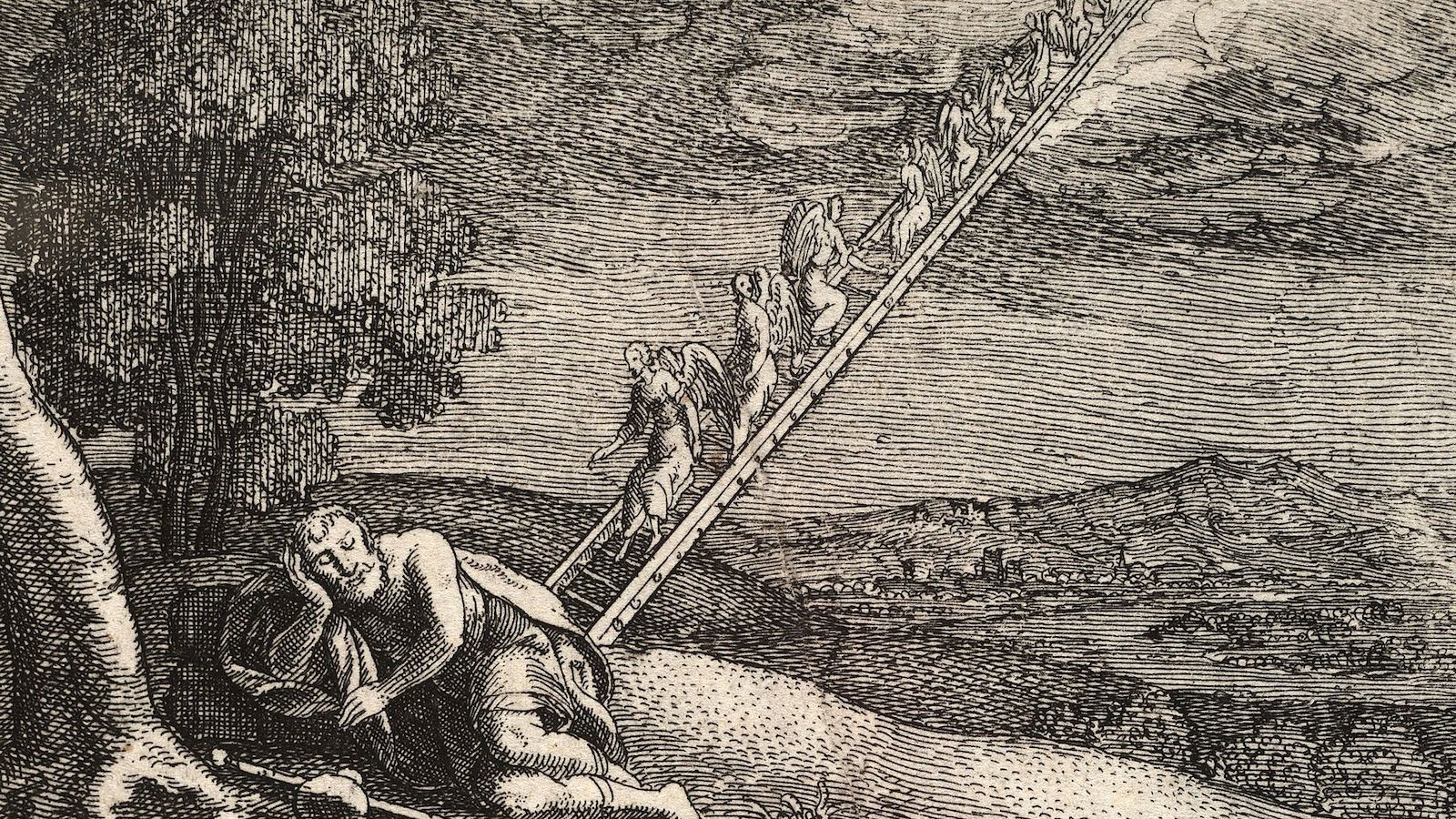
"Jacob left Beersheba and went toward Haran. And he came to a certain place and stayed there that night, because the sun had set. Taking one of the stones of the place, he put it under his head and lay down in that place to sleep. And he dreamed, and behold, there was a ladder set up on the earth, and the top of it reached to heaven. And behold, the angels of God were ascending and descending on it! And behold, the Lord stood above it and said, 'I am the Lord, the God of Abraham your father and the God of Isaac. The land on which you lie I will give to you and to your offspring. Your offspring shall be like the dust of the earth, and you shall spread abroad to the west and to the east and to the north and to the south, and in you and your offspring shall all the families of the earth be blessed. Behold, I am with you and will keep you wherever you go, and will bring you back to this land. For I will not leave you until I have done what I have promised you.' Then Jacob awoke from his sleep and said, 'Surely the Lord is in this place, and I did not know it.' And he was afraid and said, 'How awesome is this place! This is none other than the house of God, and this is the gate of heaven.'

- Genesis 2810-17

This is a well-known and much-beloved passage. We even have a song based on it: "We are climbing Jacob's ladder." Notice that God is referred to both as "God" and as "Yahweh" ("Lord" in the quoted portion above). So Jacob professes, without correction, that Yahweh is his God. 

Let us continue. 

"Then the angel of God said to me in the dream, ‘Jacob,’ and I said, ‘Here I am!’ And He said, ‘Lift up your eyes and see, all the goats that mate with the flock are striped, spotted, and mottled, for I have seen all that Laban is doing to you. I am the God of Bethel, where you anointed a pillar and made a vow to Me.'" (Genesis 31:11-13).

In this later passage, Jacob is again visited. This visitor is identified as "the angel of God," but then He identifies Himself as "God," the same God and Yahweh who had visited Jacob in chapter 28. Therefore, the angel of God, called elsewhere the angel of the Lord or the angel of the covenant, is Yahweh, the God of Israel. 

The comparison of these two passages proves three things, contrary to the claims of the anti-Trinitarians: first, it proves that Yahweh and the Angel of Yahweh are the same Person; second, it proves the preexistence of the Son; and third, it shows that Yahweh was the preexistent Son, in His mediatorial role. And if Yahweh is God, then the logical necessity is that the Son is God! Thus the claims of the Jehovah's Witnesses on one side and the Oneness sects on the other are shown to be false. 


Saturday, May 8, 2021

Watchtower Deception in John 1:1

In its New World Translation [sic] of the Bible, the Watchtower Society, commonly called Jehovah's Witnesses, says, "In the beginning was the Word, and the Word was with God, and the Word was a god." The Society claims that the absence of the definite article indicates the equivalent of the indefinite article in English, there being no such article in Greek. That statement by the Society about John 1:1 is highly deceptive

First, it is incomplete. That is something that can be indicated by the absence of the article. However, in the copulative, as in the sentence here, Greek uses the definite article to distinguish the subject versus the predicate nominative. That is because Greek didn't use word order the way English does. In the Greek, the word order is actually "and God was the Word." The word order is a means of showing emphasis. Therefore, to translate "god" in the definite sense in English is correct. 

Furthermore, notice that the NWT says "the beginning." Yet there is also no article in front of "beginning" in the Greek. The NWT inserts one there, while claiming that there is something suspect in doing the same thing for "god."

My purpose here is mainly my hope that some Jehovah's Witnesses will see this, and recognize that their loyalty to the Watchtower is undeserved. Turn to the true Christian Jesus, God the Son, for eternal life. 

I also hope that some less-prepared Christians will read this before they are next approached by a Witness, so that the Watchtower cannot use its deception to capture yet another soul. 


Saturday, April 3, 2021

When Men Turn the Name of God into Vanity

Do you know the third Commandment? It is the one that says, "You shall not take the name of the Lord your God in vain, for the Lord will not hold him guiltless who takes His name in vain" (Exodus 20:7). In our modern understanding, this commandment means not to use "God" flippantly, such as, "Oh God, I love pizza!" And it certainly includes that. But isn't it in itself flippant to believe that one of the Big Ten would be about that? 

Our ancestors certainly gave it more weight: "What are the sins forbidden in the third commandment? Answer : The sins forbidden in the third commandment are, the not using of God’s name as is required; and the abuse of it in an ignorant, vain, irreverent, profane, superstitious, or wicked mentioning, or otherwise using his titles, attributes, ordinances, or works, by blasphemy, perjury; all sinful cursings, oaths, vows, and lots; violating of our oaths and vows, if lawful; and fulfilling them, if of things unlawful; murmuring and quarreling at, curious prying into, and misapplying of God’s decrees and providences; misinterpreting, misapplying, or any way perverting the Word, or any part of it, to profane jests, curious or unprofitable questions, vain janglings, or the maintaining of false doctrines; abusing it, the creatures, or anything contained under the name of God, to charms, or sinful lusts and practices; the maligning, scorning, reviling, or anywise opposing of God’s truth, grace, and ways; making profession of religion in hypocrisy, or for sinister ends; being ashamed of it, or a shame to it, by unconformable, unwise, unfruitful, and offensive walking, or backsliding from it" (Question 113, Westminster Larger Catechism). There is little in our mental or social lives that the divines did not put under the Third Commandment. 

I want to especially consider one aspect of the abuse of God's name, and that is the claiming of it by members of pseudo-Christian cults. The worst ones are the ones that simply create a false Jesus, by depriving Him of His full and eternal deity. This would include Mormons, Jehovah's Witnesses, and Oneness Pentecostals. They abuse God's name by applying it to idolatrous inventions of their cult founders. In this sense, the commandment is equivalent to the warning given by Jesus Himself: "See that no one leads you astray. For many will come in my name, saying, ‘I am the Christ,’ and they will lead many astray. For false christs and false prophets will arise and perform great signs and wonders, so as to lead astray, if possible, even the elect" (Matthew 24:4-5, 24)

The followers of these manmade pseudo-Christs claim the name of Christ, and will even expect others to acknowledge them as Christians. However, they have claimed the name, not of the Jesus of the Bible, but of an idol, and are, therefore, using His name in vain. And, as Moses wrote, God will not hold them guiltless. They remain in their sins (John 8:24). 


Wednesday, March 31, 2021

The Righteousness of the Believer Not a Righteousness by Works

 "Christ, and Christ alone, is the source of righteousness, that is, the righteousness that we need and becomes ours by God's act of justification. God has worked out a righteousness in Christ for penitent, believing sinners, and this righteousness is now in that exalted Christ at the right hand of God in Heaven. To grant us and bestow on us this righteousness of God (by imputation), God is pleased to use faith. Faith is the bond of union with Christ through which the sinner receives righteousness." 

- Rev. David Engelsma, "Gospel Truth of Justification," pp. 141-2 

In this paragraph, Engelsma paraphrases what Paul tells us about the failure of the Jews: "Israel, who pursued a law that would lead to righteousness, did not succeed in reaching that law. Why? Because they did not pursue it by faith, but as if it were based on works" (Romans 9:31-32). Where was true righteousness to be found? "Now the righteousness of God has been manifested apart from the law, although the Law and the Prophets bear witness to it- the righteousness of God through faith in Jesus Christ for all who believe" (Romans 3:21-22). 

Jesus addressed this problem with the Pharisees: "Woe to you, scribes and Pharisees, hypocrites! For you are like whitewashed tombs, which outwardly appear beautiful but within are full of dead people's bones and all uncleanness. So you, also,m outwardly appear righteous to others, but, within, you are full of hypocrisy and lawlessness" (Matthew 23:27-28). 

For the unbelieving Jews, righteousness was a matter of checking off a list of do's and don't's. This is the way of pseudo-Christian cults even to this day: Catholics, Mormons, Jehovah's Witnesses, Seventh-Day Adventists. But it is not the way of Biblical Christianity, which is a righteousness by faith alone, the perfect righteousness of Christ, applied only by the gift of faith. "For our sake, He [the Father] made Him [Jesus, the Son] to be sin who knew no sin, so that, in Him, we might become the righteousness of God" (II Corinthians 5:21).


Wednesday, March 10, 2021

Justifying Faith Is Faith in Christ Alone

 "Faith - true faith - always has an object, and this object is the crucified and risen Christ, as revealed in the Gospel. Thus, as the embracing of Christ - in whom is forgiveness, righteousness, and adoption as children of God - is faith the source of justification." 

- David Engelsma, "Gospel Truth of Justification," p. 141 

It has become a reflex in American culture to respond to any sorrow or apprehension with an exhortation, "You just gotta have faith." And that is supposed to cover all of the bases, ranging from seeking a job to cancer to a severely-injured child. When it is said on TV, no definition of "faith" is ever given, nor a statement regarding faith in what or in whom. It is simply faith in faith itself. 

The faith that results in eternal life is not a faith in faith. As Reverend Engelsma says in the quote above, indeed, in the whole book, it isn't faith as a thing that justifies, but rather as faith with Jesus as its object that justifies. As he also says (on the same page), "Faith looks to Christ, trusts in Christ, and embraces Christ. From this Christ, faith receives Christ Himself as the believer's righteousness by imputation. Or to say it differently, from this Christ, to whom faith looks and on whom faith rests and whom faith embraces, the believer receives the righteousness of Christ as his own (by imputation)." 

This is why it is so important to share the Gospel with members of cults or false churches. They have a faith, but it is in a false object, and, therefore, cannot save them. Whether that faith is in the cultic organization, as with Jehovah's Witnesses, or is in the false Jesus created by the organization, as with Mormons, or in the false basis of justification created by the organization, as with Roman Catholics, it is a faith without a saving object, and, therefore, a faith that cannot justify. "We know that a person is not justified by works of the law but through faith in Jesus Christ, so we also have believed in Christ Jesus, in order to be justified by faith in Christ and not by works of the law, because by works of the law no one will be justified" (Galatians 2:16).

Saturday, March 6, 2021

A Simple Refutation of All Forms of Unitarianism


In their opposition to the doctrine of the Trinity, Arians and Modalists unite in denying the deity of the Son. Arians, represented primarily by the Jehovah's Witnesses, claim that Jesus was a fully-created being, whether  a mere human or an angel, but definitely not God. Modalists, represented primarily by Oneness Pentecostals, on the other hand, say that Jesus was God, but His deity was that of the Father, not the inherent deity of the Son.

Both are unbiblical. 

In I John 5:20, that Apostle tells us, "We know that the Son of God has come and has given us understanding, so that we may know Him who is true; and we are in Him who is true, in his Son Jesus Christ. He is the true God and eternal life." Contrary to the claims of both Arians and Modalists, John tells us that the Son, named as such twice in that verse, is God. His statement precludes any claim that Jesus was merely a creature, or that the Son was merely a body inhabited by the deity of the Father.


Saturday, December 26, 2020

Jesus Contra "Soul Sleep": Absent from the Body, Present with the Lord

As we know, Jesus was a frequent target of the Pharisees, as they asked Him questions that they expected to baffle Him or to expose Him to punishment by the Romans. Their opponents, the Sadducees attempted to trip up Jesus, too, but only one time. In Mark 12, they asked Him whose wife a woman would be in the resurrection, after she had been married and widowed by seven brothers. This was actually a double trap, because the Sadducees didn't believe in the resurrection.

In His response, Jesus answered both challenges, the one spoken, while the other was a trap waiting silently. "Is this not the reason you are wrong, because you know neither the Scriptures nor the power of God? For when they rise from the dead, they neither marry nor are given in marriage, but are like angels in heaven. And as for the dead being raised, have you not read in the book of Moses, in the passage about the bush, how God spoke to him, saying, ‘I am the God of Abraham, and the God of Isaac, and the God of Jacob’? He is not God of the dead, but of the living. You are quite wrong" (Mark 12:24-27). He rebukes their failure to believe the Scriptures, which tell us of the resurrection of the dead at the end of history (such as Job 19:26 and Daniel 12:2). Only then does He answer their surface question, denying that resurrected men will continue our social functions: "When they rise from the dead, they neither marry nor are given in marriage, but are like angels in heaven" (Mark 12:25). 

But He also rebukes the Sadducees for supposing that God  is related to men only in this physical life and no more: "Have you not read in the book of Moses, in the passage about the bush, how God spoke to him, saying, I am the God of Abraham, and the God of Isaac, and the God of Jacob? He is not God of the dead, but of the living. You are quite wrong" (Mark 12:26-27).

I bring up this story because it addresses a modern heresy, that of "soul sleep." That doctrine, with some differences, is especially associated with the Jehovah's Witnesses and Seventh-Day Adventists. They deny that the dead believers are conscious, and spiritually in Heaven with Jesus. This is the same doctrine for which Jesus rebukes the Sadducees.

The point of Jesus is the dead saints are alive now, enjoying fellowship with God now. They are not nonsexistent as the Sadducees believed, or nonexistent now to be recreated later as the Jehovah's Witnesses claim, or unconscious in the grave with their bodies as the Seventh-Day Adventists claim.

Instead, we can joyfully claim, as Paul did, "Away from the body and present with the Lord" (II Corinthians 5:8).

Saturday, October 17, 2020

Jesus Contra "Soul Sleep"

"Let not your hearts be troubled. Believe in God; believe also in Me. In My Father’s house are many rooms. If it were not so, would I have told you that I go to prepare a place for you? And if I go and prepare a place for you, I will come again and will take you to Myself, that where I am you may be also.

- John 14:1-3 

Jehovah's Witnesses and Seventh-Day Adventists share a doctrine called "soul sleep." For SDA's, that doctrine says that the spirits of the dead remain, unconscious, with their bodies until the resurrection. For Jehovah's Witnesses, the doctrine is that the spirit of the dead ceases to exist, and is then recreated at the resurrection. So, while there are significant differences between the two, they both deny that there is an intermediate state for the spirits of the dead, whether for the godly in Heaven or for the wicked in Hell. That is a denial of the traditional doctrine of Christians, and I address them together here. 

Look at what Jesus says in the quote above. He was to go away to prepare a place for us to be with Him. Do Witnesses or SDA's claim that Jesus is currently unconscious in a grave? I hope they don't say anything so awful. Rather, we know that He rose into Heaven after His resurrection (Acts 1:9-11). Therefore, logic only allows us to take His words in Matthew to mean that He has been preparing a place with Him in Heaven

Even without considering any other scriptures, these words of Jesus preclude any interpretation comparable to "soul sleep." 

Saturday, August 29, 2020

The Eternal Reality of Hell Contra Annihilationism

 I have noticed a curious trend among professing evangelicals to adopt the doctrine of annihilationism. That doctrine holds that the wicked who are sent to Hell are burned into nothingness. That is, contrary to the traditional belief, there is no such thing as the eternal, conscious consignment of the wicked to a state of punishment. They are annihilated, hence the name. 

Historically, this doctrine has been associated with the sects, primarily the Jehovah's Witnesses and the Seventh-Day Adventists. But in our recent times, it has become mainstream. Even the otherwise orthodox teacher, the late John Stott, adopted it. The spread is because of a growing embarrassment among many over the supposed harshness of the doctrine of an eternal, conscious punishment in Hell. I have been told that annihilationism serves to remove one stumblingblock that keeps unbelievers from accepting the Gospel. 

My response is this: Removing every distinctive doctrine of Christianity would make it more palatable to unbelievers. But, what then do you have left? You have unbelief. You would certainly have no Christianity, and no Jesus. Not in any meaningful sense. The unbeliever hasn't moved to a position of faith. Rather, faith has become unbelief. I cannot accept that as a means of evangelism. 

Furthermore, how does truth change in order to make it palatable to those who deny it? If someone believes that two plus two equals 749, do we stop saying that it really equals four in order to make math palatable to him? I would hope not! 

The proper question is not what the unbeliever thinks, but rather what does God say? 

In answer to that, we have God's word on the subject in Revelation 20:10: "[Then] the devil who had deceived them was thrown into the lake of fire and sulfur where the beast and the false prophet were, and they will be tormented day and night forever and ever." There is no equivocation here! The torment of the wicked is eternal. They never escape. God's justice never finds satisfaction in mere ashes. 

The problem with the annihilationist assumptions about unbelievers is the acceptance that the stated reason for unbelief is the true reason. The Bible tells us that unbelief is a cover, not an issue in itself. Every person knows that there is a God, and that we are answerable to Him. The issue is that, apart from the intervention of the Holy Spirit, every person hates that knowledge, because he loves his sin. Since those two things are incompatible, he must either give up his sin or give up his knowledge of God. His choice? He chooses to suppress his knowledge of God (Romans 1:18-19). Appeasing him by doing away with the doctrine of eternal Hell does nothing to address that deliberate choice. It is like taking an antibiotic in an effort to cure a virus. 


Wednesday, August 19, 2020

Following Paul to Righteousness by Faith


"Look out for the dogs, look out for the evildoers, look out for those who mutilate the flesh. For we are the circumcision, who worship by the Spirit of God and glory in Christ Jesus and put no confidence in the flesh— though I myself have reason for confidence in the flesh also. If anyone else thinks he has reason for confidence in the flesh, I have more: circumcised on the eighth day, of the people of Israel, of the tribe of Benjamin, a Hebrew of Hebrews; as to the law, a Pharisee; as to zeal, a persecutor of the church; as to righteousness under the law, blameless. But whatever gain I had, I counted as loss for the sake of Christ. Indeed, I count everything as loss because of the surpassing worth of knowing Christ Jesus my Lord. For His sake I have suffered the loss of all things and count them as rubbish, in order that I may gain Christ and be found in Him, not having a righteousness of my own that comes from the law, but that which comes through faith in Christ, the righteousness from God that depends on faith.

- Philippians 3:2-9

The Apostle Paul gives us a list of things here which might have been considered grounds for a righteousness before God based on his own qualities. As righteousness was understood by his judaizing opponents, Paul had all of the qualifications of birth, of training, and of works. If anyone could be justified by his own qualifications, then that person could be none other than Paul. 

Yet, what does that same Paul say about his qualifications: "I count them as rubbish" (verse 8). What men would count as shining qualities, Paul calls garbage. And I don't think that Paul is referring here to God's point of view (Isaiah 64:6). Rather, he is telling us what was his own attitude to those things that he, too, in a previous life, counted as glorious. They were garbage, not because they were rejected by God, though that is true, but rather because they had blinded him to true righteousness, that which comes by faith alone in Christ alone. It is as if some prospector had been so in love with his lump of coal that he had ignored a streambed next to him littered with gold nuggets. 

This is why Christians should feel such sorrow for those trapped in pseudo-Christian sects. I have spoken to Mormons, Jehovah's Witnesses, and Oneness Pentecostals who were so proud of their chunks of coal - such as baptism or organizational position - while they are blind to the gold of true righteousness, such as Paul had found, by faith in Christ alone.

Wednesday, May 13, 2020

Annihilationism, Eternity, and the Consequences of Truth

In our day, there is a growing movement to deny that the Bible teaches an eternal judgment in Hell. Rather, these people say, the spirit of the wicked is destroyed. This doctrine, annihilationism, was formerly limited to the cults, namely the Seventh-Day Adventists and the Jehovah's Witnesses. However, it is now becoming increasingly popular among professing evangelicals, at least in America.

In contrast, Scripture describes the suffering of the wicked in this way: "The fifth angel blew his trumpet, and I saw a star fallen from heaven to earth, and he was given the key to the shaft of the bottomless pit. He opened the shaft of the bottomless pit, and from the shaft rose smoke like the smoke of a great furnace, and the sun and the air were darkened with the smoke from the shaft. Then from the smoke came locusts on the earth, and they were given power like the power of scorpions of the earth. They were told not to harm the grass of the earth or any green plant or any tree, but only those people who do not have the seal of God on their foreheads. They were allowed to torment them for five months, but not to kill them, and their torment was like the torment of a scorpion when it stings someone. And in those days people will seek death and will not find it. They will long to die, but death will flee from them" (Revelation 9:1-6).

What John reveals here is that the wicked, in the face of their just suffering for that wickedness, will seek escape from their suffering through death, but death will be denied to them.

Annihilationists will often portray themselves as morally superior to those of us who hold the traditional view of Hell. In addition, they claim that unbelievers are more open to the "Gospel" if they remove the stumblingblock of eternal Hell. It is supposedly contrary to modern sentiments.

I have several problems with that perspective. For one thing, one doesn't tailor truth to suit the preferences of an enemy of that truth. Reformulating Christianity to suit unbelievers - the same problem I have with many megachurches - is to move it from suiting the preferences of God to suiting His enemies. How can that be considered  a good thing? Furthermore, by failing to give the unbeliever the biblical judgment on his unbelief, you deny that unbeliever the necessary information for weighing his situation. Many unbelievers are perfectly content to live as heathens now, just to puff into smoke at death. And that is exactly the pseudo-Gospel that the annihilationist gives him. If he never learns better, then that unbeliever will spend eternity in Hell, but his blood will be on the hands of the annihilationist (Ezekiel 3:18).


Wednesday, November 13, 2019

The Deity of Christ and the Inadequacy of Watchtower Doctrine

After His resurrection, Jesus appeared to a succession of people, first to the women at the tomb, then to Peter and Cleopas on the road to Emmaus, and then to the disciples locked, hiding, in a secret chamber. Somehow, the Apostle Thomas was absent at each of these occasions, and expressed doubt of their authenticity: "Now Thomas, one of the twelve, called the Twin, was not with them when Jesus came. So the other disciples told him, 'We have seen the Lord.' But he said to them, 'Unless I see in His hands the mark of the nails, and place my finger into the mark of the nails, and place my hand into His side, I will never believe'" (John 20:24-25). It took a week for Thomas's desire to be fulfilled: "Eight days later, His disciples were inside again, and Thomas was with them. Although the doors were locked, Jesus came and stood among them and said, 'Peace be with you.' Then He said to Thomas, 'Put your finger here, and see My hands; and put out your hand, and place it in My side. Do not disbelieve, but believe.' Thomas answered Him, 'My Lord and my God!' Jesus said to him, 'Have you believed because you have seen Me? Blessed are those who have not seen and yet have believed'" (John 20:26-29). 

We see a couple of things in the interaction between Jesus and Thomas here. For one thing, Jesus gives no rebuke to Thomas for his doubting. However, more importantly, He makes no rebuke for Thomas's addressing Him as Lord and God. Surely if a mere creature were to receive such adulation, it would be great sin not to object. Yet Jesus receives Thomas's words without refusal or rebuke

In dealing with this passage, Jehovah's Witnesses claim that Thomas was just making an emotional outburst, as a person today might exclaim, "Oh, my God," upon receiving some shocking news. However, they offer no proof that there was any such custom among First-Century Jews. Moreover, they cannot explain why Jesus makes no objection, given the Watchtower's claim that He was but an incarnate angel. In other biblical occasions, angels made very vocal objections to any such intimations: "I, John, am the one who heard and saw these things. And when I heard and saw them, I fell down to worship at the feet of the angel who showed them to me, but he said to me, 'You must not do that! I am a fellow servant with you and your brothers the prophets, and with those who keep the words of this book. Worship God'" (Revelation 22:8-9). On the contrary, John explicitly tells us that the comment was to Jesus, not just an exclamation to no one in particular.

Why the difference? The Jehovah's Witness has no rational answer. But the Christian does.

"The death of Jesus was glorious, not because it was His death, but because it could be the death of no other. A [mere] creature might as well have undertaken to create us as to save a world. The work itself demands the interposition of God; and any theory  which fails to represent the death of Christ as an event which, in its own nature, as clearly proclaims His divinity as His superintending care and preservation of all things, cannot be the Gospel which Paul preached at Rome, at Corinth, at Athens, and which extorted from Thomas, upon beholding the risen Savior, the memorable confession, 'My Lord and my God'!"(James Henley Thornwell, "The Necessity and Nature of Christianity", emphasis in the original).

Wednesday, November 6, 2019

Contending for the Faith Against False Teachers

I have regular apologetic and evangelistic interactions with pseudo-Christian cults, mainly Mormons, Jehovah's Witnesses, and Oneness Pentecostals. In each case, someone always says something like this: "Why do you judge us? Why can't you just go practice your beliefs, and leave us to practice ours?" It's a form of guilt manipulation, trying to make it seem as if I am just a big meanie.

Yet, their repeated "why's" have an answer: the commandment of Scripture.

First, we have the warning against false teachers: "Do not listen to the words of the prophets who prophesy to you, filling you with vain hopes. They speak visions of their own minds, not from the mouth of the Lord. They say continually to those who despise the word of the Lord, ‘It shall be well with you’; and to everyone who stubbornly follows his own heart, they say, ‘No disaster shall come upon you'" (Jeremiah 23:16-17). The danger of false teachers is that they leave their followers under the wrath of God, while blithely imagining their safety. That is why false teachers are so popular. "While people are saying, 'There is peace and security,' then sudden destruction will come upon them as labor pains come upon a pregnant woman, and they will not escape" (I Thessalonians 5:3). And it isn't just the cults which are the danger here. The popular TV preachers, such as Joel Osteen, are equally dangerous. They promise peace and prosperity, but never mention sin or the wrath of God. So their followers march, grinning and satisfied, into the waiting maw of Hell. 

In the face of such deceivers, the Scriptures give me a stark warning: "If I say to the wicked, ‘You shall surely die,’ and you give him no warning, nor speak to warn the wicked from his wicked way, in order to save his life, that wicked person shall die for his iniquity, but his blood I will require at your hand" (Ezekiel 3:18). If I see the false teacher and those deceived by him, and I make no effort to warn them of God's judgment, then God holds me guilty of their death! 

That's why the New Testament also gives every true Christian this commandment: "I found it necessary to write appealing to you to contend for the faith that was once for all delivered to the saints" (Jude 1:3). I do not face accounting to cultists or other false teachers for challenging their errors; I face the wrath of God if I fail to do so.

Saturday, November 2, 2019

John the Baptist, the Refuter of Jehovah's Witnesses

The person of John the Baptist is a curious character in the Gospels. He was a cousin of Jesus, but about six months older. We see the beginning of his ministry in Matthew 3:1-3: "In those days John the Baptist came preaching in the wilderness of Judea, 'Repent, for the kingdom of heaven is at hand.' For this is he who was spoken of by the prophet Isaiah when he said, 'The voice of one crying in the wilderness: Prepare the way of the Lord; make His paths straight.'" The portion quoted from Isaiah is Isaiah 40:3. 

What is significant is that Isaiah doesn't say "Lord" (Hebrew, "adonai"), but rather "LORD" (Hebrew, "Yahweh"). More on that later. 

While the identification by Matthew is sure, because it is the interpretation of the Holy Spirit, Jesus added His personal identification, as well: "The disciples asked Him, 'Then why do the scribes say that first Elijah must come?' He answered, 'Elijah does come, and he will restore all things. But I tell you that Elijah has already come, and they did not recognize him, but did to him whatever they pleased. So also the Son of Man will certainly suffer at their hands.' Then the disciples understood that He was speaking to them of John the Baptist" (Matthew 17:10-13). Here, Jesus is referring to the prophecy of Malachi 4:5: "Behold, I will send you Elijah the prophet before the great and awesome day of the LORD comes." Notice that here, too, the Hebrew uses "LORD" ("Yahweh").

The significance of this is that both Old Testament prophets refer to Elijah's return to announce the coming of Yahweh (or "Jehovah"). Then in the New Testament, we have the testimony of both the Apostle Matthew and of Jesus Himself that the reference to Elijah was fulfilled by John the Baptist's introduction of Jesus. That is, Elijah equals John the Baptist, and Yahweh equals Jesus.

This should be an earth-shattering revelation to the Jehovah's Witnesses, who very vocally contrast Jehovah with their unbiblical version of Jesus. They try to make Jesus to be a creature, a mere angel, and deny His deity. But they make much of Jehovah, even naming themselves after Him. Yet, they blind themselves to this one fact: Jesus is Jehovah!