Showing posts with label genesis. Show all posts

Saturday, May 23, 2026

Are Pagans Accountable to God for Their Idolatry?

I have often been told that the First and Second Commandments do not apply to pagans, and that the civil magistrate is not accountable for the enforcement of the first four commandments. These are supposedly only for the professing people of God. But is this what we see in Scripture? 

"A sword against the Chaldeans, declares the Lord, and against the inhabitants of Babylon, and against her officials and against her wise men! A sword against the diviners, that they may become fools! A sword against her warriors, that they may be destroyed! A sword against her horses and against her chariots, and against all the foreign troops in her midst, that they may become women! A sword against her treasures, that they may be plundered! A drought against her waters, that they may dried up! For it is a land of images, and they are mad over idols" (Jeremiah 50:35-38). 

This is the time when the Babylonians are pillaging Judah, the Southern Kingdom, and we would expect God's judgment against her for her crimes against his covenant people. And, in fact, we see that in Jeremiah. Yet that is not the case in the stanza above. Babylon, her people, her leaders, her religious figures, even the mercenaries working for her, are judged, not for harming Judah, but for loving images and idols! 

The Babylonians were a pagan people. They had never been in covenant with Jehovah. It is from that region that God had called Abraham out of the darkness of idolatry into the light of His covenant of grace (Genesis 11:31-12-2). God in His grace separated Abraham from the unbelief of his kin and neighbors. And now in Jeremiah, roughly fifteen centuries later, God in His justice would destroy the people left behind by Abraham. 

Thus we see that no man, regardless of time or clime, is independent of the commandments of God. 


Thursday, January 2, 2025

"Progressive Christians" and Reinterpreting Scripture on Sodom and Homosexuality

"Progressive Christians" hate what the Bible says about homosexuality, so they rewrite it. For example, we have the story of Sodom, from which we get the word "sodomy," which tells the story of two angels who visit Sodom in the guise of men, in order to save Abraham's nephew Lot from the soon-coming judgment of God on that city and its neighbors. We know the story well. When the men of the city learn of the presence of these visitors in Lot's home, they demand access to the men for sexual relations (Genesis 18:16-19:29). 

According to the progressives, the judgment on Sodom is not due to the effort at homosexual molestation, but rather for the violation of God's standards of social justice. In support of the view, they cite Ezekiel 16:49: "Behold, this was the guilt of your sister Sodom: she and her daughters had pride , excess of food, and prosperous ease, but did not aid the poor and needy." That would seem clear, would it not? 

In isolation, maybe. But that is not a legitimate use of Scripture. 

The passage continues: "They were haughty and did an abomination before Me. So I removed them when I saw it" (verse 50). I attended a church at one time, where the pastor preached as described above, but stopped before reading this verse. I have no doubt that is the usual strategy of such progressives. 

We also have the fuller testimony of another portion of Scripture, this time in the New Testament. In II Peter 2:4-10, that Apostle tells us, "If God did not spare angels when they sinned, but cast them into hell and committed them to chains of gloomy darkness to be kept until the judgment; if He did not spare the ancient world, but preserved Noah, a herald of righteousness, with seven others, when he brought a flood upon the world of the ungodly; if by turning the cities of Sodom and Gomorrah to ashes, He condemned them to extinction, making them an example of what is going to happen to the ungodly; and if He rescued righteous Lot, greatly distressed by the sensual conduct of the wicked (for, as that righteous man lived among them day after day, he was tormenting his righteous soul over their lawless deeds that he saw and heard), then the Lord knows how to rescue the godly from trials, and to keep the unrighteous under punishment until the day of judgment, and especially those who indulge in the lust of defiling passion and despise authority." 

So, the progressive elevates the possible meaning of one verse over the explicit statements of several other passages. Their effort to replace biblical authority with a cultural fad lies exposed. And traditional Christian belief regarding the immorality of same-sex relations is sustained. 


Tuesday, March 26, 2024

Treason to God as Rational Justification for Eternal Punishment

I get challenged regularly by atheists who object to God because, they believe, they don't deserve Hell. they claim that Hell is overkill for the actions of most human beings. 

Do they have a case? No, I don't believe that they do. 

In his book, The Existence and Attributes of God, Puritan Stephen Charnock addresses this point: "Man would make himself his own end and happiness. As God ought to be esteemed [as] the first cause, in point of our dependence on Him, so He ought to be our last end, in point of our enjoyment of Him. When we, therefore, trust in ourselves, we refuse Him as the first cause; and when we act for ourselves and expect a blessedness from ourselves, we refuse Him as the chief good and last end, which is an undeniable piece of atheism. For man is a creature of a higher rank than others in the world, and was not made (as animals, plants, and other works of the divine power) materially to glorify God, but was made a rational creature, intentionally to honor God by obedience to His rule, dependence on His goodness, and zeal for His glory. It is, therefore, as much a sleighting of God for man - a creature - to set himself up as his own end as to regard himself as his own law." 

This concept was not new with Charnock. rather, he put into his own words the thoughts of the Apostle Paul: "Although they [i. e., unbelievers] knew God, they did not honor Him as God or give thanks to Him, but they became futile in their thinking, and their foolish hearts were darkened. Claiming to be wise, they became fools, and exchanged the glory of the immortal God for images resembling mortal man and birds and animals and creeping things" (Romans 1:21-23). 

The two men are describing two different forms of unbelief, of course. While Paul is describing the turning to pagan worship, Charnock is describing the atheist. However, the two forms are fundamentally one, in that they put someone else in the place of our Creator and Sustainer, the triune God of the Bible. All unbelievers have chosen Satan's offer (Genesis 3:5) of autonomy, illusory though it be.

Now the question to the atheist or pagan should be one that either can understand rationally: if a traitor has pulled his rightful king off the throne, whether to take it for himself or to give it to an interloper, is that not a crime which should be subject to the highest penalty available? A political figure may have only the ability to hang a traitor, having no reach beyond physical death. But God's jurisdiction cannot be thwarted by mere physical death (Matthew 10:28). And just as the rebel in Hell does not eschew his rebellion, neither does his divine Judge relent in His judgment through the rest of eternity. 

So, contrary to the assertion of the atheist, the judgment of Hell is both real and perfectly just. The only escape is to flee to Jesus, to be covered by His atoning blood, and to recognize that God remains on His throne, regardless of the efforts of man to cast Him down.


Thursday, March 14, 2024

The Puritans on the Sabbath

I think that it can be argued that the Fourth Commandment is the most-ignored among the ten, even among Christians. Or should I say especially among Christians? After all, it is we who should best understand the significance of the Sabbath. 

Here is what the commandment says: "Remember the Sabbath day, to keep it holy. Six days you shall labor and do all your work, but the seventh day is a Sabbath to the Lord your God. On it you shall not do any work, you, or your son, or your daughter, your male servant, or your female servant, or your livestock, or the sojourner who is within your gates. For in six days the Lord made heaven and earth, the sea, and all that is in them, and rested on the seventh day. Therefore the Lord blessed the Sabbath day and made it holy" (Exodus 20:8-11). 

So we notice several things here. First, the origin of the Sabbath is not in the commandment. That is a common error regarding this commandment, that it began with Moses. No, God Himself relates it back to his own actions in the creation: "On the seventh day, God finished His work that He had done, and He rested on the seventh day from all His work that He had done. So God blessed the seventh day and made it holy, because, on it, God rested from all His work that He had done in creation" (Genesis 2:2-3). Surely we understand that this is not a description of the weariness of God. Such an idea doesn't even make sense. Rather, it is a description of His enjoyment of the completion of His work, like the artist who steps back to enjoy the painting that he has just finished. 

Second, Christians strangle every discussion of the Sabbath by wrangling over what we are and are not allowed to do on that day. That discussion misses the point. It also ignores what the description that God Himself gives us in His word: "If you turn back your foot from the Sabbath, from doing your pleasure on My holy day, and call the Sabbath a delight and the holy day of the Lord honorable; if you honor it, not going your own ways, or seeking your own pleasure, or talking idly; then you shall take delight in the Lord, and I will make you ride on the heights of the earth; and I will feed you with the heritage of Jacob your father, for the mouth of the Lord has spoken" (Isaiah 58:13-14). The Sabbath has never been about rules. That was the error of the Pharisees, which turned the Sabbath into a burden

The Sabbath was God's plan for His people to have joy, both in the work that we have done establishing His dominion in a fallen world, but especially in the work that He has done in redeeming us from the curse that sin has placed on us and our work! 

The Puritan Stephen Charnock, in his book The Existence and Attributes of God, chastised the Christians of his day, in words that apply even more to today's Christian, "A sleight and weariness of the Sabbath was a sleight of the Lord of the Sabbath and of that freedom from the yoke and rule of sin that was signified by it."

Joy! Not drudgery! 


Monday, February 26, 2024

Sin, Human Autonomy, and Practical Atheism

In his famous book, The Existence and Attributes of God, Puritan Stephen Charnock tells us, "By the nonregarding [sic, for "disregarding"]of God, men rush into evil. Pharaoh oppressed Israel because he knew not the Lord. If he did not deny the being of a deity, yet he had such an unworthy notion of God as was inconsistent with the nature of a deity: he, a poor creature, thought himself a match for the Creator." He refers to the passage in Exodus known especially for the account of the ten plagues, as Moses tried to free the Israelites from slavery in Egypt. In that passage, we see comments from Pharaoh like, "Who is the Lord that I should obey His voice and let Israel go?" (Genesis 5:2).

Charnock called this attitude "practical atheism." He notes that Pharaoh never denied the existence of gods, or even of the God. Rather, Pharaoh denied the sovereignty of God, asserting, instead, his personal autonomy from the will and commands of God. That is why Charnock calls Pharaoh's mentality "atheism," because it was a denial, in effect, of the deity, of the Godness, of God. 

This exemplifies, Charnock continues, the attitude behind all the sins of men, whether or not stated explicitly as it was by Pharaoh. It is, in fact, the false promise made by Satan in the Garden, that Adam and Eve would become like gods, deciding for themselves what is good and what is evil (Genesis 3:5). It is as if he told them, "Forget about God and decide for yourselves." And, like Pharaoh long after them, they accepted the promise of Satan. 


Wednesday, April 19, 2023

John Owen on the Sabbath as a Day of Worship


"Thus, the heavens and the earth were finished, and all the host of them. And on the seventh day, God finished His work that He had done, and He rested on the seventh day from all His work that He had done. So God blessed the seventh day and made it holy, because, on it, God rested from all His work that He had done in creation" -Genesis 2:1-3 

At the completion of the creation week, it was culminated by a day of rest. Which is not to say that God was tired. Rather, the implication is a cessation for the sake of enjoying the product of the preceding labor. For which enjoyment, God blessed the seventh day, and made it holy (KJV, "sanctified it"). We must ask what those actions mean for God. To bless that day was to make it a source of blessing, not to Himself, since God can never be more blessed, but for those to whom He gave it, the humans, male and female, the creation of whom would be recapitulated in the next verses. To sanctify it, or to make it holy, again, cannot be for His own sake, because God is the standard of holiness, the standing apart from mere creation. So, again, His action could only be for the man and woman, created the previous day. 

That distinction is essential, because there are some, influenced by antinomianism and dispensationalism, who claim that the Sabbath, as the day came to be called, was for God alone, and the human elements were created under the law for Israel, not the church, and that it was never properly a day of worship. Yet the words applied, and the attributes of God, preclude the use of the Sabbath for Himself. 

As Puritan John Owen comments on the passage, "'Sanctified' is further instructive in the intention of God, and is also explanatory of the former [word, i. e., 'blessed']. For suppose still (and the text will not allow us otherwise) that the day is the object of this sanctification, and it is not possible to assign any other sense of the words, than that God set apart by His institution that day to be the day of His worship, to be spent in a sacred rest unto Himself, which is declared to be the meaning of the word in the decalogue" (A Treatise on the Sabbath). "He set it apart to sacred use authoritatively, requiring us to sanctify it in that use obediently." 

Owen continues by pointing to Exodus 16:22-23: "On the sixth day, they [i. e., Israel] gathered twice as much bread, two omers each. And when all the leaders of the congregation came and told Moses, he said to them, 'Tomorrow is a day of solemn rest, a holy Sabbath to the Lord...'" Owen remarks, "The reason of it is plain and evident, for, there being a previous institution of the seventh day's rest (the observation of which was partly gone into disuse), and the day itself being then to receive a new peculiar application to the church state of that people [i. e., Israel], the reason of the people's act, and the rulers' doubt, and Moses' explanation, is plain and obvious." 

Yet, Owen did feel a need to deny that the Mosaic law added ceremonial elements to the sabbath, though he denied that the Sabbath, per se, was part of those Mosaic ceremonies. "The command of the Sabbath, in the renewal of it in the wilderness, was accommodated to the disciplinary state of the church of the Israelites. I admit, also, that there were such additions made to it, as to the manner of its observance and the sanction of it, as might adapt it to their civil and political state, and thus bear a part in that ceremonial instruction, which God, in all His dealings with them, intended... It is no argument, therefore, that this command was not in substance given before to mankind in general, [simply] because it has some modifications added in the decalogue to accommodate it to the existing state of the Hebrews." 

Owen's comments point us to the formulation of the Fourth Commandment, as it is found in Exodus 20:8-11 [emphasis added]: "Remember the Sabbath day, to keep it holy. Six days you shall labor, but the seventh day is a Sabbath to the Lord your God. On it you shall not do any work, you, or your son, or your daughter, your male servant, or your female servant, or your livestock, or the sojourner who is within your gates. For in six days the Lord made heaven and earth, the sea, and all that is in them, and rested on the seventh day. Therefore, the Lord blessed the Sabbath day and made it holy." Not only does the commandment begin with a command to "remember," but it the makes explicit what is to be remembered, that is, the actions of God on the seventh day of creation. 

Furthermore, though Owen does not mention it, I would refer the reader to Leviticus 19:30: "You shall keep My Sabbaths and reverence My sanctuary: I am the Lord." The keeping of the Sabbath is explicitly connected to their revering of His sanctuary, making that connection explicit, though still not exclusive. 
Wednesday, January 25, 2023

Abortion and God's Love of Life

"Do not boil a goat in its mother's milk" -Deuteronomy 14:21. 

I remember the first time I read this verse in an Old Testament course in college, a long time ago. It struck me as very odd. 

Another one was, "If you come across a bird’s nest in any tree or on the ground, with young ones or eggs and the mother sitting on the young or on the eggs, you shall not take the mother with the young" (Deuteronomy 22:6). 

Why, I wondered, would God put in His Scriptures such commandments about what we might have for dinner? And it has taken until now, my mature years, to understand what seems so plain now. 

There are many passages in Scripture that show God's concern for the family. They start with the creation mandate in  Genesis 1:28: "God said to them [i. e., Adam and Eve], 'Be fruitful and multiply and fill the earth and subdue it, and have dominion over the fish of the sea and over the birds of the heavens and over every living thing that moves on the earth.'" The welfare of the family is the concern of the Fifth and Seventh Commandments, and of such extended portions of Scripture as Ephesians 5:22-33. 

The two verses from Deuteronomy above reflect that concern. Notice that the command is not to avoid cooking a kid in milk, or to avoid eating eggs. In both cases the restriction is against the relationship between the animal mother and her offspring. The perpetuation of life is precious to God, both for mankind and for the animals. 

The reason that this has become clear to me in the past few years is because I have become more involved in the fight against human sacrifice in America, nicknamed euphemistically as "abortion." When a baby is aborted, that is the new generation murdered not just with his mother, as in the animal texts of Deuteronomy, but by his mother. What can more destroy the family than does mothers, often with the concurrence of fathers, who kill their preborn children. 


Wednesday, May 4, 2022

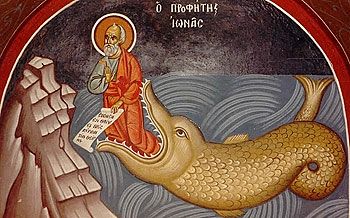
Jonah and God's Righteousness Among the Heathen


"Now, the righteousness of God has been manifested apart from the law, although the Law and the Prophets bear witness to it - the righteousness of God through faith in Jesus Christ for all who believe. For there is no distinction: for all have sinned and fall short of the glory of God, and are justified by His grace as a gift, through the redemption that is in Christ Jesus, whom God put forward as a propitiation by His blood, to be received by faith. This was to show God's righteousness, because, in His divine forbearance, He had passed over former sins." --Romans 3:21-25 

In this passage, I want to focus especially on the last clause: "In His forbearance, He had passed over former sins." By itself, it strikes us as strange, because it seems to suggest that God was unconcerned about sins that occurred before the coming of Jesus. In fact, some people claim that it means that the heathen, who had not known God's written law, unlike Israel, were not held accountable for what would have been sins, because those acts were done in ignorance. 

That view is an egregious act of eisegesis, inserting the assumptions of dispensationalism into a text which says no such thing. 

First, consider the wording of the clause itself. The dispensationalist claims that God overlooked actions which would have been sins, but weren't. Yet Paul says just the opposite. He doesn't say that God overlooked actions; he explicitly states that God overlooked sins. "For all have sinned and fall short of the glory of God" (verse 23). So, there must be a standard by which those heathen were judged, and Paul tells us what that standard was: "The righteousness of God has been manifested apart from the law, though the Law and Prophets bear witness to it" (verse 21). Paul makes a distinction between "law," marked here with a small "p," and the Law, marked by a capital "P." Thus, there has always been a moral code, reflecting the righteous nature of God, which, at a particular point in time, was written down through Moses. Therefore, the dispensationalist is wrong. The law did not begin with Moses; it was merely recorded by Moses. It is the same as the theory of relativity. Energy equals mass times the speed of light squared did not suddenly come into existence when Albert Einstein put it in writing! It had been true ever since the first day of creation. 

Second, do we see God's not holding heathens accountable for their sins? 

"'Arise, go to  Nineveh, that great city, and call out against it, for their evil has come before Me... Arise, go to Nineveh, that great city, and call out against it the message that I tell you.' So Jonah arose and went to Nineveh, according to the word of the Lord. Now Nineveh was an exceeding great city, three days' journey in breadth. Jonah began to go into the city, going a day's journey. And he called out, 'yet forty days, and Nineveh shall be overthrown!' And the people of Nineveh believed God. They called for a fast and put on sackcloth, from the greatest of them to the least of them" (Jonah 1:2, 3:2-5). God sent His prophet to these heathens to warn them of their coming judgment. Judgment according to what? The dispensationalist has no answer, because he holds to his presupposition that the law was only for Israel. We could also consider the case of Sodom and Gomorrah. While God relented of His wrath against Nineveh, He did not against the Sodomites (Genesis, chapters 18 and 19).

Thus, we must conclude logically that the doctrine of the dispensationalist was not what Paul intended. Rather, consider the context: he isn't giving us a contrast between sinfulness and sinlessness; he is contrasting the coming of Jesus, against the previous age without Him. While the Law and the Prophets directed Israel to the coming Redeemer, such as seen explicitly in Job 19:25, the heathen received no such succor. The faithful in Israel had an object for saving faith, but the heathen had none, except for a few individuals, such as Ruth. That is the sense in which God overlooked their sins: He refrained from revealing to them a basis for forgiveness and restoration. Thank God that He has now done so! 

Wednesday, March 9, 2022

The Law of God Versus Lawless Theology


Many people claim that the moral law of the Old Testament was given for Israel alone, not for the Gentiles. They base their claim on the fact that only Israel received the written law from Moses. 

That claim is wrong. 

In a familiar passage, Genesis chapters 18 and 19, we have the account of the destruction of Sodom and Gomorrah. Even people with no biblical education know the basics of the story. Why were they destroyed? God says of them, "Because the outcry against Sodom and Gomorrah is great and their sin is very grave" (Genesis 18:20). This account is of an event more than four centuries before God gave Moses the Law on Mount Sinai. So, if there was no moral law before Sinai, by what standard did the people of Sodom and Gomorrah sin, and sin so gravely that they would be erased from the face of the earth? 

The antinomian has no answer. His assertion is based on the logical fallacy of a false equivalency, the equating of the Law per se with the recording of the Law. The antinomian is correct in his claim that there was no written record of God's Law, because that privilege was reserved for the nation of Israel: "What advantage has the Jew? Or what is the value of circumcision? Much in every way. To begin with, the Jews were entrusted with the oracles of God" (Romans 3:1-2). While all men have the law of God recorded in our consciences (Romans 2:15), the Jews have had the additional blessing of the Law in written form. Thus they were doubly blessed, doubly accountable, and - ultimately - doubly punished (Isaiah 40:2). 

The problem for the antinomian is that, without God's law (I John 3:4), there is no objective standard of right and wrong, and, therefore, no standard by which to proclaim that a person is a sinner. Yet, even the antinomian claims that "all have sinned and fall short of the glory of God" (Romans 3:23). He tries to have it both ways, sinfulness without law.

I suggest that is why the American church has become so impotent in the face of a depraved and self-destructing culture. She has repudiated the one thing given by God to construct a godly society, his Law. The cry of today's average evangelical is, "Any law except God's Law!," and that is what we have received, a godless society, just like they wanted.

Saturday, March 5, 2022

Infant Baptism, the Covenant, and the Reformed View


"Upon You have I leaned from before my birth; You are He who took me from my mother's womb. My praise is continually of You"(Psalm 71:6). 

When discussing the baptism of infants with Baptists, they often tell me that a little baby can't know anything about God. We should, they claim, wait until a person grows to an age of accountability or moral awareness. It is phrased in different ways. 

Yet, look at the words above from Scripture. Is that not to be our authority? We are not to look to pop psychology or secular educational assumptions. 

Unlike other psalms, Psalm 71 includes no superscription with its authorship. I think it sounds like David. Whether or not it is, is obviously the words of a covenant child, i. e., one born to a believing home. He professes even a preborn experience of the promise of God: "All your children shall be taught of the Lord, and great shall be the peace of your children" (Isaiah 54:13). Note that He doesn't say all children; rather, He says your children. Why the distinction? Because God claims the children of believers as His own (Ezekiel 16:20). Not that He promises that they are or will ever be regenerate, but that He distinguishes them covenantally from the children of pagans. We see it in His discrimination between the sons of Abraham, Isaac and Ishmael. While Ishmael is the heir of the promise, He also blesses Ishmael because of his covenantal status (Genesis 17:18-21). Both sons are members of the visible church, while only Isaac is a member of the invisible church, a proviso that Baptists consistently fail to consider. 

That is why the Reformed baptize the children of our members. God has claimed them as His own, a great privilege! Therefore, they have a right to His covenant sign, baptism. I am not attempting here to explain the Catholic or Lutheran views of baptism; that is for them to do. But the Reformed do not assume the regeneration of our infants, contrary to the oft-repeated strawman argument of Baptists. We just give them the status that God has declared of them. 

Wednesday, January 26, 2022

The Sabbath and God's Creation Rest

When I discuss the Sabbath with antisabbatarians, one of their frequent responses is to claim that the Sabbath was created by the Fourth Commandment, which, they assert, means that it ended with  the abrogation of the ceremonial law at the completion of the cross work of Jesus. 

First, let me say that I agree that the ceremonial law was abrogated exactly because it was completed in the coming, life, death, resurrection, and ascension of Jesus. However, no, the Sabbath was not part of the ceremonial law. Nor did it begin with the giving of the Fourth Commandment. Were murder, adultery, or thievery merely ceremonial prohibitions because they were framed in commandments? I hope that no one would say so. 

In response to that assertion, I say that, even if that abrogation applied to any of the commandments, it would not apply to the Sabbath, because, contrary to the assertion of the antisabbatarian, it was not created by the Fourth Commandment. God initiated the Sabbath day in Genesis 2:2-3, when He rested from creation work: "On the seventh day God finished His work that He had done, and He rested on the seventh day from all His work that He had done. So God blessed the seventh day and made it holy, because on it God rested from all His work that He had done in creation." In response, I usually get something like, "But that doesn't say Sabbath; it was a onetime thing." 

Really? 

That response shows that the antisabbatarian has rarely made any effort to to study the matter. Rather, he is just repeating slogans that he has been given to dismiss the discussion. 

We find this in Exodus 31:13-17: "You are to speak to the people of Israel and say, 'Above all, you shall keep My Sabbaths, for this is a sign between Me and you throughout your generations, that you may know that I, the Lord, sanctify you. You shall keep the Sabbath, because it is holy for you. Everyone who profanes it shall be put to death. Whoever does any work on it, that soul shall be cut off from among his people. Six days shall work be done, but the seventh day is a Sabbath of solemn rest, holy to the Lord. Whoever does any work on the Sabbath day shall be put to death. Therefore, the people of Israel shall keep the Sabbath, observing the Sabbath throughout their generations, as a covenant forever. It is a sign forever between Me and the people of Israel that in six days the Lord made the heaven and earth, and on the seventh day He rested and was refreshed.'

God Himself explicitly ties the continuing Sabbath to His rest from the six days of creation. 

Wednesday, December 8, 2021

The Unpopular Biblical Doctrine of Reprobation

"The Lord has made everything for its purpose, even the wicked for the day of trouble." 

-Proverbs 16:4 

I think that the least-popular doctrine of Calvinism is that of reprobation, the biblical teaching that God has not only elected some to salvation, but has also chosen the rest for damnation. In biblical language, it is said that God has made the reprobate from the same lump of clay, but as "vessels for dishonorable use" (Romans 9:21; see same phrase in II Timothy 2:20). Both Peter (I Peter 2:8) and Jude, the brother of Jesus (Jude 1:4), tell us that false teachers were anciently purposed for condemnation. 

Yet, though Scripture is explicit on the matter, Christians hate it, deny it, and turn a blind eye to such verses. Even Reformed Christians soften the teaching by saying that it is merely God's passive passing by those whom He has not decided to elect unto salvation. In other words, God, they say, did not decree that the reprobate would die in unbelief; rather, He simply decided not to ordain their salvation. Yet Scripture tells us, "He hardens whomever He wills" (Romans 9:18). Paul certainly showed no hesitancy in declaring that unbelief is as much the decree of God as is belief. 

So, why are Christians of today hesitant, where our forefathers showed no hesitation to speak plainly? 

I think that it is because of the infiltration of the worldview of autonomy into the Christian mentality that has created this backpedaling. American evangelicals have adopted the American cultural view of autonomy, of personal sovereignty, against which the sovereignty of God is a distasteful atavism. Yes, the Puritans held to God's absolute kingship over the creature, but we have outgrown that. 

We have? 

Not really. Rather, that absolute personal autonomy falls back to a time far earlier than that of Paul, Peter, or Jude. It hearkens back to the words of Satan in Genesis 3:5, when he deceitfully tempted Adam and Eve with the myth of independence of the creature from the Creator. 


Saturday, August 14, 2021

Salvation Is Too Easy for Most Men

"The truth of justification by faith alone is contrary to depraved human nature, which always supposes and insists that the way to be righteous is by exerting oneself to attain this status, since righteousness makes one worthy of salvation and of every blessing. The truth of justification is truly amazing since faith is not a work that makes one worthy of righteousness, but merely a means, an instrument, by which God gives - by imputation - and the sinner passively receives righteousness as a gift. Indeed, the faith itself by which the sinner is justified is God's gift to the sinner." -Rev. David Engelsma, "Gospel truth of Justification," p. 191. 

In most things, we expect a person to choose the easiest way to attain his goals. To choose the hardest way is considered irrational. Yet we all exempt salvation from that plain rule. 

Recall the reactions of Adam and Eve immediately after their Fall into sin: "Then the eyes of both were opened, and they knew that they were naked. And they sewed fig leaves together and made themselves loincloths. And they heard the sound of the Lord God walking in the garden in the cool of the day, and the man and his wife hid themselves from the presence of the Lord God among the trees of the garden. But the Lord God called to the man and said to him, 'Where are you?' And he [i. e., Adam] said, 'I heard the sound of You in the garden, and I was afraid, because I was naked, and I hid myself.' He [i. e., the Lord] said, 'Who told you that you were naked? Have you eaten of the tree of which I commanded you not to eat?' The man said, 'The woman whom You gave to be with me, she gave me fruit of the tree, and I ate.' Then the Lord God said to the woman, 'What is this that you have done?' The woman said, 'The serpent deceived me, and I ate'" (Genesis 3:7-13). 

First, let us notice who is speaking. This is the Lord, the tetragrammaton, Yahweh. This is the covenantal name of the preincarnate Son. Where the Father could have come in proper wrath and justice, instead, the Son comes in the first instance of His mediatorial role. He is present with the now-sinful Adam and Eve, giving them an immediate opportunity to plead His mediatorial mercy and forgiveness. That would have been the easy solution. 

Instead, what did they do? Immediately they covered their nakedness with fig leaves. The consciousness of their nakedness is an indication of their loss of their pre-Fall innocence. So, they attempted to work out their own solution to their guilt: cover it up. Next, they hide themselves among the trees. They have hidden their sin from their own eyes with the leaves, and then they add hiding themselves from the eyes of God. After all, he cannot judge them if He doesn't know where they are, right? Or so they reasoned. Yet, when He finds them, as was inevitable, they resort to pointing fingers. It was the woman, Adam claims, and You gave her to me. So it is God's fault. Even in her place passed the blame to the serpent, that ancient Tempter, whom we know as Satan. For Adam and Eve, their defense boiled down to, No one here but us innocent little chickens! 

And to this day, the posterity of our first parents respond the same way. We always strive to avoid responsibility for our wickedness. It is someone else's fault, not mine. Or I will fix myself, and God can just go on about His business with those other wicked people. 

And while we scramble to make all of these efforts to hide or fix our sin, the only mediator between the just God and sinful men is Jesus Christ. How simple it is to turn to Him alone by faith alone. Then we need not make garments for ourselves, because He gives us His own white robe of righteousness: "I counsel you to buy from me gold refined by fire, so that you may be rich, and white garments so that you may clothe yourself and the shame of your nakedness may not be seen, and salve to anoint your eyes, so that you may see" (Revelation 3:18; compare Zechariah 3:3-4). We need not hide or fix our sin. Indeed, we cannot. But He can, and does. How easy salvation in Christ is!


Saturday, July 31, 2021

God's Rest and His Blessed Sabbath for His People


I want to relate two passages of Scripture here. 

The first is Genesis 2:1-3: "Thus the heavens and the earth were finished, and all the host of them. And on the seventh day God finished His work that He had done, and He rested on the seventh day from all His work that He had done. So God blessed the seventh day and made it holy, because on it God rested from all His work that He had done in creation." This passage is well-known and straightforward. After six days of creative work, God rested on the seventh day. Not literally, of course, since God cannot tire. However, using an anthropomorphism, Moses describes God in terms that his readers could understand. Notice that God is not described as resting from everything, but specifically from the work of creation. The physical universe and its denizens were complete, as He had designed them to complement one another. 

However, one phrase is consistently overlooked: "and made it holy." That phrase necessarily relates to men, since God need do nothing in relationship to Himself to be holy. We will come back to that. 

The second passage is Hebrews 4:1-13: "Therefore, while the promise of entering His rest still stands, let us fear lest any of you should seem to have failed to reach it. For good news came to us just as to them, but the message they heard did not benefit them, because they were not united by faith with those who listened. For we who have believed enter that rest, as He has said, 'They shall not enter My rest,’ although His works were finished from the foundation of the world. For He has somewhere spoken of the seventh day in this way: 'And God rested on the seventh day from all His works.' And again in this passage He said, 'They shall not enter My rest.' Since therefore it remains for some to enter it, and those who formerly received the good news failed to enter because of disobedience, again He appoints a certain day, 'Today,' saying through David so long afterward, in the words already quoted, 'Today, if you hear His voice, do not harden your hearts.' For if Joshua had given them rest, God would not have spoken of another day later on. So then, there remains a Sabbath rest for the people of God, for whoever has entered God’s rest has also rested from his works as God did from His. Let us therefore strive to enter that rest, so that no one may fall by the same sort of disobedience. For the word of God is living and active, sharper than any two-edged sword, piercing to the division of soul and of spirit, of joints and of marrow, and discerning the thoughts and intentions of the heart. And no creature is hidden from His sight, but all are naked and exposed to the eyes of Him to whom we must give account.

This passage is the theological explanation of what Jesus said during His earthly ministry: "The Sabbath was made for man, not man for the Sabbath" (Mark 2:27). 

There is a claim often made by anti-Sabbatarians that the Sabbath was part of the law of Moses, and was, therefore, abrogated along with the other ceremonies, such as the sacrifices and the food laws. When in response I have pointed to the reference from Genesis 2, these people have claimed that, since the word "Sabbath" isn't used in it, this passage refers only to an act of God, not to the continuing Sabbath. However, look at what I have already mentioned from Genesis 2:3, that God made the day holy. That can only refer to men's use of it, since God cannot do anything unholy. Also, notice in Hebrews 4 that the author there relates the rest awaiting believers in Heaven to God's rest, which, in turn, is withheld from unbelievers. It is even explicitly called a Sabbath rest in verse 9! How, then, can anyone claim that the Sabbath of the Fourth Commandment is different from God's rest in Genesis? 

To my mind, the logic of Hebrews 4 requires us to believe in the continuing validity of the Sabbath for Christians, not as a burden, but as a blessing intended for us by Jehovah, the Lord of the Sabbath, the preincarnate Jesus (Matthew 12:8).

Wednesday, June 30, 2021

The Parable of the Tenants and the Deity of Christ


"'Hear another parable. There was a master of a house who planted a vineyard and put a fence around it and dug a winepress in it and built a tower and leased it to tenants, and went into another country. When the season for fruit drew near, he sent his servants to the tenants to get his fruit. And the tenants took his servants and beat one, killed another, and stoned another. Again he sent other servants, more than the first. And they did the same to them. Finally he sent his son to them, saying, They will respect my son. But when the tenants saw the son, they said to themselves, This is the heir. Come, let us kill him and have his inheritance. And they took him and threw him out of the vineyard and killed him. When therefore the owner of the vineyard comes, what will he do to those tenants?' They said to Him, 'He will put those wretches to a miserable death and let out the vineyard to other tenants who will give him the fruits in their seasons.' Jesus said to them, 'Have you never read in the Scriptures:  The stone that the builders rejected has become the cornerstone; this was the Lord’s doing, and it is marvelous in our eyes? Therefore I tell you, the kingdom of God will be taken away from you and given to a people producing its fruits. And the one who falls on this stone will be broken to pieces; and when it falls on anyone, it will crush him.'"
- Matthew 21:33-44

This is the Parable of the Tenants, which Jesus told to the Pharisees. He borrowed some of the imagery from Isaiah 5:1-7, which is why His audience immediately understood the significance of the parable, and realized that He was speaking of them (Matthew 21:45). In it, in addition to His commentary on the rebellion of the Pharisees, Jesus also made some significant claims about Himself. The master of the house represents God the Father, the vineyard is the land of Israel, and the tenants are the Jews. The servants were the Old Testament prophets, which would include finally John the Baptist. Israel killed the prophets (Matthew 23:37), whom God had sent to recall her to her duty to Him. By silencing the prophets, the renegades of Israel believed that they could be free to live their dream of autonomy (Genesis 3:5). Finally, God ceased to send prophets, and sent His final message in His Son (Hebrews 1:1-2). There would be no further prophets. 

Israel would listen to Him (Matthew 17:5), or she would be judged. She chose to be judged (Matthew 27:25). But even as He warned His audience, Jesus was telling them who He was: the Son and Heir of the Father, offices which could be held by no one less than deity Himself. 

Saturday, June 12, 2021

The Angel of the Lord, the Preincarnate God the Son

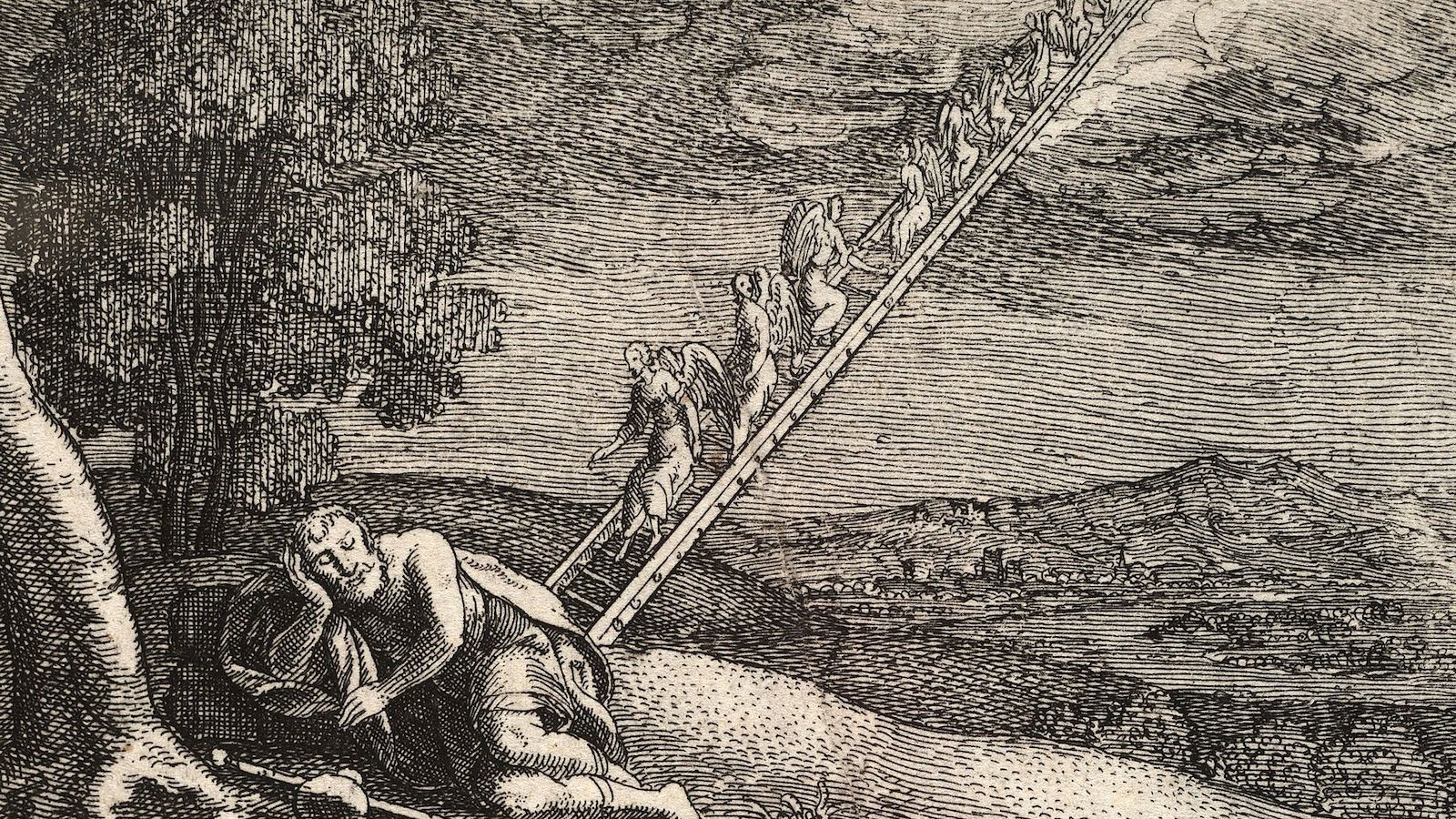
"Jacob left Beersheba and went toward Haran. And he came to a certain place and stayed there that night, because the sun had set. Taking one of the stones of the place, he put it under his head and lay down in that place to sleep. And he dreamed, and behold, there was a ladder set up on the earth, and the top of it reached to heaven. And behold, the angels of God were ascending and descending on it! And behold, the Lord stood above it and said, 'I am the Lord, the God of Abraham your father and the God of Isaac. The land on which you lie I will give to you and to your offspring. Your offspring shall be like the dust of the earth, and you shall spread abroad to the west and to the east and to the north and to the south, and in you and your offspring shall all the families of the earth be blessed. Behold, I am with you and will keep you wherever you go, and will bring you back to this land. For I will not leave you until I have done what I have promised you.' Then Jacob awoke from his sleep and said, 'Surely the Lord is in this place, and I did not know it.' And he was afraid and said, 'How awesome is this place! This is none other than the house of God, and this is the gate of heaven.'

- Genesis 2810-17

This is a well-known and much-beloved passage. We even have a song based on it: "We are climbing Jacob's ladder." Notice that God is referred to both as "God" and as "Yahweh" ("Lord" in the quoted portion above). So Jacob professes, without correction, that Yahweh is his God. 

Let us continue. 

"Then the angel of God said to me in the dream, ‘Jacob,’ and I said, ‘Here I am!’ And He said, ‘Lift up your eyes and see, all the goats that mate with the flock are striped, spotted, and mottled, for I have seen all that Laban is doing to you. I am the God of Bethel, where you anointed a pillar and made a vow to Me.'" (Genesis 31:11-13).

In this later passage, Jacob is again visited. This visitor is identified as "the angel of God," but then He identifies Himself as "God," the same God and Yahweh who had visited Jacob in chapter 28. Therefore, the angel of God, called elsewhere the angel of the Lord or the angel of the covenant, is Yahweh, the God of Israel. 

The comparison of these two passages proves three things, contrary to the claims of the anti-Trinitarians: first, it proves that Yahweh and the Angel of Yahweh are the same Person; second, it proves the preexistence of the Son; and third, it shows that Yahweh was the preexistent Son, in His mediatorial role. And if Yahweh is God, then the logical necessity is that the Son is God! Thus the claims of the Jehovah's Witnesses on one side and the Oneness sects on the other are shown to be false. 


Wednesday, May 26, 2021

The Incompatibility of Works-Righteousness and Faith-Righteousness

"The truth is that the faith by which alone the elect sinner is justified is a knowing and trusting that renounce works and working for righteousness... The faith that renounces working and works for justification is true faith. Whatever supposed 'faith' insists on working for righteousness is thereby exposed as a false faith. No one is justified by a false faith."

- Rev. David Engelsma, "Gospel Truth of Justification," p. 190, emphasis added 

In this paragraph, Engelsma is making the same point that Paul made in his Epistle to the Romans. For example, he wrote in Romans 9:30-32, "What shall we say, then? That Gentiles who did not pursue righteousness have attained it, that is, a righteousness that is by faith; but that Israel who pursued a law that would lead to righteousness did not succeed in reaching that law. Why? Because they did not pursue it by faith, but as if it were based on works." 

The theme in both is a mutual exclusivity between justification by faith and justification by works. Dependence on one precludes dependence on the other. The seeking of a righteousness, i. e., justification, by works is the reason Paul gives for the excommunication of the Jews (see Romans 11:13ff). 

This shouldn't have been news to the Jews. After all, they looked to Abraham as their national progenitor. And of Abraham, the Jewish Scriptures record, "He believed the LORD, and He counted it to him as righteousness" (Genesis 15:6). That is why that verse is one of the most-frequently quoted in the New testament, e. g., Romans 4:3, Galatians 3:6, and James 2:23. 


Wednesday, May 5, 2021

Noah and the Sabbath Principle

Noah and the Ark
A major argument used by anti-sabbatarians to support their claim that the Sabbath was a Jewish ceremony and not for Christians is that the Sabbath didn't appear in Scripture before the giving of the Ten Commandments. That reasoning equates the doctrine with the word, like the cults that deny the Trinity, just because the word doesn't appear in Scripture. 

But the question they avoid is whether the concept appears before Exodus 20. As I say here, it first appears in Genesis 2:2-3, when God blesses the seventh day in honor of His completion of the Creation. But, as I will argue in this post, that verse is not the only place that we find the Sabbath in the pre-Mosaic scriptures. 

One of the antinomian views is that non-Jews are obligated to obey only the Noahide laws, i. e., those rules given to Noah, the progenitor of the postdiluvian humanity. While I deny that assertion, in this case it is actually self-refuting. 

In Genesis 5:28-29, we have this part of the account of Noah: "When Lamech had lived 182 years, he fathered a son and called his name Noah, saying, 'Out of the ground that the Lord has cursed, this one shall bring us relief from our work and from the painful toil of our hands.'" Lameck, the father of Noah, prophesies that his son would bring relief from work and toil to his descendants. Notice the exact language of Genesis 3:18-19, God's curse on Adam: "Thorns and thistles it [i. e., the ground] shall bring forth for you; and you shall eat the plants of the field. By the sweat of your face you shall eat bread, till you return to the ground, for out of it you were taken; for you are dust, and to dust you shall return."

How is this not a Sabbath rest? And does that not make the Sabbath a part of the so-called Noahide laws?

Wednesday, March 24, 2021

Jesus Alone the Basis, and Faith Alone the Means, of the Justification of His People


"Faith is said to justify because it is the instrument by which we receive Christ, in whom righteousness is communicated to us. When we are made partakers of Christ, we are not only ourselves righteous, but our works also are counted righteous in the sight of God, because any imperfections in them are obliterated by the blood of Christ."

- John Calvin, commentary on Romans 3:22

When people profess that salvation is by faith alone, they express the biblical doctrine of justification. However, too often modern believers, even among evangelicals, don't understand the meaning of the words as they are in Scripture. We have been infiltrated by the doctrine of the Catholic Church, the same doctrine opposed by the Reformers, that justification by faith means by having faith, or faithfulness. This is how Rome (and her Arminian allies) has retained a role for works in justification. 

Sad as it is, that doctrine of justification cannot save, because it is not God's plan for justification. 

Notice what the Bible says, in the first passage in which justification as such is mentioned: ":He [i. e., Abraham] believed the Lord, and He counted it to him as righteousness" (Genesis 15:6). The Lord, the preincarnate Christ, accepted Abraham's faith, and declared him righteous. Jehovah does not make Abraham righteous, as Rome claims, but declares him righteous. That is the distinction between justification, a change in legal status, and sanctification, a change in nature. 

Does God merely erase Abraham's sin? No, nor that of nay other believer. To gloss over sin in such a way would be to substitute tolerance for justice. Rather, here is where we see the double imputation that is involved in justification. The sin of the elect, at the moment, of faith, is transferred to our Surety, Jesus Christ: "Surely He has borne our griefs and carried our sorrows; yet we esteemed Him stricken, smitten by God, and afflicted. But He was pierced for our transgressions; he was crushed for our iniquities; upon Him was the chastisement that brought us peace, and with His wounds, we are healed. All we like sheep have gone astray; and we have turned- every one- to his own way; and the Lord has laid on Him the iniquity of us all" (Isaiah 53:4-6).

But that was only half of our justification. In addition to taking the punishment for our sins, Jesus gave us His perfect record of works: "O Lord, You will ordain peace for us, for You have indeed done for all our works" (Isaiah 26:12). 

Thus, faith is not the basis of our justification. Jesus alone provides that. Rather, faith is the means of our justification. Or, to use, Calvin's term in the quote above, the instrument of our justification.

Wednesday, March 3, 2021

The Sovereignty of God Leaves No Autonomy for Men

 Sometimes it is funny to talk to people not well-versed in sound biblical theology. When I ask them, "Do you believe in the sovereignty of God?," they always answer, "Of course!" Then, however, the footnotes start coming out, like the small print in a credit card commercial. "But He gives us free will, to choose to sin or not, to believe or not, to do good works or not." So, in reality, those people consider themselves to be sovereign, not God. That causes me to wonder if they have skipped over the large portions of Scripture that say otherwise. 

For example, in II Samuel 24:1, we read these words: "The anger of the Lord was kindled against Israel, and He incited David against them." The account in I Chronicles adds an additional detail: "Then Satan stood against Israel and incited David" (I Chronicles 21:1). So, we have two different writers in their respective books telling us that God had determined to punish Israel but inciting David to sin. God is sovereign over the sins of men. Furthermore, the two books tell us that God uses means to bring about that sin. II Samuel just tells us that David himself is the means. I Chronicles gives us the additional information that He used Satan to incite David. Thus we know that God is sovereign over not just the sins of men, but over the temptations of Satan, as well. 

The story continues: "So the Lord sent a pestilence on Israel from the morning until the appointed time. And there died of the people from Dan to Beersheba 70,000 men. And when the angel stretched out his hand toward Jerusalem to destroy it, the Lord relented from the calamity and said to the angel who was working destruction among the people, 'It is enough; now stay your hand.' And the angel of the Lord was by the threshing floor of Araunah the Jebusite. Then David spoke to the Lord when he saw the angel who was striking the people, and said, 'Behold, I have sinned, and I have done wickedly. But these sheep, what have they done?'..." (II Samuel 24:15-17). The parallel in I Chronicles 21:14-15 says, "So the Lord sent a pestilence on Israel, and 70,000 men of Israel fell. And God sent the angel to Jerusalem to destroy it." The important thing to see here is that God had sovereignly incited the sin, yet still punished Israel for it. Also, it was David's sin (as he acknowledges in II Samuel 24:17), but God punishes the entire nation. That is simply because David was the covenant head of the nation; therefore, his sin was imputed to all of those who were covenantally represented by him. We are also again told of God's use of means, this time an angel (probably a parallel to the curse on Egypt in (Exodus 12:23, "destroyer"). 

The issue is very simple: fallen man wants to keep some of the autonomy promised to him by Satan in the fall of Adam (Genesis 3:5). Even the professing Christian struggles to relinquish his false sense of self-ownership. yet, God claims absolute sovereignty, over man, over sin, over Satan, and even over salvation. We must come to see that God's worldview is God-centered, no matter how much we want Him to be us-centered.