Showing posts with label atheism. Show all posts

Tuesday, March 26, 2024

Treason to God as Rational Justification for Eternal Punishment

I get challenged regularly by atheists who object to God because, they believe, they don't deserve Hell. they claim that Hell is overkill for the actions of most human beings. 

Do they have a case? No, I don't believe that they do. 

In his book, The Existence and Attributes of God, Puritan Stephen Charnock addresses this point: "Man would make himself his own end and happiness. As God ought to be esteemed [as] the first cause, in point of our dependence on Him, so He ought to be our last end, in point of our enjoyment of Him. When we, therefore, trust in ourselves, we refuse Him as the first cause; and when we act for ourselves and expect a blessedness from ourselves, we refuse Him as the chief good and last end, which is an undeniable piece of atheism. For man is a creature of a higher rank than others in the world, and was not made (as animals, plants, and other works of the divine power) materially to glorify God, but was made a rational creature, intentionally to honor God by obedience to His rule, dependence on His goodness, and zeal for His glory. It is, therefore, as much a sleighting of God for man - a creature - to set himself up as his own end as to regard himself as his own law." 

This concept was not new with Charnock. rather, he put into his own words the thoughts of the Apostle Paul: "Although they [i. e., unbelievers] knew God, they did not honor Him as God or give thanks to Him, but they became futile in their thinking, and their foolish hearts were darkened. Claiming to be wise, they became fools, and exchanged the glory of the immortal God for images resembling mortal man and birds and animals and creeping things" (Romans 1:21-23). 

The two men are describing two different forms of unbelief, of course. While Paul is describing the turning to pagan worship, Charnock is describing the atheist. However, the two forms are fundamentally one, in that they put someone else in the place of our Creator and Sustainer, the triune God of the Bible. All unbelievers have chosen Satan's offer (Genesis 3:5) of autonomy, illusory though it be.

Now the question to the atheist or pagan should be one that either can understand rationally: if a traitor has pulled his rightful king off the throne, whether to take it for himself or to give it to an interloper, is that not a crime which should be subject to the highest penalty available? A political figure may have only the ability to hang a traitor, having no reach beyond physical death. But God's jurisdiction cannot be thwarted by mere physical death (Matthew 10:28). And just as the rebel in Hell does not eschew his rebellion, neither does his divine Judge relent in His judgment through the rest of eternity. 

So, contrary to the assertion of the atheist, the judgment of Hell is both real and perfectly just. The only escape is to flee to Jesus, to be covered by His atoning blood, and to recognize that God remains on His throne, regardless of the efforts of man to cast Him down.




Monday, March 4, 2024

Unbelief as the De-Throning of God (Men Imagine)

In his book, The Existence and Attributes of God, the Puritan Stephen Charnock tells us, "It is natural to men to abhor those things that are unsuitable and troublesome as it is to please themselves in things agreeable to their minds and humors. And since man is so deeply in love with sin, as to count it the most estimable good, he cannot but wish the abolition of that law that checks it, and, consequently, the change of the lawgiver that enacted it. And in wishing a change in the holy nature of God, he wishes a destruction of God, who would not be God if He ceased to be immutably holy. They do as certainly wish that God had not a holy will to command them as despairing souls wish that God had not a righteous will to punish them; and to wish conscience extinct for the molestations they receive from it is to wish the power conscience represents out of the world also." 

Charnock is expanding on the words of Paul in two  verses in Romans. First, in Romans 1:18-23: "The wrath of God is revealed from heaven against all ungodliness and unrighteousness of men, who, by their unrighteousness, suppress the truth. For what can be known about God is plain to them, because god has shown it to them, for His invisible attributes, namely His eternal power and divine nature, have been clearly perceived ever since the creation of the world, in the things that have been made. So they are without excuse, for, although they knew God, they did not honor Him as God or give thanks to Him, but they became futile in their thinking, and their foolish hearts were darkened. Claiming to be wise, they became fools, and exchanged the glory of the immortal God for images resembling mortal man and birds and creeping things." In this passage, Paul tells us several things relevant to Charnock's point. First is that all men have a knowledge of God, which leaves them with no excuse for their unbelief. He has revealed Himself in His work of creation, visible to every eye to perceive. Therefore, when a person claims not to believe in God, he is practicing deception, both to himself and to those around him. The reality is that he knows God, his accountability to God, and the judgment of God which he deserves. And he hates that knowledge, and strives to suppress it in unrighteousness. 

The other passage is Romans 2:15-16: "They [the Gentiles] show that the work of the law is written on their hearts, while their conscience also bears witness, and their conflicting thoughts accuse or even excuse them on that day when, according to my gospel, God judges the secrets of men by Christ Jesus." This is the internal aspect of our innate knowledge of God. In the earlier passage, Paul described the external testimony of God's hand in creation. Here he describes the internal testimony of God's law written in the hearts of men, and the conscience which responds to our choices to disobey that law. 

So inside and outside, every man has a continuous testimony to the existence, holiness, and justice of God. And, as sinners, every man resents that knowledge, and seeks to be rid of it. 

One thing that we can observe about "atheists" is that they are silent about Wicca or Buddhism or the other religions in the world. Because those faiths whitewash our wickedness! It is only the triune God of the Bible that inspires the protests and opposition of their unbelief. Because it is He alone who is known in their hearts, and He alone who cannot be thrown down at their convenience.


Monday, February 26, 2024

Sin, Human Autonomy, and Practical Atheism

In his famous book, The Existence and Attributes of God, Puritan Stephen Charnock tells us, "By the nonregarding [sic, for "disregarding"]of God, men rush into evil. Pharaoh oppressed Israel because he knew not the Lord. If he did not deny the being of a deity, yet he had such an unworthy notion of God as was inconsistent with the nature of a deity: he, a poor creature, thought himself a match for the Creator." He refers to the passage in Exodus known especially for the account of the ten plagues, as Moses tried to free the Israelites from slavery in Egypt. In that passage, we see comments from Pharaoh like, "Who is the Lord that I should obey His voice and let Israel go?" (Genesis 5:2).

Charnock called this attitude "practical atheism." He notes that Pharaoh never denied the existence of gods, or even of the God. Rather, Pharaoh denied the sovereignty of God, asserting, instead, his personal autonomy from the will and commands of God. That is why Charnock calls Pharaoh's mentality "atheism," because it was a denial, in effect, of the deity, of the Godness, of God. 

This exemplifies, Charnock continues, the attitude behind all the sins of men, whether or not stated explicitly as it was by Pharaoh. It is, in fact, the false promise made by Satan in the Garden, that Adam and Eve would become like gods, deciding for themselves what is good and what is evil (Genesis 3:5). It is as if he told them, "Forget about God and decide for yourselves." And, like Pharaoh long after them, they accepted the promise of Satan. 


Wednesday, October 27, 2021

Faithful Prayer in a Sinful World

"You can never believe greater or better things than God can do for you. Even sin itself, which is the great (and really the only) evil; it is His enemy as much as yours: and you may be sure He would not have suffered its being in the world if He had not a power to correct and curb it, yea, and to destroy it, too, at His pleasure: take hold of His sovereign strength, and your work is done." 

-Puritan Elisha Coles, "A Practical Discourse of God's Sovereignty" 

It is easy for a Christian to be discouraged from prayer, because of the wickedness and suffering we see in the world. Do such things not show that God has no control over this world? How, then, can I trust Him to answer my prayers? This is a variant of the argument from evil used by atheists. How can your God exist, they challenge, if this world contains so much evil? 

That is because the unbeliever can draw no hope from the promises of God: "We know that, for those who love God, all things work together for good, for those who are called according to His purpose" (Romans8:28). The Apostle Paul suffered far more than most modern Christians will ever know, beatings, imprisonments, and finally execution. Yet this same man put his hope in the awareness that God, far from being helpless, is the divine sovereign over all that happens, making it of eternal benefit to the one who experiences such things in this life. And that is what Coles describes in the quote at the top. The presence of evil and suffering in this world is only at the sufferance of a sovereign God, not a sign of His indifference or powerlessness. Furthermore, He uses such things to shape us into His servants, prepared to do His will both in this world and in the next.


Saturday, January 18, 2020

No Cover for Sin


Americans have come to loathe the concept of sin. The popular  preachers, such as Joel Osteen, refuse to use the word. Even the supposedly-great Billy Graham, while he used the word, did not define it, or point out the sins of unbelievers, and even allowed unrepentant apostates to share his podium. So, when I say Americans, I don't have to limit my intent to professed unbelievers, but include even professing Evangelicals, a word that comes from the Greek word for "gospel."

Sin has come to mean, not wickedness, but error or even social injustice. We no longer think of it as it is presented in Genesis 3, rebellion against God and a despising of His word. We no longer talk about it as something which brings God's proper judgment: "Behold, all souls are Mine; the soul of the father as well as the soul of the son is Mine: the soul who sins shall die" (Ezekiel 18:4). Rather, we expect God to put our sins in a balance, with the acts that are good, in our own eyes, on the other side. And every person believes that his good deeds will outweigh his bad deeds. While that is the view of Islam, it is not the biblical view: "Whoever keeps the whole law but fails in one point has become guilty of all of it" (James 2:10), and, "No one does good, not even one" (Romans 3:12, quoting Psalm 53:3).

That is the problem with the objection of atheists, that God is supposedly unjust to send people to Hell just for not believing in Him; since Christians have taught a false view of sin, atheists have taken refuge in a false sense of their goodness. To the atheist, or any non-Christian, I give this warning: at the Judgment, you will not be excused by what men have told you, but rather you will be judged by what God has told you, even if you have refused to hear. To the supposed Christian who fails to warn of sin, I have these words from God: "If I say to the wicked, ‘You shall surely die,’ and you give him no warning, nor speak to warn the wicked from his wicked way, in order to save his life, that wicked person shall die for his iniquity, but his blood I will require at your hand" (Ezekiel 3:18).

To both groups of people, I give my own warning: There is no salvation in excuses. There is only salvation in the blood of Jesus, received by grace through faith alone.

"The penalty of the law was no vulgar ill, to be appeased by a few groans and tears, by agony, sweat, and blood. It was the wrath of God, which, when it falls upon a creature, crushes him under the burden of eternal death. It is a blackness of darkness through which no ray of light or hope can ever penetrate the soul of a finite being; to all such it must be the blackness of darkness forever. But Jesus endured it, Jesus satisfied it, Jesus bowed beneath that death which the law demanded, and which sinks angels and men to everlasting ruin, and came victorious from the conflict" (James Henley Thornwell, "The Necessity and Nature of Christianity," emphasis in the original).

Saturday, December 14, 2019

Unbelief Is Ingratitude

In Romans 1:18-25, the Apostle Paul gave this description of the unbeliever: "The wrath of God is revealed from heaven against all ungodliness and unrighteousness of men, who by their unrighteousness suppress the truth. For what can be known about God is plain to them, because God has shown it to them. For His invisible attributes, namely, his eternal power and divine nature, have been clearly perceived, ever since the creation of the world, in the things that have been made. So they are without excuse. For although they knew God, they did not honor Him as God or give thanks to Him, but they became futile in their thinking, and their foolish hearts were darkened. Claiming to be wise, they became fools, and exchanged the glory of the immortal God for images resembling mortal man and birds and animals and creeping things. Therefore God gave them up in the lusts of their hearts to impurity, to the dishonoring of their bodies among themselves, because they exchanged the truth about God for a lie and worshiped and served the creature rather than the Creator, who is blessed forever! Amen." 

He tells us several surprising things. First of all, unbelief is not ignorance. God has so revealed Himself that no man can claim that he does not know about God (see, for example, Psalm 19:1-4). There is no such thing as an atheist. Every single human being who lives now, has ever lived, or will ever live, knows that God exists and that he is accountable to Him. 

Which leads us to the second surprise, that men hate that knowledge, and try to suppress it. That is the origin of both pagan religions and atheism, the heart of the unbeliever's effort to bury the knowledge of God, in order to remain free to imagine that he is sovereign over his life and can decide right and wrong for himself. 

This hatred of God, commonly called unbelief, expresses itself in the use of God's gifts, such as the air we breathe, the food we eat, and the water we drink, while crediting it to ourselves or to some other source apart from God. Unbelief is founded on ingratitude! 

"Such a conduct as the generality of men are guilty of towards God, continually and through all ages, in innumerable respects, would be accounted the most vile contemptuous treatment of a fellow creature, of distinguished dignity. Particularly men's treatment of the offers God makes of Himself to them as their friend, their Father, their God, and everlasting portion; their treatment of the exhibitions He has made of His immeasurable love, and the boundless riches of His grace in Christ, attended with earnest repeated calls, counsels, expostulations, and entreaties; as also of the most dreadful threatenings of His eternal displeasure and vengeance" (Jonathan Edwards, "Original Sin," Book 1, section 5).


Saturday, June 8, 2019

Human Pride versus the God-Centeredness of God

"He is unchangeable, and who can turn Him back? What He desires, that He does." 
- Job 23:13

Among American evangelicals, there is an unstated belief that God is a giant Santa Claus in the sky, who exists to take care of us, to make us happy, and to satisfy our whims. We see this most plainly in the Prosperity Gospel teachers, who suggest that anyone who is poor or has a physical ailment is, somehow, unfaithful. God has been turned into an indulgent but toothless grandfather, no longer the Creator and Lord. 

The problem with that is that it bears no similarity to the God of the Bible. It is a violation of both the First and Second Commandments. That God, the true living God, is pursuing, not our glory, but His own; not our desires, but His own; not our gratification, but His own. We see it in the verse at the top of this article. 

I think that atheism is preferable. The atheist honestly admits that He hates God, and, therefore, rejects Him. In contrast, the average evangelical will gush about how much he loves God, but with that one unstated proviso: I will love God as long as He makes me happy. Such a Christian is proud that he keeps God on perpetual probation.

What is God's answer? "For My own sake, for My own sake, do I act, for how should My name be profaned? My glory I will not give to another" (Isaiah 48:11). God always acts to promote His own glory. If He were to do otherwise, at any time for any mere creature, then He would be transferring His glory to that person, and that is something that He will never do.

And that attitude drives the professing, but false, believer absolutely crazy. Try telling it to people, and watch the moral umbrage come steaming out of their nostrils and flashing from their eyes. "Who does God think He is? GOD or something?" And the answer, of course, is yes, He does think that. 


Wednesday, June 5, 2019

God Kicks Away Every Competing Support

In the book known by his name, the Patriarch Job tells a very sad tale.

Starting with verse 6, he first tells us how God has opposed Himself to Job:
"Now then that God has put me in the wrong
     and closed His net about me.
Behold, I cry out, ‘Violence!’ but I am not answered;
     I call for help, but there is no justice.
He has walled up my way, so that I cannot pass,
     and He has set darkness upon my paths.
He has stripped from me my glory
     and taken the crown from my head.
He breaks me down on every side, and I am gone,
     and my hope has He pulled up like a tree.
He has kindled His wrath against me
     and counts me as His adversary.
His troops come on together;
     they have cast up their siege ramp against me 

and encamp around my tent."
- Job 19:6-12 

Then, in the next section, God isolates Job from even his family: 
"He has put my brothers far from me,
     and those who knew me are wholly estranged from me.
My relatives have failed me,
     my close friends have forgotten me.
The guests in my house and my maidservants count me as a stranger;
     I have become a foreigner in their eyes.
I call to my servant, but He gives me no answer;
     I must plead with Him with my mouth for mercy.
My breath is strange to my wife,
     and I am a stench to the children of my own mother.
Even young children despise me;
     when I rise they talk against me.
All my intimate friends abhor me, 

     and those whom I loved have turned against me."
- Job 19:13-19 

This is part of the process of effectual calling, the events God uses to break down our unbelief, and to eliminate whatever competing source of support we maintain. In Job's case, he depended on his relatives for sustaining strength in life, so God separated those relationships. The same with his friends. This is an application of the First Commandment: "You shall have no other gods before Me" (Exodus 20:3). Someone might object that Job never worshiped other deities. Nor do most modern Americans pray to other gods. Yet, to God, another god doesn't just mean Thor or Ganesha. Rather, to Him another god is any support we have in life for not depending on Him as our only God, whether that deity is self-confidence or supportive family. In His eyes, they are competitors, and He removes them from the lives of His elect, until we throw ourselves on Him alone: "I am the LORD; that is My name; My glory I give to no other, nor My praise to carved idols" (Isaiah 42:8).

And in the case of Job, this work was successful: 
"I know that my Redeemer lives,
     and at the last he will stand upon the earth.
And after my skin has been thus destroyed,
     yet in my flesh I shall see God,
whom I shall see for myself,
     and my eyes shall behold, and not another. 

My heart faints within me!"
-Job 19:25-27 

Now that Job has been deprived of his crutches, he is able to see the glory of God. And, where he had been experiencing such unmitigated sorrow, now he experiences hope, the sure hope that he has been given new life, and will thus have his place in the resurrection, where he will see Jesus his Redeemer, with the same eyes with which he now sees only the sky. 

This is the question that every unbeliever faces: when you experience things like this, and feel the tug on your heart to turn from your unbelief (the meaning of repentance), how long will you resist? How long will you watch what you value in your life get pulled away? Surrender now, before the price goes up.

Jesus experienced this separation, but in the opposite order. He had perfect fellowship with His divine Father for unknown ages before He was born: "Father, I desire that they also, whom you have given Me, may be with Me where I am, to see My glory that you have given Me because you loved Me before the foundation of the world." (John 17:24). But He also experienced the loss of His companions (Matthew 26:31, Mark 14:50). And, just before He died, He experienced separation, for the fist time ever, even from His own Father: "My God, My God, why have You forsaken Me?" (Matthew 27:46; compare Isaiah 59:2). He experienced that separation on behalf of everyone who believes in Him. He was separated so that we can be reunited with His God, who is our God.


Saturday, April 27, 2019

The Bible as Our Apologetic

I have a real problem with classical apologetics. That is for two main reasons. One is that they lead to a generic deity, not necessarily the God of the Bible. Arguing, for example, from a supposed "first cause" could as easily be fulfilled by Allah or Zeus. The other reason is that they concede, as a starting point, that God does not necessarily exist. That concession is supposedly to establish a common ground with the unbeliever. Common ground with unbelief? What does that Bible say about that? "What portion does a believer share with an unbeliever?" (II Corinthians 6:15). The starting point of the Christian apologist is with something that Scripture denies! And I have even seen R. C. Sproul, a man whom I otherwise respect, go though his apologetics system in order to determine, not that God is necessarily who the Bible says He is, but rather that God probably exists. "Probably exists" means "maybe doesn't exist." How is that a God-honoring apologetic? I don't believe that it is. And that is probably why you never see the Apostles use such an approach. 

What is the biblical apologetic? "I shall have an answer for him who taunts me, for I trust in Your word" (Psalm 119:42). Do you recall the answers that Jesus made to Satan during His temptation (Matthew 4, Mark 1, Luke 4)? Did He try to find common ground with Satan? Of course not! Rather, He rebuked the Devil with Scripture! 

In apologetics, we must remember one thing: the unbeliever, regardless of his claims, does not really believe that God does not exist. On the contrary, he knows perfectly well that God exists, but is suppressing that knowledge (Romans 1:18-22). Thus, there is no need to establish a common ground. The believer and the unbeliever share a common belief in God. The difference is that one is living according to that belief, while the other is living contrary to it. That is why unbelief is inherently irrational and unstable. And exposing that irrationality was Paul's methodology when he preached at the Areopagus (Acts 17:16-34).

In His word, God has given us the most-powerful weapon possible for our spiritual conflict: "For the word of God is living and active, sharper than any two-edged sword, piercing to the division of soul and of spirit, of joints and of marrow, and discerning the thoughts and intentions of the heart" (Hebrews 4:12; see also Revelation 1:16 and 2:16). And He guarantees its success: "So shall My word be that goes out from My mouth; it shall not return to Me empty, but it shall accomplish that which I purpose, and shall succeed in the thing for which I sent it" (Isaiah 55:11).

Saturday, April 13, 2019

Is the Church Teaching the Lie of Satan?

We often talk about Europe as a "post-Christian culture." Then the conversation often moves to America, which is already "post-modern," and moving in the same direction as Europe. The so-called "nones," those who say they have no religion, are increasing as a proportion of the American population. The church has less and less influence in social issues.

Why is that?

In Europe, we see portions that have never known the biblical Gospel, because they were controlled by the Catholic Church. As that organization, not truly a church, lost political power, people were freed from its power, but had no spiritual reality to take its place. In the areas that had known the Gospel because of the Reformation, its influence had been undermined by the influence of higher criticism, and the failure of the
churches to exercise discipline in the face of  bald unbelief. As state churches, they were expected to include the entire population in their membership, and depended on state subsidies for their finances. They simply surrendered to the spirit of unbelief.

Here in America, evangelicalism has always been stronger than in Europe. The separation from the state and a voluntary membership has enabled the churches to exercise discipline - when they chose. While some church organizations have given in to the same higher criticism that conquered Europe, others have maintained their faithfulness to the Gospel and our God and Savior Jesus Christ.

However, now that evangelical remnant is decaying from the inside out. Prominent place has been given to mysticism, mainly through the Pentecostal movement, so that faith has become subjective rather than a faith in objective historical truths and events. A pietistic mentality has taken over, in which one's private spiritual experience takes precedence over the objective facts of the historic Christian faith. And a growing Prosperity movement has come to equate faith with personal success.

In other words, we witness with our eyes the professing evangelical movement's giving itself over to the very promise with which Satan brought down Adam and Eve: "God knows that when you eat of it [i. e., the Tree of the Knowledge of Good and Evil] your eyes will be opened, and you will be like God, knowing good and evil" (Genesis 3:5). The deception of Satan was his promise to Adam and Even that betraying the God who made them would make them autonomous, with the authority to decide good and evil for themselves, rather than receiving their definitions from God.

And this is what has deprived the American evangelical movement of influence and effect. If personal prosperity and sovereignty are valid, then the truth of God is just an optional alternative. There can be no grounds for calling to account either individuals or officials who stand for wickedness. Wickedness and righteousness become equally valid. The salt has lost its savor: "You are the salt of the earth, but if salt has lost its taste, how shall its saltiness be restored? It is no longer good for anything except to be thrown out and trampled under people’s feet" (Matthew 5:13).

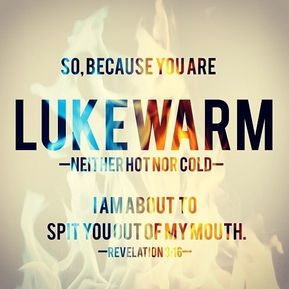
My message of warning is less to the apostates in American society than it is to the remnants of the church: "I know your works: you are neither cold nor hot. Would that you were either cold or hot! So, because you are lukewarm, and neither hot nor cold, I will spit you out of My mouth. For you say, I am rich, I have prospered, and I need nothing, not realizing that you are wretched, pitiable, poor, blind, and naked. I counsel you to buy from Me gold refined by fire, so that you may be rich, and white garments so that you may clothe yourself and the shame of your nakedness may not be seen, and salve to anoint your eyes, so that you may see. Those whom I love, I reprove and discipline, so be zealous and repent" (Revelation 3:15-19).

Wednesday, March 6, 2019

The Sense of God in the Minds of Men

In the defense of their program of baptism for the dead, Mormons claim that God gives a second chance for conversion to those who never had a chance to learn about Jesus in this life. In fact, they object to the phrase "second chance," because, they claim, such people had never had a first chance. It would be unjust, they claim, for God to punish for unbelief those who had never had a chance to learn about Christ.

Of course, they completely blank out the biblical teaching that unbelief is an act of will, not of ignorance. No unbeliever is merely ignorant of God; rather, he actively hates God.

"For the wrath of God is revealed from heaven against all ungodliness and unrighteousness of men, who by their unrighteousness suppress the truth. For what can be known about God is plain to them, because God has shown it to them. For His invisible attributes, namely, His eternal power and divine nature, have been clearly perceived, ever since the creation of the world, in the things that have been made. So they are without excuse. For although they knew God, they did not honor Him as God or give thanks to Him, but they became futile in their thinking, and their foolish hearts were darkened. Claiming to be wise, they became fools, and exchanged the glory of the immortal God for images resembling mortal man and birds and animals and creeping things" (Romans 1:18-23).

In this passage, the Apostle Paul explains that God has so revealed Himself in the creation that no one can claim to be ignorant of His existence or sovereignty. That assertion comes straight from Paul's Bible, what we know as the Old Testament: "The heavens declare the glory of God, and the sky above proclaims His handiwork. Day to day pours out speech, and night to night reveals knowledge. There is no speech, nor are there words, whose voice is not heard. Their voice goes out through all the earth, and their words to the end of the world" (Psalm 19:1-4). This is a description of God's self-revelation through His works of creation. In theology, it is called natural or general revelation, because it is available to every human being who has ever existed. This revelation is general, but is suppressed in his awareness by the unbeliever. Again, his unbelief isn't an accident of ignorance, but, rather, a deliberate suppression of what they know to be true.

When Paul spoke to the pagans at the Areopagus in Athens (Acts 17), this was the basis of his argument to them. The Athenians had an altar to "The Unknown God" (Acts 17:23). This God could not be literally "unknown," or they would not know that He was unknown to them. Therefore, this altar was a tacit admission that there was a God whom the Athenians left unnamed, the very God, the triune God of the Bible, whom Paul then proceeded to explain to them.

In the Old Testament, King Solomon tells us (Ecclesiastes 3:11), "He has put eternity into man's heart." God has made man with an irrepressible spiritual nature, an awareness of God and a need to be in fellowship with Him. Thus, while Paul in Romans and King David in Psalm 19 make their cases from the revelation of God in His works, Solomon proves Him from the nature of man, His created image-bearer.

As Presbyterian Theologian James Henley Thornwell paraphrased the biblical writers, "The interests of religion, in some form or other, must and will exact attention. Man is essentially a religious animal. His nature calls for religious worship. He must have God to pray to, as well as a God to swear by, and, while the true God is unknown [relationally], the heart will be filled with idols in His place. All idolatry consists essentially in the false worship of the true, or a superstitious worship of the unknown, God" ("The necessity and nature of Christianity.

All of these shows that the Mormon practice is unbiblical, not because it is different from the biblical baptism of the dead, but rather because it is based on an unbiblical assertion of an innocent ignorance on the part of the unrepentant unbeliever. Thus, if he leaves this life continuing in unbelief, the unbeliever is justly condemned (John 3:18, Hebrews 9:27).

Saturday, September 22, 2018

Autonomy: The Error of Atheists and Nominal Christians

When Christians talk about atheism, most would say that the fundamental error of the atheist is his denial of the existence of God. After all, that is the meaning of the word. However, they are mistaken. As we see in Romans 1:18, there is no one who doesn't know that God exists. An atheist pretends that God doesn't exist.

Rather, the fundamental error of atheism is its belief in human autonomy. The atheist must convince himself - and others, if possible - that God doesn't exist, and then he will be free to live his life as he desires. This is exactly what Satan offered to Adam and Eve in the temptation: "You will be like God, knowing good and evil" (Genesis 3:5). In this context, "knowing" does not mean merely "knowing about," but "deciding." Satan convinced Adam and Even that rebelling against God and His word would leave them free to decide what was right and wrong for themselves.

That assertion was false. Whether Satan himself believed in what he was offering, I do not know. Often a liar starts to believe his own lies.

The Bible says otherwise: "The king’s heart is a stream of water in the hand of the LORD; He turns it wherever He will" (Proverbs 21:1). This is a statement from the pen of Solomon, the greatest king that Israel would ever know. However, he confesses that, regardless of whatever intentions he might have had, his actions were always those determined by God.
The Glory of Solomon

My question to the atheist is this: If a rich and powerful king came to realize that he was always under the providential hand of God, how can you rationally believe that you are independent of that same God?

However, I am saddened to say that this error is not limited to professed atheists. Far too many professing Christians make the same essential assumption as the atheist, that we can decide for ourselves what belongs to God and what does not. Many of us divide life into a "religious" part and a "regular" part, with God in control of the first part, but with our having autonomy in the second. I am sorry, snowflake, but there is no such division: "So, whether you eat or drink, or whatever you do, do all to the glory of God" (I Corinthians 10:31). God claims all of your life, not just whatever dregs you are willing to give Him. If you are claiming autonomy in part of your life, then you are professing the same lie as Satan and the atheist, no matter what title you claim for yourself.

Jesus made the same point to the Pharisees: "He said to them, 'Well did Isaiah prophesy of you hypocrites, as it is written, This people honors Me with their lips, but their heart is far from Me; in vain do they worship Me, teaching as doctrines the commandments of men. You leave the commandment of God and hold to the tradition of men.' And He said to them, 'You have a fine way of rejecting the commandment of God in order to establish your tradition! For Moses said, Honor your father and your mother; and, Whoever reviles father or mother must surely die. But you say, If a man tells his father or his mother, Whatever you would have gained from me is Corban (that is, given to God)— then you no longer permit him to do anything for his father or mother, thus making void the word of God by your tradition that you have handed down. And many such things you do'" (Mark 7:6-13).

Saturday, September 15, 2018

Is There Injustice in God?

A lot of people, both among professing believers and among unbelievers, express moral objections to the commands of God to the Israelites to exterminate the Canaanites - man, woman, and child - during their conquest of the Promised Land. For example, we read in Deuteronomy 7:1-2 God's commandment: "When the Lord your God brings you into the land that you are entering to take possession of it, and clears away many nations before you, the Hittites, the Girgashites, the Amorites, the Canaanites, the Perizzites, the Hivites, and the Jebusites, seven nations more numerous and mightier than you, and when the Lord your God gives them over to you, and you defeat them, then you must devote them to complete destruction. You shall make no covenant with them and show no mercy to them."

And we have the record of Israel's partial obedience to the commandment: "We captured all his [i. e., King Sihon of Heshbon] cities at that time and devoted to destruction every city, men, women, and children. We left no survivors" (Deuteronomy 2:34). The same thing happened in the defeat of King Og of Bashan: "We devoted them to destruction, as we did to Sihon the king of Heshbon, devoting to destruction every city, men, women, and children" (Deuteronomy 3:6).

Is that harsh? I think any sane person would say so. But does that mean that it was unjust? That I must deny!

The problem with the objections to the Canaanite pogrom is that these objectors have an unbiblical view of man.

According to the Bible, all human beings (excluding only Adam and Eve before the Fall, and Jesus) are sinners, rebels in our hearts against our Lord and Creator, the triune God in Heaven (Romans 3:23). And the consequence of sin is death: "Behold, all souls are Mine; the soul of the father as well as the soul of the son is Mine: the soul who sins shall die" (Ezekiel 18:4). This is the point of error in the argument of those who accuse God of immorality; they fail to understand the wickedness of men or its consequence.

However, we notice that, though all are sinners, not all die at any particular time. That is certainly true. God restrains His justice for a time - for most. And that is the issue. After giving them 400 years to change their ways (Genesis 15:16), God chose to apply His justice to the pagan residents of Canaan through the Israelites at that time. If He chose to carry out His justice on those people at that time, but restrains it for a time for the rest of the world, is that injustice? No, it's mercy. When the false believer or the unbeliever accuses God of immorality in ancient Canaan, he is really denying the mercy of God to the rest of the world in the rest of history.

And that error is deliberate. Unrighteous men are not ignorant of God. Rather, they "suppress the truth through unrighteousness" (Romans 1:18). They throw up this smokescreen in their minds, so that they can avoid their innate knowledge of the reality of God and our accountability to Him. This is the moral equivalent of the child who sticks his fingers in his ears and sing-songs, "La-la-la I can't hear you," when his parents are chastising him for misbehavior. Does that exempt him from the consequences? Of course not! Nor does this smokescreen from unbelievers protect them from the justice of God.

Saturday, September 1, 2018

The Illusion of Autonomy from God

"The heart of man plans his way, but the LORD establishes his steps" (Proverbs 16:9).

It is the essence of unbelief to imagine that a man is, or can be, autonomous from God. Ever since the Fall, the heart of every man has chafed against the awareness that God made us, sustains us, and exercises absolute dominion over us. In fact, that is exactly the case that Satan made to Adam and Eve, leading to their fist sins.

"Now the serpent was more crafty than any other beast of the field that the Lord God had made.He said to the woman, 'Did God actually say, You shall not eat of any tree in the garden?' And the woman said to the serpent, 'We may eat of the fruit of the trees in the garden, but God said, You shall not eat of the fruit of the tree that is in the midst of the garden, neither shall you touch it, lest you die.' But the serpent said to the woman, 'You will not surely die. For God knows that when you eat of it your eyes will be opened, and you will be like God, knowing good and evil'" (Genesis 3:1-5).

Satan made a disingenuous offer to Adam and Eve: "Rebel against God and serve me, and I will give you authority to decide good and evil for yourselves." Adam and Eve accepted his offer, and came under the dominion of Satan. However, they never received the promised autonomy, because Satan didn't have it himself to give it to them. He, too, can only act as God permits him to act (Job 1:12). Does Satan imagine himself to be autonomous? Possibly.

Yet, Solomon, the wisest and richest king Israel ever knew, denied that he was autonomous from God. He admitted that he made plans to do this or that, but it was the purposes of God that always prevailed.

And this is my question: If an absolute ruler, with massive wealth and unquestioned power, yet confessed that his actions were always at the sovereign and prior command of God, who are you, O Man, to claim that you are sovereign, determine your own life and morals, and will yourself to salvation, eternal life, and sanctification? What presumption!


Saturday, August 25, 2018

What Goes Around Comes Around: Self-Destruction Through the Self-Deception of Unbelief

God, through the Apostle Paul, tells us, "The wrath of God is revealed from heaven against all ungodliness and unrighteousness of men, who by their unrighteousness suppress the truth" (Romans 1:18). That is, God has so revealed Himself in His creation (see Psalm 19:1-4) and in the nature of man that every man knows Him and our accountability to Him. However, the unbeliever, in order to maintain his myth of independence, suppresses his knowledge of God.

Since he is acting against his own knowledge, the unbeliever must resort to irrationality, because logic doesn't permit the holding of contrary "truths." That pesky Law of Non-Contradiction pops up. Therefore, the unbeliever must deceive himself, as well as others, in order to avoid the rational contradictions in his worldview.

"All the ways of a man are pure in his own eyes,
     but the Lord weighs the spirit...

There is a way that seems right to a man, 
    but its end is the way to death." 
-Proverbs 16:2, 25

One of the main ways that self-deception occurs is by stealing from the biblical worldview, in order to fill the gaps that unbelief cannot supply. A godless universe cannot provide a foundation for morality, for example, but no person can function in society without a sense of right and wrong. Therefore, the mind of the unbeliever, in order to satisfy his God-given conscience, "invents," he believes, a system of morality, though, in actuality, he has merely expressed the law written in his heart (Romans 2:15).

That is why what seems right to him actually leads to death, that is, the spiritual consequences of God's wrath at his rebellion. His conscience reveals what his heart really knows, that God is, and that he is accountable to Him. Yet, in his profession, he denies those truths, and, instead, curses God and His Word. His self-deception has thereby, not relieved him of that accountability, but rather brought him under the consequences of it. 


Saturday, August 18, 2018

Atheism and Self-Imposed Blindness

There are certain standard challenges that come from opponents of biblical Christianity, such as atheists.

One of those challenges is the claim of the supposed immorality of God in the destruction of the Canaanites at His command by the conquering Israelites, after their exodus from Egypt. And let me say that it is true that He commanded that, though Israel was less than thorough in obeying His command.

Would that action be immoral if committed by men without God's command? I would certainly say so. Apart from self-defense, just war, and a few cases of criminal justice, it is always immoral for any human being to kill another. I can say that because God has said it, one of the big Ten: "You shall not murder" (Exodus 20:13).

Does that apply here? No, it doesn't. Why? Because of the exceptions that I carefully enumerated. In particular, criminal justice.

Even when a man thinks he has justification to kill another, he is one sinner contemplating vengeance against another. And that is the key error in the logic of the atheist. By not accepting the word of God, he does not understand the sinfulness of men. He considers men to be innocent by default. It is as if a man were judging a dark gray spot as white, because he is viewing it against a black background.

However, the biblical perspective is that of a God of perfect holiness examining sinful men. He is judging men, not against each other, but against Himself, black spots against a background of snow white. By that standard every human being is deserving of capital punishment. Therefore, His justice is perfect in the destruction of the wicked Canaanites. It is His mercy, not justice, that we see in His refraining from such destruction for all men, including those Israelites. The atheist focuses on a false claim of injustice, while closing his eyes to the mercy.

However, even with those Canaanites, God showed a mercy that no atheist ever notices. In spite of their particular evil, such as the practice of human sacrifice, even of their own children, God expresses mercy to them, in giving them an extra four-hundred years to repent (Genesis 15:16). No human court has ever granted that level of leniency!

In addition to the repetition of the same questions, another thing that I have noticed is that the answer never matters. Not only do the same questions get asked over and over, but the same answers are given, over and over. That indicates to me that they are getting the questions from each other, not from their own investigations. And, since each of those challenges has been answered, their repetition indicates to me that it isn't the answer that is important, but rather maintaining the challenge in their own minds. That is, I believe that the atheist holds on  to that question for protection, a protection not offered by the answer. Protection from what? From knowledge.

The Bible says, "The wrath of God is revealed from heaven against all ungodliness and unrighteousness of men, who by their unrighteousness suppress the truth. For what can be known about God is plain to them, because God has shown it to them. For His invisible attributes, namely, His eternal power and divine nature, have been clearly perceived, ever since the creation of the world, in the things that have been made. So they are without excuse" (Romans 1:18-20). The atheist claims not to believe that there is a God, but that is a deception - not a deception to the person to whom he makes the claim, but rather a deception to himself. Everyone knows that there is a God and that we are accountable to Him. The atheist knows that, too, but he hates that knowledge. The atheist wants to believe that he is god over his own life, so he suppresses the knowledge that his desire is a delusion. Then when his challenges are answered, his self-deception is endangered. Therefore, he is forced to ignore the answers. Unbelief is never a matter of reason, but rather only of self-deception.

That is why conversion can only happen by the intervention of the Holy Spirit. The blinders, put in place by the unbeliever himself, must be ripped away, just as happened in the conversion of Paul (Acts 9:18).


Saturday, June 16, 2018

"Free Will," a False Response to the Question of Evil

Atheists will attack the Christian notion of God by pointing out that there is evil in the world. Since that is certainly an undeniable fact, some Christians will use the defense of free will. That is, they claim that God gives men autonomy to do good or to do evil. Men choose to do evil, so there is evil in the world, regardless of the desire of God.

In this case, the harm done to Christian theism by these "defenders" is worse than the attack against which they argue. They claim that God doesn't want evil in the world, but He is just unable to do anything about it, because man is sovereign.

That is false. It is a false view of God, and it is a false view of man.

Let's start with the truth about God. As the atheist grants (showing that his professed atheism is really just a cover for the hatred he has toward God), God is in control. And that includes the control of evil. For example, we read in Zechariah 8:10, "Before those days there was no wage for man or any wage for beast, neither was there any safety from the foe for him who went out or came in, for I set every man against his neighbor." That is an unequivocal statement that the evil of men toward other men is the result of God's purposes, a judgment for rebellion, as Calvin commented on this verse: "As then in God's judgments there ever shines forth the highest equity, there is no reason for men to try to implicate Him in their own perdition, or to devolve on Him a part of the blame. God then justly excites the hearts of men into madness, and yet men themselves bear the whole blame, though God draws them here and there against their wills, and makes use of them as His instruments; for the hidden purpose of God does not excuse them, while nothing is less their object than to obey His word, though they are guided by His hidden operation." It was in understanding this that Job was moved to say to his wife, "Shall we receive good from God, and shall we not receive evil?" (Job 2:10). This illustrates the assertion of Scripture, contrary to this supposed defense by ill-informed Christians, that God does everything as He desires to do: "Whatever the Lord pleases, He does, in heaven and on earth, in the seas and all deeps" (Psalm 135:6).

And that leads me to addressing the false view of man expressed above. Man is not sovereign. He does not have a veto on the intentions of God, whether or not it is claimed to be by God's permission. "All the inhabitants of earth are accounted as nothing, and He does according to His will among the hosts of heaven and among the inhabitants of the earth; and none can stay His hand or say to Him, 'What have you done?'" (Daniel 4:35). Rather, God always acts according to His own glory: "For My own sake, for My own sake, I do it, for how should My name be profaned? My glory I will not give to another" (Isaiah 48:11).

Saturday, May 26, 2018

Christian Truth: What No Man Can Imagine Must Not Be from Men

It is natural for human beings to seek the approval of others, even if it means patting ourselves on our own backs. Except for the rare neurotic, we accentuate our goodness. And to say that we have none would be an insult.

Yet, that is exactly what the Scriptures say: "None is righteous, no, not one... All have turned aside; together they have become worthless; no one does good, not even one" (Romans 3:10, 12). Even Jesus Himself left no wiggle room: "No one is good except God alone" (Mark 10:18).

What greater contrast can there be between how we humans think of ourselves and the portrayal that is given in Scripture! And that contrast is my point.

Every other religion, including secular humanism and unbiblical distortions of Christianity, maintain that man is basically good, and can achieve his own spiritual welfare by his own efforts.

Only biblical Christianity stands on this contrary view of the universal wickedness of all men.

What does that tell us?

My point is primarily for the atheist, who demands proof of the divine origin of biblical Christianity. If the Bible teaches that which is universally rejected by the natural assumptions of men, does that not prove that it could not have been created by men? I think that conclusion is unavoidable. It must come from a person, not an impersonal source outside humanity. And it must come from a source with universal knowledge of humanity.

Such a source can only be the God of the Bible. He is the God who made us, so He knows what we are meant to be, and from what status we have fallen short. But He is also the God who intervened in the human world, becoming a man Himself, to live with all of the suffering and frailty of human life. Then He suffered and died to purchase His people from the consequences of the sin that we brought on ourselves.

Christianity begins with a creation that may be conceived by the non-Christian. But it alone assigns consequences from that creation that the human mind universally rejects. Therefore, it cannot come from the human mind. Therefore, it is irrational for any human mind to reject it.

"Who is like Me? Let him proclaim it. Let him declare and set it before Me, since I appointed an ancient people. Let them declare what is to come, and what will happen" (Isaiah 44:7).

Saturday, May 5, 2018

The Bible, Truth, and the Myth of Autonomy

In dealing with agnostics or atheists, I, of course, use the Bible as my source of truth. That is what distinguishes me as a Christian. To act otherwise is to be a non-Christian. However, the other person will often respond with a challenge to the effect of, "Prove that the Bible is authoritative." Yet, the atheist, even as he is demanding rational evidence, doesn't recognize the irrational presupposition of his question.

As a Christian, I accept what the Bible says about itself: "All Scripture is breathed out by God and profitable for teaching, for reproof, for correction, and for training in righteousness, that the man of God may be complete, equipped for every good work" (II Timothy 3:16-17). Since the Bible is the word of God, then it carries His truth and His authority. But that isn't the information that the atheist is demanding. He wants evidence that convinces him, from his worldview of autonomy. Therefore, if I answer his question according to his standards, then I am necessarily abandoning my worldview and adopting his. Therefore, as a Christian, I cannot argue that way. Nor do you ever see Jesus or any of the apostles arguing in such a way. They always presuppose the reality of God and the truth and authority of the Bible.

Rather, from the Scriptures, I can demonstrate that the godless worldview of human autonomy is exactly what Satan offered to Adam and Eve in the garden: "The serpent said to the woman, 'You will not surely die. For God knows that when you eat of it your eyes will be opened, and you will be like God, knowing good and evil" (Genesis 3:4-5, "knowing" meaning "deciding" here). Accepting that premise, Adam rejected the world created for him by God, a world without disease, suffering, or death, and chose instead the world we have. That was an irrational choice.

The atheist repeats, and wants me to repeat, that same irrational choice. That is the implication of his demand that I satisfy his supposed autonomous human will. And, since I reject the choice that Adam made, I cannot answer him the way the atheist demands.

First, we must understand that the atheist's demand is a dishonest one. He knows the truth of God, because it is revealed to him in the creation (Psalm 19:1-4) and in his conscience (Romans 2:15). So, why isn't he a Christian? Because part of that knowledge is that the existence of God and our accountability to Him necessarily mean that men are not autonomous, in spite of Satan's promise in Genesis. Therefore, to maintain the illusion of autonomy, the atheist suppresses his knowledge of God (Romans 1:18-22). That means that, when I explain to him the truth from God's word, I am not addressing someone who does not understand. He simply hates the truth, and is trying to avoid it.

Second, this is not a matter of human persuasion. God promises to prosper His word: "So shall my word be that goes out from My mouth; it shall not return to Me empty, but it shall accomplish that which I purpose, and shall succeed in the thing for which I sent it" (Isaiah 55:11). If this atheist is one bought by the blood of Jesus, then God will make His word effectual in breaking through his suppression of knowledge, thus bringing him to saving faith. The battle is the Lord's! As Luke says of a particular evangelistic occasion: "When the Gentiles heard this, they began rejoicing and glorifying the word of the Lord, and as many as were appointed to eternal life believed" (Acts 13:48).

Saturday, April 14, 2018

Moral Accountability: What is Atheism's Standard?

Is morality objective? By that, I mean, are there certain things which are wrong by nature, not because of some normative standard, regardless of the worldview or circumstances of the person committing the act? Most people, including atheists, would say so. The Holocaust was just wrong, for example. There is even a philosophy called Objectivism, based on that idea. I don't agree.

Logically, the concept of objective morality is self-destructive. It cannot be sustained by the worldview which advocates it.

In order to hold to a morality, we must assume accountability for our actions. Without accountability, we relapse back to subjectivism, every man doing what is right in his own eyes. But is accountability to something personal? Or to something impersonal? We must say to something personal, because the impersonal substance merely continues to function according to its physical laws, without regard to how some particles within it conceive their actions. What is the nature of the universe? Impersonal. Therefore, there can be no accountability to it. Yet, the accountability must still be to a universal, personal being, lest, again, we slip into subjectivism.

Therefore, we are, indeed, accountable to a universal, personal being, who is apart from the physical universe. Can there be any more-basic definition of deity? But that cannot be just any deity. Allah is completely independent of, and disconnected from, the physical creation. So is the god of modern Judaism. It is, in contrast, only the triune God of the Bible who can meet the definition of this logic. Why? Because He alone, though distinct from the physical universe, has entered it in the incarnation. He alone has united His transcendence with a true human nature, so that He has bridged that inherent gap between Himself and us.

In spite of the claims of the Objectivists, there is no morality apart from God. He defines it, and it is to Him that we are accountable for our actions, giving both objectivity and universality. And it is Him that we have offended by our moral failures: "Your iniquities have made a separation between you and your God, and your sins have hidden His face from you so that He does not hear" (Isaiah 59:2). But He is merciful, and has provided a way to bridge that gap again, through His incarnation in Jesus Christ: "He Himself bore our sins in His body on the tree, that we might die to sin and live to righteousness. By His wounds you have been healed. For you were straying like sheep, but have now returned to the Shepherd and Overseer of your souls" (I Peter 2:24-25).