Showing posts with label 2 corinthians. Show all posts

Wednesday, August 19, 2026

Sanctification by Faith

In his Catechism for the Church of Geneva (answer # 126), John Calvin wrote, "To believe in Christ is as much to say as to receive Christ in such sort as He doeth give Himself unto us; now this is an evident thing, that Christ doeth not only promise to deliver us from death and to restore unto us the favor of God His Father through the only merits of His innocence, but also He promiseth to make us new creatures by His Spirit, to the end that ye should lead a holy conversation in all good works, so that these must be joined together, except we would divide Christ from Himself." In simpler terms, Jesus does not save  man from the wrath of God without also making him a new creation with good works consistent with that new nature. 

The biblical basis for Calvin's statement comes from II Corinthians 5:17-21: "If anyone is in Christ, he is a new creation. The old has passed away; behold, the new has come. All this is from God, who, through Christ, reconciled us to Himself and gave us the ministry of reconciliation; that is, in Christ, God was reconciling the world to Himself, not counting their trespasses against them, and entrusting to us the message of reconciliation. Therefore, we are ambassadors for Christ, God making His appeal through us. We implore you on behalf of Christ, be reconciled to God. For our sake, He made Him to be sin who knew no sin, so that in Him we might become the righteousness of God." This is a description of the legal exchange that happens at the moment that a sinner experiences saving faith. He has an instantaneous exchange of status with Jesus, receiving the righteousness of Jesus in place of the sin that is ours by nature. That is why Jesus could say to the thief on the cross, "Today you will be with Me in Paradise" (Luke 23:43). The moment he believed, that man had all of the righteousness of Jesus. He was as justified as any saint at a hundred years old, even though he was never given the opportunity to do a single good work. 

However, for the saint who remains in this life, for as long as he remains in this life, there will be good works. After reminding the Christians that their justification is through faith alone, not at all by works (Ephesians 2:8-9), Paul tells the Church at Ephesus (verse 10), "We are His workmanship, created in Christ Jesus for good works, which God prepared beforehand, that we should walk in them." While justification is instantaneous, as we see in the example of the thief on the cross, this new walking in good works, which we call sanctification, is a process lasting as long as the Christian remains in this life. The Westminster Larger Catechism Answer #75 defines sanctification this way: "Sanctification is a work of God's grace, whereby they whom God hath, before the foundation of the world, chosen to be holy, through the powerful operation of His Spirit applying the death and resurrection of Christ unto them, renewed in their whole man after the image of God; having the seeds of repentance unto life, and all other saving graces, put into their hearts, and those graces so stirred up, increased, and strengthened, as that they more and more die unto sin, and rise unto newness of life."

Yet we are never to mistake the order of these events. We can never do good works to gain the favor of God. It is only after a man is justified through faith alone in Jesus alone that he is then able to do good works. This is the point of Paul's epistle to the Galatians. "We know that a person is not justified by works of the law but through faith in Jesus Christ, so we also have believed in Christ Jesus, in order to be justified by faith in Christ and not by works of the law, because by works of the law no one will be justified. But if, in our endeavor to be justified in Christ, we, too, were found to be sinners, is Christ then a servant of sin? Certainly not! For if I rebuild what I tore down, I prove myself to be a transgressor. For through the law I died to the law, so that I might live to God. I have been crucified with Christ. It is no longer I who live, but Christ who lives in me. And the life I now live in the flesh I live by faith in the Son of God, who loved me and gave Himself for me. I do not nullify the grace of God, for is righteousness were through the law, then Christ died for no purpose" (Galatians 2:15-21). 

Paul's challenge to the erring Galatians is, if I was justified by faith alone in Jesus, how would I now turn aside from faith and seek to live the Christian life by my works? No, he says! My Christian life, too, is by faith alone in Christ alone! My good works are not by my own moral striving, but arise from the new life of Christ within me. Sanctification is by faith just as much as justification is by faith!



Monday, April 20, 2026

The Restoration of the Jews according to Jeremiah 33, with Zechariah and Hebrews

"Behold, the days are coming, declares the Lord, when I will fulfill the promise I made to the house of Israel and the house of Judah. In those days and at that time I will cause a righteous branch to spring up for David, and He shall execute justice and righteousness in the land. In those days Judah will be saved and Jerusalem will dwell securely. And this is the name by which it will be called: 'The Lord is our righteousness.' for thus says the Lord: David shall never lack a man to sit on the throne of the house of Israel, and the Levitical priests shall never lack a man in My presence to offer burnt offerings, to burn grain offerings, and to make sacrifices forever." (Jeremiah 33:14-18) 

To my mind, this is an exhilarating passage, because it unites so many messianic themes. The Branch is an epithet used for the coming Messiah several times in Jeremiah, and points to the coming of Jesus, about 600 years after the historical events of the book. The prophet uses several confirmatory references that we know from the New Testament. First, the Branch will cause His people to bear the name "The Lord is our righteousness." This should cause any Christian to think immediately of the words of Paul in II Corinthians 5:21: "For our sake, He [the Father] made Him [Jesus] to be sin who knew no sin, so that, in Him, we might become the righteousness of God." Contrary to the claims of some dispensationalists, this proves that the future conversion of the Jews will occur on the same basis as the conversion of the Gentiles, by faith alone in Christ alone, so that His righteousness is imputed to the elect believer. There is no separate class of saved people among the Jews (Acts 15:11). They simply follow a different historical track to arrive at that same place. 

Furthermore, Jeremiah tells us that the Branch will fulfill a dual role, to fill the throne of David forever. "Once for all I have sworn by My holiness; I will not lie to David. His offspring shall endure forever, his throne as long as the sun before Me. Like the moon it shall be established forever, a faithful witness in the skies" (Psalm 89:35-37). The other is that He will sustain the work of the Levitical priests. We know that Jesus was of the tribe of Judah, not of Levi. However, the Epistle to the Hebrews addresses that question by telling us that Jesus's priesthood is not according to Levi, but according to the pattern of Melchizedek. "The one of whom these things are spoken belonged to another tribe, from which no one has ever served at the altar. For it is evident that out Lord was descended from Judah, and in connection with that tribe Moses said nothing about priests. This becomes even more evident when another priest arises in the likeness of Melchizedek, who has become a priest, not on the basis of a legal requirement concerning bodily descent, but by the power of an indestructible life. For it is witnessed of Him, 'You are a priest forever after the order of Melchizedek'" (Hebrews 7:13-17, quoting from Psalm 110:4; see also Hebrews 4:14-5:10). Together we have the Priest-King prophesied by Zechariah: "Behold the man whose name is the Branch, for he shall branch out from his place, and he shall build the temple of the Lord.It is he who shall build the temple of the Lord and shall bear royal honor, and shall sit and rule on his throne. An there shall be a priest on his throne, and the counsel of peace shall be between them both" (Zechariah 6:1-13, using Josiah the high priest as a type). 

There can be no doubt that that the restoration of Israel will come, not as the political event expected by dispensationalism, but as a Gospel event, founded upon Jesus Christ alone as savior. It won't be at the same time as Gentile believers, but it will be by exactly the same faith, atonement, and imputation of His righteousness alone.

Friday, May 23, 2025

Human Moral Inability and the Gospel

 "I know, O Lord, that the way of man is not in himself, that it is not in man who walks to direct his steps" (Jeremiah 10:23). 

I have written many times about the doctrine of total depravity. This is the doctrine of total inability, which is closely related, but distinct. Total depravity is the condition, while total inability is the result. That is, sin has affected every faculty of our humanity, the result of which is that there REMAINS no native ability in us to perform any moral good. The two things are often equated, but I am treating them separately, because I think that Scripture addresses them separately. 

It is a common error of supporters of free will that the doctrine of total inability is an invention of John Calvin, based on a misreading of the writings of Paul. I deliberately chose the verse above from Jeremiah to show that both aspects of that accusation are wrong. Total inability is an invention of neither Paul nor John Calvin. 

Rather, we see in the prophet his concern that men are unable to obey God from any ability in ourselves. As he faced the coming prospect of the exile of Judah in Babylon, he lamented that Judah could not reform himself. So, he pleaded, "correct me" (verse 24), because I cannot correct myself. That is, speaking on behalf of his people. 

As theologian John Frame has said, "Although fallen persons are capable of externally-good acts (acts that are good for society), they cannot do anything really good, I. e., pleasing to God (Romans 8:8). God, however, looks on the heart. And from His ultimate standpoint, fallen man has no goodness, in thought, word, or deed. He is, therefore, incapable of contributing anything to his salvation."

That is the connection of this doctrine to the gospel. The inability of men to display the righteous nature that God requires would naturally doom all men to eternal judgment (Hebrews 12:14), would display, not injustice on God's part, but rather hopelessness on the part of men. Instead, God established a righteousness which is by faith alone, the imputation of the perfect righteousness of a surety, an alien righteousness, granted to every sinner for whom He died on the cross, Jesus of Nazareth (Isaiah 26:12, John 6:37-39, II Corinthians 5:21). 

Wednesday, October 4, 2023

The Commandments of God in Stone and the Hearts of Men


Most people are not aware that God gave Moses the Ten Commandment not once but twice. The first time is described in Exodus 24:12: "The Lord said to Moses, 'Come up to Me on the mountain and wait there, that I may give you the tablets of stone, with the law and the commandment, which I have written for their instruction.'" And again in 31:18: "And He gave to Moses, when He had finished speaking with him on Mount Sinai, the two tablets of the testimony, tablets of stone, written with the finger of God." These tablets were the ones shattered by Moses in anger at the idolatry of the Israelites in their worship of the golden calf (chapter 32).

After shattering the original tablets, Moses was then tasked with replacing them with a new pair of tablets, which he himself fashioned. "The Lord said to Moses, 'Cut for yourself two tablets of stone like the first, and I will write on the tablets the words that were on the first tablets, which you broke'" (Exodus 34:1). As when Adam fell into sin, when Moses broke the commandments, literally, he was cursed with an increase in labor, having to carve and carry the stone tablets himself. 

This historical event came to my mind during a recent Sunday school lesson at my church. Part of that lesson dealt with the law of God written on human hearts. We see this in two places in the New Testament. First, Paul mentions it in Romans 2:15: "[Gentiles] show that the work of the law is written on their hearts, while their conscience also bears witness, and their conflicting thoughts accuse or even excuse them." Then the writer of Hebrews mentions it again as part of the new covenant, which he, in turn, borrowed from the Prophet Jeremiah: "This is the covenant that I will make with them after those days, declares the Lord: I will put My laws on their hearts, and write them on their minds" (Hebrews 10:16, from Jeremiah 31:33). 

Notice the parallels between these two pairs of events. In each, God gave His holy commandments, but they were broken by men. And then God gave them again. 

By this pairing of breaking and restoration, we see two magnificent things. First is that God does not lower His standards merely because men cannot meet them. To do so would be to betray His own holiness. And second is His mercy. While the breaking of the law naturally incurs the death penalty (Romans 6:23), God's work is restorative, not punitive, for His elect. He restores His law (Isaiah 42:21). And He restores His elect through the imputation by faith of the perfect obedience of His only-begotten Son, Jesus Christ (John 1:17, II Corinthians 5:21, Romans 3:21-22). 

Saturday, December 31, 2022

Parallels Between Isaiah and Paul on the Conversion of the Jews


"On this mountain the Lord of hosts will make for all people a feast of rich food, a feast of well-aged wine, of rich food full of marrow, of aged wine well refined. And He will swallow up on this mountain the covering that is cast over all peoples, the veil that is spread over all nations. he will swallow up death forever; and the Lord God will wipe away tears from all faces, and the reproach of His people He will take away from all the earth, for the Lord has spoken. It will be said on that day, 'Behold, this is our God; we have waited for Him, that He might save us. This is the Lord; we have waited for Him; let us be glad and rejoice in His salvation.' For the hand of the Lord will rest on this mountain..." (Isaiah 25:6-10). 

"The mountain of the Lord" and its variants appear frequently in the prophets, especially in Isaiah. See, for example, chapter 2, and the fourth chapter of Micah. It is an image derived from the temple mount, the place where God met in fellowship with His people. That image, in turn, may have come from the mountain on which Adam was placed in the garden. Thus, it is an image of fellowship, between the elect and our Redeemer. Use of "the Lord," used in English Bibles when the Hebrew refers to Jehovah, shows that the relationship is not with the Trinity undifferentiated, but rather with the Second Person of the Trinity, the preincarnate Christ, acting in His mediatorial role. 

In addition to those Old Testament parallels, we also see elements in the passage above that would appear in the New Testament, specifically in the writings of Paul. 

Where the prophet describes the spiritual veil over the hearts of men, Paul uses the same image for the yet-unbelieving Jews in II Corinthians 3:12-18: "Since we have such a hope [of life in the Spirit, v. 6], we are very bold, not like Moses, who would put a veil over his face so that the Israelites might not gaze at the outcome of what was being brought to an end. But their minds were hardened. For to this day, when they read the old covenant, that same veil remains unlifted, because only through Christ is it taken away. Yes, to this day, whenever Moses is read, a veil lies over their hearts. But when one turns to the Lord, the veil is removed. Now the Lord is the Spirit, and where the Spirit of the Lord is, there is freedom. And we all, with unveiled face, beholding the glory of the Lord, are being transformed into the same image from degree of glory to another..."

Notice also that Paul tells us another relevant fact: It is in turning to Christ that the veil of unbelief is removed, verifying that it is in Christ that the events described by Isaiah will occur. Some will agree, but place the events after His second coming. Yet the passage precludes that possibility by describing it in feast terms. yet, there will be no hunger in the resurrection, and, therefore, no use for food. 

Does Paul restrict our case to the Jews? In II Corinthians, that might be possible, but it is eliminated if we include another Paulian passage, Romans 11:11-15: "So I ask, did they [i. e., the Jews] stumble in order that they might fall [forever]? By no means! Rather, through their trespass salvation has come to the Gentiles, so as to make Israel jealous. Now, if their trespass means riches for the world, and if their failure means riches for the Gentiles, how much will their full inclusion mean? Now I am speaking to you Gentiles. Inasmuch then as I am an apostle to the Gentiles, I magnify my ministry in order, somehow, to make my fellow Jews jealous, and thus save some of them. For if their rejection means the reconciliation of the world, what will their acceptance mean but life from the dead?" And further, Romans 11:25-26: "Lest you be wise in your own sight, I do not want you to be unaware of this mystery, brothers: a partial hardening has come upon Israel, until the fullness of the Gentiles has come in. And in this way, all Israel will be saved..." 

Thus, Paul predicts in narrative what Isaiah prophesied in the poetic language of Hebrew prophecy, that a time will come, in which the greater part of both Gentiles and of Jews will be converted to saving faith in Jesus Christ. The Puritans called this the postmillennial hope. 

Wednesday, September 28, 2022

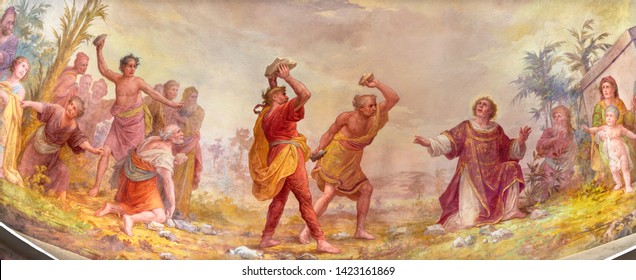
The Martyrdom of Stephen as a Refutation of "Soul Sleep"

Where was the spirit of Stephen after he was stoned to death? The Seventh-Day Adventists claim that it was asleep with his body in the grave. The Jehovah's Witnesses claim that it disintegrated, to be recreated at the final judgment. Those two doctrines are variants of what is commonly called "soul sleep." It is in sharp contrast to the traditional Christian belief that the spirits of the godly passed immediately upon death into the heavenly presence of Jesus (see II Corinthians 5:8). 

The story of Stephen is found in Acts, chapter 7. We are introduced to him in the previous chapter, where we are told that the church elected him to the diaconate, because he was "full of faith and of the Holy Spirit" (Acts 6:5). In chapter 7, he gives a long sermon about Jesus to a Jewish crowd, culminating in verses 51-53: "You stiff-necked people, uncircumcised in heart and ears, you always resist the Holy Spirit. As your fathers did, so do you. Which of the prophets did your fathers not persecute? And they killed those who announced beforehand the coming of the Righteous One, whom you have now betrayed and murdered, you who received the law as delivered by angels and did not keep it." As might be expected, his audience was not happy with his words: "Now when they heard these things they were enraged, and they ground their teeth at him... They cried out with a loud voice and stopped their ears and rushed together at him. Then they cast him out of the city and stoned him" (Acts 7:54, 57-58). 

How did Stephen respond to this persecution? "He, full of the Holy Spirit, gazed into Heaven and saw the glory of God, and Jesus standing at the right hand of God. And he said, 'Behold, I see the heavens opened, and the Son of Man standing at the right hand of God'... And, as they were stoning Stephen, he called out, 'Lord Jesus, receive my spirit.' And, falling to his knees, he cried out with a loud voice, 'Lord, do not hold this sin against them.' And when he had said this, he fell asleep [i. e., died]" (Acts 7:55, 59-60). 

This spiritual man knew that death was upon him, but his expectation was to enter thereupon into the presence of Jesus, as orthodox Christians have always said. He knows nothing of a two-thousand year (and counting) gap between his death and rising to see Jesus only then. Stephen the Deacon was surely no Adventist or Jehovah's Witness. 


Saturday, February 26, 2022

Is the Love of God Universal?


"Everyone who is arrogant in heart is an abomination to the Lord; be assured, he will not go unpunished" (Proverbs 16:5). 

I continue to deal almost daily with people who proclaim that God loves everyone, or even that God loves everyone equally. This is supposed to be an appeal to the wicked, making them confident in trusting God. Yet such people never seem to consider how it sounds to the wicked: "God loves you unconditionally, in your wickedness." It is a statement to the unbeliever that his wickedness costs him nothing, because God is happy with him as he is. I don't doubt that is why there is so much unrepented wickedness in the church, especially sexual immorality and illegitimacy. God loves them; therefore, God loves their wickedness. If any Christian calls the wicked to repentance, he faces this prior false information, making true evangelism an even greater uphill battle.

Yet the scriptures say no such thing. Not ever. Not anywhere. If you ask for biblical justification you will usually get one of two verses. The universalist will often refer to I John 4:8: "God is love." But to whom is John speaking there? The first part of the sentence is rarely quoted: "Anyone who does not love does not know God." The love of God is explicitly named as something that the unbeliever cannot know! The other verse the universalist will toss out is Matthew 5:45: "He makes His sun rise on the evil and on the good, and sends rain on the just and on the unjust." See, we are told, God loves both the good and the evil. That is in spite of the observable fact that "love" never appears in the verse. Rather, it is a simple reference to the mixed nature of humanity, with God's people dispersed among the wicked, as is also described in the Parable of the Weeds (Matthew 13:24-30). This is not a blessing intended for the wicked. They are merely enjoying their being in the proximity of the elect (Matthew 15:27). If anything, it is a curse, because it increases their judgment (Romans 1:21). 

The real issue is humanism, a philosophical commitment to the inherent goodness and autonomy of man. In the Bible, man is neither good nor autonomous. He is not a creature who can assume God's love, because that love cannot exclude God's love for Himself. That means that God is jealous of His holiness (Deuteronomy 4:24, Hebrews 12:29). He hates that which is contrary to His holiness, so that every man is by nature a subject of wrath, not love (Ephesians 2:3). What the unbeliever needs is not to be told that God loves him unconditionally, but that he faces an eternity of wrath, unless he clothes himself in the righteousness of Christ (II Corinthians 5:21), which comes through faith alone. God loves the believer, not because he is naturally good, but because the Father sees the believer in His Son, who alone is inherently and unfailingly good (Romans 5:8). 

Saturday, August 21, 2021

Jesus as Surety for His People

"To Jesus Christ, to His account, as the one now responsible for the sins of those in whose stead He died, God imputed our sins. Although personally the man Jesus was sinless, the guilt of the others became His own on the cross, indeed, throughout all His life of suffering, by God's imputation of this guilt to Him. God held Jesus responsible for the sins and sinfulness of all the elect, for whom Jesus was the divinely-appointed substitute. God dealt with Him accordingly, cursing and damning Him." 

- David Engelsma, "Gospel Truth of Justification," p. 294 

In the paragraph above, Engelsma is summarizing and paraphrasing what Paul taught in three passages. The first was Galatians 3:13-14: "Christ redeemed us from the curse of the law by becoming a curse for us - for it is written, 'Cursed is everyone who is hanged on a tree' - so that, in Christ Jesus, the blessing of Abraham might come to the Gentiles, so that we might receive the promised Spirit through faith." The second is II Corinthians 5:21: "For our sake He [the Father] made Him [the Son] to be sin who knew no sin, so that, in Him [the Son], we might become the righteousness of God." And, finally, Galatians 2:20: "I have been crucified with Christ. It is no longer I who live, but Christ who lives in me. And the life I now live in the flesh, I live by faith in the Son of God, who loved me and gave Himself for me."

In theology, we say that Jesus gave Himself to be the surety for all those whom the Father had given Him. Or, to use our modern parlance, He became the "co-signor" for us. But that must be understood a little differently. When a person, call him John, co-signs a loan for another person, call him Bob, then John takes upon himself a risk. Bob is promising to repay his loan, but, if he fails, the loan then becomes John's responsibility. However, in the case of the suretyship of Jesus, He agreed to co-sign for the sin debt of His people, even knowing in advance that His people would indeed fail. He didn't just assume a risk; He assumed the certainty that His people would have a sin debt for which He was taking responsibility. Would any merely-human co-signor agree to such a responsibility? 

But notice further that Jesus, as surety, didn't undertake merely the debt of our sins. There was a further imputation, as well. As Paul said to the Corinthians, the redeemed become "the righteousness of God." The redeemed are not brought to some morally-neutral state, but rather we are brought to a positive account of righteousness, His righteousness, so that, as the same Apostle told the Galatians, we live the godly life as Jesus's righteousness is placed in us, by means of faith alone. That is an instantaneous exchange, not the progressive one pretended by Rome and other Pelagian sects. It is done! 


Wednesday, August 4, 2021

Justification by Double Imputation, Through Faith Alone

Orthodox Protestants properly state that justification is by faith alone, without regard to works. That statement is true, and the only way of justification found in the Bible. But we are often week in defining what it is that is conveyed to the believer by means of - not on the basis of - his faith. What is conveyed to the believer is the negative obedience of Christ, i. e., His willing submission to the judgment of the Father for sin, and His positive obedience, i. e., His willing obedience to the law of God as the Second Adam.

The first cancels the sin debt that the elect carried for our sins, while the latter gives us a true righteousness in the eyes of God. 

"If faith in Christ is the only way to be righteous, to the exclusion of all the works of the sinner himself, then the sinner's righteousness with God consists exclusively of the works of Christ in his stead and on his behalf. In the saving work of God of justification the sinner's righteousness is solely the obedience of Christ - His lifelong, perfect obedience to all the commandments of the law in our stead and His obedience in our place to the demand of the law that we be cursed for our transgressions. 'By the obedience of one shall many be [constituted] righteous' (Romans 5:19)" Engelsma, Gospel Truth of Justification, p. 192.

For His negative obedience, we have many passages in the Bible, such as Isaiah 53:4-6: "Surely He has borne our griefs and carried our sorrows; yet we esteemed Him stricken, smitten by God, and afflicted. But He was pierced for our transgressions; He was crushed for our iniquities; upon Him was the chastisement that brought us peace, and with His wounds we are healed. All we like sheep have gone astray; we have turned—every one—to his own way; and the LORD has laid on Him the iniquity of us all." 

That passage is well-known, but how many can point to the imputation of his perfect obedience? " You will ordain peace for us, for You have indeed done for us all our works" (Isaiah 26:12). See also II Corinthians 5:21 and Hebrews 13:20-21. When we stand before Jesus, not to be judged, but to have His righteousness and mercy displayed before the universe, we will not be without works. Rather we shall bear His works! 

Saturday, July 17, 2021

Judgment According to the Imputed Righteousness of Jesus

When I am dealing with members of Pelagian sects, such as Mormons and Catholics, on the issue of justification by faith alone, some of them think they are clever by citing, for example, Revelation 20:13: "The sea gave up the dead that were in it, Death and Hades gave up the dead that were in them, and they were judged, each one of them, according to what they had done." Aha! the Pelagian proclaims. If we are judged according to our works, then we must be saved in part by our works, and not by faith alone! And taken in isolation, that verse may be taken that way. 

But the responsible Bible reader doesn't take individual verses in isolation. A doctrine must be built by comparing verse to verse to learn the overall teaching. 

For example, we have Romans 5:19: "As by one man's [i. e., Adam's] disobedience the many were made sinners, so by the one Man's [i. e., Jesus's] obedience the many will be made righteous." Paul shows us the contrast between the two imputations, of sin to Adam's posterity (except Jesus), and of righteousness to the posterity of Jesus (i. e., believers). The Apostle makes the same point in II Corinthians 5:21: "For our sake, God made Him to be sin who knew no sin, so that in Him we might become the righteousness of God." 

The problem is that the Pelagian doesn't understand justification by faith as well as he thinks he does. Pelagianism misrepresents justification as merely the cancellation of the sin debt, returning the sinner to a neutral state. That is why the Pelagian also believes that a believer can lose salvation; after the cancellation of his previous debt, he sins more and incurs new debt. That view is false. Rather, as Paul says, there is the complementary imputation of Christ's righteousness. The new believer is not brought merely to a neutral state by faith. Rather, he also receives to his heavenly account, by means of that same faith, all of the righteousness of Jesus. 

In the eyes of God, the believer is never a person of neutral moral status. Rather, the believer stands before God as a sinless and righteous man or woman. Thus, there is no judgment which we must fear.


Wednesday, April 21, 2021

True Christianity and the Imputation of Works

"What have you that you did not receive? If then you received it, why do you boast as if you had not received it?" (1Cor. 4:7). 

All non-Christian religions advocate some form of salvation by works. They say, "Change your behavior, and then your deity will love you." And this isn't just professing non-Christian religions. Many pseudo-Christians say some variation of the same thing. For example, the Roman Catholic Council of Trent, in


Canon XX (1547), said, " If any one shall say, that a man who is justified and how perfect soever, is not bound to the observance of the commandments of God and of the Church, but only to believe; as if, forsooth, the Gospel were a bare and absolute promise of eternal life, without the condition of observation of the commandments; let him be anathema."  

Yet, in the verse above, the Apostle Paul denies the very thing asserted by Trent. Justification is by grace alone through faith alone, apart from any works.  That is one side of the double imputation that occurs at the moment of true belief: the judgment due to our sins is transferred to our Surety, who paid for them on the cross. The other side is the imputation of His perfect works to the believer: "O LORD, You will ordain peace for us, for You have indeed done for us all our works" (Isaiah 26:12; see also II Corinthians 5:21 and Hebrews 13:20-21). 

Thus it is true that without holiness, no man shall see God (Hebrews 12:14). But, as Paul says, it is not a holiness produced by the man but which is imputed to him from Jesus by grace alone through faith alone. So, that same Paul is cursed according to Trent.

Wednesday, March 31, 2021

The Righteousness of the Believer Not a Righteousness by Works

 "Christ, and Christ alone, is the source of righteousness, that is, the righteousness that we need and becomes ours by God's act of justification. God has worked out a righteousness in Christ for penitent, believing sinners, and this righteousness is now in that exalted Christ at the right hand of God in Heaven. To grant us and bestow on us this righteousness of God (by imputation), God is pleased to use faith. Faith is the bond of union with Christ through which the sinner receives righteousness." 

- Rev. David Engelsma, "Gospel Truth of Justification," pp. 141-2 

In this paragraph, Engelsma paraphrases what Paul tells us about the failure of the Jews: "Israel, who pursued a law that would lead to righteousness, did not succeed in reaching that law. Why? Because they did not pursue it by faith, but as if it were based on works" (Romans 9:31-32). Where was true righteousness to be found? "Now the righteousness of God has been manifested apart from the law, although the Law and the Prophets bear witness to it- the righteousness of God through faith in Jesus Christ for all who believe" (Romans 3:21-22). 

Jesus addressed this problem with the Pharisees: "Woe to you, scribes and Pharisees, hypocrites! For you are like whitewashed tombs, which outwardly appear beautiful but within are full of dead people's bones and all uncleanness. So you, also,m outwardly appear righteous to others, but, within, you are full of hypocrisy and lawlessness" (Matthew 23:27-28). 

For the unbelieving Jews, righteousness was a matter of checking off a list of do's and don't's. This is the way of pseudo-Christian cults even to this day: Catholics, Mormons, Jehovah's Witnesses, Seventh-Day Adventists. But it is not the way of Biblical Christianity, which is a righteousness by faith alone, the perfect righteousness of Christ, applied only by the gift of faith. "For our sake, He [the Father] made Him [Jesus, the Son] to be sin who knew no sin, so that, in Him, we might become the righteousness of God" (II Corinthians 5:21).


Saturday, July 11, 2020

The Promises of God Defined by His Mercy


Isaiah 55:11 is a verse which is well-known among orthodox Protestants: "So shall My word be that goes out from My mouth; it shall not return to Me empty, but it shall accomplish that which I purpose, and shall succeed in the thing for which I sent it." And there is good reason for it to be well-known, because it powerfully teaches that the Bible is infallible and trustworthy. Where we are weak, the Scriptures are invincible!

However, there is another aspect to that verse that many such Protestants pass over: the Scriptures don't achieve what we plan, but what God plans. This is where orthodoxy stands against the so-called Prosperity Gospel - which is really no gospel at all - which claims that spouting some claim from anyone on the basis of his personal desire and interpretation guarantees that God is obligated to give it.

Where this is especially important is in evangelism. Paul tells us that "faith comes from hearing, and hearing through the word of Christ" (Romans 10:17). That is, the preaching of the Word is God's usual means of converting unbelievers (see the Westminster Confession of Faith Chapter X). Some people claim that means that we are just to proclaim the Word, and then every person has an equal ability to respond, based on his choice to believe or not. Yet, we know that not all believe, even when presented with the Gospel through the Scriptures. Doesn't this "choice" doctrine then imply that the promise of Isaiah 55:11 is false? or, at least, unreliable? God forbid such a blasphemous assertion!

Rather, such people ignore the third and fourth lines of the verse: "It shall accomplish that which I purpose, and shall succeed in the thing for which I sent it." The promise of God never fails! The mere idea is impossible! Rather, it is effectual when He intends it, not us. As Paul also says: "So then it depends not on human will or exertion, but on God, who has mercy" (Romans 9:16; see also John 1:12-13).

More importantly, we have the assertion of Jesus: "All that the Father gives Me will come to Me, and whoever comes to Me I will never cast out. For I have come down from heaven, not to do My own will but the will of Him who sent Me. And this is the will of Him who sent Me, that I should lose nothing of all that He has given Me, but raise it up on the last day" (John 6:37-39). His promise here parallels the one in Isaiah, but is more explicit. To whom does the promise apply? To those who choose? No, it says no such thing. Rather, Jesus specifies that it applies to those whom the Father has given Him. Does He know who those people are? Of course. Can we know? Of course not. That is a part of the creator/creature distinction. Therefore, we are to proclaim the Word to whomever will hear us, knowing that those redeemed by Jesus will respond in faith, and the others will reject it (II Corinthians 2:16). What we must remember is that the promise of Isaiah is effectual, and that promise should stimulate us in our evangelism (Acts 18:10), knowing that God will apply that word to the conversion of all whom He intends (Acts 13:48).

Wednesday, January 29, 2020

Does the Bible Allow for a Doctrine of Reincarnation?

In Hebrews 9:27, we get this simple declaration from God: "It is appointed for man to die once, and after that comes judgment." Here is a totally unambiguous description of our personal eschatology, i. e., the events that will happen to each of us individually in the hereafter, as opposed to the big events that will affect the whole world.

It will be the normal event for every individual to die, and to be immediately judged. We get a similar indication in John 3:18, where Jesus tells us, "Whoever believes in Him is not condemned, but whoever does not believe is condemned already, because he has not believed in the name of the only Son of God." The key term here is "already," indicating that it is not something waiting for the future.

While there is a future Judgment, these verses tell us that it will be a judgment of ratification. Knowledge of our eternal state is not waiting for that day.

However, another implication of the Hebrews verse is something quite contrary to any Christian version of reincarnation. If the person is judged already, then he cannot have second, third, fourth, etc., chances in additional lives. Rather, we are explicitly told that both the godly (II Corinthians 5;8, Philippians 1:21-23) and the wicked (II Peter 2:9) are already spiritually present in their ultimate destinations, whether Heaven or Hell, awaiting the resurrection, not to learn their fates, but rather to have their bodies join their spirits in their designated abodes. There is nothing to indicate a return to this world for rebirth! Any assertion to the contrary must deny either the inerrancy of the Scripture or the judgment, turning a profession of Christianity into a baptized form of Hinduism.


Saturday, January 25, 2020

The Good News of Double Imputation

"A penal death and a perfect righteousness imputed, the one for pardon and the other for acceptance - these are the things which make the Gospel glad tidings of great joy. To deny these is to deny Christ" (James Henley Thornwell, "The Necessity and Nature of Christianity").

In his comment above, Thornwell quotes the Christmas passage from Luke 2:10, when the angel proclaims to the shepherds in the fields, "Fear not, for I bring you glad tidings of great joy!" The glad tidings were that our Savior had come, the One for whom His people had been waiting since He was first foretold in Genesis 3:15. I cannot read those words without thinking of Linus, as he spoke them, in the Charlie Brown Christmas Special.

I think even that idea is ruled out now in our politically-correct society. However, even Linus did not explain why the coming of Jesus was supposed to bring us great joy. Thornwell knew, and tells us. It isn't the part that Linus told us, but the part John the Baptist told us: "Behold, the Lamb of God, who takes away the sin of the world!" (John 1:29; see also Matthew 1:21). Jesus came to take away the sins of everyone for whom He died, not just of Israel, as the Jews expected, but in all nations (cf., Matthew 28:19-20)!

That is justification! We are set free from the burden of sin and the judgment that it brings. 

However, as Thornwell notes, Jesus didn't just cancel the debt of sin, and then leave us in some neutral state. No, He also gave us His righteousness, so that we are now His holy people: "For our sake He [God the Father] made Him [God the Son] to be sin who knew no sin, so that in Him we might become the righteousness of God" (II Corinthians 5:21).

Wednesday, January 15, 2020

The Singular Nature of Christianity, Forgiveness of Sins and an Imputed Righteousness

"[The sinner] needs not light but life - not philosophy and science, not new discoveries in heaven and earth, but a Savior - a Savior who can pluck him from the wrath to come, arrest the avenger of blood, seize the sword of justice, put it up into its scabbard, bid it rest and be still. The glory of Christianity is its Savior, and His power to save is in the blood by which he extinguished the fires of the curse, and the righteousness by which He bought life for all His followers. Jesus made [to be] our curse, Jesus made [to be] our righteousness, this, this is the Gospel! All else is philosophy and vain deceit. This it is which gives Christianity its power" (James Henley Thornwell, "The Necessity and Nature of Christianity").

Thornwell above takes two statements from Scripture, and turns them into the beautiful doxology above.

"All who rely on works of the law are under a curse; for it is written, 'Cursed be everyone who does not abide by all things written in the Book of the Law, and do them.' Now it is evident that no one is justified before God by the law, for 'The righteous shall live by faith.' But the law is not of faith, rather, 'The one who does them shall live by them.' Christ redeemed us from the curse of the law by becoming a curse for us—for it is written, 'Cursed is everyone who is hanged on a tree'— so that in Christ Jesus the blessing of Abraham might come to the Gentiles, so that we might receive the promised Spirit through faith" (Galatians 3:10-14). Paul draws a parallel between what men are, cursed because of our failure to keep the Law in all of its exhaustive detail, and what Jesus became, cursed by imputation of the sins of God's people to their surety, Jesus Christ.

"If anyone is in Christ, he is a new creation. The old has passed away; behold, the new has come. All this is from God, who through Christ reconciled us to Himself and gave us the ministry of reconciliation; that is, in Christ God was reconciling the world to Himself, not counting their trespasses against them, and entrusting to us the message of reconciliation. Therefore, we are ambassadors for Christ, God making His appeal through us. We implore you on behalf of Christ, be reconciled to God. For our sake He made Him to be sin who knew no sin, so that in Him we might become the righteousness of God" (II Corinthians 5:17-21). And this is the imputation the other way, His righteousness becoming ours by means of faith alone.

The truth of double imputation is one of the things that make Christianity unique from any other religion, or any other form of salvation. It is in Christ alone that we find both our needs met in one place, the need to have our sins forgiven and our need to have them replaced with true righteousness.

Saturday, December 28, 2019

Jesus, The Prince of Peace Bears a Bloody Sword

There are some traditional biblical texts that are used whenever the Christmas story is retold (I am writing this the day after Christmas). One of those is Luke 2:14: "Glory to God in the highest, and on earth peace, good will toward men." That is the King James Version of the verse, which is what is usually used. Why? Look at it in the ESV: "Glory to God in the highest, and on earth peace among those with whom He is pleased!" The second phrase of the two is strikingly different! And other modern translations, such as the NIV, NASB, and CSB, are the same as the ESV here. That second phrase is necessary to a correct understanding of the coming of Jesus. 

In the same book, the writer quotes this comment from Jesus: "Do you think that I have come to give peace on earth? No, I tell you, but rather division" (Luke 12:51; "sword" in Matthew 10:34). If you compared those words to the KJV version of the verse above, you would have a conflict. Did He come to bring peace to the world or not? The KJV of this second verse is the same as the ESV. In either case, we see that it is to one class of men that Jesus brought peace, but to another He brought conflict. 

Look at these words from the Apostle Paul: "Therefore, since we have been justified by faith, we have peace with God through our Lord Jesus Christ" (Romans 5:1). Ah, here was have the distinction explained. Where the unbeliever is in conflict with God (Ephesians 2:3), the believer has been brought into a relationship of peace with God (Romans 5:10). Jesus becomes his Prince of Peace (Isaiah 9:6) by grace alone through faith alone.

In apocalyptic language, the Apostle John also tells us about this conflict: "From His mouth comes a sharp sword with which to strike down the nations" (Revelation 19:15; cp. Isaiah 49:2 and Hebrews 4:12). This is the distinguishing between the sheep and goats, of which Jesus tells us (Matthew 25:32ff), achieved by the preaching of the Gospel (Romans 10:8-15), which further distinguishes between men who will believe and men who will not (II Corinthians 2:16). With the former, it is a message of peace; but to the latter it is a message of war.

"The kingdom which He came to establish consists in joy and peace, and the great blessing which He communicates to all who are sprinkled with His blood is that peace which passeth all understanding, and which abides unshaken amid the agitations and tumults, the glooms and convulsions of the world. ThroughHim, God becomes the God of peace, the Gospel the message of peace, preachers of righteousness the heralds of peace, and the two great results of His work, according to the rapturous song of the angels, are glory to God in the highest and peace on earth" (James Henley Thornwell, "The Necessity and Nature of Christianity).


Wednesday, December 18, 2019

The Affliction of Conscience in the Unbeliever

The Apostle Paul tells us in Romans 2:15, "They show that the work of the law is written on their hearts, while their conscience also bears witness, and their conflicting thoughts accuse or even excuse them." He is talking about Gentiles (verse 14), who have not had the advantage that Jews had in having a written copy of the Law. The Gentiles were not then freed to live as they wished, as if they were autonomous while Israel was subject to the rule of God. The Gentile, or the unbeliever today, has the moral law recorded in his heart, which is the basis for conscience. This is an aspect of what Paul had told us in the previous chapter that all men have a knowledge of God and our accountability to Him. That awareness in the unbeliever afflicts his conscience with guilt and the knowledge that he deserves judgment. 

Then one of two reactions occurs. 

In Romans 1, Paul tells us of the first, the hardened unbeliever, who finds some means to suppress his conscience, so that he can continue in his sin. The other is the person who is driven by his conscience to find absolution in the only place that it can be found, by grace alone through faith alone in the shed blood of Jesus alone. "Thanks be to God, who in Christ always leads us in triumphal procession, and through us spreads the fragrance of the knowledge of him everywhere. For we are the aroma of Christ to God among those who are being saved and among those who are perishing, to one a fragrance from death to death, to the other a fragrance from life to life" (II Corinthians 2:14-16).

"This obligation to punishment, this righteousness of condemnation, must cease to press, or the need which guilt creates cannot be relieved. The sinner feels, in other words, that the justice which calls for his blood must be satisfied, or that blood be yielded to its demand. It is, accordingly, the glory of the Gospel that the blood of Christ who, through the eternal Spirit, offered Himself without spot to God, purges the conscience, dispels all its distracting fears, and imparts peace and serenity where despair and guilt had held their troubled reign" (James Henley Thornwell, "The Necessity and Nature of Christianity," emphasis in the original).


Saturday, November 30, 2019

The Conscience: Which Way Shall It Lead?

An important theme in the New Testament is the role that conscience plays in human lives. We immediately think of its role in the life of the believer, but we should never forget that the unbeliever has a conscience, too, though he deals with it in a very different way.

Let's start with the origin of the conscience: "They [i. e., the Gentiles] show that the work of the law is written on their hearts, while their conscience also bears witness, and their conflicting thoughts accuse or even excuse them" (Romans 2:15). This verse shows that the conscience is part of the image of God, which, though marred by sin, remains in every man. It is a remnant of the Law of God which had been implanted in the heart of Adam, and which is renewed in the heart of every believer as part of regeneration (Hebrews 10:16).

That conscience in the unbeliever will always produce a reaction, but that reaction can be in either of two directions, as the verse above indicates. For the reprobate, the conscience is solely a source of accusation. We see this, for example, in Judas after the crucifixion of Jesus (Matthew 27:3). Did Judas seek forgiveness for his betrayal? No. Rather, he committed suicide (Matthew 27:5, Acts 1:18-19). These possibilities, guilt or forgiveness, are the only two possible reactions to the truth of the Gospel (II Corinthians 2:16).

For the elect, his conscience drives him to the only place that he can clear his conscience, to faith in Jesus's atoning blood (I Peter 3:21). For the reprobate, the conscience can never be salved, but can only be suppressed (Romans 1:18).

"The burden which presses with intolerable weight upon the soul is the terrible conviction, wrung from the depths of our moral natures. that we have done wrong and deserve to die. It is this feeling that we deserve our doom which kindles the hell within us. If we would strip ourselves of the burning consciousness of this fact, no amount of evil could ever be regarded in the light of punishment."
James Henley Thornwell, "The Necessity and Nature of Christianity"

Saturday, November 23, 2019

The Aroma of Life in the Preaching of God's Word

"Thanks be to God, who in Christ always leads us in triumphal procession, and through us spreads the fragrance of the knowledge of Him everywhere. For we are the aroma of Christ to God among those who are being saved and among those who are perishing, to one a fragrance from death to death, to the other a fragrance from life to life."
- II Corinthians 2:14-16

This is an odd passage, in which Paul compares the Gospel to smells. That is not the image that usually comes to mind for me, probably most of us, but stimulates him to great enthusiasm.

A triumphal procession was a Roman custom, in which a triumphant general, upon his return to Rome, would lead a parade consisting of him, his triumphant troops, and memorabilia of his conquest, such as idols, works of art, and, most importantly, prisoners. This is the image that Paul gives of his missionary work, with his "conquests" being those that had received the Gospel. But then he suddenly switches from that visual image to the olfactory image of the means of his conquest. The weapons of the Christian are never implements of the military, such as swords and spears, but are only spiritual: "The weapons of our warfare are not of the flesh but have divine power to destroy strongholds" (II Corinthians 10:4).

Our spiritual weapon consists in the verbal proclamation of the Gospel (Romans 10:14-15), because God has promised His power, not in man's weapons, but only in His word: "So shall My word be that goes out from My mouth; it shall not return to Me empty, but it shall accomplish that which I purpose, and shall succeed in the thing for which I sent it" (Isaiah 55:11).

Another thing we notice in Paul's remarks is that the response to God's word is not of just one kind. There is always a response, but it can be either of two kinds: "to one a fragrance from death to death, to the other a fragrance from life to life." To him who shall die in unbelief, the word of God is a smell of death, a warning that he rejects, falling further into unbelief. However, to him who will believe, the word of God bears life as the Holy Spirit applies it to his heart in regeneration. The true preaching of the Gospel will always have one effect or the other.