Showing posts with label seventh-day adventists. Show all posts

Friday, January 23, 2026

Eternity in Hell and the Criteria for Destruction, Contra Annihilationism

Historical Christianity has defined the destiny of the unrepentant wicked as eternity in Hell. Eternal conscious torment, or ECT for short. In contrast, some of the aberrant sects, mainly the Jehovah's Witnesses and Seventh-Day Adventists, have claimed that the wicked are sent to Hell, but are then burned up there. A doctrine known as annihilationism, because the spirits of the wicked are annihilated. This doctrine has recently found new traction in broader evangelical circles.

In support of their doctrine, these sects point to references to destruction, such as the words of Jesus in Matthew 10:28: "Do not fear those who kill the body but cannot kill the soul. Rather fear Him who can destroy both soul and body in Hell." Eternal existence, they say, is not destruction. 

However, what is key is how a word is used in the Bible, which is not necessarily the same as its use is common conversation.  

In II Peter 3:6,that apostle says that "the world that then existed was deluged with water and perished." The word translated "deluge" here is a different tense of the same verb translated destroy in Matthew 10:28, but referring to the Flood of Noah. I must ask the Jehovah's Witnesses and Seventh-Day Adventists,was the world destroyed, that is, eliminate from existence, by the Flood? And they must concede that it was not. After all, we still walk up on the same earth. Neither, then do they have grounds for climbing that the spirits of the wicked are eliminated from existence after a certain time in Hell.

Destruction, then, is tormented punishment in place of a prior freedom to act in wicked rebellion. ECT fulfills that definition.

Wednesday, September 28, 2022

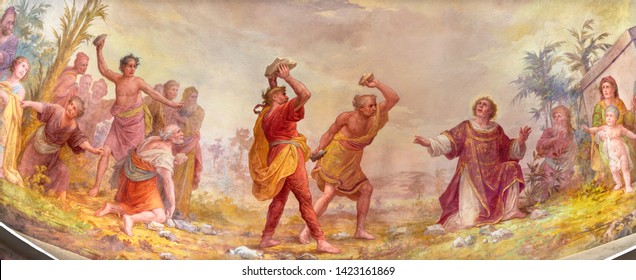
The Martyrdom of Stephen as a Refutation of "Soul Sleep"

Where was the spirit of Stephen after he was stoned to death? The Seventh-Day Adventists claim that it was asleep with his body in the grave. The Jehovah's Witnesses claim that it disintegrated, to be recreated at the final judgment. Those two doctrines are variants of what is commonly called "soul sleep." It is in sharp contrast to the traditional Christian belief that the spirits of the godly passed immediately upon death into the heavenly presence of Jesus (see II Corinthians 5:8). 

The story of Stephen is found in Acts, chapter 7. We are introduced to him in the previous chapter, where we are told that the church elected him to the diaconate, because he was "full of faith and of the Holy Spirit" (Acts 6:5). In chapter 7, he gives a long sermon about Jesus to a Jewish crowd, culminating in verses 51-53: "You stiff-necked people, uncircumcised in heart and ears, you always resist the Holy Spirit. As your fathers did, so do you. Which of the prophets did your fathers not persecute? And they killed those who announced beforehand the coming of the Righteous One, whom you have now betrayed and murdered, you who received the law as delivered by angels and did not keep it." As might be expected, his audience was not happy with his words: "Now when they heard these things they were enraged, and they ground their teeth at him... They cried out with a loud voice and stopped their ears and rushed together at him. Then they cast him out of the city and stoned him" (Acts 7:54, 57-58). 

How did Stephen respond to this persecution? "He, full of the Holy Spirit, gazed into Heaven and saw the glory of God, and Jesus standing at the right hand of God. And he said, 'Behold, I see the heavens opened, and the Son of Man standing at the right hand of God'... And, as they were stoning Stephen, he called out, 'Lord Jesus, receive my spirit.' And, falling to his knees, he cried out with a loud voice, 'Lord, do not hold this sin against them.' And when he had said this, he fell asleep [i. e., died]" (Acts 7:55, 59-60). 

This spiritual man knew that death was upon him, but his expectation was to enter thereupon into the presence of Jesus, as orthodox Christians have always said. He knows nothing of a two-thousand year (and counting) gap between his death and rising to see Jesus only then. Stephen the Deacon was surely no Adventist or Jehovah's Witness. 


Saturday, May 29, 2021

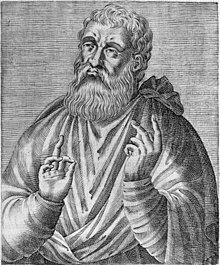
Justin Martyr on Sunday, the Christian Sabbath

I often find myself in the middle between two camps regarding the Christian and the Sabbath. On one side, I have the Seventh-Day Adventists, who believe that there is virtually no discontinuity between the Jewish Sabbath and the Christian Sabbath, including the necessity of maintaining the seventh-day as the Sabbath. In contrast, the opposite side is those who hold that there is such a radical discontinuity that there is no Sabbath for the Christian. 

My personal view is that of classical Protestantism, a rejection of both opposing sides, such as is found in the Westminster Confession of Faith XXI:7: "As it is of the law of nature, that, in general, a due proportion of time be set apart for the worship of God; so, in his Word, by a positive, moral, and perpetual commandment, binding all men in all ages, He hath particularly appointed one day in seven for a Sabbath, to be kept holy unto Him:

Justin Martyr
which, from the beginning of the world to the resurrection of Christ, was the last day of the week; and, from the resurrection of Christ, was changed into the first day of the week, which in Scripture is called the Lord’s Day, and is to be continued to the end of the world as the Christian Sabbath."

It is that last clause, regarding the change to the first day of the week that I wish to address. It is exactly the point of conflict between orthodox Protestants and the Seventh-Day Adventists regarding the Sabbath. Adventists place the blame at the feet of Constantine, the Roman emperor who legalized the Christian faith in the Empire. 

However, we have the testimony of Justin Martyr (100-165 AD) to the contrary: "And on the day called Sunday, all who live in cities or in the country gather together to one place, and the memoirs of the apostles or the writings of the prophets are read, as long as time permits; then, when the reader has ceased, the president verbally instructs, and exhorts to the imitation of these good things" (1 Apol 67.3). Church History simply does not support Adventist claims on the subject.

Wednesday, March 31, 2021

The Righteousness of the Believer Not a Righteousness by Works

 "Christ, and Christ alone, is the source of righteousness, that is, the righteousness that we need and becomes ours by God's act of justification. God has worked out a righteousness in Christ for penitent, believing sinners, and this righteousness is now in that exalted Christ at the right hand of God in Heaven. To grant us and bestow on us this righteousness of God (by imputation), God is pleased to use faith. Faith is the bond of union with Christ through which the sinner receives righteousness." 

- Rev. David Engelsma, "Gospel Truth of Justification," pp. 141-2 

In this paragraph, Engelsma paraphrases what Paul tells us about the failure of the Jews: "Israel, who pursued a law that would lead to righteousness, did not succeed in reaching that law. Why? Because they did not pursue it by faith, but as if it were based on works" (Romans 9:31-32). Where was true righteousness to be found? "Now the righteousness of God has been manifested apart from the law, although the Law and the Prophets bear witness to it- the righteousness of God through faith in Jesus Christ for all who believe" (Romans 3:21-22). 

Jesus addressed this problem with the Pharisees: "Woe to you, scribes and Pharisees, hypocrites! For you are like whitewashed tombs, which outwardly appear beautiful but within are full of dead people's bones and all uncleanness. So you, also,m outwardly appear righteous to others, but, within, you are full of hypocrisy and lawlessness" (Matthew 23:27-28). 

For the unbelieving Jews, righteousness was a matter of checking off a list of do's and don't's. This is the way of pseudo-Christian cults even to this day: Catholics, Mormons, Jehovah's Witnesses, Seventh-Day Adventists. But it is not the way of Biblical Christianity, which is a righteousness by faith alone, the perfect righteousness of Christ, applied only by the gift of faith. "For our sake, He [the Father] made Him [Jesus, the Son] to be sin who knew no sin, so that, in Him, we might become the righteousness of God" (II Corinthians 5:21).


Saturday, December 26, 2020

Jesus Contra "Soul Sleep": Absent from the Body, Present with the Lord

As we know, Jesus was a frequent target of the Pharisees, as they asked Him questions that they expected to baffle Him or to expose Him to punishment by the Romans. Their opponents, the Sadducees attempted to trip up Jesus, too, but only one time. In Mark 12, they asked Him whose wife a woman would be in the resurrection, after she had been married and widowed by seven brothers. This was actually a double trap, because the Sadducees didn't believe in the resurrection.

In His response, Jesus answered both challenges, the one spoken, while the other was a trap waiting silently. "Is this not the reason you are wrong, because you know neither the Scriptures nor the power of God? For when they rise from the dead, they neither marry nor are given in marriage, but are like angels in heaven. And as for the dead being raised, have you not read in the book of Moses, in the passage about the bush, how God spoke to him, saying, ‘I am the God of Abraham, and the God of Isaac, and the God of Jacob’? He is not God of the dead, but of the living. You are quite wrong" (Mark 12:24-27). He rebukes their failure to believe the Scriptures, which tell us of the resurrection of the dead at the end of history (such as Job 19:26 and Daniel 12:2). Only then does He answer their surface question, denying that resurrected men will continue our social functions: "When they rise from the dead, they neither marry nor are given in marriage, but are like angels in heaven" (Mark 12:25). 

But He also rebukes the Sadducees for supposing that God  is related to men only in this physical life and no more: "Have you not read in the book of Moses, in the passage about the bush, how God spoke to him, saying, I am the God of Abraham, and the God of Isaac, and the God of Jacob? He is not God of the dead, but of the living. You are quite wrong" (Mark 12:26-27).

I bring up this story because it addresses a modern heresy, that of "soul sleep." That doctrine, with some differences, is especially associated with the Jehovah's Witnesses and Seventh-Day Adventists. They deny that the dead believers are conscious, and spiritually in Heaven with Jesus. This is the same doctrine for which Jesus rebukes the Sadducees.

The point of Jesus is the dead saints are alive now, enjoying fellowship with God now. They are not nonsexistent as the Sadducees believed, or nonexistent now to be recreated later as the Jehovah's Witnesses claim, or unconscious in the grave with their bodies as the Seventh-Day Adventists claim.

Instead, we can joyfully claim, as Paul did, "Away from the body and present with the Lord" (II Corinthians 5:8).

Saturday, October 17, 2020

Jesus Contra "Soul Sleep"

"Let not your hearts be troubled. Believe in God; believe also in Me. In My Father’s house are many rooms. If it were not so, would I have told you that I go to prepare a place for you? And if I go and prepare a place for you, I will come again and will take you to Myself, that where I am you may be also.

- John 14:1-3 

Jehovah's Witnesses and Seventh-Day Adventists share a doctrine called "soul sleep." For SDA's, that doctrine says that the spirits of the dead remain, unconscious, with their bodies until the resurrection. For Jehovah's Witnesses, the doctrine is that the spirit of the dead ceases to exist, and is then recreated at the resurrection. So, while there are significant differences between the two, they both deny that there is an intermediate state for the spirits of the dead, whether for the godly in Heaven or for the wicked in Hell. That is a denial of the traditional doctrine of Christians, and I address them together here. 

Look at what Jesus says in the quote above. He was to go away to prepare a place for us to be with Him. Do Witnesses or SDA's claim that Jesus is currently unconscious in a grave? I hope they don't say anything so awful. Rather, we know that He rose into Heaven after His resurrection (Acts 1:9-11). Therefore, logic only allows us to take His words in Matthew to mean that He has been preparing a place with Him in Heaven

Even without considering any other scriptures, these words of Jesus preclude any interpretation comparable to "soul sleep." 

Saturday, August 29, 2020

The Eternal Reality of Hell Contra Annihilationism

 I have noticed a curious trend among professing evangelicals to adopt the doctrine of annihilationism. That doctrine holds that the wicked who are sent to Hell are burned into nothingness. That is, contrary to the traditional belief, there is no such thing as the eternal, conscious consignment of the wicked to a state of punishment. They are annihilated, hence the name. 

Historically, this doctrine has been associated with the sects, primarily the Jehovah's Witnesses and the Seventh-Day Adventists. But in our recent times, it has become mainstream. Even the otherwise orthodox teacher, the late John Stott, adopted it. The spread is because of a growing embarrassment among many over the supposed harshness of the doctrine of an eternal, conscious punishment in Hell. I have been told that annihilationism serves to remove one stumblingblock that keeps unbelievers from accepting the Gospel. 

My response is this: Removing every distinctive doctrine of Christianity would make it more palatable to unbelievers. But, what then do you have left? You have unbelief. You would certainly have no Christianity, and no Jesus. Not in any meaningful sense. The unbeliever hasn't moved to a position of faith. Rather, faith has become unbelief. I cannot accept that as a means of evangelism. 

Furthermore, how does truth change in order to make it palatable to those who deny it? If someone believes that two plus two equals 749, do we stop saying that it really equals four in order to make math palatable to him? I would hope not! 

The proper question is not what the unbeliever thinks, but rather what does God say? 

In answer to that, we have God's word on the subject in Revelation 20:10: "[Then] the devil who had deceived them was thrown into the lake of fire and sulfur where the beast and the false prophet were, and they will be tormented day and night forever and ever." There is no equivocation here! The torment of the wicked is eternal. They never escape. God's justice never finds satisfaction in mere ashes. 

The problem with the annihilationist assumptions about unbelievers is the acceptance that the stated reason for unbelief is the true reason. The Bible tells us that unbelief is a cover, not an issue in itself. Every person knows that there is a God, and that we are answerable to Him. The issue is that, apart from the intervention of the Holy Spirit, every person hates that knowledge, because he loves his sin. Since those two things are incompatible, he must either give up his sin or give up his knowledge of God. His choice? He chooses to suppress his knowledge of God (Romans 1:18-19). Appeasing him by doing away with the doctrine of eternal Hell does nothing to address that deliberate choice. It is like taking an antibiotic in an effort to cure a virus. 


Wednesday, May 13, 2020

Annihilationism, Eternity, and the Consequences of Truth

In our day, there is a growing movement to deny that the Bible teaches an eternal judgment in Hell. Rather, these people say, the spirit of the wicked is destroyed. This doctrine, annihilationism, was formerly limited to the cults, namely the Seventh-Day Adventists and the Jehovah's Witnesses. However, it is now becoming increasingly popular among professing evangelicals, at least in America.

In contrast, Scripture describes the suffering of the wicked in this way: "The fifth angel blew his trumpet, and I saw a star fallen from heaven to earth, and he was given the key to the shaft of the bottomless pit. He opened the shaft of the bottomless pit, and from the shaft rose smoke like the smoke of a great furnace, and the sun and the air were darkened with the smoke from the shaft. Then from the smoke came locusts on the earth, and they were given power like the power of scorpions of the earth. They were told not to harm the grass of the earth or any green plant or any tree, but only those people who do not have the seal of God on their foreheads. They were allowed to torment them for five months, but not to kill them, and their torment was like the torment of a scorpion when it stings someone. And in those days people will seek death and will not find it. They will long to die, but death will flee from them" (Revelation 9:1-6).

What John reveals here is that the wicked, in the face of their just suffering for that wickedness, will seek escape from their suffering through death, but death will be denied to them.

Annihilationists will often portray themselves as morally superior to those of us who hold the traditional view of Hell. In addition, they claim that unbelievers are more open to the "Gospel" if they remove the stumblingblock of eternal Hell. It is supposedly contrary to modern sentiments.

I have several problems with that perspective. For one thing, one doesn't tailor truth to suit the preferences of an enemy of that truth. Reformulating Christianity to suit unbelievers - the same problem I have with many megachurches - is to move it from suiting the preferences of God to suiting His enemies. How can that be considered  a good thing? Furthermore, by failing to give the unbeliever the biblical judgment on his unbelief, you deny that unbeliever the necessary information for weighing his situation. Many unbelievers are perfectly content to live as heathens now, just to puff into smoke at death. And that is exactly the pseudo-Gospel that the annihilationist gives him. If he never learns better, then that unbeliever will spend eternity in Hell, but his blood will be on the hands of the annihilationist (Ezekiel 3:18).


Saturday, September 28, 2019

Peter and Paul Against Annihilationism: What of Judgment?


One thing that I have noticed when dealing with people from pseudo-Christian sects is that, when confronted with Scripture that flatly refute some peculiar doctrine of theirs, they will immediately turn to attacking me, instead of addressing the Scripture. "Do you mean you think...?" Well, what I think isn't the issue, so how about addressing what the Scripture says?

A good example is "soul sleep", the belief of Seventh-Day Adventists that the spirit of the dead remains unconscious with his physical remains, to be reawakened for the judgment. The Jehovah's Witnesses hold a related doctrine, claiming that the spirit is actually annihilated, to be recreated at the judgment. The two versions are remnants of their roots in the Millerite movement of the mid-Nineteenth Century.

The problem is that Scriptures say the opposite.

Paul addresses the destiny of the spirits of the righteous in two places. The first in II Corinthians 5:8: "We would rather be away from the body and at home with the Lord." The other is in Philippians 1:21-23: "For to me to live is Christ, and to die is gain. If I am to live in the flesh, that means fruitful labor for me. Yet which I shall choose I cannot tell. I am hard pressed between the two. My desire is to depart and be with Christ, for that is far better." Notice what he says, that absent from the body is present with the Lord, not waiting for Him. And again, to depart is to go to Jesus, not to sit in a grave for two-thousand years (so far) waiting for Him. Neither passage leaves any room for a gap between the death of the believer and his entrance into the heavenly presence of Jesus.

And what of the unbeliever? "The Lord knows how to rescue the godly from trials, and to keep the unrighteous under punishment until the day of judgment" (II Peter 2:9). Thus, unbelievers, too, proceed immediately to their destination, i. e., Hell. There is no gap of time in which they sleep or are annihilated.

When I confront annihilationists with these verses, they usually ask, "Well, then, what is the judgment at the end of history for?" Well, Scripture answers that question, too.

"In this you rejoice, though now for a little while, if necessary, you have been grieved by various trials, so that the tested genuineness of your faith—more precious than gold that perishes though it is tested by fire—may be found to result in praise and glory and honor at the revelation of Jesus Christ" (I Peter 1:6-7). Peter describes his fellow Christians as having two seemingly-contradictory experiences in this world: they were rejoicing in their salvation even as they experienced trials in life (see, for example, the actions of Paul, Acts 8:3, 9:1). To what end? That their tested faith would be displayed for the glory of our Savior Jesus Christ. And what of the unbeliever? "Whoever does not believe is condemned already, because he has not believed in the name of the only Son of God" (John 3:18). For him, too, judgment isn't waiting until the end of history. It occurs at death (Hebrews 9:27). Again, his appearance at the great judgment will be confirmatory of the judgment which has already occurred.

Saturday, August 17, 2019

Further Biblical Testimony Against "Soul Sleep"

I have covered the issue of soul sleep before. One version is held by Seventh-Day Adventists and teaches exactly that, that the spirit of the dead is asleep in the grave, waiting to be revived at the Second Coming. The Jehovah's Witnesses hold a different version, according to which the spirit of the dead disintegrates, and is recreated at the Second Coming.  Either way, the doctrine is unbiblical.

First, consider Acts 7:59: "And as they were stoning Stephen, he called out, 'Lord Jesus, receive my spirit.'" The context is the account of the martyrdom of Stephen. Just as he is about to die, he proclaims the words recorded here. The verb "receive" is a present tense imperative. Present tense, not future tense. He expects to pass in the coming seconds from his current circumstances into the waiting arms of Jesus. He expected no intervening period of two-thousand years - so far - before that meeting. Unlike the members of the Watchtower, he expected that blessing now

Next, look at Hebrews 12:23: "[You have come] to the assembly of the firstborn who are enrolled in heaven, and to God, the judge of all, and to the spirits of the righteous made perfect." Here the author describes the Heavenly Jerusalem, the glorified church, sometimes called the Church Triumphant, which consists of "spirits made perfect." Notice again the present tense. These spirits are the saints already in Heaven, in their glorified state. They are not spirits in the author's far future, as the Watchtower and SDA's claim. 

On top of the proofs I have given in the past (use the "soul sleep" tag at the bottom), these verses easily demonstrate that the soul sleep doctrine, whether of the Seventh-Day Adventist version or of the Jehovah's Witness version, is a manmade doctrine, invented in spite of the biblical testimony, not derived from it. 

Wednesday, August 14, 2019

The Dual Judgment as a Refutation of Annihilationism

In interactions with annihilationists, I always insist that the Christian at death is immediately ushered into the presence of Jesus in Heaven (see II Corinthians 5:8 and Philippians 1:21-23), and the wicked are immediately delivered to Hell (II Peter 2:9). Their usual response is, "Then what is the Judgment for?" And I can see why they ask.

In John 3:18-21, we have these words from Jesus: "Whoever believes in Him is not condemned, but whoever does not believe is condemned already, because he has not believed in the name of the only Son of God. And this is the judgment: the light has come into the world, and people loved the darkness rather than the light because their works were evil. For everyone who does wicked things hates the light and does not come to the light, lest his works should be exposed. But
Apostle John
whoever does what is true comes to the light, so that it may be clearly seen that his works have been carried out in God
." Notice His words: "Whoever does not believe is condemned already." In other words, the judgment for sin occurs in life, unless atoned by the blood of Christ through faith. Judgment is not waiting for the end of history when Jesus returns. 


Does that mean that there won't be a great Judgment at the end of history? Not at all. As Paul tells us in II Corinthians 5:10: "For we must all appear before the judgment seat of Christ, so that each one may receive what is due for what he has done in the body, whether good or evil." See also II Timothy 4:1 and Revelation 20:12.

Is there a contradiction here? Of course not. Rather, the two passages are talking about two separate things. We are truly judged at death: "It is appointed for man to die once, and after that comes judgment" (Hebrews 9:27). Then what happens at the final judgment is told to us in John 3:21, quoted above: "Whoever practices the truth comes into the Light, so that it may be seen clearly that what he has done has been accomplished in God." The final Judgment is public, unlike the judgment that occurs at each person's death. In it, the works of each person are revealed, so that the justice of God is revealed to all, whether men, angels, or demons. The wicked are revealed in their wickedness, so that the glory of God's justice is displayed. At the same time, the wicked acts of the godly are also revealed, so that the glory of His grace is also displayed. 

Wednesday, July 17, 2019

The Continuing Obligation of the Sabbath Defended: Colossians 2:16

"Therefore let no one pass judgment on you in questions of food and drink, or with regard to a festival or a new moon or a Sabbath" (Colossians 2:16)

I often get caught between two opposite in discussions regarding the continuing obligation of the Sabbath. On one side are the Seventh-Day Adventists, who claim that the Jewish Sabbath has continued in the Christian dispensation. I oppose their claims, and have addressed them here. On the other side are those who claim that there is no Sabbath of any kind for the Christian. Those folks are generally of two kinds. the first is those who claim that "Jesus is our Sabbath," so that there is no longer a Sabbath day. I have addressed that here. Others are of a dispensationalist type, who claim that the Sabbath was a Mosaic ceremony, and, therefore, abrogated by its fulfillment in the cross work of Christ. I have addressed that here.

Now, there is a third type that I want to address. That is those who hold that Sabbath-observance is now voluntary, no longer a commandment. These folks like to cite the verse quoted above, Colossians 2:16. 

Such folks claim that the Sabbath was a ceremony of the Jews, and, therefore, no more binding on Christians than are circumcision or the Passover. If a Christian profits from observing them, then he is free to do so. However, no one is required to observe that Sabbath any more than he is the other Jewish ceremonies. 

There are three main objections to that claim. First, the Sabbath was a creation ordinance, initially announced shortly after the creation of the first humans: "God blessed the seventh day and made it holy, because on it God rested from all His work that He had done in creation" (Genesis 2:3). While it is certainly true that the Law recognized the Sabbath, the claim is false that the Sabbath was created under the Law. That's why the writer of Hebrews could tell us, "There remains a Sabbath rest for the people of God" (Hebrews 4:9). Especially considering the effort of that author to show the superiority of Christ over the Mosaic ceremonies, his insistence that the Sabbath remains is especially telling!

Second, look at the rest of the verse in Colossians. "Questions of food and drink." Where do we find rules about food? In the Mosaic ceremonial law. "With regard to a festival or new moon." Where do we find the creation of ceremonies and the celebration of the new moon? Again, in the Mosaic ceremonies. Therefore, when Paul here mentions Sabbaths, does the grammar not compel us logically to infer that he means Jewish Sabbaths? That would be seventh-day Sabbaths, not the first-day Christian Sabbath. Also, if we fail to make that distinction, then we put Paul in contradiction with Hebrews. 

And, finally, I have one question of logic, rather than Scripture. Considering that the Sabbath was a commandment, not just some Pharisaic tradition, can we really imagine that Paul would so blithely dismiss one of the Ten Commandments? I cannot believe that he would.

Wednesday, May 29, 2019

The Christian Sabbath Vindicated from Adventism


As a history book, comparable to Samuel and Kings in the Old Testament, the Acts of the Apostles is not a good place to base ones doctrine. That isn't an issue of error; Acts is as inerrant as is the rest of Scripture. Rather, that isn't its purpose. Acts is Luke's record of what the Apostolic church did, not what it taught.

For example, we have the record of the worship activities of the apostolic church. We know that they gathered at the Temple for their social meetings (there were house church meetings in Jerusalem during the same period). However, a meeting is not the same thing as a worship gathering. When we are told that they gathered for worship, that activity occurred in the home gatherings, not the Temple. Notice that contrast in Acts 2:46: "Day by day, attending the temple together and breaking bread in their homes." Thus, they gathered at the Temple for community, but not for worship.

Instead, we find this record: "On the first day of the week, when we were gathered together to break bread, Paul talked with them, intending to depart on the next day, and he prolonged his speech until midnight" (Acts 20:7; see also I Corinthians 16:2). We find, not on the seventh day, as Adventists claim, but on the first day of the week, the church gathered together for communion (the breaking of bread) and for teaching. Nor can this be described as a special occasion, because Paul himself says (verse 20), "I did not shrink from declaring to you anything that was profitable, and teaching you in public and from house to house." It was exactly in these home meetings that Paul was accustomed to teach the word to his fellow Christians.

Adventists like to point to the references to Paul's attending the synagogues on the seventh day. And he certainly did so. Yet, they consistently ignore what else those references tell us. He is not recorded as speaking to Christians in any of those occasions - not even one. In each case, he proclaims the word to the Jews. That is, his attendance at the synagogues was for the sake of evangelism. And, in a mixed community, where would he find Jews? Well, at the synagogue, of course, and on the seventh day. The whole Adventist argument is built on a very weak argument from silence, and committing the fallacies of cherry picking and moving the goalposts. Yet they claim that their teaching on the Sabbath is the distinguishing mark between the true Bride of Christ and the Great Whore. Surely such an important doctrine would require more proof than questionable exegesis!

A doctrine should never be based on an historical reference, absent reinforcement from explicit teaching texts. Yet, the Adventist can provide none. After the Christians are expelled from the synagogues in Acts, we never see another reference to a Christian gathering, whether at the Temple or at a synagogue, or any activity on the seventh day of the week. Paul never mentions one. Peter never mentions one. John never mentions one. And - most telling of all - the Epistle to the Hebrews never mentions one, even though much of it is devoted to Jewish law and worship. Not once in any of them.

Wednesday, April 24, 2019

The Fellowship of the Dead Precludes "Soul Sleep"

There the wicked cease from troubling,
     and there the weary are at rest.
There the prisoners are at ease together;
     they hear not the voice of the taskmaster.
The small and the great are there,
     and the slave is free from his master.

- Job 3:17-10 

Regarding the spirits of the deceased, the Seventh-Day Adventists and Jehovah's Witnesses teach distinct, though related, doctrines. SDA's claim that the spirit is unconscious, remaining with the body until the resurrection and judgment. Witnesses, on the other hand, teach the annihilation of the spirit at death, to be recreated at the judgment. This is in contrast to the historic Christian doctrine, which is that the spirit passes to the place of its eternal repose, whether Heaven or Hell, conscious in bliss or torment, until the judgment, when the spirit is rejoined to the body in the resurrection, its eternal state confirmed, and both body and spirit return to its place. 

Both groups argue from Bible verses, often from the more-obscure portions, that address the state of the bodies of the dead, and then commit a bait-and-switch, assuming that those verses also describe the state of the spirit. That is a simple logical fallacy, and is erroneous. 

The verses above are an example. As verse 17 says, the weary are at rest in death, and verse 18 adds that they are at ease. That immediately precludes the Witness doctrine; non-existence is not resting or being at ease. However, what of the SDA's "soul sleep"? 

Notice that the spirits of the dead are at ease together. Being unconscious in their graves would not be being together. Notice also what the weary dead enjoy: freedom from their taskmasters and slavemasters. How does a person enjoy freedom when he is unconscious? The Adventist intermediate state is not that described here (or in the rest of Scripture).

Saturday, March 30, 2019

A Scriptural Refutation of "Soul Sleep"

The Jehovah's Witnesses and Seventh-Day Adventists deny that the Christian goes to Heaven upon death. The former claim that the spirit is destroyed at death, to be recreated at the Judgment. The latter claim that the spirit remains, unconscious, with the body, often referred to as "soul sleep." Though their doctrines are different, they both derive from the earlier Millerite movement.

While both groups claim to be Bible-cased, this doctrine is certainly not Bible-based. And it is very easy to demonstrate that assertion.

"When He opened the fifth seal, I saw under the altar the souls of those who had been slain for the word of God and for the witness they had borne. They cried out with a loud voice, 'O Sovereign Lord, holy and true, how long before You will judge and avenge our blood on those who dwell on the earth?' Then they were each given a white robe and told to rest a little longer, until the number of their fellow servants and their brothers should be complete, who were to be killed as they themselves had been" (Revelation 6:9-11).

We see several things about these martyrs which are inconsistent with the JW and SDA claims. First, we can see that they are dead, because it explicitly states that they were slain. Yet, they are crying and speaking, so they are neither annihilated nor unconscious. Then they are given heavenly garments and commanded to wait. Not to sleep. That is, they are to be conscious of the accumulation around them of the spirits of Christians down through the ages, until the end of mortal existence.


Wednesday, March 13, 2019

Apostle Paul Refutes the Antinomian: Gentiles and the Law

"Let Israel be glad in his Maker;
     let the children of Zion rejoice in their King!
Let them praise His name with dancing,
     making melody to Him with tambourine and lyre!
For the Lord takes pleasure in His people; 

     He adorns the humble with salvation.
Let the godly exult in glory;
     let them sing for joy on their beds.
Let the high praises of God be in their throats
     and two-edged swords in their hands,
to execute vengeance on the nations
     and punishments on the peoples,
to bind their kings with chains
     and their nobles with fetters of iron,
to execute on them the judgment written!
     This is honor for all His godly ones.
     

      Praise the Lord!"
- Psalm 149:2-9

In debates between Seventh-Day Adventists and evangelicals, I often see the evangelicals argue that the judaizing of the Adventists is wrong because, they claim, the Law was only for Israel. I don't know whether that doctrine originates in dispensationalism, but I do know that it is just as wrong as the Adventists' holding on to Old Testament food laws.

These antinomians appeal to comments in Paul, such as Romans 2:14: "Gentiles, who do not have the Law." Yet, they pass over what he says just before that: "For all who have sinned without the Law will also perish without the Law" (verse 12). So, the Gentiles, who are not under the Law, yet sin. What is the definition of sin? "Sin is lawlessness" (I John 3:4). So, what constitutes sin is defined by the Law. Therefore, the question must be, If the Gentiles are not subject to the Law, as the antinomian asserts, then how can he be said to sin? The antinomian cannot answer.

However, the same passage gives us the solution: "They [i. e., the Gentiles] show that the work of the Law is written in their hearts" (Romans 2:15). Therefore, the Gentiles certainly do have, and have always had, the Law. They have simply not had the written Law. The standards of right and wrong applied to the Gentile just as they applied to the Jew. However, the Jew had two advantages: first, he had the law written, and thus was not dependent on his fallen conscience to direct his life; and second, he had the ceremonial Law, which pointed him to the coming Messiah who would redeem him from his sins and their consequences. Not having the written Law, the Gentiles were without the hope of forgiveness and sanctification. 

To show the Old Testament foundation for Paul, I direct your attention to the Psalm above. It starts with the pleasure that God has in His redeemed people. However, it also tells us of the judgment on His enemies. How can the antinomian see any justice in that vengeance if God had provided no means for the Gentiles to know moral truth?

Saturday, November 10, 2018

The Daughter of Jairus versus Soul Sleep

In Luke 8:40-42, 49-56, the Evangelist tells us the story of Jesus's healing of the daughter of Jairus, the leader of a synagogue. We aren't told what the girl's malady was. However, Jesus is interrupted on His way to her when He was distracted by the woman with the issue of blood (verses 43-48), and the girl dies. To say that He was interrupted is not to say that He was caught by surprise, of course. These events happened according to His providence.

In the case of the girl, Luke the Physician makes an odd observation: "Her spirit returned and she arose immediately" (verse 55). I don't recall a similar comment from any of His other healings or resuscitations.

I want to focus on that one phrase, "her spirit returned to her."

As is commonly known, Jehovah's Witnesses and Seventh-Day Adventists assert that the spirit has no existence apart from the body, commonly called "soul sleep." While the details differ, they both claim that whatever spirit there is remains in the grave with the body.

But then we have this verse. "Her spirit returned."

If the spirit of the dead is unconscious, remaining with the corpse, as SDA's believe, or obliterated, to be re-created at the Judgment, as Jehovah's Witnesses claim, then from where did her spirit return? At most, it should have remained unconscious in her body.

Of course, the orthodox view has no problem explaining this, since we understand that the existence of human spirit, while joined with the body, is distinct from it. When a believer dies, he or she is immediately ushered into the presence of Jesus in Heaven (II Corinthians 5:8, Philippians 1:21-23). The spirit of the unbeliever is immediately dismissed to Hell (John 3:18, II Peter 2:9). That is because each person is judged by his condition at death (Hebrews 9:27). Witnesses and SDA's (together with many misinformed Christians) wrongly believe that the judgment awaits the great Judgment at the return of Christ. Really? Are we supposed to believe that Jesus doesn't know our spiritual condition until then? No, but rather that judgment is a public display of the righteousness of God's justice.

Whether the girl was regenerate or not, we are not told. Whether she returned from Heaven or Hell, we cannot know.  Why she should want to return if she were in Heaven, we do not know. Those questions are often asked, but any possible answer would only be speculation.

Think of Pilate's judgment of Jesus. Pilate examined Him privately, and then went out to the crowd to announce his judgment. He didn't make that judgment in front of the crowd, but announced it "at the feast" (Matthew 27:15, Mark 15:6, Luke 23:13). This is the same division between the personal judgment of each person at death and the general judgment at the end of history

Saturday, October 13, 2018

The Words of Jesus Contra "Soul Sleep"

The Seventh-Day Adventists and Jehovah's Witnesses have a similar doctrine regarding the intermediate state of the human spirit. According to that doctrine, the soul sleeps (SDA's) or is destroyed (JW's) after the death of the body, only to be awakened or reconstructed at the judgment. Both deny that the spirit of the Christian goes to heaven. However, whichever view one considers, it isn't biblical.

The proof is actually very easy to find. In Mark 13:27, Jesus says of Himself, "Then He will send out the angels and gather His elect from the four winds, from the ends of the earth to the ends of heaven." The essential element here is the last phrase, "the ends of heaven." That is, Jesus Himself, surely a trustworthy witness regarding the matter, tells us that some of the elect are already in heaven. The others are on the earth, i. e., still alive.

Saturday, July 7, 2018

God's Justice and the Eternality of Hell

Seventh-Day Adventists and Jehovah's Witnesses (mainly, but others, too) hold to the doctrine of annihilationism, the supposed destruction of the wicked in the great judgment. They reject the traditional teaching of an everlasting judgment in Hell. In fact, they object to the nature of God, as suggested by the doctrine of eternal punishment.

The resurrection is described in a couple of places in Scripture. However, Daniel 12:2 is clearest in naming resurrection to what: "Many of those who sleep in the dust of the earth shall awake, some to everlasting life, and some to shame and everlasting contempt."

I specifically use this verse, because others get twisted, such as Revelation 14:11, "The smoke of their torment goes up forever and ever." Annihilationists claim that the smoke might be eternal, but that doesn't imply that the torment is, too. They never explain how smoke can continue to rise from fuel which has been exhausted.

However, Daniel mentions neither flames nor fire, but explicitly states that it is the contempt for the wicked that is everlasting. Someone will surely object that the object of the contempt doesn't have to continue eternally in order for the contempt for it to remain. But is that really a rational objection? Can we expect the emotional reaction to something to outlast that thing into eternity? No, even the strongest of reactions must fade without further stimulation by their object.

Annihilationists make hysterical protests against the supposed injustice of God for punishing eternally sins which were only temporal. That is the essence of their error, mistaking sinful acts, which do, indeed, occur in time, not eternity, for sin itself. The wicked aren't judged primarily for the sinful acts that they committed, but rather for the wicked and rebellious hearts from which those acts arose (Matthew 15:18-20). While annihilationists are complaining about the morality of God, they are glossing over the sinfulness of the wicked. When the wicked die, and pass into eternity, they do not cease to be wicked. Rather, they continue to hate God and curse Him in Hell, earning for themselves continuing punishment.

God is perfectly just and moral. It is His annihilationist critics who are not.


Wednesday, July 4, 2018

Biblical Assurance Allows no Conditional Immortality

"You have come to Mount Zion and to the city of the living God, the heavenly Jerusalem, and to innumerable angels in festal gathering, and to the assembly of the firstborn who are enrolled in heaven, and to God, the judge of all, and to the spirits of the righteous made perfect, and to Jesus, the mediator of a new covenant, and to the sprinkled blood that speaks a better word than the blood of Abel" (Hebrews 12:22-24). 


Both Jehovah's Witnesses and Seventh-Day Adventists teach a doctrine called "conditional immortality," in which they claim that the human spirit becomes immortal only after the resurrection, and then only for believers. Unbelievers are then annihilated. 

The passage above doesn't address that second doctrine. However, it clearly refutes any claim that there is no spiritual immortality for the believer until sometime in the future. What is his status now? Not conditional! It is very definite! He has the status of one who is positionally in heaven now, with the glorified saints now. How are the glorified believers assembled in Heaven if they are not now enjoying spiritual immortality, already made perfect? And how are believers in this life come to that status, if our spiritual status is waiting for a future event to be established? 

Both groups, the Witnesses and the Adventists, claim that our spiritual felicity has no guarantee in the present, because we can lose our salvation. Yet, the passage above allows no such uncertainty. The believer has rational grounds for his assurance, because his citizenship is already in Heaven, with the saints that have preceded him to glory. I consider that a wonderful truth. And my hope is that Witnesses and Adventists will come to the truth, and escape the hamster's wheel of uncertainty on which their religions leave them.