Showing posts with label dispensationalism. Show all posts

Monday, April 20, 2026

The Restoration of the Jews according to Jeremiah 33, with Zechariah and Hebrews

"Behold, the days are coming, declares the Lord, when I will fulfill the promise I made to the house of Israel and the house of Judah. In those days and at that time I will cause a righteous branch to spring up for David, and He shall execute justice and righteousness in the land. In those days Judah will be saved and Jerusalem will dwell securely. And this is the name by which it will be called: 'The Lord is our righteousness.' for thus says the Lord: David shall never lack a man to sit on the throne of the house of Israel, and the Levitical priests shall never lack a man in My presence to offer burnt offerings, to burn grain offerings, and to make sacrifices forever." (Jeremiah 33:14-18) 

To my mind, this is an exhilarating passage, because it unites so many messianic themes. The Branch is an epithet used for the coming Messiah several times in Jeremiah, and points to the coming of Jesus, about 600 years after the historical events of the book. The prophet uses several confirmatory references that we know from the New Testament. First, the Branch will cause His people to bear the name "The Lord is our righteousness." This should cause any Christian to think immediately of the words of Paul in II Corinthians 5:21: "For our sake, He [the Father] made Him [Jesus] to be sin who knew no sin, so that, in Him, we might become the righteousness of God." Contrary to the claims of some dispensationalists, this proves that the future conversion of the Jews will occur on the same basis as the conversion of the Gentiles, by faith alone in Christ alone, so that His righteousness is imputed to the elect believer. There is no separate class of saved people among the Jews (Acts 15:11). They simply follow a different historical track to arrive at that same place. 

Furthermore, Jeremiah tells us that the Branch will fulfill a dual role, to fill the throne of David forever. "Once for all I have sworn by My holiness; I will not lie to David. His offspring shall endure forever, his throne as long as the sun before Me. Like the moon it shall be established forever, a faithful witness in the skies" (Psalm 89:35-37). The other is that He will sustain the work of the Levitical priests. We know that Jesus was of the tribe of Judah, not of Levi. However, the Epistle to the Hebrews addresses that question by telling us that Jesus's priesthood is not according to Levi, but according to the pattern of Melchizedek. "The one of whom these things are spoken belonged to another tribe, from which no one has ever served at the altar. For it is evident that out Lord was descended from Judah, and in connection with that tribe Moses said nothing about priests. This becomes even more evident when another priest arises in the likeness of Melchizedek, who has become a priest, not on the basis of a legal requirement concerning bodily descent, but by the power of an indestructible life. For it is witnessed of Him, 'You are a priest forever after the order of Melchizedek'" (Hebrews 7:13-17, quoting from Psalm 110:4; see also Hebrews 4:14-5:10). Together we have the Priest-King prophesied by Zechariah: "Behold the man whose name is the Branch, for he shall branch out from his place, and he shall build the temple of the Lord.It is he who shall build the temple of the Lord and shall bear royal honor, and shall sit and rule on his throne. An there shall be a priest on his throne, and the counsel of peace shall be between them both" (Zechariah 6:1-13, using Josiah the high priest as a type). 

There can be no doubt that that the restoration of Israel will come, not as the political event expected by dispensationalism, but as a Gospel event, founded upon Jesus Christ alone as savior. It won't be at the same time as Gentile believers, but it will be by exactly the same faith, atonement, and imputation of His righteousness alone.

Wednesday, March 4, 2026

The Universal Kingship of Yahweh/Christ

"All the ends of the earth shall remember and turn to the Lord, and all the families of the nations shall worship before You. For kingship belongs to the Lord, and He rules over the nations." -Psalm 22:27-28 

In the verses cited above, both uses of "Lord" in English represent Yahweh in the Hebrew, the name of the preincarnate Christ, the second Person of the Trinity. And "nations" is also translated as "Gentiles." Therefore, this is the claim of Christ to a universal kingship, not just over Israel, as is claimed by the Jews and dispensationalists, but over all nations, both Jews and Gentiles. A kingship which is already real, and which will become progressively more visibly as we approach the time of His return, as we pray in the Lord's prayer; "Thy kingdom come; Thy will be done on earth as it is in heaven (Matthew 6:10)." This is explicitly and eloquently affirmed in the Westminster Larger Catechism: "In the second petition, acknowledging ourselves and all mankind to be by nature under the dominion of sin and Satan, we pray that the kingdom of sin and Satan may be destroyed, the Gospel propagated throughout the world, the Jews called, the Gentiles brought in, [and] that He would be pleased so to exercise the kingdom of His power to al the world, as may conduce to those ends" (answer 191). 

In both the Scripture ext and in the catechism, the presumption is of a current kingdom which shall have future effects. Neither allows for a future kingdom as is assumed by the dispensationalist. Nor does either allow for a kingdom limited to a particular region of the earth, such as the political state of Israel, or even to the church as is held by amillennialists.


Monday, September 1, 2025

A Witness for an Optimistic Eschatology

Eschatology is a popular topic for every radio and television preacher, for reams of books, and endless debates on every internet platform. And it is a topic which rarely produces healthy or edifying conversation. Why? Because it is titillating. The popular preachers make a lot of money by making predictions, and the more wild-eyed and frightening the more money they make. 

How do these discussions end up in such a theological rut? Well, in addition to the excitement that comes from particular interpretations, there is just bad exegesis in most cases. Biblical passages are wrenched out of context to apply to the time of Jesus's return as if there were no other events in the two-thousand years (so far) in between. And just on the basis of assumptions, not because of any reasoning or hermeneutical principles. If you get into a conversation about Matthew 24 and mention that Jesus applies it to the generation to which He was speaking (verse 34), you will be shouted down. Or if you point to His words, "the Gospel will be proclaimed throughout the whole world" (verse 14) and compare them to the words of Paul, "the hope of the Gospel that you heard, which has been proclaimed in all creation under Heaven" (Colossians 1:23), you will be decried as feeble-minded. 

Then other passages are simply not allowed into the discussion. One of which is my subject here. 

In Hebrews 1:13, that writer quotes from prehistory the words of the Father to the Son from the intra-Trinitarian covenant, "Sit at My right hand until I make your enemies a footstool for your feet." The quote is from Psalm 110:1, and is repeated in Hebrews 10:13. It is also found quoted in several other places in the New Testament. All refer to the awaited glory of Jesus before His return. 

What are some of those enemies that the Father shall subdue for the Glory of the Son? Paul gives us some prominent examples. 

Paul quotes the same verse indirectly, Psalm 110:1, in I Corinthians 15:25, and then gives the last enemy in verse 26: "He must reign until He has put all enemies under His feet. The last enemy to be destroyed is death." So death will be defeated as the last enemy before the return of Jesus. That completely eliminates the entire timeline of premillennialism, especially the dispensationalist variety. 

But Paul gives us another case which I find even sweeter to my soul. 

"Lest you be wise in your own sight, I do not want you to be unaware of this mystery, brothers: a partial hardening has come upon Israel, until the fullness of the Gentiles has come in. And in this way, all Israel will be saved, as it is written, 'The Deliverer will come from Zion, and He will banish ungodliness from Jacob; and this will be My covenant with them, when I take away their sins.' As regards the Gospel, they are enemies for your sake. But as regards elections, they are beloved for the sake of their forefathers" (Romans 11:25-28). At some point near the end of history, Paul tells us, the fullness, the majority, of Gentiles will have been converted, and then the blindness which was placed on the Jews will be lifted, so that they will be converted en masse to the Messiah whom they had rejected. 

If Jesus will return to an overwhelmingly converted world, how does that allow for the violence and persecution and unbelief described by the scary eschatology crowd? I see the two things as utterly incompatible, which is why I reject that scary eschatology. 


Saturday, October 12, 2024

Dispensationalism versus God's Claim of the World.

"From the rising of the sun to its setting, My name will be great among the nations, and in every place incense will be offered to My name, and a pure offering. For My name will be great among the nations" (Malachi 1:11). 

Part of what convinced me of postmillennialism is passages in Scripture like the one quoted above. God has claimed as His privilege to be worshiped, not just by Israel, and not even by a few Gentiles mixed in, such as Ruth, by rather by all the nations (see the Great Commission, Matthew 28:18-20). I think that there is great significance in the fact that this declaration occurs in the last book of the Old Testament, the last Scripture written before the coming of its fulfillment in Jesus Christ. "For I am a great King, says the Lord of hosts, and My name will be feared among the nations," He announces through the prophet (Mal. 1:14). 

There is a great failure among God's people to grasp God's plans for the conversion of the world, and to carry out our duties under that plan. Instead, we have surrendered the world to the realm of Satan, and congratulated ourselves for upholding the other-worldliness of the Kingdom of God. Yet that is the error of Gnosticism, the belief that the material world is evil, and only spiritual things belong to God. This is what dispensationalism has done to the American church. 

Prophet Malachi


Friday, June 7, 2024

The Universal Sovereignty of God

"God reigns over the nations; God sits on His holy throne. The princes of the people have gathered together; the people of the God of Abraham. For the shields of the earth belong to God; He is greatly to be exalted" (Psalm 47:8-9). 

There is a common belief among evangelicals that only the church is accountable to God. In fact, dispensationalists would go even further and claim that only Israel is accountable to God, as a nation. But those assumptions are based on human presuppositions, not on any assertion of Scripture. 

Notice the verses above, in which the Psalmist tells us that God reigns, not over Israel, but explicitly over the "nations," which can also be translated as "Gentiles." When God created Adam, He created the founder of the human race, not of the people of Israel in particular. That is the establishment of His universal rule over all of mankind, of whatever nation we may be. 

The mistake that the dispensationalists make is that they overlook the role that Israel fulfilled as the reestablishment of a people in faithful covenant with God. Adam and Eve and their immediate descendants in the line of Seth were in such a faithful covenant. Yet they died out, such that God called Abraham, a pagan, into His covenant of grace, to restore the line of faith among men. Abraham, too, was not a Jew; they were to be his descendants. 

That is why Paul could refer to the Gentiles called by God's name, because this was not a new concept, contrary to the assertions of dispensationalists, but a return to God's original purpose, as described, not just in the psalm above, but also in Amos 9:11-12: "After this, I [God] will return and will rebuild the tabernacle of David, which has fallen down; I will rebuild its ruins, and I will set it up; so that the rest of mankind may seek the Lord, even all the Gentiles who are called by My name, says the Lord who does all these things" (in the Septuagint version, as quoted in Acts 15:16-17). 

After the Fall, the focus of God's revelation narrowed step by step to just one man, Abraham. From him, that revelation began to widen again step by step to its original scope, until it once again includes all elect men, whether Jewish or Gentile. Dispensationalists err when they try to distinguish between the Jews as the people of God and the Gentiles as a mere parenthesis in His plans of redemption. 


Saturday, September 24, 2022

Is Pluralistic "Freedom of Religion" A Biblical Precept?

"These are the statutes and rules that you shall be careful to do in the land that the Lord, the God of your fathers, has given you to possess, all the days that you live on the earth. You shall surely destroy all the places where the nations whom you shall dispossess served their gods, on the high mountains and on the high hills and under every green tree. You shall tear down their altars and dash in pieces their pillars and burn their Asherim with fire. You shall chop down the carved images of their gods and destroy their name out of that place. You shall not worship the Lord your God in that way. But you shall seek the place that the Lord your God will choose out of all your tribes to put His name and make His habitations there" (Deuteronomy 12:1-5). 

We in America brag of our freedom of religion. Not only are there Christian (real or not) denominations of every description, but we also boast of our Jewish synagogues, Islamic mosques, and Hindu and Buddhist temples. And that doesn't even include the various varieties of nonreligious or irreligious Americans, even including Satanists. 

I think the contrast between those two paragraphs should be clear to anyone. Yet the pietists and dispensationalists have eliminated any evidence or discussion of what God said in Deuteronomy, as if the pluralism of modern America were the case from the days of creation. 

The pietist claims that the Christian faith is a private affair, "a relationship, not a religion." So the less visible his religion is, outside of church and home prayer, the more spiritual he feels. 

On the other hand, the dispensationalist claims that God's commandment here was for Israel, and ended with the coming of Jesus. After all, does it not refer to their "land"? 

And it does. Do we have no references to the land given to Jesus, and His body, the Church? "Ask of Me, and I will make the nations Your heritage, and the ends of the earth Your possession" (Psalm 2:8). That is the promise of the Father to the Son, in the intra-Trinitarian covenant, made before the world was created. And did Jesus ever claim that promise? "All authority in Heaven and on earth has been given to Me. Go, therefore, and make disciples of all nations" (Matthew 28:18-19). The commandment was limited to the land, but the land was expanded to include the whole earth! 

As a Presbyterian, I am aware of the impact that this conflict has had on my own tradition. When the Westminster Standards were originally written, they included the presumption of establishmentarianism. However, after the US Constitution was adopted, American Presbyterians changed our standards to reflect the new political enthusiasm for religious freedom. I am disappointed that they chose a political justification over the requirements of Scripture. 

Neither political considerations nor pietistic latitudinarianism can override what God has commanded in His word. And that is that His truth is the only truth, and must displace all competing, but false, claims of truth. 


Wednesday, June 29, 2022

The One and Only People of God

"Therefore, remember that, at one time, you Gentiles in the flesh, called the 'uncircumcision' by what is called the 'circumcision,' which is made in the flesh by hands - remember that you were, at that time, separated from Christ, alienated from the commonwealth of Israel and strangers to the covenants of promise, having no hope and without God in the world. But now in Christ Jesus, you who were once far off have been brought near by the blood of Christ. For He Himself is our peace, who has made us both one and has broken down in His flesh the dividing wall of hostility by abolishing the law of commandments expressed in ordinances, that He might create in Himself one new man in place of the two, so making peace, and might reconcile us both to God in one body through the cross, thereby killing the hostility. And He came and preached peace to you were far off and peace to those who were near. For through Him we both have access in one Spirit to the Father" (Ephesians 2:11-18). 

The hallmark of classical dispensationalism is its radical discontinuity between Israel and the church. The former is said to have been saved by obeying the Mosaic law, while the latter is saved by grace. Scofield supposed that Jesus intended to be made king of Israel at His first coming, but was surprised, instead, by His rejection by the Jews. As a result, He made an impromptu, unplanned parenthesis for the church, until such time as He takes the church away and renews the works program for Israel. Most dispensationalists today have rejected that rigid program of to-and-fro methods of salvation. 

They reject it with good cause.

As we see in Paul's writing quoted above, the program of Jesus was never to establish two systems of salvation, but rather to  bring in the Gentiles, excluded under the Mosaic program, into His only method of justification, which is by grace through faith. By this plan, He created not two distinct peoples of God, but rather united two cultures, one blessed and the other previously excluded, into one people, saved by the atoning death of Christ on the cross, applied to all by grace through faith alone. 


Wednesday, May 4, 2022

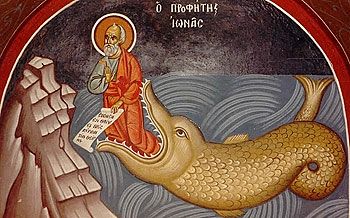
Jonah and God's Righteousness Among the Heathen


"Now, the righteousness of God has been manifested apart from the law, although the Law and the Prophets bear witness to it - the righteousness of God through faith in Jesus Christ for all who believe. For there is no distinction: for all have sinned and fall short of the glory of God, and are justified by His grace as a gift, through the redemption that is in Christ Jesus, whom God put forward as a propitiation by His blood, to be received by faith. This was to show God's righteousness, because, in His divine forbearance, He had passed over former sins." --Romans 3:21-25 

In this passage, I want to focus especially on the last clause: "In His forbearance, He had passed over former sins." By itself, it strikes us as strange, because it seems to suggest that God was unconcerned about sins that occurred before the coming of Jesus. In fact, some people claim that it means that the heathen, who had not known God's written law, unlike Israel, were not held accountable for what would have been sins, because those acts were done in ignorance. 

That view is an egregious act of eisegesis, inserting the assumptions of dispensationalism into a text which says no such thing. 

First, consider the wording of the clause itself. The dispensationalist claims that God overlooked actions which would have been sins, but weren't. Yet Paul says just the opposite. He doesn't say that God overlooked actions; he explicitly states that God overlooked sins. "For all have sinned and fall short of the glory of God" (verse 23). So, there must be a standard by which those heathen were judged, and Paul tells us what that standard was: "The righteousness of God has been manifested apart from the law, though the Law and Prophets bear witness to it" (verse 21). Paul makes a distinction between "law," marked here with a small "p," and the Law, marked by a capital "P." Thus, there has always been a moral code, reflecting the righteous nature of God, which, at a particular point in time, was written down through Moses. Therefore, the dispensationalist is wrong. The law did not begin with Moses; it was merely recorded by Moses. It is the same as the theory of relativity. Energy equals mass times the speed of light squared did not suddenly come into existence when Albert Einstein put it in writing! It had been true ever since the first day of creation. 

Second, do we see God's not holding heathens accountable for their sins? 

"'Arise, go to  Nineveh, that great city, and call out against it, for their evil has come before Me... Arise, go to Nineveh, that great city, and call out against it the message that I tell you.' So Jonah arose and went to Nineveh, according to the word of the Lord. Now Nineveh was an exceeding great city, three days' journey in breadth. Jonah began to go into the city, going a day's journey. And he called out, 'yet forty days, and Nineveh shall be overthrown!' And the people of Nineveh believed God. They called for a fast and put on sackcloth, from the greatest of them to the least of them" (Jonah 1:2, 3:2-5). God sent His prophet to these heathens to warn them of their coming judgment. Judgment according to what? The dispensationalist has no answer, because he holds to his presupposition that the law was only for Israel. We could also consider the case of Sodom and Gomorrah. While God relented of His wrath against Nineveh, He did not against the Sodomites (Genesis, chapters 18 and 19).

Thus, we must conclude logically that the doctrine of the dispensationalist was not what Paul intended. Rather, consider the context: he isn't giving us a contrast between sinfulness and sinlessness; he is contrasting the coming of Jesus, against the previous age without Him. While the Law and the Prophets directed Israel to the coming Redeemer, such as seen explicitly in Job 19:25, the heathen received no such succor. The faithful in Israel had an object for saving faith, but the heathen had none, except for a few individuals, such as Ruth. That is the sense in which God overlooked their sins: He refrained from revealing to them a basis for forgiveness and restoration. Thank God that He has now done so! 

Wednesday, March 30, 2022

When Are the "Last Days"?

Among those of a certain eschatological bent, the 'last days" of the New testament have been identified repeatedly with events current at that time. Most recently, the covid crisis and the war in Ukraine are cited as evidence that we are now in the last days, and that the rapture will occur any day. 

The problem is that none of those declarations ever give/gave proper consideration to how the phrase is used in the New Testament. "The last days" is treated as if it is disconnected from the rest of Scripture, with no meaning to those who used it, or as if it could be meaningful to its audience, even if it would occur two-thousand years (so far) in their future. 

Consider Hebrews 2:1-2: "Long ago, at many times and in many ways, God spoke to our fathers by the prophets, but, in these last days, He has spoken to us by His Son, whom He appointed the heir of all things, through whom also He created the world." To the author of the epistle, the last days were "these last days," not "those last days," as assumed by the dispensationalist. He considered the phrase to describe the time in which he wrote, not some far future time. He reinforces this intent by relating the last days to the coming of Jesus, i. e., His first coming, not the second. 

The Apostle Peter said something similar in I Peter 1:19-20: "But with the precious blood of Christ, like that of a lamb without blemish or spot. He was foreknown before the foundation of the world but was made manifest in the last times for your sake." Peter is referring to two events that were past tense at the time he wrote, the plan for the Son from before the foundation of the world and His manifestation. When did that happen? At his incarnation, which is why Peter uses the past tense of the verb. To him, the last times were past (or continuing), not two-thousand years in the future. 

The Apostle John, the only writer to mention an antichrist, mentions antichrists in I John 2:18: "Children, it is the las hour, and, as you have heard that antichrist is coming, so now many antichrists have come. Therefore, we know that it is the last hour." This one verse gives us two key pieces of information. First is that he refers to a belief among Christians of a coming antichrist. He corrects them in two ways, one that the word is plural, not singular, and the second that some of the antichrists had already come. Therefore, he concluded, the time in which he wrote was the last hour. His statements preclude a future Antichrist or last day, yet dispensationalists pass right over it. 

In Hebrews 9:26, that writer again describes the end of the ages: "For then He would have had to suffer repeatedly since the foundation of the world. But, as it is, He has appeared once for all at the end of the ages to put away sin by the sacrifice of Himself." Again, He identifies the last days not just with the coming of Jesus, as in the verse at the top, but specifically with His working of redemption. Again, that necessarily happened two-thousand years ago, past tense even when Hebrews was written, not in his or our future. To the same effect is Peter in I Peter 1:20: "He was foreknown before the foundation of the world, but was made manifest in the last times for your sake." 

Together, these references are infallible evidence that a future "last day" is unbiblical, the invention of men, not just apart from scriptural support, but in contradiction to the biblical testimony. 


Saturday, March 20, 2021

The Gospel, Our Mission, and the Crown Rights of Jesus

 In the Parable of the Great Banquet (Luke 14:12-24), we find this statement from the master of the house (representing Jesus): "Go out to the highways and hedges and compel people to come in, that my house may be filled" (verse 23). This is a paraphrase of the Great Commission: "Go therefore and make disciples of all nations, baptizing them in the name of the Father and of the Son and of the Holy Spirit" (Matthew 28:19).

Where Jesus said in the Commission that we, His people, are to disciple the nations, He adds the explanation in Luke that the goal is to fill His house. This is very different from the Commission, as it is defined by dispensationalists, that we are to be a witness to the nations (a misuse of the Matthew 24:14), that is, a failed witness. That is why most English translations of the Commission change "disciple the nations" to "make disciples from all nations." The dispensationalist expects to fail, doing no more than cherry-picking a few individual converts here and there. Or to use Luke's language, the dispensationalist expects the house of the Lord to be nearly empty. 

That assumption is blatant disobedience. 

In Isaiah 56:6-7, Jehovah, i. e., the preincarnate Jesus, declares, "And the foreigners who join themselves to the Lord, to minister to Him, to love the name of the Lord, and to be His servants, everyone who keeps the Sabbath and does not profane it, and holds fast My covenant— these I will bring to My holy mountain, and make them joyful in My house of prayer; their burnt offerings and their sacrifices will be accepted on My altar; for My house shall be called a house of prayer for all peoples." "Peoples," not just "people." 

How could He claim this? Because it was the promise to Him in the intra-Trinitarian covenant: "Ask of Me, and I will make the nations Your heritage, and the ends of the earth Your possession" (Psalm 2:8).

Therefore, to deny that Jesus will return to a converted world (generally, not necessarily exhaustively) is to deny His word, His crown, and His right to what has been promised to Him. 


Wednesday, September 9, 2020

The Dispensational Antichrist Disproves Dispensationalism

"I will bless those who bless you, and him who dishonors you I will curse, and in you all the families of the earth shall be blessed." 

- Genesis 12:31 (see also Numbers 24:9) 

This verse is one of the favorites among dispensationalists. According to their interpretation, it is an eternal and unconditional promise by God to ethnic Israel. Among other things, it is used to justify political action to keep the American government in a policy of unconditional endorsement and assistance to the modern State of Israel. 

Another verse used by dispensationalists is Daniel 9:27: "He shall make a strong covenant with many for one week, and for half of the week he shall put an end to sacrifice and offering. And on the wing of abominations shall come one who makes desolate, until the decreed end is poured out on the desolator." According to their interpretation, this verse means that Israel will make a treaty with the Antichrist. Now understand, the dispensationalist considers the Antichrist to be a really bad dude. 

Do you see the problem with this juxtaposition? 

The dispensationalist tells us that anyone who assists the nation of Israel will be blessed  by God. He also tells us that the Antichrist assists Israel with a treaty. Doesn't syllogistic logic tell us that those two premises result in the conclusion that God will bless the Antichrist? 

I guess it's a good thing that I am not a dispensationalist. I reject both premises. Therefore, i don't have to deal with the nonsense that results from them.


Saturday, August 22, 2020

How Were Men Saved Before Jesus Came?

 I often see a question repeated in my Facebook Christian groups: What about people who lived before Jesus came? How were they saved? 

To my mind, the question is strange enough. However, I have seen some truly bizarre answers given. When I say bizarre, heretical would be an understatement. Some of them would qualify as occultic! 

One of the merely-heretical answers is that Old Testament believers were saved by the Mosaic sacrifices. That is a dispensationalist concept, and ignores Hebrews, as dispensationalists are wont to do: "It is impossible for the blood of bulls and goats to take away sins" (Hebrews 10:4). Old testament believers were enabled by the Holy Spirit to see through the type of the animal sacrifices to the anti-type, the sacrifice of Jesus, whose blood is truly effectual to the salvation of His people. That means that Old Testament believers were saved the

same way as New Testament believers, by grace alone through faith alone in Christ alone. The difference is that the work of Jesus was obscured by the types and shadows of the Mosaic ceremonies. The Gospel is brighter for the New Testament believer because that obscurity has been removed. We have directly what the Old Testament believer had only indirectly. 

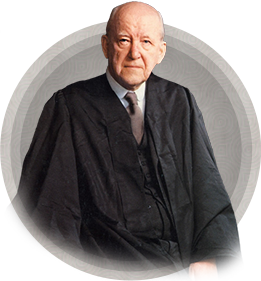
As  Martyn Lloyd-Jones said, "Do you mean by that, asks someone, that the saints in the Old Testament were not forgiven? Of course I do not. They were obviously forgiven and they thanked God for the forgiveness. You cannot say for a moment that people like David and Abraham and Isaac and Jacob were not forgiven. Of course they were forgiven. But they were not forgiven because of those sacrifices that were then offered. They were forgiven because they looked to Christ. They did not see this clearly, but they believed the teaching, and they made these offerings by faith. They believed God’s Word that He was one day going to provide a sacrifice, and in faith they held to that. It was their faith in Christ that saved them, exactly as it is faith in Christ that saves now. That is the argument."

Saturday, August 8, 2020

The Impotence of the Church

These two quotes from Gary North ("Tools of Dominion," p. 48), written in 1990, explain why the church is impotent in the face of the crises of humanistic 2020 America.

"To retreat from this task of applied Christianity is to to turn over the running of the world to pagan humanists and their theological allies, Christian antinomians. It is to turn the medical world over to the God-hating abortionists who are opposed so vigorously by Dr. [James] Dobson. Yet this is precisely what every publicly-visible Christian leader has done throughout the Twentieth Century, and what almost all of them did after the late-Seventeenth Century. It is universally assumed by Christians that the case laws of Exodus are null and void, and should be" (emphasis in the original).

"The tools of dominion, God's law, sit unused, and generally-unread by those who call themselves Christians. They are the best weapons that Christians possess for moral self-defense, since the best defense is a good offense, yet they steadfastly refuse to use them. To use God's revealed law effectively would require them to become intimately familiar with its many subtleties and complex applications, and, even less appealing, to discipline themselves in terms of it. They prefer to let is sit unopened, either in their laps or on their shelves. Christians, therefore, continue to lose the war for civilization."

Saturday, August 1, 2020

When Times Are Chaotic, Does It Mean That God Has Abandoned Us?

As I am writing this, America is in the grip of chaos. America has been shaken by understandable protests over the police killings of black people. In most places, those protests have wound down, but there a few cities, such as Portland, OR, which still see a lot of property damage and some violence. At the same time, we face the attack of the coronavirus. In some states, hospitals are at capacity, yet we still see a death toll which has surpassed one-hundred fifty-thousand.

Why are these things happening? Where is God as we face these things?

Well, we can be glad that God is where He has always been,on His throne. He is no less in control during days of chaos that He was when our society was at its most placid.

So, does that mean that there is no spiritual dimension to these circumstances? I would definitely not suggest that! Rather, it is not God who has failed us. I think that it is the organized church which has failed.

When Jesus gave us the Great Commission, He gave us a step that most Christians ignore: "teaching them to observe all that I have commanded you" (Matthew 28:20). We are fine with making disciples and baptizing them. In fact, there are even some mission organizations that proudly state that they do no more than that. But the command of Jesus did not stop there. In fact, even in those first two clauses, many Christians make a false assumption, equating "making disciples" with "making converts." Of course, a person must be converted first, but he is not then a disciple. Rather, it is the third clause that makes a convert into a disciple, for a disciple will obey all that Jesus has commanded us.

I place the blame for the chaos not on President Trump or on Democrats, as culpable as they may be. Rather I blame the pietists and dispensationalists in the American church. The pietist defines his faith as just a private relationship between himself and Jesus. He never intends for his private religion to have an impact on the world - and it doesn't. The dispensationalist (and I am using the term in its classical sense, such as seen in Scofield's Bible) denies the validity of God's Law in today's world. If anything, he might replace it with rules, such as hairlength for men. But they never notice that the Great Commission says nothing about obeying the rules of men; the obedience which is commanded is to what Jesus commanded.

Where are those commands? The answer is easy: all of Scripture was mediated to its authors by Jesus (see, for example, Exodus 20:2, , Luke 24:27, and I Peter 1:11). It is the same moral law (not the ceremonial law) which was proclaimed to Israel by Moses. Jesus is the author of the Ten Commandments, and He is no schizophrenic, teaching one morality today and a different one tomorrow, contrary to the claims of the dispensationalist. And it is because the dispensationalist has deprived American society of these guiding moral principles that men now act like lawless animals. And it is because the pietist leaves his faith in the closet that the church provides no solution to a crumbling society. God has not abandoned us; the American church has abandoned God.

Saturday, March 7, 2020

Opposition to Gracious Election and the Kingship of Jesus

In Matthew 21:5, Jesus refers to himself as "king," using  Zechariah 9:9. And, indeed, this is closely followed by the royal welcome he received to Jerusalem in the immediately following verses. Under the influence of Dispensationalism, Christians have mostly stopped talking about the kingly office of Christ, though it carried great significance to our ancestors. For example, we can look at the Westminster Larger Catechism: "Question 45: How does Christ execute the office of a king? Answer : Christ executes the office of a king, in calling out of the world a people to Himself, and giving them officers, laws, and censures, by which He visibly governs them; in bestowing saving grace upon His elect, rewarding their obedience, and correcting them for their sins, preserving and supporting them under all their temptations and sufferings, restraining and overcoming all their enemies, and powerfully ordering all things for His own glory, and their good; and also in taking vengeance on the rest, who know not God, and obey not the gospel."

We also have the words of Jesus, as He portrayed the nature of His kingship in a parable: "As for these enemies of Mine, who did not want Me to reign over them, bring them here and slaughter them before Me" (Luke 19:27). As king, He will by right judge unbelievers to destruction for their rebellion against His proper rule over them. 

That parable is the New Testament parallel to Psalm 2, which is the promise of the Father to the then-preincarnate Son. Verses 1-3 is the gloating of the rebels: "Why do the nations rage and the peoples plot in vain? The kings of the earth set themselves, and the rulers take counsel together, against the Lord and against His Anointed, saying, 'Let us burst their bonds apart and cast away their cords from us." These are the same ones described in Luke 18 as refusing to submit to their rightful ruler. However, the Father is unimpressed by their bluster: "He who sits in the heavens laughs; the Lord holds them in derision. Then He will speak to them in His wrath, and terrify them in His fury, saying, 'As for Me, I have set My King on Zion, My holy hill'" (verses 4-6). So, He says to the Son, "The Lord said to Me, 'You are My Son; today I have begotten You. Ask of Me, and I will make the nations Your heritage, and the ends of the earth Your possession. You shall break them with a rod of iron and dash them in pieces like a potter’s vessel" (verses 7-9). 

We have a concept in our modern society that religion is a voluntary thing, that believing in Jesus or not is a person choice, and either one is equally valid. Well, we can tell ourselves that, but it is not what God says. Unbelief is rebellion, and is, therefore, under the judgment of God. This error is even found among professing evangelicals, who have adopted the cultural assumption of religious freedom binding even on God. He rejects that claim, and even tells us of His sovereign choice of who shall be a sheep, i.e., a valued citizen of His kingdom, and who shall be a goat, i. e., a rebel (John 10:27-29). One sign of who is which is their response to this doctrine.

"There is much violent and bitter opposition to that account of it [i. e., election] which places a crown of absolute sovereignty on the head of Jehovah, and prostrates man in entire dependency upon His will" (James Henley Thornwell, "Election and Reprobation").

Saturday, February 1, 2020

Know the Bad News, then Recognize the Good News

"The law must be applied with power to the conscience, or the preciousness of grace will be very inadequately known. The superficial piety of the present day is owing, in a large degree, to feeble impressions of the malignity of sin" (James Henley Thornwell, "The necessity and Nature of Christianity").

The comment above was part of a long article in the Southern Presbyterian Review in 1849, but would be even more properly written in our current days. If anything, American evangelicalism has degenerated far past that described by Thornwell in his own time. What would he say about "churches" with female ministers, gay marriages, and that serve as laughingstocks to the world.

His diagnosis is correct. As the church has come to despise God's law, she has lost sight of the sinfulness of sin and its insult to the God she claims to serve. If the word is used at all, "sin" is left undefined, and only in occasions of unfortunate poverty and ignorance. Never is any person called a "sinner," because that is harsh and unloving.

A false Gospel that says only that "God loves you" to everyone leaves everyone satisfied with sin. God loves everyone unconditionally, so there is no need to repent. Church discipline is unheard of in our day.

The result is to use Thornwell's words, a feeble church, and people with a superficial piety.

That wasn't the way Jesus lived: "I tell you, there will be more joy in heaven over one sinner who repents than over ninety-nine righteous persons who need no repentance" (Luke 15:7). And His cousin and favorite Apostle tells us: "Whoever makes a practice of sinning is of the devil, for the devil has been sinning from the beginning. The reason the Son of God appeared was to destroy the works of the devil" (I John 3:8). When was the last time a minister called out sin as being the influence of the devil, rather than ignorance or poor economic conditions? And what does the Bible say about that silence? "If I say to the wicked, ‘You shall surely die,’ and you give him no warning, nor speak to warn the wicked from his wicked way, in order to save his life, that wicked person shall die for his iniquity, but his blood I will require at your hand" (Ezekiel 3:18).

Rather, this is how the Bible defines sin: "Sin is lawlessness" (I John 3:4). And this brings us back to the problem identified by Thornwell. If minsters do not preach on the Law, then their congregants never learn God's standard of right and wrong. And if Christians have no standard, then we have no standard to present to our world: "Now we know that the law is good, if one uses it lawfully, understanding this, that the law is not laid down for the just but for the lawless and disobedient, for the ungodly and sinners, for the unholy and profane, for those who strike their fathers and mothers, for murderers, the sexually immoral, men who practice homosexuality, enslavers, liars, perjurers, and whatever else is contrary to sound doctrine" (I Timothy 1:8-10).

Paul the Apostle

Wednesday, January 22, 2020

The Crucifixion, and What It Reveals About the Law

"That representation of Christianity which makes the sufferings of Jesus a full and perfect satisfaction of the penalty of the law, and His life of spotless obedience the ground to all claim of eternal bliss... rears the fabric of grace, not upon the ruins, but [upon] the fulfillment of the law. God is never seen to be more gloriously just, nor the law more awfully sacred, than when He spared not His own Son, but delivered Him up for us all. The impression which this event makes is, indeed, solemn, awful, sublime. It was a wonder in Heaven, a
Aspects of Crucifixion
terror in Hell, and is the grand instrument through which the rebellion of earth is subdued and the stout-hearted made to melt at the remembrance of sin" (James Henley Thornwell, "The Necessity and Nature of Christianity").

There is a common teaching among Evangelicals that God has rid us of the Law with the coming and crosswork of Jesus. That is not just the ceremonial law, with which I would agree, but also the moral law, with which I cannot. Some people simply deny the distinction between ceremonial and moral. However, then they have to ignore the usages of Paul who describes the abrogation of the former in Galatians, but maintains the latter in I Timothy 1:8-10, even referring to it as "in accordance with the gospel" in verse 11. And he specifically applies the law to members of the church at Corinth in I Corinthians 5:1 (Leviticus 18:8, Deuteronomy 22:30). Paul certainly didn't believe in the abrogation of the moral law!

There is also the problem of Christ's crosswork. Have we forgotten that He was beaten, whipped, and crucified? If the Son of God had to suffer so horribly "to magnify His law and make it glorious" (Isaiah 42:21, in one of the Servant passages), just for the law to be dispensed, was His suffering not unnecessary? What a horror for the Father to treat His Son in such a manner, when He was just going to get rid of the law anyway! Can we truly accuse God of such injustice?

Rather, as Isaiah says, the suffering and death of Jesus did not abrogate the law. Rather, it glorified it! The justice and holiness of God was revealed to the eyes of all men. The high price of rebellion against Him was revealed. At the same time, it revealed His grace, indicating what the love of the Son required that He undertake for His people.

Wednesday, November 27, 2019

The Continuing Validity of the Sabbath, as Demonstrated by Israel's Exile

In discussions about the Sabbath, I often get challenged by people, often from dispensationalist backgrounds, who claim that the Sabbath was part of the Mosaic ceremonial law, an was, therefore, abrogated by the cross work of Jesus.

And I agree with the part about the abrogation of the Mosaic ceremonies. they pointed to the atonement purchased for His people by Jesus, and, therefore, have no place in the lives of Christians. However, I firmly deny that the Sabbath was part of those ceremonies.

rather, the sabbath was a creation ordinance, together with marriage and productive labor. We see it in Genesis 2:3: "So God blessed the seventh day and made it holy, because on it God rested from all His work that He had done in creation." Other than to deny it, I have never gotten a coherent explanation as to why that reference is not to the Sabbath.

The problem with that objection is what Moses actually does say in the Fourth Commandment: "Remember the Sabbath day, to keep it holy. Six days you shall labor, and do all your work, but the seventh day is a Sabbath to the Lord your God. On it you shall not do any work, you, or your son, or your daughter, your male servant, or your female servant, or your livestock, or the sojourner who is within your gates. For in six days the Lord made heaven and earth, the sea, and all that is in them, and rested on the seventh day. Therefore the Lord blessed the Sabbath day and made it holy" (Exodus 20:8-11). So Moses tells us that God's declaration in Genesis 2:3 is the basis for the Fourth Commandment. It is not the other way around, as these dispensationalists claim.

The implication of this is that the claim of these same people that the Sabbath was part of, and, therefore, abrogated with, the Mosaic ceremonies is unbiblical. Some of them go on to add, to reinforce their weak abrogation argument, that there is no record of the celebration of the Sabbath between Genesis and Exodus. Well, that is an argument from silence, and is insufficient evidence with no other biblical support. Also, even if correct, it is not to the point. The failure of the people to obey the command does not abrogate the command. We see this in regard to the land sabbaths (Leviticus 25:1-7). We are explicitly told that Israel never obeyed the command to give the land a rest every seven years, so those missed land sabbaths are the basis of their seventy years of exile in Babylon (II Chronicles 36:21).

I think this brief case refutes any view of the Sabbath as an abrogated ceremony, or that failure to obey it is proof that it was nonbinding.

Saturday, November 16, 2019

Who Was the Whore of Babylon?

A strange description occurs near the end of the Bible: "'Come, I will show you the judgment of the great prostitute who is seated on many waters, with whom the kings of the earth have committed sexual immorality, and with the wine of whose sexual immorality the dwellers on earth have become drunk.' And he carried me away in the Spirit into a wilderness, and I saw a woman sitting on a scarlet beast that was full of blasphemous names, and it had seven heads and ten horns. The woman was arrayed in purple and scarlet, and adorned with gold and jewels and pearls, holding in her hand a golden cup full of abominations and the impurities of her sexual immorality. And on her forehead was written a name of mystery: 'Babylon the great, mother of prostitutes and of earth’s abominations.' And I saw the woman, drunk with the blood of the saints, the blood of the martyrs of Jesus'" (Revelation 17:1-6).

The account continues to verse 18, which tells us, "And the woman that you saw is the great city that has dominion over the kings of the earth." The woman is traditionally called the Whore of Babylon, from the King James Version of this passage. Her identity has been variously interpreted. The majority view is that she is a symbol of Rome. I, however, join with the minority in identifying her with apostate Israel, represented by Jerusalem, i. e., those Jews who rejected her Messiah and joined in crucifying Him 

I am going to speak to that here.

One of the challenges I have gotten from dispensationalists regarding this passage is that, supposedly, Jerusalem didn't rule the nations; rather, Rome did. However, the usage of Scripture does, actually, make Jerusalem the ruler of the nations: "How lonely sits the city that was full of people! How like a widow has she become, she who was great among the nations! She who was a princess among the provinces has become a slave. She weeps bitterly in the night, with tears on her cheeks; among all her lovers she has none to comfort her; all her friends have dealt treacherously with her; they have become her enemies" (Lamentations 1:1-2). Does this passage not echo John's words? It is a description of the destruction of Jerusalem by the Babylonians in 587 BC.

In fact, I think that this is a prominent flaw of dispensational interpretation: it consistently ignores Old testament usages in dealing with New Testament prophecy. the Bible is a whole, with the later revelations building on the earlier. While dispensationalists talk about "rightly dividing the word of truth," their practice is better described as "wrongly dividing" it. Their hermeneutic is built on presuppositions outside of Scripture.

Saturday, October 19, 2019

Love Versus Antinomianism

Dispensationalism has had an unfortunate longterm impact on Evangelicals, at least in America. Folks of that persuasion love to quote the second half of Romans 6:14, while glossing over the first half: "Sin will have no dominion over you, since you are not under law but under grace." People walk around repeating, "not under law but under grace," like a mantra to keep away evil spirits. Yet, the first half of the verse shows that Paul is talking about a source of power. The Law does not, and cannot, enable us to live righteously; Only grace can do that. There is nothing in that verse about dismissing the Law of God as a rule of life (see I Timothy 1:8-10). Yet, the dispensationalist will deny even that, because, he repeats, "we are not under law but under grace."

But let's consider another verse: "This is love, that we walk according to His commandments; this is the commandment, just as you have heard from the beginning, so that you should walk in it" (II John 1:6).

So, we have a logical dilemma. If the dispensationalist is correct, that "we are not under law but under grace" means that the Law has no application to the Christian life, then what about love? John says that love - i. e., to one another, verse 5 - means keeping the Law. "This is the love of God, that we keep His commandments. And His commandments are not burdensome" (I John 5:3).