Showing posts with label malachi. Show all posts

Saturday, October 12, 2024

Dispensationalism versus God's Claim of the World.

"From the rising of the sun to its setting, My name will be great among the nations, and in every place incense will be offered to My name, and a pure offering. For My name will be great among the nations" (Malachi 1:11). 

Part of what convinced me of postmillennialism is passages in Scripture like the one quoted above. God has claimed as His privilege to be worshiped, not just by Israel, and not even by a few Gentiles mixed in, such as Ruth, by rather by all the nations (see the Great Commission, Matthew 28:18-20). I think that there is great significance in the fact that this declaration occurs in the last book of the Old Testament, the last Scripture written before the coming of its fulfillment in Jesus Christ. "For I am a great King, says the Lord of hosts, and My name will be feared among the nations," He announces through the prophet (Mal. 1:14). 

There is a great failure among God's people to grasp God's plans for the conversion of the world, and to carry out our duties under that plan. Instead, we have surrendered the world to the realm of Satan, and congratulated ourselves for upholding the other-worldliness of the Kingdom of God. Yet that is the error of Gnosticism, the belief that the material world is evil, and only spiritual things belong to God. This is what dispensationalism has done to the American church. 

Prophet Malachi


Saturday, March 28, 2020

Esau and Jacob: The Holy Discrimination of God

 I have mentioned before that anti-Calvinists have certain verses which they consider "trump verses" against Calvinism. No matter how many verses a Calvinist cites in support of the doctrines of grace, his opponent will plunk out one of these trump verses and congratulate himself for, supposedly, ending all debate. Of course, the number one verse is John 3:16, which I have addresses here and here.

In this post, I want to address the phrase, "God is no respecter of persons" (Acts 10:34). Supposedly, this verse says that God does not discriminate between any two people. And in isolation, it might be taken that way, as is the wont of isolated prooftexts. However, doing so ignores the actions that God says that He has taken, making distinctions between people, both as individuals and as groups.

The obvious example, of course, is Romans 9:6-13 (referring back to Malachi 1:2-3): "Not all who are descended from Israel belong to Israel, and not all are children of Abraham because they are his offspring, but 'Through Isaac shall your offspring be named.' This means that it is not the children of the flesh who are the children of God, but the children of the promise are counted as offspring. For this is what the promise said: 'About this time next year I will return, and Sarah shall have a son.' And not only so, but also when Rebekah had conceived children by one man, our forefather Isaac, though they were not yet born and had done nothing either good or bad—in order that God’s purpose of election might continue, not because of works but because of Him who calls— she was told, 'The older will serve the younger.' As it is written, 'Jacob I loved, but Esau I hated.'" This is clearly a discrimination between two people, the twin brothers Esau and Jacob (see, in passing, Genesis, chapters 18-33). God claims the right to choose between Esau and Jacob, even before they were born, before they had done anything good and evil. On what basis? "I will have mercy on whom I have mercy, and I will have compassion " (Romans 9:15; see also verse 16). That is sovereign election, and God feels no compunction to explain beyond that.

When the anti-Calvinist cites Acts 10:34, he should also look at Acts 15:8-9: "God, who knows the heart, bore witness to them, by giving them the Holy Spirit just as He did to us, and He made no distinction between us and them, having cleansed their hearts by faith." Peter is expressing the surprise of the disciples upon learning that God has extended salvation even to the Gentiles, on the same basis as the Jews, i. e., by faith alone. The disciples were astonished at this, because the Jews had always though of God and the Messiah-to-come as their special reserve, not for the unclean Gentiles.

And this explains how God does and does not discriminate between men. He shows no concern for the characteristics which men value, such as wealth or physical beauty. His standard is His own will alone, the ultimate in justice. He tells us this explicitly in His choosing of David to replace the line of Saul on the throne of Israel: "Do not look on his appearance or on the height of his stature, because I have rejected him. For the LORD sees not as man sees: man looks on the outward appearance, but the LORD looks on the heart" (I Samuel 16:7).

Thus we see that God is certainly discriminatory, and the plunking down of Act 10:34 to claim otherwise is to ignore the message of Scripture for debate points.

Saturday, November 2, 2019

John the Baptist, the Refuter of Jehovah's Witnesses

The person of John the Baptist is a curious character in the Gospels. He was a cousin of Jesus, but about six months older. We see the beginning of his ministry in Matthew 3:1-3: "In those days John the Baptist came preaching in the wilderness of Judea, 'Repent, for the kingdom of heaven is at hand.' For this is he who was spoken of by the prophet Isaiah when he said, 'The voice of one crying in the wilderness: Prepare the way of the Lord; make His paths straight.'" The portion quoted from Isaiah is Isaiah 40:3. 

What is significant is that Isaiah doesn't say "Lord" (Hebrew, "adonai"), but rather "LORD" (Hebrew, "Yahweh"). More on that later. 

While the identification by Matthew is sure, because it is the interpretation of the Holy Spirit, Jesus added His personal identification, as well: "The disciples asked Him, 'Then why do the scribes say that first Elijah must come?' He answered, 'Elijah does come, and he will restore all things. But I tell you that Elijah has already come, and they did not recognize him, but did to him whatever they pleased. So also the Son of Man will certainly suffer at their hands.' Then the disciples understood that He was speaking to them of John the Baptist" (Matthew 17:10-13). Here, Jesus is referring to the prophecy of Malachi 4:5: "Behold, I will send you Elijah the prophet before the great and awesome day of the LORD comes." Notice that here, too, the Hebrew uses "LORD" ("Yahweh").

The significance of this is that both Old Testament prophets refer to Elijah's return to announce the coming of Yahweh (or "Jehovah"). Then in the New Testament, we have the testimony of both the Apostle Matthew and of Jesus Himself that the reference to Elijah was fulfilled by John the Baptist's introduction of Jesus. That is, Elijah equals John the Baptist, and Yahweh equals Jesus.

This should be an earth-shattering revelation to the Jehovah's Witnesses, who very vocally contrast Jehovah with their unbiblical version of Jesus. They try to make Jesus to be a creature, a mere angel, and deny His deity. But they make much of Jehovah, even naming themselves after Him. Yet, they blind themselves to this one fact: Jesus is Jehovah!

Wednesday, June 20, 2018

The False Fantasy of Moral Autonomy

There is a time in the Bible, where the Scripture repeats this mantra: "In those days there was no king in Israel. Everyone did what was right in his own eyes" (Judges 17:6, 21:25). The Bible says that is a bad thing, an indication of moral anarchy. However, in our own day it has become a fashionable lifestyle: "Do your own thing. Just follow your heart."

However, underlying that concept is an assumption of autonomy, the assertion that man rules himself and his destiny, and need not acknowledge any standard of judgment over his life other than his own pleasure. Even Christians fail to connect that mentality to the words of Satan in the Garden (Genesis 3:5): "For God knows that when you eat of it your eyes will be opened, and you will be like God, knowing good and evil." In this case, "knowing" means "deciding." Our popular hedonism has come full circle, to demonstrate its satanic origin, yet that doesn't check the promotion of it.

However, God is neither impressed with our moral sophistication nor our alliance with Satan. "You have wearied the LORD with your words. But you say, 'How have we wearied Him?' By saying, 'Everyone who does evil is good in the sight of the LORD, and he delights in them.' Or by asking, 'Where is the God of justice?'" (Malachi 2:17). He finds it tedious to listen to us declare our autonomy and right to decide our own morality. After all, He is God, our creator, and we are merely His creatures. Therefore, such a claim of autonomy is an act of rebellion and treason, the exact sin for which Adam was judged, and he and eve were cast out of the garden.

Wednesday, October 18, 2017

Astrology: Is Our Destiny in the Stars?

There's a big word that I want to talk about: syncretism. Have you ever heard it? Syncretism is the combination, usually unconscious, of contrasting worldviews. An example is the word that is being bandied about in some quarters, "Chrislam," to refer to a combination of Christianity and Islam. Paul describes syncretism in Colossians 2:8: "See to it that no one takes you captive by philosophy and empty deceit, according to human tradition, according to the elemental spirits of the world, and not according to Christ." The particular form that I want to address is the use of astrology by professing Christians, such as this woman who describes herself as "a Christian astrologer."

Her justification is from Genesis 1:14: "And God said, 'Let there be lights in the expanse of the heavens to separate the day from the night. And let them be for signs and for seasons, and for days and years.'" She says, "I feel that astrology was a tool created by God for us to understand ourselves better and to use as a spiritual tool. I feel that there are many biblical verses that support astrology." Notice her words, "I feel," not once, but twice. That is, her use of this verse (she also mentions Luke 21:25) isn't based on exegesis, an interpretation of the verse using grammar and its historical and biblical context, but rather on her feelings. That is always the start of syncretism, because "the heart is deceitful above all things, and desperately sick" (Jeremiah 17:9).

What does exegesis teach us about the role of the stars? Consider the case of Esau and Jacob, the twin sons of Isaac (Genesis 25:19-28). As twins, the two were born under the same planetary and stellar positions, the very things that are supposed to be determinative, according to astrologers. Yet, what do we know about their futures? "Jacob I loved, but Esau I hated" (Malachi 1:2-3, Romans 9:13), polar opposites. Paul uses these twins, born under the same astronomical circumstances, as a case study (Romans 9:16): "So then it depends not on human will or exertion, but on God, who has mercy." That is, Esau and Jacob don't tell us anything about the planets and stars, but rather about the sovereign grace of God.

And that's the problem with astrology. It posits ultimate sovereignty, not in the hands of a living, just, and loving God, but rather in the paths of stellar objects, though they, too, owe their existence and positions to that God (Genesis 1:14, Job 9:8, Zechariah 12:1). And God has no tolerance for giving His glory to anything or anyone else (Isaiah 42:8, 48:11). In fact, He rejects anyone who tries to do so (Deuteronomy 29:18-20): "Beware lest there be among you a man or woman or clan or tribe whose heart is turning away today from the Lord our God to go and serve the gods of those nations. Beware lest there be among you a root bearing poisonous and bitter fruit, one who, when he hears the words of this sworn covenant, blesses himself in his heart, saying, ‘I shall be safe, though I walk in the stubbornness of my heart.’ This will lead to the sweeping away of moist and dry alike. The Lord will not be willing to forgive him, but rather the anger of the Lord and His jealousy will smoke against that man, and the curses written in this book will settle upon him, and the Lord will blot out his name from under heaven."

Wednesday, September 20, 2017

God's Love: The Fly in the Oneness Ointment

"Beloved, let us love one another, for love is from God, and whoever loves has been born of God and knows God. Anyone who does not love does not know God, because God is love. God is love, and whoever abides in love abides in God, and God abides in him. By this is love perfected with us, so that we may have confidence for the day of judgment, because as He is so also are we in this world. There is no fear in love, but perfect love casts out fear. For fear has to do with punishment, and whoever fears has not been perfected in love. We love because He first loved us."
- I John 4:7-8, 16-19

This passage was written by the same Apostle John who gave us the Revelation. Yet, while that book can often be mystifying, I don't think anyone can say that of the portion I quote here. There is one central point, and he makes it eminently clear: It is, and has always been, God's nature to love. Therefore, we, His people, can express love confidently.

Orthodox Christians hold that the love God shows to us is a manifestation of that same nature of love that He had shared so intimately within the Trinity, the Father's loving the Son and the Holy Spirit, the Son's loving the Father and the Holy Spirit, and the Holy Spirit's loving the Father and the Son. We have assurance of His love because it is an infinite and eternal love, preceding even our existence.

However, the Sabellian (or Modalist, or Oneness) believes in a monadic deity, a unitary oneness that had no companionship for the unknowable eternity before Genesis 1. He must ask the question, Whom did God love? Since he believes that there was no one else there to be loved, then his answer can only be "no one." And that presents a problem.

We do know from Scripture that it is contrary to God's nature to change: "I the LORD do not change" (Malachi 3:6, compare Numbers 23:19 and I Samuel 15:29). Therefore, since the Sabellian God did not have love in eternity past, then neither could He become loving, since that would have been a change of nature. A God without love would not be a redeemer, a sanctifier, or a merciful Father. Therefore, the Sabellian God cannot be the God of the Bible (John 3:16).

Saturday, February 20, 2016

Divorce, Same-Sex Marriage, and Adultery

In Matthew 5:31-32, Jesus taught a crowd, including His disciples, "It was also said, 'Whoever divorces his wife, let him give her a certificate of divorce.' But I say to you that everyone who divorces his wife, except on the ground of sexual immorality, makes her commit adultery, and whoever marries a divorced woman commits adultery." A person may ask why it only refers to the wife's adultery after a divorce. It is because, under the Law, only a husband could initiate a divorce. The counter-balance was the right of the now-exwife to keep her bride price. In our society, the principles would apply equally to husband and wife.

Was Jesus here objecting to the Law? After all, the principle to which He objects comes from Deuteronomy 24:1. And the answer is, of course, no. As God incarnate, He could certainly not repudiate something that He had legislated. Rather, He was objecting to the perversion of the Law, by which men dismissed their wives for the pettiest of offenses: "The Talmud specifically says that a man can divorce a woman because she spoiled his dinner or simply because he finds another woman more attractive, and the woman's consent to the divorce is not required." The Old Testament clearly condemned such a lackadaisical attitude toward marriage (Malachi 2:13-16): "You cover the Lord’s altar with tears, with weeping and groaning because He no longer regards the offering or accepts it with favor from your hand. But you say, 'Why does He not?' Because the Lord was witness between you and the wife of your youth, to whom you have been faithless, though she is your companion and your wife by covenant. Did He not make them one, with a portion of the Spirit in their union? And what was the one God seeking? Godly offspring. So guard yourselves in your spirit, and let none of you be faithless to the wife of your youth. For the man who does not love his wife but divorces her, says the Lord, the God of Israel, covers his garment with violence, says the Lord of hosts."

I have thought of this often during the debates over same-sex marriage, including when it was opposed with "The Defense of Marriage Act." How many of the members of Congress  were divorced who voted for DOMA? And what about Bill Clinton, the philanderer-in-chief who signed DOMA? The best hip boots in the world wouldn't be good enough to wade through that tide of hypocrisy. Kim Davis, the Kentucky county clerk who made world news for opposing same-sex marriages, has been married four times! Which of those marriages was she defending?

As a society, we have become completely unmoved by divorce. Any excuse will do, even such drivel as "I just wasn't happy anymore." Do we skip over God's protest in Malachi? Close our eyes to it? Do we imagine that He sets His opinion aside when it doesn't match the most-recent opinion polls? And do we think that crying about same-sex marriages will cover the hypocrisy of our own dismissal of God's standards for marriage?

Monday, November 30, 2015

Mormons Refuted by the Eternality of God

One of the doctrines which most distinguishes Mormons from Christians is their belief that God was once a human being, just as you and I now are, but on another planet, ruled by its own deity. Their General Authority Milton Hunter (The Gospel Through the Ages, 1945, p. 104) wrote, "Mormon prophets have continuously taught the sublime truth that God the Eternal Father was once a mortal man who passed through a school of earth life similar to that through which we are now passing." This is one of the doctrines that the boys on the bicycles do not explain to prospective converts. It is kept until the person has been involved for a while.

In contrast, Christians profess, together with Moses (Psalm 90:2), "Even from everlasting to everlasting, You are God." The God of the Bible has always been God, from eternity past, and always will be God, into eternity future.

So, we have a contrast here between an evolutionary view of a god, in opposition to a view of a God who is eternal. Does the Bible say anything else applicable to this question?

In Numbers 23:19, Moses also said, "God is not man, that He should lie, or a son of man, that He should change His mind. Has He said, and will He not do it? Or has He spoken, and will He not fulfill it?" If God doesn't change His mind, are we to believe that He changes His nature?

In I Samuel 15:29, we read, "The Glory of Israel will not lie or have regret, for He is not a man." God is not a man (this does not address the incarnation of Christ)! He is not a man now, a Mormon might respond. Okay.

In Malachi 3:6, God speaks for Himself: "I am the Lord , I do not change." We can also look at Isaiah 43:10: "Before Me no god was formed, nor shall there be any after Me." The first prophet tells us that God could never have been anything other that what He now is. The second tells us that there could never have been an earlier deity under whom our God attained His divine status. I have dealt more with the verses in Isaiah here.

I am writing this the way I am, because I have run into too many Mormons who complain when I or anyone else says that they are not Christians. First, this is the height of hypocrisy, since those same boys on bicycles are traveling around telling prospects that all other professing Christians are apostates. Did you catch that? All! Second, I know that most people aren't aware of some of the more-bizarre doctrines of the Mormons, so they are also not aware of how un-Christian they really are. I aim, in part, to educate those folks. I also intend to provide them with the truth, so that they have an answer to give both the boys on bicycles and to their Mormon neighbors (I Peter 3:15).

Tuesday, August 4, 2015

The Doctrines of Grace in the Ninth Chapter of Romans

The doctrines of grace, commonly referred to according to the acronym TULIP (total depravity, unconditional election, limited atonement, irresistible grace, perseverance of the saints), are found all over Scripture, but there are certain passages which especially describe them in one place. One, of course, is the first chapter of Ephesians. Another is the one I consider here, the ninth chapter of Romans.

Let's begin with verse 6: "They are not all Israel who are descended from Israel." This is the theme that Paul develops in the rest of the chapter. As Paul continues in verse 7, "nor are they all children because they are descendants of Abraham, but 'in Isaac shall your descendants be called.'" He explains that statement in verse 8: "So, those who are the children of the flesh are not the children of God, but the children of the promise are counted as descendants." Paul goes on to demonstrate this from the comparison of Jacob and Esau, the twin sons of Isaac. But I would also add what Genesis says about Ishmael. In Genesis 17:18-19, Abraham prays to God, "Oh that Ishmael might live before You!" Yet, God replies, "No." Not "maybe," not "let's hope so." Rather, His answer is a straightforward and unconditional refusal. That is a demonstration of reprobation, which is the flip side of election. Just as God chose some for salvation, He also chose others for condemnation. More of that to come.

Paul reminds us of Isaac's twin sons, Jacob and Esau (v. 10). Then he begins their story (verses 11-13): "though they were not yet born and had done nothing either good or bad—in order that God’s purpose of election might continue, not because of works but because of Him who calls— she was told, 'The older will serve the younger.' As it is written, 'Jacob I loved, but Esau I hated.'" Before the twins were even born or had committed any personal sins, God had decreed in His sovereignty that Jacob would be preferred over Esau, the second-born over the firstborn, contrary to the custom, because He had already declared, "Jacob I loved, but Esau I hated" (quoted from Malachi 1:2-3). God explicitly states that His purpose was to demonstrate His sovereign election, to exclude any merit in either child (or, by extension, in any of us).

Among Americans, the nearly-universal reaction to that is, "But that's not fair!" The same response is made by a hypothetical audience in verse 14. In response, Paul quotes (v. 15, from Ex.33:19): "I will have mercy on whom I have mercy, and I will have compassion on whom I have compassion!" Note that He makes no effort to explain that it is fair. Rather, He claims that we are in rebellion even to ask the question! Verse 20, "Who are you, O man, to answer back to God?" As Creator, He rules over His creations! Verse 21, "Has the potter no right over the clay, to make out of the same lump one vessel for honorable use and another for dishonorable use?" Here He addresses the two doctrines of unconditional election and reprobation together. They are actions consistent with His place as sovereign creator and sustainer of all things. He doesn't answer our concerns about fairness because those concerns are illegitimate expressions of rebellion!

He endures these "vessels of wrath prepared for destruction" (v. 22) "in order to make known the riches of his glory for vessels of mercy, which he has prepared beforehand for glory." He uses the one, the objects of His wrath, to provide a contrast to the objects of His mercy, that He may reveal Himself, both in His justice and His mercy. The doctrines of grace are all about Him, not us.

As a Gentile, I am especially blessed by God's sovereign grace, for those He has prepared for glory include "even us whom He has called, not from the Jews only but also from the Gentiles" (v. 24). As He prophesied in Hosea 2:23-24, "Those who were not My people I will call 'My people,' and her who was not beloved I will call 'beloved.' And in the very place where it was said to them, 'You are not My people,' there they will be called 'sons of the living God.'" My ancestors are those described by Paul in Ephesians 2:11-22, who had no hope and were without God in our world, but now are fellow citizens with the saints. If it hadn't been for the sovereign grace of God, there is no human way that the Gospel would have entered my life, that I could be born again by the Holy Spirit.

And that is true of everyone who is reading this post. Whether you are nodding your head in agreement or purple-faced with rage, you could never have known Jesus Christ as savior without the truths of the doctrines of grace. Yes, even Arminians are saved by sovereign grace

Tuesday, November 11, 2014

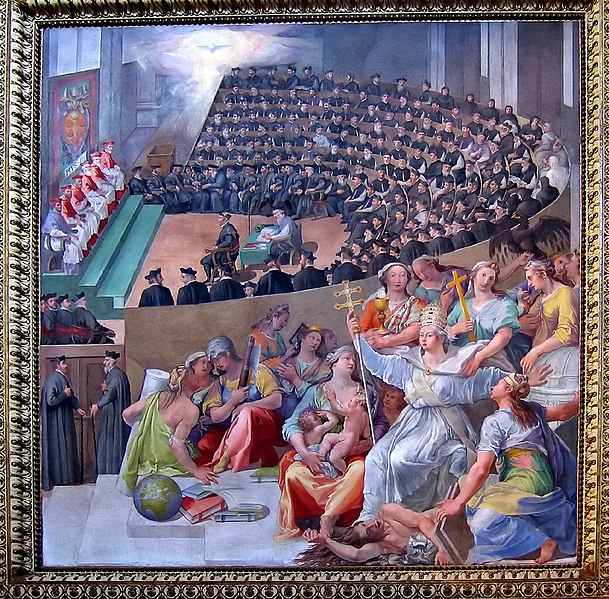
The Sacrifice of the Catholic Mass, and Its Offense to the Gospel

"If anyone saith that the sacrifice of the Mass is only a sacrifice of praise and thanksgiving, or that it is a bare commemoration of the sacrifice consummated on the cross, but not a propitiatory sacrifice, or that it profits him only who receives, and that it ought not to be offered for the living and the dead for sins, pains, satisfactions, and other necessities, let him be anathema."
The Council of Trent

The above statement is a quote from the decrees of the Council of Trent, chapter 9, canon 3. This council was called by the Roman Catholic Church to address the crisis created by the budding of the Reformation. It defined, officially and infallibly (Rome claims), Catholic doctrine, in perpetuity. I have highlighted in boldface the key phrases in that statement. They claim for this statement the support of Malachi 1:11, "For from the rising of the sun to its setting, my name will be great among the nations, and, in every place, incense will be offered to my name, and a pure offering."

When dealing with Catholic apologists, I find that they consistently claim that the Mass is not a sacrifice. For example, Dave Armstrong writes, "It is crucial to understand that the Sacrifice of the Mass is not a 're-sacrifice' of Christ, as is the common misconception. Jesus does not die every time a priest offers Mass, since He died once, in history, on earth" (A Biblical Defense of Catholicism, p. 95). Yet, he says in the very next paragraph, "in the Mass, Jesus Christ ultimately offers the sacrifice of Himself (just as at the Last Supper), with the priest merely acting in His stead, as a purely secondary, instrumental agent." So, as Trent says, it is a sacrifice, but it's not, because it is Christ sacrificing Himself, not the priest sacrificing Him. To me, that sounds like Rome is trying to play both sides of the matter.

However, whether Christ is supposedly sacrificing Himself, or the priest is sacrificing Him, the claim should be anathema (to reclaim their word) to any true Christian.

The writer of Hebrews (10:5) quotes Jesus Himself, using the words of Psalm 40:6, "Sacrifice and offerings You have not desired." So, in His own words, Jesus is telling us that we do not need a continuing sacrifice, whether offered by Himself, or "with the priest merely acting in His stead." Why is that? Because (Heb. 10:11, emphasis added) "we have been sanctified through the offering of the body of Jesus Christ once for all." The whole point of this chapter of Hebrews is to establish the superiority of Christ's priestly offering of Himself over the Jewish Aaronic priests exactly because their sacrifices had to be repeated. In contrast (Heb. 10:12-14, emphasis added), "when Christ had offered for all time a single sacrifice for sins, He sat down at the right hand of God..., for, by a single offering, He has perfected for all time those who are being sanctified." And I think that the final nail in the coffin is seen in verses 17 and 18: "'I will remember their sins and their lawless deeds no more.' Where there is forgiveness of sins, there is no longer any offering for sin."

By claiming a continuing sacrifice in the Mass, the Catholic Church is claiming that it must complete an insufficiency in the sacrifice of Christ. And, as the writer of Hebrews (10:1) points out, "it can never, by the same sacrifices, that are continually offered every year [or every Sunday], make perfect those who draw near." That is, if the sacrifice must be continually offered, then it is never sufficient to achieve the purpose of sanctification. The Catholic has no assurance that he has partaken in the sacrifice of the Mass enough times to know when he has been saved from his sins.

That is bondage of an horrific sort! That is why the Reformation was necessary! And it is why bible-believing Protestants must never cease to point the finger at Rome and denounce it as a perversion of Christianity.

On which will you rely, Catholic reader? A Savior who gave His life for His people, once for all, or a Mass with nothing but the claims of the Pope, contrary to the Scriptures themselves?

Tuesday, November 5, 2013

More on Ephesians 5:25 and Particular Atonement

I have written before on the relevance of Ephesians 5:25, "Husbands, love your wives, as Christ loved the church and gave Himself up for her," to the doctrine of limited (or particular or definite) atonement.

Most American evangelicals hold to the Arminian doctrine that teaches that God loves all men equally, without discrimination, contrary to, for example, Psalm 5:5 and Romans 9:13 (from Malachi 1:2-3). That belief runs into a major problem in this verse from Ephesians.

If the love of Christ for the church is the pattern for a husband's love for his wife, and if Christ loves everyone equally and indiscriminately, then logic requires that Paul's command is for a husband to love all women equally and indiscriminately. Obviously that is nonsense, but that is because the common evangelical doctrine is nonsense!

Just as the wife of such a husband would find no security in a husband's love that made no distinction between her and other women, the Christian can find no assurance in a Savior who makes no distinction between him and a rank unbeliever. The doctrine of a universal or general atonement could not be better designed to undermine evangelical assurance. Even if there were no biblical evidence against it, I would consider such a result a sure argument against such a doctrine.

Monday, July 22, 2013

Does John 3:16 Imply a Universal Atonement?

For God so loved the world, that He gave His only Son, that whoever believes in Him should not perish but have eternal life."

The doctrine of particular atonement, also known as definite or limited atonement, is one of the five doctrines of salvation commonly called the five points of Calvinism.  It is probably the most controversial of the five, which is why you'll even find those who call themselves "four-point Calvinists," as if the five doctrines don't stand or fall together. Arminians are most shrill in attacking the Calvinist understanding of the atonement. In essence, the Calvinist says that God the Father gave a number of particular individuals to God the Son to be redeemed and to be regenerated by God the Spirit. This group is explicitly named, not just any unspecified number. Refer to John 10:29 and 17:2.

In contrast, the Arminian (and the semi-Pelagian of any type) holds that Jesus died for every person in the world, without distinction. In every discussion on the issue I can remember, the Arminian participant always threw out the verse above, arrogantly, as if it ended the debate. They act like a man who steps on an ant; he doesn't pause to see whether not the ant is dead.

I, however, suggest that John 3:16 tells us nothing about the extent of the atonement. Let us consider what it actually says: "God so loved the world." Even if the Bible didn't explicitly state this, would it not be obvious? The world is His creation. He devoted great wisdom to its form and orderly operation. Of course He loves it! But let us consider an analogy. If I tell you that 70% of Americans are white, what race is John Smith (just to pick a name hypothetically)? You would have to say that you don't know, because what is true of the aggregate implies absolutely nothing about the particular.

In the same way, to say that God loves His creation in aggregate, in no way conflicts with, for example, "Jacob I have loved, but Esau I have hated," (Malachi 1:2-3 and Romans 9:13). The particular takes precedence over the general.

There are plenty of more-technical reasons to demonstrate that John 3:16 doesn't mean what the Arminian claims it means. However, this simple logical argument seems to me the most-straightforward way to deal with it. So, whatever you might think of the doctrine of particular atonement, I deny that you have the option of simply throwing out this verse as if it trumps every other consideration. If you want to see other arguments, simply click on the tag below, and you will see what else I have written on the issue.

Tuesday, April 16, 2013

Worship Worthy of the Holiness of God

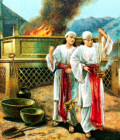
"Now Nadab and Abihu, the sons of Aaron, each took his censer and put fire in it and laid incense on it and offered unauthorized fire before the Lord, which he had not commanded them. And fire came out from before the Lord and consumed them, and they died before the Lord. Then Moses said to Aaron, 'This is what the Lord has said, "Among those who are near Me I will be sanctified, and before all the people I will be glorified."' And Aaron held his peace."
- Leviticus 10:1-3

 We have this brief narrative, in which Moses tells of us two of the sons of Aaron, the newly-appointed high priest," offering "unauthorized fire" (KJV, "strange fire") on the altar of the Lord. This may mean that, where they had been commanded to keep a continuous fire on the altar, they instead began their work with a newly-kindled flame. Or, as in Keil and Delitzsch, this may refer to an unscheduled time or in an improper place. The text here doesn't explain the reference, presumably because it was written by Moses at the time, or soon after, so the details would have been publicly known.

The Lord's response is surprising. He doesn't ask simply, "Why didn't you do things the way I told you?" Rather, He rebukes it as an affront to His holiness.

We see a similar rebuke, also to the priests, in Malachi 1:6, "'A son honors his father, and a servant his master. If then I am a father, where is My honor? And if I am a master, where is My fear?' says the LORD of hosts to you, O priests, who despise My name. But you say, ‘How have we despised Your name?’" There, the priests feign ignorance of their sins: "How have we despised Your name?" they ask.

Manmade worship, labeled theologically as "will-worship," is an affront to God's holiness because it places His worship at the whim of fallen, sinful man. It brings His worship down to our level, rather than up to His. It treats His worship like actual manmade worship of pagan deities. It is no longer worship but abuse. John Calvin (II.8.17), describes it as, "the licentious daring which would subject the incomprehensible God to our senses..." This principle is known in Reformed theology as "the regulative principle of worship" (hereafter "RPW"). It is often phrased as, "Whatever is not commanded is forbidden."

This contrasts with the Lutheran concept, which holds that, "Whatever is not forbidden is permitted." These Protestant views I consider to be consistent with Paul's admonition in I Corinthians 1:40, that "all things should be done decently and in order." And, of course, it contrasts with Catholicism, which holds that the Pope is the Vicar of Christ, and can therefore create whatever he wants in God's name. 

The RPW is prominent in Reformed confessional tradition. In the Second Helvetic Confession, the confessional standard of the Swiss and Hungarian Reformed churches, Chapter V, we read, "[W]e teach that God is to be adored and worshiped as He Himself has taught us to worship, namely, 'in spirit and in truth' (John 4:23 f.), not with any superstition, but with sincerity, according to His Word; lest at anytime He should say to us: 'Who has required these things from your hands?' (Isa. 1:12; Jer. 6:20). For Paul also says: 'God is not served by human hands, as though he needed anything,' etc. (Acts 17:25)." And in the Westminster Confession, the confessional standard of Reformed churches in the Scottish tradition, usually titled "Presbyterian," XXI:1, we read, "[T]he acceptable way of worshiping the true God is instituted by Himself, and so limited by His own revealed will, that He may not be worshiped according to the imaginations and devices of men, or the suggestions of Satan, under any visible representation or any other way not prescribed in the holy Scripture."

 This narrative in Leviticus is a case-law application of the Second Commandment. The fact that God puts His worship in such a prominent place in His Law indicates how important it is in His estimation, regardless of how lackadaisically we treat it. That is why I personally could never, in good conscience, be a member of any but a Reformed church. That is not to say that I think that only the Reformed are Christians. In fact, if my family attended an orthodox Lutheran church, where now they attend none, I would bless God, and not quibble. But in my own actions, my conscience is more thoroughly trained, and I would not make that choice for myself.

Wednesday, July 13, 2011

The Prosperity of the Gospel in the Theology of Jonathan Edwards


Jonathan Edwards is probably the most famous theologian ever produced by the United States. Even though he died about twenty years before our independence, his preaching has been credited with beginning the great revival which inspired the colonials to resist British tyranny. I seek here to focus attention on Edwards' eschatological view, now called postmillennialism. It is seen especially plainly in his most famous sermon, "An Humble Attempt to Promote Prayer for Revival." Since Edwards' view is explained better than I can do in the article linked above, I will not attempt to do so. I wish here merely to list the Scriptures that Edwards believed taught the successful spread of the Gospel in this age.

In Genesis: 12:3, 18:18, 22:18, 26:4, and 28:14

In the Psalms: 2:6-8 (cf Hebrews 1:2 and 2:8), 22:27, 65:5, 65:8, 67:7, 72:11, 72:17, 98:3, 113:3

In Isaiah: 2:2, 11:9, 54:1-2, 54:5, 60:12

In Jeremiah: 3:17, 10:11, 10:15

Malachi 1:11

Romans 11:12 and 25

In "Taking Hold of God," Editor Joel Beeke comments, "In typical Puritan fashion, Edwards urged believers to turn these promises into prayers, calling upon the Lord to extend the kingdom of His Son. Christ's victorious position at God's right hand should move us to pray to God to establish Christ's royal dominion ('the rod of thy strength') in the very midst of His enemies (Psalm 110)."

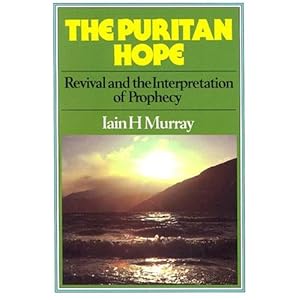
Further information on the Puritan view of last things and its impact on missions can be found in "The Puritan Hope"," by Iain Murray. Other books on postmillenialism can be found here.