Showing posts with label jeremiah. Show all posts

Saturday, May 23, 2026

Are Pagans Accountable to God for Their Idolatry?

I have often been told that the First and Second Commandments do not apply to pagans, and that the civil magistrate is not accountable for the enforcement of the first four commandments. These are supposedly only for the professing people of God. But is this what we see in Scripture? 

"A sword against the Chaldeans, declares the Lord, and against the inhabitants of Babylon, and against her officials and against her wise men! A sword against the diviners, that they may become fools! A sword against her warriors, that they may be destroyed! A sword against her horses and against her chariots, and against all the foreign troops in her midst, that they may become women! A sword against her treasures, that they may be plundered! A drought against her waters, that they may dried up! For it is a land of images, and they are mad over idols" (Jeremiah 50:35-38). 

This is the time when the Babylonians are pillaging Judah, the Southern Kingdom, and we would expect God's judgment against her for her crimes against his covenant people. And, in fact, we see that in Jeremiah. Yet that is not the case in the stanza above. Babylon, her people, her leaders, her religious figures, even the mercenaries working for her, are judged, not for harming Judah, but for loving images and idols! 

The Babylonians were a pagan people. They had never been in covenant with Jehovah. It is from that region that God had called Abraham out of the darkness of idolatry into the light of His covenant of grace (Genesis 11:31-12-2). God in His grace separated Abraham from the unbelief of his kin and neighbors. And now in Jeremiah, roughly fifteen centuries later, God in His justice would destroy the people left behind by Abraham. 

Thus we see that no man, regardless of time or clime, is independent of the commandments of God. 


Monday, April 20, 2026

The Restoration of the Jews according to Jeremiah 33, with Zechariah and Hebrews

"Behold, the days are coming, declares the Lord, when I will fulfill the promise I made to the house of Israel and the house of Judah. In those days and at that time I will cause a righteous branch to spring up for David, and He shall execute justice and righteousness in the land. In those days Judah will be saved and Jerusalem will dwell securely. And this is the name by which it will be called: 'The Lord is our righteousness.' for thus says the Lord: David shall never lack a man to sit on the throne of the house of Israel, and the Levitical priests shall never lack a man in My presence to offer burnt offerings, to burn grain offerings, and to make sacrifices forever." (Jeremiah 33:14-18) 

To my mind, this is an exhilarating passage, because it unites so many messianic themes. The Branch is an epithet used for the coming Messiah several times in Jeremiah, and points to the coming of Jesus, about 600 years after the historical events of the book. The prophet uses several confirmatory references that we know from the New Testament. First, the Branch will cause His people to bear the name "The Lord is our righteousness." This should cause any Christian to think immediately of the words of Paul in II Corinthians 5:21: "For our sake, He [the Father] made Him [Jesus] to be sin who knew no sin, so that, in Him, we might become the righteousness of God." Contrary to the claims of some dispensationalists, this proves that the future conversion of the Jews will occur on the same basis as the conversion of the Gentiles, by faith alone in Christ alone, so that His righteousness is imputed to the elect believer. There is no separate class of saved people among the Jews (Acts 15:11). They simply follow a different historical track to arrive at that same place. 

Furthermore, Jeremiah tells us that the Branch will fulfill a dual role, to fill the throne of David forever. "Once for all I have sworn by My holiness; I will not lie to David. His offspring shall endure forever, his throne as long as the sun before Me. Like the moon it shall be established forever, a faithful witness in the skies" (Psalm 89:35-37). The other is that He will sustain the work of the Levitical priests. We know that Jesus was of the tribe of Judah, not of Levi. However, the Epistle to the Hebrews addresses that question by telling us that Jesus's priesthood is not according to Levi, but according to the pattern of Melchizedek. "The one of whom these things are spoken belonged to another tribe, from which no one has ever served at the altar. For it is evident that out Lord was descended from Judah, and in connection with that tribe Moses said nothing about priests. This becomes even more evident when another priest arises in the likeness of Melchizedek, who has become a priest, not on the basis of a legal requirement concerning bodily descent, but by the power of an indestructible life. For it is witnessed of Him, 'You are a priest forever after the order of Melchizedek'" (Hebrews 7:13-17, quoting from Psalm 110:4; see also Hebrews 4:14-5:10). Together we have the Priest-King prophesied by Zechariah: "Behold the man whose name is the Branch, for he shall branch out from his place, and he shall build the temple of the Lord.It is he who shall build the temple of the Lord and shall bear royal honor, and shall sit and rule on his throne. An there shall be a priest on his throne, and the counsel of peace shall be between them both" (Zechariah 6:1-13, using Josiah the high priest as a type). 

There can be no doubt that that the restoration of Israel will come, not as the political event expected by dispensationalism, but as a Gospel event, founded upon Jesus Christ alone as savior. It won't be at the same time as Gentile believers, but it will be by exactly the same faith, atonement, and imputation of His righteousness alone.

Monday, April 13, 2026

The Restoration of the Jews in Jeremiah 30 and Romans 11

I have written before on the subject of the conversion of the Jews (here, here, and here), so this post will rehash some material from those earlier posts. However, it has been several years, so I feel a need to revisit the question, and from a different text. 

"Thus says the Lord: Behold, I will restore the fortunes of the tents of Jacob and have compassion on his dwellings; the city shall be rebuilt on its mound, and the palace shall stand where it used to be. Out of them shall come songs of thanksgiving, and the voices of those who celebrate. I will multiply them, and they shall not be few; I will make them honored, and they shall not be small. Their children shall be as they were of old, and their congregation shall be established before Me, and I will punish all who oppress them. Their prince shall be one of themselves; their ruler shall come out from their midst; I will make Him draw near, and He shall approach Me, for who would dare of himself to approach Me, declares the Lord?: And you shall be My people, and I will be your God" (Jeremiah 30:18-22). 

The first part of these verses could be taken to refer to the restoration of Judah after the exile in Babylon, the same events we see described in Ezra and Nehemiah. However, that is just a launching point, used typologically for events we have yet to see either in Israel or among the Jewish diaspora. 

While modern Jews are mostly secular, often even agnostic or atheist, the people described in this passage are expressing thanks and celebrating God, because they are a people who are established in faithfulness before their God. 

The description of their prince is especially amazing to me, because it is couched in the same language as the davidic, messianic prince. Compare the words of Deuteronomy 18:15: "The Lord your God will raise for you a prophet like me [I. e., Moses] from among you, from your brothers...," and its explicit fulfillment in Acts 7:37. This is none other than the Lord Jesus Christ, the Son of David: "He will be great and will be called the Son of the Most High. And the Lord God will give to Him the throne of His father David, and He will reign over the house of Jacob forever, and of His kingdom there will be no end" (Luke 1:32-33). 

Jeremiah is prophesying to Israel a hope, not merely of the restoration to the land after exile in Babylon, but restoration to the covenantal relationship with her God that she had eschewed in idolatry. He remained faithful, though she was faithless (II Timothy 2:13). As he says to Israel: "You shall be My people, and I will be your God" (Jeremiah 30:22), just as He first said to them in Exodus: "I am the Lord, and I will bring you out from under the burdens of the Egyptians, and I will deliver you from slavery to them, and I will redeem you with an outstretched arm and with great acts of judgment [against them]. I will take you to be My people, and I will be your God, who has brought you out from under the burdens of the Egyptians" (Exodus 6:6-7).

See some historical views on the matter here and here

Friday, May 23, 2025

Human Moral Inability and the Gospel

 "I know, O Lord, that the way of man is not in himself, that it is not in man who walks to direct his steps" (Jeremiah 10:23). 

I have written many times about the doctrine of total depravity. This is the doctrine of total inability, which is closely related, but distinct. Total depravity is the condition, while total inability is the result. That is, sin has affected every faculty of our humanity, the result of which is that there REMAINS no native ability in us to perform any moral good. The two things are often equated, but I am treating them separately, because I think that Scripture addresses them separately. 

It is a common error of supporters of free will that the doctrine of total inability is an invention of John Calvin, based on a misreading of the writings of Paul. I deliberately chose the verse above from Jeremiah to show that both aspects of that accusation are wrong. Total inability is an invention of neither Paul nor John Calvin. 

Rather, we see in the prophet his concern that men are unable to obey God from any ability in ourselves. As he faced the coming prospect of the exile of Judah in Babylon, he lamented that Judah could not reform himself. So, he pleaded, "correct me" (verse 24), because I cannot correct myself. That is, speaking on behalf of his people. 

As theologian John Frame has said, "Although fallen persons are capable of externally-good acts (acts that are good for society), they cannot do anything really good, I. e., pleasing to God (Romans 8:8). God, however, looks on the heart. And from His ultimate standpoint, fallen man has no goodness, in thought, word, or deed. He is, therefore, incapable of contributing anything to his salvation."

That is the connection of this doctrine to the gospel. The inability of men to display the righteous nature that God requires would naturally doom all men to eternal judgment (Hebrews 12:14), would display, not injustice on God's part, but rather hopelessness on the part of men. Instead, God established a righteousness which is by faith alone, the imputation of the perfect righteousness of a surety, an alien righteousness, granted to every sinner for whom He died on the cross, Jesus of Nazareth (Isaiah 26:12, John 6:37-39, II Corinthians 5:21). 

Tuesday, August 20, 2024

God is the Potter, and Men Are the Clay

"The Lord has made all for Himself, yes, even the wicked for the day of doom" (Proverbs 16:4). 

This verse amazes me, because it turns a complex and difficult topic into one simple sentence. It tells us that God, Jehovah, is the Creator, and that He has made all things, including the wicked, not for our own purposes, but for His. Paul uses the image of the potter to convey the same concept: "You will say to me, then, 'Why does He still find fault? For who has resisted His will?' But indeed, O man, who are you to reply against God? Will the thing formed say to him who formed it, 'Why have you made me like this?' Does not the potter have power over the clay, from the same lump to make one vessel for honor and another for dishonor?" (Romans 9:19-21; see also Jeremiah 18:1-17). Paul's "vessel for dishonor" is the same as Proverbs' "wicked." 

Such Scriptures leave no ground for imagining human autonomy. The God of the Bible is no pagan deity who molds people like pinballs to bounce their own way through life at their own whim or mystical karma/fate. In fact, it is exactly this rejection of autonomy which is the real justification for unbelief. the unbeliever desperately desires to imagine that he is the captain of his own fate, and his imagination is cast down if he ever acknowledges that God is God and the man is not.

We see the same thing in the addict of free-will theology. He, too, retains from unbelief the assumption of his own autonomy. "God didn't create us to be robots," he protests. No, God made us to be His servants; it is sin that makes us robots. Yet, the free-will theologian has nothing to say about his enslavement sin. That, he never says out loud, is preferable to being enslaved to the God who made him. 


Wednesday, October 4, 2023

The Commandments of God in Stone and the Hearts of Men


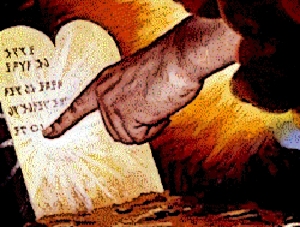
Most people are not aware that God gave Moses the Ten Commandment not once but twice. The first time is described in Exodus 24:12: "The Lord said to Moses, 'Come up to Me on the mountain and wait there, that I may give you the tablets of stone, with the law and the commandment, which I have written for their instruction.'" And again in 31:18: "And He gave to Moses, when He had finished speaking with him on Mount Sinai, the two tablets of the testimony, tablets of stone, written with the finger of God." These tablets were the ones shattered by Moses in anger at the idolatry of the Israelites in their worship of the golden calf (chapter 32).

After shattering the original tablets, Moses was then tasked with replacing them with a new pair of tablets, which he himself fashioned. "The Lord said to Moses, 'Cut for yourself two tablets of stone like the first, and I will write on the tablets the words that were on the first tablets, which you broke'" (Exodus 34:1). As when Adam fell into sin, when Moses broke the commandments, literally, he was cursed with an increase in labor, having to carve and carry the stone tablets himself. 

This historical event came to my mind during a recent Sunday school lesson at my church. Part of that lesson dealt with the law of God written on human hearts. We see this in two places in the New Testament. First, Paul mentions it in Romans 2:15: "[Gentiles] show that the work of the law is written on their hearts, while their conscience also bears witness, and their conflicting thoughts accuse or even excuse them." Then the writer of Hebrews mentions it again as part of the new covenant, which he, in turn, borrowed from the Prophet Jeremiah: "This is the covenant that I will make with them after those days, declares the Lord: I will put My laws on their hearts, and write them on their minds" (Hebrews 10:16, from Jeremiah 31:33). 

Notice the parallels between these two pairs of events. In each, God gave His holy commandments, but they were broken by men. And then God gave them again

By this pairing of breaking and restoration, we see two magnificent things. First is that God does not lower His standards merely because men cannot meet them. To do so would be to betray His own holiness. And second is His mercy. While the breaking of the law naturally incurs the death penalty (Romans 6:23), God's work is restorative, not punitive, for His elect. He restores His law (Isaiah 42:21). And He restores His elect through the imputation by faith of the perfect obedience of His only-begotten Son, Jesus Christ (John 1:17, II Corinthians 5:21, Romans 3:21-22). 

Wednesday, May 25, 2022

Free Grace and the Creator-Creature Distinction

"Esteem not yourself the better for what you may carry with you. Think not to be accepted because of your present. It is not your money, Isaiah 55:1, John 7:37, nor your double money in your hand that will fetch you corn from above, though it may come from Egypt. Silver and gold, your own works and worthiness, are of no value at the mint of free grace. But there it is, and thence you must have whatever may hinder you welcome at the court of Heaven." -Puritan Elisha Coles, "A Practical Discourse of God's Sovereignty" 

People like to bargain. "If you do X, then I will do Y for you." That is part of our existence as creatures of a similar class. However, seeing our autonomy from our fellow creatures, we imagine that we have a comparable stand with our Creator, offering Him some good works, according to our own standards, in exchange for His forgiveness. 

However, our relationship with God is not of the same sort as that with our fellow creatures. We may be equal to them, and with the autonomous right to offer voluntary exchanges, but neither applies to our relationship as creature to our Creator. 

As our Maker, God retains an absolute right over His creatures. The Bible compares that relationship to that between the potter and his clay: "O House of Israel, can I not do with you as this potter has done? declares the Lord. Behold, like the clay in the potter's hand, so are you in My hand, O House of Israel" (Jeremiah 18:6; see also Romans 9:21). And what does the lump of clay have that it can exchange with the potter to change its form? Nothing. 

That is why the justification of God's people can be only by His voluntary condescension. "What shall we say then? Is there injustice on God's part? By no means! For He says to Moses, 'I will have mercy on whom I have mercy, and I will have compassion on whom I have compassion.' So then, it depends not on human will or exertion, but on God, who has mercy... So then, He has mercy on whomever He wills, and He hardens whomever He wills" (Romans 9:14-18). 


Wednesday, May 18, 2022

An Ancient Prophetic Warning to Today's Mormons

"The prophets are prophesying lies in My name. I did not send them, nor did I command them or speak to them. They are prophesying to you a lying vision, worthless divination, and the deceit of their own minds. Therefore, thus says the Lord concerning the prophets who prophesy in My name, although I did not send them, and who say, 'Sword and famine shall not come upon this land':  By sword and famine those prophets shall be consumed. And the people to whom they prophesy shall be cast out in the streets in Jerusalem, victims of famine and sword, with none to bury them - them, their wives, their sons, and their daughters - for I will pour out their evil upon them" (Jeremiah 14:14-16). 

This warning was expressed to Israel by a God-sent prophet, because they had been receiving the false prophecies and promises of fake prophets. Those prophets gained status and wealth by making promises to the people, promises which those people gobbled up greedily. Why? Because these prophecies exalted them, in contrast to Jeremiah, who preached warnings and judgments which were true, but not what they wanted to hear. 

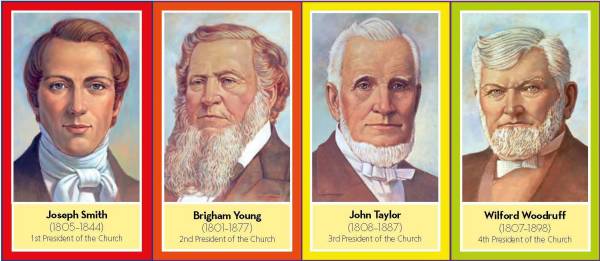
In the same way, the modern members of the so-called Church of Jesus Christ of Latter-Day Saints, or more-commonly the Mormons, have their own prophets, who preach to them pleasing words, promising godhood and rewards to them, while those same Mormons turn their backs on true Christians who try to point out the failed prophecies and false doctrines proclaimed by the Mormon prophets. 


Wednesday, December 1, 2021

The Omnipresence of God: Everywhere and All the Time

"Am I a God at hand, declares the Lord, and not a God far away? Can a man hide himself in secret places so that I cannot see him? declares the Lord. Do I not fill heaven and earth? declares the Lord." 

-Jeremiah 23:23-24 

With the Scriptures, Christians have always held that God is omnipresent. That is, He is everywhere. 

David made the same point: "Where shall I go from Your Spirit? Or where shall I flee from Your presence? If I ascend to heaven, You are there! If I make my bed in Sheol, You are there! If I take the wings of the morning and dwell in the uttermost parts of the sea, even there Your hand shall lead me, and Your right hand shall hold me. If I say, 'Surely the darkness shall cover me, and the light about me be night,' even the darkness is not dark to You; the night is bright as the day, for darkness is as light with You" (Psalm 139:7-12). 

However, though the two passages make the same point, they reveal very different attitudes toward that truth. In Jeremiah, God is rebuking the Israelites for imagining that the idolatries that they perform in secret are hidden from the God whom they profess. In contrast, David describes that same omnipresence as a comfort, knowing the presence of God both as his defender and as a spur to reject temptation. 

Do we see America's professing Christians in either of these passages? We still have enough of our Christian heritage left that few profess outright atheism or worship pagan deities. Yet, we see the false promise of Satan, that he will give his devotees autonomy from the rule of God, in the actual spiritual practice and lives of those same Christians. 

We go to church on Sunday, pray, sing God's praises, and read His word. Then Monday through Saturday, too many of us live as the pagans we really are, whether it is treachery toward loved ones, sexual immorality, covetousness, or any of the other sins in our minds that are not visible to others, we imagine that God sees nothing of them. We are free to lust because these six days belong to us, and God gets His required share on Sunday mornings. 

That is exactly what God rebukes through Jeremiah. Do we imagine that God sees us on Sunday mornings, but then turns blind Monday through Saturday? Many Christians act as if that is the case. But His point, as well as that of David, is that autonomy is a pipe dream, because God is everywhere, always knowing, and sees the truth of our hearts. Who is sovereign? God or us? God does not share. 

Wednesday, September 22, 2021

The Potter, the Clay, and the Doctrine of Reprobation


"Who are you, O man, to answer back to God? Will what is molded say to its molder, 'Why have you made me like this?' Has the potter no right over the clay to make of the same lump one vessel for honorable use and another for dishonorable use?" (Romans 9:20-21).

"Now in a great house, there are not only vessels of gold and silver but also of wood and clay, some for honorable use, some for dishonorable. Therefore, if anyone cleanses himself from what is dishonorable, he will be a vessel for honorable use, set apart as holy, useful to the master of the house, ready for every good work" (II Timothy 2:20-21). 

The first text above, Romans 9:20-21, is one of the classic prooftexts for the biblical doctrine of reprobation, the understanding that God has chosen the nonelect to remain in unbelief, and receive the judgment of damnation in Hell. The Apostle did not create this analogy, but rather borrows it from Isaiah 29:16: "You turn things upside down! Shall the potter be regarded as the clay, that the thing made should say of its maker, 'He did not make me': or the thing formed say of Him who formed it, 'He has no understanding.'" And Jeremiah 18:6: "'O house of Israel, can I not do with you as this potter has done?' declares the Lord. 'Behold, like the clay in the potter's hand, so are you in My hand, O house of Israel.'"

People who hold to any level of Pelagianism avoid Romans 9:21, as they do, in fact, the entire chapter. To say that God claims the right of creator to use His creations as His glory requires is to deny any amount of sovereignty in humans. Yet, just as Satan offered Adam and Eve in Genesis 3:5, the semi-Pelagian advocates an autonomy in men, as if we were self-created and self-redeemed. 

God knows nothing of such autonomy, but, instead, claims the same sovereignty over His human creations as the potter claims over the clay, to make some into vessels of honor, that is, of holiness and blessedness, and others into vessels of dishonor, that is, into holders of wastes to be shattered and discarded (See Leviticus 6:28, 11:33, etc.). 

Saturday, July 10, 2021

The Marital Faithfulness of Jesus to His Church


"I will betroth you to Me forever. I will betroth you to Me in righteousness and in justice, in steadfast love and in mercy. I will betroth you to Me in faithfulness. And you shall know the Lord." 
- Hosea 2:19-20 

This is a sweet promise. If you have read the rest of Hosea, then you know that much of it is about the unfaithfulness of Israel, the covenant community. Yet God takes it upon Himself to describe a time in which He will abolish the unfaithfulness of that community. 

First, I want to point to the last word in that passage: Lord. That English word is used as a gloss for the tetragrammaton, Yahweh, or Jehovah, the name used by by the preincarnate Christ whenever He acted in His mediatorial role. It is Jesus, His cross work, and His resurrection that have purchased the Church, faithful Israel in the Old Testament and the united Jews and Gentiles in the New Testament. His purchase, being effectual in all for whom it was intended (John 6:37-39), cannot fail to make every true believer, not just a believer, but a faithful servant. 

He uses marital imagery, a common theme in both testaments (such as Isaiah 54:5-6, Jeremiah 3:14, and Revelation 19:6-9). This is why our own marriage ceremony includes the vow to be faithful "until death do us part." Granted, that vow has become a mere anachronism among us, but it is not an anachronism to God. His vows are eternal and unfailing, even though we, who call ourselves by His name, are certainly not. "If we are faithless, He remains faithful - for He cannot deny Himself" (II Timothy 2:13).  

This is why I believe so passionately in the perseverance of the saints. I don't use the phrase "once saved always saved," because of its antinomian implications. Rather, God's faithfulness works in His blood-bought people by keeping them faithful, both in the sense of having faith and in the sense of faithful obedience to His word. 

Wednesday, September 30, 2020

The Nature of Unbelief and the Necessity of the Omnipotent Power of the Holy Spirit

 As Moses approached the end of his life, he faced the prospect of leaving his people to the leadership of someone else, Joshua. Under such circumstances, it is natural for the outgoing leader to believe that his successor will be unable to match the leadership that he had given. It is just part of the fallen nature of men to think that no one else can do the job as well as we could. 

He gives a sermon to Israel, warning them of consequences if they failed to be faithful to God, or, in contrast, the blessings that would come from faithfulness. In that sermon, we find this paragraph (Deuteronomy 29:2-9): "You have seen all that the Lord did before your eyes in the land of Egypt, to Pharaoh and to all his servants and to all his land, the great trials that your eyes saw, the signs, and those great wonders. But, to this day, the Lord has not given you a heart to understand or eyes to see or ears to hear. I have led you forty years in the wilderness. Your clothes have not worn out on you, and your sandals have not worn off your feet. You have not eaten bread, and you have not drunk wine or strong drink, that you may know that I am the Lord your God. And when you came to this place, Sihon the king of Heshbon and Og the king of Bashan came against us to battle, but we defeated them. We took their land, and gave it for inheritance to the Reubenite, the Gadites, and the half-tribe of the Manassites. Therefore, keep the words of this covenant and do them, that you may prosper in all that you do."

Moses gives a partial recapitulation of the miraculous events that Israel had seen, ranging from God's judgments on the Egyptians, sustaining them in the wilderness, and, most recently, the defeat of Sihon and Og, powerful Canaanite kings. But, in the midst of that recapitulation, he says something odd: "But, to this day, the Lord has not given you a heart to understand or eyes to see or ears to hear" (verse 4). 

God had given Israel every possible evidence that He was real and that He had chosen Israel as His special covenant people. We read this passage and assume that any rational people would understand that Jehovah is God, with absolute power over the nations. Yet, we know that Israel quickly descended into idolatry. In Judges 17:6 (and repeated in 21:25), we are told, "In those days there was no king in Israel. Everyone did what was right in his own eyes."

How could there be such a disconnect between the evidence of their eyes and the unbelief in their hearts? 

Moses tells us how: "To this day the Lord has not given you heart to understand or eyes to see or ears to hear" (Deuteronomy 29:4). The same characteristic would later be addressed by the prophets (e. g., Isaiah 6:9 and Jeremiah 5:21), and even by Jesus Himself (Matthew 13:14-15). Contrary to our view of ourselves, fallen men do not have a natural ability to see the hand of God and give Him the thanks that he deserves. Rather, we love sin more than God, and, therefore, suppress our knowledge of His reality and goodness (Romans 1:18-22). 

This inclination has significant implications for apologetics and evangelism. When we explain the Gospel to unbelievers, their inclination to reject it is not because of a lack of evidence. They already know that the Gospel is true! Rather, their consciences tell them that recognizing the reality of the Gospel would require that they repudiate sin. And they love sin more than they love God! It is not within the power of the Christian to break that addiction in the unbeliever. It is only the Holy Spirit who can do that. Yes, belief requires the power of omnipotent God to triumph over unbelief.
Wednesday, February 19, 2020

The Canons of Dort versus the Haters of God's Sovereign Grace

In the Canons of Dort (First Head of Doctrine, Article 7), the Synod, the first and only universal council of the Reformed Protestant churches, defines election in this way: "Election is the unchangeable purpose of God, whereby, before the foundation of the world, He hath, out of mere grace, according to the sovereign good pleasure of His own will, chosen, from the whole human race, which had fallen through their own fault from their primitive state of rectitude into sin and destruction, a certain number of persons to redemption in Christ, whom He from eternity appointed the Mediator and Head of the elect, and the foundation of salvation. This elect number, though by nature neither better nor more deserving than others, but with them involved in one common misery, God hath decreed to give to Christ, to be saved by Him, and effectually to call and draw them to His communion by His word and Spirit, to bestow upon them true faith, justification, and sanctification; and having powerfully preserved them in the fellowship of His Son, finally, to glorify them for the demonstration of His mercy and for the praise of His glorious grace..."

I love the doctrine of election. I know my own wayward heard (Jeremiah 17:9), so I am conscious of the fact that I would never have submitted to God out of any original motion of my heart. It took the sovereign intervention of God to change my heart (Ezekiel 36:26-27) and will (Philippians 2:13) to save me from the dominion of sin and Satan. "So then it depends not on human will or exertion, but on God, who has mercy" (Romans 9:16).

Yet, there are men who hate the doctrine of election. They hate it so much that they make up evil caricatures of it, because their biblical arguments are so unconvincing. I have had anti-Calvinists tell me that the doctrine of election means that people can plead with God to save them, but He will shut them away because they aren't elect. Really? Where does the Bible describe any such person? Rather, the Bible asserts just the opposite: "None is righteous, no, not one; no one understands; no one seeks for God. All have turned aside; together they have become worthless; no one does good, not even one" (Romans 3:10-12). So, the Bible says that not even one person, of himself, seeks after God. Jesus also addressed this subject: "No one can come to Me unless the Father who sent Me draws him" (John 6:44). So, this hypothetical situation invented by the anti-Calvinist is something that the Bible says is impossible. Yet, the same caricature is repeated ad nauseum.

However, what these verses do tell us is that there would be no one saved without election. That is the world preferred by the anti-Calvinist. Better that no one be saved than that God choose those who will be saved. 

To my mind, that makes the anti-Calvinist evil, not the sovereign God described by the Canons.


The Synod of Dort

Wednesday, November 20, 2019

American Evangelical Tolerance: The Game Plan That Failed

In America, the popular version of evangelical Christianity has followed our new national orthodoxy: "Thou shalt not offend." God loves everyone unconditionally. Even the Pope has joined in, claiming that atheists might be saved without knowing it. To talk about God's holiness, wrath, or judgment is to be considered too fanatical for polite company.

However, that American religion is not at all like the biblical faith from which it came.

Here is what the Bible says about the justice of God: "That day [of judgment] is the day of the Lord GOD of hosts, a day of vengeance, to avenge Himself on His foes. The sword shall devour and be sated and drink its fill of their blood" (Jeremiah 46:10. Where is that tolerant, all-loving deity of today's Christian? Certainly not in this verse.

Here is another one: "The LORD has a sword; it is sated with blood; it is gorged with fat, with the blood of lambs and goats, with the fat of the kidneys of rams. For the LORD has a sacrifice in Bozrah, a great slaughter in the land of Edom" (Isaiah 34:6).

These verses are just examples, not alone in expressing the violence of the judgment of God. Moreover, they reveal a God who is utterly unlike the creampuff advocated by the average American professing evangelical. Why is that?

It is because of the content of the "love" advocated by that brand of evangelical. He thinks of God's love as requiring approval of whatever he wants to do. Only a meanie describes anything as wicked or as deserving of judgment.

The problem is that the love described by such people is love for them, and for what they want. They do not allow the other side of love, God's love for Himself. God is not allowed to love Himself or His holiness or His word. In other words, such people advocate a one-directional tolerance, a tolerance that benefits them. They feel no obligation to tolerate God or what He values. And, sadly for them, God does not feel bound to honor their definition of tolerance. "Woe to those who call evil good and good evil, who put darkness for light and light for darkness, who put bitter for sweet and sweet for bitter! Woe to those who are wise in their own eyes, and shrewd in their own sight!" (Isaiah 5:20-21). 

You see, when these evangelicals created their religion of unconditional love and tolerance, they just assumed that God would go along with the gameplan. If they had consulted Him, though, they would have discovered that God doesn't play by their plan.

Saturday, November 9, 2019

The Bible, Philosophy, and the Mormon Doctrine of Pre-existence

One of the least-known doctrines of Mormonism is the pre-existence of souls. One of their websites explains it this way: "Before we were born on the earth, we lived in the presence of our Heavenly Father as His spirit children. In this premortal existence, we attended a council with Heavenly Father’s other spirit children... Throughout our premortal lives, we developed our identity and increased our spiritual capabilities. Blessed with the gift of agency, we made important decisions, such as the decision to follow Heavenly Father’s plan. These decisions affected our life then and now. We grew in intelligence and learned to love the truth, and we prepared to come to the earth, where we could continue to progress. None of us on earth has a memory of the premortal existence.  This is because a 'veil of forgetfulness' has been drawn over our minds."

Another of their websites proudly proclaims that the Mormon doctrine is from philosophers, not from the Bible: "Several philosophers from Plato through Leibniz and Kant to twentieth-century Cambridge intellectuals, dozens of poets from antiquity to Robert Frost, and numerous religious thinkers throughout the Jewish and Christian traditions, propounded a pre-earthly realm peopled by the souls of men and women yet unborn. Pre-existence has been invoked to explain 'the better angels of our nature,' including the human yearning for transcendence and the sublime; it suggests a reason for the frequent sensation of alienation and the indelible sadness of human existence." This is in spite of their oft-repeated - but false - accusation that Christians have gotten the doctrine of the Trinity from philosophy. Apparently, what is good for the goose is not good for the gander.

Scripture warns us against undue influence from unbelieving philosophy: "See to it that no one takes you captive by philosophy and empty deceit, according to human tradition, according to the elemental spirits of the world, and not according to Christ" (Colossians 2:8).

Furthermore, the Scriptures, which Mormons profess to believe, are contrary to their doctrine: "Then King Zedekiah swore secretly to Jeremiah, 'As the LORD lives, who made our souls, I will not put you to death or deliver you into the hand of these men who seek your life'" (Jeremiah 38:16, cp. Zechariah 12:1). The Mormon must answer the question, If God created our souls within us, then how can you claim that we had some eternal pre-existence? Those two things are mutually-exclusive. Where does the the authority for your doctrines lie? 


The Source of the Doctrine of the Pre-existence of Souls

Wednesday, November 6, 2019

Contending for the Faith Against False Teachers

I have regular apologetic and evangelistic interactions with pseudo-Christian cults, mainly Mormons, Jehovah's Witnesses, and Oneness Pentecostals. In each case, someone always says something like this: "Why do you judge us? Why can't you just go practice your beliefs, and leave us to practice ours?" It's a form of guilt manipulation, trying to make it seem as if I am just a big meanie.

Yet, their repeated "why's" have an answer: the commandment of Scripture.

First, we have the warning against false teachers: "Do not listen to the words of the prophets who prophesy to you, filling you with vain hopes. They speak visions of their own minds, not from the mouth of the Lord. They say continually to those who despise the word of the Lord, ‘It shall be well with you’; and to everyone who stubbornly follows his own heart, they say, ‘No disaster shall come upon you'" (Jeremiah 23:16-17). The danger of false teachers is that they leave their followers under the wrath of God, while blithely imagining their safety. That is why false teachers are so popular. "While people are saying, 'There is peace and security,' then sudden destruction will come upon them as labor pains come upon a pregnant woman, and they will not escape" (I Thessalonians 5:3). And it isn't just the cults which are the danger here. The popular TV preachers, such as Joel Osteen, are equally dangerous. They promise peace and prosperity, but never mention sin or the wrath of God. So their followers march, grinning and satisfied, into the waiting maw of Hell. 

In the face of such deceivers, the Scriptures give me a stark warning: "If I say to the wicked, ‘You shall surely die,’ and you give him no warning, nor speak to warn the wicked from his wicked way, in order to save his life, that wicked person shall die for his iniquity, but his blood I will require at your hand" (Ezekiel 3:18). If I see the false teacher and those deceived by him, and I make no effort to warn them of God's judgment, then God holds me guilty of their death! 

That's why the New Testament also gives every true Christian this commandment: "I found it necessary to write appealing to you to contend for the faith that was once for all delivered to the saints" (Jude 1:3). I do not face accounting to cultists or other false teachers for challenging their errors; I face the wrath of God if I fail to do so.

Saturday, October 26, 2019

Polytheism and the Mormon Hermeneutic

Mormons claim that there are gods other than the God of the Bible. They deny, on the other hand, that their belief makes them polytheists, because they only worship one god. However, even that is not quite true, since they claim that the Father, Son, and Holy Spirit are three distinct gods, and they worship all three. But that is beside my point.

It is true that the Bible refers to other "gods," i. e., the idols worshiped by pagan nations. Furthermore, it describes them in active, anthropomorphic terms, such as Psalm 97:7: "Worship Him, all you gods!" As when the Bible talks about the body parts of God, Mormons insist that these references are literal

However, that assertion runs into trouble when the whole Bible is considered, rather than just isolated prooftexts. 

For example, there is a plain, nonpoetic reference in Jeremiah 2:11: "Has a nation changed its gods, even though they are no gods? But My people have changed their Glory for that which does not profit." Yes, that prophet tells us, the nations have gods, but they are not real gods. Surely, in a rational hermeneutic, the statements of plain narrative should take precedence over statements in poetry. Yet, that is not the hermeneutic of Mormonism. 


Saturday, October 12, 2019

Abortion and Human Sacrifice in the Bible

"Because the people have forsaken me and have profaned this place by making offerings in it to other gods whom neither they nor their fathers nor the kings of Judah have known; and because they have filled this place with the blood of innocents, and have built the high places of Baal to burn their sons in the fire as burnt offerings to Baal, which I did not command or decree, nor did it come into My mind— therefore, behold, days are coming, declares the Lord, when this place shall no more be called Topheth, or the Valley of the Son of Hinnom, but the Valley of Slaughter. And in this place I will make void the plans of Judah and Jerusalem, and will cause their people to fall by the sword before their enemies, and by the hand of those who seek their life. I will give their dead bodies for food to the birds of the air and to the beasts of the earth. And I will make this city a horror, a thing to be hissed at. Everyone who passes by it will be horrified and will hiss because of all its wounds. And I will make them eat the flesh of their sons and their daughters, and everyone shall eat the flesh of his neighbor in the siege and in the distress, with which their enemies and those who seek their life afflict them."
- Jeremiah 19:4-9

In this passage, God is announcing His judgment on the people of Israel because of their idolatry, a literal idolatry of worshiping false gods. And what is worse is that part of their idolatry is human sacrifice, the burning of their own children as sacrifices to Baal, the Canaanite deity of storms and fertility. The Israelites were sacrificing their children because they thought that it would bring them rain and good crops.

The minor aspect of this fertility ritual is that an idol can do nothing to help our crops. It is the biblical God, Jehovah, alone who gives rain and makes the earth to be fruitful. As reward for faithfulness, He promises, "The Lord will make you abound in prosperity, in the fruit of your womb and in the fruit of your livestock and in the fruit of your ground, within the land that the Lord swore to your fathers to give you. The Lord will open to you His good treasury, the heavens, to give the rain to your land in its season and to bless all the work of your hands" (Deuteronomy 28:11-12). The Israelites had committed the irrational act of turning from the true and living God who could bless them, to a wood or stone idol which had no power at all.

But beyond the irrationality of their apostasy, the Israelites had accepted the horrific ritual of human sacrifice - and not just any humans, but rather their own children!

Compare this to our own day, in which Americans have largely abandoned the Christian heritage which had long underlain this country. And in its place we have erected many idols, not just of false religions, but also of quick riches, drugs, and entertainment. And for the sake of these idols, we sacrifice our children, washing them down the drains, torn in pieces, and removed from sight at the neighborhood abortionist's office.

What is the effect of such moral perversion?

Here is what God said to those ancient Israelites: "I will make void the plans of Judah and Jerusalem, and will cause their people to fall by the sword before their enemies, and by the hand of those who seek their life. I will give their dead bodies for food to the birds of the air and to the beasts of the earth. And I will make this city a horror, a thing to be hissed at. Everyone who passes by it will be horrified and will hiss because of all its wounds. And I will make them eat the flesh of their sons and their daughters, and everyone shall eat the flesh of his neighbor in the siege and in the distress, with which their enemies and those who seek their life afflict them" (Jeremiah 19:7-9). Where the Israelites had fed their babies to idols who could never answer them, instead they will be forced to consume their own babies, just to survive famine. The curse would be on them and their land.

How will God judge America for the same abominations? I tremble to imagine.


Wednesday, September 5, 2018

Sin and Guiding Principles

"There is a way that seems right to a man, but its end is the way to death" (Proverbs 16:25). 

Our society has become very mystical. Just listen to how we express ourselves. It is rarely "I think" now. Everything is prefaced with "I feel," instead. Movies advise us to "follow your heart." The heroes in the Star Wars movies - of which, I admit, I am a fan - are told not to think, but to let "The Force" guide their actions. 

I think that is a very dangerous way to live.

Look at the Proverb that I quoted above. Doesn't it address exactly that kind of subjectivist mentality? It warns that following feelings will lead to a deadly consequence. Why is that? "The heart is deceitful above all things, and desperately sick" (Jeremiah 17:9). 


Subjectivism, the feelings-based worldview, is based on a false, unbiblical supposition, that the heart is necessarily and naturally good. Therefore, in a confused and disturbed world, we are supposed to be able to rely on that internal compass, just as we can rely on a physical compass in a wilderness where every direction seems the same.

However, as Jeremiah tells us, the heart is not good. It isn't even neutral. Rather, it is given over to wickedness. Jesus explained this to the Pharisees in Matthew 15:18-20: "What comes out of the mouth proceeds from the heart, and this defiles a person. For out of the heart come evil thoughts, murder, adultery, sexual immorality, theft, false witness, slander. These are what defile a person. But to eat with unwashed hands does not defile anyone." Rather than as a source of guidance, it is our heart which produces every error and wicked act that we commit. To follow your heart is, just as Solomon said in the Proverb, to follow a path to death.

Picture it this way, to return to my compass analogy. If a hiker were trying to find his way through the wilderness with a compass that was broken somehow, such that it always pointed the wrong way, what would be his fate? Lost, starved, probably dead. The same is true for any man who follows his heart.

Wednesday, June 27, 2018

Total Depravity: Can the Leopard Change His Spots?

I expect unbelievers to deny that they are sinners. That is the nature of unbelief. If they understood sin, then they would understand the holiness of God and their need for a Savior. However, I am always bewildered by Christians, claiming to believe in the Bible, who deny the wickedness of men. Not that they phrase it that way, of course, but rather that they deny the logical consequences of that wickedness.

Paul tells us that the unregenerate are "dead in trespasses and sins" (Ephesians 2:1). Yet, such Christians unconsciously change that to "sick in trespasses and sins." And, as a sick person can act to make himself well, they believe that the natural man has the ability to treat his own spiritual condition.
Nicodemus

However, Scripture deals with that belief in other places, too. For example, we read, "Can the Ethiopian change his skin or the leopard his spots? Then also you can do good who are accustomed to do evil" (Jeremiah 13:23). The Prophet asks a rhetorical question, Can a man change his skin color? Or can a leopard wish away his spots? And the implied answer to both questions is "no." In the same way, he says, the wicked cannot choose to change to good. Jesus makes the same point: "What comes out of the mouth proceeds from the heart, and this defiles a person. For out of the heart come evil thoughts, murder, adultery, sexual immorality, theft, false witness, slander. These are what defile a person" (Matthew 15:18-20).

How, then, can anyone be changed? Are we doomed to the natural condition in which we were born? The Bible answers those questions, too: "I will give you a new heart, and a new spirit I will put within you. And I will remove the heart of stone from your flesh and give you a heart of flesh. And I will put My Spirit within you, and cause you to walk in My statutes and be careful to obey My rules" (Ezekiel 35:26-27).

The answer is not to gloss over the sin of man. Rather, we depend on the divine Cardiologist to perform radical surgery, removing our dead spiritual hearts, to replace them with new living hearts, rendered thereby able to love God and to obey Him. This is what Jesus calls being born again (John 3:3-8). It is the new birth which changes dead sinners to living saints.