Showing posts with label missions. Show all posts

Wednesday, July 14, 2021

Everyone Whom God Calls Will Hear the Call


There is a common claim among some semi-Pelagian groups, namely Mormons, universalists, and professed unbelievers, that there is something unfair in God's judgment of all unbelievers to Hell, because such a large portion of the world's population has never had an opportunity to hear the Gospel. How can He justly condemn those who are ignorant of His existence and requirements? 

That the challenge comes from various varieties of Pelagians is a clue to the answer: They don't believe that men deserve to be judged for sin. Therefore, they object to the judgment of some, because they reject the biblical truth that all men deserve that judgment. "All have sinned and fall short of the glory of God" (Romans 3:23). With all of the talk of equality in our modern culture, this is an equality that they want to deny. 

However, we have the hope given to us in the Gospel: "God shows His love for us in that, while we were still sinners, Christ died for us" (Romans 5:8). For us, these people say, but what about those who don't know about that? 

Not understanding the sovereignty of God, the Pelagian cannot rationally connect two ideas: If God's love and wisdom could create a way to save His people, then that same love and wisdom can find a way to bring His people to a time and place in which they can hear of it. To the Calvinist, that logic is obvious; to the Pelagian, that logic is impossible. 

We see God's inspired description of that plan in the words of Paul at the Areopagus in Acts 17:26-27: "He made from one man every nation of mankind to live on all the face of the earth, having determined allotted periods and the boundaries of their dwelling place, that they should seek God, and, perhaps, feel their way toward Him and find Him." If we understand that God has planned all of history (Isaiah 46:10), then it is easy to conceive that He has organized that history, in part, to the end that all those for whom Jesus died would unfailingly come into contact with the gospel and to be converted (John 6:37-39; Acts 13:48). 

So the answer to the challenge of Mormons, universalists, and unbelievers, when they ask, "What about those who haven't had a chance to hear?", is that there are no such people. 

Saturday, March 20, 2021

The Gospel, Our Mission, and the Crown Rights of Jesus

 In the Parable of the Great Banquet (Luke 14:12-24), we find this statement from the master of the house (representing Jesus): "Go out to the highways and hedges and compel people to come in, that my house may be filled" (verse 23). This is a paraphrase of the Great Commission: "Go therefore and make disciples of all nations, baptizing them in the name of the Father and of the Son and of the Holy Spirit" (Matthew 28:19).

Where Jesus said in the Commission that we, His people, are to disciple the nations, He adds the explanation in Luke that the goal is to fill His house. This is very different from the Commission, as it is defined by dispensationalists, that we are to be a witness to the nations (a misuse of the Matthew 24:14), that is, a failed witness. That is why most English translations of the Commission change "disciple the nations" to "make disciples from all nations." The dispensationalist expects to fail, doing no more than cherry-picking a few individual converts here and there. Or to use Luke's language, the dispensationalist expects the house of the Lord to be nearly empty

That assumption is blatant disobedience. 

In Isaiah 56:6-7, Jehovah, i. e., the preincarnate Jesus, declares, "And the foreigners who join themselves to the Lord, to minister to Him, to love the name of the Lord, and to be His servants, everyone who keeps the Sabbath and does not profane it, and holds fast My covenant— these I will bring to My holy mountain, and make them joyful in My house of prayer; their burnt offerings and their sacrifices will be accepted on My altar; for My house shall be called a house of prayer for all peoples." "Peoples," not just "people." 

How could He claim this? Because it was the promise to Him in the intra-Trinitarian covenant: "Ask of Me, and I will make the nations Your heritage, and the ends of the earth Your possession" (Psalm 2:8).

Therefore, to deny that Jesus will return to a converted world (generally, not necessarily exhaustively) is to deny His word, His crown, and His right to what has been promised to Him. 


Saturday, November 23, 2019

The Aroma of Life in the Preaching of God's Word

"Thanks be to God, who in Christ always leads us in triumphal procession, and through us spreads the fragrance of the knowledge of Him everywhere. For we are the aroma of Christ to God among those who are being saved and among those who are perishing, to one a fragrance from death to death, to the other a fragrance from life to life."
- II Corinthians 2:14-16

This is an odd passage, in which Paul compares the Gospel to smells. That is not the image that usually comes to mind for me, probably most of us, but stimulates him to great enthusiasm.

A triumphal procession was a Roman custom, in which a triumphant general, upon his return to Rome, would lead a parade consisting of him, his triumphant troops, and memorabilia of his conquest, such as idols, works of art, and, most importantly, prisoners. This is the image that Paul gives of his missionary work, with his "conquests" being those that had received the Gospel. But then he suddenly switches from that visual image to the olfactory image of the means of his conquest. The weapons of the Christian are never implements of the military, such as swords and spears, but are only spiritual: "The weapons of our warfare are not of the flesh but have divine power to destroy strongholds" (II Corinthians 10:4).

Our spiritual weapon consists in the verbal proclamation of the Gospel (Romans 10:14-15), because God has promised His power, not in man's weapons, but only in His word: "So shall My word be that goes out from My mouth; it shall not return to Me empty, but it shall accomplish that which I purpose, and shall succeed in the thing for which I sent it" (Isaiah 55:11).

Another thing we notice in Paul's remarks is that the response to God's word is not of just one kind. There is always a response, but it can be either of two kinds: "to one a fragrance from death to death, to the other a fragrance from life to life." To him who shall die in unbelief, the word of God is a smell of death, a warning that he rejects, falling further into unbelief. However, to him who will believe, the word of God bears life as the Holy Spirit applies it to his heart in regeneration. The true preaching of the Gospel will always have one effect or the other.

Saturday, May 11, 2019

The General Revelation of God and Romans 1:18

I frequently refer to Romans 1:18:  "The wrath of God is revealed from heaven against all ungodliness and unrighteousness of men, who, by their unrighteousness, suppress the truth." The significance of this verse is that it is a denial of the assertion of some Arminians and most unbelievers, especially the Mormons, that God is unjust to condemn to Hell those who have never heard the Gospel. Those people are supposedly never given a chance to convert, and, therefore, should not be punished for something that they did not know. That assertion is false. As Paul explains (see Romans 1:16-23 for context), no one is ignorant of the existence of God and our accountability to Him; rather, the unbeliever suppresses that knowledge. Should a person not be accountable for what he knows, even if he avoids that knowledge? Thus, the justice of God is vindicated.

Paul's explanation here is not something out of the blue, as if it originated with him. In fact, it is a concept that he brought forward from the Old Testament.

For example, we see Psalm 97:6 (compare Psalm 19:1-4): "The heavens proclaim His righteousness, and all the peoples see His glory." This is what theologians call "general revelation," God's revealing Himself in the creation, exactly what Paul also mentions in Romans 1:20. And notice that the Psalmist explicitly tells us that the revelation is visible to all cultures, refuting the assertion of the critics mentioned above. 

Consider also Psalm 98:2-3: "The Lord has made known His salvation; He has revealed his righteousness in the sight of the nations. He has remembered His steadfast love and faithfulness to the house of Israel. All the ends of the earth have seen the salvation of our God." Here the Psalmist repeats, in even stronger terms, his belief that God has revealed, not just His Person, but also that He is the Savior available to all who believe. This is a poetic version of John 3:16, showing in what way God loves the world and then His plan for believers. 

The Scriptures preclude any rational accusation of injustice against God.. He reveals Himself, His goodness, and His plans. If men refuse to see that revelation, because it would deprive them of their pet sins, then He can only be said to be just in His consequential judgment upon them.

Saturday, March 9, 2019

Reprobation, the Rejection of the Gospel, and the Sovereignty of God

Many professing evangelicals, perhaps even most (I think so), claim that the decision for belief or unbelief is made by the hearer of the Gospel, through his own independent, sovereign decision-making process. Every person is equally able to believe the word preached, or to reject it. Where that idea originates, other than the obvious spiritual explanation (Genesis 3:15), has always eluded me. Doesn't calling oneself an "evangelical" include the belief in sola scriptura?

The reason I ask that is because such a major spiritual doctrine is asserted without biblical support. Not that its supporters don't claim biblical support, of course. But show me a case which does not boil down to either a supposed requirement that God must respect "free will" (another extra-biblical doctrine), or to some
supposed moral requirement that a choice necessarily implies the natural and equal ability to choose either option. Either way, the reasons aren't biblical, but based on a humanistic presupposition. God is not bound by humanistic presuppositions. Just sayin'!

However, beyond the extra-biblical reasoning on which this choice doctrine is based, there is plenty of biblical evidence to the contrary. And here I refer not even to something that an Apostle wrote, but to words from the mouth of Jesus Himself. Surely no evangelical can question the final authority thereof!

In His final week of life, when He was performing ministry in Jerusalem, the earthly capital of the historical biblical faith, Jesus faced some Jews who were unsure of His messianic office. Most Jews still held to the erroneous view that the Messiah would be a political figure who would drive out the Romans and reestablish the Davidic kingdom.We are told, "Though He had done so many signs before them, they still did not believe in Him" (John 12:37). If the passage stopped here, the average American Christian would claim that He had simply failed persuade the free will of these people to believe.

However the passage continues, giving the inerrant, divinely-inspired explanation, which is very different. "[This ooccurred] so that the word spoken by the Prophet Isaiah might be fulfilled: 'Lord, who has believed what he heard from us, and to whom has the arm of the Lord been revealed?' Therefore, they could not believe. For again Isaiah said, 'He has blinded their eyes and hardened their hearts, lest they should see with their eyes and understand with their hearts, and turn, and I would heal them'" (John 12:38-40).

Thus, the Holy Spirit tells us, through the Apostle John, what our eyes and minds could not otherwise have understood: the unbelief of these people was because God had blinded their eyes and hardened their hearts. He had made them unable to believe!

There is no respect for free will here. There is no sovereignty in the choices of men. Rather, there is a choice given to men, in which their natures were made able only to answer with unbelief.

Saturday, February 23, 2019

Hope and the Great Commission

At the end of His earthly ministry, Jesus gave this assignment to His church: "All authority in heaven and on earth has been given to Me. Go, therefore, and make disciples of all nations, baptizing them in the name of the Father and of the Son and of the Holy Spirit, teaching them to observe all that I have commanded you. And behold, I am with you always, to the end of the age" (Matthew 28:18-20). This is not a project He gives us to do on our own power. In fact, He was at such pains to say otherwise that He placed both at the beginning and the end of the command that our work is built on His authority and presence.

But notice, too, what the command is. Dispensationalists claim that Christians proclaim the Gospel as a witness to a world that is headed for Hell. To expect success in that program would be contrary to the whole hermeneutic of dispensationalism. They quote the Great Commission from, for example, Acts 1:8: "You will be My witnesses." Then they add that the witness will be unsuccessful.

But that is certainly contrary to what Jesus says in the passage from Matthew. The Gospel isn't proclaimed merely as a witness against unchecked unbelief. Rather, He gives it with the expectation that, not merely individuals, but entire nations will become His disciples, and will, thus, need to be trained in His Word. We see the repetition of this promise in Revelation: "The kingdom of the world has become the kingdom of our Lord and of His Christ, and He shall reign forever and ever" (Revelation 11:15). The Great Commission in Matthew is the command to go, while Revelation records the result of that commission.

Though he wasn't addressing eschatology when he wrote it, this comment from Presbyterian Theologian James Henley Thornwell makes the point very well: "If the Church could be aroused to a deeper sense of the glory that awaits her, she would enter with a warmer spirit into the struggles that are before her. Hope would inspire ardor. She would, even now, rise from the dust, and, like an eagle, plume her pinions for loftier flights than she has yet taken. What she wants [lacks], and what every individual Christian wants, is faith - faith in her sublime vocation, in her divine resources, in the presence and efficacy of the Spirit that dwells in her - faith in the truth, faith in Jesus, and faith in God. With such a faith, there would be no need to speculate about her future. That would speedily reveal itself" ("Theology as a Life in Individuals and in the Church").

The unbiblical pessimism of dispensationalism has the opposite effect, to turn the eyes from Jesus to the inadequacy of her native resources, deflating her hope, and undermining her faith.

Wednesday, October 3, 2018

The Example of William Carey: The Two Sides of the Missionary Endeavor

There is an unfortunate tendency among Christians to define everything in two opposing theses. That is unfortunate because life doesn't work like that. It has a lot more than just two options in almost any circumstance. Think of a questionnaire that asks your favorite flavor of ice cream, and then gives only the options of vanilla or chocolate. Can no one prefer strawberry?

One particular example is the definition of mission. Liberal churches still send out men and women that they call missionaries. However, their work is devoted to social activism or welfare institutions. Under no circumstances do they call anyone to repent, believe in Jesus, and form Gospel-proclaiming national churches. On the other hand, fundamentalist missionaries define their task strictly in terms of how many people have been called to believe. Social institutions are poo-pooed as diversions from their task.

That is a false dichotomy. Have we forgotten William Carey, a pioneer in the modern missionary task? While he translated the Bible and preached the Gospel, in order to gather converts, he also built a missionary infrastructure, such as colleges and orphanages.

Does the Bible address this dichotomy? Yes, it does. "Open your mouth for the mute, for the rights of all who are destitute. Open your mouth, judge righteously, defend the rights of the poor and needy" (Proverbs 31:8-9).

God's concern is certainly the spreading of the Gospel to unbelievers. The Great Commission is a command to that end, and is so important to Him that He repeated it in different words in Matthew 28:19-20, Mark 16:15, and Acts 1:8. But He also tells us, "If a brother or sister is poorly clothed and lacking in daily food, and one of you says to them, 'Go in peace, be warmed and filled, without giving them the things needed for the body, what good is that? So also faith by itself, if it does not have works, is dead" (James 2:15-17). The Christian who preaches the Gospel, but has no concern about the physical well-being of the people to whom he ministers is practicing a truncated and unbiblical Christianity. 

I didn't quote that great Commission on purpose. I will do so now: "Go therefore and make disciples of all nations, baptizing them in the name of the Father and of the Son and of the Holy Spirit, teaching them to observe all that I have commanded you" (Matthew 28:19-20). Notice that it doesn't tell us to explain only how to be saved, as vital as that it, but also to observe, or obey, everything that God commands. And that necessarily includes a concern for the less-fortunate.  


Wednesday, February 21, 2018

Agriculture and the Curse of Sin

"How long will the land mourn
     and the grass of every field wither?
For the evil of those who dwell in it
     the beasts and the birds are swept away,
because they said, 'He will not see our latter end.'

     They have made it a desolation;
desolate, it mourns to Me.
     The whole land is made desolate,
but no man lays it to heart.
     Upon all the bare heights in the desert
destroyers have come,
     for the sword of the Lord devours
from one end of the land to the other;
     no flesh has peace.
They have sown wheat and have reaped thorns;
     they have tired themselves out but profit nothing.
They shall be ashamed of their harvests
 

     because of the fierce anger of the Lord."
- Jeremiah 12:4, 11-13 

These verses describe the curse on the land of Israel for the apostasy of the people that lived in it (see also Isaiah 26:5-6 and Hosea 4:3). But notice the parallels to other portions of Scripture. For example, the original curse resulting from the sin of Adam: "Cursed is the ground because of you; in pain you shall eat of it all the days of your life; thorns and thistles it shall bring forth for you; and you shall eat the plants of the field" (Genesis 3:17-18, compare 5:29). Part of the curse applies to the agricultural efforts of the people. Instead of productive crops, the land would produce thorns. 

Jeremiah also contains a theme that is picked up by the Apostle Paul in the New Testament: "The creation waits with eager longing for the revealing of the sons of God. For the creation was subjected to futility, not willingly, but because of Him who subjected it, in hope that the creation itself will be set free from its bondage to corruption and obtain the freedom of the glory of the children of God. For we know that the whole creation has been groaning together in the pains of childbirth until now" (Romans 8:19-22). The Apostle personifies the physical creation as longing for the full conversion of the sons of God, be then, and not until then, the creation will be released from that curse of futility that was brought upon it by the sin of its head, Adam. 

We have Christians who seek to help less-developed countries improve their agriculture, as populations grow and need increasing amounts of quality food. And I am grateful that God has called people to that ministry. However, improved agriculture is not the ultimate answer to the problem. Rather, spreading the Gospel and teaching the nations to obey everything God commands rolls back the effect of sin, and the creation is progressively freed to be the rich and productive thing it was created to be.

Wednesday, February 14, 2018

The Whole-Bible Mission of God

When asked to cite the Great Commission, most Christians will immediately refer to Matthew 28:19-20. Some will go to Acts 1:8. And there is nothing wrong with either citation. In fact, both are excellent! The New Testament is full of directives to the Church to carry the Gospel to the unbelieving world.

However, what about the other two-thirds of the Bible in the Old Testament? Do we believe that God had no concern about the spiritual welfare of the rest of the world for two-thirds of His inspired interaction with His people? I hope no one thinks that. What an unloving God that would be!

Look at Isaiah 66:19: "I will set a sign among them. And from them I will send survivors to the nations, to Tarshish, Pul, and Lud, who draw the bow, to Tubal and Javan, to the coastlands far away, that have not heard My fame or seen My glory. And they shall declare My glory among the nations." Is there any New Testament statement of the great Commission which more-clearly indicates the missionary purpose that God has given His people?

What about Isaiah 43:10-12:
"'You are My witnesses, declares the Lord, 
     'and My servant whom I have chosen,
that you may know and believe Me
     and understand that I am He.
Before Me no god was formed,
     nor shall there be any after Me.
I, I am the Lord,
     and besides Me there is no savior.
I declared and saved and proclaimed,
     when there was no strange god among you;
and you are My witnesses,' declares the Lord, 'and I am God.'"


As much as the New Testament, the Old Testament reports the mission of God, His plan for the knowledge of His glory and deity to be spread among all men, not just to Israel, and not just to the Church.

Monday, October 30, 2017

The Mission of the Church: Our Marching Orders

     In our original creation, God gave our first parents certain responsibilities in the new world. As the bearer of the imago dei, Adam was given the tasks of exercising dominion in the world, reproducing, and organizing the fruitfulness of the world (Genesis 1:26-30). In these ways, Adam was to be God’s viceroy, exercising a role analogous to that of God, but subordinate to Him. However, Adam rebelled against God, and marred the image, such that his descendants bore, not the image of God, but rather the image of Adam (5:3). As a result, Adam was cursed with death, and all his labors were cursed with futility, and His wife was cursed in all her familial relations (3:16-19). Yet, the viceroyal calling of Adam was not revoked, as we see in its renewal to Noah after the Flood: “Then God blessed Noah and his sons, and said to them, ‘Be fruitful and multiply and fill the earth. Every beast of the earth and every bird of the sky and all that moves on the earth and all the fish of the sea will fear you and be terrified of you. Every moving thing that lives will be food for you. I give you everything, just as I gave you the green plant” (Genesis 9:1-3).
    We continue to see hints of this dominion covenant as the covenantal history continues. For example, we see God’s promise to Abraham that all the nations will be blessed through him (e. g., Gen. 12:2-3). Part of this plan is seen in the mediatorial role that God gives His people toward the rest of the world, such as Abraham’s intercession in 18:22-33, and Jacob’s altar work in 35:1-15. The godly seed are called to rulership, such as in 27:29, 41:38-49, and 49:10: “The scepter shall not depart from judah, nor a lawgiver from between his feet, until Shiloh comes; and to him will be the obedience of the people.”
    Under the Old Covenant, this calling reached its pinnacle in the royal priesthood: “You will be to Me a kingdom of priests and a holy nation” (Exodus 16:6). Yet, this calling was not limited to israel or to the Mosaic economy, as the Apostle Peter made clear: “You are a chosen race, a royal priesthood, a holy nation, a people for God’s own possession, so that you may declare the goodness of Him who has called you out of darkness into His marvelous light” (I Peter 2:9). Peter expands the calling explaining it as a responsibility to represent Him who bought us to the unbelieving rest of the world. He says that, as priests, we are to offer up spiritual sacrifices (verse 5). What are those sacrifices? Our bodies (Romans 12:1), our material possessions (Philippians 4:18), our praises (Hebrews 13:15), and our prayers (James 5:16). Thus, everything in our day to day lives is subservient to our calling as priests. Our bodies are to be given for the work of God. Our possessions are to be given for the work of God. Our praises are to be given in our work (as Piper says, “Missions is not the ultimate goal of the church. Worship is. Missions exists because worship doesn’t. Worship is ultimate, not missions, because God is ultimate, not man. When this age is over and the countless millions of the redeemed fall on their faces before the throne of God, missions will be no more. It is a temporary necessity. But worship abides forever,” p. 35). And our prayers are to be offered for each other and for the recipients of our message.
    As God’s nation of priests, Israel was explicitly instructed to portray Him to the nations. There was both a passive sense of this mission, such as in Deuteronomy 4:6: “Therefore, keep and do them [i. e., the Law], for this is your wisdom and your understanding in the sight of the nations which shall hear all these statutes, and say, ‘Surely this great nation is a wise and understanding people.’” Among other things, the Law was intended by God (preceptually speaking, not in the sense of a failed decree) to make His people a shining example to the pagan nations around them. This theme, too, was repeated in the New Testament: “You are the light of the world. A city that is set on a hill cannot be hidden. Neither do men light a candle and put it under a basket, but on a candlestick, and it gives light to all who are in the house. Let your light so shine before men that they may see your good works and glorify your Father who is in heaven” (Matthew 5:14-16).
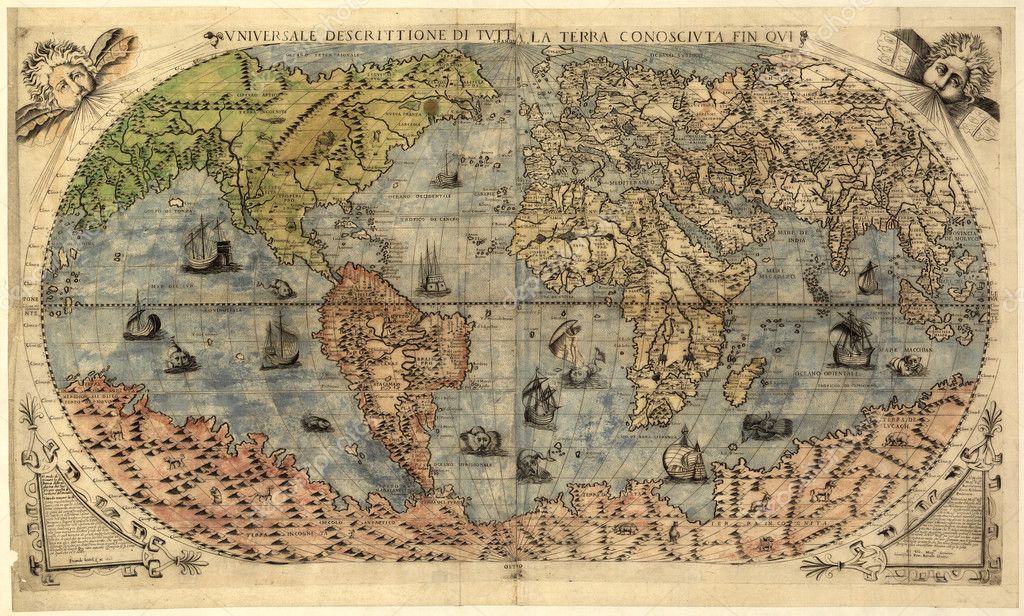
    It is this shining example that leads to the fulfillment of the promises of the Father to the Son: “All the ends of the world will remember and turn to the LORD, and all the nations will worship before You” (PSalm 22:27). Notice especially here the fulfillment of Piper’s thesis of missions leading to worship. Also, “Thus says the LORD of hosts, in those days ten men from every language of the nations will take hold of the garment of a Jew, saying, ‘Let us go with you, for we have heard that God is with you’” (Zechariah 8:23). Thus, we see that a missionary concern didn’t start with the New Testament.
    The missionary calling of Israel was not merely passive, however. God’s calling to them was a call to action: “Let all the nations be gathered together, and let the people be assembled… [For] you are My witnesses, says the LORD, and my servant whom i have chosen, that you may know and believe Me, that I am He… I, even I, am the LORD, and besides Me there is no Savior… therefore, you are My witnesses, that I am God” (Isaiah 43:9-12). God reveals Himself to israel, with the explicit intent that that nation would then be His witnesses, His missionaries, to the rest of the world. While Israel fell far short of her calling, her failure wasn’t absolute. We have the story of Ruth, in which a Moabitess comes to believe in the true God (1:!6), in spite of the restriction in Deuteronomy 23:3, and becomes an ancestress both of King David and of Jesus Christ.
    Another principle in the Old Testament is the creation of the new heavens and new earth: “I create a new new heavens and a new earth; the former things shall not be remembered or come to mind. But be glad and rejoice forever in that which I create, for I create Jerusalem for rejoicing and her people for joy. I will rejoice in jerusalem and be glad in my people; and the voice of weeping shall no longer be heard in her, nor the voice of crying” (Isaiah 6517-19). In this new heavens and new earth, “All flesh shall come to worship before Me, says the LORD” (66:23). Peter adds that, “according to his promise, we are waiting for new heavens and a new earth, in which righteousness dwells” (II Peter 3:13). Contrary to the claims of the premillennialists, this cannot be a reference to the eternal state, because there will still be death and a need to eat (Is. 65:20). Rather, this is a description of the New Jerusalem, the church in its prosperity (ibid., verses 18-19, Heb. 12:220, where righteousness shall dominate (II Peter 3:13), though some sinners remain (Is. 65:20). This is a description of the result of the mission of God, a prosperous church in a world, not where the curse has been completely eliminated, but in which the Gospel has created a world in which the nations are largely converted and living lives commensurate to their spiritual state: “There shall no longer be an infant who lives only a few days, nor an old man who has not filled out his days. For the child shall die a hundred years old, but the sinner being a hundred years old shall be accursed” (ibid.).
    It is against this Old Testament background that we see the significance of the missionary heart of Jesus: “Jesus went throughout all the cities and villages, teaching in their synagogues, preaching the gospel of the kingdom… But when he saw the crowds, he was moved with compassion for them, because they fainted and were scattered, like sheep without a shepherd. Then He said to His disciples, ‘the harvest truly is plentiful, but the laborers are few. Therefore, pray to the Lord of the harvest, that He will send out laborers into His harvest” (Matthew 9:35-38). This reveals three things about the divine mission: first, it is based on the compassion of Jesus; second, it is the responsibility that he gives to His disciples; and third,  a missionary goes out only by the calling and sending of God (compare Isaiah 6:9). This is an astonishing passage, because we know that the purpose of Christ was to redeem the elect (john 3:16, Ephesians 5:25, etc.). However, this passage shows us that, separate from the issue of election, He was not blind to the rest of humanity, but was, rather, filled with sorrow by their sin, spiritual blindness, disease, futility, and even their stubbornness. Consider His statement in Matthew 23:37: “O Jerusalem, Jerusalem, you who kill the prophets and stone those who are sent to you, how often I would have gathered your children as a hen gathers her chicks under her wings, but you would not!” These same people that he condemned to judgment for the murder of the prophets (see the previous verse and the Parable of the tenants, Matthew 21:33-44), brought Him to tears of sorrow over their hardheartedness.
    Out of this compassion, Jesus passed His missionary heart on to His disciples in the Great Commission. So important is this to God that the Holy Spirit inspired it over and over, as the Apostles wrote the New Testament. Of course, the best-known version is that of Matthew 28:18-20: “Jesus came and spoke to them, saying, ‘All authority has been given to Me in heaven and earth. Go, therefore, and make disciples of all nations, baptizing them in the name of the Father and of the Son and of the Holy Spirit, teaching them to observe all things I have commanded you. And remember, I am with you always, even to the end of the age.’” These three sentences teach us two main things about the call of Jesus to evangelize. First, our mission is not a power in ourselves, but is, rather, dependent on His mediatorial kingship. The mission of the Christian is to serve as the frontline combatant in Christ’s conquest of the nations (Revelation 11:15). He has already gained all of the authority necessary to apply His claims to the nations: “I have installed My king on Zion, My holy hill. Ask of Me, and I will give You the nations for Your inheritance, and the ends of the earth for Your possession” (Psalm 2:6, 8). The Father promised Him the nations, and the Great Commission is His claim to that which was promised. So important is this authority to our mission that He mentions it twice, as the basis of our mission, and as the unfailing encouragement to continue the battle, even in the face of apparent failures. Second, the Great Commission indicates what a mission is, the things that our divine and royal general has given us to do. Not just to proclaim the Gospel, and not just to win a convert here and another there, but, through His effectual authority, to disciple the nations, which means to convert them, to baptize them, and to train them in obedience to God’s word. This is not evangelism as extraction from the world, but as overcoming the world!
    In Mark 16:15, we have the words of Jesus explicitly to the Eleven: “Go into all the world, and preach the Gospel to every creature. He who believes and is baptized will be saved. But he who does not believe will be condemned.” This version of the Great Commission appears to be aimed specifically at the Apostles, not disciples in general, both because of the introduction to it (verse 14), and also because of the miraculous consequences. The extraordinary signs were for the verification of the ministry of the Apostles ( Mark 16:20, Acts 14:3, II Corinthians 12:12, Hebrews 2:3-4). However, it does indicate to all Christians the importance of profligate proclamation of the Gospel.
    Finally, in His last earthly sermon, Jesus announced to the gathered, but frightened, Church, “You
shall receive power when the Holy Spirit comes upon you. And you shall be My witnesses in Jerusalem, and in Judea and Samaria, and to the ends of the earth” (Acts 1:8). We see some of the same themes from Matthew, but made more explicit. There, the Lord had promised the power of His authority in the mission of the Church. Here He tells them that that authority would work by the presence of the Holy Spirit. There, He had sent them to all nations. Here He assigns them a concentric geographical series to achieve that assignment: Start in jerusalem, your current environs, then expand to the immediate surrounding area of Judea and Samaria, and then on to the rest of the nations of the world. We quickly see the fulfillment of this battle plan, as the persecution that broke out after the stoning of Stephen first drove disciples into Samaria (Acts 8:5), then to Gentiles in general (ibid., 10:45), and then to more-distant regions (ibid., 11:19). Paul took it to the final stage in deliberately seeking out unreached regions for his mission: “I have strived to preach the Gospel, [but] not where Christ was named, so that I should not build on another man’s foundation” (Romans 15:20).
Monday, October 16, 2017

Christ, Our Conquering King!

Question 45 of the Westminster Larger Catechism asks, How does Christ execute the office of a king? And answers it this way: "Christ executes the office of a king, in calling out of the world a people to himself, and giving them officers, laws, and censures, by which he visibly governs them; in bestowing saving grace upon his elect, rewarding their obedience, and correcting them for their sins, preserving and supporting them under all their temptations and sufferings, restraining and overcoming all their enemies, and powerfully ordering all things for his own glory, and their good; and also in taking vengeance on the rest, who know not God, and obey not the gospel."

There's a lot there, and I won't even try to address it all.

In Psalm 110:1, the Father gave a promise to the Son as part of the intra-Trinitarian covenant in prehistory: "Sit at My right hand, until I make Your enemies Your footstool" (applied to the Son in Hebrews 1:13). The Father had determined to glorify the Son by giving Him visible rule over the creation. History has been the record of the fulfillment of that promise, as the rule of Christ is established over the kingdoms of the world (compare Daniel 2:44-45, Revelation 11:15).

The theme of the royal destiny of the Son is especially described in the second Psalm:
"'As for Me, I have set my King
     on Zion, My holy hill.' 

I will tell of the decree:
     The Lord said to Me, 'You are My Son;
today I have begotten You.       
     Ask of Me, and I will make the nations Your heritage,
and the ends of the earth Your possession.
     You shall break them with a rod of iron
and dash them in pieces like a potter’s vessel.' 

     Now therefore, O kings, be wise;
be warned, O rulers of the earth.
     Serve the Lord with fear,
and rejoice with trembling.
     Kiss the Son,
lest He be angry, and you perish in the way,
     for His wrath is quickly kindled.
 
Blessed are all who take refuge in Him."
- Psalm 2:6-12 

What we don't see here is a description of the means of that conquest. There are militaristic expressions, but no mention of armies or weapons. In fact, Scripture denies a spiritual role for weapons of war: "The weapons of our warfare are not of the flesh but have divine power to destroy strongholds" (II Corinthians 10:4). So, no tanks or nuclear bombs, or even swords or arrows. What then?

Some of Jesus's last words during His earthly ministry are found in the Great Commission: "Jesus came and said to them, 'All authority in heaven and on earth has been given to Me. Go therefore and make disciples of all nations, baptizing them in the name of the Father and of the Son and of the Holy Spirit, teaching them to observe all that I have commanded you. And behold, I am with you always, to the end of the age'" (Matthew 28:18-20). Here, Jesus claims "all authority," that is, the very delegation of royal prerogative we find in Psalm 2. As King, what assignment does He then give His captains, the Apostles (and we after them)? To disciple the nations, part of which is to teach them to obey His Law.

Therefore, the answer to the assignment in Psalm 2 is no military conquest. Nor is it some waving of a divine hand from heaven. This is in spite of the obvious fact that either one would be within the power on omnipotent deity. Rather, the submission of all things to the crown rights of Jesus is through His people, as we proclaim the Gospel and train the nations to live as Christians. Evangelism and missions will conquer the world, because our Savior is already king!

Monday, October 2, 2017

The Baptism of Households as God's Plan to Build His Church

One conclusion that I have had from the debate over believers' baptism versus infant baptism is that it is not a matter of the scriptural evidence about baptism. Rather, it is a disagreement over God's aim in salvation. Is it the individual? I think the credobaptist would say yes. However, the paedobaptist would say no.

In the account of the Philippian jailer (Acts 16:16-40), we see this question addressed. When the doors of his jail are thrown open, the jailer, thinking that he would be executed for negligence, asks Paul and Silas, "Sirs, what must I do to be saved?" (verse 30). His concern is about his own eternal welfare. But the answer of Paul and Silas is a little different: "Believe in the Lord Jesus, and you will be saved, you and your household" (verse 31). They address his question, "You will be saved," but go further, "and your household."

We also see this in the conversion of Lydia, in the same chapter, verses11-15. When she is converted, who gets baptized? "She was baptized, and her household as well" (verse 15). We see again the inclusion, not just of the one professing faith, but of his or her entire family! My pastor calls this "oikobaptism," from the Greek word for house or household.

These accounts show us that God's target for faith isn't just the individual, but families. And that is the dividing line between credobaptists, who tend to have an atomistic view of conversion, that the individual is all that matters, and the paedobaptist, or oikobaptist, who attends to the family.

Baptists will often refer to themselves as "New Testament Christians." And it is that semi-blindness that produces their error. While I have shown above that the atomisitic view is contrary to New Testament teaching, it is essential to note that the New Testament teaching is merely a carry-over from the Old Testament: "The LORD your God will circumcise your heart and the heart of your offspring, so that you will love the LORD your God with all your heart and with all your soul, that you may live" (Deuteronomy 30:6). God has never had an atomistic view of His plans for the regeneration of the world. And it is the failure to recognize that that leads to the Baptist error of rejecting the continuity between circumcision and baptism, including its application to the children of believers.

When God converts a man or woman, He gives promises that go beyond that individual: "All your children shall be taught by the LORD, and great shall be the peace of your children" (Isaiah 53:13). The conversion of the individual is God's plan for then growing His church, because His plan doesn't stop even with the conversion of the family: "Go therefore and make disciples of all nations, baptizing them in the name of the Father and of the Son and of the Holy Spirit, teaching them to observe all that I have commanded you. And behold, I am with you always, to the end of the age" (Matthew 28:19-20, compare Genesis 1:28). God's missionary plan is to convert individuals first, then our families, and then our nations, and that terraced system is connected by baptism. Therefore, when Baptists deny baptism to the children of believers, they are inserting their manmade doctrine into the longterm strategy of God!

God's Plan, One Step Leads to the Next

Monday, August 21, 2017

Persecution in the Providence of God

We hear news stories of the persecution of Christians, such as at the hands of the Islamic State in the Middle East. Our natural reaction is to wonder why God allows such acts of cruelty against those who bear His name (which is separate from the question of whether they are bonafide Christians). And, as with all things, I believe that the answer is that it brings Him glory.

But how?

The Book of Acts gives us a number of accounts of persecution of the earliest Christians, including the Apostles themselves. Acts 8, for example, describes a persecution which broke out immediately upon the murder of Stephen the Deacon: "There arose on that day a great persecution against the church in Jerusalem" (verse 1). How is that according to the providence of God? The answer is in the rest of the verse: "They were all scattered throughout the regions of Judea and Samaria, except the apostles."

The persecution in Jerusalem pushed the disciples to spread out from their first home. Consider verse 5: "Philip went down to the city of Samaria and proclaimed to them the Christ." This should immediately remind us of the Lukan version of the Great Commission: "You will be My witnesses in Jerusalem and in all Judea and Samaria, and to the end of the earth" (Acts 1:8). It was the command of Jesus to His disciples that they carry the Gospel in concentric zones away from its first home. And, as is natural, they held back, staying in their comfort zone, as the American saying is. In the providence of God, the persecution in Jerusalem was, at least in part, the way of Jesus to push His church to obey His commission.

One of the things that Jesus told His first disciples was that the Gospel harvest was ripe, but workers in the field were insufficient (Luke 10:2). But, as is the wont of men, the disciples wanted to stay in their comfortable surroundings. It took persecution to send them out in obedience to the Lord of the harvest.

Of course, this isn't the only purpose of God in persecution. However, let it soak in. What is our comfort zone? And what will the Lord do to make it so uncomfortable that we will do the work to which He has called us?

Wednesday, July 19, 2017

The Myth of Ignorance: All Men Know of God

In Acts 14:8-18, we have the account of a visit to the city of Lystra, a Greek city in what is now Turkey. While there, Paul sees a man ion his audience, apparently a new believer, but who was a cripple. Paul heals him. However, the people around them are pagans, and believe that this miracle comes from their pagan gods, inspiring them to attempt to offer sacrifices to these missionaries.

In refusing the sacrifices, Paul makes a very interesting remark (Acts 14:16-17): "In past generations He allowed all the nations to walk in their own ways. Yet He did not leave Himself without witness, for He did good by giving you rains from heaven and fruitful seasons, satisfying your hearts with food and gladness." Paul is applying the same principle that Jesus described in Matthew 5:45: "He makes his sun rise on the evil and on the good, and sends rain on the just and on the unjust."
Willem de Poorter, "St. Paul and Barnabas in Lystra"


Jesus and Paul are both making the point that every human being in history has experienced the goodness of God, because He is good to all!

Yet, elsewhere, Paul also talks about the reaction of most of those humans to God's goodness (Romans 1:18-21): "The wrath of God is revealed from heaven against all ungodliness and unrighteousness of men, who by their unrighteousness suppress the truth. For what can be known about God is plain to them, because God has shown it to them, for His invisible attributes, namely, His eternal power and divine nature, have been clearly perceived, ever since the creation of the world, in the things that have been made. So they are without excuse, for although they knew God, they did not honor Him as God or give thanks to Him." That is, while all men experience the goodness of God, and are aware of it, in their heart of hearts, suppress that awareness and refuse to give Him the thanks and honor that are His due.

As Paul tells the Lystrans, God had passed over this offense from men throughout history, until the Gospel age, providing them no good news, no message of atonement through a divine Surety. However, that situation had now changed, and, through Paul, the message of the Gospel had come to the Gentiles. This was as the Father had promised to the Son in the intra-Trinitarian covenant, made before the world was created: "I am the LORD; I have called You in righteousness; I will take You by the hand and keep You; I will give You as a covenant for the people, a light for the nations" (Isaiah 42:6). The Father promised to the Son both Israel and the Gentiles: "It is too light a thing that You should be my servant to raise up the tribes of Jacob and to bring back the preserved of Israel; I will make You as a light for the nations, that my salvation may reach to the end of the earth" (Isaiah 49:6). And this promise would be effectual: "Nations shall come to Your light, and kings to the brightness of Your rising" (Isaiah 60:3).

The testimony of Paul demonstrates that there is no one who doesn't know about God, no matter what self-justifications he may make to himself or to others. Therefore, he is held accountable for His refusal to give God the honor and thanks He is due. However, there is also hope for the nations, the Gospel, in which forgiveness is offered in Jesus Christ.

Friday, August 19, 2016

The Church in the Old Testament: The City of God


Many readers will be familiar with the hymn, "Glorious Things of Thee Are Spoken," by John Newton (also the author of "Amazing Grace"). However, you may not be aware that he was inspired by Psalm 87:3: "Glorious things of you are spoken, O city of God." What city would that be? Jerusalem, of course, or, as it is called here, Zion. But not the Jerusalem on the map, but rather the one spoken of in Hebrews 12:22-23: "You have come to Mount Zion and to the city of the living God, the heavenly Jerusalem, and to innumerable angels in festal gathering, and to the assembly of the firstborn who are enrolled in heaven."

How do we know that it isn't the Jerusalem on the map? Well, first because of the use of "Zion," rather than "Jerusalem." That name was used, especially by the prophets, when the emphasis was on God's presence among His people.  Consider, for example, Joel 3:17: "So you shall know that I am the Lord your God, who dwells in Zion, my holy mountain. And Jerusalem shall be holy, and strangers shall never again pass through it." and also Zephaniah 3:14-16: "Sing aloud, O daughter of Zion; shout, O Israel! Rejoice and exult with all your heart, O daughter of Jerusalem! The Lord has taken away the judgments against you; He has cleared away your enemies. The King of Israel, the Lord, is in your midst; you shall never again fear evil. On that day it shall be said to Jerusalem: 'Fear not, O Zion; let not your hands grow weak.'" Notice especially that the latter prophet interchanges "Zion" with "Jerusalem," so that there is no question as to of whom He is speaking. And second, because he doesn't talk about the Temple, its ceremonies, or even about the Jews.

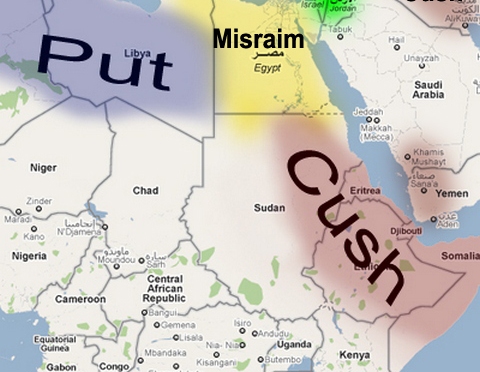
The Psalmist proceeds with a list of countries, Rahab (a nickname for Egypt), Babylon, Philistia, Tyre, and Cush (modern Ethiopia). What of them (verse 4)? "This one was born there." Born where (verse 5)? "Of Zion it shall be said, 'This one and that one were born in her.'" This is a marvelous prophecy of the extension of the church among the Gentiles, of their people reborn as children of the Church of Christ. Contrary to the expectations of the Jews, people from every nation and tribe (Revelation 5:9) will flock to the church, brought by the Holy Spirit, and praising our Redeemer Jesus Christ! This is part of the promise of the Father to the Son in the intra-Trinitarian covenant, seen in Isaiah 49:6: "It is too light a thing that You should be my servant to raise up the tribes of Jacob and to bring back the preserved of Israel; I will make You as a light for the nations, that my salvation may reach to the end of the earth."

To my mind this is such a glorious thing! No wonder it inspired John Newton to put those words to music, "Glorious  things of thee are spoken, Zion, city of our God"!

Saturday, March 5, 2016

The Missionary Heart of Jesus

"Jesus went throughout all the cities and villages, teaching in their synagogues and proclaiming the gospel of the kingdom and healing every disease and every affliction. When He saw the crowds, He had compassion for them, because they were harassed and helpless, like sheep without a
shepherd. Then He said to His disciples, 'The harvest is plentiful, but the laborers are few; therefore pray earnestly to the Lord of the harvest to send out laborers into His harvest.'"
- Matthew 9:35-38 

These verses show us something about Jesus that I find amazing. While He came to save the church (Eph. 5:25, confer John 10:29 and 17:6), He is not blind to the rest of fallen humanity. Rather, He sees their sin, spiritual blindness, disease, futility, and even their stubbornness (see, for example, Matthew 23:37), and is moved with compassion. He sorrows over the irremediable fallenness of the reprobate, though He acts in justice in judging them for their sin (Matthew 25:31-33, 46, and Revelation 20:11-15). 

How can these things be compatible?

It is certainly true that God takes no pleasure in destroying the wicked (Ezekiel 33:11). If He did, would He not be too sadistic for us to contemplate? But the Bible also says (Psalm 5:4), "You are not a God who delights in wickedness; evil may not dwell with You."

The problem continues to be that God is more complex than we want Him to be. Too many people talk about the love of God for men, and then stop. What does God value above men? Himself. To love sinners without acting in justice, He would be forced to excise that side of His nature, His holiness (Heb. 12:29). He would thus cease to be God. The God of that kind of belief system is not the God of the Bible, but is rather an idol, a god made, not even in man's image, but rather according to man's desires.

Monday, November 9, 2015

ISIS Butchers Inspire Muslims to Convert to Christ

The Sign of New Life for Many Muslims
News is trickling out of Iraq of thousands of Kurdish Muslims converting to Christ, because they have witnessed the brutality of true Islam. This article quotes one Kurdish convert, "I don't like Muhammad any more; I want to become a Christian."

The Shahada, used as an emblem by Saudi Arabia and ISIS
Even more stunning is this article about an ISIS fighter's becoming a Christian after he experienced a dream about Jesus.

Saturday, October 5, 2013

A Christian Apologetic Against Buddhism

Buddhism sets a very different spiritual goal from evangelical Christianity. Where a Christian finds eternal life in redemption in Jesus Christ, the Buddhist seeks a cessation from eternal existence. Not only does this present a challenge to the missionary in a predominantly-Buddhist host culture, but it also challenges the evidential apologist. How does he approach "common ground" with a Buddhist, when there is no common ground?

On the other hand, the presuppositional apologist has a clear opening with the Buddhist.

According to Buddhism, the destiny of the individual is the consequence of karma. That is, that his future incarnations are  buoyed up or weighed down according to his good works or wickedness in this life. The goal of the Buddhist is to become selfless, a nonentity, thus escaping from the cycle of reincarnations. Also, according to Buddhism, all sentient creatures, even deities, are subject to this cycle; there is no objective umpire outside that judges the good or evil that the individual does.

Here is the presuppositional opening: the Buddhist depends on the inner marks of his conscience to judge his own works. While claiming not to know the God of the Bible, the Buddhist is guilty of precept stealing, the unspoken admission of Biblical truth to sustain his unbelief.

In this case, the Buddhist is relying on conscience, the inner testimony that his works are consistent with, or contrary to, the law of God. In fact, the Christian understands that conscience is the result of the law placed in our hearts by that same God. We see this in Psalm 37:31, where David testifies that "the law of God is in his [i.e., the righteous man's] heart." And in Jeremiah 31:33, where Jehovah, the God of the Bible, says, "I will put My law within them." This is an aspect of what Paul tells us in Romans 1:18-25, that the unbeliever knows in his heart that Jehovah is God, but suppresses that knowledge in unrighteousness.

Thus, with the Buddhist, the Christian must expose this tacit admission, both that Jehovah is God, and that He has placed the knowledge of righteousness in the hearts of men. Thus, the Buddhist is accountable, not to a faceless karma, nor to any opportunities for new lives, but rather to a righteous Judge, with only the alternatives of eternal life or eternal  death to come.

Wednesday, July 13, 2011

The Prosperity of the Gospel in the Theology of Jonathan Edwards


Jonathan Edwards is probably the most famous theologian ever produced by the United States. Even though he died about twenty years before our independence, his preaching has been credited with beginning the great revival which inspired the colonials to resist British tyranny. I seek here to focus attention on Edwards' eschatological view, now called postmillennialism. It is seen especially plainly in his most famous sermon, "An Humble Attempt to Promote Prayer for Revival." Since Edwards' view is explained better than I can do in the article linked above, I will not attempt to do so. I wish here merely to list the Scriptures that Edwards believed taught the successful spread of the Gospel in this age.

In Genesis: 12:3, 18:18, 22:18, 26:4, and 28:14

In the Psalms: 2:6-8 (cf Hebrews 1:2 and 2:8), 22:27, 65:5, 65:8, 67:7, 72:11, 72:17, 98:3, 113:3

In Isaiah: 2:2, 11:9, 54:1-2, 54:5, 60:12

In Jeremiah: 3:17, 10:11, 10:15

Malachi 1:11

Romans 11:12 and 25

In "Taking Hold of God," Editor Joel Beeke comments, "In typical Puritan fashion, Edwards urged believers to turn these promises into prayers, calling upon the Lord to extend the kingdom of His Son. Christ's victorious position at God's right hand should move us to pray to God to establish Christ's royal dominion ('the rod of thy strength') in the very midst of His enemies (Psalm 110)."

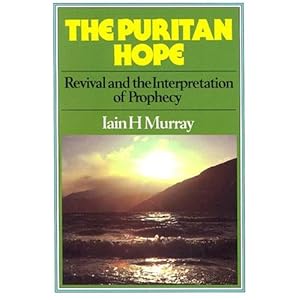
Further information on the Puritan view of last things and its impact on missions can be found in "The Puritan Hope"," by Iain Murray. Other books on postmillenialism can be found here.

Thursday, June 30, 2011

Isaiah 55:6-9 vs The Worship of the God of Chance


Seek the Lord while He may be found;
     call upon Him while He is near;
let the wicked forsake his way,
     and the unrighteous man his thoughts;
let him return to the Lord, that He may have compassion on him,
     and to our God, for He will abundantly pardon.
For My thoughts are not your thoughts,
     neither are your ways My ways, declares the Lord.
For as the heavens are higher than the earth,
     so are My ways higher than your ways
and My thoughts than your thoughts."

If you ask an unbeliever, "What is two plus two?", he will respond, "Four." Is it ever anything other than four? Of course not, he will say. So ask now, "Where does the sun rise?" "In the east," he will tell you. Does it always rise in the east? Never the west, or appear in the center of the sky? "How silly!" he will probably say.

Yet, he will play the lottery, expecting that luck will eventually pay off for him. Or ask the origins of the world around him, and he will unthinkingly respond,"Chance." And he will say it without any consciousness of the logical tension between that belief and his earlier statements.

My point is this: the world operates according to laws, predictable laws. That is because it was created by a God of laws. The very predictability of the universe is a consistent evidence of the hand of God. However, the unbeliever covers his eyes at that evidence, even as he admits the particular examples that he himself acknowledges.

This is what Paul talks about in Romans 1:18-22, especially 18b, "by their unrighteousness [they] suppress the truth." To acknowledge the God Who made them would force the unbeliever to acknowledge that he is in rebellion against Him, and deserving of His judgment. That he can never permit! And it is this that the Christian confronts in apologetics and evangelism.