Showing posts with label intra-trinitarian. Show all posts

Saturday, September 24, 2022

Is Pluralistic "Freedom of Religion" A Biblical Precept?

"These are the statutes and rules that you shall be careful to do in the land that the Lord, the God of your fathers, has given you to possess, all the days that you live on the earth. You shall surely destroy all the places where the nations whom you shall dispossess served their gods, on the high mountains and on the high hills and under every green tree. You shall tear down their altars and dash in pieces their pillars and burn their Asherim with fire. You shall chop down the carved images of their gods and destroy their name out of that place. You shall not worship the Lord your God in that way. But you shall seek the place that the Lord your God will choose out of all your tribes to put His name and make His habitations there" (Deuteronomy 12:1-5). 

We in America brag of our freedom of religion. Not only are there Christian (real or not) denominations of every description, but we also boast of our Jewish synagogues, Islamic mosques, and Hindu and Buddhist temples. And that doesn't even include the various varieties of nonreligious or irreligious Americans, even including Satanists. 

I think the contrast between those two paragraphs should be clear to anyone. Yet the pietists and dispensationalists have eliminated any evidence or discussion of what God said in Deuteronomy, as if the pluralism of modern America were the case from the days of creation. 

The pietist claims that the Christian faith is a private affair, "a relationship, not a religion." So the less visible his religion is, outside of church and home prayer, the more spiritual he feels. 

On the other hand, the dispensationalist claims that God's commandment here was for Israel, and ended with the coming of Jesus. After all, does it not refer to their "land"? 

And it does. Do we have no references to the land given to Jesus, and His body, the Church? "Ask of Me, and I will make the nations Your heritage, and the ends of the earth Your possession" (Psalm 2:8). That is the promise of the Father to the Son, in the intra-Trinitarian covenant, made before the world was created. And did Jesus ever claim that promise? "All authority in Heaven and on earth has been given to Me. Go, therefore, and make disciples of all nations" (Matthew 28:18-19). The commandment was limited to the land, but the land was expanded to include the whole earth! 

As a Presbyterian, I am aware of the impact that this conflict has had on my own tradition. When the Westminster Standards were originally written, they included the presumption of establishmentarianism. However, after the US Constitution was adopted, American Presbyterians changed our standards to reflect the new political enthusiasm for religious freedom. I am disappointed that they chose a political justification over the requirements of Scripture. 

Neither political considerations nor pietistic latitudinarianism can override what God has commanded in His word. And that is that His truth is the only truth, and must displace all competing, but false, claims of truth. 



Saturday, June 18, 2022

The Intra-Trinitarian Covenant as the Starting Point for Paul


In two places, Paul initiates a theological point  by placing the foundation of his doctrine before time. In Ephesians 1:4, he tells us of the choosing of the elect "in Him," that is, in Christ, "before the foundation of the world." And again in II Timothy 1:8-10, he tells us that the elect are the objects of His calling "before the ages began," but which has now been manifested. We see similar phrases used by John in John 17:24 and Revelation 13:8, and by Peter in I Peter 1:20. 

In each case, we see the salvific purposes of God exercised in time, in history, but based on decisions made before time and history. If it was before creation, then in what context did God work out these plans? Within the fellowship of the three Persons of the Trinity, co-eternal and co-equal. Paul tells us of the plan among the Father (such as verses 3 and 5), the Son (verses 3,4, and 5), and the Holy Spirit (verse 13). Thus Paul displays to us that his soteriology is inherently trinitarian; God's purposes could be carried out only by the intimate involvement of all three of the divine Persons. 

I have shown the scriptural glimpses of this intra-Trinitarian covenant, or convenant of redemption, from the Old Testament (such as here and here), but we must also see that it underpins the theology of the New Testament. Among other things, it necessarily precludes any christological heresy denying the Trinity or any of the Persons, or their deity and preexistence, especially the heresy of modalism. But it also shows the step by step purposes of God in the redemption of His people, not for our sake, but because of the Father's love of the Son. Thus, it cannot fail or be undone. The intra-Trinitarian covenant provides a sound basis for the assurance of salvation. that again precludes most of the aberrant sects, who all maintain a fragility of their version of salvation, such that it can be lost at any time. 

Wednesday, February 16, 2022

Jesus the Shepherd and Effectual Calling

"That saying of Christ is much to our purpose: 'And other sheep I have, them also I must bring, and they shall hear My voice' (John 10:16). This must imports a duty not to be dispensed with. He had 'received a commandment for it from the Father' (verse 18), and this shall [imports] that effectual working 'whereby He subdues all things to Himself,' and whereby they are made to believe (Eph. 1:19). The sheep of themselves lie as cross to this work as other men. 'What have I to do with Thee?' cries the possessed Gadarene (Mark 5:7), but, being His sheep, He must make them willing (Psalm 110:3)." - Elisha Coles, "A Practical Discourse of God's Sovereignty" (emphasis in the original). 

A common Arminian objection to the doctrines of grace is their claim that "God has given us free will." And by that phrase, they mean a level of sovereignty, such that each man is able to chose God for himself or to reject God for himself, and God takes a hands-off attitude toward that decision. 

First, there is no such sovereignty. On the contrary, it was a false offer of sovereignty that Satan made to Adam and Eve in the first temptation. Satan said that a declaration of independence would enable them to decide for themselves what is good or what is evil. Yet, somehow, Arminians are unconcerned that their claim is the same as that made by Satan, by which he deprived the first couple of their blissful existence in the garden of Eden. And second, nowhere does the Bible say that men have any such authority. It is God's authority alone to determine right and wrong. 

Notice the scriptural citations in the quote above from Puritan Coles. Jesus is the shepherd, and His people are sheep. In the anti-type of that metaphor, it is the shepherd who selects his sheep, not the sheep who choose a shepherd. So it is with Jesus's sheep. His flock consists of those given to Him by the Father in their prehistoric intra-Trinitarian covenant (John 6:37-37). And, as Coles notes, Jesus never left the result to the sheep. Rather, He declared His divine intent, one which must be achieved, and the means shall be arranged, and the sheep will be brought into their eternal fold. Not once does the divine shepherd express a mere hope that the sheep will agree or that His calling would achieve its end. Rather, He expresses an unfailing assurance that such will definitely be the case: "This is the will of Him who sent Me, that I should lose nothing of all that He has given Me, but raise it up on the last day" (John 6:39, see also John 17:24).


Saturday, May 2, 2020

Jesus and His Friends, a View of Particular Atonement

In John 15:13-14, that Apostle reports to us these words of Jesus: "Greater love has no one than this, that someone lay down his life for his friends. You are My friends if you do what I command you." The Lord tells us that the highest love is to die for one's friends, a description of what yet lay ahead of Him when He spoke those words. Was He contradicting what we are told elsewhere in Scripture? For example, in Romans 5:8, the Apostle Paul tells us, "God shows His love for us in that, while we were still sinners, Christ died for us." No, there is no contradiction. Paul tells us what we were before the application of Christ's atonement, while Jesus describes what we became after that application. We were enemies, but His blood turned us into friends. 

But the part I want to discuss is what Jesus says, that He would soon die on the cross, not for men in general, but for those who would thereby be turned into His friends. That is, those who remain His enemies do so because He did not die for them. 

To my mind, this is one of the biggest differences between Calvinism and Arminianism. Calvinism teaches - because Jesus taught - that the blood of Jesus is effectual. As He Himself also says, every man whom the Father gave Him to be redeemed would unfailingly be converted (John 6:39). In contrast, Arminianism claims that Jesus died equally for all men in general, so that salvation would be possible for everyone, but certain for no one. If that were so, then it would have been hypothetically possible for not a single person ever to have been saved. And even worse, it also means that the Arminian believes that Jesus died just as much for every person in Hell as He did for every person in Heaven. 

To my mind, that is a grotesque view of the atonement.

And I think these words of Jesus indicate that He never imagined such a thing either, but looked forward to all of the friends that He was gaining for each moment that He suffered on the cross, just as the Father promised Him in prehistory: "Out of the anguish of His soul He shall see and be satisfied; by His knowledge shall the righteous one, My servant, make many to be accounted righteous, and He shall bear their iniquities" (Isaiah 53:11).

Saturday, September 14, 2019

John Owen on Definite and Particular Atonement

One of my primary objections to Arminianism is what it makes of the atoning death of Jesus. He didn't die for anyone in particular, the Arminian claims, but rather for everyone in general, equally for the saint in heaven or the damned in Hell. In fact, according to the Arminian scheme, it was possible that no one would ever have been saved by the blood of Jesus.

I consider that to border on blasphemy. To claim that there was even a possibility in the purposes of God that He would have allowed the blood of His Son to fall ineffectual to the ground, is an aspersion on my God that deserves no consideration.

In describing the Arminian view, the Puritan divine John Owen said (Preface to The Death of Death in the Death of Christ): "It seems our blessed Redeemer's deep humiliation, in bearing the chastisement of our peace and the punishment of our transgressions, being made a curse and sin, deserted under wrath and the power of death - procuring redemption and the remission of sins through the effusion of His blood, offering Himself up a sacrifice to God to make reconciliation and purchase an atonement; His pursuing this undertaking with continued intercession in the holiest of holies, with all the benefits of His mediatorship - do no way procure either life and salvation or remission of sins; but only serve to declare that we are not, indeed, what His word affirms we are, viz., cursed, guilty, defiled, and only not actually cast into Hell."

I am so glad that Jesus told us otherwise: "All that the Father gives Me will come to Me, and whoever comes to Me I will never cast out. For I have come down from heaven, not to do My own will but the will of Him who sent Me. And this is the will of Him who sent Me, that I should lose nothing of all that He has given Me, but raise it up on the last day. For this is the will of My Father, that everyone who looks on the Son and believes in Him should have eternal life, and I will raise him up on the last day" (John 6:37-40). Jesus refers back to the intra-Trinitarian covenant in prehistory, in which the Father gave Him a people, a particular people, to be redeemed. And that covenant was effectual, providing us with the confidence that the blood of Jesus cannot fail to save everyone for whom He shed it. 

This doctrine, unlike that of the Arminian, shows us that it is impossible that even one drop of the blood of Jesus could fall to the ground in failure.

Saturday, July 27, 2019

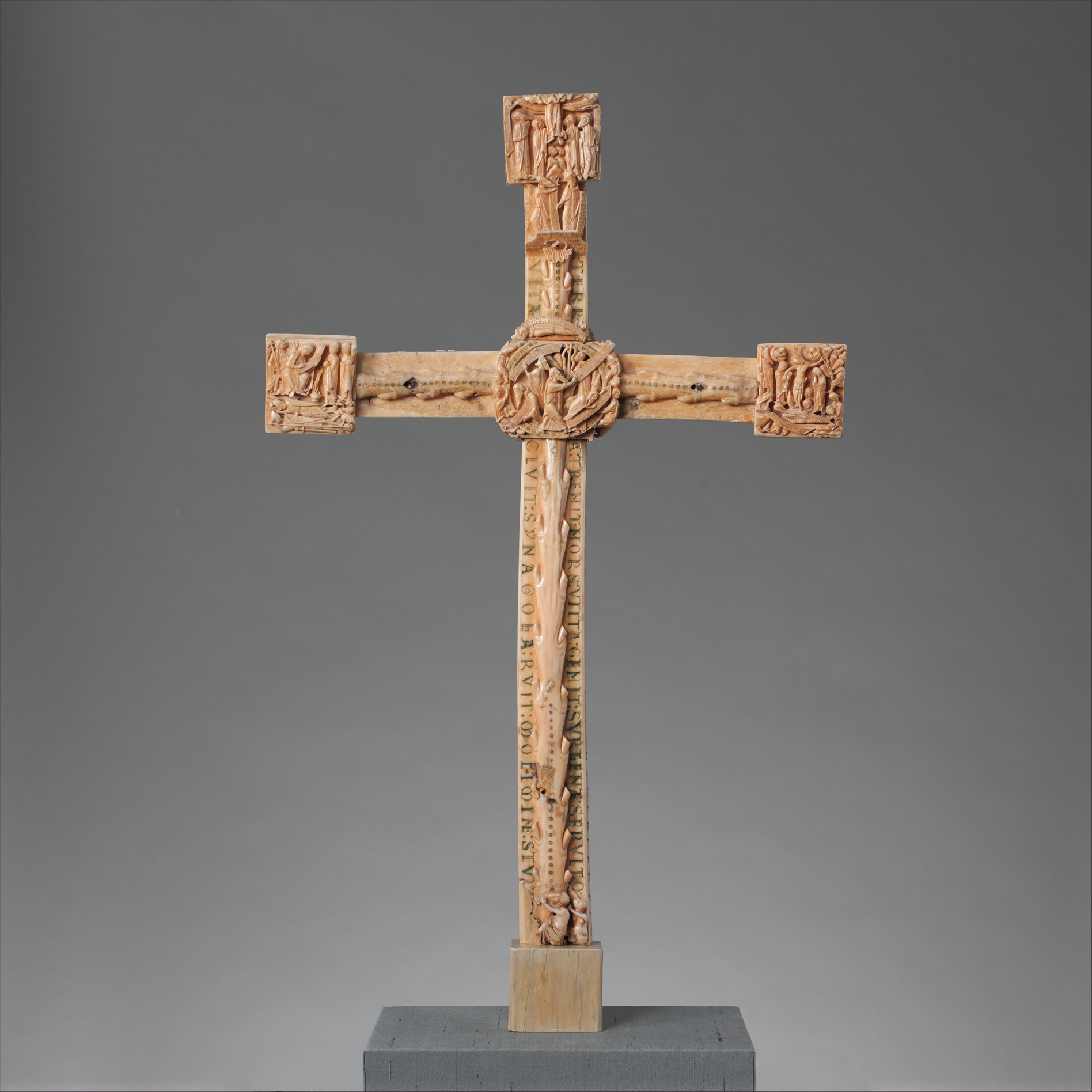
The Glorious Death of Christ Is Far More Than Any Mere Crucifix

Besides its Second Commandment issues, the Catholic crucifix bothers me because it shows a dead Jesus, crumpled on the cross, reminding us of His sufferings. Those things are true, as far as they go. However, the fault of the crucifix is that it takes us no further.

First, I think it is necessary to understand that those experiences were not imposed upon the Son by men: "Sovereign Lord, who made the heaven and the earth and the sea and everything in them, who through the mouth of our father David, Your servant, said by the Holy Spirit, 'Why did the Gentiles rage,and the peoples plot in vain? The kings of the earth set themselves, and the rulers were gathered together, against the Lord and against His Anointed’— for truly in this city there were gathered together against Your holy servant Jesus, whom You anointed, both Herod and Pontius Pilate, along with the Gentiles and the peoples of Israel, to do whatever Your hand and Your plan had predestined to take place" (Acts 4:24-28). Here we see that everything which Jesus underwent, though at the hands of men, was according to the plan of God in prehistory. Notice that Peter and John are quoting from the second Psalm, a prophecy of the overcoming power of the Messiah.

Second, His sufferings weren't imposed on the Son against even His own will: "No one takes it [i. e., life] from Me, but I lay it down of My own accord. I have authority to lay it down, and I have authority to take it up again. This charge I have received from My Father" (John 10:18). Jesus experienced what he did because He chose to do so. 

Why did He choose to suffer and die, though He was God, at the hands of men? "I am the bread of life; whoever comes to Me shall not hunger, and whoever believes in Me shall never thirst. But I said to you that you have seen Me and yet do not believe. All that the Father gives Me will come to Me, and whoever comes to Me I will never cast out. For I have come down from heaven, not to do My own will but the will of Him who sent Me. And this is the will of Him who sent Me, that I should lose nothing of all that He has given Me, but raise it up on the last day. For this is the will of My Father, that everyone who looks on the Son and believes in Him should have eternal life, and I will raise him up on the last day" (John 6:35-40). Jesus, God the Son, chose to face the suffering and death of the cross because He had His people, the Church (Ephesians 5:25), in His mind's eye. 

And that is the problem with the crucifix. It shows the cross work of Jesus as suffering, which it certainly was, but no more. Yet it was so much more, because it was the evidence of the love of God for His people, including me, that Jesus chose that experience out of His divine love. The empty cross in a Protestant church denies nothing of the horror of the crucifixion, but testifies to the risen Christ, who suffered for me, and rose from the grave in victory over sin, Satan, the grave, and the purposes of wicked men! That is why the Apostle Thomas was compelled to greet Him with those words, "My Lord and my God" (John 20:28)!

"The death of Jesus was glorious, not because it was His death, but because it could be the death of no other. A creature might as well have undertaken to create as to save a world. The work itself demands the interposition of God; and any theory which fails to represent the death of Christ as an event which, in its own nature, as clearly proclaims His divinity as His superintending care and preservation of all things, cannot be the Gospel which Paul preached at Rome, at Corinth, at Athens, and which extorted from Thomas, upon beholding the risen Savior, the memorable confession, 'My Lord and My God!'" (James Henley Thornwell, the Necessity and Nature of Christianity).

Saturday, January 5, 2019

God the Son, Our Savior Upon His Throne

Oneness Pentecostals claim that the Son of God began with the incarnation in the womb of Mary. They distinguish the Son from Jesus, whom they say was the Father before the incarnation. In other words, Jesus is God, but the Son is not. I don't claim to understand that.

However, such a doctrine ignores too much of the Old Testament, in which we see the interaction between the Father and Son in preparation for the incarnation and redemptive work of the Son. The most explicit is Psalm 45:6: "Your throne, O God, is forever and ever. The scepter of your kingdom is a scepter of uprightness." The value of this verse is that it is quoted in Hebrews 1:8 with this introduction: "But about the Son He says..." Thus we have inspired commentary telling us that Psalm 45:6 is the Father's comment to the Son, whom He addresses as "God." Oneness claim that it is a prophecy, not an actual address, but they provide no exegetical grounds for that assertion. The assertion is mere circular reasoning, required by their presupposed doctrine. It is not the result of any consideration within the text.

The problem with the Oneness doctrine is that it makes the Son of God just an idea in the Father's mind  in eternity. He wasn't a real person, until He was created in the womb of Mary. Thus, their doctrine boils down to the same doctrine as that of the Arians, that the Christ who walked among men was really just a created creature, not fully God in Himself, as orthodox Christians have always claimed. And that equivalency is actually entertaining, considering the contempt that Oneness express for Arians, such as the Jehovah's Witnesses.

However, they are both wrong. "Christ is a real savior, and not an instrument by which the sinner is enabled to gratify his pride. The Holy Ghost is a real sanctifier, and not an influence by which the energies of men are stimulated, and their better impulses roused into action. The Persons of the glorious Trinity have entered into a real covenant to redeem a Church from the lost multitude of the race, and are not the authors of paltry expedients or abortive efforts to coax men into what they find it impossible directly to effect" (James Henley Thornwell, "Theology as a Life in Individuals and the Church").

Wednesday, December 19, 2018

The Land Promises and the Unity of the People of God

One of the main distinctions between dispensationalism and covenantalism is over the relationship between Israel and the Church. The covenantalist sees them as different administrations of the same thing (see, for example, Acts 7:38 KJV). In contrast, the dispensationalist sees them as radically discontiguous, there having been no church in the Old Testament, and Israel's having a future separate from the church.

One aspect of this is the frequent references dispensationalists make to the promises God made to Israel. While the covenantalist takes the remaining promises to be given to the church, the Israel of God (Galatians 6:16), the dispensationalist sees them as necessarily remaining to be fulfilled to Israel, i. e., the Jews, in their distinct character.

I want to consider the land promises, in particular, here. Are there remaining land promises for the Jews? I don't think that Bible allows that conclusion, even apart from the identity of Israel and the church.

In Joshua 21:43-45, given after the conquest of the Promised Land, we read this comment: "Thus the Lord gave to Israel all the land that He swore to give to their fathers. And they took possession of it, and they settled there. And the Lord gave them rest on every side just as He had sworn to their fathers. Not one of all their enemies had withstood them, for the Lord had given all their enemies into their hands. Not one word of all the good promises that the Lord had made to the house of Israel had failed; all came to pass." Thus, the land promise had been fulfilled, not waiting for the modern state of Israel.

Furthermore, in I Kings 4:21, we read this: "Solomon ruled over all the kingdoms from the Euphrates to the land of the Philistines and to the border of Egypt. They brought tribute and served Solomon all the days of his life." This describes Solomon's enjoyment of that Land, not waiting for it. This is repeated in the parallel passage in II Chronicles 9:26.

In other words, the land promises to Israel aren't waiting for fulfillment! They were fulfilled three thousand years ago!

Moreover, something that dispensationalists fail to recognize is that the fulfillment of God's promises is always far more than the literal promise. In this case, by denying the bitestamental unity of the people of God, the dispensationalist is blind to Psalm 2:8: "Ask of Me, and I will make the nations Your heritage, and the ends of the earth Your possession." This promise is part of the intra-Trinitarian covenant, made before the world was created, and is a gift from the Father to the Son. And then in the New Testament, that same Son promises it to His church: "All authority in heaven and on earth has been given to Me. Go therefore and make disciples of all nations, baptizing them in the name of the Father and of the Son and of the Holy Spirit, teaching them to observe all that I have commanded you. And behold, I am with you always, to the end of the age" (Matthew 28:18-20). The rigid literalism and minimalism of dispensationalists causes them not to enjoy the real promises of God, and also to deny them to those same Jews that they have cast out of the church.

Wednesday, November 21, 2018

Oneness Refuted by the Words of Jesus

According to the doctrines of Oneness Pentecostalism, when we look at Jesus in the New Testament, God the Father is the deity in heaven, while the Son is the flesh on the earth. The Son did not exist, except in the mind of God, before His incarnation in the conception in Mary's womb.

That assertion is contrary to more biblical texts than I can address in just one blog post. I have cited some of the Old Testament examples of the presence of the Son before (click the "intra-Trinitarian" tag at the bottom).

Here I want to mention a New Testament example: "Now, Father, glorify Me in Your own presence with the glory that I had with You before the world existed" (John 17:5). This verse is spoken by Jesus as part of His high-priestly prayer (John 17:1-26).

There are several elements in this verse relevant to the topic of the preexistence of the Son. First, it is Jesus who is speaking, explicitly addressing the Father. That prevents some of the customary Oneness dodges when confronted with Scriptural evidence against their doctrines, such as that it was a vision, or it was spoken erroneously by someone else. Second, He says that He was with the Father, not that He was the Father. That refutes the Oneness claim that Jesus was the Father before the incarnation. Third, it is addressed to the Father at the time it was spoken, refuting the Oneness claim that Jesus is the Father, or that Father and Son are successive manifestations of the Godhead. Jesus is distinct from the Father, and co-existent with Him, at the present time when the verse was spoken. And fourth, He explicitly states that He was with the Father before the Creation, not just before the incarnation. That again refutes the successive nature of manifestations claimed by Oneness. But, more importantly, it demonstrates the preexistence of the Son as a Person, not as a mere idea or prophecy of the Father. Ideas don't have glory, especially not a glory comparable to that of the Father!

This one verse precludes many of the assertions of Oneness Pentecostalism regarding the Son.


Wednesday, July 19, 2017

The Myth of Ignorance: All Men Know of God

In Acts 14:8-18, we have the account of a visit to the city of Lystra, a Greek city in what is now Turkey. While there, Paul sees a man ion his audience, apparently a new believer, but who was a cripple. Paul heals him. However, the people around them are pagans, and believe that this miracle comes from their pagan gods, inspiring them to attempt to offer sacrifices to these missionaries.

In refusing the sacrifices, Paul makes a very interesting remark (Acts 14:16-17): "In past generations He allowed all the nations to walk in their own ways. Yet He did not leave Himself without witness, for He did good by giving you rains from heaven and fruitful seasons, satisfying your hearts with food and gladness." Paul is applying the same principle that Jesus described in Matthew 5:45: "He makes his sun rise on the evil and on the good, and sends rain on the just and on the unjust."
Willem de Poorter, "St. Paul and Barnabas in Lystra"


Jesus and Paul are both making the point that every human being in history has experienced the goodness of God, because He is good to all!

Yet, elsewhere, Paul also talks about the reaction of most of those humans to God's goodness (Romans 1:18-21): "The wrath of God is revealed from heaven against all ungodliness and unrighteousness of men, who by their unrighteousness suppress the truth. For what can be known about God is plain to them, because God has shown it to them, for His invisible attributes, namely, His eternal power and divine nature, have been clearly perceived, ever since the creation of the world, in the things that have been made. So they are without excuse, for although they knew God, they did not honor Him as God or give thanks to Him." That is, while all men experience the goodness of God, and are aware of it, in their heart of hearts, suppress that awareness and refuse to give Him the thanks and honor that are His due.

As Paul tells the Lystrans, God had passed over this offense from men throughout history, until the Gospel age, providing them no good news, no message of atonement through a divine Surety. However, that situation had now changed, and, through Paul, the message of the Gospel had come to the Gentiles. This was as the Father had promised to the Son in the intra-Trinitarian covenant, made before the world was created: "I am the LORD; I have called You in righteousness; I will take You by the hand and keep You; I will give You as a covenant for the people, a light for the nations" (Isaiah 42:6). The Father promised to the Son both Israel and the Gentiles: "It is too light a thing that You should be my servant to raise up the tribes of Jacob and to bring back the preserved of Israel; I will make You as a light for the nations, that my salvation may reach to the end of the earth" (Isaiah 49:6). And this promise would be effectual: "Nations shall come to Your light, and kings to the brightness of Your rising" (Isaiah 60:3).

The testimony of Paul demonstrates that there is no one who doesn't know about God, no matter what self-justifications he may make to himself or to others. Therefore, he is held accountable for His refusal to give God the honor and thanks He is due. However, there is also hope for the nations, the Gospel, in which forgiveness is offered in Jesus Christ.

Wednesday, November 30, 2016

Elect Before the Foundation of the World


It is true, and commonly agreed, at least among orthodox Protestants, that the atonement occurred in history, in the acts of Christ in His crucifixion and resurrection. We individually are justified, that is, have that atonement applied to us, also in history, at the time we believe.

However, there is an additional element in Scripture: the planning of that atonement, not in history, but before the world was even created.

This is described in several places in Scripture. Look especially at Ephesians 1:4: "He chose us in Him before the foundation of the world, that we should be holy and blameless before Him." Who chose? Us? No, God the Father chose. When? When I raised my hand? When I went up at the altar call? No, but before the foundation of the world. Not just before I decided, and not just before I was born, but before any material thing existed. Chosen because I am holy and blameless? Definitely not! But rather that I could become holy and blameless.

The same concept appears in the words of Jesus in Matthew 25:34: "Come, you who are blessed by my Father, inherit the kingdom prepared for you from the foundation of the world." What is the promised blessing? A kingdom! One that started at the cross, or the resurrection, or when I believed? No! Rather, it is a kingdom that was prepared for me before the world was even created. The kingdom existed before the world did!

And again in the words of Jesus in John 17:24: "Father, I desire that they also, whom You have given Me, may be with Me where I am, to see My glory that You have given Me because you loved Me before the foundation of the world." This is a more-explicit description of the intra-Trinitarian covenant, that decision by the Persons of the Trinity that the Father decreed to give a people, i. e., the Church (Ephesians 5:25), to the Son, before the creation. That means that the sovereign election of Ephesians 1 is not about us, but about Christ. Not for our glory, but for His! Notice the "in Him" in Ephesians 1:4 above. While we are certainly not worthy, He just as surely is! Revelation 5:9: "Worthy are you to take the scroll and to open its seals, for you were slain, and by your blood you ransomed people for God from every tribe and language and people and nation."

Lastly, look at Revelation 17:8: "The dwellers on earth whose names have not been written in the book of life from the foundation of the world will marvel to see the beast." This verse refers to a separate group of people, those who have not been chosen to be holy and blameless. This is the other side of the coin, the doctrine of reprobation. Just as God was glorified in hardening the heart of Pharaoh, He is glorified also in the hardening of all those who refuse to believe. Paul warned unbelieving Israel of this truth in Romans 9:18: "He has mercy on whomever He wills, and He hardens whomever He wills."

Friday, August 19, 2016

The Church in the Old Testament: The City of God


Many readers will be familiar with the hymn, "Glorious Things of Thee Are Spoken," by John Newton (also the author of "Amazing Grace"). However, you may not be aware that he was inspired by Psalm 87:3: "Glorious things of you are spoken, O city of God." What city would that be? Jerusalem, of course, or, as it is called here, Zion. But not the Jerusalem on the map, but rather the one spoken of in Hebrews 12:22-23: "You have come to Mount Zion and to the city of the living God, the heavenly Jerusalem, and to innumerable angels in festal gathering, and to the assembly of the firstborn who are enrolled in heaven."

How do we know that it isn't the Jerusalem on the map? Well, first because of the use of "Zion," rather than "Jerusalem." That name was used, especially by the prophets, when the emphasis was on God's presence among His people.  Consider, for example, Joel 3:17: "So you shall know that I am the Lord your God, who dwells in Zion, my holy mountain. And Jerusalem shall be holy, and strangers shall never again pass through it." and also Zephaniah 3:14-16: "Sing aloud, O daughter of Zion; shout, O Israel! Rejoice and exult with all your heart, O daughter of Jerusalem! The Lord has taken away the judgments against you; He has cleared away your enemies. The King of Israel, the Lord, is in your midst; you shall never again fear evil. On that day it shall be said to Jerusalem: 'Fear not, O Zion; let not your hands grow weak.'" Notice especially that the latter prophet interchanges "Zion" with "Jerusalem," so that there is no question as to of whom He is speaking. And second, because he doesn't talk about the Temple, its ceremonies, or even about the Jews.

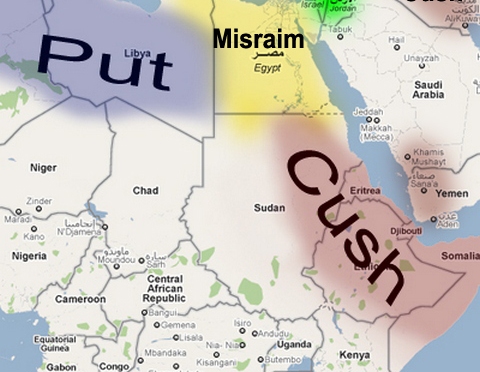
The Psalmist proceeds with a list of countries, Rahab (a nickname for Egypt), Babylon, Philistia, Tyre, and Cush (modern Ethiopia). What of them (verse 4)? "This one was born there." Born where (verse 5)? "Of Zion it shall be said, 'This one and that one were born in her.'" This is a marvelous prophecy of the extension of the church among the Gentiles, of their people reborn as children of the Church of Christ. Contrary to the expectations of the Jews, people from every nation and tribe (Revelation 5:9) will flock to the church, brought by the Holy Spirit, and praising our Redeemer Jesus Christ! This is part of the promise of the Father to the Son in the intra-Trinitarian covenant, seen in Isaiah 49:6: "It is too light a thing that You should be my servant to raise up the tribes of Jacob and to bring back the preserved of Israel; I will make You as a light for the nations, that my salvation may reach to the end of the earth."

To my mind this is such a glorious thing! No wonder it inspired John Newton to put those words to music, "Glorious  things of thee are spoken, Zion, city of our God"!

Saturday, June 18, 2016

The Intra-Trinitarian Covenant According to the pre-Gospel of Isaiah

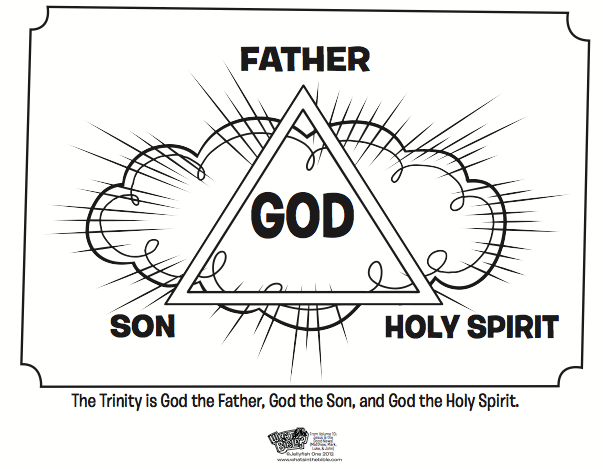
The doctrine that I hate most among those held by classic dispensationalists is their assertion that history consists of a series of attempts by God to save sinful men, attempts which failed over and over, to be replaced by Plan B (then C, D, E, and F). In contrast, Reformed theology holds that a plan of salvation was determined before the creation, with the Father decreeing that a church would be saved, the Son undertaking to purchase that redemption, and the Holy Spirit undertaking to apply that redemption to those who are saved. This agreement is known by various terms, such as the covenant of redemption or the intra-trinitarian covenant. There is nothing wrong with either term, but I generally use the latter to avoid confusion with the covenants of works and of grace, which are between God and men.

There are a number of places where we find references to this conversation among the Persons of the Godhead, especially in the Psalms and in the Book of Isaiah. I want to look at a passage in the latter, 49:1-10.

We can tell that this passage is about Christ because He applied it to Himself in the New Testament. Consider the remark in Is. 49:2: "He made My mouth like a sharp sword." Compare that to Revelation 19:15: "From His mouth comes a sharp sword with which to strike down the nations." Or compare Is. 49:9, "Saying to the prisoners, 'Come out,' and to those who are in darkness, 'Appear'" to Jesus's words in Luke 4:18, "He has sent me to proclaim liberty to the captives and recovering of sight to the blind...."

In this portion of the covenant, what does the Father promise? First, He promises that in Christ He will be glorified, v. 3. This will be through His work of redemption (John 12:28), through His people (Matthew5:16, John 15:8), and by answering their prayers (John 14:13).

Then He is promised success in the restoration of Israel (Is. 49:5): "He who formed Me from the womb to be His servant, to bring Jacob back to Him; and that Israel might be gathered to Him." We are still waiting for the fulfillment of that promise, but it is repeated in the New Testament (Romans 11:25-28). Yet, the Father says that this honor is not enough (v.6): "It is too light a thing that You should be My servant [merely] to raise up the tribes of Jacob and to bring back the preserved of Israel." If restoring the elect remnant of Israel is too small of an honor, how shall the Father increase it? "I will make You as a light for the nations, that My salvation may reach the end of the earth." As honored as Christ would be to receive the elect Jews, the Father extends that promise to elect Gentiles, as well! This is the "fullness of the Gentiles" of Romans 11:25. It is, indeed, a glorious promise! To make it even more certain, the Father had already made that promise in Psalm 2:8: "Ask of Me, and I will make the nations Your heritage, and the ends of the earth Your possession." And the Scripture describes that promise as fulfilled in Revelation 11:15: "Then the seventh angel blew his trumpet, and there were loud voices in heaven, saying, 'The kingdom of the world has become the kingdom of our Lord and of His Christ, and He shall reign forever and ever.'" See also, for example, Isaiah 2:2-3 and Micah 4:1-2.

Saturday, April 23, 2016

The Bride of Christ as Proof of His Deity

In Isaiah 54:5, we read, "Your Maker is your husband, the LORD of hosts is His name; and the Holy One of Israel is your Redeemer, the God of the whole earth He is called." This verse comes right after the Prophet's beautiful description of the suffering and humiliation of Christ as the basis for our justification. This verse appears right after it because it is the Father, in the intra-Trinitarian covenant, who decreed that this would be that the church would be saved from the judgment earned by our sins.

Yet we read of the marriage supper in Revelation 19:7-8: "Let us rejoice and exult and give Him the glory, for the marriage of the Lamb has come, and His Bride has made herself ready; it was
granted her to clothe herself with fine linen, bright and pure' — for the fine linen is the righteous deeds of the saints." Here is the Bride of Christ, explicitly identified with the "saints," that is, believers.


And, again, consider Revelation 21:2, 9-11, "I saw the holy city, new Jerusalem, coming down out of heaven from God, prepared as a bride adorned for her husband. Then came one of the seven angels who had the seven bowls full of the seven last plagues and spoke to me, saying, 'Come, I will show you the Bride, the wife of the Lamb.' And he carried me away in the Spirit to a great, high mountain, and showed me the holy city Jerusalem coming down out of heaven from God, having the glory of God, its radiance like a most rare jewel, like a jasper, clear as crystal." The church is again identified, this time by the epithet "the New Jerusalem" (compare Hebrews 12:22), as the Bride.

As most people are aware, one of the distinguishing doctrines of the Jehovah's Witnesses is their Arianism, that is, the belief that Christ is not to be identified with God, but is, rather, a lesser, created being. These verses directly counter that error. In Isaiah, it is Jehovah (the LORD) who is the husband of the church. In Revelation it is the Lamb, i. e., Jesus Christ (see, for example, John 1:29). Since no bride can have two husbands, then the transitive principle tells us that these two Grooms must be the same being: Jesus is Jehovah in the flesh!

Saturday, March 26, 2016

The Words of Jesus Against the Error of Modalism

In the New Testament, Jesus often addresses or refers to the other Persons of the Godhead. We see this especially in the Gospel of John, the very book which most-clearly teaches His deity. We see it in John 12:49, 14:16-26, 15:26, and 16:5-15. I bring this topic up because of the claims of the Modalists, or Sabellians (seen primarily in the United Pentecostal Church), that there is no distinction of Persons within the Godhead, but merely the one Person working in different modes (thus the name "modalism").

Consider, first, John 12:49: "I have not spoken on my own authority, but the Father who sent me has himself given me a commandment—what to say and what to speak." If the Persons of the Trinity are actually one Person acting under two modes, how can the Father speak to the Son? For the Trinitarian, this isn't a problem; it is an aspect of the intra-Trinitarian covenant. For the Modalist, there is no explanation except irrationality.

In the second passage, John 14:16-26, Jesus refers to Himself, the Father, and the Spirit. Look at, for example, verses 16-17: "I will ask the Father, and He will give you another Helper, to be with you forever, even the Spirit of truth." Thus, we have the Son speaking in the first Person, referring to both of the other Persons, speaking of what He would do, "ask the Father," then what the Father would do, "give the Spirit," then what the Spirit would do, "be with you forever." The Modalists claim that this sentence is an anthropomorphism, i. e., Jesus's describing Himself, acting in all three modes. Yet, how can this be? When Jesus says that He will ask the Father, are we truly to understand that He is speaking to Himself? And when the Father sends the Spirit, are we to understand that Jesus is sending Himself? So, to paraphrase the sentence the way the Modalists understand it: "I will ask Myself to send Myself, and then I will be with you forever." That isn't an anthropomorphism; that's insanity!

In the third passage, John 15:26, we see a nearly-identical remarks: "When the Helper comes, whom I will send to you from the Father, the Spirit of truth, who proceeds from the Father, He will bear witness about Me." Again, we see, not each Person acting in turn, as the Modalists maintain, but all three acting in concert.

In the last passage, John 16:5-15, we see something similar. Verses 13-15 read, "When the Spirit of truth comes, He will guide you into all the truth, for He will not speak on His own authority, but whatever He hears He will speak, and He will declare to you the things that are to come. He will glorify Me, for He will take what is Mine and declare it to you. All that the Father has is Mine; therefore I said that He will take what is Mine and declare it to you." Again, the Apostle records Jesus's own words describing the Persons of the Trinity acting in concert, not in succession, as the Modalists claim.

Consider the alternative: if the Modalists were right, and there is one divine Person who changes roles, would Jesus not have said something like, "I will return to heaven, and then come back to you as the Spirit"? That is shorter, not at all equivocal or difficult to understand, yet not what Jesus says. In fact it isn't even comparable to what Jesus said. Therefore, is it not simple logic to understand that it isn't what Jesus meant?

My point is this: the Bible does, indeed, use anthropomorphisms. However, they are used for clarification, not obfuscation. The Modalist expects us to believe that Jesus is using figures of speech, not to reveal the truth, but to obscure it.

Saturday, January 16, 2016

The Promise of a Church in the Intra-Trinitarian Covenant

We are taught to pray by claiming the promises of God - and I consider that a good thing. In fact, I believe that is what is meant by John, when he tells us to pray according to God's will (I John 5:14). One of the things that amazes me about this is that Jesus followed the same principle.

In two places in Isaiah, the Father promises a people, a posterity, to the pre-incarnate Son. In Isaiah 42:6, He says, "I am the Lord; I have called you in righteousness; I will take You by the hand and keep You; I will give You as a covenant for the people, a light for the nations." The promise is even grander in Isaiah 49:6: "It is too light a thing that You should be my servant to raise up the tribes of Jacob and to bring back the preserved of Israel; I will make You as a light for the nations, that My salvation may reach to the end of the earth." The first could refer just to the Jews, but the second expands the promise to the Gentiles, as well, to give a fuller glory to the Son.

The Son responds in Isaiah 8:18, "Behold, I and the children whom the LORD has given me are signs and portents in Israel from the LORD of hosts, who dwells on Mount Zion." And again in Psalm 22:22: "I will tell of your name to my brothers." As the Father glorifies the Son with a posterity, so does the Son glorify the Father to that posterity. These last two verses are explicitly applied to the Son in Hebrews 2:12-13.

In the New Testament, we see Jesus claiming these promises of the Father in the Gospel of John. He refers to "those You have given me" in John 10:29: "My Father has given them to Me" [i. e., His "sheep"]. He makes similar remarks several times in John 17:4, 6, 9, 11-12, and 24. 

These verses describe what I have called the Intra-Trinitarian covenant. It is also called the covenant of redemption. There is more to that covenant than I describe here; I am merely describing one aspect of it. It is the basis of our salvation. The Father elected a church from all eternity, and gave it to the Son for redemption. I don't describe it here, but the Holy Spirit is also involved, undertaking to apply the redemption to the elect. This covenant, however, as much as we benefit from it, is not about us. it is about the glory that each Person of the Trinity gives to the others. I compare it to life insurance. Since it only pays upon the death of the party insured, he receives no benefit from it; rather, the benefits go to the beneficiaries, who are third parties to the contract. In the same way, the elect are the beneficiaries of the intra-Trinitarian covenant: we were not consulted, nor is it for our glory, but from it we receive redemption from our sins.

This covenant goes against two false doctrines. The first is that the love of God and the atonement of the cross are intended for everybody, but not necessarily effectual to anyone. The second is far more heinous, i. e., the doctrine of the Oneness pentecostals, who deny the Trinity, deny the person of the Father and the Holy Spirit. All three Persons of the Trinity are, and have always been, involved in our salvation. Without the Trinity, therefore, there can be no one saved.

This doctrine is described in the Westminster Confession of Faith (VIII:1): "It pleased God, in His eternal purpose, to choose and ordain the Lord Jesus, His only-begotten Son, to be the Mediator between God and men, the prophet, priest, and king; the head and Savior of the Church, the heir or all things, and judge of the world; unto whom He did, from all eternity, give a people to be His seed, and to be by Him in time redeemed, called, justified, sanctified, and glorified."

Friday, April 30, 2010

Election and The Intra-Trinitarian Covenant

"I have manifested Your name to the people whom You gave Me out of the world. Yours they were, and You gave them to Me, and they have kept Your word. Now they know that everything that You have given Me is from You. For I have given them the words that You gave Me, and they have received them and have come to know in truth that I came from You; and they have believed that You sent Me. I am praying for them. I am not praying for the world but for those whom You have given Me, for they are Yours. All Mine are Yours, and Yours are Mine, and I am glorified in them."
- John 17:6-10

Catholic teaching and its Arminian handmaiden hold that the predestination taught in the Bible, something taught so clearly that they do not even deny it, is based on something foreseen in the elect. That is, God has foreseen their faith, and thereby elected them to salvation. This inversion of cause and effect is comparable to a teacher who assigns grades at the beginning of the term on the basis of the work that his students will do during the course of the year.

In contrast, the passage above makes plain that election isn't primarily an issue of the individual believer, but rather an element of the eternal relationship of the Persons of the Trinity. It is this covenant within the Trinity that has traditionally been called the covenant of redemption or covenant of peace. We aren't elect in a free-standing sense, but rather elect particularly in Christ. We see the same truth in John 10:28-29. In return, the Second Person is promised glory over all things (Hebrews 2, especially verse 9).