Showing posts with label westminster confession of faith. Show all posts

Saturday, September 9, 2023

Lamentations and the Identity of the Whore of the Revelation

In his Revelation, the Apostle John gave us this description: "One of the seven angels who had the seven bowls came and said to me, 'Come, I will show you the judgment of the great prostitute who is seated on many waters, with whom the kings of the earth have committed sexual immorality, and with the wine of whose sexual immorality the dwellers on earth have become drunk.' And he carried me away in the Spirit into a wilderness, and I saw a woman sitting on a scarlet beast that was full of blasphemous names, and it had seven heads and ten horns. The woman was arrayed in purple and scarlet, and adorned with gold and jewels and pearls, holding in her hand a golden cup full of abominations and the impurities of her sexual immorality. And on her forehead was written a name of mystery: 'Babylon the great, mother of prostitutes and of earth's abominations.' And I saw the woman, drunk with the blood of the saints, the blood of the martyrs of Jesus. When I saw her, I marveled greatly" (Revelation 17:1-6). 

This woman is identified in various ways, according to the interpretive system of the interpreter. Futurists may take the reference to Babylon literally, and claim that it refers to a future restoration of the city of Babylon. Others take it as a coded reference to Rome, and claim that there will be a future restoration of the Roman Empire. And yet others believe it refers to Rome, but in her ecclesiastical manifestation, rather than political. Even the Westminster Confession, to which I hold, identifies the Papacy as the Anti-Christ, and head of the great Whore. 

In contrast, those who hold that the Revelation refers to events in John's time, either in part, as I do, or in its whole. We hold that Babylon is used as a code word, not for Rome, but for unbelieving Jerusalem. And in this post, I wish to point the reader to an Old Testament parallel which supports that interpretation. 

Let us look at a series on verses in the Book of lamentations, which was written by the Prophet Jeremiah to mourn the destruction of Jerusalem by the Babylonians

"How lonely sits the city that was full of people! How like a widow has she become, she who was great among the nations! She who was a princess among the provinces has become a slave!...Jerusalem sinned grievously; therefore, she became filthy; all who honored her despise her, for they have seen her nakedness; she herself groans and turns her face away. Her uncleanness was in her skirts; she took no thought of her future; therefore, her fall is terrible; she has no comforter. 'O Lord, behold my affliction , for the enemy has triumphed!'... Zion stretches out her hands, but there is none to comfort her; the Lord has commanded against Jacob that his neighbors should be his foes; Jerusalem has become a filthy thing among them...'I called to my lovers, but they deceived me; my priests and elders perished in the city, while they sought food to revive their strength'... All who pass along the way clap their hands at you; they hiss and wag their heads at the daughter of Jerusalem: 'Is this the city that was called the perfection of beauty, the joy of all the earth?'" (Lamentations 1:1, 8-9, 17, 19; 2:15). 

Read the rest of the passages to get proper context. However, what I have quoted here is plainly parallel. The Holy Spirit inspired John to see the destruction of Jerusalem by the Babylonians as a preview of the soon-coming destruction by the Romans in 70AD. He even mentioned Babylon in the passage to reinforce the parallel! 


Wednesday, May 3, 2023

Book of Numbers and Sprinkling as the Mode of Baptism

Most Christians would say that Numbers is a book that they avoid reading. And I admit that the censuses of Israel, from which the book gets its name in English, are tedious, and I usually skip over them. However, to skip the entire book is to miss some hidden gems within it. 

What struck me recently is the rite of purification, described in chapter 19: "Now the Lord spoke to Moses and to Aaron, saying, 'This is the statute of the law that the Lord has commanded: Tell the people of Israel to being you a red heifer without defect, in which there is no blemish, and on which a yoke has never come. And you shall give it to Eleazar the priest, and it shall be taken outside the camp and slaughtered before him. And Eleazar the priest shall take some of its blood with his finger and sprinkle some of its blood toward the front of the tent of meeting seven times. And the heifer shall be burned in his sight. Its skin, its flesh, and its blood, with its dung, shall be burned. And the priest shall take cedarwood and hyssop and scarlet yarn and throw them into the fire burning the heifer... And a man who is clean shall gather up the ashes of the heifer and deposit them outside the camp in a clean place. And they shall be kept for the water for impurity for the congregation of the people of Israel; it is a sin offering'" (Numbers 19:1-6, 9, emphasis added). 

So we have a ceremony described by God, in which a heifer, that is, a cow that has not yet been bred or worked, is to be sacrificed. Its blood is to be sprinkled before the tabernacle, the symbol of God's presence among His people. It was then to be burned and its ashes gathered and saved for "the water of impurity." 

"'This is the law when someone dies in a tent: everyone who comes into the tent and everyone who is in the tent shall be unclean seven days... For the unclean they shall take some ashes of the burnt sin offering, and fresh water shall be added in a vessel. Then a clean person shall take hyssop and dip it in the water and sprinkle it on the tent and on all the furnishings and on whoever touched the bone or the slain or the dead or the grave. And the clean person shall sprinkle it on the unclean on the third day and on the seventh day. Thus, on the seventh day he shall cleanse him, and he shall wash his clothes and bathe himself in water, and at evening he shall be clean'" (Numbers 19:14, 17-19). Reference to sprinkling can also be found in verse 21. Thus, the rest of the ceremony is that the ashes from the heifer would be mixed with water and sprinkled on the unclean person, and he would be cleansed. 

Finally, in Isaiah 52:15, part of the Suffering Servant passage, we read the words of the prophet to Israel of the coming Messiah who would cleanse His people from their sins. How? "He shall sprinkle many nations." The blood of Jesus is to sprinkled by faith on unclean sinners just as the ashes of the heifer were sprinkled on the unclean under the law of Moses. That is no coincidence! The one is a type of the other. 

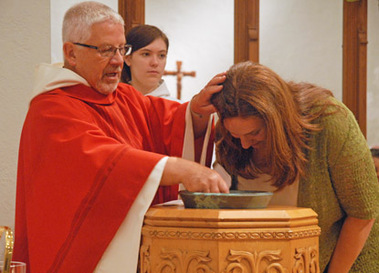
To my Baptist brethren, I would also point out that the recipient of cleansing wasn't dipped in the water of impurity. On the contrary, it was the finger of the priest, who would then sprinkle both the blood of the sacrifice and the water of cleansing. This strongly refutes the claim of Baptists that baptism is properly done only by immersion. Rather, the type in Numbers indicates that the proper mode of baptism is by sprinkling (by which I do not mean that baptisms by other modes are, therefore, invalid). 

This Scripture points to what the Westminster Assembly would say on the subject of baptism some three millennia later: "Dipping of the person into the water is not necessary; but baptism is rightly administered by pouring or sprinkling water upon the person" (Westminster Confession of Faith XXVIII:3).


Saturday, April 9, 2022

How Can I Know that the Bible Is the Inerrant Word of God?

The Christian philosopher and apologist Gordon Clark once wrote, "Because God is sovereign, God's authority can be taken only on God's authority. As the scripture says, 'Because He could swear by no one greater, He swore by Himself' (Hebrews 6:13)" (from God's Hammer, p. 39). His point was that confirmation of authority comes from higher authority. However, there can be no authority higher than God by which to confirm what He says. By His own authority, therefore, He declares His own truth and authority. 

The thoughtful person sees this and asks, "But isn't this circular reasoning?" And it is. Yet, we can see the impossibility of an alternative if we ask a parallel question: "How can you prove logic without presupposing logic as the basis for its proof?" 

The thoughtful Christian might ask whether the unbeliever would be convinced by that argument. And the obvious answer is that an unbeliever would not be convinced. Yet we must deny that his disbelief is based on a reasonable doubt. On the contrary, his rejection would arise from his own presuppositions against God's authority. Those presuppositions are the inherent nature of unbelief (Romans 1:18). 

On the other hand, we know that there are many Christians who receive the Bible as God's word, and that it is necessarily, therefore, inerrant. I am one of those Christians. Yet that belief did not arise from a consideration of a chain of logical arguments or archeological verifications. 

So, from where did my belief come? 

Clark quotes from the Institutes of John Calvin: "It is, therefore, such a persuasion as requires no reason; such a knowledge as is supported by the highest reason and in which the mind rests with greater security and constancy than in any reasons; in fine, such a sense as cannot be produced but by a revelation from Heaven" (I. vii.5). By "revelation," Calvin meant no such thing as a voice whispering in the believer's ear. Rather, in the process of effectual calling, the Holy Spirit causes the man's spirit to recognize the truth of the Scriptures as he reads them or hears them preached. 

This concept was picked up later (1646) in the writing of the Westminster Confession of Faith (I:5), the doctrinal statement of the world's Presbyterians: "We may be moved and induced by the testimony of the Church to an high and reverent esteem of the holy Scripture; and the heavenliness of the matter, the efficacy of the doctrine, the majesty of the style, the consent of all the parts, the scope of the whole (which is to give all glory to God), the full discovery it makes of the only way of man's salvation, the many other incomparable excellencies, and the entire perfection thereof, are arguments whereby it doth abundantly evidence itself to be the Word of God; yet, notwithstanding, our full persuasion and assurance of the infallible truth and divine authority thereof, is from the inward work of the Holy Spirit, bearing witness by and with the Word in our hearts." The Westminster divines added to Calvin's argument that Scripture provides good reasons for recognizing it as the Word of God. Yet the unbeliever suppresses his awareness of those qualities (Romans 1:18). He cannot recognize them exactly because of his unbelief (I Corinthians 2:14). He cannot be argued out of his unbelief, because his unbelief is a matter of sin, not ignorance. 

The case here demonstrates why we never see an apologetical situation in the New Testament in which Jesus or the Apostles ever argued for acceptance of Scriptural proofs. Even when Jesus faced Satan and when Paul preached to the pagan philosophers of Athens, each argued from Scripture as his starting point, not as a subsidiary point requiring proof. 

We must remember the promise of God: "So shall My Word be, that goes out of My mouth; it shall not return to Me empty, but it shall accomplish that which I purpose, and shall succeed in the thing for which I sent it" (Isaiah 55:11). God promises success to His word, not to our attempts to appeal to the fallen intellect of the unbeliever. "Of His own will He brought us forth by the word of truth, that we should be a kind of firstfruits of His creatures" (James 1:18). There has never been any other way by which God has converted His elect (Romans 10:8-15).


Saturday, June 5, 2021

Justification and That Essential Four-Letter Word: Alone


"In teaching justification by faith alone, Calvin and the Reformed creeds, like Luther before them, are biblical. Not only does the Bible teach that justification is by faith, but it teaches also that justification is by faith alone. The Bible teaches justification by faith alone not by using the word alone, but by contrasting faith as the means of justification with the only alternative, namely, the works of the sinner. When, in its great passages on justification, the Bible affirms that justification is by faith and immediately adds that justification is not by works, the Bible teaches not only that justification is by faith, but also that justification is by faith alone. So clearly, purposefully, and decisively does the Bible thus teach justification by faith alone that alone is, in fact, in the text. It is in the text implicitly." 

- Rev. David Engelsma, "Gospel Truth of Justification," p. 185, emphasis in original 

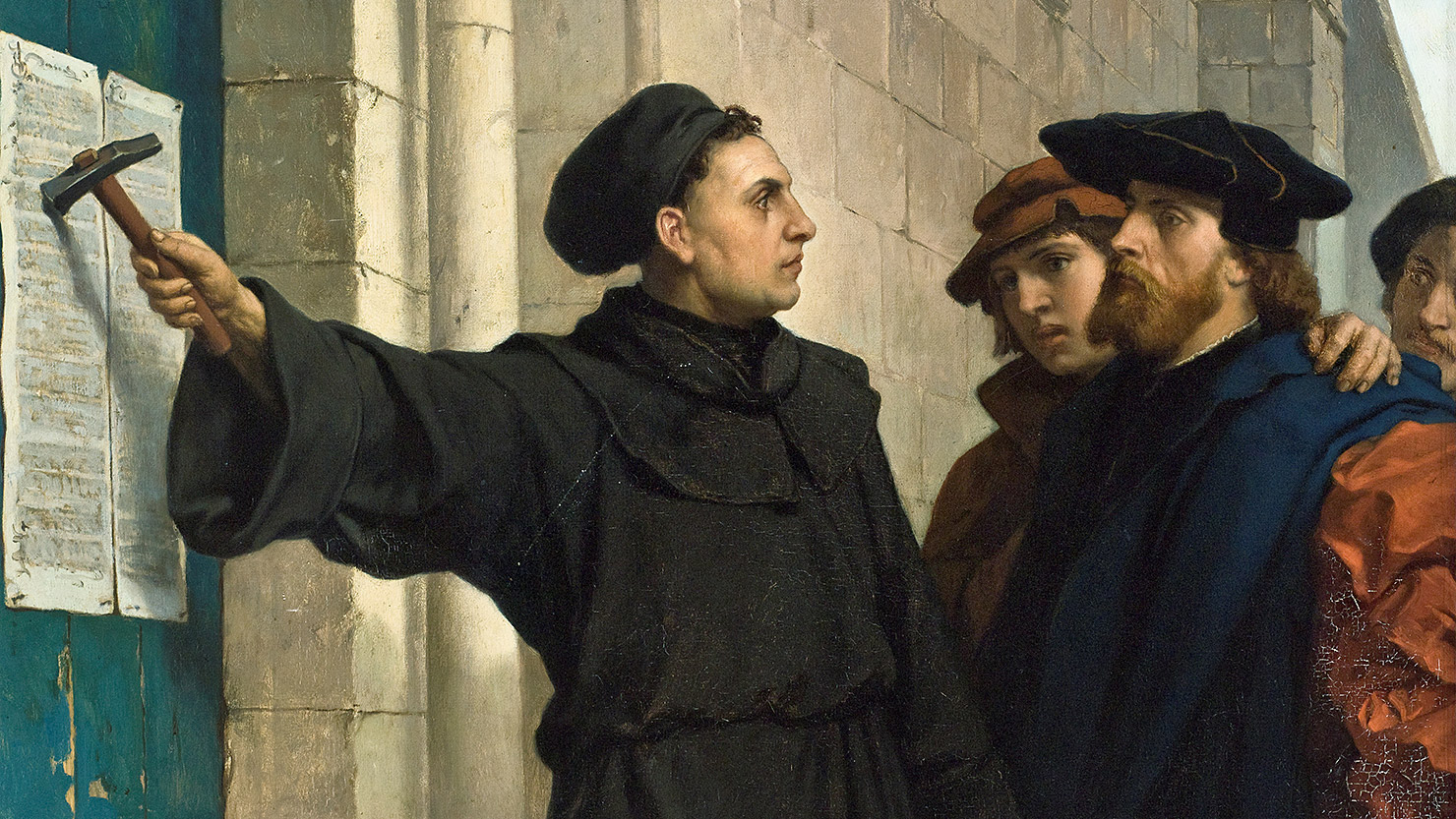
When Martin Luther first translated the Bible into his native German he added the word "alone" to Romans 3:28: ""So halten wir nun dafür, dass der Mensch gerecht werde ohne des Gesetzes Werke, allein durch den Glauben" (Literally: "We therefore conclude that a man is justified without the works of the law, alone through faith"). Rome has accused him ever since of adulterating the verse. More recently, Mormons have repeated the accusation, and applied it to all orthodox Protestants who hold to Sola Fide, justification by faith alone

As seen in the quote above, Luther might have added the word, but he did not add the concept. He merely made explicit what was already implicit. Not only is there nothing dishonest in doing so, but it is a common practice in translating. In fact, the King James Version used by the Mormons does it frequently (the words printed in italics). And Romanist translators have done it in preparing approved versions of the Scriptures. In other words, this is a painfully obvious case of the pot calling the kettle black! 

Part of the reason that Engelsma felt compelled to make his comment so firmly is because of a creeping loss of the Reformation doctrine, even among those who profess to walk in the footsteps of the Reformers. 

For example, in the Thirty-Nine Articles of Anglicanism (Church of England, Episcopal Church in the USA, etc.), number XI says, "Of the Justification of Man. We are accounted righteous before God only for the merit of our Lord and Savior Jesus Christ by faith, and not for our own works or deservings. Wherefore, that we are justified by faith only is a most wholesome doctrine, and very full of comfort..." "Only" appears twice in this one sentence, yet Anglican Theologian N. T. Wright says that the doctrine is an error, and adds works to his doctrine of justification. 

Likewise, the Westminster Confession of Faith, the main doctrinal document of the world's Presbyterians, says (Chapter XI:1 and 2): "Those whom God effectually calleth, He also freely justifieth: not by infusing righteousness into them, but by pardoning their sins, and by accounting and accepting their persons as righteous; not for any thing wrought in them, or done by them, but for Christ’s sake alone; not by imputing faith itself, the act of believing, or any other evangelical obedience to them, as their righteousness; but by imputing the obedience and satisfaction of Christ unto them, they receiving and resting on Him and His righteousness by faith; which faith they have not of themselves, it is the gift of God. Faith, thus receiving and resting on Christ and his righteousness, is the alone instrument of justification..." Yet a movement among professing Presbyterians known as the Federal Vision denies the propriety of "alone," and, like Wright, claims a form of justification by faith mixed with works. 

Such men are dishonest in their profession, pledging their commitment to their respective creeds, while denying such a fundamental doctrine. That is taking the Lord's Name in vain, and "the Lord will not hold him guiltless who takes His name in vain" (Exodus 20:7).

Saturday, May 29, 2021

Justin Martyr on Sunday, the Christian Sabbath

I often find myself in the middle between two camps regarding the Christian and the Sabbath. On one side, I have the Seventh-Day Adventists, who believe that there is virtually no discontinuity between the Jewish Sabbath and the Christian Sabbath, including the necessity of maintaining the seventh-day as the Sabbath. In contrast, the opposite side is those who hold that there is such a radical discontinuity that there is no Sabbath for the Christian. 

My personal view is that of classical Protestantism, a rejection of both opposing sides, such as is found in the Westminster Confession of Faith XXI:7: "As it is of the law of nature, that, in general, a due proportion of time be set apart for the worship of God; so, in his Word, by a positive, moral, and perpetual commandment, binding all men in all ages, He hath particularly appointed one day in seven for a Sabbath, to be kept holy unto Him:

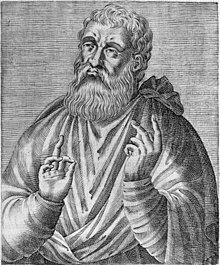
Justin Martyr
which, from the beginning of the world to the resurrection of Christ, was the last day of the week; and, from the resurrection of Christ, was changed into the first day of the week, which in Scripture is called the Lord’s Day, and is to be continued to the end of the world as the Christian Sabbath."

It is that last clause, regarding the change to the first day of the week that I wish to address. It is exactly the point of conflict between orthodox Protestants and the Seventh-Day Adventists regarding the Sabbath. Adventists place the blame at the feet of Constantine, the Roman emperor who legalized the Christian faith in the Empire. 

However, we have the testimony of Justin Martyr (100-165 AD) to the contrary: "And on the day called Sunday, all who live in cities or in the country gather together to one place, and the memoirs of the apostles or the writings of the prophets are read, as long as time permits; then, when the reader has ceased, the president verbally instructs, and exhorts to the imitation of these good things" (1 Apol 67.3). Church History simply does not support Adventist claims on the subject.

Saturday, July 11, 2020

The Promises of God Defined by His Mercy


Isaiah 55:11 is a verse which is well-known among orthodox Protestants: "So shall My word be that goes out from My mouth; it shall not return to Me empty, but it shall accomplish that which I purpose, and shall succeed in the thing for which I sent it." And there is good reason for it to be well-known, because it powerfully teaches that the Bible is infallible and trustworthy. Where we are weak, the Scriptures are invincible!

However, there is another aspect to that verse that many such Protestants pass over: the Scriptures don't achieve what we plan, but what God plans. This is where orthodoxy stands against the so-called Prosperity Gospel - which is really no gospel at all - which claims that spouting some claim from anyone on the basis of his personal desire and interpretation guarantees that God is obligated to give it.

Where this is especially important is in evangelism. Paul tells us that "faith comes from hearing, and hearing through the word of Christ" (Romans 10:17). That is, the preaching of the Word is God's usual means of converting unbelievers (see the Westminster Confession of Faith Chapter X). Some people claim that means that we are just to proclaim the Word, and then every person has an equal ability to respond, based on his choice to believe or not. Yet, we know that not all believe, even when presented with the Gospel through the Scriptures. Doesn't this "choice" doctrine then imply that the promise of Isaiah 55:11 is false? or, at least, unreliable? God forbid such a blasphemous assertion!

Rather, such people ignore the third and fourth lines of the verse: "It shall accomplish that which I purpose, and shall succeed in the thing for which I sent it." The promise of God never fails! The mere idea is impossible! Rather, it is effectual when He intends it, not us. As Paul also says: "So then it depends not on human will or exertion, but on God, who has mercy" (Romans 9:16; see also John 1:12-13).

More importantly, we have the assertion of Jesus: "All that the Father gives Me will come to Me, and whoever comes to Me I will never cast out. For I have come down from heaven, not to do My own will but the will of Him who sent Me. And this is the will of Him who sent Me, that I should lose nothing of all that He has given Me, but raise it up on the last day" (John 6:37-39). His promise here parallels the one in Isaiah, but is more explicit. To whom does the promise apply? To those who choose? No, it says no such thing. Rather, Jesus specifies that it applies to those whom the Father has given Him. Does He know who those people are? Of course. Can we know? Of course not. That is a part of the creator/creature distinction. Therefore, we are to proclaim the Word to whomever will hear us, knowing that those redeemed by Jesus will respond in faith, and the others will reject it (II Corinthians 2:16). What we must remember is that the promise of Isaiah is effectual, and that promise should stimulate us in our evangelism (Acts 18:10), knowing that God will apply that word to the conversion of all whom He intends (Acts 13:48).

Saturday, May 30, 2020

What Happens to Children When They Die?

This is a hard topic on which to write. I anticipate some negative reaction. However, it is a question I have been asked repeatedly by anti-Calvinists.

First, let us look at the confessional standard: "Elect infants, dying in infancy, are regenerated and saved by Christ through the Spirit, who worketh when, and where, and how He pleaseth. So also are all other elect persons who are incapable of being outwardly called by the ministry of the Word" (Westminster Confession of Faith X:3). The divines described what happens to elect infants who die. Of course, since they are elect, that would be God's plan for them. What about non-elect infants? On that the divines were silent. Charles Hodge and his son, A. A. Hodge, took that to mean that all infants who die are elect. I think that is presumptuous, taking an argument from silence where it does not lead.

For the Christian, there is extensive biblical justification to believe that his dead child is in Heaven. First, God claims the children of believers for Himself in Ezekiel 16:20-21: "You took your sons and daughters, whom you had borne to Me, and these you sacrificed to them [i. e., idols] to be devoured. Were your whorings so small a matter that you slaughtered My children and delivered them up as an offering by fire to them?" When the Israelites had become so given over to idolatry that they even practiced human sacrifice, God's anger was directed at the theft of what belonged to Him by covenant.

And second, what does God promise to these children who are His? "Your children shall be taught by the LORD, and great shall be the peace of your children" (Isaiah 54:13). Also in Acts 2:39: "The promise is for you and for your children and for all who are far off, everyone whom the Lord our God calls to Himself." So, in both Testaments, we have a promise from God to be covenantally faithful to the children of believers. Is this a promise that every child of believers will be saved? No, it isn't, as we know both from personal experience and from the biblical examples of Esau and Ishmael.

However, we also have a biblical example of the comfort that covenantal promise is to the believer. When David's first son with Bathsheba died (II Samuel 12:15-23), David took comfort in his assurance that his son would be waiting for him is Heaven: "I shall go to him, but he will not return to me" (verse 23).

I think that the most-important verse on this issue is I Corinthians 7:14: "The unbelieving husband is made holy because of his wife, and the unbelieving wife is made holy because of her husband. Otherwise your children would be unclean, but as it is, they are holy." Paul tells us that the children of at least one Christian parent are holy. He doesn't say saved. Rather, he speaks of the covenantal connection between the believing parent and the child, such that the child is federally holy on the basis of the parent's faith.

However, we should notice his exact words. Paul speaks negatively. He doesn't just say, "The child with a believing parent is holy." Instead, he adds, that the child would otherwise be "unclean." And this is logical because we know there is no neutral moral state. But what are the consequences to the unbelieving parents regarding their own children?

"Nothing unclean will ever enter it [i. e., the New Jerusalem, v. 10], nor anyone who does what is detestable or false, but only those who are written in the Lamb’s book of life" (Revelation 21:27). Here is where the unbeliever must consider his standing with God, because it affects not just himself but also his children. If he decides that the pleasures of this life outweigh the eternal consequences, can he also say that they outweigh the eternal consequences for his child? Of course, this doesn't mean that every child of an unbeliever will himself be an unbeliever. We know from experience that the Holy Spirit often breaks into the families of unbelievers to bring one to Himself. I myself was such a convert. But the generality can be predicted, just as above with the children of believers.

This is my personal interpretation. Though I consider it a rational conclusion from the relevant Scriptures, I am aware that it goes beyond the confession. Therefore, other Calvinists should not be blamed for my personal opinion. I am especially conscious that I am going against some theological giants when I disagree with the Hodges. All I can say is that the Scriptures compel me.

Wednesday, May 20, 2020

Old Testament Usage Proves that "Baptizo" Cannot Necessarily Mean "Immerse"

One of the claims made by certain groups, such as Baptists and Seventh-Day Adventists, regarding baptism is that immersion is the required mode. I am sure that you have seen the pictures of a person lowered back first - always back first - into a baptismal pool. Or just a swimming pool, pond, seaside, in a bath tub - I've seen them all. One of the reasons they give is that "baptizo," the Greek verb from which we get the word "baptism," supposedly means "to immerse."

It is that assertion that I wish to address here.

As I have said before, I agree with the Westminster Confession regarding the mode of baptism: "Dipping of the person into the water is not necessary; but baptism is rightly administered by pouring or sprinkling water upon the person" (XXVIII:3). I do not claim, nor does the Confession state, that baptism by immersion invalidates the rite. In fact, I was personally baptized by immersion, and it was in a swimming pool! However, as I have grown in my knowledge of Scripture, I have come to conclude that sprinkling is the intended mode of baptism.

The problem with the claim about the word "baptizo" is that it is inconsistent with the usage of that word. In the New Testament, does anyone claim that the pharisees immersed their dining couches (Mark 7:4)? The word translated "wash" there is "baptizo" in the Greek. The problem is even greater in the Greek version of the Old Testament, the Septuagint. In that version, "baptizo" or "bapto" appear five times. Of those, two are used in situations in which sprinkling, not immersion, are logically or explicitly required.

The first is in Daniel 4:33 (verse 30 in the LXX), the description of Nebuchadnezzar's curse of madness. We are told that he was "bathed in the dew of Heaven." "Bathed" there is a translation of "ebapso," a tense of "bapto." Could any sensible person suggest that he was immersed in the dew?

The other is Ecclesiasticus 34:25 (not Ecclesiastes; also called Sirach): "He that washeth himself after the touching of a dead body, if he touch it again, what availeth his washing?" The first use of "washing" is a translation of "baptizomenos," a tense of "baptizo." Some might object that this verse is from the Apocrypha, which is true. However, I cite it only as an example of usage. Compare it to the Mosaic laws regarding purification washings (e. g., Numbers 19:9; and Judith 12:7, in a fountain), and we see that the ceremonies described by Sirach were done by sprinkling, not by immersion.

The conclusion is unavoidable that the claim that "baptizo" refers only to "immersion" is not biblically sustainable. To insistence on it is to put a denominational prejudice ahead of the words in the text.

Saturday, February 15, 2020

Election and Reprobation: Treating Biblical Truths as Shameful

Regarding the hesitancy to preach on election, Southern Presbyterian Theologian James Henley Thornwell wrote, "This squeamish timidity is no less dishonoring to God [than is to be inquisitive and speculative], as it supposes that He has communicated some truths, in a moment of unlucky forgetfulness, which it would have been better to conceal, and flatly and palpably contradicts the assertion of Paul that all Scripture is 'profitable' [II Timothy 3:16]" (Thornwell, "Election and Reprobation").

Thornwell is correct to identify Paul's words as the issue here: "All Scripture is breathed out by God and profitable for teaching, for reproof, for correction, and for training in righteousness" (II Timothy 3:16). This verse is fundamental to the Christian attitude toward the Bible. First, it is literally the word of God, not given directly, but through the instrumentality of men. Therefore, as God is necessarily incapable of error, then, too, His word is necessarily free from error. Second, Paul tells us that this origin with God, and as given to men, is profitable, "that the man of God may be complete, equipped for every good work" (verse 17). God gave His word that His people may be trained for the work that He has given us to do. Therefore, there can be nothing in it that is harmful or irrelevant. Yet, there are many men in the pulpit who avoid dealing with the myriad passages that discuss the doctrines of grace.

I had this experience once. I had moved to a new community, and needed to find a new church. There was a Presbyterian congregation - I won't specify, but each was of an orthodox denomination, though not the same one - at about equal distance north and south of my house. To help in choosing between them, I asked the minister of one whether he would preach on predestination if it were a natural part of whatever text he was using. His response, word for word, was, "Oh, no! That would offend too many people!" I went to the other church and never looked back.

Is that not a rebuke to God, as Thornwell says? Is such a refusal not telling God, "You screwed up by putting this in Your word, so I have to fix your mistake"?

Here is the instruction from the Westminster Confession of Faith III:8, to which this minister had committed his subscription: "The doctrine of this high mystery of predestination is to be handled with special prudence and care, that men attending to the will of God revealed in His Word, and yielding obedience thereunto, may, from the certainty of their effectual vocation, be assured of their eternal election. So shall this doctrine afford matter of praise, reverence, and admiration of God; and of humility, diligence, and abundant consolation to all that sincerely obey the gospel." Handling with prudence does not mean don't handle at all.

Saturday, February 8, 2020

The Knowledge of Election: Avoiding the Effort to Be Wise Above What is Written

When dealing with even professed Christians on Facebook, I get a continuous stream of questions about hypothetical issues. Today someone asked, "What if Noah were really the Archangel Gabriel?" I am not making that up. 

This is especially true when discussing the doctrines of grace with people not from a Reformed background. They are constantly demanding an answer -  i. e., one that will satisfy them - as to why God chooses one person over another. Other than according to mercy alone (Romans 9:16) for His glory alone (Ephesians 1:6), Scripture does not give us an answer. Rather, we are given this rebuke: "Who are you, O man, to answer back to God? Will what is molded say to its molder, 'Why have you made me like this?' Has the potter no right over the clay, to make out of the same lump one vessel for honorable use and another for dishonorable use?" (Romans 9:20-21). The answer is simple, Paul tells us. God makes His decision on the basis that he chooses because He is God and we are not, so stop prying into things above your station!

And Paul is answering on the basis of a longtime Biblical tradition, going back to Moses: "The secret things belong to the LORD our God, but the things that are revealed belong to us and to our children forever, that we may do all the words of this law" (Deuteronomy 29:29; see also Paul's remarks in I Corinthians 4:6 and Colossians 2:8). Moses tells us that God has given us everything we need to know for salvation and sanctification in the Bible. Beyond that revelation, whatever imaginations arise from our inordinate curiosity are to be cast aside. "The whole counsel of God, concerning all things necessary for his own glory, man’s salvation, faith, and life, is either expressly set down in Scripture, or by good and necessary consequence may be deduced from Scripture: unto which nothing at any time is to be added, whether by new revelations of the Spirit, or traditions of men" (Westminster Confession of Faith, I:6).

"Men of inquisitive and speculative minds are apt to forget that there are limits set to human investigation and research, beyond which it is impossible to pass with safety or satisfaction. To intrude with confidence unto the unrevealed secrets of God's wisdom and purpose manifests an arrogance and haughtiness of intellect which cannot fail to incur the marked disapprobation of heaven, and should always meet the prompt reprobation of the pious.Whatsoever is useful to be known, God has kindly and graciously revealed, and it argues no less ingratitude than presumption to attempt to be 'wise above what is written'" (I Corinthians 4:6, James Henley Thornwell, "Election and Reprobation").

Wednesday, August 7, 2019

Justifying Faith Is a Working Faith

In my day to day ministry, I confront many sectarians who hold to some version of works righteousness, Catholics, Mormons, Jehovah's Witnesses, Oneness Pentecostals. They hate the doctrine of justification by free grace. Why? Part of it is the remainder of Adam in each of us, that seeks to be justified by the broken covenant of works. However, there is also a part which is bondage: the man who is free in Christ has no loyalty to organizational hierarchies. They simply have no hold over him.

These organizations point to the commands in Scripture to live holy lives. And those commands are truly there, and should be in the mind of every Christian. That isn't the problem. The problem is that they claim that those works commanded by Scripture are commanded in order to gain the favor of God, though they may phrase it in different ways. That is, they claim that justification is, in part, the result of these works. And that destroys the true doctrine of justification by grace alone through faith alone, apart from works (e. g., Romans 3:28). That is, they put the result for the cause, and, thus, destroy assurance of salvation.

In every discussion on this issue, we can expect these works-mongerers to refer to James 2:24: "You see that a person is justified by works and not by faith alone." They consistently block out the context of the paragraph that includes that verse, which is about the demonstration of justification before men, not justification before God.

Then they will bring up the accusation against the biblical Christian that "faith alone" means that works are irrelevant, allowing the Christian to live wickedly, and yet go to heaven. That is a caricature, which has been answered repeatedly down through history. Yet the works-mongerers consider themselves very clever to repeat it, regardless of the answer. What is that answer? "Faith, thus receiving and resting on Christ and his righteousness, is the alone instrument of justification; yet is it not alone in the person justified, but is ever accompanied with all other saving graces, and is no dead faith, but worketh by love" (Westminster Confession of Faith XI:2). True faith will necessarily result in good works.

Saturday, June 29, 2019

Does Supralapsarianism make God the Author of Sin?

"If our unrighteousness serves to show the righteousness of God, what shall we say? That God is unrighteous to inflict wrath on us? (I speak in a human way.) By no means! For then how could God judge the world? But if through my lie God’s truth abounds to his glory, why am I still being condemned as a sinner?" (Romans 3:5-7).

A common accusation against supralapsarianism, especially from Arminians, but also even from professing Calvinists, is that it makes God the author of sin. They point out, correctly, that supralapsarianism teaches that God predestined the Fall. Therefore, they say, He forced Adam and Eve to sin. However, that is a false equivalency. Predestination does not imply force, as Calvinists have always said: "Nor is violence offered to the will of the creatures, nor is the liberty or contingency of second causes taken away, but rather established" (Westminster Confession of Faith III:1). Adam and Eve chose to sin. The fact that their choice was consistent with God's decree doesn't change the fact that it represented what they wanted to do. 

Furthermore, the choice of Adam and Eve was to commit an evil act. They knew the commandment of God regarding the tree. They understood that they were disobeying that commandment. And they knew that the desire underlying that choice was to achieve Satan's promise of autonomy from the lordship of God (Genesis 3:5). In every way, what they sought was wickedness. And that was why their choice properly brought them under the judgment of God.

In His decree, however, God had a very different purpose, as Paul describes in the verses above. God's decree of the Fall was certainly not to grant autonomy to Adam and Eve. That would, indeed, have been to seek a sinful end. Rather, the decree was intended to bring about His own glory, the highest good that is possible! That is, God's decree that Adam would fall into wickedness was to the highest good that any end could be.And, therefore, the cavil of the Arminian is refuted.

Saturday, March 16, 2019

"Natural Religion": Can a Man Be Saved by God's Revelation in Man and Nature?

The Bible clearly teaches that God reveals Himself in His creation, such that unbelief is a suppression of knowledge, leaving the unbeliever without excuse, whether he has heard the Gospel or not (e. g., Psalm 19:1-4, Romans 1:18-22). That is half the equation. The other half is what I am addressing here: can a person be converted by what he can know of God from the creation, apart from ever hearing the word of God?

In general, theologians have answered this question with a "no." That is because the Bible also tells us that men are converted, under normal circumstances, only by the preaching of the Word of God: "How then will they call on Him in whom they have not believed? And how are they to believe in Him of whom they have never heard? And how are they to hear without someone preaching? And how are they to preach unless they are sent? As it is written, 'How beautiful are the feet of those who preach the good news!' But they have not all obeyed the gospel. For Isaiah says, 'Lord, who has believed what he has heard from us?' So faith comes from hearing, and hearing through the word of Christ" (Romans 10:14-17).

There are exceptions. For example, we can think of John the Baptist, who was regenerate in the womb (Luke 1:15). Or we might think of infants who die, or the mentally-disabled. Theologians have also been conscious of these exceptions. For example, we find this in the Westminster Confession of Faith: "Elect infants, dying in infancy, are regenerated and saved by Christ through the Spirit, who worketh when, and where, and how He pleaseth. So also are all other elect persons who are incapable of being outwardly called by the ministry of the Word" (X:3).

However, apart from those exceptions, I think that the Scriptures require us to consider the Holy Spirit's speaking through the Word to be the only means of conversion of fallen men. "In the present condition of our race, whatever may be the evidences which exist within us and around us of the being, perfection, and character of God, of the condition of man, and the relation he sustains to his Creator, his darkened faculties are incompetent to gather from them the conceptions which make up the fabric of natural religion, however he may prove its truth from those sources, after the ideas have been suggested to the mind" (James Henley Thornwell, "The Necessity and Nature of Christianity").

Wednesday, February 20, 2019

Christ on the Throne of the Church

The Westminster Confession tells, "There is no other head of the Church but the Lord Jesus Christ: nor can the Pope of Rome in any sense be head thereof; but is that Antichrist, that man of sin and son of perdition, that exalteth himself in the Church against Christ, and all that is called God" (XXV:6). This assertion is based on, for example, Ephesians 4:15-16: "We are to grow up in every way into Him who is the head, into Christ, from whom the whole body, joined and held together by every joint with which it is equipped, when each part is working properly, [who] makes the body grow so that it builds itself up in love." And in Colossians 1:18: "He is the head of the body, the church."

The reason the Confession teaches that His headship precludes the Pope (as well as all of the papist offices, such as priest and bishop) is based on Ephesians 4:11-13, in which Christ, as Head of the Church, "gave the apostles, the prophets, the evangelists, the pastors and teachers, to equip the saints for the work of ministry, for building up the body of Christ, until we all attain to the unity of faith and of the knowledge of the Son of God, to mature manhood, [and] to the measure of the stature of the fullness of Christ..." As the Head of His Church, Christ gave her the officers and government that would best lead her to develop as He desired.

One thing that the Confession does not say, because it was taken as self-evident, is that the headship of Christ is an absolute monarchy. He decrees, and the church obeys. She is never left to decide her government, mission, or worship for herself. As Presbyterian theologian James Henley Thornwell wrote, "Existing in Christ, by Christ, and for Christ, she has no other law but His will. She can only speak the words which He puts in her mouth. Founded upon divine revelation and not in human nature, she has a divine faith, but no human opinion, and the only argument by which she authenticates either her doctrines or her precepts is, 'Thus saith the Lord.' Her province is not to reason, but to testify" ("Theology as a Life in Individuals and in the Church").

Saturday, November 17, 2018

The Continuing Obligation of the Law of God

Among professing Christians, there is a competition to find ways to twist the second clause of Romans 6:14: "You are not under law but under grace." For some reason, those interpretations never involve the first clause of the sentence. You will hear different versions, such as that the Law was done away in Christ, or that it was only for Jews, not Gentiles. But, in whatever way, such people think that the truly spiritual person despises the biblical Law.

I don't believe any such thing. Nor did the author of Romans, the Apostle Paul.

Consider what he said earlier in that same epistle: "Since they did not see fit to acknowledge God, God gave them up to a debased mind to do what ought not to be done. They were filled with all manner of unrighteousness, evil, covetousness, malice. They are full of envy, murder, strife, deceit, maliciousness. They are gossips, slanderers, haters of God, insolent, haughty, boastful, inventors of evil, disobedient to parents, foolish, faithless, heartless, ruthless. Though they know God’s righteous decree that those who practice such things deserve to die, they not only do them but give approval to those who practice them" (Romans 1:28-32). OK, so "they" who? The context is a description of the unrighteousness of unbelievers. And to whom is the passage addressed? While the Church at Rome included Jews, it was predominantly a Gentile church, including members even of the emperor's family (Philippians 4:22). So, Paul is talking to Gentile Christians about unbelievers, and describes horrific sins that are properly subject to capital punishment. According to what? Not according to Roman law. Rather, according to God's law (compare I Timothy 1:8-11).

These verses are contrary to the whole popular evangelical theology of Law, which is properly known as antinomianism. The moral law is still in force, whether for Jew or for Gentile.

The Westminster Confession of Faith (XIX:5) correctly summarizes this: "The moral law doth forever bind all, as well justified persons as others, to the obedience thereof; and that not only in regard of the matter contained in it, but also in respect of the authority of God the Creator who gave it. Neither doth Christ in the gospel any way dissolve, but much strengthen, this obligation."

Saturday, October 27, 2018

The True Tradition of the Eucharist Held by the Reformed

The Church of Rome teaches that the elements of the Eucharist - or communion, if you prefer - are literally changed into the flesh and blood of Jesus. The Council of Trent made that dogma official: "Because Christ our Redeemer said that it was truly His body that He was offering under the species of bread, it has always been the conviction of the Church of God, and this holy Council now declares again, that by the consecration of the bread and wine there takes place a change of the whole substance of the bread into the substance of the body of Christ our Lord and of the whole substance of the wine into the substance of His blood. This change the holy Catholic Church has fittingly and properly called transubstantiation." Notice especially the assertion that "it has always been the conviction of the Church of God." 

However, I deny that it has "always been the conviction." Rather, within the Catholic Church, there was a debate on the topic, and the doctrine of transubstantiation merely became the dominant view.

For example, Saint Augustine very explicitly states that Jesus is present in the Eucharist, but only to the faithful! He starts Sermon 272, which is about this very topic, with, "What you see on God's altar, you've already observed during the night that has now ended. But you've heard nothing about just what it might be, or what it might mean, or what great thing it might be said to symbolize. For what you see is simply bread and cup - this is the information your eyes report. But your faith demands far subtler insight: the bread is Christ's body; the cup is Christ's blood. Faith can grasp the fundamentals quickly, succinctly, yet it hungers for a fuller account of the matter." I recommend reading the whole thing (it is very brief), so that you can see that I have not  misrepresented his overall message. He describes the elements as the body and blood of Christ to the faithful, not as a physical reality to which the unbeliever would have access.

This view was unchallenged until a debate broke out between Radbertus and Ratramnus in the Ninth Century. Radbertus advocated the doctrine of transubstantiation as we now know it. Ratramnus defended the Augustinian view of a spiritual real presence to the believer only. The position of Radbertus came to dominate, and was later spread further by Aquinas and, as quoted above, Trent.

The significance of this is that the view expounded by Augustine and Ratrumnus is exactly that taught by Calvin and held by the orthodox Reformed (excluding Zwingli and his descendants) to this day. For example, the Westminster Confession of Faith XXIX:7 (1646) says, "Worthy receivers, outwardly partaking of the visible elements in this sacrament, do then also inwardly by faith, really and indeed, yet not carnally and corporally, but spiritually, receive and feed upon Christ crucified, and all benefits of His death: the body and blood of Christ being then not corporally or carnally in, with, or under the bread and wine; yet as really, but spiritually, present to the faith of believers in that ordinance, as the elements themselves are to their outward senses."

What we see here is that the claims of Rome to be holding to the "traditional" view in her doctrine of transubstantiation is committing historical revision. The fact is that she repudiated what had been the historical view to adopt a particularly-superstitious perversion. It is the Reformed alone who hold the historical doctrine of the church.

Saturday, March 17, 2018

Patristic Views of the Old Testament Canon

The Church of Rome makes bold claims about the Apocrypha, the books in her Old Testament Canon, though rejected by both Jews and Protestants. Catholic apologists will often challenge, "By what authority did Protestants remove them from the canon?" Of course, that question ignores their exclusion from the Jewish canon.

However, what that catholic challenge ignores is the testimony of the Church fathers against the inclusion of the Apocrypha in the canon.

Consider first Melito, the Bishop of Sardis (died 180AD). His friend Polycrates, bishop of Ephesus, had asked his opinion of the Apocrypha, so Melito investigated their standing. In his Letter to Onesimus, he wrote, "Having come to the East and arrived at a place where these things were preached and done, and having accurately learned the books of the Old Testament, I have subjoined a list of them and sent it to thee. The names are as follows: of Moses, five books, namely Genesis, Exodus, Leviticus, Numbers, and Deuteronomy; Joshua, son of Nun, judges, Ruth; four books of Kings, two of Chronicles, the Psalms of David, the Proverbs of Solomon, which is also called Wisdom, Ecclesiastes, Song of Songs, and Job; of Prophets, the books of Isaiah and Jeremiah, writings of the Twelve Prophets in one book. Daniel, Ezekiel, Ezra, from which I have made selections." Nehemiah and the Hebrew text of Esther appear to be included under the title of Ezra. No Apocrypha.

Origen testified, "Let it not be unknown that the canonical books, as the Hebrews transmit them, are twenty-two, for such is the number of letters among them... These are the twenty-two books of the Hebrews: the book called Genesis..., Exodus..., Leviticus..., Numbers..., Deuteronomy... These are the Words: ...Joshua ben Nun, Judges, Ruth...; Kings, first and second... in one called Samuel; the third and fourth of Kings in one book...; the first and second of Chronicles, in one book...; the first and second of Esdras, in one book called Ezra...; the Book of Psalms...; the Proverbs of Solomon; Ecclesiastes; the Song of Songs...; Isaiah; Jeremiah, with the Lamentations and his epistle, in one volume, Jeremiah; Daniel; Ezekiel; Job; Esther. Beside these there are also the Maccabees." The Epistle of Jeremiah refers to chapter 29 of that book. The Twelve Prophets were left out by a transcriber. Some manuscripts of Origen's work return them. Notice that the books of Maccabees are described as beside the canon of twenty-two books of the Hebrew Bible. the other apocryphal works don't even rate a mention.

Athanasius, in his Festal Epistle, wrote, "All the books of the Old Testament are two and twenty in number, for, as I have heard, this is the order and number of the Hebrew letters. To name them, they are as follows: the first, Genesis, the next, Exodus, then Leviticus, after that the Numbers, and then Deuteronomy; next to them is Jesus the son of Nave [sic, Greek for Joshua son of Nun], and Judges; after that, Ruth; and again the next in order are the four books of the Kingdoms [I and II Samuel, I and II Kings]...; after them the first and second of the Remains, or Chronicles...; then the first and second of Esdras...; after them the Book of Psalms; then the Proverbs, Ecclesiastes, and the Song of Songs; besides these there is Job, and, at length, the Prophets; the twelve are reckoned one book; then Isaiah and Jeremiah, and with him Baruch, the Lamentations, the Epistle; and after them Ezekiel and Daniel. Thus far the books of the Old Testament." Like Melito, Athanasius seems to include the Hebrew version of Esther with Ezra. He also refers to Baruch and the Epistle of Jeremiah, not as the names of the apocryphal books, but as portions of Jeremiah. What he adds after this is also important: "For the sake of greater accuracy I will add - and the addition is necessary - that there are also other books beside these, not, indeed, admitted into the canon, but ordained by the Fathers to be read by such as have recently come over to us, and who wish to receive instruction in the doctrine of piety - the Wisdom of Solomon, the Wisdom of Sirach, and Esther, and Judith, and Tobit, the Doctrine of the Apostles, as it is called, and the Shepherd." Thus this father cannot be accused of overlooking or being ignorant of the Apocrypha. rather, he mentions them as being read, but then excludes them from the canon.

This is not meant to be an exhaustive list, but rather just some explicit examples. While Rome makes much of her so-called sacred tradition, they contradict that tradition here. The Council of Trent made into Scriptures books which Christians had traditionally rejected as such. In contrast, the statement of the Westminster Confession of faith (I:3) is consistent with the true tradition: "The books commonly called Apocrypha, not being of divine inspiration, are no part of the Canon of Scripture; and therefore are of no authority in the Church of God, nor to be any otherwise approved, or made use of, than other human writings."

Wednesday, March 14, 2018

The Old Testament Law for the New Testament Believer

Dispensationalists and followers of "New Covenant Theology" (hereafter "NCT") unite in claiming that the Old Testament law is not binding on Christians. However, Paul's use of the Law showed that he had no such opinion. I want to examine three places where he describes the abiding authority of the Law, including for Christians.

First is Romans 3:31: "Do we then overthrow the law by this faith? By no means! On the contrary, we uphold the law." While both dispensationalists and NCT claim that one is either in faith or in the law, implying a dichotomy between the two, that is certainly not Paul's doctrine. That's because of a bait-and-switch in the dispensationalist and NCT arguments. They properly point to a dichotomy of the two in the realm of justification. And I (and every other covenantalist) agree whole-heartedly that no one can be saved by the Law. However, the same people act as if that is the end of the discussion, sweeping the issue of sanctification under the rug. Yet that is Paul's point: the man saved by faith is now freed and enabled to love and obey God's law.

Second is I Corinthians 5:1: "It is actually reported that there is sexual immorality among you, and of a kind that is not tolerated even among pagans, for a man has his father’s wife." We know the story: The Apostle rebukes the church at Corinth for failing to exercise discipline against this member who is living in a sexual relationship with the wife of his own father (probably the man's step-mother). But how does Paul determine that such a lifestyle is wicked? It is never addressed anywhere else in the New Testament! However, in Leviticus 20:11, we read, "If a man lies with his father’s wife, he has uncovered his father’s nakedness; both of them shall surely be put to death; their blood is upon them" (see also Deuteronomy 27:20). Paul applies an Old Testament law, and one not repeated in the New Testament, something which both dispensationalists and NCT claim is necessary for a law still to be valid.

And third is I Corinthians 14:34: "The women should keep silent in the churches. For they are not permitted to speak, but should be in submission, as the Law also says." Paul again issues a rebuke to the church for acting contrary, not to a principle stated in the New Testament, but rather to one in the Old Testament Law!

So, here we have three New Testament examples that refute the antinomianism of the dispensationalists and New Covenant Theology. Their rejection of the Law is contrary to the apostolic testimony, and, therefore, false. Rather, the Scriptures demonstrate the accuracy of the confessional covenant theology: "The moral law doth forever bind all, as well justified persons as others, to the obedience thereof; and that not only in regard of the matter contained in it, but also in respect of the authority of God the Creator who gave it. Neither doth Christ in the gospel any way dissolve, but much strengthen, this obligation" (Westminster Confession of faith XIX:5).

Wednesday, September 27, 2017

Biblical Church Government: Presbyterian

Before I start, this post makes number 500. I'll pretend that it is in honor of the 500th anniversary of the Protestant Reformation.

My church derives from Scottish Presbyterians who separated from the Church of Scotland, in part, over the issue of patronage. After the Act of Union of 1703, which abolished the Scottish Parliament, the English Parliament passed a law required the Scots to accept pastors appointed by the local landowners, whether those landowners were members of the church or not. The Church of Scotland submitted to that requirement, contrary to her own constitution. This resulted in three secessions: the Associate Presbytery (also nicknamed the Secession Church) in 1733, the Relief Church in 1761, and finally the Free Church of Scotland in 1843.

What was the principle which these secessionists upheld? That a congregation has a right under God to choose her own officers, including the pastor, contrary to the impositions of Parliament. This continues to be what distinguishes Presbyterians from the episcopal churches, especially the Roman Catholic Church, which appoint their pastors, or move them, according to the whims of their bishops.

On what basis do we Presbyterians insist on this principle?

In Acts 6:1-6, we have the first description of the choice of church officers under the Apostles: "Now in these days when the disciples were increasing in number, a complaint by the Hellenists arose against the Hebrews because their widows were being neglected in the daily distribution. And the twelve summoned the full number of the disciples and said, 'It is not right that we should give up preaching the word of God to serve tables. Therefore, brothers, pick out from among you seven men of good repute, full of the Spirit and of wisdom, whom we will appoint to this duty. But we will devote ourselves to prayer and to the ministry of the word.' And what they said pleased the whole gathering, and they chose Stephen, a man full of faith and of the Holy Spirit, and Philip, and Prochorus, and Nicanor, and Timon, and Parmenas, and Nicolaus, a proselyte of Antioch. These they set before the apostles, and they prayed and laid their hands on them." The situation was a result of the growth of the church, both in numbers and in cultural diversity, resulting in interpersonal conflicts. The Apostles were unable both to attend to these conflicts and to evangelize. Therefore, they called for the church to choose (the Greek word means to choose by a show of hands) seven men, who would then be appointed to the office of deacon.

This pattern wasn't created ex nihilo by the Apostles. Rather, they followed biblical precedent. Moses had a similar difficulty as he led Israel in the Wilderness after the Exodus (Deuteronomy 1:9-18). Under God's instruction, Moses commanded the Israelites to "Choose for your tribes wise, understanding, and experienced men, and I will appoint them as your heads" (Deuteronomy 1:13). We see the very procedure adopted by the Apostles, as the congregation  elects men from within, who are then appointed to their authority by Moses.

The Apostles demonstrated their passing on of authority through the laying on of hands (Acts 13:3). With the passing of the Apostles, those who had inherited their authority continued the procedure (I Timothy 4:14, II Timothy 1:6). Thus, we have an orderly distribution of authority from Christ, the only head of the church, to the Apostles, and then to the elders and deacons of the church. There is provision neither for rule by individual men or for imposition of leaders, whether by a man or by the state, against the will of the church. This rules out popes, bishops, men of social standing, or of any authority supposedly over the church. This is the origin of the truth expressed in the Westminster Confession of Faith XXV:6: "There is no other head of the Church but the Lord Jesus Christ: nor can the Pope of Rome in any sense be head thereof; but is that Antichrist, that man of sin and son of perdition, that exalteth himself in the Church against Christ, and all that is called God."


Saturday, June 3, 2017

Our Duty to God in the Fourth Commandment, Remembering the Sabbath


In Matthew 22:35-40, we read a well-known story: "A lawyer asked Him a question to test Him. 'Teacher, which is the great commandment in the Law?' And He said to him, 'You shall love the Lord your God with all your heart and with all your soul and with all your mind. This is the great and first commandment. And a second is like it: You shall love your neighbor as yourself. On these two commandments depend all the Law and the Prophets.'" In my own church, we often recite these verses for the reading of the Law. In His answer, Jesus describes our duties primarily toward God, the first four of the Ten Commandments, and then our duties primarily to our fellow men, the last six of the Ten Commandments.

I want to focus on Jesus's "great and first commandment" (cited from Deuteronomy 6:5): "You shall love the Lord your God with all your heart and with all your soul and with all your mind." That is, the Christian is to love God by not worshiping other Gods, or by using unauthorized images in His worship, or by taking His name in vain. But we are also to love the Lord our God by "remembering the Sabbath day to keep it holy" (Exodus 20:8). And, of course, it is understandable that Jesus would expect us to love the Lord with the Sabbath, because He Himself is that Lord of the Sabbath (Matthew 12:8)! 

Frequently in these discussions, someone will bring up some other words of Jesus on the Sabbath (Mark 2:27-28): "The Sabbath was made for man, not man for the Sabbath." And He certainly did say that. But what is the next verse? It is the same one (in Mark's parallel) that I cited just above: "So the Son of Man is Lord even of the Sabbath." Therefore, the Sabbath doesn't exist for man as a choice for him to honor or not. Rather, it is a day in which men are freed from the world to give Christ His due honor!

Therefore, I would say that the Scriptures uphold the doctrine of the Westminster Confession of Faith XXI:8: "This Sabbath is to be kept holy unto the Lord when men, after a due preparing of their hearts, and ordering of their common affairs beforehand, do not only observe an holy rest all the day from their own works, words, and thoughts about their worldly employments and recreations; but also are taken up the whole time in the public and private exercises of his worship, and in the duties of necessity and mercy."