Showing posts with label 1 corinthians. Show all posts

Monday, June 30, 2025

The Incorruptible Seed of the Believer's Perseverance

"Having purified your souls by your obedience to the truth for a sincere brotherly love, love one another earnestly from a pure heart, since you have been born again, not of perishable seed, but of imperishable, through the living and abiding word of God." -I Peter 1:22-23 

Peter here addresses believers, not men in general. He refers to our obedience to the truth, our sincere love, our pure heart, and out having been born again. So his word choices preclude the possibility that he is talking to false professors or other hypocrites. He has in mind only true believers. I want to make that point to preclude some of the common quibbles made to the Reformed doctrine of perseverance of the saints. I am not defending the belief that every person who professes to be a Christian is guaranteed an eternity in Heaven. 

We are born again, Peter tells us, with a seed which cannot perish. The KJV uses the word "incorruptible," the same word that Paul uses in I Corinthians 15:52 for the resurrection body, because it can never again experience death. That tells us that the born again believer, from his first moments, has a spirit of the same resurrection nature as his body will be on the unknown day when our bodies rise again from the grave! 


Saturday, April 29, 2023

Pentecost and the Christian Sabbath

In Leviticus 23, God reveals to Moses the holy festivals that He has given to Israel for His worship. He introduces these festivals with a renewal of the Sabbath: "Six days shall work be done, but on the seventh day is a Sabbath of solemn rest, a holy convocation. You shall do not work. It is a Sabbath to the Lord in all your dwelling places" (Leviticus 23:3). That opening may strike us as odd, because we don't think of the Sabbath as feast day. However, it is significant, because it sets the context of what is to follow, a not accidental introduction. 

Moses then describes the Passover, perhaps the most important of the Jewish festivals. Then the Feast of Firstfruits, a holiday much like our American Thanksgiving. 

Then, in verse 15, God turns to the Feast of Weeks, better known to us by its Greek name, Pentecost. "You shall count seven weeks from the day after the Sabbath, from the day that you brought the sheaf of the wave offering. You shall count fifty days to the day after the seventh Sabbath. then you shall present a grain offering of new grain to the Lord" (Leviticus 23:15-16). So fifty days was to be counted from the Sabbath of Passover. That would be seven weeks, each ending on the seventh day. Then one more day, the first day of the eight week. "You shall make a proclamation on the same day. You shall not do any work. It is a statute forever in all your dwelling places throughout your generations" (Leviticus 23:21). 

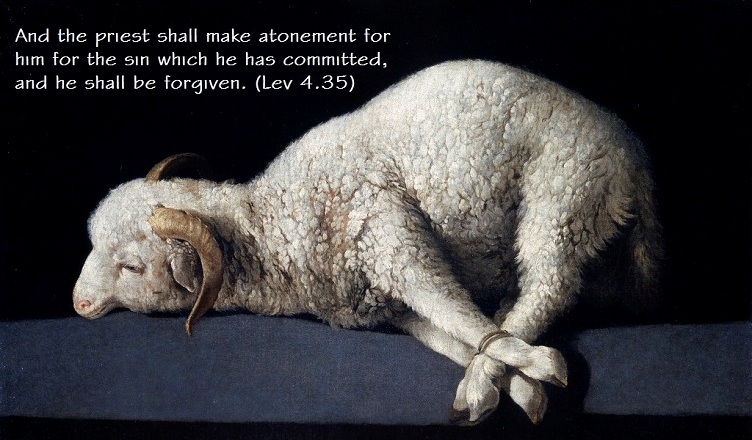
So we have the account of instructions to Moses, in which he was to celebrate the day of Passover, the anniversary of the day that the angel of death passed over every Israelite household that was marked by the blood of a sacrificial lamb. To whom did that point? To Jesus, the Lamb of God who would mark the elect with blood so that God's judgment would pass over us. Then another holiday is commanded, following seven Jewish Sabbaths plus one day. What happened on the day to which the feast pointed? The coming of the Holy Spirit (Acts 2) as the gift to His people from the resurrected and ascended Christ. 

That next day was Sunday, just as Sunday was the day on which Jesus rose from the dead, and just as the Apostles made Sunday the day of Christian gathering and worship (Acts 20:7 and I Corinthians 16:2). After a transitional period in Acts, we never see again a Christian activity on a Saturday. 

Did the Apostles use the word "Sabbath" for that day? No. We can grant that without affecting the argument presented here. However, we have a saying in America: "If it walks like a duck and quacks like a duck, then it is a duck." In the same way, as Moses foretold the shift of the Sabbath from the last to the first day of the week and the Apostles treated the first day like the Sabbath, then it is the Sabbath, whether the word occurs there or not. 


Wednesday, January 18, 2023

How Does the Bible Define Sexual Immorality?

"Let marriage be be held in honor among all, and let the marriage bed be undefiled, for God will judge the sexually immoral and adulterous" -Hebrews 13:4. 

When warning the wicked of the consequences of sexual immorality, we often get a response of, "What's immoral about what I am doing? Everyone else is doing it! The Bible doesn't even define 'sexual immorality.'" Who are you, we are asked, to judge what I do? 

First, let us ask what consequences the Bible warns us will apply to sexual immorality. Is it important enough to worry about it? Here is the Bible's answer: "Do you not know that the unrighteous will not inherit the kingdom of God? Do not be deceived: neither the sexually immoral, nor idolaters, nor adulterers, nor men who practice homosexuality, nor thieves, nor the greedy, nor drunkards, nor revilers, nor swindlers will inherit the kingdom of God" (I Corinthians 6:9-10). So, the Apostle tells us, the sexually immoral are precluded from the kingdom of God. That is, from eternal life with the godly. No more serious consequence can be imagined! 

So what, then, constitutes sexual immorality? We see it in Hebrews 13:4, quoted at the top. The author does not give us a list of forbidden acts (for such, refer to Leviticus 18). Rather, this is one of the few cases in which we are given one moral answer, leaving all others to be excluded. He explicitly tells us that sexual immorality is that which is outside of or besides the marital relationship. And who can be married? "[Jesus said], have you not read that He who created them from the beginning made them male and female, and said, 'Therefore, a man shall leave his father and his mother and hold fast to his wife, and the two shall become one flesh'? So they are no longer two, but one flesh" (Matthew 19:5-6). In these two sentences, Jesus tells us that marriage in God's plan consists of one man joined to one woman, precluding any other combinations, regardless of the tides of political or social opinion. 

It has become defined among the politically correct, whether they claim to be Christians or not, that speaking against any "alternative lifestyles" is judgmentalism, and to be excluded from social discourse or the teachings of church leaders. Yet, what can we say of people who refuse to warn people of the consequences of their choices, given what we know from I Corinthians 6? What could be more hateful than to allow the wicked to go in ignorance into an eternity in Hell?  


Saturday, April 9, 2022

How Can I Know that the Bible Is the Inerrant Word of God?

The Christian philosopher and apologist Gordon Clark once wrote, "Because God is sovereign, God's authority can be taken only on God's authority. As the scripture says, 'Because He could swear by no one greater, He swore by Himself' (Hebrews 6:13)" (from God's Hammer, p. 39). His point was that confirmation of authority comes from higher authority. However, there can be no authority higher than God by which to confirm what He says. By His own authority, therefore, He declares His own truth and authority. 

The thoughtful person sees this and asks, "But isn't this circular reasoning?" And it is. Yet, we can see the impossibility of an alternative if we ask a parallel question: "How can you prove logic without presupposing logic as the basis for its proof?" 

The thoughtful Christian might ask whether the unbeliever would be convinced by that argument. And the obvious answer is that an unbeliever would not be convinced. Yet we must deny that his disbelief is based on a reasonable doubt. On the contrary, his rejection would arise from his own presuppositions against God's authority. Those presuppositions are the inherent nature of unbelief (Romans 1:18). 

On the other hand, we know that there are many Christians who receive the Bible as God's word, and that it is necessarily, therefore, inerrant. I am one of those Christians. Yet that belief did not arise from a consideration of a chain of logical arguments or archeological verifications. 

So, from where did my belief come? 

Clark quotes from the Institutes of John Calvin: "It is, therefore, such a persuasion as requires no reason; such a knowledge as is supported by the highest reason and in which the mind rests with greater security and constancy than in any reasons; in fine, such a sense as cannot be produced but by a revelation from Heaven" (I. vii.5). By "revelation," Calvin meant no such thing as a voice whispering in the believer's ear. Rather, in the process of effectual calling, the Holy Spirit causes the man's spirit to recognize the truth of the Scriptures as he reads them or hears them preached. 

This concept was picked up later (1646) in the writing of the Westminster Confession of Faith (I:5), the doctrinal statement of the world's Presbyterians: "We may be moved and induced by the testimony of the Church to an high and reverent esteem of the holy Scripture; and the heavenliness of the matter, the efficacy of the doctrine, the majesty of the style, the consent of all the parts, the scope of the whole (which is to give all glory to God), the full discovery it makes of the only way of man's salvation, the many other incomparable excellencies, and the entire perfection thereof, are arguments whereby it doth abundantly evidence itself to be the Word of God; yet, notwithstanding, our full persuasion and assurance of the infallible truth and divine authority thereof, is from the inward work of the Holy Spirit, bearing witness by and with the Word in our hearts." The Westminster divines added to Calvin's argument that Scripture provides good reasons for recognizing it as the Word of God. Yet the unbeliever suppresses his awareness of those qualities (Romans 1:18). He cannot recognize them exactly because of his unbelief (I Corinthians 2:14). He cannot be argued out of his unbelief, because his unbelief is a matter of sin, not ignorance. 

The case here demonstrates why we never see an apologetical situation in the New Testament in which Jesus or the Apostles ever argued for acceptance of Scriptural proofs. Even when Jesus faced Satan and when Paul preached to the pagan philosophers of Athens, each argued from Scripture as his starting point, not as a subsidiary point requiring proof. 

We must remember the promise of God: "So shall My Word be, that goes out of My mouth; it shall not return to Me empty, but it shall accomplish that which I purpose, and shall succeed in the thing for which I sent it" (Isaiah 55:11). God promises success to His word, not to our attempts to appeal to the fallen intellect of the unbeliever. "Of His own will He brought us forth by the word of truth, that we should be a kind of firstfruits of His creatures" (James 1:18). There has never been any other way by which God has converted His elect (Romans 10:8-15).


Saturday, October 2, 2021

Faith a Gift, Not a Work

"It has been granted to you that, for the sake of Christ, you should not only believe in Him, but also suffer for His sake" (Philippians 1:29). 

Arminians assume that Jesus did half of the work of salvation for every single person who has existed or ever will exist. Then some are saved when they match what He did with the work of faith on our part. And I do not choose that phrasing haphazardously; that is how I have had it stated to me. Thus, men are saved, not through faith, but by faith, as the completion of all that God could do on our behalf. 

In contrast, the Calvinist teaches, on the basis of what Scripture says, that faith is the means, not the basis, by which the atonement is effectually applied to everyone for whom it was purchased (see John 6:37-39). That purchase included the gift of faith, so that it is not a work, not a contribution, by the believer to complete the work of Christ on the cross (I Corinthians 2:2). In fact, the Calvinist considers the Arminian view on this subject to be a scandalous aspersion on the blood of Jesus, as if it is unable to save to the uttermost (Hebrews 7:25). 

Notice the verse at the top, Philippians 1:29. Paul tells the Philippian Christians that it has been granted to them to believe, not that salvation has been offered, contingent on their completion of it by working faith in themselves. We see the same thing in Ephesians 2:8, where the same Apostle told believers that God gave them their saving faith. 

The essence of this principle is that the atonement was sufficient for every person for whom it was intended, because it purchased everything necessary and sufficient for the salvation of that person. He need not, indeed cannot, add anything to what Jesus did on the cross and for him in Heaven: "He is able to save to the uttermost those who draw near to God through Him, since He ever lives to make intercession for them" (Hebrews 7:25).


Saturday, January 23, 2021

Surrender to Unbelief Is Treason Against Christ

 "In all these things we are more than conquerors through Him who loved us" (Romans 8:37). 

"Thanks be to God, who gives us the victory through our Lord Jesus Christ" (I Corinthians 15:57). 

"Everyone who has been born of God overcomes the world. And this is the victory that has overcome the world—our faith. Who is it that overcomes the world except the one who believes that Jesus is the Son of God?" (I John 5:4-5).

Does the reader notice any parallels among these three verses? In each, the respective Apostles tell us that the Christian life is one of victory. Victory over whom? Over the world, used here of the unbelieving world. 

Another thing that I would expect a reader to notice is the contrast between these verses and the expectations of the average American evangelical. Under the influence of dispensationalism and pietism, the average evangelical expects his religious experience to be one of suffering and retreat. Now, of course, we know that Jesus warned us to expect such things: "A servant is not greater than his master. If they persecuted Me, they will also persecute you" (John 15:20). But notice that there is no "always" in that verse. Yet, always has become the standard expectation. That one verse is given sustained application, while the three above get buried. 

I would suggest that the expectation of continuous retreat is a self-fulfilling expectation. It has become a mark of orthodoxy to abandon our world to the unbelievers. However, as I think the verses above tell us, that is a false orthodoxy!

Wednesday, October 7, 2020

The Covenant and the Children of Believers


One of the distinctive doctrines that I love about Presbyterianism is what is called "covenant succession," the belief that the children of believers are claimed by God and set apart from the children of unbelievers. 

There are a number of Bible verses that describe this special relationship. 

In the Old Testament, God chastised Israel for sacrificing their children to idols: "You took your sons and your daughters, whom you had borne to me, and these you sacrificed to them to be devoured" (Ezekiel 16:20). As horrific as human sacrifice is, under any circumstances, Israel had compounded their sin by sacrificing the children that God claimed for Himself by covenant.

In that covenant, God had promised a blessing to His children: "And the LORD your God will circumcise your heart and the heart of your offspring, so that you will love the LORD your God with all your heart and with all your soul, that you may live." (Deuteronomy 30:6). The same promise is repeated in Isaiah 54:13: "All your children shall be taught by the LORD, and great shall be the peace of your children." And again in the New Testament: "The promise is for you and for your children and for all who are far off, everyone whom the Lord our God calls to Himself" (Acts 2:39).

It is important to understand that these promises are covenantal. The children of believers are placed in the visible church. It is not an absolute promise that the children of believers will themselves be believers. We know this from experience. We also have the explicit statement of God to Abraham: "Abraham said to God, 'Oh, that Ishmael might live before You!' God said, 'No, but Sarah your wife shall bear you a son, and you shall call his name Isaac. I will establish My covenant with him as an everlasting covenant for his offspring after him. As for Ishmael, I have heard you; behold, I have blessed him and will make him fruitful, and multiply him greatly'" (Genesis 17:18-20). Abraham had a son by his servant Hagar, Ishmael, and begged God to grant him salvation. Yet, God explicitly refuses, promising material blessings, but not eternal life. The distinction would be made again with Isaac's sons, Esau and Jacob. The Apostle Paul would use their example to illustrate God's sovereignty in grace (Romans 9:6-13). He applies the principle to the children of Christians in I Corinthians 7:14: "For the unbelieving husband is made holy because of his wife, and the unbelieving wife is made holy because of her husband. Otherwise your children would be unclean, but, as it is, they are holy." That is, federally holy, not personally holy.

While it isn't my topic here, this is the basis for infant baptism, just as it was the basis for the circumcision of Israel's children.

Saturday, September 12, 2020

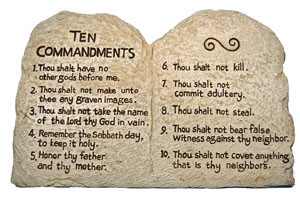
Apostolic Usage Demonstrates the Continuing Authority of the Law


One of the greatest errors of dispensationalism has passed to a wider audience of evangelicalism. It has become to claim that the moral law is not authoritative for the Christian. Except when quoting Leviticus 18:22 in conversations regarding homosexuality, the evangelical will dismiss quotations from the Pentateuch with a dismissive, "That's Old Testament," or "We're under grace, not under law." 

But, wow, do those same evangelicals turn mean when you cite particular examples in the New Testament of apostolic application of those laws. I have already discussed Paul's application of a law from Leviticus (and repeated in Deuteronomy) to the church at Corinth (I Corinthians 5:1).

I want to bring up another example today. In I Timothy 5:18, Paul write, "For the Scripture says, 'You shall not muzzle an ox when it treads out the grain,' and, 'The laborer deserves his wages.'" And in I Corinthians 9:9, he writes again to the church at Corinth, "It is written in the Law of Moses, 'You shall not muzzle an ox when it treads out the grain.' Is it for oxen that God is concerned?" So, from where does that quotation come? From Deuteronomy 25:4 (his other quotation to Timothy is from Luke 10:7). That is an Old Testament law. 

These usages should make it clear that the doctrine of the dispensationalists and the attitude of evangelicals toward the Old Testament moral law is not that of the Apostles. The Apostles took Jesus at His word: "Do not think that I have come to abolish the Law or the Prophets; I have not come to abolish them but to fulfill them. For truly, I say to you, until heaven and earth pass away, not an iota, not a dot, will pass from the Law until all is accomplished. Therefore whoever relaxes one of the least of these commandments and teaches others to do the same will be called least in the kingdom of heaven, but whoever does them and teaches them will be called great in the kingdom of heaven" (Matthew 5:17-19).

Saturday, July 25, 2020

Oneness of the Godhead, Oneness of the Church, and the Irrationality of Oneness Religion

Oneness Pentecostals often cite John 10:30 in defense of their doctrine of a monadic deity: "I and the Father are one." Oneness claim that Jesus is here professing that He and the Father are one Person. Does that hermeneutic hold up when examined against biblical usage?

It does not.

Consider these other words of Jesus from the same book: "I do not ask for these only, but also for those who will believe in Me through their word, that they may all be one, just as You, Father, are in Me, and I in You, that they also may be in Us, so that the world may believe that You have sent Me. The glory that You have given Me I have given to them, that they may be one even as We are one, I in them and You in Me, that they may become perfectly one, so that the world may know that you sent Me and loved them even as You loved Me" (John 17:20-23).

This is from Jesus's High-Priestly Prayer. In it, He asks the Father to make His people one, just as He and the Father are one. Now, if we follow the logic of Oneness theology, this means that He is praying that all Christians will be merged into one gigantic mass, a literal oneness of person - no more single bodies or personalities. Yet no rational person would imagine that was His intent. 

However, the fact remains that Jesus describes a parallel of the unity of the church with the unity of the Godhead. It is not a unity of person, with no distinctions of identity or personality. Rather, it is a unity of purpose and love. The people of God should be united in the sight of an unbelieving world, united in a work that He gave us to do (Matthew 28:19-20) and love for each other (which is not to say that we have attained such oneness yet). This is exactly how the Persons of the Godhead are one, in perfect unity and love. They have had that unity from eternity, even if their people have yet to attain it. Each member has his own job to do, just as each Person of the Trinity has His own office. If all are made the same, then the body and the Godhead fail (see I Corinthians 12).

Simply stated, Oneness arguments cannot stand even minuscule attention because they are irrational, and produce even more irrationality if applied consistently. Any worldview that fails by its own consistent application is necessarily a false worldview.

Saturday, May 30, 2020

What Happens to Children When They Die?

This is a hard topic on which to write. I anticipate some negative reaction. However, it is a question I have been asked repeatedly by anti-Calvinists.

First, let us look at the confessional standard: "Elect infants, dying in infancy, are regenerated and saved by Christ through the Spirit, who worketh when, and where, and how He pleaseth. So also are all other elect persons who are incapable of being outwardly called by the ministry of the Word" (Westminster Confession of Faith X:3). The divines described what happens to elect infants who die. Of course, since they are elect, that would be God's plan for them. What about non-elect infants? On that the divines were silent. Charles Hodge and his son, A. A. Hodge, took that to mean that all infants who die are elect. I think that is presumptuous, taking an argument from silence where it does not lead.

For the Christian, there is extensive biblical justification to believe that his dead child is in Heaven. First, God claims the children of believers for Himself in Ezekiel 16:20-21: "You took your sons and daughters, whom you had borne to Me, and these you sacrificed to them [i. e., idols] to be devoured. Were your whorings so small a matter that you slaughtered My children and delivered them up as an offering by fire to them?" When the Israelites had become so given over to idolatry that they even practiced human sacrifice, God's anger was directed at the theft of what belonged to Him by covenant.

And second, what does God promise to these children who are His? "Your children shall be taught by the LORD, and great shall be the peace of your children" (Isaiah 54:13). Also in Acts 2:39: "The promise is for you and for your children and for all who are far off, everyone whom the Lord our God calls to Himself." So, in both Testaments, we have a promise from God to be covenantally faithful to the children of believers. Is this a promise that every child of believers will be saved? No, it isn't, as we know both from personal experience and from the biblical examples of Esau and Ishmael.

However, we also have a biblical example of the comfort that covenantal promise is to the believer. When David's first son with Bathsheba died (II Samuel 12:15-23), David took comfort in his assurance that his son would be waiting for him is Heaven: "I shall go to him, but he will not return to me" (verse 23).

I think that the most-important verse on this issue is I Corinthians 7:14: "The unbelieving husband is made holy because of his wife, and the unbelieving wife is made holy because of her husband. Otherwise your children would be unclean, but as it is, they are holy." Paul tells us that the children of at least one Christian parent are holy. He doesn't say saved. Rather, he speaks of the covenantal connection between the believing parent and the child, such that the child is federally holy on the basis of the parent's faith.

However, we should notice his exact words. Paul speaks negatively. He doesn't just say, "The child with a believing parent is holy." Instead, he adds, that the child would otherwise be "unclean." And this is logical because we know there is no neutral moral state. But what are the consequences to the unbelieving parents regarding their own children?

"Nothing unclean will ever enter it [i. e., the New Jerusalem, v. 10], nor anyone who does what is detestable or false, but only those who are written in the Lamb’s book of life" (Revelation 21:27). Here is where the unbeliever must consider his standing with God, because it affects not just himself but also his children. If he decides that the pleasures of this life outweigh the eternal consequences, can he also say that they outweigh the eternal consequences for his child? Of course, this doesn't mean that every child of an unbeliever will himself be an unbeliever. We know from experience that the Holy Spirit often breaks into the families of unbelievers to bring one to Himself. I myself was such a convert. But the generality can be predicted, just as above with the children of believers.

This is my personal interpretation. Though I consider it a rational conclusion from the relevant Scriptures, I am aware that it goes beyond the confession. Therefore, other Calvinists should not be blamed for my personal opinion. I am especially conscious that I am going against some theological giants when I disagree with the Hodges. All I can say is that the Scriptures compel me.

Saturday, February 8, 2020

The Knowledge of Election: Avoiding the Effort to Be Wise Above What is Written

When dealing with even professed Christians on Facebook, I get a continuous stream of questions about hypothetical issues. Today someone asked, "What if Noah were really the Archangel Gabriel?" I am not making that up. 

This is especially true when discussing the doctrines of grace with people not from a Reformed background. They are constantly demanding an answer -  i. e., one that will satisfy them - as to why God chooses one person over another. Other than according to mercy alone (Romans 9:16) for His glory alone (Ephesians 1:6), Scripture does not give us an answer. Rather, we are given this rebuke: "Who are you, O man, to answer back to God? Will what is molded say to its molder, 'Why have you made me like this?' Has the potter no right over the clay, to make out of the same lump one vessel for honorable use and another for dishonorable use?" (Romans 9:20-21). The answer is simple, Paul tells us. God makes His decision on the basis that he chooses because He is God and we are not, so stop prying into things above your station!

And Paul is answering on the basis of a longtime Biblical tradition, going back to Moses: "The secret things belong to the LORD our God, but the things that are revealed belong to us and to our children forever, that we may do all the words of this law" (Deuteronomy 29:29; see also Paul's remarks in I Corinthians 4:6 and Colossians 2:8). Moses tells us that God has given us everything we need to know for salvation and sanctification in the Bible. Beyond that revelation, whatever imaginations arise from our inordinate curiosity are to be cast aside. "The whole counsel of God, concerning all things necessary for his own glory, man’s salvation, faith, and life, is either expressly set down in Scripture, or by good and necessary consequence may be deduced from Scripture: unto which nothing at any time is to be added, whether by new revelations of the Spirit, or traditions of men" (Westminster Confession of Faith, I:6).

"Men of inquisitive and speculative minds are apt to forget that there are limits set to human investigation and research, beyond which it is impossible to pass with safety or satisfaction. To intrude with confidence unto the unrevealed secrets of God's wisdom and purpose manifests an arrogance and haughtiness of intellect which cannot fail to incur the marked disapprobation of heaven, and should always meet the prompt reprobation of the pious.Whatsoever is useful to be known, God has kindly and graciously revealed, and it argues no less ingratitude than presumption to attempt to be 'wise above what is written'" (I Corinthians 4:6, James Henley Thornwell, "Election and Reprobation").

Wednesday, January 22, 2020

The Crucifixion, and What It Reveals About the Law

"That representation of Christianity which makes the sufferings of Jesus a full and perfect satisfaction of the penalty of the law, and His life of spotless obedience the ground to all claim of eternal bliss... rears the fabric of grace, not upon the ruins, but [upon] the fulfillment of the law. God is never seen to be more gloriously just, nor the law more awfully sacred, than when He spared not His own Son, but delivered Him up for us all. The impression which this event makes is, indeed, solemn, awful, sublime. It was a wonder in Heaven, a
Aspects of Crucifixion
terror in Hell, and is the grand instrument through which the rebellion of earth is subdued and the stout-hearted made to melt at the remembrance of sin" (James Henley Thornwell, "The Necessity and Nature of Christianity").

There is a common teaching among Evangelicals that God has rid us of the Law with the coming and crosswork of Jesus. That is not just the ceremonial law, with which I would agree, but also the moral law, with which I cannot. Some people simply deny the distinction between ceremonial and moral. However, then they have to ignore the usages of Paul who describes the abrogation of the former in Galatians, but maintains the latter in I Timothy 1:8-10, even referring to it as "in accordance with the gospel" in verse 11. And he specifically applies the law to members of the church at Corinth in I Corinthians 5:1 (Leviticus 18:8, Deuteronomy 22:30). Paul certainly didn't believe in the abrogation of the moral law!

There is also the problem of Christ's crosswork. Have we forgotten that He was beaten, whipped, and crucified? If the Son of God had to suffer so horribly "to magnify His law and make it glorious" (Isaiah 42:21, in one of the Servant passages), just for the law to be dispensed, was His suffering not unnecessary? What a horror for the Father to treat His Son in such a manner, when He was just going to get rid of the law anyway! Can we truly accuse God of such injustice?

Rather, as Isaiah says, the suffering and death of Jesus did not abrogate the law. Rather, it glorified it! The justice and holiness of God was revealed to the eyes of all men. The high price of rebellion against Him was revealed. At the same time, it revealed His grace, indicating what the love of the Son required that He undertake for His people.

Wednesday, August 21, 2019

The Polytheism and Self-Deception of Mormons

I interact often with Mormons on the question of whether they are polytheists. They deny it, though they willingly say that they believe that there is an unknown number of gods in addition to their god. However, they say that doesn't make them polytheists because they only worship one god. In support of their profession, they refer to the frequent biblical references to the gods of the nations, and even of pagan gods worshiped by Israel.

Of course, they ignore such sceptical references to gods as Deuteronomy 32:21: "They have made me jealous with what is no god; they have provoked me to anger with their idols." And I Corinthians 8:5: "Although there may be so-called gods in heaven or on earth..." In other words, biblical references to "gods" don't refer to actual deities, but rather to the idols of the pagans. It is a form of sarcasm.

And what does the Bible say about those idols? "[They] have cast their gods into the fire, for they were no gods, but the work of men’s hands, wood and stone" (Isaiah 37:19). The idols of the pagans have no divine power, but are only the artifacts of men's hands, empty wood and stone. The one real God ridicules such foolishness: "They know not, nor do they discern, for He has shut their eyes, so that they cannot see, and their hearts, so that they cannot understand. No one considers, nor is there knowledge or discernment to say, 'Half of it I burned in the fire; I also baked bread on its coals; I roasted meat and have eaten. And shall I make the rest of it an abomination? Shall I fall down before a block of wood?' He feeds on ashes; a deluded heart has led him astray, and he cannot deliver himself or say, 'Is there not a lie in my right hand?'" (Isaiah 44:18-20).

The point of the biblical references to "gods" is not because there are actually other gods, but because there aren't. The belief in other gods is presented as foolishness and self-deception. Yet these are the very references that the Mormons use to maintain their claims. 


Wednesday, May 29, 2019

The Christian Sabbath Vindicated from Adventism


As a history book, comparable to Samuel and Kings in the Old Testament, the Acts of the Apostles is not a good place to base ones doctrine. That isn't an issue of error; Acts is as inerrant as is the rest of Scripture. Rather, that isn't its purpose. Acts is Luke's record of what the Apostolic church did, not what it taught.

For example, we have the record of the worship activities of the apostolic church. We know that they gathered at the Temple for their social meetings (there were house church meetings in Jerusalem during the same period). However, a meeting is not the same thing as a worship gathering. When we are told that they gathered for worship, that activity occurred in the home gatherings, not the Temple. Notice that contrast in Acts 2:46: "Day by day, attending the temple together and breaking bread in their homes." Thus, they gathered at the Temple for community, but not for worship.

Instead, we find this record: "On the first day of the week, when we were gathered together to break bread, Paul talked with them, intending to depart on the next day, and he prolonged his speech until midnight" (Acts 20:7; see also I Corinthians 16:2). We find, not on the seventh day, as Adventists claim, but on the first day of the week, the church gathered together for communion (the breaking of bread) and for teaching. Nor can this be described as a special occasion, because Paul himself says (verse 20), "I did not shrink from declaring to you anything that was profitable, and teaching you in public and from house to house." It was exactly in these home meetings that Paul was accustomed to teach the word to his fellow Christians.

Adventists like to point to the references to Paul's attending the synagogues on the seventh day. And he certainly did so. Yet, they consistently ignore what else those references tell us. He is not recorded as speaking to Christians in any of those occasions - not even one. In each case, he proclaims the word to the Jews. That is, his attendance at the synagogues was for the sake of evangelism. And, in a mixed community, where would he find Jews? Well, at the synagogue, of course, and on the seventh day. The whole Adventist argument is built on a very weak argument from silence, and committing the fallacies of cherry picking and moving the goalposts. Yet they claim that their teaching on the Sabbath is the distinguishing mark between the true Bride of Christ and the Great Whore. Surely such an important doctrine would require more proof than questionable exegesis!

A doctrine should never be based on an historical reference, absent reinforcement from explicit teaching texts. Yet, the Adventist can provide none. After the Christians are expelled from the synagogues in Acts, we never see another reference to a Christian gathering, whether at the Temple or at a synagogue, or any activity on the seventh day of the week. Paul never mentions one. Peter never mentions one. John never mentions one. And - most telling of all - the Epistle to the Hebrews never mentions one, even though much of it is devoted to Jewish law and worship. Not once in any of them.

Wednesday, April 3, 2019

When is an Apostle Not an Apostle?

Both the Roman Catholic Church and the Church of Jesus Christ of Latter-Day Saints (i. e., Mormons) claim to have special authority because they have a supposed continuing apostolic office. The former claims apostolic authority for the Pope and his bishops on the basis of "apostolic succession," while the latter claims to have actual apostles. They both claim that such authority is required to provide binding religious tradition. They both challenge Protestants with the query, "Where is your authority?" (see the same challenge by the Pharisees to Jesus in Mark 11:28 and Luke 20:2).

Protestants on the other hand, respond with our own query to Rome and Salt Lake: "Where is your authority for your apostolic claims?"

While that Protestant challenge is to illegitimate claims, Paul faced the same challenge to his own legitimate apostleship. We see his answer in I Corinthians 4:9-13: "I think that God has exhibited us apostles as last of all, like men sentenced to death, because we have become a spectacle to the world, to angels, and to men. We are fools for Christ’s sake, but you are wise in Christ. We are weak, but you are strong. You are held in honor, but we in disrepute. To the present hour we hunger and thirst, we are poorly dressed and buffeted and homeless, and we labor, working with our own hands. When reviled, we bless; when persecuted, we endure; when slandered, we entreat. We have become, and are still, like the scum of the world, the refuse of all things."

Let me make a lesser application of this text before making my main point. The Apostolic Office of Rome (i. e., the papacy) and the apostles of the Mormons rule over their constituents, living extravagantly and lording it over the lesser members of their organizations. For Paul, to be an Apostle was to suffer, not to prosper. Only one of the biblical Apostles died a peaceable death (compare Acts 12:2).

However, the main point I want to bring from that passage is that Paul describes the Apostles, he together with the Twelve, as the last of God's special exhibits. Their office was a temporary one, not one essential to the continuing life of the Church. The claims of Rome and Salt Lake are contrary to the claims of the true Apostles, and the plan of Christ, the true head of the Church.

Wednesday, February 13, 2019

Abortion, The Church, and Her Holy Calling


I write this just after the State of New York expanded abortion to any point up to birth. Christians are horrified by this step backward in the effort to end legalized infanticide. I am especially appalled that the effort was pushed by professing Christian Governor Andrew Cuomo, a member of the Roman Catholic Church.

Where has been the voice of that church? She speaks often about the sanctity of human life. I have seen her priests at protests in front of abortion clinics. And no one can claim that Cuomo's pro-death views appeared suddenly out of the air. Could it be that Rome enjoys the prestige of being able to claim high public officials among her membership over real defense of the preborn? That is how this looks to me. 

It made me think of these words of God: "If even lifeless instruments, such as the flute or the harp, do not give distinct notes, how will anyone know what is played? And if the bugle gives an indistinct sound, who will get ready for battle?" (I Corinthians 14:7-8). One of the callings of the Church is to be salt and light in culture: "You are the salt of the earth, but if salt has lost its taste, how shall its saltiness be restored? It is no longer good for anything except to be thrown out and trampled under people’s feet. You are the light of the world. A city set on a hill cannot be hidden. Nor do people light a lamp and put it under a basket, but on a stand, and it gives light to all in the house. In the same way, let your light shine before others, so that they may see your good works and give glory to your Father who is in heaven" (Matthew 5:13-16). However, I would suggest that Rome has put her light under a basket, lest she risk her social standing. 

Presbyterian Theologian James Henley Thornwell said this of the Church: "She is of God, and if she forgets that it is her divine prerogative to speak in the name and by the authority of God - if she relinquishes the dialect of Canaan, and stoops to babble in the dialects of earth - she must expect to be treated as a babbler. Her strength lies in comprehending her spiritual vocation. She is different from all other societies among men. Though, as a society, she has ethical and political relations in common with the permanent organizations of the Family and the State, yet, in her essence, her laws, and her ends, she is diverse from every other institute [sic]" [Theology as a Life in Individuals and in the Church].

Wednesday, February 6, 2019

Our Union with Christ and All His Benefits

Evangelicals don't talk about our union with Christ. I think that is because it sounds very Catholic. However, it is a completely biblical doctrine, and of great use to the believer. We deprive ourselves by avoiding the subject.

We find the principle described in Scripture in several places, but the best one is Galatians 2:20: "I have been crucified with Christ. It is no longer I who live, but Christ who lives in me. And the life I now live in the flesh I live by faith in the Son of God, who loved me and gave Himself for me." By faith, the believer is united with Jesus spiritually, so that all that He is and did becomes ours, and all that we are and did becomes His. This is the basis of the doctrine of double imputation. In the Bible, it is described mystically as becoming His members: "We are members of His body" (Ephesians 5:30; see also I Corinthians 6:15). We hear this and think of "members" in the sense of "members of an organization," such as the PTA. However, that is not at all the meaning of "members" here. Rather, it is an analogy to "members" in the sense of "body parts" (see Romans 12:4-5). We are incorporated mystically into the spiritual body of Christ!

Of what benefit is that union? We think quickly, of course, of the imputation of His righteousness (II Corinthians 5:21), as I mentioned above. That is the basis of our justification, so it is certainly a wondrous benefit! But we receive so much more, as is symbolized by communion. As the bread and wine sustain our physical bodies, we are sustained spiritually by means of our union with Him, receiving all of the grace and other benefits which He purchased for us on the cross. "United to Christ, we receive two classes of benefits - inward and outward; the inward all included under the generic name of 'repentance,' and appertaining to the entire destruction of sin and the complete restoration of the image of God; the outward having reference to all those benefits which affect our relations to God as a Ruler and Judge. Both classes of blessings are equally the promise of the covenant. Both are treasured up in the Lord Jesus Christ. We obtain both by being in Him, and as we are in Him only by faith, faith must be the exclusive condition of the covenant" (James Henley Thornwell, "Theology as a Life in Individuals and in the Church").


Wednesday, January 2, 2019

The Connection Between Abortionism and Anti-Paedobaptism

The Bible says a lot of things about babies, both before and after birth. For example, they are creations of God (Psalm 139:13), and they are sinners (Psalm 51:5, Psalm 58:3), but they can also be regenerate (Luke 1:15). For the children of believers, we have the additional awareness that our children belong to God, not ourselves (Ezekiel 16:20, I Corinthians 7:14). Our children are very important to God.

Yet, in the face of these biblical truths, we have two egregious offenses against children in today's American society: the refusal to baptize the children of believers and the genocide of unborn children called euphemistically "abortion." (By mentioning them together, I do not mean to imply that they are at all morally equivalent.)

Both arise from an attitude of dismissal toward children as a gift from God (Psalm 127:3). Both as a church and as a society, we despise these gifts from God, and fail in our responsibility for them.


Saturday, December 29, 2018

A God-Centered God versus Man-Centered Men

I often get a challenge, both from atheists and from cults, "Why did God do X?" The thing about that challenge is its irrationality. Given belief in God, why would a believer expect - or be expected - to be able to explain the actions of God?

Except in the cases where Scripture gives god's explanation, the most we can say is that He chose to act for the sake of His own glory: "So that we who were the first to hope in Christ might be to the praise of His glory" (Ephesians 1:12; see also verses 6 and 14, and I Corinthians 10:31). This shows us why the unbeliever does not understand that answer. the man-centered mentality believes that it is exists for its own glory. In fact, even many professing Christians share that mentality. Such Christians are worse, though, because they also imagine that God exists for their glory. Their worldview is the reverse of their profession.

However, God does not sympathize with the man-centered mentality: "For My own sake, for My own sake, I do it, for how should My name be profaned? My glory I will not give to another" (Isaiah 48:11; see also 42:8). We see here God's god-centered attitude, quite contrary to the expectations of sinful men. that is why he feels no compulsion to explain Himself to mere creatures: "The secret things belong to the LORD our God, but the things that are revealed belong to us and to our children forever, that we may do all the words of this law" (Deuteronomy 29:29).

As the great Southern Presbyterian theologian James Henley Thornwell said: "His works are so many mirrors in which He reflects so much of His own image  as they are able to behold. There they may read what he is by contemplating what he does. They cannot approach His awful throne: the light would be intolerable to created eyes. But they can behold Him veiled and shadowed in His works. They cannot fathom His glorious essence, but they can learn His character from what He hath wrought before them and around them. It is this manifestation of His character and perfections, which in themselves are infinitely glorious, that the Scriptures mean when they speak of God's working all things with a reference to His glory" (from "The Gospel, God's Power and Wisdom").

Saturday, September 22, 2018

Autonomy: The Error of Atheists and Nominal Christians

When Christians talk about atheism, most would say that the fundamental error of the atheist is his denial of the existence of God. After all, that is the meaning of the word. However, they are mistaken. As we see in Romans 1:18, there is no one who doesn't know that God exists. An atheist pretends that God doesn't exist.

Rather, the fundamental error of atheism is its belief in human autonomy. The atheist must convince himself - and others, if possible - that God doesn't exist, and then he will be free to live his life as he desires. This is exactly what Satan offered to Adam and Eve in the temptation: "You will be like God, knowing good and evil" (Genesis 3:5). In this context, "knowing" does not mean merely "knowing about," but "deciding." Satan convinced Adam and Even that rebelling against God and His word would leave them free to decide what was right and wrong for themselves.

That assertion was false. Whether Satan himself believed in what he was offering, I do not know. Often a liar starts to believe his own lies.

The Bible says otherwise: "The king’s heart is a stream of water in the hand of the LORD; He turns it wherever He will" (Proverbs 21:1). This is a statement from the pen of Solomon, the greatest king that Israel would ever know. However, he confesses that, regardless of whatever intentions he might have had, his actions were always those determined by God.
The Glory of Solomon

My question to the atheist is this: If a rich and powerful king came to realize that he was always under the providential hand of God, how can you rationally believe that you are independent of that same God?

However, I am saddened to say that this error is not limited to professed atheists. Far too many professing Christians make the same essential assumption as the atheist, that we can decide for ourselves what belongs to God and what does not. Many of us divide life into a "religious" part and a "regular" part, with God in control of the first part, but with our having autonomy in the second. I am sorry, snowflake, but there is no such division: "So, whether you eat or drink, or whatever you do, do all to the glory of God" (I Corinthians 10:31). God claims all of your life, not just whatever dregs you are willing to give Him. If you are claiming autonomy in part of your life, then you are professing the same lie as Satan and the atheist, no matter what title you claim for yourself.

Jesus made the same point to the Pharisees: "He said to them, 'Well did Isaiah prophesy of you hypocrites, as it is written, This people honors Me with their lips, but their heart is far from Me; in vain do they worship Me, teaching as doctrines the commandments of men. You leave the commandment of God and hold to the tradition of men.' And He said to them, 'You have a fine way of rejecting the commandment of God in order to establish your tradition! For Moses said, Honor your father and your mother; and, Whoever reviles father or mother must surely die. But you say, If a man tells his father or his mother, Whatever you would have gained from me is Corban (that is, given to God)— then you no longer permit him to do anything for his father or mother, thus making void the word of God by your tradition that you have handed down. And many such things you do'" (Mark 7:6-13).