Showing posts with label reformation. Show all posts

Saturday, March 26, 2022

The Five Solas: God's Perpetual War Against Rome


In the Reformation, the Reformers developed a systematic formulation that delineated the distinction of the biblical Christian faith from the corrupted version held by Rome. These doctrines have come to be known as the Five Solas, from their Latin forms.

Sola gratia, by grace alone. The Bible says that justification is by the condescending mercy of God. It cannot be due to any will or worthiness in the sinner because there is none. 

Sola fide, by faith alone. For those whom God has mercifully chosen to save, that justification is applied to them by means of faith. That is, faith is not meritorious, but is rather an instrument for applying justification. 

Solus Christus, on the basis of Christ alone. Everything necessary to justify God's people was achieved by the atoning work of Jesus, i. e., His perfect life, atoning death, and victorious resurrection. No additional intent, ritual, or action of men is necessary or possible, because Jesus did all that was necessary. 

Soli deo gloria, for the glory of God alone. God's purpose in justifying His people was not for our sakes, though we are certainly the beneficiaries. He did it to display the glories of His mercy and to glorify His Son with a church. 

Sola scriptura, in Scripture alone. Everything necessary to know about our sin, God's judgment, the redemption purchased by Christ, and the life of sanctification is and can be found in the Bible alone, using the ordinary means of reason, illuminated by the Holy Spirit. No human tradition added to Scripture or in its place can ever bind the conscience of the man of God. 

Even after the five centuries which have passed since the start of the Reformation, these truths have not changed. Nor has Rome ever repented of her errors here opposed. When professed Protestants practice fellowship and cooperation with the Catholic Church, it is not because she has given up her errors, but because the Protestants have accepted them.

Saturday, July 3, 2021

Peace of Spirit Through Justification by Faith Alone

The primary issue of controversy between the Reformers of the Sixteenth Century and the Roman Catholic Church was the question of justification: What is its basis? Faith alone? Or faith and works? The Reformers held, and correctly so, that justification before God occurs by grace alone through faith alone, and is, therefore, instantaneous. In contrast, Rome mixed (and continues to mix) faith with works, such that justification is a process, one which may not even be completed in this life, but continue into Purgatory. 

Here is the Protestant definition: "Justification is the divine declaration, the judicial verdict, that instantaneously and perfectly acquits the sinner of guilt before the tribunal of God and constitutes him perfectly righteous. Upon the instantaneous verdict of justification, there is nothing imperfect about the justified sinner regarding righteousness with God, nothing to improve and nothing to increase. It is with the justified sinner as though he were as guiltless as the perfect Jesus Christ, as though he had fully atoned for all his sins and perfectly obeyed all the commandments of God, and as though he had completely satisfied the justice of God" (Rev. David Engelsma, "Gospel Truth of Justification," p. 225, emphasis added). Notice his use of words such as "perfect" and "instantaneous." Biblical justification is a legal verdict, and, just like a judge's declaration of "not guilty" in a human court, justification occurs at a point of time, fully, and can never be increased or decreased, or wait for some additional action. If the justified sinner were to die immediately after professing his faith, such as the thief on the cross (Luke 23:42-43), he would be transported to the presence of Jesus just as surely as the man of God who has been faithful for decades before his death. 

In contrast, Rome denies those qualities of justification, because she blends justification with sanctification. She holds that a person is justified by faith plus the works that come from it. Her foundation for that claim is a misreading of James 2:24: "You see that a person is justified by works and not by faith alone." However, the context of that verse is not justification before God, but rather how that justification is demonstrated before men. Since no man can see the heart of another, he has no way to know whether his friend's profession of faith is real or false. How can he tell? By his friend's works or lack of them. 

One result of that difference is the assurance of salvation. The Protestant view of instantaneous justification apart from works enables the believer to know of his eternal welfare immediately and for the rest of his life, as the Apostle John told us: "This is the testimony, that God gave us eternal life, and this life is in His Son" (I John 5:11). Notice the present tense. He doesn't say "may have" or "could have" or someday could have." In contrast, Rome claims that it is arrogant to believe that one has eternal life now. In Rome's system, the believer can never know for sure his eternal status. He must continue to work, hoping that he has done enough, but unable to know. That is a system of bondage and fear, while the true Gospel brings peace: "Since we have been justified by faith, we have peace with God through our Lord Jesus Christ" (Romans 5:1).


Saturday, April 24, 2021

The Importance of "Alone" in the Doctrine of Justification

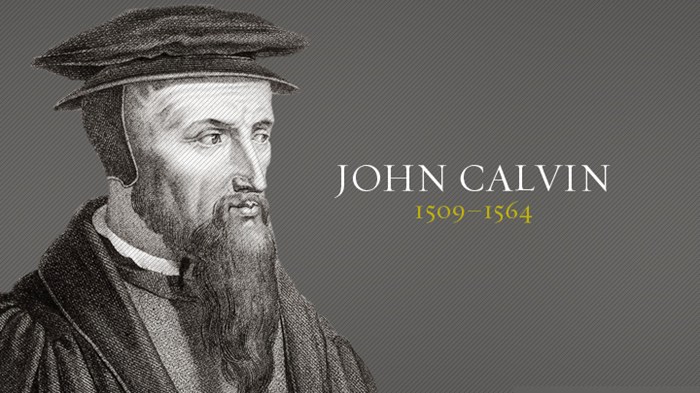
"The Papists will well-enough confess that we be justified by faith, howbeit they add that it is but partly. But that gloss marreth all. For here it is proved that we cannot be found righteous before God, but by the means of our Lord Jesus Christ, and by resting upon the salvation which He hath purchased for us. The Papists see this well enough: and, therefore, for fashion's sake, they say we be justified by faith, but not by faith alone: they will [have] none of that. That is the thing that they fight against, and it is the chief point that is in controversy between them and us." 

- John Calvin, sermon on Galatians 2:16, emphasis added

Evangelicals will often describe the difference between themselves and Roman Catholics as that evangelicals believe in salvation by faith, while Catholics believe in salvation by works. And some Catholics will grant that assessment. However, those evangelicals will have a problem if they run into an educated Catholic and say that. The fact is that Rome is happy to talk about salvation by faith, and has always done so, even in the documents of the Council of Trent in response to the Reformers see, for example, Canons XX and XXIV of Session 6). 

The problem isn't "salvation by faith," but rather the inclusion or exclusion of another word, "alone." The biblical Protestant affirms salvation by faith alone, without works. Romanism denies the application of "alone," claiming instead that salvation is a process in which faith leads to works which then make the person worthy of salvation. The effect of that distinction is that the Protestant also affirms salvation is an instantaneous event, while the Romanist considers it to be a process. When does that process reach the point of a saved status? No one knows in this life, they claim. You can only know when you get there. Or don't.

One result of this error on the part of evangelicals is that Rome has had increasing success in ecumenism. For example, the organization Evangelicals and Catholics Together proclaimed that a unifying understanding had been reached in this statement: "We affirm together that we are justified by grace through faith because of Christ" (ECT statement, XVIII). Do you see the problem with that statement? It is exactly what Rome has always advocated, while the evangelicals in the group betrayed the Reformation by leaving out the key term "alone." The breakthrough was that professing evangelicals converted en masse to Rome's doctrine of justification.

This is the verse to which Calvin refers: "We know that a person is not justified by works of the law but through faith in Jesus Christ, so we also have believed in Christ Jesus, in order to be justified by faith in Christ and not by works of the law, because by works of the law no one will be justified" (Galatians 2:16). 


Wednesday, February 24, 2021

The Continuing Stand for Justification by Faith Alone

"Justification is a legal act of God. It is strictly a legal act of God. By the act of justification, God changes the sinner's standing, or legal position, before Himself as judge. Whereas the sinner is guilty, the act of justification renders him not guilty. Whereas the sinner stands before the divine bar of justice as one who has transgressed all the commandments of God, justification constitutes him innocent. Whereas the sinner appears in the divine courtroom as one who has not kept the law of God and is, therefore, worthy of damnation, justification gives him the state or status, that is, the legal standing, of one who has perfectly satisfied all the demands of the law, including its demand of the punishment of everlasting damnation, and is, therefore, deserving of eternal life." 

- Rev. David Engelsma, "Gospel Truth of Justification," p. 93 

The importance of the statement above can be seen in its historical significance. it was the grounds for Martin Luther's revolt against the corruptions of the Roman Catholic Church. He had discovered the truth of justification by faith alone in his personal study of the Bible: "The righteous shall live by his faith" (Habakkuk 2:4, and quoted by Paul in Romans 1:17 and Galatians 3:11). However, he saw that this simple but profound expression of the only way of salvation had been buried under the manmade doctrines and ceremonies of the Catholic Church. 

Rome responded by declaring a curse against biblical justification: "Canon 9.  If anyone says that the sinner is justified by faith alone, meaning that nothing else is required to cooperate in order to obtain the grace of justification, and that it is not in any way necessary that he be prepared and disposed by the action of his own will, let him be anathema" (The Canons of the Council of Trent, still the official doctrine of the Roman Church). This assertion has never been repudiated by Rome, which is why any reunification between her and orthodox Protestants is still impossible. 

Rome has also caricatured the Reformers' doctrine is nothing more than a legal fiction. That accusation is false. It might have been true if God had merely cancelled our sin debt unpaid. Yet that is not what He has done. Rather, He has transferred that debt to a voluntary Surety, the Lord Jesus Christ. For those whom He undertook to redeem (John 6:37-39), Jesus the Sinless One stepped forward to pay a debt that He did not owe, that we may be freed from a debt that we could not pay. And a debt paid is a debt owed no more, in truth, not as a fiction.

Wednesday, May 3, 2017

Sola Scriptura: The Best Defense Against Spiritual Bondage


One thing cults have in common is that they have some leader, whether alive or dead, whom they declare to be some paragon of truth. We have Ellen White, Mary Baker Eddy, Joseph Smith, an interminable list of popes, Victor Paul Wierwille, David Koresh. It is a long list, and adds more every day.

The Bible tells us how to resist even the most charismatic cultist: "Learn by us not to go beyond what is written, that none of you may be puffed up in favor of one against another" (I Corinthians 4:6). This is the Apostle Paul speaking, someone to whom the word of God was entrusted (I Thessalonians 2:13). If anyone could claim personal superiority, surely it was he. Yet, he tells the Christians of Corinth that mere men can be "puffed up." And the cure for that is not to go beyond what is written. That is, when any man claims spiritual knowledge outside of Scripture, then he is "puffed up," and is to be resisted. While he does not explicitly quote it, Paul is applying the principle taught in God's Law (Deuteronomy 18:20): "The prophet who presumes to speak a word in My name that I have not commanded him to speak, or who speaks in the name of other gods, that same prophet shall die."

This is what the Reformers did, starting in 1517. As they discovered and taught, more and more, that the declarations of the popes went beyond anything written in the Bible, people were liberated from hundreds of years of bondage to the erroneous teachings of men. Martin Luther said of the fathers of the Catholic Church, "Their holiness does not make them infallible, and it does not imply that one must rely and depend on all the dicta of the fathers or approve and believe all their teachings. Rather take the touchstone of God’s Word into your hands. Let this be your criterion for testing, trying and judging all that the fathers have preached, written and said, as well as all the precepts and human ordinances that have been promulgated. Otherwise one will be easily misled and deceived. And since this polishing stone was not applied to the pope in times past, he ran rampant and covered the church with errors."

It was in the Bible, not the teachings of the popes, that Luther learned that "the righteous shall live by faith" (Habakkuk 2:4, quoted in Romans 1:17, Galatians 3:11, and Hebrews 10:38). Suddenly, his conscience was freed. Having been a monk who spent hours in confession, and, yet, could find no relief for his conscience, he was transformed into a joyful Christian, who could now say, "If you try to deal with sin in your conscience, let it remain there, and continue to look at it in your heart, your sins will become too strong for you. They will seem to live forever. But when you think of your sins as being on Christ and boldly believe that He conquered them through His resurrection, then they are dead and gone. Sin can’t remain on Christ. His resurrection swallowed up sin."

False teachings have one consistent effect: they bring a man into bondage to a man or an organization. Sola Scriptura liberates a man through true knowledge. As Jesus said (John 17:17), "I am the way, and the truth, and the life. No one comes to the Father except through me." Scripture points a hopeless soul to Jesus. The teachings of men will point you to those men.

Saturday, December 31, 2016

In What Way Is Jesus Present in the Lord's Supper?

I think that it is quite apropos that my four-hundredth post falls on the last day of the year!

One of the last actions by Jesus recorded in Scripture before His crucifixion was His Last Supper with the Apostles. It is the basis of what is variously called the Lord's Supper (cf. I Corinthians 11:20), communion, or the eucharist. It is recorded in several places. the version in Matthew 26:26-29 says, "Now as they were eating, Jesus took bread, and after blessing it broke it and gave it to the disciples, and said, 'Take, eat; this is My body.' And He took a cup, and when He had given thanks He gave it to them, saying, 'Drink of it, all of you, for this is My blood of the covenant, which is poured out for many for the forgiveness of sins. I tell you I will not drink again of this fruit of the vine until that day when I drink it new with you in My Father’s kingdom.'"

This passage was a contentious focus during the Reformation. On one side, the Lutherans and Catholics agreed together that "this is My body" was to be taken literally. That is, the Church of Rome believes that the bread and wine are literally transformed into the physical flesh and blood of Jesus. The Lutherans teach that the bread and wine remain bread and wine, but the flesh and blood of Jesus are received under the form of the bread and wine. Both teach that the recipient of the elements receives the corporeal, physical, flesh and blood of Jesus.

In opposition to that corporeal view, other Protestants have divided between those who follow Huldrych Zwingli, that the Supper is a memorial, and that Jesus is not present in any literal sense, and those who follow John Calvin, who taught that Jesus is spiritually present in the sacrament, when it is received in faith. 

The views may be described as those who hold that "this is My body" means ":this becomes my body," and those who hold "this is My body" means "this represents My body." I am of the latter group.

Here I want to argue against the corporeal view.

First is just a logical issue. If "this is MY body" must be literal, what about "I am the vine" (John 15:5). Must that also be taken literally? Was Jesus telling us that He is actually a grapevine under the "accidents" of skin, teeth, and hair? If not, then why must "My body" be taken literally?They are grammatically-equivalent sentences.

Second, consider another portion where Jesus talks about our being sustained by His flesh, John 6:52-59, 63: "The Jews then disputed among themselves, saying, 'How can this man give us his flesh to eat?' So Jesus said to them, 'Truly, truly, I say to you, unless you eat the flesh of the Son of Man and drink His blood, you have no life in you. Whoever feeds on My flesh and drinks My blood has eternal life, and I will raise him up on the last day. For My flesh is true food, and My blood is true drink. Whoever feeds on My flesh and drinks My blood abides in Me, and I in him. As the living Father sent Me, and I live because of the Father, so whoever feeds on Me, he also will live because of Me. This is the bread that came down from heaven, not like the bread the fathers ate, and died. Whoever feeds on this bread will live forever.' Jesus said these things in the synagogue, as he taught at Capernaum. [And He said,] 'It is the Spirit who gives life; the flesh is no help at all. The words that I have spoken to you are spirit and life.'" Jesus uses the same image of feeding on His flesh and blood, and His Pharisaic audience takes Him literally. But what is His reaction? Wouldn't He commend them if they were correct? But no, He corrects them, instead, telling them that it isn't His flesh which sustains the believer, but the Spirit! He repudiates a corporeal, literalist interpretation exactly equivalent to what is taught by Catholics and Lutherans, even to this day.


Monday, October 24, 2016

Baptismal Regeneration: The Papal Foot in Luther's Wittenberg Door


In the earliest days of the Reformation, Martin Luther based his stand on justification by faith alone. And with good reason, as history has show. it continues to be the point of confrontation between Evangelicals and the Church of Rome. However, on lesser doctrines, he struggled to break free from his own popish upbringing and training, particularly regarding the sacraments. While he properly jettisoned the additional but unbiblical Catholic sacraments, holding only to baptism and the Lord's Supper, he held essentially-popish views of those two.

In the Lord's Supper, Luther continued to hold to the corporeal Real Presence, that is, that Christ is literally and physically present in the bread and wine. Like Rome, Luther taught that the human nature of Christ was included in the ubiquity of His divine nature. The Reformed, however, reject such a view because it mixes the human and divine natures, as did the heretic Eutyches, contrary to the orthodox formulation of the Creed of Chalcedon, which said, in part, "acknowledged in two natures, inconfusedly, unchangeably, indivisibly, inseparably; the distinction of natures being by no means taken away by the union, but rather the property of each nature being preserved." Note that this is the official doctrine of both Lutherans and of Rome, yet they do not see a conflict between it and their sacramental view. I do, as have the Reformed through history. in fact, it was the issue at the colloquy of Marburg that led Luther to declare the Reformed worse than papists or heathen.

In baptism, Luther retained the popish doctrine of baptismal regeneration. That is, both held that baptism effectually applied the merits of Christ, such that the person was truly regenerated and joined with Christ. While Zwingli agreed, Calvin and the Reformed since him have rejected the doctrine as unscriptural.

As the Westminster Confession XXVII:3 says of both sacraments, "The grace which is exhibited in or by the sacraments, rightly used, is not conferred by any power in them..." And of baptism, XXVIII:6 says, "The efficacy of baptism... is not only offered but really exhibited and conferred by the Holy Ghost to such as the grace belongeth unto, according to the counsel of God's own will, in His appointed time." Of the Lord's Supper, XXIX:5 says, "The outward elements in this sacrament... remain truly and only bread and wine, as they were before." Further, in section 7, it adds, "Worthy receivers, outwardly partaking of the visible elements in this sacrament, do then also, inwardly by faith, really and indeed, yet not carnally and corporally, but spiritually, receive and feed upon Christ crucified, and all benefits of His death..." Thus, the Reformed view is spiritual. Whether the water of baptism or the bread and wine of the Supper, the benefits are received, not from the elements, but from Christ, received, not in the flesh, but in the spirit, not automatically or mechanically, but only by faith. Also, the Reformed view maintains the true humanity of Christ, instead of swallowing it up in a divine-human hybrid, who isn't truly either one.

Friday, September 30, 2016

Sola Scriptura: Did God Give Us Secret Instructions through the Pope?

One of the claims of the Roman Catholic Church is the the Bible is not sufficient for the conversion and sanctification of the Christian. Rather, she says, the Apostles left a Sacred Tradition which has been passed from bishop to bishop, down through history, a process called "apostolic succession." As the Catholic apologetics site linked here says, "Isn't the Bible Alone [sic] sufficient for us without all of the 'Tradition' that pollutes the Word of God with man-made stuff?  The answer is absolutely not."

Against this teaching, the Reformers taught one of the five solas, "sola scriptura," Latin for "Scripture alone."

In support of the Protestant view, I want to look at one of the things that Scripture says about itself in II Peter 1:3-4 (emphasis mine): "His divine power has granted to us all things that pertain to life and
godliness, through the knowledge of Him who called us to His own glory and excellence, by which He has granted to us His precious and very great promises, so that through them you may become partakers of the divine nature, having escaped from the corruption that is in the world because of sinful desire."

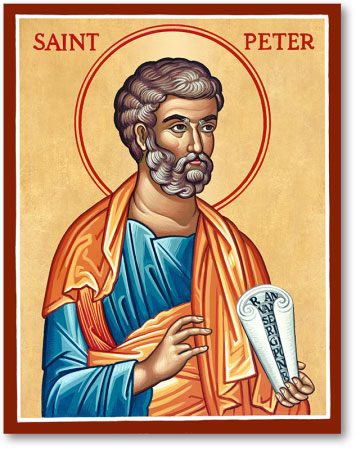
First, I want to point out that these verses are from the Apostle Peter, the supposed first pope and founder of the apostolic succession of one pope to another. Second, I want the reader to notice the pronouns that Peter uses: "us" three times, and "you"  once. While he refers to "He" or "Him" several times, he never once says "I" or "me." "He," that is, God, has granted "us" "all things that pertain to [eternal] life and godliness." We whom? Peter and his readers, the same ones he addresses as "you"! His emphasis is on the sufficiency of the truth that he share already with his fellow Christians, not a secret that will be kept by the pope until some time that serves his purpose.

Peter, the very man claimed by Rome as the beginning of their apostolic superiority, says that all Christians have what we need for eternal life and sanctification. There is no secret tradition, whether sacred or otherwise, of information for which we are accountable.

If the claims of Rome are contrary to the words of the man they claim as their founder, why do they make them? To my mind the answer is obvious: if the hierarchy of Rome has information that is essential for our salvation, and that we can get in no other way, then she has an absolute control over our salvation. And that is the exact spiritual bondage against which John Hus, John Wyclif, Martin Luther, John Calvin, Thomas Cramner, John Knox, and all of the other Reformers rebelled in the Fifteenth and Sixteenth Centuries, and against which biblical Christian must battle even in our present day.

Saturday, January 23, 2016

How Catholic Translators Excised 'Sola Scriptura' from Their Own Bible

In the New American Bible - Revised Edition (hereafter, "NABRE"), the primary translation used among English-speaking American Catholics, Isaiah 8:19-20 reads this way: "When they say to you, 'Inquire of ghosts and soothsayers who chirp and mutter; should not a people inquire of their gods, consulting the dead on behalf of the living, for instruction and testimony?' Surely, those who speak like this this are the ones for whom there is no dawn." Notice the phrase that I have placed in italics. The translators of this version place it in the assertions of those who seek advice from mediums.

In contrast, the ESV reads, "When they say to you, 'Inquire of the mediums and the necromancers who chirp and mutter,' should not a people inquire of their God? Should they inquire of the dead on behalf of the living? To the teaching and to the testimony! If they will not speak according to this word, it is because they have no dawn." Here, the translators place the clause in the portion in which God rebukes this paganistic syncretism. It is placed the same way in the New King James Version and the Modern English Version, which follow a different manuscript tradition. It was even placed this way in the Douay-Rheims Version, a much-earlier Catholic bible, in even stranger phrasing: "To the law rather, and to the testimony."
Why would the NABRE disconnect the phrase from what follows, to place it with what preceded? Ah, the essence of the issue!

One of the five solas of the Reformation was "sola scriptura," or "scripture alone," the belief that the Bible alone is infallible, and is therefore the ultimate standard for judging any question of spiritual controversy. Protestants believe that God has placed all truth necessary to salvation and godly living in the Bible, so that any man or woman can read it for himself, without the need of a priest or pope to give him "the rest of the story." This doctrine freed the conscience of Christians from the bondage that they had known to the hierarchy of the Catholic Church. Thus, that hierarchy, the force behind the translation of the NABRE, had a vested interest in hiding the truth revealed in these verses, the truth of sola scriptura!

Catholic apologists love to challenge Protestants with the question, "But where does the Bible teach sola scriptura?" And, since most Protestants don't know their bibles, especially the Old Testament, they often do not know these verses. And the Catholic hierarchy works hard that their own people do not know them, either.

Thursday, October 1, 2015

Perseverance by Grace in the Ministry of Paul

We have all read of Paul's imprisonments. The first, house arrest in Rome for two years, is described at the end of Acts. The second ended with his martyrdom. It is during the first that he wrote what are commonly called his "prison epistles," Ephesians, Philippians, Colossians, and Philemon.

Even before his second imprisonment, Paul was conscious of a time of martyrdom approaching (II Timothy 4:6-8): "For I am already being poured out as a drink offering, and the time of my departure has come. I have fought the good fight, I have finished the race, I have kept the faith. Henceforth there is laid up for me the crown of righteousness, which the Lord, the righteous judge, will award to me on that Day." Paul's attitude here is so contrary to the predominant theology of our day, which I label "neo-Pelagianism." According to that theology, there is no security for the believer; he can fall into unbelief at any time, if he ever stops having enough faith. My response is that such a belief turns the Christian life into the same terror against which Martin Luther revolted on October 31, 1517. And it certainly isn't an accurate portrayal of Paul's attitude in this passage.

According to the Arminian, Paul could fall from his faith before his death, and thus lose his salvation. Yet, Paul expresses his secure hope in a successfully-run race, for which he would soon receive the crown of righteousness in glory. Where is his insecurity? He shows none.

Further, a few verses later, Paul tells Reverend Timothy (II Tim. 4:18), "The Lord will rescue me from every evil deed and bring me safely into His heavenly kingdom." Not "my strength," not "my faith," not "my holiness." In fact, not "my" anything! Rather, he looks to Jesus to carry him through, just as he described in Philippians 1:6: "I am sure of this, that He who began a good work in you will bring it to completion at the day of Jesus Christ." That is why I dislike even the phrase "once saved, always saved," because it gives the misimpression that it is the strength of the individual that brings him safely through this life. Rather, I use the historical phrase "perseverance of the saints," because it is God Who carries the believer by means of faith and sanctification until the day of his glorification (Romans 8:30). That is why Paul is secure as he sees death approaching, because he knows he can trust his divine redeemer, Jesus Christ (Deut. 33:27, Psalm 145:20, II Tim. 1:12 NASB, John 10:28).

Since the earliest days of my Christian life, thirty-three years ago, I have never understood why people hate this doctrine. Why do they prefer the terror of believing that they may be saved today, just to lose it tomorrow? Even if it were true - and I thank God that it isn't - such a doctrine would be too horrific for me to hold. What does such a doctrine say about the efficacy of Christ's blood and the ministry of the Holy Spirit?

Wednesday, September 23, 2015

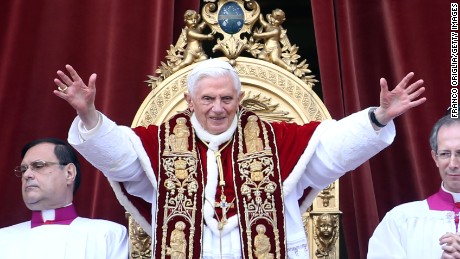
In Honor of the Pope's Visit to the United States

Back in 1987, then-Pope John-Paul II visited the United States, including a stop in neighboring South Carolina. At the time, a co-worker, a professing atheist, said to me, "You must be excited." "Why?" I asked her. "Because of the Pope's visit," she replied. "But I'm not Catholic," I explained, to her blank face. She didn't understand the distinction between Catholics and Protestants. I am saddened to say that my experiences, even with Protestants over the years, has convinced me that few of us understand, either.

Beginning with the nailing of his 95 Theses on the Wittenburg Church door by Martin Luther on October 31, 1517 (so the 500th anniversary is approaching), Protestants have systematized our conflict with Rome in the so-called Five Solas:

Sola Scriptura: that our only infallible standard for spiritual truth is the Holy Bible, in the Old and New Testaments, and what by necessary logical consequence might be based on them.

Soli Deo Gloria: that our salvation and sanctification are for the glory of God alone, not based on any works for which a man might claim credit.

Solus Christus: that our salvation is based on the finished work of Christ alone, in His life, crucifixion, resurrection, and eternal intercession.

Sola Gratia: by grace alone, that is, by God's voluntary condescension, not because of any obligation that we have placed upon Him.

Sola Fide: that it is by faith alone, as the instrumental means, that the works of Christ are imputed to us for our justification.

These Five Solas (Latin for "alone") are the essential points of conflict between the churches of the Reformation and the Church of Rome. She has never changed her denial of these five truths, so our repudiation of her legitimacy must be maintained, for the rest of human history, if need be. Any ecumenical relationship, while she continues in her apostasy from the Gospel, can only carry Protestants into judgment with her. As Jesus Himself says (Revelation 18:4): "Come out of her, My people, lest you take part in her sins, lest you share in her plagues."

Sunday, September 6, 2015

God's Judgment on Manmade Religion


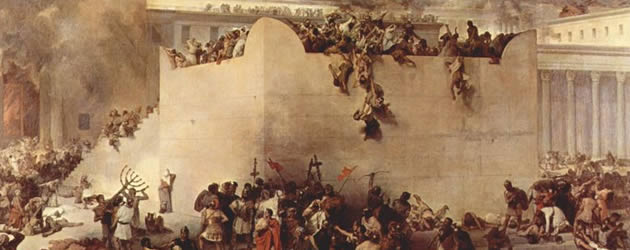
The Prophet Jeremiah gave his prophecies in the time immediately before and immediately after the sacking of Jerusalem by the Babylonians, followed by the subsequent exile of the Jews to Babylon. His sermons before those events were proclamations of God's judgment against Judah, for which these events were His judgment.

Notice the pattern in the quotations below:

Jeremiah 3:17: "They shall no more stubbornly follow their own evil heart."

Jeremiah 7:24: "They did not obey or incline their ear, but walked in their own counsels and the stubbornness of their evil hearts, and went backward and not forward."

Jeremiah 11:8: "They did not obey or incline their ear, but everyone walked in the stubbornness of his evil heart."

Jeremiah 13:10: "This evil people, who refuse to hear My words, who stubbornly follow their own heart and have gone after other gods to serve them and worship them."

Jeremiah 23:17: "They say continually to those who despise the word of the LORD, 'It shall be well with you'; and to everyone who stubbornly follows his own heart, they say, 'No disaster shall come upon you.'"

Do you see what each of these verses says? God doesn't chastise Judah for a lack of religiosity. Rather, He chastises them for religious practices according to the inclinations of their own hearts. Judah even proclaimed her innocence (Jer. 2:35), and pretended not to understand why He was angry with them. God acknowledges that they have continued in their religious activities, but not according to His purposes (Jer. 7:9-11): "Will you steal, murder, commit adultery, swear falsely, make offerings to Baal, and go after other gods that you have not known, and then come and stand before Me in this house, which is called by My name, and say, ‘We are delivered!’—only to go on doing all these abominations? Has this house, which is called by My name, become a den of robbers in your eyes? Behold, I Myself have seen it, declares the Lord." Look also at Jer. 7:21-26.

God makes a final effort to call His covenant people to repentance (verses 5-7):  "If you truly amend your ways and your deeds, if you truly execute justice one with another, if you do not oppress the sojourner, the fatherless, or the widow, or shed innocent blood in this place, and if you do not go after other gods to your own harm, then I will let you dwell in this place, in the land that I gave of old to your fathers forever." Yet, in the face of His mercy, Judah refuses. Jer. 8:6: "They have not spoken rightly; no man relents of his evil, saying, 'What have I done?' Everyone turns to his own course."

What was the real religious devotion of Judah? (Jer. 9:13-14): "They have forsaken My law that I set before them, and have not obeyed My voice or walked in accord with it, but have stubbornly followed their own hearts..." It is that same error described above: will-worship. They preferred the spiritual exercises that they had invented (or borrowed from their pagan neighbors) over those commanded by God in His word.

This is a description of two times in our own Western history: it was part of the complaints of the Reformers against the Church of Rome that she had polluted Christian worship with pagan images and pageantry not authorized by Scripture, and again in the "seeker-friendly" neopaganism which is spreading in our own time.  Rome has added additional "sacraments" and dogmas, not to mention the superstious praying to angels and saints. She is the exemplar of "following their own hearts." And why is that so bad? Jeremiah answers that question, too (Jer. 17:9): "The heart is deceitful above all things, and desperately sick." While Rome pretends to an authority to legislate faith and morals beyond the mandates of Scripture, God says that the reservoir from which she draws is deceitful (which is not to exempt Protestant innovators of the same criticism).

Judah's apostasy here is in violation to the First and Second Commandments of God (Exodus 20:3-4). While Rome attempts to obscure the Second by subsuming it into the First, by doing so she merely demonstrates that her error is no accident, but is willful and deliberate. In my own tradition, it is called the Regulative Principle of Worship, and is explicitly enjoined in the Westminster Larger Catechism, Question 109: "The sins forbidden in the second commandment are, all devising, counseling, commanding, using, and anywise approving, any religious worship not instituted by God Himself." That is our rejection of the worship in the Church of Rome.


This truth led to an essential warning in the Westminster Confession of Faith (XX:2): "God alone is Lord of the conscience, and hath left it free from the doctrines and commandments of men which are in any thing contrary to His Word, or beside it in matters of faith on worship. So that to believe such doctrines, or to obey such commandments out of conscience, is to betray true liberty of conscience; and the requiring an implicit faith, and an absolute and blind obedience, is to destroy liberty of conscience, and reason also."

Wednesday, July 1, 2015

Pentecostals and the Pope: Reversing the Reformation

At a convention sponsored by the Kenneth Copeland Ministries, delegates were treated to a video from Pope Francis, in which he expressed his yearning, "Let’s give each other a spiritual embrace and let God complete the work that He has begun." The video can be watched on Youtube.

In the video, the Pope claims that the Catholic Church and Pentecostals share the blame for the separation between them. "It’s sin that has separated us, all our sins, the misunderstandings throughout history. It has been a long road of sins that we all shared in. Who is to blame? We all share the blame," he said. "We have all sinned. There is only one blameless, the Lord."

In response, Kenneth Copeland told the audience, "Come on, the man asked us to pray for him... Oh Father…we answer his request," Copeland prayed. "And since we know not how to pray for him as we ought other than to agree with him in his quest and his heart for the unity of the body of Christ… we come together in the unity of our faith, Halleluiah!"

Do you notice anything missing from the lovefest? I see no mention of the controversy between Rome and Protestants over such things as justification b y faith alone, the sufficiency of the scriptures alone, or the exclusive headship of Christ over His church. That is, neither Francis nor Copeland makes any mention of the reasons that Calvin, Luther, Cranmer, etc., were compelled by Scripture and their consciences to oppose the Papacy as a corruption of the Christian Faith.

That is hardly surprising. Afterall, Copeland and his ilk teach the same semi-Pelagian heresy that has always been taught by Rome. While Francis mumbles about sin on both sides, he sees no need to repent of his view of the Gospel, because these Pentecostals ( and others) aren't requiring him to move toward a biblical Gospel. Rather, they have been moving toward a papist Gospel of human ability, tradition over Scripture, subjectivism, and the blending of works with faith.

The Reformers labelled the Papacy as the Anti-Christ, and the Church of Rome as the great Whore of the Revelation. And in the five hundred years since, Rome hasn't changed anything but the window-dressing. Yet, she has managed to convince some self-described Protestants to de-Protestantize themselves, and return to her blasphemous bosom.

I for one say good riddance!

By no means should my comments here be taken to suggest that all Pentecostals share in the apostasy of these associates of Kenneth Copeland. However, I have yet to see their condemnation of these apostates.

God says, "Come out of her, My people, lest you take part in her sins, lest you share in her plagues" (Revelation 18:4).

Thursday, January 15, 2015

The Antichrist in Saint Peter's

Reposted from the Contra Mundum blog, with permission. As I have mentioned elsewhere, here for example, I do not take a futurist approach to New Testament prophecy. In particular, I don't believe in a personal Antichrist. That term occurs only in the Epistles of John, who says (I John 2:18), "now many antichrists have come." However, I give a lot of deference to the view expressed below because it was also the view of the Reformers. Even the Westminster Confession of Faith (XXV:6) says, "There is no other head of the Church but the Lord Jesus Christ: nor can the Pope of Rome in any sense be head thereof; but is that Antichrist, that man of sin and son of perdition, that exalteth himself in the Church against Christ, and all that is called God." It's just that, in my mind, while the papacy is certainly antichristian, I wouldn't thereby name it Antichrist.

Hippolytus On The Antichrist 
 
The Reformers are frequently accused of malice when they identify the Pope with the Antichrist. It is asserted, or at least, assumed, that they were retaliating against Rome for persecuting them. What has been largely forgotten is the eschatology of the early Church Fathers, particularly the 2nd & 3rd Century Fathers, such as Irenaeus, Tertullian, and Hippolytus.
Of particular interest is the short work of Hippolytus (died ca. 236), entitled “On the Antichrist.” Several factors are highly prominent in this work.

1. Rome is the 4th beast of Daniel 7.
2. The great whore in Revelation 17 is identical with the reorganized Roman kingdom, ruled by the Antichrist. 
3. The Antichrist will rule over a “whore,” which is a universally understood Scriptural figure for an apostate church.
4. This “whore” will be a kingdom that will arise out of the remnants of a destroyed Roman Empire.
5. This “whore” will be Latin in orientation.
6. Antichrist, as head to this whore church-kingdom, will wage war on the saints, sending a second crop of martyrs to join those who were crying out under the altar (Rev. 6:9-10).
7. The Roman Empire is that which “letteth,” (hinders) the rise of Antichrist (2 Thess. 2:7).
8.  Antichrist is the “little horn” of Daniel 7 & 8.
9. Antichrist is the man of sin/son of perdition (2 Thess. 2).
These are all amazing observations. First of all, the idea that Rome would fall and be divided into 10 lesser kingdoms could never have been guessed without the prophecy of Daniel. Identifying Rome with Daniel’s 4th Beast is easy for us, centuries after the fact. It is astounding though for Hippolytus to have realized this and to have understood that Christ’s church would ultimately be victorious over pagan Rome. Hippolytus wrote during the Age of Martyrs!
Secondly, Hippolytus bluntly says that the Roman Empire is the hindrance, “that which letteth,” (2 Thess. 2:7) which must be removed for the Antichrist to rise to power. Again, this would have been easy to see in the 16th Century, but Hippolytus wrote during the 3rd. Tertullian had made the exact same assertion. In chapter 24 of “Resurrection of the Flesh,” Tertullian wrote, ““What obstacle is there but the Roman state, the falling away of which, by being scattered into ten kingdoms, shall introduce Antichrist upon its own ruins?” Compare this with the following from the commentary of Matthew Henry on 2 Thessalonians 2:7 – “Something hindered or withheld the man of sin. It is supposed to be the power of the Roman Empire, which the apostle did not mention more plainly at that time…These prophecies have, in a great measure, come to pass, and confirm the truth of the Scriptures. This passage exactly agrees with the system of popery, as it prevails in the Romish church, and under the Romish popes.”
Thirdly, he identifies the Antichrist with the little horn of Daniel 7 & 8. He identifies the great whore Babylon in Revelation 17 with the kingdom ruled by the little horn (Antichrist) who comes to power out of the remnants of the Roman Empire that is broken into 10 lesser kingdoms.
Fourthly, he affirms that this Antichristian kingdom will be Latin in orientation, based on understanding the number 666 as referring to Rome. Irenaeus made the exact same identification (Against Heresies 5.30.3).
Fifthly, Antichrist would persecute the Church with more ferocity than pagan Rome ever did. The martyrs of pagan Rome were under the altar (Rev. 6:9-10) crying out to God for justice. These martyrs would have to wait for their brothers who Antichrist’s Rome would kill. Tertullian understood Revelation 6 in exactly the same way. In chapter 25 of his “Resurrection of the Flesh,” Tertullian writes, “In the Revelation of John, again, the order of these times is spread out to view, which “the souls of the martyrs” are taught to wait for beneath the altar, whilst they earnestly pray to be avenged and judged: (taught, I say, to wait), in order that the world may first drink to the dregs the plagues that await it out of the vials of the angels, and that the city of fornication may receive from the ten kings its deserved doom, and that the beast Antichrist with his false prophet may wage war on the Church of God; and that, after the casting of the devil into the bottomless pit for a while, the blessed prerogative of the first resurrection may be ordained from the thrones; and then again, after the consignment of him to the fire, that the judgment of the final and universal resurrection may be determined out of the books.”
To read Hippolytus’ work on the Antichrist, you would think it was written in the 16th Century by a Reformer. The main difference was that the Fathers believed that the 1260 days of Revelation were a literal 3 ½ years. They knew Rome would fall, but they seemed to have expected Antichrist’s Rome to fall after only 3 ½ years.
It is therefore quite libelous against the Reformers to quibble with their interpretation of Scripture with regard to the Antichrist. Christ is the head of His Church. Antichrist, if he be an impostor (which he is), must be the head of a false church. Antichrist is not a secular political figure. The Fathers held the exact same view as the Reformers in this regard. How incredible is it to realize that in the 230's AD someone was asserting that the Antichrist will be the head of an apostate kingdom-church based in Rome, built on the ruins of the fallen Roman Empire? The Reformers were not innovators!
Hippolytus’ work can be found here.

Thursday, November 20, 2014

Where does the Bible Teach Sola Scriptura?

During the Reformation, one of the primary ssues was that of authority. And it is, indeed, the central issue that divides biblical Protestants from Catholics: by what standard do we judge truth? The Catholics answer with the Bible, church tradition, and the Magisterium, i. e., the church hierarchy. The Reformers answered with the Latin phrase, Sola Scriptura, Scripture alone. That does not mean that everything must be explicitly stated in the Bible, but rather that it must be either explicitly stated or necessarily logically required by it. In the words of the Westminster Confession of Faith I:6, "The whole counsel of God, concerning all things necessary for his own glory, man's salvation, faith, and life, is either expressly set down in Scripture, or by good and necessary consequence may be deduced from Scripture."

Protestants defend our position in various ways. An excellent one can be seen here, by the late Orthodox Presbyterian Rev. Greg Bahnsen. In response, Catholics ask the question, legitimately, if hypocritically, "Where does the Bible teach sola scriptura?" Again, various answers, some better, some worse, are given. I will offer one that I have not seen from anyone else.

"When they say to you, 'Inquire of the mediums and the necromancers who chirp and mutter,' should not a people inquire of their God? Should they inquire of the dead on behalf of the living? To the teaching and to the testimony! If they will not speak according to this word, it is because they have no dawn" (Isaiah 8:19-20). God, speaking here through the Prophet Isaiah, asks the very question I am addressing: how should the people of God judge truth and falsity? And He gives the only infallible answer: By comparing it to the Word that He had breathed out (II Timothy 3:16), i. e., the Bible.

Tuesday, November 11, 2014

The Sacrifice of the Catholic Mass, and Its Offense to the Gospel

"If anyone saith that the sacrifice of the Mass is only a sacrifice of praise and thanksgiving, or that it is a bare commemoration of the sacrifice consummated on the cross, but not a propitiatory sacrifice, or that it profits him only who receives, and that it ought not to be offered for the living and the dead for sins, pains, satisfactions, and other necessities, let him be anathema."
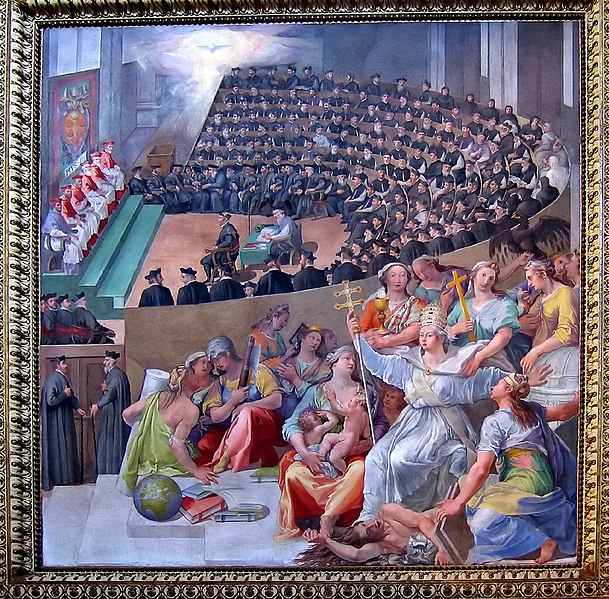
The Council of Trent

The above statement is a quote from the decrees of the Council of Trent, chapter 9, canon 3. This council was called by the Roman Catholic Church to address the crisis created by the budding of the Reformation. It defined, officially and infallibly (Rome claims), Catholic doctrine, in perpetuity. I have highlighted in boldface the key phrases in that statement. They claim for this statement the support of Malachi 1:11, "For from the rising of the sun to its setting, my name will be great among the nations, and, in every place, incense will be offered to my name, and a pure offering."

When dealing with Catholic apologists, I find that they consistently claim that the Mass is not a sacrifice. For example, Dave Armstrong writes, "It is crucial to understand that the Sacrifice of the Mass is not a 're-sacrifice' of Christ, as is the common misconception. Jesus does not die every time a priest offers Mass, since He died once, in history, on earth" (A Biblical Defense of Catholicism, p. 95). Yet, he says in the very next paragraph, "in the Mass, Jesus Christ ultimately offers the sacrifice of Himself (just as at the Last Supper), with the priest merely acting in His stead, as a purely secondary, instrumental agent." So, as Trent says, it is a sacrifice, but it's not, because it is Christ sacrificing Himself, not the priest sacrificing Him. To me, that sounds like Rome is trying to play both sides of the matter.

However, whether Christ is supposedly sacrificing Himself, or the priest is sacrificing Him, the claim should be anathema (to reclaim their word) to any true Christian.

The writer of Hebrews (10:5) quotes Jesus Himself, using the words of Psalm 40:6, "Sacrifice and offerings You have not desired." So, in His own words, Jesus is telling us that we do not need a continuing sacrifice, whether offered by Himself, or "with the priest merely acting in His stead." Why is that? Because (Heb. 10:11, emphasis added) "we have been sanctified through the offering of the body of Jesus Christ once for all." The whole point of this chapter of Hebrews is to establish the superiority of Christ's priestly offering of Himself over the Jewish Aaronic priests exactly because their sacrifices had to be repeated. In contrast (Heb. 10:12-14, emphasis added), "when Christ had offered for all time a single sacrifice for sins, He sat down at the right hand of God..., for, by a single offering, He has perfected for all time those who are being sanctified." And I think that the final nail in the coffin is seen in verses 17 and 18: "'I will remember their sins and their lawless deeds no more.' Where there is forgiveness of sins, there is no longer any offering for sin."

By claiming a continuing sacrifice in the Mass, the Catholic Church is claiming that it must complete an insufficiency in the sacrifice of Christ. And, as the writer of Hebrews (10:1) points out, "it can never, by the same sacrifices, that are continually offered every year [or every Sunday], make perfect those who draw near." That is, if the sacrifice must be continually offered, then it is never sufficient to achieve the purpose of sanctification. The Catholic has no assurance that he has partaken in the sacrifice of the Mass enough times to know when he has been saved from his sins.

That is bondage of an horrific sort! That is why the Reformation was necessary! And it is why bible-believing Protestants must never cease to point the finger at Rome and denounce it as a perversion of Christianity.

On which will you rely, Catholic reader? A Savior who gave His life for His people, once for all, or a Mass with nothing but the claims of the Pope, contrary to the Scriptures themselves?

Sunday, March 10, 2013

Sola Scriptura: Biblical Authority versus Catholic Tradition

"...[T]he [Catholic] Church, to whom the transmission and interpretation of Revelation is entrusted, does not derive her certainty about all revealed truths from the Holy Scriptures alone. Both Scripture and Tradition must be accepted and honored with equal sentiments of devotion and reverence."

The statement above is from the Catechism of the Catholic Church (1997), the official doctrinal organ of the Roman Catholic Church in the United States. I quote it here as proof from their own words that Scripture, contained in the Old and New Testaments of the Bible, is not their ultimate source of authority. They confess that they hold their extra-biblical tradition to be of equal authority. I consider this to be a gross equivocation; I believe that they give their tradition superior authority.

With the Reformers, I hold that such an equation is impossible. That is, I would suggest that the Scriptures forbid any comparable authority outside of themselves. Therefore, to claim that tradition is equal to scripture is actually a roundabout repudiation of the authority of scripture. Jesus addressed this issue Himself in two portions of the New Testament.

First, in Matthew 6:24, He said, "No one can serve two masters, for either he will hate the one and love the other, or he will be devoted to the one and despise the other." He was explicitly addressing the rule of money, but His principle applies to any dual system of authority.

And second, He criticized the Pharisees for this very act of equivocation, in Mark 7:6-8, "And He said to them, 'Well did Isaiah prophesy of you hypocrites, as it is written, "This people honors Me with their lips, but their heart is far from Me; in vain do they worship Me, teaching as doctrines the commandments of men." You leave the commandment of God and hold to the tradition of men.'" In almost parallel phrasing, our Lord condemns the very act that the Catholic Church officially endorses!

The scriptures testify to their own sufficiency. II Timothy 3:16-17 tells us, "All Scripture is breathed out by God and profitable for teaching, for reproof, for correction, and for training in righteousness, that the man of God may be competent, equipped for every good work." Not "for some good work," thus needing additional revelation, but "for every good work."

That is why the Westminster Confession of Faith I:10 reads, "The Supreme Judge, by which all controversies of religion are to be determined, and all decrees of councils, opinions of ancient writers, doctrines of men, and private spirits, are to be examined, and in whose sentence we are to rest, can be no other but the Holy Spirit speaking in the Scripture." Someone might object that the Confession is a tradition. And that is certainly true. The principle of sola scriptura doesn't mean the repudiation of all tradition. That would be impossible. Rather, it means that ultimate authority resides in scripture alone; the confession, and all other traditions, are subordinate to the authority of scripture.

Sunday, December 18, 2011

Is Infallibility of the Pope or of the Church Biblical?

"Beloved, do not believe every spirit, but test the spirits to see whether they are from God, for many false prophets have gone out into the world."
- I John 4:1

The Church of Rome claims for itself that it is blessed with infallibility, that is, that it is incapable of error. She claims this for Her Church as a whole, and for the Pope in particular. In polemics against the churches of the Reformation, Rome claimed that this infallibility made her naturally superior to the Reformers, who explicitly eschewed any personal infallibility.

However, what do the scriptures say? We see above the statement of the Apostle John: The Christian must test the spirits, never accepting spiritual claims at face value, for there are false prophets in the world. In John 5:39, the same Apostle quotes the Lord's praise for those who search the scriptures for knowledge of Him. A little further in the New Testament in Acts 17:11, the believers of Berea are praised for "examining the Scriptures daily to see if these things were so."

In other words, the scriptures give the exact opposite surety from the Catholic Church: the foundation of our faith isn't from an infallible Pope or infallible Church, but rather from an infallible Bible, for "all Scripture is breathed out by God and profitable for teaching, for reproof, for correction, and for training in righteousness" (II Timothy 3:16).

Sunday, June 26, 2011

The Reformers and the Doctrine of Prayer

While it wasn't their only motivation to prayer, both Martin Luther and John Knox gave much attention to the commandments to pray.

Luther focused on the Third Commandment (Second Commandment according to the Lutheran division): "You shall not take the name of the Lord your God in vain, for the Lord will not hold him guiltless who takes his name in vain" (Exodus 20:7). According to Luther's understanding of this commandment, not taking the name of Jehovah in vain is a negative way of commanding that we are to use it only according to His word. Lack of prayer means not taking His name as He desires, and thus is a violation of this commandment.

On the other hand, Knox developed his position from a wider range of texts: Psalm 50:14-15, Matthew 7:7-11, Matthew 26:41, I Thessalonians 5:17, and I Timothy 2:13, 8. In his "Treatise on Prayer," Knox explained, "He who, when necessity constrains, desires not support and help of God, does provoke His wrath no less than such as make false gods or openly deny God." Thus, in Knox's mind, lack of prayer is tantamount to paganism or atheism!

Both men said - and I want to emphasize - that they did not mean the Christian of frail conscience who struggles to overcome his sense of unworthiness when approaching the throne of grace. We are unworthy! Anyone who approaches God on the basis of his own worthiness doesn't understand his sinful state nor the necessity of the atonement in Christ. However, for the believing sinner, that atonement covers his unrighteousness, so that he can come before a loving Father God. Consider the text that I would add to the list above, Hebrews 10. Consider especially Hebrews 10:14 and Hebrews 10:19-23.

Saturday, March 12, 2011

Strange Fire: The Abandonment of Sola Scriptura by American Evangelicals


I have written before about the abandonment of the opposition to Rome by modern Protestantism. Today, I want to write about the abandonment of Protestantism itself.

The Reformers established five principles which divided them from Rome, traditionally designated by their Latin forms: sola fide, sola gratia, sola Christus, sola scriptura, and soli gloria Deo. You can go here for my explanation of them.

Here in my hometown, a large church, called Lake Forest Church, promoted its Ash Wednesday service in the local newspaper (no longer available online). Lake Forest is a congregation of the Evangelical Presbyterian Chrurch, but check their website, and see how hard you have to look to find that connection. It never appears in their promotional announcements and advertising. According to the article, Lake Forest Pastor Mike Moses extolled the event on the basis that his congregation is "a modern church that delights in ancient practices."

And there lies my objection: instead of the Reformation principle of sola scriptura, scripture alone, Moses uses the Roman Catholic standard, i.e., tradition. As the Westminster Confession (XXI:1) says, "the acceptable way of worshiping the true God is instituted by Himself, and so limited by His own revealed will, that He may not be worshiped according to the imaginations and devices of men, or the suggestions of Satan, under any visible representation or any other way not prescribed in the holy Scripture." The Larger Catechism, answer 109, reads in part, "The sins forbidden in the second commandment are all devising, counseling, commanding, using, and anywise approving, any religious worship not instituted by God Himself." As a Presbyterian Church, the EPC, and Lake Forest Church as an affiliate thereof, are constitutionally committed to the WCF as its primary subordinate standard of doctrine (however, the EPC has extensively amended the WCF, and may actually have removed this passage; I simply don't know).

The WCF position, commonly referred to as "the regulative principle of worship," is based primarily on Deuteronomy 12:32, "Everything that I command you, you shall be careful to do. You shall not add to it or take from it." But it can be seen historically in the story of Aaron's sons, Nadab and Abihu, whom God executed for offering "strange fire," or "unauthorized fire" as worded by the ESV, on the altar of the tabernacle. See Leviticus 10:1, Leviticus 16:1, Numbers 3:4, and Numbers 26:61, for references to the story. Further explanation can be found in this article from Archibald Alexander Hodge, the son of Charles Hodge.

What separates Protestants from Catholics is that Protestants ask, "What do the Scriptures say?" while the Catholic apologetic appeals to the historicity of a practice. My question to Rev. Mike Moses is this: Human sacrifice is far more ancient than Ash Wednesday: according to your theology, does that make it equally- or even more valid? Sola scriptura gives one answer, but your apologetic seems to lead to another.