Showing posts with label mark. Show all posts

Wednesday, February 16, 2022

Jesus the Shepherd and Effectual Calling

"That saying of Christ is much to our purpose: 'And other sheep I have, them also I must bring, and they shall hear My voice' (John 10:16). This must imports a duty not to be dispensed with. He had 'received a commandment for it from the Father' (verse 18), and this shall [imports] that effectual working 'whereby He subdues all things to Himself,' and whereby they are made to believe (Eph. 1:19). The sheep of themselves lie as cross to this work as other men. 'What have I to do with Thee?' cries the possessed Gadarene (Mark 5:7), but, being His sheep, He must make them willing (Psalm 110:3)." - Elisha Coles, "A Practical Discourse of God's Sovereignty" (emphasis in the original). 

A common Arminian objection to the doctrines of grace is their claim that "God has given us free will." And by that phrase, they mean a level of sovereignty, such that each man is able to chose God for himself or to reject God for himself, and God takes a hands-off attitude toward that decision. 

First, there is no such sovereignty. On the contrary, it was a false offer of sovereignty that Satan made to Adam and Eve in the first temptation. Satan said that a declaration of independence would enable them to decide for themselves what is good or what is evil. Yet, somehow, Arminians are unconcerned that their claim is the same as that made by Satan, by which he deprived the first couple of their blissful existence in the garden of Eden. And second, nowhere does the Bible say that men have any such authority. It is God's authority alone to determine right and wrong. 

Notice the scriptural citations in the quote above from Puritan Coles. Jesus is the shepherd, and His people are sheep. In the anti-type of that metaphor, it is the shepherd who selects his sheep, not the sheep who choose a shepherd. So it is with Jesus's sheep. His flock consists of those given to Him by the Father in their prehistoric intra-Trinitarian covenant (John 6:37-37). And, as Coles notes, Jesus never left the result to the sheep. Rather, He declared His divine intent, one which must be achieved, and the means shall be arranged, and the sheep will be brought into their eternal fold. Not once does the divine shepherd express a mere hope that the sheep will agree or that His calling would achieve its end. Rather, He expresses an unfailing assurance that such will definitely be the case: "This is the will of Him who sent Me, that I should lose nothing of all that He has given Me, but raise it up on the last day" (John 6:39, see also John 17:24).



Saturday, December 18, 2021

The Goodness of God, His Wrath Toward the Reprobate, and "Common Grace"


"Because of your hard and impenitent heart, you are storing up wrath for yourself on the day of wrath when God's judgment will be revealed" (Romans 2:5) . 


The doctrine of common grace is the majority view in the Reformed camp. I admit that. However, as a member of the minority particular grace view, I have to say that I find the claims of biblical support for common grace to be particularly (yes, pun intended) unconvincing. 


According to the doctrine, God's goodness to all men (Matthew 5:45) is grace to them, every one of them, which enables them, in return, to do some good things, sometimes called "civic good." 

I see a lot of problems with that. 


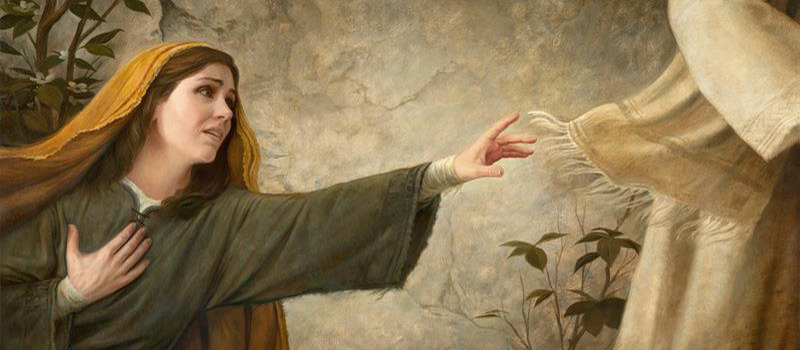
First of all, yes, God is good to everyone. No Christian could say otherwise. That is because God is inherently good. However, notice that Matthew 5:45 never even mentions "grace." Furthermore, where else does Jesus, quoted in that verse, talk about the goodness of God, in terms of His gifts? In Mark 7:26, a Gentile woman comes to Jesus, and asks Him to deliver her daughter from a demon. He responds, "Let the children be fed first, for it is not right to take the children's bread and throw it to the dogs" (verse 27). But she persists: "Yes, Lord; yet even the dogs under the table eat the children's crumbs" (verse 28). To that, He replies: "For this statement, you may go your way; the demon has left your daughter" (verse 29). The parallel verse in Matthew 15:28 adds His words, "O woman, great is your faith!" It isn't her mere existence which brings His gracious act; it is her faith! However, notice her words by which he credits her faith, that even the dogs, i. e., the reprobate, feed on the crumbs that fall from the table of the children, i. e., the elect. The goodness of God to the reprobate is by overflow from His loving and gracious blessing of the elect. 


God's goodness is no common grace. Rather, it is particular grace which is so great that it overflows to those who hate Him! 


Someone may reply that even overflow grace is grace to the reprobate. Yet that, too, is denied by Scripture. It is those very gifts for which God judges the unbelief of the reprobate. Paul tells us, "Although they knew God, they did not honor Him as God or give thanks to Him" (Romans 1:21). The more gifts received, and over a longer time, the greater their judgment. In Isaiah 48:9-11, God makes this statement to rebellious Israel: "For My name's sake, I defer My anger; for the sake of My praise I restrain it for you, that I may not cut you off. Behold, I have refined you, but not as silver; I have tried you in the furnace of affliction. For My own sake, for My own sake, I do it; for how should My name be profaned? My glory I will not give to another." It isn't grace that leads God to withhold His judgments; it is His concern for His own glory! Receiving God's benefits is not grace to the reprobate, but rather an increase in judgment! 

Saturday, November 20, 2021

The Sovereignty of God over His Enemies


The Bible gives us accounts of several cases in which God interacts with Satan or Satan's demonic minions. For example, we read this story in Job 1:6-12: "Now there was a day when the sons of God came to present themselves before the Lord, and Satan also came among them. The Lord said to Satan, 'From where have you come?' Satan answered the Lord and said, 'From going to and fro on the earth, and from walking up and down on it.' And the Lord said to Satan, 'Have you considered My servant job, that there is none like him on the earth, a blameless and upright man, who fears God and turns away from evil?' Then Satan answered the Lord and said, 'Does Job fear God for no reason? Have You not put a hedge around him and his house and all that he has, on every side? You have blessed the work of his hands, and his possessions have increased in the land. But stretch out Your hand and touch all that he has has, and he will curse You to Your face.' And the Lord said to Satan, 'Behold, all that he has is in your hand. Only against him do not stretch out your hand.' So Satan went out from the presence of the Lord.

What we see is that Satan, the commander of the demons, must give answer to God for his activities. This chieftain of wickedness cannot claim for himself even the autonomy with which he tempted Adam and Eve in the Garden of Eden. We see this in every interaction between the Father or the Son and any of the minions of Hell. Never does a demon act apart from divine permission, even when the woman is possessed by a legion of demons, or approximately six thousand (Mark 5:1-20). Even with such a number, the demons cower before the incarnate divine Son (verses 10-12). They knew that a day will come when He will judge them to their final imprisonment (Luke 8:31). 

In his catechism, question #28, Calvin addressed this subservience from the demons: "What sayest thou as touching the devils and wicked persons? Be they also subject to Him? A: Albeit that God doth not guide them with His Holy Spirit, yet He doth bridle them in such sort that they be not able to stir or move without His permission and appointment; yea, and moreover He doth compel them to execute His will, although it be against their intent and purpose." 

Saturday, September 4, 2021

Faith in Faith Will Never Face Down Life's Storms


"The truth is that the faith by which alone the elect sinner is justified is a knowing and trusting that renounce works and working for righteousness... The faith that renounces works and working for justification is true faith. Whatever supposed 'faith' insists on working for righteousness is, thereby, exposed as a false faith. No one is justified by a false faith." 

-David Engelsma, "Gospel Truth of Justification," p. 190

We have all seen TV shows and movies in which the solution to some tragedy is stated, "Just have faith." That is all the encouragement we are given, without any statement of faith in whom or in what. That is because our humanistic age believes in faith in faith as a form of salvation without God. It is also stated as "just believe in yourself." It is a type of secular religion. 

That is not at all the way the word is used in the Bible. 

After her brother Lazarus died, Jesus said to his sister Martha, "I am the resurrection and the life. Whoever believes in Me, though he die, yet shall he live, and everyone who lives and believes in Me shall never die" (John 11:25-26). "Believe" here is used as a synonym for "have faith." There is nothing here like "just have faith." Rather, Jesus comforts Martha by telling her to have faith in Him. In other words, her comfort is to come, not from her faith, but from Jesus, the object of her faith. 

And that is exactly where modern secular religion fails. By separating faith from its object, secularism posits the power in the commitment of a person's mind, not in the power of one outside that person who has actual authority over events. 

Remember the story of Jesus and the storm (Mark 4:35-41): "On that day, when evening had come, He said to them, 'Let us go across to the other side.' And leaving the crowd, they took Him with them in the boat, just as He was. And other boats were with Him. And a great windstorm arose, and the waves were breaking into the boat, so that the boat was already filling. But He was in the stern, asleep on a cushion. And they woke Him and said to him, 'Teacher, do You not care that we are perishing?' And He awoke and rebuked the wind and said to the sea, 'Peace! Be still!' And the wind ceased and there was a great calm. He said to them, 'Why are you so afraid? Have you still no faith?' And they were filled with great fear and said to one another, 'Who then is this, that even the wind and the sea obey Him?'

The disciples were in a small fishing boat on the Sea of Galilee, and a severe storm blew up, threatening to capsize the boat. Jesus, unperturbed, lay sleeping in the back of the boat. The disciples woke Him, pleading for His help. And what was His answer? Just believe in yourselves? Just have faith? No, His response was to command the storm to cease. Why? Because their salvation from impending death was not within themselves. It was only because they believed in Him that they survived that day.

Saturday, July 31, 2021

God's Rest and His Blessed Sabbath for His People


I want to relate two passages of Scripture here. 

The first is Genesis 2:1-3: "Thus the heavens and the earth were finished, and all the host of them. And on the seventh day God finished His work that He had done, and He rested on the seventh day from all His work that He had done. So God blessed the seventh day and made it holy, because on it God rested from all His work that He had done in creation." This passage is well-known and straightforward. After six days of creative work, God rested on the seventh day. Not literally, of course, since God cannot tire. However, using an anthropomorphism, Moses describes God in terms that his readers could understand. Notice that God is not described as resting from everything, but specifically from the work of creation. The physical universe and its denizens were complete, as He had designed them to complement one another. 

However, one phrase is consistently overlooked: "and made it holy." That phrase necessarily relates to men, since God need do nothing in relationship to Himself to be holy. We will come back to that. 

The second passage is Hebrews 4:1-13: "Therefore, while the promise of entering His rest still stands, let us fear lest any of you should seem to have failed to reach it. For good news came to us just as to them, but the message they heard did not benefit them, because they were not united by faith with those who listened. For we who have believed enter that rest, as He has said, 'They shall not enter My rest,’ although His works were finished from the foundation of the world. For He has somewhere spoken of the seventh day in this way: 'And God rested on the seventh day from all His works.' And again in this passage He said, 'They shall not enter My rest.' Since therefore it remains for some to enter it, and those who formerly received the good news failed to enter because of disobedience, again He appoints a certain day, 'Today,' saying through David so long afterward, in the words already quoted, 'Today, if you hear His voice, do not harden your hearts.' For if Joshua had given them rest, God would not have spoken of another day later on. So then, there remains a Sabbath rest for the people of God, for whoever has entered God’s rest has also rested from his works as God did from His. Let us therefore strive to enter that rest, so that no one may fall by the same sort of disobedience. For the word of God is living and active, sharper than any two-edged sword, piercing to the division of soul and of spirit, of joints and of marrow, and discerning the thoughts and intentions of the heart. And no creature is hidden from His sight, but all are naked and exposed to the eyes of Him to whom we must give account.

This passage is the theological explanation of what Jesus said during His earthly ministry: "The Sabbath was made for man, not man for the Sabbath" (Mark 2:27). 

There is a claim often made by anti-Sabbatarians that the Sabbath was part of the law of Moses, and was, therefore, abrogated along with the other ceremonies, such as the sacrifices and the food laws. When in response I have pointed to the reference from Genesis 2, these people have claimed that, since the word "Sabbath" isn't used in it, this passage refers only to an act of God, not to the continuing Sabbath. However, look at what I have already mentioned from Genesis 2:3, that God made the day holy. That can only refer to men's use of it, since God cannot do anything unholy. Also, notice in Hebrews 4 that the author there relates the rest awaiting believers in Heaven to God's rest, which, in turn, is withheld from unbelievers. It is even explicitly called a Sabbath rest in verse 9! How, then, can anyone claim that the Sabbath of the Fourth Commandment is different from God's rest in Genesis? 

To my mind, the logic of Hebrews 4 requires us to believe in the continuing validity of the Sabbath for Christians, not as a burden, but as a blessing intended for us by Jehovah, the Lord of the Sabbath, the preincarnate Jesus (Matthew 12:8).

Wednesday, July 21, 2021

Forgiving Sins and Priesthood Authority

I have been having discussions with Mormons recently on the place of "priests" in the Christian Church. They claim to have an exclusive "priesthood authority." According to the organization's website, that means "in mortality, priesthood is the authority that God gives to man to act in all things necessary for the salvation of God's children." What is that authority? From the organization's handbook: "The keys of the priesthood are the right to preside and direct the affairs of the Church within a jurisdiction. Jesus Christ holds all the keys of the priesthood pertaining to His Church. He has conferred upon each of His Apostles all the keys that pertain to the kingdom of God on earth. The senior living Apostle, the President of the Church, is the only person on earth authorized to exercise all priesthood keys." 

When I talk to Mormons, they claim that Jesus Himself created this authority in the church, when Peter first professed His Messianic office in  Matthew 16. Jesus said, "Blessed are you, Simon Bar-Jonah! For flesh and blood has not revealed this to you, but My Father who is in Heaven. And I tell you, you are Peter, and on this rock I will build My church, and the gates of Hell shall not prevail against it. I will give you the keys of the kingdom of Heaven, and whatever you bind on earth shall be bound in heaven, and whatever you loose on earth will be loosed in Heaven" (Matthew 16:17-19). Mormons (and Catholics) claim that Peter and his successors received here from Jesus his imprimatur allowing them to forgive sins, and, thus, mediating salvation to everyone else. 

To my mind, that claim is blasphemous, a denial of the sufficiency of Christ for the salvation of His people. As the Scriptures say, "There is one God, and there is one mediator between God and men, the man Christ Jesus, who gave Himself as a ransom for all" (I Timothy 2:5-6). That is what is said about Him. 

But is there anything which Jesus Himself said that directly refutes this claim of priesthood? 

Yes, there is. In the story of the paralytic, Jesus says to the frowning scribes, "Which is easier, to say, 'Your sins are forgiven,' or to say, 'Rise and walk'? But that you may know that the Son of Man has authority on earth to forgive sins - (He then turned to the paralytic) - Rise, pick up your bed and go home" (Matthew 19:5-6). In the parallel passage in Mark, we get an additional piece of information. That is that the scribes accused Him of blasphemy, because, "Who can forgive sins but God alone?" (Mark 2:7). And notice that Jesus does nothing to disabuse them of this opinion! They were correct that God alone can forgive sins. And in claiming that authority, Jesus blasphemed, in their view, because His claim was a claim to deity, equal to that of the Father! 

More to my point is that Jesus agreed that the authority belongs to God alone, and, therefore, cannot be held by any mere man, including Peter or anyone who claims to be his successor. Rather, as the representative of the only Head of the Church, Peter, the other apostles, and every true minister since their time has declared, not that they forgave sins, but rather that they brought the Gospel, the news that Jesus has purchased forgiveness of sins for everyone who believes (Acts 10:43). Jesus forgives, and the messenger announces

"With God are wisdom and might; He has counsel and understanding. If He tears down, none can rebuild; if He shuts a man in, none can open. If He withholds the waters, they dry up; if He sends them out, they overwhelm the land. With Him are strength and sound wisdom; the deceived and the deceiver are His. He leads counselors away stripped and overthrows the mighty. He deprives of speech those who are trusted and takes away the discernment of the elders" (Job 12:13-20). 


Saturday, December 26, 2020

Jesus Contra "Soul Sleep": Absent from the Body, Present with the Lord

As we know, Jesus was a frequent target of the Pharisees, as they asked Him questions that they expected to baffle Him or to expose Him to punishment by the Romans. Their opponents, the Sadducees attempted to trip up Jesus, too, but only one time. In Mark 12, they asked Him whose wife a woman would be in the resurrection, after she had been married and widowed by seven brothers. This was actually a double trap, because the Sadducees didn't believe in the resurrection.

In His response, Jesus answered both challenges, the one spoken, while the other was a trap waiting silently. "Is this not the reason you are wrong, because you know neither the Scriptures nor the power of God? For when they rise from the dead, they neither marry nor are given in marriage, but are like angels in heaven. And as for the dead being raised, have you not read in the book of Moses, in the passage about the bush, how God spoke to him, saying, ‘I am the God of Abraham, and the God of Isaac, and the God of Jacob’? He is not God of the dead, but of the living. You are quite wrong" (Mark 12:24-27). He rebukes their failure to believe the Scriptures, which tell us of the resurrection of the dead at the end of history (such as Job 19:26 and Daniel 12:2). Only then does He answer their surface question, denying that resurrected men will continue our social functions: "When they rise from the dead, they neither marry nor are given in marriage, but are like angels in heaven" (Mark 12:25). 

But He also rebukes the Sadducees for supposing that God  is related to men only in this physical life and no more: "Have you not read in the book of Moses, in the passage about the bush, how God spoke to him, saying, I am the God of Abraham, and the God of Isaac, and the God of Jacob? He is not God of the dead, but of the living. You are quite wrong" (Mark 12:26-27).

I bring up this story because it addresses a modern heresy, that of "soul sleep." That doctrine, with some differences, is especially associated with the Jehovah's Witnesses and Seventh-Day Adventists. They deny that the dead believers are conscious, and spiritually in Heaven with Jesus. This is the same doctrine for which Jesus rebukes the Sadducees.

The point of Jesus is the dead saints are alive now, enjoying fellowship with God now. They are not nonsexistent as the Sadducees believed, or nonexistent now to be recreated later as the Jehovah's Witnesses claim, or unconscious in the grave with their bodies as the Seventh-Day Adventists claim.

Instead, we can joyfully claim, as Paul did, "Away from the body and present with the Lord" (II Corinthians 5:8).

Wednesday, August 28, 2019

The Example of Jesus for Our Apologetic

My objection to classical apologetics is that its proponents believe in finding a common ground with their anti-Christian opponents. Part of that is that they do not use Scripture as their evidence, because the unbeliever doesn't consider the Scriptures to be authoritative. Therefore, the apologist claims, he must appeal to the unbeliever on the basis of something that unbeliever considers authoritative. 

Do you see a problem with that principle? To the Christian, God and His word are authoritative. Of course the unbeliever rejects that authority, because he is an unbeliever! Therefore, when the Christian seeks an authority that the unbeliever accepts, he is accepting the very premise of unbelief, that God is not the ultimate authority (Genesis 3:5). In order to defend Christianity, therefore, the classical apologist starts by accepting the worldview of the unbeliever. That is to surrender before joining battle!

We must, in contrast, use the Bible exactly because it is the highest standard, the word of God Himself. If we turned to another standard, then we would be adopting the worldview of the atheist. It is illegitimate for the atheist to expect us to adopt HIS worldview in order to discuss worldviews. In fact, THAT would be circular reasoning. It is legitimate, however, for us to argue from our own worldview. Would an atheist allow us to forbid him to argue from a secular source? Obviously not. So, his assertion would be the application of a double standard, and should be labeled as such. 

Ask this question: When confronted by unbelief, what apologetical standard did Jesus apply? Look at His confrontation with Satan, the highest standard of unbelief, in Matthew 4:1-11, Mark 1:12-13, and Luke 4:1-13. In the face of each challenge, His response was, "It is written..." If Jesus, God incarnate, depended on Scripture for His apologetic, how can men do less? And let us not forget that it is only His word that God promises to empower: "So shall My word be that goes out from My mouth; it shall not return to Me empty, but it shall accomplish that which I purpose, and shall succeed in the thing for which I sent it" (Isaiah 55:11). 


Wednesday, June 5, 2019

God Kicks Away Every Competing Support

In the book known by his name, the Patriarch Job tells a very sad tale.

Starting with verse 6, he first tells us how God has opposed Himself to Job:
"Now then that God has put me in the wrong
     and closed His net about me.
Behold, I cry out, ‘Violence!’ but I am not answered;
     I call for help, but there is no justice.
He has walled up my way, so that I cannot pass,
     and He has set darkness upon my paths.
He has stripped from me my glory
     and taken the crown from my head.
He breaks me down on every side, and I am gone,
     and my hope has He pulled up like a tree.
He has kindled His wrath against me
     and counts me as His adversary.
His troops come on together;
     they have cast up their siege ramp against me 

and encamp around my tent."
- Job 19:6-12 

Then, in the next section, God isolates Job from even his family: 
"He has put my brothers far from me,
     and those who knew me are wholly estranged from me.
My relatives have failed me,
     my close friends have forgotten me.
The guests in my house and my maidservants count me as a stranger;
     I have become a foreigner in their eyes.
I call to my servant, but He gives me no answer;
     I must plead with Him with my mouth for mercy.
My breath is strange to my wife,
     and I am a stench to the children of my own mother.
Even young children despise me;
     when I rise they talk against me.
All my intimate friends abhor me, 

     and those whom I loved have turned against me."
- Job 19:13-19 

This is part of the process of effectual calling, the events God uses to break down our unbelief, and to eliminate whatever competing source of support we maintain. In Job's case, he depended on his relatives for sustaining strength in life, so God separated those relationships. The same with his friends. This is an application of the First Commandment: "You shall have no other gods before Me" (Exodus 20:3). Someone might object that Job never worshiped other deities. Nor do most modern Americans pray to other gods. Yet, to God, another god doesn't just mean Thor or Ganesha. Rather, to Him another god is any support we have in life for not depending on Him as our only God, whether that deity is self-confidence or supportive family. In His eyes, they are competitors, and He removes them from the lives of His elect, until we throw ourselves on Him alone: "I am the LORD; that is My name; My glory I give to no other, nor My praise to carved idols" (Isaiah 42:8).

And in the case of Job, this work was successful: 
"I know that my Redeemer lives,
     and at the last he will stand upon the earth.
And after my skin has been thus destroyed,
     yet in my flesh I shall see God,
whom I shall see for myself,
     and my eyes shall behold, and not another. 

My heart faints within me!"
-Job 19:25-27 

Now that Job has been deprived of his crutches, he is able to see the glory of God. And, where he had been experiencing such unmitigated sorrow, now he experiences hope, the sure hope that he has been given new life, and will thus have his place in the resurrection, where he will see Jesus his Redeemer, with the same eyes with which he now sees only the sky. 

This is the question that every unbeliever faces: when you experience things like this, and feel the tug on your heart to turn from your unbelief (the meaning of repentance), how long will you resist? How long will you watch what you value in your life get pulled away? Surrender now, before the price goes up.

Jesus experienced this separation, but in the opposite order. He had perfect fellowship with His divine Father for unknown ages before He was born: "Father, I desire that they also, whom you have given Me, may be with Me where I am, to see My glory that you have given Me because you loved Me before the foundation of the world." (John 17:24). But He also experienced the loss of His companions (Matthew 26:31, Mark 14:50). And, just before He died, He experienced separation, for the fist time ever, even from His own Father: "My God, My God, why have You forsaken Me?" (Matthew 27:46; compare Isaiah 59:2). He experienced that separation on behalf of everyone who believes in Him. He was separated so that we can be reunited with His God, who is our God.


Saturday, April 27, 2019

The Bible as Our Apologetic

I have a real problem with classical apologetics. That is for two main reasons. One is that they lead to a generic deity, not necessarily the God of the Bible. Arguing, for example, from a supposed "first cause" could as easily be fulfilled by Allah or Zeus. The other reason is that they concede, as a starting point, that God does not necessarily exist. That concession is supposedly to establish a common ground with the unbeliever. Common ground with unbelief? What does that Bible say about that? "What portion does a believer share with an unbeliever?" (II Corinthians 6:15). The starting point of the Christian apologist is with something that Scripture denies! And I have even seen R. C. Sproul, a man whom I otherwise respect, go though his apologetics system in order to determine, not that God is necessarily who the Bible says He is, but rather that God probably exists. "Probably exists" means "maybe doesn't exist." How is that a God-honoring apologetic? I don't believe that it is. And that is probably why you never see the Apostles use such an approach. 

What is the biblical apologetic? "I shall have an answer for him who taunts me, for I trust in Your word" (Psalm 119:42). Do you recall the answers that Jesus made to Satan during His temptation (Matthew 4, Mark 1, Luke 4)? Did He try to find common ground with Satan? Of course not! Rather, He rebuked the Devil with Scripture! 

In apologetics, we must remember one thing: the unbeliever, regardless of his claims, does not really believe that God does not exist. On the contrary, he knows perfectly well that God exists, but is suppressing that knowledge (Romans 1:18-22). Thus, there is no need to establish a common ground. The believer and the unbeliever share a common belief in God. The difference is that one is living according to that belief, while the other is living contrary to it. That is why unbelief is inherently irrational and unstable. And exposing that irrationality was Paul's methodology when he preached at the Areopagus (Acts 17:16-34).

In His word, God has given us the most-powerful weapon possible for our spiritual conflict: "For the word of God is living and active, sharper than any two-edged sword, piercing to the division of soul and of spirit, of joints and of marrow, and discerning the thoughts and intentions of the heart" (Hebrews 4:12; see also Revelation 1:16 and 2:16). And He guarantees its success: "So shall My word be that goes out from My mouth; it shall not return to Me empty, but it shall accomplish that which I purpose, and shall succeed in the thing for which I sent it" (Isaiah 55:11).

Wednesday, April 17, 2019

Free Grace Justification versus the Cults

The Pelagian cults - by which I mean primarily the Church of Rome, the Mormons, Jehovah's Witnesses, and Oneness Pentecostals - hate the doctrine of salvation by free grace, apart from works. They hate it because it liberates the believer from dependency on their organizational hierarchy. However, their stated reason for opposing it is that it supposedly results in antinomianism, a freedom to sin without the expectation of spiritual consequences.

They will always cite in this regard James 2:24: "You see that a person is justified by works and not by faith alone." I have addressed their perversion of that verse here. Mormonism even makes it more explicit in their own scriptures (Doctrine and Covenants 76:52): "That by keeping the commandments they might be washed and cleansed from all their sins, and receive the Holy Spirit by the laying on of the hands of him who is ordained and sealed unto this power."

However, the truth is the opposite of their assertion. True good works can only be the result of free grace. That is because the natural man is incapable of doing meritorious works: "No one does good, not even one" (Romans 3:12). The Pelagian puts the effect for the cause, and thus puts the supposed righteousness of the sinner in the place of the real righteousness of Christ (Mark 10:18), which is imputed to the repentant sinner by grace through faith alone, to make him righteous (II Corinthians 5:21). In other words, by teaching a doctrine of salvation that is impossible, the Pelagian blocks men from knowing true salvation! Surely there can be no greater sin (Matthew 23:13).

Nineteenth-Century Presbyterian theologian James Henley Thornwell explains the difference: "A penitent sinner is one who has been a transgressor, but is now just; the laws of God are now put within his mind and written on his heart, and his moral condition is evidently one which renders the supposition of punishment incongruous and contradictory. Such a man is as unfit for the atmosphere of Hell as an impenitent transgressor is unfit for the atmosphere of Heaven. There is obviously, therefore, no principle of reason or nature, as there is, unquestionably, none of revelation, which teaches that a man may be penitent and [yet] perish - that he may be driven into final punishment with the love of God in his heart and the praise of God upon his tongue" ("The Necessity and Nature of Christianity").

He is expressing the same idea that God does in Ezekiel 33:12: "The righteousness of the righteous shall not deliver him when he transgresses, and as for the wickedness of the wicked, he shall not fall by it when he turns from his wickedness, and the righteous shall not be able to live by his righteousness when he sins."

Wednesday, April 3, 2019

When is an Apostle Not an Apostle?

Both the Roman Catholic Church and the Church of Jesus Christ of Latter-Day Saints (i. e., Mormons) claim to have special authority because they have a supposed continuing apostolic office. The former claims apostolic authority for the Pope and his bishops on the basis of "apostolic succession," while the latter claims to have actual apostles. They both claim that such authority is required to provide binding religious tradition. They both challenge Protestants with the query, "Where is your authority?" (see the same challenge by the Pharisees to Jesus in Mark 11:28 and Luke 20:2).

Protestants on the other hand, respond with our own query to Rome and Salt Lake: "Where is your authority for your apostolic claims?"

While that Protestant challenge is to illegitimate claims, Paul faced the same challenge to his own legitimate apostleship. We see his answer in I Corinthians 4:9-13: "I think that God has exhibited us apostles as last of all, like men sentenced to death, because we have become a spectacle to the world, to angels, and to men. We are fools for Christ’s sake, but you are wise in Christ. We are weak, but you are strong. You are held in honor, but we in disrepute. To the present hour we hunger and thirst, we are poorly dressed and buffeted and homeless, and we labor, working with our own hands. When reviled, we bless; when persecuted, we endure; when slandered, we entreat. We have become, and are still, like the scum of the world, the refuse of all things."

Let me make a lesser application of this text before making my main point. The Apostolic Office of Rome (i. e., the papacy) and the apostles of the Mormons rule over their constituents, living extravagantly and lording it over the lesser members of their organizations. For Paul, to be an Apostle was to suffer, not to prosper. Only one of the biblical Apostles died a peaceable death (compare Acts 12:2).

However, the main point I want to bring from that passage is that Paul describes the Apostles, he together with the Twelve, as the last of God's special exhibits. Their office was a temporary one, not one essential to the continuing life of the Church. The claims of Rome and Salt Lake are contrary to the claims of the true Apostles, and the plan of Christ, the true head of the Church.

Wednesday, November 28, 2018

The One and the Many: Trinity in Unity in the Bible

"They came to the other side of the sea, to the country of the Gerasenes. And when Jesus had stepped out of the boat, immediately there met Him out of the tombs a man with an unclean spirit. He lived among the tombs. And no one could bind him anymore, not even with a chain, for he had often been bound with shackles and chains, but he wrenched the chains apart, and he broke the shackles in pieces. No one had the strength to subdue him. Night and day among the tombs and on the mountains he was always crying out and cutting himself with stones. And when he saw Jesus from afar, he ran and fell down before Him. And crying out with a loud voice, he said, 'What have You to do with me, Jesus, Son of the Most High God? I adjure You by God, do not torment me.' For He was saying to him, 'Come out of the man, you unclean spirit!' And Jesus asked him, 'What is your name?' He replied, 'My name is Legion, for we are many.'"
- Mark 5:1-9

When I interact with anti-Trinitarians, whether of the Arian or Sabellian varieties, one strategy they all seem to try is to describe the Trinity in this way: "One plus one plus one equals three, so you believe in three gods." For some inconceivable reason, they think this is a very clever argument, even though math has nothing to do with it. Or, if you want to do math, why can't it be one times one times one equals one? Or one cubed is one? If you see what I mean, the argument is nowhere nearly as clever as they think it is. We talk about things as unities in one sense but manifold in a different sense all of the time. Have you heard of the three branches of the one federal government?

Yet, the anti-Trinitarian desperately holds on to this argument. Their answer is, "Well, we do that, but the Bible doesn't."

Really? I guess anti-Trinitarians don't read Mark 5. Notice the interaction between Jesus and the demoniac. Actually the demon in the demoniac. Notice that Mark refers to the demon consistently as "he," not "they." And notice that the demons say "me," not "we," except one time in verse 9. Even in verse 9, the demon says "my name is," not "our names are."

My point is that the Bible certainly does refer to things as one in one sense and manifold in another. In this case, we see one demon also described as a legion, a unit of Roman military consisting of about 6,000 soldiers. If the demon of Mark 5 can be 6,000 demons described as a unity, then why can't the three Persons of the Trinity be one God?


Saturday, November 10, 2018

The Daughter of Jairus versus Soul Sleep

In Luke 8:40-42, 49-56, the Evangelist tells us the story of Jesus's healing of the daughter of Jairus, the leader of a synagogue. We aren't told what the girl's malady was. However, Jesus is interrupted on His way to her when He was distracted by the woman with the issue of blood (verses 43-48), and the girl dies. To say that He was interrupted is not to say that He was caught by surprise, of course. These events happened according to His providence.

In the case of the girl, Luke the Physician makes an odd observation: "Her spirit returned and she arose immediately" (verse 55). I don't recall a similar comment from any of His other healings or resuscitations.

I want to focus on that one phrase, "her spirit returned to her."

As is commonly known, Jehovah's Witnesses and Seventh-Day Adventists assert that the spirit has no existence apart from the body, commonly called "soul sleep." While the details differ, they both claim that whatever spirit there is remains in the grave with the body.

But then we have this verse. "Her spirit returned."

If the spirit of the dead is unconscious, remaining with the corpse, as SDA's believe, or obliterated, to be re-created at the Judgment, as Jehovah's Witnesses claim, then from where did her spirit return? At most, it should have remained unconscious in her body.

Of course, the orthodox view has no problem explaining this, since we understand that the existence of human spirit, while joined with the body, is distinct from it. When a believer dies, he or she is immediately ushered into the presence of Jesus in Heaven (II Corinthians 5:8, Philippians 1:21-23). The spirit of the unbeliever is immediately dismissed to Hell (John 3:18, II Peter 2:9). That is because each person is judged by his condition at death (Hebrews 9:27). Witnesses and SDA's (together with many misinformed Christians) wrongly believe that the judgment awaits the great Judgment at the return of Christ. Really? Are we supposed to believe that Jesus doesn't know our spiritual condition until then? No, but rather that judgment is a public display of the righteousness of God's justice.

Whether the girl was regenerate or not, we are not told. Whether she returned from Heaven or Hell, we cannot know.  Why she should want to return if she were in Heaven, we do not know. Those questions are often asked, but any possible answer would only be speculation.

Think of Pilate's judgment of Jesus. Pilate examined Him privately, and then went out to the crowd to announce his judgment. He didn't make that judgment in front of the crowd, but announced it "at the feast" (Matthew 27:15, Mark 15:6, Luke 23:13). This is the same division between the personal judgment of each person at death and the general judgment at the end of history

Saturday, November 3, 2018

The Salvation of Men: Impossible for Us, but Certain by Jesus

I have been having a lot of interactions with Arminians recently. They all want to hold on to some natural ability in men to bring themselves to Jesus, a form of Pelagianism. And this in spite of what we are told in Scripture: "No one seeks for God" (Romans 3:11). They just can't let go of some modicum of sovereignty for the human will. 

Jesus addressed this same attitude in His disciples. The Bible tells us the story of the interaction between Jesus and a rich man (Mark 10:17-31). To show where the man's true loyalties lay (as addressed in the First Commandment), He commanded him to give all of his wealth to the poor, and then to come follow Him. However, the man chose his possession rather than Jesus.

In response, Jesus told His disciples, "It is easier for a camel to go through the eye of a needle than for a rich person to enter the kingdom of God" (verse 25). Shocked, His disciples despaired, "Then who can be saved?" (verse 26). 

The response of Jesus is the climax of the story: "With man it is impossible, but not with God. For all things are possible with God" (verse 27). The disciples thought what many today still think, that it is easier to trust God when you're wealthy. Yet, Jesus tells them that it is impossible for a rich man to come to Jesus on his own. And if it is impossible for the rich man, who would have the least reason to resist, then how much harder it must be for anyone else. With man, it is impossible. Or, as Paul put it, "No one seeks for God."

Yet, Jesus did not leave His disciples in their despair. Rather, He told them, "Not with God, for all things are possible with God" (verse 27). God does not leave men in our natural, unsalvable condition. Rather, He announces, "I will have mercy on whom I have mercy, and I will have compassion on whom I have compassion" (Romans 9:14). Where men are naturally unsalvable, hardened and lost in our sin, impossible to save, He presents Himself in His mercy, which overcomes our resistance, and saves us by giving us faith in the finished redeeming work of Jesus. 

This is the marvel of what Calvinism has over Arminianism. The Arminian defends that which is impossible, leaving sinners with no hope of salvation.  The Calvinist looks to Jesus alone, and trusts Him to break through our resistance, causing us to love and obey Him, and to turn to Jesus alone for our eternal life.


Saturday, October 13, 2018

The Words of Jesus Contra "Soul Sleep"

The Seventh-Day Adventists and Jehovah's Witnesses have a similar doctrine regarding the intermediate state of the human spirit. According to that doctrine, the soul sleeps (SDA's) or is destroyed (JW's) after the death of the body, only to be awakened or reconstructed at the judgment. Both deny that the spirit of the Christian goes to heaven. However, whichever view one considers, it isn't biblical.

The proof is actually very easy to find. In Mark 13:27, Jesus says of Himself, "Then He will send out the angels and gather His elect from the four winds, from the ends of the earth to the ends of heaven." The essential element here is the last phrase, "the ends of heaven." That is, Jesus Himself, surely a trustworthy witness regarding the matter, tells us that some of the elect are already in heaven. The others are on the earth, i. e., still alive.

Wednesday, October 3, 2018

The Example of William Carey: The Two Sides of the Missionary Endeavor

There is an unfortunate tendency among Christians to define everything in two opposing theses. That is unfortunate because life doesn't work like that. It has a lot more than just two options in almost any circumstance. Think of a questionnaire that asks your favorite flavor of ice cream, and then gives only the options of vanilla or chocolate. Can no one prefer strawberry?

One particular example is the definition of mission. Liberal churches still send out men and women that they call missionaries. However, their work is devoted to social activism or welfare institutions. Under no circumstances do they call anyone to repent, believe in Jesus, and form Gospel-proclaiming national churches. On the other hand, fundamentalist missionaries define their task strictly in terms of how many people have been called to believe. Social institutions are poo-pooed as diversions from their task.

That is a false dichotomy. Have we forgotten William Carey, a pioneer in the modern missionary task? While he translated the Bible and preached the Gospel, in order to gather converts, he also built a missionary infrastructure, such as colleges and orphanages.

Does the Bible address this dichotomy? Yes, it does. "Open your mouth for the mute, for the rights of all who are destitute. Open your mouth, judge righteously, defend the rights of the poor and needy" (Proverbs 31:8-9).

God's concern is certainly the spreading of the Gospel to unbelievers. The Great Commission is a command to that end, and is so important to Him that He repeated it in different words in Matthew 28:19-20, Mark 16:15, and Acts 1:8. But He also tells us, "If a brother or sister is poorly clothed and lacking in daily food, and one of you says to them, 'Go in peace, be warmed and filled, without giving them the things needed for the body, what good is that? So also faith by itself, if it does not have works, is dead" (James 2:15-17). The Christian who preaches the Gospel, but has no concern about the physical well-being of the people to whom he ministers is practicing a truncated and unbiblical Christianity. 

I didn't quote that great Commission on purpose. I will do so now: "Go therefore and make disciples of all nations, baptizing them in the name of the Father and of the Son and of the Holy Spirit, teaching them to observe all that I have commanded you" (Matthew 28:19-20). Notice that it doesn't tell us to explain only how to be saved, as vital as that it, but also to observe, or obey, everything that God commands. And that necessarily includes a concern for the less-fortunate.  


Saturday, September 22, 2018

Autonomy: The Error of Atheists and Nominal Christians

When Christians talk about atheism, most would say that the fundamental error of the atheist is his denial of the existence of God. After all, that is the meaning of the word. However, they are mistaken. As we see in Romans 1:18, there is no one who doesn't know that God exists. An atheist pretends that God doesn't exist.

Rather, the fundamental error of atheism is its belief in human autonomy. The atheist must convince himself - and others, if possible - that God doesn't exist, and then he will be free to live his life as he desires. This is exactly what Satan offered to Adam and Eve in the temptation: "You will be like God, knowing good and evil" (Genesis 3:5). In this context, "knowing" does not mean merely "knowing about," but "deciding." Satan convinced Adam and Even that rebelling against God and His word would leave them free to decide what was right and wrong for themselves.

That assertion was false. Whether Satan himself believed in what he was offering, I do not know. Often a liar starts to believe his own lies.

The Bible says otherwise: "The king’s heart is a stream of water in the hand of the LORD; He turns it wherever He will" (Proverbs 21:1). This is a statement from the pen of Solomon, the greatest king that Israel would ever know. However, he confesses that, regardless of whatever intentions he might have had, his actions were always those determined by God.
The Glory of Solomon

My question to the atheist is this: If a rich and powerful king came to realize that he was always under the providential hand of God, how can you rationally believe that you are independent of that same God?

However, I am saddened to say that this error is not limited to professed atheists. Far too many professing Christians make the same essential assumption as the atheist, that we can decide for ourselves what belongs to God and what does not. Many of us divide life into a "religious" part and a "regular" part, with God in control of the first part, but with our having autonomy in the second. I am sorry, snowflake, but there is no such division: "So, whether you eat or drink, or whatever you do, do all to the glory of God" (I Corinthians 10:31). God claims all of your life, not just whatever dregs you are willing to give Him. If you are claiming autonomy in part of your life, then you are professing the same lie as Satan and the atheist, no matter what title you claim for yourself.

Jesus made the same point to the Pharisees: "He said to them, 'Well did Isaiah prophesy of you hypocrites, as it is written, This people honors Me with their lips, but their heart is far from Me; in vain do they worship Me, teaching as doctrines the commandments of men. You leave the commandment of God and hold to the tradition of men.' And He said to them, 'You have a fine way of rejecting the commandment of God in order to establish your tradition! For Moses said, Honor your father and your mother; and, Whoever reviles father or mother must surely die. But you say, If a man tells his father or his mother, Whatever you would have gained from me is Corban (that is, given to God)— then you no longer permit him to do anything for his father or mother, thus making void the word of God by your tradition that you have handed down. And many such things you do'" (Mark 7:6-13).

Saturday, May 26, 2018

Christian Truth: What No Man Can Imagine Must Not Be from Men

It is natural for human beings to seek the approval of others, even if it means patting ourselves on our own backs. Except for the rare neurotic, we accentuate our goodness. And to say that we have none would be an insult.

Yet, that is exactly what the Scriptures say: "None is righteous, no, not one... All have turned aside; together they have become worthless; no one does good, not even one" (Romans 3:10, 12). Even Jesus Himself left no wiggle room: "No one is good except God alone" (Mark 10:18).

What greater contrast can there be between how we humans think of ourselves and the portrayal that is given in Scripture! And that contrast is my point.

Every other religion, including secular humanism and unbiblical distortions of Christianity, maintain that man is basically good, and can achieve his own spiritual welfare by his own efforts.

Only biblical Christianity stands on this contrary view of the universal wickedness of all men.

What does that tell us?

My point is primarily for the atheist, who demands proof of the divine origin of biblical Christianity. If the Bible teaches that which is universally rejected by the natural assumptions of men, does that not prove that it could not have been created by men? I think that conclusion is unavoidable. It must come from a person, not an impersonal source outside humanity. And it must come from a source with universal knowledge of humanity.

Such a source can only be the God of the Bible. He is the God who made us, so He knows what we are meant to be, and from what status we have fallen short. But He is also the God who intervened in the human world, becoming a man Himself, to live with all of the suffering and frailty of human life. Then He suffered and died to purchase His people from the consequences of the sin that we brought on ourselves.

Christianity begins with a creation that may be conceived by the non-Christian. But it alone assigns consequences from that creation that the human mind universally rejects. Therefore, it cannot come from the human mind. Therefore, it is irrational for any human mind to reject it.

"Who is like Me? Let him proclaim it. Let him declare and set it before Me, since I appointed an ancient people. Let them declare what is to come, and what will happen" (Isaiah 44:7).

Saturday, October 28, 2017

Abandoning the Law is Abandoning Righteousness

I admit that it is chic to speak against biblical Law. Even among non-dispensationalists, the idea has become accepted that the Law was a standard of righteousness under the Old Testament, but not under the New. It is usually expressed by a perversion of Romans 6:14: "You are not under law but under grace." That it is a perversion, not a legitimate use of Paul, is evident if the reader continues to the next verse: "What then? Are we to sin because we are not under law but under grace? By no means!" And, of course, none of these people ever quotes Romans 3:31: "Do we then overthrow the law by this faith? By no means! On the contrary, we uphold the law." Paul is addressing the question of the origin of righteousness. Can any man be made righteous by the Law? No! Righteousness comes only by grace through faith: "Not having a righteousness of my own that comes from the law, but that which comes through faith in Christ, the righteousness from God that depends on faith" (Philippians 3:9, see also Romans 9:31-32).

This error among Christians has had a devastating effect on American society. By presupposing a false view of the Law, Christians have had no platform for addressing public wickedness. And Scripture warns of this consequence: "Those who forsake the law praise the wicked, but those who keep the law strive against them" (Proverbs 28:4). The great catastrophes of today's society, such as abortion, are not the result of abandonment of biblical morality by the wicked, but by its abandonment by Christians

Christians hold protests, rallies, prayer meetings, in fact every variety of spiritual activity, hoping to change society. Why has our effort been such a dismal failure? Scripture answers that question, too: "If one turns away his ear from hearing the law, even his prayer is an abomination" (Proverbs 28:9). While God's professing people are refusing to hear His word, He is refusing to hear our prayers. Immoral people are not the cause of that; the self-righteous supposed people of God are!

Jesus's words to the Pharisees apply equally to modern America's evangelicals: "You leave the commandment of God and hold to the tradition of men" (Mark 7:8). What tradition? The tradition of despising God's Law.