Showing posts with label evangelism. Show all posts

Saturday, September 17, 2022

The Scriptural Origin of Paul's Faith


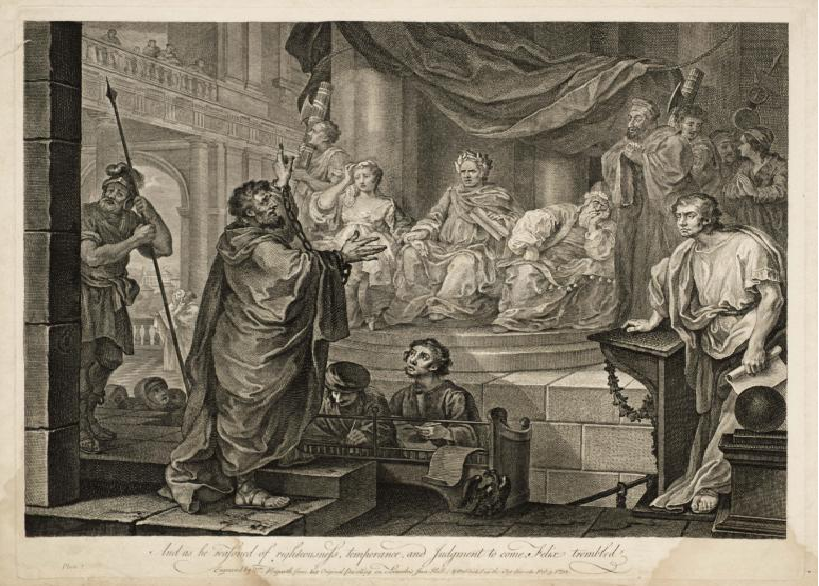
When he was called before Felix, the Roman procurator for the province of Judea, Paul gave an apologetic, that is, a defense, for the Christian faith for which the Jewish leaders had charged him of insurrection. Part of that defense, as recorded in Acts 24:14, is this statement: "This I [i. e., Paul] confess to you [Felix], that, according to the Way, which they [the Jewish leaders] call a sect, I worship the God of our fathers, believing everything laid down by the Law and written in the prophets." 

Paul's defense is not in any mystical revelation, whether by dreams or sensationalist evangelists, but strictly by the testimony that he found in the Bible, the Scriptures which we now know as the Old Testament (compare his later message to Timothy in II Timothy 3:14-15). 

If anyone could, Paul could have spoken of a mystical experience. In Acts 9:1-9, Luke the Physician gives us a record of Paul's, then still called Saul, persecution of the Christians, until he is literally thrown to the ground by Jesus, who challenges him, "Saul, Saul, why are you persecuting Me?" (verse 4). Yet, we are then told, verses 10-19, that this same Jesus then sent a disciple named Ananias to explain the faith to Saul/Paul. "The Lord said to him [i. e., Ananias], 'Go, for he is a chosen instrument of Mine, to carry My name before the Gentiles and kings and the children of Israel'" (verse 15). It is only after this meeting with Ananias that Paul is able to rise and be baptized, not after his vision. 

I think this record is one of the landmarks that distinguish between true Christian churches and the cults. Cults usually start with a leader who claims to have had a mystical experience, apart from Scripture, in which God supposedly taught him or her some new revelation. Nowhere does the New Testament describe conversions as occurring in this way. On the contrary, it is Paul himself who tells us that people are converted by the preaching of that same word of which he testified to Felix (Romans 10:14-17). 

We see this contrast most vividly in the Mormon religion, the founder of which, Joseph Smith, Jr., claimed revelatory visions, including new scriptures, to support his claims of a new religion, new though he claimed Christian terminology for it. The apologetic of Paul contrasts starkly with the claims of Smith, being one of the proofs that Mormonism has no legitimate claim to the name of Christ for its organization. 

Saturday, September 10, 2022

Ezekiel and the Preaching of the Gospel

In the second chapter of Ezekiel, we have God's commissioning of the prophet to Israel in exile in Babylon. God's plan is not like men's plans for today's evangelistic crusades: "Son of man, I send you to the people of Israel, to nations of rebels, who have rebelled against Me. They and their fathers have transgressed against Me to this very day. The descendants also are impudent and stubborn; I send you to them, and you shall say to them, 'Thus says the Lord God.' And whether they hear or refuse to hear (for they are a rebellious house), they shall know that a prophet has been among them" (Ezekiel 2:3-5).  Ezekiel's commission is not to someone that God has prepared to hear his message. He warns His messenger that his audience is rebellious. Yet that is his calling. On the other hand, God does promise Ezekiel one thing, that Israel will know that a prophet of God was among them. 

We see this with the best of today's street preachers. If they speak the word of God, they get a response. Whether it is hecklers (or worse) or converts, often both, men know that there has been a preacher among them. Does this make the hearts of such preachers hesitate to continue their work? Of course it does! And God addresses that fear. 

"You, son of man, be not afraid of them, nor be afraid of their words, though briers and thorns are with you and you sit on scorpions. Be not afraid of their words, nor be dismayed at their looks, for they are a rebellious house. And you shall speak My words to them, whether they hear or refuse to hear, for they are a rebellious house" (Ezekiel 2:6-7). Does God deny that Ezekiel's audience will be a rough crowd? Not at all. On the contrary, He explicitly warns the prophet of their negativity. Yet He does not, as a result, let him off the hook. Rather, He redoubles the command to preach the word, regardless of the response of his audience. 

"Son of man, I have made you a watchman for the house of Israel. Whenever you hear a word from My mouth, you shall give them warning from Me. If I say to the wicked, 'You shall surely die,' and you give him no warning, nor speak to warn the wicked from his wicked way, in order to save his life, that wicked person shall die for his iniquity, but his blood I will require at your hand" (Ezekiel 3:17-18). Notice that God doesn't make Ezekiel responsible for the response of his audience. On the contrary, Ezekiel's responsibility is to deliver the message. There will be no judgment of the messenger for the response to the message, but there will be severe judgment for failing to obey. Yet God's mercy is evident, even in the midst of His warnings. "But if you warn the wicked, and he does not turn from his wickedness or from his wicked way, he shall die for his iniquity, but you will have delivered your soul" (Ezekiel 3:19).


Saturday, May 28, 2022

The Importance of the Bad News to Prepare for the Good News

"Against such as these [i. e., unbelievers], the doctrine of justification may be defended, but it is vain to attempt their satisfaction in it. Whilst men have no sense in their own hearts and consciences of the spiritual disorder of their souls, of the secret continual actings of sin with deceit and violence, obstructing all that is good, promoting all that is evil, defiling all that is done by them; who are not engaged in a constant watchful conflict against the first motions of sin, to whom they are not the greatest burden and sorrow, causing them to cry out for deliverance from them; they will reject what is proposed about justification through the righteousness of Christ imputed to us. Neither the consideration of the holiness or terror of the Lord, nor the severity of the law, nor the promise of the Gospel, nor the secret disquietude of their consciences can prevail with them, who have such slight conceptions of the state and guilt of sin, to fly for refuge unto the only hope set before them, or really and distinctly to comport with the only way of salvation." -John Owen, "The Doctrine of Justification by Faith Through the Imputation of the Righteousness of Christ"

In his well-known prolix manner, Owen is advising us of an important consideration: until the unbeliever is conscious of his sin and its consequences, he has no interest in hearing about what Jesus has done for His people. This is a message that too many American evangelicals need to hear, because they suffer from the Gospel of Joel Osteen, that "Jesus loves everybody and wants us to be happy." It is too negative, we suppose, to tell about the sin in men and God's hatred of it. Yet, that is why the evangelical church has turned into a circus of self-esteem, rather than the body of Christ confronting the fallen world.

Wednesday, September 30, 2020

The Nature of Unbelief and the Necessity of the Omnipotent Power of the Holy Spirit

 As Moses approached the end of his life, he faced the prospect of leaving his people to the leadership of someone else, Joshua. Under such circumstances, it is natural for the outgoing leader to believe that his successor will be unable to match the leadership that he had given. It is just part of the fallen nature of men to think that no one else can do the job as well as we could. 

He gives a sermon to Israel, warning them of consequences if they failed to be faithful to God, or, in contrast, the blessings that would come from faithfulness. In that sermon, we find this paragraph (Deuteronomy 29:2-9): "You have seen all that the Lord did before your eyes in the land of Egypt, to Pharaoh and to all his servants and to all his land, the great trials that your eyes saw, the signs, and those great wonders. But, to this day, the Lord has not given you a heart to understand or eyes to see or ears to hear. I have led you forty years in the wilderness. Your clothes have not worn out on you, and your sandals have not worn off your feet. You have not eaten bread, and you have not drunk wine or strong drink, that you may know that I am the Lord your God. And when you came to this place, Sihon the king of Heshbon and Og the king of Bashan came against us to battle, but we defeated them. We took their land, and gave it for inheritance to the Reubenite, the Gadites, and the half-tribe of the Manassites. Therefore, keep the words of this covenant and do them, that you may prosper in all that you do."

Moses gives a partial recapitulation of the miraculous events that Israel had seen, ranging from God's judgments on the Egyptians, sustaining them in the wilderness, and, most recently, the defeat of Sihon and Og, powerful Canaanite kings. But, in the midst of that recapitulation, he says something odd: "But, to this day, the Lord has not given you a heart to understand or eyes to see or ears to hear" (verse 4). 

God had given Israel every possible evidence that He was real and that He had chosen Israel as His special covenant people. We read this passage and assume that any rational people would understand that Jehovah is God, with absolute power over the nations. Yet, we know that Israel quickly descended into idolatry. In Judges 17:6 (and repeated in 21:25), we are told, "In those days there was no king in Israel. Everyone did what was right in his own eyes."

How could there be such a disconnect between the evidence of their eyes and the unbelief in their hearts? 

Moses tells us how: "To this day the Lord has not given you heart to understand or eyes to see or ears to hear" (Deuteronomy 29:4). The same characteristic would later be addressed by the prophets (e. g., Isaiah 6:9 and Jeremiah 5:21), and even by Jesus Himself (Matthew 13:14-15). Contrary to our view of ourselves, fallen men do not have a natural ability to see the hand of God and give Him the thanks that he deserves. Rather, we love sin more than God, and, therefore, suppress our knowledge of His reality and goodness (Romans 1:18-22). 

This inclination has significant implications for apologetics and evangelism. When we explain the Gospel to unbelievers, their inclination to reject it is not because of a lack of evidence. They already know that the Gospel is true! Rather, their consciences tell them that recognizing the reality of the Gospel would require that they repudiate sin. And they love sin more than they love God! It is not within the power of the Christian to break that addiction in the unbeliever. It is only the Holy Spirit who can do that. Yes, belief requires the power of omnipotent God to triumph over unbelief.

Saturday, August 29, 2020

The Eternal Reality of Hell Contra Annihilationism

 I have noticed a curious trend among professing evangelicals to adopt the doctrine of annihilationism. That doctrine holds that the wicked who are sent to Hell are burned into nothingness. That is, contrary to the traditional belief, there is no such thing as the eternal, conscious consignment of the wicked to a state of punishment. They are annihilated, hence the name. 

Historically, this doctrine has been associated with the sects, primarily the Jehovah's Witnesses and the Seventh-Day Adventists. But in our recent times, it has become mainstream. Even the otherwise orthodox teacher, the late John Stott, adopted it. The spread is because of a growing embarrassment among many over the supposed harshness of the doctrine of an eternal, conscious punishment in Hell. I have been told that annihilationism serves to remove one stumblingblock that keeps unbelievers from accepting the Gospel. 

My response is this: Removing every distinctive doctrine of Christianity would make it more palatable to unbelievers. But, what then do you have left? You have unbelief. You would certainly have no Christianity, and no Jesus. Not in any meaningful sense. The unbeliever hasn't moved to a position of faith. Rather, faith has become unbelief. I cannot accept that as a means of evangelism. 

Furthermore, how does truth change in order to make it palatable to those who deny it? If someone believes that two plus two equals 749, do we stop saying that it really equals four in order to make math palatable to him? I would hope not! 

The proper question is not what the unbeliever thinks, but rather what does God say? 

In answer to that, we have God's word on the subject in Revelation 20:10: "[Then] the devil who had deceived them was thrown into the lake of fire and sulfur where the beast and the false prophet were, and they will be tormented day and night forever and ever." There is no equivocation here! The torment of the wicked is eternal. They never escape. God's justice never finds satisfaction in mere ashes. 

The problem with the annihilationist assumptions about unbelievers is the acceptance that the stated reason for unbelief is the true reason. The Bible tells us that unbelief is a cover, not an issue in itself. Every person knows that there is a God, and that we are answerable to Him. The issue is that, apart from the intervention of the Holy Spirit, every person hates that knowledge, because he loves his sin. Since those two things are incompatible, he must either give up his sin or give up his knowledge of God. His choice? He chooses to suppress his knowledge of God (Romans 1:18-19). Appeasing him by doing away with the doctrine of eternal Hell does nothing to address that deliberate choice. It is like taking an antibiotic in an effort to cure a virus. 


Wednesday, August 26, 2020

Reprobation and the Well-Meant Gospel Offer

 There is a doctrine which has been commonly-held, but not universally-held, among Reformed Christians for hundreds of years. It is usually called the Well-Meant Gospel Offer. According to the doctrine, God offers the Gospel to all men, with the well-meant intention that all receive it, not just the elect. For example, the Dutch Reformed theologian Wilhelmus a Brakel (1635-1711) wrote, "Faith consists in the translation of a soul from self into Christ. Faith consists in receiving Him who offers Himself and who calls and invites every sinner to Himself, the promise being added that those who will come will not be cast out. It finally consists in a reliance of the soul upon Him as the almighty, true, and faithful Savior." 

The doctrine is rejected by the minority, such as the Protestant Reformed Churches. I happen to agree with the minority in this case. 

The problem is the doctrine of reprobation. According to this biblical doctrine (see, for example, Romans 9:21), predestination has two sides, the election of some to salvation and the active rejection of others to damnation. This doctrine is professed by all Reformed believers, including those who hold to the well-meant gospel offer. However, those two doctrines are incompatible. How can we rationally claim that the same God has marked certain sinners for rejection unto everlasting damnation, while at the same time He is supposedly offering those same sinners the opportunity to be saved, with the desire that they be so? Would we suppose that God suffers from multiple-personality disorder? I hope not!

Now, I certainly grant that the Gospel portrays a crucified and resurrected Redeemer who is available to all who will come to Him in sincere faith. However, only the elect will respond to that portrayal, because they alone are redeemed by the Son and called by the Holy Spirit. Thus, there is no conflict between God's decree and His supposed desire. 

Now, a distinction is necessary between the offer as something God supposedly does, and the evangelistic efforts of Christians. When we share the Gospel with unbelievers, we sincerely desire every one of them to be converted. Is there a conflict there? Not at all, because it is not given to men to know or meddle in the secrets of God's decrees. He gives no man the ability to know who is or is not elect. Nor does it lie within the authority of mere men to decide to exclude any sinner, howsoever wicked he may be, from access to the redeeming blood of Jesus. That lies in the purview of God alone.

Saturday, July 11, 2020

The Promises of God Defined by His Mercy


Isaiah 55:11 is a verse which is well-known among orthodox Protestants: "So shall My word be that goes out from My mouth; it shall not return to Me empty, but it shall accomplish that which I purpose, and shall succeed in the thing for which I sent it." And there is good reason for it to be well-known, because it powerfully teaches that the Bible is infallible and trustworthy. Where we are weak, the Scriptures are invincible!

However, there is another aspect to that verse that many such Protestants pass over: the Scriptures don't achieve what we plan, but what God plans. This is where orthodoxy stands against the so-called Prosperity Gospel - which is really no gospel at all - which claims that spouting some claim from anyone on the basis of his personal desire and interpretation guarantees that God is obligated to give it.

Where this is especially important is in evangelism. Paul tells us that "faith comes from hearing, and hearing through the word of Christ" (Romans 10:17). That is, the preaching of the Word is God's usual means of converting unbelievers (see the Westminster Confession of Faith Chapter X). Some people claim that means that we are just to proclaim the Word, and then every person has an equal ability to respond, based on his choice to believe or not. Yet, we know that not all believe, even when presented with the Gospel through the Scriptures. Doesn't this "choice" doctrine then imply that the promise of Isaiah 55:11 is false? or, at least, unreliable? God forbid such a blasphemous assertion!

Rather, such people ignore the third and fourth lines of the verse: "It shall accomplish that which I purpose, and shall succeed in the thing for which I sent it." The promise of God never fails! The mere idea is impossible! Rather, it is effectual when He intends it, not us. As Paul also says: "So then it depends not on human will or exertion, but on God, who has mercy" (Romans 9:16; see also John 1:12-13).

More importantly, we have the assertion of Jesus: "All that the Father gives Me will come to Me, and whoever comes to Me I will never cast out. For I have come down from heaven, not to do My own will but the will of Him who sent Me. And this is the will of Him who sent Me, that I should lose nothing of all that He has given Me, but raise it up on the last day" (John 6:37-39). His promise here parallels the one in Isaiah, but is more explicit. To whom does the promise apply? To those who choose? No, it says no such thing. Rather, Jesus specifies that it applies to those whom the Father has given Him. Does He know who those people are? Of course. Can we know? Of course not. That is a part of the creator/creature distinction. Therefore, we are to proclaim the Word to whomever will hear us, knowing that those redeemed by Jesus will respond in faith, and the others will reject it (II Corinthians 2:16). What we must remember is that the promise of Isaiah is effectual, and that promise should stimulate us in our evangelism (Acts 18:10), knowing that God will apply that word to the conversion of all whom He intends (Acts 13:48).

Wednesday, April 15, 2020

Spiritual Corpses, the Gospel, and the Logical Necessity of Calvinism

Part of the basis of Calvinism is not just its biblical consistency, but also the practical necessity from the human perspective.

The Bible says, "You were dead in the trespasses and sins in which you once walked, following the course of this world, following the prince of the power of the air, the spirit that is now at work in the sons of disobedience" (Ephesians 2:1-2). Not sick, not swooning, but dead. Even Jesus makes the same point: "Truly, truly, I say to you, whoever hears my word and believes him who sent me has eternal life. He does not come into judgment, but has passed from death to life" (John 5:24). Not from sickness or weakness, but from death. And to emphasize the importance of that fact, He precedes it by His signature "truly, truly." It is a fact that He wanted us to take to heart.

The thing about death is the helplessness of the person. A dead person cannot revive himself, bury himself, or in any way act for his own welfare.

The prophet Ezekiel used the same analogy: "The hand of the Lord was upon me, and He brought me out in the Spirit of the Lord and set me down in the middle of the valley; it was full of bones. And He led me around among them, and behold, there were very many on the surface of the valley, and behold, they were very dry. And He said to me, 'Son of man, can these bones live?' And I answered, 'O Lord God, You know.' Then He said to me, 'Prophesy over these bones, and say to them, O dry bones, hear the word of the Lord. Thus says the Lord God to these bones: Behold, I will cause breath to enter you, and you shall live. And I will lay sinews upon you, and will cause flesh to come upon you, and cover you with skin, and put breath in you, and you shall live, and you shall know that I am the Lord.' So I prophesied as I was commanded. And as I prophesied, there was a sound, and behold, a rattling, and the bones came together, bone to its bone. And I looked, and behold, there were sinews on them, and flesh had come upon them, and skin had covered them. But there was no breath in them. Then He said to me, 'Prophesy to the breath; prophesy, son of man, and say to the breath, Thus says the Lord God: Come from the four winds, O breath, and breathe on these slain, that they may live.' So I prophesied as He commanded me, and the breath came into them, and they lived and stood on their feet, an exceedingly great army" (Ezekiel 37:1-10). The prophet receives a vision of a valley full of dead bones, and he is commanded to prophesy to the bones. As he does so, God joins the bones together, clothes them in flesh, and gives them life. This is an image of regeneration, in which the dead soul of the unbeliever is transformed into a living soul by the Holy Spirit (see Ezekiel 36:25-27).

What these passages indicate is the absolute helplessness of the unbeliever to regenerate himself or to believe unto salvation. It can happen only as the sovereign, monergistic work of God, Father, Son, and Holy Spirit. That is why Arminianism, in addition to being unbiblical, is impossible. It describes a man, a spiritual corpse, who can choose to believe in Jesus, only then to be brought to new life by the Holy Spirit. Try that at your next funeral: "C'mon, corpse, if you try hard enough you can become alive again!" That is the gospel of Arminianism.

Saturday, November 23, 2019

The Aroma of Life in the Preaching of God's Word

"Thanks be to God, who in Christ always leads us in triumphal procession, and through us spreads the fragrance of the knowledge of Him everywhere. For we are the aroma of Christ to God among those who are being saved and among those who are perishing, to one a fragrance from death to death, to the other a fragrance from life to life."
- II Corinthians 2:14-16

This is an odd passage, in which Paul compares the Gospel to smells. That is not the image that usually comes to mind for me, probably most of us, but stimulates him to great enthusiasm.

A triumphal procession was a Roman custom, in which a triumphant general, upon his return to Rome, would lead a parade consisting of him, his triumphant troops, and memorabilia of his conquest, such as idols, works of art, and, most importantly, prisoners. This is the image that Paul gives of his missionary work, with his "conquests" being those that had received the Gospel. But then he suddenly switches from that visual image to the olfactory image of the means of his conquest. The weapons of the Christian are never implements of the military, such as swords and spears, but are only spiritual: "The weapons of our warfare are not of the flesh but have divine power to destroy strongholds" (II Corinthians 10:4).

Our spiritual weapon consists in the verbal proclamation of the Gospel (Romans 10:14-15), because God has promised His power, not in man's weapons, but only in His word: "So shall My word be that goes out from My mouth; it shall not return to Me empty, but it shall accomplish that which I purpose, and shall succeed in the thing for which I sent it" (Isaiah 55:11).

Another thing we notice in Paul's remarks is that the response to God's word is not of just one kind. There is always a response, but it can be either of two kinds: "to one a fragrance from death to death, to the other a fragrance from life to life." To him who shall die in unbelief, the word of God is a smell of death, a warning that he rejects, falling further into unbelief. However, to him who will believe, the word of God bears life as the Holy Spirit applies it to his heart in regeneration. The true preaching of the Gospel will always have one effect or the other.

Wednesday, November 6, 2019

Contending for the Faith Against False Teachers

I have regular apologetic and evangelistic interactions with pseudo-Christian cults, mainly Mormons, Jehovah's Witnesses, and Oneness Pentecostals. In each case, someone always says something like this: "Why do you judge us? Why can't you just go practice your beliefs, and leave us to practice ours?" It's a form of guilt manipulation, trying to make it seem as if I am just a big meanie.

Yet, their repeated "why's" have an answer: the commandment of Scripture.

First, we have the warning against false teachers: "Do not listen to the words of the prophets who prophesy to you, filling you with vain hopes. They speak visions of their own minds, not from the mouth of the Lord. They say continually to those who despise the word of the Lord, ‘It shall be well with you’; and to everyone who stubbornly follows his own heart, they say, ‘No disaster shall come upon you'" (Jeremiah 23:16-17). The danger of false teachers is that they leave their followers under the wrath of God, while blithely imagining their safety. That is why false teachers are so popular. "While people are saying, 'There is peace and security,' then sudden destruction will come upon them as labor pains come upon a pregnant woman, and they will not escape" (I Thessalonians 5:3). And it isn't just the cults which are the danger here. The popular TV preachers, such as Joel Osteen, are equally dangerous. They promise peace and prosperity, but never mention sin or the wrath of God. So their followers march, grinning and satisfied, into the waiting maw of Hell. 

In the face of such deceivers, the Scriptures give me a stark warning: "If I say to the wicked, ‘You shall surely die,’ and you give him no warning, nor speak to warn the wicked from his wicked way, in order to save his life, that wicked person shall die for his iniquity, but his blood I will require at your hand" (Ezekiel 3:18). If I see the false teacher and those deceived by him, and I make no effort to warn them of God's judgment, then God holds me guilty of their death! 

That's why the New Testament also gives every true Christian this commandment: "I found it necessary to write appealing to you to contend for the faith that was once for all delivered to the saints" (Jude 1:3). I do not face accounting to cultists or other false teachers for challenging their errors; I face the wrath of God if I fail to do so.

Saturday, April 27, 2019

The Bible as Our Apologetic

I have a real problem with classical apologetics. That is for two main reasons. One is that they lead to a generic deity, not necessarily the God of the Bible. Arguing, for example, from a supposed "first cause" could as easily be fulfilled by Allah or Zeus. The other reason is that they concede, as a starting point, that God does not necessarily exist. That concession is supposedly to establish a common ground with the unbeliever. Common ground with unbelief? What does that Bible say about that? "What portion does a believer share with an unbeliever?" (II Corinthians 6:15). The starting point of the Christian apologist is with something that Scripture denies! And I have even seen R. C. Sproul, a man whom I otherwise respect, go though his apologetics system in order to determine, not that God is necessarily who the Bible says He is, but rather that God probably exists. "Probably exists" means "maybe doesn't exist." How is that a God-honoring apologetic? I don't believe that it is. And that is probably why you never see the Apostles use such an approach. 

What is the biblical apologetic? "I shall have an answer for him who taunts me, for I trust in Your word" (Psalm 119:42). Do you recall the answers that Jesus made to Satan during His temptation (Matthew 4, Mark 1, Luke 4)? Did He try to find common ground with Satan? Of course not! Rather, He rebuked the Devil with Scripture! 

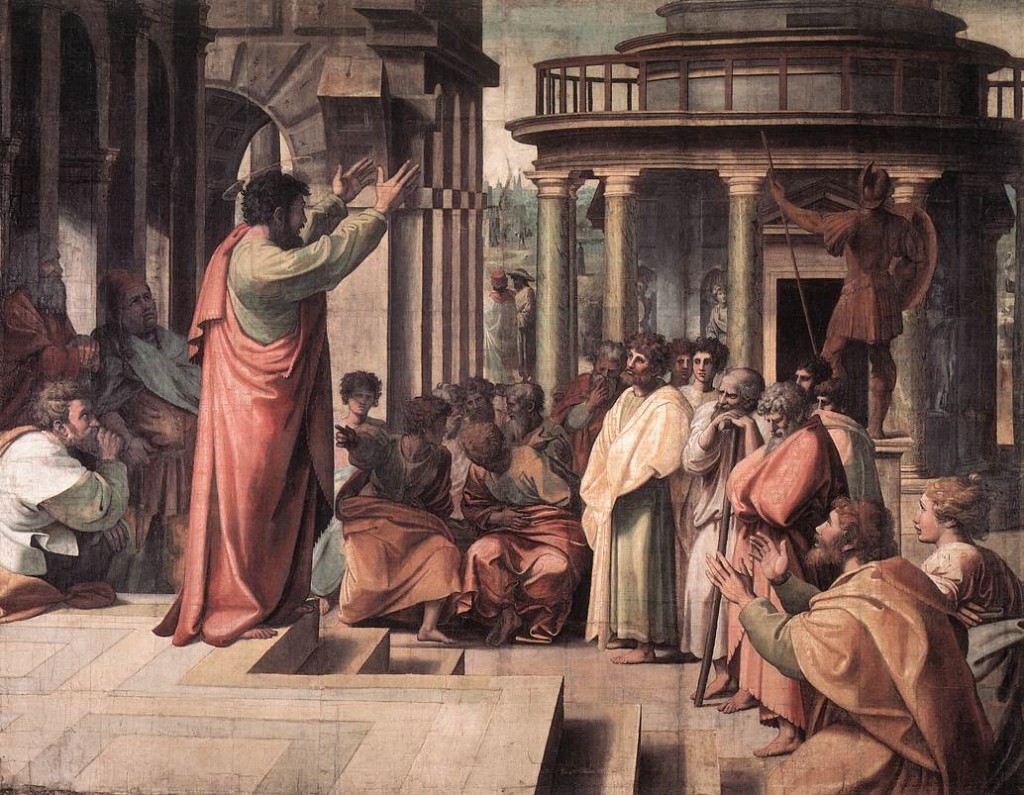
In apologetics, we must remember one thing: the unbeliever, regardless of his claims, does not really believe that God does not exist. On the contrary, he knows perfectly well that God exists, but is suppressing that knowledge (Romans 1:18-22). Thus, there is no need to establish a common ground. The believer and the unbeliever share a common belief in God. The difference is that one is living according to that belief, while the other is living contrary to it. That is why unbelief is inherently irrational and unstable. And exposing that irrationality was Paul's methodology when he preached at the Areopagus (Acts 17:16-34).

In His word, God has given us the most-powerful weapon possible for our spiritual conflict: "For the word of God is living and active, sharper than any two-edged sword, piercing to the division of soul and of spirit, of joints and of marrow, and discerning the thoughts and intentions of the heart" (Hebrews 4:12; see also Revelation 1:16 and 2:16). And He guarantees its success: "So shall My word be that goes out from My mouth; it shall not return to Me empty, but it shall accomplish that which I purpose, and shall succeed in the thing for which I sent it" (Isaiah 55:11).

Saturday, April 20, 2019

The Electing Love of God

I think that a big part in causing the impotence of the American church is the method of evangelism employed by the members of the church. "Jesus loves you." No warnings about sin or judgment, or God's command to repent. Just a syrupy "Jesus loves you." And that Gospel of Psychotherapy has resulted in Christians who look no different from that sinful world which they haven't repudiated.

That is far from the Gospel of the Bible. In no Scripture do we ever see Jesus or the Apostles saying to an unbeliever, "Jesus loves you."

"Yet He saved them for His name's sake,
That He might make known His mighty power"
- Psalm 106:8

That verse is about God's redemption of Israel from bondage in Egypt, a type of the liberation of the Christian from sin and its consequences. Notice that God tells us explicitly that He did so for Himself, not for the sake of Israel. He loved Himself, so He glorified His name. He loved Himself, so He displayed His power. While the Israelites were the beneficiaries of His actions, they were not the cause of those actions. It was God's sovereign choice of election that saved them.

This Gospel has power, because it isn't about God's loving me. It is about God's loving Himself, and, therefore, exerting all of His power, not for me, but His own glory.


Monday, April 1, 2019

Election and the Warrant to Believe

Anyone who looks at the topics that I explore in this blog would have to be deliberately obtuse not to notice that I am a Calvinist. That is, I hold to salvation only by the sovereign grace of God, with no admixture of human cooperation. A man chooses to believe in God, but only because the Holy Spirit gives him a new heart and draws him to believe.

In general, the objections to the doctrines of grace are not particularly clever. They are more comparable to the exalted notions of a person stoned on marijuana, that are actually moronic.

Among those clever responses is that it will cause a poor sinner to turn away from Jesus because he doesn't know whether he is elect. No one thinks that way. On the contrary, the Bible tells us that no one seeks God (Romans 3:11), unless the Father draws him (John 6:44). In other words, the Arminian uses an impossibility to make his case. By itself, that is sufficient proof that Arminianism is false.

Instead, for the affected sinner who doubts his election, the answer is not to repudiate the doctrine; that would be to call God's Word an embarrassment. Rather, the sinner is not to look at all to election; it is not for men to meddle in who is elect and who is not.

Rather, here is the biblical warrant for the sinner to know that he has the right to come to Jesus for salvation.

"Come, everyone who thirsts, come to the waters; and he who has no money, come, buy and eat! Come, buy wine and milk without money and without price. Why do you spend your money for that which is not bread, and your labor for that which does not satisfy? Listen diligently to Me, and eat what is good, and delight yourselves in rich food. Incline your ear, and come to Me; hear, that your soul may live; and I will make with you an everlasting covenant" (Isaiah 55:1-3). Is he a sinner, wearied by the load of sin, and exhausted by all his efforts at self-improval and self-forgiveness? Has he been left unsatisfied with his diet of human religions and philosophies, but without relief? Then he is the one that God has called to come to Jesus to receive true salvation by free grace alone, without works. 

"Thus declares the Lord of hosts: Return to me, says the Lord of hosts, and I will return to you, says the Lord of hosts" (Zechariah 1:3). The very God of Heaven binds Himself to be receptive to the repentant sinner who comes to Him for succor. He is the father to the prodigal sinner: "While he was still a long way off, his father saw him and felt compassion, and ran and embraced him and kissed him. And the son said to him, ‘Father, I have sinned against heaven and before you. I am no longer worthy to be called your son.’ But the father said to his servants, ‘Bring quickly the best robe, and put it on him, and put a ring on his hand, and shoes on his feet. And bring the fattened calf and kill it, and let us eat and celebrate. For this my son was dead, and is alive again; he was lost, and is found.’ And they began to celebrate" (Luke 15:20-24).

"Come to Me, all who labor and are heavy laden, and I will give you rest" (Matthew 11:28). Again, has he grown weary of the burden of sin and religious rules, or fighting to keep from acknowledging God? Then Jesus Himself invites him to come, and promises to relieve him of that burden. 

Thus, it is not on the basis of election that any man can know whether he is welcome to approach the throne of God. Rather, it is the invitations of the Father and of Jesus to come to Him which give every man a warrant to know that he is welcome - a golden ticket, if you will. Run to Him quickly! "For while we were still weak, at the right time Christ died for the ungodly. For one will scarcely die for a righteous person—though perhaps for a good person one would dare even to die— but God shows His love for us in that while we were still sinners, Christ died for us" (Romans 5:6-8).


Saturday, March 9, 2019

Reprobation, the Rejection of the Gospel, and the Sovereignty of God

Many professing evangelicals, perhaps even most (I think so), claim that the decision for belief or unbelief is made by the hearer of the Gospel, through his own independent, sovereign decision-making process. Every person is equally able to believe the word preached, or to reject it. Where that idea originates, other than the obvious spiritual explanation (Genesis 3:15), has always eluded me. Doesn't calling oneself an "evangelical" include the belief in sola scriptura?

The reason I ask that is because such a major spiritual doctrine is asserted without biblical support. Not that its supporters don't claim biblical support, of course. But show me a case which does not boil down to either a supposed requirement that God must respect "free will" (another extra-biblical doctrine), or to some
supposed moral requirement that a choice necessarily implies the natural and equal ability to choose either option. Either way, the reasons aren't biblical, but based on a humanistic presupposition. God is not bound by humanistic presuppositions. Just sayin'!

However, beyond the extra-biblical reasoning on which this choice doctrine is based, there is plenty of biblical evidence to the contrary. And here I refer not even to something that an Apostle wrote, but to words from the mouth of Jesus Himself. Surely no evangelical can question the final authority thereof!

In His final week of life, when He was performing ministry in Jerusalem, the earthly capital of the historical biblical faith, Jesus faced some Jews who were unsure of His messianic office. Most Jews still held to the erroneous view that the Messiah would be a political figure who would drive out the Romans and reestablish the Davidic kingdom.We are told, "Though He had done so many signs before them, they still did not believe in Him" (John 12:37). If the passage stopped here, the average American Christian would claim that He had simply failed persuade the free will of these people to believe.

However the passage continues, giving the inerrant, divinely-inspired explanation, which is very different. "[This ooccurred] so that the word spoken by the Prophet Isaiah might be fulfilled: 'Lord, who has believed what he heard from us, and to whom has the arm of the Lord been revealed?' Therefore, they could not believe. For again Isaiah said, 'He has blinded their eyes and hardened their hearts, lest they should see with their eyes and understand with their hearts, and turn, and I would heal them'" (John 12:38-40).

Thus, the Holy Spirit tells us, through the Apostle John, what our eyes and minds could not otherwise have understood: the unbelief of these people was because God had blinded their eyes and hardened their hearts. He had made them unable to believe!

There is no respect for free will here. There is no sovereignty in the choices of men. Rather, there is a choice given to men, in which their natures were made able only to answer with unbelief.

Saturday, February 23, 2019

Hope and the Great Commission

At the end of His earthly ministry, Jesus gave this assignment to His church: "All authority in heaven and on earth has been given to Me. Go, therefore, and make disciples of all nations, baptizing them in the name of the Father and of the Son and of the Holy Spirit, teaching them to observe all that I have commanded you. And behold, I am with you always, to the end of the age" (Matthew 28:18-20). This is not a project He gives us to do on our own power. In fact, He was at such pains to say otherwise that He placed both at the beginning and the end of the command that our work is built on His authority and presence.

But notice, too, what the command is. Dispensationalists claim that Christians proclaim the Gospel as a witness to a world that is headed for Hell. To expect success in that program would be contrary to the whole hermeneutic of dispensationalism. They quote the Great Commission from, for example, Acts 1:8: "You will be My witnesses." Then they add that the witness will be unsuccessful.

But that is certainly contrary to what Jesus says in the passage from Matthew. The Gospel isn't proclaimed merely as a witness against unchecked unbelief. Rather, He gives it with the expectation that, not merely individuals, but entire nations will become His disciples, and will, thus, need to be trained in His Word. We see the repetition of this promise in Revelation: "The kingdom of the world has become the kingdom of our Lord and of His Christ, and He shall reign forever and ever" (Revelation 11:15). The Great Commission in Matthew is the command to go, while Revelation records the result of that commission.

Though he wasn't addressing eschatology when he wrote it, this comment from Presbyterian Theologian James Henley Thornwell makes the point very well: "If the Church could be aroused to a deeper sense of the glory that awaits her, she would enter with a warmer spirit into the struggles that are before her. Hope would inspire ardor. She would, even now, rise from the dust, and, like an eagle, plume her pinions for loftier flights than she has yet taken. What she wants [lacks], and what every individual Christian wants, is faith - faith in her sublime vocation, in her divine resources, in the presence and efficacy of the Spirit that dwells in her - faith in the truth, faith in Jesus, and faith in God. With such a faith, there would be no need to speculate about her future. That would speedily reveal itself" ("Theology as a Life in Individuals and in the Church").

The unbiblical pessimism of dispensationalism has the opposite effect, to turn the eyes from Jesus to the inadequacy of her native resources, deflating her hope, and undermining her faith.

Wednesday, August 22, 2018

God's Holy Discrimination and Bearing False Witness in Evangelism

"The sacrifice of the wicked is an abomination to the Lord,
     but the prayer of the upright is acceptable to Him.
 
The way of the wicked is an abomination to the Lord,
     but He loves Him who pursues righteousness... 

The thoughts of the wicked are an abomination to the Lord,
     but gracious words are pure... 

The Lord is far from the wicked,    
     but He hears the prayer of the righteous."
- Proverbs 15:8-9, 26, 29 

We often hear well-meaning Christians wax passionate about God's love for everybody. They like to add qualifiers, such as "equally" or "unconditionally." In evangelism, they tell even the rankest unbeliever, "Jesus loves you." However, not only are those proclamations unbiblical, but they are destructive.

Think about this: If you convince an unbeliever that God loves him as he is, then why should he repent of his unbelief? Why should he repent of his wicked lifestyle? After all, you have just devoted your passion to telling him that God loves him unconditionally! Why change? 

Yet, the Scriptures, to the contrary, tell us that even the religious performances of the unbeliever are an abomination (see also I Corinthians 11:27). The prayers of the unbeliever are unacceptable. His lifestyle is abominable. His thoughts are a wicked abomination. God is not contemplating love for the unbeliever, but is, rather, far from him (Isaiah 59:2). Those are descriptions of an enemy, not someone whom God loves.

Evangelism can never be the telling of an unbeliever that God loves him. That would be bearing false witness (Exodus 20:16, Deuteronomy 5:20). Rather, he must be warned that God is his enemy, and that His wrath is upon him: "Because of your hard and impenitent heart you are storing up wrath for yourself on the day of wrath when God’s righteous judgment will be revealed" (Romans 2:5). He must be warned to flee to Jesus for refuge from that wrath, not encouraged to a false security in a supposed love of God for everyone. 


Saturday, May 5, 2018

The Bible, Truth, and the Myth of Autonomy

In dealing with agnostics or atheists, I, of course, use the Bible as my source of truth. That is what distinguishes me as a Christian. To act otherwise is to be a non-Christian. However, the other person will often respond with a challenge to the effect of, "Prove that the Bible is authoritative." Yet, the atheist, even as he is demanding rational evidence, doesn't recognize the irrational presupposition of his question.

As a Christian, I accept what the Bible says about itself: "All Scripture is breathed out by God and profitable for teaching, for reproof, for correction, and for training in righteousness, that the man of God may be complete, equipped for every good work" (II Timothy 3:16-17). Since the Bible is the word of God, then it carries His truth and His authority. But that isn't the information that the atheist is demanding. He wants evidence that convinces him, from his worldview of autonomy. Therefore, if I answer his question according to his standards, then I am necessarily abandoning my worldview and adopting his. Therefore, as a Christian, I cannot argue that way. Nor do you ever see Jesus or any of the apostles arguing in such a way. They always presuppose the reality of God and the truth and authority of the Bible.

Rather, from the Scriptures, I can demonstrate that the godless worldview of human autonomy is exactly what Satan offered to Adam and Eve in the garden: "The serpent said to the woman, 'You will not surely die. For God knows that when you eat of it your eyes will be opened, and you will be like God, knowing good and evil" (Genesis 3:4-5, "knowing" meaning "deciding" here). Accepting that premise, Adam rejected the world created for him by God, a world without disease, suffering, or death, and chose instead the world we have. That was an irrational choice.

The atheist repeats, and wants me to repeat, that same irrational choice. That is the implication of his demand that I satisfy his supposed autonomous human will. And, since I reject the choice that Adam made, I cannot answer him the way the atheist demands.

First, we must understand that the atheist's demand is a dishonest one. He knows the truth of God, because it is revealed to him in the creation (Psalm 19:1-4) and in his conscience (Romans 2:15). So, why isn't he a Christian? Because part of that knowledge is that the existence of God and our accountability to Him necessarily mean that men are not autonomous, in spite of Satan's promise in Genesis. Therefore, to maintain the illusion of autonomy, the atheist suppresses his knowledge of God (Romans 1:18-22). That means that, when I explain to him the truth from God's word, I am not addressing someone who does not understand. He simply hates the truth, and is trying to avoid it.

Second, this is not a matter of human persuasion. God promises to prosper His word: "So shall my word be that goes out from My mouth; it shall not return to Me empty, but it shall accomplish that which I purpose, and shall succeed in the thing for which I sent it" (Isaiah 55:11). If this atheist is one bought by the blood of Jesus, then God will make His word effectual in breaking through his suppression of knowledge, thus bringing him to saving faith. The battle is the Lord's! As Luke says of a particular evangelistic occasion: "When the Gentiles heard this, they began rejoicing and glorifying the word of the Lord, and as many as were appointed to eternal life believed" (Acts 13:48).

Monday, October 16, 2017

Christ, Our Conquering King!

Question 45 of the Westminster Larger Catechism asks, How does Christ execute the office of a king? And answers it this way: "Christ executes the office of a king, in calling out of the world a people to himself, and giving them officers, laws, and censures, by which he visibly governs them; in bestowing saving grace upon his elect, rewarding their obedience, and correcting them for their sins, preserving and supporting them under all their temptations and sufferings, restraining and overcoming all their enemies, and powerfully ordering all things for his own glory, and their good; and also in taking vengeance on the rest, who know not God, and obey not the gospel."

There's a lot there, and I won't even try to address it all.

In Psalm 110:1, the Father gave a promise to the Son as part of the intra-Trinitarian covenant in prehistory: "Sit at My right hand, until I make Your enemies Your footstool" (applied to the Son in Hebrews 1:13). The Father had determined to glorify the Son by giving Him visible rule over the creation. History has been the record of the fulfillment of that promise, as the rule of Christ is established over the kingdoms of the world (compare Daniel 2:44-45, Revelation 11:15).

The theme of the royal destiny of the Son is especially described in the second Psalm:
"'As for Me, I have set my King
     on Zion, My holy hill.' 

I will tell of the decree:
     The Lord said to Me, 'You are My Son;
today I have begotten You.       
     Ask of Me, and I will make the nations Your heritage,
and the ends of the earth Your possession.
     You shall break them with a rod of iron
and dash them in pieces like a potter’s vessel.' 

     Now therefore, O kings, be wise;
be warned, O rulers of the earth.
     Serve the Lord with fear,
and rejoice with trembling.
     Kiss the Son,
lest He be angry, and you perish in the way,
     for His wrath is quickly kindled.
 
Blessed are all who take refuge in Him."
- Psalm 2:6-12 

What we don't see here is a description of the means of that conquest. There are militaristic expressions, but no mention of armies or weapons. In fact, Scripture denies a spiritual role for weapons of war: "The weapons of our warfare are not of the flesh but have divine power to destroy strongholds" (II Corinthians 10:4). So, no tanks or nuclear bombs, or even swords or arrows. What then?

Some of Jesus's last words during His earthly ministry are found in the Great Commission: "Jesus came and said to them, 'All authority in heaven and on earth has been given to Me. Go therefore and make disciples of all nations, baptizing them in the name of the Father and of the Son and of the Holy Spirit, teaching them to observe all that I have commanded you. And behold, I am with you always, to the end of the age'" (Matthew 28:18-20). Here, Jesus claims "all authority," that is, the very delegation of royal prerogative we find in Psalm 2. As King, what assignment does He then give His captains, the Apostles (and we after them)? To disciple the nations, part of which is to teach them to obey His Law.

Therefore, the answer to the assignment in Psalm 2 is no military conquest. Nor is it some waving of a divine hand from heaven. This is in spite of the obvious fact that either one would be within the power on omnipotent deity. Rather, the submission of all things to the crown rights of Jesus is through His people, as we proclaim the Gospel and train the nations to live as Christians. Evangelism and missions will conquer the world, because our Savior is already king!

Saturday, October 14, 2017

Can There Be a Doctrine of "Evangelical Universalism"?

Paul, Preaching the Gospel on Mars Hill
This is something that I have been running into over the last two years or so. "Evangelical Universalism" is a doctrine held by people who claim to honor Scripture, but believe that all humans, without exception, will eventually be saved.

I admit that I am mystified by any such assertion. More particularly, I see explicit statements in Scripture that preclude such a possibility. I am including statements of judgment against unbelievers. However, the Evangelical Universalists (hereafter, EU's) aren't moved by those statements. Therefore, I am going to take a different tack.

To my mind, the bluntest statement precluding any form of universalism, evangelical or otherwise, is one sentence from Paul (Romans 14:23): "Whatever does not proceed from faith is sin." That one sentence leaves no room to suppose that there can be an unconscious means to eternal life. Rather, all such unconscious motivation is itself sin. Rather, what pleases God is only that which arises from faith, which must mean a knowledge and acceptance of His nature, His word, and the rule of life that He has given us in the Bible.

The writer of the Epistle to the Hebrews (either Paul or a close associate of his) stated it even more forcefully: "Without faith it is impossible to please Him, for whoever would draw near to God must believe that He exists and that He rewards those who seek Him." He repeats the requirement of faith, but then adds content to that faith. That is, faith, per se, faith in faith, is not meritorious, but rather faith in the proper object!

The EU movement claims a scriptural basis, in their effort to retain their "evangelical" bonafides. Yet, just by these two verses, I think they are completely excluded from making any such claim legitimately.