Showing posts with label hardness of heart. Show all posts

Wednesday, June 5, 2019

God Kicks Away Every Competing Support

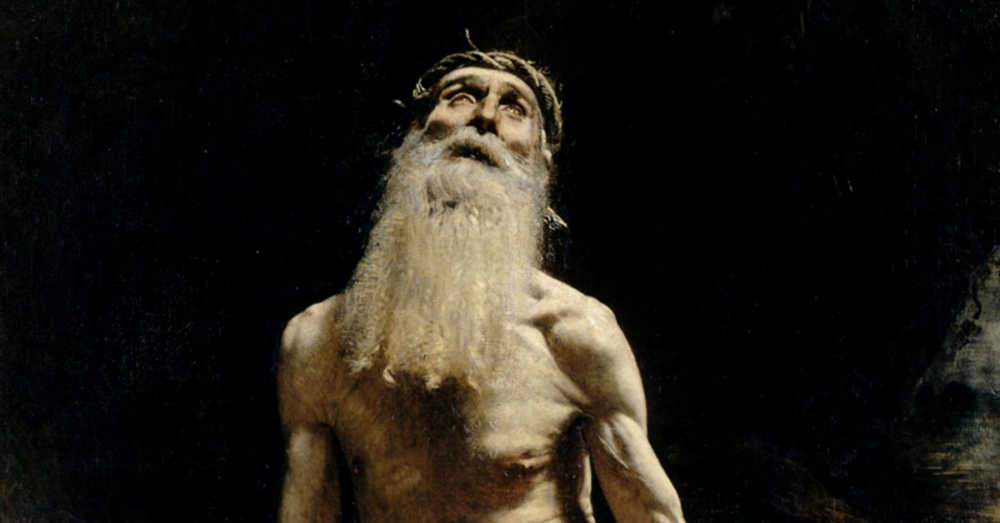
In the book known by his name, the Patriarch Job tells a very sad tale.

Starting with verse 6, he first tells us how God has opposed Himself to Job:
"Now then that God has put me in the wrong
     and closed His net about me.
Behold, I cry out, ‘Violence!’ but I am not answered;
     I call for help, but there is no justice.
He has walled up my way, so that I cannot pass,
     and He has set darkness upon my paths.
He has stripped from me my glory
     and taken the crown from my head.
He breaks me down on every side, and I am gone,
     and my hope has He pulled up like a tree.
He has kindled His wrath against me
     and counts me as His adversary.
His troops come on together;
     they have cast up their siege ramp against me 

and encamp around my tent."
- Job 19:6-12 

Then, in the next section, God isolates Job from even his family: 
"He has put my brothers far from me,
     and those who knew me are wholly estranged from me.
My relatives have failed me,
     my close friends have forgotten me.
The guests in my house and my maidservants count me as a stranger;
     I have become a foreigner in their eyes.
I call to my servant, but He gives me no answer;
     I must plead with Him with my mouth for mercy.
My breath is strange to my wife,
     and I am a stench to the children of my own mother.
Even young children despise me;
     when I rise they talk against me.
All my intimate friends abhor me, 

     and those whom I loved have turned against me."
- Job 19:13-19 

This is part of the process of effectual calling, the events God uses to break down our unbelief, and to eliminate whatever competing source of support we maintain. In Job's case, he depended on his relatives for sustaining strength in life, so God separated those relationships. The same with his friends. This is an application of the First Commandment: "You shall have no other gods before Me" (Exodus 20:3). Someone might object that Job never worshiped other deities. Nor do most modern Americans pray to other gods. Yet, to God, another god doesn't just mean Thor or Ganesha. Rather, to Him another god is any support we have in life for not depending on Him as our only God, whether that deity is self-confidence or supportive family. In His eyes, they are competitors, and He removes them from the lives of His elect, until we throw ourselves on Him alone: "I am the LORD; that is My name; My glory I give to no other, nor My praise to carved idols" (Isaiah 42:8).

And in the case of Job, this work was successful: 
"I know that my Redeemer lives,
     and at the last he will stand upon the earth.
And after my skin has been thus destroyed,
     yet in my flesh I shall see God,
whom I shall see for myself,
     and my eyes shall behold, and not another. 

My heart faints within me!"
-Job 19:25-27 

Now that Job has been deprived of his crutches, he is able to see the glory of God. And, where he had been experiencing such unmitigated sorrow, now he experiences hope, the sure hope that he has been given new life, and will thus have his place in the resurrection, where he will see Jesus his Redeemer, with the same eyes with which he now sees only the sky. 

This is the question that every unbeliever faces: when you experience things like this, and feel the tug on your heart to turn from your unbelief (the meaning of repentance), how long will you resist? How long will you watch what you value in your life get pulled away? Surrender now, before the price goes up.

Jesus experienced this separation, but in the opposite order. He had perfect fellowship with His divine Father for unknown ages before He was born: "Father, I desire that they also, whom you have given Me, may be with Me where I am, to see My glory that you have given Me because you loved Me before the foundation of the world." (John 17:24). But He also experienced the loss of His companions (Matthew 26:31, Mark 14:50). And, just before He died, He experienced separation, for the fist time ever, even from His own Father: "My God, My God, why have You forsaken Me?" (Matthew 27:46; compare Isaiah 59:2). He experienced that separation on behalf of everyone who believes in Him. He was separated so that we can be reunited with His God, who is our God.



Saturday, March 9, 2019

Reprobation, the Rejection of the Gospel, and the Sovereignty of God

Many professing evangelicals, perhaps even most (I think so), claim that the decision for belief or unbelief is made by the hearer of the Gospel, through his own independent, sovereign decision-making process. Every person is equally able to believe the word preached, or to reject it. Where that idea originates, other than the obvious spiritual explanation (Genesis 3:15), has always eluded me. Doesn't calling oneself an "evangelical" include the belief in sola scriptura?

The reason I ask that is because such a major spiritual doctrine is asserted without biblical support. Not that its supporters don't claim biblical support, of course. But show me a case which does not boil down to either a supposed requirement that God must respect "free will" (another extra-biblical doctrine), or to some
supposed moral requirement that a choice necessarily implies the natural and equal ability to choose either option. Either way, the reasons aren't biblical, but based on a humanistic presupposition. God is not bound by humanistic presuppositions. Just sayin'!

However, beyond the extra-biblical reasoning on which this choice doctrine is based, there is plenty of biblical evidence to the contrary. And here I refer not even to something that an Apostle wrote, but to words from the mouth of Jesus Himself. Surely no evangelical can question the final authority thereof!

In His final week of life, when He was performing ministry in Jerusalem, the earthly capital of the historical biblical faith, Jesus faced some Jews who were unsure of His messianic office. Most Jews still held to the erroneous view that the Messiah would be a political figure who would drive out the Romans and reestablish the Davidic kingdom.We are told, "Though He had done so many signs before them, they still did not believe in Him" (John 12:37). If the passage stopped here, the average American Christian would claim that He had simply failed persuade the free will of these people to believe.

However the passage continues, giving the inerrant, divinely-inspired explanation, which is very different. "[This ooccurred] so that the word spoken by the Prophet Isaiah might be fulfilled: 'Lord, who has believed what he heard from us, and to whom has the arm of the Lord been revealed?' Therefore, they could not believe. For again Isaiah said, 'He has blinded their eyes and hardened their hearts, lest they should see with their eyes and understand with their hearts, and turn, and I would heal them'" (John 12:38-40).

Thus, the Holy Spirit tells us, through the Apostle John, what our eyes and minds could not otherwise have understood: the unbelief of these people was because God had blinded their eyes and hardened their hearts. He had made them unable to believe!

There is no respect for free will here. There is no sovereignty in the choices of men. Rather, there is a choice given to men, in which their natures were made able only to answer with unbelief.

Wednesday, July 25, 2018

Only the Regenerate Have Free Will

Arminians have enshrined their doctrine of free will, making it the concept that trumps all others. Yet, it has no biblical basis. Ask them! They will hem and haw about why it should be true, but they will offer zero biblical justification.

I suggest, instead, that Scripture is against their doctrine of free will (not that I deny the reality of free will, as I have said before). Rather, I deny their use of it, to mean that men have a will that can choose to seek and obey God. "Free" merely means without coercion. No one, including God, coerces the unregenerate to hate God and to rebel against Him. That is their nature, and they freely, even gladly, choose to act according to it, just as a bird freely wills to fly or a fish to breathe water. But the Arminian would never claim that a man is free to will either of those, since both are contrary to the nature of a man. However, the Arminian blanks out the logical parallel between that and a choice by the unregenerate to act regenerate.

Paul says, "God may perhaps grant them repentance leading to a knowledge of the truth, and they may come to their senses and escape from the snare of the devil, after being captured by him to do his will" (II Timothy 2:25-26). Whose will does the sinner freely follow? Not his own. Rather, he wills the will of Satan. The coercion isn't by God, or predestination, but rather by Satan. Yet the Arminian never criticizes Satan for ignoring man's free will! That misdirection is very telling!

What breaks that bondage? It is only by the prevenient act of the Holy Spirit in regenerating the elect sinner. It is by this intervention that Jesus, in His kingly office, overthrows the power of Satan and brings that man to repentance and faith: "When a strong man, fully armed, guards his own palace, his goods are safe; but when one stronger than he attacks him and overcomes him, He takes away his armor in which he trusted and divides his spoil" (Luke 11:21-22).

Turning to Paul again, he summarizes this in Romans 9:16: "So then it depends not on human will or exertion, but on God, who has mercy."

Saturday, February 11, 2017

The Closure of the Unbelieving Mind

When I look at the world around me, everything I see is proof, not only of God's existence, but also of providence, His wise organization and care of both myself and the rest of mankind and the world. Yet, unbelievers demand proof of God's existence. It is comparable to a man in a lifeboat in the middle of the sea demanding proof of the existence of water. This is a clash of perspective, of course, but, more importantly a clash of natures. The believing mind has been taken into a relationship with God, and thus recognizes all things as centered upon Him. The unbelieving mind, however, desires to rule for itself, and thus must retain a blind spot over God in its world.

When the Christian apologist seeks to perform his ministry on the basis of commonality between himself and an unbeliever, then he runs into this unbridgeable gap and is necessarily stymied.

In his description of the Man of Sin (probably equivalent to John's Antichrist), Paul tells us (II Thessalonians 2:9-10), "The coming of the lawless one is by the activity of Satan with all power and false signs and wonders, and with all wicked deception for those who are perishing, because they refused to love the truth and so be saved." The Apostle tells us that "those who are perishing," i. e., unbelievers, will be vulnerable to the deceptions of Satan through this man, not because of ignorance, but because of a willful refusal to accept the truth. In other words, they close their minds to biblical truth, and are thus left susceptible to spiritual deception.

The same apostle makes a similar comment in I Corinthians 1:18: "The word of the cross is folly to those who are perishing, but to us who are being saved it is the power of God." And again in I Corinthians 2:14: "The natural person does not accept the things of the Spirit of God, for they are folly to him, and he is not able to understand them because they are spiritually discerned." In the unbelieving mind, there is an a priori judgment that the spiritual truths regarding God, sin, and redemption, are foolishness, not by a process of reasoning, but rather because of an inherent condition of his heart. His spiritual nature blocks his rational openness to those truths.

The Lord Jesus explained to His disciples the principle that results in the conditions described by Paul (John 14:16-17): "I will ask the Father, and He will give you another Helper, to be with you forever, even the Spirit of truth, whom the world cannot receive, because it neither sees Him nor knows Him." It is the Holy Spirit who creates the gulf between the believer and the unbeliever. A believer is not smarter or morally superior to the unbeliever. Rather, the presence of the Spirit in Him renders him able to understand. And His absence leaves the unbeliever clinging desperately to his refusal to understand. Thus, where Paul says that truth is "spiritually discerned," he isn't talking about a man's spirit, for both classes of men have spirits. he is talking about the action of the Spirit, the Third Person of the Trinity.

Wednesday, January 11, 2017

People Don't Believe Because They Are Pre-Determined Vessels of Wrath

In John, chapter 12, Jesus is preaching to a group of Pharisees (verse 19). In contrast to a group of God-fearing Gentiles (verse 20), however, these Pharisees rejected Him. His response is described in verses 37-41: " Though He had done so many signs before them, they still did not believe in Him, so that the word spoken by the prophet Isaiah might be fulfilled: 'Lord, who has believed what he heard from us, and to whom has the arm of the Lord been revealed?' Therefore they could not believe. For again Isaiah said, 'He has blinded their eyes and hardened their hearts, lest they see with their eyes, and understand with their heart, and turn, and I would heal them.' Isaiah said these things because he saw His glory and spoke of Him" (John 12:37-41).  

How does the passage describe the Pharisees? As unbelieving. However, why were they unbelieving? Because they "could not." Could not? Not would not? That is a stunning choice of words. And John continues that description: "He has blinded their eyes and hardened their hearts." No doubt there was a judicial element to this, i. e., that the Pharisees had refused to believe, so God punishes them with even greater hardness. However, John explicitly states the God's decree is the source of their rigid unbelief.

This is a shocking thought to our egalitarian American ears. It's not fair! Not fair? Really? The Apostle Paul described that exact question from a hypothetical opponent (Romans 9:19): "You will say to me then, 'Why does He still find fault? For who can resist His will?" But what answer does he give? Does Paul back down to such a progressive view? Does he attempt to defend God's fairness? Not at all. Rather, he answers, not with a justification of God's sovereignty, but rather with a refusal to concede that it needs any such justification (Romans 9:20-22): "But who are you, O man, to answer back to God? Will what is molded say to its molder, Why have you made me like this?' Has the potter no right over the clay, to make out of the same lump one vessel for honorable use and another for dishonorable use? What if God, desiring to show His wrath and to make known his power, has endured with much patience vessels of wrath prepared for destruction?" That is, as our Creator, does God not have an absolute right to use us for His own glory and purpose? Of course! Specifically, He has such a right to use some as a demonstration of His holy wrath. There is no concession to egalitarianism here. It is, rather, an unequivocal assertion of the absolute and irresistible sovereignty of God. 

Daniel 4:35: "All the inhabitants of the earth are accounted as nothing, and He does according to His will among the host of heaven and among the inhabitants of the earth; and none can stay His hand or say to Him, 'What have You done?'"

Monday, November 14, 2016

The Will of Men Versus the Will of God

"How great are Your works, O Lord!
     Your thoughts are very deep!
The stupid man cannot know;
     the fool cannot understand this:
that though the wicked sprout like grass
     and all evildoers flourish,
they are doomed to destruction forever;
     but You, O Lord, are on high forever.
For behold, Your enemies, O Lord,
     for behold, Your enemies shall perish;
     

all evildoers shall be scattered."
- Psalm 92: 5-9 

An attitude has become dominant that holds that the free will of men trumps the will of God. According to this attitude, we are supposed to believe that God issues a command, but man can refuse, leaving God to shake His head and say, "Oh, pooh! Well, if that's the way you feel, there's nothing I can do about it." 

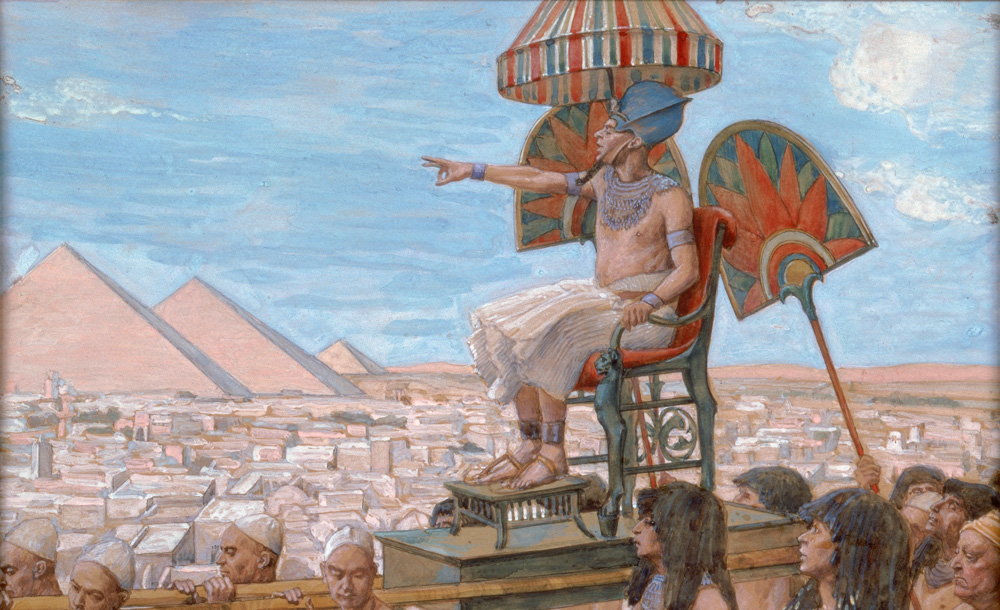
Anyone who can imagine a god like that has no understanding of the God of the Bible, as we can see in the verses above. God is God, and we are not. That means that, if it serves His purpose, He can change the will in the believer (Philippians 2:13), or glorify Himself by smashing the rebellion of the unbeliever. We see this in His actions regarding the Pharaoh of Egypt, leading up to the Exodus. He says to Moses (Exodus 14:4), "I will harden Pharaoh’s heart, and he will pursue them, and I will get glory over Pharaoh and all his host, and the Egyptians shall know that I am the LORD." Notice, too, Exodus 4:21, 7:13, 14:17, Ezekiel 28:22, and Romans 9:17-18.

The god of the popular conception is a wuss, eager to forgive, but otherwise passive, at the beck and call of mere men. In contrast, the God of the Bible is all-powerful and expects men to be at His beck and call!

Monday, September 26, 2016

What About Those Who Have Never Heard of Jesus?

This question gets asked by all sorts of people: atheists, universalists (both the liberal and the supposedly-evangelical varieties), annihilationists. Anyone who opposes the justice of God eventually pops out this question as a final trump card. It really isn't so much.

Consider the Psalms.

In Psalm 19:1-4, David wrote:
"The heavens declare the glory of God,
     and the sky above proclaims His handiwork.
Day to day pours out speech,
     and night to night reveals knowledge.
There is no speech, nor are there words,
     whose voice is not heard.
Their voice goes out through all the earth,
 

     and their words to the end of the world."

In a poetic fashion, David here describes God's revelation of Himself in the creation. The inanimate creation doesn't use literal speech, obviously. However, the beauty, order, and balance of the universe tells us that it came from the hands of a God who provides both beauty and sustenance for His creatures. This is also described in Psalm 104:10-16, where various creatures are described looking to the hand of God to provide for their daily needs. Poetry, true, but does it not eloquently reveal that dumb animals have more spiritual sense that do most people?

An anonymous Psalmist made a similar point in Psalm 98:2: "The Lord has made known His salvation; He has revealed His righteousness in the sight of the nations." This time it isn't physical sustenance that is the topic, but rather the holy nature of God and the salvation that He has provided His people. That is, if dumb animals can depend on God for their daily bread, then men should know to look to Him, not just for bread, but for our spiritual welfare, too.

It is this latter revelation that the Apostle Paul describes in Romans 1:18: "The wrath of God is revealed from heaven against all ungodliness and unrighteousness of men, who by their unrighteousness suppress the truth." But Paul looks at the other side of the equation. Where the Psalmists had described God's providential benefits to animals and to His people, Paul focuses on God's revelation of His wrath against unbelief. That is to say that there is no such thing as someone who has is ignorant of God, righteousness, and salvation or wrath. Rather, every man, woman, and child in the world has that information in every sensation coming to him from the world around him. However, the unbeliever hates that knowledge and suppresses it, puts it out of his consciousness, thinking thereby to avoid accountability for it.

So, in response to the question asked in the headline above, I ask a different question: should ignoring the truth exempt a person from accountability for that truth?


Saturday, September 10, 2016

Why Do Some People Refuse to Believe in God?

In Psalm 52:3, ancient King David wrote, "You love evil more than good, and lying more than speaking what is right." Of whom is he speaking? The "mighty man" and "worker of deceit." The former word describes the atheist's view of himself: "I don't need a religious crutch." The latter is God's view of that same man. 

Why does the atheist not believe in God? Or, maybe I should say, why does he say that he doesn't believe in God? He will often give plenty of logical-sounding reasons, such as evolution, or evil in the world, etc. But those are a cover. God, who always knows our heart of hearts, diagnoses unbelief, not as a logical problem, but rather as a love of sin. To admit that the God of the Bible is real, and is the kind of God He says He is, is to admit that, first, the atheist is not God, and second, that he must choose between his secret knowledge of God and his love for rebellion against that God.

David describes it here in this Psalm: "You love evil." Notice that God doesn't offer to stage a debate with the atheist. At no time does He plead for a chance to prove Himself. After all, He is God, and you, I, the atheist on the street, or any conglomeration among humans, can demand no accounting of God's acting in His deity.

David's language here is a poetic version of Paul's words in Romans 1:18: "The wrath of God is revealed from heaven against all ungodliness and unrighteousness of men, who by their unrighteousness suppress the truth." It would be funny if it weren't so horrific! All the time that the atheist is making his excuses for not believing in God, God is saying that He doesn't believe in atheists!

However, thanks to God, David also gives the solution. He continues in Psalm 52:8: "I trust in the mercy of God forever and ever." While the atheist is confident in the false presuppositions that form his illogic, the godly man depends on God's mercy, because that man of God is fully conscious of his wicked heart, of the judgment of God, and of his need for forgiveness in Jesus Christ.

Friday, June 14, 2013

Tongues: Not a Blessing, but a Curse

Deuteronomy literally means "second law," because it contains the second enumeration of the Ten Commandments. It is primarily a book of the covenant, the terms of the treaty of relationship between Jehovah and His people. It includes blessings for covenant faithfulness, as well as curses for treason against the covenant. The verse I wish to highlight is in the latter portion.

Deuteronomy 28:49, "The Lord will bring a nation against you from far away, from the end of the earth, swooping down like the eagle, a nation whose language you do not understand."

There are a number of verses throughout the Old Testament that parallel this one. For example, Isaiah 28:11, "For by people of strange lips and with a foreign tongue, the Lord will speak to this people." Paul also quotes this verse to the same end in I Corinthians 14:21, and then adds in verse 22, "Thus, tongues are a sign, not for believers, but for unbelievers." That is, to unbelieving Jews. Yet, where do we see the promotion of "tongues"? In church worship services! The purpose of these verses, if I may paraphrase, is for God to tell Israel, "If you refuse to listen to Me, then I will continue to speak to you, but through languages that you do not understand." This was a judgment. It is as the parent who continues his warnings to an errant child, even as that child puts his fingers in his ears to keep from hearing. I refer to these verses as the defense of my belief that glossolalia, commonly referred to as "speaking in tongues," is not a blessing, and is not intended for today's Church. Hearing someone else speak in an unknown tongue is a final step in God's bringing discipline against a wayward believer or church. When a professing Christian hears other people speaking in tongues, that means that either he or his entire community has provoked the wrath of God and may soon anticipate some form of judgment. This is not a good thing!

Sunday, October 14, 2012

"Jesus's Wife," the Desperation of Unbelief

Images like the one above were all over the news for a while, with commentary about a fragment which supposedly proved that Jesus was married. The fragment was in Coptic, not even a Palestinian language. However, it had been discovered by a professor from the Harvard Divinity School, so that covered all of its inadequacies. That professor dated the fragment to the second half of the second century, that is, more than a century after the time of Christ's life on earth. Yet, it was given the credence that such scholars do not give the gospels written by the eyewitnesses of His life.

 I have found the hype around this story to be quite entertaining. Secular scholars and heterodox religious scholars trip over themselves to find evidence that supposedly upends the Bible. Yet, they are invariably embarrassed in their efforts.

 For one thing, one very large thing, it is well-known that the Bible speaks of the bride of Christ. For example, in II Corinthians 11:2, the Apostle Paul describes the Church at Corinth as a bride betrothed to Christ. And in Revelation 19:6-9, the Apostle John describes a wedding feast for Christ and His bride, the glorified Church. In other words, true Christianity holds that Jesus does have a wife, but this is a metaphor for His relationship to the Church. Thus, even if the fragment is legitimate, it doesn't necessarily teach anything that orthodox Christians don't already hold.

 However, once the fragment became public, evidence of its counterfeit derivation started to leak out. The Vatican and Baptist authorities quickly dismissed it, as would be expected. However, secular authorities also started to question it, and even the liberal Huffington Post. I believe all of this proves what Paul also says, in Romans 1:21-22, "For although they knew God, they did not honor him as God or give thanks to him, but they became futile in their thinking, and their foolish hearts were darkened. Claiming to be wise, they became fools..."

Thursday, November 24, 2011

McCheyne on II Corinthians 5:14: The Heart of the Hypocrite


"For the love of Christ controls us, because we have concluded this: that one has died for all, therefore all have died."

Robert Murray McCheyne was a minister of the Church of Scotland in the early XIXth Century.

"We have so choked up the avenues of self-examination - there are so many turnings and windings before we can arrive at the true motives of our actions - that our dread and hatred of God, which first moved man to sin, and which are still the grand impelling forces whereby Satan goads on the children of disobedience - these are wholly concealed from our view, and you cannot persuade a natural man that they are really there."

Sunday, June 5, 2011

Matthew 13:10-15, Truth and the Natural Man


"Then the disciples came and said to Him, 'Why do You speak to them in parables?' And He answered them, 'To you it has been given to know the secrets of the kingdom of heaven, but to them it has not been given. For to the one who has, more will be given, and he will have an abundance, but from the one who has not, even what he has will be taken away. This is why I speak to them in parables, because seeing they do not see, and hearing they do not hear, nor do they understand. Indeed, in their case the prophecy of Isaiah is fulfilled that says: “You will indeed hear but never understand, and you will indeed see but never perceive. For this people’s heart has grown dull, and with their ears they can barely hear, and their eyes they have closed, lest they should see with their eyes and hear with their ears and understand with their heart and turn, and I would heal them."'"

I am currently reading "The Battle Belongs to the Lord" by Westminster Seminary Professor and Reformed Apologist K. Scott Oliphint. Recently, a short phrase stood out in a remarkable way: "Unbelief is designed to miss the obvious." First, I just kind of nodded in agreement. Then I felt a more vehement, "Y'know, that is so true!" Then various scriptures on the issue started to come to mind.

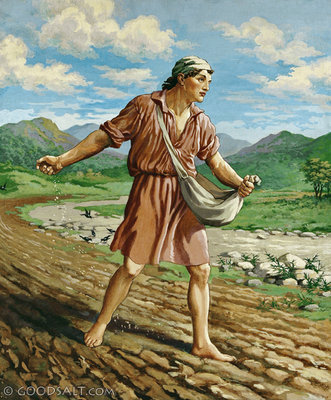
First was the one quoted above, which comes immediately after Jesus gave the Parable of the Sower in Matthew 13. The Disciples asked Jesus why he told truths to the people in obscure stories. Notice His response above (verse 11): "to them it has not been given." It wasn't coincidental that the truth was obscured to them, but intentional! But why? Verse 15 tells us, "For this people’s heart has grown dull, and with their ears they can barely hear, and their eyes they have closed, lest they should see with their eyes and hear with their ears and understand with their heart and turn, and I would heal them." The truth was withheld from them as punishment for the very hardness of their hearts which first hated the truth! This is commonly referred to as "judicial hardening."

Then I thought of the Apostle Paul, in Romans 1:18, the second half of the verse, which reads, "men who by their unrighteousness suppress the truth." Unbelievers don't merely ignore or avoid the truth, they actively suppress it. They seek to bury it, so that their wickedness can reign unchallenged!

Then the Prophet Zechariah (Zechariah 7:11-12): "They refused to pay attention and turned a stubborn shoulder and stopped their ears that they might not hear. They made their hearts diamond-hard lest they should hear the law and the words that the Lord of hosts had sent by His Spirit through the former prophets. Therefore great anger came from the Lord of hosts." Then the next verse (Zechariah 7:13) gives His reaction: "'As I called, and they would not hear, so they called, and I would not hear,' says the Lord of hosts." The hardness of the hearts of the reprobate brings the judgment of the hardness of God's heart toward them. That is a frightening truth!

Friday, May 27, 2011

Ezekiel 33 and Simple Repentance

In the Westminster Confession of Faith, Chapter XV, Section 2, we find this profound statement regarding repentance: "By it a sinner, out of the sight and sense, not only of the danger, but also of the filthiness and odiousness of his sins, as contrary to the holy nature and righteous law of God, and upon the apprehension of His mercy in Christ to such as are penitent, so grieves for, and hates his sins, as to turn from them all unto God, purposing and endeavoring to walk with Him in all the ways of His commandments." We find almost identical wording in Question 76 of the Larger Catechism.

I love these expressions, and I am grateful to God for the wise men who summarized the teaching of the Bible on this subject in such succinct but profound words.

However, there is also a precious simplicity and child-like joy in the expressions of Scripture on the same matter. Consider the words of the Prophet Ezekiel (Ezekiel 33:11), "Say to them, As I live, declares the Lord God, I have no pleasure in the death of the wicked, but that the wicked turn from his way and live; turn back, turn back from your evil ways, for why will you die, O house of Israel?" Here we see the turning to which the Westminster Standards refer, but notice the appeal in them. Jehovah doesn't simply lay out the nature of repentance, but strenuously urges the elect to avail themselves of it.

And verse 19, "When the wicked turns from his wickedness and does what is just and right, he shall live by this." This is more of the dictionary-style definition we see in the Standards. As if God lays out for us precisely what repentance is, to ease our finding of it in our hearts.

And here, both in the words of the Standards and the words of God Himself, the nature of what He requires is laid out as simply as possible. Therefore, He adds this promise (verses 14-16), "though I say to the wicked, ‘You shall surely die,’ yet if he turns from his sin and does what is just and right, if the wicked restores the pledge, gives back what he has taken by robbery, and walks in the statutes of life, not doing injustice, he shall surely live; he shall not die. None of the sins that he has committed shall be remembered against him. He has done what is just and right; he shall surely live." Is the very promise of Jehovah Himself enough?

Thursday, October 29, 2009

The End of Mercy: What if God Stopped Listening?


"Thus says the Lord of Hosts, 'Render true judgments, show kindness and mercy to one another, do not oppress the widow, the fatherless, the sojourner, or the poor, and let none of you devise evil against another in your heart.' But they refused to pay attention and turned a stubborn shoulder and stopped their ears that they might not hear. They made their hearts diamond-hard lest they should hear the law and the words that the Lord of hosts had sent by His Spirit through the former prophets. Therefore great anger came from the Lord of hosts. 'As I called, and they would not hear, so they called, and I would not hear,' says the Lord of hosts."
- Zechariah 7:9-13

And in Isaiah 59:2-3, "Your iniquities have made a separation between you and your God, and your sins have hidden his face from you so that he does not hear. For your hands are defiled with blood and your fingers with iniquity; your lips have spoken lies; your tongue mutters wickedness."

These verses should be frightening to the modern reader. Are we not moving further and further down a social path that assumes the irrelevancy of God and His word? The Scriptures tell us that God reaches a point of no return in dealing with a stubborn folk: as they refuse to hear Him, He starts to refuse to hear them! I think that we already see this in modern Europe. The continent that saw the Reformers in their glory, now has abandoned their churches, some even reviving the pagan practices of their distant ancestors. Do we not see God abandoning them to the consequences of their spiritual deafness? Europeans are aborting themselves into extinction as their societies are, more and more, turned over to Muslim immigrants. The Europeans abort their children and turn their homelands over to foreigners who know not their languages, their cultures, or their faiths.

However, I do not surrender hope in the grace and mercy of God. Didn't Elijah forget the Covenant, when he said to the Lord (I Kings 19:10), "For the people of Israel have forsaken Your covenant, thrown down Your altars, and killed Your prophets with the sword, and I, even I only, am left, and they seek my life, to take it away"? However, while Israel may indeed break the Covenant, God cannot, and rebukes Elijah (verse 18), "Yet I will leave seven thousand in Israel, all the knees that have not bowed to Baal, and every mouth that has not kissed him." Indeed, spiritual circumstances may appear hopeless to our limited mortal eyes, but faith should always remind us that God retains to Himself a faithful remnant. And may He grant that we will be found among that number!

Friday, September 4, 2009

The Sodomites of Jerusalem


"Run to and fro through the streets of Jerusalem, look and take note! Search her squares to see if you can find a man, one who does justice and seeks truth, that I may pardon her. Though they say, 'As the Lord lives,' yet they swear falsely. O Lord, do not Your eyes look for truth? You have struck them down, but they have felt no anguish; You have consumed them, but they refused to take correction. They have made their faces harder than rock; they have refused to repent."
- Jeremiah 5:1-3

It's pretty easy to see that this prophecy would have won Jeremiah no friends in the seat of Judah. His hearers could not have failed to hear the remembrance of the story of Sodom and Gomorrah. In Genesis 18, after God has told Abraham of His plans to destroy Sodom and Gomorrah for their wickedness, Abraham is moved to intercede for them. Verses 23-26: "Then Abraham drew near and said, 'Will You indeed sweep away the righteous with the wicked? Suppose there are fifty righteous within the city. Will You then sweep away the place and not spare it for the fifty righteous who are in it? Far be it from You to do such a thing, to put the righteous to death with the wicked, so that the righteous fare as the wicked! Far be that from You! Shall not the Judge of all the earth do what is just?' And the Lord said, 'If I find at Sodom fifty righteous in the city, I will spare the whole place for their sake." The discussion winds down finally to ten righteous, for lack of whom Sodom is doomed. Apparently, Jerusalem also fails to count ten righteous, because it was indeed destroyed by the Babylonians in 586 BC.

In fact, in the New Testament, the hardness of Jewish hearts is decried as worse than those of Sodom. Jesus, speaking in Matthew 11:23-24, warns his hearers, "And ... will you be exalted to heaven? You will be brought down to Hades. For if the mighty works done in you had been done in Sodom, it would have remained until this day. But I tell you that it will be more tolerable on the day of judgment for the land of Sodom than for you."

The word "sodomite" is thrown around as if its targets were the worst sinners imaginable, yet Scripture warns of a hardness of heart that God hates more than any sin attributed to the people of Sodom. I hate that easy judgmentalism! But I know that it is easier to point the finger than it is to examine one's own spiritual condition. May we heed the warning of Jesus Himself.

Thursday, July 30, 2009

The Hardening of the Jewish Leaders


"Jesus cried out again with a loud voice and yielded up His spirit. And behold, the curtain of the temple was torn in two, from top to bottom. And the earth shook, and the rocks were split. The tombs also were opened. And many bodies of the saints who had fallen asleep were raised, and coming out of the tombs after His resurrection they went into the holy city and appeared to many. When the centurion and those who were with him, keeping watch over Jesus, saw the earthquake and what took place, they were filled with awe, and said, 'Truly this was the Son of God!'"
- Matthew 27:50-54

Upon the death of Jesus on the cross, several extraordinary occurrences took place that testified that this was the death of no mere man: the veil of the temple was torn open, an earthquake shook the ground, the rock of the mountains of the area split, and some of the local dead rose from their graves (the last, though described here, apparently actually coincided with Christ's resurrection on Sunday following). Such a fundamental reaction by the creation would surely be expected to attract the attention of many to the significance of the event. In fact, here in our passage, even pagan Romans were moved to acknowledge the Godhead of the man they themselves had crucified.

Who was unmoved? The very leaders of the Jews who had harried Jesus to His death. In fact, we read of them, plotting against His followers, in Acts 4. In verses 5-6, we see them gathered: "On the next day [after Peter and John had testified before the Jewish crowds] their rulers and elders and scribes gathered together in Jerusalem, with Annas the high priest and Caiaphas and John and Alexander, and all who were of the high-priestly family." What was their decision? Verses 16-17: "'What shall we do with these men? For that a notable sign has been performed through them is evident to all the inhabitants of Jerusalem, and we cannot deny it. But in order that it may spread no further among the people, let us warn them to speak no more to anyone in this name.'" So, even while acknowledging the significance of the events that occurred before them, they do not repent, but rather turn to subterfuge to suppress the very truth that they recognize.

16th-Century Scottish Presbyterian commentator Robert Rollock says of this passage, "It is a wonderful thing to see, that they who had judgment and understanding, and who had read all the prophecies of the Messiah to come, got no sense, yet a silly multitude ["silly" in the historical sense of simple and uneducated, referring to the five thousand of verse 4] gets some sight and sense." In other words, those with the most biblical knowledge, who should have been the first to acknowledge the messianic role of Jesus, instead hardened their hearts against Him, while those who had been most in spiritual ignorance embraced Him. Jesus anticipated this, when He said (Luke 10:21), "I thank you, Father, Lord of heaven and earth, that You have hidden these things from the wise and understanding and revealed them to little children; yes, Father, for such was Your gracious will." And Paul looked back to these events, when he said (I Corinthians 1:27), "God chose what is foolish in the world to shame the wise..."

Rollock responds with this admonition, which should still be heard in our day, even after more than four-hundred years: "Whosoever thou are who opposest thee to the brightness of the Gospel, thou crucifiest the Lord of Glory; and as it shall be laid to the charge of the high priests and Pharisees, and of Pilate and Herod, in that great day, that they crucified Jesus Christ, so it shall be laid to thy charge, and thou shalt be as guilty of his blood as they. Woe to that soul which will resist that Word and the Holy Spirit! Woe shall be to the great men in this land who against conscience conspire against Christ, religion, and their native country [i.e,. by opposing the spread of the Gospel], for wrath and vengeance remaineth for them, if they leave not off this unhappy course."