Showing posts with label soli deo gloria. Show all posts

Saturday, March 26, 2022

The Five Solas: God's Perpetual War Against Rome


In the Reformation, the Reformers developed a systematic formulation that delineated the distinction of the biblical Christian faith from the corrupted version held by Rome. These doctrines have come to be known as the Five Solas, from their Latin forms.

Sola gratia, by grace alone. The Bible says that justification is by the condescending mercy of God. It cannot be due to any will or worthiness in the sinner because there is none. 

Sola fide, by faith alone. For those whom God has mercifully chosen to save, that justification is applied to them by means of faith. That is, faith is not meritorious, but is rather an instrument for applying justification. 

Solus Christus, on the basis of Christ alone. Everything necessary to justify God's people was achieved by the atoning work of Jesus, i. e., His perfect life, atoning death, and victorious resurrection. No additional intent, ritual, or action of men is necessary or possible, because Jesus did all that was necessary. 

Soli deo gloria, for the glory of God alone. God's purpose in justifying His people was not for our sakes, though we are certainly the beneficiaries. He did it to display the glories of His mercy and to glorify His Son with a church. 

Sola scriptura, in Scripture alone. Everything necessary to know about our sin, God's judgment, the redemption purchased by Christ, and the life of sanctification is and can be found in the Bible alone, using the ordinary means of reason, illuminated by the Holy Spirit. No human tradition added to Scripture or in its place can ever bind the conscience of the man of God. 

Even after the five centuries which have passed since the start of the Reformation, these truths have not changed. Nor has Rome ever repented of her errors here opposed. When professed Protestants practice fellowship and cooperation with the Catholic Church, it is not because she has given up her errors, but because the Protestants have accepted them.

Saturday, February 8, 2020

The Knowledge of Election: Avoiding the Effort to Be Wise Above What is Written

When dealing with even professed Christians on Facebook, I get a continuous stream of questions about hypothetical issues. Today someone asked, "What if Noah were really the Archangel Gabriel?" I am not making that up. 

This is especially true when discussing the doctrines of grace with people not from a Reformed background. They are constantly demanding an answer -  i. e., one that will satisfy them - as to why God chooses one person over another. Other than according to mercy alone (Romans 9:16) for His glory alone (Ephesians 1:6), Scripture does not give us an answer. Rather, we are given this rebuke: "Who are you, O man, to answer back to God? Will what is molded say to its molder, 'Why have you made me like this?' Has the potter no right over the clay, to make out of the same lump one vessel for honorable use and another for dishonorable use?" (Romans 9:20-21). The answer is simple, Paul tells us. God makes His decision on the basis that he chooses because He is God and we are not, so stop prying into things above your station!

And Paul is answering on the basis of a longtime Biblical tradition, going back to Moses: "The secret things belong to the LORD our God, but the things that are revealed belong to us and to our children forever, that we may do all the words of this law" (Deuteronomy 29:29; see also Paul's remarks in I Corinthians 4:6 and Colossians 2:8). Moses tells us that God has given us everything we need to know for salvation and sanctification in the Bible. Beyond that revelation, whatever imaginations arise from our inordinate curiosity are to be cast aside. "The whole counsel of God, concerning all things necessary for his own glory, man’s salvation, faith, and life, is either expressly set down in Scripture, or by good and necessary consequence may be deduced from Scripture: unto which nothing at any time is to be added, whether by new revelations of the Spirit, or traditions of men" (Westminster Confession of Faith, I:6).

"Men of inquisitive and speculative minds are apt to forget that there are limits set to human investigation and research, beyond which it is impossible to pass with safety or satisfaction. To intrude with confidence unto the unrevealed secrets of God's wisdom and purpose manifests an arrogance and haughtiness of intellect which cannot fail to incur the marked disapprobation of heaven, and should always meet the prompt reprobation of the pious.Whatsoever is useful to be known, God has kindly and graciously revealed, and it argues no less ingratitude than presumption to attempt to be 'wise above what is written'" (I Corinthians 4:6, James Henley Thornwell, "Election and Reprobation").

Saturday, June 29, 2019

Does Supralapsarianism make God the Author of Sin?

"If our unrighteousness serves to show the righteousness of God, what shall we say? That God is unrighteous to inflict wrath on us? (I speak in a human way.) By no means! For then how could God judge the world? But if through my lie God’s truth abounds to his glory, why am I still being condemned as a sinner?" (Romans 3:5-7).

A common accusation against supralapsarianism, especially from Arminians, but also even from professing Calvinists, is that it makes God the author of sin. They point out, correctly, that supralapsarianism teaches that God predestined the Fall. Therefore, they say, He forced Adam and Eve to sin. However, that is a false equivalency. Predestination does not imply force, as Calvinists have always said: "Nor is violence offered to the will of the creatures, nor is the liberty or contingency of second causes taken away, but rather established" (Westminster Confession of Faith III:1). Adam and Eve chose to sin. The fact that their choice was consistent with God's decree doesn't change the fact that it represented what they wanted to do. 

Furthermore, the choice of Adam and Eve was to commit an evil act. They knew the commandment of God regarding the tree. They understood that they were disobeying that commandment. And they knew that the desire underlying that choice was to achieve Satan's promise of autonomy from the lordship of God (Genesis 3:5). In every way, what they sought was wickedness. And that was why their choice properly brought them under the judgment of God.

In His decree, however, God had a very different purpose, as Paul describes in the verses above. God's decree of the Fall was certainly not to grant autonomy to Adam and Eve. That would, indeed, have been to seek a sinful end. Rather, the decree was intended to bring about His own glory, the highest good that is possible! That is, God's decree that Adam would fall into wickedness was to the highest good that any end could be.And, therefore, the cavil of the Arminian is refuted.

Saturday, January 20, 2018

The God-Centeredness of God

I love the first question in the Westminster Shorter Catechism: "What is the chief end of man? Man's chief end is to love God and enjoy Him forever." That one question gives a well-rounded purpose to a man's life and puts God at the center. I think that even Arminians will agree with the answer, though their theology is inconsistent with such a profession. The average professing Christian on the street, if asked, "What is the chief end of God?" would answer, "God's chief end is to love me and to cause me to enjoy my life of autonomy."

What is the biblical answer to that question? "God's chief end is to glorify and enjoy Himself forever."

In the Scriptures, while God certainly expresses His love for His people, we always seem to gloss over His expressions of love for Himself. We read of God's calling out of Israel to be His special covenant people (such as Deuteronomy 7:7). However, when was the last time that you heard anyone read this verse: "I acted for the sake of my name, that it should not be profaned in the sight of the nations among whom they lived, in whose sight I made myself known to them in bringing them out of the land of Egypt" (Ezekiel 20:9)? Or this one: "I had concern for my holy name, which the house of Israel had profaned among the nations to which they came" (Ezekiel 36:21)? While Israel was certainly the beneficiary of God's covenantal love, that wasn't the reason that He gave it. It wasn't for their sakes, but for the sake of His own glory.

That's why God says, through His prophets, twice, "I will not give my glory to another" (Isaiah 42:8, 48:11). And that is whether we are talking about another deity, another man, or even to the state. He reserves it to Himself. Both atheists and Arminians attack that concept as an ego trip. However, the accusation shows an irrational hatred of the sovereignty of God. Isn't an ego trip thinking of one's self as greater than is actually the case? Yet, how can God think of Himself - or we think of Him - more highly than He deserves? The accusation is self-refuting!

Monday, November 14, 2016

The Will of Men Versus the Will of God

"How great are Your works, O Lord!
     Your thoughts are very deep!
The stupid man cannot know;
     the fool cannot understand this:
that though the wicked sprout like grass
     and all evildoers flourish,
they are doomed to destruction forever;
     but You, O Lord, are on high forever.
For behold, Your enemies, O Lord,
     for behold, Your enemies shall perish;
     

all evildoers shall be scattered."
- Psalm 92: 5-9 

An attitude has become dominant that holds that the free will of men trumps the will of God. According to this attitude, we are supposed to believe that God issues a command, but man can refuse, leaving God to shake His head and say, "Oh, pooh! Well, if that's the way you feel, there's nothing I can do about it." 

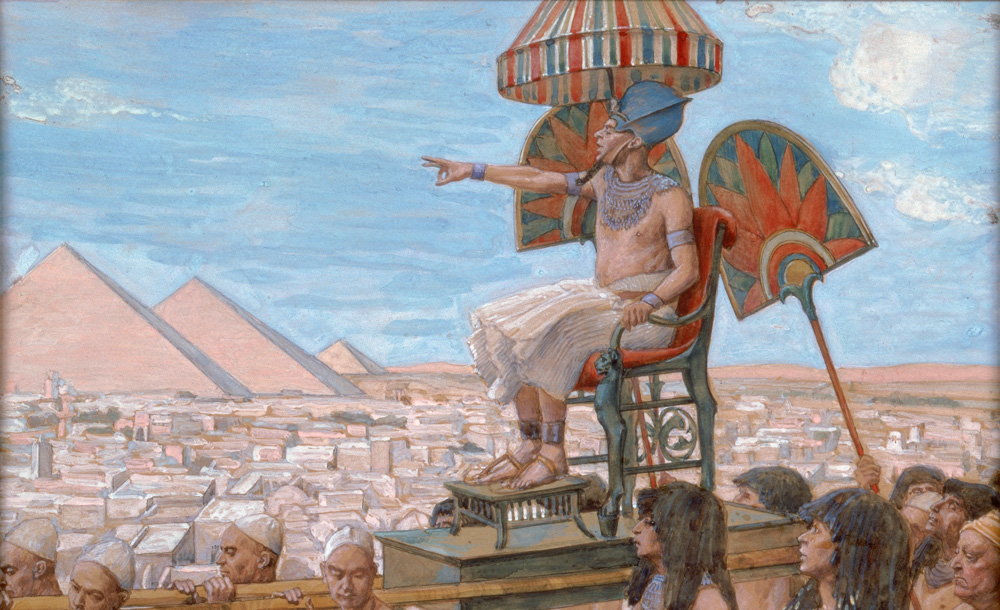
Anyone who can imagine a god like that has no understanding of the God of the Bible, as we can see in the verses above. God is God, and we are not. That means that, if it serves His purpose, He can change the will in the believer (Philippians 2:13), or glorify Himself by smashing the rebellion of the unbeliever. We see this in His actions regarding the Pharaoh of Egypt, leading up to the Exodus. He says to Moses (Exodus 14:4), "I will harden Pharaoh’s heart, and he will pursue them, and I will get glory over Pharaoh and all his host, and the Egyptians shall know that I am the LORD." Notice, too, Exodus 4:21, 7:13, 14:17, Ezekiel 28:22, and Romans 9:17-18.

The god of the popular conception is a wuss, eager to forgive, but otherwise passive, at the beck and call of mere men. In contrast, the God of the Bible is all-powerful and expects men to be at His beck and call!

Wednesday, September 23, 2015

In Honor of the Pope's Visit to the United States

Back in 1987, then-Pope John-Paul II visited the United States, including a stop in neighboring South Carolina. At the time, a co-worker, a professing atheist, said to me, "You must be excited." "Why?" I asked her. "Because of the Pope's visit," she replied. "But I'm not Catholic," I explained, to her blank face. She didn't understand the distinction between Catholics and Protestants. I am saddened to say that my experiences, even with Protestants over the years, has convinced me that few of us understand, either.

Beginning with the nailing of his 95 Theses on the Wittenburg Church door by Martin Luther on October 31, 1517 (so the 500th anniversary is approaching), Protestants have systematized our conflict with Rome in the so-called Five Solas:

Sola Scriptura: that our only infallible standard for spiritual truth is the Holy Bible, in the Old and New Testaments, and what by necessary logical consequence might be based on them.

Soli Deo Gloria: that our salvation and sanctification are for the glory of God alone, not based on any works for which a man might claim credit.

Solus Christus: that our salvation is based on the finished work of Christ alone, in His life, crucifixion, resurrection, and eternal intercession.

Sola Gratia: by grace alone, that is, by God's voluntary condescension, not because of any obligation that we have placed upon Him.

Sola Fide: that it is by faith alone, as the instrumental means, that the works of Christ are imputed to us for our justification.

These Five Solas (Latin for "alone") are the essential points of conflict between the churches of the Reformation and the Church of Rome. She has never changed her denial of these five truths, so our repudiation of her legitimacy must be maintained, for the rest of human history, if need be. Any ecumenical relationship, while she continues in her apostasy from the Gospel, can only carry Protestants into judgment with her. As Jesus Himself says (Revelation 18:4): "Come out of her, My people, lest you take part in her sins, lest you share in her plagues."