Showing posts with label holy spirit. Show all posts

Saturday, August 29, 2020

The Eternal Reality of Hell Contra Annihilationism

 I have noticed a curious trend among professing evangelicals to adopt the doctrine of annihilationism. That doctrine holds that the wicked who are sent to Hell are burned into nothingness. That is, contrary to the traditional belief, there is no such thing as the eternal, conscious consignment of the wicked to a state of punishment. They are annihilated, hence the name. 

Historically, this doctrine has been associated with the sects, primarily the Jehovah's Witnesses and the Seventh-Day Adventists. But in our recent times, it has become mainstream. Even the otherwise orthodox teacher, the late John Stott, adopted it. The spread is because of a growing embarrassment among many over the supposed harshness of the doctrine of an eternal, conscious punishment in Hell. I have been told that annihilationism serves to remove one stumblingblock that keeps unbelievers from accepting the Gospel. 

My response is this: Removing every distinctive doctrine of Christianity would make it more palatable to unbelievers. But, what then do you have left? You have unbelief. You would certainly have no Christianity, and no Jesus. Not in any meaningful sense. The unbeliever hasn't moved to a position of faith. Rather, faith has become unbelief. I cannot accept that as a means of evangelism. 

Furthermore, how does truth change in order to make it palatable to those who deny it? If someone believes that two plus two equals 749, do we stop saying that it really equals four in order to make math palatable to him? I would hope not! 

The proper question is not what the unbeliever thinks, but rather what does God say? 

In answer to that, we have God's word on the subject in Revelation 20:10: "[Then] the devil who had deceived them was thrown into the lake of fire and sulfur where the beast and the false prophet were, and they will be tormented day and night forever and ever." There is no equivocation here! The torment of the wicked is eternal. They never escape. God's justice never finds satisfaction in mere ashes. 

The problem with the annihilationist assumptions about unbelievers is the acceptance that the stated reason for unbelief is the true reason. The Bible tells us that unbelief is a cover, not an issue in itself. Every person knows that there is a God, and that we are answerable to Him. The issue is that, apart from the intervention of the Holy Spirit, every person hates that knowledge, because he loves his sin. Since those two things are incompatible, he must either give up his sin or give up his knowledge of God. His choice? He chooses to suppress his knowledge of God (Romans 1:18-19). Appeasing him by doing away with the doctrine of eternal Hell does nothing to address that deliberate choice. It is like taking an antibiotic in an effort to cure a virus. 


Wednesday, August 5, 2020

Truth Is Truth, or It Is False

In today's America, it has become the norm to speak of all truth as subjective, my truth, your truth, etc. All truth, of course, except that all truth is subjective. No deviation from that can be tolerated. "I can't tolerate intolerance." But even that, as much as it is said, is not what people actually do. Tolerance is the norm for any idea to the left of one's own worldview. Intolerance is expected for any idea to the right.

Has that idea infiltrated the church? I think it has. My own governor had no tolerance for the plans of the Republican Party for its convention, regarding social distancing and the wearing of masks in response to the covid virus. But did you see the funeral for the late-Congressman John Lewis, a darling of the left? No social distancing, and not a peep of protest. Just a deafening silence.

However, the historic Christian faith, as opposed to the invented form of the political left, is built on objective truth.

We have the words of Jesus: "I am the way, and the truth, and the life. No one comes to the Father except through Me" (John 14:6). Not only did He have an unequivocal understanding of His role in salvation, but also of His nature. He is the way, the only way, and the truth. Not "a" truth, but "the" truth.

And this One who is ultimate truth said of the Bible, speaking to the Father: "Sanctify them in the truth; Your word is truth" (John 17:17). This One who is Himself the truth, has revealed Himself in the Bible, which bears His truth.

And how is His truth, revealed in the truth of the Bible, then carried to His people? By the Spirit of truth, the Holy Spirit: "When the Spirit of truth comes, He will guide you into all the truth" (John 16:13).

I think that what this demonstrates is that a subjective understanding of truth is incompatible with the Christian worldview. The Bible and Jesus personally present a worldview based on explicit events, in historical time. Deviation from it is not just an alternative truth or worldview; it is a choice to disbelieve, with the eternal consequences that come with that choice.


Wednesday, March 11, 2020

The Golden Chain to Eternal Life

We find what the Puritans called "The Golden Chain of Salvation" in Romans 8:29-30: "Those whom He foreknew He also predestined to be conformed to the image of His Son, in order that He might be the firstborn among many brothers. And those whom He predestined He also called, and those whom He called He also justified, and those whom He justified He also glorified."


One thing evident in that process is that each step is done by God. No man predestines himself, calls himself, justifies himself, or glorifies himself.

One thing that Paul doesn't include in his list is regeneration. Why? I have no idea. But it would fall between the steps of calling and justifying. At that point, in response to the external call of the Gospel (Romans 10:14), the elect sinner is given a new heart: "I will give you a new heart, and a new spirit I will put within you. And I will remove the heart of stone from your flesh and give you a heart of flesh. And I will put My Spirit within you, and cause you to walk in my statutes and be careful to obey My rules" (Ezekiel 36:26-27). Notice that, while we experience regeneration as our response, it is actually the work of the Holy Spirit. Every step to belief and sanctification is done by God (Romans 9:16, Philippians 2:13, etc.). That is why the chain can never fail to achieve its purpose (Romans 8:38-39, John 6:39, 10:27-29, 17:2, etc.)

"That life which is implanted in the soul in regeneration, which is developed in sanctification, and completed in glory, is what the Scriptures call 'eternal life,' and it is called 'eternal' because, by the grace of God, it is absolutely imperishable" (James Henley Thornwell, "Election and Reprobation").

Saturday, January 12, 2019

There Can Be No Salvation Which Does Not Result in Good Works


Both Catholics and Mormons caricature the biblical doctrine of justification by faith alone as meaning that works don't matter, so that a person can consider himself saved, no matter what profligacy he exhibits in his life. According to their understanding of salvation, assurance of eternal life must remain a carrot hanging on a stick, never received in this life, but rather only spurring a person on in an effort to achieve salvation at death. What a horror!

First, let's note that their attack isn't just on biblical Protestants, but rather on the Scriptures themselves. In them, the believer receives this assurance: "I write these things to you who believe in the name of the Son of God, that you may know that you have eternal life" (I John 5:13). Not "might have eternal life," or "that you may hope." The Apostle John explicitly states that the true believer can have that assurance in this life.

However, more-generally speaking, can we not see an aspersion cast on the Holy Spirit in these accusations? What does it say about the attitude of these Mormons and Catholics toward the Holy Spirit, if He can reside in a person whose life is given over to wickedness? Is it that the Holy Spirit is wicked? Or is He merely impotent in His influence? Either way, I think such aspersion must cast doubt on the salvation, not of Protestants, but rather of these Mormon and Catholic accusers.

The true Protestant view is stated well by Presbyterian theologian James Henley Thornwell: "It is precisely because faith is the exercise of a renewed soul that it is incompetent to those who cherish the love of sin; true faith includes in it the renunciation of the flesh as well as the reception of the Savior. The very purpose for which it receives Christ is that it may be freed as well from the dominion as from the guilt of sin. Salvation, the blessing to be obtained, means nothing, unless it includes holiness" ("Theology as a Life in Individuals and in the Church").

Saturday, January 5, 2019

God the Son, Our Savior Upon His Throne

Oneness Pentecostals claim that the Son of God began with the incarnation in the womb of Mary. They distinguish the Son from Jesus, whom they say was the Father before the incarnation. In other words, Jesus is God, but the Son is not. I don't claim to understand that.

However, such a doctrine ignores too much of the Old Testament, in which we see the interaction between the Father and Son in preparation for the incarnation and redemptive work of the Son. The most explicit is Psalm 45:6: "Your throne, O God, is forever and ever. The scepter of your kingdom is a scepter of uprightness." The value of this verse is that it is quoted in Hebrews 1:8 with this introduction: "But about the Son He says..." Thus we have inspired commentary telling us that Psalm 45:6 is the Father's comment to the Son, whom He addresses as "God." Oneness claim that it is a prophecy, not an actual address, but they provide no exegetical grounds for that assertion. The assertion is mere circular reasoning, required by their presupposed doctrine. It is not the result of any consideration within the text.

The problem with the Oneness doctrine is that it makes the Son of God just an idea in the Father's mind  in eternity. He wasn't a real person, until He was created in the womb of Mary. Thus, their doctrine boils down to the same doctrine as that of the Arians, that the Christ who walked among men was really just a created creature, not fully God in Himself, as orthodox Christians have always claimed. And that equivalency is actually entertaining, considering the contempt that Oneness express for Arians, such as the Jehovah's Witnesses.

However, they are both wrong. "Christ is a real savior, and not an instrument by which the sinner is enabled to gratify his pride. The Holy Ghost is a real sanctifier, and not an influence by which the energies of men are stimulated, and their better impulses roused into action. The Persons of the glorious Trinity have entered into a real covenant to redeem a Church from the lost multitude of the race, and are not the authors of paltry expedients or abortive efforts to coax men into what they find it impossible directly to effect" (James Henley Thornwell, "Theology as a Life in Individuals and the Church").

Saturday, April 7, 2018

Regeneration: No Zombies Allowed!

I have been confronting a lot of professed Christians recently who deny the doctrine of total depravity. That is, they deny that the human spirit has been so marred by the Fall that it has become unable to do any spiritual good from itself, but is, instead, dead (Ephesians 2:1), and fated to remain that way, apart from the regenerating intervention of the Holy Spirit. The alternative is that the spirit is merely sick, able to choose, out of its free will, to throw off its sickness and grope its way to God, maybe with a little assistance from grace. That is called semi-Pelagianism, a heresy, and shows how far even professing Evangelicals have fallen from the biblical Protestant faith.

Frankly, I am stunned by that, considering what the Scriptures say about the heart of the natural man: "The heart is deceitful above all things, and desperately sick" (Jeremiah 17:9).

But let's look at another verse, one that rarely comes up in these discussions: "The hearts of the children of man are full of evil, and madness is in their hearts while they live, and after that they go to the dead" (Ecclesiastes 9:3). How anyone, who claims to believe in the authority of the Bible, can read that and believe that man is basically good, capable of coming to salvation, I cannot conceive!

I understand that such people usually do not use the terminology of "basically good." They proclaim a belief that all men are sinners. But then there is a disconnect between that profession and the rest of their spiritual lives, especially in evangelism. They treat the sinful state that they profess like a difficulty that one must (and can) overcome, not a fatal condition.

But the Bible tells us that only God can change a man from a dead sinner to a living believer through regeneration: "Thus says the Lord God to these bones: Behold, I will cause breath to enter you, and you shall live. And I will lay sinews upon you, and will cause flesh to come upon you, and cover you with skin, and put breath in you, and you shall live, and you shall know that I am the Lord" (Ezekiel 37:5-6). While it is impossible for a dead man to rescue himself, it is a simple effort for the God of the universe to make him alive! That alone is the hope of the sinner.


Saturday, March 25, 2017

Biblical Apologetics

"Since, in the wisdom of God, the world did not know God through wisdom, it pleased God, through the folly of what we preach, to save those who believe... Yet, among the mature, we do impart wisdom, although it is not a wisdom of this age or of the rulers of this age, who are doomed to pass away. But we impart a secret and hidden wisdom of God, which God decreed before the ages for our glory... And, even if our gospel is veiled, it is veiled to those are perishing. In their case, the god of this world has blinded the minds of the unbelievers, to keep them from seeing the light of the gospel of the glory of Christ, who is the image of God... [For] the natural person does not
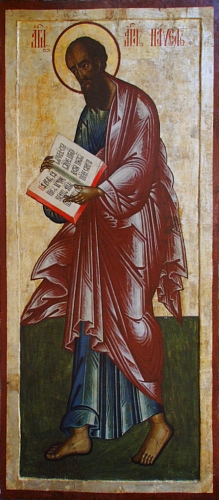
Paul Preaching
accept the things of the Spirit of God, for they are folly to him, and he is not able to understand them, because they are spiritually discerned
."
- I Corinthians 1:21, 2:4-5, II Corinthians 4:3-4, I Corinthians 2:14

The classical apologetics approach is to memorize lots of facts: biblical manuscripts, archeology, evolution, etc. These facts are intended to answer every conceivable objection that an unbeliever might have. It is based on an assumption that unbelief is a matter of ignorance, and that enough facts will convince the unbeliever to become a believer.

The problem is that there is no such indication in Scripture. When we read the Book of Acts, what answer do the evangelists give to their audiences? A list of facts, an expectation that there is a common ground from which an unbeliever can be led to belief? Not even once. Rather, the Apostles always answered with Scripture.

In the verse I quote above from the two epistles to the Corinthians, what does Paul tell us about the process of apologetics? He tells us that God didn't choose bald facts as the means to convert the unbeliever. Rather, He chose the folly of preaching (see also Romans 10:13-21). That's because belief doesn't come from an exercise of intellect. Unbelievers already know about God (Romans 1:18). Paul made that same point when he pointed out the altar to "the unknown god" in Athens (Acts 17:23). The problem isn't a lack of information, but rather that they hate God and the knowledge that they are answerable to Him. The problem for the unbeliever isn't ignorance but unbelief (Romans 8:7)!

What is the nature of the unbeliever that is addressed by the apologist? It is that Satan has blinded him, not to knowledge, but to consequences. It is only the Holy Spirit, not a list of facts, that can tear away that willful blindness, because spiritual truth isn't understood as bald facts, but as a spiritual revelation.

Wednesday, February 15, 2017

"Baptism with Fire": What Is It?

In Matthew 3:11 (and the parallel in Luke 3:16), we see a quote from John the Baptist that has always seemed mysterious to me: "I baptize you with water for repentance, but He who is coming after me is mightier than I, whose sandals I am not worthy to carry. He will baptize you with the Holy Spirit and fire." John was making a clear distinction of status between himself and the One who was coming after him, i. e., Jesus. While John was performing an external rite with water, Jesus would do an internal work "with the Holy Spirit and fire."

Pentecostals take the reference as one thing, that "Holy Spirit" and "fire" are appositives, referring to their experiences of tongues, etc. Orthodox Protestants, on the other hand, consider the baptism with the Holy Spirit to be something that happens to every true believer when he is born again. I consider that understanding to be consistent with I Corinthians 12:13: "in one Spirit we were all baptized into one body—Jews or Greeks, slaves or free—and all were made to drink of one Spirit" (see also John 7:39).

That phrase, "baptized with the Holy Spirit," occurs several times in the New Testament. We find it in Mark 1:8, John 1:33, Acts 1:5, 11:16, and 18:25. In none of these verse is it paired with "fire," even in the parallel verses in Mark 1:8 and John 1:33.

I think we must take that to mean that "with the Holy Spirit" and "with fire" are not different words for the same thing, but rather references to contrasting things. "Baptism with the Holy Spirit," as Paul indicates, is something that happens to every believer. Then, to whom does the contrasting "baptism with fire" apply?

On whom else does Jesus attribute a pouring out of fire? He mentions Sodom and Gomorrah (Luke 17:29), and unrepentant unbelievers (Matthew 25:41). These verses indicate that "fire" is not used for an extra-spiritual experience of the saved, but rather for judgment on the wicked (compare Mark 9:42-49).

This gives, I think, by analogy of the faith, what John was saying of Jesus: "I baptize you with water for repentance, but He who is coming after me will baptize you [believers] with the Holy Spirit and [you unbelievers with] fire." Note that "you" is plural, so he is addressing the whole audience, not anyone in particular. That is why he would have used an inclusive comment. To have spoken as the Pentecostals interpret him would have him to assume that all of his audience was - or would be - believers, which is obviously not the case. Also, look at the verse in both Matthew and Luke, where Jesus makes it explicit: "The chaff He will burn with unquenchable fire."

Saturday, February 11, 2017

The Closure of the Unbelieving Mind

When I look at the world around me, everything I see is proof, not only of God's existence, but also of providence, His wise organization and care of both myself and the rest of mankind and the world. Yet, unbelievers demand proof of God's existence. It is comparable to a man in a lifeboat in the middle of the sea demanding proof of the existence of water. This is a clash of perspective, of course, but, more importantly a clash of natures. The believing mind has been taken into a relationship with God, and thus recognizes all things as centered upon Him. The unbelieving mind, however, desires to rule for itself, and thus must retain a blind spot over God in its world.

When the Christian apologist seeks to perform his ministry on the basis of commonality between himself and an unbeliever, then he runs into this unbridgeable gap and is necessarily stymied.

In his description of the Man of Sin (probably equivalent to John's Antichrist), Paul tells us (II Thessalonians 2:9-10), "The coming of the lawless one is by the activity of Satan with all power and false signs and wonders, and with all wicked deception for those who are perishing, because they refused to love the truth and so be saved." The Apostle tells us that "those who are perishing," i. e., unbelievers, will be vulnerable to the deceptions of Satan through this man, not because of ignorance, but because of a willful refusal to accept the truth. In other words, they close their minds to biblical truth, and are thus left susceptible to spiritual deception.

The same apostle makes a similar comment in I Corinthians 1:18: "The word of the cross is folly to those who are perishing, but to us who are being saved it is the power of God." And again in I Corinthians 2:14: "The natural person does not accept the things of the Spirit of God, for they are folly to him, and he is not able to understand them because they are spiritually discerned." In the unbelieving mind, there is an a priori judgment that the spiritual truths regarding God, sin, and redemption, are foolishness, not by a process of reasoning, but rather because of an inherent condition of his heart. His spiritual nature blocks his rational openness to those truths.

The Lord Jesus explained to His disciples the principle that results in the conditions described by Paul (John 14:16-17): "I will ask the Father, and He will give you another Helper, to be with you forever, even the Spirit of truth, whom the world cannot receive, because it neither sees Him nor knows Him." It is the Holy Spirit who creates the gulf between the believer and the unbeliever. A believer is not smarter or morally superior to the unbeliever. Rather, the presence of the Spirit in Him renders him able to understand. And His absence leaves the unbeliever clinging desperately to his refusal to understand. Thus, where Paul says that truth is "spiritually discerned," he isn't talking about a man's spirit, for both classes of men have spirits. he is talking about the action of the Spirit, the Third Person of the Trinity.

Wednesday, January 18, 2017

The Trinity in One verse: John 15:26

I am constantly bewildered by the hermeneutic of Arians, Sabellians, and Macedonians. They strain through the most bizarre contortions to avoid the assertions of Scripture regarding the Godhead, to keep their particular doctrines, their raison-d'etre.

Consider this verse (John 15:26): "When the Helper comes, whom I will send to you from the Father, the Spirit of truth, who proceeds from the Father, He will bear witness about Me."

What do we see here? We see three distinct entities, the Helper/Spirit, Jesus, and the Father. The Spirit will come to bear witness about the Son. Thus, He is a Person, not an impersonal force, as the Arians and Macedonians claim. Also, He proceeds from the Father and is sent by the Son, distinct actions by discrete Persons, contrary to the assertion of the Sabellians that all three names refer to the same Person. 

I certainly grant that this one verse doesn't address every element of the Trinity. However, it does address and refute some of the specific assertions of the anti-Trinitarians.

Friday, October 28, 2016

Cults: You Can't Get Good Fruit from a Bad Tree

Jesus said something very interesting in Matthew 7:18: "A healthy tree cannot bear bad fruit, nor can a diseased tree bear good fruit." He says it in the context of recognizing false teachers. How can we recognize them? "You will recognize them by their fruits," He tells us.

I find that an interesting choice. He doesn't give us a doctrinal checklist (though there is such in other portions of Scripture). Rather, He tells us to watch what happens as a result of their teachings. And I don't think that is limited to the teacher's actions specifically, but also the fruits it produces in the lives of the those who follow him. I have been having this experience recently with members of a certain cult group. It doesn't matter which one. They deal with opponents, not with Scriptural or logical arguments, but with ridicule, including mocking and name-calling. They make extravagant claims about having the Holy Spirit. However, what do I see from them? "Enmity, strife, fits of anger, rivalries, dissensions, divisions" (from the "works of the flesh," Galatians 5:20). What do I not see from them? "Love, joy, peace, patience, kindness, goodness, faithfulness, gentleness, self-control" (from the list of "fruits of the Spirit," Galatians 5:22). While they are claiming glorious gifts of the Spirit, such as speaking in tongues and revelation of Scriptural truths, I see their fruits. And, according to the description of Paul in Galatians 5, those fruits are not what are credited to the Spirit, but rather those attributed to the flesh. I have referred to these exact verses and told the folks that, based on their fruits, it is not the Holy Spirit they have but rather a deceiving spirit (compare I Kings 22:20-23). Of course, that rebuke only stirred them to greater expressions of the same rage, as I anticipated.

Of the things that marks a cult is that its leaders will sweep uncomfortable truths under the rug. That is, they try to keep their moral or personal failings out of the public eye. However, if the godly person watches for them, eventually the evil will be revealed, because that is its nature.


Friday, January 2, 2015

Mariolatry and the Deceit of Rome

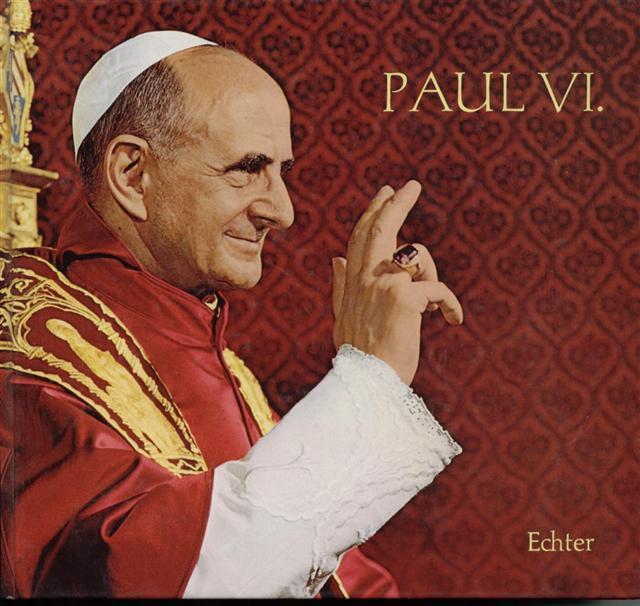
One of the points of controversy that is still acknowledged between biblical Protestants and the Church of Rome is over the place of Mary, the Mother of Jesus. I want to examine what the official documents of the Catholic Church say, because Catholic apologists often tell a different story. The quotes below are from Lumen Gentium ("Light of the Nations"), promulgated by Pope Paul VI in 1964, out of the work of the Second Vatican Council. So, it is not one man's opinion, nor is it some obscure ancient document. These portions, from Chapter VIII, "The Blessed Virgin Mary, Mother of God, in the Mystery of Christ and the Church," are from the English translation found on the Vatican's own website. So, again, there is no allowance for claiming that I am using distorted or obscure sources.

"She is already prophetically foreshadowed in the promise of victory over the serpent, which was given to our first parents after their fall into sin" (sec. 55). The text cites Genesis 3:15 for this statement. In the Douay-Rheims translation, that verse reads, "I will put enmities [sic] between thee and the woman, and thy seed and her seed: she [sic] shall crush thy head, and thou shalt lie in wait for her heel." "She" is from the Latin version. In the Hebrew, the pronoun is masculine singular, which is why most translations read "he" (or "He"). In apparent embarrassment over this error, the New Jerusalem Bible reads "it," and the New American Bible puts "they." All three are Catholic versions of the Bible. The use of "He" points to Jesus as the seed of the woman, i. e., of Eve, not Mary, who shall crush the head of Satan, and we in Him (Romans 16:20). Pope Pius IX (in Ineffabilis Deus) said of this verse, "These ecclesiastical writers in quoting the words by which at the beginning of the world God announced his merciful remedies prepared for the regeneration of mankind . . . saying, 'I will put enmities between you and the woman, between your seed and her seed' taught . . . that his most Blessed Mother, the Virgin Mary, was prophetically indicated; and, at the same time, the very enmity of both [Mary and her Son] against the evil one was significantly expressed." And Pope John-Paul II wrote (in Mulieris Dignitatem) "It is significant that [in Galatians 4:4] St. Paul does not call the Mother of Christ by her own name, 'Mary,' but calls her 'woman': This coincides with the words of the Protoevangelium in the book of Genesis (cf. Gen. 3:15). She is that 'woman' who is present in the central salvific event that marks the 'fullness of time: This event is realized in her and through her."

"The Blessed Virgin is invoked by the Church under the titles of Advocate, Auxiliatrix ["helper"], Adjutrix [also meaning "helper"], and Mediatrix [the Latin feminine form of "mediator"]. This, however, is to be so understood that it neither takes away from nor adds anything to the dignity and efficaciousness of Christ, the one Mediator" (sec. 62). So, Mary is called "advocate," "helper," and "mediator." "Advocate" (I John 2:1) and "Mediator" (I Timothy 2:5) are titles of Christ, and "helper" (John 14:16) is a title of the Holy Spirit, but,
The Pope
we are assured, the use of those titles for Mary does not impinge on the dignity of Christ. Well, if they say so, who am I to argue? The document continues, "The unique mediation of the Redeemer does not exclude, but rather gives rise to, a manifold cooperation, which is but a sharing in this one source." That is utter gobbledygook. If one gives the title of mediator to someone other than Christ, it is mere doublespeak then to claim that the title does not impinge on the mediatorial role of Christ.

"The Church indeed, contemplating her [i. e., Mary's] hidden sanctity, imitating her charity, and faithfully fulfilling the Father's will by receiving the word of God in faith, becomes, herself, a mother... Imitating the mother of her Lord, and by the Holy Spirit, she keeps with virginal purity an entire faith, a firm hope, and a sincere charity" (sec. 64). So, here, the Catholic Church applies to herself the attributes that she has ascribed to her mythical Mother Mary. Thus, all the circumlocutions that they have used to worship (without worshiping) Mary were really for the benefit of creating an aura of perfection for herself! "While in the most holy Virgin the Church has already reached that perfection whereby she is without spot or wrinkle, the followers of Christ still strive to increase in holiness by conquering sin" (sec. 65). So, while the Church is perfect, holy, and without sin, the members thereof are not. Is the subterfuge not plain? By proclaiming the church free of sin, but the members not, she can then assume a tyrannical place over her members, a place from which her teachings and demands are above scrutiny or doubt.

"Placed by the grace of God, as God's Mother, next to her Son, and exalted above all angels and men, Mary intervened in the mysteries of Christ, and is justly honored by a special cult [sic] in the Church" (sec. 66). So, while claiming that she doesn't worship Mary (or the other saints), Rome at the same time teaches a cult of Mary, a distinction without a difference. "The various forms of piety toward the Mother of God, which the Church, within the limits of sound and orthodox doctrine, according to the conditions of time and place and the nature and ingenuity of the faithful, has approved, bring it about that, while the Mother is honored, the Son, through Whom all things have their being, and in Whom it has pleased the Father that all fullness should dwell, is rightly known, loved, and glorified, and that all His commands are observed" (ibid.). So, how do we know that all the worship of Mary stays within "sound and orthodox" limits? Well, because the Catholic Church says so. And if that strikes you as circular, well, according to the Vatican Council, you just are not understanding things correctly. Maybe you should ask the "Helper" for help with that.

Why have I written all of this? Because Protestants have been pointing out the idolatry of the Catholic Church for hundreds of years. Yet, Rome has denied it from one side of their mouths while promoting it from the other. That is simple deception, equivocation, obfuscation. Use what term you will. What it cannot be called is Christian. It is baptized paganism, destructive of the soul, and under the judgment of God. All of the self-serving doublespeak of Rome merely proves all the more that she is no church of Christ, but a mere cult, the synagogue of Satan, the Whore of Revelation 17, and the enslaver of men's souls.

Wednesday, September 24, 2014

Streams in the Desert: Israel in Prophecy

"For I will pour water on the thirsty land,
    and streams on the dry ground;
I will pour My Spirit upon your offspring,
    and My blessing on your descendants.
They shall spring up among the grass
    like willows by flowing streams.
This one will say, ‘I am the Lord's,’
    another will call on the name of Jacob,
and another will write on his hand, ‘The Lord's,’
    and name himself by the name of Israel."
- Isaiah 44:3-5

I have no issues with the modern State of Israel. However, as I have noted before, I oppose the Israelotry that seems to possess so much of American evangelicalism. I think much of it involves bad hermeneutics, changing spiritual prophecies into materialistic pandering.

That's why I quote the verses above. It is true that the Old Testament, especially the book of Isaiah, prophesies some wondrous events in Israel. I simply deny that those events are intended to be taken in a literal way. Rather, I see them as prophecies of the wondrous works of the Holy Spirit in the Gospel. Yet dispensationalists accuse me, and those who hold to the same view, of "spiritualizing" Scripture. I proudly admit my debt to the Puritans in this matter, as can be found described in the book, The Puritan Hope, by Iain Murray.

But is it fair to accuse me of spiritualizing? I don't believe so. Afterall, the proper hermeneutic method is to interpret the Bible, one passage compared to another, referred to as "the analogy of faith." The more difficult passage is interpreted in the light of the clearer passage.

In this case, we have an explicit interpretation of the symbols used by Isaiah. In verse 5, he quotes God, proclaiming that "I will pour water on the thirsty land, and streams on the dry ground." Then, in the pattern of Hebrew parallelism, that phrase is restated, "I will pour My Spirit upon your offspring, and My blessing on your descendants."  An equivalency is given: pouring out water and streams means pouring out the Holy Spirit.

While I equate Israel and the church, I also connect this to Paul's prophecy in Romans 11:25-27 (compare, for example, Zechariah 1:17 and 12:10) that a day will come when Israel, i. e., ethnic Israel, will turn as a people to Messiah Jesus, Him whom they had rejected. So, I do not deny that ethnic Israel has a particular place in the purposes of God. Rather, what I deny is that political Israel is the fulfillment of those purposes.

Sunday, July 12, 2009

The Seven Spirits of God in John's Revelation


"Grace to you and peace from Him Who is and Who was and Who is to come, and from the seven spirits who are before His throne... From the throne came flashes of lightning, and rumblings and peals of thunder, and before the throne were burning seven torches of fire, which are the seven Spirits of God..."
- Revelation 1:4, 4:5

In all the times I've read these passages, I have always stumbled over these references to the "seven spirits of God." "Seven spirits"? I only know one Holy Spirit. Paul says in Ephesians 4:4, "There is one body and one Spirit..." I couldn't figure out how to reconcile these two descriptions of the Spirit.

But today I looked at the pattern of sevens in the context of these verses. "Seven golden lampstands", in 1:12 and 1:20 (twice), "seven stars", in 1:16 and 1:20 (twice), both again in 2:1, "seven spirits and seven stars" in 3:1, "seven torches of fire" and "seven spirits" in 4:5. This isn't an exhaustive list of sevens in this section of Revelation, but these examples exhibit a pattern: they all refer to sources of light. This is why commentators connect the seven spirits to the Menorah in the Jewish temple. It was one central lampstand, but with seven branches - center, plus three to each side - each bearing a separate flame. Here lies the answer: the one Holy Spirit gives spiritual light as if by seven flames. Therefore, we could view the phrase "seven spirits" as equivalent to "the seven-aspected Spirit", or "the sevenfold Spirit". The emphasis is on magnification, not a count.

Look at Zechariah 4:1-6, especially verse 2, "And he said to me, 'What do you see?' I said, 'I see a lampstand all of gold, with a bowl on the top of it, and seven lamps on it, with seven lips on each of the lamps that are on the top of it.'" Here, we see in one place the alternation between the one-ness and the seven-ness of the lampstand, i.e., the Menorah. And the Lord explains that the lamp in the vision represents this truth (verse 6b), "Not by might, nor by power, but by Spirit, says the Lord of hosts." Thus, the seven-multiplying of the lamps is to symbolize the power, beyond any human agency, of the enlightenment by the Holy Spirit.

John 14:26, "But the Helper, the Holy Spirit, whom the Father will send in My name, He will teach you all things and bring to your remembrance all that I have said to you." And 16:13, "When the Spirit of truth comes, He will guide you into all the truth..."