Showing posts with label galatians. Show all posts

Monday, March 23, 2026

"God Is No Respecter of Persons"

"The next day, as they were on their journey and approaching the city, Peter went up on the housetop about the sixth hour [i. e., noon] to pray. And he became hungry and wanted something to eat. But, while they were preparing it, he fell into a trance and saw the heavens opened and something like a great sheet descending, being let down by its four corners upon the earth. In it were all kinds of animals and reptiles and birds of the air. And there came a voice to him: 'Rise, Peter, kill and eat.' But Peter said, 'By no means, Lord, for I have never eaten anything that is common or unclean.' And the voice came to him again a second time, 'What God has made clean, do not call common.' This happened three times, and [then] the thing was taken up at once to Heaven... So Peter opened his mouth and said: 'Truly I understand that God shows no partiality, but in every nation anyone who fears Him and does what is right is acceptable to Him." 

-Acts 10:9-16, 34-35 

An argument I often get from anti-Calvinists against the doctrine of election is based on verse 34 above: "God shows no partiality." Or, in the words of the KJV, "God is no respecter of persons." The anti-Calvinist accuses the Calvinist of making out God to discriminate between individuals. 

I agree with the anti-Calvinist that election discriminates between individuals. I deny, however, that such discrimination violates the words of Peter in this passage.

Consider, for example, what Paul says in Romans 9:10-16: "When Rebekah had conceived children by one man, our forefather Isaac, though they were not yet born and had done nothing either good or bad - in order that God's purpose of election might continue, not because of works but because of Him who calls - she was told, 'The older will serve the younger.' As it is written, 'Jacob I loved but Esau I hated.' What shall we say then? Is there injustice on God's part? By no means! For He says to Moses, 'I will have mercy on whom I have mercy, and I will have compassion on whom I have compassion.' So then it depends not on human will or exertion, but on God, who has mercy." 

Paul's exact point here is that God discriminates, but not on the basis of human characteristics. Rather, the discrimination is a sovereign act of God's electing grace. As this applies to Peter's vision it precludes the discrimination that Peter expected, that of a national supremacy of Israel, and lays the men of all nations on equal grounds in terms of ethnicity. This was such a difficult concept that Peter later reneged on this commitment (Galatians 2:12). 

Wednesday, March 23, 2022

What Works Are Excluded from Justification?

I have had discussions with both Mormons and Catholics about Romans 3:28: "For we hold that one is justified by faith apart from the works of the law." The topic was the doctrine of both groups that a person is justified by a mixture of faith and works, instead of by faith alone. They denied that a person is justified by faith alone, claiming that Paul rejects the works of the Mosaic code, such as circumcision, as contributing to justification. That is, they restrict the meaning of "law" just to the rules and ceremonies given to Israel through Moses. 

What neither will mention is Paul's other uses of "law," especially in Galatians. In Galatians 4:21-26, 28-31, he makes a case: "Tell me, you who desire to be under the law, do you not listen to the law? For it is written that Abraham had two sons, one by a slave woman and one by a free woman. But the son of the slave was born according to the flesh, while the son of the free woman was born through promise. Now this may be interpreted allegorically: these women are two covenants. One is from Mount Sinai, bearing children for slavery; she is Hagar. Now Hagar is Mount Sinai in Arabia, she corresponds to the present Jerusalem for she is in slavery with her children. But the Jerusalem above is free, and she is our mother... Now you, brothers, like Isaac, are children of promise. But, just as at that time he who was born according to the flesh persecuted him who was born according to the Spirit, so also it is now. But what does the Scripture say? 'Cast out the slave woman and her son, for the son of the slave woman shall not inherit with the son of the free woman.' So, brothers, we are not children of the slave but of the free woman." 

Paul makes a very clear distinction here. Is it between works of the Mosaic law and other works? Clearly not. Anyone with a modicum of biblical knowledge knows that Abraham lived four-hundred years before  Moses. Rather, he uses "law" to describe the works of the flesh, such as those of Moses, using the label of the part to represent the whole (a synecdoche), in distinction from the promise, which he uses to label grace alone through faith alone. 


Wednesday, November 24, 2021

The Works of a Christian As a Defining Line Between True and False Christianity

One of the consistent errors that mark cults is their perversion of salvation to some form of works righteousness. This is true of the largest cult, the Roman Catholic Church, as well as other well-known cults such as the Mormons, the Jehovah's Witnesses, Church of Christ, or any one that we could name. 

That one error is a defining distinction between cults and orthodox Christianity, i. e., biblical Protestantism. 

The error of each of these cults is that they mix justification with sanctification. That is, they make the good works of the professing Christian to be part of his justification before God, whether it is faith plus sacraments, or faith plus love. Always the error involves faith plus something, instead of biblical justification, which is by faith alone

This is not to profess the strawman argument used by such groups against Protestants, by which they claim that the denial of a role in justification means that Protestants believe that works do not matter. That accusation is false. With the Bible, Protestants hold that works are the necessary result of saving faith. That is the opposite of what the cults teach. The Protestant talks about works as the necessary result, while the cults make works a necessary component of justification. 

This is what we find in the New Testament. 

Acts 15:9: "He [God] made no distinction between us [Jews] and them [Gentiles], having cleansed their hearts by faith." 

Romans 6:1-6: "What shall we say then? Are we to continue in sin that grace may abound? By no means! How can we who died to sin still live in it? Do you not know that all of us who have been baptized into Christ Jesus were baptized into His death? We were buried, therefore, with Him by baptism into death, in order that, just as Christ was raised from the dead by the glory of the Father, we, too, might walk in newness of life." 

Galatians 2:20: "I have been crucified with Christ. It is no longer I who live, but Christ who lives in me. And the life I now live in the flesh, I live by faith in the Son of God, who loved me and gave Himself for me." 

This is far from an exhaustive list.

Saturday, August 21, 2021

Jesus as Surety for His People

"To Jesus Christ, to His account, as the one now responsible for the sins of those in whose stead He died, God imputed our sins. Although personally the man Jesus was sinless, the guilt of the others became His own on the cross, indeed, throughout all His life of suffering, by God's imputation of this guilt to Him. God held Jesus responsible for the sins and sinfulness of all the elect, for whom Jesus was the divinely-appointed substitute. God dealt with Him accordingly, cursing and damning Him." 

- David Engelsma, "Gospel Truth of Justification," p. 294 

In the paragraph above, Engelsma is summarizing and paraphrasing what Paul taught in three passages. The first was Galatians 3:13-14: "Christ redeemed us from the curse of the law by becoming a curse for us - for it is written, 'Cursed is everyone who is hanged on a tree' - so that, in Christ Jesus, the blessing of Abraham might come to the Gentiles, so that we might receive the promised Spirit through faith." The second is II Corinthians 5:21: "For our sake He [the Father] made Him [the Son] to be sin who knew no sin, so that, in Him [the Son], we might become the righteousness of God." And, finally, Galatians 2:20: "I have been crucified with Christ. It is no longer I who live, but Christ who lives in me. And the life I now live in the flesh, I live by faith in the Son of God, who loved me and gave Himself for me."

In theology, we say that Jesus gave Himself to be the surety for all those whom the Father had given Him. Or, to use our modern parlance, He became the "co-signor" for us. But that must be understood a little differently. When a person, call him John, co-signs a loan for another person, call him Bob, then John takes upon himself a risk. Bob is promising to repay his loan, but, if he fails, the loan then becomes John's responsibility. However, in the case of the suretyship of Jesus, He agreed to co-sign for the sin debt of His people, even knowing in advance that His people would indeed fail. He didn't just assume a risk; He assumed the certainty that His people would have a sin debt for which He was taking responsibility. Would any merely-human co-signor agree to such a responsibility? 

But notice further that Jesus, as surety, didn't undertake merely the debt of our sins. There was a further imputation, as well. As Paul said to the Corinthians, the redeemed become "the righteousness of God." The redeemed are not brought to some morally-neutral state, but rather we are brought to a positive account of righteousness, His righteousness, so that, as the same Apostle told the Galatians, we live the godly life as Jesus's righteousness is placed in us, by means of faith alone. That is an instantaneous exchange, not the progressive one pretended by Rome and other Pelagian sects. It is done


Wednesday, June 23, 2021

The Voices in Their Heads Are Not God

False teachers avoid accountability to the Scriptures by claiming that they received their false doctrines directly from God. That is why He warned us in advance: "Even if we or an angel from heaven should preach to you a gospel contrary to the one we preached to you, let him be accursed. As we have said before, so now I say again: If anyone is preaching to you a gospel contrary to the one you received, let him be accursed" (Galatians 1:8-9).


Wednesday, May 26, 2021

The Incompatibility of Works-Righteousness and Faith-Righteousness

"The truth is that the faith by which alone the elect sinner is justified is a knowing and trusting that renounce works and working for righteousness... The faith that renounces working and works for justification is true faith. Whatever supposed 'faith' insists on working for righteousness is thereby exposed as a false faith. No one is justified by a false faith."

- Rev. David Engelsma, "Gospel Truth of Justification," p. 190, emphasis added 

In this paragraph, Engelsma is making the same point that Paul made in his Epistle to the Romans. For example, he wrote in Romans 9:30-32, "What shall we say, then? That Gentiles who did not pursue righteousness have attained it, that is, a righteousness that is by faith; but that Israel who pursued a law that would lead to righteousness did not succeed in reaching that law. Why? Because they did not pursue it by faith, but as if it were based on works." 

The theme in both is a mutual exclusivity between justification by faith and justification by works. Dependence on one precludes dependence on the other. The seeking of a righteousness, i. e., justification, by works is the reason Paul gives for the excommunication of the Jews (see Romans 11:13ff). 

This shouldn't have been news to the Jews. After all, they looked to Abraham as their national progenitor. And of Abraham, the Jewish Scriptures record, "He believed the LORD, and He counted it to him as righteousness" (Genesis 15:6). That is why that verse is one of the most-frequently quoted in the New testament, e. g., Romans 4:3, Galatians 3:6, and James 2:23. 


Saturday, April 24, 2021

The Importance of "Alone" in the Doctrine of Justification

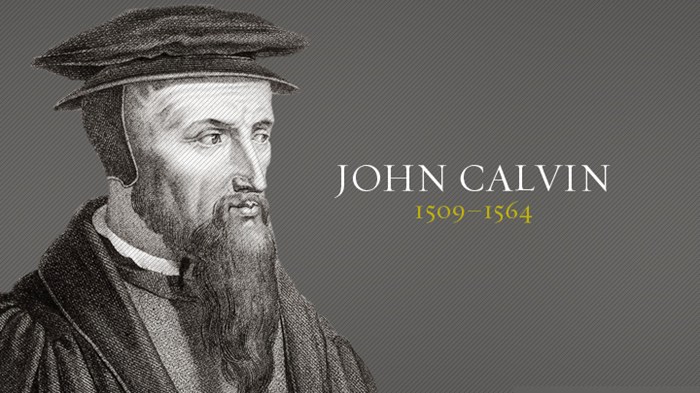
"The Papists will well-enough confess that we be justified by faith, howbeit they add that it is but partly. But that gloss marreth all. For here it is proved that we cannot be found righteous before God, but by the means of our Lord Jesus Christ, and by resting upon the salvation which He hath purchased for us. The Papists see this well enough: and, therefore, for fashion's sake, they say we be justified by faith, but not by faith alone: they will [have] none of that. That is the thing that they fight against, and it is the chief point that is in controversy between them and us." 

- John Calvin, sermon on Galatians 2:16, emphasis added

Evangelicals will often describe the difference between themselves and Roman Catholics as that evangelicals believe in salvation by faith, while Catholics believe in salvation by works. And some Catholics will grant that assessment. However, those evangelicals will have a problem if they run into an educated Catholic and say that. The fact is that Rome is happy to talk about salvation by faith, and has always done so, even in the documents of the Council of Trent in response to the Reformers see, for example, Canons XX and XXIV of Session 6). 

The problem isn't "salvation by faith," but rather the inclusion or exclusion of another word, "alone." The biblical Protestant affirms salvation by faith alone, without works. Romanism denies the application of "alone," claiming instead that salvation is a process in which faith leads to works which then make the person worthy of salvation. The effect of that distinction is that the Protestant also affirms salvation is an instantaneous event, while the Romanist considers it to be a process. When does that process reach the point of a saved status? No one knows in this life, they claim. You can only know when you get there. Or don't.

One result of this error on the part of evangelicals is that Rome has had increasing success in ecumenism. For example, the organization Evangelicals and Catholics Together proclaimed that a unifying understanding had been reached in this statement: "We affirm together that we are justified by grace through faith because of Christ" (ECT statement, XVIII). Do you see the problem with that statement? It is exactly what Rome has always advocated, while the evangelicals in the group betrayed the Reformation by leaving out the key term "alone." The breakthrough was that professing evangelicals converted en masse to Rome's doctrine of justification.

This is the verse to which Calvin refers: "We know that a person is not justified by works of the law but through faith in Jesus Christ, so we also have believed in Christ Jesus, in order to be justified by faith in Christ and not by works of the law, because by works of the law no one will be justified" (Galatians 2:16). 


Wednesday, March 10, 2021

Justifying Faith Is Faith in Christ Alone

 "Faith - true faith - always has an object, and this object is the crucified and risen Christ, as revealed in the Gospel. Thus, as the embracing of Christ - in whom is forgiveness, righteousness, and adoption as children of God - is faith the source of justification." 

- David Engelsma, "Gospel Truth of Justification," p. 141 

It has become a reflex in American culture to respond to any sorrow or apprehension with an exhortation, "You just gotta have faith." And that is supposed to cover all of the bases, ranging from seeking a job to cancer to a severely-injured child. When it is said on TV, no definition of "faith" is ever given, nor a statement regarding faith in what or in whom. It is simply faith in faith itself. 

The faith that results in eternal life is not a faith in faith. As Reverend Engelsma says in the quote above, indeed, in the whole book, it isn't faith as a thing that justifies, but rather as faith with Jesus as its object that justifies. As he also says (on the same page), "Faith looks to Christ, trusts in Christ, and embraces Christ. From this Christ, faith receives Christ Himself as the believer's righteousness by imputation. Or to say it differently, from this Christ, to whom faith looks and on whom faith rests and whom faith embraces, the believer receives the righteousness of Christ as his own (by imputation)." 

This is why it is so important to share the Gospel with members of cults or false churches. They have a faith, but it is in a false object, and, therefore, cannot save them. Whether that faith is in the cultic organization, as with Jehovah's Witnesses, or is in the false Jesus created by the organization, as with Mormons, or in the false basis of justification created by the organization, as with Roman Catholics, it is a faith without a saving object, and, therefore, a faith that cannot justify. "We know that a person is not justified by works of the law but through faith in Jesus Christ, so we also have believed in Christ Jesus, in order to be justified by faith in Christ and not by works of the law, because by works of the law no one will be justified" (Galatians 2:16).

Wednesday, February 24, 2021

The Continuing Stand for Justification by Faith Alone

"Justification is a legal act of God. It is strictly a legal act of God. By the act of justification, God changes the sinner's standing, or legal position, before Himself as judge. Whereas the sinner is guilty, the act of justification renders him not guilty. Whereas the sinner stands before the divine bar of justice as one who has transgressed all the commandments of God, justification constitutes him innocent. Whereas the sinner appears in the divine courtroom as one who has not kept the law of God and is, therefore, worthy of damnation, justification gives him the state or status, that is, the legal standing, of one who has perfectly satisfied all the demands of the law, including its demand of the punishment of everlasting damnation, and is, therefore, deserving of eternal life." 

- Rev. David Engelsma, "Gospel Truth of Justification," p. 93 

The importance of the statement above can be seen in its historical significance. it was the grounds for Martin Luther's revolt against the corruptions of the Roman Catholic Church. He had discovered the truth of justification by faith alone in his personal study of the Bible: "The righteous shall live by his faith" (Habakkuk 2:4, and quoted by Paul in Romans 1:17 and Galatians 3:11). However, he saw that this simple but profound expression of the only way of salvation had been buried under the manmade doctrines and ceremonies of the Catholic Church. 

Rome responded by declaring a curse against biblical justification: "Canon 9.  If anyone says that the sinner is justified by faith alone, meaning that nothing else is required to cooperate in order to obtain the grace of justification, and that it is not in any way necessary that he be prepared and disposed by the action of his own will, let him be anathema" (The Canons of the Council of Trent, still the official doctrine of the Roman Church). This assertion has never been repudiated by Rome, which is why any reunification between her and orthodox Protestants is still impossible. 

Rome has also caricatured the Reformers' doctrine is nothing more than a legal fiction. That accusation is false. It might have been true if God had merely cancelled our sin debt unpaid. Yet that is not what He has done. Rather, He has transferred that debt to a voluntary Surety, the Lord Jesus Christ. For those whom He undertook to redeem (John 6:37-39), Jesus the Sinless One stepped forward to pay a debt that He did not owe, that we may be freed from a debt that we could not pay. And a debt paid is a debt owed no more, in truth, not as a fiction.

Wednesday, July 29, 2020

Hebrews on the Atonement

A question over which I often quarrel with both cultists and fellow Christians is, For whom did Jesus die? And it is an important question. If, as the Arminian says, Jesus died for everyone, even for those in Hell, then there is something more than His blood necessary for salvation. The blood of Jesus is insufficient. If, on the other hand, Jesus died effectually for a certain number, then He is sufficient, i. e., He has provided everything necessary for my salvation, and I have a secure basis for my assurance of salvation.

I want to consider here a verse not usually mentioned in atonement debates, Hebrews 2:16: "Surely it is not angels that He helps, but He helps the offspring of Abraham." The author of the epistle presents us here with two classes of sentient beings, angels and those humans who are the seed of Abraham. This is not meant to imply that there are no other classes of sentient beings, namely men who are not the seed of Abraham. Rather, it merely means that those other classes are not under consideration here.

OK, so we have the writer's assertion that angels were not the objects of the atonement of the cross. We can understand that. In contrast, the objects of the atonement are those men who are the seed, or offspring, of Abraham. Standing alone, that phrase is not very meaningful to the modern man. However, we have not been left unable to determine its meaning: "Know then that it is those of faith who are the sons of Abraham" (Galatians 3:7). So then, it is men of true faith whom Scripture called the offspring of Abraham. Why? Because of the example of justification by faith alone that he provided.

So, returning to Hebrews, we can substitute the definition for the phrase in the original verse: "Surely it is not angels that He helps, but He helps those justified by faith like Abraham." And that sentence cannot be taken to mean what the Arminian means by atonement. It is a specific group for whom Jesus shed His blood effectually, even as He promised (John 6:39). Not a drop is lost in failure.


Wednesday, January 22, 2020

The Crucifixion, and What It Reveals About the Law

"That representation of Christianity which makes the sufferings of Jesus a full and perfect satisfaction of the penalty of the law, and His life of spotless obedience the ground to all claim of eternal bliss... rears the fabric of grace, not upon the ruins, but [upon] the fulfillment of the law. God is never seen to be more gloriously just, nor the law more awfully sacred, than when He spared not His own Son, but delivered Him up for us all. The impression which this event makes is, indeed, solemn, awful, sublime. It was a wonder in Heaven, a
Aspects of Crucifixion
terror in Hell, and is the grand instrument through which the rebellion of earth is subdued and the stout-hearted made to melt at the remembrance of sin" (James Henley Thornwell, "The Necessity and Nature of Christianity").

There is a common teaching among Evangelicals that God has rid us of the Law with the coming and crosswork of Jesus. That is not just the ceremonial law, with which I would agree, but also the moral law, with which I cannot. Some people simply deny the distinction between ceremonial and moral. However, then they have to ignore the usages of Paul who describes the abrogation of the former in Galatians, but maintains the latter in I Timothy 1:8-10, even referring to it as "in accordance with the gospel" in verse 11. And he specifically applies the law to members of the church at Corinth in I Corinthians 5:1 (Leviticus 18:8, Deuteronomy 22:30). Paul certainly didn't believe in the abrogation of the moral law!

There is also the problem of Christ's crosswork. Have we forgotten that He was beaten, whipped, and crucified? If the Son of God had to suffer so horribly "to magnify His law and make it glorious" (Isaiah 42:21, in one of the Servant passages), just for the law to be dispensed, was His suffering not unnecessary? What a horror for the Father to treat His Son in such a manner, when He was just going to get rid of the law anyway! Can we truly accuse God of such injustice?

Rather, as Isaiah says, the suffering and death of Jesus did not abrogate the law. Rather, it glorified it! The justice and holiness of God was revealed to the eyes of all men. The high price of rebellion against Him was revealed. At the same time, it revealed His grace, indicating what the love of the Son required that He undertake for His people.

Wednesday, January 15, 2020

The Singular Nature of Christianity, Forgiveness of Sins and an Imputed Righteousness

"[The sinner] needs not light but life - not philosophy and science, not new discoveries in heaven and earth, but a Savior - a Savior who can pluck him from the wrath to come, arrest the avenger of blood, seize the sword of justice, put it up into its scabbard, bid it rest and be still. The glory of Christianity is its Savior, and His power to save is in the blood by which he extinguished the fires of the curse, and the righteousness by which He bought life for all His followers. Jesus made [to be] our curse, Jesus made [to be] our righteousness, this, this is the Gospel! All else is philosophy and vain deceit. This it is which gives Christianity its power" (James Henley Thornwell, "The Necessity and Nature of Christianity").

Thornwell above takes two statements from Scripture, and turns them into the beautiful doxology above.

"All who rely on works of the law are under a curse; for it is written, 'Cursed be everyone who does not abide by all things written in the Book of the Law, and do them.' Now it is evident that no one is justified before God by the law, for 'The righteous shall live by faith.' But the law is not of faith, rather, 'The one who does them shall live by them.' Christ redeemed us from the curse of the law by becoming a curse for us—for it is written, 'Cursed is everyone who is hanged on a tree'— so that in Christ Jesus the blessing of Abraham might come to the Gentiles, so that we might receive the promised Spirit through faith" (Galatians 3:10-14). Paul draws a parallel between what men are, cursed because of our failure to keep the Law in all of its exhaustive detail, and what Jesus became, cursed by imputation of the sins of God's people to their surety, Jesus Christ.

"If anyone is in Christ, he is a new creation. The old has passed away; behold, the new has come. All this is from God, who through Christ reconciled us to Himself and gave us the ministry of reconciliation; that is, in Christ God was reconciling the world to Himself, not counting their trespasses against them, and entrusting to us the message of reconciliation. Therefore, we are ambassadors for Christ, God making His appeal through us. We implore you on behalf of Christ, be reconciled to God. For our sake He made Him to be sin who knew no sin, so that in Him we might become the righteousness of God" (II Corinthians 5:17-21). And this is the imputation the other way, His righteousness becoming ours by means of faith alone.

The truth of double imputation is one of the things that make Christianity unique from any other religion, or any other form of salvation. It is in Christ alone that we find both our needs met in one place, the need to have our sins forgiven and our need to have them replaced with true righteousness.

Wednesday, October 16, 2019

Sovereign Grace, the Trinity, and the Christian Life

"Peter, an apostle of Jesus Christ, To those who are elect exiles of the Dispersion in Pontus, Galatia, Cappadocia, Asia, and Bithynia, according to the foreknowledge of God the Father, in the
sanctification of the Spirit, for obedience to Jesus Christ and for sprinkling with His blood: May grace and peace be multiplied to you."
- I Peter 1:1-2 

This is the opening salutation from Peter's first epistle. Notice that it is not written to men in general but specifically to Christians, whom he identifies as the true Israel (compare Romans 9:8, Galatians 3:7, 6:16, etc.), gathered by the sovereign grace of God. 

And when I say God, I don't mean in a vague, generic sense. Rather, Peter identifies our election as the work of the triune God of the Bible: the foreknowledge of the Father, the sanctification of the Holy Spirit, and the obedience of the Son, applied, figuratively speaking, by the sprinkling with His blood, an image from the Old Testament sacrifices (such as Leviticus 7:2 and 14:7). Peter does not contemplate a unitary deity, whether of the Arian type or the Sabellian. 

Nor does Peter contemplate any sort of works religion, as is taught by those pseudo-Christian sects. Rather, he tells us that the Father chose us, the Holy Spirit changed us, and the Son fulfilled all righteousness for us, that it might be imputed to us. In just these two verses, Peter teaches us to see our reunion with our God as fully trinitarian and fully by His sovereign grace, which is why he could add, in verse 4, that we have "an inheritance that is imperishable, undefiled, and unfading, kept in heaven for you." The same sovereign, trinitarian grace that saved us also keeps us secure until we reach our heavenly goal."I am sure of this, that he who began a good work in you will bring it to completion at the day of Jesus Christ" (Philippians 1:6).

Wednesday, February 6, 2019

Our Union with Christ and All His Benefits

Evangelicals don't talk about our union with Christ. I think that is because it sounds very Catholic. However, it is a completely biblical doctrine, and of great use to the believer. We deprive ourselves by avoiding the subject.

We find the principle described in Scripture in several places, but the best one is Galatians 2:20: "I have been crucified with Christ. It is no longer I who live, but Christ who lives in me. And the life I now live in the flesh I live by faith in the Son of God, who loved me and gave Himself for me." By faith, the believer is united with Jesus spiritually, so that all that He is and did becomes ours, and all that we are and did becomes His. This is the basis of the doctrine of double imputation. In the Bible, it is described mystically as becoming His members: "We are members of His body" (Ephesians 5:30; see also I Corinthians 6:15). We hear this and think of "members" in the sense of "members of an organization," such as the PTA. However, that is not at all the meaning of "members" here. Rather, it is an analogy to "members" in the sense of "body parts" (see Romans 12:4-5). We are incorporated mystically into the spiritual body of Christ!

Of what benefit is that union? We think quickly, of course, of the imputation of His righteousness (II Corinthians 5:21), as I mentioned above. That is the basis of our justification, so it is certainly a wondrous benefit! But we receive so much more, as is symbolized by communion. As the bread and wine sustain our physical bodies, we are sustained spiritually by means of our union with Him, receiving all of the grace and other benefits which He purchased for us on the cross. "United to Christ, we receive two classes of benefits - inward and outward; the inward all included under the generic name of 'repentance,' and appertaining to the entire destruction of sin and the complete restoration of the image of God; the outward having reference to all those benefits which affect our relations to God as a Ruler and Judge. Both classes of blessings are equally the promise of the covenant. Both are treasured up in the Lord Jesus Christ. We obtain both by being in Him, and as we are in Him only by faith, faith must be the exclusive condition of the covenant" (James Henley Thornwell, "Theology as a Life in Individuals and in the Church").


Wednesday, January 30, 2019

In What Way Are We justified by Faith?

As the Reformers emphasized, the Bible says that the Christian is justified by faith. Luther even credited his conversion to Habakkuk 2:4: "The righteous shall live by his faith" (and quoted in the New Testament, such as Romans 1:7 and Galatians 3:11). That knowledge liberated huge swaths of Europe from bondage to Rome and its doctrine of justification by "faith and..."

But what do we mean by that? Do we believe that a person with faith is necessarily saved? No, we don't. There are all sorts of faith, such as faith in leaders, or faith in science, and even faith in faith. We hear all the time, "You just have to have faith." Rarely is it specified, faith in what? However, that is not what is meant by justifying faith.

Rather, justifying faith is justifying, not because of its presence, but because of its object. What object? Jesus Christ alone: "In Christ Jesus you are all sons of God, through faith" (Galatians 3:26). Notice the proposition Paul uses, "through." That is an instrumental reference. Therefore, justification isn't on the basis of faith, but rather applied by means of faith. It is the finished work of Jesus alone that justifies us. We also see the same instrumental implication in Ephesians 2:8: "For by grace you have been saved through faith." Thus we see again Paul's specifying of faith, not as the basis of justification, but rather the means of the application of Christ's saving blood. That is the Reformation principle of justification by Christ alone through faith alone.

The Presbyterian Theologian James Henley Thornwell explained this principle: "In the narrow sense of that which unites us to Christ and makes us actual partakers of redemption, the term 'condition' is, in our judgment, applicable only to faith. It is clear that the ground of all personal interest in the blessings of the covenant is union with Christ. Union with Christ secures justification, adoption, sanctification, and the whole salvation of the Gospel. The condition, and the sole condition, of union with Christ is faith. The man who believes is saved" ("Theology as a Life in Individuals and in the Church").

Saturday, January 19, 2019

The Creator-Creature Separation and Christ's Mediatorship

When Adam fell into sin, a separation occurred between him and his Creator: "Your iniquities have made a separation between you and your God, and your sins have hidden His face from you so that He does not hear" (Isaiah 59:2; see also Habakkuk 1:13). And since that time, every descendant of Adam (excluding Jesus) has experienced that separation. For the believer, a solution was provided: "For there is one God, and there is one mediator between God and men, the man Christ Jesus" (I Timothy 2:5, see also Galatians 3:20). By means of faith, Jesus reunites the redeemed sinner with His offended Heavenly Father: "Therefore He is the mediator of a new covenant, so that those who are called may receive the promised eternal inheritance, since a death has occurred that redeems them from the transgressions committed under the first covenant" (Hebrews 9:15).

I mentioned "redeemed sinners" on purpose, because that mediatorship is not available to anyone who has not yet received Christ. Until a person has done so, he experiences God only as an offended Judge, separated still because of sin.

However, the Scriptures tell us that the unbeliever is not unaware of his situation. He knows that God exists, that he is accountable to Him, and that he has offended Him (Romans 1:18-22). The unbeliever knows, but suppresses the knowledge, that he faces only eternal judgment, without the help of a mediator, just like the criminal knows that he faces punishment for his crime if he is without a lawyer. "The least transgression contracts guilt, guilt calls for punishment, and this punishment consists in that banishment from God which is attended, in every dependent being, with spiritual death and the unbroken dominion of sin. To be a sinner once, therefore, is to be a sinner forever, unless some agency should be interposed to arrest the natural and ordinary course of justice and law. Hence the office of Mediator must be, not to make repentance efficacious of pardon, but to make repentance possible" (James Henley Thornwell, "The Necessity and Nature of Christianity").

Wednesday, December 19, 2018

The Land Promises and the Unity of the People of God

One of the main distinctions between dispensationalism and covenantalism is over the relationship between Israel and the Church. The covenantalist sees them as different administrations of the same thing (see, for example, Acts 7:38 KJV). In contrast, the dispensationalist sees them as radically discontiguous, there having been no church in the Old Testament, and Israel's having a future separate from the church.

One aspect of this is the frequent references dispensationalists make to the promises God made to Israel. While the covenantalist takes the remaining promises to be given to the church, the Israel of God (Galatians 6:16), the dispensationalist sees them as necessarily remaining to be fulfilled to Israel, i. e., the Jews, in their distinct character.

I want to consider the land promises, in particular, here. Are there remaining land promises for the Jews? I don't think that Bible allows that conclusion, even apart from the identity of Israel and the church.

In Joshua 21:43-45, given after the conquest of the Promised Land, we read this comment: "Thus the Lord gave to Israel all the land that He swore to give to their fathers. And they took possession of it, and they settled there. And the Lord gave them rest on every side just as He had sworn to their fathers. Not one of all their enemies had withstood them, for the Lord had given all their enemies into their hands. Not one word of all the good promises that the Lord had made to the house of Israel had failed; all came to pass." Thus, the land promise had been fulfilled, not waiting for the modern state of Israel.

Furthermore, in I Kings 4:21, we read this: "Solomon ruled over all the kingdoms from the Euphrates to the land of the Philistines and to the border of Egypt. They brought tribute and served Solomon all the days of his life." This describes Solomon's enjoyment of that Land, not waiting for it. This is repeated in the parallel passage in II Chronicles 9:26.

In other words, the land promises to Israel aren't waiting for fulfillment! They were fulfilled three thousand years ago!

Moreover, something that dispensationalists fail to recognize is that the fulfillment of God's promises is always far more than the literal promise. In this case, by denying the bitestamental unity of the people of God, the dispensationalist is blind to Psalm 2:8: "Ask of Me, and I will make the nations Your heritage, and the ends of the earth Your possession." This promise is part of the intra-Trinitarian covenant, made before the world was created, and is a gift from the Father to the Son. And then in the New Testament, that same Son promises it to His church: "All authority in heaven and on earth has been given to Me. Go therefore and make disciples of all nations, baptizing them in the name of the Father and of the Son and of the Holy Spirit, teaching them to observe all that I have commanded you. And behold, I am with you always, to the end of the age" (Matthew 28:18-20). The rigid literalism and minimalism of dispensationalists causes them not to enjoy the real promises of God, and also to deny them to those same Jews that they have cast out of the church.

Saturday, September 29, 2018

Abraham, the Ancient Christian

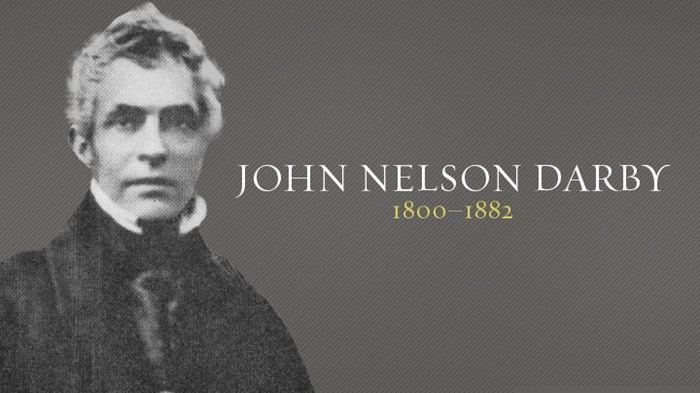
There is a heresy which has been going around at least since the time of J. N. Darby in 1830, that says that people in the Old testament were saved in a different way from the people in the New Testament. Sometimes it is said that Israel was saved by following the Law. Other times, it is said that they were saved by faith in the sacrifices. This doctrine is associated with various forms of the hermeneutical system created by Darby (and made popular by C. I Scofield) known as Dispensationalism.

Both forms of the doctrine are wrong.

Orthodox Protestants all agree that a Christian is saved by grace through faith, not by obedience to the Law, even in part. This is stated repeatedly in Scripture, such as Acts 13:39, Romans 3:28, and the whole Epistle to the Galatians. Where the Dispensationalist is wrong is his assertion that Old Testament believers were saved in a different way. The Apostle Peter, himself a Jew, said, "We [Jews] believe that we will be saved through the grace of the Lord Jesus, just as they {i. e., the Gentiles] will" (Acts 15:11).

And to be more specific, the Apostle Paul, another Jew, tells us, "And the Scripture, foreseeing that God would justify the Gentiles by faith, preached the gospel beforehand to Abraham, saying, 'In you shall all the nations be blessed'" (Galatians 3:8). Notice that Paul doesn't say just "faith," which might allow for faith in a different object. Rather, he explicitly states that Abraham received the Gospel! That is why Jesus could say, "Your father Abraham rejoiced that he would see My day. He saw it and was glad" (John 8:56).

Would the content of the Gospel to Israel have been more obscure? Sure. We understand that the Gospel was given under types and shadows (Colossians 2:17), so that Old Testament faith was more difficult to attain. That is why the New Covenant, the Gospel in the New Testament, is described by the Epistle to the Hebrews as far superior: the types and shadows have been removed, so that the reality is displayed in all its glory!

Wednesday, April 4, 2018

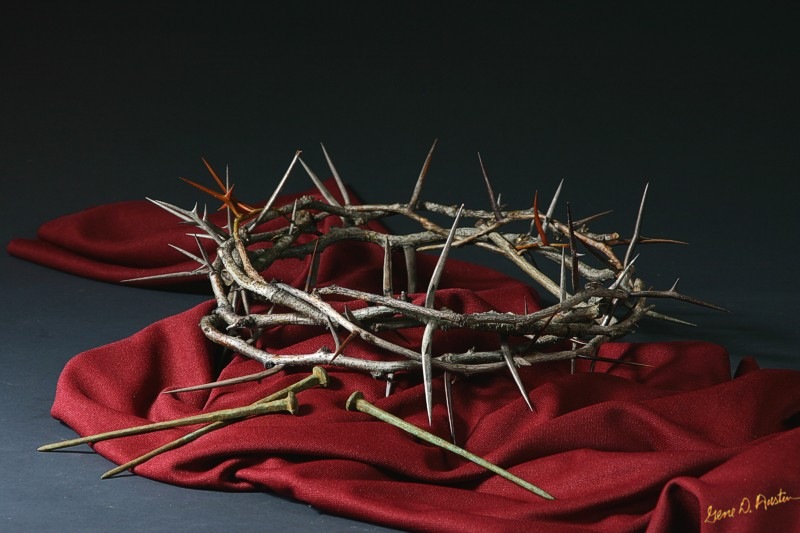
The Thorns of the Curse on the Head of the Lamb

As I am writing this, I have just received a new bible with a cover design of the crown of thorns impressed into the leather. It's subtle, because it is black on black. It especially stands out if I shift it back and forth under a light. I have seen the cover design before, but this is the first time I own one myself. It struck me because I have recently been debating other folks about the Fall of Adam.

What's the connection?

After Adam and Eve sinned, God issued a curse: "To Adam He said, 'Because you have listened to the voice of your wife and have eaten of the tree of which I commanded you, "You shall not eat of it," cursed is the ground because of you; in pain you shall eat of it all the days of your life; thorns and thistles it shall bring forth for you; and you shall eat the plants of the field. By the sweat of your face you shall eat bread, till you return to the ground, for out of it you were taken; for you are dust, and to dust you shall return" (Genesis 3:17-19, see also Galatians 3:13).

Do you see it? Part of the curse is that thorns shall infest the ground. Do you remember that line from the Christmas carol, "Joy to the World"?  

Thus, when the crown of thorns was placed on the head of Jesus (see, for example, Matthew 27:29), the Roman soldiers unwittingly demonstrated the purpose of the Father in the crucifixion of His Son. The curse that Adam had brought on the world was transferred to the Second Adam, to be undone by His atoning blood! "As by the one man’s disobedience the many were made sinners, so by the one man’s obedience the many will be made righteous" (Romans 5:19).

Thus we see the progressive fulfillment of the promise of Scripture: "There will no longer be any curse" (Revelation 22:3 NASB).

Saturday, March 10, 2018

The False Law View of New Covenant Theology

Among those who claim to follow "New Covenant Theology" (hereafter "NCT"), a supposed midway between dispensationalism and covenant theology, it is common to say that Jesus is the fulfillment of the Law for the believer. And there is a sense in which that is correct: He perfectly fulfilled the Law so that His obedience could be imputed to believers. He is also the antitype to the ceremonies of the Mosaic law. However, NCT takes it further and claims that there is no further role for the Law for the believer. Rather, it posits a new law, the law of Christ. That is false.

Let me start with the second part first, the "law of Christ." That is a biblical phrase: "Bear one another’s burdens, and so fulfill the law of Christ" (Galatians 6:2). In this case, I don't think Paul is referring to the law, per se, but rather to the specific commandment of Christ, that we love one another (John 15:12). He is not talking about a system of laws.

However, the NCT use of that phrase is selective, ignoring another use of it by Paul: "To those outside the law I became as one outside the law (not being outside the law of God but under the law of Christ) that I might win those outside the law" (I Corinthians 9:21). Here he explicitly denies being outside the law of God. Rather, by acting as one under the ceremonial law, he is able to evangelize those who remain under that law, that is, His fellow Jews, thus demonstrating the law of Christ, love for his neighbor, as he mentions in Galatians 6:2.

In Isaiah 42, one of the Servant passages that pointed forward to the Messianic work of Jesus, God says (Isaiah 42:21), "The Lord is well-pleased for His righteousness' sake to magnify the law and make it honorable" (emphasis mine). In the incarnation of Jehovah in Jesus Christ, He did not intend to do away with the Law, but rather to magnify it. I think that is to make it a joy to His people, rather than a burden, as it is to the unforgiven sinner (Matthew 11:28).

Also, in Isaiah 51:7, He says, "Listen to Me, you who know righteousness, the people in whose heart is My law; fear not the reproach of man, nor be dismayed at their revilings." This verse is absolutely destructive of the NCT claims regarding the Law. How so? Because of the parallel description of the new covenant in the New Testament: "This is the covenant that I will make with the house of Israel after those days, declares the Lord: I will put My laws into their minds, and write them on their hearts, and I will be their God, and they shall be My people" (Hebrews 8:10, repeated in 10:16). The promise of the new covenant is not that God will do away with the Law, but rather that He will renew our love for it and obedience to it!