Showing posts with label good works. Show all posts

Saturday, April 24, 2021

The Importance of "Alone" in the Doctrine of Justification

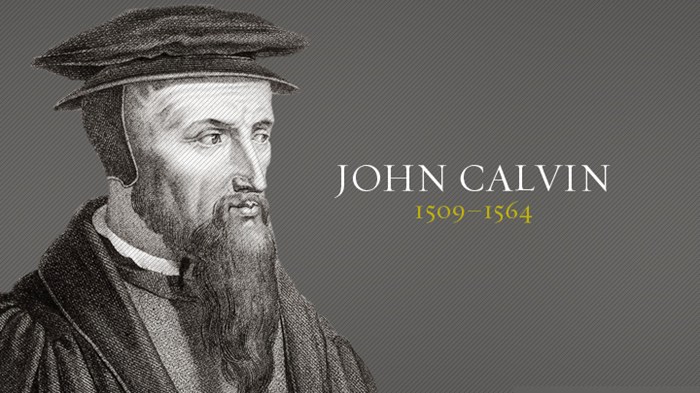
"The Papists will well-enough confess that we be justified by faith, howbeit they add that it is but partly. But that gloss marreth all. For here it is proved that we cannot be found righteous before God, but by the means of our Lord Jesus Christ, and by resting upon the salvation which He hath purchased for us. The Papists see this well enough: and, therefore, for fashion's sake, they say we be justified by faith, but not by faith alone: they will [have] none of that. That is the thing that they fight against, and it is the chief point that is in controversy between them and us." 

- John Calvin, sermon on Galatians 2:16, emphasis added

Evangelicals will often describe the difference between themselves and Roman Catholics as that evangelicals believe in salvation by faith, while Catholics believe in salvation by works. And some Catholics will grant that assessment. However, those evangelicals will have a problem if they run into an educated Catholic and say that. The fact is that Rome is happy to talk about salvation by faith, and has always done so, even in the documents of the Council of Trent in response to the Reformers see, for example, Canons XX and XXIV of Session 6). 

The problem isn't "salvation by faith," but rather the inclusion or exclusion of another word, "alone." The biblical Protestant affirms salvation by faith alone, without works. Romanism denies the application of "alone," claiming instead that salvation is a process in which faith leads to works which then make the person worthy of salvation. The effect of that distinction is that the Protestant also affirms salvation is an instantaneous event, while the Romanist considers it to be a process. When does that process reach the point of a saved status? No one knows in this life, they claim. You can only know when you get there. Or don't.

One result of this error on the part of evangelicals is that Rome has had increasing success in ecumenism. For example, the organization Evangelicals and Catholics Together proclaimed that a unifying understanding had been reached in this statement: "We affirm together that we are justified by grace through faith because of Christ" (ECT statement, XVIII). Do you see the problem with that statement? It is exactly what Rome has always advocated, while the evangelicals in the group betrayed the Reformation by leaving out the key term "alone." The breakthrough was that professing evangelicals converted en masse to Rome's doctrine of justification.

This is the verse to which Calvin refers: "We know that a person is not justified by works of the law but through faith in Jesus Christ, so we also have believed in Christ Jesus, in order to be justified by faith in Christ and not by works of the law, because by works of the law no one will be justified" (Galatians 2:16). 


Wednesday, August 19, 2020

Following Paul to Righteousness by Faith


"Look out for the dogs, look out for the evildoers, look out for those who mutilate the flesh. For we are the circumcision, who worship by the Spirit of God and glory in Christ Jesus and put no confidence in the flesh— though I myself have reason for confidence in the flesh also. If anyone else thinks he has reason for confidence in the flesh, I have more: circumcised on the eighth day, of the people of Israel, of the tribe of Benjamin, a Hebrew of Hebrews; as to the law, a Pharisee; as to zeal, a persecutor of the church; as to righteousness under the law, blameless. But whatever gain I had, I counted as loss for the sake of Christ. Indeed, I count everything as loss because of the surpassing worth of knowing Christ Jesus my Lord. For His sake I have suffered the loss of all things and count them as rubbish, in order that I may gain Christ and be found in Him, not having a righteousness of my own that comes from the law, but that which comes through faith in Christ, the righteousness from God that depends on faith.

- Philippians 3:2-9

The Apostle Paul gives us a list of things here which might have been considered grounds for a righteousness before God based on his own qualities. As righteousness was understood by his judaizing opponents, Paul had all of the qualifications of birth, of training, and of works. If anyone could be justified by his own qualifications, then that person could be none other than Paul. 

Yet, what does that same Paul say about his qualifications: "I count them as rubbish" (verse 8). What men would count as shining qualities, Paul calls garbage. And I don't think that Paul is referring here to God's point of view (Isaiah 64:6). Rather, he is telling us what was his own attitude to those things that he, too, in a previous life, counted as glorious. They were garbage, not because they were rejected by God, though that is true, but rather because they had blinded him to true righteousness, that which comes by faith alone in Christ alone. It is as if some prospector had been so in love with his lump of coal that he had ignored a streambed next to him littered with gold nuggets. 

This is why Christians should feel such sorrow for those trapped in pseudo-Christian sects. I have spoken to Mormons, Jehovah's Witnesses, and Oneness Pentecostals who were so proud of their chunks of coal - such as baptism or organizational position - while they are blind to the gold of true righteousness, such as Paul had found, by faith in Christ alone.

Saturday, January 18, 2020

No Cover for Sin


Americans have come to loathe the concept of sin. The popular  preachers, such as Joel Osteen, refuse to use the word. Even the supposedly-great Billy Graham, while he used the word, did not define it, or point out the sins of unbelievers, and even allowed unrepentant apostates to share his podium. So, when I say Americans, I don't have to limit my intent to professed unbelievers, but include even professing Evangelicals, a word that comes from the Greek word for "gospel."

Sin has come to mean, not wickedness, but error or even social injustice. We no longer think of it as it is presented in Genesis 3, rebellion against God and a despising of His word. We no longer talk about it as something which brings God's proper judgment: "Behold, all souls are Mine; the soul of the father as well as the soul of the son is Mine: the soul who sins shall die" (Ezekiel 18:4). Rather, we expect God to put our sins in a balance, with the acts that are good, in our own eyes, on the other side. And every person believes that his good deeds will outweigh his bad deeds. While that is the view of Islam, it is not the biblical view: "Whoever keeps the whole law but fails in one point has become guilty of all of it" (James 2:10), and, "No one does good, not even one" (Romans 3:12, quoting Psalm 53:3).

That is the problem with the objection of atheists, that God is supposedly unjust to send people to Hell just for not believing in Him; since Christians have taught a false view of sin, atheists have taken refuge in a false sense of their goodness. To the atheist, or any non-Christian, I give this warning: at the Judgment, you will not be excused by what men have told you, but rather you will be judged by what God has told you, even if you have refused to hear. To the supposed Christian who fails to warn of sin, I have these words from God: "If I say to the wicked, ‘You shall surely die,’ and you give him no warning, nor speak to warn the wicked from his wicked way, in order to save his life, that wicked person shall die for his iniquity, but his blood I will require at your hand" (Ezekiel 3:18).

To both groups of people, I give my own warning: There is no salvation in excuses. There is only salvation in the blood of Jesus, received by grace through faith alone.

"The penalty of the law was no vulgar ill, to be appeased by a few groans and tears, by agony, sweat, and blood. It was the wrath of God, which, when it falls upon a creature, crushes him under the burden of eternal death. It is a blackness of darkness through which no ray of light or hope can ever penetrate the soul of a finite being; to all such it must be the blackness of darkness forever. But Jesus endured it, Jesus satisfied it, Jesus bowed beneath that death which the law demanded, and which sinks angels and men to everlasting ruin, and came victorious from the conflict" (James Henley Thornwell, "The Necessity and Nature of Christianity," emphasis in the original).

Saturday, January 4, 2020

The Fall and the Dominion Covenant

In Luke 17:10, Jesus makes a surprising comment: "So you also, when you have done all that you were commanded, [should] say, ‘We are unworthy servants; we have only done what was our duty.'" This is the nail in the coffin for any works-righteousness religion. If a man were to perfectly fulfill the law of God, then he has still not earned eternal life, because he has only done what he was supposed to do. It is like the employee who completes his assigned duties. Should his boss, therefore, give him a bonus? No, he has only done what he was required to do, and has contributed no additional value beyond what his wage has already purchased.

Think back to the first days of man. The one recorded restriction given to Adam was not to eat from the Tree of the Knowledge of Good and Evil (Genesis 2:17). And the Fall occurred when Adam broke that one restriction (3:6). Adam forsook all of the blessings of Eden by that particular sin. Yet, was he thereby promised eternal life if he refrained from eating that fruit? No, he retained his probationary status as long as he did not eat. But His assignment in Eden was far wider than that. Rather, he was to make it fruitful through the practice of agriculture (2:15), to exercise dominion (1:26) and to have families (1:28). Adam actually had an extensive list of responsibilities. The difference here was that the command not to eat the fruit, even if it had been obeyed, would not have advanced the purposes of God. Jesus, the Second Adam, talked about this, too, in the Parable of the Talents (Matthew 25:14-30). The servants who are praised are the ones who took the master's talents, invested them, and returned a profit. The servant who is cursed is the one who returned what he had been given, with no advancement - no loss, but no profit, either.

"It is only to the just that the confirmed state of blessedness, which the Scriptures mean by life, is infallibly promised. Obedience to the law, righteousness, is the indispensable condition of God's everlasting favor. If, therefore, the scheme of redemption had done nothing more than deliver us from the curse of the law, though it would have conferred an incalculable benefit upon us, an unutterably great salvation, it would not have done all, that the necessities of the case required, to secure the perfection and blessedness of our nature" (James Henley Thornwell, "The Necessity and Nature of Christianity," emphasis in the original).

Wednesday, September 18, 2019

The Necessity of Imputed, Exterior Righteousness

Every false religion, that is, every religion other than biblical Christianity, is based on innate human righteousness, the things that men can do to establish themselves as good enough for whatever value that religion holds, whether it is heaven or Nirvana or just a sense of moral superiority. In other words, they all teach some form of salvation by works, by law. Even secular humanism claims to be making the superior man, if we can just tweak the right government program.

In contrast, biblical Christianity says of men, "All have sinned and fall short of the glory of God" (Romans 3:23). And, "the wages of sin is death" (Romans 6:23), because "your iniquities have made a separation between you and your God, and your sins have hidden His face from you so that He does not hear" (Isaiah 59:2). Why? "Your [i. e., God's] eyes are too pure to look upon evil, and You cannot tolerate wrongdoing" (Habakkuk 1:13).

So, what about the answer given by humanism and other unbiblical religions? What about just straightening oneself up? What about producing human improvement through passing the right political law or public education? "We have all become like one who is unclean, and all our righteous deeds are like a polluted garment. We all fade like a leaf, and our iniquities, like the wind, take us away" (Isaiah 64:6). The problem with any system of salvation by good works is that men only have good works when compared to each other. However, compared to God's perfection, the best works of men are putrid garbage.

Why is that important? Because, without holiness, no one will see the Lord (Hebrews 12:14). Sin is such an insult to the holy God, that He will not accept it into His presence.

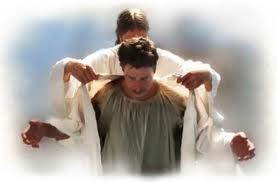
So, if all men are sinners, and thereby separated from God, then how can we have that relationship restored? Not by anything is us, but only by an alien, or exterior, holiness. "Then he showed me Joshua the high priest standing before the angel of the Lord, and Satan standing at his right hand to accuse him. And the Lord said to Satan, 'The Lord rebuke you, O Satan! The Lord who has chosen Jerusalem rebuke you! Is not this a brand plucked from the fire?' Now Joshua was standing before the angel, clothed with filthy garments. And the angel said to those who were standing before him, 'Remove the filthy garments from him.' And to him He said, 'Behold, I have taken your iniquity away from you, and I will clothe you with pure vestments.' And I said, 'Let them put a clean turban on his head.' So they put a clean turban on his head and clothed him with garments. And the angel of the Lord was standing by." (Zechariah 3:1-5). This vision symbolizes salvation, with our sin and its punishment taken away and replaced with the righteousness of Christ. This is called imputation.

This is salvation! The holiness that we need in order to be restored to fellowship with God comes not from ourselves, but from Jesus! "I will greatly rejoice in the LORD; my soul shall exult in my God, for He has clothed me with the garments of salvation; He has covered me with the robe of righteousness, as a bridegroom decks himself like a priest with a beautiful headdress, and as a bride adorns herself with her jewels" (Isaiah 61:10).

"O LORD, You will ordain peace for us, for You have indeed done for us all our works" (Isaiah 26:12).


Saturday, July 21, 2018

Pride and the Burden of Sin

Martin Luther said something with which I agree completely: "For as long as he [i. e., man] is persuaded that he himself can do even the least thing toward his salvation, he retains some self-confidence and does not altogether despair of himself, and therefore he is not humbled before God, but presumes that there is - or at least hopes or desires that there may be - some place, time, and work for him, by which he may at length attain salvation."

He is putting into his own words the principle of I Peter 5:5 (quoting in turn from Proverbs 3:34): "God opposes the proud but gives grace to the humble." 


This is the same fault with which Jesus charged the Pharisees in the parable of Luke 18:9-14: "He also told this parable to some who trusted in themselves that they were righteous, and treated others with contempt: 'Two men went up into the temple to pray, one a Pharisee and the other a tax collector. The Pharisee, standing by himself, prayed thus: "God, I thank you that I am not like other men, extortioners, unjust, adulterers, or even like this tax collector. I fast twice a week; I give tithes of all that I get." But the tax collector, standing far off, would not even lift up his eyes to heaven, but beat his breast, saying, "God, be merciful to me, a sinner!" I tell you, this man went down to his house justified, rather than the other. For everyone who exalts himself will be humbled, but the one who humbles himself will be exalted.'" The Pharisee erroneously believed that sin is a problem that other people have. Jesus said that His ministry isn't directed to such people, because "God opposes the proud." Rather, He would give grace, His attention, to those who understand their sinfulness and need for salvation: "Those who are well have no need of a physician, but those who are sick" (Luke 5:31). I am writing this because I run into people, mainly Catholics and Mormons, who say they believe in the atoning work of Jesus, but not as salvation itself. They see it, instead, as as the completion of their own works. Mormons even have a phrase for it, "We know that it is by grace that we are saved, after all we can do" (II Nephi 25:23, in the Book of Mormon). 
It is only when the Holy Spirit, through the Law, exposes to such people the true wickedness of their hearts, as in the case of the tax-collector above, that they are then enabled to look to Jesus alone for salvation.

Wednesday, June 27, 2018

Total Depravity: Can the Leopard Change His Spots?

I expect unbelievers to deny that they are sinners. That is the nature of unbelief. If they understood sin, then they would understand the holiness of God and their need for a Savior. However, I am always bewildered by Christians, claiming to believe in the Bible, who deny the wickedness of men. Not that they phrase it that way, of course, but rather that they deny the logical consequences of that wickedness.

Paul tells us that the unregenerate are "dead in trespasses and sins" (Ephesians 2:1). Yet, such Christians unconsciously change that to "sick in trespasses and sins." And, as a sick person can act to make himself well, they believe that the natural man has the ability to treat his own spiritual condition.
Nicodemus

However, Scripture deals with that belief in other places, too. For example, we read, "Can the Ethiopian change his skin or the leopard his spots? Then also you can do good who are accustomed to do evil" (Jeremiah 13:23). The Prophet asks a rhetorical question, Can a man change his skin color? Or can a leopard wish away his spots? And the implied answer to both questions is "no." In the same way, he says, the wicked cannot choose to change to good. Jesus makes the same point: "What comes out of the mouth proceeds from the heart, and this defiles a person. For out of the heart come evil thoughts, murder, adultery, sexual immorality, theft, false witness, slander. These are what defile a person" (Matthew 15:18-20).

How, then, can anyone be changed? Are we doomed to the natural condition in which we were born? The Bible answers those questions, too: "I will give you a new heart, and a new spirit I will put within you. And I will remove the heart of stone from your flesh and give you a heart of flesh. And I will put My Spirit within you, and cause you to walk in My statutes and be careful to obey My rules" (Ezekiel 35:26-27).

The answer is not to gloss over the sin of man. Rather, we depend on the divine Cardiologist to perform radical surgery, removing our dead spiritual hearts, to replace them with new living hearts, rendered thereby able to love God and to obey Him. This is what Jesus calls being born again (John 3:3-8). It is the new birth which changes dead sinners to living saints.

Saturday, October 28, 2017

Abandoning the Law is Abandoning Righteousness

I admit that it is chic to speak against biblical Law. Even among non-dispensationalists, the idea has become accepted that the Law was a standard of righteousness under the Old Testament, but not under the New. It is usually expressed by a perversion of Romans 6:14: "You are not under law but under grace." That it is a perversion, not a legitimate use of Paul, is evident if the reader continues to the next verse: "What then? Are we to sin because we are not under law but under grace? By no means!" And, of course, none of these people ever quotes Romans 3:31: "Do we then overthrow the law by this faith? By no means! On the contrary, we uphold the law." Paul is addressing the question of the origin of righteousness. Can any man be made righteous by the Law? No! Righteousness comes only by grace through faith: "Not having a righteousness of my own that comes from the law, but that which comes through faith in Christ, the righteousness from God that depends on faith" (Philippians 3:9, see also Romans 9:31-32).

This error among Christians has had a devastating effect on American society. By presupposing a false view of the Law, Christians have had no platform for addressing public wickedness. And Scripture warns of this consequence: "Those who forsake the law praise the wicked, but those who keep the law strive against them" (Proverbs 28:4). The great catastrophes of today's society, such as abortion, are not the result of abandonment of biblical morality by the wicked, but by its abandonment by Christians

Christians hold protests, rallies, prayer meetings, in fact every variety of spiritual activity, hoping to change society. Why has our effort been such a dismal failure? Scripture answers that question, too: "If one turns away his ear from hearing the law, even his prayer is an abomination" (Proverbs 28:9). While God's professing people are refusing to hear His word, He is refusing to hear our prayers. Immoral people are not the cause of that; the self-righteous supposed people of God are!

Jesus's words to the Pharisees apply equally to modern America's evangelicals: "You leave the commandment of God and hold to the tradition of men" (Mark 7:8). What tradition? The tradition of despising God's Law.


Saturday, May 13, 2017

The Hermeneutics of "Law" in the Bible


I often hear people refer to biblical Law in ways which are so obtuse that I wish I could unhear them. That is a gift, which God has, so far, not seen fit to grant me.

On one hand, I have Catholics and Mormons who deny justification by grace through faith alone by insisting that the works which are excluded by Paul refer not to all works, but rather only those involving the ceremonial law of Moses. "For by works of the law no human being will be justified in His sight, since through the law comes knowledge of sin" (Romans 3:20). And it is certainly true that the Old Testament sacrifices were according to Law. 

On the opposite extreme, I am frequently confronted by dispensationalists who parrot "you are not under law but under grace" (Romans 6:14) over and over if I say anything favorable about God's Law.

Of course, both views are unbiblical. One is an effort to sustain a works righteousness by which the believer cooperates in his own justification. The other is bald-faced antinomianism, a false view that the free grace of God means that a person can be a true believer no matter how he lives. Unbiblical and false!

The error of both sides described above is the result of equivocation. They take one particular meaning of the word "law" and use it in a different context. It is as if I said, "John is from Jamaica," and you take it to mean the island of Jamaica, when I actually meant that he is from the city of Jamaica, New York.

The word "law ("torah" in Hebrew or "nomos" in Greek) has eight different meanings in Scripture:
1) law of nature (Rom. 2:14-15)
2) the corruption of human nature (Rom. 7:23)
3) the entire word of God (Ps. 19:7-8)
4) the books of Moses (Luke 24:44)
5) the gospel (Rom. 3:27, Isa. 2:3)
6) the civil laws (John 19:7)
7) the ceremonial laws (Heb. 10:1)
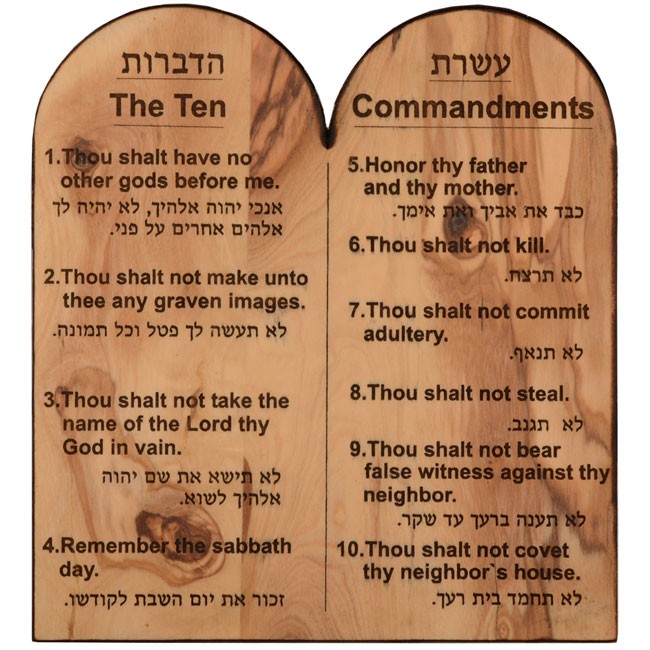
8) moral law, especially the Ten Commandments (Matt. 22:36-38)

When Paul tells us that justification by faith necessarily excludes any works of the Law, he cannot be referring to the works of the Mosaic ceremonies, i. e., number 7 above, because very few of them were performed by the individual believer; it was only the priests that performed, for example, the sacrifices. And, since those ceremonies ended with the destruction of the Temple in 70AD, it would be a tautology to say that we are not justified by those same ceremonies.

Also, when Paul says that "we are under grace, not under law," he cannot mean that we have no obligation to the moral Law of God (number 8 above), because those two things are directed to different ends. Grace is the application of the merits of Christ to the elect. it is how we are justified. The moral Law, however, as that name implies, is a matter of how to live. One cannot be brought to life by a rule of life. That can only be done by grace. Once grace has brought new life, the Law then tells the believer how to live that life. It's like a car loan. That loan is the means for attaining a new car. However, the car loan is not the means for driving the car. It takes a manual to do that. The loan is the grace, the manual is the Law. They are not in opposition, as long as neither is used in place of the other.

We see this described vividly in Ezekiel 36:26-27: "I will give you a new heart, and a new spirit I will put within you. And I will remove the heart of stone from your flesh and give you a heart of flesh. And I will put My Spirit within you, and cause you to walk in My statutes and be careful to obey My rules. You shall dwell in the land that I gave to your fathers, and you shall be My people, and I will be your God." The new heart, a biblical image of justification, is God's gracious act, in which the new believer makes no contribution. That is grace. The effect of this new heart is that he is now enabled to obey God's Law (not perfectly, but progressively in this life). That is sanctification.

Monday, April 3, 2017

Unprofitable Servants: The Works of Men as Merit

I run into too many people who believe that they contribute to their own salvation with good works - Mormons, Catholics, Jehovah's Witness, the average American Evangelical. I'm not surprised by that belief; it is merely the remnant in us of fallen Adam, who fell into sin when he decided that he wanted autonomy more than he wanted the holiness of God.

What does surprise me, however, is that such people believe that God also credits their works for part of their salvation. They'll even use extra-spiritual language, asserting that God's grace makes their works meritorious. But it doesn't. Grace is grace, and works are works (Romans 11:6); they are mutually exclusive.

What's more, Jesus rejects the idea of merit in our works: "You also, when you have done all that you were commanded, say, 'We are unworthy servants; we have only done what was our duty'" (Luke 17:10).

That should be a mind-blowing statement to most professing Christians! Jesus says that, if you lived every day in perfect obedience to every command of God, then you have done only the minimum that is expected from you. You are an unprofitable servant

That's why our works, no matter how perfect they may be - and I am being extremely generous in allowing that! - cannot qualify before God as any part of justification. It can't be works alone; it cannot be grace plus works; it cannot be works completed by grace. It can only be grace alone: "For we hold that one is justified by faith apart from works of the law" (Romans 3:28, emphasis mine).

Saturday, November 7, 2015

The Mosaic Covenant: Grace, Not Works

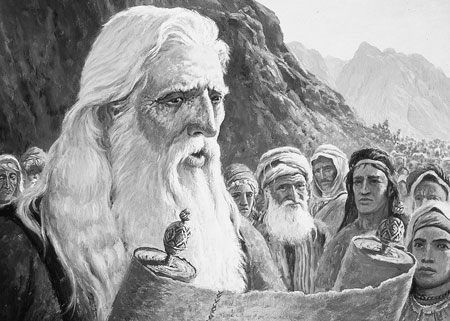
Moses, Reading the Law
There is a common misunderstanding, usually connected to a dispensational view of scripture, that holds that the Mosaic covenant is a religion of works salvation. In fairness, I admit that Paul refers to justification "by the works of the Law," but that reference is to the Pharisaic misuse of the Law (Rom. 9:32), not its proper purpose. Rather, the Law was to serve as a temporary guardian (KJV, "schoolmaster"), until the coming of Christ (Gal. 3:19, 24). The Law - and I am talking here of the ceremonial Law, not the moral - marked that which or who was clean, from that which or who was unclean. It created a hedge around the covenant people that separated them, sanctified them, as distinct from the rest of humanity. Why? That they would be reserved as a conduit through which the Messiah would come, the Savior of the world (John 3:16 and Acts 4:12).

Why did it matter among what nation the Redeemer would be born? That goes back to the original promise of the Gospel, Genesis 3:15: "I will put enmity between you and the woman, and between your offspring and her offspring; He shall bruise your head, and you shall bruise His heel." This promise was given immediately after the Fall, and especially touched Eve, the first human to give in to the temptations of Satan. It was a balm to her conscience to know that her descendant would also be the means of undoing what she and Adam had done. That is why the lineage of Christ is so carefully recorded. Of course, all mankind is the seed of Eve in a general sense, but His lineage is laid out explicitly, legally (i. e., covenantally) in Matthew 1, and genetically in Luke 3. A record is given of exactly in what way He represented her lineage. In our culture, that isn't considered important, but in theirs it was.

What makes me especially to marvel is that this story is carried all the way to the other end of the Bible. In Revelation 12:1-6, the Apostle John describes a woman who gives birth to a son, and a red dragon who persecutes both her and that son. I believe that the woman represents both Eve personally and the covenant people of Israel federally, and the son is, of course, Jesus Christ (see also Rom. 16:20). John explicitly tells us that the dragon is the serpent from the garden (Rev. 12:9). This is the end of the need for the restriction of the lineage, which is why God does away with the ceremonial law, and opens the Church to the Gentiles, those who had formerly been legally unclean (both aspects are described in the account of Peter's dream in Acts 10:10-29; see also Eph. 2:11-16).

This is why I insist that the Mosaic covenant is not a covenant of works, but is rather a temporary administrative stage of the covenant of grace. It was a necessary preparation for the coming of the full salvation that we have in Jesus Christ. It is not, and never was, an opportunity for the Jews - or anyone else - to earn their way to eternal life through good works. This is clear even in its establishment. The account of the giving of the Ten Commandments is found in Exodus 20:1-17. However, verse 2, the Preamble, says, "I am the Lord your God, who brought you out of the land of Egypt, out of the house of slavery." Before giving the shalls and shall-nots, God reminds the people of the redemption that He has already provided them, as the foundation on which the Law was to be built. Justification came before the Law (Rom. 4:10, 14; Gal. 3:17).

Contrary to the teachings of classical dispensationalism, there was never a time  - i. e., after the Fall of Adam - in which any man could be saved by works. In Adam, we all became sinners (Rom. 5:12). We start life as sinners (Psalm 51:5, 58:3). This is the key: sin does not make us sinners; we sin because we are already sinners. It is comparable to a runner in a race who runs facing the wrong way; no matter how fast he runs, he is incapable of winning the race. If that weren't the case, then Jesus would never have needed to come, to suffer, and to die on the cross. As Paul says (Gal. 3:21-22), "if a law had been given that could give life, then righteousness would indeed be by the law. But the Scripture imprisoned everything under sin, so that the promise by faith in Jesus Christ might be given to those who believe."

Saturday, October 31, 2015

Hypocrisy and True Spiritual Peace

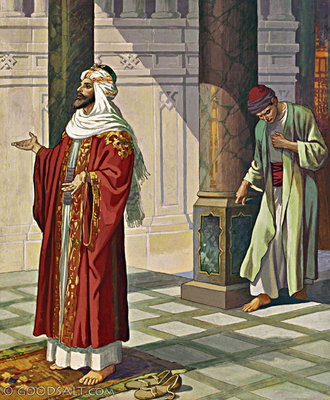
In Luke 18:9-14, Jesus told a deep parable, that of the Pharisee and the Tax Collector. In it, we see strikingly different attitudes in their approaches to God, representative of those of people everywhere. The Pharisee prays (verses 11-12), "God, I thank you that I am not like other men, extortioners, unjust,
The Pharisee and the Tax Collector
adulterers, or even like this tax collector.
I fast twice a week; I give tithes of all that I get." Then He turns to the tax collector, who prays (verse 13), "God, be merciful to me, a sinner!" Then the Lord ends the parable with His own inspired synopsis (verse 14): "I tell you, this man went down to his house justified, rather than the other. For everyone who exalts himself will be humbled, but the one who humbles himself will be exalted."

Notice how much longer the prayer of the Pharisee is (see Matthew 6:1-4). He uses thirty-three words in this English version, all of them extolling his virtues. In contrast, the tax collector uses just seven words, begging for God's mercy on his sins. What a contrast! Thirty-three words to stand condemned, but only seven to be justified!

The Pharisee in the story exemplifies something that the Puritan Thomas Watson said: "The wicked may have something which looks like peace, but is not. They may be fearless and stupid, but there is a great difference between a stupified conscience and a pacified conscience. 'When a strong man armed keepeth his palace, his goods are in peace.' Luke 11:21. This is the devil's peace. He rocks men in the cradle of security. He cries, 'Peace, peace,' when men are on the precipice of hell. The seeming peace that a sinner has is not from the knowledge of his happiness but from the ignorance of his danger."

This same false, self-deceived spiritual peace is spoken of by the Prophet Jeremiah (Jer.  3:3-5): "The showers have been withheld, and the spring rain has not come; yet you have the forehead of a whore; you refuse to be ashamed. Have you not just now called to Me, 'My father, you are the friend of my youth— will He be angry forever, will He be indignant to the end?' Behold, you have spoken, but you have done all the evil that you could." In a time of apostasy, the Jews spoke loving words to God, yet devoted themselves to their wicked deeds and idolatries, as if God could be deceived. Yet, He wasn't. And the Prophet Isaiah is even more blunt (Is. 57:21): "'There is no peace,' says my God, 'for the wicked.'"

Watson explains what is necessary for true peace between the sinner and his God: "The graft must first be inoculated into the tree before it can receive sap or nourishment from it; so we must first be
A tree prepared for grafting in a new branch.
ingrafted into Christ before we can receive peace from Him." It is only as the believer is connected to Christ by faith that he can experience true peace of conscience. Isaiah also teaches this (Is. 32:17): "The effect of righteousness will be peace, and the result of righteousness, quietness and trust forever." See also Isaiah 9:6-7 and John 16:33. In contrast, the one who depends on his own worthiness is described in Deuteronomy 29:19-20: "The one who, when he hears the words of this sworn covenant, blesses himself in his heart, saying, 'I shall be safe, though I walk in the stubbornness of my heart,' the Lord will not be willing to forgive him, but rather the anger of the Lord and His jealousy will smoke against that man, and the curses written in this book will settle upon him, and the Lord will blot out his name from under heaven." That is the fate of the Pharisee in the parable with which I began.

What is righteousness? It is a standard of action and motivation purely consistent with the commands and nature of God. Who meets that standard? No one but Jesus, "for all have sinned and fall short of the glory of God" (Romans 3:23). That's why it is His righteousness, not our own, that we need, when we seek to approach God: "[They] who pursued a law that would lead to righteousness did not succeed in reaching that law. Why? Because they did not pursue it by faith, but as if it were based on works" (Romans 9:31-32). What righteousness? "The righteousness of God through faith in Jesus Christ for all who believe" (Romans 3:22).

Anyone who follows the example of the Pharisee, satisfied with his own goodness to qualify him for eternal life, condemns himself. The one who, like the tax collector, recognizes his own unrighteousness, but looks to that of Christ alone, is justified, and receives both peace with God and peace of conscience.

Tuesday, December 16, 2014

How Can a Man Be Righteous Before God?

In the Bible, we find comments like this (Habakkuk 1:13): "You are of purer eyes than to see evil, and cannot look at wrong." Or Job 13:16: "The godless shall not come before Him." And Isaiah 59:2: "Your iniquities have made a separation between you and your God, and your sins have hidden His face from you, so that He does not hear." Or the hardest of all (Hebrews 12:14): "Strive for the holiness without which no one will see the Lord" [emphasis mine].

Any person who hasn't completely hardened his conscience should tremble at those verses, "for all have sinned, and fall short of the glory of God" (Romans 3:23). How can any of us stand before God, knowing in our hearts that "all our righteous deeds are like a polluted garment" (Isaiah 64:6)? If the best I can do is a filthy rag by the standards of God's righteousness, how can I have any hope for more than His just judgment?

Thank God that He has given us an undeserved solution for our sin natures. Just before the verse above from Romans, the Apostle Paul tells us (Rom. 3:21-22), "The righteousness of God has been manifested apart from the Law, although the Law and Prophets bear witness to it - the righteousness of God through faith in Jesus Christ for all who believe." Ah, here is hope! Here is the holiness that we do not have in ourselves!

In theology, this is called "imputed righteousness," i. e., a righteousness, a holiness, that is outside
ourselves, but is considered ours in God's eyes, by the means of faith. "With the heart one believes and is justified, and with the mouth one confesses and is saved, for, the Scripture says, 'Everyone who believes in Him will not be put to shame'" (Romans 10:10-11). Even the Patriarch Abraham needed this holiness: "If Abraham was justified by works, he has something to boast about, but not before God. For what does the Scripture say? 'Abraham believed God, and it was counted to him as righteousness'" (Romans 4:2-3).

The Catholic Church tries to steal our assurance in this righteousness by quoting James 2:24, "You see that a person is justified by works and not by faith alone." She claims that this verse means that we receive eternal life only by a mixture of faith and good works. I ask, how can a person be saved, even in part, by offering God a "polluted garment" (Isaiah 64:6)? But they make their case only by ignoring the rest of what James says. In the same paragraph (James 2:18), that brother of Jesus tells us, "Show me your faith apart from works and I will show you my faith by my works." So, where Paul is talking about our justification before God, James is talking about our justification before men. And he is correct: a faith that justifies us before God will necessarily result in a changed life that demonstrates our justification before the people around us. 

In contrast, the Westminster Confession of Faith (XVIII:1) says, "such as truly believe in the Lord Jesus, and love him in sincerity, endeavoring to walk in all good conscience before him, may in this life be certainly assured that they are in a state of grace, and may rejoice in the hope of the glory of God: which hope shall never make them ashamed." I take great comfort in that. And I find this, alone, to be sufficient grounds to be a Presbyterian.

And knowing that Satan will throw other doubts in our path, the Confession continues correctly (paragraph 4): "True believers may have the assurance of their salvation divers ways shaken, diminished, and intermitted; as, by negligence in preserving of it; by falling into some special sin, which woundeth the conscience, and grieveth the Spirit; by some sudden or vehement temptation; by God's withdrawing the light of his countenance and suffering even such as fear him to walk in darkness and to have no light: yet are they never utterly destitute of that seed of God, and life of faith, that love of Christ and the brethren, that sincerity of heart and conscience of duty, out of which, by the operation of the Spirit, this assurance may in due time be revived, and by the which, in the meantime, they are supported from utter despair."

Sunday, November 16, 2014

Sola Fide and the Catholic Use of James 2:24

As any Christian should know, the Apostle Paul tells us (Romans 3:28), "We hold that one is justified by faith apart from the works of the law." Faith is the means - not the basis, which is the sacrifice of Christ on the cross - of justification before God, that is, a judicial declaration of guiltlessness.

While claiming not to teach salvation based on works from one side of the mouth, with the other Catholics immediately throw up James 2:24: "You see that a person is justified by works and not by faith alone."

Hmmm, the Bible-believer might think, were the Reformers wrong in decrying the Catholic doctrine of salvation? Are we saved partly by works? This thinking could severely undermine the assurance of salvation. For the Catholic, an obvious question would be, How do I know when I have added enough good works to qualify for justification?

However, their whole argument fails with just a little consideration of context. For this verse, the context is the entire paragraph, James 2:18-26. Verse 18, the second half (emphasis added), is the key: "Show me your faith apart from your works, and I will show you my faith by my works" [emphasis mine]. He says "show me" and "show you," but never "show God." James isn't arguing with Paul over how the believer is justified in the eyes of God! He is talking about how we demonstrate our faith before the eyes of people around us. He is stating, in different words, the same principle stated by Jesus in Matthew 7:16: "You will recognize them by their fruits."

I write this for two purposes. The first is to reinforce the confidence of the Protestant in the face of Catholic abuse of Scripture. The second is in hope that God will open the eyes of a Catholic reader, leading him to recognize that he has been deceived. I appeal to you to turn to Christ in faith alone, eschewing any confidence in your good works to get you into eternal life. In God's eyes, the best that you can do is as "a polluted garment" (Isaiah 64:6). Your best works are repugnant to Him.

Saturday, October 5, 2013

A Christian Apologetic Against Buddhism

Buddhism sets a very different spiritual goal from evangelical Christianity. Where a Christian finds eternal life in redemption in Jesus Christ, the Buddhist seeks a cessation from eternal existence. Not only does this present a challenge to the missionary in a predominantly-Buddhist host culture, but it also challenges the evidential apologist. How does he approach "common ground" with a Buddhist, when there is no common ground?

On the other hand, the presuppositional apologist has a clear opening with the Buddhist.

According to Buddhism, the destiny of the individual is the consequence of karma. That is, that his future incarnations are  buoyed up or weighed down according to his good works or wickedness in this life. The goal of the Buddhist is to become selfless, a nonentity, thus escaping from the cycle of reincarnations. Also, according to Buddhism, all sentient creatures, even deities, are subject to this cycle; there is no objective umpire outside that judges the good or evil that the individual does.

Here is the presuppositional opening: the Buddhist depends on the inner marks of his conscience to judge his own works. While claiming not to know the God of the Bible, the Buddhist is guilty of precept stealing, the unspoken admission of Biblical truth to sustain his unbelief.

In this case, the Buddhist is relying on conscience, the inner testimony that his works are consistent with, or contrary to, the law of God. In fact, the Christian understands that conscience is the result of the law placed in our hearts by that same God. We see this in Psalm 37:31, where David testifies that "the law of God is in his [i.e., the righteous man's] heart." And in Jeremiah 31:33, where Jehovah, the God of the Bible, says, "I will put My law within them." This is an aspect of what Paul tells us in Romans 1:18-25, that the unbeliever knows in his heart that Jehovah is God, but suppresses that knowledge in unrighteousness.

Thus, with the Buddhist, the Christian must expose this tacit admission, both that Jehovah is God, and that He has placed the knowledge of righteousness in the hearts of men. Thus, the Buddhist is accountable, not to a faceless karma, nor to any opportunities for new lives, but rather to a righteous Judge, with only the alternatives of eternal life or eternal  death to come.

Tuesday, July 30, 2013

Apostasy: A Critique of "Rome Sweet Home" by Scott Hahn


It is rare for me to be completely revolted when reading a book, especially a book on some aspect of theology, even theology that I disagree with. However, this book, the tale of the journey of a Presbyterian minister and his wife to conversion to Roman Catholicism, outraged me, with its appeals to sentiment, ignorance, and strawman arguments. Especially considering that it was written by a clergyman, someone that I would expect to write on a certain moral level. I definitely didn't find that level maintained in this book. In fact, two Bible verses come to mind to express my reaction. The first is Acts 20:30, "From among your own selves, will arise men speaking twisted things, to draw away the disciples after them." The other is I John 2:19, "They went out from us, but they were not of us; for if they had been of us, they would have continued with us." This book is a tale of bald-faced apostasy, with justifications that only the ignorant could swallow.

Let me begin with the most-deceptive elements. Scott Hahn begins by describing himself as a hardcore Calvinist in seminary. What he doesn't explain is why he chose to go to Gordon-Conwell Seminary, which is evangelical, but not Reformed. However, the answer becomes evident, even if unspoken. On page 31, Hahn informs us that he had come to "discover" that Saint Paul did not teach the doctrine of sola fide (justification by faith alone). Any Protestant reading that should be struck dumb, because we immediately think of such Pauline references as Romans 4:5, "To the one who does not work, but believes in Him who justifies the ungodly, his faith is counted as righteousness." Then Hahn adds his assertion that sola fide isn't taught anywhere in Scripture, claiming James 2:24 as his support. The reason I make such a point of this is to demonstrate that Hahn had abandoned Protestantism long before his official conversion.

We see the reason for this when Hahn mentions that he had become involved with Norman Shepherd, who was forced to leave Westminster Seminary for undermining the biblical view of justification. Hahn even mentions Shepherd's heresy trial, demonstrating that he was well-aware that those views were outside the pale of Reformed doctrine. Shepherd was the father of the Federal Vision movement, which has disrupted Reformed churches with an attempt to bring back this exact Catholic doctrine of justification. Hahn went to his first pulpit with these views, at a Federal Vision church, but does not say that he informed his presbytery of his views, a deceptive act. While there, he also began to teach at a tiny seminary, i.e., in spite of the "major seminary" claim of one article promoting him. Again, we see that this "Presbyterian" minister was never really Presbyterian.

In addition to his justification heresy, Hahn began the ministry with erroneous views on the sacraments. He complains, p. 49, about the Protestant doctrine of the Lord's Supper - or Eucharist, as he prefers to say - that it is a mere symbol. This is repeated on page 56. Unfortunately for him, that is not the Protestant view, at least among Lutherans, who hold to consubstantiation, or the Reformed, who hold to a spiritual, noncorporeal Real Presence. As the Westminster Confession of Faith XXIX:7 says, "Worthy receivers outwardly partaking of the visible elements in this sacrament, do then also, inwardly by faith, really and indeed, yet not carnally and corporally, but spiritually, receive and feed upon Christ crucified, and all benefits of His death; the body and blood of Christ being then, not corporally or carnally, in, with, or under the bread and wine; yet, as really, but spiritually, present to the faith of believers in that ordinance, as the elements themselves are to their outward senses." Which solution would be worse: that Hahn was ignorant of this doctrine? or that he was knowingly railing against a doctrinal strawman?

One of the endorsements on the back cover of the book says, "This book is inspiring and exciting for any reader desirous of rediscovering, from a scripture base, the reasons why the Catholic Church believes, teaches, and practices its doctrines." But this is exactly what the book doesn't do.We read statements such as, "I had fallen head over heels in love with the Lord in the Eucharist" (p. 88), and "I felt the Lord unleash his power through his mother" (p. 89). This is sentiment, not biblical exegesis. He also mentions direct revelations "from the Lord" on pages 114 and 115. Voices in the head are, again, not biblical exegesis.

This book, as well as other publications from Hahn, are promoted by (some, not all) the Catholic Church in an effort to convert Protestants. You can see them at his website, linked at the top, as well as here. This is what plays into the Acts 20:30 reference above; Hahn hasn't just committed apostasy himself, with his family, he wants to convince the rest of us evangelicals to follow him! God's warning to us is found in Deuteronomy 7:4, "[He] would turn away your sons from following Me, to serve other gods. Then the anger of the Lord would be kindled against you, and He would destroy you quickly." And God's warning to Hahn is found in Deuteronomy 13:5, "That prophet shall be put to death, because he has taught rebellion against the Lord your God."

A video by two ex-Catholic priests with a viewpoint opposed to Hahn's can be seen here

Monday, August 2, 2010

Putting on the Righteousness of Christ

"We have all become like one who is unclean,
and all our righteous deeds are like a polluted garment.
We all fade like a leaf, and our iniquities, like the wind, take us away."
- Isaiah 64:6

Using clothing as a metaphor for sin is a recurring theme in Scripture. Here, Isaiah compares the best actions of fallen men to filthy garments. The theme continues in Zechariah 3:3-5.

"Now Joshua [the high priest, v.1] was standing before the angel, clothed with filthy garments. And the angel said to those who were standing before him, 'Remove the filthy garments from him.' And to him he said, 'Behold, I have taken your iniquity away from you, and I will clothe you with pure vestments.' And I said, 'Let them put a clean turban on his head.' So they put a clean turban on his head and clothed him with garments. And the angel of the Lord was standing by." Confer also Exodus 28:36-38. The Angel of the Lord represents the presence of the pre-incarnate Second Person of the Trinity, the Christ of the New Testament.

The point here is that the filthy garments of sin represent the natural condition of fallen man. In contrast, the clean garments are placed upon him by the external application of Christ. This is the difference between grace and works-righteousness.

In the New Testament, the Apostle picks up the changing-of-garments theme, commanding us to "put on Christ," in Romans 13:14 and Galatians 3:27. What does this gain us? Philippians 3:9, "[that I may] be found in Him, not having a righteousness of my own that comes from the law, but that which comes through faith in Christ, the righteousness from God that depends on faith." As English Presbyterian Walter Marshall said in his book, The Gospel Mystery of Sanctification, "The end of Christ's incarnation, death, and resurrection, was to prepare and form a holy nature and frame for us in Himself, to be communicated to us by union and fellowship with Him; and not to enable us to produce in ourselves the first original of such a holy nature by our own endeavours."

So, what do you want to wear when you stand before God in eternity: the polluted garments that you have from Adam? Or the clean garments of Christ's righteousness, received by faith?

Thursday, June 10, 2010

Deuteronomy 9:4-6, Not for Our Righteousness


"Do not say in your heart, after the Lord your God has thrust them out before you, 'It is because of my righteousness that the Lord has brought me in to possess this land,' whereas it is because of the wickedness of these nations that the Lord is driving them out before you. Not because of your righteousness or the uprightness of your heart are you going in to possess their land, but because of the wickedness of these nations the Lord your God is driving them out from before you, and that He may confirm the word that the Lord swore to your fathers, to Abraham, Isaac, and to Jacob. Know, therefore, that the Lord your God is not giving you this good land to possess because of your righteousness, for you are a stubborn people."

On the verge of the conquest of the Promised Land, Jehovah yanks the reins of Israel. He knows that their wicked hearts would assume the credit for the promise, rather than to give the credit to His grace. In correcting that attitude, He lets them know that His blessings on them are not as wages to their righteousness, because they are instead a stubborn people, i.e., stubbornly wicked. This is the same declaration made at the other end of the Bible to the church at Laodicea, Revelation 3:17, "For you say, I am rich, I have prospered, and I need nothing, not realizing that you are wretched, pitiable, poor, blind, and naked." So, that spiritual pride can certainly not be described as a special quality of ethnic Israel.

Paul repeated that warning in Titus 3:5, "He saved us, not because of works done by us in righteousness, but according to His own mercy, by the washing of regeneration and renewal of the Holy Spirit."

In contrast, Jehovah calls Israel to obedience, lest they in turn be overthrown and banished from the land (see especially chapter 28, starting at verse 25). God at the beginning of Deuteronomy is scattering the rejected peoples to make way for Israel. But at the end, He threatens to scatter Israel to make way for another people. Deuteronomy 28:64 tells them, "And the Lord will scatter you among all peoples, from one end of the earth to the other..." And we see God carry out this threat twice, temporarily under the Assyrians and Babylonians, and then finally in the Roman conquest of 70 AD.

The same covenant promises and warnings are made to Christians. In Revelation 3:9, we see the initial replacement, this time of the unbelievers of ethnic Israel by the Christian Gentiles: "Behold, I will make those of the synagogue of Satan, who say they are Jews and are not, but lie - behold, I will make them come and bow down before your feet and they will learn that I have loved you." See also Romans 11:17-24. The covenant threats follow quickly in the Revelation, in the case of the church at Laodicea, which God threatens "to spit out of My mouth" (Rev. 3:16), followed by a very deuteronomish (is that a word?) warning in verse 19, "Those whom I love, I reprove and discipline, so be zealous and repent."

Christians today read the description of Israel in Deuteronomy 9, but consistently fail to recognize themselves in it. Too often, we say, "You go, God; let 'em have it!" without considering whether we are urging judgment on ourselves. If Israel received the promise contrary to their worth, in the grace of God alone, how can we be spiritually worthy? This is the error of attitude behind free-will theology, this concept of worthiness on our part. There is none. Instead, we are "wretched, pitiable, poor, blind, and naked."

Sunday, April 18, 2010

Christ Alone Our Righteousness

"My mouth will tell of Your righteous acts,
of Your deeds of salvation all the day,
for their number is past my knowledge.
With the mighty deeds of the Lord God I will come;
I will remind them of Your righteousness, Yours alone."
- Psalm 71:15-16

A recent poll showed that most American professing Christians, whether Catholic or Protestant, believe that salvation is based partly on works. I would suggest that this is because of the insidious Pelagian influence inherent in the Arminianism that dominates American evangelicalism.

Good works certainly aren't the basis of the salvation as revealed in Scripture. In the anonymous Psalm referenced here, the writer boasts not at all in his own righteousness, but rather that of his divine Redeemer alone. The Prophet Isaiah agreed, comparing his own righteousness to a woman's menstrual rag (Is. 64:6).

The Apostle Paul, too, repudiated his own righteousness, grasping hold of Christ's righteousness alone. Look at Philippians 3:8-9, "For His sake I have suffered the loss of all things and count them as rubbish, in order that I may gain Christ and be found in Him, not having a righteousness of my own that comes from the law, but that which comes through faith in Christ, the righteousness from God that depends on faith." And Romans 5:19, "For as by one man's [i.e., Adam's] disobedience the many were made sinners, so by the one man's [i.e., Christ's] obedience the many will be made
righteous." Or what of I Corinthians 1:30-31, "[God] is the source of your life in Christ Jesus, whom God made made our wisdom and our righteousness and sanctification and redemption. Therefore, as it is written, 'Let the one who boasts, boast in the Lord'," that is, not in himself. And a little later, in II Corinthians 5:21, "For our sake He made Him to be sin who knew no sin, so that in Him we might become the righteousness of God."

Finally, heed Paul's warning, in Romans 10:3, "Being ignorant of the righteousness that comes from God, and seeking to establish their own, they did not submit to God's righteousness." It's an either-or thing. If you are looking to your own good works, your own righteousness, to earn you a pass to eternal life, then you have missed the train. That is the biblical Gospel. If you look at all to your own works to justify you, then you don't understand the righteousness of God and have not received the righteousness that comes only by faith. You are lost, unless you repent.

Friday, November 6, 2009

The Sorrow of Moral Self-Improvement

 
"When the unclean spirit has gone out of a person, it passes through waterless places seeking rest, but finds none. Then it says, 'I will return to my house from which I came.' And when it comes, it finds the house empty, swept, and put in order. Then it goes and brings with it seven other spirits more evil than itself, and they enter and dwell there, and the last state of that person is worse than the first. So also will it be with this evil generation."
- Matthew 12:43-45

Jesus is here addressing the Pharisees. In Luke 11:39, Jesus acknowledged the external righteousness of the Pharisees. In fact, He even encouraged His disciples to follow their instructions (Matthew 23:3). Yet He also compares them to "whitewashed sepulchers" ("tombs," verse 27), because they exhibited an external righteousness, while remaining spiritually-dead inside.

Thus is the fate of the self-reformed man. And there are many such men, whether we are talking about the criminal that reforms his life, or the alcoholic who gives up drink, or the adulterer who returns to his wife. But the warning of Jesus is that reform doesn't save a man, but rather it leaves him yet a sinner in Satan's power. Satan is unafraid of self-reform, because it merely deepens the deception of the self-improved man. Rather, it is only sanctification by the Holy Spirit, arising from redemption in the blood of Christ, which breaks the power of sin and Satan over fallen man. As Paul testifies (Romans 8:29-30), "For those whom He foreknew He also predestined to be conformed to the image of His Son, in order that He might be the firstborn among many brothers. And those whom He predestined, He also called, and those whom He called He also justified, and those whom He justified He also glorified."