Showing posts with label christ's priestly office. Show all posts

Saturday, July 27, 2019

The Glorious Death of Christ Is Far More Than Any Mere Crucifix

Besides its Second Commandment issues, the Catholic crucifix bothers me because it shows a dead Jesus, crumpled on the cross, reminding us of His sufferings. Those things are true, as far as they go. However, the fault of the crucifix is that it takes us no further.

First, I think it is necessary to understand that those experiences were not imposed upon the Son by men: "Sovereign Lord, who made the heaven and the earth and the sea and everything in them, who through the mouth of our father David, Your servant, said by the Holy Spirit, 'Why did the Gentiles rage,and the peoples plot in vain? The kings of the earth set themselves, and the rulers were gathered together, against the Lord and against His Anointed’— for truly in this city there were gathered together against Your holy servant Jesus, whom You anointed, both Herod and Pontius Pilate, along with the Gentiles and the peoples of Israel, to do whatever Your hand and Your plan had predestined to take place" (Acts 4:24-28). Here we see that everything which Jesus underwent, though at the hands of men, was according to the plan of God in prehistory. Notice that Peter and John are quoting from the second Psalm, a prophecy of the overcoming power of the Messiah.

Second, His sufferings weren't imposed on the Son against even His own will: "No one takes it [i. e., life] from Me, but I lay it down of My own accord. I have authority to lay it down, and I have authority to take it up again. This charge I have received from My Father" (John 10:18). Jesus experienced what he did because He chose to do so. 

Why did He choose to suffer and die, though He was God, at the hands of men? "I am the bread of life; whoever comes to Me shall not hunger, and whoever believes in Me shall never thirst. But I said to you that you have seen Me and yet do not believe. All that the Father gives Me will come to Me, and whoever comes to Me I will never cast out. For I have come down from heaven, not to do My own will but the will of Him who sent Me. And this is the will of Him who sent Me, that I should lose nothing of all that He has given Me, but raise it up on the last day. For this is the will of My Father, that everyone who looks on the Son and believes in Him should have eternal life, and I will raise him up on the last day" (John 6:35-40). Jesus, God the Son, chose to face the suffering and death of the cross because He had His people, the Church (Ephesians 5:25), in His mind's eye. 

And that is the problem with the crucifix. It shows the cross work of Jesus as suffering, which it certainly was, but no more. Yet it was so much more, because it was the evidence of the love of God for His people, including me, that Jesus chose that experience out of His divine love. The empty cross in a Protestant church denies nothing of the horror of the crucifixion, but testifies to the risen Christ, who suffered for me, and rose from the grave in victory over sin, Satan, the grave, and the purposes of wicked men! That is why the Apostle Thomas was compelled to greet Him with those words, "My Lord and my God" (John 20:28)!

"The death of Jesus was glorious, not because it was His death, but because it could be the death of no other. A creature might as well have undertaken to create as to save a world. The work itself demands the interposition of God; and any theory which fails to represent the death of Christ as an event which, in its own nature, as clearly proclaims His divinity as His superintending care and preservation of all things, cannot be the Gospel which Paul preached at Rome, at Corinth, at Athens, and which extorted from Thomas, upon beholding the risen Savior, the memorable confession, 'My Lord and My God!'" (James Henley Thornwell, the Necessity and Nature of Christianity).

Wednesday, January 25, 2017

The Baptism of Jesus as a Sign of His Priestly Office


I want to compare two events, one in the Old Testament, the other in the New Testament.

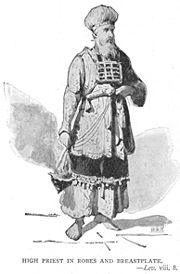
The first is the process of consecration of the Levitical priests. "You shall bring Aaron and his sons to the entrance of the tent of meeting and wash them with water" (Exodus 29:4). "Then you shall bring Aaron and his sons to the entrance of the tent of meeting and shall wash them with water" (Exodus 40:12). "All those who were listed of the Levites, whom Moses and Aaron and the chiefs of Israel listed, by their clans and their fathers’ houses, from thirty years old up to fifty years old, everyone who could come to do the service of ministry and the service of bearing burdens in the tent of meeting, those listed were 8,580" (Numbers 4:46-48, but compare also verses Num. 4:3, 23, and 29). The two things that I want to emphasize in these passages in that their ministries began at age thirty, and were marked by washings in water (see Hebrews 9:10).

The other is the account of the baptism of Jesus (Mark 1:9-11, compare John 1:31-34): "In those days Jesus came from Nazareth of Galilee and was baptized by John in the Jordan. And when He came up out of the water, immediately He saw the heavens being torn open and the Spirit descending on Him like a dove. And a voice came from heaven, 'You are My beloved Son; with You I am well pleased.'" We know that this happened when He was thirty years old from Luke 3:23: "Jesus, when He began his ministry, was about thirty years of age."

Thus we see how Jesus fulfilled the provisions for the Levitical priesthood, though He Himself was not a Levite (Hebrews 7:13). Rather, His priesthood is described as "in the order of Melchizedek" (Psalm 110:4, Hebrews 5:6, 5:10, 6:20, and especially 7:17). 

As Christians, we receive many benefits from His priestly office, something which the Westminster divines found essential to their system of doctrine. In answer 44, the Westminster Larger Catechism tells us, "Christ executes the office of a priest, in His once offering Himself a sacrifice without spot to God, to be a reconciliation for the sins of His people; and in making continual intercession for them." And in describing that intercession, answer 55 tells us, "Christ makes intercession, by His appearing in our nature continually before the Father in heaven, in the merit of His obedience and sacrifice on earth, declaring His will to have it applied to all believers; Answering all accusations against them, and procuring for them quiet of conscience, notwithstanding daily failings, access with boldness to the throne of grace, and acceptance of their persons and services." We rarely hear this doctrine preached today, but how comforting it should be to us, His people.

Saturday, March 12, 2016

The Pre-Incarnate Mediatorship of Christ in Amos 7

The seventh chapter of Amos opens with three warning visions.

The first is Amos 7:1-3: "This is what the Lord God showed me: behold, he was forming locusts when the latter growth was just beginning to sprout, and behold, it was the latter growth after the king’s mowings. When they had finished eating the grass of the land, I said, 'O Lord God, please forgive! How can Jacob stand? He is so small!' The Lord relented concerning this: 'It shall not be,' said the Lord."

The second is Amos 7:4-6: "This is what the Lord God showed me: behold, the Lord God was calling for a judgment by fire, and it devoured the great deep and was eating up the land. Then I said, 'O Lord God, please cease! How can Jacob stand? He is so small!' The Lord relented concerning this: 'This also shall not be,' said the Lord God." 

And the third in Amos 7:7-9: "This is what he showed me: behold, the Lord was standing beside a wall built with a plumb line, with a plumb line in his hand. And the LORD said to me, 'Amos, what do you see?' And I said, 'A plumb line.' Then the Lord said, 'Behold, I am setting a plumb line in the midst of my people Israel; I will never again pass by them; the high places of Isaac shall be made desolate, and the sanctuaries of Israel shall be laid waste, and I will rise against the house of Jeroboam with the sword."

In all three visions, God warns of an impending judgment on the northern kingdom, a judgment which was eventually fulfilled in the conquest and deportation by Assyria in 722BC. The difference is that the first two judgments are turned away through the intercession of Amos himself. 

However, the third vision is very different. First, notice the varying use of "lord." In the first and third occurrences we see "Lord." That is, the Hebrew word adon. In contrast, the middle usage is "LORD," for the Tetragrammaton, Jehovah. This contrast indicates a conversation between the First and Second Persons
of the Trinity. Compare Psalm 110:1 and its use in Luke 20:42 and Acts 2:34. 

We see Amos's twice taking a mediatorial role, and turning aside God's judgment on the northern portion of Israel. However, in the third judgment, Christ, the ultimate Mediator, refuses to intervene on behalf of Israel and this third, most-devastating, judgment was poured out in the destruction of these ten tribes. We see it again in Amos 9:7, where God tells the northern kingdom that she has no more privileges in His eyes than do the most-obscure (in their knowledge of the world) foreigners. How horrible must God's wrath be, if His own appointed Mediator refuses to plead for a sinner!

Saturday, January 16, 2016

The Promise of a Church in the Intra-Trinitarian Covenant

We are taught to pray by claiming the promises of God - and I consider that a good thing. In fact, I believe that is what is meant by John, when he tells us to pray according to God's will (I John 5:14). One of the things that amazes me about this is that Jesus followed the same principle.

In two places in Isaiah, the Father promises a people, a posterity, to the pre-incarnate Son. In Isaiah 42:6, He says, "I am the Lord; I have called you in righteousness; I will take You by the hand and keep You; I will give You as a covenant for the people, a light for the nations." The promise is even grander in Isaiah 49:6: "It is too light a thing that You should be my servant to raise up the tribes of Jacob and to bring back the preserved of Israel; I will make You as a light for the nations, that My salvation may reach to the end of the earth." The first could refer just to the Jews, but the second expands the promise to the Gentiles, as well, to give a fuller glory to the Son.

The Son responds in Isaiah 8:18, "Behold, I and the children whom the LORD has given me are signs and portents in Israel from the LORD of hosts, who dwells on Mount Zion." And again in Psalm 22:22: "I will tell of your name to my brothers." As the Father glorifies the Son with a posterity, so does the Son glorify the Father to that posterity. These last two verses are explicitly applied to the Son in Hebrews 2:12-13.

In the New Testament, we see Jesus claiming these promises of the Father in the Gospel of John. He refers to "those You have given me" in John 10:29: "My Father has given them to Me" [i. e., His "sheep"]. He makes similar remarks several times in John 17:4, 6, 9, 11-12, and 24. 

These verses describe what I have called the Intra-Trinitarian covenant. It is also called the covenant of redemption. There is more to that covenant than I describe here; I am merely describing one aspect of it. It is the basis of our salvation. The Father elected a church from all eternity, and gave it to the Son for redemption. I don't describe it here, but the Holy Spirit is also involved, undertaking to apply the redemption to the elect. This covenant, however, as much as we benefit from it, is not about us. it is about the glory that each Person of the Trinity gives to the others. I compare it to life insurance. Since it only pays upon the death of the party insured, he receives no benefit from it; rather, the benefits go to the beneficiaries, who are third parties to the contract. In the same way, the elect are the beneficiaries of the intra-Trinitarian covenant: we were not consulted, nor is it for our glory, but from it we receive redemption from our sins.

This covenant goes against two false doctrines. The first is that the love of God and the atonement of the cross are intended for everybody, but not necessarily effectual to anyone. The second is far more heinous, i. e., the doctrine of the Oneness pentecostals, who deny the Trinity, deny the person of the Father and the Holy Spirit. All three Persons of the Trinity are, and have always been, involved in our salvation. Without the Trinity, therefore, there can be no one saved.

This doctrine is described in the Westminster Confession of Faith (VIII:1): "It pleased God, in His eternal purpose, to choose and ordain the Lord Jesus, His only-begotten Son, to be the Mediator between God and men, the prophet, priest, and king; the head and Savior of the Church, the heir or all things, and judge of the world; unto whom He did, from all eternity, give a people to be His seed, and to be by Him in time redeemed, called, justified, sanctified, and glorified."

Saturday, November 21, 2015

The Priesthood of Christ Negates All Other Priesthoods (Even Rome's)

The purpose of the writer of the Epistle to the Hebrews was to demonstrate the superiority of Christ over the accoutrements of the Mosaic covenant. In chapters 7 and 8, he examines the priestly office of Christ, and compares it to the Mosaic, levitical priesthood. (Just as an aside, this is an internal proof that the epistle must have been written before 70AD, when the destruction of the Temple made that priesthood moot.)

The ways in which Christ's priesthood is superior include His eternality (Heb. 7:3, 17, 24, 28): "He holds His priesthood permanently, because He continues forever." This is contrasted with the string of human priests, due to their mortality (Heb. 7:23). Another way in which He is superior is due to the sufficiency and effectuality of His one-time sacrifice (Heb. 7:27): "He has no need, like those high priests, to offer sacrifices daily..., since He did this once for all when He offered up Himself."

This passage addresses two errors of the Church of Rome; first, that her clergy have a priesthood; and second, that Christ's sacrifice is repeated in the Mass. Both of those heresies undermine both the sufficiency and eternality of the priestly office of Christ, contrary to both the words and the purpose of the Epistle. That is, if Christ as priest is both eternal and sufficient in that office, there is neither need nor allowance for any other priest or sacrifice. That is why a Protestant church has a minister, not a priest, a man who points believers to their only and all-sufficient hope in Jesus Christ, not in any mere man, no matter how glamorous his robes, titles, and claims may be.

Because of the explicit words of Scripture, I commend the words of the Westminster Larger Catechism (Question 44): "Christ executeth the office of a priest in His once offering Himself as a sacrifice without spot to God, to be a reconciliation for the sins of His people, and in making continual intercession for them."

Tuesday, December 2, 2014

Moses the Mediator, as a Type of Christ

My third biblical-theology paper:

    The life story of Moses is found in Exodus, chapters 1-20. In summary, he is born to a Levite family, roughly 400 years after Jacob and his sons had settled in Goshen, in northern Egypt. It is a time of severe bondage for the clans of Israel. They are also being persecuted by the reigning Pharaoh, out of jealousy for their prosperity. Pharaoh has decreed that all male children born to the Israelites is to be killed. To avoid this sentence, the parents of Moses have placed him in an ark, and set him adrift on the river. He is found by Pharaoh’s daughter, who then raises him as her own son. As an adult, Moses kills an Egyptian guard for abusing the Israelite slaves. He flees into the desert, marries, and makes his living caring for the flocks of his father-in-law.
    During this time, Moses experiences a theophany, with Jehovah appearing to him in a burning, but unconsumed, bush. God calls him to be the leader of His people, for the time has come for them to depart Egypt. Moses returns to Egypt, and confronts a hard-hearted Pharaoh. Through a series of plagues, culminating in the events commemorated by Passover, God convinces Phraraoh to let His people go. Pharaoh reneges, but is killed, along with his army, at the Red Sea, after the dry-footed escape by the Israelites. God leads Israel as a pillar of smoke by day, and of fire by night, bringing them, after three lunar months, to Mount Sinai in chapter 19.
    The events of Sinai are prefaced in 19:4-6 with a reminder of the redemption that Israel had just experienced, with a calling to be His covenant people, that they may be a kingdom of priests, i. e., a nation of mediators, representing Him to the rest of the world. This order is important, from redemption, to calling, to sending. It demonstrates that the Mosaic covenant is not a legal covenant, but rather a stage in the covenant of grace. They are not given the law as a step toward the redemptive relationship, but rather as an application of a redemption already received.
    This principle is repeated in 20:1, the preamble to the Ten Commandments: “I am the Lord your God, who brought you out of the land of Egypt, out of the house of bondage.” Only then does He proceed with His commandments, four primarily concerning that vertical relationship between God and men, and then four primarily concerning the horizontal relationships between men. The giving of the commandments to the people is immediately followed, in verses 22-26, of the first instructions for the sacrificial system. Thus is revealed God’s knowledge that the Law will be violated, men will sin, and His institution of forgiveness of sin. The Law is thereby bookended with revelation of God’s covenantal grace, doubly revealing that the Commandments are gracious, not a system of works righteousness.
    We see this pattern repeated in an abbreviated form in 24:1-8. The people worship in v.1, with a covenantal response in v. 3, a reference to the Law with a sacrifice in vv. 4-5, with the response and atonement repeated in vv. 7-8. This pattern continues the emphasis on relationship, then holiness, then atonement. Moses remembers those principles after the people make the golden calf. In 34:9, he asks God to “pardon our iniquity and our sin, and take us for Your inheritance.” He depends on God’s provision for forgiveness.
    Moses recalls those principles at the end of Leviticus, after giving the detailed laws of worship and sacrifice. In 26:43b-46, he writes (beginning with God’s words), “‘They shall make amends for their iniquity, because they despised My judgments and because the abhorred My statutes. I will not cast them away, nor will I abhor them, to destroy them utterly and to break My covenant with them, for I am the Lord their God. But for their sake, I will remember the covenant with their fathers, whom I brought out of the land of Egypt in the sight of the nations, that I might be their God: I am the Lord.’ These are the statutes and judgments and laws that the Lord made between Himself and the children of Israel on Mount Sinai by the hand of Moses.” As their covenant redeemer, Jehovah chooses them as His people, and promises forgiveness of their sins.
    In Numbers, we see Moses acting as a priest. This is evidenced in 7:1 as he anoints and consecrates the tabernacle and its paraphernalia. And in 7:89, he enters the Holy of Holies to address God. In 11:10-15, he expresses exasperation with the people and their carping against their provision of manna, chastising God for making him responsible for the Israelites. He is apparently dissatisfied with his mediatorial role. The chapter ends (vv. 28-28) with Moses in the role of prophet. This combination of roles, never shared by his brother Aaron, would seem to be an aspect of his typology for Christ. In chapter 12, Aaron recognizes this superiority of Moses, and objects to it, for which he and Miriam are punished.
    It isn’t until 16:40 that we see the priesthood explicitly assigned to Aaron and his descendants.
    In 20:2-13, we have the account of the waters of Meribah. The people are without water, and complain against the leadership of Moses. God promises water from the rock, and Moses strikes it with his staff. In verse 12, God rebukes Moses, and tells him that he shall be punished by banning from the Promised Land. Generally, the interpretation given here is that Moses is rebuked for striking the rock, when God had told him to “tell the rock” (v. 8). However, in Psalm 106:32-33, the anonymous writer says, “They also provoked Him to wrath at the waters of Meribah, so that it went hard with Moses on their account; because they were rebellious against His Spirit, he spoke rashly with his lips” (NASB). This seems to indicate that Moses was punished, not for an action of his own, but for the actions of the people. That would be consistent with his priestly mediatorial role. And, again, it would also point to Christ’s mediatorial work. We also see this in Num. 27:13-14. In verse 13, ‘You” (“shall be gathered to your people”) is singular (“thou” in the KJV), but in verse 14 “you” (“rebelled against My word”) is plural (“ye” in the KJV). Compare als Psalm 95:8-9 (also cited in Heb. 3:15-17).
    At the end of his ministry, Moses’s priesthood is again seen in Deuteronomy 27:9-10, where he joins with the other priests, his nephews, in instruction to the people. This demonstrates that his priestly office continued even after the designation of Aaron’s line for future priests.
    In 31:1-8, Moses publicly names Joshua as his successor. Then, in his final sendoff, God informs him (vv. 16-17) that Israel will go astray after his passing. This theme is also applied to Christ as the antitype. The prophecy of Zechariah 13:7, “Strike the shepherd, and the sheep will be scattered,” is applied by Christ to Himself in Matthew 26:31. This is also related to the mediatorial role seen at Meribah: just as the sin of the sheep was accounted to the shepherd, the death of the shepherd devastates his/His sheep. And finally, his passing is recorded in chapter 34.
    In the calling of Joshua (Jos. 1:1-9) Joshua is reminded of Moses’s mediatorial work in the giving of the Law, but is called to obey it. This would seem to indicate that that office was not continued in him (see also 11:15). The combination of the priestly with the prophetic roles is again seen in Samuel. In I Sam. 12:6-8, he appeals to the example of Moses and Aaron as he prays for the nation of Israel, as his final acts as the last judge.
Moses, Aaron, and Samuel appear together in their priestly and mediatorial aspects in Psalm 99:6-7. In contrast, an unnamed Levite recounts the history of Israel, and specifically the portion following Moses, in Psalm 105:26-42, without reference to his priestly or mediatorial functions. This is consistent with several references in the books of Kings and of Chronicles to the Law of Moses, also without a mediatorial element.
    In an interesting backhanded reference, Jeremiah 15:1, God declares that even the mediatorial standing of Moses and Samuel would prevent His judgment on apostate Judah.
    The preamble to the Ten Commandments is recalled by the Prophet Micah (6:4). This relational aspect of the Mosaic covenant is recalled by God in exasperation (v.3). Thus, the prophet resumes the theme of Exodus, according to which the Law was given, not to create a salvific relationship between God and people, but rather as an enhancement of the relationship that had already been created. In the prophet, God is asking the people how they could so resent His law, considering the great redemption that He had worked for them.
In the New Testament account of the Transfiguration (Matthew 17:1-13, Mark 9:2-13, Luke 9:28-36), Moses appears, together with the Prophet Elijah, beside Jesus, before an apostolic audience. Both men speak to Jesus, but their words are not recorded. However, the Father speaks, “This is my Son, My Chosen One; listen to Him.” This event gives a visual version of that which is spoken by Christ after His resurrection (Luke 24:44, cp. v 27 and Matthew 5:17, and cf. Luke 16:29-31, John 1:45, and 5:45-46): “Everything written about Me in the Law of Moses and the Prophets and the Psalms must be fulfilled.” This refers not just to the spoken words, but also to the role of Moses as the type to whom Christ is the antitype, the mediatorial prophet and priest who interceded for those whom He/he represents.
In Acts, Luke used Moses, not as a type, but rather as an apologetic source. In 3:22, 7:20-53, 26:22, and 28:23, the apostles appeal to the writings of Moses to prove that Christ was the Messiah awaited by the Jewish people. However, in 6:11 and 14 we see the anti-Christian Jews also appealing to Moses against Him. Their misuse of Moses may explain the immediately-succeeding use of Stephen of the full story of Moses in his evangelistic sermon.
While Paul makes much use of the Law in Romans, the person of Moses isn’t prominent until I Corinthians. In 10:1-8, he makes an extended use of the history of Moses, reminiscent of Stephen’s sermon. However, Paul’s audience is the Christians, as disturbed as they may be, of Corinth, not unbelieving Jews. Moses is the head of traveling Israel, who committed adultery. This is an example, Paul says, in verse 11. Just as they were baptized into Moses (v. 2), we sit down at communion (vv. 16-21), with as much complacency. Let us take their soon-following apostasy as a warning against unconcern. The parallel between Moses and Christ is in their mediatorial headship, with Israel then and these Christians now as the body, corresponding to each head.
Writing to the same Christians in II Corinthians 3:12-18, again uses a parallel between Moses and Christ for instruction. This parallel, in contrast, is not between the weaknesses of Moses’s people and the Corinthians, but rather between the ministries of Moses and Christ. Paul points to the superiority of Christ, because the veil over His glory is removed and His Spirit is with us. Paul’s argument here is similar to that of Hebrews (see below). Here the parallel is more between the respective bodies, as they correspond to their heads. He uses the same parallel in the allegory of Sarah and Hagar in Galatians 4:21-31 (mixing the types of Moses and Abraham).
The writer of Hebrews, as part of his apologetic argument that Christ is superior to the Old Testament saints, uses Moses’s experience at Sinai, in 12:18-24. Each is the mediator of His/his respective covenant. But the Mosaic covenant was filled with terror and death, while that of Christ is a “festal gathering” of “the righteous made perfect.” In His mediatorial work, Christ had achieved what Moses was unable to give. The writer’s argument is that all that the Jews had sought, but never received, from Moses was to be found in the anti-type, Jesus Christ. That is why He is superior.
John made a similar case in Revelation 15:3-4, with even Moses singing the song of victory in the Lamb, as the heavenly tabernacle is opened (v. 5). Do you see, John asks? Moses, in whom you relied, could only bring you into the outer portion of his tabernacle. But even he glorifies the Lamb, because He has brought us into the Holy of Holies in the heavenly tabernacle! Even Moses, John implies, acknowledges that the glorious salvation that he foresaw is now found in Jesus Christ. He only brought you the daily blood of lambs that could not remove your sins, but now the Lamb of God has shed His own blood, and we are righteous in Him!
The Pentateuch provides an extensive description of the birth, life, and death of Moses, with all the glorious things that God did through him as the mediator of his covenant: the priesthood, the sacrifices, and the conquest of the Promised Land. But he was only the type. The eternal royal priesthood, the once-for-all effectual sacrifice, and the Heavenly Jerusalem are all achieved in his anti-type, Jesus Christ, Jehovah Incarnate.

Tuesday, November 11, 2014

The Sacrifice of the Catholic Mass, and Its Offense to the Gospel

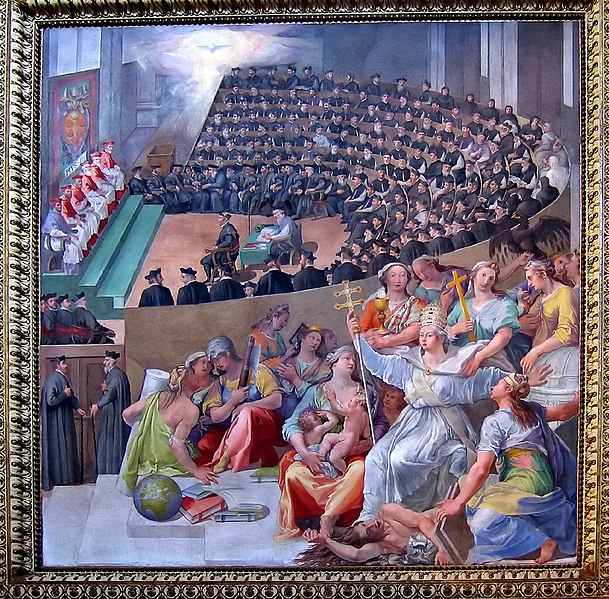
"If anyone saith that the sacrifice of the Mass is only a sacrifice of praise and thanksgiving, or that it is a bare commemoration of the sacrifice consummated on the cross, but not a propitiatory sacrifice, or that it profits him only who receives, and that it ought not to be offered for the living and the dead for sins, pains, satisfactions, and other necessities, let him be anathema."
The Council of Trent

The above statement is a quote from the decrees of the Council of Trent, chapter 9, canon 3. This council was called by the Roman Catholic Church to address the crisis created by the budding of the Reformation. It defined, officially and infallibly (Rome claims), Catholic doctrine, in perpetuity. I have highlighted in boldface the key phrases in that statement. They claim for this statement the support of Malachi 1:11, "For from the rising of the sun to its setting, my name will be great among the nations, and, in every place, incense will be offered to my name, and a pure offering."

When dealing with Catholic apologists, I find that they consistently claim that the Mass is not a sacrifice. For example, Dave Armstrong writes, "It is crucial to understand that the Sacrifice of the Mass is not a 're-sacrifice' of Christ, as is the common misconception. Jesus does not die every time a priest offers Mass, since He died once, in history, on earth" (A Biblical Defense of Catholicism, p. 95). Yet, he says in the very next paragraph, "in the Mass, Jesus Christ ultimately offers the sacrifice of Himself (just as at the Last Supper), with the priest merely acting in His stead, as a purely secondary, instrumental agent." So, as Trent says, it is a sacrifice, but it's not, because it is Christ sacrificing Himself, not the priest sacrificing Him. To me, that sounds like Rome is trying to play both sides of the matter.

However, whether Christ is supposedly sacrificing Himself, or the priest is sacrificing Him, the claim should be anathema (to reclaim their word) to any true Christian.

The writer of Hebrews (10:5) quotes Jesus Himself, using the words of Psalm 40:6, "Sacrifice and offerings You have not desired." So, in His own words, Jesus is telling us that we do not need a continuing sacrifice, whether offered by Himself, or "with the priest merely acting in His stead." Why is that? Because (Heb. 10:11, emphasis added) "we have been sanctified through the offering of the body of Jesus Christ once for all." The whole point of this chapter of Hebrews is to establish the superiority of Christ's priestly offering of Himself over the Jewish Aaronic priests exactly because their sacrifices had to be repeated. In contrast (Heb. 10:12-14, emphasis added), "when Christ had offered for all time a single sacrifice for sins, He sat down at the right hand of God..., for, by a single offering, He has perfected for all time those who are being sanctified." And I think that the final nail in the coffin is seen in verses 17 and 18: "'I will remember their sins and their lawless deeds no more.' Where there is forgiveness of sins, there is no longer any offering for sin."

By claiming a continuing sacrifice in the Mass, the Catholic Church is claiming that it must complete an insufficiency in the sacrifice of Christ. And, as the writer of Hebrews (10:1) points out, "it can never, by the same sacrifices, that are continually offered every year [or every Sunday], make perfect those who draw near." That is, if the sacrifice must be continually offered, then it is never sufficient to achieve the purpose of sanctification. The Catholic has no assurance that he has partaken in the sacrifice of the Mass enough times to know when he has been saved from his sins.

That is bondage of an horrific sort! That is why the Reformation was necessary! And it is why bible-believing Protestants must never cease to point the finger at Rome and denounce it as a perversion of Christianity.

On which will you rely, Catholic reader? A Savior who gave His life for His people, once for all, or a Mass with nothing but the claims of the Pope, contrary to the Scriptures themselves?

Friday, September 5, 2014

The Preacher of Ecclesiastes, vs Praying to Saints

"The living know that they will die, but the dead know nothing, and they have no more reward, for the memory of them is forgotten. Their love and their hate and their envy have already perished; and forever they have no more share in all that is done under the sun."
- Ecclesiastes 9:5-6

In Catholicism, Eastern Orthodoxy, and some elements of Anglicanism, the faithful are encouraged to pray to saints, great spiritual figures who have passed beyond the veil, "our departed brothers and sisters in Christ." These dead saints supposedly act as intermediaries between Christians on earth and God. They justify this practice primarily with passages from the Revelation. The article linked here, for example, quotes Rev. 8:4, which refers to the incense as "the prayers of the saints." This represents a little sleight of hand, since the reference is obviously to Christians alive on the earth, not some disembodied gang of the extra-spiritual in heaven.

What does the Preacher, the narrator in the book of Ecclesiastes, tell us about those who have already passed out of the world of the living? Read the verses at the top, Eccl. 9:5-6. They "have no more share in all that is done under the sun"! Even the New American Bible, a Catholic translation, says, in verse 5, "the dead no longer know anything." The Catholics like to refer to the Revelation on this issue. Let us oblige them! Of the righteous dead in heaven, Rev. 21:4 tells us, (starting with the last words of verse 3), "God Himself will be with them as their God. He will wipe away every tear from their eyes, and death shall be no more, neither shall there be mourning, nor crying, nor pain anymore, for the former things have passed away."

When the true Christian departs from this life, he enters the presence of God (II Cor. 5:8, Phil. 1:21-23). Part of the wonder of that time is that we are free from the concerns and sorrows of this life. In contrast, who among the departed is focused on those left behind? Refer to the Parable of the Rich Man and Lazarus (Luke 16:19-31). We see Lazarus at Abraham's side, but nothing is heard from him.  In contrast, the Rich Man in Hell sees, not just blessed Lazarus, but also his reprobate brethren still in this world. It isn't the saints in heaven watching us now, but the condemned in Hell! So, the Catholic doctrine of the saints is really a doctrine of the damned!

How blessed it is to know that I have a great High Priest, once dead, but now with the power of an indestructible life (Heb. 7:16), who "is able to save to the uttermost those who draw near to God through Him, since He always lives to make intercession for them" (Heb. 8:25)! The dead saints are just that, dead, but my Savior Jesus is alive, and makes intercession for me, even when I am too weak to pray for myself. That is a far superior comfort to any superstitious reliance on any Saint Whatshisname!

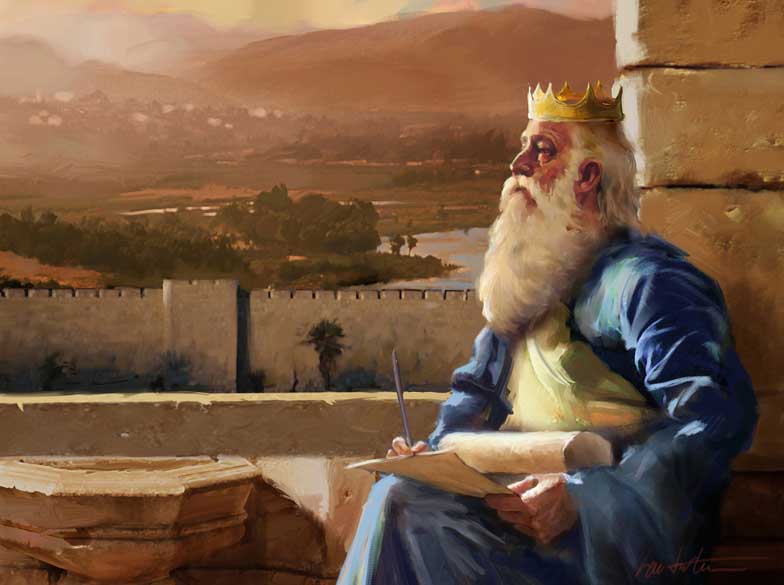
Solomon Ponders Life in His Old Age

Thursday, May 8, 2014

The Promises to Israel, Fulfilled in Christ

In II Corinthians 1:19-20, the Apostle Paul tells us, "The Son of God, Jesus Christ, Whom we proclaimed among you, ...was not Yes and No, but in Him is always Yes. For all the promises of God find their Yes in Him." So, to my mind, those who advocate all sorts of divine promises for the modern State of Israel, apart from conversion to the only Messiah, are depriving them of the true promises to them. And, more importantly, they are stealing the glory of Christ and giving it to constructs of their own making, a form of idolatry.

Look at the prophecies of Jeremiah, where so many of the political promises are supposedly found. In Jer. 33:14, God says, "Behold, the days are coming, declares the Lord, when I will fulfill the promise I made to the house of Israel and the house of Judah." What is that fulfillment? Jeremiah continues (verse 15), "In those days and at that time, I will cause a righteous Branch to spring up  for David, and He shall execute justice and righteousness in the land." So, the promise isn't fulfilled by a political or economic blessing, but in a Person.

This Branch is prophesied in other books, as well. We see Him in Isaiah 11:1-5, and twice in Zechariah, Zech. 3:8 and 6:12, to name just a few.

What does Jeremiah tell us about the Branch? Chapter 33 continues, in verses 17-18, "For thus says the Lord, 'David will never lack a man to sit on the throne of the house of Israel, and the Levitical priests shall never lack a man in My presence to offer burnt offerings and to make sacrifices forever," So, the Branch will fulfill both the political and religious roles in providing for the people of God. That is something that was impossible under the pre-Christian economy, for the the kingship came only through the tribe of Judah (Gen. 49:10), and the priesthood was limited to the line of Aaron, in the tribe of Levi (Numbers 16:40, cp. Hebrews 7:13).

That Aaronic reference is the connection to the prophetic references to the Branch. In Numbers 17:8, the sign God gives of the choice of Aaron was that his staff, out of all the staffs of the tribal representatives, sprouted. This is the source of the image of the Branch.

God first unites these two lines in Zechariah 6:12-13, "And say to him [i. e., the High Priest Joshua], 'Behold the Man Whose name is Branch: for He shall branch out from His place, and He shall build the temple of the Lord. It is He Who shall build the temple of the Lord and shall bear royal honor, and shall sit and rule on His throne. And there shall be a priest on His throne, and the counsel of peace shall be between them both." Here we see two of the offices of Christ, His kingship and His priesthood (His prophetic office not playing a role here), united and described.

In the New Testament, His kingship is prominent in Hebrews (e. g., Heb. 1:8), and especially the Revelation, e. g., 17:14 and 19:16. His priesthood is especially prominent in Hebrews, (e. g., chapters 7 and 8), but especially Heb. 9:11-14. Through our union with Him, we share in His  royal priesthood (see, for example, Isaiah 61:6, I Peter 2:9, and Rev. 5:10). That is the fulfillment of the promises (Romans 4:13) to the people of God, the true Israel (Galatians 3:7, 6:16). Thus, to use the modern political State of Israel as a fulfillment of promises to the people of God is to misidentify the people of God, the promises, and the fulfillment, as well as to downgrade the blessings we have in Christ.

Friday, February 7, 2014

Job 16:18-22, Job Looks to the Intercession of His Redeemer

Christians cite a couple of verses from Job, especially Job 19:25, but I had never noticed this short passage before:

"O earth, cover not my blood,
     and let my cry find no resting place.
Even now, behold, my witness is in heaven,
     and He who testifies for me is on high.
My friends scorn me;
     my eye pours out tears to God,
that He would argue the case of a man with God,
     as a son of man does with his neighbor.
For, when a few years have come,
     I shall go the way from which I shall not return."

In this chapter, Job is berating his friends for their lack of compassion toward him during this time of his distress. He pleads with a personified earth not to block his appeal, as he then appeals to another intercessor, one who is "on high." As I read that, it struck me how exactly this parallels the New Testament description of the priesthood of Christ, especially Hebrews 7:25, "He always lives to make intercession for them [i.e., believers]," and Hebrews 9:24, "For Christ has entered, not into holy places made with hands, which are copies of true things, but into heaven itself, now to appear in the presence of God on our behalf."

Especially interesting to me is that Job doesn't profess some vague concept of an intercessor, a mediator with Jehovah, but explicitly addresses that mediator as God (which is why I capitalized those pronouns above), and his representative to God. This is a profession of the Trinity, God face to face with God (John 1:1)!

I admit that Job can be obscure at points. However, we err to pass over it, as I have done, as void of Gospel content. Here it is, and how blessed I am to have had the Holy Spirit open my eyes to it.

Sunday, September 18, 2011

Matthew 26:39, The True Humanity of Christ

"And going a little farther He fell on his face and prayed, saying, 'My Father, if it be possible, let this cup pass from Me; nevertheless, not as I will, but as You will.'"

Early in the Second Century, immediately following the time of the Apostles, a heresy arose called Docetism. The Docetists held that the human body of Christ was an illusion, since (they claimed) the divine cannot possibly be united with flesh. This was a precursor of Gnosticism. We really don't see this heresy around much, though aspects of it pop up here and there. For example, Sabellians (represented mainly by the United Pentecostal Church) deny the Trinity, claiming that the three persons are actually merely modes of the one God. Since they hold that there is no Second Person of the Trinity, then obviously He could not have been united with a human nature. And Jehovah's Witnesses claim that the resurrection was only spiritual, not a literal resurrection of the flesh of Jesus. While neither of these is strictly Docetism, there are obvious parallels.

However, consider the Scripture above. We see Jesus showing true fear, real human emotion, in the face of His impending suffering and death. Trepidation cannot be a quality of His divine nature. Therefore, we see experiential evidence of His true humanity. He was a man, regardless of what Sabellians or Docetists can protest. And as a true man, in addition to His true divinity, Jesus can therefore sympathize with our own fears and sufferings (Hebrews 4:15). That is great personal comfort that we can take from the high theology of the dual nature of Christ!

Tuesday, August 16, 2011

John 17:15, Jesus versus the Rapturists

"I do not ask that You take them out of the world, but that You keep them from the evil one."

I have written before on the I Thessalonians passage that some premilleniallists claim teaches a "rapture," i.e., that God will take the Church out of the world to avoid tough times.

But look at the words above, from the High Priestly Prayer of Christ. His exact words are a prayer to the Father that He not take His people out of the world. If Jesus says the opposite of what the rapturists proclaim, what are we to think of the rapturists?

Monday, July 4, 2011

Zechariah and Biblical Repentance


"The Lord was very angry with your fathers. Therefore say to them, Thus declares the Lord of hosts: Return to Me, says the Lord of hosts, and I will return to you, says the Lord of hosts. Do not be like your fathers, to whom the former prophets cried out, ‘Thus says the Lord of hosts, Return from your evil ways and from your evil deeds.’ But they did not hear or pay attention to me, declares the Lord. Your fathers, where are they? And the prophets, do they live forever? But My words and My statutes, which I commanded my servants the prophets, did they not overtake your fathers? So they repented and said, 'As the Lord of hosts purposed to deal with us for our ways and deeds, so has He dealt with us.'"
- Zechariah 1:2-6

The Prophet Zechariah shared the ministry with the Prophet Haggai in the period immediately following the return of the Jews to the land of Israel after their exile in Babylon. In a curious aside, archeologists may recently have found his tomb!

As I have noted before, repentance is a prominent theme among the writings of the Jewish prophets. When I consider the claim of classical dispensationalists that the Gospel isn't found in the Old Testament, I often wonder whether they are reading the same Bible that I am. But I digress...

Matthew Henry paraphrases verse 2, "Turn you to me in a way of faith and repentance, duty and obedience, and I will turn to you in a way of favour and mercy, peace and reconciliation." I think Henry brings out the essence of repentance: it isn't merely a sorrowing over one's sins, though that is part of it, but rather a change of course, a turning away from one's old path to a new path in fellowship with God. The Westminster Confession of Faith, in the chapter on Repentance unto Life, states it wonderfully (XV:2): "By it a sinner, out of the sight and sense, not only of the danger, but also of the filthiness and odiousness of his sins, as contrary to the holy nature and righteous law of God, and upon the apprehension of his mercy in Christ to such as are penitent, so grieves for, and hates his sins, as to turn from them all unto God, purposing and endeavoring to walk with him in all the ways of his commandments."

Zechariah illustrates where Judas failed to repent. The story is told in Matthew 27:3-10. In verse 3, we see that Judas "changed his mind." But what does he then do? Plead for the forgiveness of God and the disciples? No, as verse 5 tells us, he committed suicide. In other words, Judas certainly sorrowed over his sin, but he didn't depart from it to walk in a new way. That is what distinguishes his sorrow from repentance.

Returning to Zechariah, we see that God has punished the forefathers of the prophet's audience, and this remnant acknowledges the justice of God's judgment (verse 6), a step that Judas failed to take. Then in verse 12, a new character appears, the Angel of the Lord, who pleads, "O Lord of hosts, how long will you have no mercy on Jerusalem and the cities of Judah, against which you have been angry these seventy years?" Along with most orthodox readers, I consider this Angel to be the preincarnate Second Person of the Trinity, because He is frequently addressed alternatively as the Lord Himself. Here, He intercedes on behalf of Jerusalem, acting in His role as Mediator. This is another essential difference between sorrow and repentance: true repentance relies on the intercession of Jesus Christ, the Mediator. Repentance doesn't restore or create holiness; rather, it serves as a step in applying the imputed righteousness of Christ, which alone restores our standing before God the Father.

Then in verses 16-17, Jehovah responds to this intercession: "Therefore, thus says the Lord, I have returned to Jerusalem with mercy; my house shall be built in it, declares the Lord of hosts, and the measuring line shall be stretched out over Jerusalem. Cry out again, Thus says the Lord of hosts: My cities shall again overflow with prosperity, and the Lord will again comfort Zion and again choose Jerusalem.’"

Here are the steps that Zechariah shows for true repentance: sorrow for sins, a new path of obedience (not that this can be done infallibly, since the person is still a sinner), dependence on the intercession and imputed righteousness of Jesus Christ, and a restored relationship with God. Leaving out any step necessarily overthrows the reality of the others.

Sunday, June 26, 2011

The Reformers and the Doctrine of Prayer

While it wasn't their only motivation to prayer, both Martin Luther and John Knox gave much attention to the commandments to pray.

Luther focused on the Third Commandment (Second Commandment according to the Lutheran division): "You shall not take the name of the Lord your God in vain, for the Lord will not hold him guiltless who takes his name in vain" (Exodus 20:7). According to Luther's understanding of this commandment, not taking the name of Jehovah in vain is a negative way of commanding that we are to use it only according to His word. Lack of prayer means not taking His name as He desires, and thus is a violation of this commandment.

On the other hand, Knox developed his position from a wider range of texts: Psalm 50:14-15, Matthew 7:7-11, Matthew 26:41, I Thessalonians 5:17, and I Timothy 2:13, 8. In his "Treatise on Prayer," Knox explained, "He who, when necessity constrains, desires not support and help of God, does provoke His wrath no less than such as make false gods or openly deny God." Thus, in Knox's mind, lack of prayer is tantamount to paganism or atheism!

Both men said - and I want to emphasize - that they did not mean the Christian of frail conscience who struggles to overcome his sense of unworthiness when approaching the throne of grace. We are unworthy! Anyone who approaches God on the basis of his own worthiness doesn't understand his sinful state nor the necessity of the atonement in Christ. However, for the believing sinner, that atonement covers his unrighteousness, so that he can come before a loving Father God. Consider the text that I would add to the list above, Hebrews 10. Consider especially Hebrews 10:14 and Hebrews 10:19-23.

Sunday, January 30, 2011

The Pre-Incarnate Mediatorial Role of Christ in the Old Testament

The Lord was very angry with your fathers. Therefore say to them, Thus declares the Lord of hosts: Return to Me, says the Lord of hosts, and I will return to you, says the Lord of hosts. Do not be like your fathers, to whom the former prophets cried out, ‘Thus says the Lord of hosts, Return from your evil ways and from your evil deeds.’ But they did not hear or pay attention to Me, declares the Lord. Your fathers, where are they? And the prophets, do they live forever? But My words and My statutes, which I commanded My servants the prophets, did they not overtake your fathers? So they repented and said, As the Lord of hosts purposed to deal with us for our ways and deeds, so has He dealt with us.” The word of the Lord came to the prophet Zechariah, the son of Berechiah, son of Iddo, saying, “I saw in the night, and behold, a man riding on a red horse! He was standing among the myrtle trees in the glen, and behind him were red, sorrel, and white horses. Then I said, ‘What are these, my lord?’ The angel who talked with me said to me, ‘I will show you what they are.’ So the man who was standing among the myrtle trees answered, ‘These are they whom the Lord has sent to patrol the earth.’ And they answered the angel of the Lord who was standing among the myrtle trees, and said, ‘We have patrolled the earth, and behold, all the earth remains at rest.’ Then the angel of the Lord said, ‘O Lord of hosts, how long will You have no mercy on Jerusalem and the cities of Judah, against which You have been angry these seventy years?’ And the Lord answered gracious and comforting words to the angel who talked with me. So the angel who talked with me said to me, ‘Cry out, Thus says the Lord of hosts: I am exceedingly jealous for Jerusalem and for Zion. And I am exceedingly angry with the nations that are at ease; for while I was angry but a little, they furthered the disaster. Therefore, thus says the Lord, I have returned to Jerusalem with mercy; My house shall be built in it, declares the Lord of hosts, and the measuring line shall be stretched out over Jerusalem. Cry out again, Thus says the Lord of hosts: My cities shall again overflow with prosperity, and the Lord will again comfort Zion and again choose Jerusalem.’
- Zechariah 1:2-17

One of the errors which has been perpetrated down through history is that the mediatorial office of Christ began at His ascension. After all, wasn't His mediatorial work based on His crucifixion and resurrection? And, of course, it was. However, I believe that the Scriptures teach that the Second Person of the Trinity was active in mediating between God, i.e., the First Person, and His people throughout history, including the Old Testament dispensation, looking forward to His mediatorial sacrifice. This is the basis of His priestly office.

We see that work here in Zechariah 1. The section begins with a record of God's judgments on Israel for her idolatry, See especially verse 6. Then the Angel of the Lord appears in verse 8 (revealed as such in verse 11).

I agree with the traditional understanding that the Angel of the Lord (specifically, not angels in general) is the pre-incarnate Second Person of the Trinity, due to the interchange of His identity with that of the Lord in various parts of the historical portions of the Old Testament. See, for example, Genesis 16:7-11, compared with verse 13. The Angel of the Lord is described distinctly, yet identified with Jehovah, a classical representation of these two Persons of the Trinity.

Now, back in Zechariah 1, we see the Angel speaking up for the remnants of Judah. In verse 12, He asks, "O Lord of hosts, how long will You have no mercy on Jerusalem and the cities of Judah, against which You have been angry these seventy years?" And immediately we see a change in the countenance of Jehovah. Where we saw His wrath, as described above, now contrariwise in verse 13 we read, "and the Lord answered gracious and comforting words to the angel who talked with me." From wrath to grace and comfort, merely in response to the Mediator's interposition.

For us, we should find much comfort here. We see the covenantal faithfulness of Christ, revealed even centuries before He was born in the manger. And we see the righteous wrath of God, which we have every reason to fear, turned aside by our theanthropic Mediator. What peace that should be to each of His people! And for those who hold erroneous views of the person of Christ, such as Jehovah's Witnesses, the Word witnesses against you, and you cannot hope in the mediatorial work of that Christ Whom you malign!

Monday, August 2, 2010

Putting on the Righteousness of Christ

"We have all become like one who is unclean,
and all our righteous deeds are like a polluted garment.
We all fade like a leaf, and our iniquities, like the wind, take us away."
- Isaiah 64:6

Using clothing as a metaphor for sin is a recurring theme in Scripture. Here, Isaiah compares the best actions of fallen men to filthy garments. The theme continues in Zechariah 3:3-5.

"Now Joshua [the high priest, v.1] was standing before the angel, clothed with filthy garments. And the angel said to those who were standing before him, 'Remove the filthy garments from him.' And to him he said, 'Behold, I have taken your iniquity away from you, and I will clothe you with pure vestments.' And I said, 'Let them put a clean turban on his head.' So they put a clean turban on his head and clothed him with garments. And the angel of the Lord was standing by." Confer also Exodus 28:36-38. The Angel of the Lord represents the presence of the pre-incarnate Second Person of the Trinity, the Christ of the New Testament.

The point here is that the filthy garments of sin represent the natural condition of fallen man. In contrast, the clean garments are placed upon him by the external application of Christ. This is the difference between grace and works-righteousness.

In the New Testament, the Apostle picks up the changing-of-garments theme, commanding us to "put on Christ," in Romans 13:14 and Galatians 3:27. What does this gain us? Philippians 3:9, "[that I may] be found in Him, not having a righteousness of my own that comes from the law, but that which comes through faith in Christ, the righteousness from God that depends on faith." As English Presbyterian Walter Marshall said in his book, The Gospel Mystery of Sanctification, "The end of Christ's incarnation, death, and resurrection, was to prepare and form a holy nature and frame for us in Himself, to be communicated to us by union and fellowship with Him; and not to enable us to produce in ourselves the first original of such a holy nature by our own endeavours."

So, what do you want to wear when you stand before God in eternity: the polluted garments that you have from Adam? Or the clean garments of Christ's righteousness, received by faith?

Saturday, February 6, 2010

Hebrews 7:23-25, the Great Comfort of Christ's Priestly Office


"The former priests were many in number, because they were prevented by death from continuing in office, but He holds the priesthood permanently, because He continues forever. Consequently, He is able to save to the uttermost those who draw near to God through Him, since He always lives to make intercession for them."

Also 9:24, "For Christ has entered, not into holy places made with hands, which are copies of the true things, but into heaven itself, now to appear in the presence of God on our behalf."

These two passages from Hebrews are foundational texts in the doctrine of Christ's priestly office (the others being His kingly and prophetical offices). The Westminster Larger Catechism, Question 44, describes it this way: "Christ executeth the office of a priest in His once offering himself a sacrifice without spot to God, to be a reconciliation for the sins of his people." It then elaborates on His intercessory work in Question 55: "Christ maketh intercession by His appearing in our nature continually before the Father in heaven, in the merit of His obedience and sacrifice on earth, declaring His will to have it applied to all believers; answering all accusations against them, and procuring for them quiet of conscience (notwithstanding daily failings), access with boldness to the throne of grace, and acceptance of their persons and services." Thus, His priestly office primarily has bearing on believers, rather than unbelievers, in terms of both redemption and intercession with the Father on their behalf.

XIXth Century Scottish Reformed Presbyterian minister William Symington said it brilliantly: "While His church has a want, while His people's necessities continue, He will count it his delight, His pleasure, His honour, His glory, to present their case to His Father, and to secure for them the bestowment of every needed boon."

Saturday, December 5, 2009

John 6:35-51, the Sovereign Redeemer

"Jesus said to them, 'I am the bread of life; whoever comes to Me shall not hunger, and whoever believes in Me shall never thirst. But I said to you that you have seen Me and yet do not believe. All that the Father gives Me will come to me, and whoever comes to Me I will never cast out. For I have come down from heaven, not to do my own will but the will of him who sent me. And this is the will of Him who sent Me, that I should lose nothing of all that He has given Me, but raise it up on the last day. For this is the will of My Father, that everyone who looks on the Son and believes in Him should have eternal life, and I will raise him up on the last day.'

"So the Jews mumbled about Him, because He said, 'I am the bread that came down from heaven.' They said, 'Is not this Jesus, the son of Joseph, Whose father and mother we know? How does He now say, "I have come down from heaven"?' Jesus answered them, 'Do not grumble among yourselves. No one can come to Me unless the Father who sent Me draws him. And I will raise him up on the last day. It is written in the Prophets, "And they will all be taught by God." Everyone who has heard and learned from the Father comes to Me - not that anyone has seen the Father except He Who is from God; he has seen the Father. Truly, truly, I say to you, whoever believes has eternal life. I am the bread of life. Your fathers ate the manna in the wilderness, and they died. This is the bread that comes down from heaven, so that one may eat of it and not die. I am the living bread that came down from heaven. If anyone eats of this bread, he will live forever. And the bread that I give for the life of the world is My flesh."

The doctrine of election is often taught from the words of the Apostle Paul, such as in Ephesians 1. That makes sense, of course, since Paul is the one who presents it in the most systematic fashion. But here we have the words of Jesus our Savior Himself.

First, He tells us that the decree of the Father is efficacious, verse 37, such that not one of the elect can possibly fail to be saved. Calvinists refer to this as "irresistible grace." The same principle is seen again in verse 39. Notice also that it is particular: the Father gives Him a definite number of specific individuals, not an ambiguous mass. This same idea is seen in Acts 13:48, where Luke tells us, "As many as were appointed to eternal life believed."

And second, we see that Jesus also teaches election from the negative perspective, i.e., that no one outside the Father's decree can stumble into salvation by accident or by native ability. Our Lord says in verse 44, "No one can come to Me unless the Father who sent Me draws him." Also later, in verse 65, "No one can come to Me unless it is granted him by the Father." Our author also teaches this principle in the Revelation 13:8, where he describes the deception of any "whose name has not been written before the foundation of the world in the book of life of the Lamb that was slain." Calvinists refer to this as the doctrine of "reprobation." Paul also teaches this doctrine, such as in Romans 9:21-23, where he refers to the reprobate as "vessels of wrath prepared for destruction."

And third, He is confronted by the opposition of the religious people, verse 41, just as we now see the emotional objection to election by so many professing Christians.

The Puritan commentator Matthew Henry writes of this passage: "The Father, having sent Christ, will succeed Him [i.e., give Him success], for He would not send Him on a fruitless errand. Christ having undertaken to bring souls to glory, God promised Him, in order thereunto, to bring them to Him, and so to give Him possession of those to whom He had given Him a right. God, having by promise given the kingdom of Israel to David, did at length draw the hearts of the people to him; so, having sent Christ to save souls, He sends souls to Him to be saved by Him."

Think of the consequences if God hadn't rendered His decree of election. As men are dead in trespasses and sins (Eph. 2:1), no one would come to Christ of his own volition. Would not a Savior with no one saved be a despised Son? God forbid that He should leave His Son a wasted Savior! And what a basis of assurance for our faith. Knowing that God the Father saved us out of the mass of fallen mankind, what have we to fear for our spiritual welfare? Nothing at all, for He promises never to cast us out or to allow us to be lost.

The Father said to the Son (Isaiah 49:6), "It is too light a thing that You should be My servant to raise up the tribes of Jacob and to bring back the preserved of Israel; I will make You as a light for the nations, that My salvation may reach to the end of the earth." Oh, that God for that!