Showing posts with label judgment. Show all posts

Saturday, August 20, 2022

Abortion: "Christian" America's Covenant with Death

In his book Abortion Violation, author Rev. Rusty Lee Thomas cites Proverbs 8:36, in which the personification of Wisdom says, "All who hate me love death." In application, Thomas tells us, "[T]he rejection of God's wisdom leads selfish, autonomous men to love and embrace death. In the case of abortion, it is the death of innocent children made in the image of God" (p. 22). 

In the Bible, god calls this mentality a covenant with death. This phrase is found twice in Isaiah 28, in which God is castigating Israel for her adultery with pagan deities, for which she is to be judged. God quotes a personification of the whole people: "We have made a covenant with death, and with Sheol we have an agreement, when the overwhelming whip passes through, it will not come to us, for we have made lies our refuge, and in falsehood we have taken shelter" (Isaiah 28:15). The people of Israel had convinced themselves that their game of balancing a profession of faith to Jehovah with their secret whoring with demons would protect them from the judgment of Jehovah, the only true God, who had made them a people. 

However, the prophet tells them God's response to their confidence: "Then your covenant with death will be annulled, and your agreement with Sheol will not stand; when the overwhelming scourge passes through, you will be beaten down by it. As often as it passes through, it will take you; for morning by morning, it will pass through, by day and by night; and it will be sheer terror to understand the message... Now, therefore, do not scoff, lest your bonds be made strong; for I have heard a decree of destruction from the Lord God of hosts against the whole land" (Isaiah 28:18-19, 22). 

America is playing this game. She is playing the whore, both literally and in the sense that Israel did. Sexual immorality is rampant, even among professing Christians. Yet abortion enables the immoral to practice their sensuality without consequences... or so they believe. I think we see the signs already of God's judgment on this imagined sleight of hand. The sacrifice of the innocent will never save the guilty, no matter what "freedom of choice" men may imagine that they have. 

Saturday, August 7, 2021

King David and the Biblical Doctrine of Total Depravity

When praying to God, King David included this plea: "Enter not into judgment with Your servant, for no one living is righteous before You" (Psalm 143:2). David, under the inspiration of the Holy Spirit, includes a lot of good theology in these two lines of poetry. First, he indicates that he understands that he

Fear of Judgment
deserves the wrath of God. However, as God's servant, i. e., a true believer, he has the right to plead, not God's justice, but rather God's mercy, in not imputing his sin to him. And the second line is, again, the acknowledgement that he deserves the wrath of God, with the additional acknowledgement that this is the natural condition of every human being (compare Ephesians 2:3). 

In theology, we would say that David is describing the doctrine of total depravity. This is the biblical teaching that every descendant of Adam (excepting Jesus alone) is a sinner from conception, with no natural ability to do spiritual good. 

David's profession is distressing to the human heart, because we all naturally want to believe in our worthiness and value. However, from God's perspective, which is that of perfect holiness, we all fall short of His standard (Romans 3:23). And, as David says, that shortfall earns us the judgment of God (Romans 6:23). There is no innocence, no age of accountability, no excuse because of ignorance. 

This is the knowledge that the unbeliever seeks to suppress (Romans 1:18). However, it is only as a person recognizes and acknowledges that he deserves the wrath of God that he can seek the only refuge from that wrath, under the blood of Jesus on the cross, applied to the believer by faith alone

Saturday, April 10, 2021

God Hates Sinners AND Sin

 "God did not hang sin on the cross, except as Jesus Himself bore the sins of all those in whose stead He died, by the imputation to Him of all those sins. God hanged Jesus on the cross. God cursed Jesus, so that Jesus Himself, not some impersonal entity, sin, became 'a curse for us; for it is written, Cursed is every one [not sin] that hangeth on a tree' (Gal. 3:13). Jesus, not sin, cried out in the pain of His punishment in the stead of others, 'My God, My God, why hast Thou forsaken Me?' Jesus, not sin, died under the wrath of God about three o'clock on Good Friday afternoon."

- Rev. David Engelsma, "Gospel Truth of Justification," p. 165 (emphasis in the original)

It has become a common slogan among American Evangelicals that "God hates the sin, not the sinner." It is a proverb tossed around as a trump for any rebuke against the wicked. 

But is it biblical? 

Those evangelicals will turn purple if I quote Scripture in opposition to their proverb. "The boastful shall not stand before your eyes; You [God] hate all evildoers" (Psalm 5:5). "The LORD tests the righteous,


but His soul hates the wicked and the one who loves violence
" (Psalm 11:5). Both of these verses tell us that God's hatred isn't just for sin, but for sinners. And, as Engelsma says in the quote above, it was a Person, Jesus of Nazareth, who was slain on the cross as the surety for elect sinners. It wasn't some amorphous substance called sin

The problem is that Christians have allowed the humanists to define the argument. To oppose the works of sinners is "judgmental" and "intolerant." And so it is. But the Scriptures require us to judge sin with God's judgment, whether in ourselves or in others. God's truth requires us to be intolerant of falsehood. If we get called names as a result, well, let us remember what was done to Jesus, and let us give thanks that we have been called to share in some fractional part of the shame that was heaped on Him.

Wednesday, September 2, 2020

The Intolerance of Jesus

"Tolerance" has become the theme of our age. Even among professing Christians, the phrase "thus saith the Lord" has been replaced by "you shall not judge." Judging is defined as denying the validity of anything the other person wants to believe or say or do. It is never tolerance for the person who advocates values or morality or the Bible. The only absolute truth, now, is that there is no absolute truth. 

Yeah, that is a self-refuting worldview, which is why we also see irrationalism's enthronement as our cultural guiding principle. 

The Christians who proudly quote Jesus, "You shall not judge" (Matthew 7:1, out of context), snarl in response if anyone quotes something else that Jesus said about judgment: "Judge with right judgment" (John 7:24). That is because the first quote, ignoring its context, seems to support the spirit of the age which has been imbibed by these Christians, while the second exposes it as a pagan intrusion. That exposure cannot be tolerated by today's tolerant Christians. 

We have other intolerant teachings from Jesus, as well. 

For example, in the Epistle to the Church in Ephesus found in the Revelation (Rev. 2:1-7), Jesus praises that church: "I know your works, your toil, and your patient endurance, and how you cannot bear with those who are evil, but have tested those who call themselves 'apostles' and are not, and found them to be false" (Revelation 2:2). This church is praised by Jesus for their intolerance of evil men! That is totally opposite the milquetoast Jesus of today's post-modern tolerant Christian.

At the opposite end of the spectrum is the Epistle to the Church in Pergamum (Rev. 2:12-17). Jesus actually chastises that congregation: "I have a few things against you: you have some there who hold the teaching of Balaam, who taught Balak to put a stumbling block before the sons of Israel, so that they might eat food sacrificed to idols and practice sexual immorality. So also you have some who hold the teaching of the Nicolaitans. Therefore repent. If not, I will come to you soon and war against them with the sword of My mouth" (Revelation 2:14-16). This congregation is noted for its tolerance! The Christians here are noted for their tolerance of those who teach the doctrines of Balaam and the Nicolaitans. We may not know exactly what those doctrines were, but the wrath of Jesus is apparent. Wrath against what? Against the toleration in the church for heretical teaching! 

It is apparent that the Word of God teaches nothing like the doctrine of tolerance advocated by so many of today's professing Christians. Instead, they have adopted the attitude of the humanist, and baptized it by quoting ad infinitum, "You shall not judge." In contrast, the consistent message of the biblical Jesus is that we shall judge, or we shall be judged, and harshly! 

Ancient Pergamum


Wednesday, May 6, 2020

Logic, Fairness, and the Anti-Calvinist

When I run into someone who wants to rail against the doctrine of election - something which happens frequently - he usually takes one of two approaches, one of which is to argue that  it is unfair to discriminate, and the other is to invent a caricature that it means that God refuses salvation to someone who wants it. The caricature is refuted simply by its supposition of an impossibility (John 6:44).

In response to the first, I don't believe that anyone holds such a blatantly humanistic attitude. After all, I don't know of any serious Christian who holds that "fairness" is a biblical value. Besides which, the Scriptures contain an explicit answer to that very argument: "What shall we say then? Is there injustice on God’s part? By no means! For He says to Moses, 'I will have mercy on whom I have mercy, and I will have compassion on whom I have compassion.' So then it depends not on human will or exertion, but on God, who has mercy...  So then He has mercy on whomever He wills, and he hardens whomever He wills. You will say to me then, 'Why does He still find fault? For who can resist His will?' But who are you, O man, to answer back to God? Will what is molded say to its molder, 'Why have you made me like this?' Has the potter no right over the clay, to make out of the same lump one vessel for honorable use and another for dishonorable use?" (Romans 9:14-16, 18-21). Paul tells us that God acts according to His sovereign will. In response, he describes a hypothetical opponent who complains that God is unfair in then judging the sinner to whom God chooses not to extend mercy. Without even giving that argument credence, Paul answers that God, as Creator, has the right to treat His creatures as satisfies Him, not us.
 
I think the real problem is that the opponent of Calvinism doesn't really believe that men deserve judgment to Hell. He will say it under other circumstances, that the unbeliever will go to Hell if he fails to repent. But, at the same time, he secretly believes that the unbeliever deserves to be given repentance, whether he wants it or not.

The answer is not found just in Scripture, but also in reason.

"Out of this race of guilty and polluted sinners, thus justly condemned, God graciously and eternally elected some to life and happiness and glory, while He left the rest in their state of wretchedness and ruin, and determined to inflict upon them the punishment which they justly deserved. The reason why He elected some and passed by others, when all were equally undeserving, is to be referred wholly to Himself - to the counsel of His own will or to His mere good pleasure" (James Henley Thornwell, "Election and Reprobation," emphasis mine).


Thornwell gives the right answer here. It is true that election is not fair. But fairness would send all of the wicked, that is, every member of the human race, to Hell as his deserved judgment. That is really what the anti-Clavinist seeks with his argument. Not that he would admit it, of course. But logically, the conclusion is unavoidable.

Wednesday, March 18, 2020

Jesus Alone the Hope for the Human Conscience

Guilt is our emotional response to affliction of conscience. That is, when we are aware that we have done wrong, and are deserving of punishment, guilt is the emotion that haunts us, sometimes briefly, sometimes for an extended period, sometimes even for the rest of our lives. The severity and longevity of guilt depends on the severity of our wrong act and the sensitivity of each person's conscience. it is also possible to feel guilty when we shouldn't, as the conscience either blames us erroneously for someone else's action, or for something which should be considered wrong (I John 3:20).

The conscience is something that must be trained. That is especially obvious with children. However, it is a lifelong process, familiarizing ourselves with the Scriptures, so that our sense of right and wrong is brought more and more into conformity with God's standards. That training would have been unnecessary if not for the Fall of our first parents. While they had been created with God's standards as an inherent part of their psyche (Romans 2:15). However, in response to the false offer of Satan (Genesis 3:5), they chose to set their own standards of right and wrong above God's, and, thus, rendered themselves and all of their posterity (except Jesus) incapable of aught but sin. We still have enough of our created nature to know that our sin deserves punishment, no matter how much we strive to suppress that knowledge (Romans 1:18-22). Thus, we experience guilt.

How do we free ourselves from guilt?

"If guilt is the response of the soul to the justice of punishment, the only way in which its sting can be extracted is by an arrangement which shall make the punishment cease to be just and give the sinner a right to escape from the evils which conscience forecasts. By no other conceivable method can peace and tranquility, in conformity with the principles of eternal rectitude, be imparted to the mind" (James Henley Thornwell, "The Necessity and Nature of Christianity"). 

In order to shed our guilt, we must know that the justice due our sins has been satisfied. The unbeliever can never know this, apart from self-deception, because he goes into Sheol, the realm of death, with his burden of sin on his own shoulders. However, the believer can experience this deliverance in this life, because he, unlike the unbeliever, can know that the justice due his sins has been satisfied, but in the person of a surety, Jesus Christ, on the cross. 

"For since the law has but a shadow of the good things to come instead of the true form of these realities, it can never, by the same sacrifices that are continually offered every year, make perfect those who draw near. Otherwise, would they not have ceased to be offered, since the worshipers, having once been cleansed, would no longer have any consciousness of sins? But in these sacrifices there is a reminder of sins every year. For it is impossible for the blood of bulls and goats to take away sins. Consequently, when Christ came into the world, He said, 'Sacrifices and offerings You have not desired, but a body have You prepared for Me in burnt offerings and sin offerings You have taken no pleasure.' Then I said, ‘Behold, I have come to do Your will, O God, as it is written of Me in the scroll of the book.' When He said above, 'You have neither desired nor taken pleasure in sacrifices and offerings and burnt offerings and sin offerings' (these are offered according to the law), then He added, 'Behold, I have come to do Your will.' He does away with the first in order to establish the second. And by that will we have been sanctified through the offering of the body of Jesus Christ once for all" (Hebrews 10:1-10).


Wednesday, January 29, 2020

Does the Bible Allow for a Doctrine of Reincarnation?

In Hebrews 9:27, we get this simple declaration from God: "It is appointed for man to die once, and after that comes judgment." Here is a totally unambiguous description of our personal eschatology, i. e., the events that will happen to each of us individually in the hereafter, as opposed to the big events that will affect the whole world.

It will be the normal event for every individual to die, and to be immediately judged. We get a similar indication in John 3:18, where Jesus tells us, "Whoever believes in Him is not condemned, but whoever does not believe is condemned already, because he has not believed in the name of the only Son of God." The key term here is "already," indicating that it is not something waiting for the future.

While there is a future Judgment, these verses tell us that it will be a judgment of ratification. Knowledge of our eternal state is not waiting for that day.

However, another implication of the Hebrews verse is something quite contrary to any Christian version of reincarnation. If the person is judged already, then he cannot have second, third, fourth, etc., chances in additional lives. Rather, we are explicitly told that both the godly (II Corinthians 5;8, Philippians 1:21-23) and the wicked (II Peter 2:9) are already spiritually present in their ultimate destinations, whether Heaven or Hell, awaiting the resurrection, not to learn their fates, but rather to have their bodies join their spirits in their designated abodes. There is nothing to indicate a return to this world for rebirth! Any assertion to the contrary must deny either the inerrancy of the Scripture or the judgment, turning a profession of Christianity into a baptized form of Hinduism.


Saturday, December 7, 2019

Apostasy and Its Leaders

We live in a time where the culture has returned to a pre-Christian stage, in which every man does what is right in his own eyes (Judges 21:25). Things which were considered too shameful for polite company within the lifetimes of man of us living today are now common fare in entertainment or taught to our children in government schools.

While it is true that the American government has been on a crusade to scrub the Christian presence from public society, I don't blame government. And while it is true that there are influencers in government and the media who hate the Gospel and seek to silence it, I don't blame them. Unbelievers must be expected to hate the Gospel (Romans 1:18). That's what makes them unbelievers.

However, when I see the church complacent in its own suppression, then I find cause for blame.

We have public religious figures - I don't call them Christians - such as Joel Osteen, who refuse to talk about sin because they don't want to offend anyone. That is who deserves the blame.

In 586 BC, Judah, the Southern Kingdom, was conquered by Babylon and carried away into exile. Why? Because they had abandoned the faith on which their kingdom was established, and turned to pagan deities and practice.

What did their religious leaders say about that apostasy? Did they denounce the sin of the people, and fight against that apostasy?

"Your prophets have seen for you false and deceptive visions; they have not exposed your iniquity to restore your fortunes, but have seen for you oracles that are false and misleading" (Lamentations 2:14). No, no denunciations; no warnings of judgment. Rather, the religious leaders joined in that apostasy, soothing the apostates with assurance that God was happy with their perverted worship and lives. Does that sound like today's religious world? I think so.

But what does God say? Is he bound by the soothing words of apostate preachers? "If I say to the wicked, ‘You shall surely die,’ and you give him no warning, nor speak to warn the wicked from his wicked way, in order to save his life, that wicked person shall die for his iniquity, but his blood I will require at your hand" (Ezekiel 3:18). Not in the smallest bit. Rather, He promises that judgment of sin will come, but it will begin with false teachers who failed to preach a warning about the consequences of sin.

Wednesday, November 20, 2019

American Evangelical Tolerance: The Game Plan That Failed

In America, the popular version of evangelical Christianity has followed our new national orthodoxy: "Thou shalt not offend." God loves everyone unconditionally. Even the Pope has joined in, claiming that atheists might be saved without knowing it. To talk about God's holiness, wrath, or judgment is to be considered too fanatical for polite company.

However, that American religion is not at all like the biblical faith from which it came.

Here is what the Bible says about the justice of God: "That day [of judgment] is the day of the Lord GOD of hosts, a day of vengeance, to avenge Himself on His foes. The sword shall devour and be sated and drink its fill of their blood" (Jeremiah 46:10. Where is that tolerant, all-loving deity of today's Christian? Certainly not in this verse.

Here is another one: "The LORD has a sword; it is sated with blood; it is gorged with fat, with the blood of lambs and goats, with the fat of the kidneys of rams. For the LORD has a sacrifice in Bozrah, a great slaughter in the land of Edom" (Isaiah 34:6).

These verses are just examples, not alone in expressing the violence of the judgment of God. Moreover, they reveal a God who is utterly unlike the creampuff advocated by the average American professing evangelical. Why is that?

It is because of the content of the "love" advocated by that brand of evangelical. He thinks of God's love as requiring approval of whatever he wants to do. Only a meanie describes anything as wicked or as deserving of judgment.

The problem is that the love described by such people is love for them, and for what they want. They do not allow the other side of love, God's love for Himself. God is not allowed to love Himself or His holiness or His word. In other words, such people advocate a one-directional tolerance, a tolerance that benefits them. They feel no obligation to tolerate God or what He values. And, sadly for them, God does not feel bound to honor their definition of tolerance. "Woe to those who call evil good and good evil, who put darkness for light and light for darkness, who put bitter for sweet and sweet for bitter! Woe to those who are wise in their own eyes, and shrewd in their own sight!" (Isaiah 5:20-21). 

You see, when these evangelicals created their religion of unconditional love and tolerance, they just assumed that God would go along with the gameplan. If they had consulted Him, though, they would have discovered that God doesn't play by their plan.

Wednesday, August 14, 2019

The Dual Judgment as a Refutation of Annihilationism

In interactions with annihilationists, I always insist that the Christian at death is immediately ushered into the presence of Jesus in Heaven (see II Corinthians 5:8 and Philippians 1:21-23), and the wicked are immediately delivered to Hell (II Peter 2:9). Their usual response is, "Then what is the Judgment for?" And I can see why they ask.

In John 3:18-21, we have these words from Jesus: "Whoever believes in Him is not condemned, but whoever does not believe is condemned already, because he has not believed in the name of the only Son of God. And this is the judgment: the light has come into the world, and people loved the darkness rather than the light because their works were evil. For everyone who does wicked things hates the light and does not come to the light, lest his works should be exposed. But
Apostle John
whoever does what is true comes to the light, so that it may be clearly seen that his works have been carried out in God
." Notice His words: "Whoever does not believe is condemned already." In other words, the judgment for sin occurs in life, unless atoned by the blood of Christ through faith. Judgment is not waiting for the end of history when Jesus returns. 


Does that mean that there won't be a great Judgment at the end of history? Not at all. As Paul tells us in II Corinthians 5:10: "For we must all appear before the judgment seat of Christ, so that each one may receive what is due for what he has done in the body, whether good or evil." See also II Timothy 4:1 and Revelation 20:12.

Is there a contradiction here? Of course not. Rather, the two passages are talking about two separate things. We are truly judged at death: "It is appointed for man to die once, and after that comes judgment" (Hebrews 9:27). Then what happens at the final judgment is told to us in John 3:21, quoted above: "Whoever practices the truth comes into the Light, so that it may be seen clearly that what he has done has been accomplished in God." The final Judgment is public, unlike the judgment that occurs at each person's death. In it, the works of each person are revealed, so that the justice of God is revealed to all, whether men, angels, or demons. The wicked are revealed in their wickedness, so that the glory of God's justice is displayed. At the same time, the wicked acts of the godly are also revealed, so that the glory of His grace is also displayed. 

Saturday, June 22, 2019

Repentance and Judgment

In court proceedings, we often see the perpetrator apologize to his victims as a sign of contrition. If the judge is convinced, he may lower the penalty for the crime. Parents often tell miscreant children to say, "I'm sorry," in order to mitigate punishment. My own parents did that when I was a child.

Is repentance for the sake of mitigating punishment legitimate repentance? I certainly don't think so. So why repent?

In his book, The Necessity and Nature of Christianity, Southern Presbyterian Theologian James Henley Thornwell wrote, "[In Paul's sermon at the Areopagus], the general judgement is not presented as a motive to amendment, but as proof that it is commanded. He does not say that men ought to repent because they will be judged, but that they are commanded to do it. He first collects the command from a general judgment in righteousness, and then proves, not that there will be a judgment, but that it will be in righteousness, because Jesus has been raised from the dead."

Thornwell is referring to Acts 17:30-31: "Now He commands all people everywhere to repent, because He has fixed a day on which He will judge the world in righteousness by a man whom He has appointed; and of this He has given assurance to all by raising Him from the dead." There are three things that Paul here tells the Athenians. The first is that God commands all men to repent. It is not a plea or an offer; it is a command. The second is that a general judgment by God is coming. And third, the proof of the coming judgment is the raising of Jesus from the dead. 

Picture a car speeding toward a cliff (thanks to Star Trek for the analogy). The driver is commanded to stop, because a deadly crash is not merely possible, but is a definite, approaching consequence of the current action. Stopping is not just a nice thing to do, or to be cajoled as a favor. There is an explicit choice between stopping and dying. In the same way, repentance is commanded because judgment is coming, and Jesus has been displayed as the only qualified judge by His resurrection.

Repentance is not for the mitigation of punishment, but for the acknowledgement of the justice of our judgment. And then, by faith alone, we can plead our surety, that same Judge, Jesus, who has already taken the judgment for all that are His.

Wednesday, January 9, 2019

Reprobation Across the Scriptures: Moses to Jesus

In a brief pericope, Jesus says something shocking: "Either make the tree good and its fruit good, or make the tree bad and its fruit bad, for the tree is known by its fruit. You brood of vipers! How can you speak good, when you are evil? For out of the abundance of the heart the mouth speaks. The good person out of his good treasure brings forth good, and the evil person out of his evil treasure brings forth evil. I tell you, on the day of judgment people will give account for every careless word they speak, for by your words you will be justified, and by your words you will be condemned" (Matthew 12:33-37). The shocking thing is to see the Lord Jesus calling people "brood of vipers," not at all the kind of language which we would expect from the effeminate Jesus of popular Christianity. The same phrase is used for the same people by John the Baptist in Matthew 3:7, and a second time by Jesus in Matthew 23:33. 
 
John the Baptist Preaches

When certain words are repeated by two different biblical figures, especially when one is Jesus, and in different circumstances, it should be taken as an indication that they have special significance. What might it be here?

I think the key is the very first declaration of the Gospel in the Bible (Genesis 3:15): "I will put enmity between you and the woman, and between your offspring and her offspring; he shall bruise your head, and you shall bruise his heel." While lacking the clarity that would come with later revelation, we see the distinction between the elect, "the seed of the woman," and the reprobate, "the seed of the serpent." 

Look at that second phrase. Do you see the parallel? Are not "brood of vipers" and "seed of the serpent" equivalent? I think that they are. 

Jesus is demonstrating His omniscience in declaring some of those around Him to be reprobates, to be destined from prehistory to follow Satan, and to be under the judgment of God (compare I Peter 2:8). John the Baptist was not omniscient, of course, but appears to have received special insight to recognize the same thing. They both borrow an image from Moses to address a similar spiritual situation, in which wicked people are demonstrating to which division of humanity they belong.

Saturday, November 10, 2018

The Daughter of Jairus versus Soul Sleep

In Luke 8:40-42, 49-56, the Evangelist tells us the story of Jesus's healing of the daughter of Jairus, the leader of a synagogue. We aren't told what the girl's malady was. However, Jesus is interrupted on His way to her when He was distracted by the woman with the issue of blood (verses 43-48), and the girl dies. To say that He was interrupted is not to say that He was caught by surprise, of course. These events happened according to His providence.

In the case of the girl, Luke the Physician makes an odd observation: "Her spirit returned and she arose immediately" (verse 55). I don't recall a similar comment from any of His other healings or resuscitations.

I want to focus on that one phrase, "her spirit returned to her."

As is commonly known, Jehovah's Witnesses and Seventh-Day Adventists assert that the spirit has no existence apart from the body, commonly called "soul sleep." While the details differ, they both claim that whatever spirit there is remains in the grave with the body.

But then we have this verse. "Her spirit returned."

If the spirit of the dead is unconscious, remaining with the corpse, as SDA's believe, or obliterated, to be re-created at the Judgment, as Jehovah's Witnesses claim, then from where did her spirit return? At most, it should have remained unconscious in her body.

Of course, the orthodox view has no problem explaining this, since we understand that the existence of human spirit, while joined with the body, is distinct from it. When a believer dies, he or she is immediately ushered into the presence of Jesus in Heaven (II Corinthians 5:8, Philippians 1:21-23). The spirit of the unbeliever is immediately dismissed to Hell (John 3:18, II Peter 2:9). That is because each person is judged by his condition at death (Hebrews 9:27). Witnesses and SDA's (together with many misinformed Christians) wrongly believe that the judgment awaits the great Judgment at the return of Christ. Really? Are we supposed to believe that Jesus doesn't know our spiritual condition until then? No, but rather that judgment is a public display of the righteousness of God's justice.

Whether the girl was regenerate or not, we are not told. Whether she returned from Heaven or Hell, we cannot know.  Why she should want to return if she were in Heaven, we do not know. Those questions are often asked, but any possible answer would only be speculation.

Think of Pilate's judgment of Jesus. Pilate examined Him privately, and then went out to the crowd to announce his judgment. He didn't make that judgment in front of the crowd, but announced it "at the feast" (Matthew 27:15, Mark 15:6, Luke 23:13). This is the same division between the personal judgment of each person at death and the general judgment at the end of history

Saturday, September 15, 2018

Is There Injustice in God?

A lot of people, both among professing believers and among unbelievers, express moral objections to the commands of God to the Israelites to exterminate the Canaanites - man, woman, and child - during their conquest of the Promised Land. For example, we read in Deuteronomy 7:1-2 God's commandment: "When the Lord your God brings you into the land that you are entering to take possession of it, and clears away many nations before you, the Hittites, the Girgashites, the Amorites, the Canaanites, the Perizzites, the Hivites, and the Jebusites, seven nations more numerous and mightier than you, and when the Lord your God gives them over to you, and you defeat them, then you must devote them to complete destruction. You shall make no covenant with them and show no mercy to them."

And we have the record of Israel's partial obedience to the commandment: "We captured all his [i. e., King Sihon of Heshbon] cities at that time and devoted to destruction every city, men, women, and children. We left no survivors" (Deuteronomy 2:34). The same thing happened in the defeat of King Og of Bashan: "We devoted them to destruction, as we did to Sihon the king of Heshbon, devoting to destruction every city, men, women, and children" (Deuteronomy 3:6).

Is that harsh? I think any sane person would say so. But does that mean that it was unjust? That I must deny!

The problem with the objections to the Canaanite pogrom is that these objectors have an unbiblical view of man.

According to the Bible, all human beings (excluding only Adam and Eve before the Fall, and Jesus) are sinners, rebels in our hearts against our Lord and Creator, the triune God in Heaven (Romans 3:23). And the consequence of sin is death: "Behold, all souls are Mine; the soul of the father as well as the soul of the son is Mine: the soul who sins shall die" (Ezekiel 18:4). This is the point of error in the argument of those who accuse God of immorality; they fail to understand the wickedness of men or its consequence.

However, we notice that, though all are sinners, not all die at any particular time. That is certainly true. God restrains His justice for a time - for most. And that is the issue. After giving them 400 years to change their ways (Genesis 15:16), God chose to apply His justice to the pagan residents of Canaan through the Israelites at that time. If He chose to carry out His justice on those people at that time, but restrains it for a time for the rest of the world, is that injustice? No, it's mercy. When the false believer or the unbeliever accuses God of immorality in ancient Canaan, he is really denying the mercy of God to the rest of the world in the rest of history.

And that error is deliberate. Unrighteous men are not ignorant of God. Rather, they "suppress the truth through unrighteousness" (Romans 1:18). They throw up this smokescreen in their minds, so that they can avoid their innate knowledge of the reality of God and our accountability to Him. This is the moral equivalent of the child who sticks his fingers in his ears and sing-songs, "La-la-la I can't hear you," when his parents are chastising him for misbehavior. Does that exempt him from the consequences? Of course not! Nor does this smokescreen from unbelievers protect them from the justice of God.

Wednesday, June 20, 2018

The False Fantasy of Moral Autonomy

There is a time in the Bible, where the Scripture repeats this mantra: "In those days there was no king in Israel. Everyone did what was right in his own eyes" (Judges 17:6, 21:25). The Bible says that is a bad thing, an indication of moral anarchy. However, in our own day it has become a fashionable lifestyle: "Do your own thing. Just follow your heart."

However, underlying that concept is an assumption of autonomy, the assertion that man rules himself and his destiny, and need not acknowledge any standard of judgment over his life other than his own pleasure. Even Christians fail to connect that mentality to the words of Satan in the Garden (Genesis 3:5): "For God knows that when you eat of it your eyes will be opened, and you will be like God, knowing good and evil." In this case, "knowing" means "deciding." Our popular hedonism has come full circle, to demonstrate its satanic origin, yet that doesn't check the promotion of it.

However, God is neither impressed with our moral sophistication nor our alliance with Satan. "You have wearied the LORD with your words. But you say, 'How have we wearied Him?' By saying, 'Everyone who does evil is good in the sight of the LORD, and he delights in them.' Or by asking, 'Where is the God of justice?'" (Malachi 2:17). He finds it tedious to listen to us declare our autonomy and right to decide our own morality. After all, He is God, our creator, and we are merely His creatures. Therefore, such a claim of autonomy is an act of rebellion and treason, the exact sin for which Adam was judged, and he and eve were cast out of the garden.

Monday, October 23, 2017

The Eternity of God's Judgment: Contra Annihilationism

I have directed my attention before to the Millerite doctrine of annihilationism, the belief that the wicked will not suffer for eternity, but rather be eternally destroyed. This view is found most-publicly among Seventh-Day Adventists and Jehovah's Witnesses (the details vary, but my comments will cover both). Both
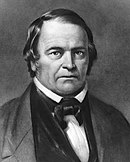
William Miller
groups devote a lot of attention to the Revelation, yet they have completely missed what it says on the subject.

In Revelation 14:9-11, John reports the announcement of an angel: "If anyone worships the beast and its image and receives a mark on his forehead or on his hand, he also will drink the wine of God’s wrath, poured full strength into the cup of His anger, and he will be tormented with fire and sulfur in the presence of the holy angels and in the presence of the Lamb. And the smoke of their torment goes up forever and ever, and they have no rest, day or night, these worshipers of the beast and its image, and whoever receives the mark of its name."

The angel describes several elements of this judgment which are relevant to this issue. First, the punishment will be in the presence of the faithful angels and Jesus Christ. That is, there are witnesses to the continuing punishment. If the wicked are merely annihilated, then what is there for Jesus and the angels to witness? Second, the smoke of their torment rises forever. In other words, the punishment does not have an end. Also, since it is torment, the wicked are conscious. They are not unconscious, as some liberals claim. What kind of demented Judge would Jesus be, if He remained to witness the punishment of an anesthetized prisoner? And third, and most importantly, the wicked have no rest. There is no relief, no cessation of their punishment. That one phrase itself is the opposite of what is asserted by the Millerites.

There is a question that isn't really related to this matter, but is, no doubt, coming to the mind of some who read this. How can it be just for there to be eternal punishment for the sins of a life of limited duration? While that is a common question, it is really asked without much consideration. First, the punishment of a crime is proportional, not only to the action, but also to the victim. For example, a man who kills his neighbor is not punished as severely as a man who kills the president. And, since all sin is an assault on the eternal, holy God, how can the punishment be limited to the nature of a mere man? Furthermore, the question is actually based on a circular presupposition, i. e., that the wicked in Hell ceases to be active, is asleep, or in some other way disconnected from what is happening. On the contrary, all social restrictions are removed, so all the wicked in Hell are free to proclaim their hatred of God without ceasing, and in the vilest language known to created beings. Therefore, the wicked continue to sin, and, thus, to earn judgment.

Wednesday, September 13, 2017

Righteous Judgment: The Judge's Gavel in the Hands of the Church


Most Christians understand that God normally works through means. For example, when He heals our illnesses, He usually does so through doctors, medications, surgeries. When He converts an unbeliever, He does so through the means of the Christian who shares the Gospel with that unbeliever. This is not to deny that he also works miraculously, that is, directly, without means. It is merely a belief that miracles are necessarily the exceptions, not our daily experience.

The number one means that God uses in achieving His purposes in this world is His Church. For example, Psalm 149:6-9 describes the role of the Church in applying God's judgment in an unbelieving world:
"Let the high praises of God be in their throats
     and two-edged swords in their hands,
to execute vengeance on the nations
     and punishments on the peoples,
to bind their kings with chains
     and their nobles with fetters of iron,
to execute on them the judgment written! 

     This is honor for all His godly ones."

This is the downside of evangelism. As Paul says, our message is "to one a fragrance from death to death, to the other a fragrance from life to life" (II Corinthians 2:16, compare the words of Jesus in John 9:39). While the Gospel is a source of life to the elect, those who are being made alive by the Spirit, it is a message of death to the reprobate, those who remain in their spiritually-dead state.

Jesus repeats the Psalmists message in Matthew 19:28: "Truly, I say to you, in the new world, when the Son of Man will sit on his glorious throne, you who have followed me will also sit on twelve thrones, judging the twelve tribes of Israel." The Apostles, who had suffered, and who were to suffer much more, even martyrdom, at the hand of the apostate Jews, were given this comfort, that someday they would sit in judgment on those very persecutors. 

What means will we use in applying that judgment? The Psalmist tells us "two-edged swords," a phrase which is explained in Hebrews 4:12: "The word of God is living and active, sharper than any two-edged sword, piercing to the division of soul and of spirit, of joints and of marrow, and discerning the thoughts and intentions of the heart." We also have the description of Jesus: "In His right hand He held seven stars, from His mouth came a sharp two-edged sword, and His face was like the sun shining in full strength" (Revelation 1:16). Thus, this judgment will not be by any prejudices of men, but rather by the applying of God's infallible word. And that word was given by Jesus Himself!

We live in an age of syrupy Christianity, a Christianity which must only speak sweetness and light, never the truths of sin and judgment. I call it the Osteenification of the church. But that is not the Christianity or the Church of Scripture. Shall we live by the standards of a self-esteem world? Or shall we apply the truth of God's Word, and warn of the judgment to come?

Wednesday, February 15, 2017

"Baptism with Fire": What Is It?

In Matthew 3:11 (and the parallel in Luke 3:16), we see a quote from John the Baptist that has always seemed mysterious to me: "I baptize you with water for repentance, but He who is coming after me is mightier than I, whose sandals I am not worthy to carry. He will baptize you with the Holy Spirit and fire." John was making a clear distinction of status between himself and the One who was coming after him, i. e., Jesus. While John was performing an external rite with water, Jesus would do an internal work "with the Holy Spirit and fire."

Pentecostals take the reference as one thing, that "Holy Spirit" and "fire" are appositives, referring to their experiences of tongues, etc. Orthodox Protestants, on the other hand, consider the baptism with the Holy Spirit to be something that happens to every true believer when he is born again. I consider that understanding to be consistent with I Corinthians 12:13: "in one Spirit we were all baptized into one body—Jews or Greeks, slaves or free—and all were made to drink of one Spirit" (see also John 7:39).

That phrase, "baptized with the Holy Spirit," occurs several times in the New Testament. We find it in Mark 1:8, John 1:33, Acts 1:5, 11:16, and 18:25. In none of these verse is it paired with "fire," even in the parallel verses in Mark 1:8 and John 1:33.

I think we must take that to mean that "with the Holy Spirit" and "with fire" are not different words for the same thing, but rather references to contrasting things. "Baptism with the Holy Spirit," as Paul indicates, is something that happens to every believer. Then, to whom does the contrasting "baptism with fire" apply?

On whom else does Jesus attribute a pouring out of fire? He mentions Sodom and Gomorrah (Luke 17:29), and unrepentant unbelievers (Matthew 25:41). These verses indicate that "fire" is not used for an extra-spiritual experience of the saved, but rather for judgment on the wicked (compare Mark 9:42-49).

This gives, I think, by analogy of the faith, what John was saying of Jesus: "I baptize you with water for repentance, but He who is coming after me will baptize you [believers] with the Holy Spirit and [you unbelievers with] fire." Note that "you" is plural, so he is addressing the whole audience, not anyone in particular. That is why he would have used an inclusive comment. To have spoken as the Pentecostals interpret him would have him to assume that all of his audience was - or would be - believers, which is obviously not the case. Also, look at the verse in both Matthew and Luke, where Jesus makes it explicit: "The chaff He will burn with unquenchable fire."

Saturday, March 12, 2016

The Pre-Incarnate Mediatorship of Christ in Amos 7

The seventh chapter of Amos opens with three warning visions.

The first is Amos 7:1-3: "This is what the Lord God showed me: behold, he was forming locusts when the latter growth was just beginning to sprout, and behold, it was the latter growth after the king’s mowings. When they had finished eating the grass of the land, I said, 'O Lord God, please forgive! How can Jacob stand? He is so small!' The Lord relented concerning this: 'It shall not be,' said the Lord."

The second is Amos 7:4-6: "This is what the Lord God showed me: behold, the Lord God was calling for a judgment by fire, and it devoured the great deep and was eating up the land. Then I said, 'O Lord God, please cease! How can Jacob stand? He is so small!' The Lord relented concerning this: 'This also shall not be,' said the Lord God." 

And the third in Amos 7:7-9: "This is what he showed me: behold, the Lord was standing beside a wall built with a plumb line, with a plumb line in his hand. And the LORD said to me, 'Amos, what do you see?' And I said, 'A plumb line.' Then the Lord said, 'Behold, I am setting a plumb line in the midst of my people Israel; I will never again pass by them; the high places of Isaac shall be made desolate, and the sanctuaries of Israel shall be laid waste, and I will rise against the house of Jeroboam with the sword."

In all three visions, God warns of an impending judgment on the northern kingdom, a judgment which was eventually fulfilled in the conquest and deportation by Assyria in 722BC. The difference is that the first two judgments are turned away through the intercession of Amos himself. 

However, the third vision is very different. First, notice the varying use of "lord." In the first and third occurrences we see "Lord." That is, the Hebrew word adon. In contrast, the middle usage is "LORD," for the Tetragrammaton, Jehovah. This contrast indicates a conversation between the First and Second Persons
of the Trinity. Compare Psalm 110:1 and its use in Luke 20:42 and Acts 2:34. 

We see Amos's twice taking a mediatorial role, and turning aside God's judgment on the northern portion of Israel. However, in the third judgment, Christ, the ultimate Mediator, refuses to intervene on behalf of Israel and this third, most-devastating, judgment was poured out in the destruction of these ten tribes. We see it again in Amos 9:7, where God tells the northern kingdom that she has no more privileges in His eyes than do the most-obscure (in their knowledge of the world) foreigners. How horrible must God's wrath be, if His own appointed Mediator refuses to plead for a sinner!

Saturday, March 5, 2016

The Missionary Heart of Jesus

"Jesus went throughout all the cities and villages, teaching in their synagogues and proclaiming the gospel of the kingdom and healing every disease and every affliction. When He saw the crowds, He had compassion for them, because they were harassed and helpless, like sheep without a
shepherd. Then He said to His disciples, 'The harvest is plentiful, but the laborers are few; therefore pray earnestly to the Lord of the harvest to send out laborers into His harvest.'"
- Matthew 9:35-38 

These verses show us something about Jesus that I find amazing. While He came to save the church (Eph. 5:25, confer John 10:29 and 17:6), He is not blind to the rest of fallen humanity. Rather, He sees their sin, spiritual blindness, disease, futility, and even their stubbornness (see, for example, Matthew 23:37), and is moved with compassion. He sorrows over the irremediable fallenness of the reprobate, though He acts in justice in judging them for their sin (Matthew 25:31-33, 46, and Revelation 20:11-15). 

How can these things be compatible?

It is certainly true that God takes no pleasure in destroying the wicked (Ezekiel 33:11). If He did, would He not be too sadistic for us to contemplate? But the Bible also says (Psalm 5:4), "You are not a God who delights in wickedness; evil may not dwell with You."

The problem continues to be that God is more complex than we want Him to be. Too many people talk about the love of God for men, and then stop. What does God value above men? Himself. To love sinners without acting in justice, He would be forced to excise that side of His nature, His holiness (Heb. 12:29). He would thus cease to be God. The God of that kind of belief system is not the God of the Bible, but is rather an idol, a god made, not even in man's image, but rather according to man's desires.