Showing posts with label judges. Show all posts

Wednesday, September 30, 2020

The Nature of Unbelief and the Necessity of the Omnipotent Power of the Holy Spirit

 As Moses approached the end of his life, he faced the prospect of leaving his people to the leadership of someone else, Joshua. Under such circumstances, it is natural for the outgoing leader to believe that his successor will be unable to match the leadership that he had given. It is just part of the fallen nature of men to think that no one else can do the job as well as we could. 

He gives a sermon to Israel, warning them of consequences if they failed to be faithful to God, or, in contrast, the blessings that would come from faithfulness. In that sermon, we find this paragraph (Deuteronomy 29:2-9): "You have seen all that the Lord did before your eyes in the land of Egypt, to Pharaoh and to all his servants and to all his land, the great trials that your eyes saw, the signs, and those great wonders. But, to this day, the Lord has not given you a heart to understand or eyes to see or ears to hear. I have led you forty years in the wilderness. Your clothes have not worn out on you, and your sandals have not worn off your feet. You have not eaten bread, and you have not drunk wine or strong drink, that you may know that I am the Lord your God. And when you came to this place, Sihon the king of Heshbon and Og the king of Bashan came against us to battle, but we defeated them. We took their land, and gave it for inheritance to the Reubenite, the Gadites, and the half-tribe of the Manassites. Therefore, keep the words of this covenant and do them, that you may prosper in all that you do."

Moses gives a partial recapitulation of the miraculous events that Israel had seen, ranging from God's judgments on the Egyptians, sustaining them in the wilderness, and, most recently, the defeat of Sihon and Og, powerful Canaanite kings. But, in the midst of that recapitulation, he says something odd: "But, to this day, the Lord has not given you a heart to understand or eyes to see or ears to hear" (verse 4). 

God had given Israel every possible evidence that He was real and that He had chosen Israel as His special covenant people. We read this passage and assume that any rational people would understand that Jehovah is God, with absolute power over the nations. Yet, we know that Israel quickly descended into idolatry. In Judges 17:6 (and repeated in 21:25), we are told, "In those days there was no king in Israel. Everyone did what was right in his own eyes."

How could there be such a disconnect between the evidence of their eyes and the unbelief in their hearts? 

Moses tells us how: "To this day the Lord has not given you heart to understand or eyes to see or ears to hear" (Deuteronomy 29:4). The same characteristic would later be addressed by the prophets (e. g., Isaiah 6:9 and Jeremiah 5:21), and even by Jesus Himself (Matthew 13:14-15). Contrary to our view of ourselves, fallen men do not have a natural ability to see the hand of God and give Him the thanks that he deserves. Rather, we love sin more than God, and, therefore, suppress our knowledge of His reality and goodness (Romans 1:18-22). 

This inclination has significant implications for apologetics and evangelism. When we explain the Gospel to unbelievers, their inclination to reject it is not because of a lack of evidence. They already know that the Gospel is true! Rather, their consciences tell them that recognizing the reality of the Gospel would require that they repudiate sin. And they love sin more than they love God! It is not within the power of the Christian to break that addiction in the unbeliever. It is only the Holy Spirit who can do that. Yes, belief requires the power of omnipotent God to triumph over unbelief.

Wednesday, December 11, 2019

Conscience, Social Order, and the Kingship of Jesus

Years ago, the pastor I had at that time told a story of one of his daughters, about 5 years old at the time. She customarily took an afternoon nap, as most children do at that age. However, on one particular day, she said that she wasn't sleepy and didn't want to take a nap. So her parents decided to allow her to remain up with them. Yet, later, she started to get drowsy, and told them, "You should have spanked me." My pastor cited this as an example of children's awareness that their contrary actions deserve punishment, and that they benefit from such discipline.

In our day, even adults have adopted an attitude that everything we do is justified, and never deserving of punishment. Yet we expect actions done to us to be punished. That means that we have not lost a sense that wrong action deserves correction. We merely exempt what we do from the standard of right and wrong that
Patrick Henry
we apply to everyone else. The result is chaos, with every person having some sob story to explain why his actions should be tolerated.

This is why we are seeing in our day what Scripture tells us about Hebrew society before the establishment of the monarchy: "In those days there was no king in Israel. Everyone did what was right in his own eyes" (Judges 21:25). No king? But we have never had a king, have we? On the contrary, though we live in a Republic, the Founders built their Republic with a king in view: "It cannot be emphasized too strongly or too often that this great nation was founded, not by religionists, but by Christians; not on religions, but on the Gospel of Jesus Christ!" While the quote has been challenged, it is attributed to Patrick Henry. Whether or not he did say it, it still represents the attitude of the Founders, who, though they created a republic, based it on the presupposition of the kingship of Jesus, and that alone can be the basis of rebuilding a moral basis for a peaceful society.

"The feeling of ill desert drinks up the spirits, and 'conscience makes cowards of us all.' This, then, is the peculiarity which distinguishes guilt - it is a conviction that punishment is due, that it ought to be inflicted, and that , under a righteous government, sooner or later, it will be inflicted; and it is precisely this sense of guilt which the truths of natural religion are adapted to produce within us. It is the echo of our own hearts to the fearful condemnation of a holy God.."
James Henley Thornwell, "The Nature and Necessity of Christianity"

Wednesday, June 20, 2018

The False Fantasy of Moral Autonomy

There is a time in the Bible, where the Scripture repeats this mantra: "In those days there was no king in Israel. Everyone did what was right in his own eyes" (Judges 17:6, 21:25). The Bible says that is a bad thing, an indication of moral anarchy. However, in our own day it has become a fashionable lifestyle: "Do your own thing. Just follow your heart."

However, underlying that concept is an assumption of autonomy, the assertion that man rules himself and his destiny, and need not acknowledge any standard of judgment over his life other than his own pleasure. Even Christians fail to connect that mentality to the words of Satan in the Garden (Genesis 3:5): "For God knows that when you eat of it your eyes will be opened, and you will be like God, knowing good and evil." In this case, "knowing" means "deciding." Our popular hedonism has come full circle, to demonstrate its satanic origin, yet that doesn't check the promotion of it.

However, God is neither impressed with our moral sophistication nor our alliance with Satan. "You have wearied the LORD with your words. But you say, 'How have we wearied Him?' By saying, 'Everyone who does evil is good in the sight of the LORD, and he delights in them.' Or by asking, 'Where is the God of justice?'" (Malachi 2:17). He finds it tedious to listen to us declare our autonomy and right to decide our own morality. After all, He is God, our creator, and we are merely His creatures. Therefore, such a claim of autonomy is an act of rebellion and treason, the exact sin for which Adam was judged, and he and eve were cast out of the garden.

Wednesday, May 9, 2018

The Clerical Collar: Wearing What Pertains to a Man

In today's culture wars, Deuteronomy 22:5 gets quoted often: "A woman shall not wear a man’s garment, nor shall a man put on a woman’s cloak, for whoever does these things is an abomination to the Lord your God." Or, for my use here, the King James Version: "The woman shall not wear that which pertaineth unto a man, neither shall a man put on a woman's garment: for all that do so are abomination unto the LORD thy God." I prefer the KJV here because there is far more that pertains to a man than mere clothing.

One thing that pertains to a man is God's calling to exercise authority in the church (and in the home, but that isn't my subject here): "I do not permit a woman to teach or to exercise authority over a man; rather, she is to remain quiet. For Adam was formed first, then Eve" (I Timothy 2:12-13, see also 3:2 and Titus 1:6). Here it is stated negatively, not what should be done by a man, but what must not be done by a woman. In fact, leadership by women is described as a curse: "My people—infants are their oppressors, and women rule over them. O My people, your guides mislead you and they have swallowed up the course of your paths" (Isaiah 3:12).

We know from the case of Deborah, for example, that there are times when a woman will be in leadership (Judges, chapters 4 and 5). But such a case is not normative. Rather, it exposes that a society is so degenerate that no men are qualified to lead. Notice what a wimp Deborah's general, Barak, is: "If you will go with me, then I will go [i. e., into battle with the Canaanite King Jabin, verse 2], but if you will not go with me, then I will not go" (Judges 4:8). Here the general of Israel's army, presumably its greatest military leader, is so timid that he will not go into battle unless this woman holds his hand the whole time! is it any wonder, then, that there are no men to lead Israel in her time of need? 

It can certainly be said that America is suffering from a lack of men capable of leadership. One often hears speakers lamenting the "feminization of men." I do not believe, however, that we are approaching the circumstances of Israel in Judges 4. Therefore, Deuteronomy 22:5 is still in force, and female clergy are wearing what pertains to men.

Monday, August 10, 2015

Do We (and Can We) Cooperate with God?

The essence of Arminianism, inherited from its popish and Pelagian roots, is that man cooperates with God in his salvation and sanctification. This is referred to "synergism," from the Greek words meaning "to work together." The contrasting view is Calvinism, which holds that our salvation and sanctification are works of God alone, works done in us, but not by us, a view called "monergism," from the Greek words meaning "work of one, or alone."

Every Sunday school student has been taught the story of Gideon and the Midianites (Judges, chapters 6-8). It's a fine story of God's rescue of His people from the tyranny of pagan invaders. However, it is rarely taught as a theological lesson.

Consider Judges 7:2: "The Lord said to Gideon, 'The people with you are too many for Me to give the Midianites into their hand, lest Israel boast over Me, saying, "My own hand has saved me."'" Do you recall the reference? Gideon had assembled the men of Israel to give battle to the Midianites. Thirty-two thousand men had assembled (Jud. 7:3), but this was unacceptable to God, because the
Israelites could point to the number of their warriors as the source of their victory instead of God, something that He would not allow (see Isaiah 42:8 and 48:11).

This is monergism, God's singular work of redemption. Someone may be objecting that this passage isn't about salvation. Really? Is it not? God is here saving His people from oppression by human tyrants, as He did in the exodus from Egypt. That is a representation of spiritual salvation, in which God's people are freed from the oppression of sin and Satan. In logic, that is called arguing from the lesser to the greater. If God refused to let men claim credit for their freedom from mere political oppression, would He not refuse even more to allow us to claim credit for our salvation from sin? That would be a far greater glory, and forbidden by the Isaiah passages above.

Paul makes the spiritual application in Ephesians 2:1-4: "[We] were dead in the trespasses and sins,... and were by nature children of wrath, like the rest of mankind." Not "weak" or "sick," or even "dying." Dead; a doctrine known as "total depravity." And just as a dead body cannot aid a doctor in resuscitating it, neither can we even desire to aid God in our salvation (Rom. 3:10-11). Thus, if we are to be saved from our spiritual bondage, it must be all by God's hand, by His gift, by His enabling (Eph. 2:8-10, Phil. 2:13, John 1:13, John 6:44, etc.). Consider especially Jeremiah 10:23: "I know, O LORD, that the way of man is not in himself, that it is not in man who walks to direct his steps."

My hope is that there are people reading this who don't know salvation in Jesus Christ. These passages should be telling you that everything that you have been claiming as your ticket to heaven is an illusion. It is only the faith Jesus gives you as the instrument for receiving salvation from Him that can be of any hope to you. You can't do it yourself. Either He has done it all, or there can be no salvation for you. Please receive Him now. or, if you need further information, please email me at the address in my profile on the right.

Sunday, October 23, 2011

Ezekiel 9:3-7, The Godly Must Speak Out!


"Now the glory of the God of Israel had gone up from the cherub on which it rested to the threshold of the house. And He called to the man clothed in linen, who had the writing case at his waist. And the Lord said to him, 'Pass through the city, through Jerusalem, and put a mark on the foreheads of the men who sigh and groan over all the abominations that are committed in it.' And to the others He said in my hearing, 'Pass through the city after him, and strike. Your eye shall not spare, and you shall show no pity. Kill old men outright, young men and maidens, little children and women, but touch no one on whom is the mark. And begin at My sanctuary.' So they began with the elders who were before the house. Then He said to them, 'Defile the house, and fill the courts with the slain. Go out.' So they went out and struck in the city."

This is a tough passage! It speaks of a time of latitudinarian spirituality. Anything goes. Everything is okay. Don't be judgmental. There are times of such ease throughout the Old Testament, See, for example, Deuteronomy 12:8, Judges 17:6, Judges 21:25, and Proverbs 21:2. And again in Ezekiel's time. But this time the Lord pours out His wrath against the lackadaisical church-member. He commands a man to go through Jerusalem and place a mark on all those who weep over the apostasy of their society. Then He sends others out to slay everyone without that mark.

Doesn't this describe our own time? The leadership of many churches deny the fundamentals of the faith. One prominent "evangelical" has now declared that there is no Hell. There have been ministers for decades who deny the divine inspiration of the Bible. And now we have loony theology flying all over the place, such as the Prosperity Gospel. But we mustn't criticize. Mustn't act superior. Mustn't judge. But John 7:24 tells us to judge, but to do it "with right judgment." And doesn't this passage from Ezekiel indicate that we face severe judgment ourselves if we disobey this instruction? Doesn't God reveal that He hates loose and impotent Christianity?

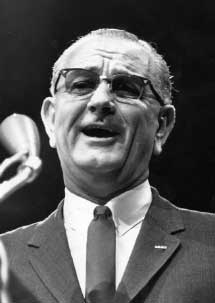
However, we must understand that we face not only God's wrath if we fail to judge error and sin, but also that we face the government's wrath if we do. In 1954, then-Senator Lyndon Johnson inserted a clause into the federal tax code to revoke the tax-exempt status of churches, if their pastors used the pulpit to criticize government. The Alliance Defense Fund is attempting to stir up pastors to resist this shackle on their work.

Acts 5:29 tells us that we must obey God rather than men. Since it is the duty of pastors especially, but also all Christians generally, to speak against the evils of our time, surely the tax code should be an inferior authority in our concerns. Let the Pastor, and each Christian, exercise his spiritual responsibility and constitutional rights. And what consequences the government brings on us, let us be honored to suffer for doing right (I Peter 3:17)!

Wednesday, February 9, 2011

The Judgeship of Deborah and Male Headship


"As for My people, children are their oppressors, and women rule over them."        - Isaiah 3:12 ASV

In Judges, chapter 4, we have the story of Deborah, the only female judge of Israel. In verse 4, she is described as a prophetess and judge, so she is both the political and religious leader of Israel (though I assume there was still a high priest). Believing as I do that both of these offices are parts of God's calling for men, not women (I Timothy 2:12), I was pondering this evening what the significance is of her holding these offices.

Note further in Judges 4:7, where she has delivered God's commandment to Barak, the chief general of Israel, to go out to battle against the oppressors of Israel. His response in the next verse is telling: "If you will go with me, I will go, but if you will not go with me, I will not go." It is as if he said that he needs her to hold his hand, so he won't be afraid of the bogeyman. Deborah bluntly tells him in verse 9 that the glory for the victory will go to a woman. Even Sisera, the enemy general, turns out to be a wimp. Verse 20 reads, "And he said to her, 'Stand at the opening of the tent, and if any man comes and asks you, 'Is anyone here?' say, 'No.'" He sends a woman out to guard him as he sleeps!

I think that we have here a disparaging view of the spiritual condition of Israel. Her men had been so feminized and spiritually-castrated that there was no man for God to call into leadership (humanly-speaking; I certainly would never say that God cannot graciously raise a man above his natural ability). Do we not see that condition developing in our own country? I see more and more female preachers on TV. My home state has a female governor. Our federal secretary of state is a woman. The previous speaker of the US House was a woman. Will we soon see our own Deborah?

Friday, August 13, 2010

Deuteronomy 20:1-9, Rousas Rushdoony on Biblical Warfare


When you go out to war against your enemies, and see horses and chariots and an army larger than your own, you shall not be afraid of them, for the Lord your God is with you, Who brought you up out of the land of Egypt. And when you draw near to the battle, the priest shall come forward and speak to the people and shall say to them, ‘Hear, O Israel, today you are drawing near for battle against your enemies: let not your heart faint. Do not fear or panic or be in dread of them, for the Lord your God is He who goes with you to fight for you against your enemies, to give you the victory.’ Then the officers shall speak to the people, saying, ‘Is there any man who has built a new house and has not dedicated it? Let him go back to his house, lest he die in the battle and another man dedicate it. And is there any man who has planted a vineyard and has not enjoyed its fruit? Let him go back to his house, lest he die in the battle and another man enjoy its fruit. And is there any man who has betrothed a wife and has not taken her? Let him go back to his house, lest he die in the battle and another man take her.’ And the officers shall speak further to the people, and say, ‘Is there any man who is fearful and fainthearted? Let him go back to his house, lest he make the heart of his fellows melt like his own.’ And when the officers have finished speaking to the people, then commanders shall be appointed at the head of the people."
[Note that this is from The ESV, while Rushdoony originally used the KJV. The passage below is from Rushdoony's commentary on Deuteronomy. I reproduce it here because of my fear of the current support among conservative American Christians for imperialistic wars around the world.]

J. A. Thompson has cited the biblical texts governing godly warfare. First, no such war could be conducted apart from God's word or orders (I Sam. 28:5-6; 30:7-8; II Sam. 5:19, 22-23). Second, there had to be a consecration to the task by the men of Israel (I Sam. 21:5; II Sam. 11:11; Isa. 13:3). All that would offend God must be separated from them (Deut. 23:9-14), because God dwells in the camp with His people (Deut. 23:14; Judg. 4:14). Third, the Lord can deliver His people by many or by few (Judg. 7:2ff; I Sam. 13:15ff; 14:6, 17). Fourth, God can and does send panic into the ranks of the enemy, and thereby bring about their defeat (Josh. 10:10; Judg. 4:15; I Sam. 5:11; 7:10; etc.). Fifth, the spoils of the war belong to God, not to man. [J. A. Thompson, Deuteronomy, IV Press, 1978, pp. 2187-219]

One of the Dead Sea Scrolls is entitled, The War of the Sons of Light against the Sons of Darkness. Its concern was with the great war with God's enemies at the end-time. These laws had their influence. Throughout the Christian era, much has occurred in the way of efforts, both successful and unsuccessful, to limit injustices in wartime. Although the history of Western warfare is not good, it still is different from the ferocity of most pagan conflicts, until recently.

In v. 1, God stresses through Moses that He is with them: therefore, "be not afraid of them." This is a command: to believe in God means to trust in His word.

As a result, two kinds of exemption from military service are granted. First, all those whose minds are distracted and preoccupied by their affairs at home, i.e., a new house as yet not dedicated nor used, a bride betrothed but not taken, or a new vineyard finally producing but as yet unharvested. All such men, however willing to fight, are to be sent home, both as a merciful act and also to eliminate distracted minds (vv. 5-7). Second, all who are fearful and fainthearted are to be sent home. Their presence in the army is a threat to their fellow soldiers.

These exemptions are to be declared by a priest. They are religious exemptions and are therefore to be set forth by a priest. According to numerous texts, a campaign was to be preceded by burnt offerings (Judg. 6:20-21, 26; 20:26; I Sam. 4:3; 7:9; 13:10ff; 14:18; 23:4, 6, 9; 30:7ff). These verses also tell us that attempts to replace obedience with the presence of the ark led to disastrous results.

The exemptions applied to all ranks of soldiers. If, therefore, clan leaders dropped out because of some kind of exemption, then captains of armies were to be made out of the remaining men. The officers were thus named by the men of courage.

The army must then trust in God, not in the size of the army. Wars are not outside of God's providential government, and the most necessary equipment for battle is a trust in God.

It is clear from all of this that military service was voluntary, not compulsory. The covenant people were to place their hope in God, to use godly soldiers, and to eliminate from the ranks of the volunteers all men who might be for any cause double-minded.

[Joseph] Morecroft noted, "When wars are fought in the defense of justice, in the suppression of evil, or in defense of the homeland, they are godly, and are part of the work of restoration. Such wars are 'wars of the Lord," Num. 21:14.'" [A Christian Manual of Law]

Again citing Morecroft, v. 2 indicates that the priest accompanied the army; this was the origin of chaplains. Moreover, the exemptions make it clear that the family has priority, together with exercising dominion over the earth under God.

Deuteronomy deals with warfare in chapters 20:1-20: 21:10-14: 23:9-14; 24:5, and 25:17-19. Even a modernist like Anthony Phillips has called the laws "humanitarian." [Deuteronomy, 1973]

In v. 9, the officers speak "unto the people." Instead of a drafted army, the soldiers are the people, come together to defend their cause or their homes. This is basic in Deuteronomy. Instead of a state decreeing war as a matter of policy, we have a people ready to fight for their cause. Instead of men drafted, made soldiers by compulsion, we have a gathering of the clansmen to defend their cause. The first step before battle is to send home some of these men.

The captains or commanders were, according to A. D. H. Mayes [Deuteronomy, 1981], apparently chosen on the same basis as were elders in cities and in the temple life of the people, captains over tens, twenties, hundreds, and thousands. The original commandment for this in cited in Deuteronomy 1:9-15.

P. C. Craigie's [The Book of Deuteronomy, 1976] comments on this text are very telling. He states, "Israelite strength lay not in numbers, not in the superiority of their weapons, but in their God. The strength of their God was not simply a matter of faith, but a matter of experience." The legitimate wars were godly wars because their purpose was to remain secure in their possession of the land and their exercise of godly dominion therein. Again quoting the admirable Craigie, "The basis of these exemptions becomes clearer against the background of the function of war in ancient Israel. The purpose of war in the early stages of Israel's history was to take possession of the land promised to the people of God; in the later period of history, war was fought for defensive purposes, to defend the land from external aggressors. The possession of the promised land, in other words, was at the heart of Israel's wars, and the importance of the land, in the plan of God, was that Israel was to live and work and prosper in it. The building of homes and orchards, the marrying of a wife, and other such things were of the essence of life in the promised land, and if these things ceased, then the wars would become pointless. Thus, in these exemptions from military service, it is clear that the important aspects of normal life in the land take precedence over the requirements of the army, But this somewhat idealistic approach (in modern terms) was possible only because of the profound conviction that military strength and victory lay, in the first resort, not in the army, but in God."

Israel's military muster included all men between ages twenty and fifty, but not all were used. In Judges 7, we see how Gideon reduced his army in terms of this law. Our Lord applied this in selecting His army, the apostles and other disciples, and He sent home all who were not totally dedicated (Luke 9:57-62). In Luke 14:18-20, our Lord makes it clear that the law of exemptions from military service did not apply where men are summoned into the Kingdom.

Verse 4 states that "God is He that goeth with you." This has also been rendered as "God who marches with you."

We see here as elsewhere that there is nothing outside of God's government. Work, worship, war, eating, sanitation, and all things are subject to His laws. He is totally the Governor of all things. The marginal note to this text in the Geneva Bible tells us, "God permitteth not this people to fight when it seemeth good to them." We are in all things totally under His government.

God's laws of warfare view legitimate warfare as the defense of the family and the land. Modern warfare is waged for political, not covenantal, reasons. Moreover, nonbiblical wars are waged more and more against civilians, as were pagan wars. Thus, there is a great gap between political wars and those permitted by God's law.