Showing posts with label statism. Show all posts

Wednesday, October 14, 2020

Social Disorder, Statism, and God's Law


I write this at a time when America is going through widespread social tumult over police shootings of black men and women. George Floyd and Breonna Taylor are names we hear on the nightly news almost every day. On one hand, we have the protesters, some of whom are committing wanton acts of violence and destruction, and on the other, politicians arguing over who better supports the police. Rather, I am asking whether Scripture tells us anything relevant to this crisis.

Do we see any solutions to this situation in Scripture? Some argue for more evangelism, saying that the Gospel provides an effective means of uniting people. While that is true, I don't think it is the only solution, and it is not my topic here. 

Rather, I am asking whether Scripture addresses government in a way that impacts this situation. And I think it does.

First, what is the source of law in the Bible? Is it the state? No, it isn't. Nowhere in Scripture do we find a basis for government promulgations regarding crimes or punishments. This isn't an argument for anarchy, but rather for a severely restricted state. If not the state, then what is the source of law? It is God alone. "See, I [Moses] have taught you statutes and rules, as the Lord my God commanded me, that you should do them in the land that you are entering to take possession of it. Keep them and do them, for that will be your wisdom and your understanding in the sight of the peoples, who, when they hear all these statutes, will say, ‘Surely this great nation is a wise and understanding people.’ For what great nation is there that has a god so near to it as the Lord our God is to us, whenever we call upon Him? And what great nation is there, that has statutes and rules so righteous as all this law that I set before you today?" (Deuteronomy 4:5-8). Not the king's law, or the president's or Congress's, but God's law. 

Then who is to enforce the law? Nowhere in Scripture do we see a description of a police force or of inspectors or enforcers. Rather we see this: "On the evidence of two witnesses or of three witnesses the one who is to die shall be put to death; a person shall not be put to death on the evidence of one witness. The hand of the witnesses shall be first against him to put him to death, and afterward the hand of all the people. So you shall purge the evil from your midst" (Deuteronomy 17:6-7). The enforcement of the law is not assigned to a separate enforcement class, but is instead the responsibility of the people themselves. 

Our social conflict is the result of our worship of the state, of our looking to the state for salvation, of our looking to the state to be the source of social order. Since that is not God's intended role for the state, the result of those expectations is not social order but social chaos.

Saturday, June 15, 2019

Elijah and the Rise of Persecution in America


We are living in time where it is becoming more difficult to be a Christian in America. The humanists have succeeded in defining the right to free exercise of religion as a right to private exercise, such as at home or in church. But definitely not in the public square. The First Amendment has been turned on its head, from a protection of religious practice from government oppression to a means to sterilize public discourse, so that only humanism is acceptable as the basis for public policy or morality.

Christians seem to have forgotten the answer the Apostles made to such pressure in their own day: "We must obey God rather than men" (Acts 5:29). And that assertion was made in the face of times to come, when all of the Apostles died a violent death, except John, and even he was imprisoned for a time. We do not, yet, face that danger in America.

The problem is that this public pressure has put American Christians into a crisis of loyalty. To whom do we owe our highest loyalty? To government, especially in the face of its own lawlessness? Or to God?

The Scriptures are clear: "You shall not fall in with the many to do evil" (Exodus 23:2). In giving witness against evil, we are not allowed to consider whether the crowd agrees with us. The only consideration we are allowed is whether we agree with God. If so, then our calling is to stand for what God says, whether everyone is with us, or everyone is against us. And that can be a very difficult thing.

The Prophet Elijah faced the situation where he alone stood for the true and living God, against a culture that had turned to pagan gods: "I have been very jealous for the Lord, the God of hosts. For the people of Israel have forsaken your covenant, thrown down your altars, and killed your prophets with the sword, and I, even I only, am left, and they seek my life, to take it away" (I Kings 19:10). This is serious depression. Elijah saw himself alone against a culture given over to paganism, and he had no strength to continue the fight. But what did God answer him? "Yet I will leave seven thousand in Israel, all the knees that have not bowed to Baal, and every mouth that has not kissed him" (verse 18). God had another seven thousand faithful Israelites who needed to witness Elijah's faithfulness, because they, too, thought that they were alone. Every one of those men and women believed that he was the last of the faithful.

And that is the calling of each of today's American Christians. We are to remain faithful, no matter the opposition we face. Our first concern is faithfulness to God. However, we also need to consider the other timid Christians who need to be strengthened by knowing that they are not alone, and then they may be empowered to speak, as well.

Saturday, January 26, 2019

Humanist Blasphemy Laws and Freedom of Religion in America


There is a widespread belief and assertion that the United States has complete freedom of religion, with no established religion or church. To that end, the First Amendment to the Constitution is often cited: "Congress shall make no law respecting an establishment of religion, or prohibiting the free exercise thereof." It is nowhere near as true as people think that it is.

In some countries, there are blasphemy laws, laws that criminalize speech that supposedly attacks the official religion of that nation. A recent case from Pakistan has been widely publicized. We are also seeing the rise of laws forbidding the criticism of Islam in historically-Christian countries, such as Great Britain.

It is true that the United States has no such blasphemy laws. Does that mean that religious speech is protected in America? While we aren't as far down the road as Great Britain, religious freedom is not what it used to be in the United States.

There is an unstated, unofficial, but established religion in the United States, called variously "humanism," "secularism," "materialism." It is protected by the courts, with all competing religious speech and symbols sterilized from the public forum. Since that state religious doesn't have a god, the courts have not considered it a violation of the First Amendment. However, its opposition has been considered such, as crosses have been removed from property paid for with the tax money of Christians. Now, the First Amendment no longer protects Christians from the government, but rather excludes Christians from public life.

My point here is that America, in spite of its public image, certainly has a form of blasphemy laws of its own. They aren't laws that protect religion, or churches, or God Himself, but rather protect the humanist religion which has been quietly imposed on American society, and is now empowered to silence any opposition to its dominance.

Monday, April 27, 2015

Legalized Theft: Property Rights in an Entitlement Society

Much in the news today, as well as in water-cooler discussions, is the effort to force businesses, such as florists and bakeries, to serve social functions against the religious convictions of their owners. On one side, we see those who protest discrimination by the business-owners. On the other, we see those who have suddenly read the First Amendment about freedom of religion.

I say to both sides: That ship sailed a long time ago.

To the tolerance campaigners, I have a question: when a bar serves a particular clientele, is it discriminating? When there is a bowling league - or insert any social activity of your choice - for a particular segment of society, is that intolerant? My point is that discrimination cuts both ways. To discriminate in favor of a group is just as intolerant as to discriminate against that group, isn't it? Yet, I'm not seeing any public outrage about that. I recommend repeating this sentence to yourself, until you see my logic: "I can't tolerate intolerant people."

To the other side, the supposed defenders of religious liberty: Where were you when interracial marriage was declared legal by the Supreme Court? If a person has religious convictions against interracial marriage, is that a religious right that you want to protect? Speak up. I can't hear you. Why is it that "religious freedom" has suddenly become a rallying cry when it wants to discriminate against gay people? Yet, that phrase was never heard when so-called "civil rights laws," especially "public accommodations" laws became de riguer in the sixties.

My thought is that the answer is the Eighth Commandment, which reads simply, "You shall not steal" (Exodus 20:15). One of the sins forbidden by that commandment, according to Question 142 of the Westminster Larger Catechism, is "all unjust or sinful ways of taking or withholding from our neighbor of what belongs to him." To my mind, that covers both sides of this debate. As to the social activities to which I referred above, the commandment preserves the right of individuals to spend their own money on peaceful, voluntary interactions with associates of their choice. For the business owners, it preserves their right to perform interactions with individuals of their choice. Do you see the two sides of the coin here? The conflict arises from the efforts of government officials to insert force where there was none. And both sides, in their efforts to get government force for their own efforts, fail to recognize that force that works for them can just as easily be used against them.

Monday, November 24, 2014

The Bible and Confiscatory Government

Every Christian is familiar with these words of Jesus (Matthew 22:21): "Render to Caesar the things that are Caesar's, and to God the things that are God's." His words, of course, are true. I cannot say the same of how people use them. These words are often quoted to justify the taking by government of whatever taxes or property it sees fit. And I am sad to say that no one challenges that interpretation, because few people know their Bibles, beyond a few popular catchphrases.

Consider these words of warning from the Prophet Samuel (I Sam 8:14-15): "[The ruler] will take the best of your fields and vineyards and olive orchards and give them to his servants. He will take the tenth of your grain and of your vineyards and give it to his officers and to his servants." The context is the transition from the theocratic judgeships to the monarchy. Samuel was the last judge, and he was responding to the demands of the people of Israel for a king, "that we also may be like all the nations" (verse 20).

I suspect that most of us reading this are thinking something along the lines of, "I would kill for the privilege of paying only ten percent in taxes." And that is, indeed, one of the things we should see here. But notice also that it is Samuel's warning that the king would tax them ten percent. What does it say about us that we tolerate a government that taxes - income, sales, excise, tariffs - half of our income?

What is wrong with that? Again, we forget our Bibles. Do you recall the XIIIth Commandment (Exodus 20:15)? God says, "You shall not steal." Notice that he doesn't make exceptions for government. It doesn't exclude presidents, congressmen, governors, legislators, mayors, or city councilmen, much less the hordes of unelected bureaucrats with which are burdened. And that is exactly Samuel's warning: If you want a ruler who takes care of you, then you can expect that he will consume your livelihood.

Another prophet, Ezekiel, expresses the commandment explicitly to rulers (Ez. 46:18): "The prince shall not take any of the inheritance of the people, thrusting them out of their property." Wow! Imagine the society we would have if our government submitted to that command. Imagine the liberty and prosperity we would experience, if it became shameful for government to take even just ten percent of our income, and were forbidden to take our physical property. There is no "eminent domain" here! And there is no room for "Moral Monday" protesters to be claiming that government should confiscate and redistribute more of our property. And there is no exemption for tyranny by 50% plus one!

Sunday, October 23, 2011

Ezekiel 9:3-7, The Godly Must Speak Out!


"Now the glory of the God of Israel had gone up from the cherub on which it rested to the threshold of the house. And He called to the man clothed in linen, who had the writing case at his waist. And the Lord said to him, 'Pass through the city, through Jerusalem, and put a mark on the foreheads of the men who sigh and groan over all the abominations that are committed in it.' And to the others He said in my hearing, 'Pass through the city after him, and strike. Your eye shall not spare, and you shall show no pity. Kill old men outright, young men and maidens, little children and women, but touch no one on whom is the mark. And begin at My sanctuary.' So they began with the elders who were before the house. Then He said to them, 'Defile the house, and fill the courts with the slain. Go out.' So they went out and struck in the city."

This is a tough passage! It speaks of a time of latitudinarian spirituality. Anything goes. Everything is okay. Don't be judgmental. There are times of such ease throughout the Old Testament, See, for example, Deuteronomy 12:8, Judges 17:6, Judges 21:25, and Proverbs 21:2. And again in Ezekiel's time. But this time the Lord pours out His wrath against the lackadaisical church-member. He commands a man to go through Jerusalem and place a mark on all those who weep over the apostasy of their society. Then He sends others out to slay everyone without that mark.

Doesn't this describe our own time? The leadership of many churches deny the fundamentals of the faith. One prominent "evangelical" has now declared that there is no Hell. There have been ministers for decades who deny the divine inspiration of the Bible. And now we have loony theology flying all over the place, such as the Prosperity Gospel. But we mustn't criticize. Mustn't act superior. Mustn't judge. But John 7:24 tells us to judge, but to do it "with right judgment." And doesn't this passage from Ezekiel indicate that we face severe judgment ourselves if we disobey this instruction? Doesn't God reveal that He hates loose and impotent Christianity?

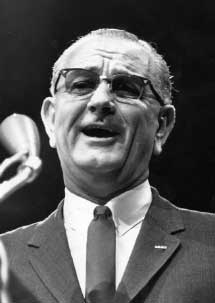
However, we must understand that we face not only God's wrath if we fail to judge error and sin, but also that we face the government's wrath if we do. In 1954, then-Senator Lyndon Johnson inserted a clause into the federal tax code to revoke the tax-exempt status of churches, if their pastors used the pulpit to criticize government. The Alliance Defense Fund is attempting to stir up pastors to resist this shackle on their work.

Acts 5:29 tells us that we must obey God rather than men. Since it is the duty of pastors especially, but also all Christians generally, to speak against the evils of our time, surely the tax code should be an inferior authority in our concerns. Let the Pastor, and each Christian, exercise his spiritual responsibility and constitutional rights. And what consequences the government brings on us, let us be honored to suffer for doing right (I Peter 3:17)!

Sunday, February 28, 2010

Proverbs 26:17, Wisdom versus American Foreign Policy


"Whoever meddles in a quarrel not his own is like one who takes a passing dog by the ears."

The Bible isn't a manual on the various activities of human life. It is a manual of our redemption in Jesus Christ. However, when it touches on science, history, economics, or politics, then its guidance is profound. This verse is a good example.

I have written before, in an actual political context, of my opposition to the imperialist foreign policy our country has pursued since World War I. The context was the Russian invasion of Georgia (i.e., the republic, not the state) in 2008. Our political leadership had pulled the ears of Mad Dog Putin of Russia, and he bit Georgia.

But consider what this verse says about American intervention in both World Wars, two breakouts of the historic rivalry between France and Germany, or in Afghanistan and Iraq in our own time. The swarms of mad dogs from those two running sores may not be exhausted in my life time.

The wisdom of God speaks to politicians: don't meddle in foreign conflicts, or you will turn them into domestic disputes.

Monday, February 15, 2010

Genesis 47:13-27, All Hail Pharaoh Obama!

"Now there was no food in all the land, for the famine was very severe, so that the land of Egypt and the land of Canaan languished by reason of the famine. And Joseph gathered up all the money that was found in the land of Egypt and in the land of Canaan, in exchange for the grain that they bought. And Joseph brought the money into Pharaoh's house. And when the money was all spent in the land of Egypt and in the land of Canaan, all the Egyptians came to Joseph and said, 'Give us food. Why should we die before your eyes? For our money is gone.' And Joseph answered, 'Give your livestock, and I will give you food in exchange for your livestock, if your money is gone.' So they brought their livestock to Joseph, and Joseph gave them food in exchange for the horses, the flocks, the herds, and the donkeys. He supplied them with food in exchange for all their livestock that year. And when that year was ended, they came to him the following year and said to him, 'We will not hide from my lord that our money is all spent. The herds of livestock are my lord's. There is nothing left in the sight of my lord but our bodies and our land. Why should we die before your eyes, both we and our land? Buy us and our land for food, and we with our land will be servants to Pharaoh. And give us seed that we may live and not die, and that the land may not be desolate.' "So Joseph bought all the land of Egypt for Pharaoh, for all the Egyptians sold their fields, because the famine was severe on them. The land became Pharaoh's. As for the people, he made servants of them from one end of Egypt to another. Only the land of the priests he did not buy, for the priests had a fixed allowance from Pharaoh and lived on the allowance that Pharaoh gave them; therefore they did not sell their land.

"Then Joseph said to the people, 'Behold, I have this day bought you and your land for Pharaoh. Now here is seed for you, and you shall sow the land. And at the harvests you shall give a fifth to Pharaoh, and four-fifths shall be your own, as seed for the field and as food for your little ones.' And they said, 'You have saved our lives; may it please my lord, we will be servants to Pharaoh.' So Joseph made it a statute concerning the land of Egypt, and it stands to this day, that Pharaoh should have the fifth; the land of the priests alone did not become Pharaoh's.

"Thus Israel settled in the land of Egypt, in the land of Goshen. And they gained possessions in it, and were fruitful and multiplied greatly."

[Below was sent to me as a supposed sermon given in a predominantly-black Virginia church. I suspect that it is apocryphal, but the message is still valid. I have posted before on the spiritual consequences of turning to the state for salvation. Notice two things in particular about the Genesis passage: while Pharaoh claims twenty percent of the people's productivity, that is double what God receives in His tithe, telling us how Pharaoh viewed himself; this compares with a direct tax burden (i.e., excluding taxes hidden in the prices of goods and services) of 28%, and a "future" tax burden (i.e., including government borrowing converted to a future tax) over 50%!]


RECENT VIRGINIA CHURCH
SERVICE -STIMULUS SERMON
Genesis 47:13-27

(I would love to give the Pastor of this predominantly black church in
Virginia a hug and a high five. This guy is obviously a leader and
not one of the sheep. Perhaps we should each decide who our
real leader is. It is amazing to see that very little has
changed in 4,000 years.)

Good morning, brothers and sisters; it's always a delight to see the pews crowded on Sunday morning, and so eager to get into God's Word. Turn with me in your Bibles, if you will to the 47th chapter of Genesis, we'll begin our reading at verse 13, and go through verse 27.

Brother Ray, would you stand and read that great passage for us? ....(reading)...

Thank you for that fine reading, Brother Ray... So we see that economic hard times fell upon Egypt , and the people turned to the government of Pharaoh to deal with this for them. And Pharaoh nationalized the grain harvest, and placed the grain in great storehouses that he had built. So the people brought their money to Pharaoh, like a great tax increase, and gave it all to him willingly in return for grain. And
this went on until their money ran out, and they were hungry again. So when they went to Pharaoh after that, they brought their livestock -their cattle, their horses, their sheep, and their donkey - to barter for grain, and verse 17 says that only took them through the end of that year..

But the famine wasn't over, was it? So the next year, the people came before Pharaoh and admitted they had nothing left, except their land and their own lives. "There is nothing left in the sight of my lord but our bodies and our land. Why should we die before your eyes, both we and our land? Buy us and our land for food, and we with our land will be servants to Pharaoh." So they surrendered their homes, their land, and their real estate to Pharaoh's government, and then sold themselves into slavery to him, in return for grain. What can we learn from this, brothers and sisters? That turning to the government instead of to God to be our provider in hard times only leads to slavery? Yes. That the only reason government wants to be our provider is to also become our master? Yes.

But look how that passage ends, brothers and sisters! "Thus Israel settled in the land of Egypt , in the land of Goshen .. And they gained possessions in it, and were fruitful and multiplied greatly." God provided for His people, just as He always has! They didn't end up giving all their possessions to government, no, it says they gained possessions! But I also tell you a great truth today, and an ominous
one. We see the same thing happening today - the government today wants to "share the wealth "once again, to take it from us and redistribute it back to us. It wants to take control of healthcare, just as it has taken control of education, and ration it back to us, and when government rations it, then government decides who gets it, and how much, and what kind. And if we go along with it, and do it willingly, then we will wind up no differently than the people of Egypt did four thousand years ago - as slaves to the government, and as slaves to our leaders.

What Mr. Obama's government is doing now is no different from what Pharaoh's government did then, and it will end the same. And a lot of people like to call Mr. Obama a "Messiah," don't they? Is he a Messiah? A savior? Didn't the Egyptians say, after Pharaoh made them his slaves, "You have saved our lives; may it please my lord, we will be servants to Pharaoh"? Well, I tell you this - I know the Messiah; the Messiah is a friend of mine; and Mr. Obama is no Messiah! No, brothers and sisters, if Mr. Obama is a character from the Bible, then he is Pharaoh.

Bow with me in prayer, if you will: Lord, You alone are worthy to be served, and we rely on You, and You alone. We confess that the government is not our deliverer, and never rightly will be. We read in the eighth chapter of 1 Samuel, when Samuel warned the people of what a ruler would do, where it says "And in that day you will cry out because of your king, whom you have chosen for yourselves, but the LORD will not answer you in that day." And Lord, we acknowledge that day has come. We cry out to you because of the ruler that we have chosen for ourselves as a nation. Lord, we pray for this nation. We pray for revival, and we pray for deliverance from those who would be our masters. Give us hearts to seek You and hands to serve You, and protect Your people from the atrocities of Pharaoh's government. In God We Trust...

Wednesday, January 13, 2010

News Flash for Christians: Repenting of the Religion of Statism


The following article is by my pastor, the Rev. Allen Church.

News Flash for Christians: Repenting of the Religion of Statism


If more Christians would awaken to their duties as citizens and vote the Bible more than their pocketbook (which usually involves fleecing Peter to pay Paul) our present course of destruction could quickly be averted. Very simply, the church needs to repent of its idolatry of civil government.

Many Christians think that whether or not they support big government is just a matter of opinion. Few today realize that they are committing the sin of idolatry when they support big government and its claims to authority over every aspect of everyday life (including the size of your toilet). When Christians support big, all powerful civil government they are practicing the religion of Statism, which is a form of satanism and secular humanism.

Basically, the religion of Statism is the worship, service, and unqualified submission to a rebellious civil government that claims authority over every person and detail of life in its attempt to replace the authority and rule of the sovereign God revealed in the Bible.

Simply, the religion of Statism is the idol worship of civil government. It is a violation of the commandment, Deuteronomy 5:6-10 "I am the LORD thy God, which brought thee out of the land of Egypt, from the house of bondage. Thou shalt have none other gods before Me. Thou shalt not make thee any graven image, or any likeness of any thing that is in heaven above, or that is in the earth beneath, or that is in the waters beneath the earth: Thou shalt not bow down thyself unto them, nor serve them: for I the LORD thy God am a jealous God, visiting the iniquity of the fathers upon the children unto the third and fourth generation of them that hate Me, And shewing mercy unto thousands of them that love Me and keep My commandments." Additionally, the practice of the religion of Statism usually includes a violation of the commandment: "Thou shalt not steal."

Now you may say, " I do not worship idols or graven images." That is understandable. The Church has not done a good job teaching folks that ideas themselves can be idols. Intellectual idols can be constructed and worshiped. These idols of the mind that result in human action offend our Holy and Righteous God.

Remember: It is helpful to know that the ideas and institutions of men can be idols.

Both civil government and the Church are obligated to submit to the Word of the Sovereign God who rules over all life. Both are to stay within their respective limits which means that both are severely restricted in authority and scope by God. Civil government is very restricted by Romans 13 which is usually misused to demand unrestricted submission to civil government. By the way, God's arrangement gives greater protection to Christians and Pagans, but that is for another article.

Getting down to brass tacks, remember that how you vote is an expression of your faith. If you are voting for big government you are sinning against the God revealed in the Bible. You are offending Christ and His rule. With Christ there is liberty. With Statism there is slavery, which is the end result of all idolatry.


[ Dr. Church now lives in Blacksburg, SC. He is a Presbyterian minister, Christian activist, and businessman. He served with the National Clergy Council during the Chief Justice Judge Roy Moore Ten Commandments challenge in Montgomery, Alabama. He organized the South Carolina and North Carolina capitol Ten Commandments rallies, and has also been a speaker in Washington, D.C. on the Ten Commandments issue and at Right to Life rallies. He has participated in a C-Span forum on Christian-Muslim relations. He also served as a delegate to the Reformed Ecumenical Council in Harare, Zimbabwe when it assembled in 1988 to arrange ecclesiastical meetings with the South African government to do away with apartheid. He served as an editor and writer for the REC curriculum book: Secularism in International Perspective. Currently he is participating as a speaker and writer with Cherokee Cares. He just secured thepsalm2project.org address and is looking for someone to help design the website as he prepares to launch The Psalm 2 Project to challenge citizens and civil leaders to commit themselves to "Kiss the Son" acknowledging the supremacy of Christ and His law in the civil arena.]

Sunday, October 11, 2009

Government Charity, the Spirit of Judas with the Power to Tax


"Six days before the Passover, Jesus therefore came to Bethany, where Lazarus was, whom Jesus had raised from the dead. So they gave a dinner for him there. Martha served, and Lazarus was one of those reclining with Him at the table. Mary therefore took a pound of expensive ointment made from pure nard, and anointed the feet of Jesus and wiped His feet with her hair. The house was filled with the fragrance of the perfume. But Judas Iscariot, one of the disciples (he who was about to betray Him), said, 'Why was this ointment not sold for three hundred denarii and given to the poor?' He said this, not because he cared about the poor, but because he was a thief, and having charge of the moneybag, he used to help himself to what was put into it. Jesus said, 'Leave her alone, so that she may keep it for the day of my burial. The poor you always have with you, but you do not always have Me.'"
- John 12:1-8

So, the situation is that Jesus is visiting the home of Mary, Martha, and Lazarus, soon after having raised Lazarus from the dead. While Martha is preparing the meal and Lazarus is sitting talking with Jesus, Mary anoints His feet with expensive perfume, made from nard or spikenard, then wiping them dry with her own hair.

But where I want to focus is on verse six, which describes the pretended indignation of Judas over the wastefulness of Mary's devotion, the supposed charity possible with the wasted wealth, and his own secret, but evil, intentions for the money. His hidden agenda was, of course, known both by the omniscience of Jesus Himself, and by the Holy Spirit, who inspired the knowledge in the writer, the Apostle John.

Where the passage took my mind was to our own modern bureaucratic system of government-forced charity. Not only is the effectiveness of such government expenditure questionable, so is the real motivation of the politicians that create the programs and the bureaucrats that administer them. The Wall Street Journal has reported that the overhead for government welfare averages about 70%, in contrast to roughly 5% for private charity. Ah, here we go! That leaves plenty of slush money for the pockets of a slew of Judases. In addition, such programs give politicians and bureaucrats the adulation of their allies and  power over private lives. That seems like a lot of personal benefit arising from the confiscation and redistribution of other peoples' money.

Americans are very generous people, both to each other and to others around the world. No doubt this is a remnant of our Christian heritage. The impact of that generosity would be profoundly expanded by removing the government middle man from the process. The American Mary could be lavish with her wealth, if we could merely protect her from the government Judas.