Showing posts with label 1 kings. Show all posts

Saturday, January 21, 2023

"Religious Neutrality" in Government Is Treason Against King Jesus


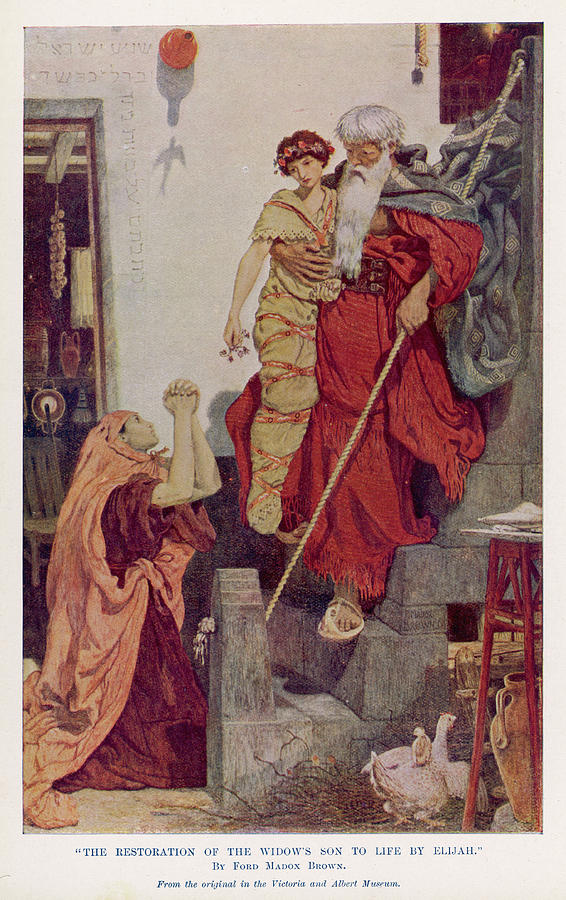
One of the stories which we best remember about the Prophet Elijah is his confrontation with the prophets of Baal (I Kings, chapter 18). The people of Israel had reached an historical point in religion in which they had eschewed fanaticism, giving equal devotion, in their own eyes, to Jehovah, their covenant God, and Baal, a fertility deity popular in much of the region around Israel. They chose to be neutral, giving both gods some attention, in the hope that one or the other would reward them. 

However, Elijah rejected the religious neutrality of the rest of Israel, challenging them, "How long will you go limping between two different opinions? If the Lord is God, follow Him; but if Baal, then follow him" (I Kings 18:21). His challenge was outside the cultural norm of that time, in which Israel was lackadaisical about religious devotion. Neutral, if you will. Trying to cover all of their bases. 

However, Jehovah rejected the neutrality of Israel. While the prophets of Baal received no answer from that deity, Jehovah certainly responded: "Then the fire of the Lord fell and consumed the burnt offering and the wood and the stones and the dust, and licked up the water that was in the trench" (verse 38). When the Israelites saw that Jehovah answered while Baal remained silent, they saw the emptiness in their illusion of neutrality: "When all the people saw it, they fell on their faces and said, 'The Lord, He is God; the Lord, He is God'" (verse 39) Then, in the words of Elijah ("my God is Yah"), "'Seize the prophets of Baal, let none of them escape.' And they seized them. And Elijah brought them down to the brook Kishon and slaughtered them there" (verse 40). 

What Israel learned that day is that there could be no neutrality between the living God of their forefathers, and the pagan idols of the peoples around them. "Limping between two opinions" did not rescue them from the consequences of equating truth with falsehood. 

In a similar way, we in the United States live on land that was dedicated to that same God of the Bible. Then, when our nation was founded, our leaders included a provision in the Constitution saying that the new federal government could not establish a religion. Did they mean to equate Islam, Hinduism, and atheism with Christianity? Not at all. Rather, they intended for the federal government not to show favoritism among the Christian denominations of the new country. 

That plan did not remain in force, especially since the 1960's, when the courts unilaterally decided to eliminate the Christian religion from public forums. Those courts decreed that no establishment of religion meant neutrality toward all religions and irreligion. Prayer and bible reading were removed from government schools, and Christian symbols, such as crosses and placards of the Ten Commandments, were removed from government buildings, parks, even from "polite" discussion. 

Has this "neutrality" fared any better than did that of Elijah's day? Not by any definition. Rather, we have discovered the awful fact that neutrality toward God makes the state the new arbiter of all absolutes. As should have been anticipated. Where Jesus told us, "Your word, [Father], is truth" (John 17:17), now the state is the dispenser of truth. And where Jesus told us, "All authority in Heaven and on earth has been given to Me" (Matthew 28:18), the state says that all authority now belongs to it. Thus, "neutrality" has become an opportunity for tyranny, and our health as a nation sinks further every day.

Saturday, November 19, 2022

Leprosy, Famine, and the Doctrine of Common grace

"In truth, I tell you, there were many widows in Israel in the days of Elijah, when the heavens were shut up three years and six months, and a great famine came over the land, and Elijah was sent to them of them but only to Zarephath, in the land of Sidon, to a woman who was a widow. And there were many lepers in Israel in the time of the prophet Elisha, and none of them was cleansed, but only Naaman the Syrian" (Luke 4:25-27).


Among Reformed folks, the majority hold to the doctrine of common grace: "God's kindness to all people during their time on earth, regardless pf their present status with him. While it is true that believers will experience both common grace and saving grace, those who are apart from Christ will only experience common grace in this life." 

Of course, to the Arminian, all grace is common grace, since, he supposes, God enables all men to believe unto salvation. And that parallel must be noted. The Reformed people who hold to this doctrine are advocating a step halfway to the presuppositions that underlie the error of Arminianism. 

Not, however, the text above. These are the words of Jesus, referring to two events found in the Old Testament. The first was the three and half years that Elijah spent as a refugee in the territory of the Sidonians, while God judged Israel with drought and famine (I Kings 17-18). The second was Elisha's giving a Syrian general the means of curing his leprosy (II Kings 5). 

In both cases, Jesus makes the point that there were many people who shared common sufferings, but the grace was shared only with a particular victim in each case. That is, the grace shown was particular, not common. And that is one of the problems with the doctrine of common grace. Not only is it not biblical, but it can't be seen in the historical cases where it should have been applicable. 

Saturday, June 15, 2019

Elijah and the Rise of Persecution in America


We are living in time where it is becoming more difficult to be a Christian in America. The humanists have succeeded in defining the right to free exercise of religion as a right to private exercise, such as at home or in church. But definitely not in the public square. The First Amendment has been turned on its head, from a protection of religious practice from government oppression to a means to sterilize public discourse, so that only humanism is acceptable as the basis for public policy or morality.

Christians seem to have forgotten the answer the Apostles made to such pressure in their own day: "We must obey God rather than men" (Acts 5:29). And that assertion was made in the face of times to come, when all of the Apostles died a violent death, except John, and even he was imprisoned for a time. We do not, yet, face that danger in America.

The problem is that this public pressure has put American Christians into a crisis of loyalty. To whom do we owe our highest loyalty? To government, especially in the face of its own lawlessness? Or to God?

The Scriptures are clear: "You shall not fall in with the many to do evil" (Exodus 23:2). In giving witness against evil, we are not allowed to consider whether the crowd agrees with us. The only consideration we are allowed is whether we agree with God. If so, then our calling is to stand for what God says, whether everyone is with us, or everyone is against us. And that can be a very difficult thing.

The Prophet Elijah faced the situation where he alone stood for the true and living God, against a culture that had turned to pagan gods: "I have been very jealous for the Lord, the God of hosts. For the people of Israel have forsaken your covenant, thrown down your altars, and killed your prophets with the sword, and I, even I only, am left, and they seek my life, to take it away" (I Kings 19:10). This is serious depression. Elijah saw himself alone against a culture given over to paganism, and he had no strength to continue the fight. But what did God answer him? "Yet I will leave seven thousand in Israel, all the knees that have not bowed to Baal, and every mouth that has not kissed him" (verse 18). God had another seven thousand faithful Israelites who needed to witness Elijah's faithfulness, because they, too, thought that they were alone. Every one of those men and women believed that he was the last of the faithful.

And that is the calling of each of today's American Christians. We are to remain faithful, no matter the opposition we face. Our first concern is faithfulness to God. However, we also need to consider the other timid Christians who need to be strengthened by knowing that they are not alone, and then they may be empowered to speak, as well.

Wednesday, December 19, 2018

The Land Promises and the Unity of the People of God

One of the main distinctions between dispensationalism and covenantalism is over the relationship between Israel and the Church. The covenantalist sees them as different administrations of the same thing (see, for example, Acts 7:38 KJV). In contrast, the dispensationalist sees them as radically discontiguous, there having been no church in the Old Testament, and Israel's having a future separate from the church.

One aspect of this is the frequent references dispensationalists make to the promises God made to Israel. While the covenantalist takes the remaining promises to be given to the church, the Israel of God (Galatians 6:16), the dispensationalist sees them as necessarily remaining to be fulfilled to Israel, i. e., the Jews, in their distinct character.

I want to consider the land promises, in particular, here. Are there remaining land promises for the Jews? I don't think that Bible allows that conclusion, even apart from the identity of Israel and the church.

In Joshua 21:43-45, given after the conquest of the Promised Land, we read this comment: "Thus the Lord gave to Israel all the land that He swore to give to their fathers. And they took possession of it, and they settled there. And the Lord gave them rest on every side just as He had sworn to their fathers. Not one of all their enemies had withstood them, for the Lord had given all their enemies into their hands. Not one word of all the good promises that the Lord had made to the house of Israel had failed; all came to pass." Thus, the land promise had been fulfilled, not waiting for the modern state of Israel.

Furthermore, in I Kings 4:21, we read this: "Solomon ruled over all the kingdoms from the Euphrates to the land of the Philistines and to the border of Egypt. They brought tribute and served Solomon all the days of his life." This describes Solomon's enjoyment of that Land, not waiting for it. This is repeated in the parallel passage in II Chronicles 9:26.

In other words, the land promises to Israel aren't waiting for fulfillment! They were fulfilled three thousand years ago!

Moreover, something that dispensationalists fail to recognize is that the fulfillment of God's promises is always far more than the literal promise. In this case, by denying the bitestamental unity of the people of God, the dispensationalist is blind to Psalm 2:8: "Ask of Me, and I will make the nations Your heritage, and the ends of the earth Your possession." This promise is part of the intra-Trinitarian covenant, made before the world was created, and is a gift from the Father to the Son. And then in the New Testament, that same Son promises it to His church: "All authority in heaven and on earth has been given to Me. Go therefore and make disciples of all nations, baptizing them in the name of the Father and of the Son and of the Holy Spirit, teaching them to observe all that I have commanded you. And behold, I am with you always, to the end of the age" (Matthew 28:18-20). The rigid literalism and minimalism of dispensationalists causes them not to enjoy the real promises of God, and also to deny them to those same Jews that they have cast out of the church.

Wednesday, April 5, 2017

Yes, Virginia, God Keeps His Church Without Consulting Our Free Will

Almost any professing Christian knows the story of the Prophet Elijah, especially of his altar battle with the priests of Baal (I Kings 18:20-40). However, I have noticed something about the use of his story: while plenty of attention is given to that element, others are overlooked. Conveniently? I suspect so.

One in particular is I Kings 19:18 (see also Romans 11:4), just after the exciting part. Elijah complains to god that there is no one faithful in all of Israel, except himself (verse 10): "I have been very jealous for the Lord, the God of hosts. For the people of Israel have forsaken Your covenant, thrown down your altars, and killed Your prophets with the sword, and I, even I only, am left, and they seek my life, to take it away." This is a place many Christians have been, when it seems that the whole world has only abuse to heap upon us. However, God says otherwise: "I will leave seven thousand in Israel, all the knees that have not bowed to Baal, and every mouth that has not kissed him."

Elijah cannot see all of his fellow countrymen. In particular, he cannot see their hearts. He bewails what appears to him to be the complete failure of God among His covenant people. "Couldn't you hold on to anyone other than me?" he cries.God quickly rebukes him. "Not only have I kept you, Elijah," He says, "but I have kept seven thousand others, too, to be faithful to Me."

Notice what He doesn't say. God doesn't express hope that there are others. He knows so. Nor does He leave it as some vague assertion, as if there were some, somewhere. No, He knows that there are seven thousand, and that is in Israel, the rebellious northern kingdom. And, most startlingly of all, He doesn't refer to anyone who has remained faithful because of some inherent superiority, but because He has retained them!

These words of God Himself say nothing of free will, but rather of His own actions to produce a definite event, the retention of a faithful church in a rebellious and paganistic culture. This is unconditional election and perseverance of the saints, not any antinomian concept of "once saved, always saved." We don't hear this verse preached because it so thoroughly casts down human pride and sufficiency and lifts up God's sovereign grace. And it is such a shame that the people of God are denied the assurance of faith that this kind of God engenders.

Monday, April 6, 2015

The Two Witnesses of the Revelation

I would never claim that the Revelation is an easy book to understand. Some portions are, while others definitely are not. I generally look to the rule of parsimony in interpreting it, i. e., that the simplest interpretation is to be preferred, unless there is evidence to the contrary. By simplest, I do not mean most literal. In fact, I find that those who hold to a generally-literal approach are the ones who go to the greatest hermeneutical acrobatics to force it to fit their chronologies. I usually find that the partial-preterist approach requires the fewest twists and bends to understand the text.

Chapter 11 describes two witnesses from God. Verse 3 tells us, "I will grant authority to my two witnesses, and they will prophesy for 1,260 days, clothed in sackcloth." Many colorful interpretations have been given regarding the identity of these witnesses. I don't think such efforts are necessary. The Revelation is a revelation of whom? The first verse of the book tells us: "The revelation of Jesus Christ." And where has He referred to two witnesses to Himself? He says (John 5:39), "You search the Scriptures because you think that in them you have eternal life; and it is they that bear witness about Me." And, more specifically (Luke 24:27), "Beginning with Moses and all the Prophets, He interpreted to them in all the Scriptures the things concerning Himself." And of Him, Philip testifies (John 1:45), "We have found Him of Whom Moses in the Law and also the prophets wrote, Jesus of Nazareth, the son of Joseph."

Recall, also, the accounts of the Transfiguration (Matthew 17: 1-13, Mark 9:2-13, and Luke 9:28-36). While the Apostle John, author of the Revelation, doesn't include the Transfiguration in his Gospel, the Synoptic accounts report that he was present (Matt. 17:1, Mark 9:2, Luke 9:28). And what did he witness? Moses, the writer of the Law, and Elijah, the foremost of the prophets, giving their witness to the Messiahship of Jesus.

So, I would suggest that the reader doesn't have to search the newest book from the prophecy-mongers or today's newspaper to take a guess as to the identity of the witnesses. They are the same witnesses that have been pointing to Him since the first verses of the New Testament.

Consider also the evidence in Revelation 11 itself. Verse 6 tells us, "They have the power to shut the sky, that no rain may fall during the days of their prophesying, and they have power over the waters to turn them into blood and to strike the earth with every kind of plague, as often as they desire." Where have we seen someone associated with the withholding of rain? In I Kings 17:1, Elijah tells Ahab, king of Israel, "As the Lord, the God of Israel, lives, before Whom I stand, there shall be neither dew nor rain these years, except by my word." And who is associated with plagues, such as turning waters to blood? Exodus, starting in chapter 7, describes Moses as the intermediary of God's plagues on Egypt. The plague of blood, specifically, is found in Exodus 7:17-18.  This isn't rocket science. John is using images from the Old Testament which would have been very familiar to his readers. I am saddened that they aren't as familiar to today's popular "bible teachers."

Revelation 11 continues with its account. In verse 7, they are killed, which verse 8 tells us happens in Jerusalem. Then verse 10 tells us, "those who dwell on the earth will rejoice over them and make merry and exchange presents, because these two prophets had been a torment to those who dwell on the earth." The word translated here as "earth," can also be translated as "land," which I prefer. The people of the land, that is, of the land of Israel, celebrate the silencing of the testimony of the law and the prophets, because they wanted an excuse to reject their Messiah. The Deacon Stephen describes this in his evangelistic sermon in Acts 7. Notice especially verses 52 and 53: "Which of the prophets did your fathers not persecute? And they killed those who announced beforehand the coming of the Righteous One, Whom you have now betrayed and murdered, you who received the law as delivered by angels and did not keep it." By killing the prophets and resisting the Law of Moses, the reprobate among the nation of Israel believed that they avoided the consequences for their unbelief, which is what they celebrate in Revelation 11:10.

Was their scheme successful? Revelation 11:11-13: "But after the three and a half days a breath of life from God entered them [i. e., the witnesses], and they stood up on their feet, and great fear fell on those who saw them. Then they heard a loud voice from heaven saying to them, 'Come up here!' And they went up to heaven in a cloud, and their enemies watched them. And at that hour there was a great earthquake, and a tenth of the city fell. Seven thousand people were killed in the earthquake, and the rest were terrified and gave glory to the God of heaven." These verses aren't as clear as the earlier portion. The reference to being received into heaven in a cloud suggests that this portion describes the ascension of Christ (compare Luke 24:51, and Acts 1:9-11), with the signs in the place of the thing signified. Whether there was an earthquake at that time, or possibly that this is a figurative reference, I cannot say.

Friday, December 5, 2014

The Faithfulness of God, Seen in the Covenant with David

My fourth biblical-theology paper.

    David, son of Jesse, the second King of Israel, is the foremost character in the second half of I Samuel, beginning in chapter 16, all of II Samuel, and in I Kings, up to chapter 2, as well as their parallel passages in I Chronicles. He himself authored authored a large, though indefinite, portion of the Psalms. Thus, he rivals his descendant Jesus in the amount of Scripture devoted to his person.
    The first King, Saul, rebels against God in I Samuel 15. As a result, God removes His anointing from Saul and his line. In his place, in chapter 16, the Prophet Samuel is commanded to anoint a replacement. Samuel examines the son’s of Jesse, going down the line from eldest down, rejecting them one by one, until David, the youngest is brought before him, and God commands him to anoint David as king-elect. We next see him in chapter 17, as Israel is standing intimidated by the champion of the Philistines, the giant Goliath. David, too young to be a soldier, is sent by his father to carry food to his elder brothers. At the front, he is appalled by the failure of any Israelite to answer Goliath’s challenge. Then David, still a beardless youth, a mere shepherd, volunteers. He approaches, not as a swaggering warrior as God’s appointee. He tells Goliath (17:45), “I come to you in the name of the Lord of hosts, the God of the armies of Israel, Whom you have taunted.” He strikes down Goliath with his shepherd’s sling, cuts of his head, and the now-inspired Israel drives away the rest of the disheartened Philistine army.
    Saul is jealous of David, as he listens to the people sing, “Saul has slain his thousands, and David his ten thousands” (18:7). He knows that he has been rejected by God in favor of David, now his son-in-law (18:20-30), and resents him for it, especially in the face of the close friendship between David and Saul’s son Jonathan (ch. 20). Saul persecutes David in chps. 21-30, during which time David marries his second wife, the widow of Nabal (ch. 25). Saul and his sons, including Jonathan but not Ishbosheth. Ishbosheth becomes king of eleven tribes, while David is crowned over Judah. The divided kingdom lasts seven and a half years (II Sam. 5:5), until Ishbosheth is assassinated, and David is then crowned king over the reunited kingdom (v. 3). The only surviving member of Saul’s family, Jonathan’s lame son Mephibosheth (v. 4:4), was to remain an honored guest in David’s household (ch. 9).
    The most important segment of David’s history is in chapter 7:8-17 (I Chronicles 17:1-15), the Davidic covenant. As was standard in such covenants, it begins with a rehearsal of God’s past blessings on David (vv. 8-9), then promises blessings (vv. 13-16). God promises peace, and a lineage on the throne of Israel forever. Verse 16 is the culmination: “Your house and your kingdom shall be made sure forever before me. Your throne shall be established forever.” David responds in a prayer of thanksgiving in vv. 18-29, ending with a confidence in God’s promises: “For You, O Lord God, have spoken, and with Your blessing shall the house of your servant be blessed forever.”
    The next major event in David’s life is his sin with Bathsheba (ch. 11). After seeing her bathing on the roof of her house, David has her husband, Uriah the Hittite, exposed in battle with the Ammonites. With Uriah out of the way, David then takes the now-widow as his third wife. The sin is rebuked by the Prophet Nathan in chapter 12, and the newborn son of David with Bathsheba is struck down (vv. 15-23). However, their next son is Solomon, destined to be David’s heir. This demonstrates the human sinfulness of this man, of whom God said, “This is a man after my own heart” (I Sam. 13:14). As a result, David deals suffers from the sins of his own children” Amnon with Tamar, and the rebellion of Absalom. We see his nature again in his census of chap. 24, resulting in God’s striking down of 70 thousand of his people. I Kings 1 and 2 are the account of the transfer of the kingdom from David to Solomon, and then David’s passing (vv. 10-12).
    David’s son, Solomon, as the newly-anointed king, relies of God’s covenant with his father in I Kings 3:6-14: “You have kept for him this great and steadfast love, and have given him a son to sit on his throne this day.” This suggests that David made great effort to teach Solomon what God had promised and done for him. But 5:3 indicates that he was also aware of the consequences of David’s bloody hands. We see both sides of David’s relationship with God in 8:15-20. But Solomon continues confident in God’s covenant promises (vv. 24-26). And that confidence is shared by all of Israel in verse 66.
    God explicitly repeats the promises of the Davidic covenant with Solomon in 9:4-5. This is similar to the pattern of the Abrahamic covenant, with the terms renewed with each succeeding generation. However, unlike David, Solomon did not keep his side of the covenant. In 11:4-6, the writer of Kings shows Solomon following after the pagan deities of his multitudinous wives. Yet, God continues faithful (vv. 12-13), not for Solomon’s sake, but for David’s. Later in the chapter, God punishes the apostasy of Solomon by dividing the kingdom with a rebellion against his son, Rehoboam. Yet, even here, God remembers his covenant, and reserves the tribe of Judah to David’s line (vv. 32-39). This pattern is repeated with Rehoboam’s son, Abijam. In 15:3, the writer explicitly tells us that Abijam did not share the faith of his ancestor David, but vv.4-5 show us God acting out of faithfulness to David: “because David did what was right in the eyes of the Lord…” This is what Paul refers to, in II Timothy 2:13: “If we are faithless, he remains faithful - for He cannot deny Himself.” In II Kings 8:16ff, when Jehoram follows the apostate path of his Israelite kinsmen, even here, the writer tells us, “Yet the Lord was not willing to destroy Judah, for the sake of David His servant, since He promised to give a lamp to him and to his sons forever.”
    The writer of Kings continues to use David as the standard against whom to compare his posterity. His lineage rates badly in 14:3 and 16:2, but well in 18:3. God again recalls His covenant in 19:34 (parallel in Isaiah 37:33-35), as Assyria, after eliminating the northern kingdom, now attacks Jerusalem:  “I will defend this city to save it, for My own sake and for the sake of My servant David.” As Paul said to Timothy, God acts according to His covenant promises because He is watchful over His own truth and reputation, as well as the welfare of His elect.
    David himself writes of God’s establishment of His covenant. In Psalm 18:20-24, he wrote, “The Lord dealt with me according to my righteousness, according to the cleanness of my hands… The Lord has rewarded me according to my righteousness, according to the cleanness of my hands in His sight.” He does not claim that his righteousness is inherent for (v. 32), “[God] equipped me with strength and made my way blameless.” He remembers the particular elements of the covenant, as he credits God with “making me the head of the nations” (v. 43) and “subduing peoples under me” (v. 47), promises “to David and his offspring forever” (v. 50). Asaph sings of the covenant in Psalm 78:67-72: “He chose David His servant… to shepherd Jacob His people… [And] with upright heart he shepherded them.” Ethan the Ezrahite has the voice of God recalling (89:19-37), “I have found David My servant; with My holy oil I have anointed him, so that My hand shall be established with him… My faithfulness and My steadfast love shall be with him… He shall cry to Me, ‘You are my Father, my God, and the Rock of my salvation’... My steadfast love I will keep with him forever, and My covenant will stand firm for him. I will establish his offspring forever, and his throne as the days of the heavens… I will not remove from him my steadfast love or be false to My faithfulness. I will not violate My covenant or alter the word that went forth from My lips…” Ethan claims this faithfulness for all of God’s people (v. 49): “Lord, where is your steadfast love of old, which, by Your faithfulness, you swore to David?”
    The unnamed writer of Psalm 132 applied the same principle of prayer. In verse 1, he starts with, “Remember, O Lord, in David’s favor…” He claims God’s faithfulness to david for the benefit of all of Israel. Verses 11-12: “The Lord swore to David a sure oath from which He will not turn back: ‘One of the sons of your body I will set on your throne. If your sons keep My covenant and My testimonies that I shall teach them, their sons also forever shall sit on your throne.” The writer asks, “If Jerusalem is destroyed, how can You fulfill Your promise that there shall always be a son of David to rule there?” The promise to David, in his eyes, has positive implications for the whole nation.
    The Prophet Isaiah also applied the Davidic covenant to the people of God, as the promise according to which the Messiah would come. In Isaiah 9, the famous Christmas story, he writes (vv. 6-7): “For to us a child is born, to us a son is given; and the government shall be upon His shoulder… Of the increase of His government and of peace there will be no end, on the throne of David and over his kingdom, to establish it and to uphold it…” So, we see an expansion of the vision of the covenant. Where David had seen it as a political promise, with his dynasty established over ethnic Israel, Isaiah now expands that vision to point to a particular King, yet unnamed, who shall take that kingdom to a far greater glory. He repeats that vision in 16:5, “A throne will be established in steadfast love, and on it will sit in faithfulness in the tent of David one who judges and seeks justice and is swift to do  righteousness.” Again, he moves the covenant from a promise of a lineage of men to a particular One.
    Isaiah also makes use of the covenant to encourage the faithful remnant of Israel. In 55:1-5, he calls the people to repentance, assure of the faithfulness of God, as seen in His covenant with David. Verse 3: “Incline your ear and come to Me; hear, that Gsoul may live; and I will make with you an everlasting covenant, My steadfast, sure love for David.” David, the sinner of Bathsheba and Psalm 51 relied on the faithful mercy of God. If he did it, can’t I?
    God Himself made the same comparison through Jeremiah (17:24-25). Using the Sabbath as a test case, He calls the people to repent, and “then there shall enter by the gates of this city kings and princes who sit on the throne of David, riding in chariots and on horses, they and their officials, the men of Judah and the inhabitants of Jerusalem. And this city shall be inhabited forever.” Or, if they refuse (21:12, repeated in 22:2-4), “Hear the word of the Lord, O house of David! Thus says the Lord, ‘Execute justice in the morning, and deliver from the hand of the oppressor him who has been robbed, lest My wrath go forth like fire, and burn with none to quench it, because of your evil deeds.’” Repent and enjoy the blessings of David, but do not presume on them to excuse your wickedness.
    Then, as Isaiah 9, Jeremiah turns to the One who will ultimately fulfill God’s promises to David. 23:5: “I will raise up for David a righteous Branch, and He shall reign as king and deal wisely, and shall execute justice and righteousness in the land. In His days, Judah will be saved, and Israel will dwell securely. And this is the name by which He will be called: The Lord is our righteousness.” Where the writer of Kings lamented that king after king failed to evidence the faith of David, the One Davidic king to come will do so. And, on the side of the people (30:9): “They shall serve the Lord their God and David their king, Whom I will raise up for them.” Just as the One king will demonstrate the best of David’s faith, under His rule the people will do so, as well.
    The Branch appears again in 33:14-26. The content of the Davidic covenant is repeated in verse 17: “David shall never lack a man to sit on the throne of the house of Israel…” (and again in verses 21 and 26). The passage also adds a new element (v. 18): “The Levitical priests shall never lack a man in my presence…” (also verse 21). David wasn’t a priest, so this aspect of the Branch is an expansion, perhaps from the reference to the priesthood of Melchizedek in David’s Psalm 110:4. It isn’t relevant here, but Christ fulfilled this in His union of the offices of priest and king.
    The Prophet Ezekiel prophesies a coming Messiah as the fulfillment of God’s covenant promises to David in 34:22-24: “I will set up over them one Shepherd, my servant David, and He shall feed them; He shall feed them and be their Shepherd. And I, the Lord, will be their God, and my servant David shall be prince among them.” Ezekiel continues this theme in 37:24-28: “My servant David shall be king over them, and they shall all have one Shepherd… David My servant shall be their prince forever… My dwelling place shall be with them, and I will be their God. and they shall be My people…” Notice his resurrection of the servant theme of Isaiah.
    This Davidic king also makes a brief appearance in the prophecies of Hosea (3:5): “The children of Israel shall return and seek the Lord their God and David their king, and they shall come in fear to the Lord and to His goodness in the latter days.” And in Amos 9:11-12: “In that day I will raise up the booth of David that is fallen and repair its breaches,... that they may possess… all the nations who are called by My name.” And in Zechariah 12: 6-13:1, especially that last verse: “On that day there shall be a fountain opened for the house of David and the inhabitants of Jerusalem, to cleanse them from sin and uncleanness.”
    In the New Testament, David plays a prominent role in the apologetic efforts of the Apostles to prove that Jesus was the expected Messiah and Branch of the prophets.
    In the genealogy of Jesus as given by Matthew (1:1-17), not only is the line of David prominent, but the author emphasizes the number fourteen, even skipping generations to create the three sets of fourteen. Why? Because, in hebrew, the letters also represented numbers. The consonants of David’s name (daledh-waw-daledh) add up to fourteen. Thus, not only is Jesus a lineal descendant of David, but Matthew adds that name symbolically three more times to multiply the emphasis on that fact. Not only is Jesus addressed or referred to as the “Son of David” eleven times (e. g., 9:27 and 12:23), but He Himself uses David’s words from the Psalms to express the connection in His teachings (e. g., 22:43).
The words of the David covenant appear in Mark  11:10: “Blessed is the coming kingdom of our father David.” And again in Luke 1:32-33: “He will be great and will be called the Son of the Most High. And the Lord God will give to Him the throne of His father David, and He will reign over the house of Jacob forever, and of His kingdom there will be no end.” And again in verse 69: “[The Lord God of Israel] has raised up a horn of salvation for us in the house of His servant David.” And finally in John 7:42: “Has not the Scripture said that the Christ comes from the offspring of David, and comes from Bethlehem, the village where David was?” Thus, the Gospel writers confronted the Jews with their own covenantal expectations as pointing to this Jesus, whom they were to reject and crucify. This would serve as a direct apologetic against the claims of unbelieving Jews that the Messiah is still to be anticipated, because Jesus did not fulfill that role as they expected.
In Acts, Luke turned to David again, but with less of the covenantal emphasis. In 1:16, 2:25-30, 2:34-35, and 13:33-38, he borrows from Jesus own strategy, using David’s words to emphasize the connection between David and Jesus. He explicitly makes Jesus the hair of David in 13:23: “Of this man’s [i. e., David’s] offspring, God has brought to Israel a Savior, Jesus, as He promised.” This language is reminiscent of th Branch terminology of the Prophets. See also 15:16-17.
Paul also borrows this apologetic theme, such as in Romans 4:6-8, 11:9-10, and II Timothy 2:8. Yet, he never follows up on the covenantal theme, a role he gives, instead, to Abraham.
Jesus again picks up His “Son of David” role in Revelation 3:7: “The words of the Holy One, the True One, Who has the key of David…” And, in the words of an elder in 5:5: “Behold the Lion of the tribe of Judah, the Root of David, has conquered…” And in Jesus’s words again, in 22:16: “I, Jesus, have sent My angel to testify to you about these things for the churches. I am the root and the descendant of David, the bright morning star.”
So, the story of David min the Bible is the story of God’s faithfulness, both to him and to the people of God as a whole. Through His words to him, God establishes a theme of promised redemption, peace, and prosperity, not as the result of merit, but because of God’s covenantal promises of grace, justification, sanctification, and glorification. The New Testament writers continue the story of David, both in their own words and in the words of Jesus, to point Israel to Him. Here is the man promised for a thousand years! Here is the promise of God incarnate! All that we have waited for is here, standing embodied before you. And even in the last verses of the Bible, Jesus Himself points to His purposes as bringing to pass God’s faithfulness to David, and to all Israel in him.

Tuesday, November 25, 2014

Grace and Faith in the Abrahamic Covenant

This is another short paper that I have prepared for my biblical theology course. I found it profitable to write, so I hope that it may be profitable to others to read.

    Abraham appears in Genesis as the human side of the first full-orbed biblical covenants. God initiates His covenant with Abraham in 12:2-3: “I will make of you a great nation, and I will bless you, and make your name great, so that you will be a blessing. I will bless those who bless you, and him who dishonors you, I will curse, and in you all the families of the earth shall be blessed.” This covenant is completely gracious, with God undertaking all of its requirements unconditionally. Abraham is a passive party to it.
The next development of the covenant is in chapter 15. In verse 5, God gives the promise of a generous posterity. In verse, He adds the land promise, expanded in verses 13-15. Abraham’s response appears in verse 6: “and he believed the Lord, and He counted it to him as righteousness”. Again, it is striking that the promises of God are unconditional. At no point does He give any requirement to Abraham as the price for the blessings. While Abraham is passive in the covenant, Moses records his reaction of faith. That order is important: faith is the response to the covenant, not its cause.
Another stage is seen in chapter 17. The promise of a posterity is repeated in verses 4-6, and the land promise in verse 8. But we see added elements in verse 2 - holiness- and the extension, not just of posterity, but of spiritual prosperity to that posterity in verse 7. The covenant having already been established, holiness cannot be taken as a causative requirement for the blessings, but rather as the response. So we have the already granted instrument of the covenant, i. e., faith, now with the response, holiness. In addition, the covenant is revealed as a continuing relationship, not just with Abraham personally, but also with his descendants. And in verses 9-14, God also gives a continuing sign of the covenant, circumcision of all its visible male members. In verse 22, we see that the sign was not only for the blood descendants, but for all the members of the household, including those by bond.
    The posterity promise is repeated in 18:10 and 22:17. We also see an interesting element in 17:18-20. God has informed Abraham that the covenant blessings will be through his yet-unborn son by Sarah (v. 16). Abraham reacts, first with disbelief, considering his and Sarah’s advanced ages. Then he asks God to extend His blessings to Ishmael, as well. God responds in the negative, yet also promises material blessings on Ishmael. This again emphasizes the gracious nature of the covenant. Isaac hasn’t even been conceived, yet, but God decrees that he shall be a spiritual member of the covenant. Ishmael has as much claim, as also a son of Abraham, yet is sovereignly excluded. Yet, even for him, there are benefits from the covenant.
The land and posterity promises are renewed to Abraham’s son Isaac in 26:3 and 26:24, and to his grandson Jacob in 28:4 and 28:13. Jacob acknowledges the gracious benefits he has received because of the covenant in 32:9-10. The covenant with Jacob is renewed at Paddan-Aram (35:9-12), both in the posterity and in the land promises. Jacob voices these blessings on Joseph, in 48:15-16. And Joseph refers to the land promise in 50:24. At each of these steps, we see God acting monergistically, promising blessings, with no corresponding requirements from Isaac and Jacob. The covenant is always given as gracious.
In Exodus, Moses portrays the covenant, not as something spoken anew by God, but rather as something to be remembered by the descendants of Abraham. We see this in 2:24, 3:6, 3:15, 4:5, 6:3-4, 6:8, 32:13 (where Moses reminds God!), and 33:1. In 6:3, God adds His covenant Name, Jehovah, instead of God Almighty (Heb., El Shaddai). These references are all couched in the pattern we see in the Prologue of the Ten Commandments(20:2): “I am the Lord [Jehovah] your God, who brought you out of the land of Egypt, out of the house of slavery.” That is, the covenant is given on the basis of the a priori, gracious relationship that God initiated with the line of Abraham. It is never given as a quid pro quo in response to rituals or behaviors of the covenant people. It is sharply dichotomous from the relationships of pagans to their deities.
The Abrahamic covenant is mentioned only once in Leviticus, near the end. In 26:40-41, the people are described as repenting of their iniquities, i. e., their breaking of the laws just given in the rest of the book. In response, verse 42, God promises to remember His covenant. This in no way lessens the graciousness of the covenant. As with the Ten Commandments, God’s actions are predicated on an a priori relationship. The repentance of the people does not create a new relationship. In fact, the verse assumes a failure on the part of the people, and indicates that forgiveness is available, reinforcing the graciousness of the covenant.
In Numbers, we see the land promise recalled in passing in 32:11. Then again in Deuteronomy 1:8, 6:10, 9:5, 9:27-28, 30:20, and 34:4. The posterity promise appears in 29:10-13. The reference in 9:5 particularly stands out because it is bracketed, in verses 4 and 6, with reminders of the graciousness of the covenant: “Do not say in your heart , ‘It is because of my righteousness that the Lord has brought me in to possess the land…’ Know, therefore, that the Lord your God is not giving you this good land to possess because of your righteousness…” Joshua, the successor of Moses, also recalls both the posterity and land promises in 24:3-4.
In the historical books, the remembrances of the Abrahamic covenant are more fleeting. There are no references in I and II Samuel. There is one in I Kings 18:36, where it is recalled by Elijah, And by God in II Kings 13:23. David mentions it in I Chronicles 16:16, and again in 29:18. And the land promise is claimed by Jehoshaphat in II Chronicles 20:7. Hezekiah preaches on the covenant in 30:6, as he sought to bring Judah to repentance. The Levites had the same goal after the Exile, in Nehemiah 9:7-8.
In the Psalms, the role of remembrance continues. We see this in 47:9, 105:6, 105:9, and 105:42. Psalm 105 is partly a repeat of the praise in I Chr. 16, so it appears to be a composition of David. It is significant that he uses God’s covenant with Abraham as a reminder of God’s faithfulness, when his own covenant is used similarly by the major prophets.
The Abrahamic covenant appears several times in the second half of the prophecies of Isaiah. God Himself uses that covenant as the basis for restoring the descendants of Jacob in 29:22-24. He does so again in 41:8-10 and 51:1-3. Isaiah claims the covenant in a prayer for his people in 63:15-17. So, the prophet looks less to the land and posterity promises, and more to the grace of the covenant than did the historical writers. God through Jeremiah does the same in Jer. 33: 25-26. However, God reverses that in Ezekiel 33:24: “Son of man, the inhabitants of these waste places keep saying, ‘Abraham was only one man, yet he got possession of the land; but we are many; the land is surely given to us to possess.’” In spite of statements, such as Deut. 9:4-6, emphasizing that God’s grace is not due to worthiness of the people, in Ezekiel’s time the people are claiming the territory as theirs by right! That might explain why we don’t see the Abrahamic covenant again in the prophets, not until the New Testament.
What is funny is that we see the same attitude when the NT writers pick up the Abrahamic theme. In the first occasion, Matthew 3:9-10, John the Baptist is rebuking the Jewish leaders for presuming to covenant blessings as a right. In 8:11-12, Jesus revives the faith aspect, as He informs the Jews that faithful Gentiles will enjoy the Abrahamic blessings.May, the mother of Jesus, restores the gracious element in Luke 1:54-55. And Zechariah, the father of John the Baptist, does the same in 1:68-75. Jesus renewed the nongenetic aspect of the covenant (as with Ishmael) in 13:28, and in the parable of Lazarus and the rich man (16:19-31). Physical descent does not necessarily bring the spiritual benefits of the covenant! Jesus continues this theme in John 8:33-58. Thus, the Abrahamic covenant appears in the Gospels as a struggle between the perverted version from the Jewish leaders, who expected the covenant blessings of the covenant on the basis of their lineage, a la Ezekiel 33:24, and the correction by Jesus, that the covenant is exclusively gracious, a la Deuteronomy 9:4-6.
In Acts 3:, starting with verse 13, we see Peter claiming that the Abrahamic covenant, on which the Pharisees relied so strongly, actually pointed to Jesus. The Deacon Stephen makes the same point, in part, in his evangelistic sermon of chapter 7, for which he was stoned by that enraged Jews. Paul takes a similar tack in 13:26-33, ending with his assertion, “This He has fulfilled to us, their children, by raising Jesus [from the dead]...” Thus, Luke in Acts uses the Abrahamic theme, not just to deprive the Jewish leaders of their superiority, but to point explicitly to fulfillment in Jesus, preparing for Paul’s identification of Jesus as the prophesied Seed of Abraham.
    Paul puts Abraham prominently in Romans. In chapter 4, he focuses on faith as the response to the covenant. In verse 3, he actually quotes, Genesis 15:6, “Abraham believed God, and it was counted to him as righteousness.” He thus establishes that his gospel of justification by faith alone is not a novelty, but is actually a revival of the covenant made with Abraham at the beginning of Israelite history. In 9:6-18, he reminds his readers of the posterity promise made to Abraham, carried through Isaac but not Ishmael, and through Jacob but not Esau, to demonstrate that the covenant was gracious, not by works or genetics, as Jesus also did in the gospels. And in chapter 11, he brings up Abraham and Isaac to demonstrate God’s faithfulness to that covenant. Thus, Israel had every reason to hope in the covenant, but not to rely on genetics alone. The covenant is by faith, including the faith of Gentiles, who had no DNA from the line of Abraham, but imitated his faith.
Paul caps his Abrahamic apologetic in Galatians, chapter 3. In verse 6, he quotes Genesis again: “Abraham believed God, and it was counted to him as righteousness.” He then proceeds, in verses 7-13, to explain the dichotomy between justification by faith and justification by works, leading to his chief point, verse 14, that the Abrahamic covenant must bring the believer to Jesus Christ, for He is the seed of Abraham promised way back in Genesis (verses 15-18).
    The writer of Hebrews begins a new discussion of Abraham in 2:16, in which Jesus, Jehovah the Covenant-Maker Incarnate, has come to redeem the offspring of Abraham. He expands on this in 6:13-7:10, in which he lays a foundation on God’s faithfulness to Abraham as the security of the believer. God made promises to Abraham in the covenant, fulfilled them, so the believer can depend on Him to fulfill His redemptive purpose revealed in Jesus Christ. Abraham himself is shown trusting that purpose in 11:18-19, which is also seen in James 2:21-23.
    Across both testaments, we see an emphasis on God’s covenant with Abraham as gracious, based on faith, and derived from an a priori relationship. Yet, we also see the people, in spite of these assertions, turning the covenant into a get-out-of-jail-free card, an automatic guarantee of salvation on the basis of physical descent. The prophets, the Apostle Paul, John the Baptist, and Jesus Himself struggle to break that idolatry. Jesus was crucified, Stephen was stoned, and Paul was martyred for their efforts.

Wednesday, November 5, 2014

95 Theses Against the Claims of Mormonism


From Christ Presbyterian Church, Magna, UT. Used by permission.

On October 31, 1517, Martin Luther posted 95 theses or propositions against the Roman Catholic Church’s sale of indulgences – – the claim that for the right amount of money you could buy forgiveness of sins. Indulgences were hostile to the very heart of the Christian faith. Martin Luther challenged this practice from the Scriptures and called men back to the Bible and back to Jesus. In the spirit of that challenge, we present 95 theses against the claims of the Church of Jesus Christ of Latter-day Saints. We implore you to search the Scriptures to know what is true (Acts 17:11) and seek the real Jesus while He may be found.
The Elders of Christ Presbyterian Church
A Congregation of the Orthodox Presbyterian Church
Magna, UT
(801)969-7948
.
1. Your god is not the God of the Bible, nor even truly a god. He is not the creator and sustainer of all things (Colossians 1:16-17), but an exalted man or “super-man” who transformed eternal matter. Your god is more akin to the Norse god Thor than the God of the Bible.

2. On dedicating the temple in Jerusalem, King Solomon stated that the “heavens of heavens cannot contain Thee, how much less this house that I have builded.” (1 Kings 8:27) Yet, your god could have easily fit inside that temple.

3. The Lord, through the Apostle Paul in Romans 1:22, condemns the pagans, “Professing themselves to be wise, they became fools, and changed the glory of the incorruptible God into an image made like to corruptible man. . .” Yet, you take pride that your god is man with a body of flesh and bone (D&C 130:18).

4. Even if your god existed, he would be pitifully small.

5. Jesus was God before He took a body (John 1:1). There is no similarity between God condescending to become a man, and a man exalting himself to become a god.

6. Your god is one among many gods, but the God of the Bible states, “ye are even My witnesses. Is there a God beside Me? yea, there is no God; I know not any.” (Isaiah 44:8)

7. Your god had a father, who had a father. The Bible states, “Thus saith the LORD the King of Israel, and his redeemer the LORD of hosts; I am the first, and I am the last; and beside Me there is no God.” (Isaiah 44:6)

8. Your god had a wife. The Bible states, “I am the LORD, and there is none else, there is no God beside Me.” (Isaiah 45:5)

9. You twist Psalm 82 to claim a multitude of gods, yet it does not say, “ye may become gods,” but “ye are gods.” Even your apostle, James Talmage, wrote that these are human judges (Jesus the Christ, p.501) who die like men.

10. Your god has not always been a god. Achieving A Celestial Marriage states, “God was once a man who, by obedience, advanced to his present state of perfection. . .” Psalm 90:2 states, “. . . from everlasting to everlasting, Thou art God.

11. This concept of your god having to obey a law external to himself sets something superior to your god. There is nothing higher than the God of the Bible (Hebrews 6:13).

12. Your God is subject to human free agency, but the God of the Bible works all things together for good (Romans 8:28) and according to the counsel of His will (Ephesians 1:11). Those who crucified Christ were guilty, yet Jesus was “delivered by the determinate counsel and foreknowledge of God.” (Acts 2:23)

13. Joseph Smith in his “inspired translation” changed the Bible to remove the statement that God hardened Pharaoh’s heart in Exodus. The Apostle Paul in Romans 9 confirms the reading in Exodus, contrary to Joseph Smith.

14. You claim that the Bible contradicts itself because it says that no man has seen God at any time. You ignore the context and figures of speech. The Lord “spake unto Moses face to face, as a man speaketh unto his friend” (Exodus 33:11), but it is only nine verses later that God explicitly states, “Thou canst not see My face: for there shall no man see Me, and live.” (Exodus 33:20)

15. You confuse seeing Jesus with seeing the Father. To see Jesus is to see the Father (John 14:9), but there is a difference. Jesus, the Word, is God (John 1:1); “and the Word was made flesh, and dwelt among us, and we beheld His glory, the glory as of the only begotten of the Father. . . (John 1:14). Yet, “No man hath seen God at any time, the only begotten Son, which is in the bosom of the Father, He hath declared Him.” (John 1:18)

16. You confuse sentimentality with reverence, since you seek to rob God of His unique glory.

17. Your religion seems to be more focused on God as a means to your own glory, rather than our being the means of revealing His glory.

18. You claim we undergo a mortal probation to become a god, and yet Jesus already was God before his incarnation (John 1:1-14).

19. Because John 1:1 contradicted Joseph Smith, in his “inspired” translation of John 1:1 Smith tried to make the gospel rather than Jesus the focus. Nowhere in any of the thousands of Greek manuscripts of this passage do we find anything resembling Smith’s translation.

20. Jesus was worshiped by angels before His incarnation and was so holy that they had to cover their faces in His presence. (Isaiah 6, John 12:41) Yet you have reduced him to our elder spirit brother, along with Satan.

21. Since you believe that we all began as eternal intelligences, all that really separates us from Elohim and Jesus are time and exaltation.

22. Your god is limited in time, power, justice, holiness, love, and glory.

23. You assert that we existed before this world because God tells Jeremiah, “Before I formed thee in the belly I knew thee. . .” It is only because your god is too small that you cannot fathom a God who “calleth those things which be not as though they were.” (Romans 4:17) God breathed into Adam the breath of life, and Adam “became a living soul.” (Genesis 2:17)

24. You twist the words of Jesus and the apostles to claim that we can become gods. Christians will become like Jesus, yet God explicitly states, “Before Me there was no god formed, neither shall there be after Me.” (Isaiah 43:10)

25. Isaiah 43:10 and 44:8 also debunk your idea that Jesus became a god at some later date. In the beginning, Jesus already was God (John 1:1), yet the Bible is also clear that there is one God.

26. You ignore what Christians really say about the Trinity and seek to portray it as modalism: one God playacting in three different roles. Christians believe what the Bible teaches: that there is one God, who exists eternally as three distinct persons. We do not believe Jesus was “talking to Himself” in His prayers, but speaking to the Father.

27. You claim there is only one god for this planet, but don’t you claim that Elohim and Jesus are different gods?

28. You are unclear whether Jesus is to be worshiped, and yet He and the Father are worshiped in the Bible by the people of this world.

29. Your god is not holy; he is the author of sin. He gave Adam two contradictory commands, so that Adam had to rebel against God to obey the command to be fruitful and multiply (2 Nephi 2:25). The God of the Bible does not tempt, much less command men to sin (James 1:13).

30. Your apostle, Bruce McConkie stated, “Properly understood, it becomes apparent that the fall of Adam is one of the greatest blessings ever given of God to mankind.” The Bible presents the Fall of Adam, not as a “fall upward,” but treason against God.

31. Our Creator declared all things good, except for man to be alone. When that was resolved, God declared everything “very good.” Adam, in his rebellion, believed things were not good and substituted his judgment for the revelation of God. Mormons agree with sinful Adam.

32. You trivialize sin. The Fall of Adam was not a blessing, but ushered in this world of rape, lies, murder, cancer, and death. Jesus wept over death, but you would have us believe the Fall that brought it a blessing.

33. Your God is the author of lies. He commanded Abraham to lie to Pharaoh (Abraham 2:24). The God of the Bible does not lie (Titus 1:2). Numbers 23:19 states, “God is not a man, that He should lie...” You believe he is both a man and a liar.

34. You trivialize the effect of sin on us. Rather than working out our free agency, the Bible presents man as dead in his trespasses and sins (Ephesians 2:1), an enemy of God (Romans 5:10), and insensible to the things of God (1 Corinthians 2:14).

35. You see men as seeking after God, but God tells us, “There is none righteous, no, not one: there is none that understandeth, there is none that seeketh after God.

36. You characterize all those who disagree with you as presenting a cheap grace that does not involve repentance. This is as unfair as your critics refusing to differentiate between Thomas Monson and Warren Jeffs.

37. You equate regeneration and the new birth with water baptism and ignore the need for a new heart and new life.

38. You make salvation a matter of grace, only after all we can do (2 Nephi 25:23) and ignore that even our best works are only “filthy rags.” (Isaiah 64:6)

39. Since your god is not holy, sin is not that bad, and man is not lost, you do not understand grace as the unmerited love of God. Moroni 10:31 states, “. . .if ye shall deny yourselves of all ungodliness, and love God with all your might, mind and strength, then is His grace sufficient for you . . .”

40. You ignore that we are not merely sick, but dead in our sins. The things of God are foolishness to us and cannot be understood. The gospel is not about God helping good people save themselves, but raising the spiritually dead to life and justifying the ungodly.

41. Joseph Smith in his “inspired translation” guts the gospel of grace by changing Romans 4:5 to say that God “justifieth not the ungodly.” None of the thousands of Greek manuscripts of this passage support his reading. It also contradicts everything around it and the rest of the New Testament.

42. You are currently unclear as to what you believe about the cross. Your emphasis in the atonement used to be on Jesus sweating blood in the Garden of Gethsemane. You present a moving target in terms of anything substantive in your teaching. McConkie’s Mormon Doctrine has been allowed to go out of print, and no substitute has been offered.

43. You make salvation to mean only resurrection and ignore the reconciliation between God and man.
44. You claim that we are all spirit children of God by birth, but the Bible says that Christians are creatures who are adopted as children of God. (Ephesians 1:5)

45. Your claim that we all pre-existed as spirit children does not fit with what Jesus told the unbelieving Jews, “If God were your Father, ye would love Me. . . Ye are of your father the devil, and the lusts of your father ye will do.

46. You equate godliness with the Word of Wisdom, not with true love for God as He is.

47. Your Word of Wisdom creates man-made traditions forbidding wine that God gave as a blessing (Psalm 104, Ecclesiastes 9) and part of the Lord’s Supper.

48. You ignore the biblical warnings of legalism, such as Colossians 2:20, “Wherefore if ye be dead with Christ from the rudiments of the world, why, as though living in the world, are ye subject to ordinances, (Touch not; taste not; handle not; which all are to perish with the using;) after the commandments and doctrines of men?

49. You pride yourself against other groups because of the law of consecration, but do you practice it? Do your apostles and other leaders live the law of consecration?

50. You claim the three heavens are degrees of glory. You ignore the Jewish understanding to which Paul referred: the first heaven as the sky, the second heaven where the stars and planets are, and the third heaven (heaven of heavens) being the abode of God.

51. You think that you have a higher view of heaven, because you get to become gods, but you have to redefine the term god. The reality is that God promises far better to Christians. It is only because you don’t know Him that you think an eternity of His presence would be boring.

52. You promote James 1:5 as grounds to pray to know if the Book of Mormon is true. You ignore that the rest of the Bible contradicts this idea.

53. James 1:5 does not lead us to ignore “the Scriptures . . .[which] are able to make thee wise unto salvation through faith which is in Christ Jesus.” (2 Timothy 3:15)

54. Trusting in the feelings of our hearts is contrary to God’s Word. Jeremiah 17:9 states, “The heart is deceitful above all things, and desperately wicked: who can know it?” Proverbs 28:26 states, “He that trusteth in his own heart is a fool. . .

55. You claim to believe the Bible “as far as it is translated correctly,” yet you dismiss arguments from the original languages.

56. You claim the Bible has been corrupted, yet ignore that it is the best authenticated ancient text and was sufficiently preserved for Jesus and the apostles to cite it as authoritative.

57. You claim that God has not preserved His Word in His church, but you believe He preserved it in a hillside and in a traveling Egyptian sideshow.

58. You believe your god preserved records for hundreds of years only to be thwarted when Lucy Harris stole the first 116 pages of translation. Rather than retranslating the same plates, Smith claimed he had to translate others that were similar.

59. You dismiss the Bible as authoritative since people disagree over it, yet there are over 200 groups who claim to follow the Book of Mormon, and they disagree about many, many things.

60. You assert contradictions in the Bible, but will not hear any response to your claims.

61. You are not a religion of any book, but of a man; and your prophets have contradicted themselves and one another.

62. You claim that the church lost its priesthood authority through a great apostasy. Once again, your God is too small. Jesus stated that all authority was given to Him in heaven and in earth (Matthew 28:18) and the gates of Hell would not prevail against His church. (Matthew 16:18)

63. You claim that the church lost its priesthood authority, yet your concepts of priesthood and temples are hostile to the Bible. Solomon’s temple had nothing to do with celestial marriage or baptism for the dead, but offering sacrifices and worship to God.

64. Your temples are more rooted in pagan Freemasonry than in the Bible.

65. Your interpretation of “baptism for the dead” in 1 Corinthians 15:29 is hostile to the rest of the Bible.

66. Celestial marriage is not mentioned in the Bible, nor in the Book of Mormon.

67. You build temples made with hands and do not understand that the temple in Jerusalem was replaced with a temple not made with hands – – the church of which Christians are living stones. (1 Peter 2:5)

68. If your temple ceremonies came from God, why were they changed by men? Why do you no longer refer to Protestant ministers as “hirelings of Satan” and take oath to have your throats slit “from ear to ear”?

69. You argue that a true church has apostles, but ignore that the church did not have apostles in the Old Testament, nor did the apostles appoint new apostles, except one in preparation for Pentecost.

70. Your apostles do not meet the biblical qualifications. They are not witnesses of Christ’s resurrection.

71. Your apostles do not have the gifts of the apostles. They do not have miraculous powers of healing the sick or raising the dead.

72. You falsely claim to be the fastest growing church in the world and think this proves the truth of your church. The false prophet Mohammed has 1.6 billion followers. Seventh-day Adventists trace their origins to the Great Disappointment in 1844 and the false prophet Ellen G. White; they have over 18 million members. The Assemblies of God traces its roots to the Azusa Street Revival in 1906 and has over 66 million members.

73. According to Deuteronomy 13, Joseph Smith was a false prophet because he declared a god different from the God of the Bible.

74. According to Deuteronomy 18, Joseph Smith was a false prophet, since he predicted things that did not come to pass.

75. Joseph Smith gave false prophecies, declaring the Second Coming of Christ in the generation of those alive in the 1830’s. Apostle Parley Pratt said in 1838, “Now, Mr. Sunderland, you have something definite and tangible, the time, the manner, the means, the names, the dates; and I will state as a prophecy, that there will not be an unbelieving Gentile upon this continent 50 years hence; and if they are not greatly scourged, and in a great measure overthrown, within five or ten years from this date, then the Book of Mormon will have proved itself false.”

76. The accusations of Joseph Smith’s false prophecies are based not merely on our reading of him, but your own general authorities. For decades, your prophets and apostles declared in General Conference that the generation alive in 1832 would see both the building of a temple in Independence, Missouri, and the Second Coming of Jesus.

77. The best claim you have to Smith’s prophetic gifts is Doctrine & Covenants 87. You claim that Joseph Smith predicted the American Civil War in 1832, but you ignore that this prediction was made in the midst of the Nullification Crisis, when the newspapers were speculating about civil war and President Andrew Jackson was threatening to invade South Carolina. The fact that these tensions eventually did lead to war does not undermine the other issues of false prophecies and declaring a false god.

78. Brigham Young taught over and over that Adam was God, but you dismiss this as not being canonized. He stated, “I have never yet preached a sermon and sent it out to the children of men, that they may not call Scripture.”

79. Does it concern you that the prophet to whom you trust your souls and the souls of your children could be so wrong on who God is?

80. Your recent statements on the Book of Abraham seek to confuse the issues.

81. Decades before the rediscovery of the papyri, Egyptologists pointed out the errors in Facsimile 1, and these are the places where the papyrus was missing and images clearly drawn in.

82. You hold open the possibility Smith’s “translation” came from lost papyri. Did Smith not claim that Facsimile 1 came at the beginning of the record? Is not all the text connected with that image from the Egyptian Book of the Dead and has nothing to do with Abraham?

83. Doesn’t Joseph Smith’s Egyptian Grammar translate characters from the existing papyri into the Book of Abraham?

84. Your church lied about polygamy before 1852. Joseph Smith publicly denied that he practiced polygamy. (History of the Church, vol 6, p. 411)

85. The original Doctrine and Covenants lied about the practice of polygamy in Section 101. Apostle and future prophet John Taylor publicly cited this to dismiss accusations of polygamy while secretly practicing it.

86. Though the original section 101 can be “spun” to allow polygamy (it does not say “but” one wife), it specifically prohibited a woman from having more than one husband. Neither Joseph Smith, nor Brigham Young obeyed this.

87. Your church lied about polygamy after the Manifesto in 1890. Polygamy was still secretly practiced by general authorities until the Second Manifesto.

88. Brigham Young stated at General Conference, “Shall I tell you the law of God in regard to the African race? If the white man who belongs to the chosen seed mixes his blood with the seed of Cain, the penalty, under the law of God, is death on the spot. This will always be so. (Journal of Discourses, vol. 10, p. 110). Yet this and numerous revelations about Blacks have been relegated to the dustbin of LDS history.

89. Christians in the early church chose torture and death rather than compromise their faith, but the LDS church only had to be threatened with jail to give up polygamy. Jimmy Carter only had to threaten the LDS church tax status to spur a new revelation on blacks in the priesthood.

90. You display a double standard when others criticize you. You declare that you are “sharing” when you claim that God said Joseph Smith should join none of the existing churches because all their professors are corrupt and all their creeds are an abomination. When others respond to your claims, you accuse them of being “anti-Mormons,” or “Mormon-bashers.”

91. Your Scriptures state “Presbyterianism is not true,” (Joseph Smith – History 1:20), but you become upset when others state that Mormonism is not true.

92. You portray yourselves as victims, because Governor Boggs issued an extermination order if Mormons did not leave Missouri. Yet Governor Boggs’ took this language from a sermon by Sidney Rigdon, threatening non-LDS in Missouri with extermination.

93. You portray yourselves as victims, but Mormons killed far more non-Mormons in the name of religion in one day at the Mountain Meadows Massacre than non-Mormons have ever killed Mormons in the name of religion.

94. You insist that Brigham Young did not order the massacre, but he was clearly an accessory after the fact, blaming the Indians. After the massacre, the California Militia found the bones of the victims and gathered them together and placed stones over them. They placed a cross with a sign on top that said “Vengeance is mine, saith the Lord; I will repay.” According to eyewitnesses, when Brigham Young found the monument, he supervised its destruction. According to your future prophet, Wilford Woodruff, in his journal, Brigham Young stated about the sign, “it should be vengeance is mine and I have taken a little.”

95. You have the wrong god, the wrong Jesus, and the wrong gospel. You have been deceived by false prophets who lie and tell you that you have peace with God by following them.

We say these things out of love for Christ, love for the truth, and love for you. Jesus describes the sincerely deceived in Matthew 7:21: "Not every one that saith unto Me, Lord, Lord, shall enter into the kingdom of heaven; but he that doeth the will of My Father which is in heaven. Many will say to Me in that day, Lord, Lord, have we not prophesied in Thy name? and in Thy name have cast out devils? and in Thy name done many wonderful works? And then will I profess unto them, I never knew you: depart from Me, ye that work iniquity."

We plead with you to search the Scriptures. You will find that God is far greater and more holy than the LDS believe. You will find that sin is far worse than you ever thought, but you will also find that Jesus is far more loving and glorious than you can imagine.
.
The Elders of Christ Presbyterian Church
A Congregation of the Orthodox Presbyterian Church
Magna, UT
(801)969-7948

Saturday, November 9, 2013

I Kings 22:20, God Deceives the Wicked

Arminians snarl whenever the Calvinist doctrine of reprobation comes up. Reprobation is God's intentional hardening of the hearts of those that He has passed over in election, leaving them to the judgment that their wickedness earns them. Arminians claim that this makes God the author of sin, in violation of James 1:13.

And it must be confessed that James does indeed say there that "God tempts no one."

Yet, in I Kings 22:20, the inspired text has Jehovah seeking a spirit to "entice" (some versions, "deceive") Ahab, the wicked king of Israel. See also Jeremiah 20:7 and Ezekiel 14:9, where the same Hebrew word is used for God's deceiving of false prophets.

I think that the distinction between these two contrasting concepts is that James is addressing Christians, while the Old Testament references are to unbelievers. That is, God does not place stumblingblocks in the paths of believers, His elect and beloved people, but does trip up hypocritical professors, using their own wickedness to bring consequences into their present lives as a foretaste of their judgment to come.

This is reprobation! This is God provoking the sin nature in those whom He has rejected! And it not to bring about their repentance, but rather to confirm them in their spiritual rebellion.

This should be a thunderous warning to unbelievers. If you are reading this, but have never submitted to the lordship of Christ, you have great reason for fear. Judgment isn't waiting for you to die and pass into eternity. Rather, it is happening now, in this life, and is a costly burden to bear. The last chapter of I Kings goes on to describe the death of Ahab, lost without any remaining hope of redemption. I beg you not to follow his path!