Saturday, January 4, 2025
Diotrophes and the Doctrine of the Visible Church
Saturday, March 5, 2022
Infant Baptism, the Covenant, and the Reformed View
"Upon You have I leaned from before my birth; You are He who took me from my mother's womb. My praise is continually of You"(Psalm 71:6).
When discussing the baptism of infants with Baptists, they often tell me that a little baby can't know anything about God. We should, they claim, wait until a person grows to an age of accountability or moral awareness. It is phrased in different ways.
Yet, look at the words above from Scripture. Is that not to be our authority? We are not to look to pop psychology or secular educational assumptions.
Unlike other psalms, Psalm 71 includes no superscription with its authorship. I think it sounds like David. Whether or not it is, is obviously the words of a covenant child, i. e., one born to a believing home. He professes even a preborn experience of the promise of God: "All your children shall be taught of the Lord, and great shall be the peace of your children" (Isaiah 54:13). Note that He doesn't say all children; rather, He says your children. Why the distinction? Because God claims the children of believers as His own (Ezekiel 16:20). Not that He promises that they are or will ever be regenerate, but that He distinguishes them covenantally from the children of pagans. We see it in His discrimination between the sons of Abraham, Isaac and Ishmael. While Ishmael is the heir of the promise, He also blesses Ishmael because of his covenantal status (Genesis 17:18-21). Both sons are members of the visible church, while only Isaac is a member of the invisible church, a proviso that Baptists consistently fail to consider.
That is why the Reformed baptize the children of our members. God has claimed them as His own, a great privilege! Therefore, they have a right to His covenant sign, baptism. I am not attempting here to explain the Catholic or Lutheran views of baptism; that is for them to do. But the Reformed do not assume the regeneration of our infants, contrary to the oft-repeated strawman argument of Baptists. We just give them the status that God has declared of them.
Saturday, May 30, 2020
What Happens to Children When They Die?
First, let us look at the confessional standard: "Elect infants, dying in infancy, are regenerated and saved by Christ through the Spirit, who worketh when, and where, and how He pleaseth. So also are all other elect persons who are incapable of being outwardly called by the ministry of the Word" (Westminster Confession of Faith X:3). The divines described what happens to elect infants who die. Of course, since they are elect, that would be God's plan for them. What about non-elect infants? On that the divines were silent. Charles Hodge and his son, A. A. Hodge, took that to mean that all infants who die are elect. I think that is presumptuous, taking an argument from silence where it does not lead.
For the Christian, there is extensive biblical justification to believe that his dead child is in Heaven. First, God claims the children of believers for Himself in Ezekiel 16:20-21: "You took your sons and daughters, whom you had borne to Me, and these you sacrificed to them [i. e., idols] to be devoured. Were your whorings so small a matter that you slaughtered My children and delivered them up as an offering by fire to them?" When the Israelites had become so given over to idolatry that they even practiced human sacrifice, God's anger was directed at the theft of what belonged to Him by covenant.
And second, what does God promise to these children who are His? "Your children shall be taught by the LORD, and great shall be the peace of your children" (Isaiah 54:13). Also in Acts 2:39: "The promise is for you and for your children and for all who are far off, everyone whom the Lord our God calls to Himself." So, in both Testaments, we have a promise from God to be covenantally faithful to the children of believers. Is this a promise that every child of believers will be saved? No, it isn't, as we know both from personal experience and from the biblical examples of Esau and Ishmael.
However, we also have a biblical example of the comfort that covenantal promise is to the believer. When David's first son with Bathsheba died (II Samuel 12:15-23), David took comfort in his assurance that his son would be waiting for him is Heaven: "I shall go to him, but he will not return to me" (verse 23).
I think that the most-important verse on this issue is I Corinthians 7:14: "The unbelieving husband is made holy because of his wife, and the unbelieving wife is made holy because of her husband. Otherwise your children would be unclean, but as it is, they are holy." Paul tells us that the children of at least one Christian parent are holy. He doesn't say saved. Rather, he speaks of the covenantal connection between the believing parent and the child, such that the child is federally holy on the basis of the parent's faith.
However, we should notice his exact words. Paul speaks negatively. He doesn't just say, "The child with a believing parent is holy." Instead, he adds, that the child would otherwise be "unclean." And this is logical because we know there is no neutral moral state. But what are the consequences to the unbelieving parents regarding their own children?
"Nothing unclean will ever enter it [i. e., the New Jerusalem, v. 10], nor anyone who does what is detestable or false, but only those who are written in the Lamb’s book of life" (Revelation 21:27). Here is where the unbeliever must consider his standing with God, because it affects not just himself but also his children. If he decides that the pleasures of this life outweigh the eternal consequences, can he also say that they outweigh the eternal consequences for his child? Of course, this doesn't mean that every child of an unbeliever will himself be an unbeliever. We know from experience that the Holy Spirit often breaks into the families of unbelievers to bring one to Himself. I myself was such a convert. But the generality can be predicted, just as above with the children of believers.
This is my personal interpretation. Though I consider it a rational conclusion from the relevant Scriptures, I am aware that it goes beyond the confession. Therefore, other Calvinists should not be blamed for my personal opinion. I am especially conscious that I am going against some theological giants when I disagree with the Hodges. All I can say is that the Scriptures compel me.
Wednesday, February 13, 2019
Abortion, The Church, and Her Holy Calling
I write this just after the State of New York expanded abortion to any point up to birth. Christians are horrified by this step backward in the effort to end legalized infanticide. I am especially appalled that the effort was pushed by professing Christian Governor Andrew Cuomo, a member of the Roman Catholic Church.
Saturday, February 2, 2019
Perseverance, Apostates, and the Church
However, the Bible addresses that issue: "They went out from us, but they were not of us; for if they had been of us, they would have continued with us. But they went out, that it might become plain that they all are not of us" (I John 2:19). In the previous verse, John had warned his audience of antichrists, apostates who now denied the basic doctrines of Christ. He addresses the obvious hypothetical question, How could Christians become such enemies of the faith? And his answer is that such people were never true Christians in the first place.
This verse teaches the doctrine of the visible church. That is, the church as an organization of people who profess the Christian faith, without addressing the true condition of their hearts. This is contrasted with the invisible church, which is all of those throughout history who have truly been born again, without regard to their membership in any particular organization. The two overlap, but they are not identical, as John explains.
Presbyterian Theologian James Henley Thornwell explained the distinction this way: "[I] restrict the 'church,' in its proper sense, to the congregation of the faithful. None can be truly members of it but those who are members of Christ. [I] accordingly maintain with Calvin, with Luther, [and] with Melancthon, that hypocrites and unbelievers, though in it, are not of it. They are insolent intruders, whom it is the office of discipline to expel" ("Theology as a Life in Individuals and in the Church"). The Westminster divines also addressed the subject in the Larger Catechism, questions 62 through 65.
Wednesday, December 19, 2018
The Land Promises and the Unity of the People of God
One aspect of this is the frequent references dispensationalists make to the promises God made to Israel. While the covenantalist takes the remaining promises to be given to the church, the Israel of God (Galatians 6:16), the dispensationalist sees them as necessarily remaining to be fulfilled to Israel, i. e., the Jews, in their distinct character.
I want to consider the land promises, in particular, here. Are there remaining land promises for the Jews? I don't think that Bible allows that conclusion, even apart from the identity of Israel and the church.
In Joshua 21:43-45, given after the conquest of the Promised Land, we read this comment: "Thus the Lord gave to Israel all the land that He swore to give to their fathers. And they took possession of it, and they settled there. And the Lord gave them rest on every side just as He had sworn to their fathers. Not one of all their enemies had withstood them, for the Lord had given all their enemies into their hands. Not one word of all the good promises that the Lord had made to the house of Israel had failed; all came to pass." Thus, the land promise had been fulfilled, not waiting for the modern state of Israel.
Furthermore, in I Kings 4:21, we read this: "Solomon ruled over all the kingdoms from the Euphrates to the land of the Philistines and to the border of Egypt. They brought tribute and served Solomon all the days of his life." This describes Solomon's enjoyment of that Land, not waiting for it. This is repeated in the parallel passage in II Chronicles 9:26.
In other words, the land promises to Israel aren't waiting for fulfillment! They were fulfilled three thousand years ago!
Moreover, something that dispensationalists fail to recognize is that the fulfillment of God's promises is always far more than the literal promise. In this case, by denying the bitestamental unity of the people of God, the dispensationalist is blind to Psalm 2:8: "Ask of Me, and I will make the nations Your heritage, and the ends of the earth Your possession." This promise is part of the intra-Trinitarian covenant, made before the world was created, and is a gift from the Father to the Son. And then in the New Testament, that same Son promises it to His church: "All authority in heaven and on earth has been given to Me. Go therefore and make disciples of all nations, baptizing them in the name of the Father and of the Son and of the Holy Spirit, teaching them to observe all that I have commanded you. And behold, I am with you always, to the end of the age" (Matthew 28:18-20). The rigid literalism and minimalism of dispensationalists causes them not to enjoy the real promises of God, and also to deny them to those same Jews that they have cast out of the church.
Monday, June 19, 2017
Astrology As Syncretism
and against all the inhabitants of Jerusalem;
and I will cut off from this place the remnant of Baal
and the name of the idolatrous priests along with the priests,
those who bow down on the roofs
to the host of the heavens,
those who bow down and swear to the Lord
and yet swear by Milcom,
those who have turned back from following the Lord,
who do not seek the Lord or inquire of Him."
- Zephaniah 1:4-6
Preaching to the visible church, Judah, Zephaniah reports Jehovah's displeasure against several pagan practices which have been accepted into their worship, a practice known as syncretism. The people of Judah were hedging their bets, professing the name of Jehovah, while, at the same time, worshiping Milcom (also called Moloch), an Ammonite deity, and looking to the stars for their security, a practice which we now call astrology.
Astrology has become an acceptable practice in modern America. No one is shocked when he sees the horoscope in his daily paper. And have we forgotten Nancy Reagan's custom of advising the US President on the basis of what her astrologer told her? Wasn't he the favorite president among evangelicals?
Yet, look at God's reaction to this syncretism: "I will stretch out My hand against Judah." He isn't simply displeased. Rather, He is moved to act against that nation! And it was against the nation. Notice that He doesn't name names. That means that this syncretism, this apostasy-lite, if you will, was spread throughout this society of the supposed people of God. And when did the judgment come? Well, Zephaniah was written about 622 BC, just before the reforms of Josiah. Those reforms brought a postponement of God's justice. The first of three sackings of Jerusalem by the Babylonians came just seventeen years later, in 605. The final destruction came in 586.
When the professed people of God dishonor Him with disloyalty, He does not play games, as He had warned them: "You shall not go after other gods, the gods of the peoples who are around you— for the Lord your God in your midst is a jealous God—lest the anger of the Lord your God be kindled against you, and He destroy you from off the face of the earth" (Deuteronomy 6:14-15).
Monday, February 20, 2012
Israel is the Church is Israel
However, this is not the historic Protestant view. In sermons, confessions, and commentaries from the sixteenth and seventeenth centuries one will often see references to the "Church of the Jews" when referring to Old Testament believers. In his comments on Isaiah 54:10, John Wesley said, "God will not cast off His Christian church, as He cast off the church of the Jews..." What may shock many American evangelicals is that such usage is actually quite biblical!
In the original Hebrew of the Old Testament, "congregation" was the word "qahal." In the Septuagint, the early Greek translation of the Old Testament, a Jewish translation, "qahal" was translated by "ekklesia," the exact word used in the Greek New Testament for "church." Some of the verses where "qahal" is found include Num. 20:6, 10, Dt. 5:22, 9:10, 10:4, 18:16, 31:30, Josh. 8:35, Judg. 20:2, 21:5, 8, I Sam. 17:47, I Kgs. 8:14, 22, 55, 65. This is by no means an exhaustive list.
In the New Testament, we have two verses which strongly identify the people of God under the two testaments. In Acts 7:38, Stephen refers to Moses and Israel in the desert as the "congregation in the wilderness." "Congregation" here is the Greek word "ekklesia," and is translated "church" in this verse in the KJV and ASV. And looking at it from the New Testament perspective, the Apostle refers to the church, in Galatians 6:16, as "the Israel of God."
How did this come about? The key is in Romans 11. Verses 8 through 10 tell us that God has hardened ethnic Israel. This is their judgment for rejecting their Messiah and cooperating with the Romans in His murder (refer back to 9:33). Then verses 17-21 tell us that the natural branches of the olive tree, representing ethnic Israel, were cut off, and wild branches, representing Gentile Christians, were grafted in. Notice that these are two sets of branches, but of one tree.
The dispensationalists overlook the words of Paul in Galatians 3:7, that it is faith, not blood descent, that makes one a "son of Abraham." Also, in Romans 2:29, "a Jew is one inwardly, and circumcision is a matter of the heart." As he explains in I Corinthians 7:19, "For neither circumcision counts for anything nor uncircumcision, but keeping the commandments of God." And Philippians 3:3, "For we are the circumcision, who worship by the Spirit of God and glory in Christ Jesus and put no confidence in the flesh."
Of course, I cannot deny that there are differences between the people of God under the two testaments. I simply believe that the differences are matters of administration, not nature.
But there is more: Paul doesn't end with the wild branches grafted in, as if ethnic Israel no longer had any place in the purposes of God. Just as He pruned them out for unbelief, a day will come when their hardness will abate, and they will return to their God. Romans 11:24, "For if you were cut from what is by nature a wild olive tree, and grafted, contrary to nature, into a cultivated olive tree, how much more will these, the natural branches, be grafted back into their own olive tree." And that thought continues through the next several verses.
This was also an Old Testament promise. Zechariah 12:10, "And I will pour out on the house of David and the inhabitants of Jerusalem a spirit of grace and pleas for mercy, so that, when they look on Me, on Him whom they have pierced, they shall mourn for Him, as one mourns for an only child, and weep bitterly over Him, as one weeps over a firstborn."
Sunday, April 3, 2011
Baptism and the Visible/Invisible Church Dichotomy
This morning at church (The Associate Reformed Presbyterian Church of Huntersville) we had both an infant baptism and communion. I heard it called "Sacrament Sunday" several times. While communion was occurring as regularly scheduled, it is unusual to have both sacraments together. The subject of "why baptize infants" came up in Sunday School, and was also the subject of the sermon. I have addressed the biblical basis for the baptism of the infant children of believers before (see here, here, and here; and regarding the mode of baptism, here, here, here, and here), so I won't repeat that here. Rather, I want to address why paedobaptists, i.e., those who baptize the infant children of believers, see this, while credobaptists, i.e., those who advocate believers' baptism only, don't. Note that my reasoning here is a Reformed position, and is not intended to explain the views of Lutherans, Anglicans, Catholics, or Eastern Orthodox.
I think that the problem is that credobaptists seek to apply the characteristics of the invisible church to the visible church.
The Westminster Larger Catechism, Question 62, defines the "visible church" as "a society made up of all such as in all ages and places of the world do profess the true religion, and of their children." That is, an organization on earth, such that one can point to it, and say, "there it is." Scripture uses this sense in such places as Romans 16:3-5, in reference to the church that met in the house of Priscilla and Aquila.
In contrast, Question 64 defines the invisible church as "the whole number of the elect, that have been, are, or shall be gathered into one under Christ the head." Scripture uses this sense in such places as Ephesians 1:22-23, "the church, which is his body..."
The visible church is as man sees it, while the invisible church is as God sees it. The latter is necessarily pure, because God knows our hearts. The first cannot be pure, because men have no infallible means of perceiving the hearts of other men (and imperfectly even their own). The credobaptist expects the visible church to be equivalent to the invisible church, even though this is beyond the ken of mortal men. That is what blinds him to the status of the children of believers (see I Corinthians 7, especially verse 14). By maintaining this dichotomy, the paedobaptist experiences no dissidence in the baptism of someone who is not, and, in fact, may never be, a believer.
Friday, September 25, 2009
The Visible Church and the Second Commandment
"He [i.e., God] brought me to the entrance of the court [of the Temple], and when I looked, behold, there was a hole in the wall. Then He said to me, 'Son of man, dig in the wall.' So I dug in the wall, and behold, there was an entrance. And He said to me, 'Go in, and see the vile abominations that they are committing here.' So I went in and saw. And there, engraved on the wall all around, was every form of creeping things and loathsome beasts, and all the idols of the house of Israel. And before them stood seventy men of the elders of the house of Israel, with Jaazaniah the son of Shaphan standing among them. Each had his censer in hand, and the smoke of the cloud of incense went up. Then He said to me, 'Son of man, have you seen what the elders of the house of Israel are doing in the dark, each in his room of pictures? For they say, "The Lord does not see us...'"
- Ezekiel 8:7-12
Here we see God's fury at His people Israel for their worship of images, in the very Temple of Jehovah, Who had given the Second Commandment: "You shall not make for yourself a carved image, or any likeness of anything that is in heaven above, or that is in the earth beneath, or that is in the water under the earth. You shall not bow to them or serve them, for I the Lord your God am a jealous God..." (Exodus 20:4-5). The reference to Jaazaniah is especially saddening, because his father Shaphan was the priest who assisted with the reforms of Josiah (II Kings 22 and II Chronicles 34).
In the continuing Reformation from Popery, the Westminster Assembly took this commandment very seriously, and incorporated it into the Constitution of the Presbyterian Church. The Confession of Faith XXI:2 says in part, "Religious worship is to be given to God, the Father, Son, and Holy Ghost; and to Him alone; not to angels, saints, or any other creature..." The Larger Catechism, question 109, is even more explicit, including among the sins forbidden by this Commandment "the making of any representation of God, of all or of any of the three persons, either inwardly in our mind, or outwardly in any kind of image or likeness of any creature whatsoever; all worshipping of it, or God in it or by it..." The Westminster divines cited Acts 17:29 as further proof, "Being then God's offspring, we ought not to think that the divine being is like gold or silver or stone, an image formed by the art and imagination of man."
Rome justifies its use of images first by collapsing the Second Commandment into the First. Then it trumpets the traditions of the Church as demonstrating the indictment of images had little significance to early Christians. And finally, it claims that some images were even given miraculously by God, supposedly demonstrating His approval. The Catholic Encyclopedia says, "If so much reverence was paid to ordinary images 'made with hands', how much more was given to the miraculous ones 'not made with hands' (eikones acheiropoietai). Of these there were many that had descended miraculously from heaven, or — like the most famous of all at Edessa — had been produced by our Lord Himself by impressing His face on a cloth. (The story of the Edessa picture is the Eastern form of our Veronica legend)." The Eastern Orthodox, on the other hand, condemn statues as "graven images," yet validate pictures, in spite of the explicit condemnation in Ezekiel of Jewish idolatry with pictures.
My suspicion is that Rome actually brought in the worship of images to ease the transition of pagans into the church. By baptizing the idol of the pagan, the challenge to his faith is removed. This is the very christo-paganism that continued in Brazil, with Candomble, and the Caribbean, bringing us Voodoo and Santeria. All are the worship of African spirits under the names of Catholic saints. As we say, the proof is in the pudding.
God speaks rightly, when He forbids images as the pathway to idolatry. Read the story of the golden calf in Exodus 32. Aaron the priest, brother of Moses, refers to the calf by the covenant name of God, Jehovah, in verse 5. Yet, God is not amused, to say the least. In the same way, the baptized idolatry of Rome is rebellion against God, and can only earn his wrath, irregardless of whatever sanctified spin the papists put on their personal golden calves.
Sunday, August 16, 2009
The New Birth Before Nicodemus Was Even Born: Psalm 87
Here we have that spiritual Mount Zion, the heavenly Jerusalem, described more clearly in Hebrews 12:22-23, "You have come to Mount Zion and to the city of the living God, the heavenly Jerusalem, and to innumerable angels in festal gathering, and to the assembly of the firstborn who are enrolled in heaven, and to God, the judge of all, and to the spirits of the righteous made perfect." How do I know that it is the spiritual Zion, instead of the physical one? The text itself says that God prefers it over the dwelling places of Israel, which would include the geographical area of Jerusalem. See also Revelation 21:2, 19-27. This is the distinction in the creeds between the "visible church" and the "invisible church."
This Psalm is the inspiration for the hymn, "Glorious things of thee are spoken," by John Newton (who also wrote "Amazing Grace"). Unfortunately, the hymn has been set to the same tune as "Deutschland, Deutschland, uber alles," the national anthem of Nazi Germany, quite contrary to the Psalmist's universalism.
That's what I love about this particular Psalm: its universal view of the prosperity of the Gospel. Men are born the first time citizens of their respective countries, but they are born again the citizens of the Zion of God. The same theme appears in a number of places in the Scriptures, such as Daniel 7:14, "To Him was given dominion and glory and a kingdom, that all peoples, nations, and languages should serve Him," and again in Revelation 7:9, "...behold, a great multitude that no one could number, from every nation, from all tribes and peoples and languages, standing before the throne and before the Lamb, clothed in white robes, with palm branches in their hands."
We must seek the power of the Holy Spirit to make our vision as broad as His is! Too often, evangelism and missions in today's Church mean nothing more than seeking to add a few individuals, here and there. The Prophets saw missions as bringing entire peoples into God's Church, for the glory of Christ alone! Scottish Presbyterian Iain Murray's book "Puritan Hope" examines the impact when that vision takes hold of the Church. Our narrowness has deprived Jesus Christ of the honor and glory to which He is due.
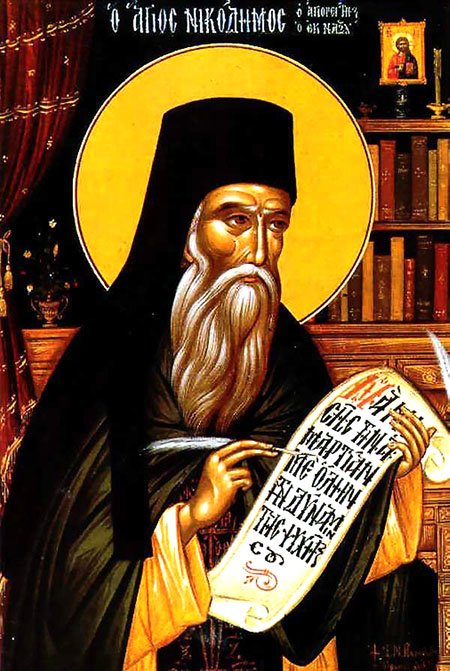
![]() |
| Nicodemus |
Saturday, July 11, 2009
Psalms, the Covenant, Baptism, and the Visible Church
- Psalm 102:28
One of the most-misrepresented practices of Presbyterians is the baptism of the infant children of believers. Westminster Confession XXVII:6, "Not only those that do actually profess faith in, and obedience unto Christ, but also the infants of one or both believing parents, are to be baptized." Why? WCF XXV:2, "The visible church... under the Gospel (not confined to one nation, as before, under the Law) consists of all those, throughout the world, that profess the true religion, and of their children..." Also Larger Catechism 62, "What is the visible church? The visible church is a society made up of all such as in all ages and places of the world do profess the true religion, and of their children."
The misrepresentation is that Presbyterians believe that our children are automatically saved, or that baptism makes them saved, as is taught in the Catholic Church. As can be seen in the constitutional remarks above, that is a misrepresentation. We believe that the children of believers (only, as we are told nothing about the children of unbelievers) are members of the visible church, i. e., the professing church, but not necessarily of the invisible church. That is, that they aren't believers or regenerate, necessarily, but are set apart from the world. This is a confessional expression of what the Apostle Paul teaches in I Corinthians 7:14, "For the unbelieving husband is made holy because of his wife, and the unbelieving wife is made holy because of her husband. Otherwise, your children would be unclean, but as it is, they are holy." Just as neither the unbelieving husband nor the unbelieving wife is regenerate-by-proxy, neither are their children. However, they are set apart from the world, not counted as Pagans, and therefore have a right to the mark of the covenant, i.e., baptism.
To return to Psalms, this time to Ps. 103:17-18, "The steadfast love of the Lord is from everlasting to everlasting on those who fear Him, and his righteousness to children's children, to those who keep His covenant and remember to do His commandments." The children of believers are the subjects of special promises from God, which is a great comfort to Christian parents. But if those baptized children break that covenant, if they are unfaithful - since God can never be unfaithful - then they repudiate those benefits signified by their baptisms.
So the question goes back to our Baptist critics: do you seriously expect us to believe that you really think of your children as mere miniature Pagans?
/Babybaptism-GettyImages-155134002-5a3f489bbeba330037c9a01d.jpg)