Showing posts with label zephaniah. Show all posts

Wednesday, December 15, 2021

God Hates Divination

One of the worst condemnations of Israel found in the Old Testament prophets is found in Zephaniah 1:12: "I will search Jerusalem with lamps, and I will punish the men who are complacent, those who say in their hearts, 'The Lord will not do good, nor will He do ill.'" God's judgment against His covenant people is not a matter of their denying of Him. They didn't become atheists or convert to a pagan religion. Rather, they denied His relevance. They professed that this God who had brought them out of captivity in Egypt had no place in their lives. 

One claim that the triune God of the Bible makes is to be the source of truth (e. g., John 14:6 and 17:17). Moreover, He claims to be the determiner of history: "I am God, and there is no other; I am God, and there is none like Me, declaring the end from the beginning, and, from ancient times, things not yet done, saying, 'My counsel shall stand, and I will accomplish all My purpose'" (Isaiah 46:9-10). Yet, they turned to other sources of immanency, or so they imagined, accusing Him of irrelevancy and insufficiency. 

God, being the jealous God that He is, rebukes them for such syncretism: "You shall not interpret omens or tell fortunes... Do not turn to mediums or necromancers; do not seek them out and so make yourselves unclean by them: I am the Lord your God" (Leviticus 19:26, 31). 

These things occur in today's America, and even more so in Europe. In some European countries, mediums outnumber Catholic clergy. Most Americans consider ourselves to be too sophisticated for such superstitions. Yet, do we not look to scientists in the same way? As I write this, we keep hearing "follow the science" as we deal with the covid-19 virus. However, we have been seeing it for much longer in the orthodoxy of Darwinian evolution. Rather than the determinative witness of the Creator, we look to the presumptions of, not science, but of scientists, people who have a vested interest in philosophical domination, but not in evidence. The declarations of orthodox scientists have become the Tarot cards and sheep entrails of the modern unbeliever. 

A Diagram For Interpreting Sheep Liver


Monday, June 19, 2017

Astrology As Syncretism

"I will stretch out My hand against Judah
     and against all the inhabitants of Jerusalem;
and I will cut off from this place the remnant of Baal
     and the name of the idolatrous priests along with the priests,
those who bow down on the roofs
     to the host of the heavens,
those who bow down and swear to the Lord
     and yet swear by Milcom,
those who have turned back from following the Lord,
 

     who do not seek the Lord or inquire of Him."
- Zephaniah 1:4-6 

Preaching to the visible church, Judah, Zephaniah reports Jehovah's displeasure against several pagan practices which have been accepted into their worship, a practice known as syncretism. The people of Judah were hedging their bets, professing the name of Jehovah, while, at the same time, worshiping Milcom (also called Moloch), an Ammonite deity, and looking to the stars for their security, a practice which we now call astrology.

Astrology has become an acceptable practice in modern America. No one is shocked when he sees the horoscope in his daily paper. And have we forgotten Nancy Reagan's custom of advising the US President on the basis of what her astrologer told her? Wasn't he the favorite president among evangelicals? 

Yet, look at God's reaction to this syncretism: "I will stretch out My hand against Judah." He isn't simply displeased. Rather, He is moved to act against that nation! And it was against the nation. Notice that He doesn't name names. That means that this syncretism, this apostasy-lite, if you will, was spread throughout this society of the supposed people of God. And when did the judgment come? Well, Zephaniah was written about 622 BC, just before the reforms of Josiah. Those reforms brought a postponement of God's justice. The first of three sackings of Jerusalem by the Babylonians came just seventeen years later, in 605. The final destruction came in 586.

When the professed people of God dishonor Him with disloyalty, He does not play games, as He had warned them: "You shall not go after other gods, the gods of the peoples who are around you— for the Lord your God in your midst is a jealous God—lest the anger of the Lord your God be kindled against you, and He destroy you from off the face of the earth" (Deuteronomy 6:14-15).


Friday, August 19, 2016

The Church in the Old Testament: The City of God


Many readers will be familiar with the hymn, "Glorious Things of Thee Are Spoken," by John Newton (also the author of "Amazing Grace"). However, you may not be aware that he was inspired by Psalm 87:3: "Glorious things of you are spoken, O city of God." What city would that be? Jerusalem, of course, or, as it is called here, Zion. But not the Jerusalem on the map, but rather the one spoken of in Hebrews 12:22-23: "You have come to Mount Zion and to the city of the living God, the heavenly Jerusalem, and to innumerable angels in festal gathering, and to the assembly of the firstborn who are enrolled in heaven."

How do we know that it isn't the Jerusalem on the map? Well, first because of the use of "Zion," rather than "Jerusalem." That name was used, especially by the prophets, when the emphasis was on God's presence among His people.  Consider, for example, Joel 3:17: "So you shall know that I am the Lord your God, who dwells in Zion, my holy mountain. And Jerusalem shall be holy, and strangers shall never again pass through it." and also Zephaniah 3:14-16: "Sing aloud, O daughter of Zion; shout, O Israel! Rejoice and exult with all your heart, O daughter of Jerusalem! The Lord has taken away the judgments against you; He has cleared away your enemies. The King of Israel, the Lord, is in your midst; you shall never again fear evil. On that day it shall be said to Jerusalem: 'Fear not, O Zion; let not your hands grow weak.'" Notice especially that the latter prophet interchanges "Zion" with "Jerusalem," so that there is no question as to of whom He is speaking. And second, because he doesn't talk about the Temple, its ceremonies, or even about the Jews.

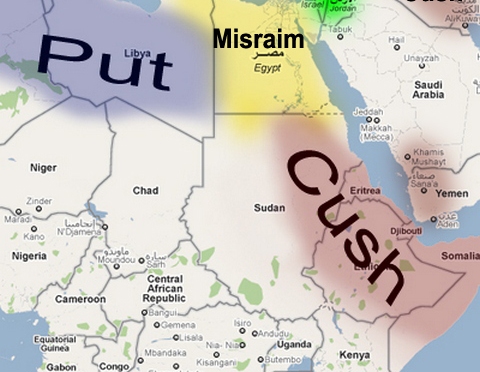
The Psalmist proceeds with a list of countries, Rahab (a nickname for Egypt), Babylon, Philistia, Tyre, and Cush (modern Ethiopia). What of them (verse 4)? "This one was born there." Born where (verse 5)? "Of Zion it shall be said, 'This one and that one were born in her.'" This is a marvelous prophecy of the extension of the church among the Gentiles, of their people reborn as children of the Church of Christ. Contrary to the expectations of the Jews, people from every nation and tribe (Revelation 5:9) will flock to the church, brought by the Holy Spirit, and praising our Redeemer Jesus Christ! This is part of the promise of the Father to the Son in the intra-Trinitarian covenant, seen in Isaiah 49:6: "It is too light a thing that You should be my servant to raise up the tribes of Jacob and to bring back the preserved of Israel; I will make You as a light for the nations, that my salvation may reach to the end of the earth."

To my mind this is such a glorious thing! No wonder it inspired John Newton to put those words to music, "Glorious  things of thee are spoken, Zion, city of our God"!

Friday, April 24, 2015

"The Lord's Day"? Or "the Day of the Lord"?

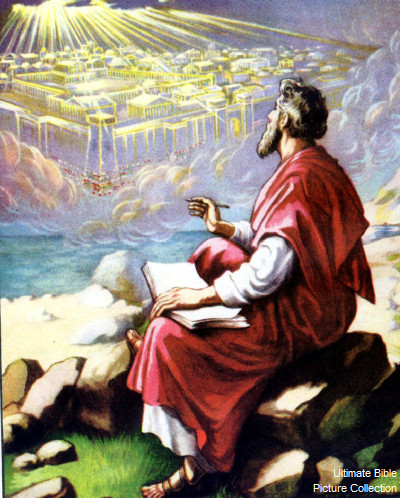
In Revelation 1:10, the Apostle John wrote that he "was in the Spirit on the Lord's Day" as he wrote this final book of the Bible. In general, Christians have taken this to refer to the Christian Sabbath, the first day of the week. However, that tradition is challenged by seventh-day sabbatarians, such as Seventh-Day Adventists, who claim instead that he was in the Spirit on "the day of the Lord."

However, in favor of the traditional wording is that John uses a different word in the genitive here from what is used in the New Testament for "day of the Lord." In the passage at hand, the Greek reads "te kuriake hemera." In contrast, where the New Testament writers referred to "the day of the Lord," such as in I Thessalonians 5:2, the writers use "he hemera kuriou." "Kuriakos" is used only here and in I Corinthians 11:20 (to refer to "the Lord's Supper"). "Kurios," in contrast, is used 720 times, both for Christ and for higher authorities, in general, which is why it is sometimes translated "master." Thus, the difference is that "kurios" is the more-generic term, while "kuriakos" is used only for Christ, which is why it came into Germanic languages as the word for "church" ("kirk" in Scottish dialect, "kirche" in German), instead of the Greek and Latin "ekklesia" ("eglise" in French, "iglesia" in Spanish, "chiesa" in Italian).
Apostle John

The point is this: the day in Rev. 1:10 is not the Day of the Lord, such as appears not just in I Thessalonians, but also in the Old Testament prophets (e. g., Amos 5:18, Zephaniah 1:14, and Joel 1:15). Rather, it is specifically the day of Christ! That is because the first day was the day of His resurrection (John 20:1ff), and when He revealed Himself glorified to His disciples (John 20:19), and when He sent the Holy Spirit (Acts 2:1; Pentecost was fifty days after Passover, i. e., seven seventh-days plus one, the first day of the week), and the day that the apostolic church gathered for worship (Acts 20:7 and I Corinthians 16:2). Thus, for John to have been involved in spiritual exercises on that day is only to be expected. To say that he was doing so on "the day of the Lord" makes no sense, at all.

Accordingly, I affirm the statement of the Westminster Confession of Faith (XXI:7): "As it is of the law of nature, that, in general, a due proportion of time be set apart for the worship of God; so, in His Word, by a positive, moral, and perpetual commandment, binding all men in all ages, He hath particularly appointed one day in seven for a Sabbath, to be kept holy unto Him: which, from the beginning of the world to the resurrection of Christ, was the last day of the week; and, from the resurrection of Christ, was changed into the first day of the week, which in Scripture is called the Lord's Day, and is to be continued to the end of the world as the Christian Sabbath." I find the biblical case for the first-day Sabbath, ever since the resurrection of Christ, to succeed over that for a continuing seventh-day Sabbath. I consider the latter to be an effort at judaizing the Christian faith, and, therefore, to be opposed.

Monday, September 6, 2010

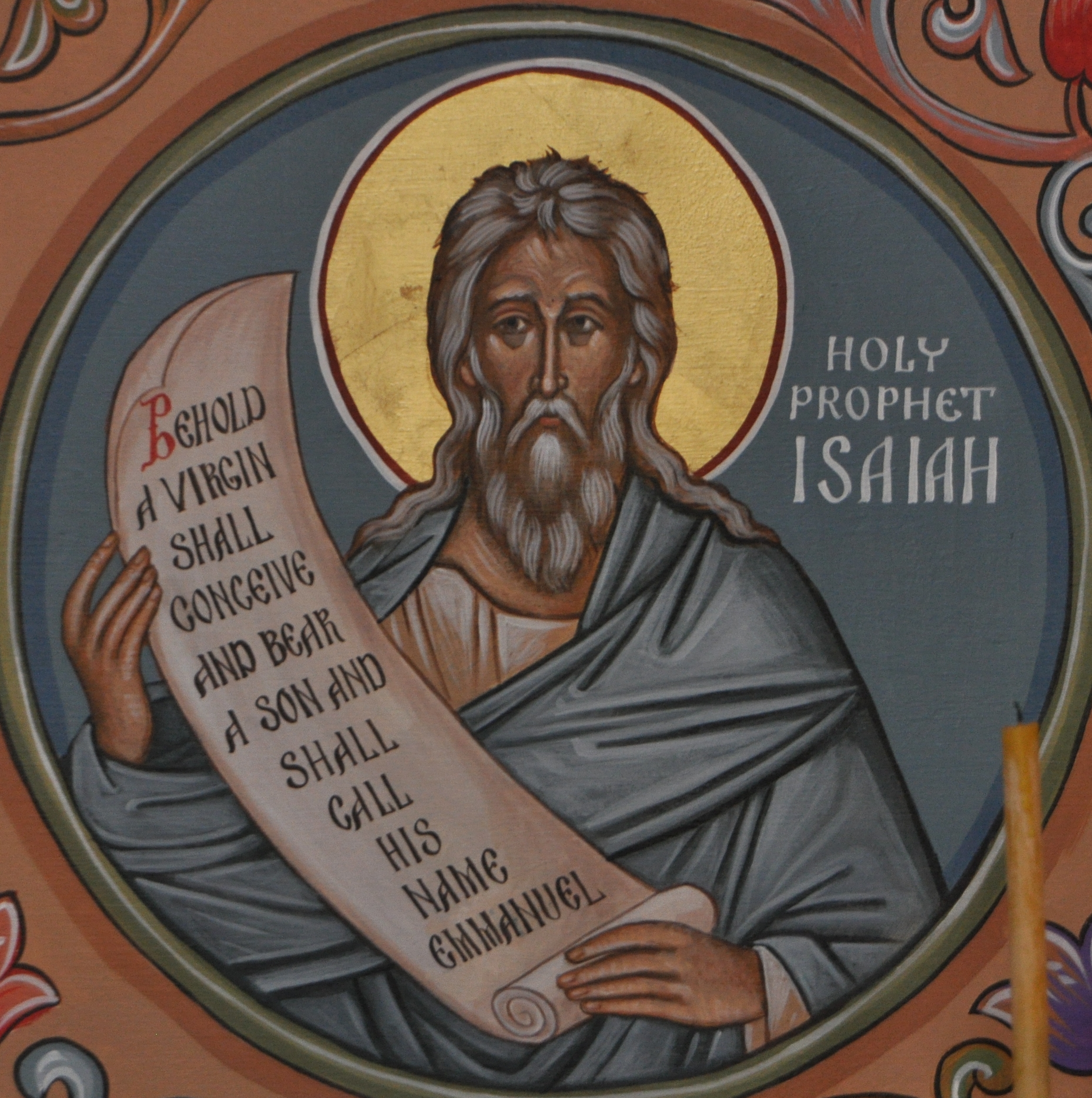
Isaiah 25:6-10, The Lord Lifts the Veil from the Nations

"On this mountain the Lord of hosts will make for all peoples a feast of rich food, a feast of well-aged wine, of rich food full of marrow, of aged wine well refined. And He will swallow up on this mountain the covering that is cast over all peoples, the veil that is spread over all nations. He will swallow up death forever; and the Lord God will wipe away tears from all faces, and the reproach of His people He will take away from all the earth, for the Lord has spoken. It will be said on that day, 'Behold, this is our God; we have waited for Him, that He might save us. This is the Lord; we have waited for Him; let us be glad and rejoice in His salvation.' For the hand of the Lord will rest on this mountain..."

There were a few passages of Scripture that affected me deeply in the early days of my Christian profession, some thirty-odd years ago. For example, my first reading of Ephesians made me a Calvinist. And later, my first readings of the Old Testament Prophets, especially Isaiah, made me a postmillennialist.

Many of these prophetic passages start with this reference to "this mountain." Which mountain? I take it to refer to Mount Zion, the physical location of the Temple, but also a frequent symbol for the Church (see Hebrews 12:22). Related uses of the word can be found in Isaiah 2:2, 11:9, 56:7, Daniel 2:35, Joel 3:17, Obadiah 1:16, Micah 4:1-2, Zephaniah 3:11, and Zechariah 8:3.

In our passage here, Isaiah prophesies a time when God would remove the veil from the nations. This obviously is neither a literal veil over the face, nor the veil of the Temple, though both are biblical uses of the word, since neither fits the context. Compare the uses of the word in successive verses of II Corinthians 3:13-16. Paul begins with the placing of a literal veil over the face of Moses, then changes to the figurative meaning of spiritual blindness. Considering it the same way in Isaiah, we have a promise that a time will come when God will lift the blindness from the hearts of the nations. Not each individual exhaustively, but over the nations as a whole. This is expressed more literally in Isaiah 56:6, referring to "foreigners who join themselves to the Lord," and Micah 4:2, where "many nations" shall come to be taught the word of God.

The promise that the Earth will be filled with the knowledge of the Lord is a repeated one: Isaiah 11:9 and Habakkuk 2:14. After all, it was the mission that Jesus gave us before Hid ascension (Matthew 28:19-20). One wonders two things; first, why is a repeated promise overlooked by so many? and second, why is such a happy promise rejected and opposed by so many?

Monday, September 7, 2009

Sunday Christians, Weekday Pagans

"Behold, you trust in deceptive words to no avail. Will you steal, murder, commit adultery, swear falsely, make offerings to Baal, and go after other gods that you have not known, and then come and stand before Me in this house, which is called by My name, and say, 'We are delivered!' - only to go on doing all these abominations? Has this house become a den of robbers in your eyes? Behold, I Myself have seen it, declares the Lord."
- Jeremiah 7:6-11

Most of us will immediately associate these verses with the tradition of auricular confession, the belief that the priest can forgive all one's sins after confession. But it isn't just that superstition that is addressed here. Too many professing Christians of all stripes act like they get get a new supply of spiritual get-out-of-jail-free cards whenever they go to church on Sunday, so that they can cover their unchristian actions during the week. "Want to cheat your customer? Go ahead, you still have credit at the Jesus Bank and Trust". And we have all seen the reckless driver with the "God is my co-pilot" and "child on board" bumper stickers. And what about the person who acts haughty to a waiter or salesperson, but then adopts angelic humility when he or she walks in the church door?

The great commentator Matthew Henry says, in part, regarding this passage: "The privileges of a form of godliness are often the pride and confidence of those that are strangers and enemies to the power of it. It is common for those that are furthest from God to boast themselves most of their being near to the church. They are haughty because of the holy mountain (Zep. 3:11), as if God's mercy were so tied to them that they might defy his justice."

The passage to which he refers (Zephaniah 3:11-13) gives us the alternative: "On that day you shall be put to shame because of the deeds by which you have rebelled against Me; for then I will remove from your midst your proudly exultant ones, and you shall no longer be haughty in My holy mountain. But I will leave in your midst a people humble and holy. They shall seek refuge in the name of the Lord, those who are left in Israel; they shall do no injustice and speak no lies, nor shall there be found in their mouth a deceitful tongue. For they shall graze and lie down, and none shall make them afraid."

God is not fooled by your Sunday religion. Are you?