Showing posts with label micah. Show all posts

Saturday, April 21, 2018

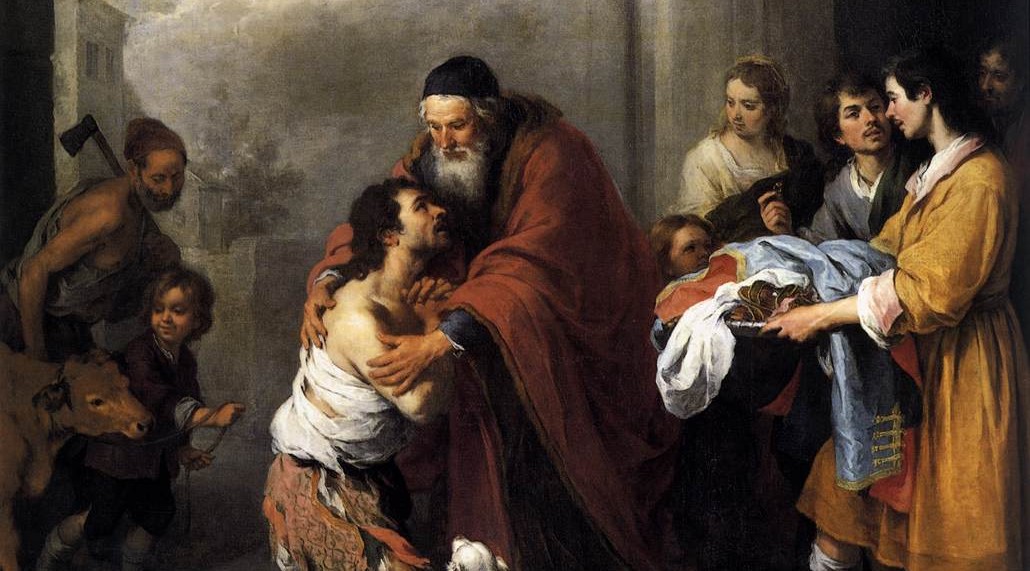
The Prodigal Son as the Image of Every Unbeliever

Everyone learns the story as a child in Sunday School: "There was a man who had two sons. And the younger of them said to his father, ‘Father, give me the share of property that is coming to me.’ And he divided his property between them. Not many days later, the younger son gathered all he had and took a journey into a far country, and there he squandered his property in reckless living. And when he had spent everything, a severe famine arose in that country, and he began to be in need. So he went and hired himself out to one of the citizens of that country, who sent him into his fields to feed pigs. And he was longing to be fed with the pods that the pigs ate, and no one gave him anything. But when he came to himself, he said, ‘How many of my father’s hired servants have more than enough bread, but I perish here with hunger! I will arise and go to my father, and I will say to him, “Father, I have sinned against heaven and before you. I am no longer worthy to be called your son. Treat me as one of your hired servants.” And he arose and came to his father. But while he was still a long way off, his father saw him and felt compassion, and ran and embraced him and kissed him. And the son said to him, ‘Father, I have sinned against heaven and before you. I am no longer worthy to be called your son.’ But the father said to his servants, ‘Bring quickly the best robe, and put it on him, and put a ring on his hand, and shoes on his feet. And bring the fattened calf and kill it, and let us eat and celebrate. For this my son was dead, and is alive again; he was lost, and is found.’ And they began to celebrate" (Luke 15:11-24, though the story continues to verse 32). 

The common understanding of this story is that a God-fearing younger son goes bad, and then regains his spiritual sense, and then returns to faithfulness. However, I think this is actually a broad cultural view, rather than an individual view. The Gentiles, who are descended from the same Adam and Noah as the Jews are, abandoned biblical faith to become pagans, and now, through the proclamation of the Gospel, are returning to the faith that, not they individually, but rather their cultural ancestors once knew.

That makes this parable an illustration of what Paul describes in Romans 1:18-23: "The wrath of God is revealed from heaven against all ungodliness and unrighteousness of men, who by their unrighteousness suppress the truth. For what can be known about God is plain to them, because God has shown it to them. For His invisible attributes, namely, His eternal power and divine nature, have been clearly perceived, ever since the creation of the world, in the things that have been made. So they are without excuse. For although they knew God, they did not honor Him as God or give thanks to Him, but they became futile in their thinking, and their foolish hearts were darkened. Claiming to be wise, they became fools, and exchanged the glory of the immortal God for images resembling mortal man and birds and animals and creeping things."

Contrary to the modern evolutionist view of religion, that it has evolved from animism to polytheism to monotheism, the Bible shows that man started with a relationship with the true, triune, biblical God, and then evolved away from the relationship. Or devolved might be a better word. This devolution is evidenced in the life of the prodigal, who knows safety with his father, as Adam did in the garden, a safety which he rejects for an illusion of autonomy, as Adam did when he believed the lying temptation of Satan and fell from his holy estate. Then the son recognizes the futility of his autonomous life (compare Genesis 3:17-19), repents of it, and is restored to fellowship with his father. This is the story of the individual repentant sinner, of course, when he is restored to the God whom he knows but avoids in unbelief. However, I think the picture actually points us to a cultural conversion, when Gentiles as a culture reject futile autonomy to return en masse to the God of their first ancestors, as Paul describes in Romans 11:25 (together with a number of places in the Old Testament, such as Isaiah 2:2-4 and Micah 4:1-3). The story of the Prodigal Son is the story of the fulfillment of the Great Commission: "All authority in heaven and on earth has been given to Me. Go, therefore, and make disciples of all nations" (Matthew 28:18-19)!

Monday, December 19, 2016

Jesus versus the Religion of Humanism


There is a myth that claims that the American government is, and is supposed to be, neutral regarding religion. The reason that is a myth is that the government doesn't play hands-off in religious matters. Rather, it actively promotes the religion of humanism. That is, government is actively hostile to religious people and their beliefs. "Hate speech" is the legal name for blasphemy against the doctrines of humanism.

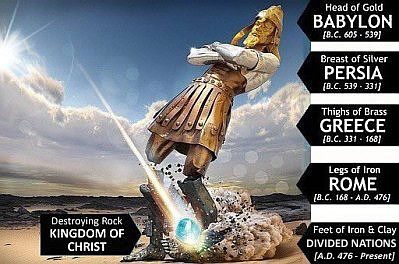
Most people in America are somewhat familiar with the dream of Nebuchadnezzar, described in the second chapter of Daniel. It is described by the prophet in Daniel 2:31-35. It is a figure of a man, with a head of gold, torso and arms of silver, thighs of bronze, shins of iron, and feet of blended iron and clay. Then a stone smashes into the feet of the man, shattering the figure. Then the stone grows into a mountain that fills the entire earth. The dream is then interpreted in Daniel 2:36-45. That interpretation tells us that the head is Nebuchadnezzar himself, the king of Babylon. The other kingdoms have been variously identified, but I think that the probable succession is that the Medo-Persian empire is the kingdom of silver, the Alexandrian empire the kingdom of bronze, and the Romans were the kingdom of iron. Notice that the kingdoms descend in value, from gold to iron, while ascending in power, from hard iron to soft gold.

The stone that smashes the figure is identified as the kingdom of God in verse 44.

The statue is identified as an "image." What is the significance of that term? The Second Commandment (Exodus 20:4-5) says, "You shall not make for yourself a carved image, or any likeness of anything that is in heaven above, or that is in the earth beneath, or that is in the water under the earth. 5You shall not bow down to them or serve them." That is to say, an "image" is not a piece of art, but rather an object of devotion. This particular image is of a man, thus representing the religious devotion to man as the standard of sovereignty. that is, the image represents, not a deity, but the religion of humanism.

What happens to the image? It is destroyed by a great stone, an asteroid, if you will, which is identified as the kingdom of God. And then the stone grows into a huge mountain which fills the whole world. Such a mountain is often used as an image of the kingdom of God, beginning with Mount Sinai and the Temple Mount in Jerusalem. it is also used as the image of the triumphant kingdom of God in the other prophets, such as Isaiah 2:2-3, 25:6, Micah 4:1-2, and Zechariah 8:3.

This vision is a prophecy of the coming of the kingdom in Jesus Christ during the time of the Roman Empire. Though all of the humanist power of Rome, with the cooperation of the apostate Jews, was devoted to destroying the kingdom, it was Rome, instead, that was destroyed. And, ever since, the kingdom of God has been growing around the world, literally filling the earth. This is a prophecy of the victory of Jesus Christ over the humanist idol of sovereign Man.

Saturday, June 18, 2016

The Intra-Trinitarian Covenant According to the pre-Gospel of Isaiah

The doctrine that I hate most among those held by classic dispensationalists is their assertion that history consists of a series of attempts by God to save sinful men, attempts which failed over and over, to be replaced by Plan B (then C, D, E, and F). In contrast, Reformed theology holds that a plan of salvation was determined before the creation, with the Father decreeing that a church would be saved, the Son undertaking to purchase that redemption, and the Holy Spirit undertaking to apply that redemption to those who are saved. This agreement is known by various terms, such as the covenant of redemption or the intra-trinitarian covenant. There is nothing wrong with either term, but I generally use the latter to avoid confusion with the covenants of works and of grace, which are between God and men.

There are a number of places where we find references to this conversation among the Persons of the Godhead, especially in the Psalms and in the Book of Isaiah. I want to look at a passage in the latter, 49:1-10.

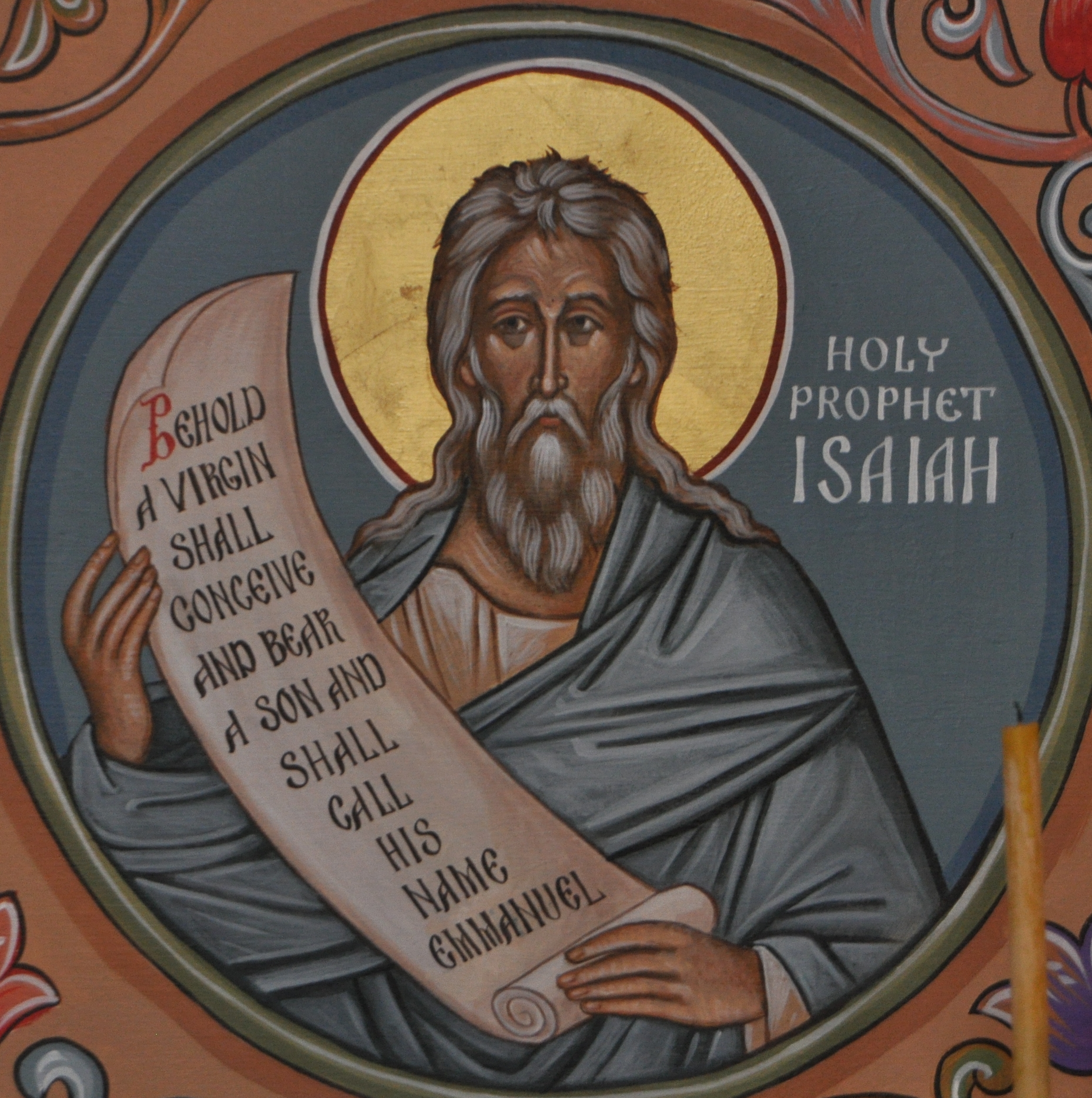
We can tell that this passage is about Christ because He applied it to Himself in the New Testament. Consider the remark in Is. 49:2: "He made My mouth like a sharp sword." Compare that to Revelation 19:15: "From His mouth comes a sharp sword with which to strike down the nations." Or compare Is. 49:9, "Saying to the prisoners, 'Come out,' and to those who are in darkness, 'Appear'" to Jesus's words in Luke 4:18, "He has sent me to proclaim liberty to the captives and recovering of sight to the blind...."

In this portion of the covenant, what does the Father promise? First, He promises that in Christ He will be glorified, v. 3. This will be through His work of redemption (John 12:28), through His people (Matthew5:16, John 15:8), and by answering their prayers (John 14:13).

Then He is promised success in the restoration of Israel (Is. 49:5): "He who formed Me from the womb to be His servant, to bring Jacob back to Him; and that Israel might be gathered to Him." We are still waiting for the fulfillment of that promise, but it is repeated in the New Testament (Romans 11:25-28). Yet, the Father says that this honor is not enough (v.6): "It is too light a thing that You should be My servant [merely] to raise up the tribes of Jacob and to bring back the preserved of Israel." If restoring the elect remnant of Israel is too small of an honor, how shall the Father increase it? "I will make You as a light for the nations, that My salvation may reach the end of the earth." As honored as Christ would be to receive the elect Jews, the Father extends that promise to elect Gentiles, as well! This is the "fullness of the Gentiles" of Romans 11:25. It is, indeed, a glorious promise! To make it even more certain, the Father had already made that promise in Psalm 2:8: "Ask of Me, and I will make the nations Your heritage, and the ends of the earth Your possession." And the Scripture describes that promise as fulfilled in Revelation 11:15: "Then the seventh angel blew his trumpet, and there were loud voices in heaven, saying, 'The kingdom of the world has become the kingdom of our Lord and of His Christ, and He shall reign forever and ever.'" See also, for example, Isaiah 2:2-3 and Micah 4:1-2.

Saturday, June 8, 2013

Covenantal Envy in Ruth 1:6-18

"Then Naomi arose with her daughters-in-law to return from the country of Moab, for she had heard in the fields of Moab that the LORD had visited his people and given them food. So she set out from the place where she was with her two daughters-in-law, and they went on the way to return to the land of Judah. But she said to her two daughters-in-law, 'Go, return each of you to her mother’s house. May the LORD deal kindly with you, as you have dealt with the dead and with me. The LORD grant that you may find rest, each of you in the house of her husband!' Then she kissed them, and they lifted up their voices and wept. And they said to her, 'No, we will return with you to your people.' But Naomi said, 'Turn back, my daughters; why will you go with me? Have I yet sons in my womb that they may become your husbands? Turn back, my daughters; go your way, for I am too old to have a husband. If I should say I have hope, even if I should have a husband this night and should bear sons, would you therefore wait till they were grown? Would you therefore refrain from marrying? No, my daughters, for it is exceedingly bitter to me for your sake that the hand of the LORD has gone out against me.' Then they lifted up their voices and wept again. And Orpah kissed her mother-in-law, but Ruth clung to her. And she said, 'See, your sister-in-law has gone back to her people and to her gods; return after your sister-in-law.' But Ruth said, 'Do not urge me to leave you or to return from following you. For where you go I will go, and where you lodge I will lodge. Your people shall be my people, and your God my God. Where you die I will die, and there will I be buried. May the LORD do so to me and more also if anything but death parts me from you.' And when Naomi saw that she was determined to go with her, she said no more."

 I am thinking about this passage as I prepare to substitute for the teacher of my Sunday School class tomorrow.

 It seems to me that the key verse for understanding the Book of Ruth is here, the latter part of the sixteenth verse of the first chapter: "Your people shall be my people, and your God my God." Note that I am not turning the book into an allegory, but rather seeking the purpose for including this historical event in the inspired text. Note the parallel phrasing here with the covenantal declarations of God: "I will be your God and you shall be My people," such as in Exodus 6:2-7, Leviticus 26:6-13, and Ezekiel 36:22-28. In those passages, it is Jehovah speaking in the first person of the covenant which He Himself is initiating, i.e., the Covenant of Grace. In contrast, Ruth is speaking only in the second person, referring to Naomi's people and Naomi's God. That is because she is speaking as one outside that covenantal relationship.

This is actually within the revealed purposes of God's covenant. In Deuteronomy 4:6, He says to Israel, "Keep them [i.e., the Law] and do them, for that will be your wisdom and your understanding in the sight of the peoples, who, when they hear all these statutes, will say, 'Surely this great nation is a wise and understanding people.'" Also Ezekiel 36:15-23, "And I will not let you hear anymore the reproach of the nations, and you shall no longer bear the disgrace of the peoples and no longer cause your nation to stumble, declares the Lord GOD. The word of the LORD came to me: 'Son of man, when the house of Israel lived in their own land, they defiled it by their ways and their deeds. Their ways before Me were like the uncleanness of a woman in her menstrual impurity. So I poured out My wrath upon them for the blood that they had shed in the land, for the idols with which they had defiled it. I scattered them among the nations, and they were dispersed through the countries. In accordance with their ways and their deeds I judged them. But when they came to the nations, wherever they came, they profaned My holy name, in that people said of them, 'These are the people of the LORD, and yet they had to go out of his land.' But I had concern for My holy name, which the house of Israel had profaned among the nations to which they came. 'Therefore say to the house of Israel, Thus says the Lord GOD: It is not for your sake, O house of Israel, that I am about to act, but for the sake of My holy name, which you have profaned among the nations to which you came. And I will vindicate the holiness of My great name, which has been profaned among the nations, and which you have profaned among them. And the nations will know that I am the LORD, declares the Lord GOD, when through you I vindicate my holiness before their eyes.'"

 Having ignited this envy among Israel's pagan neighbors, how did Jehovah then satisfy it? I think the clear clue is verse 2 of Ruth 1: "They were Ephrathites from Bethlehem in Judah." That little tidbit reminds us of I Chronicles 4:4, which says, in passing, "These were the sons of Hur, the firstborn of Ephrathah, the father of Bethlehem." Then Micah 5:2, "But you, O Bethlehem Ephrathah, who are too little to be among the clans of Judah, from you shall come forth for Me one who is to be ruler in Israel, whose coming forth is from of old, from ancient days." And its fulfillment in Matthew 2:6. This a shadowy connection to the coming of the Messiah, who was given to be a light to the Gentiles (Isaiah 42:6, Isaiah 49:6 [compare Luke 2:32], and Acts 13:47). And the writer of Ruth (probably the Prophet Samuel), brings this down to genealogy. From the marriage of Ruth and Boaz came Obed, the grandfather of David, and thus the lineal ancestor of Jesus the Messiah! Thus, this one literary work demonstrates the covenantal envy of Israel's pagan comptetitors, in the purposes of God, and His sovereign satisfaction of that envy centuries later. I love it when Scripture strands come together like this!

Monday, September 6, 2010

Isaiah 25:6-10, The Lord Lifts the Veil from the Nations

"On this mountain the Lord of hosts will make for all peoples a feast of rich food, a feast of well-aged wine, of rich food full of marrow, of aged wine well refined. And He will swallow up on this mountain the covering that is cast over all peoples, the veil that is spread over all nations. He will swallow up death forever; and the Lord God will wipe away tears from all faces, and the reproach of His people He will take away from all the earth, for the Lord has spoken. It will be said on that day, 'Behold, this is our God; we have waited for Him, that He might save us. This is the Lord; we have waited for Him; let us be glad and rejoice in His salvation.' For the hand of the Lord will rest on this mountain..."

There were a few passages of Scripture that affected me deeply in the early days of my Christian profession, some thirty-odd years ago. For example, my first reading of Ephesians made me a Calvinist. And later, my first readings of the Old Testament Prophets, especially Isaiah, made me a postmillennialist.

Many of these prophetic passages start with this reference to "this mountain." Which mountain? I take it to refer to Mount Zion, the physical location of the Temple, but also a frequent symbol for the Church (see Hebrews 12:22). Related uses of the word can be found in Isaiah 2:2, 11:9, 56:7, Daniel 2:35, Joel 3:17, Obadiah 1:16, Micah 4:1-2, Zephaniah 3:11, and Zechariah 8:3.

In our passage here, Isaiah prophesies a time when God would remove the veil from the nations. This obviously is neither a literal veil over the face, nor the veil of the Temple, though both are biblical uses of the word, since neither fits the context. Compare the uses of the word in successive verses of II Corinthians 3:13-16. Paul begins with the placing of a literal veil over the face of Moses, then changes to the figurative meaning of spiritual blindness. Considering it the same way in Isaiah, we have a promise that a time will come when God will lift the blindness from the hearts of the nations. Not each individual exhaustively, but over the nations as a whole. This is expressed more literally in Isaiah 56:6, referring to "foreigners who join themselves to the Lord," and Micah 4:2, where "many nations" shall come to be taught the word of God.

The promise that the Earth will be filled with the knowledge of the Lord is a repeated one: Isaiah 11:9 and Habakkuk 2:14. After all, it was the mission that Jesus gave us before Hid ascension (Matthew 28:19-20). One wonders two things; first, why is a repeated promise overlooked by so many? and second, why is such a happy promise rejected and opposed by so many?

Friday, January 22, 2010

A. A. Hodge on True versus Hypocritical Assurance


"Although hypocrites and other unregenerate men may vainly deceive themselves with false hopes and carnal presumptions of being in the favor of God and estate of salvation, which hope of theirs shall perish, yet such as truly believe in the Lord Jesus and love him in sincerity, endeavoring to walk in all good conscience before him, may in this life be certainly assured that they are in a state of grace and may rejoice in the hope of the glory of God, which hope shall never make them ashamed."
- Westminster Confession of Faith, Chapter XVIII, Section 1

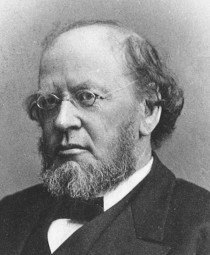
In his commentary on this passage from the Confession, Archibald Alexander Hodge, the son of the famous Princeton Professor Charles Hodge, makes some astute remarks on assurance of faith. Namely, I am here referring to his marks distinguishing the sound assurance of the true believer from the self-deception of the hypocrite.

Hodge comments: "That unregenerate men, beguiled by the natural desire for happiness, flattered by self-love, and betrayed by a spirit of self-righteousness and self-confidence, should frequently indulge an unfounded assurance of their gracious condition, is rendered antecedently probable from what we know of human nature, and rendered certain as a fact from common observation and from the declarations of Scripture. Micah 3:11, Job 7:13-14."

In contrast, Hodge continues, "True assurance, however, may be distinguished from that which is false by the following tests: 1) True assurance begets unfeigned humility; false assurance begets spiritual pride (I Cor. 15:10, Gal. 6:14). 2). The true leads to increased diligence in the practice of holiness; the false leads to sloth and self-indulgence (Ps. 51:12-13, 19). 3). The true leads to candid self-examination and to a desire to be searched and corrected by God; the false leads to a disposition to be satisfied with appearance and to avoid accurate investigation (Ps. 139:23-24). 4). The true leads to constant aspirations after more-intimate fellowship with God (I Jn 3:2-3)."

Thursday, July 9, 2009

Abortion as a Pagan Sacrifice

"Shall I give my firstborn for my transgression, the fruit of my body for the sin of my soul?"
- Micah 6:7

We live in a time when few people believe that actions have consequences. Nothing happens to me because of what I do or the bad choices I make. Everything bad is the result of what someone else does to me. Think of the schoolboy who proudly announces, "I got an A!", in contrast to his classmate who complains, "My teacher gave me a D." In the same way, indiscriminate sexual activity has consequences, whether it is sexually-transmitted diseases or pregnancy. But, no problem! A little shot will take care of the first, and a simple abortion the second.

The ancient Israelites sacrificed bulls and sheep to satisfy God's wrath against their sin. Americans sacrifice our children.

In the Bible, Pagans and apostate Israelites also practiced child sacrifice. Referring to the people of Israel and Judah, Jeremiah said (Jeremiah 32:35), "They built the high places of Baal in the Valley of the Son of Hinnom, to offer up their sons and daughters to Molech, though I did not command them, nor did it enter into my mind, that they should do this abomination." See also II Kings 17:31. King Josiah cleansed Israel, in part, by abolishing Molech worship. II Kings 23:10 (in answer to Jeremiah 7:31), "And he defiled Topheth, which is in the Valley of the Son of Hinnom, that no one might burn his son or daughter as an offering to Molech." Child sacrifice was a ritual for prosperity. Do we not justify the sacrifice of our own children by claiming that "we just can't afford them," or in a more honest mood, "I would just have to give up too much"?

Moses declared the judgment of Jehovah against the child sacrifices. Jehovah, speaking in Leviticus 20:1-5, abominates child sacrifices, and in verse 2b gives this command, "The people of the land shall stone him [the father who performs the sacrifices] with stones." The people are forbidden to tolerate child sacrifice, and the FATHER is named the responsible party. The prophet Ezekiel (20:31) tells us that God will reject the prayers of a people that tolerates child sacrifice. "When you present your gifts and offer up your children in fire, you defile yourselves with all your idols to this day. And shall I be inquired of by you? As I live, declares the Lord God, I will not be inquired of by you."

The great American holocaust has been the millions of children that we have offered up in the fire of saline and chemical abortifacients. The toleration of these sacrifices has caused God to close His ears to us. No wonder we suffer these economic deprivations and the threat of terrorism. How long must we suffer, before we repent and return to our God?