Showing posts with label covenant. Show all posts

Wednesday, October 7, 2020

The Covenant and the Children of Believers


One of the distinctive doctrines that I love about Presbyterianism is what is called "covenant succession," the belief that the children of believers are claimed by God and set apart from the children of unbelievers. 

There are a number of Bible verses that describe this special relationship. 

In the Old Testament, God chastised Israel for sacrificing their children to idols: "You took your sons and your daughters, whom you had borne to me, and these you sacrificed to them to be devoured" (Ezekiel 16:20). As horrific as human sacrifice is, under any circumstances, Israel had compounded their sin by sacrificing the children that God claimed for Himself by covenant.

In that covenant, God had promised a blessing to His children: "And the LORD your God will circumcise your heart and the heart of your offspring, so that you will love the LORD your God with all your heart and with all your soul, that you may live." (Deuteronomy 30:6). The same promise is repeated in Isaiah 54:13: "All your children shall be taught by the LORD, and great shall be the peace of your children." And again in the New Testament: "The promise is for you and for your children and for all who are far off, everyone whom the Lord our God calls to Himself" (Acts 2:39).

It is important to understand that these promises are covenantal. The children of believers are placed in the visible church. It is not an absolute promise that the children of believers will themselves be believers. We know this from experience. We also have the explicit statement of God to Abraham: "Abraham said to God, 'Oh, that Ishmael might live before You!' God said, 'No, but Sarah your wife shall bear you a son, and you shall call his name Isaac. I will establish My covenant with him as an everlasting covenant for his offspring after him. As for Ishmael, I have heard you; behold, I have blessed him and will make him fruitful, and multiply him greatly'" (Genesis 17:18-20). Abraham had a son by his servant Hagar, Ishmael, and begged God to grant him salvation. Yet, God explicitly refuses, promising material blessings, but not eternal life. The distinction would be made again with Isaac's sons, Esau and Jacob. The Apostle Paul would use their example to illustrate God's sovereignty in grace (Romans 9:6-13). He applies the principle to the children of Christians in I Corinthians 7:14: "For the unbelieving husband is made holy because of his wife, and the unbelieving wife is made holy because of her husband. Otherwise your children would be unclean, but, as it is, they are holy." That is, federally holy, not personally holy.

While it isn't my topic here, this is the basis for infant baptism, just as it was the basis for the circumcision of Israel's children.

Wednesday, May 31, 2017

How Important Is the Sabbath to God?


I am not here to prove the continuing ordinance of the Sabbath, or that it is now to be on the first day rather than the seventh. I have dealt with those topics elsewhere (use the "sabbath" tag at the bottom). Rather, today my purpose is to show the value that God places on the Sabbath, and how severely He opposes the trampling of it.

In Jeremiah 17:20-22, that prophet was given a message particularly for the royal family of Judah: "Hear the word of the Lord, you kings of Judah, and all Judah, and all the inhabitants of Jerusalem, who enter by these gates. Thus says the Lord: Take care for the sake of your lives, and do not bear a burden on the Sabbath day or bring it in by the gates of Jerusalem. And do not carry a burden out of your houses on the Sabbath or do any work, but keep the Sabbath day holy, as I commanded your fathers." I want particularly to point to Jeremiah's audience here, the royalty. Through him, God is making an argument from the greater to the lesser, or in Latin, argumentum a fortiori. That is, if even the royalty are under obligation from God to honor His Sabbath Day, then everyone else must logically also be under that obligation.

Then Jeremiah turns from who is obligated to that to which they are obligated, the rewards for obedience, and the curse for disobedience, a standard form of covenantal stipulations (Jeremiah 17:24-27): "If you listen to Me, declares the Lord, and bring in no burden by the gates of this city on the Sabbath day, but keep the Sabbath day holy and do no work on it, then there shall enter by the gates of this city kings and princes who sit on the throne of David, riding in chariots and on horses, they and their officials, the men of Judah and the inhabitants of Jerusalem. This city shall be inhabited forever, and people shall come from the cities of Judah and the places around Jerusalem, from the land of Benjamin, from the Shephelah, from the hill country, and from the Negeb, bringing burnt offerings and sacrifices, grain offerings and frankincense, and bringing thank offerings to the house of the Lord. But, if you do not listen to Me, to keep the Sabbath day holy, and not to bear a burden and enter by the gates of Jerusalem on the Sabbath day, then I will kindle a fire in its gates, and it shall devour the palaces of Jerusalem and shall not be quenched." Prosperity and safety are promised for obedience, while destruction is promised for disobedience. And, indeed, Judah was destroyed by the Babylonians in 586BC, so we already know the final result.

To use the language of teenagers, Jeremiah shows us that God don't play! Remember when Jesus called Himself the Lord of the Sabbath (Matthew 12:8)? People treat that as as a statement to the intent of, "Don't work about it." But no, it is just the opposite! As Jehovah incarnate, Christ is literally the Lord of the Sabbath. "Lord' is used in the Greek translation of the Old Testament where "Jehovah" appears in the Hebrew. Jesus is exactly the same Lord who is speaking in this prophecy of Jeremiah. Far from saying that it is unimportant, by declaring Himself Lord of the Sabbath, Jesus was telling His disciples that it was very important to Him!

Saturday, June 18, 2016

The Intra-Trinitarian Covenant According to the pre-Gospel of Isaiah

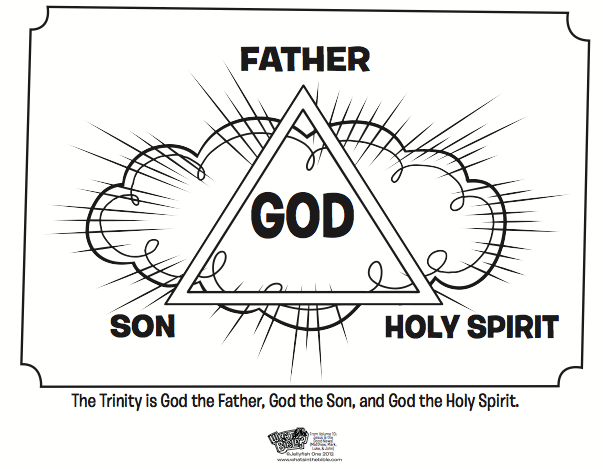
The doctrine that I hate most among those held by classic dispensationalists is their assertion that history consists of a series of attempts by God to save sinful men, attempts which failed over and over, to be replaced by Plan B (then C, D, E, and F). In contrast, Reformed theology holds that a plan of salvation was determined before the creation, with the Father decreeing that a church would be saved, the Son undertaking to purchase that redemption, and the Holy Spirit undertaking to apply that redemption to those who are saved. This agreement is known by various terms, such as the covenant of redemption or the intra-trinitarian covenant. There is nothing wrong with either term, but I generally use the latter to avoid confusion with the covenants of works and of grace, which are between God and men.

There are a number of places where we find references to this conversation among the Persons of the Godhead, especially in the Psalms and in the Book of Isaiah. I want to look at a passage in the latter, 49:1-10.

We can tell that this passage is about Christ because He applied it to Himself in the New Testament. Consider the remark in Is. 49:2: "He made My mouth like a sharp sword." Compare that to Revelation 19:15: "From His mouth comes a sharp sword with which to strike down the nations." Or compare Is. 49:9, "Saying to the prisoners, 'Come out,' and to those who are in darkness, 'Appear'" to Jesus's words in Luke 4:18, "He has sent me to proclaim liberty to the captives and recovering of sight to the blind...."

In this portion of the covenant, what does the Father promise? First, He promises that in Christ He will be glorified, v. 3. This will be through His work of redemption (John 12:28), through His people (Matthew5:16, John 15:8), and by answering their prayers (John 14:13).

Then He is promised success in the restoration of Israel (Is. 49:5): "He who formed Me from the womb to be His servant, to bring Jacob back to Him; and that Israel might be gathered to Him." We are still waiting for the fulfillment of that promise, but it is repeated in the New Testament (Romans 11:25-28). Yet, the Father says that this honor is not enough (v.6): "It is too light a thing that You should be My servant [merely] to raise up the tribes of Jacob and to bring back the preserved of Israel." If restoring the elect remnant of Israel is too small of an honor, how shall the Father increase it? "I will make You as a light for the nations, that My salvation may reach the end of the earth." As honored as Christ would be to receive the elect Jews, the Father extends that promise to elect Gentiles, as well! This is the "fullness of the Gentiles" of Romans 11:25. It is, indeed, a glorious promise! To make it even more certain, the Father had already made that promise in Psalm 2:8: "Ask of Me, and I will make the nations Your heritage, and the ends of the earth Your possession." And the Scripture describes that promise as fulfilled in Revelation 11:15: "Then the seventh angel blew his trumpet, and there were loud voices in heaven, saying, 'The kingdom of the world has become the kingdom of our Lord and of His Christ, and He shall reign forever and ever.'" See also, for example, Isaiah 2:2-3 and Micah 4:1-2.

Saturday, August 31, 2013

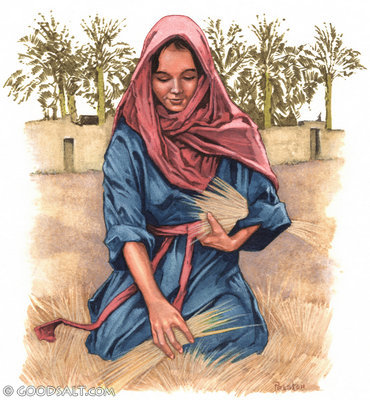
Ruth 2:1-16, the Overflowing Covenant

[Because of the length of this passage, I'm not going to quote the whole thing, but rather refer to particular verses in it.]

Do you ever read portions of Scripture which just move your heart? Portions that give you a particular sense of gratitude to God and peace in His covenant? For me, Ruth, chapters 1 and 2, were such a portion. While I definitely believe that Ruth is historical, not allegorical, I also see in it strong and gratifying types of Jesus Christ, the ultimate biological expression of the events of the book.

In the first verse, we are introduced to Boaz, a kinsman of Ruth's late husband. In Hebrew, his name means "in him is strength," one of the clues that he is to be taken as a type for Jesus, his lineal descendant. The typology is reinforced by the placing of the events of the book, except the sojourn in Moab, in Bethlehem. The second verse describes Ruth supporting herself and her mother-in-law, Naomi, through gleaning, a biblical form of support for the indigent, established in Leviticus 19:9-10.  See also Deuteronomy 24:19. How beautiful it is to see this type of Christ providing his overflowing benefits to this alien from the covenant!

In verse 12, we have Boaz saying of Ruth, that she had "taken refuge under the wings" of Jehovah, an obvious indication of her true conversion. This was something that hadn't been clear earlier. In Ruth 1:16, Ruth had said that Naomi's God would be her God, but it wasn't clear that this was conversion, rather than mere loyalty to her mother-in-law. We see it confirmed, now, that Ruth had truly received the God of Israel by faith. This is a vibrant example of what is described in James 2:5, "Has not God chosen those who are poor in the world to be rich in faith and heirs of the kingdom?"

In verses 15 and 16, we see Boaz instructing his workers to give Ruth her gleanings, not from the post-harvest field alone, but even from that portion of the harvest which had been gathered for the storehouses. God does indeed bless His people with fruitfulness. He promises this in Deuteronomy 16:15, "The Lord your God will bless you in all your produce and in all the work of your hands." But His blessing isn't just a blessing of sufficiency, but rather a blessing which overflows even to the unbelievers around us! We see this described in Matthew 15:26-28, especially verse 26, "Even the dogs eat the crumbs that fall from their masters' table."

In chapter 1, I described Ruth's envy of Israel's covenantal relationship with Jehovah. Now, here in chapter 2, we see here experiencing second-hand those same covenantal blessings. Why? Because was now herself in covenant with the faithful, covenant-keeping God! This is a type of us! We who were once strangers of the covenant (Ephesians 2:12), have now received the benefits of the covenant, through the Jews (Romans 11:11-12)! This is because Boaz's descendant, Jesus Christ (Matthew 1:5), of whom Boaz was a type, received blessings from His Father to pass to us, His covenant people (John 15:15 and 17:18)! We have gleaned grace, sanctification, and glorification yet to come, typified here by Ruth, from the overflowing blessings of this same covenant-keeping God! To me, that is a source of great joy and comfort!

Friday, April 30, 2010

Election and The Intra-Trinitarian Covenant

"I have manifested Your name to the people whom You gave Me out of the world. Yours they were, and You gave them to Me, and they have kept Your word. Now they know that everything that You have given Me is from You. For I have given them the words that You gave Me, and they have received them and have come to know in truth that I came from You; and they have believed that You sent Me. I am praying for them. I am not praying for the world but for those whom You have given Me, for they are Yours. All Mine are Yours, and Yours are Mine, and I am glorified in them."
- John 17:6-10

Catholic teaching and its Arminian handmaiden hold that the predestination taught in the Bible, something taught so clearly that they do not even deny it, is based on something foreseen in the elect. That is, God has foreseen their faith, and thereby elected them to salvation. This inversion of cause and effect is comparable to a teacher who assigns grades at the beginning of the term on the basis of the work that his students will do during the course of the year.

In contrast, the passage above makes plain that election isn't primarily an issue of the individual believer, but rather an element of the eternal relationship of the Persons of the Trinity. It is this covenant within the Trinity that has traditionally been called the covenant of redemption or covenant of peace. We aren't elect in a free-standing sense, but rather elect particularly in Christ. We see the same truth in John 10:28-29. In return, the Second Person is promised glory over all things (Hebrews 2, especially verse 9).

Thursday, January 7, 2010

Assurance and the Lord's Faithfulness to His Covenant

"And all the people said to Samuel, 'Pray for your servants to the Lord your God, that we may not die, for we have added to all our sins this evil, to ask for ourselves a king.' And Samuel said to the people, 'Do not be afraid; you have done all this evil. Yet do not turn aside from following the Lord, but serve the Lord with all your heart. And do not turn aside after empty things that cannot profit or deliver, for they are empty. For the Lord will not forsake His people, for His great name's sake, because it has pleased the Lord to make you a people for Himself."
- I Samuel 12:19-22

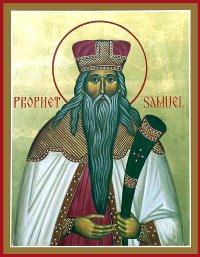
This interaction between the people of Israel and the prophet Samuel takes place early in the reign of King Saul, their first king. God had commanded Samuel to anoint Saul in response to the begging of the people, who wanted a king like the surrounding nations, rather than the judges that they had known since the Conquest. Jehovah had pinpointed their demand as arising, not from a desire for good governance, but rather as a rejection of His rule over them (I Sam. 8:7). In response, while granting them a king, Jehovah sends a storm during harvest time (I Sam. 12:17) as a sign of His wrath. And, as usual, the people quail before Him. I say "as usual" because Israel, throughout its history, had been willing to mourn her sins for a short time, before returning to them with increased gusto.

Using this teachable moment, Samuel reminds them of the faithfulness of our Covenant God. Is it because He is impressed with Israel? Certainly not. His faithfulness to them arises rather from His faithfulness to His own nature. In other words, His grace to them is exactly that, grace. His concern is His reputation, but the benefit is theirs.

The comfort of this knowledge will come home to us each time we have our own teachable moments, when we realize our own sin, and mourn the affront we have given to God (read Psalm 51 for an example from David). We naturally wonder whether we are still worthy of His forgiveness. And the answer must be no! We certainly are not worthy. But His nature doesn't change, and His faithfulness to His covenant never fails, and His regard to His own character never ceases. Knowing those things, we can know that forgiveness awaits us, even when our own consciences continue to accuse us.

When your conscience is wounded, never let it serve as an excuse to turn away from God. You can and will fail, but He never does.

Tuesday, July 21, 2009

America, Nation of Covenant Breakers


"The earth mourns and withers; the world languishes and withers; the highest people of the earth languish. The earth lies defiled under its inhabitants; for they have transgressed the laws, violated the statutes, broken the everlasting covenant. Therefore a curse devours the earth, and its inhabitants suffer for their guilt; therefore the inhabitants of the earth are scorched, and few men are left."
- Isaiah 24:4-6

In the ancient Middle East, whenever a king conquered a new territory, he established a covenant, a treaty laying out his responsibilities as king, and the corresponding responsibilities of his new subjects. Unlike a treaty of our time, these covenants, known as "suzerainty covenants," were imposed, not negotiated. The parties to the covenant were not equal partners in its establishment. What is the covenant to which Isaiah refers? God says to Abraham in Genesis 17:7, "I will establish my covenant between Me and you and your offspring after you throughout their generations for an everlasting covenant, to be God to you and to your offspring after you." Such particular covenants are applications to men of the ultimate covenant made within the Trinity described in Hebrews 1, after Psalm 2:7-8, "I will tell of the decree: The Lord said to me, 'You are my Son, today I have begotten you. Ask of me, and I will make the nations your heritage, and the ends of the earth your possession.'" Thus, strictly speaking, the covenant is made between the persons of the Trinity, then applied to believers. However, that is a legal distinction, not something that necessarily changes our response to the covenant.

Which brings us to the matter at hand.

The Puritan Thomas Shepard, in a preface to a book of sermons on the covenant by fellow Puritan Peter Bulkeley, of Cambridge, England, wrote, about 1650, "As all good things are conveyed to God's people, not barely by common providence but by special covenant, Isa. 63:8-9. So all the evills they meet with in this world (if in them the face of Gods anger appeares) upon narrow search will be found to arise from breach of Covenant." [spelling and punctuation in the original] That passage in Isaiah (plus verse 10) reads, "For He said, 'Surely they are My people, children who will not deal falsely.' And He became their Savior. In all their affliction He was afflicted, and the angel of the presence saved them, in His love and in His pity He redeemed them; He lifted them up and carried them all the days of old. But they rebelled and grieved His Holy Spirit; therefore He turned to be their enemy, and Himself fought against them." You might view this as a lawsuit by God against men who violated His covenant.

Does this ring any bells? Many Americans like to talk about the spiritual roots of our country. Consider the Mayflower Compact, which explicitly dedicated the new colony to the Christian faith. Most cities have a church on every corner. There is an average of three Bibles in every home. As a society, do we honor that commitment? Fifty million American babies have been tortured and executed since 1973. I think that that one sign gives an adequate answer. So, doesn't the covenant demonstrate that God has a controversy with us? Yet, economic hardship, war, drought, crime, are all treated as a big mystery. I suggest that they are exactly what should be expected, for a society which has turned against the knowledge and commitments of its forefathers.

Again, Isaiah 1:18-20: "Come now, let us reason together, says the Lord: though your sins are like scarlet, they shall be as white as snow; though they are red like crimson, they shall become like wool. If you are willing and obedient, you shall eat the good of the land; but if you refuse and rebel, you shall be eaten by the sword; for the mouth of the Lord has spoken." God lays out the choice to be made, and the consequences of each option. Have we not chosen to be eaten by the sword?

Saturday, July 11, 2009

Psalms, the Covenant, Baptism, and the Visible Church


"The children of your servants shall dwell secure; their offspring shall be established before you."
- Psalm 102:28

One of the most-misrepresented practices of Presbyterians is the baptism of the infant children of believers. Westminster Confession XXVII:6, "Not only those that do actually profess faith in, and obedience unto Christ, but also the infants of one or both believing parents, are to be baptized." Why? WCF XXV:2, "The visible church... under the Gospel (not confined to one nation, as before, under the Law) consists of all those, throughout the world, that profess the true religion, and of their children..." Also Larger Catechism 62, "What is the visible church? The visible church is a society made up of all such as in all ages and places of the world do profess the true religion, and of their children."

The misrepresentation is that Presbyterians believe that our children are automatically saved, or that baptism makes them saved, as is taught in the Catholic Church. As can be seen in the constitutional remarks above, that is a misrepresentation. We believe that the children of believers (only, as we are told nothing about the children of unbelievers) are members of the visible church, i. e., the professing church, but not necessarily of the invisible church. That is, that they aren't believers or regenerate, necessarily, but are set apart from the world. This is a confessional expression of what the Apostle Paul teaches in I Corinthians 7:14, "For the unbelieving husband is made holy because of his wife, and the unbelieving wife is made holy because of her husband. Otherwise, your children would be unclean, but as it is, they are holy." Just as neither the unbelieving husband nor the unbelieving wife is regenerate-by-proxy, neither are their children. However, they are set apart from the world, not counted as Pagans, and therefore have a right to the mark of the covenant, i.e., baptism.

To return to Psalms, this time to Ps. 103:17-18, "The steadfast love of the Lord is from everlasting to everlasting on those who fear Him, and his righteousness to children's children, to those who keep His covenant and remember to do His commandments." The children of believers are the subjects of special promises from God, which is a great comfort to Christian parents. But if those baptized children break that covenant, if they are unfaithful - since God can never be unfaithful - then they repudiate those benefits signified by their baptisms.

So the question goes back to our Baptist critics: do you seriously expect us to believe that you really think of your children as mere miniature Pagans?