Showing posts with label perseverance. Show all posts

Monday, June 30, 2025

The Incorruptible Seed of the Believer's Perseverance

"Having purified your souls by your obedience to the truth for a sincere brotherly love, love one another earnestly from a pure heart, since you have been born again, not of perishable seed, but of imperishable, through the living and abiding word of God." -I Peter 1:22-23 

Peter here addresses believers, not men in general. He refers to our obedience to the truth, our sincere love, our pure heart, and out having been born again. So his word choices preclude the possibility that he is talking to false professors or other hypocrites. He has in mind only true believers. I want to make that point to preclude some of the common quibbles made to the Reformed doctrine of perseverance of the saints. I am not defending the belief that every person who professes to be a Christian is guaranteed an eternity in Heaven. 

We are born again, Peter tells us, with a seed which cannot perish. The KJV uses the word "incorruptible," the same word that Paul uses in I Corinthians 15:52 for the resurrection body, because it can never again experience death. That tells us that the born again believer, from his first moments, has a spirit of the same resurrection nature as his body will be on the unknown day when our bodies rise again from the grave! 


Saturday, April 8, 2023

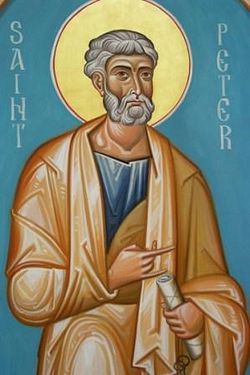
Apostle Peter on the Perseverance of the Saints: Trinitarian and Gracious

"Blessed be the God and Father of our Lord Jesus Christ! According to His great mercy, He has caused us to be born again to a living hope through the resurrection of Jesus Christ from the dead, to an inheritance that is imperishable, undefiled, and unfading, kept in Heaven for you, who, by God's power, are being guarded through faith for a salvation ready to be revealed in the last time" (I Peter 1:3-5). 

What a blessed passage, promising to us that God the Father has reserved for us a salvation in Christ that can never be lost. Among the Reformed, this is called "perseverance of the saints" (not identical to "once saved always saved," the Arminian version). 

First, let us consider to whom Peter is speaking. Lazy Christians often ignore the audience in determining the meaning of a passage, but it is essential here. We see it in verses 1-2: "To those who are elect... according to the foreknowledge of God the Father, in the sanctification of the Spirit, for obedience to Jesus Christ and sprinkling with His blood." So, Peter is not speaking to men in general, but specifically to believers. And notice how he marks believers, as the elect

Peter is making  a logical argument. He assures God's people of our eternal security, not from anything found in ourselves, but as a logical conclusion from his prior assumption of gracious election, bringing all three Persons of the Trinity into the activation and sustaining of the salvation of the church. He starts with election, to effectual calling, to perseverance. 


Saturday, May 14, 2022

The Character of God as Guarantee of the Saint's Perseverance

"It is impossible [that] we should lose the thing we were wrought for, because it is God that wrought it for us. It is not the designment of an idol; that is, of some ignorant, rash, fallible, or mutable agent, such a one as may possibly be surprised by unlooked-for accidents, circumvented by a sublimer understanding, overborne by a power above him, or recede from his purpose through levity and fickleness of his nature, etc. But it is God who is 'wise in heart and mighty in strength,' Job 9:4. It is He from whom all things that are have their being and are perfectly under His rule and obeisance. He had eternity before Him, to lay His design surely; and, accordingly, 'He declared the end from the beginning.' It is, therefore, as impossible for Him either to do or to neglect to do, or to suffer to be done, anything whereby His purpose might suffer disappointment, as it is impossible that God should lie. He would never have set up those ends as the sum and substance of His design, if He had not determined to see them made good." -Puritan Elisha Coles, "A Practical Discourse of God's Sovereignty 

Part of the Creator/creature distinction is that the Creator is omniscient, omnipotent, and eternal, while the creature has all but three of those attributes. A creaturely awareness is conscious of our inability to plan for all contingencies, at all times, as may disrupt our best-laid plans. For example, the farmer cannot know of the coming hurricane that wipes out his crop. In contrast, the triune God of the Bible has infinite awareness across all time, all space, and under all contingencies, such that His plans are infallibly achieved. As in the verse that Coles quotes, "I am God, and there is none like Me, declaring the end from the beginning and from ancient times things not yet done, saying, 'My counsel shall stand, and I will accomplish My purpose'" (Isaiah 46:10). It would be comical hubris for any human to make such an assertion. 

However, it is also unforgiveable hubris to assert such infallibility for any man's ability to keep himself in a state of grace. Yet that is what the Arminian does, when he claims that no man can keep himself saved, and, therefore, he should never be assured of his hold on eternal life. If the fundamental assumption of the Arminian, that it is the will of the man that should thus preserve him, then it would be true that no man could ever know an assurance of salvation in this life. 

But this is exactly what perseverance is not. It does not, has never, and never shall, depend on the will and power of the creature to maintain his state of grace. It is the work of God alone, He whose irrepeatable attributes of deity guarantee that any man, truly saved, can never fully and finally lose his salvation. Thus, his assurance is sound, not because of any ability of his own, but because of the infallible character of the God who saved him to begin with. 


Saturday, April 30, 2022

Sovereign Grace as the Only Rational Basis for Assurance

"Let your souls be filled and enlarged with everlasting admirings [sic] of that grace (that sovereign grace) which has so impregnably secured the salvation of His chosen, that no manner of thing, whether within them or without them, shall be able to defeat it or hinder them of it. No, not the gates of hell. Nay, not so much as one of the stakes thereof shall be removed, and that forever. Shaken you may be, and tossed with a tempest, but not overturned, because ye have an eternal root. Electing love is of that sovereignty that it rules and overrules all, both in heaven and in earth." -Puritan Elisha Coles, "A Practical Discourse of God's Sovereignty" 

In this paragraph, Coles paraphrases and summarizes several passages of Scripture, primary of which is Romans 8:38-39: "I am sure that neither death nor life, nor angels nor rulers, nor things present,nor things to come, nor powers, nor height nor depth, nor anything else in all creation, will be able to separate us from the love of God in Christ Jesus our Lord." 

The point of both Apostle Paul and Coles is that the assurance of the Christian is secure, not because of the power of the believer to maintain his spiritual condition, but because he is sustained by the same sovereign grace which saved him in the beginning. For, as Paul also says, "I am sure of this, that He who began a good work in you will bring it to completion at the day of Jesus Christ" (Philippians 1:6: see also 2:13). 

Does any Christian believe that God is unaware of our weakness, of our frailty, of the strength of the opposition (I Peter 5:8)? If He weren't, then we could have no rational basis for our assurance of eternal life. When Satan assails us with accusations of our unworthiness, he merely throws in our faces what is absolutely correct! However, Satan will never go to the next step, telling us of the grace and power of God the Son, our Redeemer Jesus Christ, because that would defeat all of Satan's designs against us. It is only in the Word of God that we are blessed with this promise: "My sheep hear My voice, and I know them, and they follow Me. I give them eternal life, and they will never perish, and no one will snatch them out of My hand. My Father, who has given them to Me, is greater than all, and no one is able to snatch them out of the Father's hand" (John 10:27-29, emphasis added). Our security is assured, not by any strength that we have, for we have none. Rather, it is guaranteed by the strength of the One who holds us.

Saturday, April 23, 2022

The Assurance of Perseverance

Arminians like to argue against the biblical doctrine of perseverance by citing the biblical warnings against apostasy. Those warnings truly exist; no Calvinist would say otherwise. The problem is that the Arminian argues further that the existence of the warning logically requires that the apostasy of true believers must be possible. To that the Calvinist objects as an unwarranted leap of logic. 

"That a righteous man may fall is evident. And as evident it is that he cannot fall finally. For, though he fall seven times in a day, as often does he rise again, Proverbs 24:16, and this because 'the Lord upholdeth him with His hand,' Psalm 37:24, and again, 'the Lord upholdeth all that fall,' Psalm 145:14. That is, either He stays them when they are falling, or so orders and limits the matter that they fall not into mischief, as others do, and, to be sure, He will set them on their feet again. The absolute promise cannot be nullified or made uncertain by cautionary words elsewhere delivered" -- Puritan Elisha Coles, A Practical Discourse of God's Sovereignty. Coles continues, "The Lord does ordinarily bring about His purposes by means, of which cautions are a part. And by which, as a means, He keeps off the evil cautioned against."

Coles' point, which is an important one, is that God's warnings of the consequences of apostasy are one of the means by which He prevents the elect from experiencing those consequences. It is like the parent of a small child, who warns against touching the hot stove. The parent expects his warning to prevent that against which he has warned. Yet the Arminian wants us to believe that the parent's warning implies that the child will, then, proceed to touch the stove and get burned. Not only does the parent have no such expectation,  but God even less so, because He has effectual means for maintaining the faith of the true believer. 


Wednesday, April 6, 2022

The Conversion of Israel As Proof of the Saint's Perseverance

"I will establish his [i. e., David's] offspring forever, and his throne as the days of the heavens. If his children forsake My law, and do not walk according to My rules, if they violate My statutes, and do not keep  My commandments, then I will punish their transgressions with the rod and their iniquity with stripes, but I will not remove from him My steadfast love or be false to My faithfulness. I will not violate My covenant or alter the word that went forth from My lips" (Psalm 89:29-34). 

These are the words of God in His covenantal promises to King David. Paul echoes them in II Timothy 2:13: "If we are faithless, He remains faithful - because He cannot deny Himself." In both passages, God's faithfulness to His people is never founded on our faithfulness to Him. Rather, even when we are unfaithful, He remains faithful, because to do otherwise would be to deny Himself. To violate His covenant promises would be a betrayal of His own nature, and is, therefore, unthinkable

We know the history of Israel, though it was still future to the time of the writing of the Psalm. She was, indeed, unfaithful, and God did, indeed, bring down on her fearsome judgments, especially the destruction of Jerusalem and the temple by the Babylonians, and the carrying away by them of the bulk of the population into captivity. This was a judgment only succeeded by the later judgment under the Romans in 70 AD, when Jerusalem was again looted and the temple destroyed, and an estimated 1.1 million Jews were massacred. From that judgment, the Jews have not yet recovered. Rather, Israel lies under a judicial hardening for her rejection and murder of her Messiah. 

Yet even that judgment points to Psalm 89. 

"It is true [that] the body of that nation, for their unbelief, is now broken off; there is a suspension of the outward part of the covenant. Not that God intends an utter rejection of them. For such as have part in the special election are always saved, Romans 11:7, and the time will come when all Israel shall be saved. For, as touching the election, they are beloved still, though yet unborn. For their sakes it was that 'those days of tribulation were shortened,' Matthew 24:22, which answers to Isaiah 65:8, 'Destroy it not, there is a blessing in it.' The Lord will not so much regard what they have done or deserved as what His covenant is concerning Abraham's seed, which, minding of His covenant, is from the unchangeableness of His purpose. And, therefore, though broken off at present, 'they shall be grafted in again,' verse 24, though driven into all lands, scattered into corners, mingled with the heathen, and become so like them as not to be known asunder. Yet, being His chosen, and within His covenant, He will bring them out of their holes and gather them one by one, Isaiah 27:12. He will do it so accurately, exactly, punctually, that none shall be wanting, 'though sifted among all nations, not one grain shall fall to the earth,' Amos 9:9. The reservation mentioned in Romans 11 was God's omnipotent safeguarding of His elect, when the rest of the nation fell to idolatry. They had gone all, as well as some, had not election held them back. It is, therefore, said to be according to the election of grace. Election was the pattern, and reservation the copy of it" ( Puritan Elisha Coles, "A Practical Discourse of God's Sovereignty"). 

Coles cites the faithfulness of God to His promises to Abraham as the grounds for the sustaining of a faithful remnant among the Jews, and for their eventual national repentance and salvation. And that same faithfulness is why the Christian can be assured that God will enable him to persevere in this life unto eternal life in the age to come. 


Saturday, March 12, 2022

God's Preservation of His People: The Perseverance of the Saints in Troublous Times

"Though I walk in the midst of trouble, You preserve my life; You stretched out Your hand against the wrath of my enemies, and Your right hand delivers me. The Lord will fulfill His purpose for me; Your steadfast love, O Lord, endures for ever. Do not forsake the work of Your hands." --Psalm 138:7-8 

As I write this, America is just past another wave of Covid-19 and the Russian invasion of Ukraine has just begun its third week. Unemployment is low, but inflation has jumped, especially in the prices of food and gasoline. We are in uncertain times. People are fearful, and many professing Christians have begun another round of talk about the Rapture and Mark of the Beast. 

Under such circumstances, unease is rational. Trusting in God does not mean that Christians don't have normal emotions. However, bad theology merely fans the flames of that unease, adding irrational fears to the rational unease. 

Good theology, on the other hand, brings comfort, and minimizes our fears. In particular, the knowledge that God, our God, reconciled to us through the blood of Jesus, always keeps us in His care: "We know that, for those who love God, all things work together for good, for those who are called according to His purpose. For those whom He foreknew, He also predestined to be conformed to the image of His Son, in order that He might be the firstborn among many brothers. And those whom He predestined, He also called; and those whom He called, He also justified; and those whom He justified, He also glorified" (Romans 8:28-30). This is hard for our egocentric hearts to accept, but the purpose of God is not about us; it is for the glory of His Son that He causes all things to work for good for those who belong to His Son. 

Beyond that, however, it is the purpose of the Son to care for His people without failure and without ceasing: "My sheep hear My voice, and I know them, and they follow Me. I give them eternal life, and they will never perish, and no one will snatch them out of My hand. My Father, who has given them to Me, is greater than all, and no one is able to snatch them out of the Father's hand" (John 10:27-29). Because of His love to His sheep, Jesus guarantees to us that He cannot fail to preserve His sheep for eternity, and He calls on the love of the Father for Him to guarantee what He desires for us.


Wednesday, August 11, 2021

King David and the Doctrine of Perseverance

 According to the superscription, David wrote this when he was taken prisoner by the Philistines: "You [God] have delivered my soul from death, yes, my feet from falling, that I may walk before God in the light of life" (Psalm 56:13). It may be this verse which inspired Jude, the half-brother of Jesus, to write centuries later, "Now to Him who is able to keep you from stumbling and to present you blameless before the presence of His glory with great joy, to the only God our Savior, through Jesus Christ our Lord, be glory, majesty, dominion, and authority, before all time and now and forever. Amen" (Jude 1:24-25). 

Both men exult not in some belief that they must sustain their own faith, as the Pelagian claims, but rather in the knowledge that it is God's power that will sustain them to the end. 

Jesus also talked about this: "My sheep hear My voice and I know them, and they follow Me. I give them eternal life, and they will never perish, and no one will snatch them out of My hand. My Father, who has given them to Me, is greater than all, and no one is able to snatch them out of the Father's hand" (John 10:27-29). 

David and Jude write from their experiences of the faithfulness of God. Jesus, however, writes as the God who is faithful. It is on that faithfulness that the perseverance of the true believer depends and is guaranteed. 

I have been told by both Catholics and Mormons that it is arrogant to be sure now of my eternal life. They both claim that no one can be sure until he arrives at his eternal destination. They consistently refer to Matthew 24:13: "The one who endures to the end will be saved." But neither one ever considers how the believer endures. As cited above, the Bible tells us that it is God's action that gives endurance, not the willpower of the believer. And God can never fail. Therefore, the believer has a sound foundation for his assurance, just as the Apostle John tells us: "I write these things to you [Christians] who believe in the name of the Son of God, that you may know that you have eternal life" (I John 5:13). The possession of eternal life is something that the true believer has now, not something for which he merely hopes.


Saturday, July 10, 2021

The Marital Faithfulness of Jesus to His Church


"I will betroth you to Me forever. I will betroth you to Me in righteousness and in justice, in steadfast love and in mercy. I will betroth you to Me in faithfulness. And you shall know the Lord." 
- Hosea 2:19-20 

This is a sweet promise. If you have read the rest of Hosea, then you know that much of it is about the unfaithfulness of Israel, the covenant community. Yet God takes it upon Himself to describe a time in which He will abolish the unfaithfulness of that community. 

First, I want to point to the last word in that passage: Lord. That English word is used as a gloss for the tetragrammaton, Yahweh, or Jehovah, the name used by by the preincarnate Christ whenever He acted in His mediatorial role. It is Jesus, His cross work, and His resurrection that have purchased the Church, faithful Israel in the Old Testament and the united Jews and Gentiles in the New Testament. His purchase, being effectual in all for whom it was intended (John 6:37-39), cannot fail to make every true believer, not just a believer, but a faithful servant. 

He uses marital imagery, a common theme in both testaments (such as Isaiah 54:5-6, Jeremiah 3:14, and Revelation 19:6-9). This is why our own marriage ceremony includes the vow to be faithful "until death do us part." Granted, that vow has become a mere anachronism among us, but it is not an anachronism to God. His vows are eternal and unfailing, even though we, who call ourselves by His name, are certainly not. "If we are faithless, He remains faithful - for He cannot deny Himself" (II Timothy 2:13).  

This is why I believe so passionately in the perseverance of the saints. I don't use the phrase "once saved always saved," because of its antinomian implications. Rather, God's faithfulness works in His blood-bought people by keeping them faithful, both in the sense of having faith and in the sense of faithful obedience to His word. 

Saturday, June 19, 2021

Psalm 102 on Christ the Creator

"Of old You laid the foundation of the earth,
     and the heavens are the work of Your hands.
They will perish, but You will remain;
     they will all wear out like a garment.
You will change them like a robe, and they will pass away,
     but You are the same, and Your years have no end.
The children of Your servants shall dwell secure;
     their offspring shall be established before You."

- Psalm 102:25-28 

These verses describe God as the creator of the physical universe. Yet that universe, under the curse of the Fall, is shriveling under the assault of entropy. Even as we see that, however, we have the assurance that God is subject to no entropy, but remains in His divine power and glory forever. 

But there is something else interesting about these verses. In Hebrews 1:10-12, they are explicitly referred to the Son, i. e., Jesus. It is He who is our unchanging divine Creator. This is not to deny the respective roles of the Father and the Holy Spirit; they are simply not the focus here. 

It is the Son who is given all of the attributes of full deity, and, as such, the basis for the salvation and eternal security of His church. 


Saturday, January 16, 2021

Never Known versus Fallen from Faith

As I have said before, the doctrine of the Perseverance of the Saints is very precious to me. I am very conscious of my weakness, so I am glad that my unfaithfulness never cancels the faithfulness of God (II Timothy 2:13). That is an important distinction: my perseverance is because Of God's faithfulness, not mine. So the common caricature of the doctrine as an expression of pride is no more than a pejorative, void of any true basis. 

We find this short statement from Jesus in Matthew 7:21-23: "Not everyone who says to Me, ‘Lord, Lord,’ will enter the kingdom of heaven, but the one who does the will of My Father who is in heaven. On that day many will say to Me, ‘Lord, Lord, did we not prophesy in Your name, and cast out demons in Your name, and do many mighty works in Your name?’ And then will I declare to them, ‘I never knew you; depart from Me, you workers of lawlessness.'" Notice that He is talking about men who claim to be His people. Yet He rejects them, because He had never known them! That is an important statement. They are professing believers, members of the visible church. Yet He doesn't say to them, "I now kick you out." Rather, He tells them, "I never knew you." So, while they had claimed to be believers, members of the visible covenant community, the profession of Jesus was that their profession had been false. They had never been members of His invisible church, regenerate and redeemed. The Apostle John put this in more-explicit form in I John 2:19: "They went out from us, but they were not of us; for if they had been of us, they would have continued with us. But they went out, that it might become plain that they all are not of us." 

Are there men who go to church and claim to be Christians, who, later, fall into grievous sin or even deny the faith that they had once professed? Of course. Does that mean that true Christians can become unbelievers? Absolutely not. Rather, they have demonstrated that their profession was a lie, and that Jesus had never known them.

Wednesday, December 30, 2020

Persevering in the Perfecting Power of Jesus

A common caricature of the Reformed doctrine of the perseverance of the saints is that it, supposedly, allows a person to spout some words, and then to live wickedly, assured that he is destined for Heaven. And I grant that the oft-used semi-Arminian version, "once saved-always saved," can be taken exactly that way. That is because the anti-Calvinists don't understand the difference. 

As I wrote here, once saved-always saved (hereafter, "OSAS") is the Calvinist doctrine transplanted into an otherwise Pelagian system of theology. It simply doesn't work. In contrast, perseverance holds that God will enable the believer to continue in faith and sanctification. That doesn't mean that the believer can never stumble; rather, it means that he will never ultimately stumble forever.

Consider this verse: "For by a single offering He [i. e., Jesus] has perfected for all time those who are being sanctified" (Hebrews 10:14). Notice the sequence here. By His one offering of Himself on the cross, Jesus has perfected, i. e.,  legal standing, or justification, those are being sanctified, i. e., progressive sanctification. So the one-time cross work of Jesus saved the elect, so that we have immediate standing as perfect, or holy, and will increasingly experience that holiness in our lives. 

That which has already been perfected cannot fail to achieve its purpose! 


Wednesday, July 8, 2020

Perseverance: Will There Be Free Will in Heaven?

Those who oppose the doctrine of the perseverance of the saints (also misleadingly called "eternal security" or "once saved always saved"), especially Catholics and Mormons, claim that we have free will, so we can will to leave our saved state. They never have  have Scripture for this supposed free will. Rather, they insist that it is necessary, in order for people truly to love God or sincerely to obey Him. When I ask, According to what standard?, they usually accuse me of turning men into automatons.

The point is that their objection is emotional, not rational or biblical. It is also cultural, reflecting an American attitude of "fairness." Other cultures don't have that problem. Watch them turn cross-eyed if you make any of these objections to the worshipers of free will!

They have another problem: Are we able to decide in heaven that we have changed our free wills about being there? I know of no one who says so, not even the rankest of Pelagians. When I have asked that question, the response has been that we will be sinless there. Of course we will! Praise God for that! But it doesn't change the question. Doesn't a sinless person have free will? If yes, then why can he not choose to cease being sinless and abandon Heaven? And if not, what happens to their insistence that free will is necessary?

More importantly, if he doesn't have free will in Heaven, then why? If the denial of free will, as the Arminian uses it, in this life creates automatons, and that is too horrible to contemplate, then why can we contemplate automatons in Heaven

Does this not prove that it is irrational to assert as a necessity that men have a free will, such that we are autonomous from the decrees of God? It clearly does. And worse, does it not represent the same temptation given to Adam by Satan (Genesis 3:5)? It is incumbent on the advocate of such free will to demonstrate a distinction. I deny that there is one..

Saturday, February 22, 2020

For Whom Does Jesus Pray? Particular Atonement in the Words of Jesus

"When Jesus had spoken these words, He lifted up His eyes to heaven, and said, 'Father, the hour has come; glorify Your Son that the Son may glorify You, since You have given Him authority over all flesh, to give eternal life to all whom You have given Him. And this is eternal life, that they know You, the only true God, and Jesus Christ whom You have sent. I glorified You on earth, having accomplished the work that You gave Me to do. And now, Father, glorify Me in Your own presence with the glory that I had with You before the world existed" (John 17:1-5).

I deal often with people who claim that Jesus loves every person in the world equally, and that He has done everything He can to save everyone, but He leaves it to our free will to reject Him. Those claims are humanistic nonsense and refuted by the words of Jesus Himself. 

We have here Jesus, speaking to His Father. About what? "The work that you gave Me to do." What was that work? "To give eternal life." To whom? "All whom You have given Me" (compare His words in John 6:37-39). So we see His own view of the work He came to do and for whom He was to do it. 

But He continues. 

"I have manifested Your name to the people whom You gave Me out of the world. Yours they were, and You gave them to Me, and they have kept Your word. Now they know that everything that You have given Me is from You. For I have given them the words that You gave Me, and they have received them and have come to know in truth that I came from You; and they have believed that You sent Me. I am praying for them. I am not praying for the world but for those whom You have given Me, for they are Yours. All Mine are Yours, and Yours are Mine, and I am glorified in them. And I am no longer in the world, but they are in the world, and I am coming to You. Holy Father, keep them in Your name, which You have given Me, that they may be one, even as We are one. While I was with them, I kept them in Your name, which You have given Me. I have guarded them" (John 17:6-12a). He continues to refer to those whom the Father had given Him. Here he adds that that group of people already belonged to the Father, who then gave them to the Son to be redeemed. When did this occur? We know from other Scriptures, especially Ephesians 1:4, that this was before the foundation of the world. that is, in prehistory. And these same men He keeps secure, as the Father also does (compare John 10:28-29).

So, we have the words of Jesus Himself that He was not concerned about every person in the world. Rather, He was concerned about a particular group of people, those who had belonged to the Father, and whom the Father had given to Him to be redeemed. That group is not of the world, for whom Jesus did not pray. Therefore, we see the words of Jesus, rejecting the common assertions of the modern evangelical. He never loved all men in the world. He did not die for every man in the world. Furthermore, He explicitly states that His death would be effectual : "They have believed" (see also John 6:37). Therefore, not only has He done everything that He can, as the evangelical asserts, but He has done everything necessary for the salvation of those for whom it was intended.

Are His words limited to the Apostles, who were with Him at that time? "I do not ask for these only, but also for those who will believe in Me through their word" (verse 20). No, He prays for all Christians down through history, even to the time of His return.

My point here is to rescue the Gospel from the syrupy, man-centered drivel into which it has been perverted by modern American evangelicalism. It is a glorious thing, lifting up the mercy and love of Jesus, while casting down the pride and self-righteousness of men!

Wednesday, October 23, 2019

Perseverance in the Good Hands of Jesus

I have discovered that there are people who will fight against the doctrine of perseverance with every ounce of energy they can generate. Frankly, I just don't get it. The doctrine that they are fighting is security in the hands of Jesus. But, in its place, they defend a Christian life of terror, the belief that you can fall from grace at any moment. They believe that you might be saved today, but you can know nothing about tomorrow. How is that better?

No matter what they might claim, the Bible says no such thing. It presents a Christian life of peace with God, though in conflict with the world. This is all over the Bible. The strongest assertions of it are in the words of Jesus in John 10:27-30: "My sheep hear My voice, and I know them, and they follow Me. I give them eternal life, and they will never perish, and no one will snatch them out of My hand. My Father, who has given them to Me, is greater than all, and no one is able to snatch them out of the Father’s hand. I and the Father are one." And in the words of Paul in Romans 8:38-39: "I am sure that neither death nor life, nor angels nor rulers, nor things present nor things to come, nor powers, nor height nor depth, nor anything else in all creation, will be able to separate us from the love of God in Christ Jesus our Lord."

But, in addition to these prosaic promises, we have beautiful poetic expressions of security in the Psalms. 

Psalm 37:28, "The LORD loves justice; He will not forsake His saints. They are preserved forever, but the children of the wicked shall be cut off."

Psalm 97:10, "O you who love the LORD, hate evil! He preserves the lives of His saints; He delivers them from the hand of the wicked."

Psalm 145:20, "The LORD preserves all who love Him, but all the wicked He will destroy."

In these and so many other beautiful words, the Bible tells us that the saved man can never fall permanently back into unbelief. Never.


Wednesday, October 16, 2019

Sovereign Grace, the Trinity, and the Christian Life

"Peter, an apostle of Jesus Christ, To those who are elect exiles of the Dispersion in Pontus, Galatia, Cappadocia, Asia, and Bithynia, according to the foreknowledge of God the Father, in the
sanctification of the Spirit, for obedience to Jesus Christ and for sprinkling with His blood: May grace and peace be multiplied to you."
- I Peter 1:1-2 

This is the opening salutation from Peter's first epistle. Notice that it is not written to men in general but specifically to Christians, whom he identifies as the true Israel (compare Romans 9:8, Galatians 3:7, 6:16, etc.), gathered by the sovereign grace of God. 

And when I say God, I don't mean in a vague, generic sense. Rather, Peter identifies our election as the work of the triune God of the Bible: the foreknowledge of the Father, the sanctification of the Holy Spirit, and the obedience of the Son, applied, figuratively speaking, by the sprinkling with His blood, an image from the Old Testament sacrifices (such as Leviticus 7:2 and 14:7). Peter does not contemplate a unitary deity, whether of the Arian type or the Sabellian. 

Nor does Peter contemplate any sort of works religion, as is taught by those pseudo-Christian sects. Rather, he tells us that the Father chose us, the Holy Spirit changed us, and the Son fulfilled all righteousness for us, that it might be imputed to us. In just these two verses, Peter teaches us to see our reunion with our God as fully trinitarian and fully by His sovereign grace, which is why he could add, in verse 4, that we have "an inheritance that is imperishable, undefiled, and unfading, kept in heaven for you." The same sovereign, trinitarian grace that saved us also keeps us secure until we reach our heavenly goal."I am sure of this, that he who began a good work in you will bring it to completion at the day of Jesus Christ" (Philippians 1:6).

Wednesday, October 9, 2019

Calvinist Peter on Election and Perseverance

I continue to see people who claim that the distinctive doctrines of Calvinism aren't biblical. However, as I have demonstrated frequently, those doctrines are distributed all over Scripture, in both Testaments, and even in the words of Jesus Himself.

Here is another example: "Peter, an apostle of Jesus Christ, To those who are elect exiles of the Dispersion in Pontus, Galatia, Cappadocia, Asia, and Bithynia, according to the foreknowledge of God the Father, in the sanctification of the Spirit, for obedience to Jesus Christ and for sprinkling with His blood: May grace and peace be multiplied to you. Blessed be the God and Father of our Lord Jesus Christ! According to His great mercy, He has caused us to be born again to a living hope through the resurrection of Jesus Christ from the dead, to an inheritance that is imperishable, undefiled, and unfading, kept in heaven for you, who by God’s power are being guarded through faith for a salvation ready to be revealed in the last time" (I Peter 1:1-5). 

This is the opening salutation of the epistles of Peter. Notice to whom he is speaking, "those who are elect." So, he is not speaking to men, in general. In particular, those words preclude the unconverted from Peter's message. Moreover, he is speaking not merely to believers, but to those whom he calls the elect, emphasizing the sovereign grace by which we have been made believers. That is the "U" in "TULIP," "unconditional election." Elected by whom? By the Father. By what means? By the Holy Spirit. To what end? To believe in Jesus. Thus, Peter sees believers to be such by a cooperative effort of each Person of the Trinity. Peter could not be describing the deities of the Arian or the Sabellian, but only the triune God of orthodox Christianity. 

On our experiential end, what was the effect of the Father's election of us? To be caused to be born again. "Caused" necessarily implies that the origin of our rebirth is outside of ourselves. On what basis? Was it our foreseen faith? No, Peter tells us that it was out of His mercy alone. Furthermore, that rebirth has brought us into an inheritance that can never be lost, because its keeping isn't in our hands, but is rather preserved in Heaven, by God's power (compare John 10:28-29). That is perseverance of the saints, the "P" in "TULIP." 

Finding such obvious expressions of the Calvinist soteriology throughout Scripture continues to make me wonder at the claims of Arminians to be Bible-believing. Closing one's eyes to what the Scriptures say is not believing them. 


Saturday, September 21, 2019

Perseverance Four Ways

To be frank, I don't understand people who read the Bible, claim to believe it, but then also claim that it says that a true Christian can lose his salvation. On the contrary, I see all through the Scriptures that God keeps us by the power of the Holy Spirit, so that a person who is truly born again, as opposed to a mere pretender, is secure in his salvation right up until he faces Jesus in heaven upon death.

Consider, for example, I Peter 1:3-5: "Blessed be the God and Father of our Lord Jesus Christ! According to His great mercy, He has caused us to be born again to a living hope through the resurrection of Jesus Christ from the dead, to an inheritance that is imperishable, undefiled, and unfading, kept in heaven for you, who by God’s power are being guarded through faith for a salvation ready to be revealed in the last time."

Just look at the number of ways that the Apostle expresses the same thing: the inheritance is imperishable, kept in heaven, guarded by God's power, and through to the end of time. Where is the provision anywhere in that sentence for "if you strive hard enough"? Yet that is exactly what the papist or Arminian wants to insert.

Apostle Peter Preaches

Saturday, February 2, 2019

Perseverance, Apostates, and the Church

In arguing against the biblical doctrine of the perseverance of the saints, Arminians point to people who used to profess the Christian faith, but who have now fallen into gross sin, or who have even repudiated the faith they once professed. And there certainly are such people.

However, the Bible addresses that issue: "They went out from us, but they were not of us; for if they had been of us, they would have continued with us. But they went out, that it might become plain that they all are not of us" (I John 2:19). In the previous verse, John had warned his audience of antichrists, apostates who now denied the basic doctrines of Christ. He addresses the obvious hypothetical question, How could Christians become such enemies of the faith? And his answer is that such people were never true Christians in the first place.

This verse teaches the doctrine of the visible church. That is, the church as an organization of people who profess the Christian faith, without addressing the true condition of their hearts. This is contrasted with the invisible church, which is all of those throughout history who have truly been born again, without regard to their membership in any particular organization. The two overlap, but they are not identical, as John explains. 

Presbyterian Theologian James Henley Thornwell explained the distinction this way: "[I] restrict the 'church,' in its proper sense, to the congregation of the faithful. None can be truly members of it but those who are members of Christ. [I] accordingly maintain with Calvin, with Luther, [and] with Melancthon, that hypocrites and unbelievers, though in it, are not of it. They are insolent intruders, whom it is the office of discipline to expel" ("Theology as a Life in Individuals and in the Church"). The Westminster divines also addressed the subject in the Larger Catechism, questions 62 through 65.

Wednesday, January 16, 2019

"The Man of Sin" in Preterist Perspective

"Now concerning the coming of our Lord Jesus Christ and our being gathered together to Him, we ask you, brothers, not to be quickly shaken in mind or alarmed, either by a spirit or a spoken word, or a letter seeming to be from us, to the effect that the day of the Lord has come. Let no one deceive you in any way. For that day will not come, unless the rebellion comes first, and the man of lawlessness is revealed, the son of destruction, who opposes and exalts himself against every so-called god or object of worship, so that he takes his seat in the temple of God, proclaiming himself to be God."
- II Thessalonians 2:1-4

Let me say up front that this is a difficult passage to interpret. I immediately grant that sincere brethren will disagree with the interpretation that I will give it here. And I am OK with that. I merely present some thoughts as possible, in the hope that it will provoke thought, not conflict.

The passage above is popular among dispensationalists, who equate "the man of lawlessness" (or "man of sin," KJV) with the so-called anti-Christ. I think that equation is unjustified, even apart from my denial of a personal anti-Christ. They do so simply on the presuppositions of their hermeneutic, not because of solid exegesis.

Let's go point by point. "The coming of the Lord Jesus Christ." This is not the second coming. Rather, it is the next historical element in the salvation of God's people, His coming in judgment against their enemies, the apostate Jews, by means of the Romans and the destruction of Jerusalem, the temple, and the sacrificial system in 70AD. "Our being gathered to Him," not in any supposed "Rapture," but in death or at His Second Advent. Paul is addressing an error here, in which some people were claiming that the resurrection and return of Jesus had already occurred, and the people to whom Paul wrote were left behind (pun intended). In other words, they had their own version of the full-preterist heresy, and Paul felt compelled to refute it. "For that will not come," Paul assures them (and us), "unless the rebellion comes first." What rebellion? While this is often explained as a general apostasy among professing Christians, there is no biblical support for such a thing. Can Jesus fail to keep His people (see Jude 1:24-25)? Rather, this is a rebellion, an apostasy, of the general population of Jews, which began with their rejection and murder of Jesus, and continued in their persecution, and even murder, of the Christians among them. God would judge them for that apostasy, removing their legal protections in the Empire, and bringing down the wrath of Rome upon their heads.

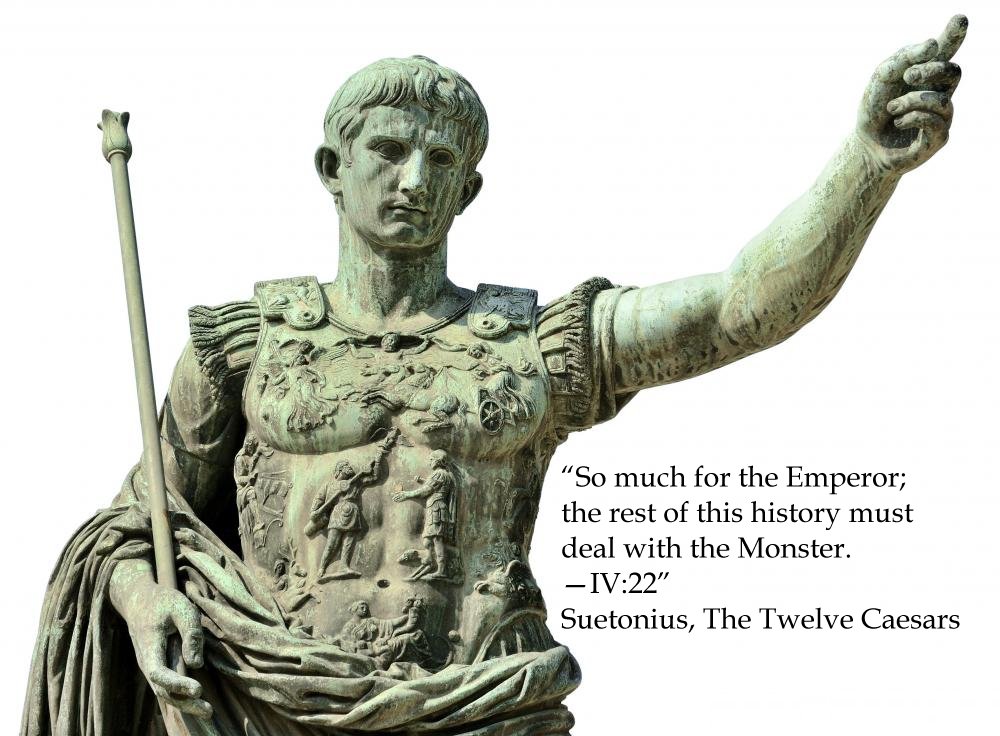
Therefore, it was Judaism that would be removed, allowing the revelation of the man of lawlessness. Under Roman law, the Jews had had certain legal privileges, privileges that extended to Christians, as long as they were considered a sect within Judaism. However, with the reversal of those privileges, the Christians no longer had that protective covering, and were thus exposed to the persecuting power of the Roman emperors, who were, successively, the Man of Lawlessness.