Showing posts with label elisha coles. Show all posts

Wednesday, May 25, 2022

Free Grace and the Creator-Creature Distinction

"Esteem not yourself the better for what you may carry with you. Think not to be accepted because of your present. It is not your money, Isaiah 55:1, John 7:37, nor your double money in your hand that will fetch you corn from above, though it may come from Egypt. Silver and gold, your own works and worthiness, are of no value at the mint of free grace. But there it is, and thence you must have whatever may hinder you welcome at the court of Heaven." -Puritan Elisha Coles, "A Practical Discourse of God's Sovereignty" 

People like to bargain. "If you do X, then I will do Y for you." That is part of our existence as creatures of a similar class. However, seeing our autonomy from our fellow creatures, we imagine that we have a comparable stand with our Creator, offering Him some good works, according to our own standards, in exchange for His forgiveness. 

However, our relationship with God is not of the same sort as that with our fellow creatures. We may be equal to them, and with the autonomous right to offer voluntary exchanges, but neither applies to our relationship as creature to our Creator. 

As our Maker, God retains an absolute right over His creatures. The Bible compares that relationship to that between the potter and his clay: "O House of Israel, can I not do with you as this potter has done? declares the Lord. Behold, like the clay in the potter's hand, so are you in My hand, O House of Israel" (Jeremiah 18:6; see also Romans 9:21). And what does the lump of clay have that it can exchange with the potter to change its form? Nothing. 

That is why the justification of God's people can be only by His voluntary condescension. "What shall we say then? Is there injustice on God's part? By no means! For He says to Moses, 'I will have mercy on whom I have mercy, and I will have compassion on whom I have compassion.' So then, it depends not on human will or exertion, but on God, who has mercy... So then, He has mercy on whomever He wills, and He hardens whomever He wills" (Romans 9:14-18). 


Saturday, May 14, 2022

The Character of God as Guarantee of the Saint's Perseverance

"It is impossible [that] we should lose the thing we were wrought for, because it is God that wrought it for us. It is not the designment of an idol; that is, of some ignorant, rash, fallible, or mutable agent, such a one as may possibly be surprised by unlooked-for accidents, circumvented by a sublimer understanding, overborne by a power above him, or recede from his purpose through levity and fickleness of his nature, etc. But it is God who is 'wise in heart and mighty in strength,' Job 9:4. It is He from whom all things that are have their being and are perfectly under His rule and obeisance. He had eternity before Him, to lay His design surely; and, accordingly, 'He declared the end from the beginning.' It is, therefore, as impossible for Him either to do or to neglect to do, or to suffer to be done, anything whereby His purpose might suffer disappointment, as it is impossible that God should lie. He would never have set up those ends as the sum and substance of His design, if He had not determined to see them made good." -Puritan Elisha Coles, "A Practical Discourse of God's Sovereignty 

Part of the Creator/creature distinction is that the Creator is omniscient, omnipotent, and eternal, while the creature has all but three of those attributes. A creaturely awareness is conscious of our inability to plan for all contingencies, at all times, as may disrupt our best-laid plans. For example, the farmer cannot know of the coming hurricane that wipes out his crop. In contrast, the triune God of the Bible has infinite awareness across all time, all space, and under all contingencies, such that His plans are infallibly achieved. As in the verse that Coles quotes, "I am God, and there is none like Me, declaring the end from the beginning and from ancient times things not yet done, saying, 'My counsel shall stand, and I will accomplish My purpose'" (Isaiah 46:10). It would be comical hubris for any human to make such an assertion. 

However, it is also unforgiveable hubris to assert such infallibility for any man's ability to keep himself in a state of grace. Yet that is what the Arminian does, when he claims that no man can keep himself saved, and, therefore, he should never be assured of his hold on eternal life. If the fundamental assumption of the Arminian, that it is the will of the man that should thus preserve him, then it would be true that no man could ever know an assurance of salvation in this life. 

But this is exactly what perseverance is not. It does not, has never, and never shall, depend on the will and power of the creature to maintain his state of grace. It is the work of God alone, He whose irrepeatable attributes of deity guarantee that any man, truly saved, can never fully and finally lose his salvation. Thus, his assurance is sound, not because of any ability of his own, but because of the infallible character of the God who saved him to begin with. 


Saturday, April 30, 2022

Sovereign Grace as the Only Rational Basis for Assurance

"Let your souls be filled and enlarged with everlasting admirings [sic] of that grace (that sovereign grace) which has so impregnably secured the salvation of His chosen, that no manner of thing, whether within them or without them, shall be able to defeat it or hinder them of it. No, not the gates of hell. Nay, not so much as one of the stakes thereof shall be removed, and that forever. Shaken you may be, and tossed with a tempest, but not overturned, because ye have an eternal root. Electing love is of that sovereignty that it rules and overrules all, both in heaven and in earth." -Puritan Elisha Coles, "A Practical Discourse of God's Sovereignty" 

In this paragraph, Coles paraphrases and summarizes several passages of Scripture, primary of which is Romans 8:38-39: "I am sure that neither death nor life, nor angels nor rulers, nor things present,nor things to come, nor powers, nor height nor depth, nor anything else in all creation, will be able to separate us from the love of God in Christ Jesus our Lord." 

The point of both Apostle Paul and Coles is that the assurance of the Christian is secure, not because of the power of the believer to maintain his spiritual condition, but because he is sustained by the same sovereign grace which saved him in the beginning. For, as Paul also says, "I am sure of this, that He who began a good work in you will bring it to completion at the day of Jesus Christ" (Philippians 1:6: see also 2:13). 

Does any Christian believe that God is unaware of our weakness, of our frailty, of the strength of the opposition (I Peter 5:8)? If He weren't, then we could have no rational basis for our assurance of eternal life. When Satan assails us with accusations of our unworthiness, he merely throws in our faces what is absolutely correct! However, Satan will never go to the next step, telling us of the grace and power of God the Son, our Redeemer Jesus Christ, because that would defeat all of Satan's designs against us. It is only in the Word of God that we are blessed with this promise: "My sheep hear My voice, and I know them, and they follow Me. I give them eternal life, and they will never perish, and no one will snatch them out of My hand. My Father, who has given them to Me, is greater than all, and no one is able to snatch them out of the Father's hand" (John 10:27-29, emphasis added). Our security is assured, not by any strength that we have, for we have none. Rather, it is guaranteed by the strength of the One who holds us.

Saturday, April 23, 2022

The Assurance of Perseverance

Arminians like to argue against the biblical doctrine of perseverance by citing the biblical warnings against apostasy. Those warnings truly exist; no Calvinist would say otherwise. The problem is that the Arminian argues further that the existence of the warning logically requires that the apostasy of true believers must be possible. To that the Calvinist objects as an unwarranted leap of logic. 

"That a righteous man may fall is evident. And as evident it is that he cannot fall finally. For, though he fall seven times in a day, as often does he rise again, Proverbs 24:16, and this because 'the Lord upholdeth him with His hand,' Psalm 37:24, and again, 'the Lord upholdeth all that fall,' Psalm 145:14. That is, either He stays them when they are falling, or so orders and limits the matter that they fall not into mischief, as others do, and, to be sure, He will set them on their feet again. The absolute promise cannot be nullified or made uncertain by cautionary words elsewhere delivered" -- Puritan Elisha Coles, A Practical Discourse of God's Sovereignty. Coles continues, "The Lord does ordinarily bring about His purposes by means, of which cautions are a part. And by which, as a means, He keeps off the evil cautioned against."

Coles' point, which is an important one, is that God's warnings of the consequences of apostasy are one of the means by which He prevents the elect from experiencing those consequences. It is like the parent of a small child, who warns against touching the hot stove. The parent expects his warning to prevent that against which he has warned. Yet the Arminian wants us to believe that the parent's warning implies that the child will, then, proceed to touch the stove and get burned. Not only does the parent have no such expectation,  but God even less so, because He has effectual means for maintaining the faith of the true believer. 


Wednesday, April 6, 2022

The Conversion of Israel As Proof of the Saint's Perseverance

"I will establish his [i. e., David's] offspring forever, and his throne as the days of the heavens. If his children forsake My law, and do not walk according to My rules, if they violate My statutes, and do not keep  My commandments, then I will punish their transgressions with the rod and their iniquity with stripes, but I will not remove from him My steadfast love or be false to My faithfulness. I will not violate My covenant or alter the word that went forth from My lips" (Psalm 89:29-34). 

These are the words of God in His covenantal promises to King David. Paul echoes them in II Timothy 2:13: "If we are faithless, He remains faithful - because He cannot deny Himself." In both passages, God's faithfulness to His people is never founded on our faithfulness to Him. Rather, even when we are unfaithful, He remains faithful, because to do otherwise would be to deny Himself. To violate His covenant promises would be a betrayal of His own nature, and is, therefore, unthinkable

We know the history of Israel, though it was still future to the time of the writing of the Psalm. She was, indeed, unfaithful, and God did, indeed, bring down on her fearsome judgments, especially the destruction of Jerusalem and the temple by the Babylonians, and the carrying away by them of the bulk of the population into captivity. This was a judgment only succeeded by the later judgment under the Romans in 70 AD, when Jerusalem was again looted and the temple destroyed, and an estimated 1.1 million Jews were massacred. From that judgment, the Jews have not yet recovered. Rather, Israel lies under a judicial hardening for her rejection and murder of her Messiah. 

Yet even that judgment points to Psalm 89. 

"It is true [that] the body of that nation, for their unbelief, is now broken off; there is a suspension of the outward part of the covenant. Not that God intends an utter rejection of them. For such as have part in the special election are always saved, Romans 11:7, and the time will come when all Israel shall be saved. For, as touching the election, they are beloved still, though yet unborn. For their sakes it was that 'those days of tribulation were shortened,' Matthew 24:22, which answers to Isaiah 65:8, 'Destroy it not, there is a blessing in it.' The Lord will not so much regard what they have done or deserved as what His covenant is concerning Abraham's seed, which, minding of His covenant, is from the unchangeableness of His purpose. And, therefore, though broken off at present, 'they shall be grafted in again,' verse 24, though driven into all lands, scattered into corners, mingled with the heathen, and become so like them as not to be known asunder. Yet, being His chosen, and within His covenant, He will bring them out of their holes and gather them one by one, Isaiah 27:12. He will do it so accurately, exactly, punctually, that none shall be wanting, 'though sifted among all nations, not one grain shall fall to the earth,' Amos 9:9. The reservation mentioned in Romans 11 was God's omnipotent safeguarding of His elect, when the rest of the nation fell to idolatry. They had gone all, as well as some, had not election held them back. It is, therefore, said to be according to the election of grace. Election was the pattern, and reservation the copy of it" ( Puritan Elisha Coles, "A Practical Discourse of God's Sovereignty"). 

Coles cites the faithfulness of God to His promises to Abraham as the grounds for the sustaining of a faithful remnant among the Jews, and for their eventual national repentance and salvation. And that same faithfulness is why the Christian can be assured that God will enable him to persevere in this life unto eternal life in the age to come. 


Saturday, March 19, 2022

Honorable and Dishonorable Use According to the Mind of the Potter

"That the creatures have at times deviated from their first rules and settlement is no derogation from the doctrine of God's sovereignty, but rather an illustration of it, as showing that the creatures are still in His hand, as clay in the potter's. Hence we find their innate propensities to be sometimes suspended; at other times, overacted; and at times again quite contrary to the law of nature. And this [is] not casually nor by the force of created powers, nor yet for any private or self-concern, but to serve some special and superior end which their Lord had to be done" --Puritan Elisha Coles, "A Practical Discourse of God's Sovereignty" 

He doesn't quote it, but Coles alludes to a reference from Paul: "You will say to me then, 'Why does He still find fault? For who can resist His will?' But who are you, O man, to answer back to God? Will what is molded say to its molder, 'Why have you made me like this?' Has the potter no right over the clay, to make of the same lump one vessel for honorable use and another for dishonorable use?" (Romans 9:19-21). 

If a potter splits his lump of clay, and uses one part to make a decanter for the finest wine, and the other part for a chamber pot, is that not his power to do? Can the chamber pot pipe up that it, too, wishes to hold fine wine? Of course not! Paul uses such an obvious example to make plain that the objection to God's sovereignty is equally irrational. 

While Coles widens Paul's text to apply to all created creatures, I want to focus, as Paul did, on God's sovereignty over mankind. It is all one to Paul, whether we are speaking of the lesser animals or to man; sentience is not grounds for autonomy. The sentient creation is still under the legitimate rule of his Creator. 

In theology, this is the contrasting doctrines of election, God's choice unto salvation and glorification, and reprobation, God's choice unto wickedness and judgment. Paul applies this dichotomy to an example which the Jewish Christians would have known well, the Pharaoh in Moses's account of the exodus from Egypt: "For the Scripture says to Pharaoh, 'For this very purpose I have raised you up, that I might show My power in you and that My name might be proclaimed in all the earth'" (Romans 9:17, citing Exodus 9:16). 

Paul's point in both his potter analogy and in the account of Pharaoh is to show that election and reprobation are not punishments or rewards for men, i. e., not something to be claimed by an autonomous creature. Rather, they are determined by His primary purpose, which is to glorify Himself. Granted, that is a concept that the unbeliever and many professing believers find abominable. Which is exactly the point of Paul's choice of words: "Who are you, O man, to answer back to God?" (Romans 9:20).

The implied answer is that, "You are no one." 


Wednesday, March 16, 2022

The Perfect and Proper Sovereignty of God Over His Creatures

"The heavens and the earth and all the hosts of them, as yet having no being, it was [according to] His pleasure whether He would make them or not. And, if He would, what being He would give them, to what end, and how that end should be accomplished. And that all these were ascertained by the decree is evident, for 'known unto God were all His works (which He would do in [the process of] time from the beginning of the world' (Acts 15:18)." --Puritan Elisha Coles, "A Practical Discourse of God's Sovereignty" 

In the quote above, we see the historic protestant view of the sovereignty of God. He created all things according to His plan of what to create, what the purpose and place of each would be, and how that purpose would be achieved. This is especially contrasted with the modern theology of Open Theism, which asserts that God cannot determine or even predict the contingent actions of animate creatures. But it also conflicts with the Arminian view, which claims that God has the power of sovereignty, but has withheld His determination in favor of free agency. 

Coles gave an excellent citation for his view, and against the various forms of autonomy: "Known to God from eternity are all His works" (Acts 15:18 NKJV). God had planned all that He would do in and with His creation before He created any of it. "Remember this and stand firm, recall it to mind, you transgressors, remember the former things of old; for I am God, and there is no other; I am God and there is none like Me, declaring the end from the beginning and from ancient times things not yet done, saying, 'My counsel shall stand, and I will accomplish all My purpose'" (Isaiah 46:8-10). 

Both Coles and the Bible describe a God who is very different from the deity of the Arminians.


Saturday, February 12, 2022

Grace and the Means of Election

"If grace be perfectly free in choosing, it must be answerably free in giving and applying the means to bring about the end it hath chosen us to. For if the effect of the means should depend upon something to be done by men, which grace is not the doer of, then works would put in for a share in the glory of men's salvation. and so, the grace of God would be dethroned, and be as if it were not." --Elisha Coles, "A Practical Discourse of God's Sovereignty"

One will often hear the worst of the Arminians say that God has done "everything that He could" to save everybody. Then, they claim, it is up to the individual to accept or refuse what God has done. I have even seen a tract designed like a ballot: "Will you go to Heaven? God votes 'yes.' Satan votes 'no.' It's a tie! The deciding vote is yours." An example can be seen here. The blasphemy is appalling! As if the will of Satan or of a man is equal to God's will, or even has a veto over it! 

Instead, as Puritan Coles says above, election includes all of the means necessary for attaining its purpose. That is, God votes "yes" (or "no," as the case may be), and no other vote is entered. In prehistory, the Father chose a race to give to the Son to be redeemed and to the Holy Spirit to be regenerated unto new life. That choice isn't just for the first domino, with a hope that the rest of the dominoes will fall in the desired pattern. No, each domino is placed by the triune God, so that each step is infallibly achieved (John 6:27-39). The Puritans called this the Golden Chain of Redemption, from Paul's words in Romans 8:29-30: "Those whom He foreknew He also predestined to be conformed to the image of His Son, in order that He might be the firstborn among many brothers. And those whom He predestined He also called, and those whom He called He also justified, and those whom He justified He also glorified." Notice where the chain starts, that it is for the sake of Jesus, not of us. That is where Arminianism fails to address the Scriptures on this issue. The Arminian wants to reserve some level of autonomy for man, such that salvation is for man's sake. It isn't, because man isn't. God's plan is centered on Jesus, and the elect are a means to that end. God's Gospel is Christ-centered, while that of the Arminian is man-centered, and, therefore, false.


Wednesday, February 9, 2022

Faith, Holiness, Assurance, and the Covenant of Grace

"This covenant [of grace] does not only give life upon terms of believing, but faith also and holiness the necessary means of attaining that [eternal] life. And this not upon your ingenious [sic, for "ingenuous"] compliance, as some term it, or better improvement of what you have in common with other men, (such allegations the Lord disallows, and often cautions against), but of grace. It is a covenant made up of promises, and promise, by scripture intention, is always free, both freely made and freely performed, without the desert or procurement of men." --Elisha Coles, "A Practical Discourse of God's Sovereignty" 

The difference between biblical Christianity and any of its competitors is that it stands on that great principle: Justification is by grace alone through faith alone in Christ alone for the glory of God alone. Every other religion, whether it falsely claims to be Christian or it is a distinctly-named religion, makes salvation based on the good works of the supplicant, whether in part or in whole. 

That is because the true Christian is aware that he has nothing in himself by which he can appeal to God as worthy of salvation. In answer, as the Puritan Coles says above, Jesus purchased everything, not just justification itself, but also the faith with which we respond and the holiness which it produces. By grace, He purchased them on the cross for everyone that the Father had given Him to be redeemed, and His blood cannot fail to achieve its purpose (John 6:37-39).

In contrast, the unbeliever is dead in trespasses and sins (Ephesians 2:1, Romans 3:23), and thereby under the just wrath of God (Ephesians 2:3, Romans 6:23). It is impossible for such a wretch to offer anything of himself to the offended God, because only a believer can do anything of spiritual good (Romans 14:23, Hebrews 12:14). The Father, apart from the intercession of the blood of Jesus, refuses even to look in love on such a one: "[God's] eyes are too pure to look on evil, and You cannot look on wickedness" (Habakkuk 1:13). Alas, even the prayers of the unbeliever are repugnant to Him (Proverbs 28:9). 

For those for whom Jesus died, that holy flood washed away our sins, the judgment for our sins, and purchased for us faith and holiness. It is only in Him that we can have hope, and have assurance that our hope is on a sound foundation.

Saturday, January 8, 2022

The Bad News Points the Elect to the Good News


"Be as sensible of your deformity and unworthiness as you can, and walk humbly under the sense of it. But let it not slacken your pace nor abate your hope. if anything may render you worthy, that is, a suitable object of mercy, it is your coming boldly to the throne of grace with all your unworthiness about you. It is a disgustful [sic] modesty to be shy in accepting from those above us. it looks as if we would not be thought to need their kindness, or else as if we thought they needed our requital, or, at least, as if we were unwilling to be obliged by them. Much more unbecoming it is to be backward in accepting the grace from so great a person as our Lord and Redeemer." -Elisha Coles, "A Practical Discourse of God's Sovereignty" 

There are some men who feel such shame of their past sins that they believe that they are beyond the help of Jesus's blood. Coles addresses such people in the quote above. It is exactly because of our unworthiness that He came and extends His mercy to the elect sinner. 

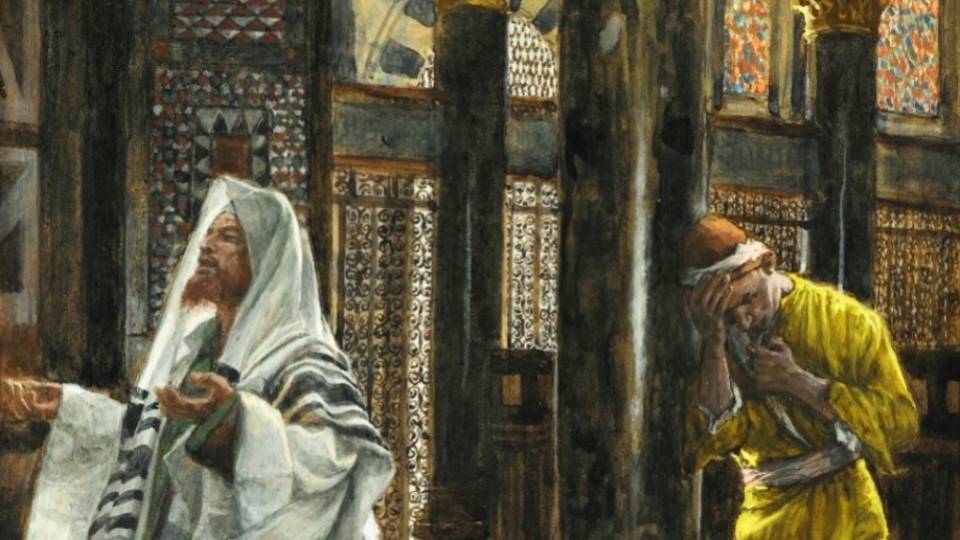
This Puritan writer makes the same point in everyday language what Jesus taught in the Parable of the Pharisee and the Tax Collector (Luke 18:9-14): "He also told this parable to some who trusted in themselves that they were righteous and treated others with contempt: 'Two men went up into the temple to pray, one a Pharisee and the other a tax collector. The Pharisee, standing by himself, prayed thus: God, I thank you that I am not like other men, extortioners, unjust, adulterers, or even like this tax collector. I fast twice a week; I give tithes of all I get. But the tax collector, standing far off, would not even lift up his eyes to Heaven, but beat his breast, saying, God, be merciful to me, a sinner! I tell you, this man went down to his house justified, rather than the other. For everyone who exalts himself will be humbled, but the one who humbles himself will be exalted." Just like the hypothetical sinner in Coles' account, it is the one who knows his inherent unworthiness that can truly turn to Jesus alone for redemption. Anyone who imagines an inherent worthiness in himself, as does the Pharisee, disqualifies himself. 

As Jesus also says (Luke 5:31-32), "Those who are well have no need of a physician, but those who are sick. I have not come to call the righteous but sinners to repentance." 

We also have the testimony of the Apostle Paul (Romans 5:8): "God shows His love for us in that, while we were yet sinners, Christ died for us." 

The amazing thing about the biblical Gospel is that it is the opposite of what the world expects. While the world looks to the upright and virtuous as those who are worthy of Heaven, and to the wicked as those who are unworthy, that religion is backwards. It is for the sinner, the one who knows himself to be helpless, hopeless, and doomed, that Jesus gave Himself on the cross. For the one who falsely imagines that he has any worthiness within himself, Jesus disdains to extend a hope of salvation.

Friday, December 31, 2021

Aught of Ours Is to Insult the Sufficiency of Jesus

"Do but consider how it is: Jesus Christ calls you, because you are blind, to come to Him for eye-salve, and you will not go until you can see better. You are naked, and He calls you to come and receive change of raiment, and you will not go until better arrayed. He offers you gold, for He knows your poverty, and you will not take it until you have something of your own to give for it. Look over it again, and see if this be handsome dealing either with yourselves or Him. It is free grace in redemption that is to be glorified, but something of your own would lessen your need of Christ and lower your esteem of His grace. nay, it would be a means to keep you from Him, as farms and oxen did the invited guests from the wedding supper. Consider further: no man was ever accepted of Christ for what he brought to Him. They are best welcome that bring nothing, and yet expect all things." -Elisha Coles, "A Practical Discourse of God's Sovereignty" 

Revelation 3:17-18: "You say, 'I am rich, I have prospered, and I need nothing,' not realizing that you are wretched, pitiable, poor, blind, and naked. I counsel you to buy from Me gold refined by fire, so that you may be rich, and white garments so that you may clothe yourself and the shame of your nakedness may not be seen, and salve to anoint your eyes, so that you may see.


Wednesday, December 29, 2021

Particular Atonement and the Defeat of Sin

"To take away sin being the end of redemption, to make the work sure, Christ Himself was made sin, imputatively, not inherently. All the sins of those for whom He died met on Him. He and they were so incorporated, as not to be separated by death. Sin could not die, unless Christ died; Christ could not die without being made sin. Nor could He die, but sin must die with Him. Whole Christ, both head and members universally, were all crucified together, and they all rose together, all excepting sin, and that be left in His grave. And let us remember it is there." -Elisha Coles, "A Practical Discourse of God's Sovereignty" (punctuation and grammar modernized)