Showing posts with label hosea. Show all posts

Saturday, July 10, 2021

The Marital Faithfulness of Jesus to His Church


"I will betroth you to Me forever. I will betroth you to Me in righteousness and in justice, in steadfast love and in mercy. I will betroth you to Me in faithfulness. And you shall know the Lord." 
- Hosea 2:19-20 

This is a sweet promise. If you have read the rest of Hosea, then you know that much of it is about the unfaithfulness of Israel, the covenant community. Yet God takes it upon Himself to describe a time in which He will abolish the unfaithfulness of that community. 

First, I want to point to the last word in that passage: Lord. That English word is used as a gloss for the tetragrammaton, Yahweh, or Jehovah, the name used by by the preincarnate Christ whenever He acted in His mediatorial role. It is Jesus, His cross work, and His resurrection that have purchased the Church, faithful Israel in the Old Testament and the united Jews and Gentiles in the New Testament. His purchase, being effectual in all for whom it was intended (John 6:37-39), cannot fail to make every true believer, not just a believer, but a faithful servant. 

He uses marital imagery, a common theme in both testaments (such as Isaiah 54:5-6, Jeremiah 3:14, and Revelation 19:6-9). This is why our own marriage ceremony includes the vow to be faithful "until death do us part." Granted, that vow has become a mere anachronism among us, but it is not an anachronism to God. His vows are eternal and unfailing, even though we, who call ourselves by His name, are certainly not. "If we are faithless, He remains faithful - for He cannot deny Himself" (II Timothy 2:13).  

This is why I believe so passionately in the perseverance of the saints. I don't use the phrase "once saved always saved," because of its antinomian implications. Rather, God's faithfulness works in His blood-bought people by keeping them faithful, both in the sense of having faith and in the sense of faithful obedience to His word. 

Saturday, April 11, 2020

Jesus, Justice, and the Woman Caught in Adultery

There is a strange and controversial story found in John 7:53-8:11. In the story, the Pharisees bring to Jesus a woman who was caught in adultery. They say, and correctly, that the Law required those convicted of adultery to be put to death (see Leviticus 20:10 and Deuteronomy 22:22). Yet, we notice at least one problem with their presentation: Where was the man caught with her? So, the Pharisees ask Jesus, what do You say that we should do with her?

Jesus does not respond with law. Rather, His response is to point at the character of the woman's accusers. Rather, He says, "Let him who is without sin among you be the first to throw a stone at her" (verse 7). In our popular culture, this has been taken to mean that any person with any sin has no grounds for criticizing the actions of any other person. Well, we know that Jesus meant no such thing, because He had prescribed righteous judgment just before this story (John 7:24). And that indicates the problem that He had with the Pharisees in this case. Their accusations did not come from righteous grounds, regardless of their pious citation of Moses. Note that these are men who had allowed a guilty man to depart without punishment, while they were prepared to punish the woman with death! I think that this was the specific intent of the response of Jesus, quoted above. These men had justified the man because they shared his same proclivities for illicit sex, but they still wanted to play at being righteous! They all walked away in shame because Jesus had torn off the bandage with which they had been hiding their perversion. 

If the text is a legitimate part of John, a question which I am not qualified to answer, then why is it here? 

I started thinking about this story because of something I read in my private Bible study this morning: "I will not punish your daughters when they play the whore, nor your brides when they commit adultery; for the men themselves go aside with prostitutes and sacrifice with cult prostitutes, and a people without understanding shall come to ruin" (Hosea 4:14). Doesn't that sound a lot like the story from John? And in it I found what I surmised about the story that I described above. Jesus was exemplifying the same redemptive purpose that He, in His preincarnate state, had inspired in the prophecy of Hosea. 

Jesus was not, and is not, opposed to true justice. After all, He was also the source of the Law. He was the Yahweh who revealed the commandments to Moses in Exodus 20:1. However, He is also our compassionate Redeemer who went to the cross on behalf of His people. Notice how He deals with the repentant thief on the cross next to Him (Luke 23:40-43). He promised the thief that he would be with Him in Paradise in just a few hours. However, He did not take the thief down from the cross. The thief was redeemed and forgiven, but still received the due temporal, legal consequence of his wicked acts (Luke 23:41). There is no sign here of the sentimental supposition that no one can judge the sins of someone else.

Wednesday, February 21, 2018

Agriculture and the Curse of Sin

"How long will the land mourn
     and the grass of every field wither?
For the evil of those who dwell in it
     the beasts and the birds are swept away,
because they said, 'He will not see our latter end.'

     They have made it a desolation;
desolate, it mourns to Me.
     The whole land is made desolate,
but no man lays it to heart.
     Upon all the bare heights in the desert
destroyers have come,
     for the sword of the Lord devours
from one end of the land to the other;
     no flesh has peace.
They have sown wheat and have reaped thorns;
     they have tired themselves out but profit nothing.
They shall be ashamed of their harvests
 

     because of the fierce anger of the Lord."
- Jeremiah 12:4, 11-13 

These verses describe the curse on the land of Israel for the apostasy of the people that lived in it (see also Isaiah 26:5-6 and Hosea 4:3). But notice the parallels to other portions of Scripture. For example, the original curse resulting from the sin of Adam: "Cursed is the ground because of you; in pain you shall eat of it all the days of your life; thorns and thistles it shall bring forth for you; and you shall eat the plants of the field" (Genesis 3:17-18, compare 5:29). Part of the curse applies to the agricultural efforts of the people. Instead of productive crops, the land would produce thorns. 

Jeremiah also contains a theme that is picked up by the Apostle Paul in the New Testament: "The creation waits with eager longing for the revealing of the sons of God. For the creation was subjected to futility, not willingly, but because of Him who subjected it, in hope that the creation itself will be set free from its bondage to corruption and obtain the freedom of the glory of the children of God. For we know that the whole creation has been groaning together in the pains of childbirth until now" (Romans 8:19-22). The Apostle personifies the physical creation as longing for the full conversion of the sons of God, be then, and not until then, the creation will be released from that curse of futility that was brought upon it by the sin of its head, Adam. 

We have Christians who seek to help less-developed countries improve their agriculture, as populations grow and need increasing amounts of quality food. And I am grateful that God has called people to that ministry. However, improved agriculture is not the ultimate answer to the problem. Rather, spreading the Gospel and teaching the nations to obey everything God commands rolls back the effect of sin, and the creation is progressively freed to be the rich and productive thing it was created to be.

Saturday, April 8, 2017

Jesus Expresses His Love to His Bride, the Church

"Behold, you are beautiful, My love,
     behold, you are beautiful!
Your eyes are doves
     behind your veil.
Your hair is like a flock of goats
     leaping down the slopes of Gilead.

You have captivated My heart, my sister, My bride; 
     you have captivated My heart with one glance of your eyes,
with one jewel of your necklace.
     How beautiful is your love, My sister, my bride!"

- Song of Solomon 4:1, 10 

Have you ever read the Song of Solomon? If you have, have you ever heard a sermon on it? Most people reading this probably answered "yes" to the first question. But I would be surprised if anyone answered "yes" to the second. I haven't. And it's a shame, really. The Puritans had commentaries on the book, and preached on it, and used references from it in their literature. No doubt that was because they had a beautiful understanding of it as a love poem, not between Solomon and a Shulamite woman, though it is couched in those terms, but rather as an allegory of the relationship between the divine Bridegroom, Jesus Christ, and His Bride, the church. Notice the terminology in Revelation 19:6-10 which makes that metaphor explicit

Song 4:1-15 is an especially beautiful passage, of which I quote a portion above. In it, the Bridegroom expresses His love for the Bride. We often talk about the love of Jesus for the church, and we should! It's a wonderful thing to consider our experience of the love of our divine Savior. The difference is that this passage isn't about our experience of His love, but rather of His experience of loving us. We don't talk about that. What is His subjective experience of love toward us?

In Solomon's words above, we can see that His love is no burden to Him, but rather a delight! How extraordinary it is to imagine that the Almighty God delights in loving us, His people, knowing what sinful wretches we are!

We see another description of this in Ezekiel 16:8-14: "When I passed by you again and saw you, behold, you were at the age for love, and I spread the corner of My garment over you and covered your nakedness; I made My vow to you and entered into a covenant with you, declares the Lord God, and you became Mine. Then I bathed you with water and washed off your blood from you and
anointed you with oil. I clothed you also with embroidered cloth and shod you with fine leather. I wrapped you in fine linen and covered you with silk. And I adorned you with ornaments and put bracelets on your wrists and a chain on your neck. And I put a ring on your nose and earrings in your ears and a beautiful crown on your head. Thus you were adorned with gold and silver, and your clothing was of fine linen and silk and embroidered cloth. You ate fine flour and honey and oil. You grew exceedingly beautiful and advanced to royalty. And your renown went forth among the nations because of your beauty, for it was perfect through the splendor that I had bestowed on you, declares the Lord God." However, we must be humbled by the knowledge that the very next verse describes the spiritual adultery by Israel that dominated the rest of her history. In fact,the rest of the Bible, from Ezekiel 16 to Revelation 19 might be thought of as the story of Israel's rebellion and adultery and God's spiritual work of restoring her through the Gospel (see especially the Book of Hosea). In Ezekiel 16 she rejects her bridal glory, but in Revelation 19 she is restored to it.

Saturday, October 8, 2016

Is a Literal Hermeneutic Appropriate to Biblical Prophecy?


There is an interesting verse in Hosea, that is, written by a prophet, which gives direction on how prophecy is to be interpreted:

"I [God] spoke to the prophets;
It was I who multiplied visions,
And, through the prophets, gave parables."
- Hosea 12:10

It is on that last line that I wish to focus: "Through the prophets, I gave parables." What is a parable? we have all heard that popular definition: "A parable is an earthly story with a heavenly meaning." A more-technical definition might be, "short stories that teach a moral or spiritual lesson by analogy or similarity." I think the point is the same either way. They are stories told to make a point, not as a narrative of a (necessarily) historical person or event.

In this verse, the Holy Spirit, speaking through the Prophet Hosea (II Peter 1:21), tells us that the prophecies of the Bible, at least in part, are parables. Just as one cannot take the parables of Jesus as literal, neither can you approach the parables of the prophets as literal.Of course, this is a generalization, and some discernment is necessary. Sometimes prophecies are literal, such as the prophecy of the coming of Cyrus, God's means of delivering Israel from her captivity in Babylon (Isaiah 44:28). But this verse from Hosea cuts down the date-setting and charts that are so popular among certain types of evangelical Christians. How does one discern which prophecies are, and which are not to be taken literally? Not by searching the newspaper for some obscure, incidental parallels, but by the analogy of faith, that is, by comparing scripture to scripture. Is the passage quoted in the New Testament? If so, how did Jesus and/or the Apostles interpret it? Is the image in it used in other Scriptures? How was it used? These latter two questions are especially important is understanding the Revelation of John. And, please, don't pull out the old canard of "double fulfillments" That dodge is never used by the Apostles! Rather, it is a fallback claim by someone who understands that a text doesn't teach his "system," but he wants to use it anyway. It is not a legitimate principle of hermeneutics.

Saturday, February 13, 2016

Does God Love Everyone? If You are a Covenant-Breaker, You Need to Know!


"Every evil of theirs is in Gilgal; there I began to hate them. Because of the wickedness of their deeds I will drive them out of My house. I will love them no more; all their princes are rebels."
- Hosea 9:15

If you haven't read the Book of Hosea, what you need to know is that he prophesied in the Northern Kingdom, shortly before the conquest by Assyria, and the final exile of her people. This was their final judgment for apostasy, an apostasy which included both the perversion of biblical worship and the erection of pagan idols. Gilgal, mentioned in the verse here, was one of the centers for pagan worship. 

These ancient Israelites reflected a common pagan worldview, according to which deities come by the dozens, and there is no particular exclusivity in their worship. Missionaries have long run into this problem in India, where Hindus were happy to add Jesus to their god-shelves, but could not accept a devotion to Christ alone. However, Jehovah, the first God on the Israelite god-shelf, doesn't share that worldview, which is why He made the First Commandment (Ex. 20:3): "You shall have no other gods before me." He tells His covenant people, members of the visible church, that they had better not let Him see them serving other gods, whether literally or figuratively. And He sees everything! See Job 34:21.

What the Israelites refused to acknowledge, though it was told to them in their scriptures, is that God exercises exclusive claims (Isaiah 42:8, 48:11). When they, nevertheless, chose to spread their loyalties, not to Jehovah alone, but also to every carved deity that their pagan neighbors could name, He took action, exactly because He is a jealous, though spiritual, spouse.

Early in their history, God had led Moses to write (Ex.34:14), "You shall worship no other god, for the LORD, whose name is Jealous, is a jealous God." Jealousy is so much one of God's attributes that He even uses it as an epithet, a nickname! A little later, Moses wrote (Deut. 4:2, and quoted in Hebrews 12:29), "The LORD your God is a consuming fire, a jealous God." And again (Deut. 6:15), "The LORD your God, who lives among you, is a jealous God. His anger will flare up against you, and He will wipe you from the face of the earth." And in the prophets (Nahum 1:2), "The LORD is a jealous and avenging God; the LORD is avenging and wrathful; the LORD takes vengeance on His adversaries and keeps wrath for His enemies."

Yet, the Israelites ignored His warnings and followed both a false version of biblical religion and the false pagan religions of their neighbors. And what does God say is His reaction, in the verse quoted at the top? Negatively, He says, "I will love them no more." And positively, He asserts, "I began to hate them." 

So, the answers to my questions in the title should be clear. Does God love everyone? No, He doesn't. Does God hate anyone? Yes, He does. And the last question to consider is one that I cannot answer: in which group are you?

Saturday, February 6, 2016

The Cult of Anglo-Israelism: Are White English-Speakers the Heirs of the Promises to Israel?

Many Christians have never even heard of the heresy of British-Israelism (or Anglo-Israelism). It is the belief that the Anglo-Saxons were the descendants, usually said to be via the Scythians, of the ten lost tribes of Israel, that portion of the biblical people that was deported after the conquest by the Assyrians in 722 BC. Thus, according to this doctrine, the peoples of the British Isles, the United States, Canada, Australia, and New Zealand (some followers say all of the descendants of the northern Europeans) are the heirs to the Old Testament promises to the nation of Israel. The Christian Identity movement is derived from British-Israelism, but is distinct from it. While most of its followers would not be anti-Semitic, it should be easy to discern how the Christian Identity doctrine could be drawn from it.

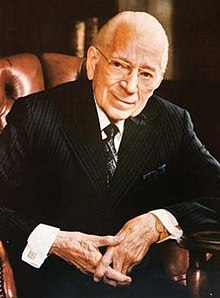
The Seventh-Day Adventists and Mormons hold to a form of British-Israelism, but its modern promotion is primarily associated with those sects which have derived from the teaching of the late
Herbert W. Armstrong.
Armstrong

There are two verses of the Old Testament that I want to bring to the attention of the followers of this doctrine. The first is Isaiah 7:8: "Within sixty-five years Ephraim will be shattered from being a people." Or, as the NASB phrases it, "Ephraim will be shattered, so that it is no longer a people." The other is Hosea 9:16: "Ephraim is stricken; their root is dried up; they shall bear no fruit. Even though they give birth, I will put their beloved children to death."
 
These verses, as was common in the Old Testament prophets, use "Ephraim" to refer to the entire people of the northern kingdom, because they were the largest tribe. In the same way, the people of the southern kingdom were called "Judah," though they also included Benjamin. 

The significance of these verses is they tell us, not what the British-Israsel cult would have to believe, i. e., that the ten tribes migrated to northern Europe, but rather that they ceased to be a people. The Anglo-Saxons cannot be the new Israel, because the distinguishable people of Israel (speaking of the northern kingdom) are extinct. Whatever pride the Armstrongists find in his doctinre is built on a myth, not upon biblical teaching.
 

Tuesday, August 4, 2015

The Doctrines of Grace in the Ninth Chapter of Romans

The doctrines of grace, commonly referred to according to the acronym TULIP (total depravity, unconditional election, limited atonement, irresistible grace, perseverance of the saints), are found all over Scripture, but there are certain passages which especially describe them in one place. One, of course, is the first chapter of Ephesians. Another is the one I consider here, the ninth chapter of Romans.

Let's begin with verse 6: "They are not all Israel who are descended from Israel." This is the theme that Paul develops in the rest of the chapter. As Paul continues in verse 7, "nor are they all children because they are descendants of Abraham, but 'in Isaac shall your descendants be called.'" He explains that statement in verse 8: "So, those who are the children of the flesh are not the children of God, but the children of the promise are counted as descendants." Paul goes on to demonstrate this from the comparison of Jacob and Esau, the twin sons of Isaac. But I would also add what Genesis says about Ishmael. In Genesis 17:18-19, Abraham prays to God, "Oh that Ishmael might live before You!" Yet, God replies, "No." Not "maybe," not "let's hope so." Rather, His answer is a straightforward and unconditional refusal. That is a demonstration of reprobation, which is the flip side of election. Just as God chose some for salvation, He also chose others for condemnation. More of that to come.

Paul reminds us of Isaac's twin sons, Jacob and Esau (v. 10). Then he begins their story (verses 11-13): "though they were not yet born and had done nothing either good or bad—in order that God’s purpose of election might continue, not because of works but because of Him who calls— she was told, 'The older will serve the younger.' As it is written, 'Jacob I loved, but Esau I hated.'" Before the twins were even born or had committed any personal sins, God had decreed in His sovereignty that Jacob would be preferred over Esau, the second-born over the firstborn, contrary to the custom, because He had already declared, "Jacob I loved, but Esau I hated" (quoted from Malachi 1:2-3). God explicitly states that His purpose was to demonstrate His sovereign election, to exclude any merit in either child (or, by extension, in any of us).

Among Americans, the nearly-universal reaction to that is, "But that's not fair!" The same response is made by a hypothetical audience in verse 14. In response, Paul quotes (v. 15, from Ex.33:19): "I will have mercy on whom I have mercy, and I will have compassion on whom I have compassion!" Note that He makes no effort to explain that it is fair. Rather, He claims that we are in rebellion even to ask the question! Verse 20, "Who are you, O man, to answer back to God?" As Creator, He rules over His creations! Verse 21, "Has the potter no right over the clay, to make out of the same lump one vessel for honorable use and another for dishonorable use?" Here He addresses the two doctrines of unconditional election and reprobation together. They are actions consistent with His place as sovereign creator and sustainer of all things. He doesn't answer our concerns about fairness because those concerns are illegitimate expressions of rebellion!

He endures these "vessels of wrath prepared for destruction" (v. 22) "in order to make known the riches of his glory for vessels of mercy, which he has prepared beforehand for glory." He uses the one, the objects of His wrath, to provide a contrast to the objects of His mercy, that He may reveal Himself, both in His justice and His mercy. The doctrines of grace are all about Him, not us.

As a Gentile, I am especially blessed by God's sovereign grace, for those He has prepared for glory include "even us whom He has called, not from the Jews only but also from the Gentiles" (v. 24). As He prophesied in Hosea 2:23-24, "Those who were not My people I will call 'My people,' and her who was not beloved I will call 'beloved.' And in the very place where it was said to them, 'You are not My people,' there they will be called 'sons of the living God.'" My ancestors are those described by Paul in Ephesians 2:11-22, who had no hope and were without God in our world, but now are fellow citizens with the saints. If it hadn't been for the sovereign grace of God, there is no human way that the Gospel would have entered my life, that I could be born again by the Holy Spirit.

And that is true of everyone who is reading this post. Whether you are nodding your head in agreement or purple-faced with rage, you could never have known Jesus Christ as savior without the truths of the doctrines of grace. Yes, even Arminians are saved by sovereign grace

Thursday, May 14, 2015

Kicking and Screaming into the Kingdom of God: His Irresistible Grace

One remark that I often hear from Arminians when they criticize (their caricature of) Calvinism is that God "doesn't force anyone into the kingdom." I have heard it asserted over and over again throughout my thirty-some years as a Calvinist. Yet, I have never heard even one of those theologizers refer to a Scripture in support of that statement.

I would suggest, on the contrary, that Scripture explicitly states the opposite. Consider the prophecies of Hosea 11:1-4 (emphasis added):

"When Israel was a child, I loved him,
     and out of Egypt I called my son.
The more they were called,
     the more they went away;
they kept sacrificing to the Baals
     and burning offerings to idols.
Yet it was I who taught Ephraim to walk;
     I took them up by their arms,
but they did not know that I healed them.
     I led them with cords of kindness,with the bands of love,
and I became to them as one who eases the yoke on their jaws,
     and I bent down to them and fed them."

There is a progression here: Jehovah deals with Israel in a cajoling voice, like a mother encouraging her toddler to eat (an anthropomorphism; I certainly do not believe that God is in any way impotent in dealing with us). Yet, Israel continues his devotion to idolatry. In contrast, while Israel is faithless, God continues faithful (II Timothy 2:13). So, what does He do? He draws them (and us, as well) with "cords of kindness" and "bands of love." Those words represent force, but not aggression, not violence. It is out of love and kindness that He curbs our penchant for idolatry and all sin, and draws us - unfailingly - to Himself (John 6:44).

Here is the Word of God on the matter, not the self-serving speculations of the Arminian. To my mind, that settles the argument.

Friday, November 21, 2014

The Fall of Man and the Unfolding of God's Redemptive Purpose

The following is the result of an assignment in my biblical theology class, to examine the description and application of the Fall across the Scriptures. I have found it so profitable that I have decided also to post it here. May the Lord bless it in the lives of readers, as well.

    Even though we associate this story with the writings of Moses, he actually only deals with it in the first portion of Genesis.
    We have the original account in chapter 3. In 2:16-17, we have the only recorded restriction on Adam and Eve: “You may surely eat of every tree of the garden, but of the tree of the knowledge of good and evil, you shall not eat, for in the day that you eat of it, you shall surely die.” However, in chapter 3, the serpent questions that restriction. In verse 1, he asks the woman, “Did God actually say, ‘You shall not eat of any tree…?’” Thus, the fall starts with doubting the word of God. Then the serpent escalates the confrontation in verse 4: “You will not surely die.” He has moved from doubting God to directly contravening His commands. He continues in verse 5, “For God knows that, when you eat of it, your eyes will be opened, and you will be like God…” Now, the serpent caps his temptation with an insinuation regarding God’s motivation in the command. In consequence of which, Eve eats of the fruit, and shares it with Adam, in verse 6.
    The consequences come quickly. In the next verse, the two humans recognize for the first time that they are naked. This realization leads them to hide in shame from God, when He next comes looking for them. Upon their confession of their rebellious act, God pronounces His response: first, in verse 14, the serpent is cursed for his role in tempting the two; next, in verse 16, the woman is cursed with pain in childbearing and conflict with her husband; and third, he is cursed with hardship and futility in his labors in verses 17-19. These curses correspond exactly with the calling that God had given humanity in 1:26-31, to be fruitful and to rule and cultivate the creation.
    The fall snowballs in its effects. In 4:5-8, the next generation, consisting of Cain and Abel (at this point, the only posterity of the first couple), jealousy erupts and sin breaks out in fratricide, as Cain murders Abel. In verse 12, God repeats that part of the curse involving futility in man’s God-given task of making the earth fruitful. And with one more generation, Cain’s son Lamech repeats his father’s sin of murder, and even doubles it (4:23).
    The snowball of sin continues its expansion in chapter 6, where the wickedness of men has consumed their entire existences (verse 5). The only exception is Noah, who, with his family, is preserved from God’s general judgment in the Flood (6:9-8:19).
    In these passages, we see only hints of God’s redemptive purpose in the world of man. 3:15 gives us the protevangelium, the promise of the seed of Eve Who would crush the head of the serpent. In 3:21, we see the first deaths in the world, apparently in sacrifice, to provide coverings of fur for the now-modest first couple. The conflict between Cain and Abel arises during sacrificial offerings (4:3-4). And immediately after the flood, Noah responds with offerings of some of the clean animals from the ark (8:20). So, even as the effects of the fall are manifest, God begins to show His plan of redemption, a substitutionary sacrifice for the forgiveness of sin.
    The subject of the fall doesn’t appear again until the book of Job, and then only in passing. In 31:33, Job, speaking to his friends, in a list of hypothetical failures, includes, “if I have concealed my transgressions as others do by hiding my iniquity in my bosom…” He acknowledges, not just individual sins, but his sinful state, the inherits consequence of Adam’s failure. Is his reference to “concealing transgressions” an allusion to Adam’s fig-leaf apron and hiding among the trees?
    In the Psalms, we get passing references to man’s inheritance of sin.
    In 14:3, David says of fools, “They have all turned aside; together they have become corrupt; there is none who does good, not even one.” Referring to his own sin with Bathsheba, David also says, in 51:5, “Behold, I was brought forth in iniquity, and in sin did my mother conceive me.” In 53:1-3, he repeats his confession: “...They are corrupt, doing abominable iniquity; there is none who does good… They have all fallen away; together they have become corrupt; there is none who does good, not even one.” In his mind, iniquity isn’t an action, but a condition, which reflects the teaching of Moses that Adam’s particular sin had resulted in a condition of sin in his posterity. That is, men are not sinners because they sin, but rather, men sin because they are sinners.
    David apparently taught this lesson to his own children, because we find Solomon repeating it in Ecclesiastes 7:29: “This alone I found, that God made man upright, but they [sic] have sought out many schemes.” In one sentence, he describes the original creation in innocence, a state which was lost, resulting in the present condition of perpetual sin.
    The theme of man’s corruption appears a number of times in the writings of the Prophet Isaiah. He portrays it very vividly in his account of his own calling. In chapter 6, he contrasts (v. 3) the thrice holy nature of Jehovah, with his own self-consciousness in verse 5: “Woe is me me! For I am lost; for I am a man of unclean lips, and I dwell in the midst of a people of unclean lips…” He continues the the themes of relating his personal sinful nature with the corrupt nature of all men. But he includes verse 7: “Your sin is taken away, and your sin is atoned for.” So he also repeats the Mosaic theme of following the declaration of sin with a discrete declaration of God’s redemptive purpose as sin’s solution.
    The prophet applies the judgment of God to his fellow Israelites in 9:17b: For everyone is godless and an evildoer, and every mouth speaks folly. For all this, His anger has not turned away, and His hand is stretched out still.” And he continues in verse 18, with the impact of sin on the created world: “For wickedness burns like a fire; it consumes briers and thorns; it kindles the thickets of the forest, and they roll upward in a column of smoke.” He imitates the curse of Gen. 3 in 14:3: “When the Lord has given you rest from your pain and turmoil and the hard service with which you were made to serve…” Babylon is seen to apply the hardships of Gen. 3:19. The same theme appears again in 24:4-6, with the earth bearing the curse of man’s sin. See, for example, verse 6a: “Therefore, a curse devours the earth, and its inhabitants suffer for their guilt…” God’s reaction of Gen. 6:5-6 is also seen in Isaiah 43:24b: “You have burdened Me with your sins; you have wearied me with your iniquities.” That sinfulness corrupts man’s whole nature (54:6), and He puts it away from His presence (59:2a), “Your iniquities have made a separation between you and your God, and your sins have hidden His face from you…”
    The next prophet, Jeremiah, also describes the general sinfulness that resulted from the fall. In 17:9, he says of Judah, “The heart is deceitful above all things, and desperately sick; who can understand it?” Then, to emphasize the awareness God has of our sin, he answers his own question in the next verse (10): “I The Lord search the heart and test the mind…” The prophet accuses Judah of being so corrupt that he isn’t even conscious of his corruption. Yet, in contrast, Jehovah is aware, just as He was before the flood.
    The next prophet, Ezekiel, recalls the words of the serpent in the prince of Tyre in 28:2: “Your heart is proud, and you have said, ‘I am a god, I seat in the seat of the gods, in the heart of the seas,’ yet you are but a man, and no god…” The serpent appealed to Adam and Eve with the expectation of godhood, and here the prince believes he has what was offered. And as happened to the first pair, the prince is cast out (verse 16): “You were filled with violence in your midst, and you sinned; so I cast you as a profane thing from the mountain of God…” And in 36:33-34, Ezekiel has God renewing the dominion covenant, originally given to Adam: “On the day that I cleanse you from all your iniquities, I will cause the cities to be inhabited, and the waste places shall be rebuilt. And the land that was desolate shall be tilled, instead of being the desolation that it was…” Thus, the redemptive purpose is renewed, in terminology describing the reversing of the curse, that man may again be fruitful and multiply and exercise dominion over the earth.
    And finally, in the prophets and in the Old Testament, we have a passing reference in Hosea 6:7: "Like Adam, they transgressed the covenant; there they dealt faithlessly with me." The prophet uses the original fall as an object lesson for the then-current faithlessness of Judah and Israel.
    In the New Testament, the fall is again an issue in the writings of Paul.
    In Romans 5:12-21, Paul places responsibility for sin on Adam (v.12, “sin came into the world through one man”), with all sins arising from this federal sinfulness (v. 14). However, he also renews the answer of God’s redemptive purpose to undo man’s fallenness. Verse 15, “If many died through one man’s trespass, much more have the grace of God and the free gift by the grace of that one man Jesus Christ abounded for many.” And verse 18,”As one trespass led to condemnation for all men, so one act of righteousness leads to justification and life for all men.” So, in this passage, we also see the pairing of man’s sin, on one hand, with God’s redemptive purpose, on the other.
    In the same epistle, 8:19-25, Paul also reminds us of the consequences for the nonhuman creation in the fall of man. In verse 19, he writes, “The creation waits with eager longing for the revealing of the sons of God.” Because, verse 20, “The creation was subjected to futility, not willingly, but because of him who subjected it.” And then the redemptive purpose in verse 21, “[in hope] that the creation itself will be set free from its bondage to decay…” And verses 23-24, “we ourselves… groan inwardly as we wait eagerly for adoption as sons, the redemption of our bodies, for in this hope we were saved.” Paul repeats the theme of general sinfulness followed by the hope of God’s redemptive purpose.
    In my final example, I Timothy 2:9-15, Paul isn’t addressing the issue of sin or of redemption, but rather applying the story of Genesis 3 to social behavior. He is addressing the behavior of women in the church, in terms of apparel and good works (vv. 9-10), and then during corporate worship, in quietness and submission (11-12), and not in authority over men (v. 12), for (verse 13-14), “It was Adam who was first created, and then Eve. And it was not Adam who was deceived, but the woman, being deceived, fell into transgression.” WHile Paul is addressing a nonsoteriological matter in this passage, his use of the creation and fall indicates his assumption of the reality of the story. He obviously knew the Mosaic record in Genesis, and assumed its truth.
    And finally, the story appears again in John’s Revelation, 12:9,: And the great dragon was thrown down, that ancient serpent, who is called the devil and Satan, the deceiver of the whole world - he was thrown down to the earth, and his angels were thrown down with him.” Here we have the first revelation of the identity of the serpent. In the words of Moses, it is just an animal, though cleverer than is natural for its kind. Here we have its identification as the chief evil, Satan. Then, in verses 10-11: “Now the salvation and the power and the kingdom of our God and the authority of His Christ have come, for the accuser of our brothers has been thrown down, who accuses them day and night before our God. And they have conquered him by the blood of the Lamb and by the word of their testimony, for they loved not their lives, even unto death.” These verses bring us full circle to Genesis 3:15. there the serpent was promised that the seed of the woman would crush his head. Here we see that promise fulfilled. Where Genesis 3 gave the account of man’s fall into the dominion of sin, here we see the redemptive victory of Jesus Christ over that sin. What had been promised has now been revealed. The repeated pairing of the judgment of sin with God’s redemptive purpose, is now experiential, with the judgment and destruction of sinfulness itself.

Thursday, October 15, 2009

Prosperity: Worshiping the Means in Place of the Cause

[Scripture citations in this post will be from the Geneva Bible, to match the language used by the writers referenced below]

"Therefore they sacrifice unto their net and burn incense unto their yarn [i.e., used in weaving their nets], because by them their portion is fat, and their meat plenteous."
- Habakkuk 1:16

In my personal studies, I have a couple of ongoing books, portions of which I read every day. I have referenced The Gospel Covenant, by Peter Bulkeley, several times. I have also referred to the works of Robert Rollock, a collection of sermons on the death and resurrection of Christ.

An astonishing conjunction occurred in my reading of both last night.

In his book, Bulkeley asks the question, Why does God allow hardship and want in the lives of believers? Afterall, he logically suggests, God is certainly capable of always providing prosperity and plenty to us all. However, in a passage which includes the Habakkuk reference above (cited in the margin), he explains, "Before, they were ready to ascribe some excellency to the meanes and instruments, sacrificing to their own nets: but when they [i.e., the means and instruments] come to nothing, and the Lord hath by himselfe fulfilled our desire, then we are lifted up to glorifie him; he alone is seen to be an al-sufficient God unto his people." That is to say, that God brings want into our lives to keep us from idolizing the gifts in place of their Giver, Himself. As he continues, Bulkeley shows this humbling effect, again from Habakkuk, 3:16-17: "For the fig tree shall not flourish, neither shall fruit be in the vines: the labor of the olive [grower?] shall fail, and the fields shall yield no meat [i.e., food]: the sheep shall be cut off from the fold, and there shall be no bullock in the stalls. But I will rejoice in the Lord: I will joy in the God of my salvation." [Emphasis in the original.]

Then switching books, I immediately read the same point from Robert Rollock, in his commentary on the first seven verses of John 21: "...the Lord uses to disappoint the hope of His own for a season, because that serves more to the glory of God than if they got it the first time: for when men find a prosperous success in all their ways, and all things answering to their desire, scarcely do they consider and discern God's blessing; yea, many times it comes to pass, that in such cases men ascribe the praise of all to themselves, and sacrifice to their own net. But when they see themselves, notwithstanding of all their travails, disappointed of their hope, and thereafter find a blessing and good success, then they plainly discern that all things proceed from the blessing and favourable providence of God, and therefore give to the Lord the praise and glory of all." If I hadn't happened to read Rollock immediately after Bulkeley, I wouldn't have caught the Habakkuk reference, since he doesn't identify it (emphasis added).

The concept can also be seen in Hosea 13:5-6: "It was I who knew you in the wilderness, in the land of drought; but when they had grazed, they became full, they were filled, and their heart was lifted up; therefore they forgot me."

Clearly the Lord has a lesson for me here. But so far, I haven't discerned the Spirit's application to me, which is why I waited a day to comment on it . However, the insight into "why bad things happen to good people" is certainly profitable, just in itself.

Saturday, August 22, 2009

Christ, the Mediator of the Covenant of Grace and Foundation of Our Assurance

This is my second post devoted to a passage of "The Gospel Covenant" by Peter Bulkeley. The first can be read here, with relevant links. Note that arcane spelling and grammar are in the original.

"For comfort to such as are entred into covenant with God, by the Mediation of the Lord Jesus, the Mediator of the covenant; here is their comfort, that this covenant so made, can never be disanulled or broken off. Satan will not be wanting [lacking] to make a breach, if possible he can; he envieth this uniting of God and man in covenant one with another; As soon as ever he saw a Covenant passed between God and our first parents, he presently bestirred himself to make a breach between them, hee did then cast between them melon epidos, an apple of strife (as I may so call it), to draw man to violate the covenant of obedience, which God had bound him in, and so he broke asunder the covenant between God and us; And were our covenant now without a Mediator, as the former was, he might prevaile against us and make a new breach, as he did before; but now here is our stay and strong assurance, that if we be once taken into this covenant of grace, this covenant will hold; Though God might in his justice breake with us, and we would break with him through our sinful infirmity and backsliding disposition that is in us, yet the Mediator the Lord Jesus Christ, standing between God and us, keeps us together, that we can never fall asunder: he pleads with the Father to reconcile him to us, when he is angry with us; he pleads also with us, and when we are going back from God, he brings us to him againe, by renewing in us repentings before him; he draws the heart again before the Throne of Grace, powers upon us the spirit of grace and supplication, puts in our mouths words of confession, and stirres up in us sighs and groans of spirit, intreating the Lord that, though we have gone back from him, yet he would again receive us graciously, Hosea 14:2. And thus by means of this our blessed Mediator and Advocate we are holden and continued in covenant with God, so as the covenant of his grace and peace made with us, stands fast through Christ, notwithstanding our manifold declinings and turnings back from him."

Hosea 14:2, "Take with you words and return to the Lord; say to Him, 'Take away all iniquity; accept what is good, and we will pay with bulls the vows of our lips."

Also, John 10:27-30, "My sheep hear My voice, and I know them, and they follow Me. I give them eternal life, and they will never perish, and no one will snatch them out of My hand. My Father, who has given them to Me, is greater than all, and no one is able to snatch them out of the Father's hand. I and the Father are one."

Saturday, August 8, 2009

Sweetly Receiving the Covenant of Grace


The following is an except from "The Gospel Covenant, or the Covenant of Grace Opened," by Peter Bulkeley, a Congregationalist minister and founder of the colony of Concord, Massachusetts. And apropos of nothing in particular, he is also an ancestor of former President George Bush. I have a facsimile copy of the 1651 edition of his book. He writes so movingly of the covenant, that I thought that any additions from my hand would only lessen its impact. The anachronistic spellings and grammar are from the original, as are also the italicized portions. Words in brackets are my own insertions for the sake of clarity.

"Come with an humble submission to yeeld up thyself to the obedience of the will of God; wee must receive from him the law of our life by which we must live. When you come to make a covenant with God, you must not come to give lawes unto God, but to take lawes from God; not to impose lawes upon him, that he shall save you so and so, but you must leave God free to make the conditions of the covenant after his own minde and will; think it honour enough that you may be a people in covenant with God, and have your life granted by covenant from him, but for the conditions, leave them to God, let him command and require what he will, he must be free, or else he will not make a covenant with you: This is that which Hezekiah [II Chron. 30:7-8] exhorted to, to come and give the hand to the Lord, and serve him, we must come and make a covenant with God, as a servant with his master, as Subjects with their Prince, a covenant of service, not to be our own Lords. The sonnes of David, and Princes of Israel (when Solomon sate upon the throne), came and gave their hand under Solomon, I Chron 29:24. That is, they made a covenant with him, but it was with submission to his power, which submission of theirs unto him, is implyed in those words, They gave the hand under Solomon. And such is the covenant which we must make with God, wee must give the hand under God, submitting to him, to be ruled by him. Thence it is, that we are called upon to deny our selves; If any one will be my disciple, let him deny himself, etc. we must not cleave to our selves, to our wills, and make our own Lawes, we must deny our own inclinations, wills and affections, refuse to be governed by them, and resign up our selves to the will of God; this is the resolution we must come unto, if we will enter into covenant with God; as it was in the sacrifice of the Law, he that offered it, laid his hand upon the head of it, as dedicating it to God, and quitting it from himselfe, as if he should say, I have no more to doe with this bullock, it is now the Lords (that was in part the signification of that action), so if we will be the Lords people in covenant wioth him, we must resigne our selves onely and wholly to be for him, Rom. 12:1-2, we must present our bodies as a living and acceptable sacrifice, consecrate and devote them to God, to live unto him, and to be our own no more: as it is in a marriage-covenant, when a man and woman make a covenant, they doe resigne up themselves one to another, not to be themselves [i.e., to belong to themselves] any more; it is a marriage-covenant that we make with God, I will marry thee to my selfe, saith the Lord, Hos. 2:19. therefore we must doe as the Spouse doth, resigne up our selves to be ruled and governed according to his will."

II Chronicles 30:7-8: Bulkeley says prior to this section that the phrase, "yield yourselves to the Lord," translates "give your hand to the Lord," in the Hebrew. In other words, "give your hand in agreement to His covenant."