Showing posts with label ecclesiastes. Show all posts

Wednesday, March 2, 2022

The Bible and The Watchtower Doctrine of "Soul Sleep"


According to the doctrine of the Watchtower, the human spirit disintegrates at death, and is then recreated at the final judgment. This doctrine is called informally "soul sleep," or more formally "conditional immortality."

In support of their doctrine, Jehovah's Witnesses cite Ecclesiastes 9:5, 10: "The living know that they will die, but the dead know nothing, and they have no more reward, for the memory of them is forgotten... for there is no work or thought or knowledge or wisdom in Sheol, to which you are going." They claim that these verses describe the dead as unknowing and without memory. Is that what they say? Hardly. "Sheol" is the grave, something which Witnesses repeat tediously in other circumstances. What is in the grave? A corpse. Solomon here is dealing with the bodies of the dead, which, of course, have no activity, whether mental, physical, or spiritual. Then the Watchtower commits a logical fallacy called "false equivalency." Even though Solomon is dealing with dead bodies, the Watchtower claims that his statements apply to the spirits of the dead. They offer no exegesis for that transfer; rather, the Society merely expects its membership to swallow the assertion without thought. 

In contrast to the Watchtower's doctrine, we have the words of Jesus in response to the Sadducees, those we might call the Watchtower of His time. He said to them, "Have you not read what was said to you by God: 'I am the God of Abraham and the God of Isaac and the God of Jacob'? He is not the God of the dead, but of the living" (Matthew 22:32, quoting from Exodus 3:6). Did Jesus mean that the bodies of the patriarchs were walking around among His audience. Of course not! Their bodies lay mouldering in their graves. Yet He says that they are alive, present tense, and that God is the God of such. Jesus had no concept of soul sleep or disintegration. 

Wednesday, March 6, 2019

The Sense of God in the Minds of Men

In the defense of their program of baptism for the dead, Mormons claim that God gives a second chance for conversion to those who never had a chance to learn about Jesus in this life. In fact, they object to the phrase "second chance," because, they claim, such people had never had a first chance. It would be unjust, they claim, for God to punish for unbelief those who had never had a chance to learn about Christ.

Of course, they completely blank out the biblical teaching that unbelief is an act of will, not of ignorance. No unbeliever is merely ignorant of God; rather, he actively hates God.

"For the wrath of God is revealed from heaven against all ungodliness and unrighteousness of men, who by their unrighteousness suppress the truth. For what can be known about God is plain to them, because God has shown it to them. For His invisible attributes, namely, His eternal power and divine nature, have been clearly perceived, ever since the creation of the world, in the things that have been made. So they are without excuse. For although they knew God, they did not honor Him as God or give thanks to Him, but they became futile in their thinking, and their foolish hearts were darkened. Claiming to be wise, they became fools, and exchanged the glory of the immortal God for images resembling mortal man and birds and animals and creeping things" (Romans 1:18-23).

In this passage, the Apostle Paul explains that God has so revealed Himself in the creation that no one can claim to be ignorant of His existence or sovereignty. That assertion comes straight from Paul's Bible, what we know as the Old Testament: "The heavens declare the glory of God, and the sky above proclaims His handiwork. Day to day pours out speech, and night to night reveals knowledge. There is no speech, nor are there words, whose voice is not heard. Their voice goes out through all the earth, and their words to the end of the world" (Psalm 19:1-4). This is a description of God's self-revelation through His works of creation. In theology, it is called natural or general revelation, because it is available to every human being who has ever existed. This revelation is general, but is suppressed in his awareness by the unbeliever. Again, his unbelief isn't an accident of ignorance, but, rather, a deliberate suppression of what they know to be true.

When Paul spoke to the pagans at the Areopagus in Athens (Acts 17), this was the basis of his argument to them. The Athenians had an altar to "The Unknown God" (Acts 17:23). This God could not be literally "unknown," or they would not know that He was unknown to them. Therefore, this altar was a tacit admission that there was a God whom the Athenians left unnamed, the very God, the triune God of the Bible, whom Paul then proceeded to explain to them.

In the Old Testament, King Solomon tells us (Ecclesiastes 3:11), "He has put eternity into man's heart." God has made man with an irrepressible spiritual nature, an awareness of God and a need to be in fellowship with Him. Thus, while Paul in Romans and King David in Psalm 19 make their cases from the revelation of God in His works, Solomon proves Him from the nature of man, His created image-bearer.

As Presbyterian Theologian James Henley Thornwell paraphrased the biblical writers, "The interests of religion, in some form or other, must and will exact attention. Man is essentially a religious animal. His nature calls for religious worship. He must have God to pray to, as well as a God to swear by, and, while the true God is unknown [relationally], the heart will be filled with idols in His place. All idolatry consists essentially in the false worship of the true, or a superstitious worship of the unknown, God" ("The necessity and nature of Christianity.

All of these shows that the Mormon practice is unbiblical, not because it is different from the biblical baptism of the dead, but rather because it is based on an unbiblical assertion of an innocent ignorance on the part of the unrepentant unbeliever. Thus, if he leaves this life continuing in unbelief, the unbeliever is justly condemned (John 3:18, Hebrews 9:27).

Saturday, April 7, 2018

Regeneration: No Zombies Allowed!

I have been confronting a lot of professed Christians recently who deny the doctrine of total depravity. That is, they deny that the human spirit has been so marred by the Fall that it has become unable to do any spiritual good from itself, but is, instead, dead (Ephesians 2:1), and fated to remain that way, apart from the regenerating intervention of the Holy Spirit. The alternative is that the spirit is merely sick, able to choose, out of its free will, to throw off its sickness and grope its way to God, maybe with a little assistance from grace. That is called semi-Pelagianism, a heresy, and shows how far even professing Evangelicals have fallen from the biblical Protestant faith.

Frankly, I am stunned by that, considering what the Scriptures say about the heart of the natural man: "The heart is deceitful above all things, and desperately sick" (Jeremiah 17:9).

But let's look at another verse, one that rarely comes up in these discussions: "The hearts of the children of man are full of evil, and madness is in their hearts while they live, and after that they go to the dead" (Ecclesiastes 9:3). How anyone, who claims to believe in the authority of the Bible, can read that and believe that man is basically good, capable of coming to salvation, I cannot conceive!

I understand that such people usually do not use the terminology of "basically good." They proclaim a belief that all men are sinners. But then there is a disconnect between that profession and the rest of their spiritual lives, especially in evangelism. They treat the sinful state that they profess like a difficulty that one must (and can) overcome, not a fatal condition.

But the Bible tells us that only God can change a man from a dead sinner to a living believer through regeneration: "Thus says the Lord God to these bones: Behold, I will cause breath to enter you, and you shall live. And I will lay sinews upon you, and will cause flesh to come upon you, and cover you with skin, and put breath in you, and you shall live, and you shall know that I am the Lord" (Ezekiel 37:5-6). While it is impossible for a dead man to rescue himself, it is a simple effort for the God of the universe to make him alive! That alone is the hope of the sinner.


Monday, August 14, 2017

Imago Dei: In What Way Did Adam Bear God's Image?

I have had conversations with Mormons in which they have insisted that being made in the image of God means that God has a physical body like us. We are in His image in that He had arms and legs, hair, the whole shebang. Oneness Pentecostals teach something similar, holding that we were made in the image of the body of Jesus. Of course, both are completely unbiblical, because we know that God doesn't have a body (John 4:24 with Luke 24:39). They then insist that there can be no other way in which Adam could have been the image of God.

Of course, that is merely a logical fallacy, a form of circular reasoning, asserting that their interpretation is the only one possible. And that is certainly not the case.

There are several texts that tell us something about the image of God in men.

The first is Ecclesiastes 7:29: "See, this alone I found, that God made man upright, but they have sought out many schemes." So, one of the characteristics with which Adam was created was moral uprightness. This aspect of the image was lost in the Fall (see, for example, Romans 5:12-19).

Second, look at Colossians 3:10: "Put on the new self, which is being renewed in knowledge after the image of its creator." So now we see knowledge as another aspect of the image of God. And, since it needs renewal, we understand that this aspect of the image, while not completely lost, was at least marred by the Fall.

And third, look at Ephesians 4:24: "Put on the new self, created after the likeness of God in true righteousness and holiness." This is a more-explicit version of Solomon's words above. However, Paul is talking about re-creation, that is, the restoration of that which Solomon describes as lost. Both refer to righteousness and holiness, a moral nature.

Thus, contrary to the assertion of the Mormons and the Oneness Pentecostals, we see that the image of God in Adam was a moral image, not a physical one. This is further confirmed in Genesis 5:3: "When Adam had lived 130 years, he fathered a son in his own likeness, after his image, and named him Seth." when Adam and Even had their son Seth, he was not in the image of God, but rather in the image of Adam. What was different? Not his physical appearance. Rather, it was his moral nature, which was not after the image of God, but after that of his sinful father Adam! This again proves that the image of God was no physical image, and, therefore, cannot be claimed to prove that God has a body.


Saturday, January 30, 2016

The Unbiblical Mormon Doctrine of the Pre-Existence of Souls


The Mormons hold to a doctrine of the pre-existence of the soul. That is, that the soul of each human being existed first in the spiritual realm. In their own words, "Before we were born on the earth, we lived in the presence of our Heavenly Father as His spirit children. In this premortal existence, we attended a council with Heavenly Father’s other spirit children." They claim that this doctrine is taught in Ecclesiastes 12:7: "[After death] the dust returns to the earth as it was, and the spirit returns to God who gave it." That is, Mormons claim, if it is returning to God, then it must have been with Him before it was incarnated in a body. Note that this isn't a form of reincarnation, since the Mormons do not claim that the soul existed in another body before its present incarnation.

However, as is their wont, the Mormons are being very selective in their use of Bible proofs. Another thing that God says on this matter can be found in Zechariah 12:1: "Thus declares the LORD, who stretched out the heavens and founded the earth and formed the spirit of man within him..." Here, the prophet clearly described the contemporaneous creation of, and incarnation of, a man's soul. So, when a Mormon asks where the soul was before its current incarnation, the answer is that it wasn't anywhere, any more than the body was somewhere before its conception.

In Ecclesiastes, Solomon is describing a circumstance analogous to ordering a pizza. When you order the pizza, it doesn't yet exist. Rather, it is prepared and then given to you. If you then return the pizza, let's say for being burnt, you do indeed give it back, because it existed before you returned it, not because it existed before you ordered it. In the same way, God creates the soul within the new body, apparently at conception (see Psalm 51:5), and it then returns to its Maker upon death. There is no time of spiritual existence prior to incarnation.

Friday, November 21, 2014

The Fall of Man and the Unfolding of God's Redemptive Purpose

The following is the result of an assignment in my biblical theology class, to examine the description and application of the Fall across the Scriptures. I have found it so profitable that I have decided also to post it here. May the Lord bless it in the lives of readers, as well.

    Even though we associate this story with the writings of Moses, he actually only deals with it in the first portion of Genesis.
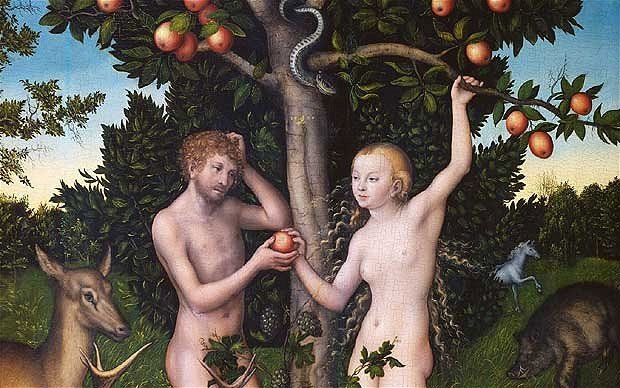
    We have the original account in chapter 3. In 2:16-17, we have the only recorded restriction on Adam and Eve: “You may surely eat of every tree of the garden, but of the tree of the knowledge of good and evil, you shall not eat, for in the day that you eat of it, you shall surely die.” However, in chapter 3, the serpent questions that restriction. In verse 1, he asks the woman, “Did God actually say, ‘You shall not eat of any tree…?’” Thus, the fall starts with doubting the word of God. Then the serpent escalates the confrontation in verse 4: “You will not surely die.” He has moved from doubting God to directly contravening His commands. He continues in verse 5, “For God knows that, when you eat of it, your eyes will be opened, and you will be like God…” Now, the serpent caps his temptation with an insinuation regarding God’s motivation in the command. In consequence of which, Eve eats of the fruit, and shares it with Adam, in verse 6.
    The consequences come quickly. In the next verse, the two humans recognize for the first time that they are naked. This realization leads them to hide in shame from God, when He next comes looking for them. Upon their confession of their rebellious act, God pronounces His response: first, in verse 14, the serpent is cursed for his role in tempting the two; next, in verse 16, the woman is cursed with pain in childbearing and conflict with her husband; and third, he is cursed with hardship and futility in his labors in verses 17-19. These curses correspond exactly with the calling that God had given humanity in 1:26-31, to be fruitful and to rule and cultivate the creation.
    The fall snowballs in its effects. In 4:5-8, the next generation, consisting of Cain and Abel (at this point, the only posterity of the first couple), jealousy erupts and sin breaks out in fratricide, as Cain murders Abel. In verse 12, God repeats that part of the curse involving futility in man’s God-given task of making the earth fruitful. And with one more generation, Cain’s son Lamech repeats his father’s sin of murder, and even doubles it (4:23).
    The snowball of sin continues its expansion in chapter 6, where the wickedness of men has consumed their entire existences (verse 5). The only exception is Noah, who, with his family, is preserved from God’s general judgment in the Flood (6:9-8:19).
    In these passages, we see only hints of God’s redemptive purpose in the world of man. 3:15 gives us the protevangelium, the promise of the seed of Eve Who would crush the head of the serpent. In 3:21, we see the first deaths in the world, apparently in sacrifice, to provide coverings of fur for the now-modest first couple. The conflict between Cain and Abel arises during sacrificial offerings (4:3-4). And immediately after the flood, Noah responds with offerings of some of the clean animals from the ark (8:20). So, even as the effects of the fall are manifest, God begins to show His plan of redemption, a substitutionary sacrifice for the forgiveness of sin.
    The subject of the fall doesn’t appear again until the book of Job, and then only in passing. In 31:33, Job, speaking to his friends, in a list of hypothetical failures, includes, “if I have concealed my transgressions as others do by hiding my iniquity in my bosom…” He acknowledges, not just individual sins, but his sinful state, the inherits consequence of Adam’s failure. Is his reference to “concealing transgressions” an allusion to Adam’s fig-leaf apron and hiding among the trees?
    In the Psalms, we get passing references to man’s inheritance of sin.
    In 14:3, David says of fools, “They have all turned aside; together they have become corrupt; there is none who does good, not even one.” Referring to his own sin with Bathsheba, David also says, in 51:5, “Behold, I was brought forth in iniquity, and in sin did my mother conceive me.” In 53:1-3, he repeats his confession: “...They are corrupt, doing abominable iniquity; there is none who does good… They have all fallen away; together they have become corrupt; there is none who does good, not even one.” In his mind, iniquity isn’t an action, but a condition, which reflects the teaching of Moses that Adam’s particular sin had resulted in a condition of sin in his posterity. That is, men are not sinners because they sin, but rather, men sin because they are sinners.
    David apparently taught this lesson to his own children, because we find Solomon repeating it in Ecclesiastes 7:29: “This alone I found, that God made man upright, but they [sic] have sought out many schemes.” In one sentence, he describes the original creation in innocence, a state which was lost, resulting in the present condition of perpetual sin.
    The theme of man’s corruption appears a number of times in the writings of the Prophet Isaiah. He portrays it very vividly in his account of his own calling. In chapter 6, he contrasts (v. 3) the thrice holy nature of Jehovah, with his own self-consciousness in verse 5: “Woe is me me! For I am lost; for I am a man of unclean lips, and I dwell in the midst of a people of unclean lips…” He continues the the themes of relating his personal sinful nature with the corrupt nature of all men. But he includes verse 7: “Your sin is taken away, and your sin is atoned for.” So he also repeats the Mosaic theme of following the declaration of sin with a discrete declaration of God’s redemptive purpose as sin’s solution.
    The prophet applies the judgment of God to his fellow Israelites in 9:17b: For everyone is godless and an evildoer, and every mouth speaks folly. For all this, His anger has not turned away, and His hand is stretched out still.” And he continues in verse 18, with the impact of sin on the created world: “For wickedness burns like a fire; it consumes briers and thorns; it kindles the thickets of the forest, and they roll upward in a column of smoke.” He imitates the curse of Gen. 3 in 14:3: “When the Lord has given you rest from your pain and turmoil and the hard service with which you were made to serve…” Babylon is seen to apply the hardships of Gen. 3:19. The same theme appears again in 24:4-6, with the earth bearing the curse of man’s sin. See, for example, verse 6a: “Therefore, a curse devours the earth, and its inhabitants suffer for their guilt…” God’s reaction of Gen. 6:5-6 is also seen in Isaiah 43:24b: “You have burdened Me with your sins; you have wearied me with your iniquities.” That sinfulness corrupts man’s whole nature (54:6), and He puts it away from His presence (59:2a), “Your iniquities have made a separation between you and your God, and your sins have hidden His face from you…”
    The next prophet, Jeremiah, also describes the general sinfulness that resulted from the fall. In 17:9, he says of Judah, “The heart is deceitful above all things, and desperately sick; who can understand it?” Then, to emphasize the awareness God has of our sin, he answers his own question in the next verse (10): “I The Lord search the heart and test the mind…” The prophet accuses Judah of being so corrupt that he isn’t even conscious of his corruption. Yet, in contrast, Jehovah is aware, just as He was before the flood.
    The next prophet, Ezekiel, recalls the words of the serpent in the prince of Tyre in 28:2: “Your heart is proud, and you have said, ‘I am a god, I seat in the seat of the gods, in the heart of the seas,’ yet you are but a man, and no god…” The serpent appealed to Adam and Eve with the expectation of godhood, and here the prince believes he has what was offered. And as happened to the first pair, the prince is cast out (verse 16): “You were filled with violence in your midst, and you sinned; so I cast you as a profane thing from the mountain of God…” And in 36:33-34, Ezekiel has God renewing the dominion covenant, originally given to Adam: “On the day that I cleanse you from all your iniquities, I will cause the cities to be inhabited, and the waste places shall be rebuilt. And the land that was desolate shall be tilled, instead of being the desolation that it was…” Thus, the redemptive purpose is renewed, in terminology describing the reversing of the curse, that man may again be fruitful and multiply and exercise dominion over the earth.
    And finally, in the prophets and in the Old Testament, we have a passing reference in Hosea 6:7: "Like Adam, they transgressed the covenant; there they dealt faithlessly with me." The prophet uses the original fall as an object lesson for the then-current faithlessness of Judah and Israel.
    In the New Testament, the fall is again an issue in the writings of Paul.
    In Romans 5:12-21, Paul places responsibility for sin on Adam (v.12, “sin came into the world through one man”), with all sins arising from this federal sinfulness (v. 14). However, he also renews the answer of God’s redemptive purpose to undo man’s fallenness. Verse 15, “If many died through one man’s trespass, much more have the grace of God and the free gift by the grace of that one man Jesus Christ abounded for many.” And verse 18,”As one trespass led to condemnation for all men, so one act of righteousness leads to justification and life for all men.” So, in this passage, we also see the pairing of man’s sin, on one hand, with God’s redemptive purpose, on the other.
    In the same epistle, 8:19-25, Paul also reminds us of the consequences for the nonhuman creation in the fall of man. In verse 19, he writes, “The creation waits with eager longing for the revealing of the sons of God.” Because, verse 20, “The creation was subjected to futility, not willingly, but because of him who subjected it.” And then the redemptive purpose in verse 21, “[in hope] that the creation itself will be set free from its bondage to decay…” And verses 23-24, “we ourselves… groan inwardly as we wait eagerly for adoption as sons, the redemption of our bodies, for in this hope we were saved.” Paul repeats the theme of general sinfulness followed by the hope of God’s redemptive purpose.
    In my final example, I Timothy 2:9-15, Paul isn’t addressing the issue of sin or of redemption, but rather applying the story of Genesis 3 to social behavior. He is addressing the behavior of women in the church, in terms of apparel and good works (vv. 9-10), and then during corporate worship, in quietness and submission (11-12), and not in authority over men (v. 12), for (verse 13-14), “It was Adam who was first created, and then Eve. And it was not Adam who was deceived, but the woman, being deceived, fell into transgression.” WHile Paul is addressing a nonsoteriological matter in this passage, his use of the creation and fall indicates his assumption of the reality of the story. He obviously knew the Mosaic record in Genesis, and assumed its truth.
    And finally, the story appears again in John’s Revelation, 12:9,: And the great dragon was thrown down, that ancient serpent, who is called the devil and Satan, the deceiver of the whole world - he was thrown down to the earth, and his angels were thrown down with him.” Here we have the first revelation of the identity of the serpent. In the words of Moses, it is just an animal, though cleverer than is natural for its kind. Here we have its identification as the chief evil, Satan. Then, in verses 10-11: “Now the salvation and the power and the kingdom of our God and the authority of His Christ have come, for the accuser of our brothers has been thrown down, who accuses them day and night before our God. And they have conquered him by the blood of the Lamb and by the word of their testimony, for they loved not their lives, even unto death.” These verses bring us full circle to Genesis 3:15. there the serpent was promised that the seed of the woman would crush his head. Here we see that promise fulfilled. Where Genesis 3 gave the account of man’s fall into the dominion of sin, here we see the redemptive victory of Jesus Christ over that sin. What had been promised has now been revealed. The repeated pairing of the judgment of sin with God’s redemptive purpose, is now experiential, with the judgment and destruction of sinfulness itself.
Monday, May 24, 2010

The High Cost of the Cheapening of Human Life

"He who digs a pit will fall into it,
and a serpent will bite him who breaks through a wall."
- Ecclesiastes 10:8

I just read this insightful application of this verse by the late Rev. Rousas Rushdoony: "Since World War II, we have, to a great extent, set aside the death penalty for most cases of murder. We have cheapened life, and murders have increased to a very high number. By making life easier for murderers and criminals generally, we have made it less tenable for ourselves. We have fallen into a pit of our own making; we have broken the fence of God's law, and we have been smitten as transgressors."

By placing an inordinate value on the dregs of society, we have devalued the righteous and innocent.

Monday, August 10, 2009

Ecclesiastes 7:20, The Wisdom Literature on the Sinfulness of Mankind

A Russian Icon of Solomon
"Surely there is not a righteous man on earth who does good and never sins."

John Calvin phrases the same thought this way: "By nature we are alienated from God and can do nothing but the things he condemns. That, therefore, is the condition of man in himself - that is, a condition totally repugnant to the righteousness of God." From a sermon on Acts 2:38.

In contrast, mainstream religion in this country pooh-poohs the traditional concept of sin. Some turn it into a psychological shortcoming. Others ridicule it as a crusade against fun. Theologically, it is dismissed as the angst of a guilt-ridden Apostle Paul.

Paul certainly didn't invent the concept of sin. In fact, it doesn't even appear with the advent of the New Testament. It doesn't exist just in the Law of Moses. The fallenness and sinfulness of men appears throughout scripture, including in the Wisdom literature, where even evangelicals fail to consider it.

We see it in Ecclesiastes above. We can also find it several places in Proverbs.

16:2, "All the ways of a man are pure in his own eyes, but the Lord weighs the spirit."

16:25, "There is a way that seems right to a man, but its end is the way to death."

17:15, "He who justifies the wicked and he who condemns the righteous are both alike an abomination to the Lord."

20:9, "Who can say, 'I have made my heart pure; I am clean from my sin'?"

21:2, "Every way of a man is right in his own eyes, but the Lord weighs the heart."

30:12, "There are those who are clean in their own eyes but are not washed of their filth."

And the contrast of Psalm 119:9, "How can a young man keep his way pure? By guarding it according to your word."

Whose wisdom will you trust when examining your own spiritual condition? The wisdom of men? Or the wisdom of God?

Thursday, August 6, 2009

King Solomon Explains the Failure of the Pleasure Principle


"There is nothing better for a person than that he should eat and drink and find enjoyment in his toil. This also, I saw, is from the hand of God, for apart from Him, who can eat or who can have enjoyment?"
- Ecclesiastes 2:24-25

And again in 3:12-13, "I perceived that there is nothing better for them [i.e., the children of man] than to be joyful and to do good as long as they live; also that everyone should eat and drink and take pleasure in all his toil - this is God's gift to man."

And once more in 3:22, "So I saw that there is nothing better than that a man should rejoice in his work, for that is his lot. Who can bring him to see what will be after him?"

And again in 5:18-20, "Behold, what I have seen to be good and fitting is to eat and drink and find enjoyment in all the toil which one toils under the sun the few days of his life that God has given him, for this is his lot. Everyone also to whom God has given wealth and possessions and power to enjoy them, and to accept his lot and rejoice in his toil - this is the gift of God. For he will not much remember the days of his life because God keeps him occupied with joy in his heart."

We see Solomon here looking back on his own life. He has pursued wisdom (1:13), self-indulgence (2:1), wealth (2:8), women (2:8b), and even workaholism (2:18-23). After exhausting these attempts at self-fulfillment, he concludes that it is labor in its proper sphere - to produce an enjoyable livelihood, neither as drudgery or as a source of personal significance, and then the enjoyment of the fruits of that labor - that produce a satisfying life. In other words, the greatest king in Scripture, who had every luxury known to man at his command, concluded that it was all vanity; but the labor of the common man, who then spent the fruits of that labor on enjoying life, was where true material happiness was to be found.

Even though Solomon's discovery has been available to men for about three thousand years, it is a lesson that seems to elude too many people. Our own society seems to experience only the two extremes: everyone seems devoted to dissipation, on one hand, or is an obsessive workaholic, on the other, or even both. Solomon experienced both, and concluded that there is no real fulfillment in either. Rather, fulfillment is found in meaningful labor in its sphere, and the use of the fruits to enjoy the rest of one's life.

What would our society look like if we followed Solomon's prescription? I suspect that stress-related illnesses would decrease, addiction to vices would fade, wantonness in children would be a surprise rather than expected, divorce would become the exception rather than the rule. One could imagine a host of unforced reforms that might resonate across society.