Showing posts with label common grace. Show all posts

Saturday, November 19, 2022

Leprosy, Famine, and the Doctrine of Common grace

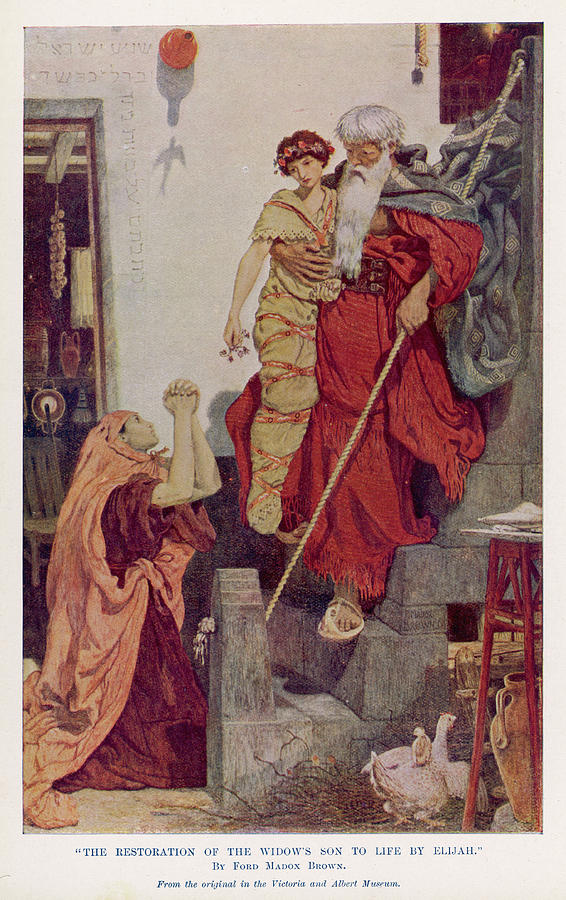
"In truth, I tell you, there were many widows in Israel in the days of Elijah, when the heavens were shut up three years and six months, and a great famine came over the land, and Elijah was sent to them of them but only to Zarephath, in the land of Sidon, to a woman who was a widow. And there were many lepers in Israel in the time of the prophet Elisha, and none of them was cleansed, but only Naaman the Syrian" (Luke 4:25-27).

Among Reformed folks, the majority hold to the doctrine of common grace: "God's kindness to all people during their time on earth, regardless pf their present status with him. While it is true that believers will experience both common grace and saving grace, those who are apart from Christ will only experience common grace in this life." 

Of course, to the Arminian, all grace is common grace, since, he supposes, God enables all men to believe unto salvation. And that parallel must be noted. The Reformed people who hold to this doctrine are advocating a step halfway to the presuppositions that underlie the error of Arminianism. 

Not, however, the text above. These are the words of Jesus, referring to two events found in the Old Testament. The first was the three and half years that Elijah spent as a refugee in the territory of the Sidonians, while God judged Israel with drought and famine (I Kings 17-18). The second was Elisha's giving a Syrian general the means of curing his leprosy (II Kings 5). 

In both cases, Jesus makes the point that there were many people who shared common sufferings, but the grace was shared only with a particular victim in each case. That is, the grace shown was particular, not common. And that is one of the problems with the doctrine of common grace. Not only is it not biblical, but it can't be seen in the historical cases where it should have been applicable. 

Saturday, December 18, 2021

The Goodness of God, His Wrath Toward the Reprobate, and "Common Grace"


"Because of your hard and impenitent heart, you are storing up wrath for yourself on the day of wrath when God's judgment will be revealed" (Romans 2:5) . 


The doctrine of common grace is the majority view in the Reformed camp. I admit that. However, as a member of the minority particular grace view, I have to say that I find the claims of biblical support for common grace to be particularly (yes, pun intended) unconvincing. 


According to the doctrine, God's goodness to all men (Matthew 5:45) is grace to them, every one of them, which enables them, in return, to do some good things, sometimes called "civic good." 

I see a lot of problems with that. 


First of all, yes, God is good to everyone. No Christian could say otherwise. That is because God is inherently good. However, notice that Matthew 5:45 never even mentions "grace." Furthermore, where else does Jesus, quoted in that verse, talk about the goodness of God, in terms of His gifts? In Mark 7:26, a Gentile woman comes to Jesus, and asks Him to deliver her daughter from a demon. He responds, "Let the children be fed first, for it is not right to take the children's bread and throw it to the dogs" (verse 27). But she persists: "Yes, Lord; yet even the dogs under the table eat the children's crumbs" (verse 28). To that, He replies: "For this statement, you may go your way; the demon has left your daughter" (verse 29). The parallel verse in Matthew 15:28 adds His words, "O woman, great is your faith!" It isn't her mere existence which brings His gracious act; it is her faith! However, notice her words by which he credits her faith, that even the dogs, i. e., the reprobate, feed on the crumbs that fall from the table of the children, i. e., the elect. The goodness of God to the reprobate is by overflow from His loving and gracious blessing of the elect. 


God's goodness is no common grace. Rather, it is particular grace which is so great that it overflows to those who hate Him! 


Someone may reply that even overflow grace is grace to the reprobate. Yet that, too, is denied by Scripture. It is those very gifts for which God judges the unbelief of the reprobate. Paul tells us, "Although they knew God, they did not honor Him as God or give thanks to Him" (Romans 1:21). The more gifts received, and over a longer time, the greater their judgment. In Isaiah 48:9-11, God makes this statement to rebellious Israel: "For My name's sake, I defer My anger; for the sake of My praise I restrain it for you, that I may not cut you off. Behold, I have refined you, but not as silver; I have tried you in the furnace of affliction. For My own sake, for My own sake, I do it; for how should My name be profaned? My glory I will not give to another." It isn't grace that leads God to withhold His judgments; it is His concern for His own glory! Receiving God's benefits is not grace to the reprobate, but rather an increase in judgment! 

Wednesday, November 10, 2021

There Is No Grace for the Wicked in This Life: Contra "Common Grace"


"For My name's sake, I defer My anger; for the sake of My praise I restrain it for you, that I may not cut you off. Behold, I have refined you, but not as silver; I have tried you in the furnace of affliction. For My sake, for My own sake, I do it, for how should My name be profaned? My glory I will not give to another" -Isaiah 48:9-11

There is a common doctrine among Protestants, even among Reformed protestants, that I reject, that of "common grace." According to its supporters, God loves all and gives grace to all, both elect and reprobate, which enables both to do meritorious good. The primary biblical support for this doctrine is Matthew 5:45, even though that verse doesn't even mention "grace." It says that God is good to all. And of course He is good to all, because God cannot be but good. 

However, Isaiah, in the passage above, tells us that the reprobate continue to be under the judgment of God. The respite they experience now is not a grace to them, but is rather God's restraint of His judgment for the sake of His own glory. The prophet says nothing about God's enabling the wicked to stand off His judgment because of any supposed good in them or love toward them. 

God is no schizophrenic, both loving and hating (see Psalm 5:5 and Psalm 11:5) the reprobate simultaneously. He is not trying to save with one hand those whom He has reprobated with the other. That would be to deny both the rationality and simplicity of God. His mind is single, to set aside the reprobate for His hatred and judgment for eternity. At the same time, His true love and grace to the elect includes His restraint of the wickedness of the reprobate, not for the sake of the reprobate, but for the sake of their elect neighbors.

Wednesday, September 11, 2019

Crumbs from the Table: Judgment, Not "Common Grace"

I know that it puts me in the minority, even among Reformed folk, but I have a real problem with the doctrine of common grace. According to that doctrine, God gives some grace to every person in the world. However, it is insufficient grace, or the wrong kind of grace, to lead them to salvation. The biblical justification for that teaching is Matthew 5:45: "He makes his sun rise on the evil and on the good, and sends rain on the just and on the unjust."

The problem I have with that interpretation is that it constitutes a bait-and-switch. Yes, the unbeliever experiences the goodness of God. However, that is not because the unbeliever has any claim on the goodness of God. Consider the remark of the Canaanite woman in Matthew 15:27: "Even the dogs eat the crumbs that fall from their masters’ table." The goodness of God is to His people, the elect. Yet that goodness is so great that it overflows, and the reprobate receive the benefits of the crumbs that fall from the table. Is this grace to them? "They did not honor Him as God or give thanks to Him, but they became futile in their thinking, and their foolish hearts were darkened" (Romans 1:21). No, it is not grace! Rather, by continuing in unbelief in the face of such goodness, the reprobate increase their judgment!

We also see this described in Psalm 73:3, 16-20: "I was envious of the arrogant when I saw the prosperity of the wicked. But when I thought how to understand this, it seemed to me a wearisome task, until I went into the sanctuary of God; then I discerned their end. Truly You set them in slippery places; You make them fall to ruin. How they are destroyed in a moment, swept away utterly by terrors! Like a dream when one awakes, O Lord, when You rouse Yourself, You despise them as phantoms." Asaph is distressed when he witnesses the apparent prosperity of the wicked. However, when he witnesses their downfall, his sense of justice is restored. Thus, God's goodness to them is not of grace, but contributes to His retributive justice.

Saturday, April 1, 2017

God's Common Goodness Is No Common Grace


In Matthew 5:45, Jesus tells us, "[God] makes His sun rise on the evil and on the good, and sends rain on the just and on the unjust." This is a precious truth, that God is the source of all good things, and that He shares His gifts with all men. God is good to all because God is all good!

However, a problem arises when some people claim that God's common goodness is properly common grace. That is an idea that I cannot accept.

Consider the further words on Jesus in Mark 7:24-30: "He arose and went away to the region of Tyre and Sidon. And He entered a house and did not want anyone to know, yet He could not be hidden. But immediately a woman whose little daughter had an unclean spirit heard of Him and came and fell down at His feet. Now the woman was a Gentile, a Syrophoenician by birth. And she begged Him to cast the demon out of her daughter. And He said to her, 'Let the children be fed first, for it is not right to take the children’s bread and throw it to the dogs.' But she answered Him, 'Yes, Lord; yet even the dogs under the table eat the children’s crumbs.' And He said to her, 'For this statement you may go your way; the demon has left your daughter.' And she went home and found the child lying in bed and the demon gone."

Jesus was referring to His own comment in Matthew 15:24: "I was sent only to the lost sheep of the house of Israel." During His earthly ministry, His focus was only on ethnic Israel. Of course, that expanded to the entire world after His ascension, but that was later. When this foreign woman came to Him, He was still in the transitional state between the Old Covenant focus on Israel and the New Covenant inclusion of all nations. Yet, the woman said, even when the chosen children are enjoying the feast, there are scraps which fall to the dogs. The Book of Ruth would be an expanded image of what she means.

The application here is the parallel between the children and the dogs in this vivid story and the children of God and the rest of the world in Matthew 5:45. The wicked, when they are enjoying the good gifts of God, are not enjoying God's favor to them, but are rather receiving the overflow from His blessings on His own people, His children, the church. Why isn't this grace? Because it is not to their advantage. Grace is God's favor, the application of Christ's merits, but that isn't what the reprobate are receiving (Romans 1:21):"For although they knew God, they did not honor him as God or give thanks to him, but they became futile in their thinking, and their foolish hearts were darkened." Is this blessing for them? Not at all. Rather, as Paul goes on to say, this arrogant and presumptuous use of God's gifts brings these unbelievers to grief (Romans 1:28-29): "And since they did not see fit to acknowledge God, God gave them up to a debased mind to do what ought not to be done. They were filled with all manner of unrighteousness, evil, covetousness, malice."