Showing posts with label titus. Show all posts

Wednesday, May 19, 2021

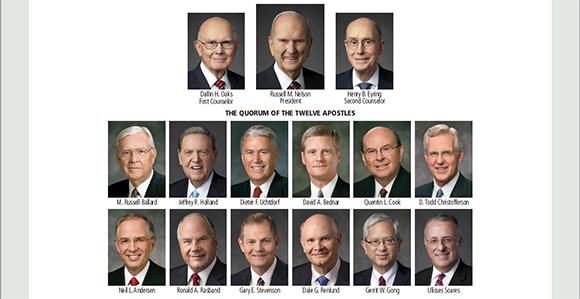
The End of the Apostolate in the First Century Contra Mormonism

"You are fellow citizens with the saints and members of the household of God, built on the foundation of the apostles and prophets, Christ Jesus Himself being the cornerstone, in whom the whole structure, being joined together, grows into a holy temple in the Lord. In Him you also are being built together into a dwelling place for God by the Spirit." 

-Ephesians 2:19-22

 In the passage above, the Apostle Paul is describing the development of the visible church, which began, of course, with the Person and work of Jesus, who then appointed the Apostles and prophets, who then provided the foundation for the rest of us in that church. Some aberrant groups, especially the Mormons, claim that Paul is teaching a continuous succession of apostles and prophets to govern the church. Yet, those same Mormons don't teach that the verse- in fact, the same sentence- teaches that they should have a succession of Jesuses  

There are other problems with the Mormon use of the passage. In addition to the contradiction in their interpretation, there is the simple fact that a building does not have a continuing succession of foundations. Rather, one foundation is laid, and then the other parts of the building are built upon that foundation. 

Another problem for the Mormon claim is found in other parts of Paul's writings. 

In Titus 1:5, the Apostle tells his student, "This is why I left you in Crete, so that you might put what remained into order, and appoint elders in every town as I directed you..." Appoint elders, not prophets, and not apostles. In I Timothy, chapter 3, and again in Titus 1, he gave instructions on the qualifications of those elders. Nowhere does Paul, or any other New Testament writer, give information about how to choose apostles or prophets! Yet, Mormons want us to believe that they have exactly those things of which the Bible never speaks! The implication is obvious, that those offices were temporary, foundational, and never intended for continuation. Rather, they have been replaced with elders and deacons who rule and teach, not by new revelation, but rather according to the completed word of God in the Old and New Testaments. 


Saturday, May 23, 2020

Faith, the Gift of God to the Elect Alone

Every Bible-believing Christian is distinguished by one doctrine: our justification before God is through fail alone. That was the message of Jesus (see the Parable of the Pharisee and the Tax-Collector, Luke 18:9-14), Paul (such as Romans 3:28), the Old Testament prophets (such as Habakkuk 2:4), and the Reformers.

But rare is the person who asks an important question: Who has such saving faith? As I demonstrate here, faith is given to us by God; it is not something that we add to the cross work of Jesus.

The Arminian claims that God gives faith equally to all men, so that all men are equally enable to respond to the Gospel. However, the Bible says otherwise: "Not all have faith" (II Thessalonians 3:2). So, contrary to the claim of the Arminian, not all have faith.

So, then, who does? "Paul, a servant of God and an apostle of Jesus Christ, for the sake of the faith of God’s elect and their knowledge of the truth, which accords with godliness" (Titus 1:1). So the answer that Paul provides has three parts: faith, knowledge, and godliness. Thus, we aren't talking about a mere ability to believe, as is the basis of Arminianism. Paul restricts these gifts to God's elect. The elect are given faith by which to be justified, knowledge of the Gospel, and godly lives. Paul here gives an explanation of the content of the promise of Jesus in John 6:39: "This is the will of Him who sent Me, that I should lose nothing of all that He has given Me, but raise it up on the last day."


Wednesday, May 9, 2018

The Clerical Collar: Wearing What Pertains to a Man

In today's culture wars, Deuteronomy 22:5 gets quoted often: "A woman shall not wear a man’s garment, nor shall a man put on a woman’s cloak, for whoever does these things is an abomination to the Lord your God." Or, for my use here, the King James Version: "The woman shall not wear that which pertaineth unto a man, neither shall a man put on a woman's garment: for all that do so are abomination unto the LORD thy God." I prefer the KJV here because there is far more that pertains to a man than mere clothing.

One thing that pertains to a man is God's calling to exercise authority in the church (and in the home, but that isn't my subject here): "I do not permit a woman to teach or to exercise authority over a man; rather, she is to remain quiet. For Adam was formed first, then Eve" (I Timothy 2:12-13, see also 3:2 and Titus 1:6). Here it is stated negatively, not what should be done by a man, but what must not be done by a woman. In fact, leadership by women is described as a curse: "My people—infants are their oppressors, and women rule over them. O My people, your guides mislead you and they have swallowed up the course of your paths" (Isaiah 3:12).

We know from the case of Deborah, for example, that there are times when a woman will be in leadership (Judges, chapters 4 and 5). But such a case is not normative. Rather, it exposes that a society is so degenerate that no men are qualified to lead. Notice what a wimp Deborah's general, Barak, is: "If you will go with me, then I will go [i. e., into battle with the Canaanite King Jabin, verse 2], but if you will not go with me, then I will not go" (Judges 4:8). Here the general of Israel's army, presumably its greatest military leader, is so timid that he will not go into battle unless this woman holds his hand the whole time! is it any wonder, then, that there are no men to lead Israel in her time of need? 

It can certainly be said that America is suffering from a lack of men capable of leadership. One often hears speakers lamenting the "feminization of men." I do not believe, however, that we are approaching the circumstances of Israel in Judges 4. Therefore, Deuteronomy 22:5 is still in force, and female clergy are wearing what pertains to men.

Friday, November 17, 2017

What Is Faith?


We have a lot of common sayings on the issue of faith. Two that I sincerely hate are "a leap of faith" and "you just gotta have faith." The first means that we should go through life making hazardous decisions with insufficient information. The second is what we say to people dealing with personal or general catastrophes. Faith in what? Or whom? Well, faith in faith, i. e., the New Age concept that insistent belief creates reality.

In contrast, Theologian John Frame, in his "Apologetics," p. 53, says, "Faith is not mere rational thought, but it is not irrational either. It is not 'belief in the absence of evidence'; rather, it is a trust that rests on sufficient evidence... So faith does not believe despite the absence of evidence; rather, faith honors God's Word as sufficient evidence." In other words, "faith" is not a mental insistence without regard to objective circumstances. Rather, it is a belief in the power of God on the basis of His Word, the Bible. Faith isn't the vacuous stubbornness of popular psychology and New Age religion, but rather has a particular foundation and explicit content.

We see that for example, in Jude 1:3: "Contend for the faith that was once for all delivered to the saints." Here the brother of Jesus is referring to faith as a body of belief, of doctrine, which was held in common by believers. He is telling us that the content of our faith matters! That is the opposite of what we say in the phrase I quoted above. Paul referred to the same thing in Titus 1:4: "To Titus, my true child in a common faith..." The emphasis here is on content, too, but a content held in common among believers, equivalent to Jude's "that was once for all delivered to the saints." Both inspired writers reject faith as a feeling or as an individual insistence, but rather as something held in common among all true believers, with a specific content of truth.

Luke describes that content in Acts 6:7: "The word of God continued to increase, and the number of the disciples multiplied greatly in Jerusalem, and a great many of the priests became obedient to the faith." The content of the faith is the word of God, i. e., the Bible, and to believe it is to be obedient. Or, to express the converse, not to believe it is to be disobedient.

Therein lies the problem with faith in faith, without content. it assumes, contrary to Scripture, that God honors disobedience as if it were obedience. Again quoting Paul (Ephesians 5:6): "Let no one deceive you with empty words, for ... the wrath of God comes upon the sons of disobedience." Not doing things God's way cannot be the source of assurance that our common encouragements assume, because they bring, not His blessings, but His wrath.

Here is a definition of biblical faith (Westminster Larger Catechism 72): "Question 72: What is justifying faith? Answer: Justifying faith is a saving grace, wrought in the heart of a sinner by the Spirit and Word of God, whereby he, being convinced of his sin and misery, and of the disability in himself and all other creatures to recover him out of his lost condition, not only assents to the truth of the promise of the gospel, but receives and rests upon Christ and his righteousness, therein held forth, for pardon of sin, and for the accepting and accounting of his person righteous in the sight of God for salvation."

Saturday, September 23, 2017

The Diagnosis Must Come Before the Prescription: Total Depravity

A memorial to the victims in Sandy Hook, CT
 The Bible says that "all have sinned" (Romans 3:23), and "the wages of sin is death" (Romans 6:23). While I can understand why unbelievers reject what God says here, I am bewildered by the reaction of professing Christians, who want to hold on to a basic goodness in men. I would ask such "Christians," Have people ceased to be sinners? Has there been some miraculous transformation in human nature, such that Scripture doesn't apply any more?

I cannot imagine any person - at least, one who seriously describes himself as a Christian - answering either question in the affirmative.

Rather, man's total depravity is taught all through Scripture. That is not teaching that men, or any particular man, are as wicked as we could be - though I admit that I wonder sometimes, such as after the Sandy Hook massacre. Rather, it is the teaching that every faculty, whether physical, mental, or spiritual, of every man is corrupted by the effects of sin.

While I have cited many passages on this issue (use the "total depravity" tag at the bottom), I want to add one that is rarely considered, Titus 3:3: "We ourselves were once foolish, disobedient, led astray, slaves to various passions and pleasures, passing our days in malice and envy, hated by others and hating one another." A key element in this verse is that Paul uses the past tense. He describes the nature that Christians had before our conversion. And he does not paint a pretty picture, certainly nothing that should be a basis for self-esteem!

What changes a person is not increased self-esteem, or social reform, or any of the other progressive psycho-babble proposals that are so popular these days. Rather, the solution is regeneration, that change of a man's heart by which the Holy Spirit gives him a new nature, not free from sin in this life, but free from the dominion of sin: "I [God] will give you a new heart, and a new spirit I will put within you. And I will remove the heart of stone from your flesh and give you a heart of flesh. And I will put My Spirit within you, and cause you to walk in My statutes and be careful to obey My rules" (Ezekiel 36:26-27).

The problem with the corrupt Christianity preached by Joel Osteen, Robert Schuller, etc., is that they try to hush up what Scripture says about sin and its consequences. Yet, that attitude is contrary to Scripture, such as Paul's comment to Titus cited above. But the question must then be asked of them, How can a man believe the good news of salvation if he doesn't first hear the bad news of the sinful condition from which he must be saved? Imagine the doctor who tries to convince a patient to undergo surgery if he hasn't first told him of the tumor that threatens his life. What would the reaction of the patient be? I know that I would never submit to surgery without a sufficient cause! In the same way, the unbeliever cannot repent and turn to Christ until he first knows his sinful condition and the eternal death that is its consequence.

Monday, June 22, 2015

Bishops: Diotrophes in the Church

Before I start, I want to mention what a landmark this post is: Post number 300! When I first started this blog, I would never have imagined reaching 300 posts.

And now, to proceed: How many sermons have you ever heard from the Third Epistle of John? If your experience is like mine, not many, if any. In fact, out of my thirty-some years of listening to sermons, I can't recall even one. That's sad, because I think this epistle does have significance for the church today, even as small as it is.

I won't go into the question of authorship here; it isn't within the purview of this post. However, I take it as having been written by the Apostle John, as has been held throughout the history of the church.

In III John 1:9-11, the Apostle tells us, "I have written something to the church, but Diotrephes, who likes to put himself first, does not acknowledge our authority. So if I come, I will bring up what he is doing, talking wicked nonsense against us. And not content with that, he refuses to welcome the brothers, and also stops those who want to [welcome them] and puts them out of the church.
Beloved, do not imitate evil but imitate good. Whoever does good is from God; whoever does evil has not seen God."

It is from this passage that the Covenanters got their nickname for the bishops of Charles I, "Diotrophes in the church." They, like John's nemesis here, sought to be first in the church, as do their kin in today's Catholic, Orthodox, and Anglican churches.

Jesus also addressed the issue of the lordship of men in the Church of which He alone is Head (Mark 10:42-45): "You know that those who are considered rulers of the Gentiles lord it over them, and their great ones exercise authority over them. But it shall not be so among you. But whoever would be great among you must be your servant, and whoever would be first among you must be slave of all. For even the Son of Man came not to be served but to serve, and to give His life as a ransom for many."

That is why a Presbyterian church cannot exist without at least two elders. This is what is practiced by Paul in Acts 14:23, and enjoined by him in Titus 1:5 (on which I have commented here). Notice that it says "elders in  every church," plural, not "an elder in every church," or even "in every town," contrary to the diocesan system of the prelatic churches. Notice also the reference to "overseers" in Philippians 1:1. That word translates the Greek work "episkopos," the very word which has come into English as "bishop." The Church at Philippi had a multiplicity of bishops!

And here, I describe the words of the Apostle Peter, the supposed first pope, which forbid the very monarchical bishops which have claimed his name and title. And someone should inform the Vatican that the Apostle Peter that they claim as their source was the married Apostle Peter (Luke 4:38 and I Corinthians 9:5)!

The original Diotrophes thrust himself into a one-man rule over the congregation in III John (we don't know where this congregation was located). In the same way, the Pope and his bishops, along with the others in Eastern Orthodoxy and Anglicanism, have set themselves up as heads over the church, contrary to too many places in Scripture to be an accident. In his first epistle (I Peter 5:1-2), Peter commands the elders to "bishopize" (my own word, to translate "episkopountas") in the church. Thus, not only is it disingenuous for the Church of Rome to claim him as the origin of their church
government, but it is contrary to his very words! It is a self-justification for the papal tyranny over a billion souls, contrary to that attitude of service enjoined by Christ in the passage in Mark cited above.

Is a man saved by presbyterian church government? Of course not. Is he blocked from eternal life by the presence of bishops? Again, no man could say so. But, if Jesus has established a government in His Church, as I think I have proven, then it can only be rank rebellion to persist in ruling, or accepting rule, in that church, contrary to the express will of her Head. That is a serious sin, and cannot be anything but an obstacle to fellowship with that Head, who gave Himself to ransom her (Ephesians 5:25). 

I am concurring here with the Westminster Confession of Faith XXV:6, "There is no other head of the Church but the Lord Jesus Christ: nor can the Pope of Rome in any sense be head thereof; but is that Antichrist, that man of sin and son of perdition, that exalteth himself in the Church against Christ, and all that is called God..."

Monday, February 2, 2015

Bishops in the Church (Part 2): the Bible versus Catholic Tradition

I have addressed this topic more generally here, but I want to emphasize one passage in particular, that of Philippians 1:1. In it, Paul addresses his epistle "to all the saints in Christ Jesus who are at Philippi, with the overseers and deacons."

"Overseers," here, is a translation of the Greek word, "episkopos," which has been brought into English as "bishop." As I have said before, "episkopos," in the New Testament, in used interchangeably with  "presbuteros," i. e., "elder," not for two separate castes of officers. Click on the "church government" tag below to see some of those posts. In summary, I would refer you especially to Titus 1:5-9, where episkopos" and "presbuteros" are used to name the same officers,
"

The difference in the epistle to the church at Philippi, is that the term is used in the plural, "bishops," contrary to its monarchical use by by the Catholic, Eastern Orthodox, and Anglican Churches. Their view of a bishop as a higher-status governor over a region of churches cannot coexist with the plurality of such officers. However, the presbyterian form of church government not only permits a plurality of overseers, but actually requires it (see "elders in every town," Titus 1:5).

What is my point? Am I really concerned with how many overseers my church has? While I consider that important, my reader is correct to question my devotion of this effort to that minor issue.

Rather, the Church of Rome claims the "apostolic succession" of its bishops as proof that it has a legitimate claim to being the one true Church. My effort is devoted to demonstrating that that claim not only has no basis in Scripture, but is actually contrary to God's Word. Rome's form of church government not only lacks the imprimatur of Christ as Head of the Church (Col. 1:18, Eph. 1:23), but, more importantly, violates those portions of scripture which proscribe her constitutional form.

Saturday, July 5, 2014

I Peter 5:2, More Testimony from Scripture Against Bishops in the Church

The first three verses of the fifth chapter of I Peter have some serious implications for church government.

"So I exhort the elders among you, as a fellow elder and a witness of the sufferings of Christ, as well as a partaker in the glory that is going to be revealed: shepherd the flock of God that is among you, exercising oversight, not under compulsion, but willingly, as God would have you; not for shameful gain, but eagerly, not domineering over those in your charge, but being examples to the flock." [Emphasis mine]

The words translated here as "elder" and "fellow elder" are forms of the Greek word presbuteros. The word translated "exercising oversight" is episkopountes, a form of episkopos, from which we get the English word "bishop." So, it can be taken to be a message from the Apostle Peter to elders to "bishopize," if I may be allowed to make up a new word. The Apostle goes even further in II Peter 1:1, where he addresses Christians as "those who have obtained a faith of equal standing with ours..." While the Pope claims "the power of the keys" to include or exclude from the body of Christ whomever he chooses, the true apostle eschews any monarchical pretensions. If only the equality of all believers was the motto of the supposed heir of the throne of Peter, I would possibly give his faith a little benefit of doubt.

This seems to me to be a fatal blow to the episcopalian view of church government, as held by Anglicans, Eastern Orthodox, and Roman Catholics, all of whom hold to an office of bishop that rules over the church in a certain district.

This passage is especially destructive to the views of the Roman Catholic Church, which claims Peter himself as the beginning of their line of popes, the bishops of Rome. Rome claims that Paul was appointed by Christ in Matthew 16:13-20 to be the head of the Church, an office which he supposedly passed on to his heirs, the popes. However, in the passage here, we have Peter's own words stating that bishopizing is the work of elders. The New Jerusalem Bible, a Catholic translation, uses "elder" in  the passage, but then instructs the elders to "watch over" the church. The New American Bible, the main translation used by American Catholics, says "presbyters," refusing even to translate the term, with "overseeing." To my mind, that is a tacit admission that the American bishops are fully aware of the implications of this passage.

In addition to the positive assertions in Paul's letters, especially I Timothy 3:1-7 and Titus 1:5-9, we have here in I Peter the biblical basis for the system of church government commonly referred to as "presbyterian." It is neither "episcopalian" nor democratic. Church government is not an issue of choice. The Head of the Church has laid out how He intends to rule in His body, the Church. And the Pope of Rome is clearly the enemy of Christ's rule over that Church.

Sunday, January 26, 2014

Bishops: the Hidden Admission of the Catholic Church

Titus 1:5-8 in the English Standard Version, says, "This is why I left you in Crete, so that you might put what remained into order, and appoint elders in every town, as I directed you- if anyone is above reproach, the husband of one wife, and his children are believers and not open to the charge of debauchery or insubordination. For an overseer, as God's steward, must be above reproach. He must not be arrogant or quick-tempered or a drunkard or violent or greedy for gain, but hospitable, a lover of good, self-controlled, upright, holy, and disciplined." "Elder" is a translation of the Greek word presbuteros, the origin of the English word "presbyterian," meaning "government by elders." "Overseer" is a translation of the Greek word episkopos, the source of the English words "bishop" and "episcopal," meaning "government by bishops." The use of "elders" in the plural is the origin of the Presbyterian principle of government by a multiplicity of elders, as opposed to a single priest or bishop.

In the Catholic and Eastern Orthodox churches, the precept of "apostolic succession" holds that the bishop is the successor of the apostles, which is also the justification for papal supremacy and infallibility. Some Anglicans and Lutherans also hold to apostolic succession. This precept is, obviously, rejected by Protestants who hold to presbyterian or congregational principles of polity (i.e., "church government").

The New Jerusalem Bible, a Catholic translation, popular among English-speaking Catholics outside the United States, translates this passage with "elder" for "presbuteros," and "presiding elder" for "episkopos." No mention of a bishop, at all. In contrast, the New American Bible, the preferred translation among English-speaking American Catholics, uses "presbyter," a transliteration rather than a translation, and "bishop." However, in a footnote, the NAB says, "In Titus 1:5, 7  and Acts 20:17, 28, the terms episkopos and presbuteros ('bishop' and 'presbyter') refer to the same persons." The NAB also includes this imprimatur in its introductory material: "free of doctrinal or moral error," so the Catholic hierarchy cannot dispense with it as a mere mistake or unauthorized opinion.

I find this astounding! After centuries of claiming apostolic authority for its bishops, the Catholic Church has come out and confessed, whispered though it may be, that their claims are without biblical justification! Ah, if only they would follow through and depose all of their unjustified bishops, especially that blasphemer and Diotrophes in the Church (III John 1:9), the Bishop of Rome. Then I could accept that the Catholic Church may be a true Church of Christ, rather than that kingdom of Antichrist, which I currently profess it to be.

Thursday, August 29, 2013

Bishops in the Church (Part 1): the Bible versus Catholic Tradition

The Roman Catholic Church, the Eastern Orthodox churches, and the churches of the Anglican Communion, all practice the form of church government commonly called "episcopalian" or "prelacy." This is in contrast to the "presbyterian" and "congregationalist" systems. They claim that church history refers to government by bishops, and is found in the earliest church Fathers, including those of the immediate post-Apostolic period. And, as far as that goes, they are correct.

The reason that I say, "as far as that goes," is that it is a half-truth, leaving out a lot of relevant information, especially the simple fact that the word "bishop," a transliteration of the Greek word "episkopos," was used very differently from the way these churches use it.

There are two New Testament verses that refer to the "episkopoi" of particular congregations. Note that: "episkopoi" in the plural, not "episkopos" in the singular. In Philippians 1:1, Paul sends salutations to the Church at Philippi: "to all the saints in Christ Jesus, with the bishops and deacons" (KJV). The other is Acts 20:28 (cf  KJV margin). In both places, modern translations read "overseers," which is the literal translation of "episkopoi." The Acts passage, which begins at verse 17, is especially important, because it begins by referring to the "elders" of the Church at Ephesus, Greek "presbuteroi," and then changes to "episkopoi" for the same men.

The importance of these two verses is that they refer to multiple bishops in single congregations, utterly contrary to the single monarchical bishops of the episcopal churches.  In fact, in the immediate post-Apostolic period, the term came to refer, not to a regional monarchical official, but rather to the pastor of a city church. St. Jerome, that prominent church Father so often quoted by Catholic apologists, said, in his commentary on Titus, "A bishop is the same as a presbyter... [S]o let bishops know that they are greater than presbyters more by custom than in consequence of our Lord's appointment..." What he is referring to is Paul's instruction to Titus (in Titus 1:5) to appoint "elders," i.e., "presbuteroi," in every church. Note the plural, a plurality of elders, not a single monarchical figure. Then he continues in verse 7, "For an overseer (episkopos), as God's steward, must be above reproach." Paul uses both Greek terms to refer to the same men in the same office. That is why the New Jerusalem Bible, a Catholic translation, translates "episkopos" as "presiding elder," not "bishop."

Thus, in two ways, both the New Testament and the first church Fathers contradict the use that episcopalians put upon them. In contrast, they support the presbyterian church of government, which not only permits, but rather requires, multiple elders to govern each local church.

For Part 2, click here
 

Saturday, July 23, 2011

Luke 22:24-27, Does Christ Forbid Bishops, a Class of Clergy that Rules over the Rest?

"A dispute also arose among them, as to which of them was to be regarded as the greatest. And he said to them, 'The kings of the Gentiles exercise lordship over them, and those in authority over them are called benefactors. But not so with you. Rather, let the greatest among you become as the youngest, and the leader as one who serves. For who is the greater, one who reclines at table or one who serves? Is it not the one who reclines at table? But I am among you as the one who serves.'"

Referring to Titus 1:5-9, I have said before that the Bible knows no office of "bishop," except as a synonym for "elder." In particular, I believe that the office of monarchical bishop as it exists in the Catholic, Orthodox, and Episcopal Churches is opposed to Scripture, and, in fact, rebellion against the only Head of the Church. Such an office sets one clergyman in rule over his fellows. And, of course, the office of the Pope sets one man over even his fellow bishops.

I believe that the Westminster Confession of Faith (XXV:6) is correct in saying, "There is no other head of the Church but the Lord Jesus Christ: nor can the Pope of Rome in any sense be head thereof; but is that Antichrist, that man of sin and son of perdition, that exalteth himself in the Church against Christ, and all that is called God." The passage above is a key support for this doctrine. If Christ forbids an apostle from ruling over the others, requiring them instead mutually to serve one another, how can any lesser person claim such authority for himself? I won't even go into what these verses say about the supposed supremacy of Peter!

Christ, as Head of the Church, has given her a government of elders, whether primarily ruling or primarily teaching. And these elders hold no rule over any other elder (except in the sense of mutual subjection). The Pope and all the popelets in the world have set themselves up in rebellion against their Head. How can such rebels feed the flock from illegitimate places of power? Yet this is the fundamental calling of their office (I Peter 5:2)!

Sunday, December 26, 2010

The Apostle Paul and Bishops or Elders? Does the Bible Really Say?

"This is why I left you in Crete, so that you might put what remained into order, and appoint elders in every town as I directed you— if anyone is above reproach, the husband of one wife, and his children are believers and not open to the charge of debauchery or insubordination. For an overseer, as God’s steward, must be above reproach. He must not be arrogant or quick-tempered or a drunkard or violent or greedy for gain, but hospitable, a lover of good, self-controlled, upright, holy, and disciplined. He must hold firm to the trustworthy word as taught, so that he may be able to give instruction in sound doctrine and also to rebuke those who contradict it."
- Titus 1:5-9

One of the sharpest conflicts between Presbyterians and Anglicans in Great Britain was over the issue of church government. Presbyterians held - and still hold- that Christ, as Head of the Church, did not leave her to develop a government by accident or by tradition, i.e., that presbyterian government is according to jure divino, divine law. In contrast, most Anglicans believed that church government is not prescribed by scripture, and that the episcopal system developed organically, and should be maintained as an ancient tradition.

However, some supporters of prelacy hold that it, instead, is jure divino. They cite the use of episkopos in the Greek text as a command to have bishops. In their understanding, since both words are used in the Greek, episkopos ("bishops") and presbuteros ("elder", and transcribed into English by some as "priest"), then they must be separate offices, and both necessary to the Church.

However, in the text from Titus above, both words are used, presbuteros in verse 5, and episkopos in verse seven, as referring to the same person! It is on the basis of this passage that presbyterians hold that "bishop" ("overseer" in most modern translations) and "elder" actually refer to the same office, the former describing what he does, the latter describing what he is, older (see Titus 2:2-6). In fact, Paul's words to Titus here would make no sense if the two terms were not equivalent.

I think that this text makes it incontrovertible that presbyterian church government has exclusive claim to the status of jure divino, and prelacy is exclusively a human invention, in rebellion against the Head of the Church.

I do not attempt here to deal with the Roman doctrine of apostolic succession.

Tuesday, June 15, 2010

Isaiah 64:6 and the Absurdity of Conditional Election

"We have all become like one who is unclean, and all our righteous deeds are like a polluted garment. We all fade like a leaf, and our iniquities, like the wind, take us away."

Some argue that the predestination spoken of by Paul, especially in Ephesians 1, is in response to foreseen faith and righteousness in the particular believer. This position is referred to as "conditional election." This is the opposite of the Reformed view of unconditional election.

However, as the Prophet Isaiah says above, no one (since the Fall of Adam, and excluding Jesus) has native righteousness. Our best deeds are as a polluted garment, a euphemism for a menstrual rag ("filthy rags", KJV). And Romans 3 gives a litany of Old Testament quotes, such as "no one seeks for God" (verse 11) and "no one does good, not even one" (verse 12), and "there is no fear of God before their eyes" (verse 18). So the case of the Arminian is that God's election of His people is dependent on the very qualities that Scripture says we don't have! The Arminian doctrine of election logically would mean that no one is elected, and therefore no one can be saved!

I would go even further: Paul says in Ephesians 2:8 that faith is the gift of God, and in Philippians 2:13 that He works in us to do His pleasure. And he states the same truth negatively in Titus 3:5, "He saved us, not because of works done by us in righteousness, but according to His own mercy." Now, if the faith and good works in a believer are the result of God's work within him, is it then not a tautology to say that they are the basis on which God elects His people? Given that sense, I would even find that doctrine acceptable. Clumsy, but tolerable. But it certainly isn't what the Arminian intended.

The problem here is that Arminians fail to understand Ephesians 2:1-2, "And you were dead in the trespasses and sins in which you once walked." Just as a dead body cannot act to restore its own life, the dead soul cannot regenerate itself. Arminians unconsciously insert "sick" for "dead", because a sick man can certainly act on his own behalf in restoring health. However, the Scriptures do not give them the wiggle-room that their human pride seeks. Before regeneration by the Holy Spirit, the soul is dead, and the faith and works that arise from it are dead and disgusting in God's eyes. It is only by His electing intervention in the heart of the believer that such a one can respond in faith and good works.

Thus we can see that the Arminian doctrine of conditional election depends on false premises, and is contrary to Biblical truth. There is security only in resisting our natural pride and resting in God's merciful election.

Thursday, June 10, 2010

Deuteronomy 9:4-6, Not for Our Righteousness


"Do not say in your heart, after the Lord your God has thrust them out before you, 'It is because of my righteousness that the Lord has brought me in to possess this land,' whereas it is because of the wickedness of these nations that the Lord is driving them out before you. Not because of your righteousness or the uprightness of your heart are you going in to possess their land, but because of the wickedness of these nations the Lord your God is driving them out from before you, and that He may confirm the word that the Lord swore to your fathers, to Abraham, Isaac, and to Jacob. Know, therefore, that the Lord your God is not giving you this good land to possess because of your righteousness, for you are a stubborn people."

On the verge of the conquest of the Promised Land, Jehovah yanks the reins of Israel. He knows that their wicked hearts would assume the credit for the promise, rather than to give the credit to His grace. In correcting that attitude, He lets them know that His blessings on them are not as wages to their righteousness, because they are instead a stubborn people, i.e., stubbornly wicked. This is the same declaration made at the other end of the Bible to the church at Laodicea, Revelation 3:17, "For you say, I am rich, I have prospered, and I need nothing, not realizing that you are wretched, pitiable, poor, blind, and naked." So, that spiritual pride can certainly not be described as a special quality of ethnic Israel.

Paul repeated that warning in Titus 3:5, "He saved us, not because of works done by us in righteousness, but according to His own mercy, by the washing of regeneration and renewal of the Holy Spirit."

In contrast, Jehovah calls Israel to obedience, lest they in turn be overthrown and banished from the land (see especially chapter 28, starting at verse 25). God at the beginning of Deuteronomy is scattering the rejected peoples to make way for Israel. But at the end, He threatens to scatter Israel to make way for another people. Deuteronomy 28:64 tells them, "And the Lord will scatter you among all peoples, from one end of the earth to the other..." And we see God carry out this threat twice, temporarily under the Assyrians and Babylonians, and then finally in the Roman conquest of 70 AD.

The same covenant promises and warnings are made to Christians. In Revelation 3:9, we see the initial replacement, this time of the unbelievers of ethnic Israel by the Christian Gentiles: "Behold, I will make those of the synagogue of Satan, who say they are Jews and are not, but lie - behold, I will make them come and bow down before your feet and they will learn that I have loved you." See also Romans 11:17-24. The covenant threats follow quickly in the Revelation, in the case of the church at Laodicea, which God threatens "to spit out of My mouth" (Rev. 3:16), followed by a very deuteronomish (is that a word?) warning in verse 19, "Those whom I love, I reprove and discipline, so be zealous and repent."

Christians today read the description of Israel in Deuteronomy 9, but consistently fail to recognize themselves in it. Too often, we say, "You go, God; let 'em have it!" without considering whether we are urging judgment on ourselves. If Israel received the promise contrary to their worth, in the grace of God alone, how can we be spiritually worthy? This is the error of attitude behind free-will theology, this concept of worthiness on our part. There is none. Instead, we are "wretched, pitiable, poor, blind, and naked."

Thursday, March 18, 2010

The Mode of Baptism, According to the Scriptures, Part 3

Where Hodge most vigorously opposes the immersionists, I think, is in the symbology of baptism. Where Baptists customarily describe baptism as an analogy of the death and resurrection of Christ - best represented, they say, by immersion- Hodge prefers a parallel with the baptism of the Holy Spirit.

Hodge directs us to Matthew 3:11, where John the Baptizer says, "I baptize you with water for repentance...", while in contrast, Jesus "will baptize you with the Holy Spirit and with fire." See also the parallel passages in Mark 1:8, Luke 3:16, and John 1:26, 33, and their recounting in Acts 1:5 and 11:16. Notice the baptismal imagery that Paul applies to the Holy Spirit in Titus 3:5-6, "the washing of regeneration and renewal of the Holy Spirit, whom He poured out on us richly through Jesus Christ our Savior."

Hodge continues, "Baptism of the Holy Ghost, of which water baptism is the emblem, is never set forth in Scripture as an 'immersion,' but always as a 'pouring' and 'sprinkling.'" In the Old Testament, we find this usage in Isaiah 44:3, 52:15, Ezekiel 36:25-27, And especially Joel 2:28-29, "And it shall come to pass afterward that I will pour out My Spirit on all flesh... [I]n those days I will pour out My Spirit..." And in the New Testament, we can see it in Acts 2:1-4, 32-33; 10:44-48; and 11:15-16.

As mentioned in Part 2, the Old Testament rites of purification were done by sprinkling. Confer Ex. 24:5-8, Lev. 8:30, 14:7, 14:51, Numbers 8:6-7, and Heb. 9:12-22.

From these references, I would conclude that the best mode of baptism would be by sprinkling. However, I repeat that I (and Hodge) do not consider the mode of baptism to be a critical matter. In fact, I myself was immersed as a teenager.

 To go to part 4, the conclusion, click here.

Sunday, January 24, 2010

I Timothy 2:11-14, The Bible versus Women Preachers


"Let a woman learn quietly with all submissiveness. I do not permit a woman to teach or to exercise authority over a man; rather, she is to remain quiet [i.e., in church]. For Adam was formed first, then Eve; and Adam was not deceived, but the woman was deceived and became a transgressor."

I have written before on the ordination of women. To put it briefly, I'm against it! And it's not an issue of the ability or worth of women in general, or of any particular woman, but rather a matter of God's social order. He calls, empowers, and gifts men to proclaim His word (see especially I Timothy 3 and Titus 1).

In the Saturday edition, my local paper, the Charlotte Observer, prints a special religion section, a common practice among daily papers. Yesterday, they printed an article (now no longer online) borrowed from their sister paper in Raleigh regarding the Rev. Sheryl Brady, pastor (but not "spiritual head", an indecipherable distinction) of The River, a predominately-black Pentecostal church in Raleigh, denomination unspecified. Her husband, Joby, is "bishop" of the congregation, but not pastor, also an indecipherable distinction.

Recently, the Rev. Ms. Brady has become a Youtube sensation, with a video of her performing a healing of a brain-damaged infant, who is now described, not as healed, but as "more responsive." Ms. Brady is described as a former singer on T. D. Jakes TV program, and now sporting a "shouting" preaching style.

The Scriptures do not leave us to give honor to just anyone who impresses us, whether by spirited shouting, singing (good or bad), or by making babies more responsive. Rather, we are commanded to "test everything" (I Thessalonians 5:21), and, more specifically, "do not believe every spirit, but test the spirits to see whether they are from God," (I John 4:1), that is, against God's standards in the Bible. Since the Spirit will never call someone to do something that is forbidden in scripture, I deny that it is that Spirit who empowers Ms. Brady's ministry. The spirit behind Ms. Brady's ministry fails the test of Scripture. To my mind, that leaves only one other possible spirit giving power to her (see Revelation 13:2).

Tuesday, August 4, 2009

Does Jesus Believe in the Lone Ranger?

"And let us consider how to stir up one another to love and good works, not neglecting to meet together, as is the habit of some, but encouraging one another, and all the more as you see the Day drawing near."
- Hebrews 10:24-25

I remember in college, all the folks who drifted in and out of our student fellowship. As Southerners, our natural first question was, "Where do you go to church?" A recurring response was something to the effect of, "I don't go to church; I can worship God anywhere." Even though I was young in my faith at the time, I still found something out-of-sync in that response. In contrast, I immediately found a church the first Sunday I was at college (which was about four hours away from my home), without even questioning that it was important to do so.

In Psalm 122:1, David rejoiced, "I was glad when they said to me, 'Let us go to the house of the Lord!'" Passion for the corporate worship of God is even included in the millennial blessings described by the Old Testament prophets. Isaiah 2:3 declares, "Many peoples shall come, and say, 'Come, let us go up to the mountain of the Lord, to the house of the God of Jacob, that He might teach us His ways and that we might walk in His paths.'"And again in Zechariah 8:21, "The inhabitants of one city shall go to another, saying, 'Let us go at once to entreat the favor of the Lord and to seek the Lord of hosts; I myself am going.'" Lone Ranger spirituality just isn't known in the Bible.

The reasons given in Scripture for the gathering of God's people are numerous. For example, Hebrews 13:17 tells us, "Obey your leaders and submit to them, for they are keeping watch over your souls, as those who will have to give an account." So the gathering of the church will bring you into consistent contact with men that God gives a special responsibility for your spiritual welfare (see also II Timothy 4:1-2 and Titus 1:9). The Apostle Paul explains in Ephesians 4:12-13, that Christ gave these elders and deacons "to equip the saints for the work of the ministry, for building up the body of Christ, until we all attain to the unity of the faith and of the knowledge of the Son of God, to mature manhood, [and] to the measure of the stature of the fullness of Christ." Building up the corporate church is also one of the outworkings of the death and resurrection of Jesus Christ, because the church is his body. Ephesians 2:19-22 describes the organic growing together of those who are in Christ. To refuse is to reject the very spiritual work that Christ is doing in our world (I John 3:14).

Robert Rollock addresses the Lone Ranger attitude in these words: "It is a folly to thee to say thou wilt depend on the providence of God, and in the meantime to leave off means, for by so doing, thou temptest God, who, as He hath ordained the end, so He hath also ordained the means to the end. As, for example, if thou wouldst go to heaven, thou must use the means, the hearing of the word, etc. Yet many will condemn the means, and yet brag they are assured to come to heaven; they will condemn the preaching, which is the instrument God uses. But I say to thee, thou deceivest thyself." See I John 2:4.

"For in Thy courts one day excels
     a thousand; rather in
My God's house will I keep a door,
     than dwell in tents of sin."
Psalm 84:10, Metrical Version

Sunday, July 26, 2009

Christ's Rule in His Church


"So Samuel told all the words of the Lord to the people who were asking for a king from him. He said, 'These will be the ways of the king who will reign over you: he will take your sons and appoint them to his chariots and to be his horsemen and to run before his chariots. And he will appoint for himself commanders of thousands and commanders of fifties, and some to plow his ground and to reap his harvest, and to make his implements of war and the equipment of his chariots. He will take your daughters to be perfumers and cooks and bakers. He will take the best of your fields and vineyards and olive orchards and give them to his servants. He will take the tenth of your grain and of your vineyards and give it to his officers and to his servants. He will take your male servants and female servants and the best of your young men and your donkeys, and put them to his work. He will take the tenth of your flocks, and you shall be his slaves. And in that day you will cry out because of your king, whom you have chosen for yourselves, but the Lord will not answer you in that day."
- I Samuel 8:10-18

The context is the change from the period of the Judges, about the first four hundred years of Israel, to the time of the kings, beginning with Saul. The sociological explanation is in verse 5, where the people plead, "Now appoint for us a king to judge us like all the nations." But the theological explanation is found in verse 7, where God Himself says, "Obey the voice of the people in all that they say to you, for they have not rejected you, but they have rejected me from being king over them."

But it isn't just in the state that sinful man rebels against the Kingship of God. Jesus Christ, as King (Matthew 21:5) and Head of the Church (Ephesians 1:22 and 5:23), established a government within her. In answer to the question #45, "How doth Christ execute the office of a King?" The Westminster Larger Catechism answers, in part, "Christ executeth the office of a King, in calling out of the world a people to himself, and giving them officers, laws, and censures, by which he visibly governs them..." In addition to the verses mentioned, there is the logical question: if Adam's fall consisted in his choosing to govern himself, how can that same holy God be expected to have left His people to govern themselves after their own sinful hearts?

Christ ordained the government of His Church through elders and deacons. These offices are defined in I Timothy 3 and Titus 1. Most telling is Titus 1:5, where the Apostle Paul instructs Titus, "This is why I left you in Crete, so that you might put what remained into order, and appoint elders in every town as I directed you." Not an elder in every town, nor elders in all towns, but rather elders in each town. In other words, a plurality of elders, not a monarchical bishop, and especially no imperial Pope.

But, as in Israel in Samuel's day, sinful men rebel against God's government and seek a ruler like the nations have. Thus arose prelacy, government by monarchical bishops, in rebellion against the rule of Christ in His own church. Some faithful men have resisted the encroachment of pagan ecclesiology. Presbyterianism, rulership by elders, survives to this day. Humanly speaking, that survival was by the blood of martyrs, not for church government, but for the crown rights of Christ in His Church. The motherland of Presbyterianism, Scotland, was forced by the Stewart kings to accept bishops, but the Covenanters resisted, sometimes at the cost of their own lives. In the Solemn League and Covenant, subscribed to (then abandoned) by the Parliaments of Scotland and England, and Charles I, king of both, included this clause: "That we shall in like manner, without respect of persons, endeavour the extirpation of Popery, Prelacy, (that is, church-government by Archbishops, Bishops, their Chancellors, and Commissaries, Deans, Deans and Chapters, Archdeacons, and all other ecclesiastical Officers depending on that hierarchy,)..."

The sin today, even among Presbyterians, is that we have lost sight of who our King is. Everything is OK; nothing is a problem. This is the very sin of the Laodicean church in Revelation 3:15-16. Let us have an ear to hear what the Spirit says to the churches.