Tuesday, May 19, 2015

Who REALLY Loves His Neighbor? Telling the Truth in a Relativistic Culture

I have been dealing with people online who criticize me for "lack of love" when I insist that one's relationship with Christ determines one's relationship with God the Father. That is, does the unbeliever, whether of another religion or none, have access to God, such as to have cause to expect His love and
answers to his or her prayers? I answer "no," without regard to any concept of personal worthiness in that person. My answer is the same whether the question regards Gandhi or Stalin. I have addressed the supposed universal love of God before, such as here.

But Scripture addresses the question I present here in a more-explicit fashion. In Proverbs 15:8-9, 26, we read,


"The sacrifice of the wicked is an abomination to the Lord,
     but the prayer of the upright is acceptable to Him.
The way of the wicked is an abomination to the Lord,
     but He loves him who pursues righteousness.
The thoughts of the wicked are an abomination to the Lord,
     but gracious words are pure."

We see three times in these verses that the spiritual activities of unbelievers, "the wicked," are an abomination to the Lord. That is not a word that indicates a universal love toward them, but rather wrath! In the words of John the Baptist (Matthew 3:7), we are to warn unbelievers to "flee the wrath to come." Instead, they must turn to "Jesus, who delivers us from the wrath to come" (I Thessalonians 1:10).

Biblical Christianity holds forth this contrast: If you remain in your unbelief, then you remain under the wrath of God. The way to escape that wrath is turn from your sin to Christ our redeemer. As Paul said to the Christians in Rome (Romans 5:9), "Since, therefore, we have now been justified by His blood, much more shall we be saved by Him from the wrath of God."

Will people be offended when we tell them this? Absolutely! The Bible even calls Jesus "a stone of stumbling and a rock of offense" (I Peter 2:8). To attempt to avoid offending people is to turn Jesus into something other than Who He is. And how is it loving? How can it be called love not to warn a person that he is on a path to destruction? If a person were about to walk over a cliff, wouldn't a loving person call out in warning? Of course! To warn a person of danger is to act in a loving manner.

Here I must, in love, give a warning to the preachers of love of the wrath that they risk themselves. God says (Ezekiel 3:18), "If I say to the wicked, ‘You shall surely die,’ and you give him no warning, nor speak to warn the wicked from his wicked way, in order to save his life, that wicked person shall die for his iniquity, but his blood I will require at your hand." If your concept of love is so syrupy that you will not warn your neighbor of his spiritual danger, then God will hold you accountable for your neighbor's destruction. If you don't love him enough to warn him, I hope that you love yourself enough to avoid that kind of judgment, so that you warn him, out of a sense of self-preservation.

Thursday, May 14, 2015

Kicking and Screaming into the Kingdom of God: His Irresistible Grace

One remark that I often hear from Arminians when they criticize (their caricature of) Calvinism is that God "doesn't force anyone into the kingdom." I have heard it asserted over and over again throughout my thirty-some years as a Calvinist. Yet, I have never heard even one of those theologizers refer to a Scripture in support of that statement.

I would suggest, on the contrary, that Scripture explicitly states the opposite. Consider the prophecies of Hosea 11:1-4 (emphasis added):

"When Israel was a child, I loved him,
     and out of Egypt I called my son.
The more they were called,
     the more they went away;
they kept sacrificing to the Baals
     and burning offerings to idols.
Yet it was I who taught Ephraim to walk;
     I took them up by their arms,
but they did not know that I healed them.
     I led them with cords of kindness,with the bands of love,
and I became to them as one who eases the yoke on their jaws,
     and I bent down to them and fed them."

There is a progression here: Jehovah deals with Israel in a cajoling voice, like a mother encouraging her toddler to eat (an anthropomorphism; I certainly do not believe that God is in any way impotent in dealing with us). Yet, Israel continues his devotion to idolatry. In contrast, while Israel is faithless, God continues faithful (II Timothy 2:13). So, what does He do? He draws them (and us, as well) with "cords of kindness" and "bands of love." Those words represent force, but not aggression, not violence. It is out of love and kindness that He curbs our penchant for idolatry and all sin, and draws us - unfailingly - to Himself (John 6:44).

Here is the Word of God on the matter, not the self-serving speculations of the Arminian. To my mind, that settles the argument.

Monday, April 27, 2015

Legalized Theft: Property Rights in an Entitlement Society

Much in the news today, as well as in water-cooler discussions, is the effort to force businesses, such as florists and bakeries, to serve social functions against the religious convictions of their owners. On one side, we see those who protest discrimination by the business-owners. On the other, we see those who have suddenly read the First Amendment about freedom of religion.

I say to both sides: That ship sailed a long time ago.

To the tolerance campaigners, I have a question: when a bar serves a particular clientele, is it discriminating? When there is a bowling league - or insert any social activity of your choice - for a particular segment of society, is that intolerant? My point is that discrimination cuts both ways. To discriminate in favor of a group is just as intolerant as to discriminate against that group, isn't it? Yet, I'm not seeing any public outrage about that. I recommend repeating this sentence to yourself, until you see my logic: "I can't tolerate intolerant people."

To the other side, the supposed defenders of religious liberty: Where were you when interracial marriage was declared legal by the Supreme Court? If a person has religious convictions against interracial marriage, is that a religious right that you want to protect? Speak up. I can't hear you. Why is it that "religious freedom" has suddenly become a rallying cry when it wants to discriminate against gay people? Yet, that phrase was never heard when so-called "civil rights laws," especially "public accommodations" laws became de riguer in the sixties.

My thought is that the answer is the Eighth Commandment, which reads simply, "You shall not steal" (Exodus 20:15). One of the sins forbidden by that commandment, according to Question 142 of the Westminster Larger Catechism, is "all unjust or sinful ways of taking or withholding from our neighbor of what belongs to him." To my mind, that covers both sides of this debate. As to the social activities to which I referred above, the commandment preserves the right of individuals to spend their own money on peaceful, voluntary interactions with associates of their choice. For the business owners, it preserves their right to perform interactions with individuals of their choice. Do you see the two sides of the coin here? The conflict arises from the efforts of government officials to insert force where there was none. And both sides, in their efforts to get government force for their own efforts, fail to recognize that force that works for them can just as easily be used against them.

Friday, April 24, 2015

"The Lord's Day"? Or "the Day of the Lord"?

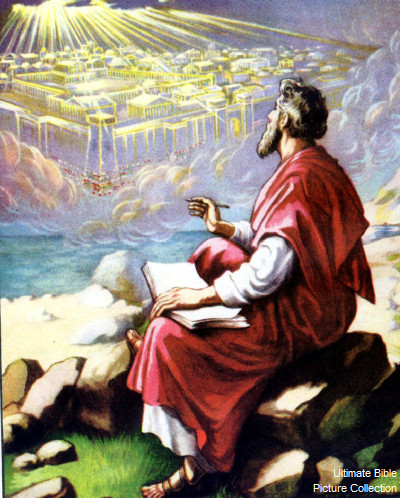
In Revelation 1:10, the Apostle John wrote that he "was in the Spirit on the Lord's Day" as he wrote this final book of the Bible. In general, Christians have taken this to refer to the Christian Sabbath, the first day of the week. However, that tradition is challenged by seventh-day sabbatarians, such as Seventh-Day Adventists, who claim instead that he was in the Spirit on "the day of the Lord."

However, in favor of the traditional wording is that John uses a different word in the genitive here from what is used in the New Testament for "day of the Lord." In the passage at hand, the Greek reads "te kuriake hemera." In contrast, where the New Testament writers referred to "the day of the Lord," such as in I Thessalonians 5:2, the writers use "he hemera kuriou." "Kuriakos" is used only here and in I Corinthians 11:20 (to refer to "the Lord's Supper"). "Kurios," in contrast, is used 720 times, both for Christ and for higher authorities, in general, which is why it is sometimes translated "master." Thus, the difference is that "kurios" is the more-generic term, while "kuriakos" is used only for Christ, which is why it came into Germanic languages as the word for "church" ("kirk" in Scottish dialect, "kirche" in German), instead of the Greek and Latin "ekklesia" ("eglise" in French, "iglesia" in Spanish, "chiesa" in Italian).
Apostle John

The point is this: the day in Rev. 1:10 is not the Day of the Lord, such as appears not just in I Thessalonians, but also in the Old Testament prophets (e. g., Amos 5:18, Zephaniah 1:14, and Joel 1:15). Rather, it is specifically the day of Christ! That is because the first day was the day of His resurrection (John 20:1ff), and when He revealed Himself glorified to His disciples (John 20:19), and when He sent the Holy Spirit (Acts 2:1; Pentecost was fifty days after Passover, i. e., seven seventh-days plus one, the first day of the week), and the day that the apostolic church gathered for worship (Acts 20:7 and I Corinthians 16:2). Thus, for John to have been involved in spiritual exercises on that day is only to be expected. To say that he was doing so on "the day of the Lord" makes no sense, at all.

Accordingly, I affirm the statement of the Westminster Confession of Faith (XXI:7): "As it is of the law of nature, that, in general, a due proportion of time be set apart for the worship of God; so, in His Word, by a positive, moral, and perpetual commandment, binding all men in all ages, He hath particularly appointed one day in seven for a Sabbath, to be kept holy unto Him: which, from the beginning of the world to the resurrection of Christ, was the last day of the week; and, from the resurrection of Christ, was changed into the first day of the week, which in Scripture is called the Lord's Day, and is to be continued to the end of the world as the Christian Sabbath." I find the biblical case for the first-day Sabbath, ever since the resurrection of Christ, to succeed over that for a continuing seventh-day Sabbath. I consider the latter to be an effort at judaizing the Christian faith, and, therefore, to be opposed.

Wednesday, April 15, 2015

Imputed Righteousness in the Old Testament

One of the doctrines of classical dispensationalism that I find most bizarre is its teaching that the Old Testament is a system of works righteousness, that is, the belief that Old Testament believers attained right standing with God by obedience to the Mosaic Law. Some, such as John Hagee, even teach that modern Jews are saved by that means. I understand that modern dispensationalists have generally repudiated that doctrine.

However, I see a very different teaching in the Old Testament.

Look, example, at Isaiah 26:12: "O LORD, You will ordain peace for us, for You have indeed done for us all our works." The prophet testifies that our good works have actually been done in us by God! And again in Isaiah 46:13: "I bring near My righteousness, it is not far off; and My salvation will not delay." Consider also Isaiah 52:1: "Awake, awake, put on your strength, O Zion; put on your beautiful garments, O Jerusalem, the holy city; for there shall no more come into you the uncircumcised and the unclean." This is the same imagery used in Zechariah 3:3-4, in which the High Priest Joshua is first seen in the filthy garments of his own unrighteousness (cp. Isaiah 64:6), to be clothed anew in Christ's righteousness: "'Remove the filthy garments from him.' And to him he said, 'Behold, I have taken your iniquity away from you, and I will clothe you with pure vestments.'" This imagery is picked up by the Apostle John in the Revelation, such as Rev. 3:18 and 7:14.

The Prophet Jeremiah even uses Christ as our righteousness as His name! Jeremiah 23:6 tells us of the Branch of David, "In his days Judah will be saved, and Israel will dwell securely. And this is the name by which he will be called: ‘The Lord is our righteousness.’" The prophet tells Israel that their righteousness is not by their own actions, but rather to be found in their Messiah to come!

It can be fairly said that these prophets are obscure, compared to the clarity of the Gospel in the New Testament. Of course that is so. The Old Testament contains the Gospel under types and shadows, both of which are removed in the New Testament. The glory of the person and work of Christ far exceed that of their obscurity in the Old Testament, just as the smell of baking bread, as wonderful as it is, is far exceeded by the taste of the bread, dripping with melted butter! But the fact that the New Testament glory is greater should never be allowed to deny the presence of the Gospel in the Old Testament.

And, on a side note, I think it is crucial to mention that these truths are what we need to be showing our Jewish neighbors, in the hope that we may see the day when God will remove the veil from their eyes, and they will come in repentance to the Messiah that they initially rejected (Romans 11:25-27).

Thursday, April 9, 2015

Jehovah's Witnesses and the "I Am" Passages in the Gospel of John

As an orthodox Christian, I believe that Jesus is, and has always been, the Second Person of the Trinity, fully God, and Creator of all things. I find these most-explicitly taught in the Gospel of John. The main thing that divides Christians and Jehovah's Witnesses is that they deny all of those things. I have addressed their interpretation of John 1:1 here. Now, I want to deal with their distortions of the "I Am" verses later in the Gospel.

In chapter 8, Jesus is involved in a controversy with the Pharisees. They claim that their descent from Abraham guarantees their spiritual welfare. His response is well-known (John 8:58): “Truly, truly, I say to you, before Abraham was, I am.” He is referring to Exodus 3:14, in which God tells Moses that His name is I Am (the name "Yahweh," anglicized as "Jehovah," is a form of the Hebrew verb "to be"). He was claiming to be the God of Abraham come in the flesh. And the Pharisees understood His reference, because they immediately picked up stones to kill Him for blasphemy.

In the New World Translation, the Bible version published by the Jehovah's Witnesses, Jesus's words have been altered to, "Before Abraham came into existence, I have been." They have altered the tense of the verb ("ego eimi" in the Greek) to eliminate the connection to Exodus. In addition to the blatantly self-serving nature of that paraphrase, it also shows the lie in the Watchtower's claim to believe in, and teach, the Bible.

Moreover, this doctrinal error invokes the lesser-known words earlier in the passage.

In John 8:24, Jesus tells the Pharisees, "I told you that you would die in your sins, for unless you believe that I Am, you will die in your sins.” In many versions, you will find "I am he." "He" isn't in the original, which is why the NASB and KJV, for example, print it in italics. I have left it out, because I think it weakens the thrust of His words. But look closely at what He says: if a person denies "that I am," that is, that He is Jehovah our Savior, then that person will die in his sins, to be denied eternal life. The NWT has this verse reading, "If you do not believe that I am the one, you will die in your sins." Witnesses should ask the Watchtower this question: If "ego eimi" should be past tense in verse 58, then why not also in verse 24, part of the same portion of narrative?

This controversy between Christians and Jehovah's Witnesses is not a mere quibble over a couple of words. Eternity is at issue. I personally do not wish Witnesses to face eternal death because of a deception. My hope is that they will see this, and that the Holy Spirit will work repentance in their hearts (II Timothy 2:25), that they may receive the same eternal life that I have.

Monday, April 6, 2015

The Two Witnesses of the Revelation

I would never claim that the Revelation is an easy book to understand. Some portions are, while others definitely are not. I generally look to the rule of parsimony in interpreting it, i. e., that the simplest interpretation is to be preferred, unless there is evidence to the contrary. By simplest, I do not mean most literal. In fact, I find that those who hold to a generally-literal approach are the ones who go to the greatest hermeneutical acrobatics to force it to fit their chronologies. I usually find that the partial-preterist approach requires the fewest twists and bends to understand the text.

Chapter 11 describes two witnesses from God. Verse 3 tells us, "I will grant authority to my two witnesses, and they will prophesy for 1,260 days, clothed in sackcloth." Many colorful interpretations have been given regarding the identity of these witnesses. I don't think such efforts are necessary. The Revelation is a revelation of whom? The first verse of the book tells us: "The revelation of Jesus Christ." And where has He referred to two witnesses to Himself? He says (John 5:39), "You search the Scriptures because you think that in them you have eternal life; and it is they that bear witness about Me." And, more specifically (Luke 24:27), "Beginning with Moses and all the Prophets, He interpreted to them in all the Scriptures the things concerning Himself." And of Him, Philip testifies (John 1:45), "We have found Him of Whom Moses in the Law and also the prophets wrote, Jesus of Nazareth, the son of Joseph."

Recall, also, the accounts of the Transfiguration (Matthew 17: 1-13, Mark 9:2-13, and Luke 9:28-36). While the Apostle John, author of the Revelation, doesn't include the Transfiguration in his Gospel, the Synoptic accounts report that he was present (Matt. 17:1, Mark 9:2, Luke 9:28). And what did he witness? Moses, the writer of the Law, and Elijah, the foremost of the prophets, giving their witness to the Messiahship of Jesus.

So, I would suggest that the reader doesn't have to search the newest book from the prophecy-mongers or today's newspaper to take a guess as to the identity of the witnesses. They are the same witnesses that have been pointing to Him since the first verses of the New Testament.

Consider also the evidence in Revelation 11 itself. Verse 6 tells us, "They have the power to shut the sky, that no rain may fall during the days of their prophesying, and they have power over the waters to turn them into blood and to strike the earth with every kind of plague, as often as they desire." Where have we seen someone associated with the withholding of rain? In I Kings 17:1, Elijah tells Ahab, king of Israel, "As the Lord, the God of Israel, lives, before Whom I stand, there shall be neither dew nor rain these years, except by my word." And who is associated with plagues, such as turning waters to blood? Exodus, starting in chapter 7, describes Moses as the intermediary of God's plagues on Egypt. The plague of blood, specifically, is found in Exodus 7:17-18.  This isn't rocket science. John is using images from the Old Testament which would have been very familiar to his readers. I am saddened that they aren't as familiar to today's popular "bible teachers."

Revelation 11 continues with its account. In verse 7, they are killed, which verse 8 tells us happens in Jerusalem. Then verse 10 tells us, "those who dwell on the earth will rejoice over them and make merry and exchange presents, because these two prophets had been a torment to those who dwell on the earth." The word translated here as "earth," can also be translated as "land," which I prefer. The people of the land, that is, of the land of Israel, celebrate the silencing of the testimony of the law and the prophets, because they wanted an excuse to reject their Messiah. The Deacon Stephen describes this in his evangelistic sermon in Acts 7. Notice especially verses 52 and 53: "Which of the prophets did your fathers not persecute? And they killed those who announced beforehand the coming of the Righteous One, Whom you have now betrayed and murdered, you who received the law as delivered by angels and did not keep it." By killing the prophets and resisting the Law of Moses, the reprobate among the nation of Israel believed that they avoided the consequences for their unbelief, which is what they celebrate in Revelation 11:10.

Was their scheme successful? Revelation 11:11-13: "But after the three and a half days a breath of life from God entered them [i. e., the witnesses], and they stood up on their feet, and great fear fell on those who saw them. Then they heard a loud voice from heaven saying to them, 'Come up here!' And they went up to heaven in a cloud, and their enemies watched them. And at that hour there was a great earthquake, and a tenth of the city fell. Seven thousand people were killed in the earthquake, and the rest were terrified and gave glory to the God of heaven." These verses aren't as clear as the earlier portion. The reference to being received into heaven in a cloud suggests that this portion describes the ascension of Christ (compare Luke 24:51, and Acts 1:9-11), with the signs in the place of the thing signified. Whether there was an earthquake at that time, or possibly that this is a figurative reference, I cannot say.