Saturday, December 31, 2022

Parallels Between Isaiah and Paul on the Conversion of the Jews


"On this mountain the Lord of hosts will make for all people a feast of rich food, a feast of well-aged wine, of rich food full of marrow, of aged wine well refined. And He will swallow up on this mountain the covering that is cast over all peoples, the veil that is spread over all nations. he will swallow up death forever; and the Lord God will wipe away tears from all faces, and the reproach of His people He will take away from all the earth, for the Lord has spoken. It will be said on that day, 'Behold, this is our God; we have waited for Him, that He might save us. This is the Lord; we have waited for Him; let us be glad and rejoice in His salvation.' For the hand of the Lord will rest on this mountain..." (Isaiah 25:6-10). 

"The mountain of the Lord" and its variants appear frequently in the prophets, especially in Isaiah. See, for example, chapter 2, and the fourth chapter of Micah. It is an image derived from the temple mount, the place where God met in fellowship with His people. That image, in turn, may have come from the mountain on which Adam was placed in the garden. Thus, it is an image of fellowship, between the elect and our Redeemer. Use of "the Lord," used in English Bibles when the Hebrew refers to Jehovah, shows that the relationship is not with the Trinity undifferentiated, but rather with the Second Person of the Trinity, the preincarnate Christ, acting in His mediatorial role. 

In addition to those Old Testament parallels, we also see elements in the passage above that would appear in the New Testament, specifically in the writings of Paul. 

Where the prophet describes the spiritual veil over the hearts of men, Paul uses the same image for the yet-unbelieving Jews in II Corinthians 3:12-18: "Since we have such a hope [of life in the Spirit, v. 6], we are very bold, not like Moses, who would put a veil over his face so that the Israelites might not gaze at the outcome of what was being brought to an end. But their minds were hardened. For to this day, when they read the old covenant, that same veil remains unlifted, because only through Christ is it taken away. Yes, to this day, whenever Moses is read, a veil lies over their hearts. But when one turns to the Lord, the veil is removed. Now the Lord is the Spirit, and where the Spirit of the Lord is, there is freedom. And we all, with unveiled face, beholding the glory of the Lord, are being transformed into the same image from degree of glory to another..."

Notice also that Paul tells us another relevant fact: It is in turning to Christ that the veil of unbelief is removed, verifying that it is in Christ that the events described by Isaiah will occur. Some will agree, but place the events after His second coming. Yet the passage precludes that possibility by describing it in feast terms. yet, there will be no hunger in the resurrection, and, therefore, no use for food. 

Does Paul restrict our case to the Jews? In II Corinthians, that might be possible, but it is eliminated if we include another Paulian passage, Romans 11:11-15: "So I ask, did they [i. e., the Jews] stumble in order that they might fall [forever]? By no means! Rather, through their trespass salvation has come to the Gentiles, so as to make Israel jealous. Now, if their trespass means riches for the world, and if their failure means riches for the Gentiles, how much will their full inclusion mean? Now I am speaking to you Gentiles. Inasmuch then as I am an apostle to the Gentiles, I magnify my ministry in order, somehow, to make my fellow Jews jealous, and thus save some of them. For if their rejection means the reconciliation of the world, what will their acceptance mean but life from the dead?" And further, Romans 11:25-26: "Lest you be wise in your own sight, I do not want you to be unaware of this mystery, brothers: a partial hardening has come upon Israel, until the fullness of the Gentiles has come in. And in this way, all Israel will be saved..." 

Thus, Paul predicts in narrative what Isaiah prophesied in the poetic language of Hebrew prophecy, that a time will come, in which the greater part of both Gentiles and of Jews will be converted to saving faith in Jesus Christ. The Puritans called this the postmillennial hope. 

Wednesday, December 14, 2022

The Irreducible Sovereignty of God

"This is the purpose that is purposed concerning the whole earth, and this is the hand that is stretched out over all the nations. For the Lord of hosts has purposed, and who will annul it? His hand is stretched out, and who will turn it back?" 
-Isaiah 14: 26-27

The absolute sovereignty is a truth which men find hard to swallow. Certainly any unbeliever will reject it. Yet, even the majority of believers is compelled by the Adamic nature to hold fast to some element of human autonomy, that very temptation that Satan offered to Adam and Eve. The believer professes to be a sinner, but claims a right of free will over the eternal purposes of God. 

However, consider the verses quoted above. Who is sovereign? God or man? Who is subject to a veto? God or man? Unquestionable, the prophet tells us that the decree of God is founded on certainly, and cannot be overturned, even by the rebellion of men. 


Saturday, November 19, 2022

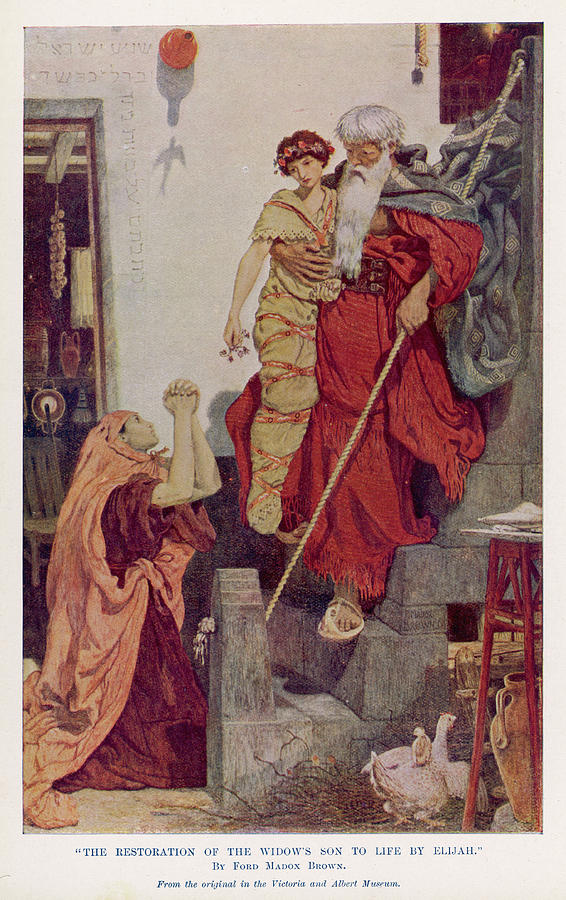
Leprosy, Famine, and the Doctrine of Common grace

"In truth, I tell you, there were many widows in Israel in the days of Elijah, when the heavens were shut up three years and six months, and a great famine came over the land, and Elijah was sent to them of them but only to Zarephath, in the land of Sidon, to a woman who was a widow. And there were many lepers in Israel in the time of the prophet Elisha, and none of them was cleansed, but only Naaman the Syrian" (Luke 4:25-27).


Among Reformed folks, the majority hold to the doctrine of common grace: "God's kindness to all people during their time on earth, regardless pf their present status with him. While it is true that believers will experience both common grace and saving grace, those who are apart from Christ will only experience common grace in this life." 

Of course, to the Arminian, all grace is common grace, since, he supposes, God enables all men to believe unto salvation. And that parallel must be noted. The Reformed people who hold to this doctrine are advocating a step halfway to the presuppositions that underlie the error of Arminianism. 

Not, however, the text above. These are the words of Jesus, referring to two events found in the Old Testament. The first was the three and half years that Elijah spent as a refugee in the territory of the Sidonians, while God judged Israel with drought and famine (I Kings 17-18). The second was Elisha's giving a Syrian general the means of curing his leprosy (II Kings 5). 

In both cases, Jesus makes the point that there were many people who shared common sufferings, but the grace was shared only with a particular victim in each case. That is, the grace shown was particular, not common. And that is one of the problems with the doctrine of common grace. Not only is it not biblical, but it can't be seen in the historical cases where it should have been applicable. 

Saturday, November 12, 2022

America's Apostasy and the Innocent Blood of Aborted Babies

In describing the apostasy of Israel, God gave these words through the anonymous writer of Psalm 106:36-39: "They served their idols, which became a snare to them. They sacrificed their sons and their daughters to the demons; they poured out innocent blood of their sons and daughters, whom they sacrificed to the idols of Canaan, and the land was polluted with blood. Thus they became unclean by their acts, and played the whore in their deeds."

In my own mind, I recognize in this description my own culture, 21st-Century America. True, worshiping idols has not become widespread. Wicca, Hinduism, and other pagan religions, both ancient and new, even explicit worship of Satan, are spreading and becoming more visible, as they are mainstreamed by the broadcast media, such as the TV shows "Charmed" and "Supernatural." These traditions are being mixed in fashion trends, such as the Goth movement. But they are still relatively small compared to the overall size of the American population. 

On the other hand, the sacrifice of sons and daughters is far more companion than any explicit idolatry. Sixty million Americans were murdered in their mothers' wombs between 1973, when the Supreme Court declared abortion a "constitutional right," and the overturning of that decision in June of this year (2022). Why? For about 99% of abortions, it was merely for convenience: "A baby would interfere with my lifestyle." Babies cost money, and parenthood interferes with an irresponsible lifestyle. Worst of all, a baby puts a block in a lifestyle of promiscuous sex. Thus we have both the prosperity and lasciviousness of the ancient human sacrifice cults. 

America is a land soaked in innocent blood. There has never been, and can never be, a just accusation of a capital crime against an unborn child. The mere suggestion of it is specious. Among humankind since the Fall, there can never be true innocence, but there can be justice. And capital punishment for someone who has never committed a crime is not justice, but is itself a crime.

I am writing this just after the 2022 midterm elections, so I am thinking especially of leftwing candidates who campaigned on the protection of the supposed right to kill the innocent. I have tried to warn them that the blood of those innocents will testify against them in the judgment, but they don't care. May God grant them repentance! Until then, if ever, the innocent blood drips from their hands  and stains every word they speak or action they take. And God holds this nation accountable for not removing that evil from our civil government. 


Wednesday, September 28, 2022

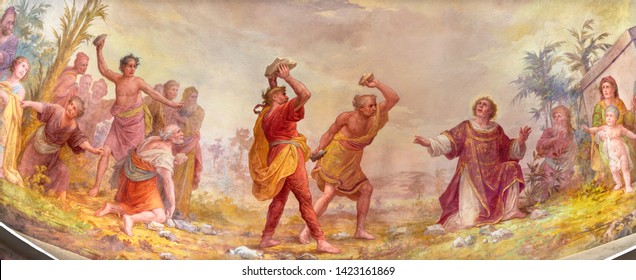
The Martyrdom of Stephen as a Refutation of "Soul Sleep"

Where was the spirit of Stephen after he was stoned to death? The Seventh-Day Adventists claim that it was asleep with his body in the grave. The Jehovah's Witnesses claim that it disintegrated, to be recreated at the final judgment. Those two doctrines are variants of what is commonly called "soul sleep." It is in sharp contrast to the traditional Christian belief that the spirits of the godly passed immediately upon death into the heavenly presence of Jesus (see II Corinthians 5:8). 

The story of Stephen is found in Acts, chapter 7. We are introduced to him in the previous chapter, where we are told that the church elected him to the diaconate, because he was "full of faith and of the Holy Spirit" (Acts 6:5). In chapter 7, he gives a long sermon about Jesus to a Jewish crowd, culminating in verses 51-53: "You stiff-necked people, uncircumcised in heart and ears, you always resist the Holy Spirit. As your fathers did, so do you. Which of the prophets did your fathers not persecute? And they killed those who announced beforehand the coming of the Righteous One, whom you have now betrayed and murdered, you who received the law as delivered by angels and did not keep it." As might be expected, his audience was not happy with his words: "Now when they heard these things they were enraged, and they ground their teeth at him... They cried out with a loud voice and stopped their ears and rushed together at him. Then they cast him out of the city and stoned him" (Acts 7:54, 57-58). 

How did Stephen respond to this persecution? "He, full of the Holy Spirit, gazed into Heaven and saw the glory of God, and Jesus standing at the right hand of God. And he said, 'Behold, I see the heavens opened, and the Son of Man standing at the right hand of God'... And, as they were stoning Stephen, he called out, 'Lord Jesus, receive my spirit.' And, falling to his knees, he cried out with a loud voice, 'Lord, do not hold this sin against them.' And when he had said this, he fell asleep [i. e., died]" (Acts 7:55, 59-60). 

This spiritual man knew that death was upon him, but his expectation was to enter thereupon into the presence of Jesus, as orthodox Christians have always said. He knows nothing of a two-thousand year (and counting) gap between his death and rising to see Jesus only then. Stephen the Deacon was surely no Adventist or Jehovah's Witness. 


Saturday, September 24, 2022

Is Pluralistic "Freedom of Religion" A Biblical Precept?

"These are the statutes and rules that you shall be careful to do in the land that the Lord, the God of your fathers, has given you to possess, all the days that you live on the earth. You shall surely destroy all the places where the nations whom you shall dispossess served their gods, on the high mountains and on the high hills and under every green tree. You shall tear down their altars and dash in pieces their pillars and burn their Asherim with fire. You shall chop down the carved images of their gods and destroy their name out of that place. You shall not worship the Lord your God in that way. But you shall seek the place that the Lord your God will choose out of all your tribes to put His name and make His habitations there" (Deuteronomy 12:1-5). 

We in America brag of our freedom of religion. Not only are there Christian (real or not) denominations of every description, but we also boast of our Jewish synagogues, Islamic mosques, and Hindu and Buddhist temples. And that doesn't even include the various varieties of nonreligious or irreligious Americans, even including Satanists. 

I think the contrast between those two paragraphs should be clear to anyone. Yet the pietists and dispensationalists have eliminated any evidence or discussion of what God said in Deuteronomy, as if the pluralism of modern America were the case from the days of creation. 

The pietist claims that the Christian faith is a private affair, "a relationship, not a religion." So the less visible his religion is, outside of church and home prayer, the more spiritual he feels. 

On the other hand, the dispensationalist claims that God's commandment here was for Israel, and ended with the coming of Jesus. After all, does it not refer to their "land"? 

And it does. Do we have no references to the land given to Jesus, and His body, the Church? "Ask of Me, and I will make the nations Your heritage, and the ends of the earth Your possession" (Psalm 2:8). That is the promise of the Father to the Son, in the intra-Trinitarian covenant, made before the world was created. And did Jesus ever claim that promise? "All authority in Heaven and on earth has been given to Me. Go, therefore, and make disciples of all nations" (Matthew 28:18-19). The commandment was limited to the land, but the land was expanded to include the whole earth! 

As a Presbyterian, I am aware of the impact that this conflict has had on my own tradition. When the Westminster Standards were originally written, they included the presumption of establishmentarianism. However, after the US Constitution was adopted, American Presbyterians changed our standards to reflect the new political enthusiasm for religious freedom. I am disappointed that they chose a political justification over the requirements of Scripture. 

Neither political considerations nor pietistic latitudinarianism can override what God has commanded in His word. And that is that His truth is the only truth, and must displace all competing, but false, claims of truth. 


Wednesday, September 21, 2022

The Word of God Against Abortion Exceptions for Rape and Incest

In Ezekiel 18, that prophet gives us this rebuke to Israel from her God: "Behold, all souls are Mine; the soul of the father as well as the soul of the son is Mine: the soul who sins shall die" (Ezekiel 18:4). This verse is often taken out of context to mean that sin causes spiritual death. While that doctrine is true, it has nothing to do with the prophet's message here. As the rest of the chapter goes on to tell us, this verse is about God's justice. The soul that sins shall die for its own sins, not the sins of another person. 

"If a man is righteous and does what is just and right -... he is righteous; he shall surely live, declares the Lord God" (Ezekiel 18:5, 9). "[Then] if he fathers a son who is violent, a shedder of blood... Shall this son live? He shall not live. he has done all these abominations; he shall surely die; his blood shall be upon himself" (Ezekiel 18: 10, 13). So the prophet gives a hypothetical case of a righteous man with a wicked son. Shall the righteousness of the father preserve the wicked son from the just consequences of his wicked acts? No, it shall not. 

Now we are given the case the other way: "Now suppose that this man [i. e., the wicked son] fathers a son who sees all the sins that his father has done; he sees, and does not do likewise... He shall not die for his father's iniquity; he shall surely live. As for his father, because he practiced extortion, robbed his brother, and did what is not good among his people, behold, he shall die for his iniquity" (Ezekiel 18:14, 17-18). So now the wicked man has a godly son, the grandson of the earlier righteous man. Shall this son die for his father's wickedness? No. In fact, the wicked son, even though he is between two generations of godly men, is also not excused thereby, but is required still to receive justice. 

"Yet you say, 'Why should not the son suffer for the iniquity of the father? When the son has done what is just and right, and has been careful to observe all My statures, he shall surely live. The soul who sins shall die. The son shall not suffer for the iniquity of the father, nor the father suffer for the iniquity of the son. The righteousness of the righteous shall be upon himself, and the wickedness of the wicked shall be upon himself" (Ezekiel 18:19-20). This was a remarkable statement at the time! It was the common practice to kill whole extended families for the crime of one member. God declares that the common system was not His standard of justice. 

We have moved beyond such primitive concepts as described here, haven't we? We like to tell ourselves that, but it just isn't so. Do not most prolife Americans take for granted that exceptions for abortion in cases of rape or incest must always be allowed? Why is that? Has the preborn child committed a crime worthy of death? I would say that he obviously has not. Rather, in either case, it was his father who committed the crime. So why do we grant that killing the innocent baby is a just response? 

I think that this passage from Ezekiel shows that God does not grant such injustice.