Saturday, March 19, 2016

Was Jesus Born Again? The Heresy of the Word of Faith Movement

Jesus taught us that it is necessary for a man to be born again to enter eternal life (John 3:3). That's because we are all fallen in Adam (Romans 5:12), dead in sin (Ephesians 2:1). To be born again is to have God change our hearts, to become able to believe and obey Him (Ezekiel 36:26-27). Jesus, however, didn't include Himself, because He had no sin (II Corinthians 5:21 and Hebrews 4:15). If He was never a sinner, then He had no need for a new heart.


In contrast, the ministers associated with the prosperity gospel, or Word of Faith, movement, teach that Jesus went to Hell after His crucifixion, and was born again there, so that He could then be resurrected. Can there be any better indication that this movement is actually an anti-Christian, even anti-Christ, cult?

Saturday, March 12, 2016

The Pre-Incarnate Mediatorship of Christ in Amos 7

The seventh chapter of Amos opens with three warning visions.

The first is Amos 7:1-3: "This is what the Lord God showed me: behold, he was forming locusts when the latter growth was just beginning to sprout, and behold, it was the latter growth after the king’s mowings. When they had finished eating the grass of the land, I said, 'O Lord God, please forgive! How can Jacob stand? He is so small!' The Lord relented concerning this: 'It shall not be,' said the Lord."

The second is Amos 7:4-6: "This is what the Lord God showed me: behold, the Lord God was calling for a judgment by fire, and it devoured the great deep and was eating up the land. Then I said, 'O Lord God, please cease! How can Jacob stand? He is so small!' The Lord relented concerning this: 'This also shall not be,' said the Lord God." 

And the third in Amos 7:7-9: "This is what he showed me: behold, the Lord was standing beside a wall built with a plumb line, with a plumb line in his hand. And the LORD said to me, 'Amos, what do you see?' And I said, 'A plumb line.' Then the Lord said, 'Behold, I am setting a plumb line in the midst of my people Israel; I will never again pass by them; the high places of Isaac shall be made desolate, and the sanctuaries of Israel shall be laid waste, and I will rise against the house of Jeroboam with the sword."

In all three visions, God warns of an impending judgment on the northern kingdom, a judgment which was eventually fulfilled in the conquest and deportation by Assyria in 722BC. The difference is that the first two judgments are turned away through the intercession of Amos himself. 

However, the third vision is very different. First, notice the varying use of "lord." In the first and third occurrences we see "Lord." That is, the Hebrew word adon. In contrast, the middle usage is "LORD," for the Tetragrammaton, Jehovah. This contrast indicates a conversation between the First and Second Persons
of the Trinity. Compare Psalm 110:1 and its use in Luke 20:42 and Acts 2:34. 

We see Amos's twice taking a mediatorial role, and turning aside God's judgment on the northern portion of Israel. However, in the third judgment, Christ, the ultimate Mediator, refuses to intervene on behalf of Israel and this third, most-devastating, judgment was poured out in the destruction of these ten tribes. We see it again in Amos 9:7, where God tells the northern kingdom that she has no more privileges in His eyes than do the most-obscure (in their knowledge of the world) foreigners. How horrible must God's wrath be, if His own appointed Mediator refuses to plead for a sinner!

Saturday, March 5, 2016

The Missionary Heart of Jesus

"Jesus went throughout all the cities and villages, teaching in their synagogues and proclaiming the gospel of the kingdom and healing every disease and every affliction. When He saw the crowds, He had compassion for them, because they were harassed and helpless, like sheep without a
shepherd. Then He said to His disciples, 'The harvest is plentiful, but the laborers are few; therefore pray earnestly to the Lord of the harvest to send out laborers into His harvest.'"
- Matthew 9:35-38 

These verses show us something about Jesus that I find amazing. While He came to save the church (Eph. 5:25, confer John 10:29 and 17:6), He is not blind to the rest of fallen humanity. Rather, He sees their sin, spiritual blindness, disease, futility, and even their stubbornness (see, for example, Matthew 23:37), and is moved with compassion. He sorrows over the irremediable fallenness of the reprobate, though He acts in justice in judging them for their sin (Matthew 25:31-33, 46, and Revelation 20:11-15). 

How can these things be compatible?

It is certainly true that God takes no pleasure in destroying the wicked (Ezekiel 33:11). If He did, would He not be too sadistic for us to contemplate? But the Bible also says (Psalm 5:4), "You are not a God who delights in wickedness; evil may not dwell with You."

The problem continues to be that God is more complex than we want Him to be. Too many people talk about the love of God for men, and then stop. What does God value above men? Himself. To love sinners without acting in justice, He would be forced to excise that side of His nature, His holiness (Heb. 12:29). He would thus cease to be God. The God of that kind of belief system is not the God of the Bible, but is rather an idol, a god made, not even in man's image, but rather according to man's desires.

Saturday, February 27, 2016

Is God Responsible for Sin?

Related to the so-called question of evil is the question, Is God the author of sin? Did He create sin? Is sin under His control?

Let me first address the Arminian answer to this question: sin is the result of man's free will, with the permission of God. This, the Arminian believes, relieves God of any responsibility for sin, as is supposedly required by James 1:13. However, I would suggest that the Arminian solution falls short of the weight that Arminians put on it. If I had a teenage son who told me that he intended to kill his schoolmates (as in the Columbine massacre), and I did not stop him, would I be considered free of guilt, because I merely permitted my son's wicked actions? Of course not! Both morally and legally, I would be culpable for not acting to prevent his actions. This is comparable to the Arminian attitude toward God's permission of sin. If God knew that Adam (or any of his descendants) would commit an evil act, and could have prevented it - with both of which statements the Arminian would agree - then was it not reprehensible for Him not to have prevented it? Of course, it was, so that the Arminian excuse of mere permission in no way meets his own criterion for avoiding responsibility.

In contrast, the Calvinist - including myself - insists that God is always God, and all things occur, not by His mere permission, but by His active decree. That includes things that we consider evil, whether properly so or not.

Do I then make God guilty of the acts of evil which I plainly say happen according to His decree? And the answer is no, I don't. How so?

Let me first demonstrate my assertion that all things, including what men would consider evil (whether properly so or otherwise), occur only according to the purposes of God. In Zechariah 1:14-15, that Prophet quotes God, saying, "I am exceedingly jealous for Jerusalem and for Zion, and I am exceedingly angry with the nations that are at ease. For, while I was angry but a little, they furthered the disaster." The situation is the time of the end of the exile in Babylon. As is commonly known, the Babylonians were God's tool for the punishment of Judah for idolatry. However, though Babylon was the tool of God, in her own intentions she had acted in evil, and thus incurred the wrath of God.


In Gen. 50:20, Joseph, the son of Jacob, told his brothers, "As for you, you meant evil against me, but God meant it for good, to bring it about that many people should be kept alive, as they are today." Do you recall the story? Joseph was favored by his father over his brothers, because his mother was Jacob's favorite wife. Out of jealousy, his brothers sold him into slavery, but told his father that he had been slain by beasts. After a series of adventures, Joseph became the prime minister of Egypt at a time when there was famine in Canaan. As a result, he was in a position to save his family from starvation. An act of sin on the part of the brothers was according to God's plan to save the covenant people.

In Acts 4:27-28, the Apostle Peter is preaching to the leaders of the Jews, and then prays: "Truly in this city there were gathered together against your holy servant Jesus, whom you anointed, both Herod and Pontius Pilate, along with the Gentiles and the peoples of Israel, to do whatever your hand and your plan had predestined to take place." He explicitly states that God had predestined - decreed before history began - that Jesus would suffer and be murdered for the salvation of His people. The greatest evil that has ever occurred in the bloody and violent history of mankind happened by the predetermined purpose of God.

So, now we come to the question at issue: is God thereby the author of sin, of evil, of the wickedness of men? No, He is not. What is sin? As Question 14 of the Westminster Shorter Catechism says, "Sin is any want of conformity unto, or transgression of, the law of God." Sin is the repudiation of God's authority. That definition self-evidently excludes the acts of God Himself. In addition, all that God does is for His own glory (see, for example, Isaiah 43:7) and for the good of the elect (Romans 8:28-29). That means that everything He does is necessarily good. In contrast, wicked men always act to spite the glory of God and to destroy the elect. That means that everything they do, in terms of their intent, is evil, sinful, wicked. As can be seen in the verses above, the same act, as committed by men, may be sin, but, as it is decreed by God, is only good.

Saturday, February 20, 2016

Divorce, Same-Sex Marriage, and Adultery

In Matthew 5:31-32, Jesus taught a crowd, including His disciples, "It was also said, 'Whoever divorces his wife, let him give her a certificate of divorce.' But I say to you that everyone who divorces his wife, except on the ground of sexual immorality, makes her commit adultery, and whoever marries a divorced woman commits adultery." A person may ask why it only refers to the wife's adultery after a divorce. It is because, under the Law, only a husband could initiate a divorce. The counter-balance was the right of the now-exwife to keep her bride price. In our society, the principles would apply equally to husband and wife.

Was Jesus here objecting to the Law? After all, the principle to which He objects comes from Deuteronomy 24:1. And the answer is, of course, no. As God incarnate, He could certainly not repudiate something that He had legislated. Rather, He was objecting to the perversion of the Law, by which men dismissed their wives for the pettiest of offenses: "The Talmud specifically says that a man can divorce a woman because she spoiled his dinner or simply because he finds another woman more attractive, and the woman's consent to the divorce is not required." The Old Testament clearly condemned such a lackadaisical attitude toward marriage (Malachi 2:13-16): "You cover the Lord’s altar with tears, with weeping and groaning because He no longer regards the offering or accepts it with favor from your hand. But you say, 'Why does He not?' Because the Lord was witness between you and the wife of your youth, to whom you have been faithless, though she is your companion and your wife by covenant. Did He not make them one, with a portion of the Spirit in their union? And what was the one God seeking? Godly offspring. So guard yourselves in your spirit, and let none of you be faithless to the wife of your youth. For the man who does not love his wife but divorces her, says the Lord, the God of Israel, covers his garment with violence, says the Lord of hosts."

I have thought of this often during the debates over same-sex marriage, including when it was opposed with "The Defense of Marriage Act." How many of the members of Congress  were divorced who voted for DOMA? And what about Bill Clinton, the philanderer-in-chief who signed DOMA? The best hip boots in the world wouldn't be good enough to wade through that tide of hypocrisy. Kim Davis, the Kentucky county clerk who made world news for opposing same-sex marriages, has been married four times! Which of those marriages was she defending?

As a society, we have become completely unmoved by divorce. Any excuse will do, even such drivel as "I just wasn't happy anymore." Do we skip over God's protest in Malachi? Close our eyes to it? Do we imagine that He sets His opinion aside when it doesn't match the most-recent opinion polls? And do we think that crying about same-sex marriages will cover the hypocrisy of our own dismissal of God's standards for marriage?

Saturday, February 13, 2016

Does God Love Everyone? If You are a Covenant-Breaker, You Need to Know!


"Every evil of theirs is in Gilgal; there I began to hate them. Because of the wickedness of their deeds I will drive them out of My house. I will love them no more; all their princes are rebels."
- Hosea 9:15

If you haven't read the Book of Hosea, what you need to know is that he prophesied in the Northern Kingdom, shortly before the conquest by Assyria, and the final exile of her people. This was their final judgment for apostasy, an apostasy which included both the perversion of biblical worship and the erection of pagan idols. Gilgal, mentioned in the verse here, was one of the centers for pagan worship. 

These ancient Israelites reflected a common pagan worldview, according to which deities come by the dozens, and there is no particular exclusivity in their worship. Missionaries have long run into this problem in India, where Hindus were happy to add Jesus to their god-shelves, but could not accept a devotion to Christ alone. However, Jehovah, the first God on the Israelite god-shelf, doesn't share that worldview, which is why He made the First Commandment (Ex. 20:3): "You shall have no other gods before me." He tells His covenant people, members of the visible church, that they had better not let Him see them serving other gods, whether literally or figuratively. And He sees everything! See Job 34:21.

What the Israelites refused to acknowledge, though it was told to them in their scriptures, is that God exercises exclusive claims (Isaiah 42:8, 48:11). When they, nevertheless, chose to spread their loyalties, not to Jehovah alone, but also to every carved deity that their pagan neighbors could name, He took action, exactly because He is a jealous, though spiritual, spouse.

Early in their history, God had led Moses to write (Ex.34:14), "You shall worship no other god, for the LORD, whose name is Jealous, is a jealous God." Jealousy is so much one of God's attributes that He even uses it as an epithet, a nickname! A little later, Moses wrote (Deut. 4:2, and quoted in Hebrews 12:29), "The LORD your God is a consuming fire, a jealous God." And again (Deut. 6:15), "The LORD your God, who lives among you, is a jealous God. His anger will flare up against you, and He will wipe you from the face of the earth." And in the prophets (Nahum 1:2), "The LORD is a jealous and avenging God; the LORD is avenging and wrathful; the LORD takes vengeance on His adversaries and keeps wrath for His enemies."

Yet, the Israelites ignored His warnings and followed both a false version of biblical religion and the false pagan religions of their neighbors. And what does God say is His reaction, in the verse quoted at the top? Negatively, He says, "I will love them no more." And positively, He asserts, "I began to hate them." 

So, the answers to my questions in the title should be clear. Does God love everyone? No, He doesn't. Does God hate anyone? Yes, He does. And the last question to consider is one that I cannot answer: in which group are you?

Saturday, February 6, 2016

The Cult of Anglo-Israelism: Are White English-Speakers the Heirs of the Promises to Israel?

Many Christians have never even heard of the heresy of British-Israelism (or Anglo-Israelism). It is the belief that the Anglo-Saxons were the descendants, usually said to be via the Scythians, of the ten lost tribes of Israel, that portion of the biblical people that was deported after the conquest by the Assyrians in 722 BC. Thus, according to this doctrine, the peoples of the British Isles, the United States, Canada, Australia, and New Zealand (some followers say all of the descendants of the northern Europeans) are the heirs to the Old Testament promises to the nation of Israel. The Christian Identity movement is derived from British-Israelism, but is distinct from it. While most of its followers would not be anti-Semitic, it should be easy to discern how the Christian Identity doctrine could be drawn from it.

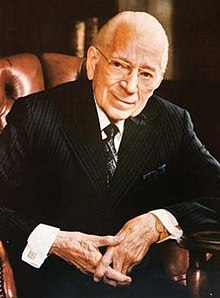
The Seventh-Day Adventists and Mormons hold to a form of British-Israelism, but its modern promotion is primarily associated with those sects which have derived from the teaching of the late
Herbert W. Armstrong.
Armstrong

There are two verses of the Old Testament that I want to bring to the attention of the followers of this doctrine. The first is Isaiah 7:8: "Within sixty-five years Ephraim will be shattered from being a people." Or, as the NASB phrases it, "Ephraim will be shattered, so that it is no longer a people." The other is Hosea 9:16: "Ephraim is stricken; their root is dried up; they shall bear no fruit. Even though they give birth, I will put their beloved children to death."
 
These verses, as was common in the Old Testament prophets, use "Ephraim" to refer to the entire people of the northern kingdom, because they were the largest tribe. In the same way, the people of the southern kingdom were called "Judah," though they also included Benjamin. 

The significance of these verses is they tell us, not what the British-Israsel cult would have to believe, i. e., that the ten tribes migrated to northern Europe, but rather that they ceased to be a people. The Anglo-Saxons cannot be the new Israel, because the distinguishable people of Israel (speaking of the northern kingdom) are extinct. Whatever pride the Armstrongists find in his doctinre is built on a myth, not upon biblical teaching.