Showing posts with label numbers. Show all posts

Wednesday, July 9, 2025

Anthropomorphisms for God Against Mormon Theology

One of the the doctrines that distinguish Mormons from biblical Christians is their belief that God the Father has a physical body like that of a human being. That is, they take references in the Bible literally, such as to His eyes, or arms, ears, feet. 

In contrast, biblical Christians take such references to be anthropomorphisms. That is, figures of speech in which is God is described as if He has human features, not because He does, but in order to make Him more relatable to mortal men. That is because He tells us explicitly that He is not a man: "God is not a man" (Numbers 23:29, I Samuel 15:29). Furthermore, we are told that His divine nature is invisible (Colossians 1:15, I Timothy 1:17). 

When I have denied their literal use of such anthropomorphisms in reference to God, I have had Mormons tell me that I demonstrate that I do not believe what the Bible says. 

However, anthropomorphisms in the Bible are not limited to references to God. 

"For you shall go out in joy and be led forth in peace; the mountains and the hills before you shall break forth into singing and all the trees of the field shall clap their hands" (Isaiah 55:12). Here there are anthropomorphisms of land features and trees expressing emotions like human beings. I posted the verse in a discussion group with Mormons and asked if they believe that mountains can sing or that trees have hands. Of course, they denied that they do. So then I asked, don't you believe the Bible? Then some fell silent while others turned to ridicule. None even attempted a rational distinction between this verse and the ones that they claim refer to literal body parts of God. 

Mormon exegesis falls apart under a little examination. 


Wednesday, May 3, 2023

Book of Numbers and Sprinkling as the Mode of Baptism

Most Christians would say that Numbers is a book that they avoid reading. And I admit that the censuses of Israel, from which the book gets its name in English, are tedious, and I usually skip over them. However, to skip the entire book is to miss some hidden gems within it. 

What struck me recently is the rite of purification, described in chapter 19: "Now the Lord spoke to Moses and to Aaron, saying, 'This is the statute of the law that the Lord has commanded: Tell the people of Israel to being you a red heifer without defect, in which there is no blemish, and on which a yoke has never come. And you shall give it to Eleazar the priest, and it shall be taken outside the camp and slaughtered before him. And Eleazar the priest shall take some of its blood with his finger and sprinkle some of its blood toward the front of the tent of meeting seven times. And the heifer shall be burned in his sight. Its skin, its flesh, and its blood, with its dung, shall be burned. And the priest shall take cedarwood and hyssop and scarlet yarn and throw them into the fire burning the heifer... And a man who is clean shall gather up the ashes of the heifer and deposit them outside the camp in a clean place. And they shall be kept for the water for impurity for the congregation of the people of Israel; it is a sin offering'" (Numbers 19:1-6, 9, emphasis added). 

So we have a ceremony described by God, in which a heifer, that is, a cow that has not yet been bred or worked, is to be sacrificed. Its blood is to be sprinkled before the tabernacle, the symbol of God's presence among His people. It was then to be burned and its ashes gathered and saved for "the water of impurity." 

"'This is the law when someone dies in a tent: everyone who comes into the tent and everyone who is in the tent shall be unclean seven days... For the unclean they shall take some ashes of the burnt sin offering, and fresh water shall be added in a vessel. Then a clean person shall take hyssop and dip it in the water and sprinkle it on the tent and on all the furnishings and on whoever touched the bone or the slain or the dead or the grave. And the clean person shall sprinkle it on the unclean on the third day and on the seventh day. Thus, on the seventh day he shall cleanse him, and he shall wash his clothes and bathe himself in water, and at evening he shall be clean'" (Numbers 19:14, 17-19). Reference to sprinkling can also be found in verse 21. Thus, the rest of the ceremony is that the ashes from the heifer would be mixed with water and sprinkled on the unclean person, and he would be cleansed. 

Finally, in Isaiah 52:15, part of the Suffering Servant passage, we read the words of the prophet to Israel of the coming Messiah who would cleanse His people from their sins. How? "He shall sprinkle many nations." The blood of Jesus is to sprinkled by faith on unclean sinners just as the ashes of the heifer were sprinkled on the unclean under the law of Moses. That is no coincidence! The one is a type of the other. 

To my Baptist brethren, I would also point out that the recipient of cleansing wasn't dipped in the water of impurity. On the contrary, it was the finger of the priest, who would then sprinkle both the blood of the sacrifice and the water of cleansing. This strongly refutes the claim of Baptists that baptism is properly done only by immersion. Rather, the type in Numbers indicates that the proper mode of baptism is by sprinkling (by which I do not mean that baptisms by other modes are, therefore, invalid). 

This Scripture points to what the Westminster Assembly would say on the subject of baptism some three millennia later: "Dipping of the person into the water is not necessary; but baptism is rightly administered by pouring or sprinkling water upon the person" (Westminster Confession of Faith XXVIII:3).


Wednesday, September 9, 2020

The Dispensational Antichrist Disproves Dispensationalism

"I will bless those who bless you, and him who dishonors you I will curse, and in you all the families of the earth shall be blessed." 

- Genesis 12:31 (see also Numbers 24:9) 

This verse is one of the favorites among dispensationalists. According to their interpretation, it is an eternal and unconditional promise by God to ethnic Israel. Among other things, it is used to justify political action to keep the American government in a policy of unconditional endorsement and assistance to the modern State of Israel. 

Another verse used by dispensationalists is Daniel 9:27: "He shall make a strong covenant with many for one week, and for half of the week he shall put an end to sacrifice and offering. And on the wing of abominations shall come one who makes desolate, until the decreed end is poured out on the desolator." According to their interpretation, this verse means that Israel will make a treaty with the Antichrist. Now understand, the dispensationalist considers the Antichrist to be a really bad dude. 

Do you see the problem with this juxtaposition? 

The dispensationalist tells us that anyone who assists the nation of Israel will be blessed  by God. He also tells us that the Antichrist assists Israel with a treaty. Doesn't syllogistic logic tell us that those two premises result in the conclusion that God will bless the Antichrist? 

I guess it's a good thing that I am not a dispensationalist. I reject both premises. Therefore, i don't have to deal with the nonsense that results from them.


Wednesday, August 12, 2020

Does God Have a Body Like Men Have?

One of the distinctions between Mormonism and biblical Christianity is the insistence by Mormons that God the Father has a body such as humans have. They also believe this of the preincarnate God the Son. They justify this belief by the statement in Genesis 1:26-27 that God made Adam in His own image. Mormons say that this must be in His physical image. 

There are three arguments against this Mormon claim.

The first I have discussed before, that the image consists of spiritual attributes, not physical. Since I have already dealt with argument, I will not repeat it here. 

The second argument regards the birth of Seth (Genesis 5:3): "When Adam had lived 130 years, he fathered a son in his own likeness, after his image, and named him Seth." There is a marked change here! Where Adam had been created in the image of God, Seth is conceived in the now-fallen image of Adam. Mormons do not claim that the physical image of men changed from Adam to Seth. That leaves only a spiritual change from Adam's original status to his spiritual status in chapter 5. Therefore, there can be no physical image involved in the creation of Adam. 

And thirdly we have the statements of Moses to Deuteronomy 4. He is reminding did to the idolaters at Baal Peor (described in Numbers 25), and at the giving of the Ten Commandments (Exodus 20): "You came near and stood at the foot of the mountain, while the mountain burned with fire to the heart of heaven, wrapped in darkness, cloud, and gloom. Then the Lord spoke to you out of the midst of the fire. You heard the sound of words, but saw no form; there was only a voice" (Deuteronomy 4:11-12). This is Jehovah, who is identified as the preincarnate Christ by Mormons. I agree with that identification. In His mediatorial role, the preincarnate Son mediated the giving of the Ten Commandments to the covenant people. 

Moses continues (Deuteronomy 4:15-18): "Therefore watch yourselves very carefully. Since you saw no form on the day that the Lord spoke to you at Horeb out of the midst of the fire, beware lest you act corruptly by making a carved image for yourselves, in the form of any figure, the likeness of male or female, the likeness of any animal that is on the earth, the likeness of any winged bird that flies in the air, the likeness of anything that creeps on the ground, the likeness of any fish that is in the water under the earth." 

In both sections of the chapter, Moses emphasizes the lack of physical form of Jehovah. And to bring the point home even more strongly, he warns the people not to make anything as a physical representation of that divine presence. Notice that he also doesn't make what would be a rational suggestion if the Mormon doctrine were true, to look at themselves as the representations of a supposed divine image. That would have been the rational argument, rather than to warn them against the images of animals, if the divine nature had had a physical image! 

Together, these three arguments from Scripture show that the doctrine of the Mormons has its origin in the same pagan mindset described by Paul in Romans 1:20-23: "His invisible attributes, namely, His eternal power and divine nature, have been clearly perceived, ever since the creation of the world, in the things that have been made. So they are without excuse. For although they knew God, they did not honor Him as God or give thanks to Him, but they became futile in their thinking, and their foolish hearts were darkened. Claiming to be wise, they became fools, and exchanged the glory of the immortal God for images resembling mortal man and birds and animals and creeping things." There is nothing of a biblical basis in it.

Wednesday, May 20, 2020

Old Testament Usage Proves that "Baptizo" Cannot Necessarily Mean "Immerse"

One of the claims made by certain groups, such as Baptists and Seventh-Day Adventists, regarding baptism is that immersion is the required mode. I am sure that you have seen the pictures of a person lowered back first - always back first - into a baptismal pool. Or just a swimming pool, pond, seaside, in a bath tub - I've seen them all. One of the reasons they give is that "baptizo," the Greek verb from which we get the word "baptism," supposedly means "to immerse."

It is that assertion that I wish to address here.

As I have said before, I agree with the Westminster Confession regarding the mode of baptism: "Dipping of the person into the water is not necessary; but baptism is rightly administered by pouring or sprinkling water upon the person" (XXVIII:3). I do not claim, nor does the Confession state, that baptism by immersion invalidates the rite. In fact, I was personally baptized by immersion, and it was in a swimming pool! However, as I have grown in my knowledge of Scripture, I have come to conclude that sprinkling is the intended mode of baptism.

The problem with the claim about the word "baptizo" is that it is inconsistent with the usage of that word. In the New Testament, does anyone claim that the pharisees immersed their dining couches (Mark 7:4)? The word translated "wash" there is "baptizo" in the Greek. The problem is even greater in the Greek version of the Old Testament, the Septuagint. In that version, "baptizo" or "bapto" appear five times. Of those, two are used in situations in which sprinkling, not immersion, are logically or explicitly required.

The first is in Daniel 4:33 (verse 30 in the LXX), the description of Nebuchadnezzar's curse of madness. We are told that he was "bathed in the dew of Heaven." "Bathed" there is a translation of "ebapso," a tense of "bapto." Could any sensible person suggest that he was immersed in the dew?

The other is Ecclesiasticus 34:25 (not Ecclesiastes; also called Sirach): "He that washeth himself after the touching of a dead body, if he touch it again, what availeth his washing?" The first use of "washing" is a translation of "baptizomenos," a tense of "baptizo." Some might object that this verse is from the Apocrypha, which is true. However, I cite it only as an example of usage. Compare it to the Mosaic laws regarding purification washings (e. g., Numbers 19:9; and Judith 12:7, in a fountain), and we see that the ceremonies described by Sirach were done by sprinkling, not by immersion.

The conclusion is unavoidable that the claim that "baptizo" refers only to "immersion" is not biblically sustainable. To insistence on it is to put a denominational prejudice ahead of the words in the text.

Wednesday, June 26, 2019

The Immutability of God and The Cycle of Gods in Mormonism

One of the things that distinguishes Mormonism and Christianity as fundamentally-different religions is their respective views of God. In Mormonism, God the Father, whom they call Elohim, was a man like us on another planet. There he fulfilled the plan of salvation of the god of that planet, and was rewarded with exaltation to deity and a planet of us his own. Joseph Smith, the founder of Mormonism, said, "God himself was once as we are now, and is an exalted man... I am going to tell you how God came to be God. We have imagined and supposed that God was God from all eternity. I will refute that idea... He was once a man like us; yea, that God himself, the Father of us all, dwelt on an earth" (Ensign, April 1971, p.13-14).

In fact, Mormonism teaches an infinite recursion of such exalted gods, each having been a man on the prior god's world: "But if God the Father was not always God, but came to his present exalted position by degrees of progress as indicated in the teachings of the prophet, how has there been a God from all eternity? The answer is that there has been and there now exists an endless line of Gods, stretching back into the eternities" (B. H. Roberts - Mormon Seventy and LDS church historian, New Witness for God 1:476).

In contrast, biblical Christians point to the Bible's teaching that there is and has ever been only one God, who has ever been and ever shall be as He is now. The fundamental text regarding this is Isaiah 43:10: "'You are My witnesses,' declares the LORD, 'and My servant whom I have chosen, that you may know and believe Me and understand that I am He. Before Me no god was formed, nor shall there be any after Me.'" He denies that there were any gods before Him, or that there will be any after Him, just as there are none besides Him. Compare that to the recursion of gods mentioned above.

Why is that significant? Well, Mormons admit that there have been revelations to their "prophets" which were abrogated by subsequent "prophets." The best-known such prophecy is that regarding blacks in the priesthood. One revelation forbade it and a later one allowed it. How can anyone depend on a deity who says one thing at one time and another, possibly even an opposite, at a later time? His promises can be given and then revoked. The way of salvation can be one thing at one point and a different thing later. Mormons admit this possibility, but are unbothered by it. They have told me that to expect consistency from their god is to put him in a box.

In stark contrast, the biblical God binds Himself to the very consistency which the Mormon poo-poos. "God is not man, that He should lie, or a son of man, that He should change His mind. Has He said, and will He not do it? Or has He spoken, and will He not fulfill it?" (Numbers 23:19, see also I Samuel 15:29). The God of the Bible dismisses the Mormon view of deity as depriving Him of His deity, not as a limitation. He refuses it, promising instead that we can depend on His promises exactly because He is not a changeable man. 

One thing that should be clear here is that the Christian and the Mormon are not brothers, and that the Mormon claim to being Christian is false. Not only are Christianity and Mormonism distinct religions, they are different kinds of religions. Another is that Christian should pray for the biblical God to open the eyes of Mormons to their deception. As long as they are bound in their cloud of lies, then they deny to themselves the felicity that comes only from knowing the biblical God, Father, Son, and Holy Spirit.

Wednesday, October 31, 2018

The God of the Covenant versus the God of Dispensationalism

The doctrine taught by dispensationalists (that is, classical dispensationalists, such as Scofield) that I find most objectionable is that God has provided different methods of salvation down through history, as man has failed each previous one. Some of them claim, for example, that Jews were (or still are, some say) saved by obeying the Law. They claim that salvation by grace through faith only became an option when the Jews rejected their Mosaic Messiah by killing Jesus. Grace through faith is Plan B. Actually it is Plan G, if you go by Scofield's seven dispensations.

I think that is ridiculous! And, apparently, so do most dispensationalists, because few still hold to that doctrine. Yet, even these progressive dispensationalists, as they call themselves, place a firewall between the Old Testament and the New Testament. In order still to be applicable, they claim, an Old Testament commandment must be repeated in the New Testament.

Where is the biblical justification for that claim? I can't seem to find it.

Rather, I find just the opposite.

One problem with that is that it has God coming up with a new plan, because His previous ones have failed. What kind of God is that?

In contrast, the bible tells us of God that, "God is not man, that He should lie, or a son of man, that He should change His mind. Has He said, and will He not do it? Or has He spoken, and will He not fulfill it?" (Numbers 23:19). And, "The Glory of Israel will not lie or have regret, for He is not a man, that He should have regret" (I Samuel 15:29). In other words, the God of the Bible is not a bumbling human being, who cannot achieve what He says, and has to come up with contingency plans! Yet, that is exactly the God described by dispensationalism.

In contrast, the God described by covenant theology is a God who has had one plan from before the creation of the world. He has had one expectation, that man would fall into sin; it was not a surprise. And He has had one plan to deal with sin, to send His divine Son to shed His own blood for those sinners chosen for salvation. That plan was first revealed, in seed form, in Genesis 3:15, called the Protevangelium by theologians: "I will put enmity between you and the woman, and between your offspring and her offspring; He shall bruise your head, and you shall bruise His heel." And that plan has been shown in increasing light ever since, until it was achieved on the cross and in the resurrection of that same Son, Jesus Christ. More light, not different light.

Wednesday, February 28, 2018

Moses As Covenant Head, Pointing to Jesus

There are several comparisons in the New Testament between Moses and Jesus, such as in their office of prophet (Acts 3:22, Deuteronomy 18:15) and as mediators (such as Hebrews 8:6). It is this latter parallel that I want to discuss here.

We talk a lot about the mediatorial office of Jesus: "There is one God, and there is one mediator between God and men, the man Christ Jesus" (I Timothy 2:5). And with good reason, for it is the basis of our justification before God.

But, if Moses was a type of Christ as mediator, where do we see his acting as mediator? There are obvious places, such as in the giving of the Law. But there is another, more-obscure occasion. Let us recall the one judgment against Moses that is recorded in Scripture: "Die on the mountain which you go up, and be gathered to your people, as Aaron your brother died in Mount Hor and was gathered to his people, because you broke faith with Me in the midst of the people of Israel at the waters of Meribah-kadesh, in the wilderness of Zin, and because you did not treat Me as holy in the midst of the people of Israel. For you shall see the land before you, but you shall not go there, into the land that I am giving to the people of Israel" (Deuteronomy 32:50-52). Do you recall the original event (Numbers 20:2-13)? The people of Israel were journeying through the Wilderness, a desert country, and needed water. God told Moses to command the water to come out of the rock. However, Moses rapped on the rock with his staff. This is often identified as the reason for God's judgment against him, but Scripture never indicates that.

Rather, this is what the Scriptures say: "It went ill with Moses on their account" (Psalm 106:32). While it may have been a sin for Moses to rap the rock, rather than merely commanding it, that is not the reason for God's severe punishment against him. Rather, God punishes him as the covenant representative of Israel! This is the way that Moses was a type of the mediatorial role of Jesus. Just as Moses is judged as the covenant head of Israel, Jesus on the cross was judged as the covenant head of all believers (John 6:37-40, Romans 5:15, Ephesians 5:25). 

As rich as this truth is, one application that comes immediately to mind is the condemnation of the atomistic view of salvation which is predominant among modern evangelicals. Don't they run around telling everyone, "Jesus loves you; Jesus died for you"? But that isn't the biblical gospel. According to Scripture, Jesus knew His bride, and was sacrificed, not for random millions, but explicitly for her (note especially Ephesians 5:25). Jesus knew His bride from all eternity, loved her and her alone, and knowingly gave Himself for her.

Wednesday, September 20, 2017

God's Love: The Fly in the Oneness Ointment

"Beloved, let us love one another, for love is from God, and whoever loves has been born of God and knows God. Anyone who does not love does not know God, because God is love. God is love, and whoever abides in love abides in God, and God abides in him. By this is love perfected with us, so that we may have confidence for the day of judgment, because as He is so also are we in this world. There is no fear in love, but perfect love casts out fear. For fear has to do with punishment, and whoever fears has not been perfected in love. We love because He first loved us."
- I John 4:7-8, 16-19

This passage was written by the same Apostle John who gave us the Revelation. Yet, while that book can often be mystifying, I don't think anyone can say that of the portion I quote here. There is one central point, and he makes it eminently clear: It is, and has always been, God's nature to love. Therefore, we, His people, can express love confidently.

Orthodox Christians hold that the love God shows to us is a manifestation of that same nature of love that He had shared so intimately within the Trinity, the Father's loving the Son and the Holy Spirit, the Son's loving the Father and the Holy Spirit, and the Holy Spirit's loving the Father and the Son. We have assurance of His love because it is an infinite and eternal love, preceding even our existence.

However, the Sabellian (or Modalist, or Oneness) believes in a monadic deity, a unitary oneness that had no companionship for the unknowable eternity before Genesis 1. He must ask the question, Whom did God love? Since he believes that there was no one else there to be loved, then his answer can only be "no one." And that presents a problem.

We do know from Scripture that it is contrary to God's nature to change: "I the LORD do not change" (Malachi 3:6, compare Numbers 23:19 and I Samuel 15:29). Therefore, since the Sabellian God did not have love in eternity past, then neither could He become loving, since that would have been a change of nature. A God without love would not be a redeemer, a sanctifier, or a merciful Father. Therefore, the Sabellian God cannot be the God of the Bible (John 3:16).

Saturday, September 16, 2017

God's War on Idolatry


"On the day after the Passover, the people of Israel went out triumphantly in the sight of all the Egyptians, while the Egyptians were burying all their firstborn, whom the Lord had struck down among them. On their gods also the Lord executed judgments. [And God said to Moses] 'Speak to the people of Israel and say to them, When you pass over the Jordan into the land of Canaan, then you shall drive out all the inhabitants of the land from before you and destroy all their figured stones and destroy all their metal images and demolish all their high places. If you do not drive out the inhabitants of the land from before you, then those of them whom you let remain shall be as barbs in your eyes and thorns in your sides, and they shall trouble you in the land where you dwell. And I will do to you as I thought to do to them.'"
- Numbers 33:3-4, 51-52, 55-56

The main focus in the story of the Exodus is God's redemption of His people out of slavery in Egypt. It is a glorious story to every Christian, because it serves as a type of our rescue from slavery to sin by the atoning cross work of Jesus Christ.

However, that is not the whole of the story.

I want to point especially at the words of Numbers 33:4, included above: "On their [i. e., the Egyptians'] gods also the Lord executed judgments." The ten plagues are seen to be on the Egyptian people, yet, somehow, they were also judgments on the deceiving spirits that they considered to be gods.

Jehovah continues in His exhortation to Israel: "Just as you saw Me destroy the gods of Egypt, so shall you do the religion of the Canaanites" (paraphrased from Num. 33:52). This demonstrates that the conquest of the Promised Land by the Israelites was not the capricious, vindictive act portrayed by liberal theologians. Rather, it was an act of judgment, one that was deserved by the Canaanites. Why? Because God is jealous of His divine prerogatives: "You shall worship no other god, for the LORD, whose name is Jealous, is a jealous God" (Exodus 34:14). Worshiping any god but Jehovah is to steal from Him what is properly His alone, an act of severe treason. That's why the abolition of it is the first of the Ten Commandments. Is the violation of the Prime Directive (to borrow a Star Trek term) not sufficient reason for capital punishment? I don't believe that any person can say that it is not, except as a self-serving effort to protect his own idolatry (Romans 1:18).

Wednesday, August 2, 2017

Judicial Hardening: When God Withdraws His Influences

"But My people did not listen to My voice;
     Israel would not submit to Me.
So I gave them over to their stubborn hearts,
     

     to follow their own counsels."
- Psalm 81:11-12 

This a hard message from God. His covenant people, the visible church, Israel, had become so enamored of her apostasy that God says, to paraphrase, "I wash My hands of you." What a sorrowful message! How could any child survive if a parent said this to him: "You are so evil that I cannot bear to be around you anymore"? Yet, Israel was content with this withdrawal of the God she professed. Why? Because she had resented His interference throughout her history. Read of her complaining after He liberated them from Egypt (e. g., Numbers 11:5). Especially egregious was the creation of the Golden Calf (Exodus 32:1-35).

And now, through Asaph, God tells Israel, "I have had enough." 

There were many judgments on Israel's apostasy. The Book of Judges gives the account of numerous foreign conquests, such as by the Midianites and the Philistines. Yet, each time, Israel repented, and God rescued them. Even greater was the conquest and deportation by the Assyrians in the Eighth Century BC, from which the Northern Kingdom never returned. And then the Southern Kingdom was destroyed and exiled by the Babylonians in the Sixth Century BC. Yet, God brought Judah back. Then the final destruction came in 70 AD, when the Romans destroyed Jerusalem and the Temple. It was nineteen centuries before the Jews returned this time, yet there has been no spiritual restoration. 

Her final restoration will bring Israel, not back to a physical land, but rather to her God. It has been prophesied in Zechariah, especially Zechariah 12:10, and in Romans 11. After almost three thousand years (and counting), Israel and her God will be Groom and Bride again. 

Saturday, June 17, 2017

Sovereignty of God From the Mouth of a Compromiser: Balaam

Near the beginning of the Conquest, Balak, the king of Moab, hired Balaam, an Israelite prophet of shady
character, to curse Israel, in the hope that their advance into Canaan would be undermined by occult forces. Balaam is a bizarre biblical character, because, though his faith was syncretistic, and he was content to sell his gift to anyone with some gold, yet God truly spoke to him, and gave him true messages.

The story is told by Moses in Numbers, chapters 22 through 24.

However, it is on Numbers 24:1 that I want to focus: "When Balaam saw that it pleased the Lord to bless Israel, he did not go, as at other times, to look for omens, but set his face toward the wilderness."

This is an amazing thing to see in the story of a wicked, greedy, spiritually-compromised. fallen, man of God. While he had been perfectly content to sell out his own nation, when Balaam saw that Jehovah, the God of Israel, would not cooperate, he stopped. Where he had been accustomed to using magical charms in an
effort to coerce God to his purposes, this time he forbore, accepted the judgment of God, and abandoned his heathen benefactors.

The reason I bring this up is the contrasting attitude I see too often today. the Prosperity Gospel peddlers have taught most American evangelicals that God is a heavenly Santa Claus (it is Christmas Eve as I type this), who must grant whatever materialistic demand we present to Him. Yet, this admitted half-heathen traitor to his own people has more sense: when God refuses to give him his wish, he puts aside his incantations and charms and walks away. If only the Prosperity heretics showed as much sense as they do their baptized heathenry!

In Balaam's own words (Num. 24:13): "If Balak should give me his house full of silver and gold, I would not be able to go beyond the word of the Lord, to do either good or bad of my own will. What the Lord speaks, that will I speak." No doubt that is the one thing that kept Jehovah speaking to him.

Wednesday, May 17, 2017

Pro-Life: The Relationship Between Abortion and Capital Punishment

Moses records some very important words of God in Numbers 35:31-33: "You shall accept no ransom for the life of a murderer, who is guilty of death, but he shall be put to death. And you shall accept no ransom for him who has fled to his city of refuge, that he may return to dwell in the land before the death of the high priest. You shall not pollute the land in which you live, for blood pollutes the land, and no atonement can be made for the land for the blood that is shed in it, except by the blood of the one who shed it."

As can be seen elsewhere (such as here) on this website, I am outspokenly pro-life. That is, opposed to abortion. I have been told by some on the evangelical left that I must also be opposed to capital punishment in order to be consistently pro-life. I deny that assertion, because it fails to consider the necessary distinction
between guilty and innocent life. A preborn child cannot have ever caused any harm to another human being. A criminal on death row, however, is there exactly because he has committed some heinous act against at least one other human being.

Why is that so significant? Because God says that we are made in His image (Genesis 1:27), and to attack His image is to attack Him:"Whoever sheds the blood of man, by man shall his blood be shed, for God made man in His own image" (Genesis 9:6). that has two implications. First, anyone who commits murder has killed the image of God, and He takes that very personally. And second, the perpetrator, who is also an image bearer, must be treated with the moral character that this truth carries. Not only has he committed a heinous act against the image of God, but he has perpetrated an incomparable act of treason as the image of God. And logically, God says, only the taking of his blood, as he has taken blood, is proportionate both to the crime and to the criminal.


Wednesday, April 12, 2017

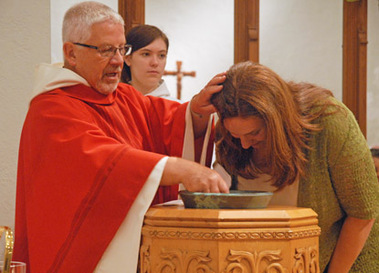
Sprinkling for Cleansing as the Pattern for Christian Baptism

Chapter 19 of the Book of Numbers is about the rituals of cleansing for those who are ritually unclean, such as from touching a dead body. For obvious reasons, I won't quote the entire passage. Specifically, I want to point to what Moses calls "the water for impurity" (Num. 19:9, 13). This water was to be made by mixing the ashes from a sacrificial heifer into some water (verse 9).

When a person became unclean, someone who was clean was to dip hyssop into the water and sprinkle him (verses 18 and 19, "thrown" in verse 13). To fail to be cleansed in this way is a serious matter, because twice the person who fails to be purified is described as being excluded from the covenant people (verses 13 and 20).

This is the background of baptism in the New Testament, and suggests that the proper mode is by sprinkling, not by pouring or immersion. This is not to suggest that mode of baptism is a salvific issue. Rather, it is merely to point out that Baptists are wrong when they make immersion a salvific issue. Since I myself was immersed, I would never say that a person who hasn't been sprinkled is not a legitimate Christian.

No doubt someone is saying that this doesn't settle the issue. And I would be quick to agree. By itself, this argument is certainly not conclusive. However, added to what I have said before (here and here), I think it contributes to a solid case.

Wednesday, January 25, 2017

The Baptism of Jesus as a Sign of His Priestly Office


I want to compare two events, one in the Old Testament, the other in the New Testament.

The first is the process of consecration of the Levitical priests. "You shall bring Aaron and his sons to the entrance of the tent of meeting and wash them with water" (Exodus 29:4). "Then you shall bring Aaron and his sons to the entrance of the tent of meeting and shall wash them with water" (Exodus 40:12). "All those who were listed of the Levites, whom Moses and Aaron and the chiefs of Israel listed, by their clans and their fathers’ houses, from thirty years old up to fifty years old, everyone who could come to do the service of ministry and the service of bearing burdens in the tent of meeting, those listed were 8,580" (Numbers 4:46-48, but compare also verses Num. 4:3, 23, and 29). The two things that I want to emphasize in these passages in that their ministries began at age thirty, and were marked by washings in water (see Hebrews 9:10).

The other is the account of the baptism of Jesus (Mark 1:9-11, compare John 1:31-34): "In those days Jesus came from Nazareth of Galilee and was baptized by John in the Jordan. And when He came up out of the water, immediately He saw the heavens being torn open and the Spirit descending on Him like a dove. And a voice came from heaven, 'You are My beloved Son; with You I am well pleased.'" We know that this happened when He was thirty years old from Luke 3:23: "Jesus, when He began his ministry, was about thirty years of age."

Thus we see how Jesus fulfilled the provisions for the Levitical priesthood, though He Himself was not a Levite (Hebrews 7:13). Rather, His priesthood is described as "in the order of Melchizedek" (Psalm 110:4, Hebrews 5:6, 5:10, 6:20, and especially 7:17). 

As Christians, we receive many benefits from His priestly office, something which the Westminster divines found essential to their system of doctrine. In answer 44, the Westminster Larger Catechism tells us, "Christ executes the office of a priest, in His once offering Himself a sacrifice without spot to God, to be a reconciliation for the sins of His people; and in making continual intercession for them." And in describing that intercession, answer 55 tells us, "Christ makes intercession, by His appearing in our nature continually before the Father in heaven, in the merit of His obedience and sacrifice on earth, declaring His will to have it applied to all believers; Answering all accusations against them, and procuring for them quiet of conscience, notwithstanding daily failings, access with boldness to the throne of grace, and acceptance of their persons and services." We rarely hear this doctrine preached today, but how comforting it should be to us, His people.

Monday, October 3, 2016

What the Bible Says About Its Own Inspiration: Old Testament


I understand that an atheist, for example, won't be convinced by the Bible's description of itself as the Word of God. However, I'm not addressing that question here. Rather, I am presenting the Bible's testimony about itself as a first step. After all, if the Bible makes no claims of inspiration and inerrancy, then there is nothing to defend.

I want to look at three Old Testament passages.

First, Numbers 1:1: "The Lord spoke to Moses in the wilderness of Sinai, in the tent of meeting, on the first day of the second month, in the second year after they had come out of the land of Egypt." This is a very simple profession. The Bible says of itself that it is a record, not of men's words about God, but of God's words to men about Himself. That is the essential starting point, and what separates the Bible from traditional myths of, for example, Greece and Rome. Those myths come from plays or poems written by professionals, and make no claim or pretense of supernatural origin. They are men's stories about their ideas of the spiritual reality, not even claiming to be from that reality. In contrast, the Bible sets forth an unequivocal claim to be the words of God, though recorded by men.

Second, turn to Deuteronomy 18:18-19: "I will raise up for them a prophet like you from among their brothers. And I will put My words in his mouth, and He shall speak to them all that I command Him. And whoever will not listen to My words that He shall speak in my name, I myself will require it of him." This is a prophecy to Moses, predicting the coming of Christ, in His prophetic office (applied to Him in Acts 3:22). But that isn't my point in mentioning it here. the reason I cite it is because of its description of the inspirational process. What is the source of Moses's words (as he is the prophet to whom the words are given)? They are from the mouth of God. That is, as in Numbers 1:1 above, they do not have their origin in the mind of the prophet, but are rather given him by God to be recorded. So, again, the Bible claims for itself to have a divine origin (compare II Peter 1:21).

And third, turn to II Samuel 23:2-3: "The Spirit of the Lord speaks by me; His word is on my tongue. The God of Israel has spoken; the Rock of Israel has said to me." So we see for a third time that an Old Testament figure, in this case King David, claims that the words that are recorded are not from his mind, or his imagination, but rather are from God.

This is far from an exhaustive list. Rather, I chose three examples to represent the consistent testimony of the Old Testament. The testimony to what? To its own divine inspiration. The implication of that is, first, that the professing Christian who denies the inerrancy of Scripture is denying the basis of the faith that he professes. It is a self-refuting profession, and proof that he is either ignorant of his faith, or that he is irrational. Furthermore, it puts the professing unbeliever on notice. There is no such thing as agnosticism, some vague profession that one is noncommittal. We must be flexible, our culture says! But Scripture says, "This is what God says. Believe it, or accept the consequences." There is no in-between, neutral position (Matthew 12:30). To the professing unbeliever, the Bible doesn't congratulate you on your sophisticated scepticism. Rather, it says that you are commanded to believe (Acts 17:30). If you refuse, then you are saying that you accept the consequences. Don't deceive yourself: unbelief is not a form of immunity, as if refusing makes you free of the requirements of God.

Monday, November 30, 2015

Mormons Refuted by the Eternality of God

One of the doctrines which most distinguishes Mormons from Christians is their belief that God was once a human being, just as you and I now are, but on another planet, ruled by its own deity. Their General Authority Milton Hunter (The Gospel Through the Ages, 1945, p. 104) wrote, "Mormon prophets have continuously taught the sublime truth that God the Eternal Father was once a mortal man who passed through a school of earth life similar to that through which we are now passing." This is one of the doctrines that the boys on the bicycles do not explain to prospective converts. It is kept until the person has been involved for a while.

In contrast, Christians profess, together with Moses (Psalm 90:2), "Even from everlasting to everlasting, You are God." The God of the Bible has always been God, from eternity past, and always will be God, into eternity future.

So, we have a contrast here between an evolutionary view of a god, in opposition to a view of a God who is eternal. Does the Bible say anything else applicable to this question?

In Numbers 23:19, Moses also said, "God is not man, that He should lie, or a son of man, that He should change His mind. Has He said, and will He not do it? Or has He spoken, and will He not fulfill it?" If God doesn't change His mind, are we to believe that He changes His nature?

In I Samuel 15:29, we read, "The Glory of Israel will not lie or have regret, for He is not a man." God is not a man (this does not address the incarnation of Christ)! He is not a man now, a Mormon might respond. Okay.

In Malachi 3:6, God speaks for Himself: "I am the Lord , I do not change." We can also look at Isaiah 43:10: "Before Me no god was formed, nor shall there be any after Me." The first prophet tells us that God could never have been anything other that what He now is. The second tells us that there could never have been an earlier deity under whom our God attained His divine status. I have dealt more with the verses in Isaiah here.

I am writing this the way I am, because I have run into too many Mormons who complain when I or anyone else says that they are not Christians. First, this is the height of hypocrisy, since those same boys on bicycles are traveling around telling prospects that all other professing Christians are apostates. Did you catch that? All! Second, I know that most people aren't aware of some of the more-bizarre doctrines of the Mormons, so they are also not aware of how un-Christian they really are. I aim, in part, to educate those folks. I also intend to provide them with the truth, so that they have an answer to give both the boys on bicycles and to their Mormon neighbors (I Peter 3:15).

Thursday, May 8, 2014

The Promises to Israel, Fulfilled in Christ

In II Corinthians 1:19-20, the Apostle Paul tells us, "The Son of God, Jesus Christ, Whom we proclaimed among you, ...was not Yes and No, but in Him is always Yes. For all the promises of God find their Yes in Him." So, to my mind, those who advocate all sorts of divine promises for the modern State of Israel, apart from conversion to the only Messiah, are depriving them of the true promises to them. And, more importantly, they are stealing the glory of Christ and giving it to constructs of their own making, a form of idolatry.

Look at the prophecies of Jeremiah, where so many of the political promises are supposedly found. In Jer. 33:14, God says, "Behold, the days are coming, declares the Lord, when I will fulfill the promise I made to the house of Israel and the house of Judah." What is that fulfillment? Jeremiah continues (verse 15), "In those days and at that time, I will cause a righteous Branch to spring up  for David, and He shall execute justice and righteousness in the land." So, the promise isn't fulfilled by a political or economic blessing, but in a Person.

This Branch is prophesied in other books, as well. We see Him in Isaiah 11:1-5, and twice in Zechariah, Zech. 3:8 and 6:12, to name just a few.

What does Jeremiah tell us about the Branch? Chapter 33 continues, in verses 17-18, "For thus says the Lord, 'David will never lack a man to sit on the throne of the house of Israel, and the Levitical priests shall never lack a man in My presence to offer burnt offerings and to make sacrifices forever," So, the Branch will fulfill both the political and religious roles in providing for the people of God. That is something that was impossible under the pre-Christian economy, for the the kingship came only through the tribe of Judah (Gen. 49:10), and the priesthood was limited to the line of Aaron, in the tribe of Levi (Numbers 16:40, cp. Hebrews 7:13).

That Aaronic reference is the connection to the prophetic references to the Branch. In Numbers 17:8, the sign God gives of the choice of Aaron was that his staff, out of all the staffs of the tribal representatives, sprouted. This is the source of the image of the Branch.

God first unites these two lines in Zechariah 6:12-13, "And say to him [i. e., the High Priest Joshua], 'Behold the Man Whose name is Branch: for He shall branch out from His place, and He shall build the temple of the Lord. It is He Who shall build the temple of the Lord and shall bear royal honor, and shall sit and rule on His throne. And there shall be a priest on His throne, and the counsel of peace shall be between them both." Here we see two of the offices of Christ, His kingship and His priesthood (His prophetic office not playing a role here), united and described.

In the New Testament, His kingship is prominent in Hebrews (e. g., Heb. 1:8), and especially the Revelation, e. g., 17:14 and 19:16. His priesthood is especially prominent in Hebrews, (e. g., chapters 7 and 8), but especially Heb. 9:11-14. Through our union with Him, we share in His  royal priesthood (see, for example, Isaiah 61:6, I Peter 2:9, and Rev. 5:10). That is the fulfillment of the promises (Romans 4:13) to the people of God, the true Israel (Galatians 3:7, 6:16). Thus, to use the modern political State of Israel as a fulfillment of promises to the people of God is to misidentify the people of God, the promises, and the fulfillment, as well as to downgrade the blessings we have in Christ.

Saturday, March 12, 2011

Strange Fire: The Abandonment of Sola Scriptura by American Evangelicals


I have written before about the abandonment of the opposition to Rome by modern Protestantism. Today, I want to write about the abandonment of Protestantism itself.

The Reformers established five principles which divided them from Rome, traditionally designated by their Latin forms: sola fide, sola gratia, sola Christus, sola scriptura, and soli gloria Deo. You can go here for my explanation of them.

Here in my hometown, a large church, called Lake Forest Church, promoted its Ash Wednesday service in the local newspaper (no longer available online). Lake Forest is a congregation of the Evangelical Presbyterian Chrurch, but check their website, and see how hard you have to look to find that connection. It never appears in their promotional announcements and advertising. According to the article, Lake Forest Pastor Mike Moses extolled the event on the basis that his congregation is "a modern church that delights in ancient practices."

And there lies my objection: instead of the Reformation principle of sola scriptura, scripture alone, Moses uses the Roman Catholic standard, i.e., tradition. As the Westminster Confession (XXI:1) says, "the acceptable way of worshiping the true God is instituted by Himself, and so limited by His own revealed will, that He may not be worshiped according to the imaginations and devices of men, or the suggestions of Satan, under any visible representation or any other way not prescribed in the holy Scripture." The Larger Catechism, answer 109, reads in part, "The sins forbidden in the second commandment are all devising, counseling, commanding, using, and anywise approving, any religious worship not instituted by God Himself." As a Presbyterian Church, the EPC, and Lake Forest Church as an affiliate thereof, are constitutionally committed to the WCF as its primary subordinate standard of doctrine (however, the EPC has extensively amended the WCF, and may actually have removed this passage; I simply don't know).

The WCF position, commonly referred to as "the regulative principle of worship," is based primarily on Deuteronomy 12:32, "Everything that I command you, you shall be careful to do. You shall not add to it or take from it." But it can be seen historically in the story of Aaron's sons, Nadab and Abihu, whom God executed for offering "strange fire," or "unauthorized fire" as worded by the ESV, on the altar of the tabernacle. See Leviticus 10:1, Leviticus 16:1, Numbers 3:4, and Numbers 26:61, for references to the story. Further explanation can be found in this article from Archibald Alexander Hodge, the son of Charles Hodge.

What separates Protestants from Catholics is that Protestants ask, "What do the Scriptures say?" while the Catholic apologetic appeals to the historicity of a practice. My question to Rev. Mike Moses is this: Human sacrifice is far more ancient than Ash Wednesday: according to your theology, does that make it equally- or even more valid? Sola scriptura gives one answer, but your apologetic seems to lead to another.

Tuesday, September 21, 2010

Shall We Be Guided by Feelings? Or by God's Word?


"David built houses for himself in the city of David. And he prepared a place for the ark of God and pitched a tent for it. Then David said that no one but the Levites may carry the ark of God, for the Lord had chosen them to carry the ark of the Lord and to minister to him forever. And David assembled all Israel at Jerusalem to bring up the ark of the Lord to its place, which he had prepared for it. And David gathered together the sons of Aaron and the Levites..., and said to them, 'You are the heads of the fathers’ houses of the Levites. Consecrate yourselves, you and your brothers, so that you may bring up the ark of the Lord, the God of Israel, to the place that I have prepared for it. Because you did not carry it the first time, the Lord our God broke out
against us, because we did not seek Him according to the rule.' So the priests and the Levites consecrated themselves to bring up the ark of the Lord, the God of Israel. And the Levites carried the ark of God on their shoulders with the poles, as Moses had commanded according to the word of the Lord."
- I Chronicles 15:1-15

The background of this passage is a prior attempt by David described in chapter 13 (and the parallel in II Samuel 6) to move the Ark of the Covenant from Kiriath-Jearim to Jerusalem. In that effort, the procedures of the Law for handling the Ark were ignored in the enthusiasm of king and people. As a consequence (verse 10), "the anger of the Lord was kindled against Uzza, and He struck him down because he put out his hand to the ark, and he died there before God." This was occasioned by the failure of David to follow the procedures specified by Moses in Exodus 25:12-15 and Numbers 4:15. In a renewed respect for God's holiness, David commands the second effort to proceed "according to the rule."

Paul makes a similar point in II Timothy 2:5: "An athlete is not crowned unless he competes according to the rules."

How often have you heard a Christian justify his decisions with sentences that begin with "I feel" or "I think"? Or perhaps the more spiritual form, "I feel led." Rarely are choices made with an explanation that begins with "The Scripture says," or "God has said..." It isn't a matter of the lack of sincerity or enthusiasm, but rather an error of authority. As David discovered to his chagrin, God is not compelled to honor our sincerity. Rather, He honors His word, because He is God and we aren't. As He says in Isaiah 48:11, "My glory I will not give to another."