Showing posts with label sanctification. Show all posts

Wednesday, August 19, 2026

Sanctification by Faith

In his Catechism for the Church of Geneva (answer # 126), John Calvin wrote, "To believe in Christ is as much to say as to receive Christ in such sort as He doeth give Himself unto us; now this is an evident thing, that Christ doeth not only promise to deliver us from death and to restore unto us the favor of God His Father through the only merits of His innocence, but also He promiseth to make us new creatures by His Spirit, to the end that ye should lead a holy conversation in all good works, so that these must be joined together, except we would divide Christ from Himself." In simpler terms, Jesus does not save  man from the wrath of God without also making him a new creation with good works consistent with that new nature. 

The biblical basis for Calvin's statement comes from II Corinthians 5:17-21: "If anyone is in Christ, he is a new creation. The old has passed away; behold, the new has come. All this is from God, who, through Christ, reconciled us to Himself and gave us the ministry of reconciliation; that is, in Christ, God was reconciling the world to Himself, not counting their trespasses against them, and entrusting to us the message of reconciliation. Therefore, we are ambassadors for Christ, God making His appeal through us. We implore you on behalf of Christ, be reconciled to God. For our sake, He made Him to be sin who knew no sin, so that in Him we might become the righteousness of God." This is a description of the legal exchange that happens at the moment that a sinner experiences saving faith. He has an instantaneous exchange of status with Jesus, receiving the righteousness of Jesus in place of the sin that is ours by nature. That is why Jesus could say to the thief on the cross, "Today you will be with Me in Paradise" (Luke 23:43). The moment he believed, that man had all of the righteousness of Jesus. He was as justified as any saint at a hundred years old, even though he was never given the opportunity to do a single good work. 

However, for the saint who remains in this life, for as long as he remains in this life, there will be good works. After reminding the Christians that their justification is through faith alone, not at all by works (Ephesians 2:8-9), Paul tells the Church at Ephesus (verse 10), "We are His workmanship, created in Christ Jesus for good works, which God prepared beforehand, that we should walk in them." While justification is instantaneous, as we see in the example of the thief on the cross, this new walking in good works, which we call sanctification, is a process lasting as long as the Christian remains in this life. The Westminster Larger Catechism Answer #75 defines sanctification this way: "Sanctification is a work of God's grace, whereby they whom God hath, before the foundation of the world, chosen to be holy, through the powerful operation of His Spirit applying the death and resurrection of Christ unto them, renewed in their whole man after the image of God; having the seeds of repentance unto life, and all other saving graces, put into their hearts, and those graces so stirred up, increased, and strengthened, as that they more and more die unto sin, and rise unto newness of life."

Yet we are never to mistake the order of these events. We can never do good works to gain the favor of God. It is only after a man is justified through faith alone in Jesus alone that he is then able to do good works. This is the point of Paul's epistle to the Galatians. "We know that a person is not justified by works of the law but through faith in Jesus Christ, so we also have believed in Christ Jesus, in order to be justified by faith in Christ and not by works of the law, because by works of the law no one will be justified. But if, in our endeavor to be justified in Christ, we, too, were found to be sinners, is Christ then a servant of sin? Certainly not! For if I rebuild what I tore down, I prove myself to be a transgressor. For through the law I died to the law, so that I might live to God. I have been crucified with Christ. It is no longer I who live, but Christ who lives in me. And the life I now live in the flesh I live by faith in the Son of God, who loved me and gave Himself for me. I do not nullify the grace of God, for is righteousness were through the law, then Christ died for no purpose" (Galatians 2:15-21). 

Paul's challenge to the erring Galatians is, if I was justified by faith alone in Jesus, how would I now turn aside from faith and seek to live the Christian life by my works? No, he says! My Christian life, too, is by faith alone in Christ alone! My good works are not by my own moral striving, but arise from the new life of Christ within me. Sanctification is by faith just as much as justification is by faith!



Wednesday, November 24, 2021

The Works of a Christian As a Defining Line Between True and False Christianity

One of the consistent errors that mark cults is their perversion of salvation to some form of works righteousness. This is true of the largest cult, the Roman Catholic Church, as well as other well-known cults such as the Mormons, the Jehovah's Witnesses, Church of Christ, or any one that we could name. 

That one error is a defining distinction between cults and orthodox Christianity, i. e., biblical Protestantism. 

The error of each of these cults is that they mix justification with sanctification. That is, they make the good works of the professing Christian to be part of his justification before God, whether it is faith plus sacraments, or faith plus love. Always the error involves faith plus something, instead of biblical justification, which is by faith alone

This is not to profess the strawman argument used by such groups against Protestants, by which they claim that the denial of a role in justification means that Protestants believe that works do not matter. That accusation is false. With the Bible, Protestants hold that works are the necessary result of saving faith. That is the opposite of what the cults teach. The Protestant talks about works as the necessary result, while the cults make works a necessary component of justification. 

This is what we find in the New Testament. 

Acts 15:9: "He [God] made no distinction between us [Jews] and them [Gentiles], having cleansed their hearts by faith." 

Romans 6:1-6: "What shall we say then? Are we to continue in sin that grace may abound? By no means! How can we who died to sin still live in it? Do you not know that all of us who have been baptized into Christ Jesus were baptized into His death? We were buried, therefore, with Him by baptism into death, in order that, just as Christ was raised from the dead by the glory of the Father, we, too, might walk in newness of life." 

Galatians 2:20: "I have been crucified with Christ. It is no longer I who live, but Christ who lives in me. And the life I now live in the flesh, I live by faith in the Son of God, who loved me and gave Himself for me." 

This is far from an exhaustive list.

Wednesday, April 21, 2021

True Christianity and the Imputation of Works

"What have you that you did not receive? If then you received it, why do you boast as if you had not received it?" (1Cor. 4:7). 

All non-Christian religions advocate some form of salvation by works. They say, "Change your behavior, and then your deity will love you." And this isn't just professing non-Christian religions. Many pseudo-Christians say some variation of the same thing. For example, the Roman Catholic Council of Trent, in


Canon XX (1547), said, " If any one shall say, that a man who is justified and how perfect soever, is not bound to the observance of the commandments of God and of the Church, but only to believe; as if, forsooth, the Gospel were a bare and absolute promise of eternal life, without the condition of observation of the commandments; let him be anathema."  

Yet, in the verse above, the Apostle Paul denies the very thing asserted by Trent. Justification is by grace alone through faith alone, apart from any works.  That is one side of the double imputation that occurs at the moment of true belief: the judgment due to our sins is transferred to our Surety, who paid for them on the cross. The other side is the imputation of His perfect works to the believer: "O LORD, You will ordain peace for us, for You have indeed done for us all our works" (Isaiah 26:12; see also II Corinthians 5:21 and Hebrews 13:20-21). 

Thus it is true that without holiness, no man shall see God (Hebrews 12:14). But, as Paul says, it is not a holiness produced by the man but which is imputed to him from Jesus by grace alone through faith alone. So, that same Paul is cursed according to Trent.

Wednesday, March 31, 2021

The Righteousness of the Believer Not a Righteousness by Works

 "Christ, and Christ alone, is the source of righteousness, that is, the righteousness that we need and becomes ours by God's act of justification. God has worked out a righteousness in Christ for penitent, believing sinners, and this righteousness is now in that exalted Christ at the right hand of God in Heaven. To grant us and bestow on us this righteousness of God (by imputation), God is pleased to use faith. Faith is the bond of union with Christ through which the sinner receives righteousness." 

- Rev. David Engelsma, "Gospel Truth of Justification," pp. 141-2 

In this paragraph, Engelsma paraphrases what Paul tells us about the failure of the Jews: "Israel, who pursued a law that would lead to righteousness, did not succeed in reaching that law. Why? Because they did not pursue it by faith, but as if it were based on works" (Romans 9:31-32). Where was true righteousness to be found? "Now the righteousness of God has been manifested apart from the law, although the Law and the Prophets bear witness to it- the righteousness of God through faith in Jesus Christ for all who believe" (Romans 3:21-22). 

Jesus addressed this problem with the Pharisees: "Woe to you, scribes and Pharisees, hypocrites! For you are like whitewashed tombs, which outwardly appear beautiful but within are full of dead people's bones and all uncleanness. So you, also,m outwardly appear righteous to others, but, within, you are full of hypocrisy and lawlessness" (Matthew 23:27-28). 

For the unbelieving Jews, righteousness was a matter of checking off a list of do's and don't's. This is the way of pseudo-Christian cults even to this day: Catholics, Mormons, Jehovah's Witnesses, Seventh-Day Adventists. But it is not the way of Biblical Christianity, which is a righteousness by faith alone, the perfect righteousness of Christ, applied only by the gift of faith. "For our sake, He [the Father] made Him [Jesus, the Son] to be sin who knew no sin, so that, in Him, we might become the righteousness of God" (II Corinthians 5:21).


Wednesday, March 24, 2021

Jesus Alone the Basis, and Faith Alone the Means, of the Justification of His People


"Faith is said to justify because it is the instrument by which we receive Christ, in whom righteousness is communicated to us. When we are made partakers of Christ, we are not only ourselves righteous, but our works also are counted righteous in the sight of God, because any imperfections in them are obliterated by the blood of Christ."

- John Calvin, commentary on Romans 3:22

When people profess that salvation is by faith alone, they express the biblical doctrine of justification. However, too often modern believers, even among evangelicals, don't understand the meaning of the words as they are in Scripture. We have been infiltrated by the doctrine of the Catholic Church, the same doctrine opposed by the Reformers, that justification by faith means by having faith, or faithfulness. This is how Rome (and her Arminian allies) has retained a role for works in justification. 

Sad as it is, that doctrine of justification cannot save, because it is not God's plan for justification. 

Notice what the Bible says, in the first passage in which justification as such is mentioned: ":He [i. e., Abraham] believed the Lord, and He counted it to him as righteousness" (Genesis 15:6). The Lord, the preincarnate Christ, accepted Abraham's faith, and declared him righteous. Jehovah does not make Abraham righteous, as Rome claims, but declares him righteous. That is the distinction between justification, a change in legal status, and sanctification, a change in nature. 

Does God merely erase Abraham's sin? No, nor that of nay other believer. To gloss over sin in such a way would be to substitute tolerance for justice. Rather, here is where we see the double imputation that is involved in justification. The sin of the elect, at the moment, of faith, is transferred to our Surety, Jesus Christ: "Surely He has borne our griefs and carried our sorrows; yet we esteemed Him stricken, smitten by God, and afflicted. But He was pierced for our transgressions; he was crushed for our iniquities; upon Him was the chastisement that brought us peace, and with His wounds, we are healed. All we like sheep have gone astray; and we have turned- every one- to his own way; and the Lord has laid on Him the iniquity of us all" (Isaiah 53:4-6).

But that was only half of our justification. In addition to taking the punishment for our sins, Jesus gave us His perfect record of works: "O Lord, You will ordain peace for us, for You have indeed done for all our works" (Isaiah 26:12). 

Thus, faith is not the basis of our justification. Jesus alone provides that. Rather, faith is the means of our justification. Or, to use, Calvin's term in the quote above, the instrument of our justification.

Saturday, March 14, 2020

The Great Commission, Sanctification, and the Christian Life

People often ask, and properly so, why today's church looks so little like the church of the New Testament. I am not talking about doctrine or government, but rather about power. Pentecostals wrongly substitute passion for power, not recognizing that their error merely contributes to the problem.

There are a number of answers to this question. I have discussed them in the past: heresy, pietism, dispensationalism. However, I am going to turn my attention here to something more fundamental.

What is salvation?

Most evangelicals will answer to the effect of being saved from Hell by the atonement of Jesus on the cross. And that is certainly a fundamental aspect of salvation. However, too often the evangelical stops there, as if the Christian faith and life is nothing more than fire insurance. Not only does that deny the great Commission, but it is a sleighting of the cross work of Jesus.

I refer to the Great Commission intentionally. What does Jesus command us to do there? "Go, therefore, and make disciples of all nations, baptizing them in the name of the Father and of the Son and of the Holy Spirit" (Matthew 28:19). Most evangelicals can quote that from memory, which is completely commendable. The problem is that the Commission doesn't stop with baptism. He continued: "teaching them to observe all that I have commanded you. And behold, I am with you always, to the end of the age" (verse 20). There is one side of the Commission which involves saving sinners from judgment. However, the commission continues with a command to replace sin with something.

Notice what was said of the coming of Jesus: "You shall call His name Jesus, for He will save his people from their sins" (Matthew 1:21). Not from the punishment of our sins, as important as that is, but from our sins themselves. As much as our justification was purchased on the cross, so was our sanctification. And having lost sight of the truth, Christians are indistinguishable from non-Christians, and the church is too flabby to speak to a culture that is reveling in its wickedness.

"The scriptural meaning of salvation is deliverance from the curse, power, and love of sin. The word, in general, implies deliverance from evil, but it is always, in the Bible, positive as well as negative, and imports the bestowment of a corresponding good" (James Henley Thornwell, "Election and Reprobation," emphasis in the original).


Wednesday, March 11, 2020

The Golden Chain to Eternal Life

We find what the Puritans called "The Golden Chain of Salvation" in Romans 8:29-30: "Those whom He foreknew He also predestined to be conformed to the image of His Son, in order that He might be the firstborn among many brothers. And those whom He predestined He also called, and those whom He called He also justified, and those whom He justified He also glorified."


One thing evident in that process is that each step is done by God. No man predestines himself, calls himself, justifies himself, or glorifies himself.

One thing that Paul doesn't include in his list is regeneration. Why? I have no idea. But it would fall between the steps of calling and justifying. At that point, in response to the external call of the Gospel (Romans 10:14), the elect sinner is given a new heart: "I will give you a new heart, and a new spirit I will put within you. And I will remove the heart of stone from your flesh and give you a heart of flesh. And I will put My Spirit within you, and cause you to walk in my statutes and be careful to obey My rules" (Ezekiel 36:26-27). Notice that, while we experience regeneration as our response, it is actually the work of the Holy Spirit. Every step to belief and sanctification is done by God (Romans 9:16, Philippians 2:13, etc.). That is why the chain can never fail to achieve its purpose (Romans 8:38-39, John 6:39, 10:27-29, 17:2, etc.)

"That life which is implanted in the soul in regeneration, which is developed in sanctification, and completed in glory, is what the Scriptures call 'eternal life,' and it is called 'eternal' because, by the grace of God, it is absolutely imperishable" (James Henley Thornwell, "Election and Reprobation").

Saturday, January 11, 2020

Sanctification: We Shall Be Like Him

"The justification of a sinner introduces him into a state in which he can no more be left to the dominion of sin and the possibility of the curse than Christ can lose His glory or God be unfaithful to His promises and oath" (James Henley Thornwell, "The Necessity and Nature of Christianity").

In its simplest, justification in Scripture refers to the declaration of "Not Guilty" on the sinner redeemed by the blood of Christ, applied through faith alone: "For by grace you have been saved through faith. And this is not your own doing; it is the gift of God, not a result of works, so that no one may boast" (Ephesians 2:8-9). Look also at verses 4-5: "God, being rich in mercy, because of the great love with which He loved us, even when we were dead in our trespasses, made us alive together with Christ—by grace you have been saved." See also Acts 15:11 and Romans 3:24. These references are far from exhaustive. However, Thornwell's point above is that our justification is the beginning of God's work in us, not the totality. And the Apostle Paul gave us the same assurance: "I am sure of this, that He who began a good work in you will bring it to completion at the day of Jesus Christ" (Philippians 1:6).

The problem with modern Christians is that we talk about being saved from the wrath of God. And that is, indeed, a wonderful thing which is taught in Scripture: "Since, therefore, we have now been justified by His blood, much more shall we be saved by Him from the wrath of God" (Romans 5:9). Jesus by His blood has brought us into peace with His Father, who had been offended by our sin (Romans 5:1). But that was never intended to be the end of His work.

What were we told when Jesus was born among us? "She will bear a son, and you shall call His name Jesus, for He will save His people from their sins" (Matthew 1:21). This was the promise given to Joseph about the unexpected pregnancy of his betrothed wife. Notice the promise. It is not just that Jesus would save His people from the curse for their sins, as glorious as that is, but from the sins themselves!

We know that this is a gradual process in this life. We grieve as we find in ourselves attitudes of wickedness that are inconsistent with our profession of Christ. Yet, we are also encouraged by the promises of Scripture that we are no longer possessed by sin, and someday, when we see Him face to face, we shall finally be as sinless as our Savior is: "Beloved, we are God’s children now, and what we will be has not yet appeared; but we know that when He appears we shall be like Him, because we shall see Him as He is" (I John 3:2).

Wednesday, December 25, 2019

A Washed Conscience from a Baby in a Manger

This is being posted for Christmas, 2019. We will talk a lot about the birth of Christ today. But I want to talk about why it matters that Jesus was born. Why did God the Son come into this world to live among us?

"Baptism, which corresponds to this [Noah and the Flood, verse 20], now saves you, not as a removal of dirt from the body but as an appeal to God for a good conscience, through the resurrection of Jesus Christ" (I Peter 3:21). If you saw that verse and assumed that I would be talking about baptism, then you experienced what I am about the describe, the frequent failure to read the rest of the verse. Notice that Peter mentions baptism, but then adds " not the removal of dirt from the body." Note that he compares it to Noah, who avoided being in the water. So, his point is not about baptism, but about what baptism represents, "a good conscience." How does the sinner achieve a good conscience, as represented by the water applied to his body?
Why?

The writer of Hebrews makes a similar point: "Since the law has but a shadow of the good things to come instead of the true form of these realities, it can never, by the same sacrifices that are continually offered every year, make perfect those who draw near. Otherwise, would they not have ceased to be offered, since the worshipers, having once been cleansed, would no longer have any consciousness of sins? But in these sacrifices there is a reminder of sins every year. For it is impossible for the blood of bulls and goats to take away sins" (Hebrews 10:1-4). The Old Testament sacrifices were insufficient because they had to be repeated. The blood of the sacrifices never removed sin or changed the nature of those who performed them. Instead, "we have been sanctified through the offering of the body of Jesus Christ once for all" (verse 10). And "by a single offering he has perfected for all time those who are being sanctified" (verse 14). 

That is why Christianity, though built on the foundation of the Old Testament religion of Moses, is far superior. The types and shadows have been removed, so that we can have a direct view of the one-time sacrifice of Jesus: "So let us draw near with a true heart in full assurance of faith, with our hearts sprinkled clean from an evil conscience and our bodies washed with pure water" (verse 22; see also Hebrews 9:14). Notice that the writer of this epistle uses the same baptismal imagery to describe the application of the blood of Christ to the believer by faith.

"When God can be just and faithful in blotting out his transgressions, then, and not until then, is his conscience sprinkled with clean water and purged from dead works. Christianity must take away our guilt, or it leaves us under the curse of nature" (James Henley Thornwell, "The Necessity and Nature of Christianity").

Wednesday, October 16, 2019

Sovereign Grace, the Trinity, and the Christian Life

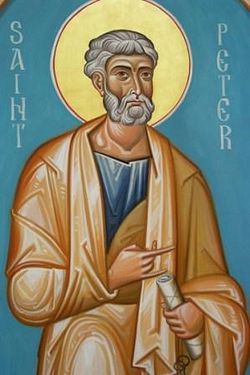
"Peter, an apostle of Jesus Christ, To those who are elect exiles of the Dispersion in Pontus, Galatia, Cappadocia, Asia, and Bithynia, according to the foreknowledge of God the Father, in the
sanctification of the Spirit, for obedience to Jesus Christ and for sprinkling with His blood: May grace and peace be multiplied to you."
- I Peter 1:1-2 

This is the opening salutation from Peter's first epistle. Notice that it is not written to men in general but specifically to Christians, whom he identifies as the true Israel (compare Romans 9:8, Galatians 3:7, 6:16, etc.), gathered by the sovereign grace of God. 

And when I say God, I don't mean in a vague, generic sense. Rather, Peter identifies our election as the work of the triune God of the Bible: the foreknowledge of the Father, the sanctification of the Holy Spirit, and the obedience of the Son, applied, figuratively speaking, by the sprinkling with His blood, an image from the Old Testament sacrifices (such as Leviticus 7:2 and 14:7). Peter does not contemplate a unitary deity, whether of the Arian type or the Sabellian. 

Nor does Peter contemplate any sort of works religion, as is taught by those pseudo-Christian sects. Rather, he tells us that the Father chose us, the Holy Spirit changed us, and the Son fulfilled all righteousness for us, that it might be imputed to us. In just these two verses, Peter teaches us to see our reunion with our God as fully trinitarian and fully by His sovereign grace, which is why he could add, in verse 4, that we have "an inheritance that is imperishable, undefiled, and unfading, kept in heaven for you." The same sovereign, trinitarian grace that saved us also keeps us secure until we reach our heavenly goal."I am sure of this, that he who began a good work in you will bring it to completion at the day of Jesus Christ" (Philippians 1:6).

Wednesday, April 17, 2019

Free Grace Justification versus the Cults

The Pelagian cults - by which I mean primarily the Church of Rome, the Mormons, Jehovah's Witnesses, and Oneness Pentecostals - hate the doctrine of salvation by free grace, apart from works. They hate it because it liberates the believer from dependency on their organizational hierarchy. However, their stated reason for opposing it is that it supposedly results in antinomianism, a freedom to sin without the expectation of spiritual consequences.

They will always cite in this regard James 2:24: "You see that a person is justified by works and not by faith alone." I have addressed their perversion of that verse here. Mormonism even makes it more explicit in their own scriptures (Doctrine and Covenants 76:52): "That by keeping the commandments they might be washed and cleansed from all their sins, and receive the Holy Spirit by the laying on of the hands of him who is ordained and sealed unto this power."

However, the truth is the opposite of their assertion. True good works can only be the result of free grace. That is because the natural man is incapable of doing meritorious works: "No one does good, not even one" (Romans 3:12). The Pelagian puts the effect for the cause, and thus puts the supposed righteousness of the sinner in the place of the real righteousness of Christ (Mark 10:18), which is imputed to the repentant sinner by grace through faith alone, to make him righteous (II Corinthians 5:21). In other words, by teaching a doctrine of salvation that is impossible, the Pelagian blocks men from knowing true salvation! Surely there can be no greater sin (Matthew 23:13).

Nineteenth-Century Presbyterian theologian James Henley Thornwell explains the difference: "A penitent sinner is one who has been a transgressor, but is now just; the laws of God are now put within his mind and written on his heart, and his moral condition is evidently one which renders the supposition of punishment incongruous and contradictory. Such a man is as unfit for the atmosphere of Hell as an impenitent transgressor is unfit for the atmosphere of Heaven. There is obviously, therefore, no principle of reason or nature, as there is, unquestionably, none of revelation, which teaches that a man may be penitent and [yet] perish - that he may be driven into final punishment with the love of God in his heart and the praise of God upon his tongue" ("The Necessity and Nature of Christianity").

He is expressing the same idea that God does in Ezekiel 33:12: "The righteousness of the righteous shall not deliver him when he transgresses, and as for the wickedness of the wicked, he shall not fall by it when he turns from his wickedness, and the righteous shall not be able to live by his righteousness when he sins."

Tuesday, February 26, 2019

Liberty under Law in the Life of the Christian

"I will keep Your law continually, forever and ever,
And I shall walk in a wide place, for I have sought Your precepts. 
I will also speak of Your testimonies before kings and shall not be put to shame, 
For I find my delight in Your commandments, which I love."
- Psalm 119:44-47

These four verses express an attitude which is strikingly different from that of most modern Christians toward the Law of God. Under the influence of dispensationalism, most professing evangelicals believe that the law is a taskmaster, an enemy to spiritual freedom, joy, and assurance. Yet, the anonymous author of this Psalm would clearly disagree. To him, the Law is liberating and a spiritual blessing.

How can there be such a contrast between the one believer, writing under the inspiration of the Holy Spirit, and so many others?

One thing that must be granted here is that the Psalmist is using the word "law" in a broad sense, to refer to all of the biblical teachings. However, it must be equally obvious that he is using the word in that sense because he includes the Law in the strict sense under that rubric.

A big part of the problem is the dispensationalist hermeneutic. In particular, it quotes Romans 6:14 ad nauseum, "You are not under law but under grace." However, the dispensationalist ignores one simple consideration: in the sense of justification, no one has ever been under the Law! Notice what Paul does not say in the verse: "You are no longer under law." Yet that is exactly how the dispensationalist reads it!

If any person is looking to the Law for justification, then he is truly under bondage, because it can provide none. Justification comes by grace through faith alone (Ephesians 2:8-9). However, if a justified person then uses the Law for its proper purpose, then it will serve as a bulwark against the sin that so easily besets us (I Timothy 1:8-11, Hebrews 12:1). Thus applied and empowered by the Holy Spirit, the Law is the Law of Liberty, indeed (James 1:25).

Wednesday, February 6, 2019

Our Union with Christ and All His Benefits

Evangelicals don't talk about our union with Christ. I think that is because it sounds very Catholic. However, it is a completely biblical doctrine, and of great use to the believer. We deprive ourselves by avoiding the subject.

We find the principle described in Scripture in several places, but the best one is Galatians 2:20: "I have been crucified with Christ. It is no longer I who live, but Christ who lives in me. And the life I now live in the flesh I live by faith in the Son of God, who loved me and gave Himself for me." By faith, the believer is united with Jesus spiritually, so that all that He is and did becomes ours, and all that we are and did becomes His. This is the basis of the doctrine of double imputation. In the Bible, it is described mystically as becoming His members: "We are members of His body" (Ephesians 5:30; see also I Corinthians 6:15). We hear this and think of "members" in the sense of "members of an organization," such as the PTA. However, that is not at all the meaning of "members" here. Rather, it is an analogy to "members" in the sense of "body parts" (see Romans 12:4-5). We are incorporated mystically into the spiritual body of Christ!

Of what benefit is that union? We think quickly, of course, of the imputation of His righteousness (II Corinthians 5:21), as I mentioned above. That is the basis of our justification, so it is certainly a wondrous benefit! But we receive so much more, as is symbolized by communion. As the bread and wine sustain our physical bodies, we are sustained spiritually by means of our union with Him, receiving all of the grace and other benefits which He purchased for us on the cross. "United to Christ, we receive two classes of benefits - inward and outward; the inward all included under the generic name of 'repentance,' and appertaining to the entire destruction of sin and the complete restoration of the image of God; the outward having reference to all those benefits which affect our relations to God as a Ruler and Judge. Both classes of blessings are equally the promise of the covenant. Both are treasured up in the Lord Jesus Christ. We obtain both by being in Him, and as we are in Him only by faith, faith must be the exclusive condition of the covenant" (James Henley Thornwell, "Theology as a Life in Individuals and in the Church").


Saturday, January 12, 2019

There Can Be No Salvation Which Does Not Result in Good Works


Both Catholics and Mormons caricature the biblical doctrine of justification by faith alone as meaning that works don't matter, so that a person can consider himself saved, no matter what profligacy he exhibits in his life. According to their understanding of salvation, assurance of eternal life must remain a carrot hanging on a stick, never received in this life, but rather only spurring a person on in an effort to achieve salvation at death. What a horror!

First, let's note that their attack isn't just on biblical Protestants, but rather on the Scriptures themselves. In them, the believer receives this assurance: "I write these things to you who believe in the name of the Son of God, that you may know that you have eternal life" (I John 5:13). Not "might have eternal life," or "that you may hope." The Apostle John explicitly states that the true believer can have that assurance in this life.

However, more-generally speaking, can we not see an aspersion cast on the Holy Spirit in these accusations? What does it say about the attitude of these Mormons and Catholics toward the Holy Spirit, if He can reside in a person whose life is given over to wickedness? Is it that the Holy Spirit is wicked? Or is He merely impotent in His influence? Either way, I think such aspersion must cast doubt on the salvation, not of Protestants, but rather of these Mormon and Catholic accusers.

The true Protestant view is stated well by Presbyterian theologian James Henley Thornwell: "It is precisely because faith is the exercise of a renewed soul that it is incompetent to those who cherish the love of sin; true faith includes in it the renunciation of the flesh as well as the reception of the Savior. The very purpose for which it receives Christ is that it may be freed as well from the dominion as from the guilt of sin. Salvation, the blessing to be obtained, means nothing, unless it includes holiness" ("Theology as a Life in Individuals and in the Church").

Saturday, January 13, 2018

The Sabbath Must Last Through Our Mortal Existence

A common objection that I hear to the Fourth Commandment is that "Jesus is our Sabbath." It's a slogan, not something the speakers have ever actually thought through. Where does the Bible say that? What would it mean for Jesus to be our Sabbath? And, if Jesus fulfilled the Fourth Commandment, such that it is now abrogated, what about the rest of the Commandments?

What is the purpose of the Sabbath? There are several ways to answer that question. I will focus on just one in this article.

God answers this question in two places. Through Moses in Exodus 31:13, He said, "Above all you shall keep My Sabbaths, for this is a sign between Me and you throughout your generations, that you may know that I, the LORD, sanctify you." And again in Ezekiel 20:12, "I gave them My Sabbaths, as a sign between Me and them, that they might know that I am the LORD who sanctifies them." Both verses emphasize the role of the Sabbath as an occasion for God to sanctify us, to make us more like Him.

That explains what the writer of Hebrews meant (Hebrews 4:9), when he wrote, "There remains a Sabbath rest for the people of God." We do not yet experience that rest in this life because we are not yet fully sanctified, a process that continues through the rest of our mortal existence. Therefore, the Sabbath must also continue for just as long.

Monday, November 13, 2017

Grace and Faith Do not Justify Antinomianism!

One thing at which Dispensationalism has succeeded is in making modern evangelicalism utterly hostile to God's Law. A phrase everyone seems to have memorized is, "We are under grace, not under law," a corruption of Romans 6:14. I bet you can't remember what the rest of the verse says!

However, one thing I have frequently noticed is that this shibboleth gets drawn out only when something in the Pentateuch disproves something an evangelical says. But, whenever the subject of homosexuality, for example, comes up, that same evangelical will pop out with Leviticus 18:22. And quoted correctly, unlike Romans 6:14!

There are so many problems with this doctrine, called antinomianism. Just logically speaking, it is offensive! The Law is the expression of God's moral nature. His precept for us is to reflect His holiness: "Consecrate yourselves, therefore, and be holy, for I am the Lord your God. Keep My statutes and do them; I am the Lord who sanctifies you" (Leviticus 20:7-8, quoted in I Peter 1:16). If a person rejects the Law out of hand, is he not rejecting the holiness of God? And with what is he replacing it? Whose holiness will he now imitate?

Also, biblically speaking, the assertion that Romans 6:14 eliminates the Law from the life of the Christian is contrary to what Paul himself tells us elsewhere in the same epistle: "Do we then overthrow the law by this faith? By no means! On the contrary, we uphold the law" (Romans 3:31). How can the same man in the same epistle endorse the Law in one verse and repudiate it in another? What does the assertion that he does so say about the view of Scripture of such persons? Or of the God who inspired the Scripture?

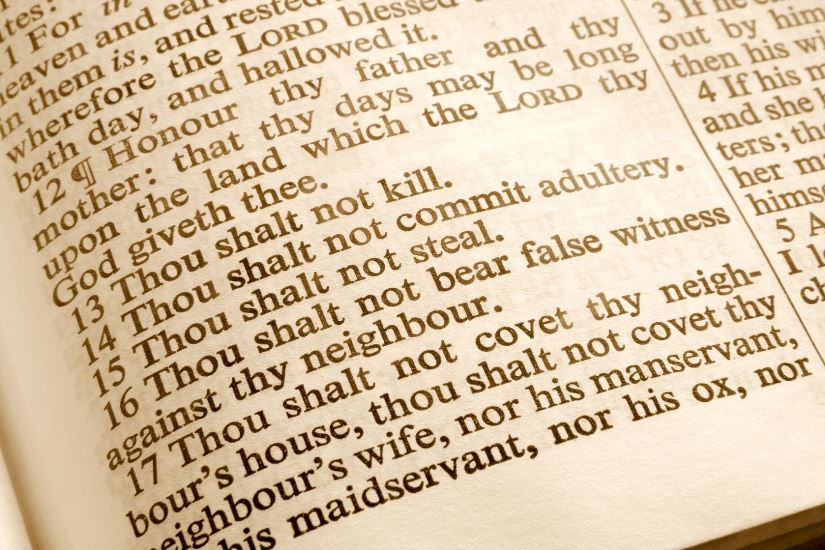
Let's look at another comment by Paul regarding the Law: "The law is not laid down for the just but for the lawless and disobedient, for the ungodly and sinners, for the unholy and profane, for those who strike their fathers and mothers, for murderers, the sexually immoral, men who practice homosexuality, enslavers, liars, perjurers, and whatever else is contrary to sound doctrine, in accordance with the gospel of the glory of the blessed God with which I have been entrusted" (I Timothy 1:9-11). Ah, here is the solution! The Law is not for those who are now living consistently with our new nature in Christ. It is for those who require an outside limit on their wickedness. Notice that he even includes false doctrine. That's something very few people will consider, a proper role of the state in the suppression of heresy.

Lets look once more at Romans 6:14, but the whole verse, properly quoted: "Sin will have no dominion over you, since you are not under law but under grace." Now we can see that Paul's contrast isn't between law and grace, but between grace and bondage to sin. This is exactly what he says in I Timothy, that the Spirit-controlled man has his sin nature shackled on the inside. But the natural man has no such control, and, therefore, requires an external control, the Law of God.

Saturday, October 28, 2017

Abandoning the Law is Abandoning Righteousness

I admit that it is chic to speak against biblical Law. Even among non-dispensationalists, the idea has become accepted that the Law was a standard of righteousness under the Old Testament, but not under the New. It is usually expressed by a perversion of Romans 6:14: "You are not under law but under grace." That it is a perversion, not a legitimate use of Paul, is evident if the reader continues to the next verse: "What then? Are we to sin because we are not under law but under grace? By no means!" And, of course, none of these people ever quotes Romans 3:31: "Do we then overthrow the law by this faith? By no means! On the contrary, we uphold the law." Paul is addressing the question of the origin of righteousness. Can any man be made righteous by the Law? No! Righteousness comes only by grace through faith: "Not having a righteousness of my own that comes from the law, but that which comes through faith in Christ, the righteousness from God that depends on faith" (Philippians 3:9, see also Romans 9:31-32).

This error among Christians has had a devastating effect on American society. By presupposing a false view of the Law, Christians have had no platform for addressing public wickedness. And Scripture warns of this consequence: "Those who forsake the law praise the wicked, but those who keep the law strive against them" (Proverbs 28:4). The great catastrophes of today's society, such as abortion, are not the result of abandonment of biblical morality by the wicked, but by its abandonment by Christians

Christians hold protests, rallies, prayer meetings, in fact every variety of spiritual activity, hoping to change society. Why has our effort been such a dismal failure? Scripture answers that question, too: "If one turns away his ear from hearing the law, even his prayer is an abomination" (Proverbs 28:9). While God's professing people are refusing to hear His word, He is refusing to hear our prayers. Immoral people are not the cause of that; the self-righteous supposed people of God are!

Jesus's words to the Pharisees apply equally to modern America's evangelicals: "You leave the commandment of God and hold to the tradition of men" (Mark 7:8). What tradition? The tradition of despising God's Law.


Saturday, July 8, 2017

The Bible as the Only Means of Sanctification

"How can a young man keep his way pure?
     By guarding it according to Your word.

I have stored up Your word in my heart,
     that I might not sin against You.

Your word is a lamp to my feet
     and a light to my path.

Keep steady my steps according to Your promise, 
     and let no iniquity get dominion over me."
- Palm 119:9, 11, 105, 133

Muslims and cultists around the world speak of the morality of professing American Christians and claim that it is a reflection of the nature of Christianity. And, in a sense, they are right to look at us. After all, if we profess that faith, then we should live accordingly. What is sad, however, is that they understand that, but all of those professing Christians don't. As I have pointed out here, the religion of America ceased long ago to be Christianity, and is, instead, deism, though baptized with Christian terminology.  

However, for the true Christian, what brings moral failure? How should he judge whether his life reflects the Lord that he professes? In the four verses above, the Psalmist gives us clear and explicit counsel.

In each of these four verses, there is a reference to the Scriptures. In the first three, it is called the "word." That emphasizes that the Bible is no mere word of men, but is really the word of God (I Thessalonians 2:13), God-breathed (II Timothy 3:16). And the last verse calls it  the "promise," because it is God's word to us, His message of salvation, of sanctification, and of glorification (Romans 8:30).

Then, also in all four verses, the Psalmist describes a role for the Scriptures in our sanctification, that is, the process of repudiating sin and striving more and more to be like Jesus. He desires to be "pure" (verse 9), "not to sin" (verse 11), to be enlightened (verse 105), and that "iniquity will not have dominion" (verse 133). Each of those phrases describes his desire to repudiate his old life of sin and to live as the new creation he is in Christ (II Corinthians 5:17). He refuses the deistic, humanistic mindset, which says that doing right is what he feels is right. Rather, doing right is doing what God says is right. And that we can find only in Scripture.

Saturday, May 20, 2017

Under Grace, Not Under Law

After John 3:16, Romans 6:14 is probably the most-quoted verse in the Bible: "You are not under law but under grace." Quoted, but certainly not understood.

Paul frequently had to deal with judaizers, heretics who tried to convince Gentile converts to Christ that they had to perform the Jewish ceremonies to be really saved. Note that I deliberately refer to them as heretics, because such a teaching was opposed to the doctrine of justification taught by all of Scripture, including in the words of Jesus Himself.

It is this historical context that the verse above must be considered. Paul was addressing a life-or-death struggle over the very nature of salvation, and his insistence was well-justified: if any man, under either testament, was, or could be, saved by performing the Law of Moses, then Jesus suffered and died in vain. The saved man could properly point to himself, his own deeds, and his own moral superiority as the basis of his right to eternal life. "If Abraham was justified by works, he has something to boast about" (Romans 4:2). But God had already said that He would never allow any mere man to take credit for His acts: "For My own sake, for My own sake, I do it, for how should My name be profaned? My glory I will not give to another" (Isaiah 48:11, see also Is. 42:8). Rather, He says, "Let the one who boasts, boast in the Lord" (I Corinthians 1:31). Why? Because, "Then what becomes of our boasting? It is excluded. By what kind of law? By a law of works? No, but by the law of faith" (Romans 3:27). If the actions of a man contribute to his justification, then he can claim credit for himself, even if he says that it just partial. God,
however, insists that it is all by Him, zero by us.

And that brings us back to Romans 6:14: "You are not under law but under grace." Paul cannot be saying that a Christian should, or even can, reject God's Law. Rather, he is saying that the Christian must reject the Law as a source of salvation. If it were more than that, then he could not have already said, "Do we then overthrow the law by this faith? By no means! On the contrary, we uphold the law" (Romans 3:31). Moreover, he wasn't even making a fresh claim, as if no one had ever known that they could not be saved by the Law. That had always been true! 

Look at the new covenant that God promised to Israel: "Behold, the days are coming, declares the Lord, when I will make a new covenant with the house of Israel and the house of Judah, [and] this is the covenant that I will make with the house of Israel after those days, declares the Lord: I will put My law within them, and I will write it on their hearts. And I will be their God, and they shall be My people" (Jeremiah 31:31, 33). It is the renewed giving of His Law that God promises! "This is for Israel," someone might object. However, this exact promise is quoted for us by the author of Hebrews 8:10!

Scripture gives us good reason to reject any thought of justification before God by obeying His commandments. However, it is just as firm in denying that any saved man can despise God's Law while claiming to love the Law's God: "If you love Me, you will keep My commandments" (John 14:15).

Saturday, May 13, 2017

The Hermeneutics of "Law" in the Bible


I often hear people refer to biblical Law in ways which are so obtuse that I wish I could unhear them. That is a gift, which God has, so far, not seen fit to grant me.

On one hand, I have Catholics and Mormons who deny justification by grace through faith alone by insisting that the works which are excluded by Paul refer not to all works, but rather only those involving the ceremonial law of Moses. "For by works of the law no human being will be justified in His sight, since through the law comes knowledge of sin" (Romans 3:20). And it is certainly true that the Old Testament sacrifices were according to Law. 

On the opposite extreme, I am frequently confronted by dispensationalists who parrot "you are not under law but under grace" (Romans 6:14) over and over if I say anything favorable about God's Law.

Of course, both views are unbiblical. One is an effort to sustain a works righteousness by which the believer cooperates in his own justification. The other is bald-faced antinomianism, a false view that the free grace of God means that a person can be a true believer no matter how he lives. Unbiblical and false!

The error of both sides described above is the result of equivocation. They take one particular meaning of the word "law" and use it in a different context. It is as if I said, "John is from Jamaica," and you take it to mean the island of Jamaica, when I actually meant that he is from the city of Jamaica, New York.

The word "law ("torah" in Hebrew or "nomos" in Greek) has eight different meanings in Scripture:
1) law of nature (Rom. 2:14-15)
2) the corruption of human nature (Rom. 7:23)
3) the entire word of God (Ps. 19:7-8)
4) the books of Moses (Luke 24:44)
5) the gospel (Rom. 3:27, Isa. 2:3)
6) the civil laws (John 19:7)
7) the ceremonial laws (Heb. 10:1)
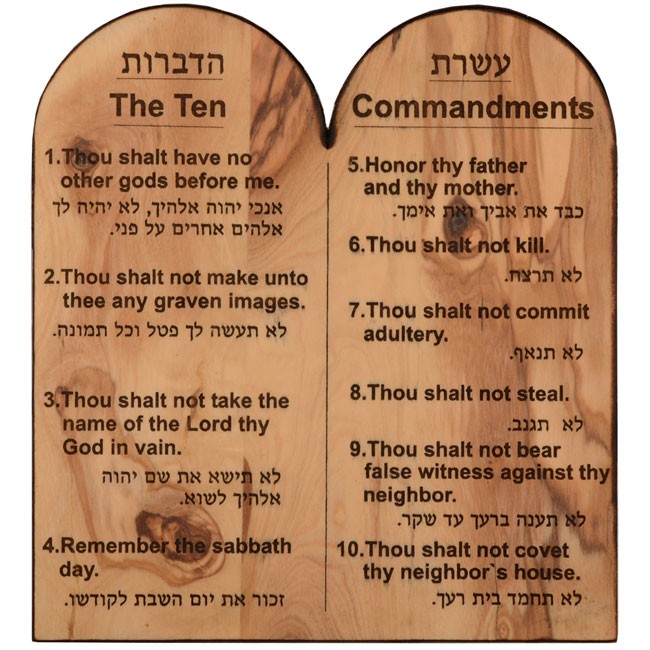
8) moral law, especially the Ten Commandments (Matt. 22:36-38)

When Paul tells us that justification by faith necessarily excludes any works of the Law, he cannot be referring to the works of the Mosaic ceremonies, i. e., number 7 above, because very few of them were performed by the individual believer; it was only the priests that performed, for example, the sacrifices. And, since those ceremonies ended with the destruction of the Temple in 70AD, it would be a tautology to say that we are not justified by those same ceremonies.

Also, when Paul says that "we are under grace, not under law," he cannot mean that we have no obligation to the moral Law of God (number 8 above), because those two things are directed to different ends. Grace is the application of the merits of Christ to the elect. it is how we are justified. The moral Law, however, as that name implies, is a matter of how to live. One cannot be brought to life by a rule of life. That can only be done by grace. Once grace has brought new life, the Law then tells the believer how to live that life. It's like a car loan. That loan is the means for attaining a new car. However, the car loan is not the means for driving the car. It takes a manual to do that. The loan is the grace, the manual is the Law. They are not in opposition, as long as neither is used in place of the other.

We see this described vividly in Ezekiel 36:26-27: "I will give you a new heart, and a new spirit I will put within you. And I will remove the heart of stone from your flesh and give you a heart of flesh. And I will put My Spirit within you, and cause you to walk in My statutes and be careful to obey My rules. You shall dwell in the land that I gave to your fathers, and you shall be My people, and I will be your God." The new heart, a biblical image of justification, is God's gracious act, in which the new believer makes no contribution. That is grace. The effect of this new heart is that he is now enabled to obey God's Law (not perfectly, but progressively in this life). That is sanctification.