Showing posts with label romans. Show all posts

Monday, March 23, 2026

"God Is No Respecter of Persons"

"The next day, as they were on their journey and approaching the city, Peter went up on the housetop about the sixth hour [i. e., noon] to pray. And he became hungry and wanted something to eat. But, while they were preparing it, he fell into a trance and saw the heavens opened and something like a great sheet descending, being let down by its four corners upon the earth. In it were all kinds of animals and reptiles and birds of the air. And there came a voice to him: 'Rise, Peter, kill and eat.' But Peter said, 'By no means, Lord, for I have never eaten anything that is common or unclean.' And the voice came to him again a second time, 'What God has made clean, do not call common.' This happened three times, and [then] the thing was taken up at once to Heaven... So Peter opened his mouth and said: 'Truly I understand that God shows no partiality, but in every nation anyone who fears Him and does what is right is acceptable to Him." 

-Acts 10:9-16, 34-35 

An argument I often get from anti-Calvinists against the doctrine of election is based on verse 34 above: "God shows no partiality." Or, in the words of the KJV, "God is no respecter of persons." The anti-Calvinist accuses the Calvinist of making out God to discriminate between individuals. 

I agree with the anti-Calvinist that election discriminates between individuals. I deny, however, that such discrimination violates the words of Peter in this passage.

Consider, for example, what Paul says in Romans 9:10-16: "When Rebekah had conceived children by one man, our forefather Isaac, though they were not yet born and had done nothing either good or bad - in order that God's purpose of election might continue, not because of works but because of Him who calls - she was told, 'The older will serve the younger.' As it is written, 'Jacob I loved but Esau I hated.' What shall we say then? Is there injustice on God's part? By no means! For He says to Moses, 'I will have mercy on whom I have mercy, and I will have compassion on whom I have compassion.' So then it depends not on human will or exertion, but on God, who has mercy." 

Paul's exact point here is that God discriminates, but not on the basis of human characteristics. Rather, the discrimination is a sovereign act of God's electing grace. As this applies to Peter's vision it precludes the discrimination that Peter expected, that of a national supremacy of Israel, and lays the men of all nations on equal grounds in terms of ethnicity. This was such a difficult concept that Peter later reneged on this commitment (Galatians 2:12). 

Monday, September 1, 2025

A Witness for an Optimistic Eschatology

Eschatology is a popular topic for every radio and television preacher, for reams of books, and endless debates on every internet platform. And it is a topic which rarely produces healthy or edifying conversation. Why? Because it is titillating. The popular preachers make a lot of money by making predictions, and the more wild-eyed and frightening the more money they make. 

How do these discussions end up in such a theological rut? Well, in addition to the excitement that comes from particular interpretations, there is just bad exegesis in most cases. Biblical passages are wrenched out of context to apply to the time of Jesus's return as if there were no other events in the two-thousand years (so far) in between. And just on the basis of assumptions, not because of any reasoning or hermeneutical principles. If you get into a conversation about Matthew 24 and mention that Jesus applies it to the generation to which He was speaking (verse 34), you will be shouted down. Or if you point to His words, "the Gospel will be proclaimed throughout the whole world" (verse 14) and compare them to the words of Paul, "the hope of the Gospel that you heard, which has been proclaimed in all creation under Heaven" (Colossians 1:23), you will be decried as feeble-minded. 

Then other passages are simply not allowed into the discussion. One of which is my subject here. 

In Hebrews 1:13, that writer quotes from prehistory the words of the Father to the Son from the intra-Trinitarian covenant, "Sit at My right hand until I make your enemies a footstool for your feet." The quote is from Psalm 110:1, and is repeated in Hebrews 10:13. It is also found quoted in several other places in the New Testament. All refer to the awaited glory of Jesus before His return. 

What are some of those enemies that the Father shall subdue for the Glory of the Son? Paul gives us some prominent examples. 

Paul quotes the same verse indirectly, Psalm 110:1, in I Corinthians 15:25, and then gives the last enemy in verse 26: "He must reign until He has put all enemies under His feet. The last enemy to be destroyed is death." So death will be defeated as the last enemy before the return of Jesus. That completely eliminates the entire timeline of premillennialism, especially the dispensationalist variety. 

But Paul gives us another case which I find even sweeter to my soul. 

"Lest you be wise in your own sight, I do not want you to be unaware of this mystery, brothers: a partial hardening has come upon Israel, until the fullness of the Gentiles has come in. And in this way, all Israel will be saved, as it is written, 'The Deliverer will come from Zion, and He will banish ungodliness from Jacob; and this will be My covenant with them, when I take away their sins.' As regards the Gospel, they are enemies for your sake. But as regards elections, they are beloved for the sake of their forefathers" (Romans 11:25-28). At some point near the end of history, Paul tells us, the fullness, the majority, of Gentiles will have been converted, and then the blindness which was placed on the Jews will be lifted, so that they will be converted en masse to the Messiah whom they had rejected. 

If Jesus will return to an overwhelmingly converted world, how does that allow for the violence and persecution and unbelief described by the scary eschatology crowd? I see the two things as utterly incompatible, which is why I reject that scary eschatology. 


Friday, May 23, 2025

Human Moral Inability and the Gospel

 "I know, O Lord, that the way of man is not in himself, that it is not in man who walks to direct his steps" (Jeremiah 10:23). 

I have written many times about the doctrine of total depravity. This is the doctrine of total inability, which is closely related, but distinct. Total depravity is the condition, while total inability is the result. That is, sin has affected every faculty of our humanity, the result of which is that there REMAINS no native ability in us to perform any moral good. The two things are often equated, but I am treating them separately, because I think that Scripture addresses them separately. 

It is a common error of supporters of free will that the doctrine of total inability is an invention of John Calvin, based on a misreading of the writings of Paul. I deliberately chose the verse above from Jeremiah to show that both aspects of that accusation are wrong. Total inability is an invention of neither Paul nor John Calvin. 

Rather, we see in the prophet his concern that men are unable to obey God from any ability in ourselves. As he faced the coming prospect of the exile of Judah in Babylon, he lamented that Judah could not reform himself. So, he pleaded, "correct me" (verse 24), because I cannot correct myself. That is, speaking on behalf of his people. 

As theologian John Frame has said, "Although fallen persons are capable of externally-good acts (acts that are good for society), they cannot do anything really good, I. e., pleasing to God (Romans 8:8). God, however, looks on the heart. And from His ultimate standpoint, fallen man has no goodness, in thought, word, or deed. He is, therefore, incapable of contributing anything to his salvation."

That is the connection of this doctrine to the gospel. The inability of men to display the righteous nature that God requires would naturally doom all men to eternal judgment (Hebrews 12:14), would display, not injustice on God's part, but rather hopelessness on the part of men. Instead, God established a righteousness which is by faith alone, the imputation of the perfect righteousness of a surety, an alien righteousness, granted to every sinner for whom He died on the cross, Jesus of Nazareth (Isaiah 26:12, John 6:37-39, II Corinthians 5:21). 

Tuesday, August 20, 2024

God is the Potter, and Men Are the Clay

"The Lord has made all for Himself, yes, even the wicked for the day of doom" (Proverbs 16:4). 

This verse amazes me, because it turns a complex and difficult topic into one simple sentence. It tells us that God, Jehovah, is the Creator, and that He has made all things, including the wicked, not for our own purposes, but for His. Paul uses the image of the potter to convey the same concept: "You will say to me, then, 'Why does He still find fault? For who has resisted His will?' But indeed, O man, who are you to reply against God? Will the thing formed say to him who formed it, 'Why have you made me like this?' Does not the potter have power over the clay, from the same lump to make one vessel for honor and another for dishonor?" (Romans 9:19-21; see also Jeremiah 18:1-17). Paul's "vessel for dishonor" is the same as Proverbs' "wicked." 

Such Scriptures leave no ground for imagining human autonomy. The God of the Bible is no pagan deity who molds people like pinballs to bounce their own way through life at their own whim or mystical karma/fate. In fact, it is exactly this rejection of autonomy which is the real justification for unbelief. the unbeliever desperately desires to imagine that he is the captain of his own fate, and his imagination is cast down if he ever acknowledges that God is God and the man is not.

We see the same thing in the addict of free-will theology. He, too, retains from unbelief the assumption of his own autonomy. "God didn't create us to be robots," he protests. No, God made us to be His servants; it is sin that makes us robots. Yet, the free-will theologian has nothing to say about his enslavement sin. That, he never says out loud, is preferable to being enslaved to the God who made him. 


Tuesday, March 26, 2024

Treason to God as Rational Justification for Eternal Punishment

I get challenged regularly by atheists who object to God because, they believe, they don't deserve Hell. they claim that Hell is overkill for the actions of most human beings. 

Do they have a case? No, I don't believe that they do. 

In his book, The Existence and Attributes of God, Puritan Stephen Charnock addresses this point: "Man would make himself his own end and happiness. As God ought to be esteemed [as] the first cause, in point of our dependence on Him, so He ought to be our last end, in point of our enjoyment of Him. When we, therefore, trust in ourselves, we refuse Him as the first cause; and when we act for ourselves and expect a blessedness from ourselves, we refuse Him as the chief good and last end, which is an undeniable piece of atheism. For man is a creature of a higher rank than others in the world, and was not made (as animals, plants, and other works of the divine power) materially to glorify God, but was made a rational creature, intentionally to honor God by obedience to His rule, dependence on His goodness, and zeal for His glory. It is, therefore, as much a sleighting of God for man - a creature - to set himself up as his own end as to regard himself as his own law." 

This concept was not new with Charnock. rather, he put into his own words the thoughts of the Apostle Paul: "Although they [i. e., unbelievers] knew God, they did not honor Him as God or give thanks to Him, but they became futile in their thinking, and their foolish hearts were darkened. Claiming to be wise, they became fools, and exchanged the glory of the immortal God for images resembling mortal man and birds and animals and creeping things" (Romans 1:21-23). 

The two men are describing two different forms of unbelief, of course. While Paul is describing the turning to pagan worship, Charnock is describing the atheist. However, the two forms are fundamentally one, in that they put someone else in the place of our Creator and Sustainer, the triune God of the Bible. All unbelievers have chosen Satan's offer (Genesis 3:5) of autonomy, illusory though it be.

Now the question to the atheist or pagan should be one that either can understand rationally: if a traitor has pulled his rightful king off the throne, whether to take it for himself or to give it to an interloper, is that not a crime which should be subject to the highest penalty available? A political figure may have only the ability to hang a traitor, having no reach beyond physical death. But God's jurisdiction cannot be thwarted by mere physical death (Matthew 10:28). And just as the rebel in Hell does not eschew his rebellion, neither does his divine Judge relent in His judgment through the rest of eternity. 

So, contrary to the assertion of the atheist, the judgment of Hell is both real and perfectly just. The only escape is to flee to Jesus, to be covered by His atoning blood, and to recognize that God remains on His throne, regardless of the efforts of man to cast Him down.


Monday, March 4, 2024

Unbelief as the De-Throning of God (Men Imagine)

In his book, The Existence and Attributes of God, the Puritan Stephen Charnock tells us, "It is natural to men to abhor those things that are unsuitable and troublesome as it is to please themselves in things agreeable to their minds and humors. And since man is so deeply in love with sin, as to count it the most estimable good, he cannot but wish the abolition of that law that checks it, and, consequently, the change of the lawgiver that enacted it. And in wishing a change in the holy nature of God, he wishes a destruction of God, who would not be God if He ceased to be immutably holy. They do as certainly wish that God had not a holy will to command them as despairing souls wish that God had not a righteous will to punish them; and to wish conscience extinct for the molestations they receive from it is to wish the power conscience represents out of the world also." 

Charnock is expanding on the words of Paul in two  verses in Romans. First, in Romans 1:18-23: "The wrath of God is revealed from heaven against all ungodliness and unrighteousness of men, who, by their unrighteousness, suppress the truth. For what can be known about God is plain to them, because god has shown it to them, for His invisible attributes, namely His eternal power and divine nature, have been clearly perceived ever since the creation of the world, in the things that have been made. So they are without excuse, for, although they knew God, they did not honor Him as God or give thanks to Him, but they became futile in their thinking, and their foolish hearts were darkened. Claiming to be wise, they became fools, and exchanged the glory of the immortal God for images resembling mortal man and birds and creeping things." In this passage, Paul tells us several things relevant to Charnock's point. First is that all men have a knowledge of God, which leaves them with no excuse for their unbelief. He has revealed Himself in His work of creation, visible to every eye to perceive. Therefore, when a person claims not to believe in God, he is practicing deception, both to himself and to those around him. The reality is that he knows God, his accountability to God, and the judgment of God which he deserves. And he hates that knowledge, and strives to suppress it in unrighteousness. 

The other passage is Romans 2:15-16: "They [the Gentiles] show that the work of the law is written on their hearts, while their conscience also bears witness, and their conflicting thoughts accuse or even excuse them on that day when, according to my gospel, God judges the secrets of men by Christ Jesus." This is the internal aspect of our innate knowledge of God. In the earlier passage, Paul described the external testimony of God's hand in creation. Here he describes the internal testimony of God's law written in the hearts of men, and the conscience which responds to our choices to disobey that law. 

So inside and outside, every man has a continuous testimony to the existence, holiness, and justice of God. And, as sinners, every man resents that knowledge, and seeks to be rid of it. 

One thing that we can observe about "atheists" is that they are silent about Wicca or Buddhism or the other religions in the world. Because those faiths whitewash our wickedness! It is only the triune God of the Bible that inspires the protests and opposition of their unbelief. Because it is He alone who is known in their hearts, and He alone who cannot be thrown down at their convenience.


Wednesday, October 4, 2023

The Commandments of God in Stone and the Hearts of Men


Most people are not aware that God gave Moses the Ten Commandment not once but twice. The first time is described in Exodus 24:12: "The Lord said to Moses, 'Come up to Me on the mountain and wait there, that I may give you the tablets of stone, with the law and the commandment, which I have written for their instruction.'" And again in 31:18: "And He gave to Moses, when He had finished speaking with him on Mount Sinai, the two tablets of the testimony, tablets of stone, written with the finger of God." These tablets were the ones shattered by Moses in anger at the idolatry of the Israelites in their worship of the golden calf (chapter 32).

After shattering the original tablets, Moses was then tasked with replacing them with a new pair of tablets, which he himself fashioned. "The Lord said to Moses, 'Cut for yourself two tablets of stone like the first, and I will write on the tablets the words that were on the first tablets, which you broke'" (Exodus 34:1). As when Adam fell into sin, when Moses broke the commandments, literally, he was cursed with an increase in labor, having to carve and carry the stone tablets himself. 

This historical event came to my mind during a recent Sunday school lesson at my church. Part of that lesson dealt with the law of God written on human hearts. We see this in two places in the New Testament. First, Paul mentions it in Romans 2:15: "[Gentiles] show that the work of the law is written on their hearts, while their conscience also bears witness, and their conflicting thoughts accuse or even excuse them." Then the writer of Hebrews mentions it again as part of the new covenant, which he, in turn, borrowed from the Prophet Jeremiah: "This is the covenant that I will make with them after those days, declares the Lord: I will put My laws on their hearts, and write them on their minds" (Hebrews 10:16, from Jeremiah 31:33). 

Notice the parallels between these two pairs of events. In each, God gave His holy commandments, but they were broken by men. And then God gave them again. 

By this pairing of breaking and restoration, we see two magnificent things. First is that God does not lower His standards merely because men cannot meet them. To do so would be to betray His own holiness. And second is His mercy. While the breaking of the law naturally incurs the death penalty (Romans 6:23), God's work is restorative, not punitive, for His elect. He restores His law (Isaiah 42:21). And He restores His elect through the imputation by faith of the perfect obedience of His only-begotten Son, Jesus Christ (John 1:17, II Corinthians 5:21, Romans 3:21-22). 

Wednesday, April 5, 2023

Apostle Paul on Irresistible Grace


One of the distinguishing doctrines of the Reformed Faith, the "I" in the so-called Five Points of Calvinism is irresistible grace, the biblical assertion that an elect person does not have the ability to refuse to be saved. We see this doctrine in, for example, the answer of Paul to a hypothetical opponent of God's sovereign grace: "You will say to me, then, 'Why does He still find fault? For who can resist His will?'" (Romans 9:19). 

And that opponent is correct. No mere creature can resist the will of God. Yet this doctrine was formulated in response to the assertion of the Arminians that is actually possible for men to resist God's will. Astounding in the light of Paul's statement! How can this be? 

Ever since the temptation and fall of our first parents, the hearts of men have naturally set out to establish the illusion of autonomy. That is, it is now natural to men to believe ourselves to be sovereign, the captains of our own fates, the creators of our own destinies. After all, that was the promise of Satan to Adam and Eve in Genesis 3:5, that eating of the forbidden tree would make them like God, the interpreters of reality and masters of good and evil. 

I have never understood why Arminians are not more cautious of advocating the explicit doctrine of Satan. Except of course, to know that it is God's purpose that they do so. 

How does God respond to the declaration of the sovereignty of men? "Who are you, O man, to answer back to God? Will what is molded say to its molder, 'Why have you made me like this?' Has the potter no right over the clay, to make out of the same lump one vessel for honorable use and another for dishonorable use?'" (Romans 9:20-21).

Saturday, December 31, 2022

Parallels Between Isaiah and Paul on the Conversion of the Jews


"On this mountain the Lord of hosts will make for all people a feast of rich food, a feast of well-aged wine, of rich food full of marrow, of aged wine well refined. And He will swallow up on this mountain the covering that is cast over all peoples, the veil that is spread over all nations. he will swallow up death forever; and the Lord God will wipe away tears from all faces, and the reproach of His people He will take away from all the earth, for the Lord has spoken. It will be said on that day, 'Behold, this is our God; we have waited for Him, that He might save us. This is the Lord; we have waited for Him; let us be glad and rejoice in His salvation.' For the hand of the Lord will rest on this mountain..." (Isaiah 25:6-10). 

"The mountain of the Lord" and its variants appear frequently in the prophets, especially in Isaiah. See, for example, chapter 2, and the fourth chapter of Micah. It is an image derived from the temple mount, the place where God met in fellowship with His people. That image, in turn, may have come from the mountain on which Adam was placed in the garden. Thus, it is an image of fellowship, between the elect and our Redeemer. Use of "the Lord," used in English Bibles when the Hebrew refers to Jehovah, shows that the relationship is not with the Trinity undifferentiated, but rather with the Second Person of the Trinity, the preincarnate Christ, acting in His mediatorial role. 

In addition to those Old Testament parallels, we also see elements in the passage above that would appear in the New Testament, specifically in the writings of Paul. 

Where the prophet describes the spiritual veil over the hearts of men, Paul uses the same image for the yet-unbelieving Jews in II Corinthians 3:12-18: "Since we have such a hope [of life in the Spirit, v. 6], we are very bold, not like Moses, who would put a veil over his face so that the Israelites might not gaze at the outcome of what was being brought to an end. But their minds were hardened. For to this day, when they read the old covenant, that same veil remains unlifted, because only through Christ is it taken away. Yes, to this day, whenever Moses is read, a veil lies over their hearts. But when one turns to the Lord, the veil is removed. Now the Lord is the Spirit, and where the Spirit of the Lord is, there is freedom. And we all, with unveiled face, beholding the glory of the Lord, are being transformed into the same image from degree of glory to another..."

Notice also that Paul tells us another relevant fact: It is in turning to Christ that the veil of unbelief is removed, verifying that it is in Christ that the events described by Isaiah will occur. Some will agree, but place the events after His second coming. Yet the passage precludes that possibility by describing it in feast terms. yet, there will be no hunger in the resurrection, and, therefore, no use for food. 

Does Paul restrict our case to the Jews? In II Corinthians, that might be possible, but it is eliminated if we include another Paulian passage, Romans 11:11-15: "So I ask, did they [i. e., the Jews] stumble in order that they might fall [forever]? By no means! Rather, through their trespass salvation has come to the Gentiles, so as to make Israel jealous. Now, if their trespass means riches for the world, and if their failure means riches for the Gentiles, how much will their full inclusion mean? Now I am speaking to you Gentiles. Inasmuch then as I am an apostle to the Gentiles, I magnify my ministry in order, somehow, to make my fellow Jews jealous, and thus save some of them. For if their rejection means the reconciliation of the world, what will their acceptance mean but life from the dead?" And further, Romans 11:25-26: "Lest you be wise in your own sight, I do not want you to be unaware of this mystery, brothers: a partial hardening has come upon Israel, until the fullness of the Gentiles has come in. And in this way, all Israel will be saved..." 

Thus, Paul predicts in narrative what Isaiah prophesied in the poetic language of Hebrew prophecy, that a time will come, in which the greater part of both Gentiles and of Jews will be converted to saving faith in Jesus Christ. The Puritans called this the postmillennial hope. 

Saturday, September 17, 2022

The Scriptural Origin of Paul's Faith


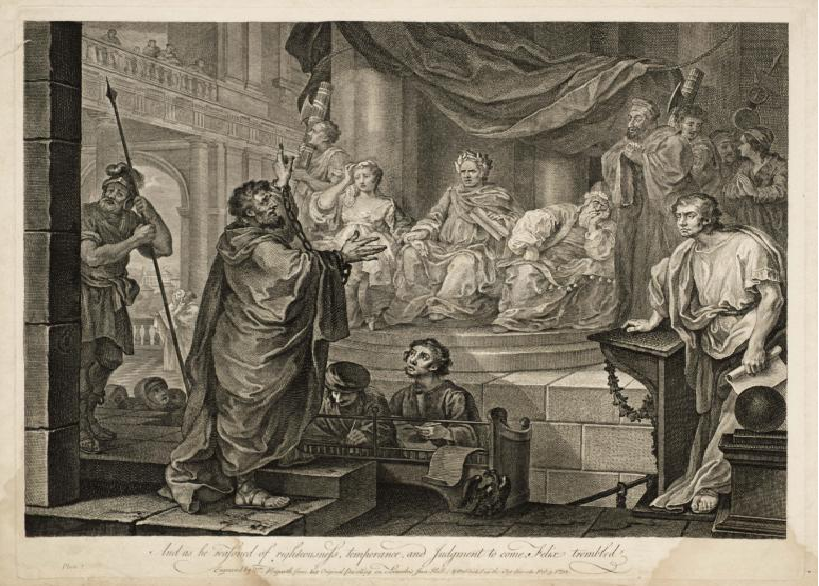
When he was called before Felix, the Roman procurator for the province of Judea, Paul gave an apologetic, that is, a defense, for the Christian faith for which the Jewish leaders had charged him of insurrection. Part of that defense, as recorded in Acts 24:14, is this statement: "This I [i. e., Paul] confess to you [Felix], that, according to the Way, which they [the Jewish leaders] call a sect, I worship the God of our fathers, believing everything laid down by the Law and written in the prophets." 

Paul's defense is not in any mystical revelation, whether by dreams or sensationalist evangelists, but strictly by the testimony that he found in the Bible, the Scriptures which we now know as the Old Testament (compare his later message to Timothy in II Timothy 3:14-15). 

If anyone could, Paul could have spoken of a mystical experience. In Acts 9:1-9, Luke the Physician gives us a record of Paul's, then still called Saul, persecution of the Christians, until he is literally thrown to the ground by Jesus, who challenges him, "Saul, Saul, why are you persecuting Me?" (verse 4). Yet, we are then told, verses 10-19, that this same Jesus then sent a disciple named Ananias to explain the faith to Saul/Paul. "The Lord said to him [i. e., Ananias], 'Go, for he is a chosen instrument of Mine, to carry My name before the Gentiles and kings and the children of Israel'" (verse 15). It is only after this meeting with Ananias that Paul is able to rise and be baptized, not after his vision. 

I think this record is one of the landmarks that distinguish between true Christian churches and the cults. Cults usually start with a leader who claims to have had a mystical experience, apart from Scripture, in which God supposedly taught him or her some new revelation. Nowhere does the New Testament describe conversions as occurring in this way. On the contrary, it is Paul himself who tells us that people are converted by the preaching of that same word of which he testified to Felix (Romans 10:14-17). 

We see this contrast most vividly in the Mormon religion, the founder of which, Joseph Smith, Jr., claimed revelatory visions, including new scriptures, to support his claims of a new religion, new though he claimed Christian terminology for it. The apologetic of Paul contrasts starkly with the claims of Smith, being one of the proofs that Mormonism has no legitimate claim to the name of Christ for its organization. 

Saturday, June 11, 2022

Christian Apologetics Against Unbelief in Psalm 10

"The wicked boasts of the desires of his soul, and the one greedy for gain curses and renounces the Lord. In the pride of his face the wicked does not seek Him; all his thoughts are, 'There is no God.' His ways prosper at all times; Your judgments are on high, out of his sight; as for all his foes, he puffs at them. He says in his heart, 'I shall not be moved; throughout all generations, I shall not meet adversity'... He says in his heart, 'God has forgotten; He has hidden His face, and He will never see it'... Why does the wicked renounce God and say in his heart, 'You will not call me to account'?" (Psalm 10:3-6, 11, 13). 

This is poetry, from an unknown poet, written hundreds of years earlier, but should call to mind a later prose text: "The wrath of God is revealed from Heaven against all ungodliness and unrighteousness of men, who, by their unrighteousness, suppress [their awareness of] the truth... And, since they did not see fit to acknowledge God, God gave them up to a debased mind to do what ought not to be done. they were filled with all manner of unrighteousness, evil, covetousness, malice. They are gossips, slanderers, haters of God, insolent, haughty, boastful, inventors of evil, disobedient to parents, foolish, faithless, heartless, ruthless. Though they knew God's righteous decree that those who practice such things deserve to die, they not only do them but give approval to those who practice them" (Romans 1:18, 28-32). Also Romans 3:18, "There is no fear of God before their eyes." 

What the two writers have in common is something that we often forget about the unbeliever: That he knows that the biblical god exists and holds us accountable for our wicked acts. The difference is that the believer repents of those actions, and flees to Christ for redemption and forgiveness. the unbeliever just shuts the awareness out of his mind, believing, though irrationally, that, if he merely suppresses his knowledge of God, then God will not observe his wickedness or call him to judgment. 

However, denying the consequences in no way dispenses with them. "But You do see, for You note mischief and vexation, that You may take it into Your hands; to You the helpless commits himself; You have been the helper of the fatherless. Break the arm of the wicked and evildoer; call his wickedness to account till You find none. The Lord is king forever and ever; the nations perish from his land. O Lord, you hear the desire of the afflicted; You will strengthen their heart; You will incline Your ear to do justice to the fatherless and the oppressed, so that man who is of the earth may strike terror no more" (Psalm 10:14-18).


Wednesday, May 25, 2022

Free Grace and the Creator-Creature Distinction

"Esteem not yourself the better for what you may carry with you. Think not to be accepted because of your present. It is not your money, Isaiah 55:1, John 7:37, nor your double money in your hand that will fetch you corn from above, though it may come from Egypt. Silver and gold, your own works and worthiness, are of no value at the mint of free grace. But there it is, and thence you must have whatever may hinder you welcome at the court of Heaven." -Puritan Elisha Coles, "A Practical Discourse of God's Sovereignty" 

People like to bargain. "If you do X, then I will do Y for you." That is part of our existence as creatures of a similar class. However, seeing our autonomy from our fellow creatures, we imagine that we have a comparable stand with our Creator, offering Him some good works, according to our own standards, in exchange for His forgiveness. 

However, our relationship with God is not of the same sort as that with our fellow creatures. We may be equal to them, and with the autonomous right to offer voluntary exchanges, but neither applies to our relationship as creature to our Creator. 

As our Maker, God retains an absolute right over His creatures. The Bible compares that relationship to that between the potter and his clay: "O House of Israel, can I not do with you as this potter has done? declares the Lord. Behold, like the clay in the potter's hand, so are you in My hand, O House of Israel" (Jeremiah 18:6; see also Romans 9:21). And what does the lump of clay have that it can exchange with the potter to change its form? Nothing. 

That is why the justification of God's people can be only by His voluntary condescension. "What shall we say then? Is there injustice on God's part? By no means! For He says to Moses, 'I will have mercy on whom I have mercy, and I will have compassion on whom I have compassion.' So then, it depends not on human will or exertion, but on God, who has mercy... So then, He has mercy on whomever He wills, and He hardens whomever He wills" (Romans 9:14-18). 


Wednesday, May 4, 2022

Jonah and God's Righteousness Among the Heathen


"Now, the righteousness of God has been manifested apart from the law, although the Law and the Prophets bear witness to it - the righteousness of God through faith in Jesus Christ for all who believe. For there is no distinction: for all have sinned and fall short of the glory of God, and are justified by His grace as a gift, through the redemption that is in Christ Jesus, whom God put forward as a propitiation by His blood, to be received by faith. This was to show God's righteousness, because, in His divine forbearance, He had passed over former sins." --Romans 3:21-25 

In this passage, I want to focus especially on the last clause: "In His forbearance, He had passed over former sins." By itself, it strikes us as strange, because it seems to suggest that God was unconcerned about sins that occurred before the coming of Jesus. In fact, some people claim that it means that the heathen, who had not known God's written law, unlike Israel, were not held accountable for what would have been sins, because those acts were done in ignorance. 

That view is an egregious act of eisegesis, inserting the assumptions of dispensationalism into a text which says no such thing. 

First, consider the wording of the clause itself. The dispensationalist claims that God overlooked actions which would have been sins, but weren't. Yet Paul says just the opposite. He doesn't say that God overlooked actions; he explicitly states that God overlooked sins. "For all have sinned and fall short of the glory of God" (verse 23). So, there must be a standard by which those heathen were judged, and Paul tells us what that standard was: "The righteousness of God has been manifested apart from the law, though the Law and Prophets bear witness to it" (verse 21). Paul makes a distinction between "law," marked here with a small "p," and the Law, marked by a capital "P." Thus, there has always been a moral code, reflecting the righteous nature of God, which, at a particular point in time, was written down through Moses. Therefore, the dispensationalist is wrong. The law did not begin with Moses; it was merely recorded by Moses. It is the same as the theory of relativity. Energy equals mass times the speed of light squared did not suddenly come into existence when Albert Einstein put it in writing! It had been true ever since the first day of creation. 

Second, do we see God's not holding heathens accountable for their sins? 

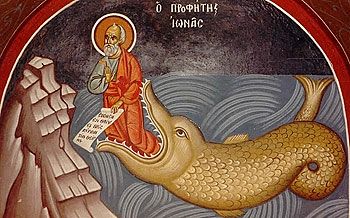
"'Arise, go to  Nineveh, that great city, and call out against it, for their evil has come before Me... Arise, go to Nineveh, that great city, and call out against it the message that I tell you.' So Jonah arose and went to Nineveh, according to the word of the Lord. Now Nineveh was an exceeding great city, three days' journey in breadth. Jonah began to go into the city, going a day's journey. And he called out, 'yet forty days, and Nineveh shall be overthrown!' And the people of Nineveh believed God. They called for a fast and put on sackcloth, from the greatest of them to the least of them" (Jonah 1:2, 3:2-5). God sent His prophet to these heathens to warn them of their coming judgment. Judgment according to what? The dispensationalist has no answer, because he holds to his presupposition that the law was only for Israel. We could also consider the case of Sodom and Gomorrah. While God relented of His wrath against Nineveh, He did not against the Sodomites (Genesis, chapters 18 and 19).

Thus, we must conclude logically that the doctrine of the dispensationalist was not what Paul intended. Rather, consider the context: he isn't giving us a contrast between sinfulness and sinlessness; he is contrasting the coming of Jesus, against the previous age without Him. While the Law and the Prophets directed Israel to the coming Redeemer, such as seen explicitly in Job 19:25, the heathen received no such succor. The faithful in Israel had an object for saving faith, but the heathen had none, except for a few individuals, such as Ruth. That is the sense in which God overlooked their sins: He refrained from revealing to them a basis for forgiveness and restoration. Thank God that He has now done so! 

Saturday, April 30, 2022

Sovereign Grace as the Only Rational Basis for Assurance

"Let your souls be filled and enlarged with everlasting admirings [sic] of that grace (that sovereign grace) which has so impregnably secured the salvation of His chosen, that no manner of thing, whether within them or without them, shall be able to defeat it or hinder them of it. No, not the gates of hell. Nay, not so much as one of the stakes thereof shall be removed, and that forever. Shaken you may be, and tossed with a tempest, but not overturned, because ye have an eternal root. Electing love is of that sovereignty that it rules and overrules all, both in heaven and in earth." -Puritan Elisha Coles, "A Practical Discourse of God's Sovereignty" 

In this paragraph, Coles paraphrases and summarizes several passages of Scripture, primary of which is Romans 8:38-39: "I am sure that neither death nor life, nor angels nor rulers, nor things present,nor things to come, nor powers, nor height nor depth, nor anything else in all creation, will be able to separate us from the love of God in Christ Jesus our Lord." 

The point of both Apostle Paul and Coles is that the assurance of the Christian is secure, not because of the power of the believer to maintain his spiritual condition, but because he is sustained by the same sovereign grace which saved him in the beginning. For, as Paul also says, "I am sure of this, that He who began a good work in you will bring it to completion at the day of Jesus Christ" (Philippians 1:6: see also 2:13). 

Does any Christian believe that God is unaware of our weakness, of our frailty, of the strength of the opposition (I Peter 5:8)? If He weren't, then we could have no rational basis for our assurance of eternal life. When Satan assails us with accusations of our unworthiness, he merely throws in our faces what is absolutely correct! However, Satan will never go to the next step, telling us of the grace and power of God the Son, our Redeemer Jesus Christ, because that would defeat all of Satan's designs against us. It is only in the Word of God that we are blessed with this promise: "My sheep hear My voice, and I know them, and they follow Me. I give them eternal life, and they will never perish, and no one will snatch them out of My hand. My Father, who has given them to Me, is greater than all, and no one is able to snatch them out of the Father's hand" (John 10:27-29, emphasis added). Our security is assured, not by any strength that we have, for we have none. Rather, it is guaranteed by the strength of the One who holds us.

Saturday, April 9, 2022

How Can I Know that the Bible Is the Inerrant Word of God?

The Christian philosopher and apologist Gordon Clark once wrote, "Because God is sovereign, God's authority can be taken only on God's authority. As the scripture says, 'Because He could swear by no one greater, He swore by Himself' (Hebrews 6:13)" (from God's Hammer, p. 39). His point was that confirmation of authority comes from higher authority. However, there can be no authority higher than God by which to confirm what He says. By His own authority, therefore, He declares His own truth and authority. 

The thoughtful person sees this and asks, "But isn't this circular reasoning?" And it is. Yet, we can see the impossibility of an alternative if we ask a parallel question: "How can you prove logic without presupposing logic as the basis for its proof?" 

The thoughtful Christian might ask whether the unbeliever would be convinced by that argument. And the obvious answer is that an unbeliever would not be convinced. Yet we must deny that his disbelief is based on a reasonable doubt. On the contrary, his rejection would arise from his own presuppositions against God's authority. Those presuppositions are the inherent nature of unbelief (Romans 1:18). 

On the other hand, we know that there are many Christians who receive the Bible as God's word, and that it is necessarily, therefore, inerrant. I am one of those Christians. Yet that belief did not arise from a consideration of a chain of logical arguments or archeological verifications. 

So, from where did my belief come? 

Clark quotes from the Institutes of John Calvin: "It is, therefore, such a persuasion as requires no reason; such a knowledge as is supported by the highest reason and in which the mind rests with greater security and constancy than in any reasons; in fine, such a sense as cannot be produced but by a revelation from Heaven" (I. vii.5). By "revelation," Calvin meant no such thing as a voice whispering in the believer's ear. Rather, in the process of effectual calling, the Holy Spirit causes the man's spirit to recognize the truth of the Scriptures as he reads them or hears them preached. 

This concept was picked up later (1646) in the writing of the Westminster Confession of Faith (I:5), the doctrinal statement of the world's Presbyterians: "We may be moved and induced by the testimony of the Church to an high and reverent esteem of the holy Scripture; and the heavenliness of the matter, the efficacy of the doctrine, the majesty of the style, the consent of all the parts, the scope of the whole (which is to give all glory to God), the full discovery it makes of the only way of man's salvation, the many other incomparable excellencies, and the entire perfection thereof, are arguments whereby it doth abundantly evidence itself to be the Word of God; yet, notwithstanding, our full persuasion and assurance of the infallible truth and divine authority thereof, is from the inward work of the Holy Spirit, bearing witness by and with the Word in our hearts." The Westminster divines added to Calvin's argument that Scripture provides good reasons for recognizing it as the Word of God. Yet the unbeliever suppresses his awareness of those qualities (Romans 1:18). He cannot recognize them exactly because of his unbelief (I Corinthians 2:14). He cannot be argued out of his unbelief, because his unbelief is a matter of sin, not ignorance. 

The case here demonstrates why we never see an apologetical situation in the New Testament in which Jesus or the Apostles ever argued for acceptance of Scriptural proofs. Even when Jesus faced Satan and when Paul preached to the pagan philosophers of Athens, each argued from Scripture as his starting point, not as a subsidiary point requiring proof. 

We must remember the promise of God: "So shall My Word be, that goes out of My mouth; it shall not return to Me empty, but it shall accomplish that which I purpose, and shall succeed in the thing for which I sent it" (Isaiah 55:11). God promises success to His word, not to our attempts to appeal to the fallen intellect of the unbeliever. "Of His own will He brought us forth by the word of truth, that we should be a kind of firstfruits of His creatures" (James 1:18). There has never been any other way by which God has converted His elect (Romans 10:8-15).


Wednesday, April 6, 2022

The Conversion of Israel As Proof of the Saint's Perseverance

"I will establish his [i. e., David's] offspring forever, and his throne as the days of the heavens. If his children forsake My law, and do not walk according to My rules, if they violate My statutes, and do not keep  My commandments, then I will punish their transgressions with the rod and their iniquity with stripes, but I will not remove from him My steadfast love or be false to My faithfulness. I will not violate My covenant or alter the word that went forth from My lips" (Psalm 89:29-34). 

These are the words of God in His covenantal promises to King David. Paul echoes them in II Timothy 2:13: "If we are faithless, He remains faithful - because He cannot deny Himself." In both passages, God's faithfulness to His people is never founded on our faithfulness to Him. Rather, even when we are unfaithful, He remains faithful, because to do otherwise would be to deny Himself. To violate His covenant promises would be a betrayal of His own nature, and is, therefore, unthinkable. 

We know the history of Israel, though it was still future to the time of the writing of the Psalm. She was, indeed, unfaithful, and God did, indeed, bring down on her fearsome judgments, especially the destruction of Jerusalem and the temple by the Babylonians, and the carrying away by them of the bulk of the population into captivity. This was a judgment only succeeded by the later judgment under the Romans in 70 AD, when Jerusalem was again looted and the temple destroyed, and an estimated 1.1 million Jews were massacred. From that judgment, the Jews have not yet recovered. Rather, Israel lies under a judicial hardening for her rejection and murder of her Messiah. 

Yet even that judgment points to Psalm 89. 

"It is true [that] the body of that nation, for their unbelief, is now broken off; there is a suspension of the outward part of the covenant. Not that God intends an utter rejection of them. For such as have part in the special election are always saved, Romans 11:7, and the time will come when all Israel shall be saved. For, as touching the election, they are beloved still, though yet unborn. For their sakes it was that 'those days of tribulation were shortened,' Matthew 24:22, which answers to Isaiah 65:8, 'Destroy it not, there is a blessing in it.' The Lord will not so much regard what they have done or deserved as what His covenant is concerning Abraham's seed, which, minding of His covenant, is from the unchangeableness of His purpose. And, therefore, though broken off at present, 'they shall be grafted in again,' verse 24, though driven into all lands, scattered into corners, mingled with the heathen, and become so like them as not to be known asunder. Yet, being His chosen, and within His covenant, He will bring them out of their holes and gather them one by one, Isaiah 27:12. He will do it so accurately, exactly, punctually, that none shall be wanting, 'though sifted among all nations, not one grain shall fall to the earth,' Amos 9:9. The reservation mentioned in Romans 11 was God's omnipotent safeguarding of His elect, when the rest of the nation fell to idolatry. They had gone all, as well as some, had not election held them back. It is, therefore, said to be according to the election of grace. Election was the pattern, and reservation the copy of it" ( Puritan Elisha Coles, "A Practical Discourse of God's Sovereignty"). 

Coles cites the faithfulness of God to His promises to Abraham as the grounds for the sustaining of a faithful remnant among the Jews, and for their eventual national repentance and salvation. And that same faithfulness is why the Christian can be assured that God will enable him to persevere in this life unto eternal life in the age to come. 


Wednesday, March 23, 2022

What Works Are Excluded from Justification?

I have had discussions with both Mormons and Catholics about Romans 3:28: "For we hold that one is justified by faith apart from the works of the law." The topic was the doctrine of both groups that a person is justified by a mixture of faith and works, instead of by faith alone. They denied that a person is justified by faith alone, claiming that Paul rejects the works of the Mosaic code, such as circumcision, as contributing to justification. That is, they restrict the meaning of "law" just to the rules and ceremonies given to Israel through Moses. 

What neither will mention is Paul's other uses of "law," especially in Galatians. In Galatians 4:21-26, 28-31, he makes a case: "Tell me, you who desire to be under the law, do you not listen to the law? For it is written that Abraham had two sons, one by a slave woman and one by a free woman. But the son of the slave was born according to the flesh, while the son of the free woman was born through promise. Now this may be interpreted allegorically: these women are two covenants. One is from Mount Sinai, bearing children for slavery; she is Hagar. Now Hagar is Mount Sinai in Arabia, she corresponds to the present Jerusalem for she is in slavery with her children. But the Jerusalem above is free, and she is our mother... Now you, brothers, like Isaac, are children of promise. But, just as at that time he who was born according to the flesh persecuted him who was born according to the Spirit, so also it is now. But what does the Scripture say? 'Cast out the slave woman and her son, for the son of the slave woman shall not inherit with the son of the free woman.' So, brothers, we are not children of the slave but of the free woman." 

Paul makes a very clear distinction here. Is it between works of the Mosaic law and other works? Clearly not. Anyone with a modicum of biblical knowledge knows that Abraham lived four-hundred years before  Moses. Rather, he uses "law" to describe the works of the flesh, such as those of Moses, using the label of the part to represent the whole (a synecdoche), in distinction from the promise, which he uses to label grace alone through faith alone. 


Saturday, March 19, 2022

Honorable and Dishonorable Use According to the Mind of the Potter

"That the creatures have at times deviated from their first rules and settlement is no derogation from the doctrine of God's sovereignty, but rather an illustration of it, as showing that the creatures are still in His hand, as clay in the potter's. Hence we find their innate propensities to be sometimes suspended; at other times, overacted; and at times again quite contrary to the law of nature. And this [is] not casually nor by the force of created powers, nor yet for any private or self-concern, but to serve some special and superior end which their Lord had to be done" --Puritan Elisha Coles, "A Practical Discourse of God's Sovereignty" 

He doesn't quote it, but Coles alludes to a reference from Paul: "You will say to me then, 'Why does He still find fault? For who can resist His will?' But who are you, O man, to answer back to God? Will what is molded say to its molder, 'Why have you made me like this?' Has the potter no right over the clay, to make of the same lump one vessel for honorable use and another for dishonorable use?" (Romans 9:19-21). 

If a potter splits his lump of clay, and uses one part to make a decanter for the finest wine, and the other part for a chamber pot, is that not his power to do? Can the chamber pot pipe up that it, too, wishes to hold fine wine? Of course not! Paul uses such an obvious example to make plain that the objection to God's sovereignty is equally irrational. 

While Coles widens Paul's text to apply to all created creatures, I want to focus, as Paul did, on God's sovereignty over mankind. It is all one to Paul, whether we are speaking of the lesser animals or to man; sentience is not grounds for autonomy. The sentient creation is still under the legitimate rule of his Creator. 

In theology, this is the contrasting doctrines of election, God's choice unto salvation and glorification, and reprobation, God's choice unto wickedness and judgment. Paul applies this dichotomy to an example which the Jewish Christians would have known well, the Pharaoh in Moses's account of the exodus from Egypt: "For the Scripture says to Pharaoh, 'For this very purpose I have raised you up, that I might show My power in you and that My name might be proclaimed in all the earth'" (Romans 9:17, citing Exodus 9:16). 

Paul's point in both his potter analogy and in the account of Pharaoh is to show that election and reprobation are not punishments or rewards for men, i. e., not something to be claimed by an autonomous creature. Rather, they are determined by His primary purpose, which is to glorify Himself. Granted, that is a concept that the unbeliever and many professing believers find abominable. Which is exactly the point of Paul's choice of words: "Who are you, O man, to answer back to God?" (Romans 9:20).

The implied answer is that, "You are no one." 


Saturday, March 12, 2022

God's Preservation of His People: The Perseverance of the Saints in Troublous Times

"Though I walk in the midst of trouble, You preserve my life; You stretched out Your hand against the wrath of my enemies, and Your right hand delivers me. The Lord will fulfill His purpose for me; Your steadfast love, O Lord, endures for ever. Do not forsake the work of Your hands." --Psalm 138:7-8 

As I write this, America is just past another wave of Covid-19 and the Russian invasion of Ukraine has just begun its third week. Unemployment is low, but inflation has jumped, especially in the prices of food and gasoline. We are in uncertain times. People are fearful, and many professing Christians have begun another round of talk about the Rapture and Mark of the Beast. 

Under such circumstances, unease is rational. Trusting in God does not mean that Christians don't have normal emotions. However, bad theology merely fans the flames of that unease, adding irrational fears to the rational unease. 

Good theology, on the other hand, brings comfort, and minimizes our fears. In particular, the knowledge that God, our God, reconciled to us through the blood of Jesus, always keeps us in His care: "We know that, for those who love God, all things work together for good, for those who are called according to His purpose. For those whom He foreknew, He also predestined to be conformed to the image of His Son, in order that He might be the firstborn among many brothers. And those whom He predestined, He also called; and those whom He called, He also justified; and those whom He justified, He also glorified" (Romans 8:28-30). This is hard for our egocentric hearts to accept, but the purpose of God is not about us; it is for the glory of His Son that He causes all things to work for good for those who belong to His Son. 

Beyond that, however, it is the purpose of the Son to care for His people without failure and without ceasing: "My sheep hear My voice, and I know them, and they follow Me. I give them eternal life, and they will never perish, and no one will snatch them out of My hand. My Father, who has given them to Me, is greater than all, and no one is able to snatch them out of the Father's hand" (John 10:27-29). Because of His love to His sheep, Jesus guarantees to us that He cannot fail to preserve His sheep for eternity, and He calls on the love of the Father for Him to guarantee what He desires for us.


Wednesday, March 9, 2022

The Law of God Versus Lawless Theology


Many people claim that the moral law of the Old Testament was given for Israel alone, not for the Gentiles. They base their claim on the fact that only Israel received the written law from Moses. 

That claim is wrong. 

In a familiar passage, Genesis chapters 18 and 19, we have the account of the destruction of Sodom and Gomorrah. Even people with no biblical education know the basics of the story. Why were they destroyed? God says of them, "Because the outcry against Sodom and Gomorrah is great and their sin is very grave" (Genesis 18:20). This account is of an event more than four centuries before God gave Moses the Law on Mount Sinai. So, if there was no moral law before Sinai, by what standard did the people of Sodom and Gomorrah sin, and sin so gravely that they would be erased from the face of the earth? 

The antinomian has no answer. His assertion is based on the logical fallacy of a false equivalency, the equating of the Law per se with the recording of the Law. The antinomian is correct in his claim that there was no written record of God's Law, because that privilege was reserved for the nation of Israel: "What advantage has the Jew? Or what is the value of circumcision? Much in every way. To begin with, the Jews were entrusted with the oracles of God" (Romans 3:1-2). While all men have the law of God recorded in our consciences (Romans 2:15), the Jews have had the additional blessing of the Law in written form. Thus they were doubly blessed, doubly accountable, and - ultimately - doubly punished (Isaiah 40:2). 

The problem for the antinomian is that, without God's law (I John 3:4), there is no objective standard of right and wrong, and, therefore, no standard by which to proclaim that a person is a sinner. Yet, even the antinomian claims that "all have sinned and fall short of the glory of God" (Romans 3:23). He tries to have it both ways, sinfulness without law.

I suggest that is why the American church has become so impotent in the face of a depraved and self-destructing culture. She has repudiated the one thing given by God to construct a godly society, his Law. The cry of today's average evangelical is, "Any law except God's Law!," and that is what we have received, a godless society, just like they wanted.