Showing posts with label judicial hardening. Show all posts

Saturday, November 23, 2019

The Aroma of Life in the Preaching of God's Word

"Thanks be to God, who in Christ always leads us in triumphal procession, and through us spreads the fragrance of the knowledge of Him everywhere. For we are the aroma of Christ to God among those who are being saved and among those who are perishing, to one a fragrance from death to death, to the other a fragrance from life to life."
- II Corinthians 2:14-16

This is an odd passage, in which Paul compares the Gospel to smells. That is not the image that usually comes to mind for me, probably most of us, but stimulates him to great enthusiasm.

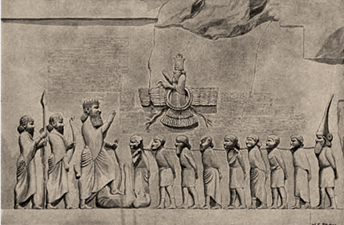
A triumphal procession was a Roman custom, in which a triumphant general, upon his return to Rome, would lead a parade consisting of him, his triumphant troops, and memorabilia of his conquest, such as idols, works of art, and, most importantly, prisoners. This is the image that Paul gives of his missionary work, with his "conquests" being those that had received the Gospel. But then he suddenly switches from that visual image to the olfactory image of the means of his conquest. The weapons of the Christian are never implements of the military, such as swords and spears, but are only spiritual: "The weapons of our warfare are not of the flesh but have divine power to destroy strongholds" (II Corinthians 10:4).

Our spiritual weapon consists in the verbal proclamation of the Gospel (Romans 10:14-15), because God has promised His power, not in man's weapons, but only in His word: "So shall My word be that goes out from My mouth; it shall not return to Me empty, but it shall accomplish that which I purpose, and shall succeed in the thing for which I sent it" (Isaiah 55:11).

Another thing we notice in Paul's remarks is that the response to God's word is not of just one kind. There is always a response, but it can be either of two kinds: "to one a fragrance from death to death, to the other a fragrance from life to life." To him who shall die in unbelief, the word of God is a smell of death, a warning that he rejects, falling further into unbelief. However, to him who will believe, the word of God bears life as the Holy Spirit applies it to his heart in regeneration. The true preaching of the Gospel will always have one effect or the other.

Wednesday, August 2, 2017

Judicial Hardening: When God Withdraws His Influences

"But My people did not listen to My voice;
     Israel would not submit to Me.
So I gave them over to their stubborn hearts,
     

     to follow their own counsels."
- Psalm 81:11-12 

This a hard message from God. His covenant people, the visible church, Israel, had become so enamored of her apostasy that God says, to paraphrase, "I wash My hands of you." What a sorrowful message! How could any child survive if a parent said this to him: "You are so evil that I cannot bear to be around you anymore"? Yet, Israel was content with this withdrawal of the God she professed. Why? Because she had resented His interference throughout her history. Read of her complaining after He liberated them from Egypt (e. g., Numbers 11:5). Especially egregious was the creation of the Golden Calf (Exodus 32:1-35).

And now, through Asaph, God tells Israel, "I have had enough." 

There were many judgments on Israel's apostasy. The Book of Judges gives the account of numerous foreign conquests, such as by the Midianites and the Philistines. Yet, each time, Israel repented, and God rescued them. Even greater was the conquest and deportation by the Assyrians in the Eighth Century BC, from which the Northern Kingdom never returned. And then the Southern Kingdom was destroyed and exiled by the Babylonians in the Sixth Century BC. Yet, God brought Judah back. Then the final destruction came in 70 AD, when the Romans destroyed Jerusalem and the Temple. It was nineteen centuries before the Jews returned this time, yet there has been no spiritual restoration. 

Her final restoration will bring Israel, not back to a physical land, but rather to her God. It has been prophesied in Zechariah, especially Zechariah 12:10, and in Romans 11. After almost three thousand years (and counting), Israel and her God will be Groom and Bride again. 

Saturday, April 1, 2017

God's Common Goodness Is No Common Grace


In Matthew 5:45, Jesus tells us, "[God] makes His sun rise on the evil and on the good, and sends rain on the just and on the unjust." This is a precious truth, that God is the source of all good things, and that He shares His gifts with all men. God is good to all because God is all good!

However, a problem arises when some people claim that God's common goodness is properly common grace. That is an idea that I cannot accept.

Consider the further words on Jesus in Mark 7:24-30: "He arose and went away to the region of Tyre and Sidon. And He entered a house and did not want anyone to know, yet He could not be hidden. But immediately a woman whose little daughter had an unclean spirit heard of Him and came and fell down at His feet. Now the woman was a Gentile, a Syrophoenician by birth. And she begged Him to cast the demon out of her daughter. And He said to her, 'Let the children be fed first, for it is not right to take the children’s bread and throw it to the dogs.' But she answered Him, 'Yes, Lord; yet even the dogs under the table eat the children’s crumbs.' And He said to her, 'For this statement you may go your way; the demon has left your daughter.' And she went home and found the child lying in bed and the demon gone."

Jesus was referring to His own comment in Matthew 15:24: "I was sent only to the lost sheep of the house of Israel." During His earthly ministry, His focus was only on ethnic Israel. Of course, that expanded to the entire world after His ascension, but that was later. When this foreign woman came to Him, He was still in the transitional state between the Old Covenant focus on Israel and the New Covenant inclusion of all nations. Yet, the woman said, even when the chosen children are enjoying the feast, there are scraps which fall to the dogs. The Book of Ruth would be an expanded image of what she means.

The application here is the parallel between the children and the dogs in this vivid story and the children of God and the rest of the world in Matthew 5:45. The wicked, when they are enjoying the good gifts of God, are not enjoying God's favor to them, but are rather receiving the overflow from His blessings on His own people, His children, the church. Why isn't this grace? Because it is not to their advantage. Grace is God's favor, the application of Christ's merits, but that isn't what the reprobate are receiving (Romans 1:21):"For although they knew God, they did not honor him as God or give thanks to him, but they became futile in their thinking, and their foolish hearts were darkened." Is this blessing for them? Not at all. Rather, as Paul goes on to say, this arrogant and presumptuous use of God's gifts brings these unbelievers to grief (Romans 1:28-29): "And since they did not see fit to acknowledge God, God gave them up to a debased mind to do what ought not to be done. They were filled with all manner of unrighteousness, evil, covetousness, malice."

Wednesday, January 11, 2017

People Don't Believe Because They Are Pre-Determined Vessels of Wrath

In John, chapter 12, Jesus is preaching to a group of Pharisees (verse 19). In contrast to a group of God-fearing Gentiles (verse 20), however, these Pharisees rejected Him. His response is described in verses 37-41: " Though He had done so many signs before them, they still did not believe in Him, so that the word spoken by the prophet Isaiah might be fulfilled: 'Lord, who has believed what he heard from us, and to whom has the arm of the Lord been revealed?' Therefore they could not believe. For again Isaiah said, 'He has blinded their eyes and hardened their hearts, lest they see with their eyes, and understand with their heart, and turn, and I would heal them.' Isaiah said these things because he saw His glory and spoke of Him" (John 12:37-41).  

How does the passage describe the Pharisees? As unbelieving. However, why were they unbelieving? Because they "could not." Could not? Not would not? That is a stunning choice of words. And John continues that description: "He has blinded their eyes and hardened their hearts." No doubt there was a judicial element to this, i. e., that the Pharisees had refused to believe, so God punishes them with even greater hardness. However, John explicitly states the God's decree is the source of their rigid unbelief.

This is a shocking thought to our egalitarian American ears. It's not fair! Not fair? Really? The Apostle Paul described that exact question from a hypothetical opponent (Romans 9:19): "You will say to me then, 'Why does He still find fault? For who can resist His will?" But what answer does he give? Does Paul back down to such a progressive view? Does he attempt to defend God's fairness? Not at all. Rather, he answers, not with a justification of God's sovereignty, but rather with a refusal to concede that it needs any such justification (Romans 9:20-22): "But who are you, O man, to answer back to God? Will what is molded say to its molder, Why have you made me like this?' Has the potter no right over the clay, to make out of the same lump one vessel for honorable use and another for dishonorable use? What if God, desiring to show His wrath and to make known his power, has endured with much patience vessels of wrath prepared for destruction?" That is, as our Creator, does God not have an absolute right to use us for His own glory and purpose? Of course! Specifically, He has such a right to use some as a demonstration of His holy wrath. There is no concession to egalitarianism here. It is, rather, an unequivocal assertion of the absolute and irresistible sovereignty of God. 

Daniel 4:35: "All the inhabitants of the earth are accounted as nothing, and He does according to His will among the host of heaven and among the inhabitants of the earth; and none can stay His hand or say to Him, 'What have You done?'"

Saturday, March 12, 2016

The Pre-Incarnate Mediatorship of Christ in Amos 7

The seventh chapter of Amos opens with three warning visions.

The first is Amos 7:1-3: "This is what the Lord God showed me: behold, he was forming locusts when the latter growth was just beginning to sprout, and behold, it was the latter growth after the king’s mowings. When they had finished eating the grass of the land, I said, 'O Lord God, please forgive! How can Jacob stand? He is so small!' The Lord relented concerning this: 'It shall not be,' said the Lord."

The second is Amos 7:4-6: "This is what the Lord God showed me: behold, the Lord God was calling for a judgment by fire, and it devoured the great deep and was eating up the land. Then I said, 'O Lord God, please cease! How can Jacob stand? He is so small!' The Lord relented concerning this: 'This also shall not be,' said the Lord God." 

And the third in Amos 7:7-9: "This is what he showed me: behold, the Lord was standing beside a wall built with a plumb line, with a plumb line in his hand. And the LORD said to me, 'Amos, what do you see?' And I said, 'A plumb line.' Then the Lord said, 'Behold, I am setting a plumb line in the midst of my people Israel; I will never again pass by them; the high places of Isaac shall be made desolate, and the sanctuaries of Israel shall be laid waste, and I will rise against the house of Jeroboam with the sword."

In all three visions, God warns of an impending judgment on the northern kingdom, a judgment which was eventually fulfilled in the conquest and deportation by Assyria in 722BC. The difference is that the first two judgments are turned away through the intercession of Amos himself. 

However, the third vision is very different. First, notice the varying use of "lord." In the first and third occurrences we see "Lord." That is, the Hebrew word adon. In contrast, the middle usage is "LORD," for the Tetragrammaton, Jehovah. This contrast indicates a conversation between the First and Second Persons
of the Trinity. Compare Psalm 110:1 and its use in Luke 20:42 and Acts 2:34. 

We see Amos's twice taking a mediatorial role, and turning aside God's judgment on the northern portion of Israel. However, in the third judgment, Christ, the ultimate Mediator, refuses to intervene on behalf of Israel and this third, most-devastating, judgment was poured out in the destruction of these ten tribes. We see it again in Amos 9:7, where God tells the northern kingdom that she has no more privileges in His eyes than do the most-obscure (in their knowledge of the world) foreigners. How horrible must God's wrath be, if His own appointed Mediator refuses to plead for a sinner!

Saturday, November 9, 2013

I Kings 22:20, God Deceives the Wicked

Arminians snarl whenever the Calvinist doctrine of reprobation comes up. Reprobation is God's intentional hardening of the hearts of those that He has passed over in election, leaving them to the judgment that their wickedness earns them. Arminians claim that this makes God the author of sin, in violation of James 1:13.

And it must be confessed that James does indeed say there that "God tempts no one."

Yet, in I Kings 22:20, the inspired text has Jehovah seeking a spirit to "entice" (some versions, "deceive") Ahab, the wicked king of Israel. See also Jeremiah 20:7 and Ezekiel 14:9, where the same Hebrew word is used for God's deceiving of false prophets.

I think that the distinction between these two contrasting concepts is that James is addressing Christians, while the Old Testament references are to unbelievers. That is, God does not place stumblingblocks in the paths of believers, His elect and beloved people, but does trip up hypocritical professors, using their own wickedness to bring consequences into their present lives as a foretaste of their judgment to come.

This is reprobation! This is God provoking the sin nature in those whom He has rejected! And it not to bring about their repentance, but rather to confirm them in their spiritual rebellion.

This should be a thunderous warning to unbelievers. If you are reading this, but have never submitted to the lordship of Christ, you have great reason for fear. Judgment isn't waiting for you to die and pass into eternity. Rather, it is happening now, in this life, and is a costly burden to bear. The last chapter of I Kings goes on to describe the death of Ahab, lost without any remaining hope of redemption. I beg you not to follow his path!

Tuesday, January 24, 2012

Reprobation in the Old Testament

Reprobation is the flip side of the doctrine of election. Just as God, out of His free and sovereign grace, has ordained some to mercy, out of His sovereign holiness and justice, He has ordained the rest to perdition for their sins. While many Evangelicals balk at this doctrine, it certainly isn't because of any lack of biblical support for it, especially in the Old Testament!

Consider Deuteronomy 2:30, "Sihon the king of Heshbon would not let us pass by him, for the LORD your God hardened his spirit and made his heart obstinate, that He might give him into your hand, as he is this day." God had purposed the destruction of Sihon and his people, so He hardened the king's heart.

And Joshua 11:19-20, "There was not a city that made peace with the people of Israel except the Hivites, the inhabitants of Gibeon. They took them all in battle. For it was the Lord’s doing to harden their hearts that they should come against Israel in battle, in order that they should be devoted to destruction and should receive no mercy but be destroyed, just as the Lord commanded Moses." Here we see the same act of hardening, but over a larger area.

Or the case of the son's of Eli, I Samuel 2:25, "'If someone sins against a man, God will mediate for him, but if someone sins against the LORD, who can intercede for him?' But they would not listen to the voice of their father, for it was the will of the LORD to put them to death." Eli tried to warn them about their evil ways, but God had already determined on their destruction, so He hardened their hearts against the words of their father.

Arminians resist the significance of these passages. They hold that God only hardened the hearts after the respective people had already hardened their own hearts, i.e., what is known as "judicial hardening." However, that appears nowhere in these passages, except in the case of the sons of Eli. Rather, the Arminian commits the very error that Paul refutes in Romans 9:21: "Has the potter no right over the clay, to make out of the same lump one vessel for honorable use and another for dishonorable use?" As Creator and Lord, God has a sovereign right to use His creatures as He sees fit. Our only option is to bow our heads and bless the Lord for His justice.

Sunday, June 5, 2011

Matthew 13:10-15, Truth and the Natural Man


"Then the disciples came and said to Him, 'Why do You speak to them in parables?' And He answered them, 'To you it has been given to know the secrets of the kingdom of heaven, but to them it has not been given. For to the one who has, more will be given, and he will have an abundance, but from the one who has not, even what he has will be taken away. This is why I speak to them in parables, because seeing they do not see, and hearing they do not hear, nor do they understand. Indeed, in their case the prophecy of Isaiah is fulfilled that says: “You will indeed hear but never understand, and you will indeed see but never perceive. For this people’s heart has grown dull, and with their ears they can barely hear, and their eyes they have closed, lest they should see with their eyes and hear with their ears and understand with their heart and turn, and I would heal them."'"

I am currently reading "The Battle Belongs to the Lord" by Westminster Seminary Professor and Reformed Apologist K. Scott Oliphint. Recently, a short phrase stood out in a remarkable way: "Unbelief is designed to miss the obvious." First, I just kind of nodded in agreement. Then I felt a more vehement, "Y'know, that is so true!" Then various scriptures on the issue started to come to mind.

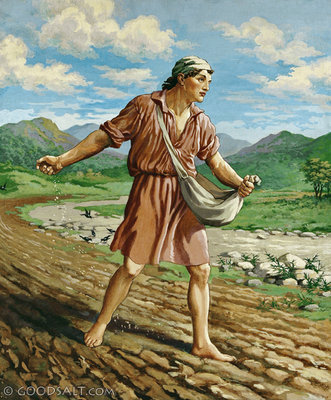
First was the one quoted above, which comes immediately after Jesus gave the Parable of the Sower in Matthew 13. The Disciples asked Jesus why he told truths to the people in obscure stories. Notice His response above (verse 11): "to them it has not been given." It wasn't coincidental that the truth was obscured to them, but intentional! But why? Verse 15 tells us, "For this people’s heart has grown dull, and with their ears they can barely hear, and their eyes they have closed, lest they should see with their eyes and hear with their ears and understand with their heart and turn, and I would heal them." The truth was withheld from them as punishment for the very hardness of their hearts which first hated the truth! This is commonly referred to as "judicial hardening."

Then I thought of the Apostle Paul, in Romans 1:18, the second half of the verse, which reads, "men who by their unrighteousness suppress the truth." Unbelievers don't merely ignore or avoid the truth, they actively suppress it. They seek to bury it, so that their wickedness can reign unchallenged!

Then the Prophet Zechariah (Zechariah 7:11-12): "They refused to pay attention and turned a stubborn shoulder and stopped their ears that they might not hear. They made their hearts diamond-hard lest they should hear the law and the words that the Lord of hosts had sent by His Spirit through the former prophets. Therefore great anger came from the Lord of hosts." Then the next verse (Zechariah 7:13) gives His reaction: "'As I called, and they would not hear, so they called, and I would not hear,' says the Lord of hosts." The hardness of the hearts of the reprobate brings the judgment of the hardness of God's heart toward them. That is a frightening truth!

Wednesday, September 23, 2009

Ezekiel 3, the Commission of the Prophet of God

Verses 1-4: "And He said to me, 'Son of man, eat whatever you find here. Eat this scroll, and go, speak to the house of Israel.' So I opened my mouth, and He gave me this scroll to eat. And He said to me, 'Son of man, feed your belly with this scroll that I give you and fill your stomach with it.' Then I ate it, and it was in my mouth as sweet as honey. And He said to me, 'Son of man, go to the house of Israel and speak with My words to them."

Here we have an allegorical description of the process of inspiration. Ezekiel describes his subjective experience of what the Apostle Paul describes in II Timothy 3:16, "All scripture is breathed out by God...", and by the Apostle Peter in II Peter 1:21, "No prophecy was ever produced by the will of man, but men spoke from God as they were carried along by the Holy Spirit."

Verses 16-19: "And at the end of seven days, the word of the Lord came to me: 'Son of man, I have made you a watchman for the house of Israel. Whenever you hear a word from My mouth, you shall give them warning from Me. If I say to the wicked, "You shall surely die," and you give him no warning, nor speak to warn the wicked from his wicked way, in order to save his life, that wicked person shall die for his iniquity, but his blood I will require at your hand. But if you warn the wicked, and he does not turn from his wickedness, or from his wicked way, he shall die for his iniquity, but you will have delivered your soul.'"

The word that God has given to the prophet is not to be reserved or suppressed. Rather, he is to repeat it to the sinners around him. The prophet never assumes responsibility for the sins of others, but rather, he will bear consequences in failing to fulfill his God-given role in announcing the righteousness of God.

Verses 25-26: "'O son of man, behold, cords will be placed upon you, and you shall be bound with them, so that you cannot go out among the people. And I will make your tongue cling to the roof of your mouth, so that you shall be mute and unable to reprove them, for they are a rebellious house.'"

These verses are among the most frightening in Scripture. "Because the prophet may be bound with cords?" you ask. No, but because the hardness of the hearts of a people can reach the point where God refuses to continue to deal with them. That is a judgment, referred to as "judicial hardening," that brings Hell into the experience of a people in this life. May God grant us repentance (II Timothy 2:25), that America may never know that kind of hardening.

Thursday, July 30, 2009

The Hardening of the Jewish Leaders


"Jesus cried out again with a loud voice and yielded up His spirit. And behold, the curtain of the temple was torn in two, from top to bottom. And the earth shook, and the rocks were split. The tombs also were opened. And many bodies of the saints who had fallen asleep were raised, and coming out of the tombs after His resurrection they went into the holy city and appeared to many. When the centurion and those who were with him, keeping watch over Jesus, saw the earthquake and what took place, they were filled with awe, and said, 'Truly this was the Son of God!'"
- Matthew 27:50-54

Upon the death of Jesus on the cross, several extraordinary occurrences took place that testified that this was the death of no mere man: the veil of the temple was torn open, an earthquake shook the ground, the rock of the mountains of the area split, and some of the local dead rose from their graves (the last, though described here, apparently actually coincided with Christ's resurrection on Sunday following). Such a fundamental reaction by the creation would surely be expected to attract the attention of many to the significance of the event. In fact, here in our passage, even pagan Romans were moved to acknowledge the Godhead of the man they themselves had crucified.

Who was unmoved? The very leaders of the Jews who had harried Jesus to His death. In fact, we read of them, plotting against His followers, in Acts 4. In verses 5-6, we see them gathered: "On the next day [after Peter and John had testified before the Jewish crowds] their rulers and elders and scribes gathered together in Jerusalem, with Annas the high priest and Caiaphas and John and Alexander, and all who were of the high-priestly family." What was their decision? Verses 16-17: "'What shall we do with these men? For that a notable sign has been performed through them is evident to all the inhabitants of Jerusalem, and we cannot deny it. But in order that it may spread no further among the people, let us warn them to speak no more to anyone in this name.'" So, even while acknowledging the significance of the events that occurred before them, they do not repent, but rather turn to subterfuge to suppress the very truth that they recognize.

16th-Century Scottish Presbyterian commentator Robert Rollock says of this passage, "It is a wonderful thing to see, that they who had judgment and understanding, and who had read all the prophecies of the Messiah to come, got no sense, yet a silly multitude ["silly" in the historical sense of simple and uneducated, referring to the five thousand of verse 4] gets some sight and sense." In other words, those with the most biblical knowledge, who should have been the first to acknowledge the messianic role of Jesus, instead hardened their hearts against Him, while those who had been most in spiritual ignorance embraced Him. Jesus anticipated this, when He said (Luke 10:21), "I thank you, Father, Lord of heaven and earth, that You have hidden these things from the wise and understanding and revealed them to little children; yes, Father, for such was Your gracious will." And Paul looked back to these events, when he said (I Corinthians 1:27), "God chose what is foolish in the world to shame the wise..."

Rollock responds with this admonition, which should still be heard in our day, even after more than four-hundred years: "Whosoever thou are who opposest thee to the brightness of the Gospel, thou crucifiest the Lord of Glory; and as it shall be laid to the charge of the high priests and Pharisees, and of Pilate and Herod, in that great day, that they crucified Jesus Christ, so it shall be laid to thy charge, and thou shalt be as guilty of his blood as they. Woe to that soul which will resist that Word and the Holy Spirit! Woe shall be to the great men in this land who against conscience conspire against Christ, religion, and their native country [i.e,. by opposing the spread of the Gospel], for wrath and vengeance remaineth for them, if they leave not off this unhappy course."

Wednesday, July 22, 2009

Resisting Mercy Brings Greater Judgment

[paralleled in Matthew 11:20-24]

"Whenever you enter a town and they do not receive you, go into its streets and say: 'Even the dust of your town that clings to our feet we wipe off against you. Nevertheless know this, that the kingdom of God has come near.' I tell you, it will be more bearable on that day for Sodom than for that town. Woe to you, Chorazin! Woe to you, Bethsaida! For if the mighty works done in you had been done in Tyre and Sidon, they would have repented long ago, sitting in sackcloth and ashes. But it will be more bearable in the judgment for Tyre and Sidon than for you. And you, Capernaum, will you be exalted to heaven? You shall be brought down to Hades. The one who hears you hears Me, and the one who rejects you rejects Me, and the one who rejects Me rejects Him who sent Me."
- Luke 10:10-16

Puritan minister Peter Bulkeley, in a sermon in a church in Concord, MA, about 1650, said of this passage [idiosyncratic spelling and grammar in the original], "The Lord never shewed so great severitie against any people, as he will doe against those which despise the message of grace brought by the Gospel, even as that people [i.e., the Jews] is now become a spectacle of wrath above all people. When the Scripture threatens a woe, it notes the extremitie of that misery which is to come; but there is woe upon woe threatened against this sin, 'woe to thee Bethsaida, woe to thee Chorazin,' woe to those places where the Gospel comes, and is not regarded."

He continues, "This sin sets more of God against us than was before; before the Gospel came to us, we had justice against us armed with power, both which were provoked by us , but yet mercy was ready to save us, if we would come in and accept of the grace offered; mercy was not yet become our enemy, as not yet being provoked by us, but when it is brought to us by the Gospel, and is despised by us, now mercy and grace itselfe also is against us, and is made our enemy, now mercy joynes with justice, and increaseth wrath."

People often ask of the Pagans, whether in Asia, or Africa, or the jungles of South America, "What of those who never hear about Jesus?" They still bear the wrath of the Law against sin, which is why Christians send missionaries around the world. And for them, the message is that the mercy of Jesus is available to redeem them from that curse. But what about you, American? You have lived all your life in a land where sermons like the one above have been preached for almost four hundred years. You can see a church on any corner. In fact, you may have been in Sunday school as a child in one of those churches. There are Bibles in every bookstore, and Christian television programs twenty-four hours of the day. What will be the witness against you in the judgment? Not just the offended Law of God, but also His offended mercy, which was offered to you at every opportunity, but you turned your back every time! The mercy that would have saved you in a moment, will then be the top witness for the prosecution against you, and your judgment will be that much worse.

Psalm 95:7-8, "Today, if you hear His voice, do not harden your heart."