Sunday, November 28, 2010

John 3:16-17, The Universality of the Gospel and the Particularity of the Atonement

"For God so loved the world, that He gave His only Son, that whoever believes in Him should not perish but have eternal life. For God did not send His Son into the world to condemn the world, but in order that the world might be saved through Him."

It is amazingly predictable that this passage will come up in any discussion of the extent of the atonement. As I have stated before (such as here and here), I hold to the classic Reformed view of the Atonement, called "limited" or "particular" atonement, i.e., that Christ died effectually and exclusively for a certain number of particular individuals given to Him by the Father before the Creation, explicitly the Church (e. g., John 6:35-40, Ephesians 5:25). This is in opposition to the Arminian view of universal atonement, i.e., the belief that Christ died generically for all, and ineffectually for most.

However, look at what these verses actually say. Because God loved the world, i.e., His Creation, He gave His Son for those who believe in Him. This is particular atonement! Because the Father created this world as good (Genesis 1:10), He saw fit to redeem a race from it, lest it all be condemned for Adam's sin.

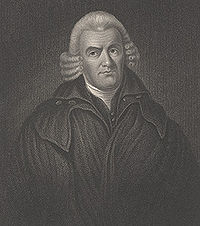
The theologian John Brown of Haddington referred to this as "an ordinance of salvation." Brown vehemently maintained that the Father truly and unreservedly proffered Jesus Christ as the way of salvation (Acts 4:12). Any who would be saved must flee to Him, and there can be no other salvation. Thus, Christ holds the office of savior for the whole world, which is a separate issue from either election or atonement. Think of this analogy: the sun is given as the primary source of light for the whole world. However, the blind do not benefit from its light. Yet, their lack of benefit in no way negates the action of the sun. In the same way, while the reprobate receive no eternal benefits from Jesus as savior, that in no way negates His work as Savior, which is effectual for all those whom He chooses. Remember, He Himself said that many are called (i.e., in the proclamation of the gospel), but few are chosen (i.e., in the effectual power of election), Matthew 22:14 (cf. also, Revelation 17:14).

My point here is that there is no conflict between the universality of Christ's saving office and His particularity of saving action. They are distinct things with distinct purposes.

Thursday, November 18, 2010

I John 5:7, The Johannine Comma

"For there are three which bear record in heaven, the Father, the Word, and the holy Ghost: and these three are one." -Geneva Bible

This verse, technically referred to as "the Johannine Comma," has been controversial for a long time. However, it is important to recognize that orthodox Christians are unanimous in holding to the substance of the teaching of the verse. Most modern Bible translations, including my preferred ESV, leave it out. Older ones, such as the Geneva Bible and KJV include it. That is because the editors of the critical versions of the Greek New Testament have concluded that it isn't supported by the manuscripts. I am not qualified to address that. The following is from the Systematic Theology of John Brown of Haddington. He was a mid-18th Century theology professor for the Burgher Associate Synod in Scotland. I reprint it here simply as a contribution to the discussion.


"The Socinians, modern Arians, and some others, contend that the last-mentioned text, I John v. 7, is spurious; because, 1. 'Many Greek manuscripts want [lack] it.' But many of these want other texts: and the similarity of the 7th and 8th verses made a careless transcriber apt to overleap one of them. 2. 'Many of the ancient translations want it.' But none of these translations are of great weight in this matter, for they want much more of the New Testament. Nor are any of them, except the Syriac and Jerome's Latin one, much worth. 3. 'The ancient Fathers do not quote it, when, in their disputes with heretics, it would have been much to their purpose.' But that might be because they had deficient copies, or cared not to adduce a text which their opponents might have rejected. -Let it be further observed, 1, The orthodox had no temptation to forge it, having plenty of proof for their faith concerning the Trinity beside. But the Antitrinitarians had strong temptations to drop it out of their copies, which is also more easily done. And yet perhaps it originated from no design, but from the hurry of a transcriber, amidst the rage of persecution. 2. About 1400 years ago [i.e., before Brown's time], we find complaints of some Antitrinitarians attempting to corrupt the Scripture; but never, till of late, that the orthodox had done so. 3. This verse is referred to by Tertullian about AD 200, quoted by Cyprian about 250, and by Athanasius, or one in his name, about 350. Jerome hath it in his translation about 400, and admitting it to be in all the best Greek copies, he severely blames the want of it in the old Latin version. Soon after, it is quoted by Eucherus and Vigilius. In 484, the African bishops quote it in the Confession of their faith which they presented to Hunneric their Arian king; and about thirty years after, Fulgentius, when required by an Arian king to produce his objections against the Arians, quoted it three times. When the Vulgate Latin translation was solemnly, and with great care, corrected from Greek and Latin manuscripts, by order of Charles the Great, about AD 800, and again by the famed University of Sorbonne, about two hundred years after, this text was retained. Erasmus, who inclined to Arianism, first suspected it, and dropt it out of his first edition of the New Testament: but restored it in his subsequent editions, upon the credit of an old British copy. It is said that nine of Stephen's sixteen manuscripts from which he printed his excellent edition of the Greek New Testament, had this text. No doubt, many of the manuscripts, from which other principal editions were formed, are now lost. A printed copy is even more authentic than almost any manuscript extant, the oldest of which were written some hundred years after all these of the apostles were either worn out, or lost: for, more learning and care have been exercised to render some printed editions correct, than perhaps was taken on all the manuscripts written for a thousand years before the Reformation. 4. The passage appears deficient and unconnected if this verse be dropt. Mill and Bengelius have therefore honestly retained it, in their excellent editions, notwithstanding they have fairly. and with much more candour than Michaelis, represented the objections against it."

In contrast, Free Church of Scotland Theologian William Cunningham, 1805-1861, stated in his Historical Theology (1862, Vol. 2, p. 216), "most Trinitarians now admit that there is a decided preponderance of critical evidence against the genuineness of I John v. 7, usually spoken of as the three heavenly witnesses." This sentence appears in the section in which Cunningham sets forth the errors of the Socinians and Arians on the Trinity and divinity of Christ.

Wednesday, November 17, 2010

God Uses Even the Wickedness of Men to Serve Him


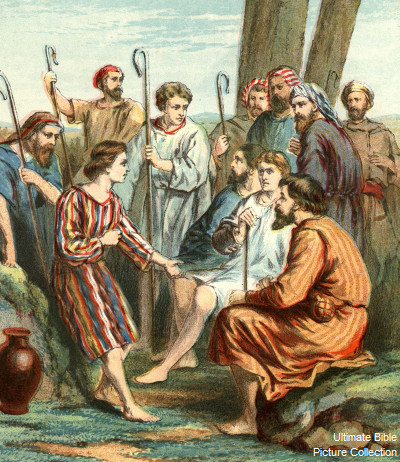
"So when Joseph came to his brothers, they stripped him of his robe, the robe of many colors that he wore. And they took him and threw him into a pit. The pit was empty; there was no water in it. Then they sat down to eat. And looking up they saw a caravan of Ishmaelites coming from Gilead, with their camels bearing gum, balm, and myrrh, on their way to carry it down to Egypt. Then Judah said to his brothers, 'What profit is it if we kill our brother and conceal his blood? Come, let us sell him to the Ishmaelites, and let not our hand be upon him, for he is our brother, our own flesh.' And his brothers listened to him. Then Midianite traders passed by. And they drew Joseph up and lifted him out of the pit, and sold him to the Ishmaelites for twenty shekels of silver. They took Joseph to Egypt."
- Genesis 37:23-28

We know the story: Joseph had told his father and brothers of dreams in which they bow to and serve him. As might be expected, they resented the idea. Also, their father Israel had exacerbated the conflict by playing favorites, clearly preferring Joseph over his other sons. In their own wickedness, the brothers first plan to murder Joseph, then nervously back off, choosing merely to sell him into slavery to their kin, the Ishmaelites.

What neither Joseph nor his brothers understood was that this was in the purposes of God. Go over to Genesis 45:4-8, especially verse 7, "And God sent me before you to preserve for you a remnant on earth, and to keep alive for you many survivors." God had used the wickedness of Joseph's brothers to bring him to a place from which he would save the lives of the covenant people years later.

However, notice that God never rewards the brothers for their wickedness. While they had planned to sell Joseph to the Ishmaelites, he is instead found by the Midianites, who then sell him along. God's purposes are fulfilled, but the brothers are frustrated in their expectation of blood-money. How can anyone read this story and not be convinced of the sovereign decrees of God?

Thursday, November 11, 2010

Genesis 31:1-3, Evil in This Life Drives Our Hearts to the Blessedness of Eternity


"Now Jacob heard that the sons of Laban were saying, 'Jacob has taken all that was our father’s, and from what was our father’s he has gained all this wealth.' And Jacob saw that Laban did not regard him with favor as before. Then the Lord said to Jacob, 'Return to the land of your fathers and to your kindred, and I will be with you.'"

Perhaps you recall the context of these events: Isaac had sent Jacob back to Padan-Aram, to Laban, Rebekah's brother, to find a wife among her kindred, as was the custom of that time. Falling in love with Rachel, Laban's daughter, Jacob agrees to work for Laban for seven years as bride-price for her hand in marriage. However, Laban treacherously slipped Rachel's older sister Leah under the wedding veil. Jacob then agrees to work an additional seven years to gain Rachel. He thus works a total of fourteen years for his two wives (joined later by their two hand-maidens).

In the passage quoted here, Rachel's brothers are jealous of the prosperity that Jacob had received from Jehovah his God, while their own father diminished, thus dissipating their inheritance. They turn their resentment against Jacob, and he is inspired to return home.

As I read that this morning, in spite of having read it many times before, I was struck both by the presence of God's electing hand, and the pattern it represents for the life of most, if not all, believers. God had a covenantal plan for Jacob, the heir of the promise, to return to the Promised Land and invest himself there. While He certainly could have simply ordered the move, He instead creates circumstances under which Jacob and his family are happy to do as He intends.

We often hear the question of how a good God can allow evil in the world. While this passage doesn't cover that exhaustively, I think it certainly gives a partial answer. Our citizenship is not in this world (Philippians 3:20); it is in the spiritual kingdom of God. For most of us, the experiential aspect of that is in the world to come. So God makes this world bitter and contemptible, so that we long to be with Jesus. For some people, minor difficulties are sufficient; for others, it may take a larger nudge, such as a horrible disease.

Remember Jacob, and do not allow yourself to focus on the bitterness of this world. Rather, turn your eyes to Jesus, and the time to come when we will no longer know suffering, but only joy (Revelation 21:4).

Sunday, October 31, 2010

Five Reasons to Celebrate the Reformation!


On October 31, 1517, Martin Luther nailed his 95 Theses to the church door in Wittenberg. That event is considered to be the official beginning of the Protestant Reformation.

The controversy between the Reformers and the Church of Rome boiled down to what are often called the Five Solas of the Reformation.

Sola Scriptura, "scripture alone", i.e., the belief that the Bible alone is the infallible rule of faith and life, in opposition to the Catholic advocacy for an equal authority for church tradition.

Solus Christus, "Christ alone," i.e., the belief that salvation is in Christ alone, not in the church, not in Mary, not in the sacraments, and not in any saints.

Sola Gratia, "grace alone," i.e., that salvation is a free gift from God, not the reward for any works on our part, much less the supererogation of the saints or the indulgences from the Pope.

Sola fide, "through faith alone." Our faith is the response created in us by his grace. That is, we aren't saved by faith, per se, but rather through faith.

Soli deo gloria, "for the glory of God alone." God doesn't need to save us. God isn't obligated to save us. In fact there is nothing within us to inspire Him to save us (Isaiah 64:6).

 Also, as a Presbyterian, I celebrate this year as the 450th anniversary of the Reformation of Scotland, under the leadership of John Knox, a converted Catholic priest.

Thursday, October 21, 2010

Amos 3:6, Is It the Responsibility of a Sovereign God to Make Us Happy?


"Does disaster come to a city, unless the LORD has done it?"

Portions like this one are why ignorance of the Old Testament is almost a sign of superiority amongst American Evangelicals. Consider that popular song: "At the cross, at the cross, where I first saw the light, and the burden of my heart rolled away, it was there by faith I received my sight, and now I am happy all the day!" Charismatics, especially the Prosperity Gospel peddlars, are well-known for claiming that illnesses are "lies from Satan!" But is it biblical to expect to be "happy all the day" or free from illness, simply because one knows Jesus?

Consider another verse, Isaiah 45:7, "I form light and create darkness, I make well-being and create calamity, I am the Lord, who does all these things." Speaking of Himself, God certainly makes no claims of being the bringer of only sweetness and light.

Or what of the testimony of Job? In 2:10, he says, "But he said to her, 'You speak as one of the foolish women would speak. Shall we receive good from God, and shall we not receive evil?' In all this Job did not sin with his lips." And the text even makes explicit that it was no sin for him to say this!

God does indeed bring suffering into the lives of even the strongest Christians. the reasons are many. It may be to expose hidden sin or overblown pride (consider Paul's thorn in the flesh, II Corinthians 12:7-10). Suffering also helps us to loosen our grasp on material things in this life and to focus on the life to come. But the issue is his sovereignty: He does, because He can. It is our place to receive His purposes in our lives. To put it simply: we must learn more and more that He is God and we are not!

The reason American evangelicals avoid passages such as these is that evangelism and worship in most churches have changed God from our sovereign king to Santa Claus, lifestyle guru, or the candyman. Do you remember the Candyman in "Chitty-Chitty-Bang-Bang"? He was a wicked man who enslaved children with promises of sweets from a pretty wagon. However, when the children responded to his charms, the candy wagon was suddenly revealed as a cage, as the children were carted away to enslavement. I think that provides an excellent analogy for Satan in the deceptions of American popular evangelicalism!

Monday, October 18, 2010

For the Hypocrite, Even Easy Religion Is Just Too Hard!


"[They] say to the seers, 'Do not see,' and to the prophets, 'Do not prophesy to us what is right; speak to us smooth things, prophesy illusions...'"
- Isaiah 30:10

The hypocritical believer continues his attachment to the Covenant of Works, believing that his own righteousness will carry him to heaven. Yet, such persons clamor for a lowering of God's standards. Picture the pole-vaulter in the Olympics, assuring everyone that he can overleap the bar at its competitive height, yet still begging to have it lowered.

I think this is part of what Paul talks about in Romans 2:15. From the rankest unbeliever to the purest hypocritical professor, a man's conscience knows that he has not lived without sin. But the fallen man seeks that righteousness which was forfeited by Adam in the Garden. Finding that he cannot live that righteousness, he seeks to have the standard lowered to his own level. And he rebels against that true believer who testifies against his unrighteousness, whether by word or just by contrasting lifestyle. We have all heard the codewords: "puritanical," "intolerant." He is inventive in exalting himself over the believer, because the truths that he hears from the believer prick his conscience and trip up his self-righteousness.

The Covenant of Grace holds forth God's way of salvation by free grace alone: "Come, everyone who thirsts, come to the waters; and he who has no money, come, buy and eat! Come, buy wine and milk without money and without price." (Isaiah 55:1) How hard it is for fallen man to receive what is free, because he has deceived himself into believing that he has wealth. It is as Jesus said to the Church at Laodicea in Revelation 3:17, "You say, 'I am rich. I have everything I want. I don't need a thing!' And you don't realize that you are wretched and miserable and poor and blind and naked."