Showing posts with label trinity. Show all posts

Saturday, April 8, 2023

Apostle Peter on the Perseverance of the Saints: Trinitarian and Gracious

"Blessed be the God and Father of our Lord Jesus Christ! According to His great mercy, He has caused us to be born again to a living hope through the resurrection of Jesus Christ from the dead, to an inheritance that is imperishable, undefiled, and unfading, kept in Heaven for you, who, by God's power, are being guarded through faith for a salvation ready to be revealed in the last time" (I Peter 1:3-5). 

What a blessed passage, promising to us that God the Father has reserved for us a salvation in Christ that can never be lost. Among the Reformed, this is called "perseverance of the saints" (not identical to "once saved always saved," the Arminian version). 

First, let us consider to whom Peter is speaking. Lazy Christians often ignore the audience in determining the meaning of a passage, but it is essential here. We see it in verses 1-2: "To those who are elect... according to the foreknowledge of God the Father, in the sanctification of the Spirit, for obedience to Jesus Christ and sprinkling with His blood." So, Peter is not speaking to men in general, but specifically to believers. And notice how he marks believers, as the elect

Peter is making  a logical argument. He assures God's people of our eternal security, not from anything found in ourselves, but as a logical conclusion from his prior assumption of gracious election, bringing all three Persons of the Trinity into the activation and sustaining of the salvation of the church. He starts with election, to effectual calling, to perseverance. 


Saturday, June 18, 2022

The Intra-Trinitarian Covenant as the Starting Point for Paul


In two places, Paul initiates a theological point  by placing the foundation of his doctrine before time. In Ephesians 1:4, he tells us of the choosing of the elect "in Him," that is, in Christ, "before the foundation of the world." And again in II Timothy 1:8-10, he tells us that the elect are the objects of His calling "before the ages began," but which has now been manifested. We see similar phrases used by John in John 17:24 and Revelation 13:8, and by Peter in I Peter 1:20. 

In each case, we see the salvific purposes of God exercised in time, in history, but based on decisions made before time and history. If it was before creation, then in what context did God work out these plans? Within the fellowship of the three Persons of the Trinity, co-eternal and co-equal. Paul tells us of the plan among the Father (such as verses 3 and 5), the Son (verses 3,4, and 5), and the Holy Spirit (verse 13). Thus Paul displays to us that his soteriology is inherently trinitarian; God's purposes could be carried out only by the intimate involvement of all three of the divine Persons. 

I have shown the scriptural glimpses of this intra-Trinitarian covenant, or convenant of redemption, from the Old Testament (such as here and here), but we must also see that it underpins the theology of the New Testament. Among other things, it necessarily precludes any christological heresy denying the Trinity or any of the Persons, or their deity and preexistence, especially the heresy of modalism. But it also shows the step by step purposes of God in the redemption of His people, not for our sake, but because of the Father's love of the Son. Thus, it cannot fail or be undone. The intra-Trinitarian covenant provides a sound basis for the assurance of salvation. that again precludes most of the aberrant sects, who all maintain a fragility of their version of salvation, such that it can be lost at any time. 

Saturday, October 9, 2021

Jesus the I Am of Exodus


"The Lord said to Moses, 'Behold, I am coming to you in a thick cloud, that the people may hear when I speak with you, and may also believe you forever.' When Moses told the words of the people to the Lord, the Lord said to Moses, 'Go to the the people and consecrate them today and tomorrow, and let them wash their garments and be ready for the third day. For on the third day the Lord will come down on Mount Sinai in the sight of all the people. And you shall set limits for the people all around, saying, Take care not to go up into the mountain or touch the edge of it. Whoever touches the mountain shall be put to death... When the trumpet sounds a long blast, they shall come up to the mountain'" (Exodus 19:9-13). 

That is part of the account of the Lord's appearance to Moses on Mount Sinai, in part for the giving of the Ten Commandments. 

"Then will appear in heaven the sign of the Son of Man, and then all the tribes of the earth will mourn, and they will see the Son of Man coming on the clouds of heaven with power and great glory. And He will send out His angels with a loud trumpet call, and they will gather His elect from the four winds, from one end of heaven to the other" (Matthew 24:30-31). 

"The Lord Himself will descend from heaven with a cry of command, with the voice of an archangel, and with the sound of the trumpet of God" (I Thessalonians 4:16). 

These latter two passages describe the coming of the Lord Jesus in 70 AD in judgment on apostate Israel. Notice the parallels in the two sets of descriptions, one of Yahweh to Exodus-era Israel, and the other to First-Century reprobates among the descendants of that same Israel. The signs associated with the two events are identical! 

The significance of these parallels is that we must conclude that the Person described in each is the same in each: the preincarnate Yahweh and the same Yahweh incarnated in the Person of Jesus. 

Wednesday, October 6, 2021

Jehovah's Witnesses and the Archangel Michael

One of the doctrines that distinguishes Jehovah's Witnesses from Christians is the Witness claim that Jesus is not God, but is, rather, an incarnation of the Archangel Michael. They base their argument, in part, on Jude 1:9: "When the Archangel Michael, contending with the devil, was disputing about the body of Moses..." They claim that "archangel" means "chief angel," which is true, and that the use of the article means that he is the only one, which is not true. 

The funny thing about their use of that passage is what it goes on to say: "When the Archangel Michael, contending with the devil, was disputing about the body of Moses, he did not presume to pronounce a blasphemous judgment, but said [instead], 'The Lord rebuke you'" (Jude 1:9, in full). Michael did not pronounce a judgment on Satan, but rather left it to the Lord to do so. 

Is this what we see from Jesus? 

At the end of His temptation, Jesus said, "Be gone, Satan!" (Matthew 4:10). And again in Matthew 16:23, he says, "Get away from Me, Satan!" So Jesus had no hesitation in rebuking Satan, and He did so by His own authority, not by referring the rebuke to another party. Jesus acted not at all like Jude's description of Michael. 

Look further at Daniel 10:13, which is also mentioned (but not quoted) by the Witnesses: "The prince of the kingdom of Persia withstood me [i. e., the angel in Daniel's vision] twenty-one days, but Michael, one of the chief princes, came to help me, for I was left there with the kings of Persia..." So this angel has come from a three-week conflict with a prince of Persia. Whether this is a term for a literal prince or for a demonic spirit behind the power of Persia, cannot be determined. Either way, the angel required assistance, which is given by Michael, who is called "one of the chief princes." "Chief" there is of the same significance as "arch-" in "archangel." But notice the article and the plural. We are here explicitly told that the office of Michael is not his alone, but one that he shares with unnamed others. The article does not imply singularity. Every claim made by the Witnesses regarding Michael is here overturned. 

The office of Jesus is, indeed, singular, because He alone is the only-begotten God, described explicitly so throughout the New Testament, not in one obscure verse that must be elided in order to make it appear what the Witnesses claim from it. 


Wednesday, September 15, 2021

The Deity of Jesus Proven from Hebrews

"Of old You laid the foundation of the earth, 

And the heavens are the work of Your hands. 

They will perish, but You will remain; 

They will all wear out like a garment. 

You will change them like a robe, and they will pass away, 

But You are the same, and Your years have no end.

- Psalm 102:25-27 

The verses above were penned by the Holy Spirit through an unnamed poet. We are told of him in the subtitle only that he was "one afflicted," but not by what. It continues, "when he was faint and pours out his complaint before the Lord." Indeed, the psalm is full of pathos, and we should be encouraged by that example. Jesus is ready to hear all of our human emotions, not just happy ones, as is sometimes suggested by popular TV preachers. 

These verses are then quoted in Hebrews 1:10-12, and explicitly applied to the Son, that is, to Jesus in His divinity (verse 8), in His role as co-Creator with the Father.

In the original passage, we are given no specific information to which divine Person the passage is addressed. In isolation, it could be taken as addressed to the Father. However, we have a hint, made explicit by the author of Hebrews, that it is addressed to the preincarnate Son because the psalmist explicitly addresses his complaints to Jehovah (verse 1), the name by which He was known to His Old Covenant people. However, the sects can pretend not to see that, whether to support the Arianism of the Jehovah's Witnesses or the tritheism of the  Mormons or the Sabellianism of the Oneness Pentecostals, or any other denial of the full deity of Christ. 

Yet, when we look at the quote in Hebrews, all of those quibbling voices are quelled, as that author makes explicit what is implied in the original: the Lord of whom the Psalmist speaks is none other than the Son, our Lord Jesus Christ. 


Saturday, August 28, 2021

Pentecost and the Deity of Jesus, Giver of the Holy Spirit


"And in the last days it shall be, God declares,
that I will pour out My Spirit on all flesh,

and your sons and your daughters shall prophesy,
and your young men shall see visions,
and your old men shall dream dreams;
even on My male servants and female servants
in those days I will pour out My Spirit, and they shall prophesy.
and signs on the earth below,
blood, and fire, and vapor of smoke;
the sun shall be turned to darkness
and the moon to blood,
before the day of the Lord comes, the great and magnificent day.

And it shall come to pass that everyone who calls upon the name of the Lord shall be saved."

- Acts 2:17-21 

In the above passage, the Apostle Peter quotes from Joel 2:28-32 as his explanation of what has just occurred in this chapter of Acts. The Holy Spirit has been poured out on the Apostles and other disciples waiting, as Jesus had commanded them in Acts 1:4-5, for the empowering of the Holy Spirit. That Spirit had indeed come upon them, enabling them to speak in languages that they did not know, but which were recognized by their audience, consisting of Jews of the Diaspora, visiting Jerusalem from all over the eastern Empire (Acts 2:5-11). To assuage their shock, Peter reminds them of this prophecy, and then continues:  

"'This Jesus God raised up, and of that we all are witnesses. Being therefore exalted at the right hand of God, and having received from the Father the promise of the Holy Spirit, He has poured out this that you yourselves are seeing and hearing. For David did not ascend into the heavens, but he himself says, The Lord said to my Lord, Sit at My right hand, until I make Your enemies Your footstool. Let all the house of Israel therefore know for certain that God has made Him both Lord and Christ, this Jesus whom you crucified.' Now when they heard this they were cut to the heart, and said to Peter and the rest of the apostles, 'Brothers, what shall we do?' And Peter said to them, 'Repent and be baptized every one of you in the name of Jesus Christ for the forgiveness of your sins, and you will receive the gift of the Holy Spirit'" (Acts 2:32-38).

Note that the parallels between Joel's prophecy and the Pentecostal fulfillment are not merely general. Where Joel says that God will send the Holy Spirit, Peter tells his audience that it is Jesus who has poured out the Spirit. And where Joel tells his audience that calling upon the name of the Lord (Yahweh in the Hebrew) they shall be saved, Peter tells his audience that it is the name of Jesus that brings forgiveness of sins. Is the logical conclusion, then, not necessarily that Peter believes and is teaching that Jesus is the same Yahweh who mediated for Israel as the covenant God in the Old testament? I say that that is the only possible conclusion.

Wednesday, June 30, 2021

The Parable of the Tenants and the Deity of Christ


"'Hear another parable. There was a master of a house who planted a vineyard and put a fence around it and dug a winepress in it and built a tower and leased it to tenants, and went into another country. When the season for fruit drew near, he sent his servants to the tenants to get his fruit. And the tenants took his servants and beat one, killed another, and stoned another. Again he sent other servants, more than the first. And they did the same to them. Finally he sent his son to them, saying, They will respect my son. But when the tenants saw the son, they said to themselves, This is the heir. Come, let us kill him and have his inheritance. And they took him and threw him out of the vineyard and killed him. When therefore the owner of the vineyard comes, what will he do to those tenants?' They said to Him, 'He will put those wretches to a miserable death and let out the vineyard to other tenants who will give him the fruits in their seasons.' Jesus said to them, 'Have you never read in the Scriptures:  The stone that the builders rejected has become the cornerstone; this was the Lord’s doing, and it is marvelous in our eyes? Therefore I tell you, the kingdom of God will be taken away from you and given to a people producing its fruits. And the one who falls on this stone will be broken to pieces; and when it falls on anyone, it will crush him.'"
- Matthew 21:33-44

This is the Parable of the Tenants, which Jesus told to the Pharisees. He borrowed some of the imagery from Isaiah 5:1-7, which is why His audience immediately understood the significance of the parable, and realized that He was speaking of them (Matthew 21:45). In it, in addition to His commentary on the rebellion of the Pharisees, Jesus also made some significant claims about Himself. The master of the house represents God the Father, the vineyard is the land of Israel, and the tenants are the Jews. The servants were the Old Testament prophets, which would include finally John the Baptist. Israel killed the prophets (Matthew 23:37), whom God had sent to recall her to her duty to Him. By silencing the prophets, the renegades of Israel believed that they could be free to live their dream of autonomy (Genesis 3:5). Finally, God ceased to send prophets, and sent His final message in His Son (Hebrews 1:1-2). There would be no further prophets. 

Israel would listen to Him (Matthew 17:5), or she would be judged. She chose to be judged (Matthew 27:25). But even as He warned His audience, Jesus was telling them who He was: the Son and Heir of the Father, offices which could be held by no one less than deity Himself. 

Saturday, June 19, 2021

Psalm 102 on Christ the Creator

"Of old You laid the foundation of the earth,
     and the heavens are the work of Your hands.
They will perish, but You will remain;
     they will all wear out like a garment.
You will change them like a robe, and they will pass away,
     but You are the same, and Your years have no end.
The children of Your servants shall dwell secure;
     their offspring shall be established before You."

- Psalm 102:25-28 

These verses describe God as the creator of the physical universe. Yet that universe, under the curse of the Fall, is shriveling under the assault of entropy. Even as we see that, however, we have the assurance that God is subject to no entropy, but remains in His divine power and glory forever. 

But there is something else interesting about these verses. In Hebrews 1:10-12, they are explicitly referred to the Son, i. e., Jesus. It is He who is our unchanging divine Creator. This is not to deny the respective roles of the Father and the Holy Spirit; they are simply not the focus here. 

It is the Son who is given all of the attributes of full deity, and, as such, the basis for the salvation and eternal security of His church. 


Saturday, June 12, 2021

The Angel of the Lord, the Preincarnate God the Son

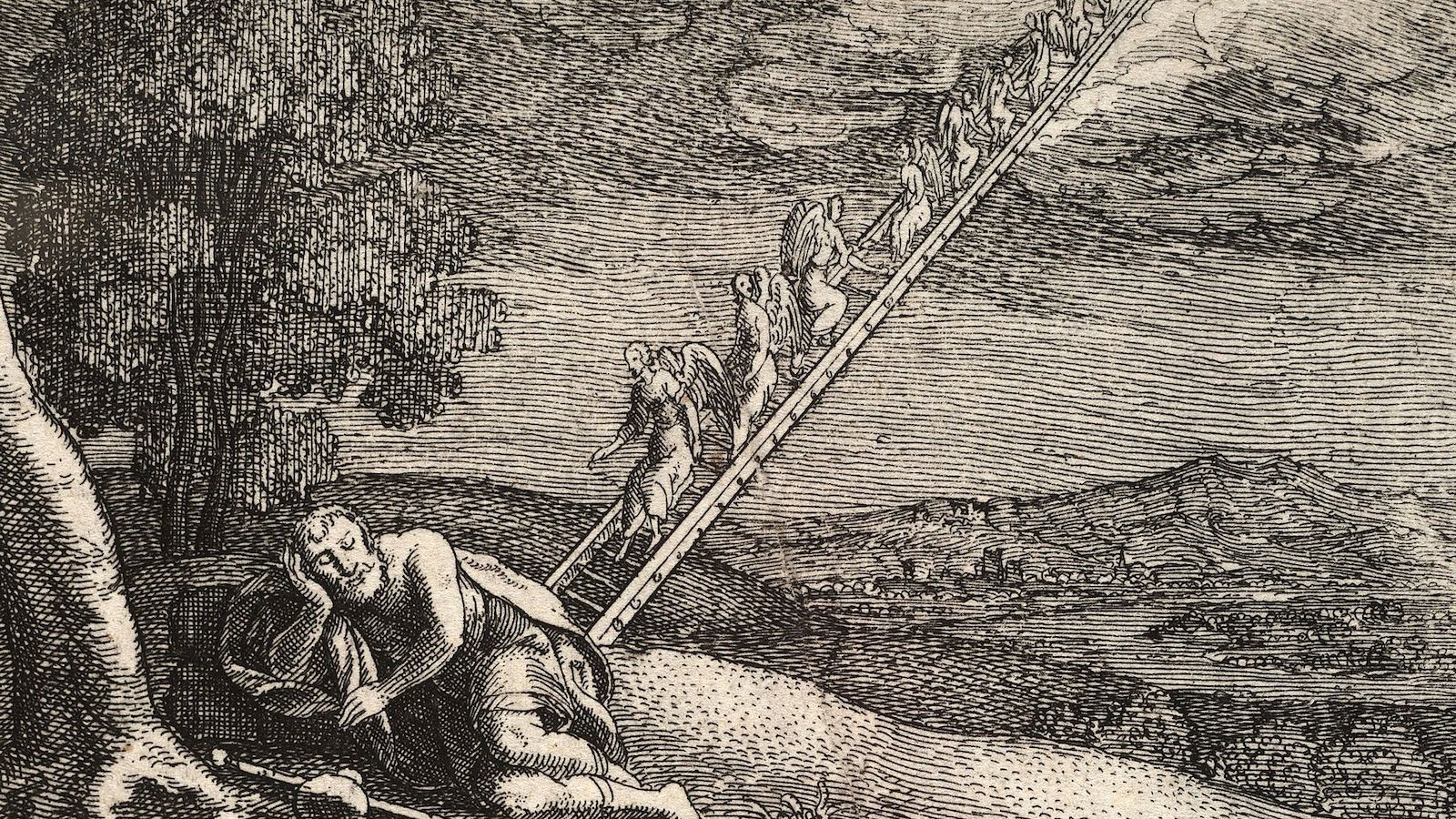
"Jacob left Beersheba and went toward Haran. And he came to a certain place and stayed there that night, because the sun had set. Taking one of the stones of the place, he put it under his head and lay down in that place to sleep. And he dreamed, and behold, there was a ladder set up on the earth, and the top of it reached to heaven. And behold, the angels of God were ascending and descending on it! And behold, the Lord stood above it and said, 'I am the Lord, the God of Abraham your father and the God of Isaac. The land on which you lie I will give to you and to your offspring. Your offspring shall be like the dust of the earth, and you shall spread abroad to the west and to the east and to the north and to the south, and in you and your offspring shall all the families of the earth be blessed. Behold, I am with you and will keep you wherever you go, and will bring you back to this land. For I will not leave you until I have done what I have promised you.' Then Jacob awoke from his sleep and said, 'Surely the Lord is in this place, and I did not know it.' And he was afraid and said, 'How awesome is this place! This is none other than the house of God, and this is the gate of heaven.'

- Genesis 2810-17

This is a well-known and much-beloved passage. We even have a song based on it: "We are climbing Jacob's ladder." Notice that God is referred to both as "God" and as "Yahweh" ("Lord" in the quoted portion above). So Jacob professes, without correction, that Yahweh is his God. 

Let us continue. 

"Then the angel of God said to me in the dream, ‘Jacob,’ and I said, ‘Here I am!’ And He said, ‘Lift up your eyes and see, all the goats that mate with the flock are striped, spotted, and mottled, for I have seen all that Laban is doing to you. I am the God of Bethel, where you anointed a pillar and made a vow to Me.'" (Genesis 31:11-13).

In this later passage, Jacob is again visited. This visitor is identified as "the angel of God," but then He identifies Himself as "God," the same God and Yahweh who had visited Jacob in chapter 28. Therefore, the angel of God, called elsewhere the angel of the Lord or the angel of the covenant, is Yahweh, the God of Israel. 

The comparison of these two passages proves three things, contrary to the claims of the anti-Trinitarians: first, it proves that Yahweh and the Angel of Yahweh are the same Person; second, it proves the preexistence of the Son; and third, it shows that Yahweh was the preexistent Son, in His mediatorial role. And if Yahweh is God, then the logical necessity is that the Son is God! Thus the claims of the Jehovah's Witnesses on one side and the Oneness sects on the other are shown to be false. 


Wednesday, June 9, 2021

The Triunity of the Godhead in Isaiah

I will recount the steadfast love of the Lord, the praises of the Lord, according to all that the Lord has granted us, and the great goodness to the house of Israel that He has granted them according to His compassion, according to the abundance of His steadfast love. For He said, 'Surely they are My people, children who will not deal falsely.' And He became their Savior. In all their affliction He was afflicted, and the angel of His presence saved them; in His love and in His pity He redeemed them; He lifted them up and carried them all the days of old. But they rebelled and grieved His Holy Spirit; therefore, He turned to be their enemy,and Himself fought against them." 

- Isaiah 63:7-10 

Depending on interpretation, there are either two divine Persons or three in this passage. Since I believe that the name Yahweh refers only to the Son, for whom "angel of His presence" is a circumlocution for that same Son. Thus, you can see the Son and the Holy Spirit here. However, if you view the Lord here as being the Father, the implication is even stronger, indicating three divine Persons.

Anti-Trinitarians think they are clever in the oft-repeated challenge: "If God is three Persons, then why don't we see them in the Old Testament?" And the fact is that we do see them. Granted, they aren't revealed as completely in the Old Testament, but that is the nature of the relationship between the two Testaments, with types and shadows in the Old, and the clarity of the direct view in the New. As the slogan goes, "The Old Testament is the New Testament concealed, while the New Testament is the Old Testament revealed." That we see the trinity obscured does not mean that it is unknown in the Old Testament. 


Saturday, May 8, 2021

Watchtower Deception in John 1:1

In its New World Translation [sic] of the Bible, the Watchtower Society, commonly called Jehovah's Witnesses, says, "In the beginning was the Word, and the Word was with God, and the Word was a god." The Society claims that the absence of the definite article indicates the equivalent of the indefinite article in English, there being no such article in Greek. That statement by the Society about John 1:1 is highly deceptive

First, it is incomplete. That is something that can be indicated by the absence of the article. However, in the copulative, as in the sentence here, Greek uses the definite article to distinguish the subject versus the predicate nominative. That is because Greek didn't use word order the way English does. In the Greek, the word order is actually "and God was the Word." The word order is a means of showing emphasis. Therefore, to translate "god" in the definite sense in English is correct. 

Furthermore, notice that the NWT says "the beginning." Yet there is also no article in front of "beginning" in the Greek. The NWT inserts one there, while claiming that there is something suspect in doing the same thing for "god."

My purpose here is mainly my hope that some Jehovah's Witnesses will see this, and recognize that their loyalty to the Watchtower is undeserved. Turn to the true Christian Jesus, God the Son, for eternal life. 

I also hope that some less-prepared Christians will read this before they are next approached by a Witness, so that the Watchtower cannot use its deception to capture yet another soul. 


Saturday, March 6, 2021

A Simple Refutation of All Forms of Unitarianism


In their opposition to the doctrine of the Trinity, Arians and Modalists unite in denying the deity of the Son. Arians, represented primarily by the Jehovah's Witnesses, claim that Jesus was a fully-created being, whether  a mere human or an angel, but definitely not God. Modalists, represented primarily by Oneness Pentecostals, on the other hand, say that Jesus was God, but His deity was that of the Father, not the inherent deity of the Son.

Both are unbiblical. 

In I John 5:20, that Apostle tells us, "We know that the Son of God has come and has given us understanding, so that we may know Him who is true; and we are in Him who is true, in his Son Jesus Christ. He is the true God and eternal life." Contrary to the claims of both Arians and Modalists, John tells us that the Son, named as such twice in that verse, is God. His statement precludes any claim that Jesus was merely a creature, or that the Son was merely a body inhabited by the deity of the Father.


Wednesday, July 15, 2020

The Logic of Jesus versus the Irrationality of Oneness Theology

"Jesus answered them, 'My Father is working until now, and I am working.' This was why the Jews were seeking all the more to kill Him, because, not only was He breaking the Sabbath, but He was even calling God his own Father, making Himself equal with God.
- John 5:17-18 

Oneness Pentecostals claim that the Son was the flesh of Jesus, which, therefore, did not exist before its creation in the womb of Mary at the Incarnation. Of course, if the Son didn't exist before that point, we must logically ask, Then whom exactly was incarnated? To have been made flesh, that Person must already have existed. But we will set aside that logical question for now. 

In the passage above, the Apostle John reports several things. First, we have the words of Jesus that both He and the Father have been working. He thus makes a distinction between Himself and the Father, refuting any claim that it was the Father who was incarnated in the Son. Then the Apostle tells us that His audience took the words of Jesus to be a claim of equality with the Father. Again, if the Oneness doctrine is correct, how can any created thing, even as exalted as a merely human Jesus, be equal to the Father? Unless, of course, we Trinitarians are correct and the Son is not just the flesh, but is eternal God in Himself!

Thus, Oneness claims are refuted by the simple question, If the Son is just flesh, and not God in Himself, then how can He be equal to the Father?

Saturday, June 20, 2020

The Trinity and the Divine Son from Heaven

Oneness Pentecostals are very difficult to pin down on their doctrine. They will profess something at one moment, and then vociferously deny it the next.

One thing that I have seen them assert is that the deity of Jesus is the Father in Heaven, while the Son was His humanity on earth. Therefore, the Son began with His conception in the womb of Mary. That means, depending on how you look at that assertion, that they either deny the deity of the Father, making Him Jesus instead, or they deny the deity of Jesus, making Him nothing more than a vessel for the Father. I should say that Oneness deny both of those implications. However, they also deny the applicability of logic to their doctrine. It is just "human reasoning," they claim. The principles of logic violated by their doctrines are the Law of Non-Contradiction, which states that a thing and its contrary cannot both be true at the same time and in the same way, and the Law of Identity, which states that a thing must be itself, not something else, again at the same time and in the same way.

In John 6:62, that apostle quotes these words of Jesus: "Then what if you were to see the Son of Man ascending to where He was before?" They apply very specifically to the matter at hand. Jesus says that He was in heaven before His incarnation. Oneness claim that this is a reference to His deity as the Father. However, He explicitly refers to Himself as the Son in this verse, not the Father. Here is where the laws of logic apply: Oneness deny the Law of Identity by making Him something other than what He is -and says that He is - to avoid the implications of this verse. And they violate the Law of Non-Contradiction by making Him the Son and the Father at the same time, in violation of their own doctrine. I should repeat, however, that these logical problems don't bother Oneness, because they consider logic to be "human reasoning." 

In contrast, the Trinitarian violates neither rule. Since orthodox Christians hold that the Son has always been the Son, never the Father, both divine Persons keep their respective identities without contradiction. The Son was in Heaven from eternity as the Son. With Him was the Father, as the Father from eternity, just as we are told in John 1:1. Thus we maintain the full deity of both Father and Son, sacrificing neither in order to maintain a manmade doctrine.

Saturday, November 2, 2019

John the Baptist, the Refuter of Jehovah's Witnesses

The person of John the Baptist is a curious character in the Gospels. He was a cousin of Jesus, but about six months older. We see the beginning of his ministry in Matthew 3:1-3: "In those days John the Baptist came preaching in the wilderness of Judea, 'Repent, for the kingdom of heaven is at hand.' For this is he who was spoken of by the prophet Isaiah when he said, 'The voice of one crying in the wilderness: Prepare the way of the Lord; make His paths straight.'" The portion quoted from Isaiah is Isaiah 40:3. 

What is significant is that Isaiah doesn't say "Lord" (Hebrew, "adonai"), but rather "LORD" (Hebrew, "Yahweh"). More on that later. 

While the identification by Matthew is sure, because it is the interpretation of the Holy Spirit, Jesus added His personal identification, as well: "The disciples asked Him, 'Then why do the scribes say that first Elijah must come?' He answered, 'Elijah does come, and he will restore all things. But I tell you that Elijah has already come, and they did not recognize him, but did to him whatever they pleased. So also the Son of Man will certainly suffer at their hands.' Then the disciples understood that He was speaking to them of John the Baptist" (Matthew 17:10-13). Here, Jesus is referring to the prophecy of Malachi 4:5: "Behold, I will send you Elijah the prophet before the great and awesome day of the LORD comes." Notice that here, too, the Hebrew uses "LORD" ("Yahweh").

The significance of this is that both Old Testament prophets refer to Elijah's return to announce the coming of Yahweh (or "Jehovah"). Then in the New Testament, we have the testimony of both the Apostle Matthew and of Jesus Himself that the reference to Elijah was fulfilled by John the Baptist's introduction of Jesus. That is, Elijah equals John the Baptist, and Yahweh equals Jesus.

This should be an earth-shattering revelation to the Jehovah's Witnesses, who very vocally contrast Jehovah with their unbiblical version of Jesus. They try to make Jesus to be a creature, a mere angel, and deny His deity. But they make much of Jehovah, even naming themselves after Him. Yet, they blind themselves to this one fact: Jesus is Jehovah!

Wednesday, October 16, 2019

Sovereign Grace, the Trinity, and the Christian Life

"Peter, an apostle of Jesus Christ, To those who are elect exiles of the Dispersion in Pontus, Galatia, Cappadocia, Asia, and Bithynia, according to the foreknowledge of God the Father, in the
sanctification of the Spirit, for obedience to Jesus Christ and for sprinkling with His blood: May grace and peace be multiplied to you."
- I Peter 1:1-2 

This is the opening salutation from Peter's first epistle. Notice that it is not written to men in general but specifically to Christians, whom he identifies as the true Israel (compare Romans 9:8, Galatians 3:7, 6:16, etc.), gathered by the sovereign grace of God. 

And when I say God, I don't mean in a vague, generic sense. Rather, Peter identifies our election as the work of the triune God of the Bible: the foreknowledge of the Father, the sanctification of the Holy Spirit, and the obedience of the Son, applied, figuratively speaking, by the sprinkling with His blood, an image from the Old Testament sacrifices (such as Leviticus 7:2 and 14:7). Peter does not contemplate a unitary deity, whether of the Arian type or the Sabellian. 

Nor does Peter contemplate any sort of works religion, as is taught by those pseudo-Christian sects. Rather, he tells us that the Father chose us, the Holy Spirit changed us, and the Son fulfilled all righteousness for us, that it might be imputed to us. In just these two verses, Peter teaches us to see our reunion with our God as fully trinitarian and fully by His sovereign grace, which is why he could add, in verse 4, that we have "an inheritance that is imperishable, undefiled, and unfading, kept in heaven for you." The same sovereign, trinitarian grace that saved us also keeps us secure until we reach our heavenly goal."I am sure of this, that he who began a good work in you will bring it to completion at the day of Jesus Christ" (Philippians 1:6).

Wednesday, October 9, 2019

Calvinist Peter on Election and Perseverance

I continue to see people who claim that the distinctive doctrines of Calvinism aren't biblical. However, as I have demonstrated frequently, those doctrines are distributed all over Scripture, in both Testaments, and even in the words of Jesus Himself.

Here is another example: "Peter, an apostle of Jesus Christ, To those who are elect exiles of the Dispersion in Pontus, Galatia, Cappadocia, Asia, and Bithynia, according to the foreknowledge of God the Father, in the sanctification of the Spirit, for obedience to Jesus Christ and for sprinkling with His blood: May grace and peace be multiplied to you. Blessed be the God and Father of our Lord Jesus Christ! According to His great mercy, He has caused us to be born again to a living hope through the resurrection of Jesus Christ from the dead, to an inheritance that is imperishable, undefiled, and unfading, kept in heaven for you, who by God’s power are being guarded through faith for a salvation ready to be revealed in the last time" (I Peter 1:1-5). 

This is the opening salutation of the epistles of Peter. Notice to whom he is speaking, "those who are elect." So, he is not speaking to men, in general. In particular, those words preclude the unconverted from Peter's message. Moreover, he is speaking not merely to believers, but to those whom he calls the elect, emphasizing the sovereign grace by which we have been made believers. That is the "U" in "TULIP," "unconditional election." Elected by whom? By the Father. By what means? By the Holy Spirit. To what end? To believe in Jesus. Thus, Peter sees believers to be such by a cooperative effort of each Person of the Trinity. Peter could not be describing the deities of the Arian or the Sabellian, but only the triune God of orthodox Christianity. 

On our experiential end, what was the effect of the Father's election of us? To be caused to be born again. "Caused" necessarily implies that the origin of our rebirth is outside of ourselves. On what basis? Was it our foreseen faith? No, Peter tells us that it was out of His mercy alone. Furthermore, that rebirth has brought us into an inheritance that can never be lost, because its keeping isn't in our hands, but is rather preserved in Heaven, by God's power (compare John 10:28-29). That is perseverance of the saints, the "P" in "TULIP." 

Finding such obvious expressions of the Calvinist soteriology throughout Scripture continues to make me wonder at the claims of Arminians to be Bible-believing. Closing one's eyes to what the Scriptures say is not believing them. 


Saturday, July 13, 2019

The Mormon Deity Contrasted with the Eternal God of the Bible

 First thing, a little announcement. This is my 700th blog post. Who could have imagined that I would have that much to say!

When Mormon missionaries ride around on their bicycles, there are certain Mormon doctrines that they don't discuss with new contacts. One of those doctrines is their belief that their god was once a man on another planet, with its own god, which man succeeded in fulfilling that god's plan of salvation, such that he was rewarded with godhood and a planet of his own. Mormons call this "exaltation," and claim that some of them will receive the same reward in their afterlife. (Side note: these doctrines are part of popular Mormonism, not official doctrines of the LDS organization.)

This doctrine is stated in what is known as Snow's Couplet:
"As man now is, God once was;
As God now is, man may be."

It was also stated more prosaically by LDS Founder Joseph Smith in his King Follett Discourse: "God himself was once as we are now, and is an exalted man, and sits enthroned in yonder heavens!"

I can imagine no clearer proof that can be offered that Mormons are not Christians, and have, not just a different god, but a different kind of god from that of the Bible. Their theism is more comparable to that of the ancient Greeks, ancient Romans, or modern Hindus, than to Christianity.

In contrast, the God of the Bible, Father, Son, and Holy Spirit, is eternal. That is, He is as He has been for all eternity past and as He will be for all eternity future. This precludes not only the evolutionary deity of Mormonism but also the creaturely Son of Arianism and the multiple-personality deity of the Modalist. The biblical God is utterly unlike any creature, including humans.

In Psalm 9:7, David tells us, "The LORD sits enthroned forever." "LORD" indicates Jehovah, the preincarnate Christ, proving the eternality of the Son.

In Psalm 90:2, Moses is even more explicit: "Before the mountains were brought forth, or ever You had formed the earth and the world, from everlasting to everlasting You are God." He precludes the possibility that God could ever have been any less than God!

The anonymous writer of Psalm 102:25-28 tells us even more: "Of old You laid the foundation of the earth, and the heavens are the work of Your hands. They will perish, but You will remain; they will all wear out like a garment. You will change them like a robe, and they will pass away, but You are the same, and Your years have no end. The children of Your servants shall dwell secure; their offspring shall be established before You." He builds a contrast between changeable and perishable matter and the true God who can do neither, and then provides that as the foundation for assurance for the biblical believer. How can anyone have assurance of salvation, the future, or eternity, when he thinks that his god is an evolutionary creature?

When I read the Greek or Roman myths, and they describe a man exalted to godhood, I take no umbrage at that assertion, because a Pagan doesn't claim to be representing Christianity. And if Mormons stopped claiming to be Christians, I would stop being offended by their religion. However, as long as they continue to claim Christian terminology for Pagan content, I will continue to be offended, and to believe that I have a responsibility to expose and refute their doctrines.

Saturday, January 5, 2019

God the Son, Our Savior Upon His Throne

Oneness Pentecostals claim that the Son of God began with the incarnation in the womb of Mary. They distinguish the Son from Jesus, whom they say was the Father before the incarnation. In other words, Jesus is God, but the Son is not. I don't claim to understand that.

However, such a doctrine ignores too much of the Old Testament, in which we see the interaction between the Father and Son in preparation for the incarnation and redemptive work of the Son. The most explicit is Psalm 45:6: "Your throne, O God, is forever and ever. The scepter of your kingdom is a scepter of uprightness." The value of this verse is that it is quoted in Hebrews 1:8 with this introduction: "But about the Son He says..." Thus we have inspired commentary telling us that Psalm 45:6 is the Father's comment to the Son, whom He addresses as "God." Oneness claim that it is a prophecy, not an actual address, but they provide no exegetical grounds for that assertion. The assertion is mere circular reasoning, required by their presupposed doctrine. It is not the result of any consideration within the text.

The problem with the Oneness doctrine is that it makes the Son of God just an idea in the Father's mind  in eternity. He wasn't a real person, until He was created in the womb of Mary. Thus, their doctrine boils down to the same doctrine as that of the Arians, that the Christ who walked among men was really just a created creature, not fully God in Himself, as orthodox Christians have always claimed. And that equivalency is actually entertaining, considering the contempt that Oneness express for Arians, such as the Jehovah's Witnesses.

However, they are both wrong. "Christ is a real savior, and not an instrument by which the sinner is enabled to gratify his pride. The Holy Ghost is a real sanctifier, and not an influence by which the energies of men are stimulated, and their better impulses roused into action. The Persons of the glorious Trinity have entered into a real covenant to redeem a Church from the lost multitude of the race, and are not the authors of paltry expedients or abortive efforts to coax men into what they find it impossible directly to effect" (James Henley Thornwell, "Theology as a Life in Individuals and the Church").

Wednesday, November 28, 2018

The One and the Many: Trinity in Unity in the Bible

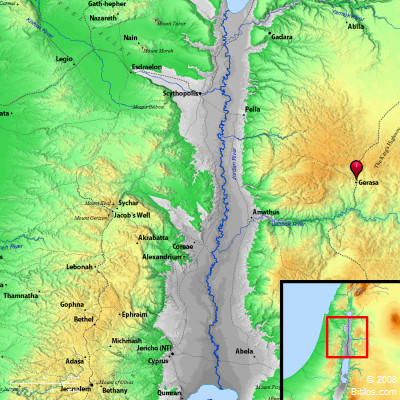
"They came to the other side of the sea, to the country of the Gerasenes. And when Jesus had stepped out of the boat, immediately there met Him out of the tombs a man with an unclean spirit. He lived among the tombs. And no one could bind him anymore, not even with a chain, for he had often been bound with shackles and chains, but he wrenched the chains apart, and he broke the shackles in pieces. No one had the strength to subdue him. Night and day among the tombs and on the mountains he was always crying out and cutting himself with stones. And when he saw Jesus from afar, he ran and fell down before Him. And crying out with a loud voice, he said, 'What have You to do with me, Jesus, Son of the Most High God? I adjure You by God, do not torment me.' For He was saying to him, 'Come out of the man, you unclean spirit!' And Jesus asked him, 'What is your name?' He replied, 'My name is Legion, for we are many.'"
- Mark 5:1-9

When I interact with anti-Trinitarians, whether of the Arian or Sabellian varieties, one strategy they all seem to try is to describe the Trinity in this way: "One plus one plus one equals three, so you believe in three gods." For some inconceivable reason, they think this is a very clever argument, even though math has nothing to do with it. Or, if you want to do math, why can't it be one times one times one equals one? Or one cubed is one? If you see what I mean, the argument is nowhere nearly as clever as they think it is. We talk about things as unities in one sense but manifold in a different sense all of the time. Have you heard of the three branches of the one federal government?

Yet, the anti-Trinitarian desperately holds on to this argument. Their answer is, "Well, we do that, but the Bible doesn't."

Really? I guess anti-Trinitarians don't read Mark 5. Notice the interaction between Jesus and the demoniac. Actually the demon in the demoniac. Notice that Mark refers to the demon consistently as "he," not "they." And notice that the demons say "me," not "we," except one time in verse 9. Even in verse 9, the demon says "my name is," not "our names are."

My point is that the Bible certainly does refer to things as one in one sense and manifold in another. In this case, we see one demon also described as a legion, a unit of Roman military consisting of about 6,000 soldiers. If the demon of Mark 5 can be 6,000 demons described as a unity, then why can't the three Persons of the Trinity be one God?