Showing posts with label joel. Show all posts

Friday, September 11, 2026

Jeremiah's Hope: Israel's National Conversion to Jesus

"Therefore, thus says the Lord God: Now I will restore the fortunes of Jacob and have mercy on the whole house of Israel, and I will be jealous for My holy name. They shall forget their shame and all the treachery they have practiced against Me, when they dwell securely in their land with none to make them afraid, when I have brought them back from the peoples and gathered them from their enemies' lands, and, through them, have vindicated My holiness in the sight of many nations. then they shall know that I am the Lord their God, because I sent them into exile among the nations and then assembled them into their own land. I will leave none of them remaining among the nations anymore. And I will not hide My face anymore from them, when I pour out My Spirit upon the house of Israel, declares the Lord God." -Ezekiel 39:25-29 

After long passages in which God told the prophet of His plans to judge Israel for her constant acts of apostasy, Ezekiel must have found these words both encouraging and astonishing. Judgment was not the end of God's plan for the Jews. Exile to Babylon was not to be the end of her covenant history. God had a plan for the salvation of this little race of people. 

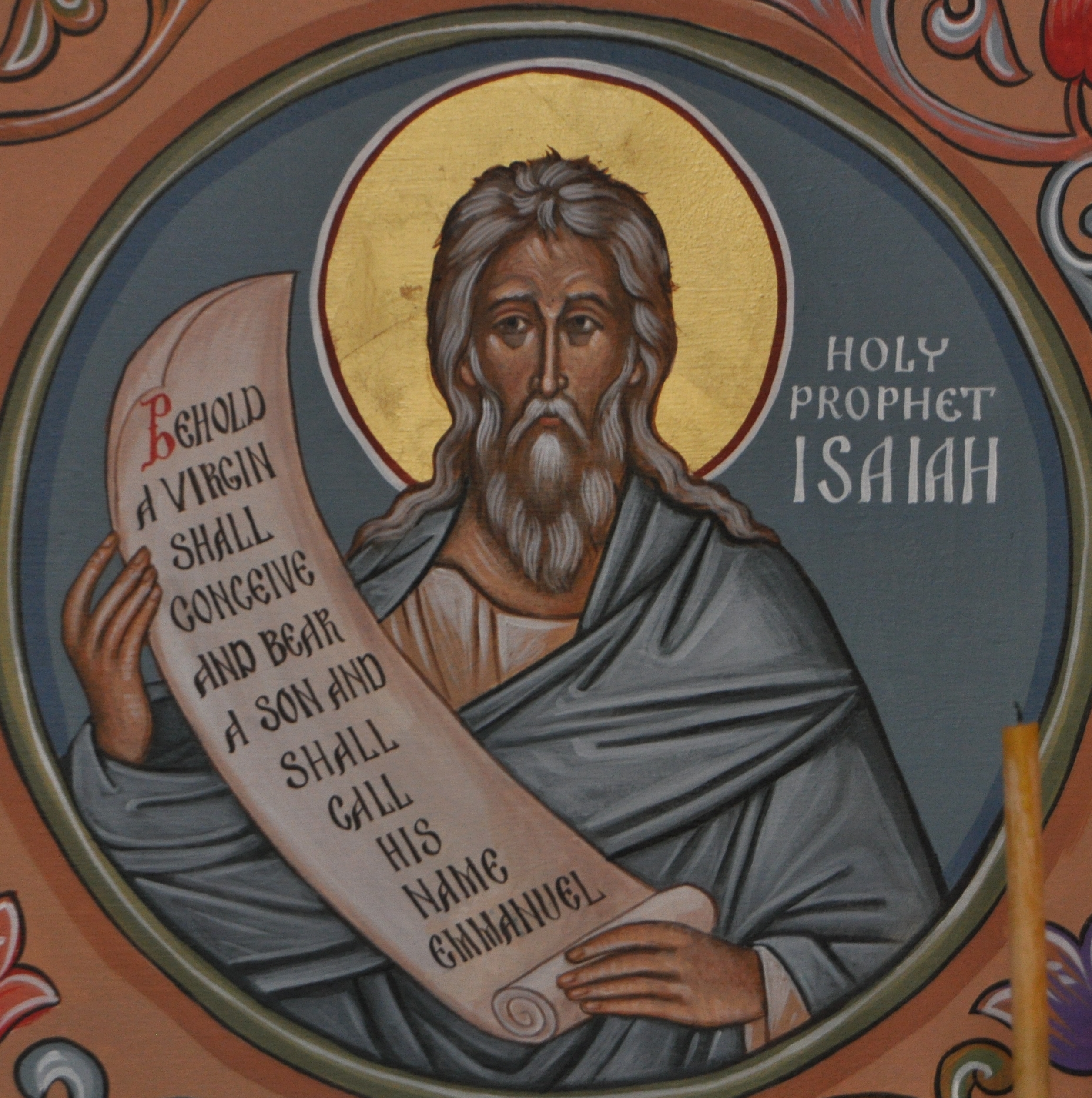
Let me start with saying what this is not. This is not a prophecy about the modern state of Israel. A certain theological school talks about the political state of Israel as if it is the culmination of all of God's purposes. Yet it shows none of the signs described here. Modern Israel is a completely secular sate, and her people are mostly secularized, many even atheist. The murder of the preborn is almost uncontested and sodomy is widely celebrated. The Messiah is known by a few, but only a tiny minority. Yet Ezekiel describes a people who are not in general unbelief but who have come in general to celebrate belief. They are a people upon whom God has poured His Holy Spirit (compare Isaiah 44:3 and Joel 2:29), so that they will turn to the Messiah whom they had rejected (Zechariah 12:10). That is not at all a description of today's Israel. 

Whether this conversion will happen in what we now know as Israel or somewhere else, I cannot claim to know. Whether the gathering described by Jeremiah refers to geography or to the gathering into the church, again, I do not know. Either is possible, or a combination of the two. But it will be gathering not to a political cause but to their Lord Jesus Christ. Oh blessed day! 


Saturday, August 28, 2021

Pentecost and the Deity of Jesus, Giver of the Holy Spirit


"And in the last days it shall be, God declares,
that I will pour out My Spirit on all flesh,

and your sons and your daughters shall prophesy,
and your young men shall see visions,
and your old men shall dream dreams;
even on My male servants and female servants
in those days I will pour out My Spirit, and they shall prophesy.
and signs on the earth below,
blood, and fire, and vapor of smoke;
the sun shall be turned to darkness
and the moon to blood,
before the day of the Lord comes, the great and magnificent day.

And it shall come to pass that everyone who calls upon the name of the Lord shall be saved."

- Acts 2:17-21 

In the above passage, the Apostle Peter quotes from Joel 2:28-32 as his explanation of what has just occurred in this chapter of Acts. The Holy Spirit has been poured out on the Apostles and other disciples waiting, as Jesus had commanded them in Acts 1:4-5, for the empowering of the Holy Spirit. That Spirit had indeed come upon them, enabling them to speak in languages that they did not know, but which were recognized by their audience, consisting of Jews of the Diaspora, visiting Jerusalem from all over the eastern Empire (Acts 2:5-11). To assuage their shock, Peter reminds them of this prophecy, and then continues:  

"'This Jesus God raised up, and of that we all are witnesses. Being therefore exalted at the right hand of God, and having received from the Father the promise of the Holy Spirit, He has poured out this that you yourselves are seeing and hearing. For David did not ascend into the heavens, but he himself says, The Lord said to my Lord, Sit at My right hand, until I make Your enemies Your footstool. Let all the house of Israel therefore know for certain that God has made Him both Lord and Christ, this Jesus whom you crucified.' Now when they heard this they were cut to the heart, and said to Peter and the rest of the apostles, 'Brothers, what shall we do?' And Peter said to them, 'Repent and be baptized every one of you in the name of Jesus Christ for the forgiveness of your sins, and you will receive the gift of the Holy Spirit'" (Acts 2:32-38).

Note that the parallels between Joel's prophecy and the Pentecostal fulfillment are not merely general. Where Joel says that God will send the Holy Spirit, Peter tells his audience that it is Jesus who has poured out the Spirit. And where Joel tells his audience that calling upon the name of the Lord (Yahweh in the Hebrew) they shall be saved, Peter tells his audience that it is the name of Jesus that brings forgiveness of sins. Is the logical conclusion, then, not necessarily that Peter believes and is teaching that Jesus is the same Yahweh who mediated for Israel as the covenant God in the Old testament? I say that that is the only possible conclusion.

Friday, August 19, 2016

The Church in the Old Testament: The City of God


Many readers will be familiar with the hymn, "Glorious Things of Thee Are Spoken," by John Newton (also the author of "Amazing Grace"). However, you may not be aware that he was inspired by Psalm 87:3: "Glorious things of you are spoken, O city of God." What city would that be? Jerusalem, of course, or, as it is called here, Zion. But not the Jerusalem on the map, but rather the one spoken of in Hebrews 12:22-23: "You have come to Mount Zion and to the city of the living God, the heavenly Jerusalem, and to innumerable angels in festal gathering, and to the assembly of the firstborn who are enrolled in heaven."

How do we know that it isn't the Jerusalem on the map? Well, first because of the use of "Zion," rather than "Jerusalem." That name was used, especially by the prophets, when the emphasis was on God's presence among His people.  Consider, for example, Joel 3:17: "So you shall know that I am the Lord your God, who dwells in Zion, my holy mountain. And Jerusalem shall be holy, and strangers shall never again pass through it." and also Zephaniah 3:14-16: "Sing aloud, O daughter of Zion; shout, O Israel! Rejoice and exult with all your heart, O daughter of Jerusalem! The Lord has taken away the judgments against you; He has cleared away your enemies. The King of Israel, the Lord, is in your midst; you shall never again fear evil. On that day it shall be said to Jerusalem: 'Fear not, O Zion; let not your hands grow weak.'" Notice especially that the latter prophet interchanges "Zion" with "Jerusalem," so that there is no question as to of whom He is speaking. And second, because he doesn't talk about the Temple, its ceremonies, or even about the Jews.

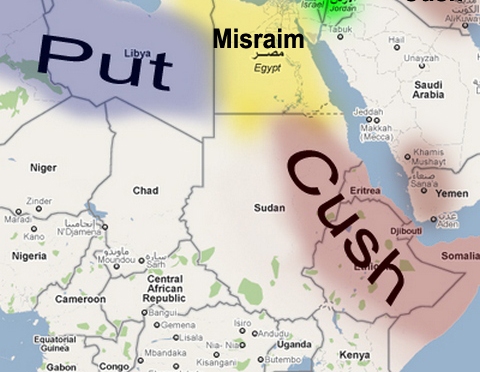
The Psalmist proceeds with a list of countries, Rahab (a nickname for Egypt), Babylon, Philistia, Tyre, and Cush (modern Ethiopia). What of them (verse 4)? "This one was born there." Born where (verse 5)? "Of Zion it shall be said, 'This one and that one were born in her.'" This is a marvelous prophecy of the extension of the church among the Gentiles, of their people reborn as children of the Church of Christ. Contrary to the expectations of the Jews, people from every nation and tribe (Revelation 5:9) will flock to the church, brought by the Holy Spirit, and praising our Redeemer Jesus Christ! This is part of the promise of the Father to the Son in the intra-Trinitarian covenant, seen in Isaiah 49:6: "It is too light a thing that You should be my servant to raise up the tribes of Jacob and to bring back the preserved of Israel; I will make You as a light for the nations, that my salvation may reach to the end of the earth."

To my mind this is such a glorious thing! No wonder it inspired John Newton to put those words to music, "Glorious  things of thee are spoken, Zion, city of our God"!

Friday, April 24, 2015

"The Lord's Day"? Or "the Day of the Lord"?

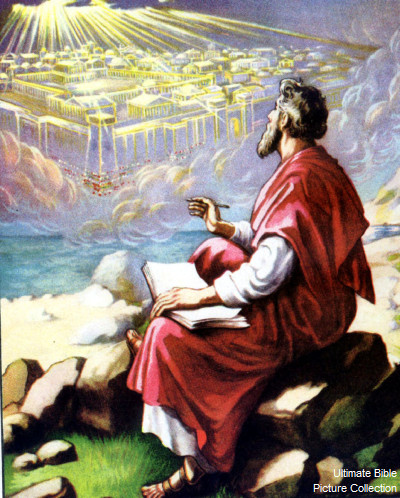
In Revelation 1:10, the Apostle John wrote that he "was in the Spirit on the Lord's Day" as he wrote this final book of the Bible. In general, Christians have taken this to refer to the Christian Sabbath, the first day of the week. However, that tradition is challenged by seventh-day sabbatarians, such as Seventh-Day Adventists, who claim instead that he was in the Spirit on "the day of the Lord."

However, in favor of the traditional wording is that John uses a different word in the genitive here from what is used in the New Testament for "day of the Lord." In the passage at hand, the Greek reads "te kuriake hemera." In contrast, where the New Testament writers referred to "the day of the Lord," such as in I Thessalonians 5:2, the writers use "he hemera kuriou." "Kuriakos" is used only here and in I Corinthians 11:20 (to refer to "the Lord's Supper"). "Kurios," in contrast, is used 720 times, both for Christ and for higher authorities, in general, which is why it is sometimes translated "master." Thus, the difference is that "kurios" is the more-generic term, while "kuriakos" is used only for Christ, which is why it came into Germanic languages as the word for "church" ("kirk" in Scottish dialect, "kirche" in German), instead of the Greek and Latin "ekklesia" ("eglise" in French, "iglesia" in Spanish, "chiesa" in Italian).
Apostle John

The point is this: the day in Rev. 1:10 is not the Day of the Lord, such as appears not just in I Thessalonians, but also in the Old Testament prophets (e. g., Amos 5:18, Zephaniah 1:14, and Joel 1:15). Rather, it is specifically the day of Christ! That is because the first day was the day of His resurrection (John 20:1ff), and when He revealed Himself glorified to His disciples (John 20:19), and when He sent the Holy Spirit (Acts 2:1; Pentecost was fifty days after Passover, i. e., seven seventh-days plus one, the first day of the week), and the day that the apostolic church gathered for worship (Acts 20:7 and I Corinthians 16:2). Thus, for John to have been involved in spiritual exercises on that day is only to be expected. To say that he was doing so on "the day of the Lord" makes no sense, at all.

Accordingly, I affirm the statement of the Westminster Confession of Faith (XXI:7): "As it is of the law of nature, that, in general, a due proportion of time be set apart for the worship of God; so, in His Word, by a positive, moral, and perpetual commandment, binding all men in all ages, He hath particularly appointed one day in seven for a Sabbath, to be kept holy unto Him: which, from the beginning of the world to the resurrection of Christ, was the last day of the week; and, from the resurrection of Christ, was changed into the first day of the week, which in Scripture is called the Lord's Day, and is to be continued to the end of the world as the Christian Sabbath." I find the biblical case for the first-day Sabbath, ever since the resurrection of Christ, to succeed over that for a continuing seventh-day Sabbath. I consider the latter to be an effort at judaizing the Christian faith, and, therefore, to be opposed.

Wednesday, October 8, 2014

Evangelical Lunatics: "Blood Moon" Madness

"Thus says the Lord:
'Learn not the way of the  nations,
Nor be dismayed by the signs of  the heavens
Because the nations are  dismayed at them,
for the customs of the peoples  are vanity.'"
- Jeremiah 10:2-3

It seems less than a coincidence that I watched the lunar eclipse this morning, and then the verses above, Jeremiah 10:2-3, came up in my daily Bible reading. This eclipse was the second (the first was April 14-15) in a rare tetrad of eclipses, i. e., successive total eclipses, with no intervening partial eclipses. The other two will be in 2015.

These eclipses have been designated "blood moons" by John Hagee, due to the redness associated with the appearance of the moon during a full eclipse (the refraction of sunlight through the earth's atmosphere appears red, the same phenomenon that causes the red light at sunrise and sunset), as a way to connect them to prophecies regarding Israel (according to his interpretation) that describe the moon appearing like blood (such as Joel 2:31). In other words, while all full eclipses appear red, Hagee has designated these eclipses as "blood moons" purely on the basis of his whim. The fact that it also sells his book is completely coincidental.

Hagee claims that past "blood moons" were signs of significant events in modern-day Israel. for example, he mentions the independence of Israel in 1948. Perhaps it was a mistake to be so specific, because those "blood moons" took place in 1949-50, not 1948. Furthermore, of the current "blood moons," three of the four - including the one this morning - won't even be visible in Israel. How can they be signs to Israel, if they aren't visible in Israel?

The problem is that the whole thing is an invention of the fevered imagination of John Hagee. Yet it has a segment of the evangelical community whipped up in fear. Or, as Jeremiah says, in superstition.

The Bible certainly does mention astronomical signs for eschatological events. I happen not to think they're intended to be taken literally. However, whether they are figurative or literal, to look to the heavens as predictors of coming events is the mentality of the pagan, not the Christian. I am sure that both Hagee and his Hagettes would loudly, and properly, decry the use of astrology by Christians, yet they have done that exactly, simply changing the terminology! It is this pagan worldview, baptized though it be, that is judged by God in the words of Jeremiah above.

No matter what name a person puts on it, to adopt a pagan worldview is to be a pagan, and thus to be under the judgment of God.

And for John Hagee, to lead people into superstition brings an extra judgment, as Jeremiah also says. He adds (Jer. 10:21), "For the shepherds are stupid and do not inquire of the Lord; therefore they have not prospered, and all their flock is scattered." The stupidity of Hagee is already plain to see; I hope that his deceived flock will scatter, as soon as the falsity of his prophecies is revealed.

Monday, September 6, 2010

Isaiah 25:6-10, The Lord Lifts the Veil from the Nations

"On this mountain the Lord of hosts will make for all peoples a feast of rich food, a feast of well-aged wine, of rich food full of marrow, of aged wine well refined. And He will swallow up on this mountain the covering that is cast over all peoples, the veil that is spread over all nations. He will swallow up death forever; and the Lord God will wipe away tears from all faces, and the reproach of His people He will take away from all the earth, for the Lord has spoken. It will be said on that day, 'Behold, this is our God; we have waited for Him, that He might save us. This is the Lord; we have waited for Him; let us be glad and rejoice in His salvation.' For the hand of the Lord will rest on this mountain..."

There were a few passages of Scripture that affected me deeply in the early days of my Christian profession, some thirty-odd years ago. For example, my first reading of Ephesians made me a Calvinist. And later, my first readings of the Old Testament Prophets, especially Isaiah, made me a postmillennialist.

Many of these prophetic passages start with this reference to "this mountain." Which mountain? I take it to refer to Mount Zion, the physical location of the Temple, but also a frequent symbol for the Church (see Hebrews 12:22). Related uses of the word can be found in Isaiah 2:2, 11:9, 56:7, Daniel 2:35, Joel 3:17, Obadiah 1:16, Micah 4:1-2, Zephaniah 3:11, and Zechariah 8:3.

In our passage here, Isaiah prophesies a time when God would remove the veil from the nations. This obviously is neither a literal veil over the face, nor the veil of the Temple, though both are biblical uses of the word, since neither fits the context. Compare the uses of the word in successive verses of II Corinthians 3:13-16. Paul begins with the placing of a literal veil over the face of Moses, then changes to the figurative meaning of spiritual blindness. Considering it the same way in Isaiah, we have a promise that a time will come when God will lift the blindness from the hearts of the nations. Not each individual exhaustively, but over the nations as a whole. This is expressed more literally in Isaiah 56:6, referring to "foreigners who join themselves to the Lord," and Micah 4:2, where "many nations" shall come to be taught the word of God.

The promise that the Earth will be filled with the knowledge of the Lord is a repeated one: Isaiah 11:9 and Habakkuk 2:14. After all, it was the mission that Jesus gave us before Hid ascension (Matthew 28:19-20). One wonders two things; first, why is a repeated promise overlooked by so many? and second, why is such a happy promise rejected and opposed by so many?

Thursday, March 18, 2010

The Mode of Baptism, According to the Scriptures, Part 3

Where Hodge most vigorously opposes the immersionists, I think, is in the symbology of baptism. Where Baptists customarily describe baptism as an analogy of the death and resurrection of Christ - best represented, they say, by immersion- Hodge prefers a parallel with the baptism of the Holy Spirit.

Hodge directs us to Matthew 3:11, where John the Baptizer says, "I baptize you with water for repentance...", while in contrast, Jesus "will baptize you with the Holy Spirit and with fire." See also the parallel passages in Mark 1:8, Luke 3:16, and John 1:26, 33, and their recounting in Acts 1:5 and 11:16. Notice the baptismal imagery that Paul applies to the Holy Spirit in Titus 3:5-6, "the washing of regeneration and renewal of the Holy Spirit, whom He poured out on us richly through Jesus Christ our Savior."

Hodge continues, "Baptism of the Holy Ghost, of which water baptism is the emblem, is never set forth in Scripture as an 'immersion,' but always as a 'pouring' and 'sprinkling.'" In the Old Testament, we find this usage in Isaiah 44:3, 52:15, Ezekiel 36:25-27, And especially Joel 2:28-29, "And it shall come to pass afterward that I will pour out My Spirit on all flesh... [I]n those days I will pour out My Spirit..." And in the New Testament, we can see it in Acts 2:1-4, 32-33; 10:44-48; and 11:15-16.

As mentioned in Part 2, the Old Testament rites of purification were done by sprinkling. Confer Ex. 24:5-8, Lev. 8:30, 14:7, 14:51, Numbers 8:6-7, and Heb. 9:12-22.

From these references, I would conclude that the best mode of baptism would be by sprinkling. However, I repeat that I (and Hodge) do not consider the mode of baptism to be a critical matter. In fact, I myself was immersed as a teenager.

 To go to part 4, the conclusion, click here.