Monday, May 24, 2010

The High Cost of the Cheapening of Human Life

"He who digs a pit will fall into it,
and a serpent will bite him who breaks through a wall."
- Ecclesiastes 10:8

I just read this insightful application of this verse by the late Rev. Rousas Rushdoony: "Since World War II, we have, to a great extent, set aside the death penalty for most cases of murder. We have cheapened life, and murders have increased to a very high number. By making life easier for murderers and criminals generally, we have made it less tenable for ourselves. We have fallen into a pit of our own making; we have broken the fence of God's law, and we have been smitten as transgressors."

By placing an inordinate value on the dregs of society, we have devalued the righteous and innocent.

Sunday, May 23, 2010

The Remaining Christian Sabbath

"So then, there remains a Sabbath rest for the people of God, for whoever has entered God's rest has also rested from his works as God did from His."
- Hebrews 4:9-10

The Sabbath was incorporated into the very first acts of God in His creation. After the six days of creation of Genesis 1, chapter 2 begins with the Sabbath. Verses 1-3 read, "Thus the heavens and the earth were finished, and all the host of them. And on the seventh day God finished His work that He had done, and He rested on the seventh day from all the work that He had done. So God blessed the seventh day and made it holy, because on it God rested from all His work that He had done in creation." So the Sabbath long preceded the ceremonial Law, and was not part of it, though recognized in it. However, in commemoration of that event, God instructed Moses to include it in the Law. Exodus 20:8-11: "Remember the Sabbath day, to keep it holy. Six days you shall labor, and do all your work, but the seventh day is a Sabbath to the Lord your God. On it you shall not do any work, you, or your son, or your daughter, your male servant, or your female servant, or your livestock, or the sojourner who is within your gates. For in six days the Lord made heaven and earth, the sea, and all that is in them, and rested the seventh day. Therefore the Lord blessed the Sabbath day and made it holy."

The theme is also picked up by the prophets. In Isaiah 58:13-14, the prophet tells us, "If you turn back your foot from the Sabbath, from doing your pleasure on My holy day, and call the Sabbath a delight and the holy day of the Lord honorable; if you honor it, not going your own ways, or seeking your own pleasure, or talking idly, then you shall take delight in the Lord, and I will make you ride on the heights of the earth; I will feed you with the heritage of Jacob your father, for the mouth of the Lord has spoken."

In the New Testament, Jesus acknowledges the Sabbath. For example, in Matthew 12:8, He declares Himself Lord of the Sabbath. Of course, as Jehovah in the flesh, He would have literally been the Lord of the Sabbath, even if He hadn't declared it explicitly. However, the fact that He did so is clear indication that He considered it part of the Old Testament typology that will be completed in Him, to be valued by Christians, for it hasn't been fulfilled, yet, as the writer of Hebrews, quoted above, reminds us.

Jesus's teaching on the Sabbath is clarified in Mark 2:27, which precedes the Marcan version of Mt 12:8, "The Sabbath was made for man, not man for the Sabbath." That is, He rejected the rules of the Pharisees which made the Sabbath a burden, restoring it to its original purpose, i.e., the rest from our labors that honors and celebrates the providence of God.

In Acts (such as Acts 13:14), we see the apostolic Christians attending synagogue on the Jewish Sabbath, then gathering as the church on the first day in celebration of the resurrection. There appears to be no explicit command for this transfer; apparently it happened spontaneously. For example, Acts 20:7 describes the believers gathering on the first day of the week to celebrate the Lord's Supper. Paul also mentions this practice in I Corinthians 16:2. In contrast, the same apostle dismisses the demands of the Judaizers that the Christians celebrate the other, ceremonial holidays, in Romans 15:4 and Galatians 4:10, or the Jewish Sabbath in Colossians 2:16. While the Christians may celebrate these days with their Jewish neighbors and kin, they are also free not to, as their individual consciences may dictate.

The writer of Hebrews reminds us in 4:9, that "there remains a Sabbath rest for the people of God..." Among its many blessings, the Sabbath reminds us that we can, even must, rest from our spiritual labors, because Jesus has fulfilled the requirements of the Law and satisfied the justice of God, which had been offended by the fall of Adam and all his posterity. However, the Sabbath continues to have an eschatological aspect, because we cannot yet rest from our spiritual warfare, against Satan and the remaining sin in our flesh. That work, too, will end in the resurrection, where we shall receive our new bodies, free of corruption, and Satan will be finally judged and removed from any influence in the world. That is the ultimate Sabbath that the weekly Sabbath points us to. That is why the Sabbath cannot cease to be a blessing as long as this life continues.

And finally, we find the Christian Sabbath mentioned in the last book of the Bible. The Apostle John mentions, in passing, Rev. 1:10, that he was in the Spirit on the Lord's Day, an alternate name for the Christian Sabbath. Thus, the emphasis on his personal spiritual exercise on the first day of the week, not the Jewish Sabbath, but rather the Christian.

Thus we see the biblical basis for the credal view of the Sabbath, from the first book of the Bible to the last. The Westminster Confession of Faith (XXI:7) says, "As it is the law of Nature, that, in general, a due portion of time be set apart for the worship of God; so, in His Word, by a positive, moral, and perpetual commandment, binding all men, in all ages, He hath particularly appointed one day in seven, for a Sabbath, to be kept holy unto Him: which, from the beginning of the world to the resurrection of Christ, was the last day of the week; and from the resurrection of Christ, was changed into the first day of the week, which in Scripture is called the Lord's Day, and is to be continued to the end of the world, as the Christian Sabbath."

Sunday, May 16, 2010

Whom Shall We Fear? God Alone!


"But you, O Israel, my servant,
     Jacob, whom I have chosen,
the offspring of Abraham, My friend;
     you whom I took from the ends of the earth,
and called from the farthest corners,
     saying to you, 'You are My servant,
I have chosen you and not cast you off';
     fear not, for I am with you;
be not dismayed, for I am your God;
     I will strengthen you, I will help you,
I will uphold you with My righteous right hand.

"Behold, all who are incensed against you
     shall be put to shame and confounded;
those who strive against you
     shall be as nothing and shall perish.
You shall seek those who contend with you,
     but you will not find them;
those who war against you shall be as nothing at all.
     For I, the Lord your God, hold your right hand;
it is I who say to you, 'Fear not,
     I am the one who helps you.'

"Fear not, you worm Jacob, you men of Israel!
     I am the one who helps you, declares the Lord;
your Redeemer is the Holy One of Israel."
- Isaiah 41:8-14

The Bible speaks much of the fear of the Lord: a reverence for Him that leads us to fear offending Him.

Deuteronomy 6:13: "It is the Lord your God you shall fear. Him shall you serve and by His name you shall swear."

Psalm 111:10: "The fear of the Lord is the beginning of wisdom; all those who practice it have a good understanding. His praise endures forever!" But the "beginning of wisdom" spoken of here isn't in the sense of "first", as one is the first of the numbers but otherwise the same. Rather it means "core, foundation, that which gives everything else meaning."

Proverbs 19:23: "The fear of the Lord leads to life, and whoever has it rests satisfied; he will not be visited by harm."

In our own time, where are we urged to give our fear? If a police officer says he has some questions for us, do we not all sweat? Or what about the IRS? Does the thought of an audit give us cuddly feelings? Of course not!

It has been estimated that the average American commits three felonies a day, without even realizing it. While we all understand that criminals properly have a fear of the civil law, our current political system is rather designed to cause the peaceable citizen to fear, even more than the criminal!

The Larger Catechism, Question 96, asks, "What particular use is there of the moral law to unregenerate men?" And answers, in part, "The moral law is of use to unregenerate men, to awaken their consciences to flee from the wrath to come, and to drive them to Christ." Ah, here in this concise summary of biblical teaching, we see the contrast. God's Law serves to strike the fear of Him in the heart of the unbeliever, such that he flees for mercy to Jesus Christ. To whom shall the citizen apply for mercy under secular law? That person, whether officer, judge, or bureaucrat, holds the power over the citizen, and revels in the awareness of that power.

Our time doesn't have temples devoted to emperor worship, the official religion of the ancient Romans. The Roman emperor didn't care whether the Christians loved and worshiped Jesus, as long as the emperor had the preeminence. It was the refusal to grant that preeminence that sent the Christians to the Coliseum! In the same way, the FBI won't object to our having Jesus in our hearts, in our homes, even in our churches, just as long as we don't let that devotion interfere with our devotion to the State Our Savior. This is the apostasy of our time.

And Jesus Himself warned us that such a choice would be forced upon us. In Matthew 10:28, He says, "Do not fear those who kill the body but cannot kill the soul. Rather fear him who can destroy both soul and body in hell." Our God is a jealous God, and will not allow us to give allegiance to the state now, no matter its abuse of us, and to continue to expect His favor in eternity. It is a stark choice: will I have the wrath of government in this life, or the wrath of God forever after?

While God may command our allegiance simply because He is God, yet He is also a gracious Father, and gives us blessed promises and encouragements to the right choice.

Deuteronomy 1:29-30: "Then I said to you, 'Do not be in dread or afraid of them. The Lord your God who goes before you will Himself fight for you, just as He did for you in Egypt before your eyes.'" Just as He overthrew the power of Pharaoh at the Red Sea, God goes before us in the defeat of our own self-deified state.

Joshua 1:9: "Have I not commanded you? Be strong and courageous. Do not be frightened, and do not be dismayed, for the Lord your God is with you wherever you go."

Psalm 27:1: "The Lord is my light and my salvation; whom shall I fear? The Lord is the stronghold of my life; of whom shall I be afraid?"

Isaiah 41:10: "Fear not, for I am with you; be not dismayed, for I am your God; I will strengthen you, I will help you, I will uphold you with My righteous right hand."

And Jesus speaking in John 16:33: "In the world you will have tribulation. But take heart; I have overcome the world."

So, what can we conclude? I want you to remember three things. First, that there are two conflicting claims on our spiritual fear. Shall it be God? Or shall it be the humanistic state, which pretends to deity? Second, this is a choice with eternal consequences: Shall we grant our fear to the state for our brief lives in exchange for the eternal wrath of God. And third, the true and living God has given us such comforting encouragements to strengthen us against the self-appointed god of this life.

May the Holy Spirit always recall these encouragements to our minds when we face these choices. Amen!

Friday, April 30, 2010

Election and The Intra-Trinitarian Covenant

"I have manifested Your name to the people whom You gave Me out of the world. Yours they were, and You gave them to Me, and they have kept Your word. Now they know that everything that You have given Me is from You. For I have given them the words that You gave Me, and they have received them and have come to know in truth that I came from You; and they have believed that You sent Me. I am praying for them. I am not praying for the world but for those whom You have given Me, for they are Yours. All Mine are Yours, and Yours are Mine, and I am glorified in them."
- John 17:6-10

Catholic teaching and its Arminian handmaiden hold that the predestination taught in the Bible, something taught so clearly that they do not even deny it, is based on something foreseen in the elect. That is, God has foreseen their faith, and thereby elected them to salvation. This inversion of cause and effect is comparable to a teacher who assigns grades at the beginning of the term on the basis of the work that his students will do during the course of the year.

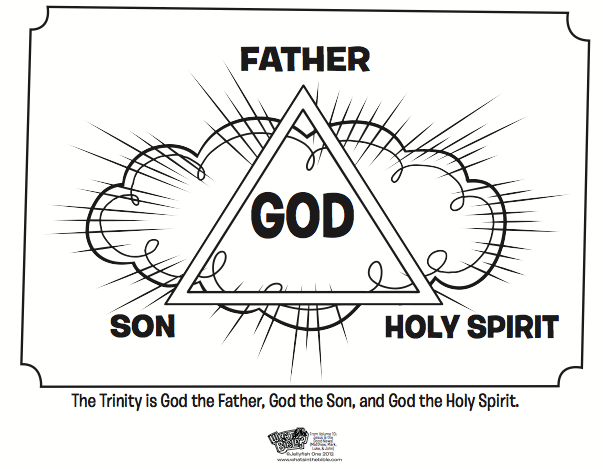
In contrast, the passage above makes plain that election isn't primarily an issue of the individual believer, but rather an element of the eternal relationship of the Persons of the Trinity. It is this covenant within the Trinity that has traditionally been called the covenant of redemption or covenant of peace. We aren't elect in a free-standing sense, but rather elect particularly in Christ. We see the same truth in John 10:28-29. In return, the Second Person is promised glory over all things (Hebrews 2, especially verse 9).

Thursday, April 29, 2010

Baptism as a Sign of the Covenant in the Westminster Confession


"Baptism is a sacrament of the New Testament, ordained by Jesus Christ, not only for the solemn admission of the party baptized into the visible church, but also of his ingrafting into Christ, of regeneration, of remission of sins, and of his giving up unto God through Jesus Christ, to walk in newness of life."
- Westminster Confession of Faith XXVIII:1

Paedobaptists, especially Presbyterians, fall midway between two other views of the sacraments among Evangelicals. On one end are those who claim that baptism isn't required for salvation - which is certainly true - and is, therefore, unimportant - which is not true. On the other are the credobaptists who hold that baptism can be a sign only of the conversion which has already happened. Along with all traditional Presbyterians, I believe that both of those views are wrong.

Against the first, the first paragraph of the confession finishes with this sentence: "Which sacrament is, by Christs's own appointment, to be continued until the end of the world." The ground for this claim is Matthew 28:19-20, "Go therefore and make disciples of all nations, baptizing them in the name of the Father and of the Son and of the Holy Spirit, teaching them to observe all that I have commanded you. And behold, I am with you always, to the end of the age." If that passage doesn't require baptizing until the Second Coming, then neither can it require making disciples, nor can it promise the empowering presence of Christ among His people until that time.

On the other hand, credobaptists claim that baptism can only be a sign of something that has already occurred in the believer. Yet, I am sure that they do not follow that logic in the rest of life. Do the Golden Arches of McDonalds only have significance to someone who has already eaten? Of course not! They are an encouragement to the hungry, "Here is satisfaction for your need!" In the same way, the baptism of the child of believing parents is a sign throughout his life that cleansing of the heart is found in the washing of the blood of Christ. I have dealt with the question of infant baptism elsewhere (such as here), so I won't address it here.

Baptist critics of the baptism of infants before their conversion are wrong, on both logical and biblical grounds. I don't want Presbyterians to fall back on defending tradition, a Papist error, but rather to stand their ground for being right!

Monday, April 26, 2010

Proverbs 25:4-5, God's Prescription for Governmental Ethics

"Take away the dross from the silver,
and the smith has material for a vessel;
take away the wicked from the presence of the king,
and his throne will be established in righteousness."

Even though government has supposedly been policing itself with ethics laws, both the current president and his predecessor have been bogged down in ethics charges.

I would suggest that those laws themselves are a big part of the problem.

Notice in the passage above that the end goal is for the throne to be established in righteousness. That presupposes that the incumbent on that throne is himself a righteous man. Then the proverb gives advice intended to prevent his being corrupted by bad advisers. Of course, if the incumbent is instead a corrupt man, then a corrupting influence becomes moot. And there is no law or mass of laws that can enforce the choosing of a righteous president. In fact, the enforcing of "ethics" laws by corrupt government authority should be seen as an obvious oxymoron.

That brings us to the next level of the problem. We have a republican political system, under which the people indirectly choose the one who occupies our national throne. If the people are corrupt, then, humanly-speaking, they can only choose corrupt leaders. Thus, the hope for righteousness at the top of the political order, apart from the miraculous intervention of God, lies in restoring righteousness to the American character. The threat of the law may impose conformity to "ethics" from the top, but ethics in the heart must bubble up from the bottom.

Monday, April 19, 2010

The Tax Rhetoric Trap

This is another article from my pastor, the Rev. Dr. Allen Church.

The Tax Rhetoric Trap
by the Rev. Dr. Allen Church

I still tell my kids to always watch their enemies and always, always, always watch their friends. Here is an example as to why.

My conservative TV friends are quickly walking into a political trap. Recently among the talking heads there has been much ranting and raving about how Americans who make $50,000 (with two children) or less do not have to pay income taxes. It is proposed that this leaves them without skin in the game and therefore they will continue to support big government spending programs.

Imagine how many of the liberals will play this: "You know, you conservative guys have finally hit on something. We do need a broader tax base! What a great idea! Let's do it! It is only fair, and besides it will help fund public policy! Its time to get tough. We can face the music together and ram the new income (and Value Added ?) tax applications right through the electorate. Who said bi-partisanship was dead?"

And so Big Gov liberals and Big Gov conservatives find the love, again.

Here is the rub folks. Citizens who receive $50,000 or less in government benefits or salary are rarely going to change their views about taxes just because they are made to pay income taxes. After all, their taxes make a round trip back to their own pockets. The taxes may irritate but they will not change political perspective.

The real issue is the number of people working for the government, getting government benefits, and the always growing government expenditures. More taxes, even in the effort to be "fair", only beget more taxes and more spending. If you live with a drunk you have to get the alcohol out of the house. If you buy it for him you are only fueling the problem. Big Gov is the drunk. Worse still, he is a very powerful, humorless, and often mean drunk. The word "moderation" is not in his vocabulary.

The income tax started as a winners and losers game. It was sold on the basis of taxing the income of the rich just a little. And you know the rest of the story. But the fact remains that everybody pays taxes, including the poor (at the very least through the inflation tax). Just not everyone pays income taxes. The fact that the income tax monster is missing some crumbs is not our most pressing challenge. And besides, the income tax is inherently unfair just by its existence. It is a slave tax. It cannot be made fair.

The real problem? Its the spending, baby. It's the spending! Solve that problem and getting rid of the income tax for the above 50K folks gets easier. Now we do need taxes to run our country, but we do not need taxes at a level that empowers our country to run us. Runaway taxation combined with runaway spending is a disaster cocktail fitting for an unrepentant drunk on a power trip. A wreck is bound to happen.

Simple message and changing the metaphor again: Beware of the fairness game when you are already in the cage with the tiger. Fairness to the tiger is when you refuse to scream and writhe while he eats you. Asking him to eat someone else as well will not solve your problem.